Gora, in Hakone, is one of Japan’s best-known hot spring towns, and its places to stay cover a wide range, from long-established ryokan whose calm is evident from the street to Western-style ryokan that combine the best of a hotel and a ryokan. Easy to reach from Tokyo, it is a perennially popular destination and always busy. The shopping streets that start around the station and the small shops found only in hot spring resorts are enough to fill a long afternoon of wandering.
There is no shortage of nature and art either: Hakone Gora Park, where you will find registered cultural properties, and the Hakone Museum of Art. You can also ride the ropeway high over the great volcanic “hell” of Owakudani and take in the dramatic scenery of a mountain where volcanic activity continues to this day. Before arriving or on the way home, the shopping in the Gotemba area is another option. Karaku is a new high-end ryokan that has recently opened in this town.
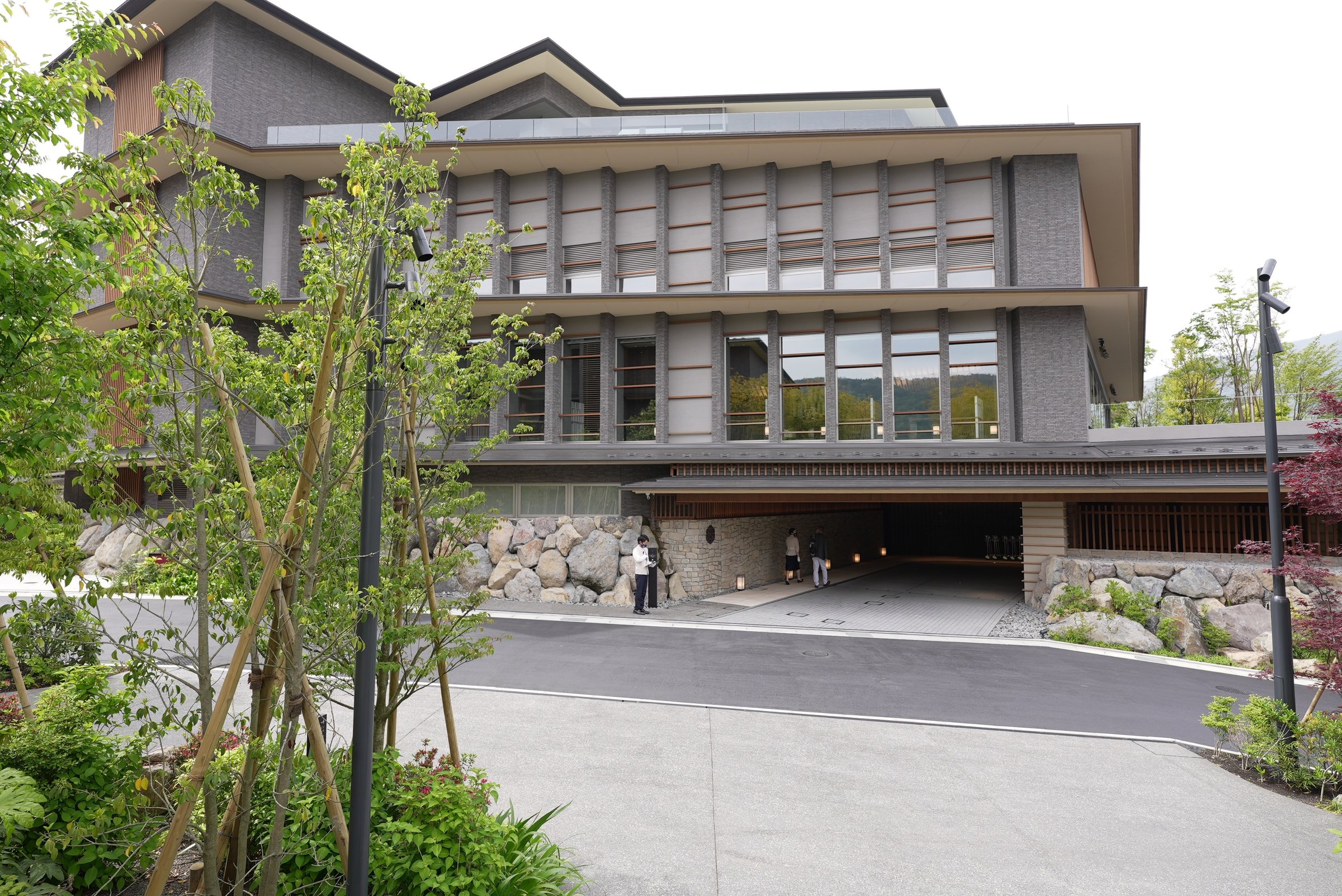
A house of many houses
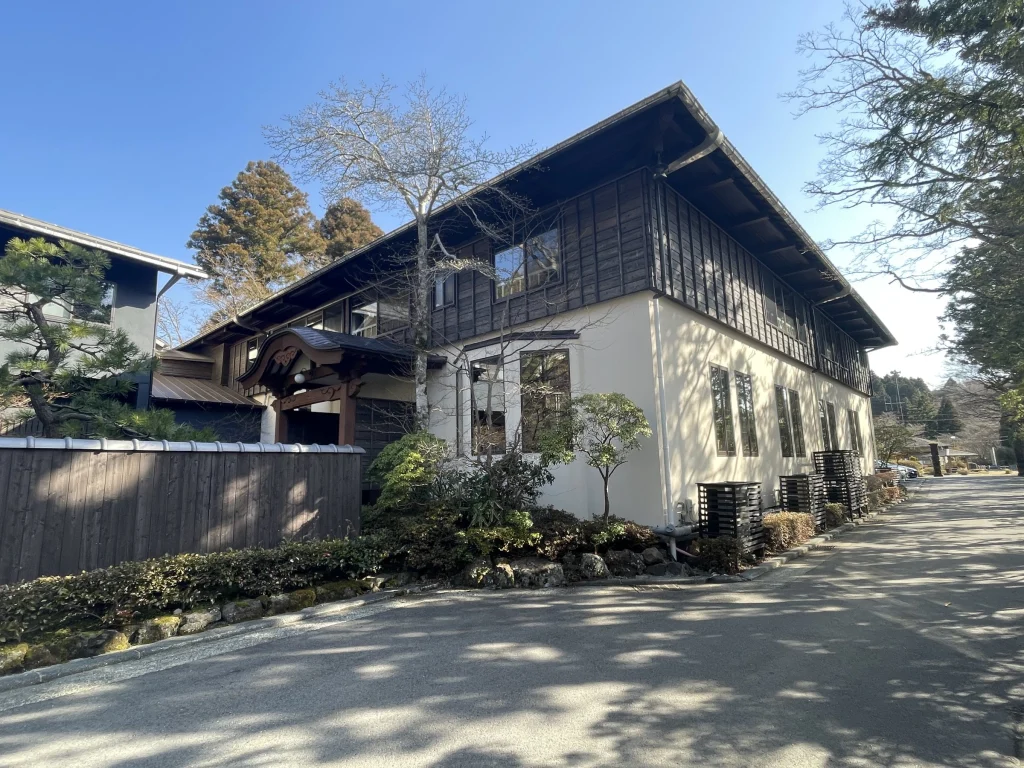
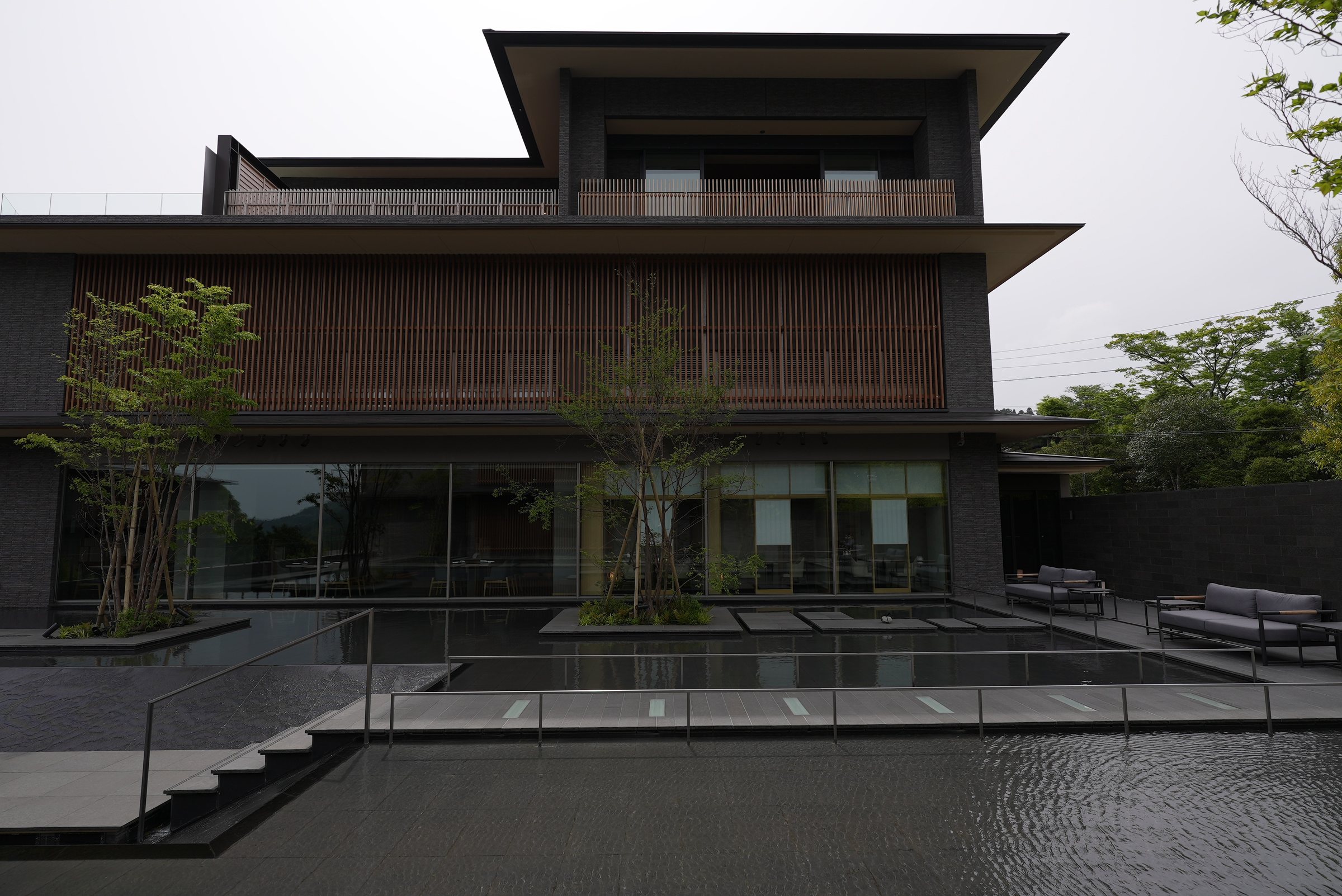
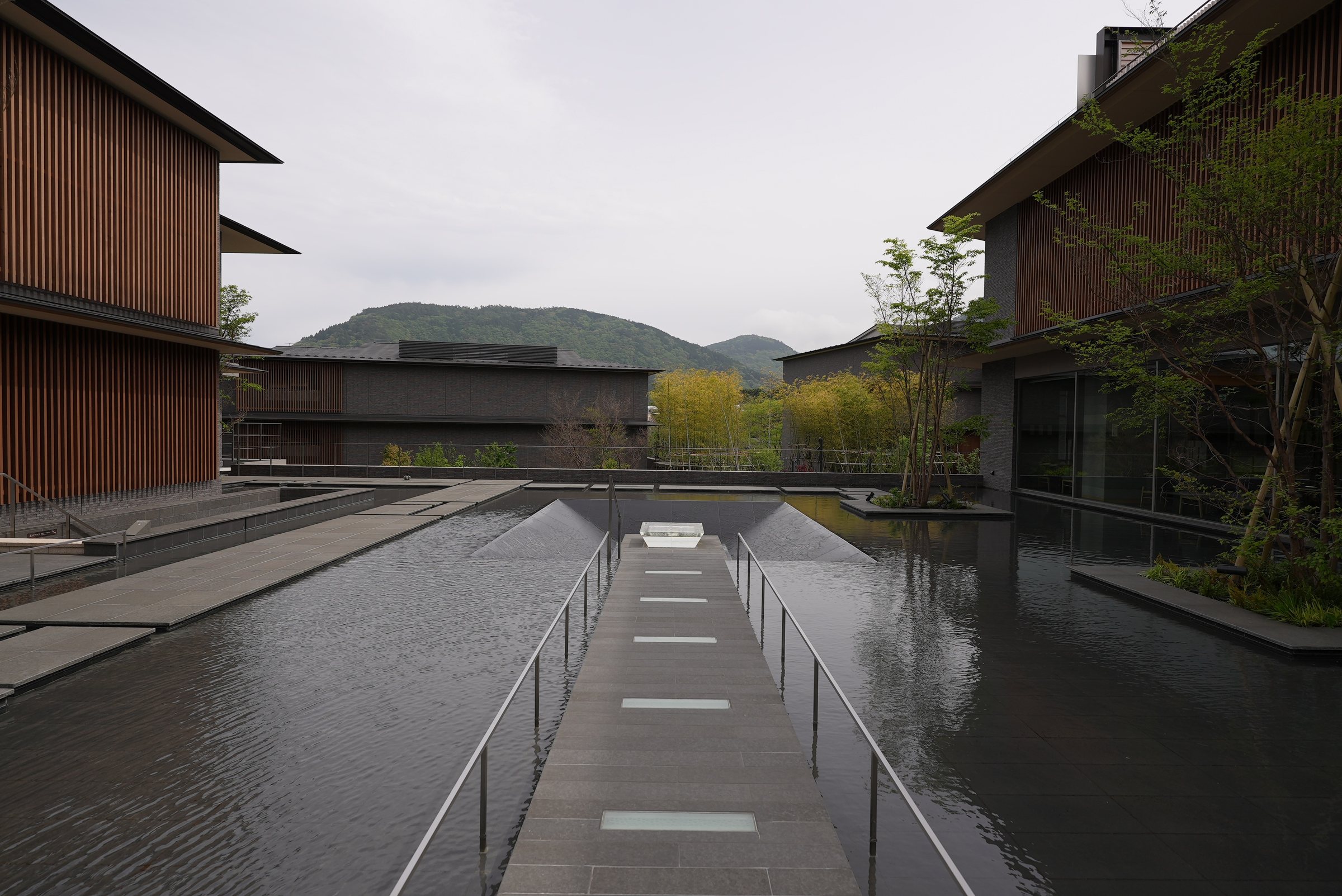
Karaku opened in October 2020 and is run by the Orix Group. The building’s design is new as well, quite unlike the traditional hot spring ryokan. It looks less like a single building than several custom-built houses fitted together.
As soon as we parked, a porter hurried over to take our luggage, working smoothly with the staff directing the cars. It made a pleasing first impression.
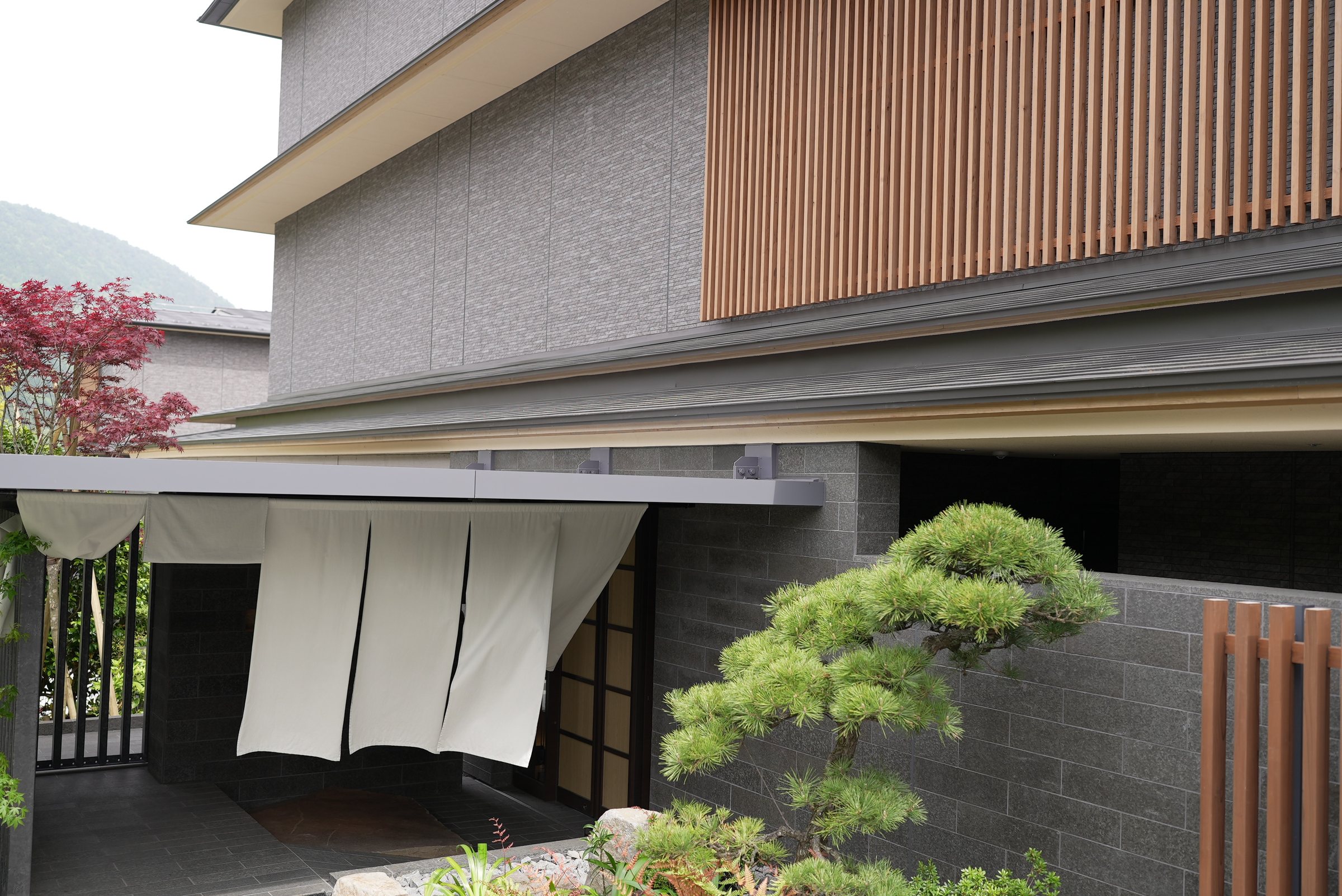
At the entrance, a panel of Hakone yosegi-zaiku, the region’s intricate wooden marquetry, glows with quiet authority.
Check-in, seated
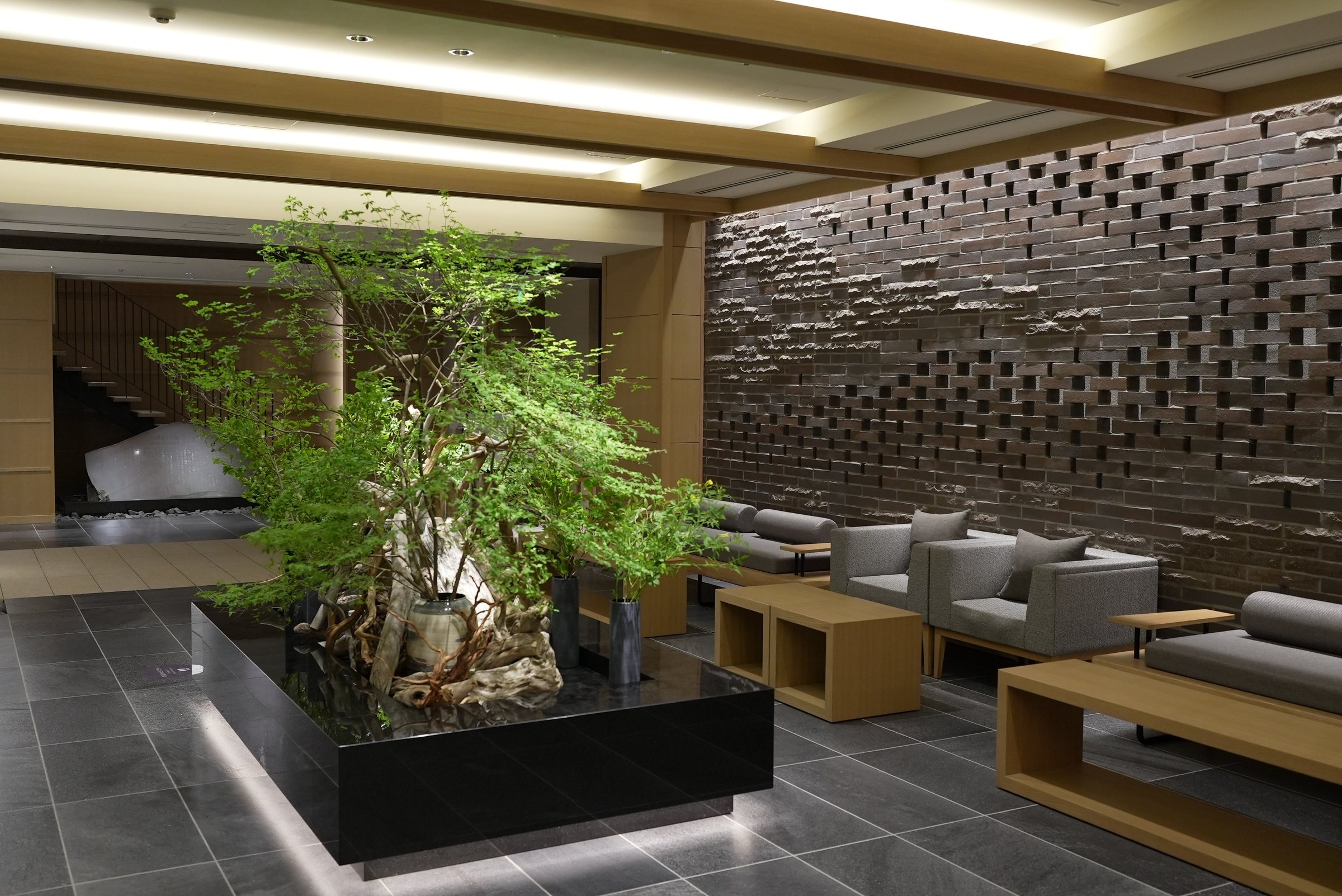
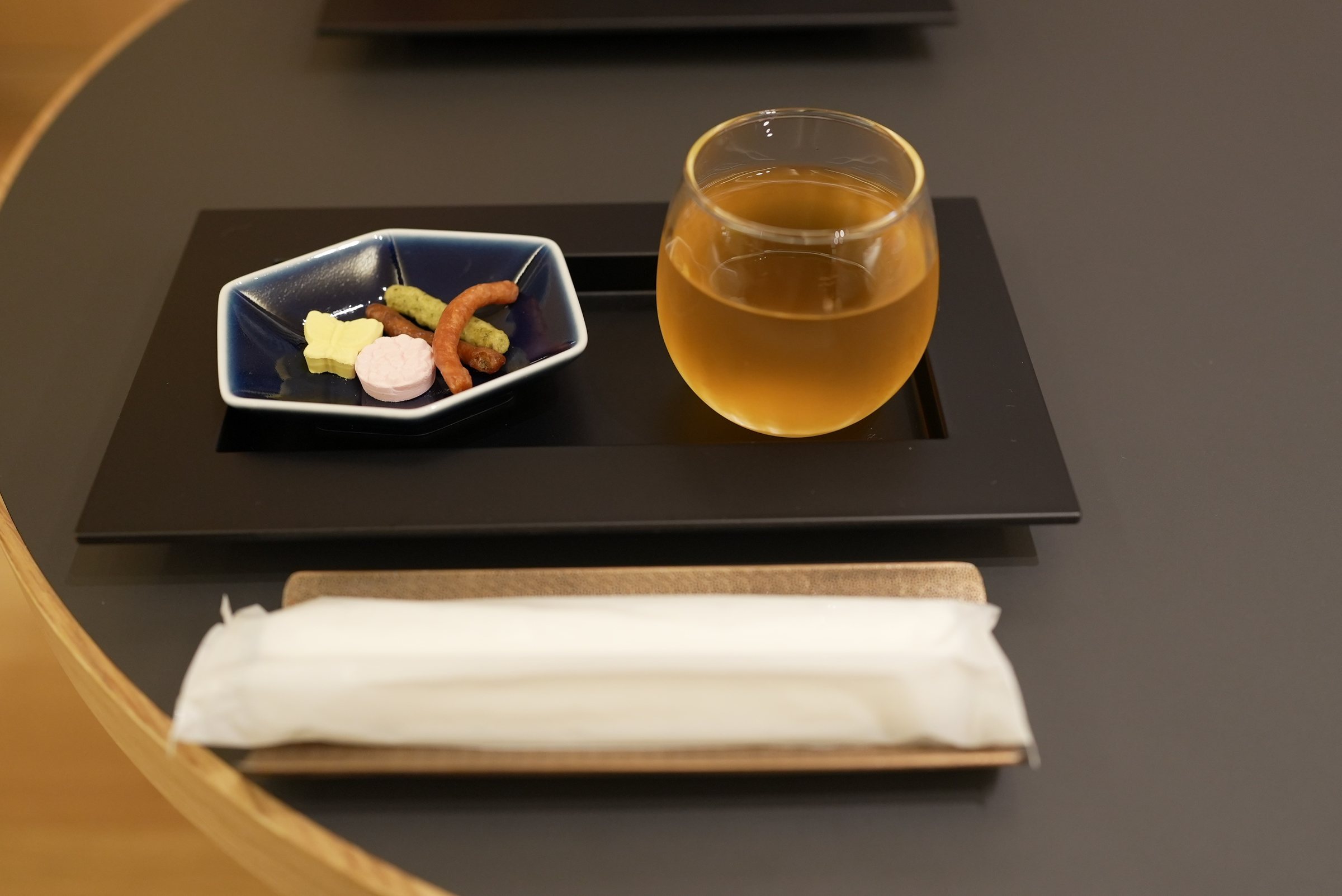
The check-in area felt spacious, and every piece of furniture underlined the attention to detail. Between the atmosphere, the staff and the bellboys, you could fairly call the style that of a hotel. Interestingly, though, as at most hot spring ryokan, check-in is not done standing at a counter: you are invited to sit down while the formalities are completed. We were welcomed with a cold, toasty roasted tea and a Japanese sweet.
A terrace of water and sky
A staircase right beside the main entrance led us up to a terrace laid out as a water garden. With sky and mountains all around, it was a place that made you breathe more deeply. The weather was poor that day, but the breeze passing through was pleasant, and Hakone’s great natural landscape filled the view.
The glass-walled space overlooking the garden, we gathered, was the dining room. Going down another staircase, we came out at a rear entrance where noren curtains stirred in the wind. The whole property, parking lot included, is fun to explore.
The room: comfort, packed in
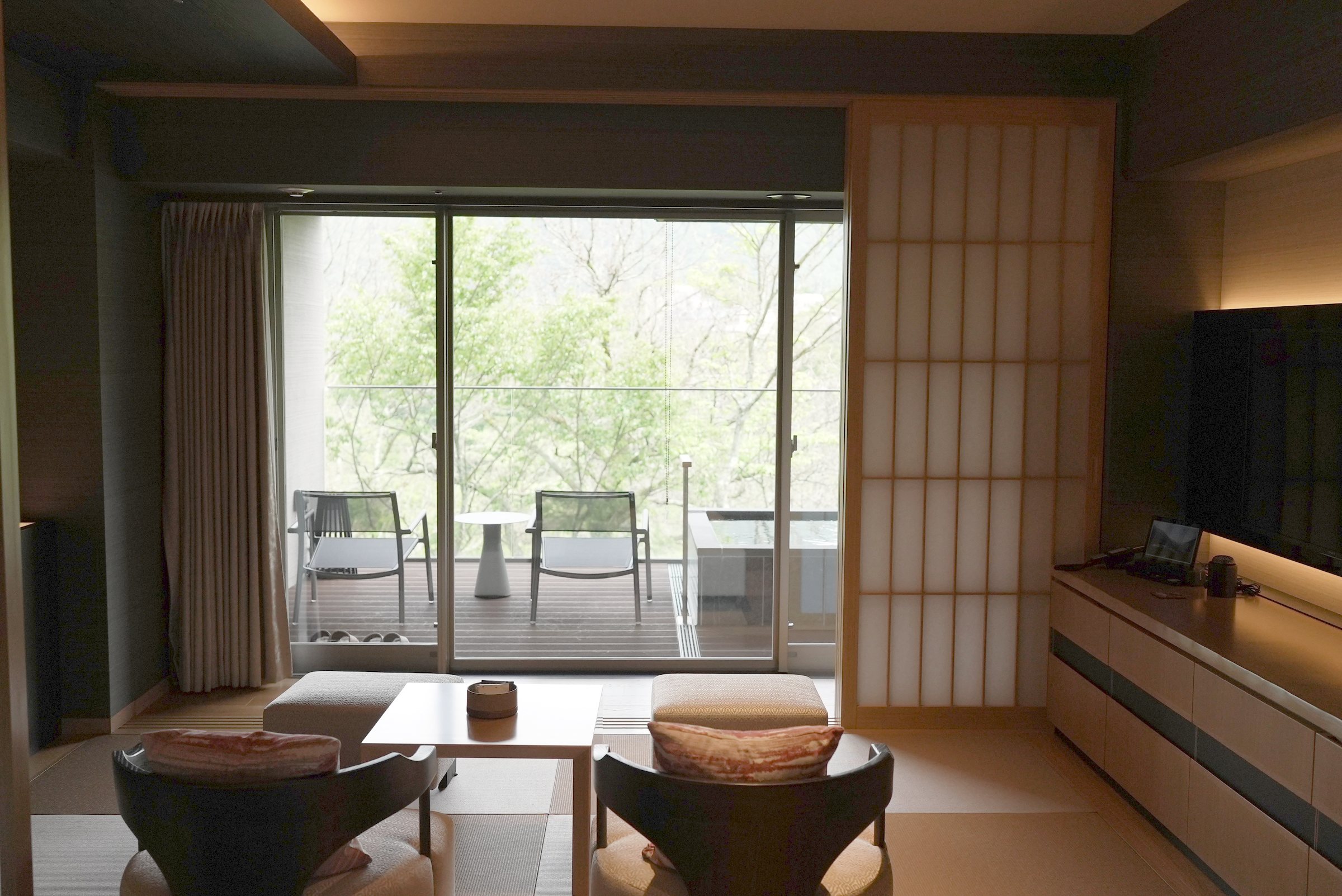
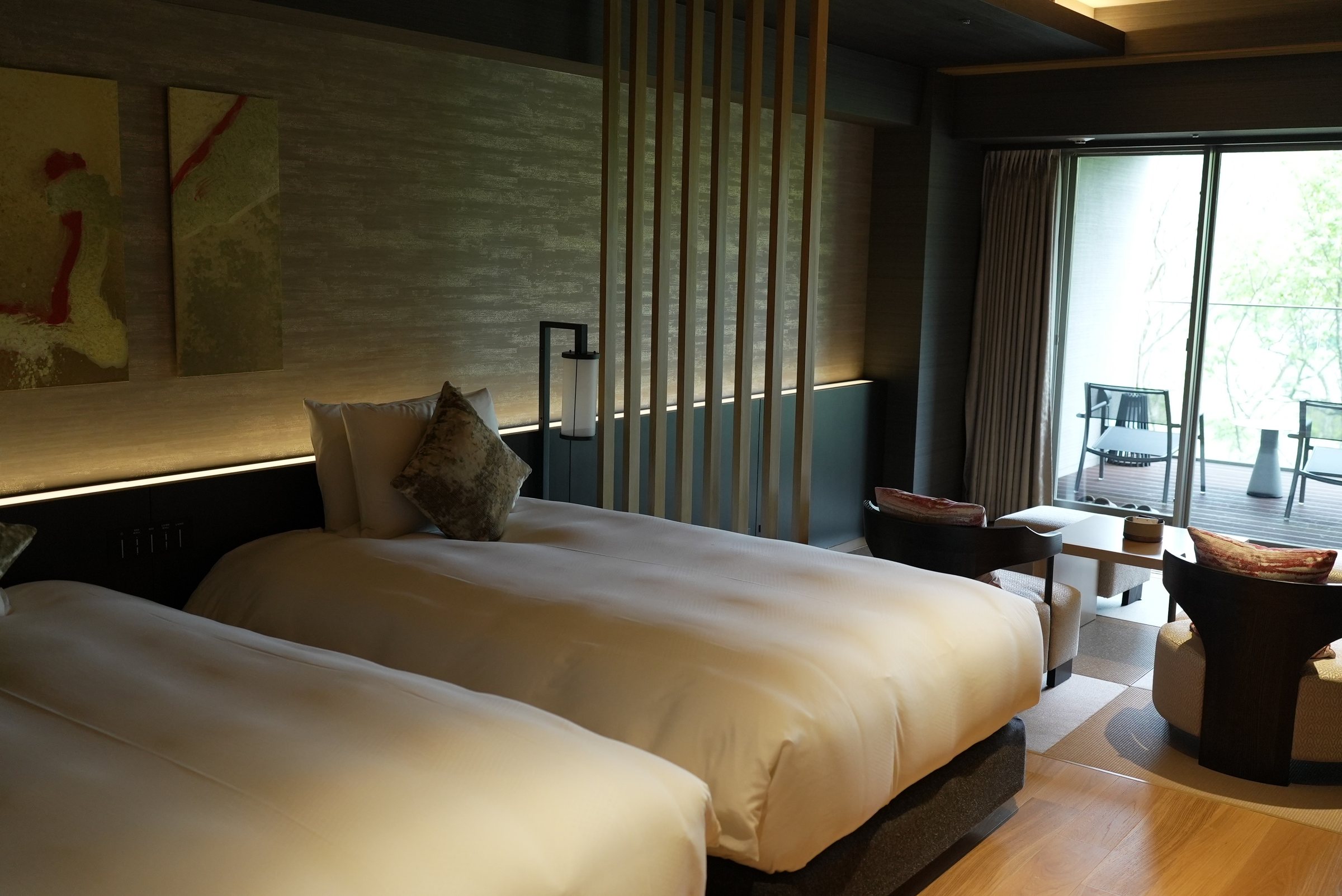
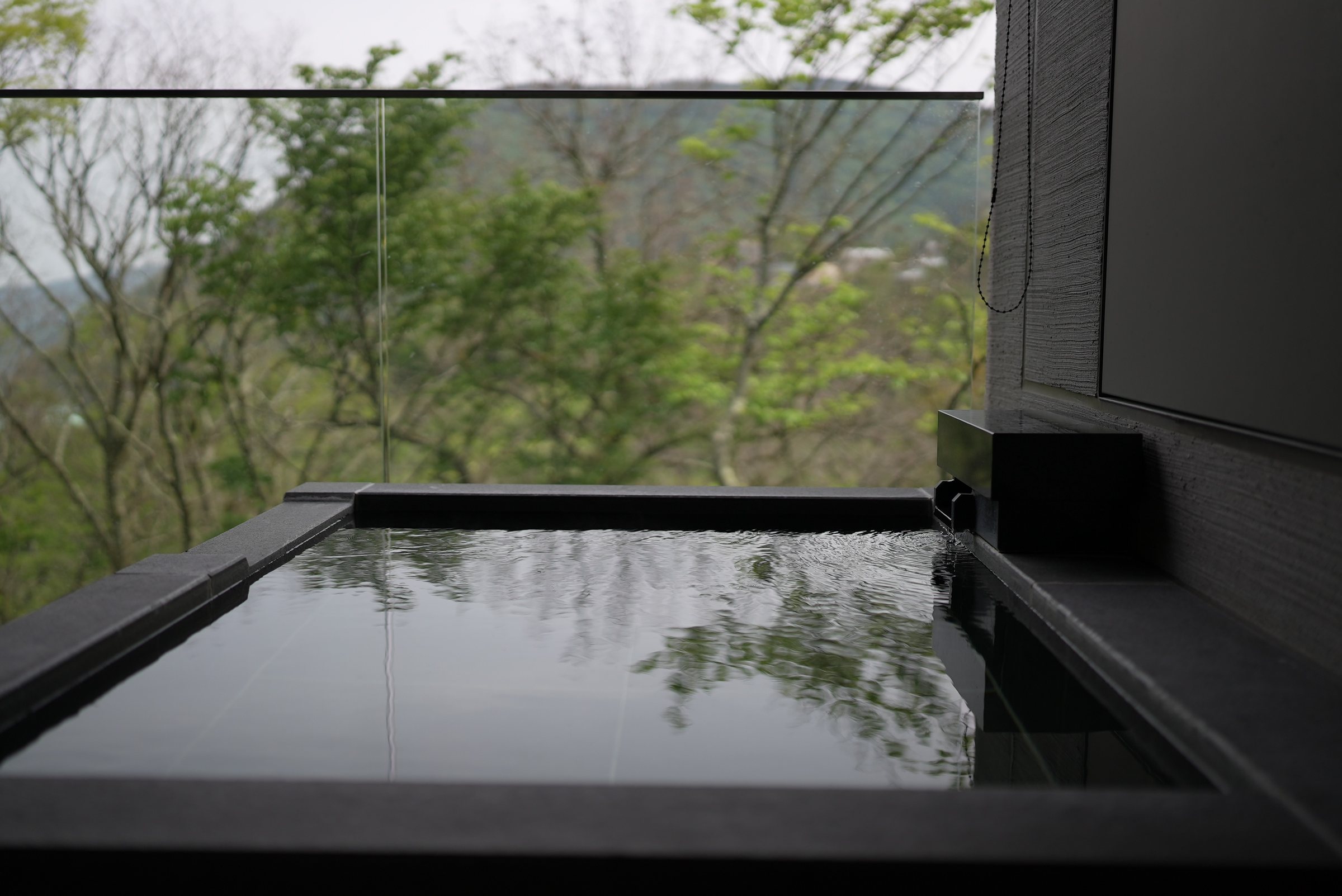
Now to the room. It was decorated in a simple, modern palette, cleaned into every corner, and its brand-new furnishings gave us a little thrill. Every room has a terrace with its own open-air bath of natural hot spring water, arranged so you can bathe among the greenery. The bathroom, with a rain shower, has glass walls.
At the washbasin, a high-end simplehuman mirror and a Panasonic Nanocare facial steamer practically insisted on a beauty routine. The large television can even stream Netflix and Amazon Prime. This was a room packed with comfort.
Awai, the guest lounge
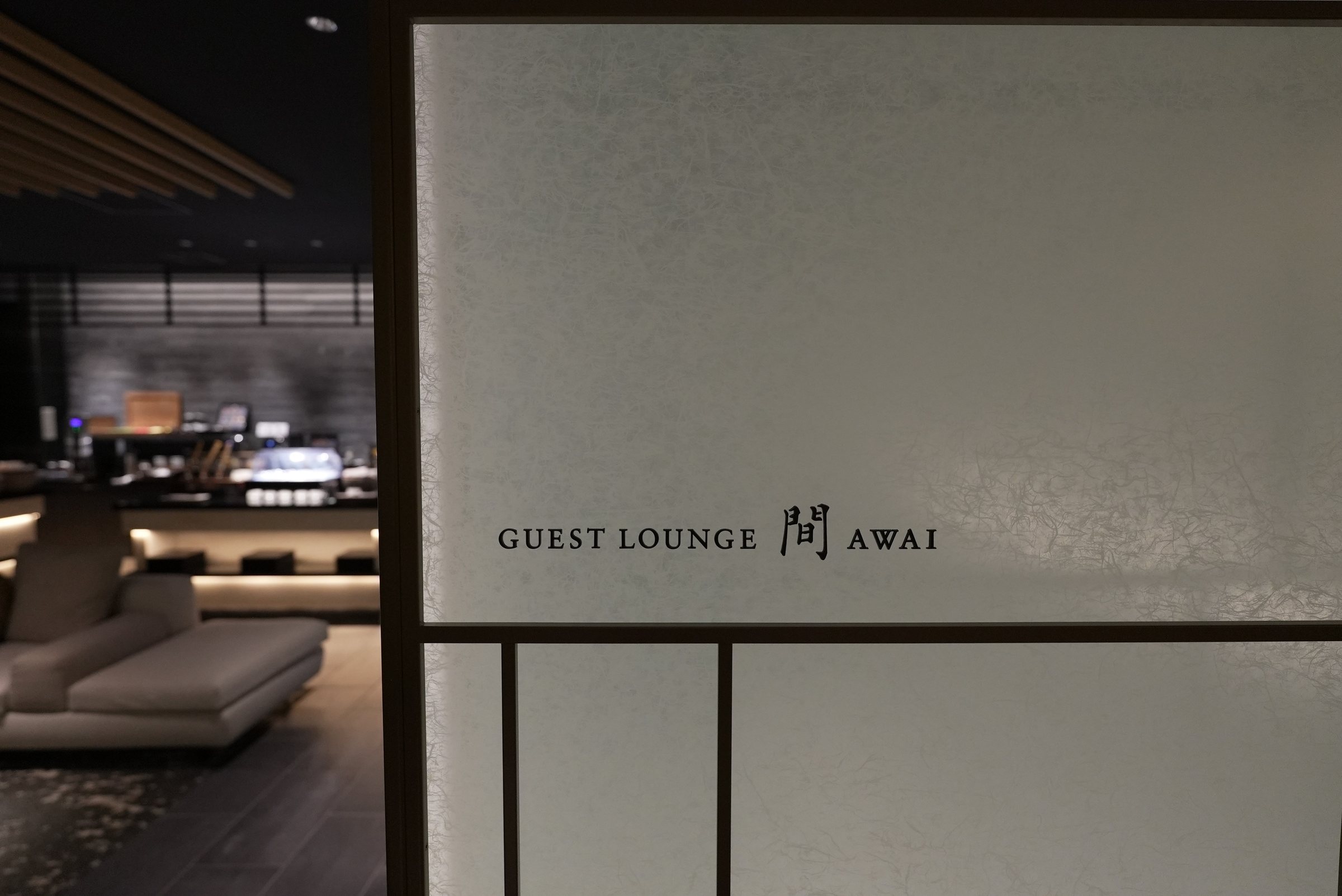
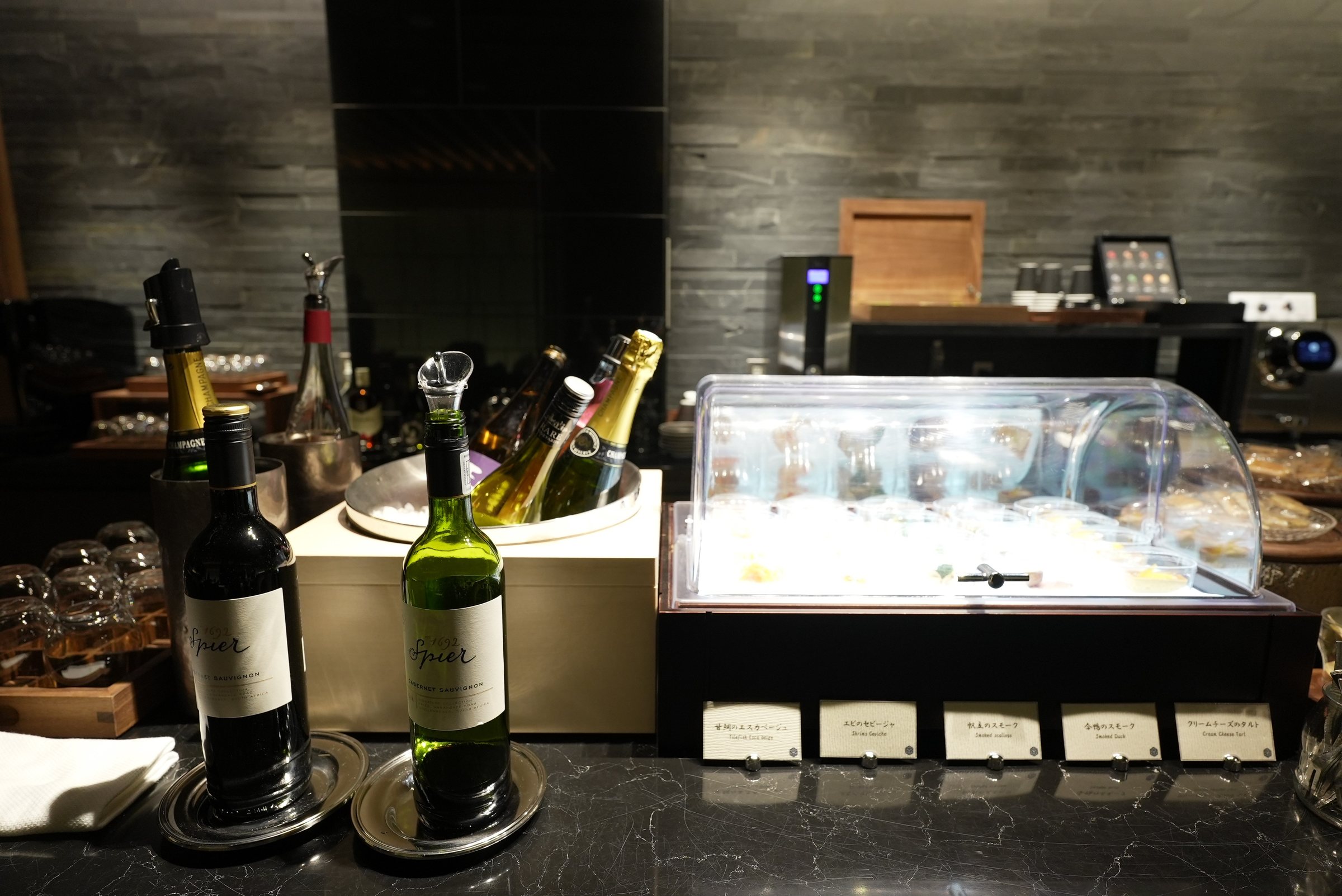
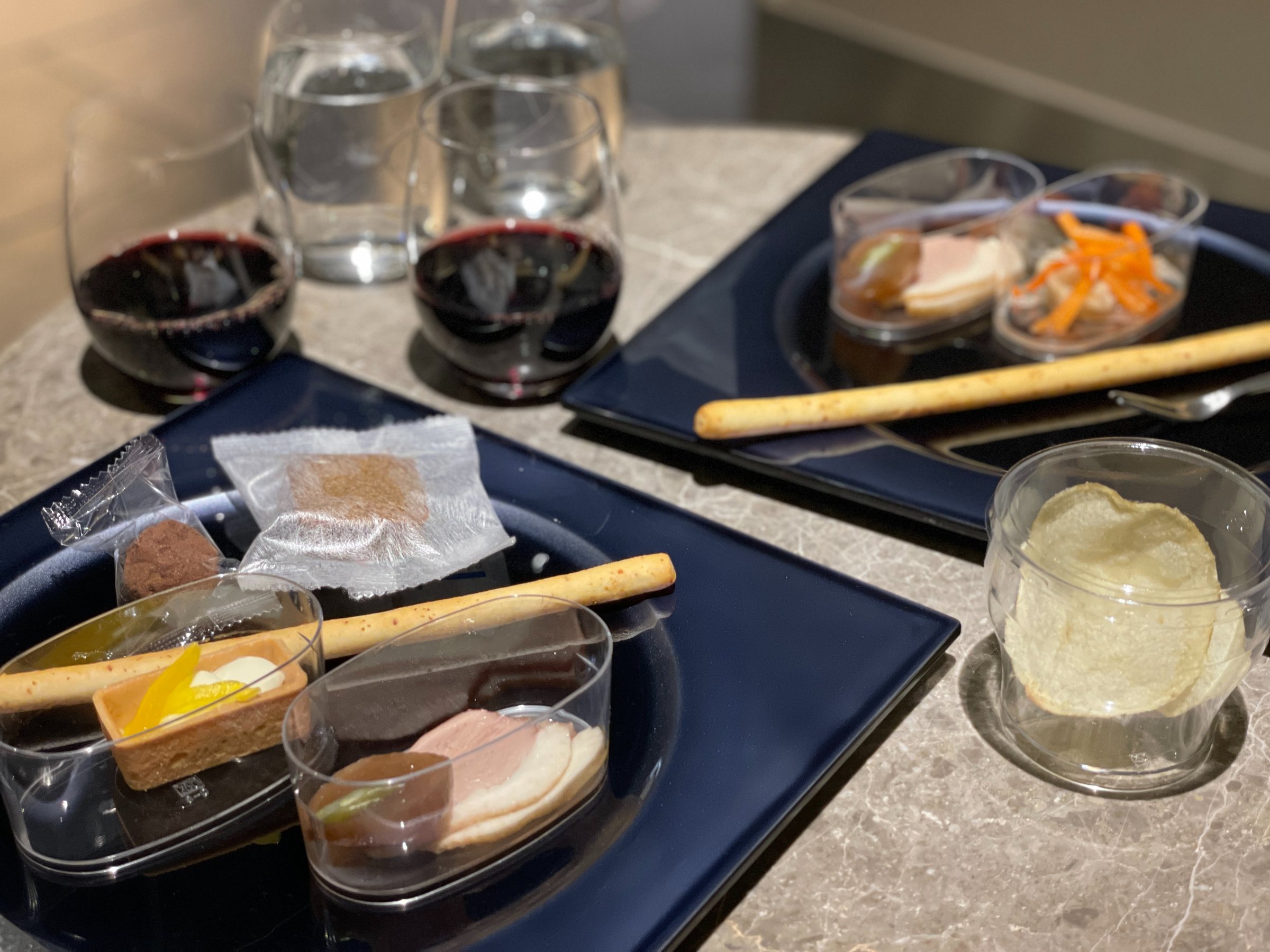
Next, we tried the facilities around the property, starting with the guest lounge, Awai. Every guest can use it within the room rate. Alongside alcohol and soft drinks, there were several kinds of appetisers and sweets. Staff are always on hand, and someone even came over to offer us another glass of wine. It would have been easy to stay far too long, but the hot springs were waiting, so we reluctantly got up.
Baths with a view of the bay
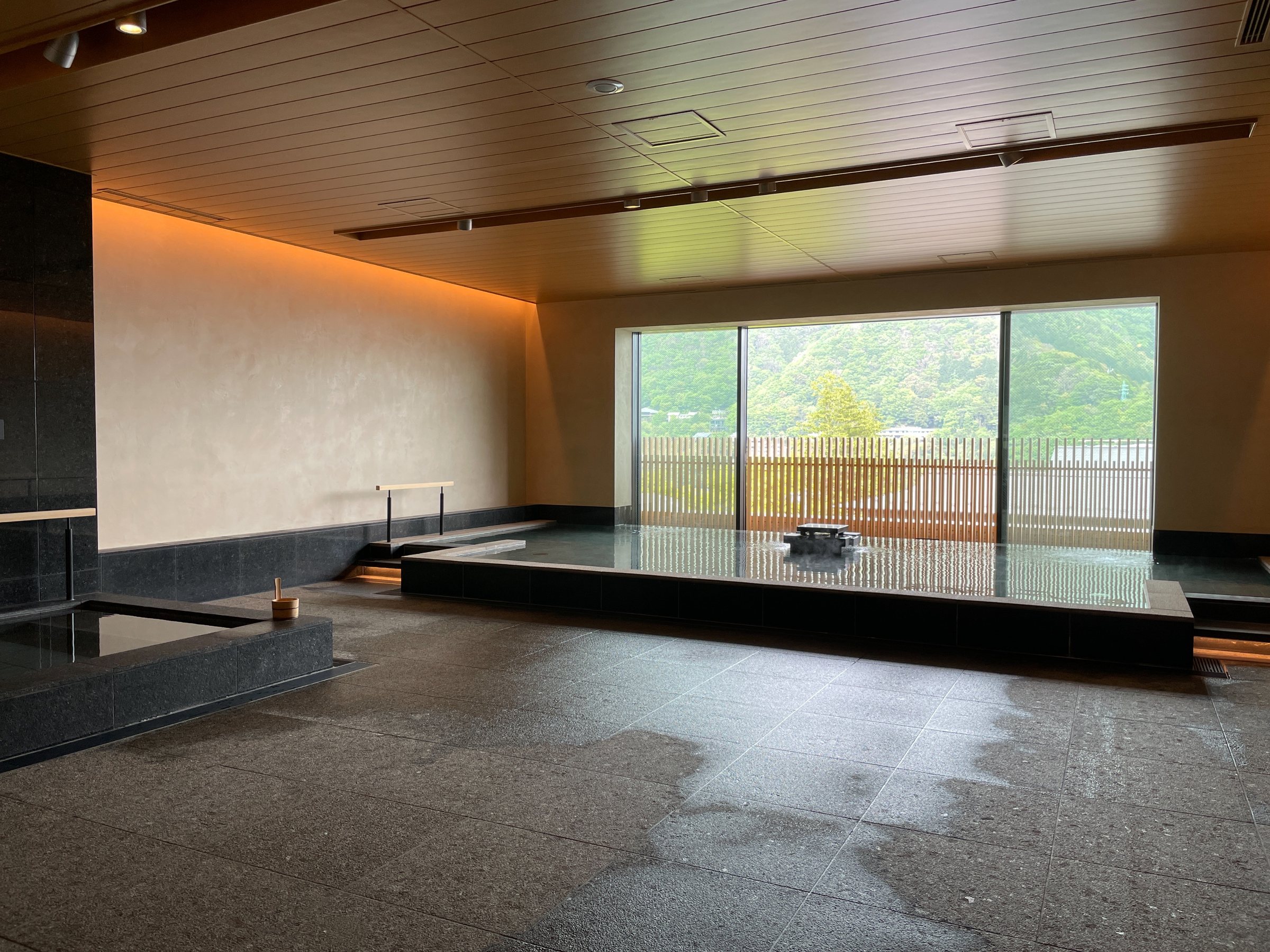
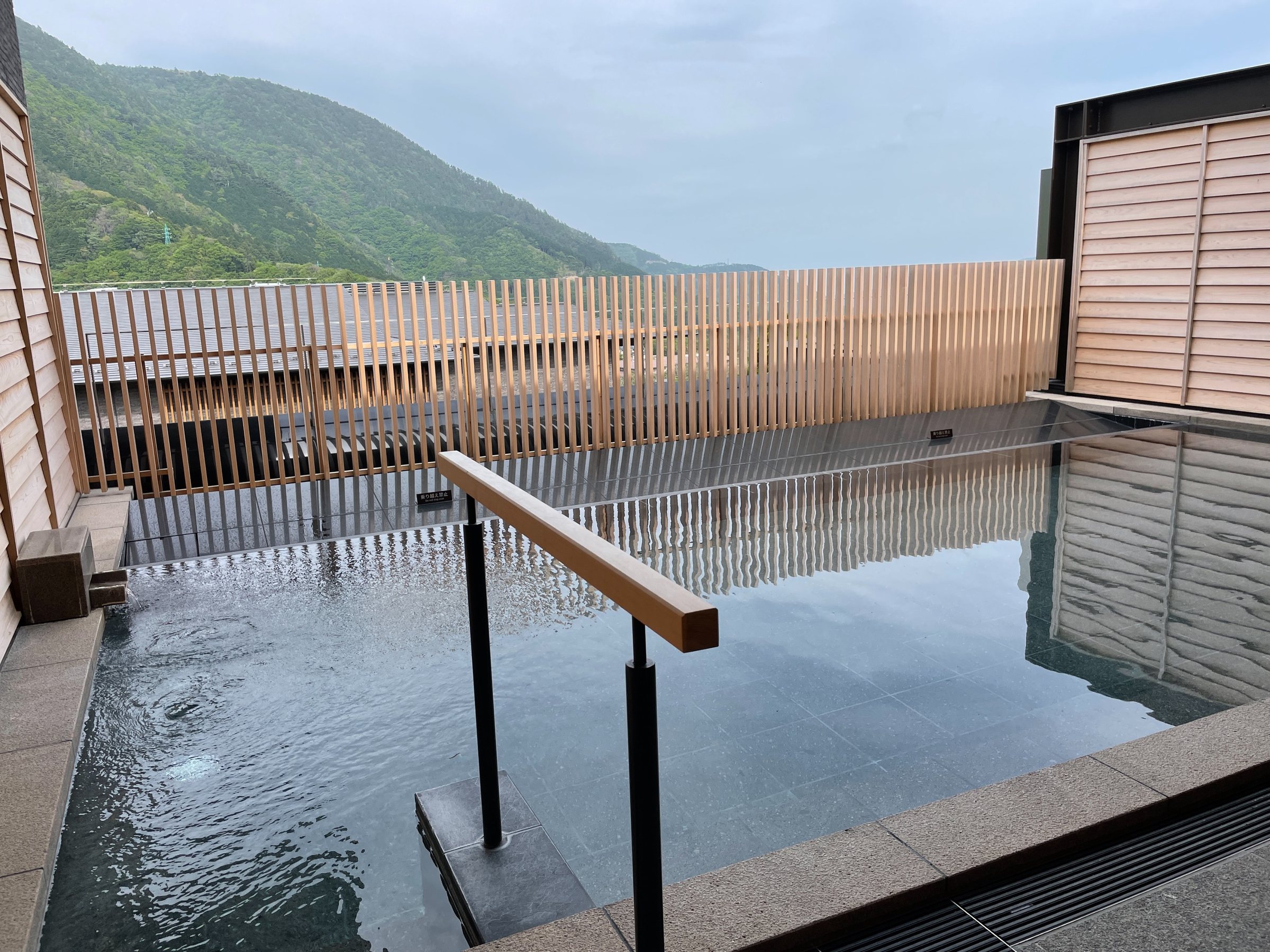
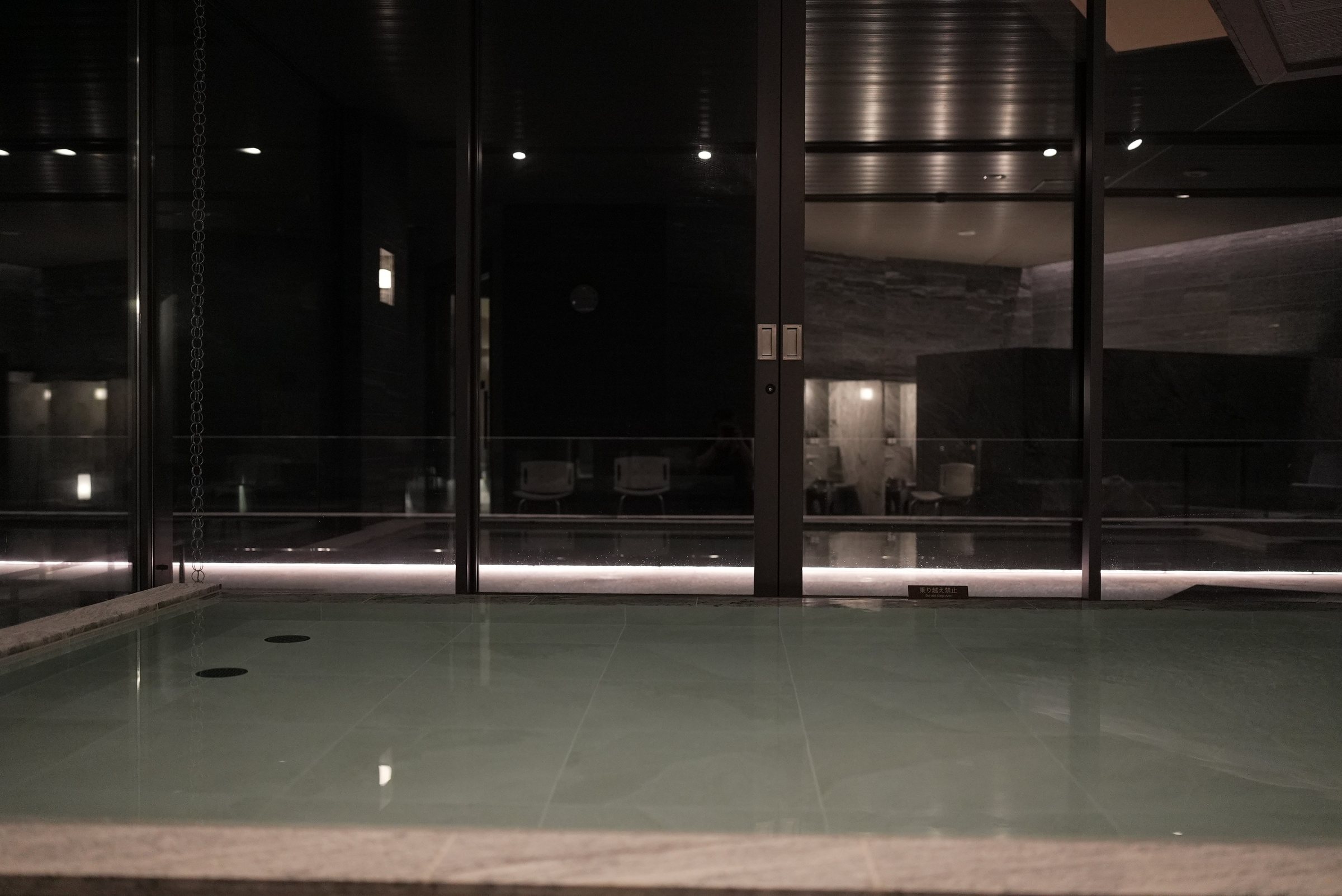
On the day of our stay, the men’s bath looked out over Sagami Bay below. The women’s bath is shown here too. In both changing rooms, every place at the dressing tables had a Dyson hairdryer and, once again, a Panasonic Nanocare device.
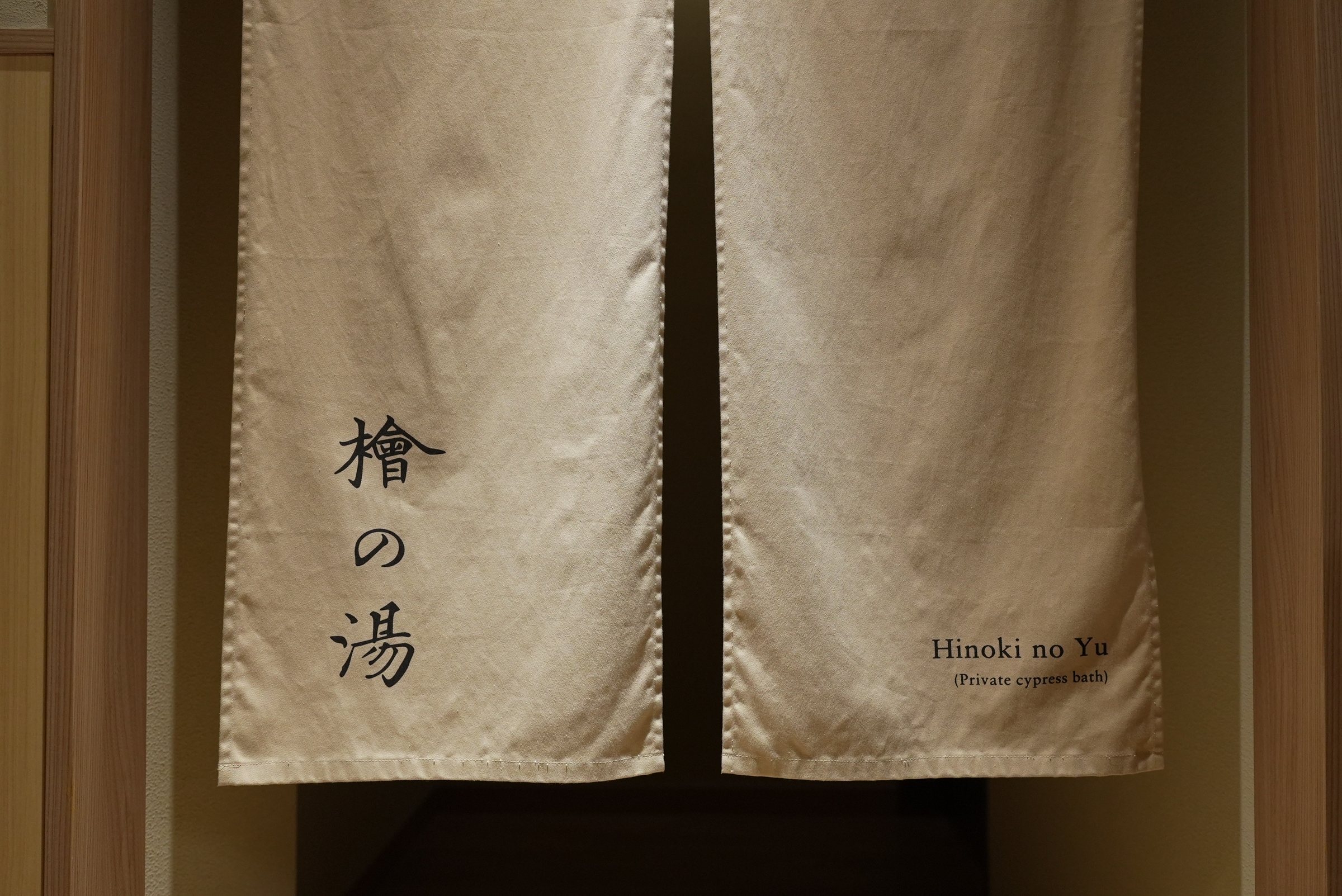
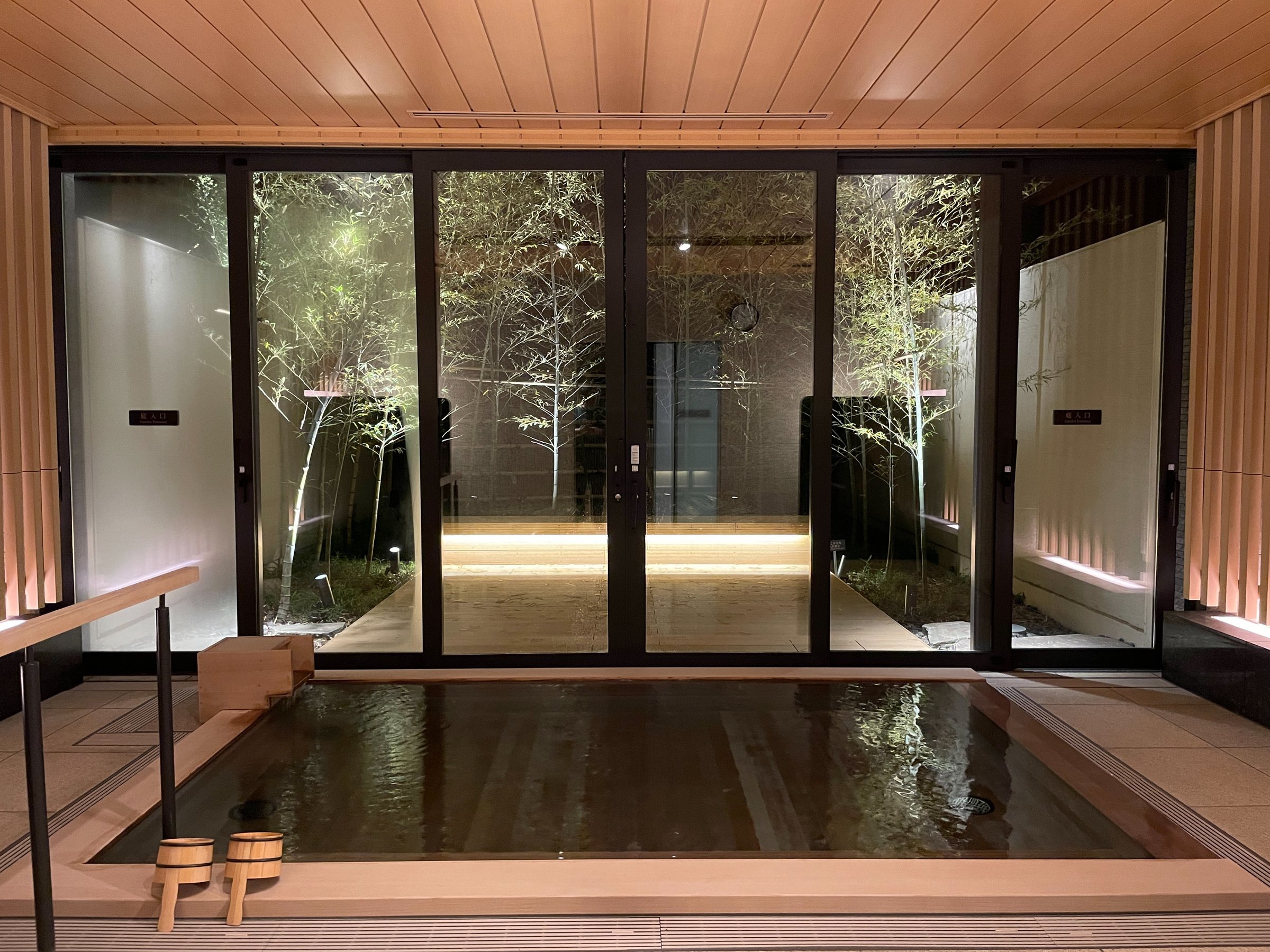
One of the private baths, which cost extra, has a large tub of natural hinoki cypress. With it entirely to ourselves, we found the contrast between the lit green bamboo seen through the glass and the lighting inside very soothing. Afterwards, a dedicated mini-fridge offered fruit drinks and natural mineral water.
Besides the main baths, Karaku has appealing private baths and a spa, so you can soak to your heart’s content in hot springs that feel part of the surrounding nature. Heading to the lounge after a bath for a cold beer or a glass of champagne is another pleasure.
Dinner by the garden
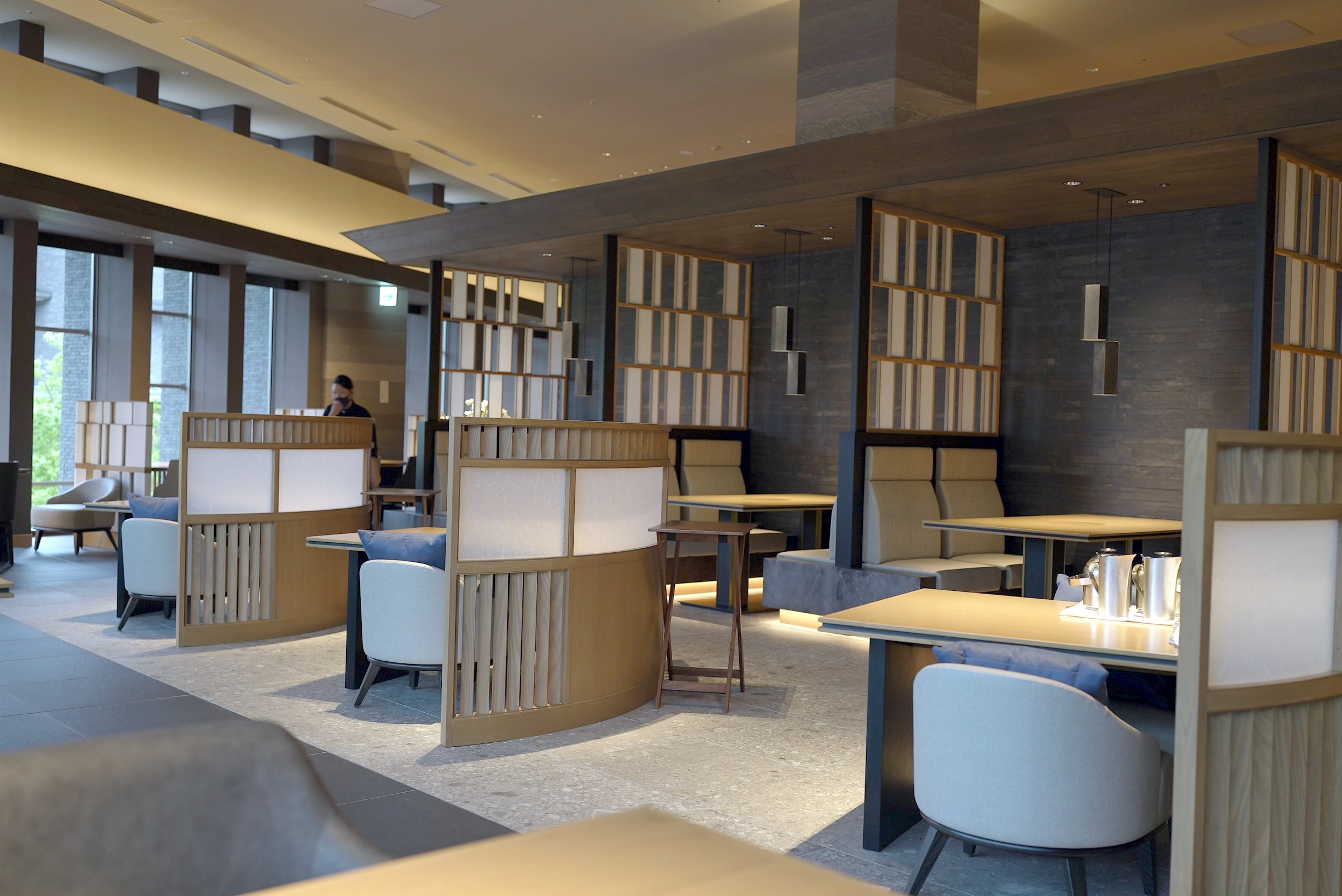
Dinner is served in the dining room. Because of the pandemic, there were only a few guests, and we were shown to a window table overlooking the garden. The room is decorated in browns, and its soft lighting suits the tableware.
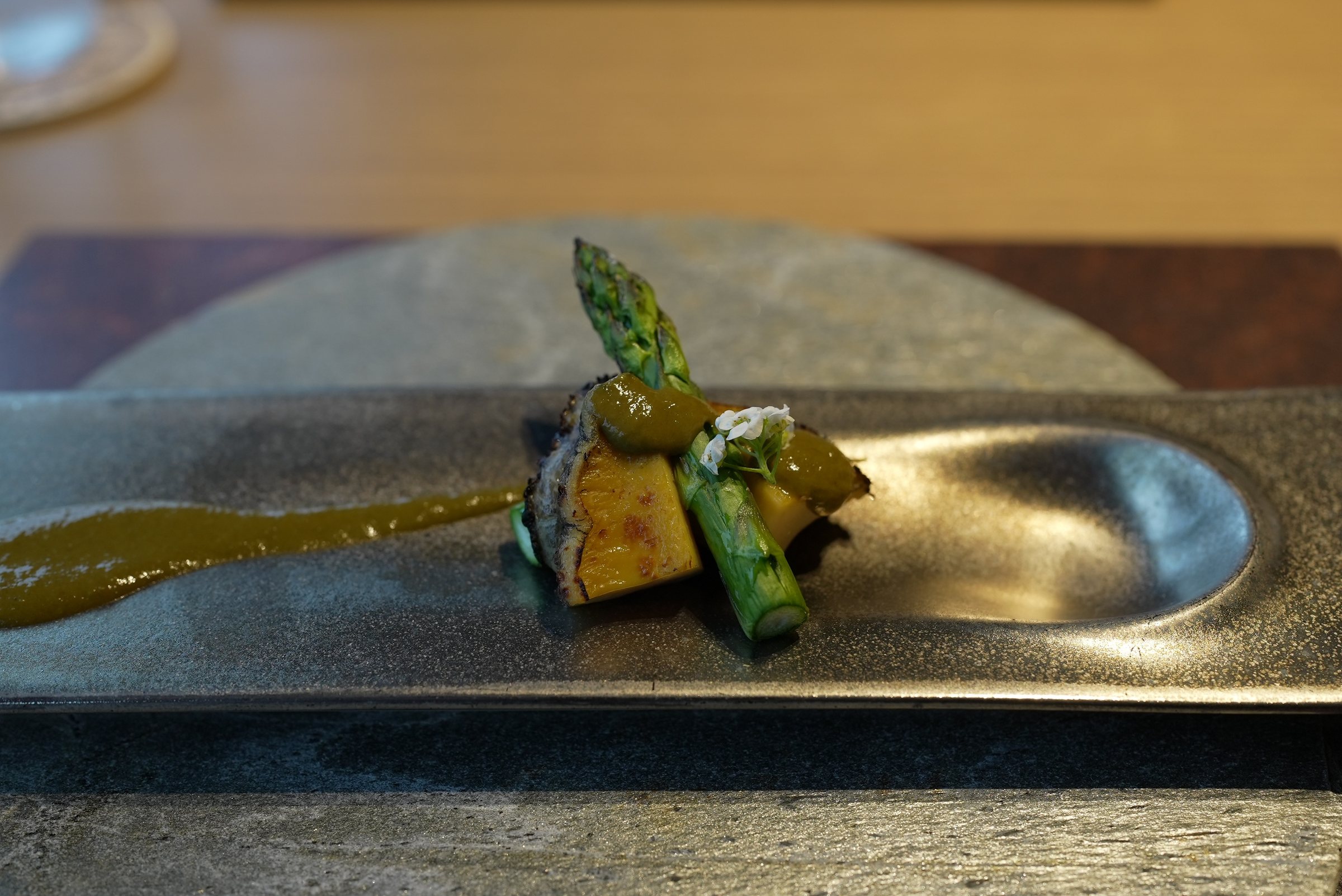
The sakizuke, or opening dish, was charcoal-grilled Ezo abalone with green asparagus. Simply grilled over charcoal, the asparagus was wonderfully fragrant, and one bite released a fresh, green flavor. We enjoyed bringing it together with the texture of the abalone, and the asparagus kept its crisp snap to the very end.
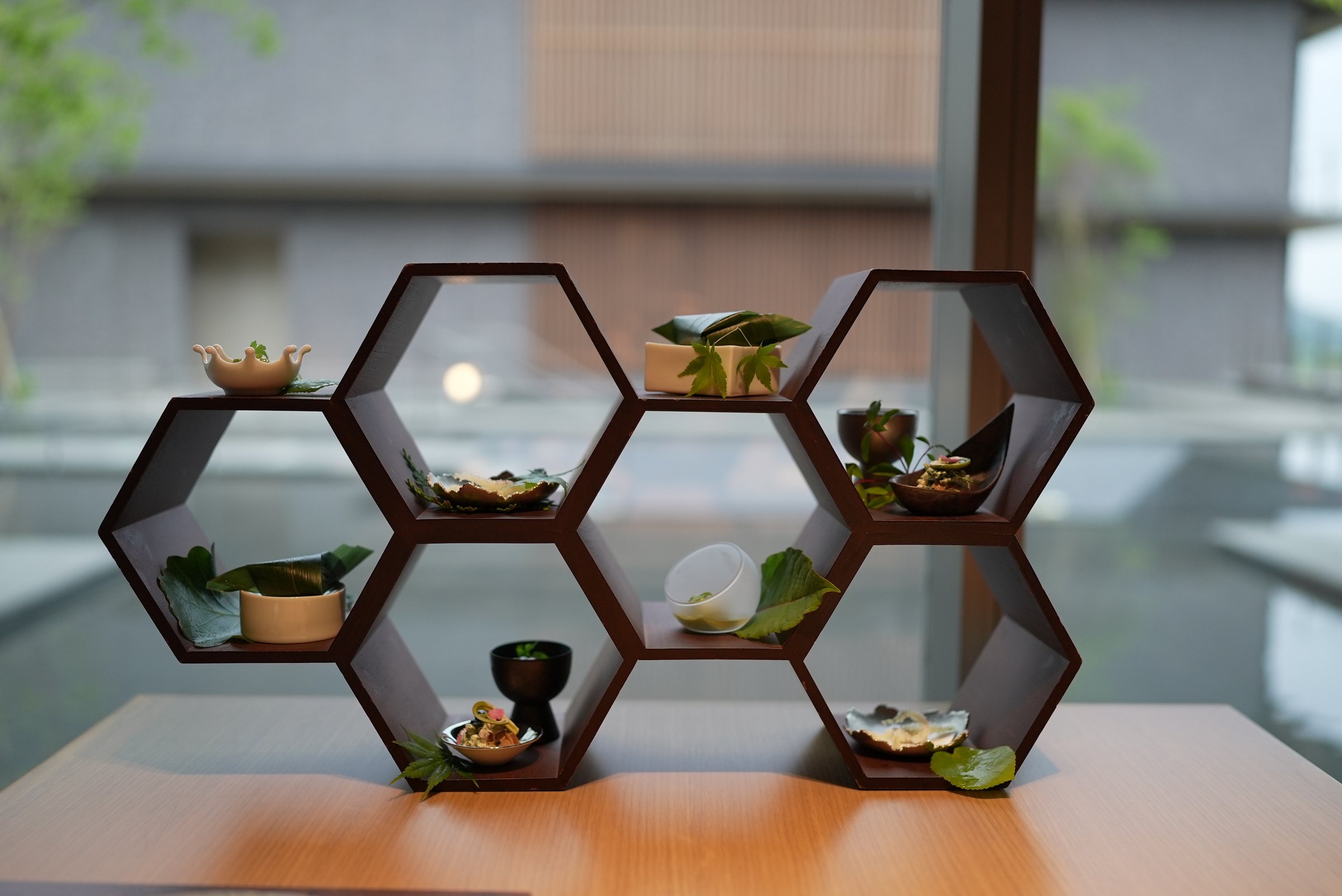
The appetisers, or zensai, were: large amago trout; broad beans with a soft-cooked egg in tosa-zu vinegar jelly; whitebait fried in a fine rice-flour crumb with fried yukari (red shiso) salt; mountain vegetables in shira-ae tofu dressing with clams simmered shigure-style in soy and ginger; mugwort tofu with wasabi; and triangular conger eel sushi wrapped chimaki-style. They arrived like a sculpture, which surprised us. The pairing of bold timber with such delicate food was beautiful, and with the water garden in the background, the whole scene could have passed for a work of art.
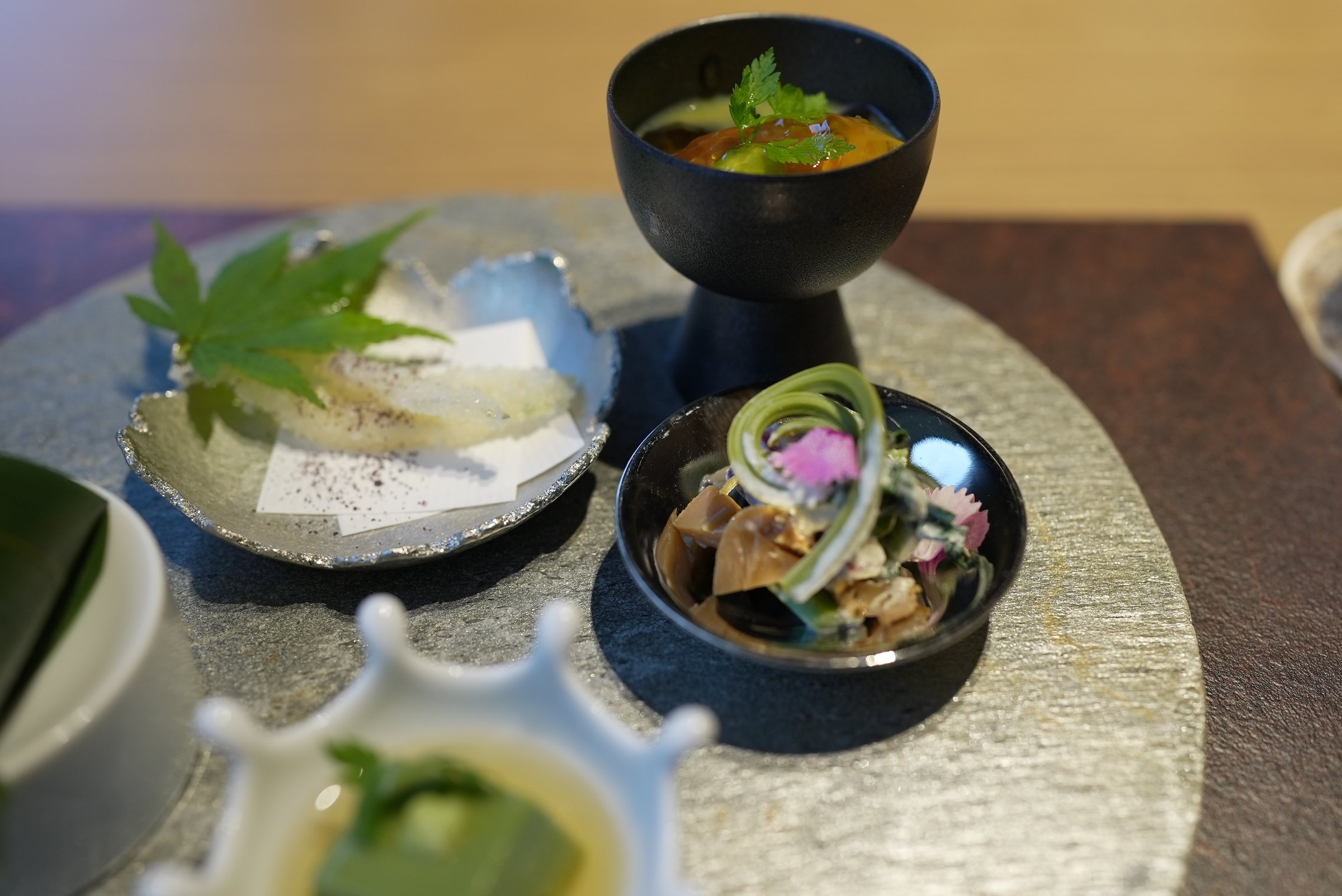
The dish in the black bowl with tosa-zu jelly made the strongest impression: its crisp citrus note tied all the ingredients together beautifully. We enjoyed the crunch of the mountain vegetables and their taste of spring, then reached for the conger eel sushi, its rice seasoned on the sweet side in a way that whetted the appetite. Had the whitebait been freshly fried, there would have been nothing to fault.
The drinks list has nothing that stands out, but it is perfectly enjoyable. A glass costs around ¥1,500.
The small number of guests may have helped, but the pace of service was excellent: each dish arrived just as we finished the previous one, with no waiting. The staff also paid attention to the tone and volume of their voices. In a hushed dining room even the click of cutlery carries, yet they set down every dish without a sound. The care was evident throughout.
We had hoped to eat at a counter, but this dining room, we were told, has none.
Soup, and the sashimi question
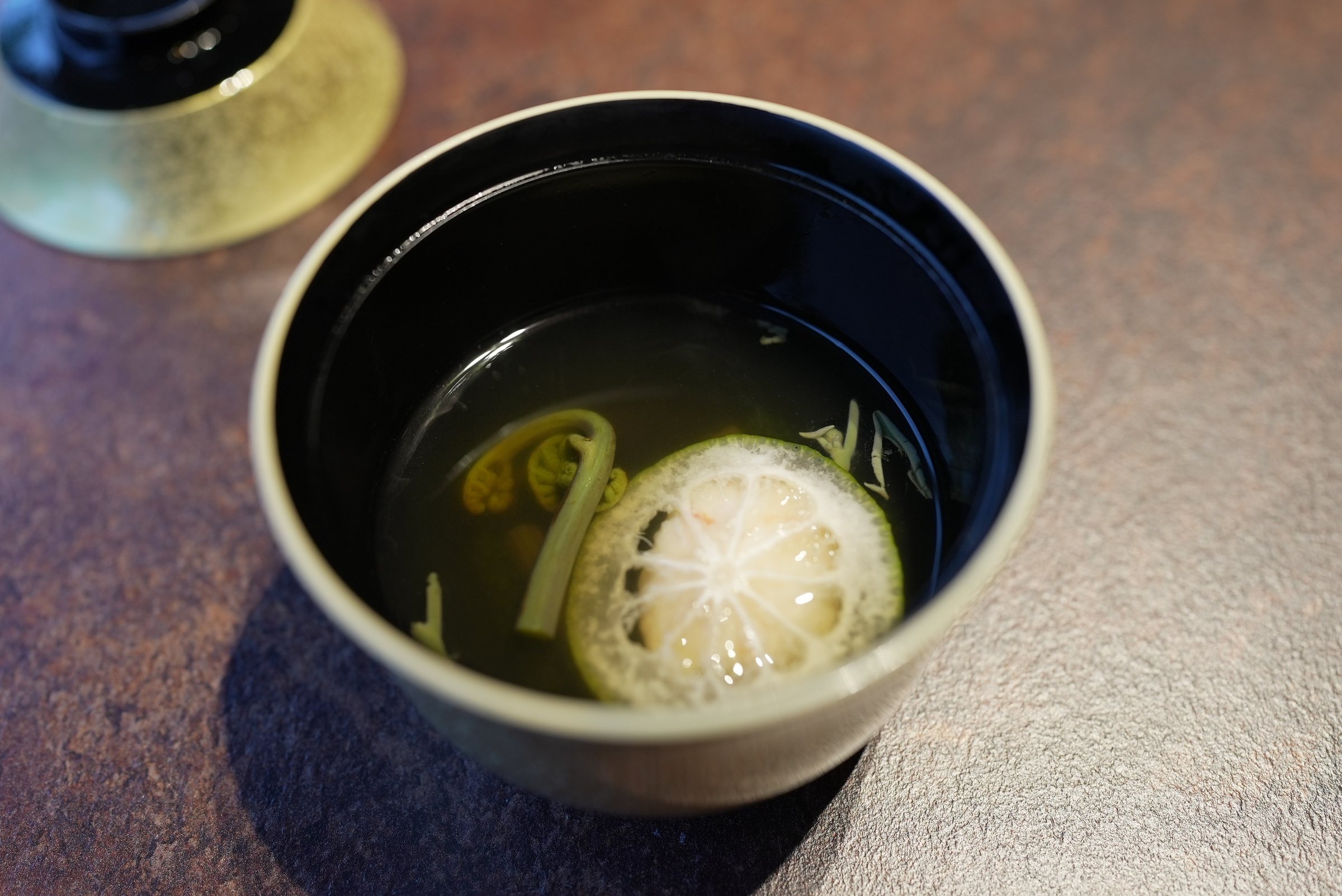
The nimono-wan was a clear soup of prawn and bonito dashi with a prawn shinjo dumpling, warabi bracken, kabosu citrus, junsai (water shield) and sea grapes. The moment we lifted the lid, the scent of kabosu was entrancing. The dumpling of small saimaki prawns, the bracken and the kabosu all reached the tongue at once, and even after we had drunk the last of the dashi, the kabosu lingered in the bowl.
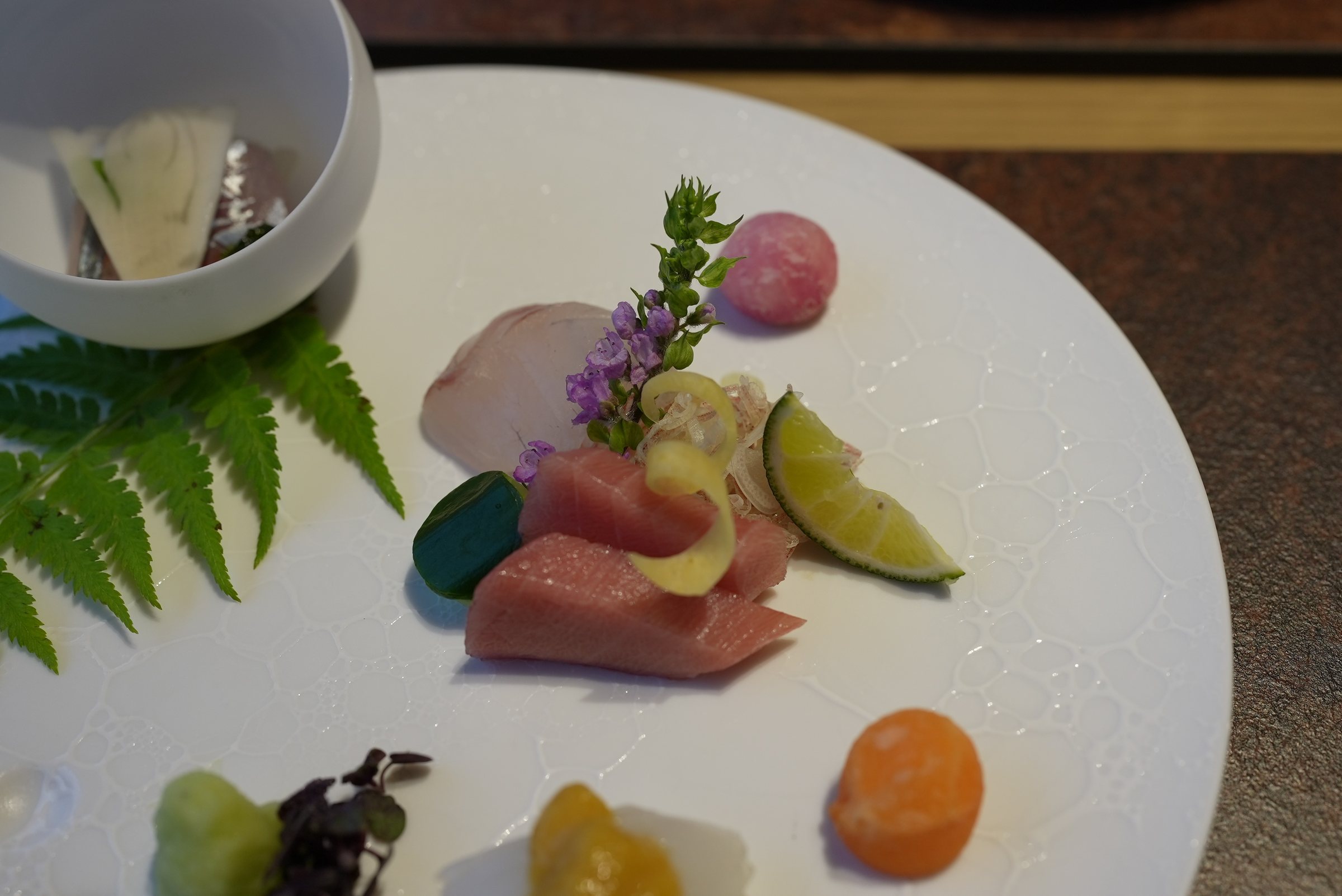
The otsukuri was seasonal fish from Suruga Bay and Sagami Bay. It came with tosa-joyu, soy sauce enriched with bonito, and irizake, an old seasoning based on sake. A little salt would have been welcome too.
The sea urchin on the squid had a slightly fishy note, and the sashimi as a whole came in modest pieces. To let the fresh fish speak for itself, more generous cuts would surely be better. With the horse mackerel, the condiments played a starring role.
The mains, chosen prix-fixe
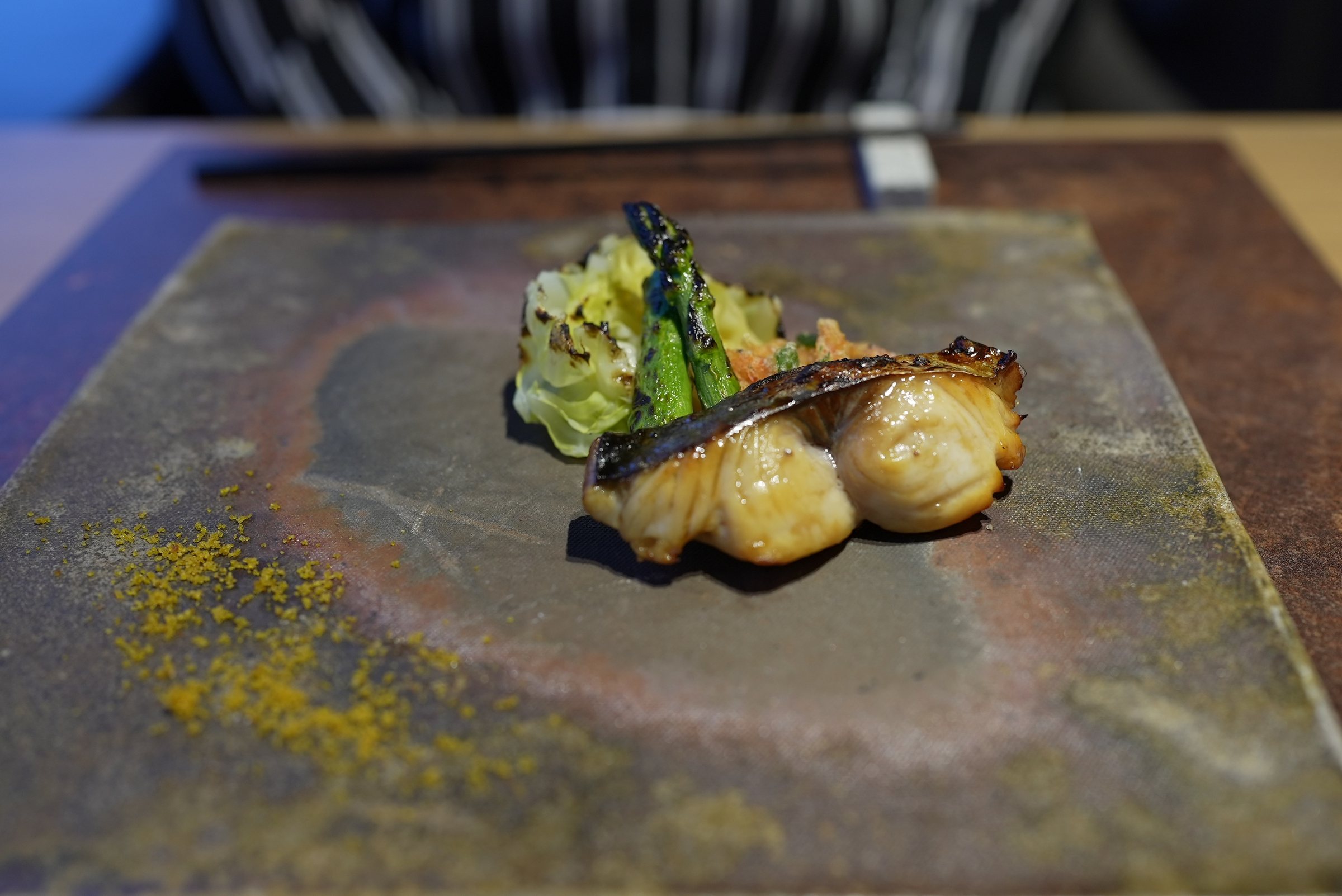
The main courses are chosen from a prix-fixe menu. The fish options included sawara (Spanish mackerel) grilled yuan-yaki style, “in the manner of spring”, with spring cabbage and asparagus that brought the feel of the season to the plate. The karasumi (dried mullet roe) seemed a little faint, but the seasoning was well judged. Honestly, though, a main course you can finish in one bite is too small.
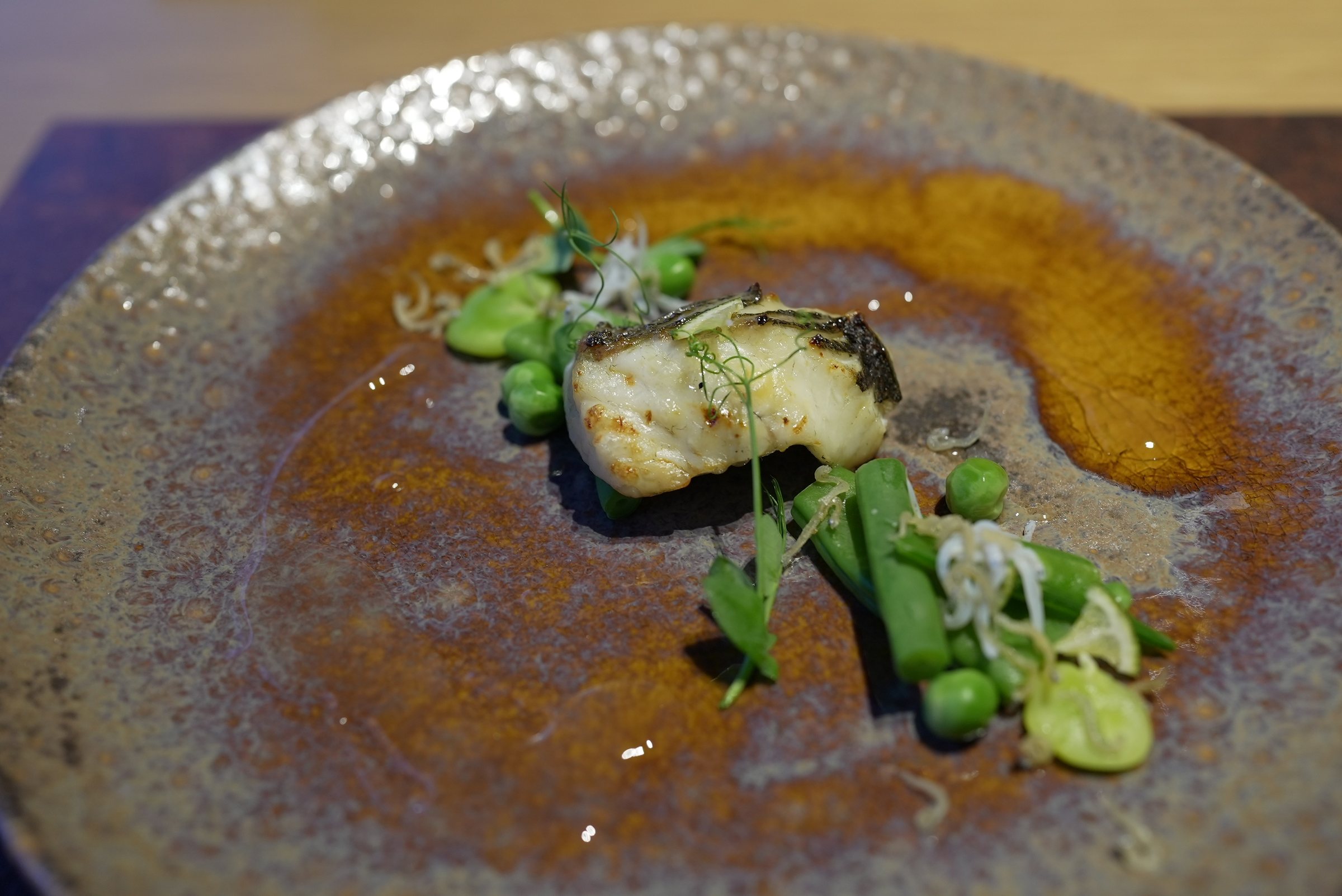
The other was sea bass grilled wakasa-yaki style, with pulses and a sudachi dashi poured over as you eat. This too vanished in a moment, which we regretted.
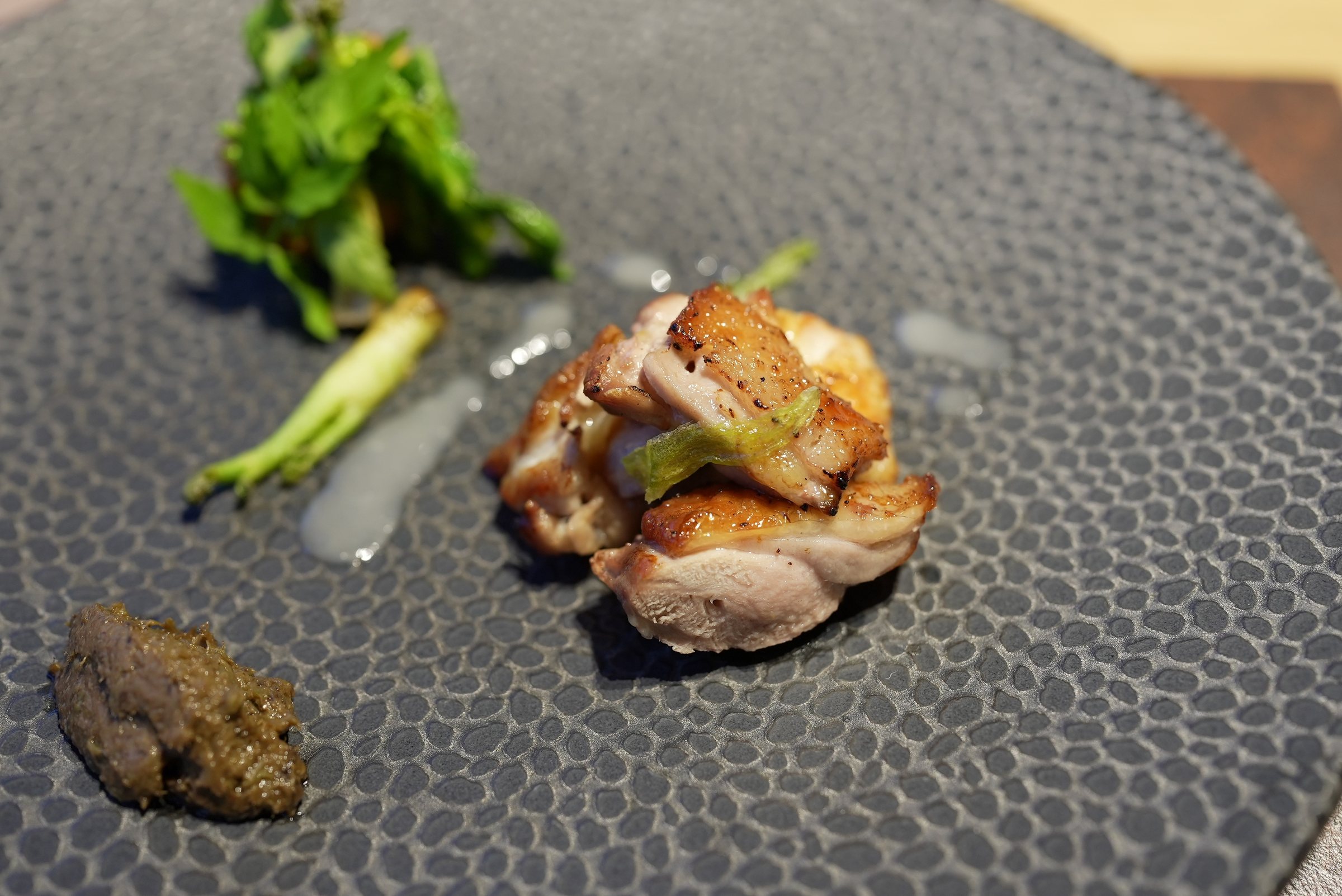
For meat, there was charcoal-grilled Amagi shamo chicken with a paste of fuki-no-tō (butterbur shoots) and peanut butter. We relished the chicken’s bite and toasty flavor, with its firm flesh and fat rewarding every chew. Sadly, the peanut-butter sauce seemed to lack definition. Here, too, we would have liked a bit more.
The prix-fixe format makes choosing part of the fun. Among the other options was a pork with the playful name “LYB pork (Louis Vuitton)”.
Rice from a familiar hand
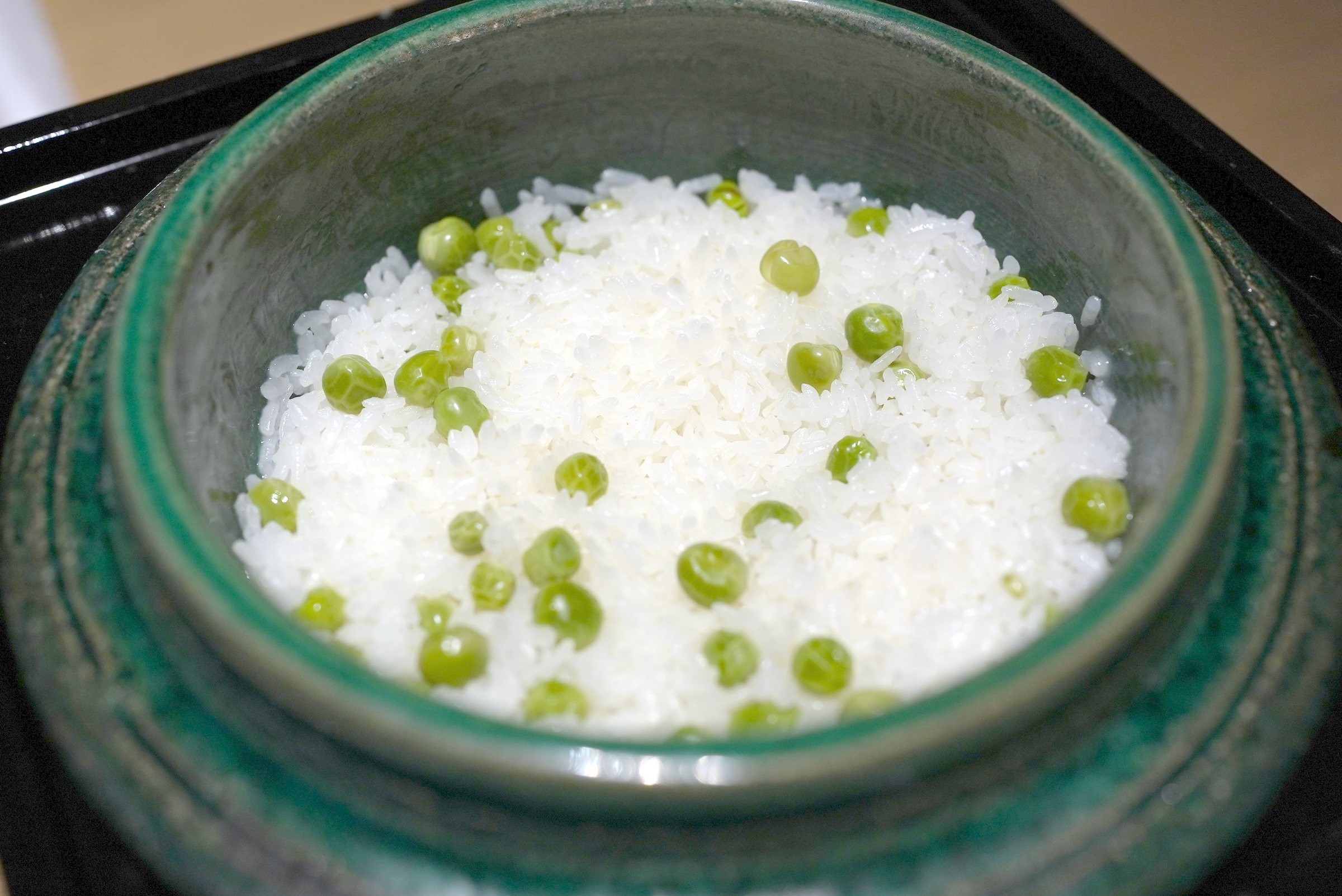
The rice course was Usui pea rice, cooked in the pot, a speciality of the kitchen. Made with Tsuyahime rice from Yamagata, every grain was beautifully distinct, and the gentle pop of the peas against the soft, sticky rice was just right.
In fact, the head chef, Mr Tateishi, is someone we had interviewed at Gyokuhokan, which we have also reviewed. Hearing that he was to lead the kitchen at Karaku for its opening, we came to visit. Sadly, he was not there that day, so we did not get to see him.
Much of the cooking recalls the style we enjoyed at Gyokuhokan, while some dishes show new development. This rice carried over a method that everyone at Gyokuhokan agrees is delicious, done with Mr Tateishi’s own exacting standards.
Then came the kō-no-mono, or pickles. Mr Tateishi once told us that he buys carefully selected pickles at Tsukiji, and we wondered whether the same was true here.
The cutlery was stylish and refined. The chopsticks were slender and well proportioned, which made them easy to hold, and they seemed to have been designed with thought even for the moment they touch the lips.
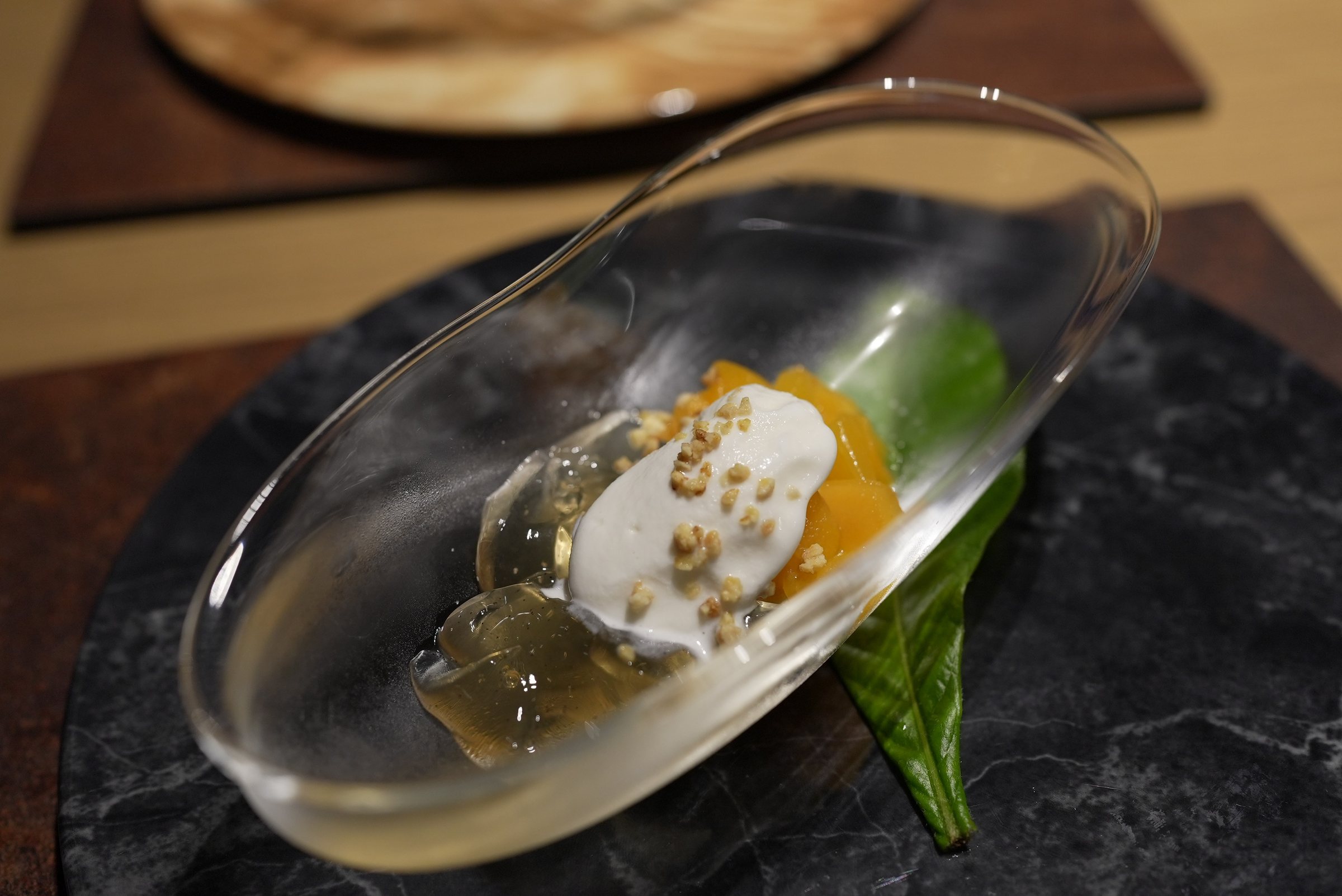
The dessert, named Miwa, was an ume plum jelly with loquat that gently settled the palate.
The garden after dark
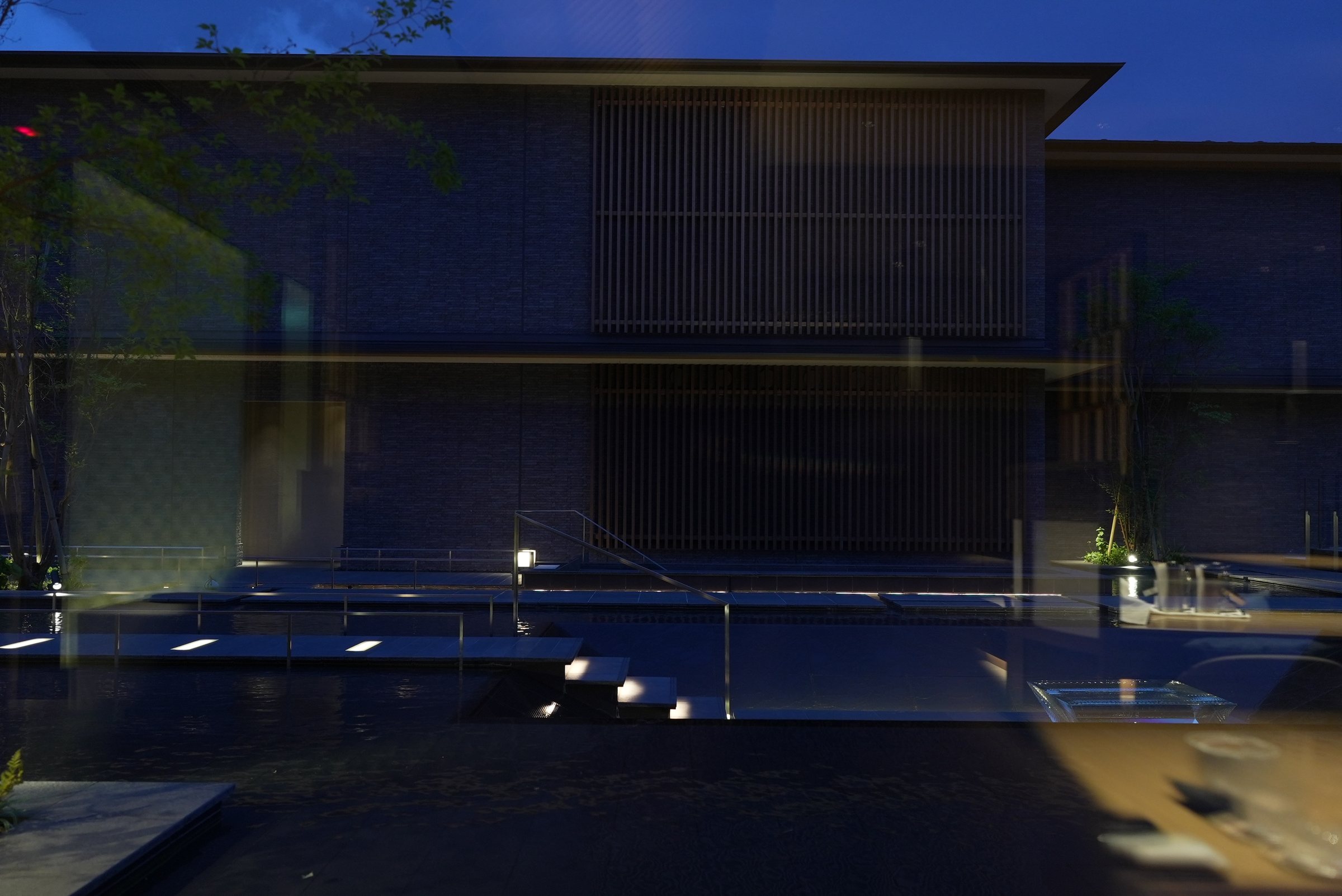
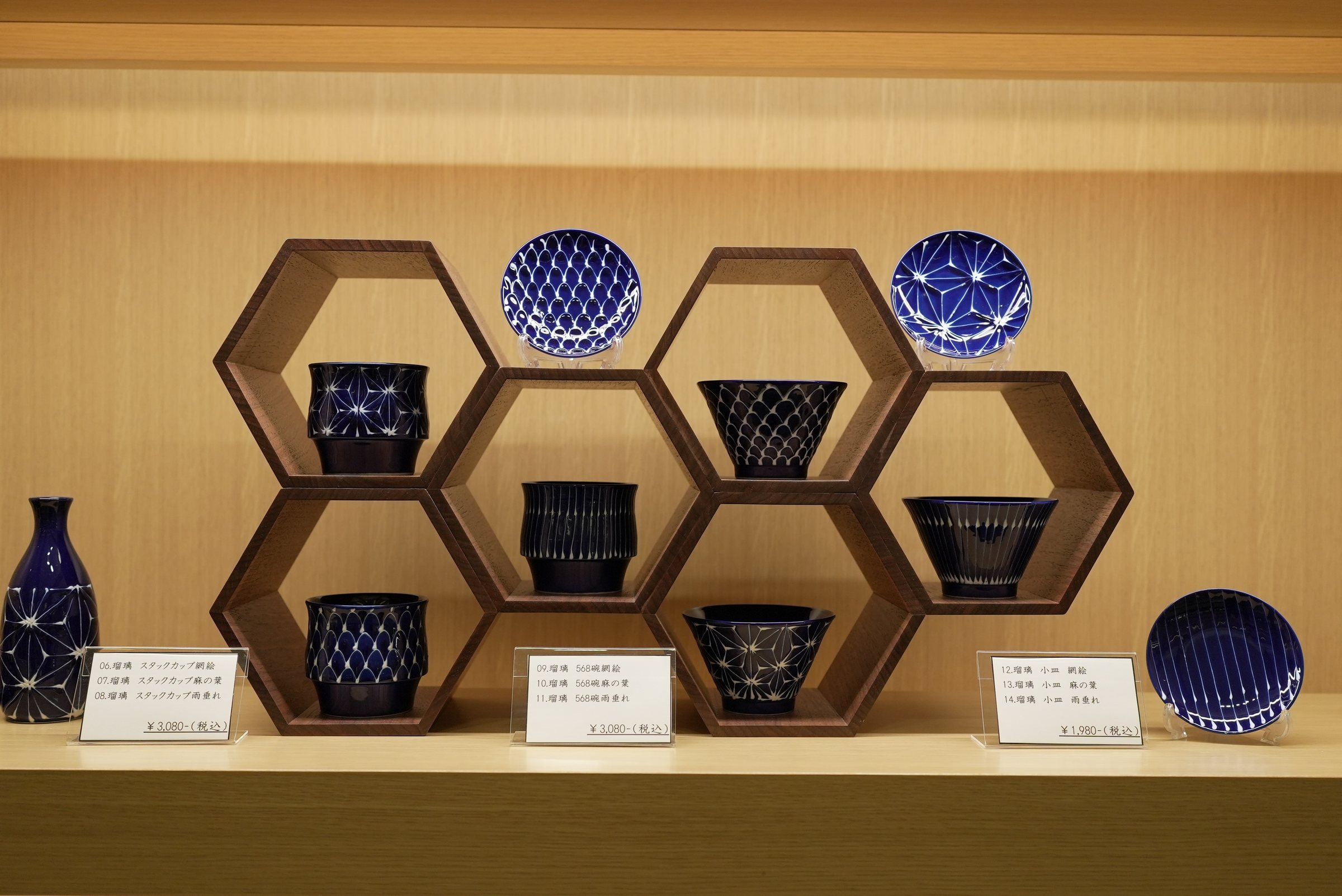
After sunset, the garden and its cool water created a space where time seemed to slow down. The furnishings and the items in the shop include many pieces that would not look out of place in a museum. The evening’s pleasures continue: a stroll after dinner, a visit to a private bath, or a nightcap in the lounge.
Breakfast, and chopsticks to keep
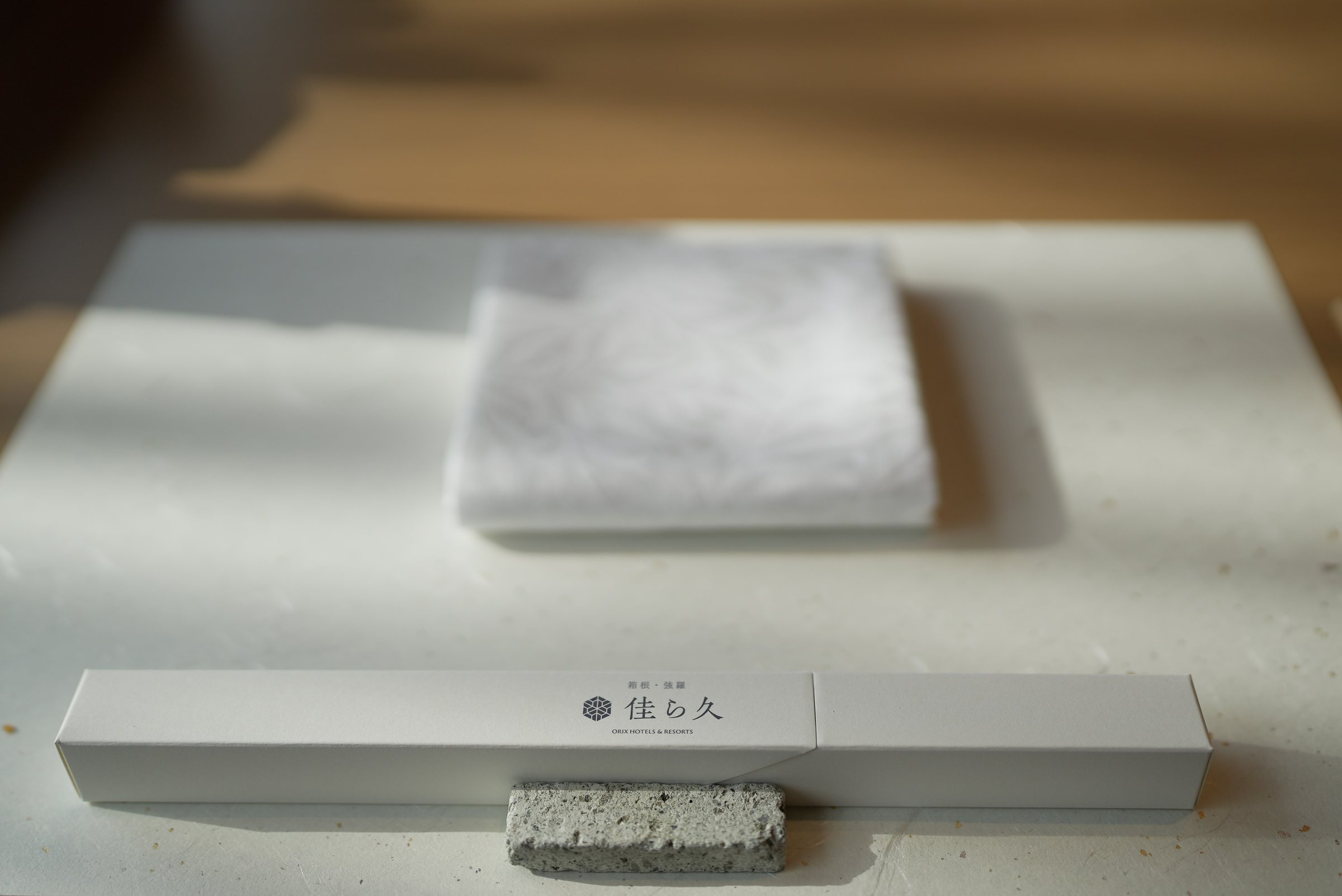
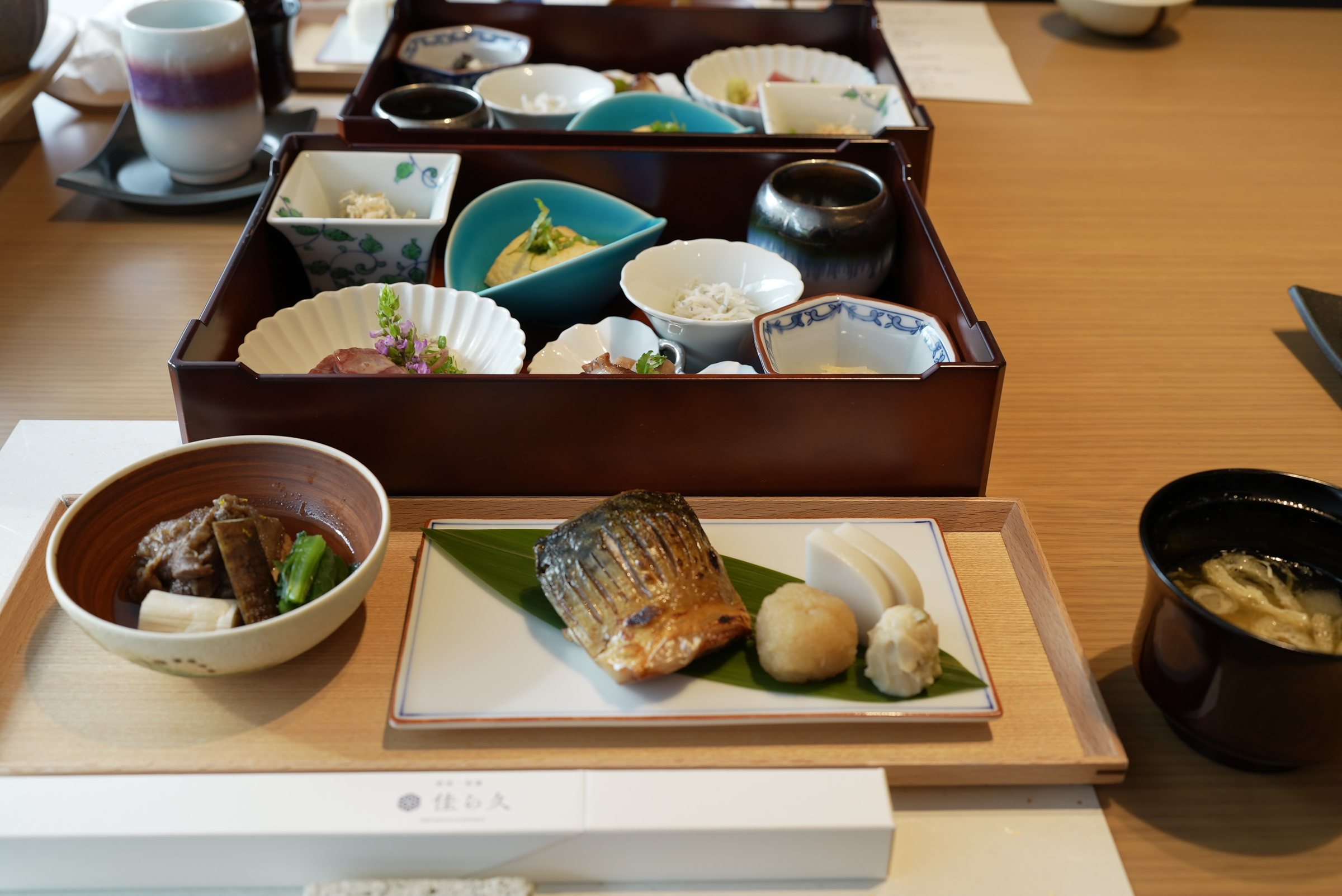
At breakfast, the table was dressed in a clean ivory and set with Karaku’s own wooden chopsticks. They came in a box, which made us suspect something, and we were right: they are a souvenir to take home.
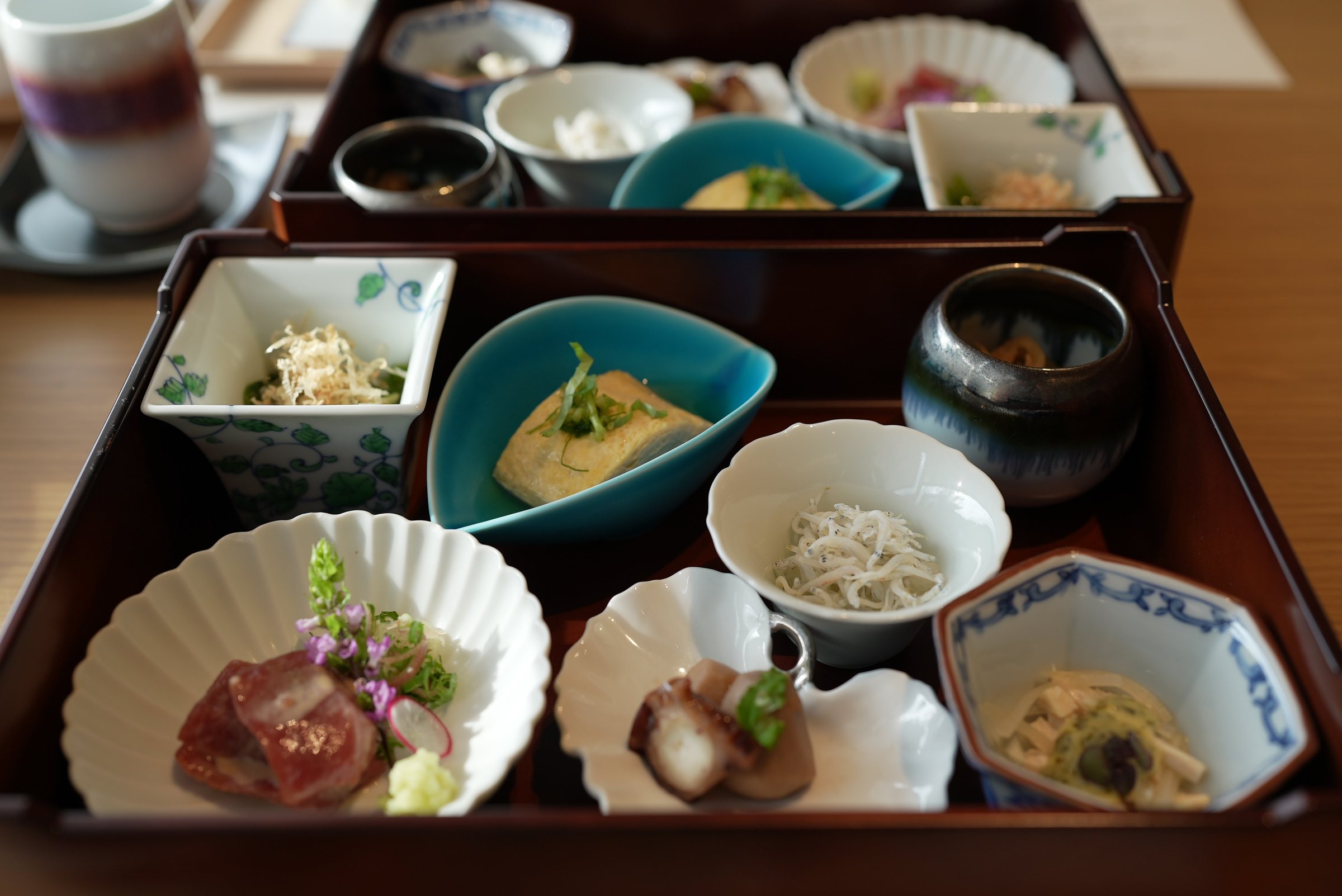
The dishes were laid out on a table beautifully lit by the morning sun. There were obanzai, Kyoto-style home dishes: greens steeped in dashi, udo (mountain asparagus) with steamed chicken, rolled dashimaki omelet, octopus and taro simmered country-style, whitebait with grated daikon, and dried daikon strips. The mukōzuke was tuna dressed in sesame soy sauce with a full set of condiments. The gentle seasoning, designed for the first meal of the day, shone through, and a dashimaki omelet is always a pleasure.
This breakfast set brings together specialities from across the region: Izu, Hakone, Suruga Bay and Odawara.
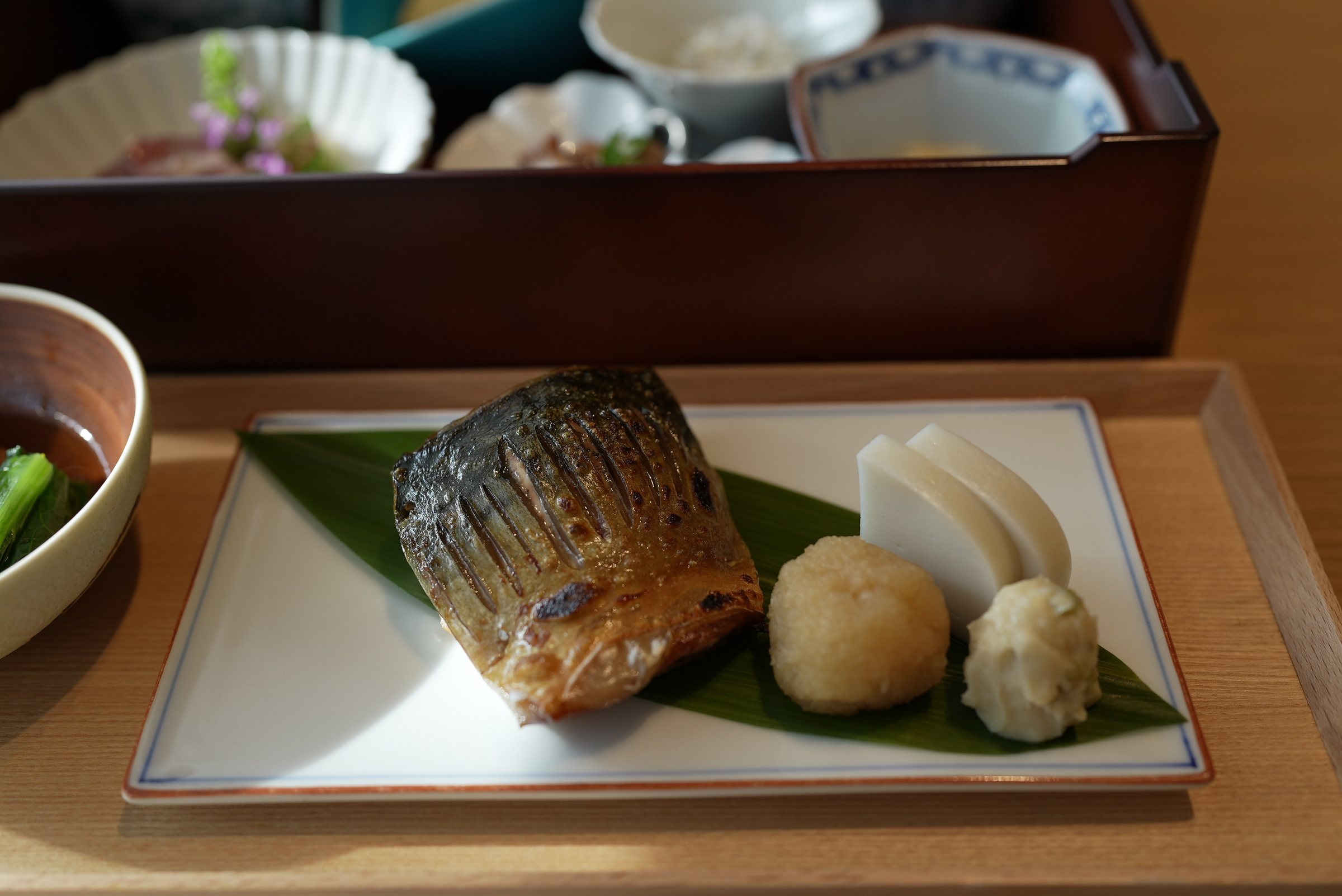
The nimono was a seasonal simmered dish of niku-dofu (meat and tofu) with burdock, grilled leek, greens and yuzu: a flavor everyone loves, and perfect with white rice. The grilled course was dried mackerel from Ogiso Shoten in Shimoda, with grated daikon dressed in soy, Odawara Kagosei kamaboko fish cake and Amagi wasabi pickles. As we have mentioned before, Ogiso Shoten’s dried fish is one of the head chef’s particular choices. This fish is undeniably good.
Then came pot-cooked white rice and miso soup. Unlike the night before, breakfast uses Ichihomare rice from Fukui. Tasting two kinds of rice in a single stay is a real luxury. With that, an elegant breakfast was complete.
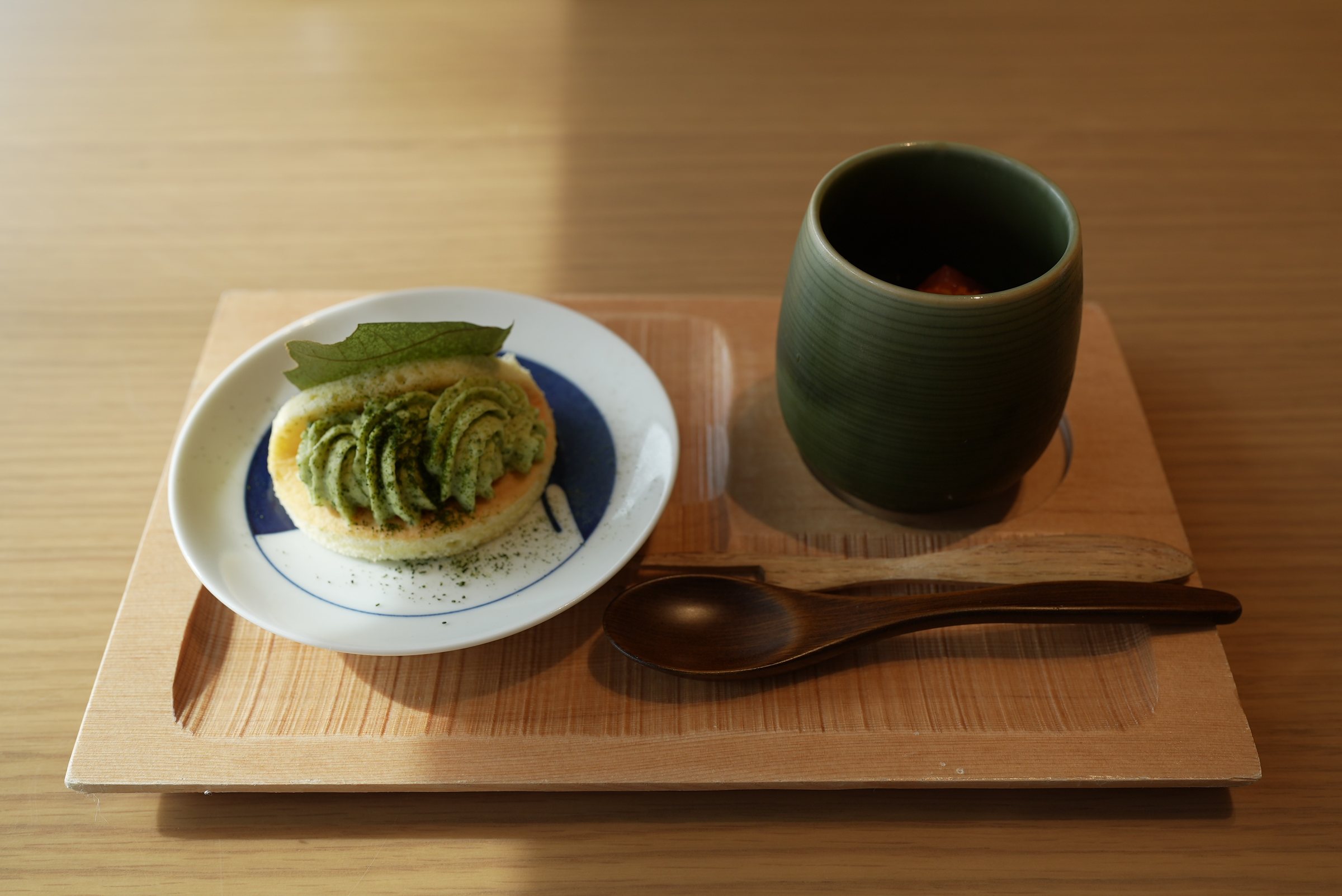
The mizugashi, or sweet course, was watermelon served as a soup and a shincha (new-season tea) omelet cake. Breakfast desserts are usually fruit or yogurt, so a handmade sweet first thing in the morning genuinely moved us.
A terrace we had missed
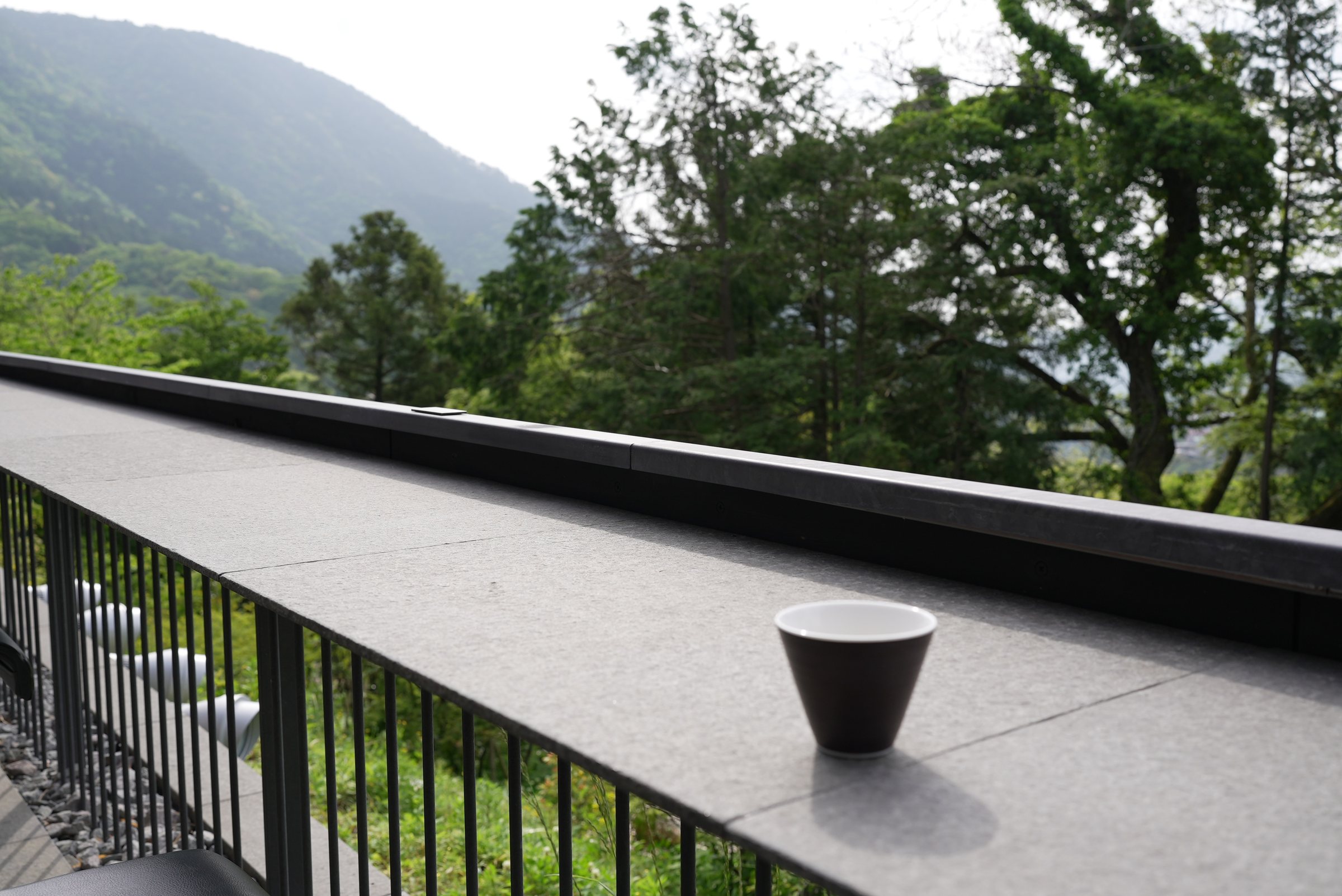
After breakfast, we were very glad to find the lounge open and serving morning coffee. We found a terrace seat we had not noticed the night before and took a breather amid Hakone’s fresh greenery, the mountain ridges and birdsong.
A young member of the lounge staff thoughtfully brought us a blanket. We got talking, and he happily answered our many questions. He looked very young, but his manner was so professional that we asked about his background. After working at a well-known hotel, he had been recruited to Karaku as part of its opening team. Karaku, he explained, had brought together a hand-picked team in order to create a ryokan offering first-class comfort. He answered even our critical comments candidly, and we found him thoroughly likeable.
Final thoughts
Karaku is a place where we expect the service to keep getting better. Gora’s hot spring water is the kind whose effect on your skin you notice almost at once, and here you can return again and again to the private open-air bath in your room and to baths with a sweeping view over the bay. It is a lovely ryokan, and a place where each guest can spend their time at their own pace, exactly as they like.
This review reflects a stay in spring 2021. Menus, facilities and staff may have changed since; please confirm current details directly with the ryokan before visiting.