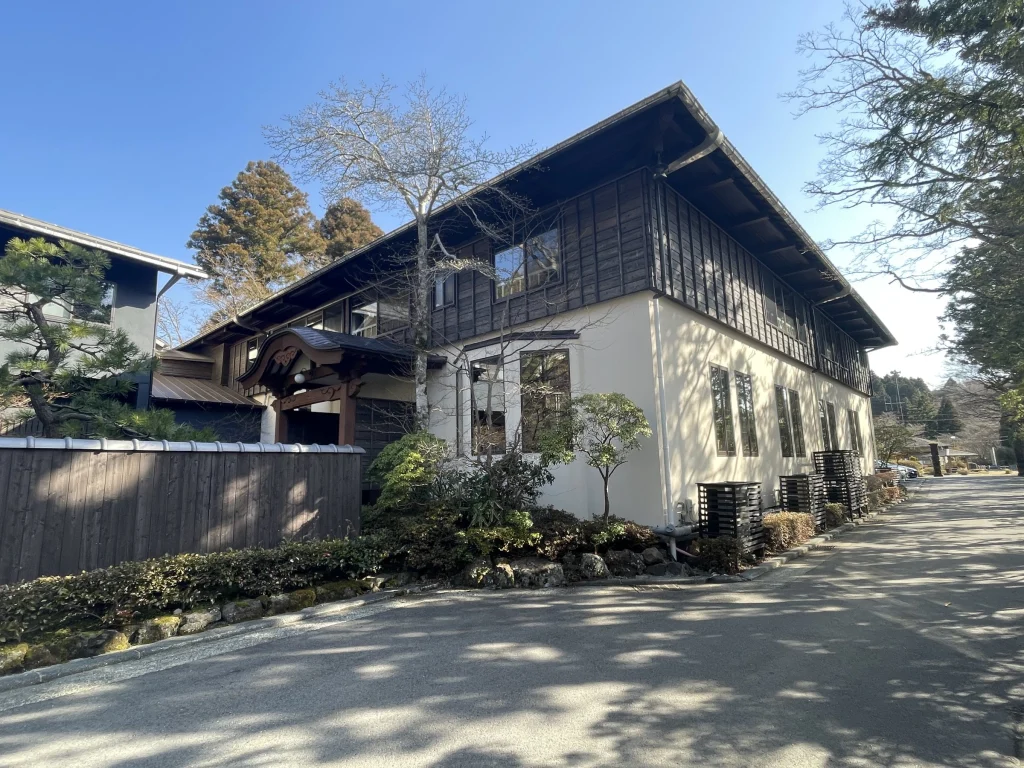
Matsuzakaya Honten is a stately old hot-spring ryokan at Ashinoyu, in the hills of Hakone, a place whose history reaches back more than 1,200 years, to the Nara period. Its spring water is used exactly as it emerges: never diluted, never heated, never recirculated.
This is a celebrated house. It appears in the ukiyo-e woodblock prints of Utagawa Hiroshige; it is said to be where Kido Takayoshi and Saigo Takamori held a meeting, and where the novelist Shishi Bunroku stayed. Few ryokan evoke the Meiji era so strongly. Members of the Imperial Family are also said to have visited. The historic building itself is a thrill, and with so many rare furnishings on display, it feels like spending the night in a museum.
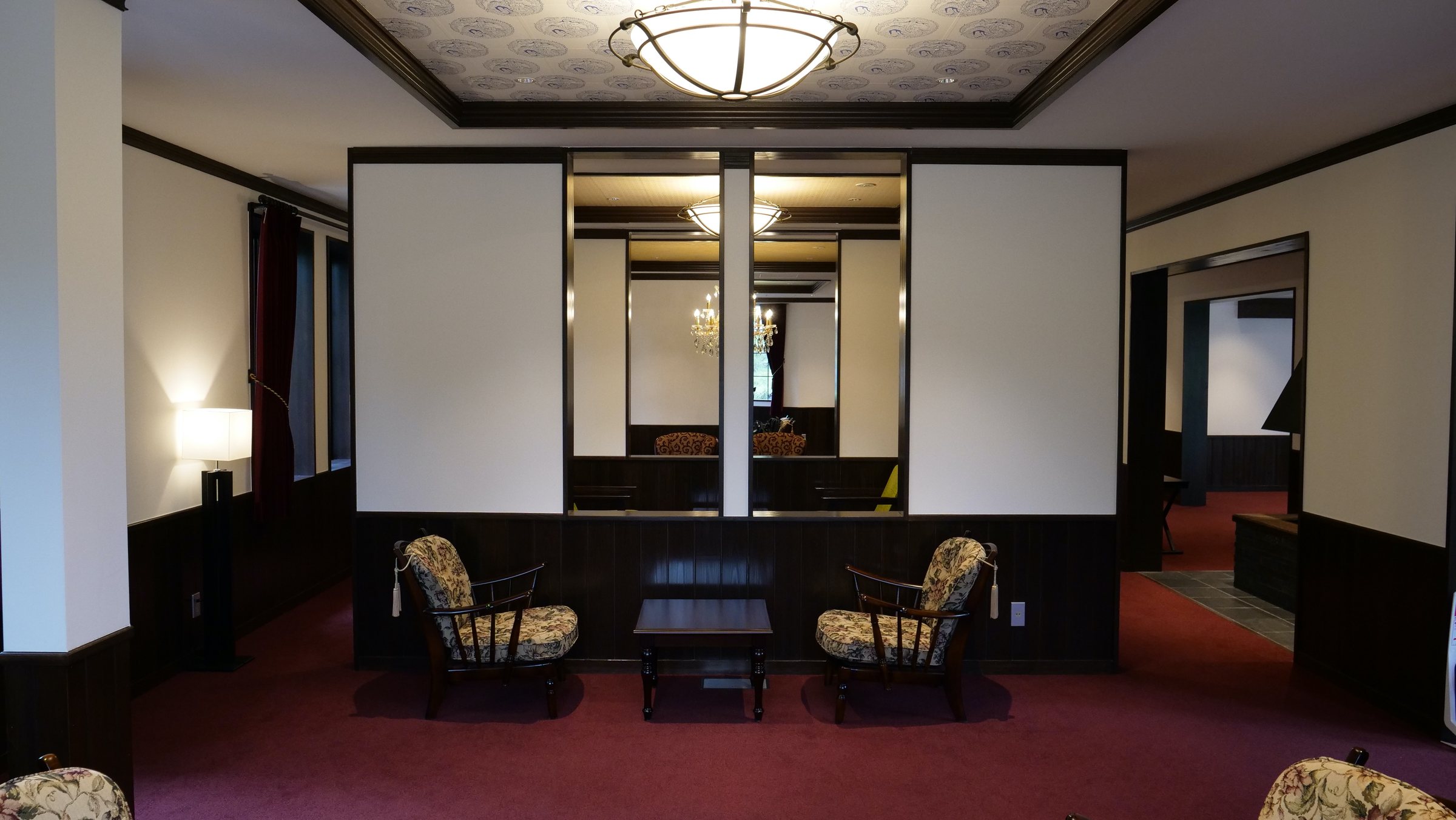
A step back to Meiji
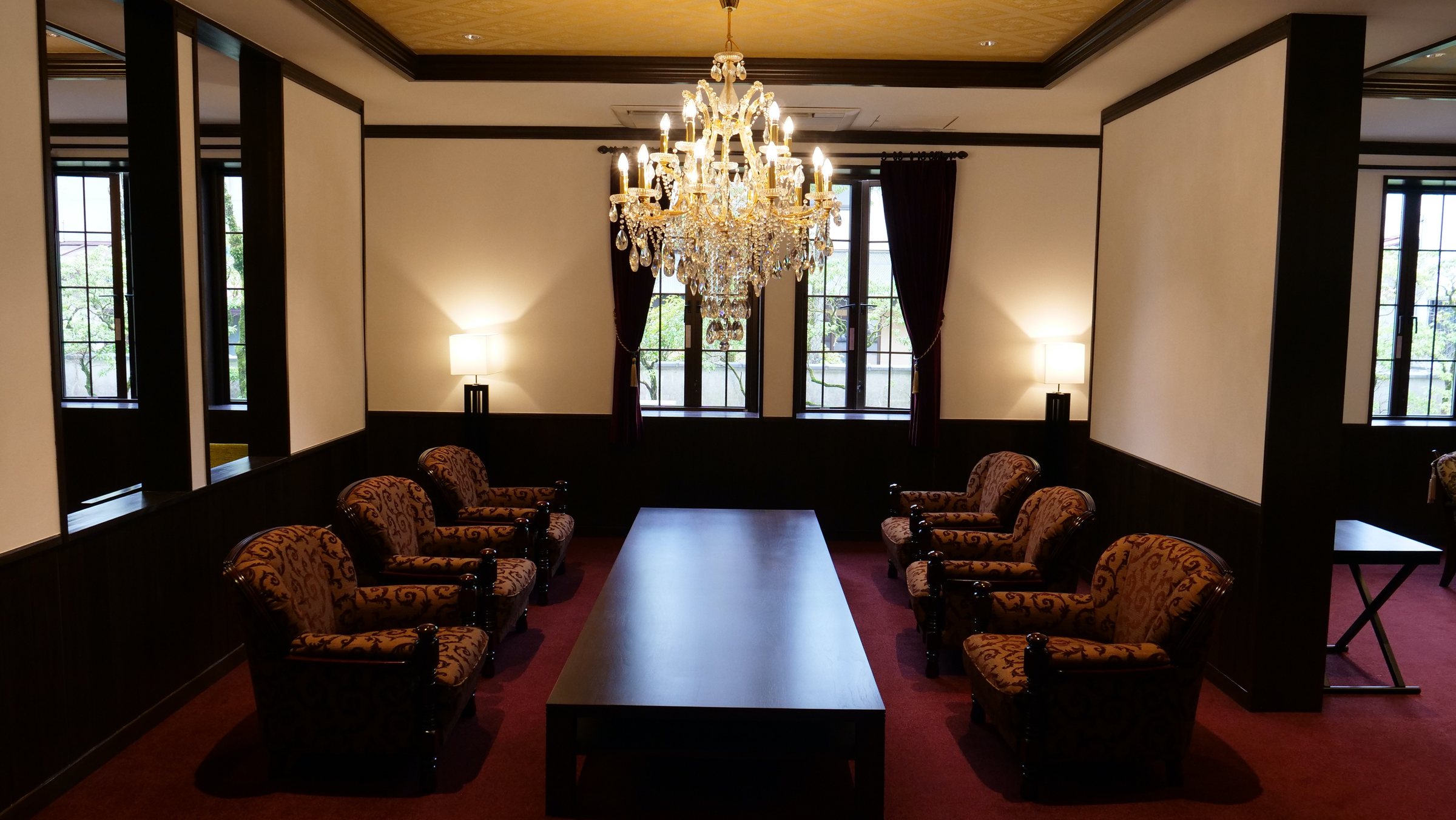
Sitting down in the lobby to check in felt like slipping back in time; the atmosphere of Meiji Japan arrived all at once. Everything was immaculately ordered, and the furniture, designed with real artistry, was beautiful. At roomy armchairs and tables, we were welcomed with a cup of good coffee.
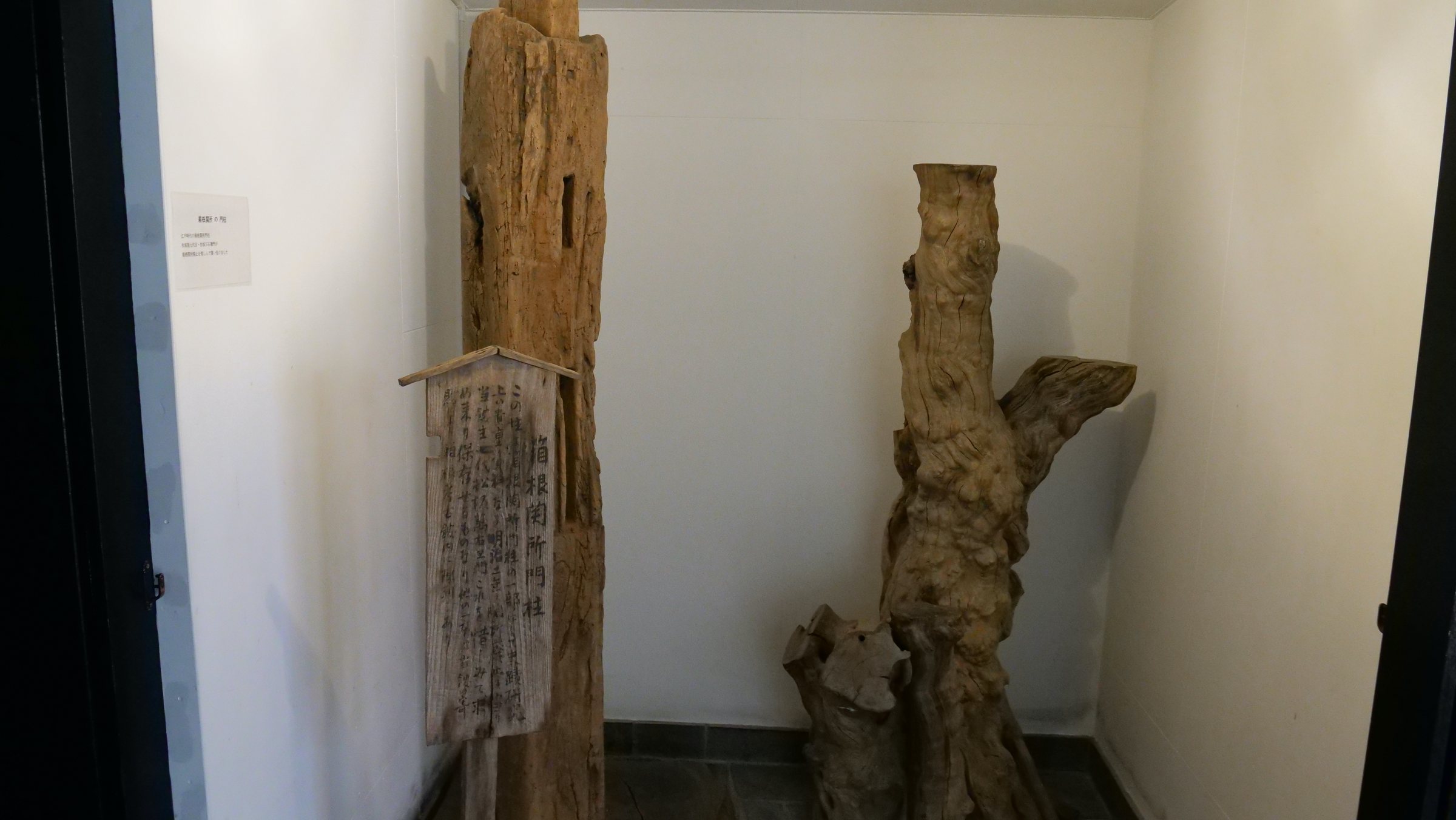
On display are timbers that were actually used at the old Hakone checkpoint, the sekisho: pillars full of meaning, which stood through long years alongside the townspeople of Hakone.
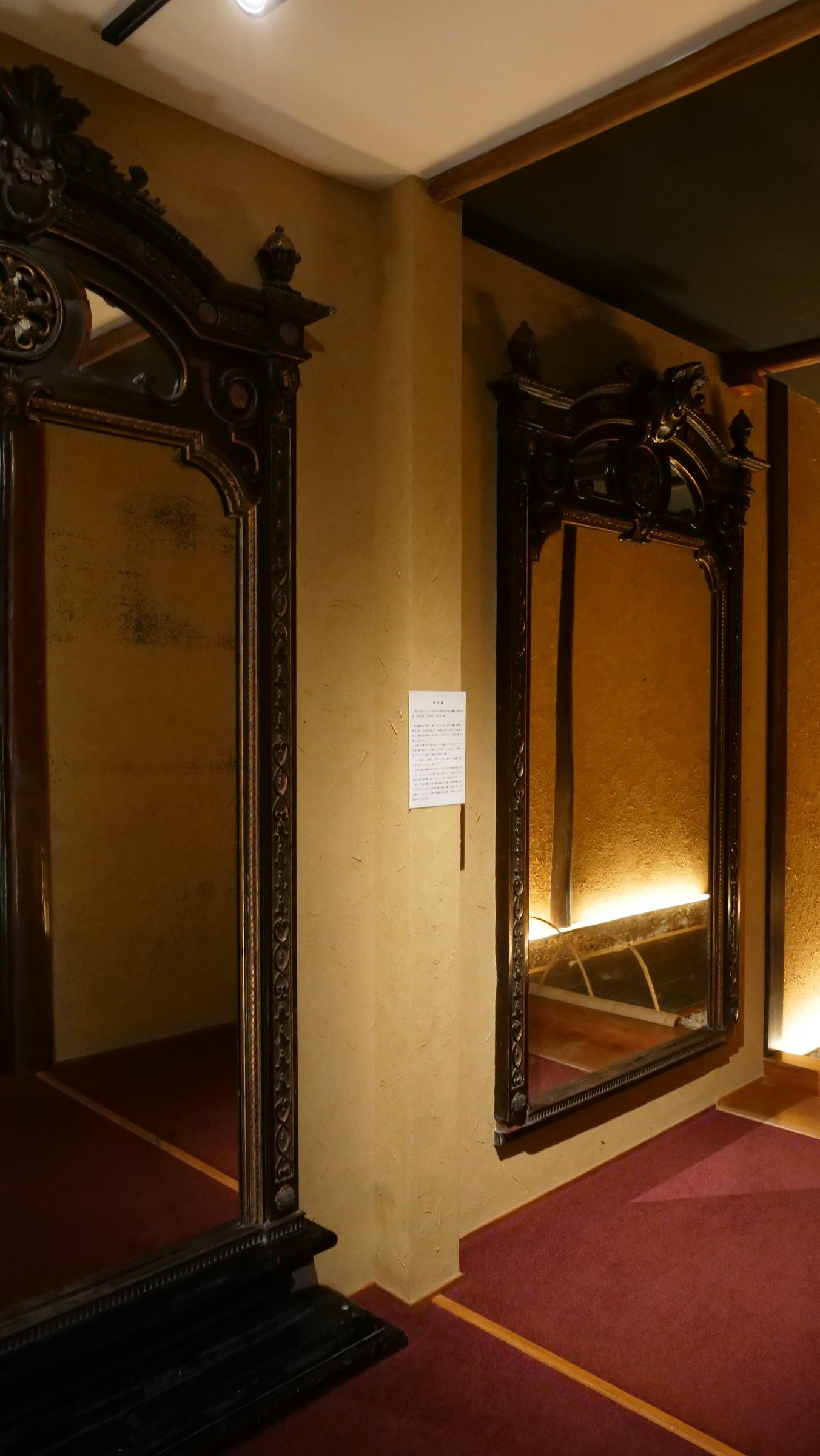
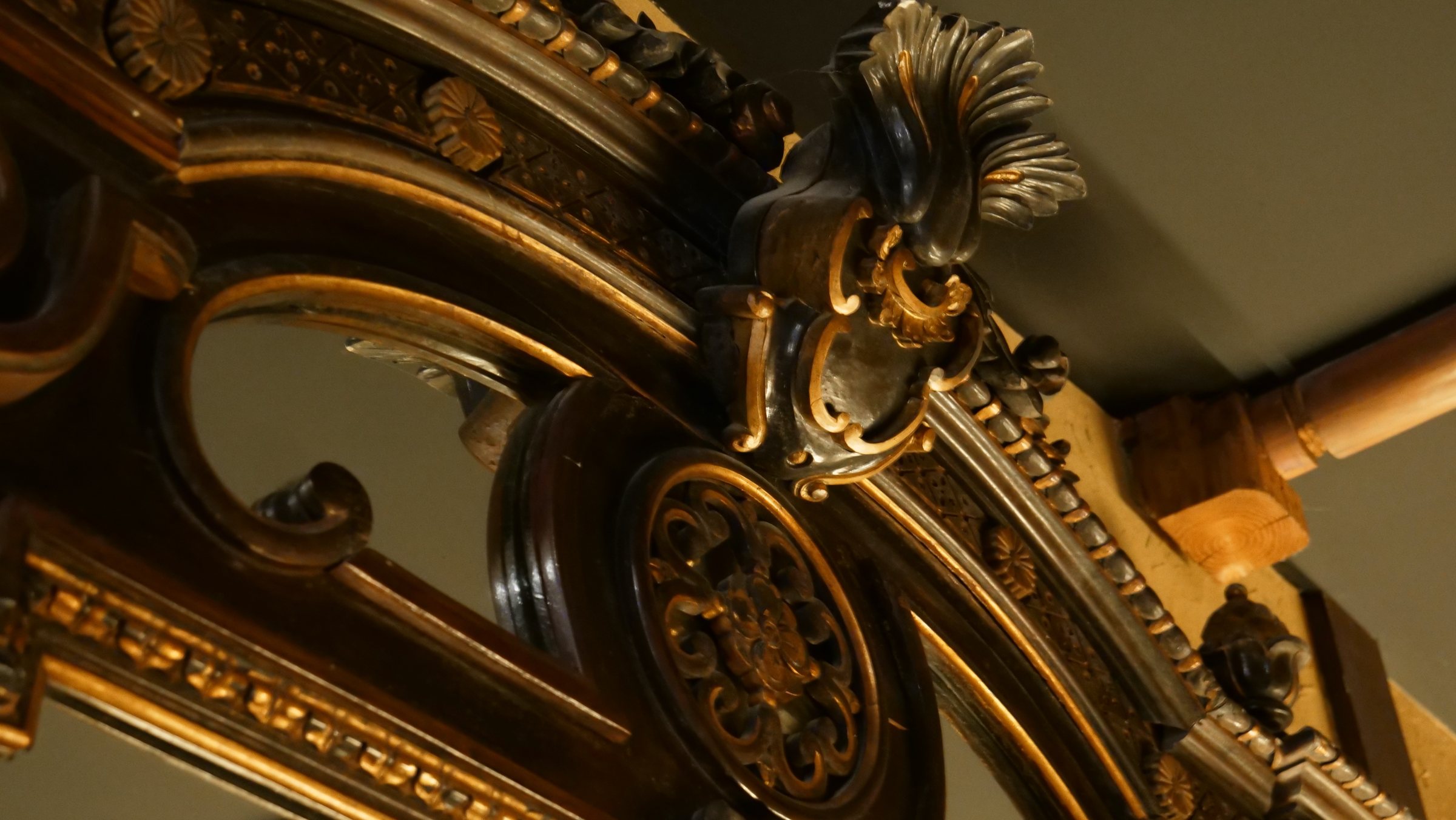
Then there is the full-length mirror the Emperor Meiji used during his stay here. Faced with its solemn presence in the half-light, you feel, somehow, that you ought not to stand directly in front of it. As we were shown to our room, a member of staff explained the furnishings one by one.
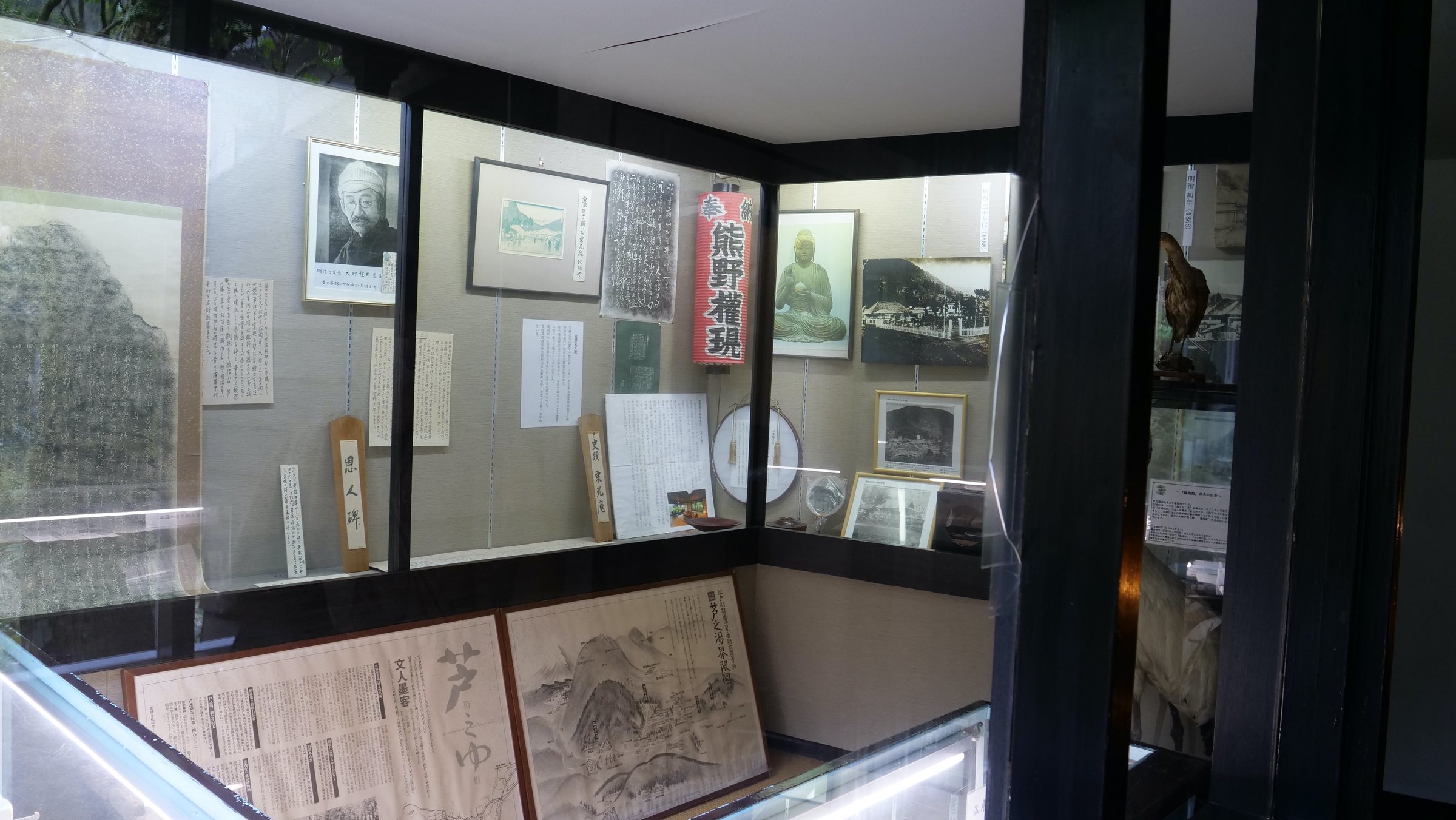
A house of exhibits
One room is devoted to the ryokan’s history and the traces left by its famous guests, including records of people who actually stayed here. Even with no knowledge of history at all, this one room is enough to make you feel its weight.
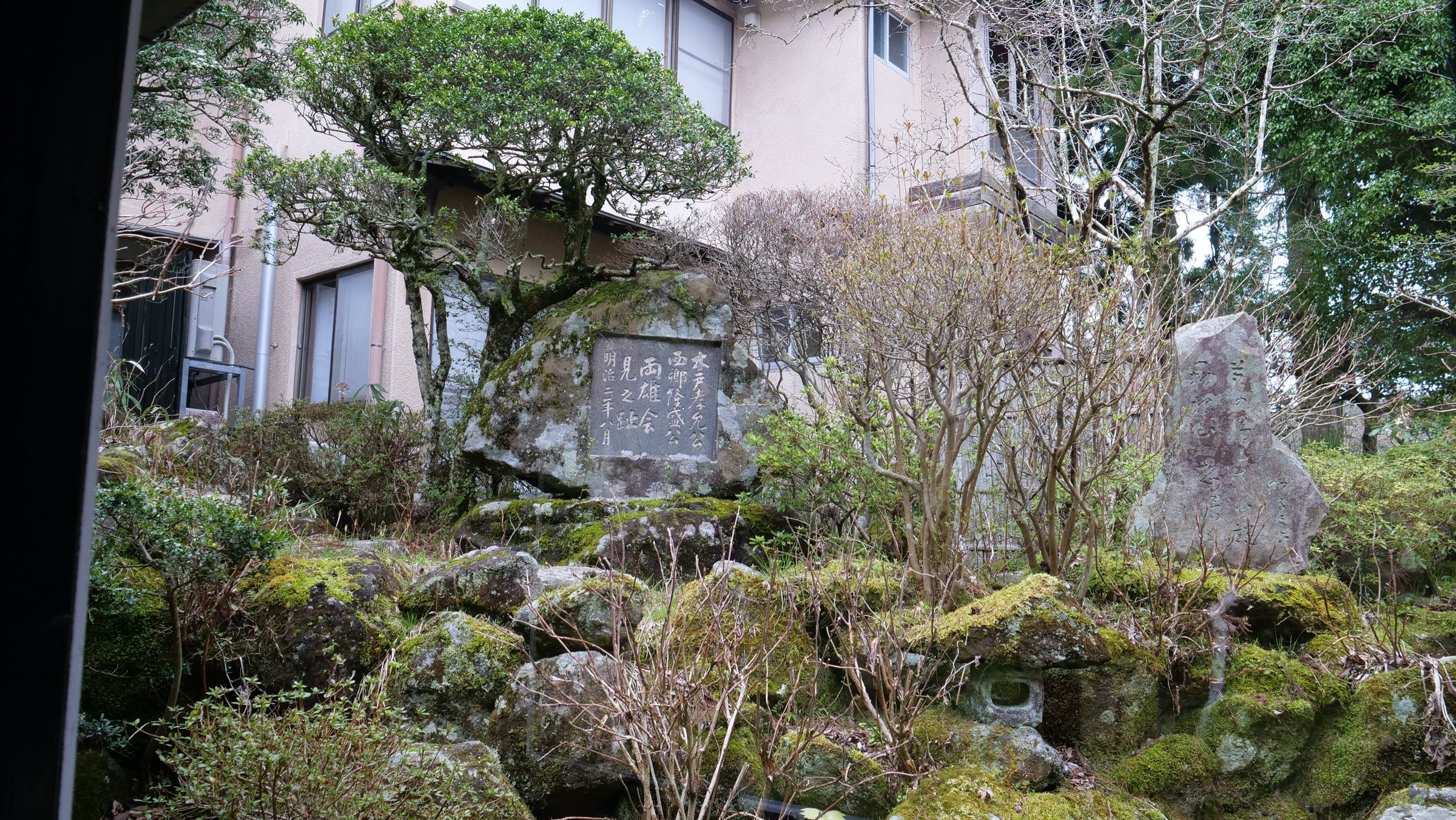
Outside stands the stone monument marking the site of that famous meeting. For admirers of the Meiji heroes, setting foot where they once walked is a rare and precious experience.
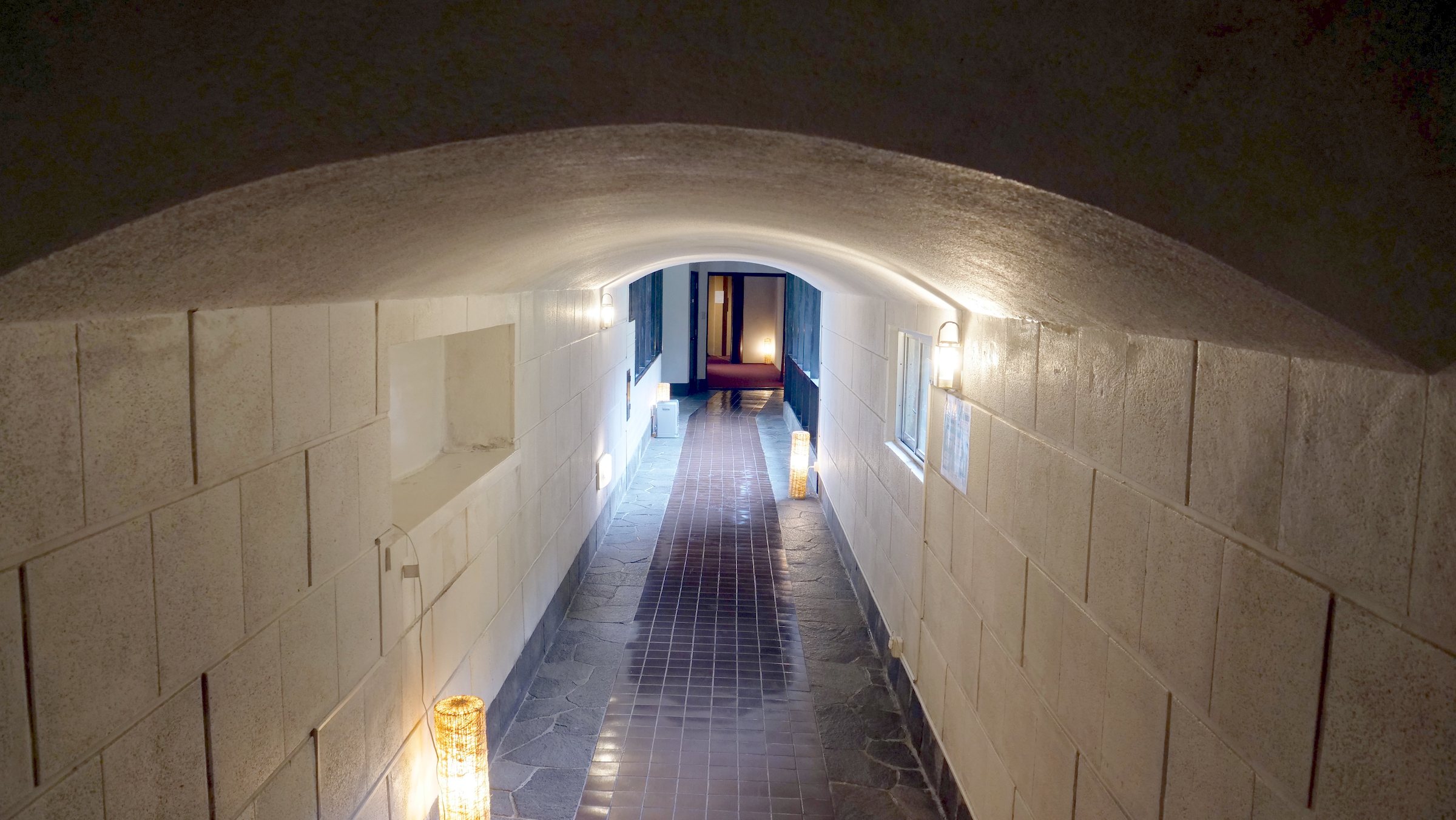
The storehouse-style corridor survives just as it was. These are the original materials, not replicas, and you can see and touch them, imagining the past as you walk on toward your room.
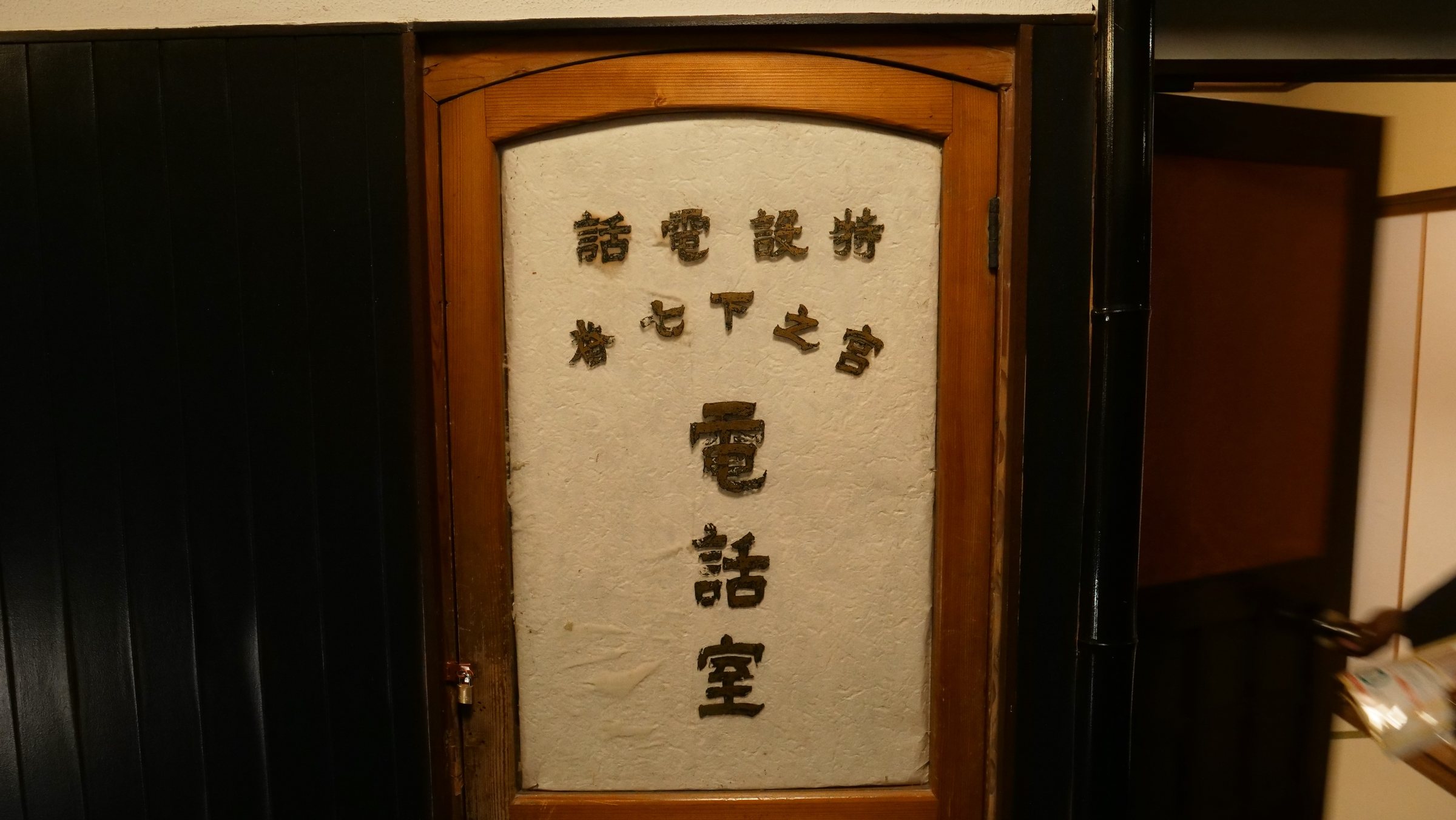
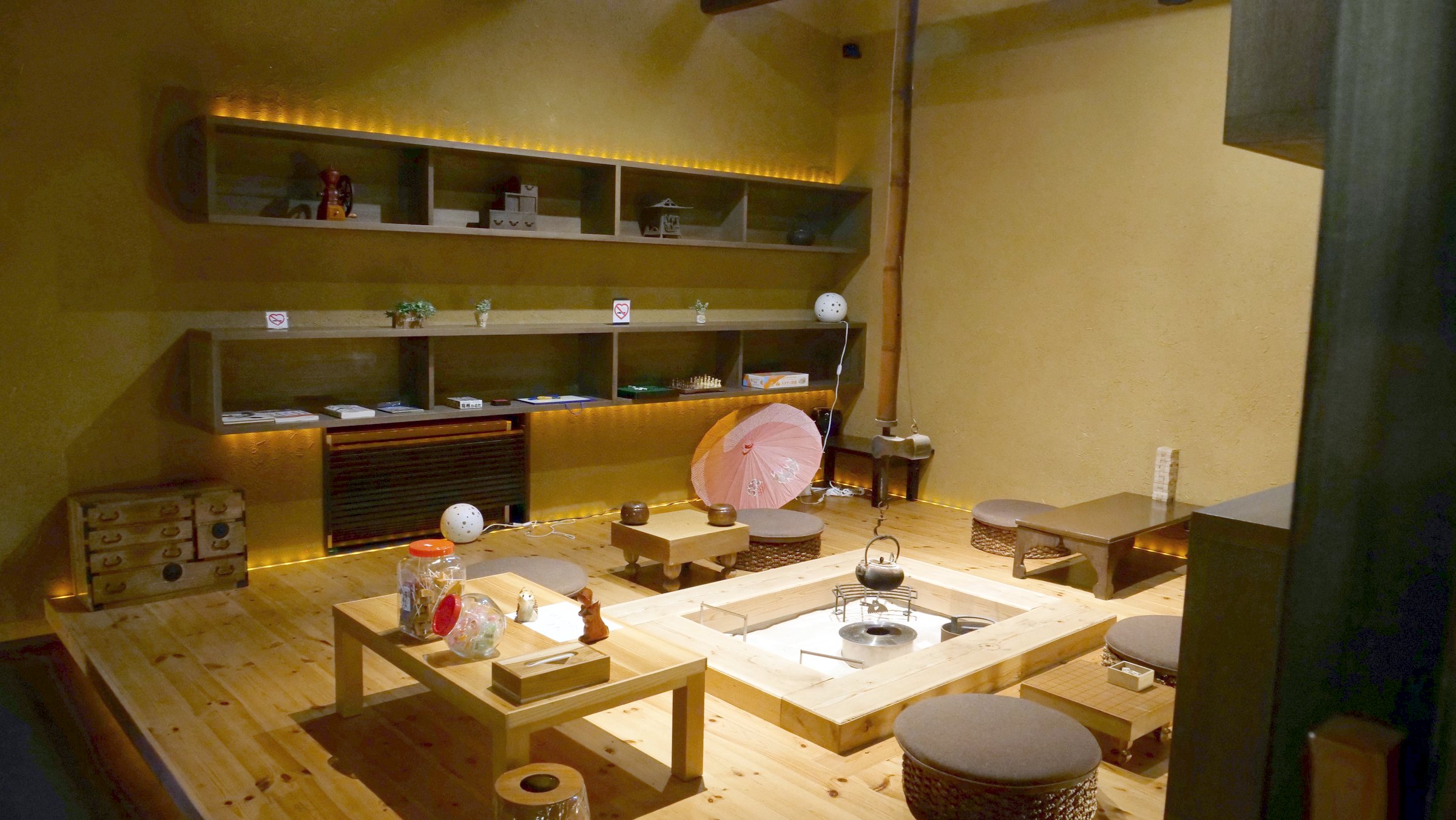
Rare pieces are placed quietly throughout the building. Spotting them, and asking the staff who show you round about each one, makes the stay feel like an expedition.
The room, and a mix-up
What had drawn us here was a building that was once the villa of the Iwasaki family, founders of the Mitsubishi conglomerate, relocated to the ryokan in 1925 (Taisho 14). We had booked a room in it and were looking forward to it, but by mistake we were shown to a different room. When we pointed this out, the member of staff gave no clear reply. Only when we showed them the booking on a phone did they seem to realize the error, and our bags were simply carried off without an apology, which left us a little deflated. Still, it was clear that they were working hard and doing their best to learn.
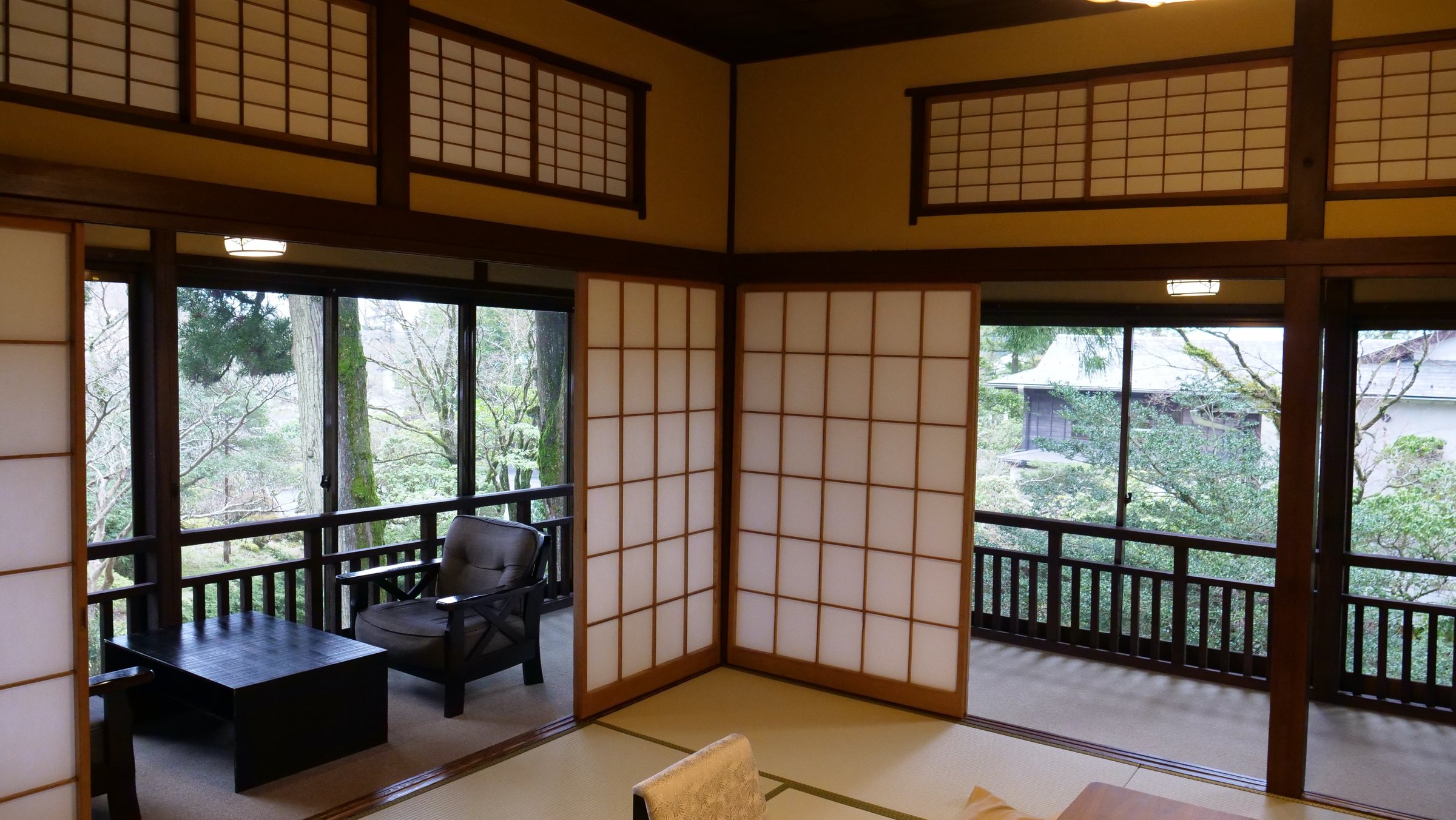
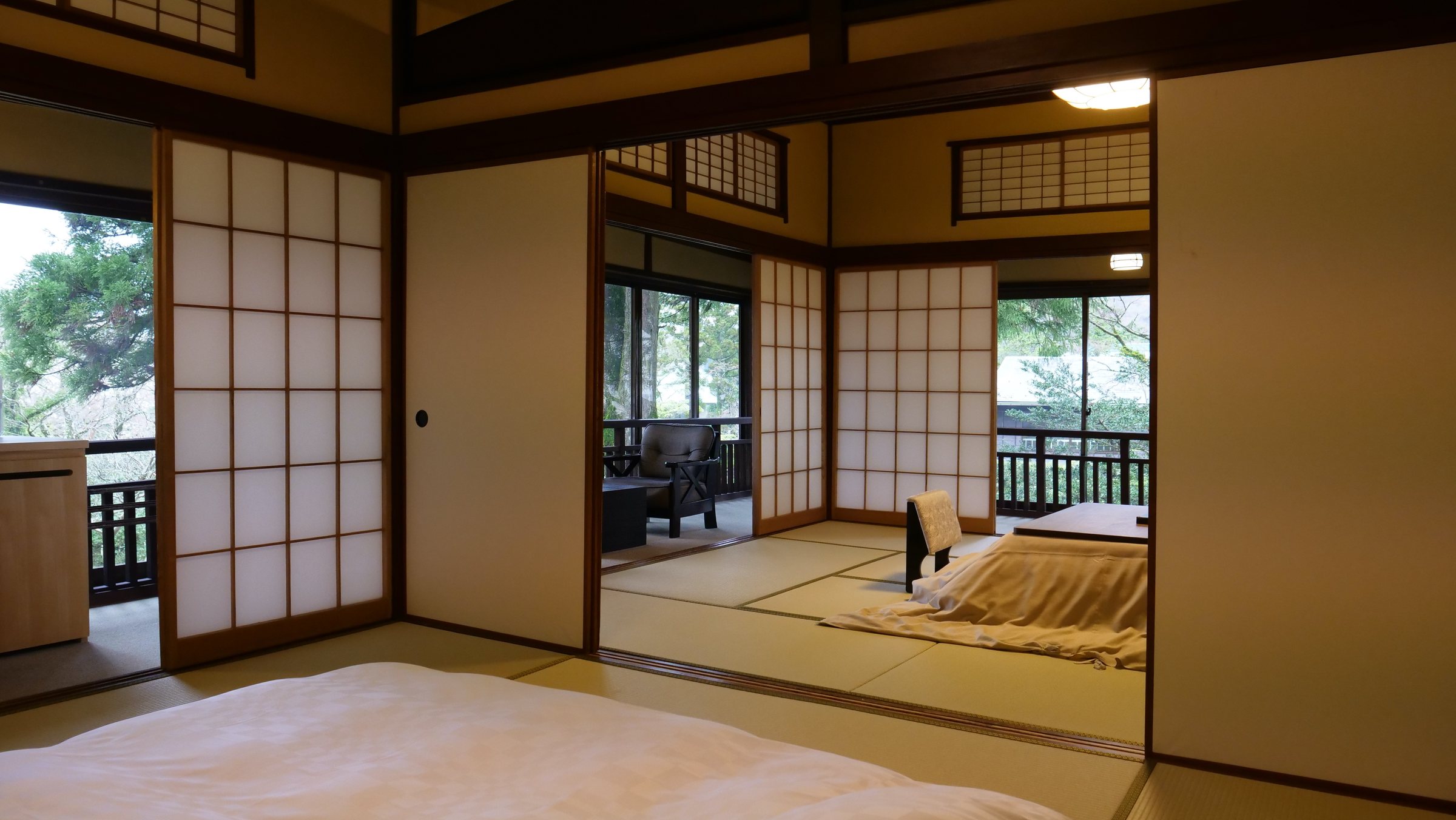
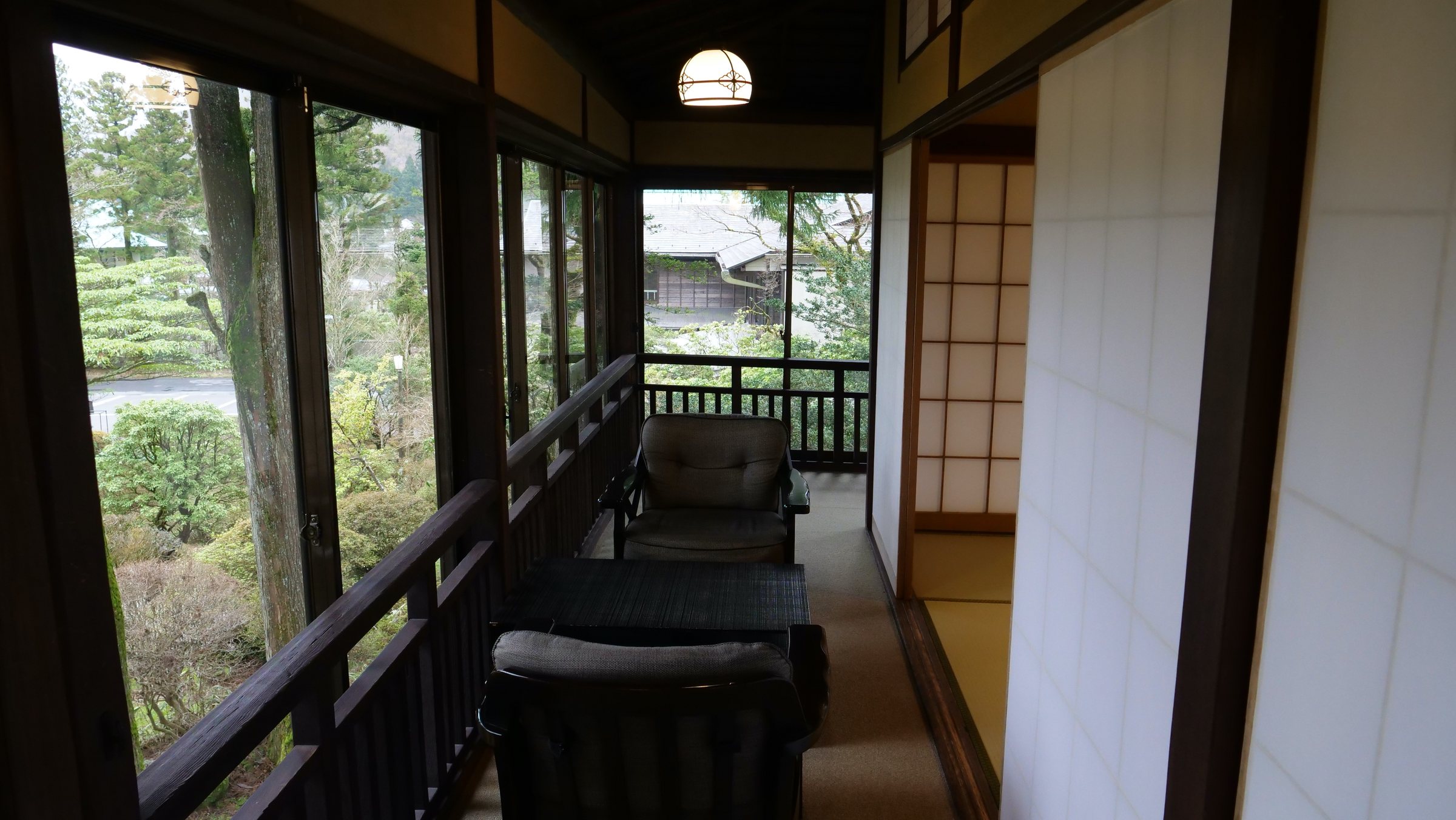
At last we reached a fine room wrapped in a veranda. Struck by the refreshing view over the surroundings and the sheer character of the building, we found ourselves pausing to imagine the guests who had stayed here before us.
A garden for deep breaths
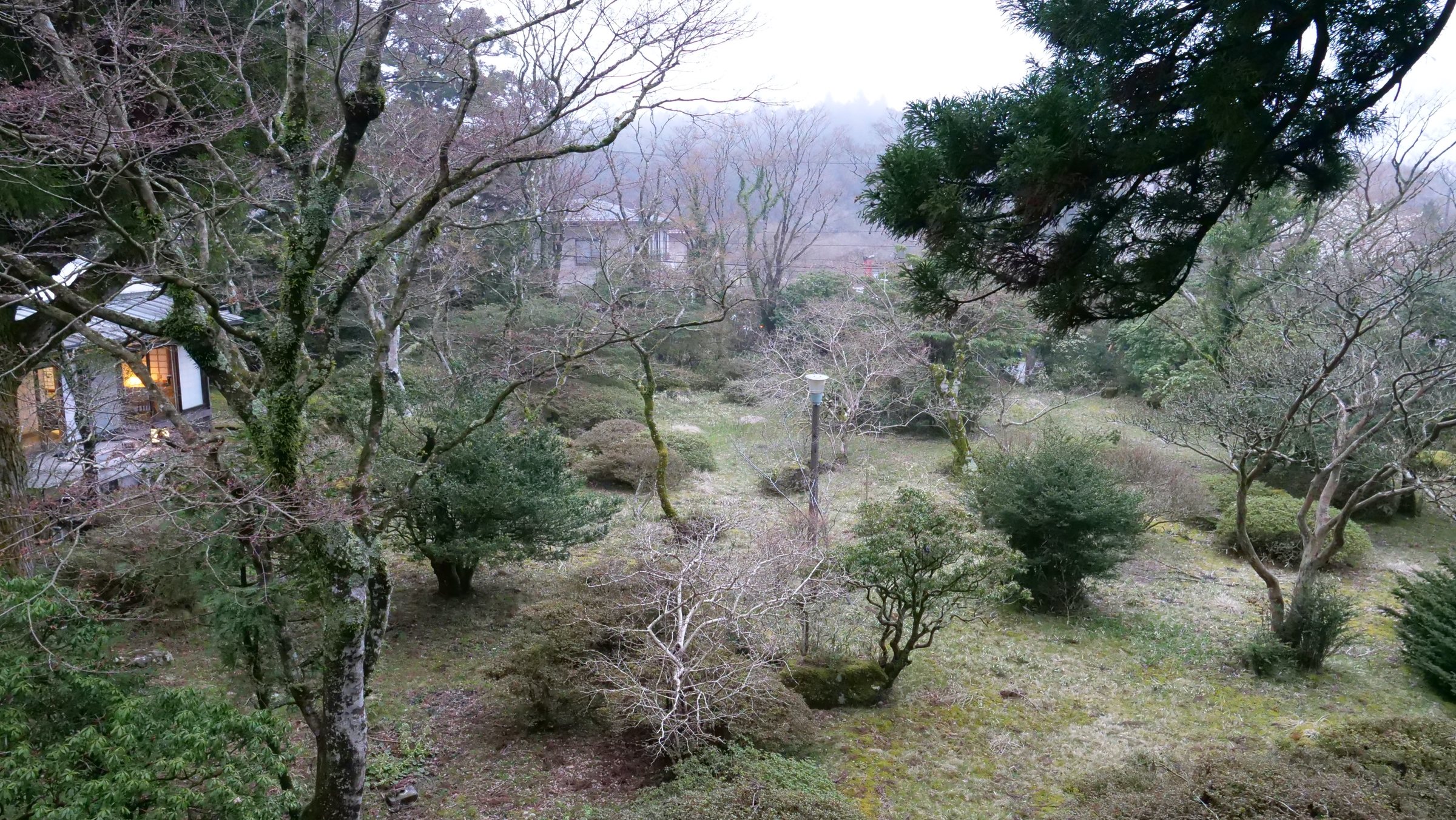
The balance between planting and architecture showed real taste. Listening quietly to the sounds of nature and the birdsong, you feel strangely lighter and want to take a deep breath. To think that the heroes of Meiji looked out on this same scene is deeply moving.
Lounge, bar and baths
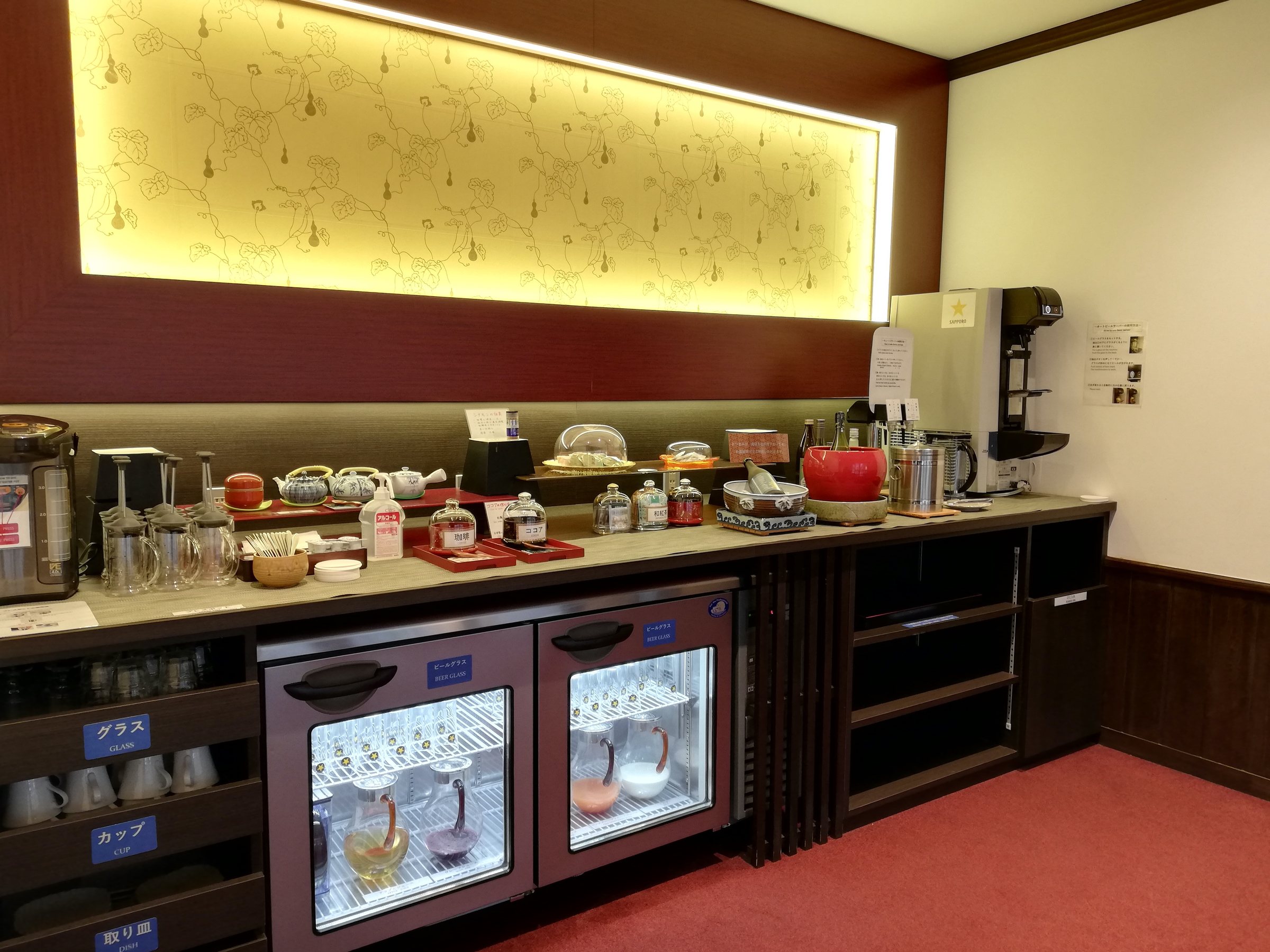
The lobby lounge has a complimentary drinks corner with coffee, soft drinks and alcohol to help yourself to. Drinks are for the lounge only, but being able to sit out on the terrace with a glass of wine is a real pleasure.
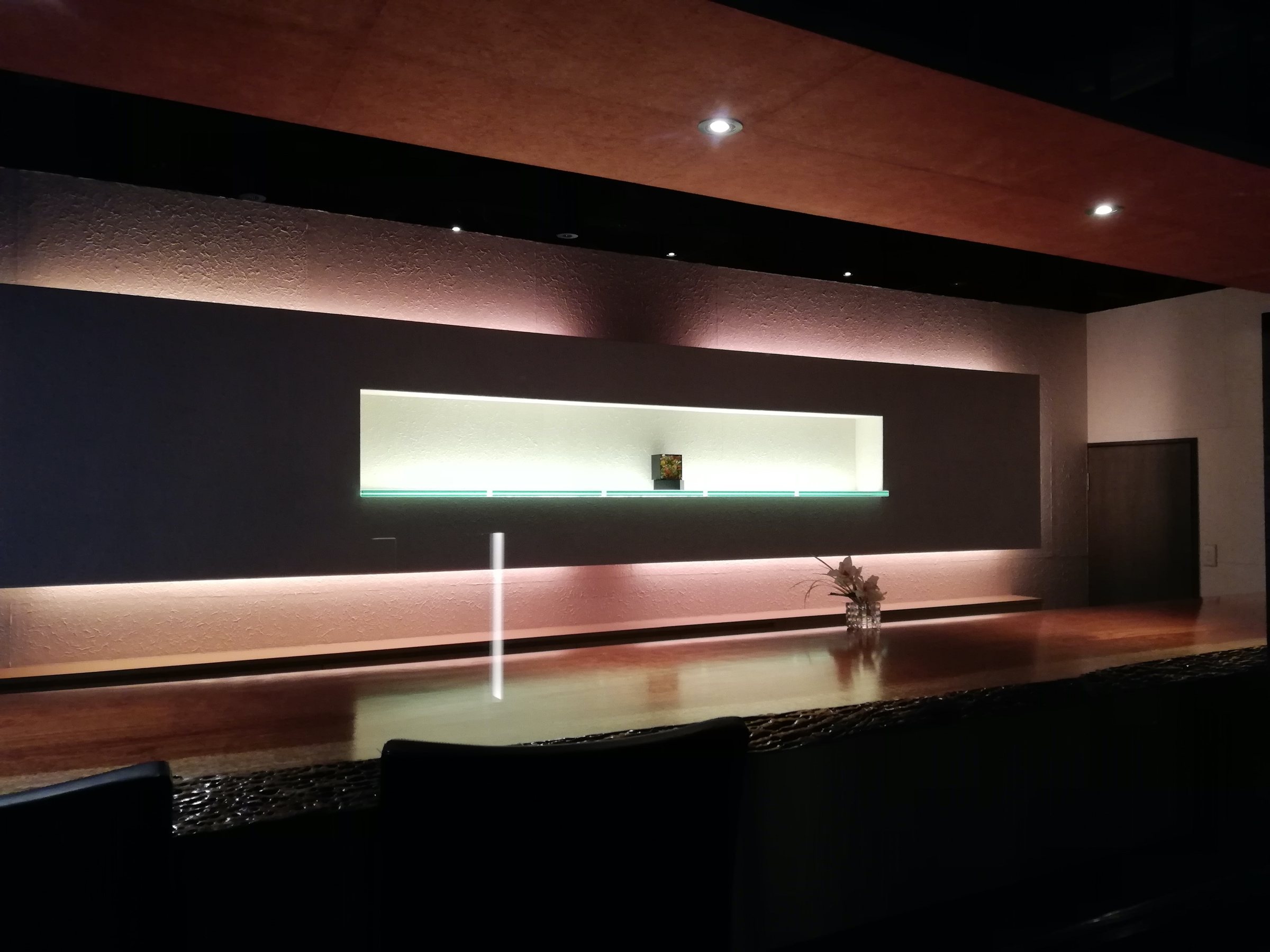
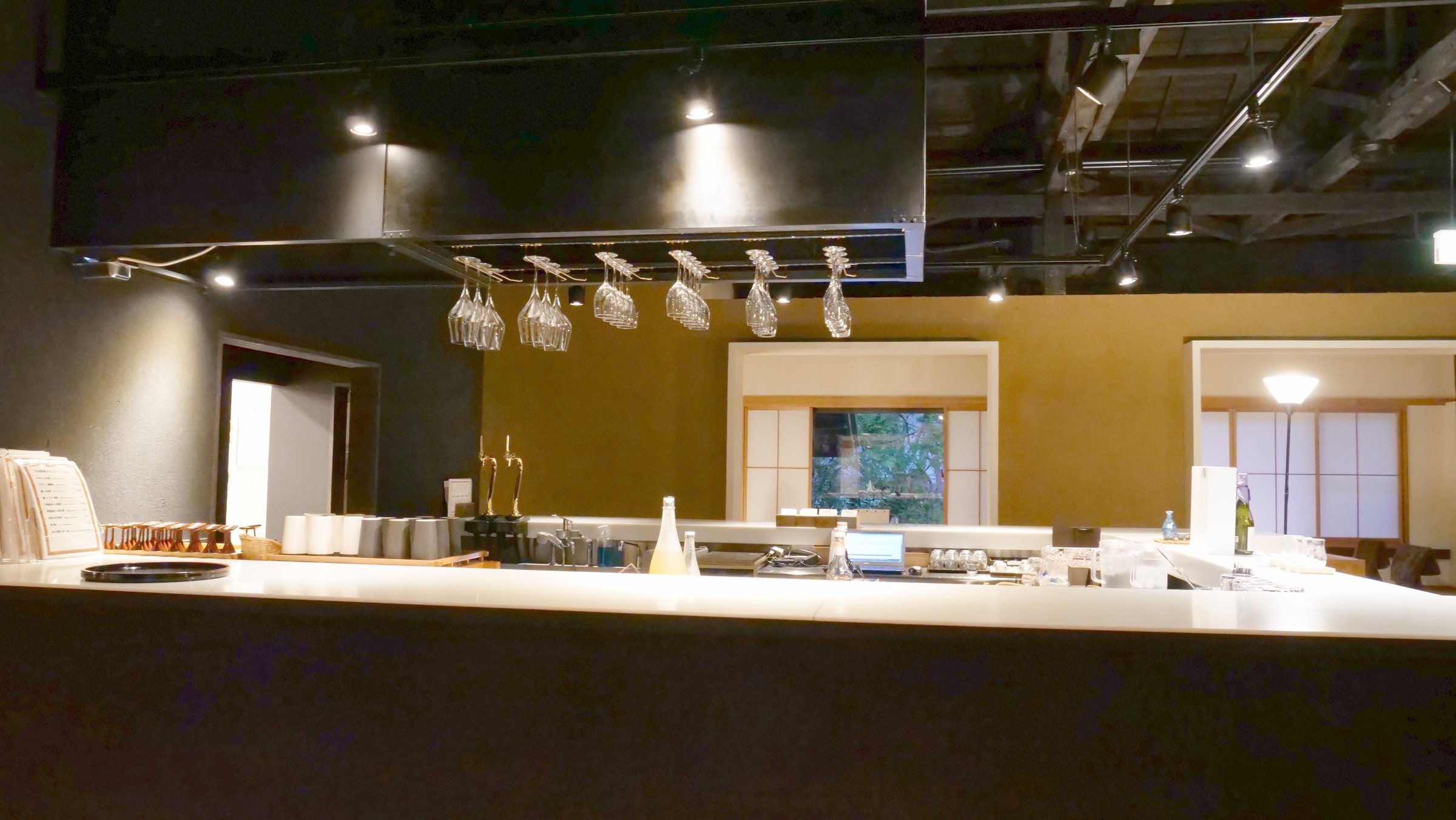
In another part of the building we came across a bar. It was outside its opening hours, but it was the kind of place that makes you want to step inside.
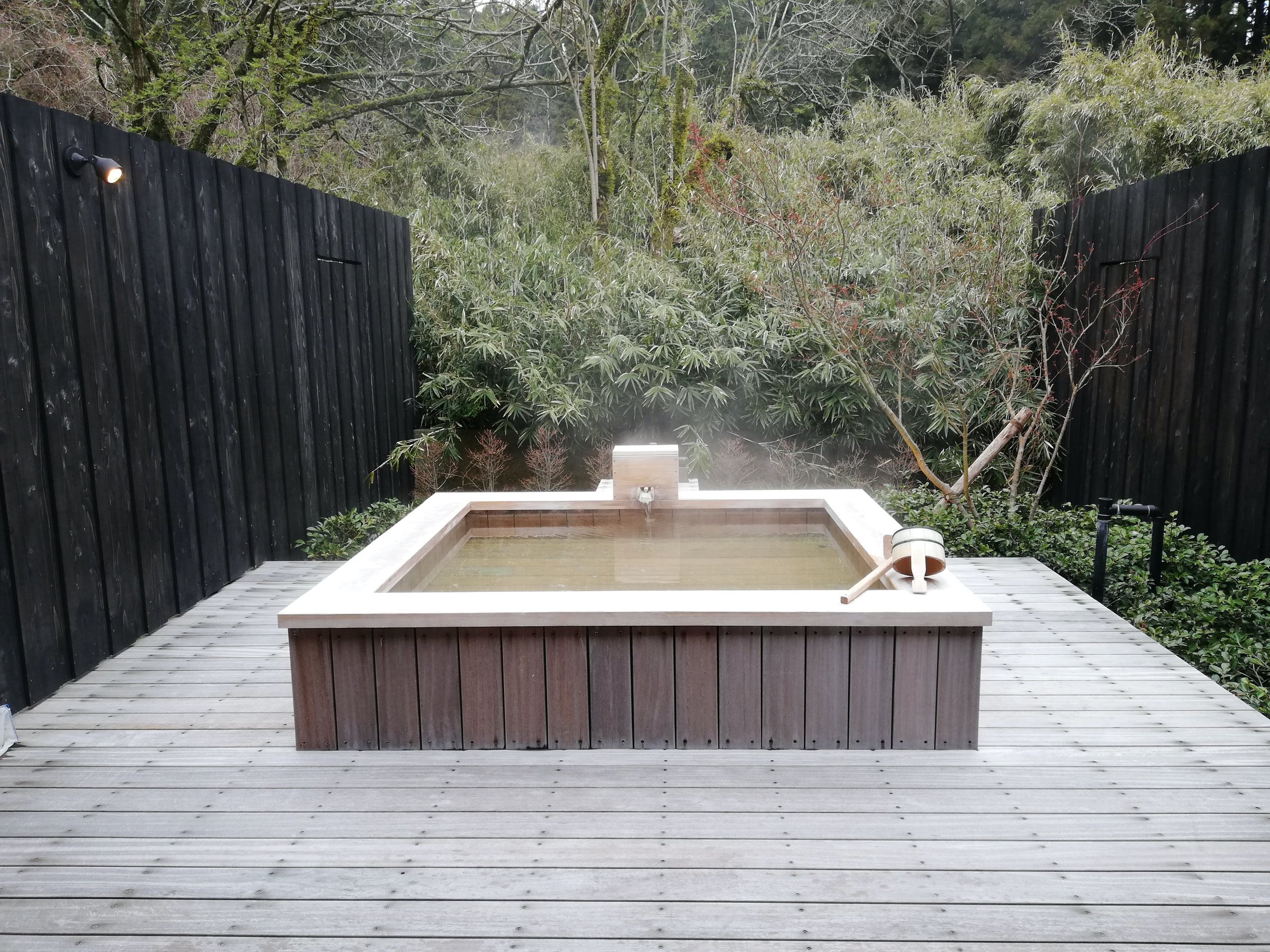
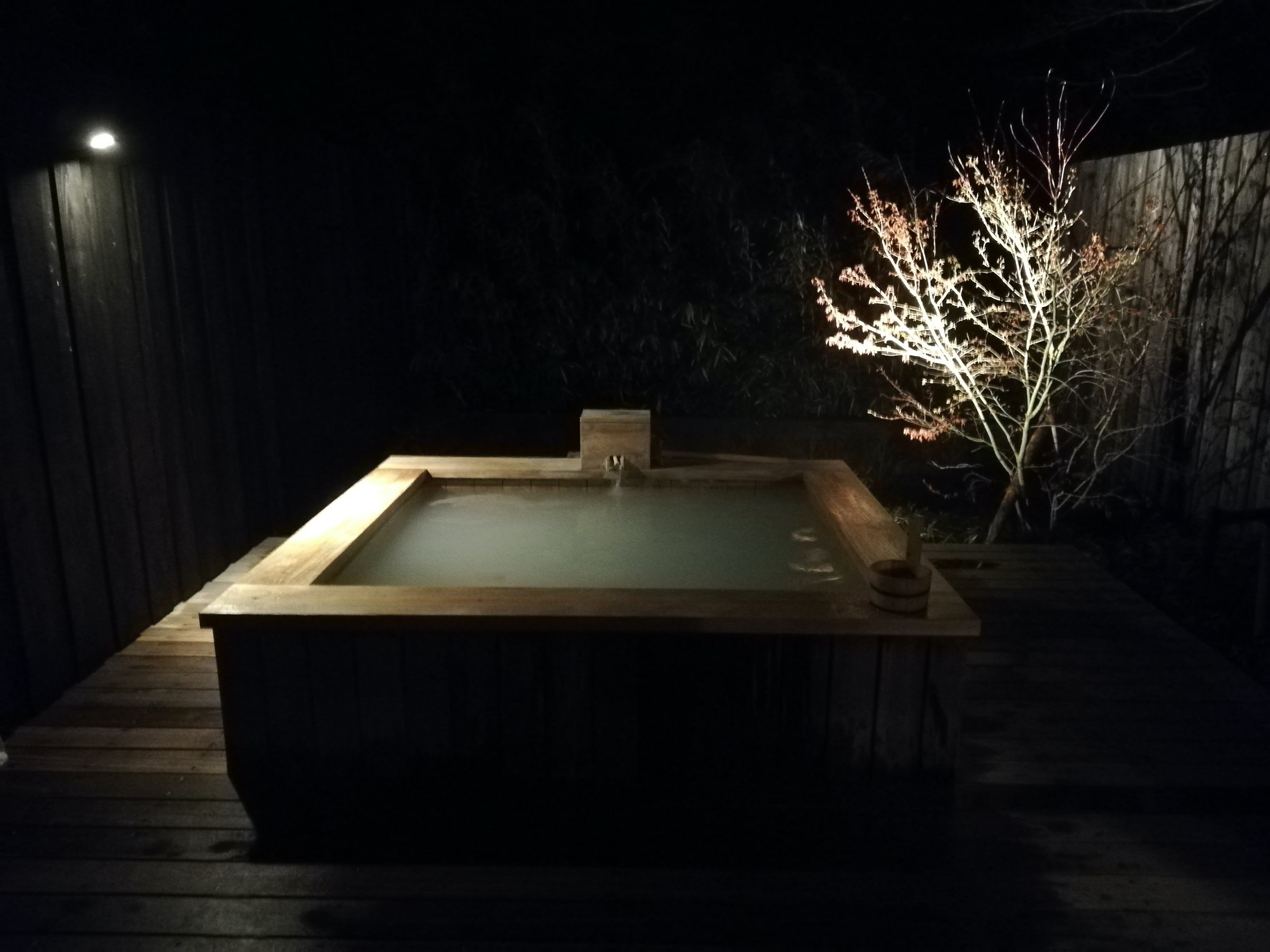
Separate from the main baths are private baths for hire, notable for their spotless, beautifully kept changing rooms. By day and by night they had entirely different moods. There are several, but we went back to the same one twice to make the most of its cloudy water.
Dinner, with the dining room to ourselves
After a drink in the lounge, we made our way to the restaurant. Because of the pandemic there were, remarkably, only three parties staying, and we were the only diners in the restaurant. Having it to ourselves felt like a stroke of luck.
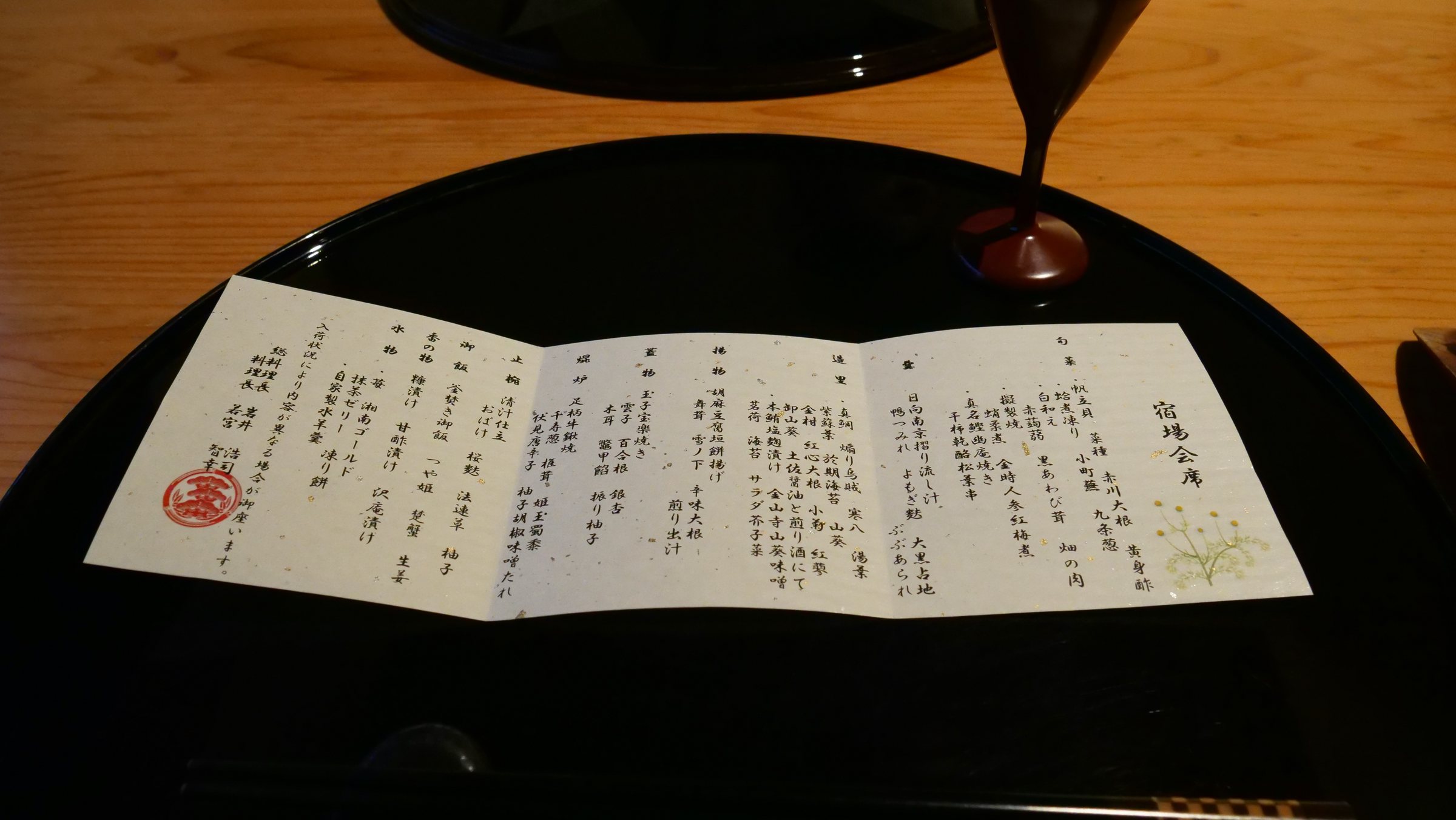
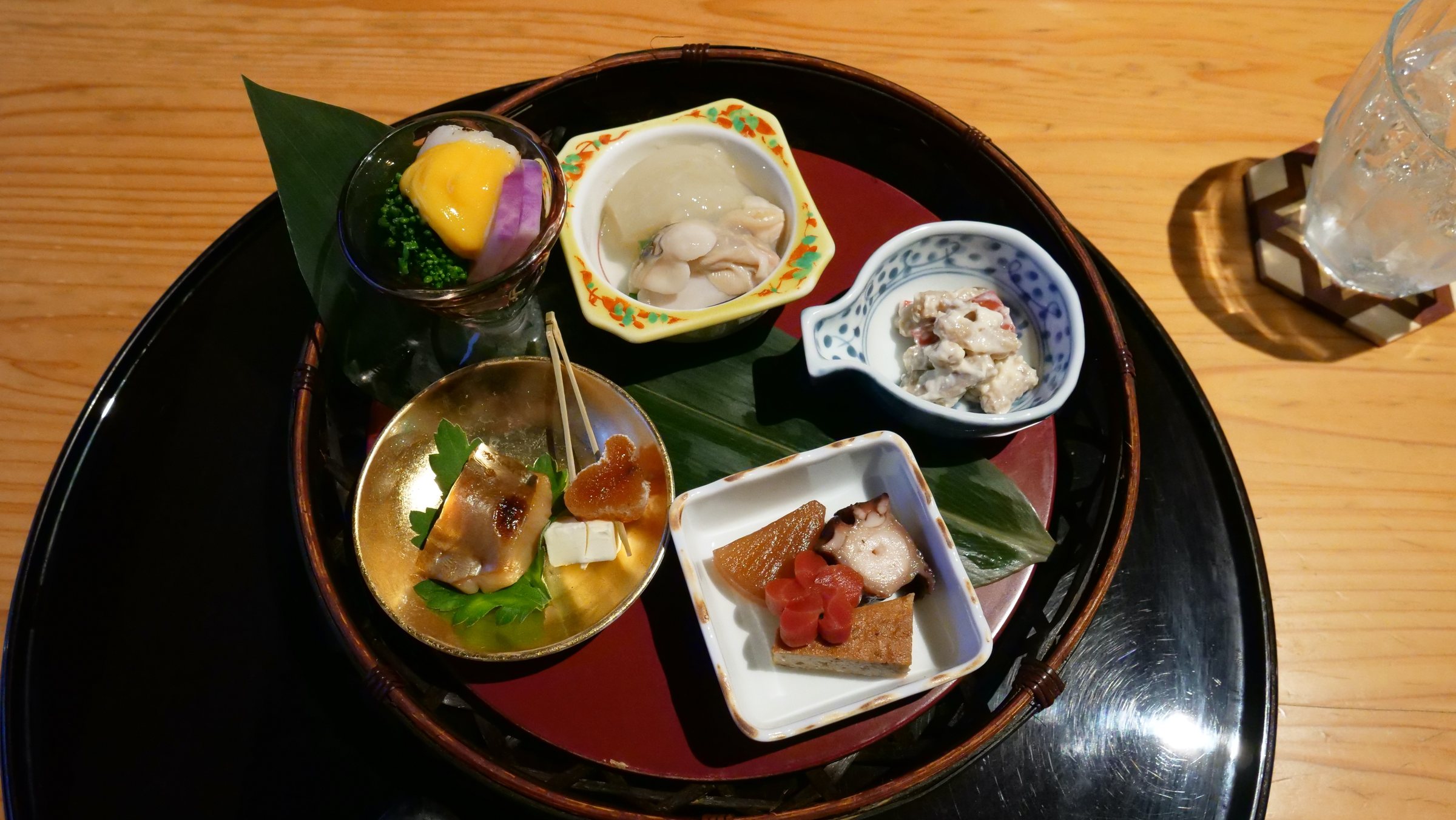
Dinner opened with an assortment of seasonal appetisers: a generous first course made up of many different ingredients.
Among them, to our delight, was yomogi-fu, wheat gluten flavored with mugwort and a particular favorite of ours.
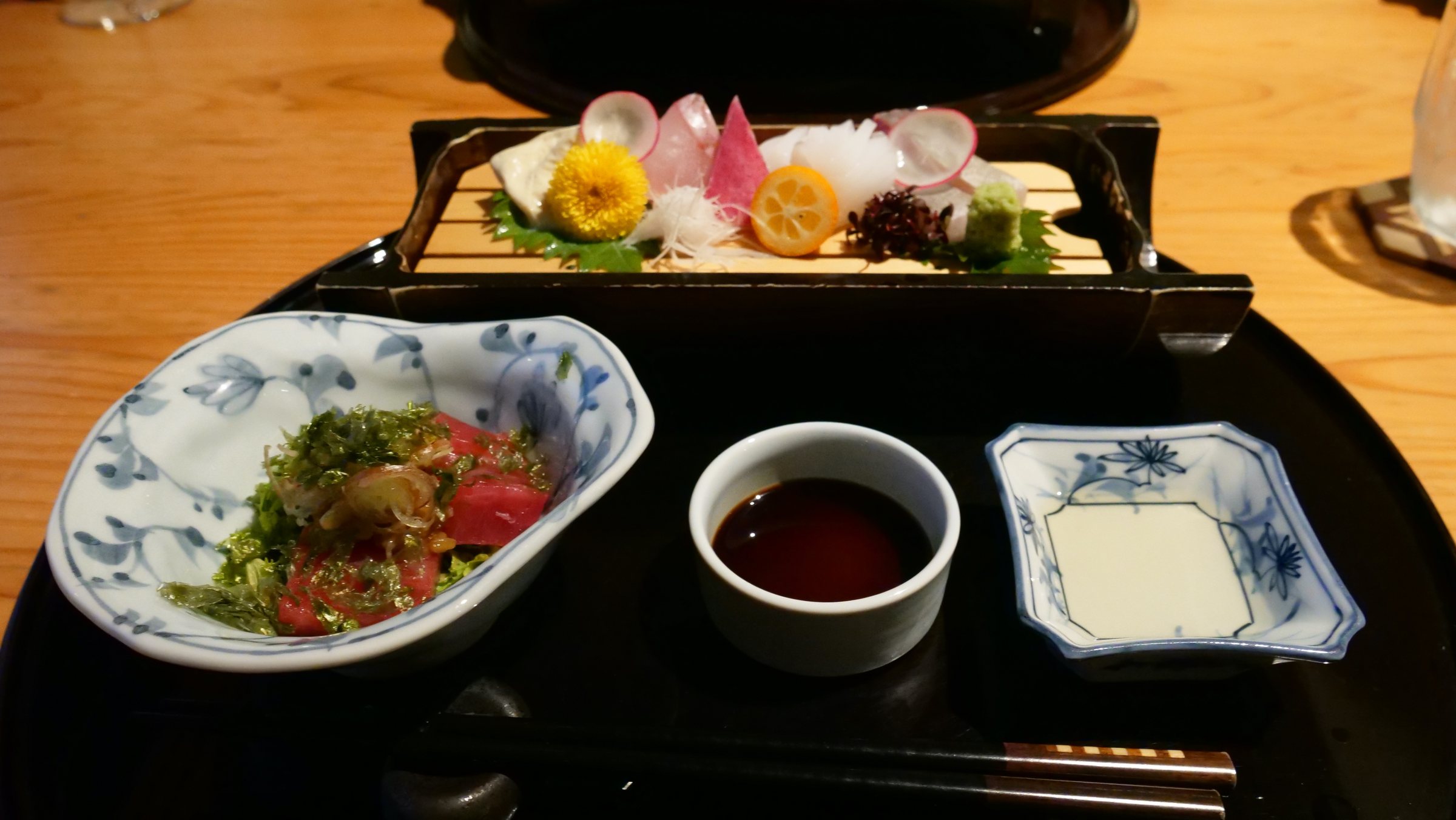
Then came the sashimi. The fish appeared to have had its excess moisture drawn out and to have been properly prepared beforehand: the kind of sashimi you often find at ryokan in this area.
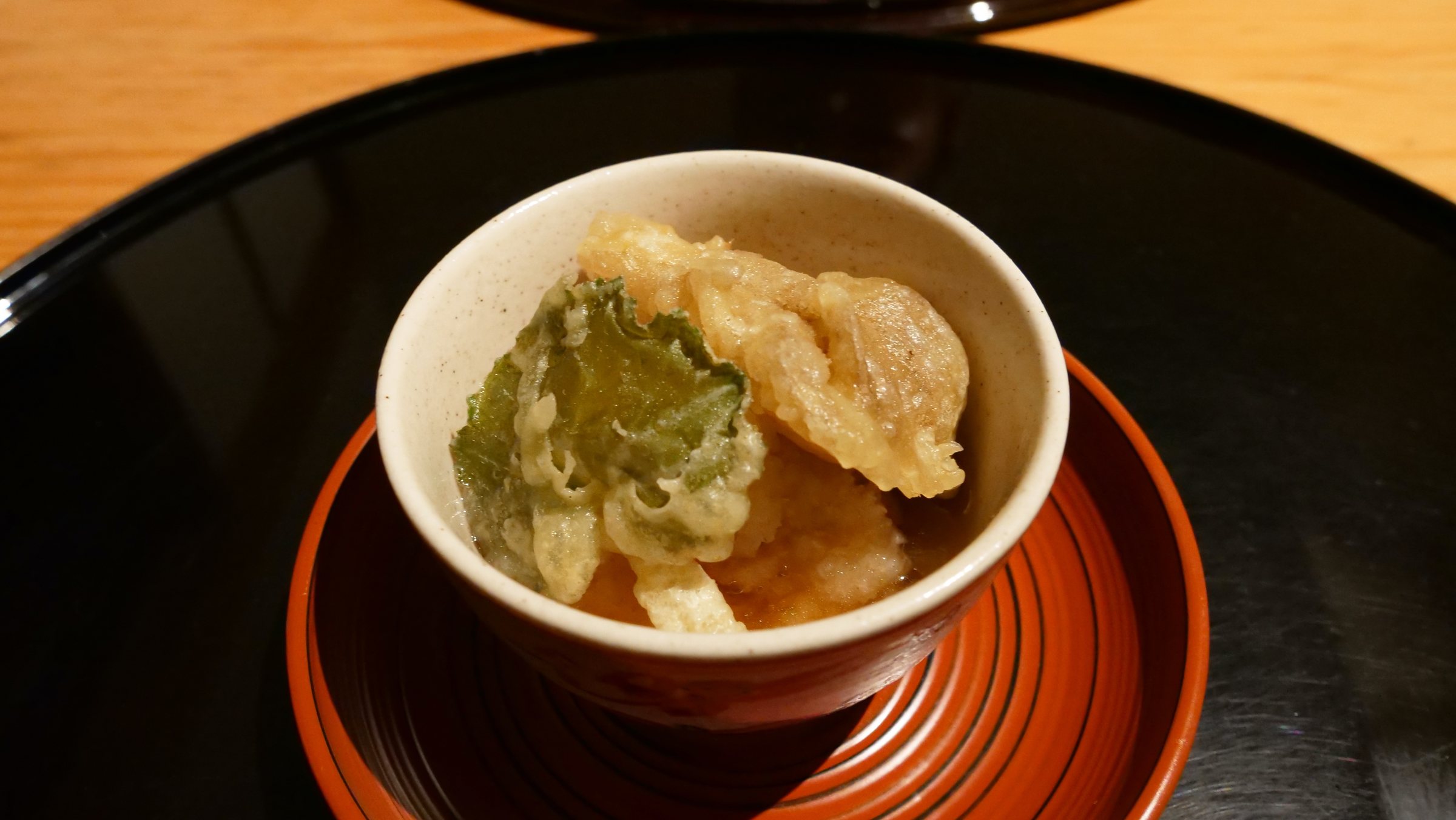
What looked like something fried and steeped in dashi turned out to be agedashi tofu. Because it was made with sesame tofu, it was pleasingly chewy, good to eat and fun in texture.
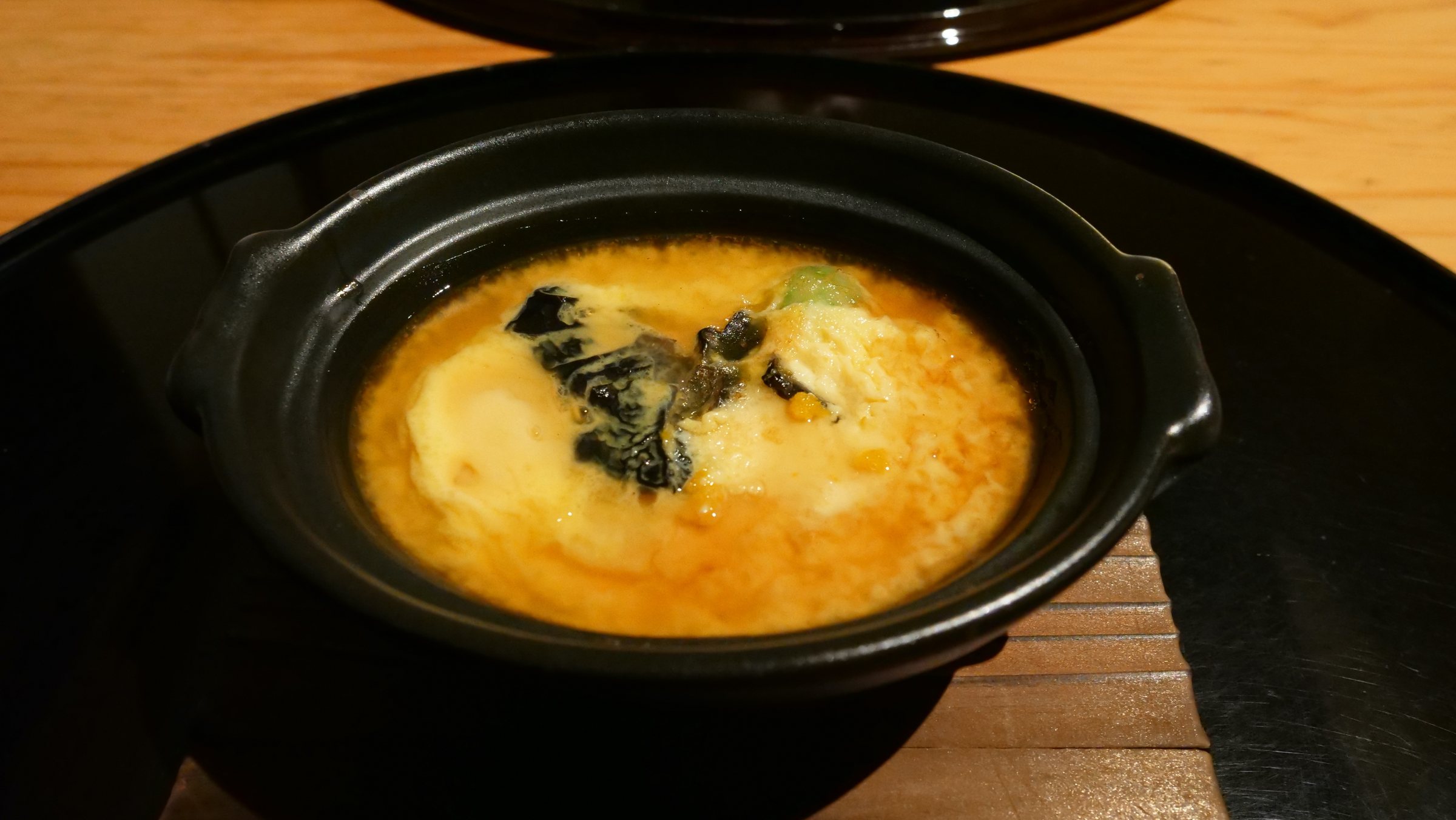
Next, kumoko (cod milt), lily bulb and ginkgo nuts bound in egg: something like a reworked chawanmushi.
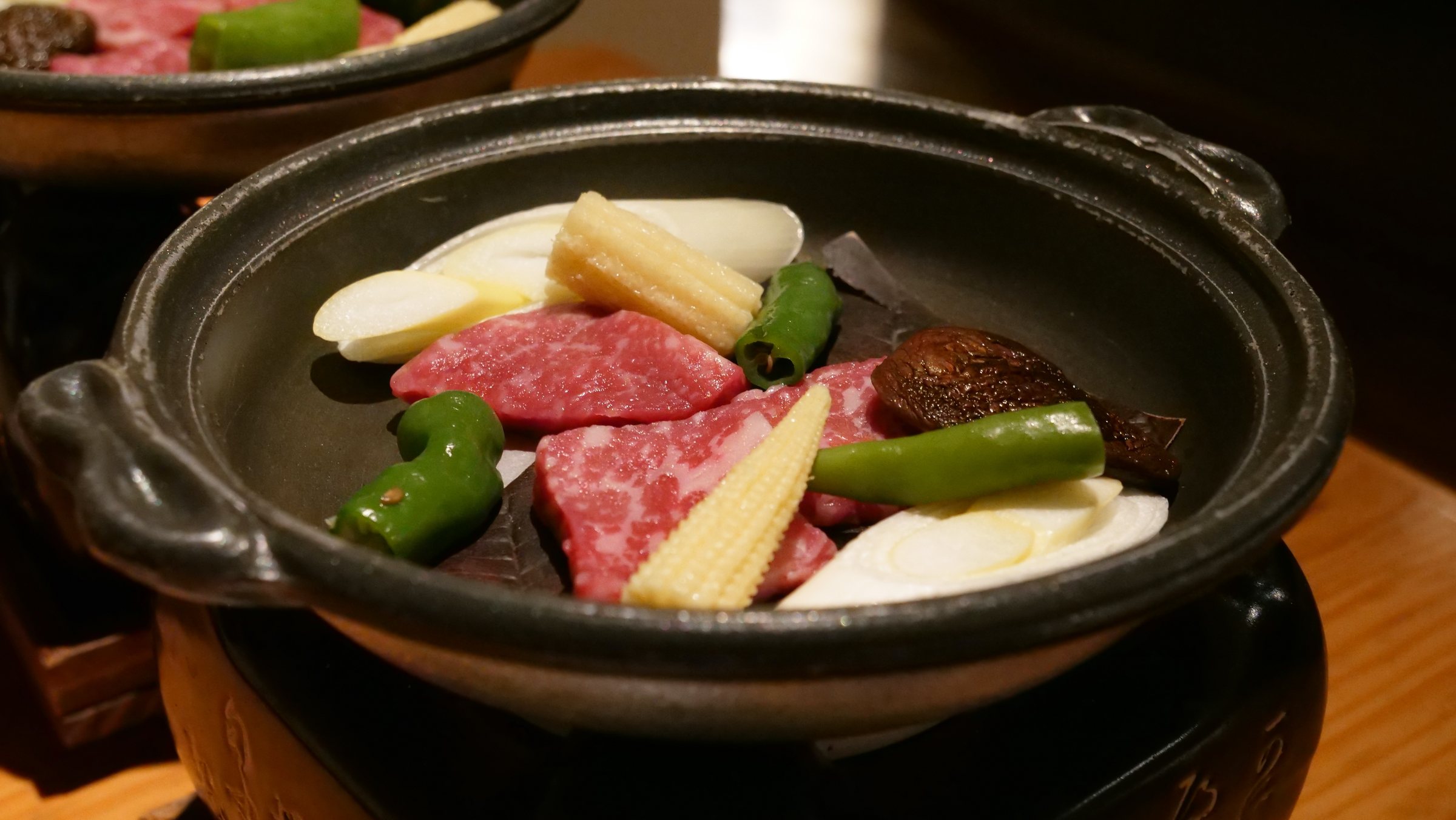
Ashigara beef, cooked on a hot plate.
And a soup with the curious name obake, “ghost”.
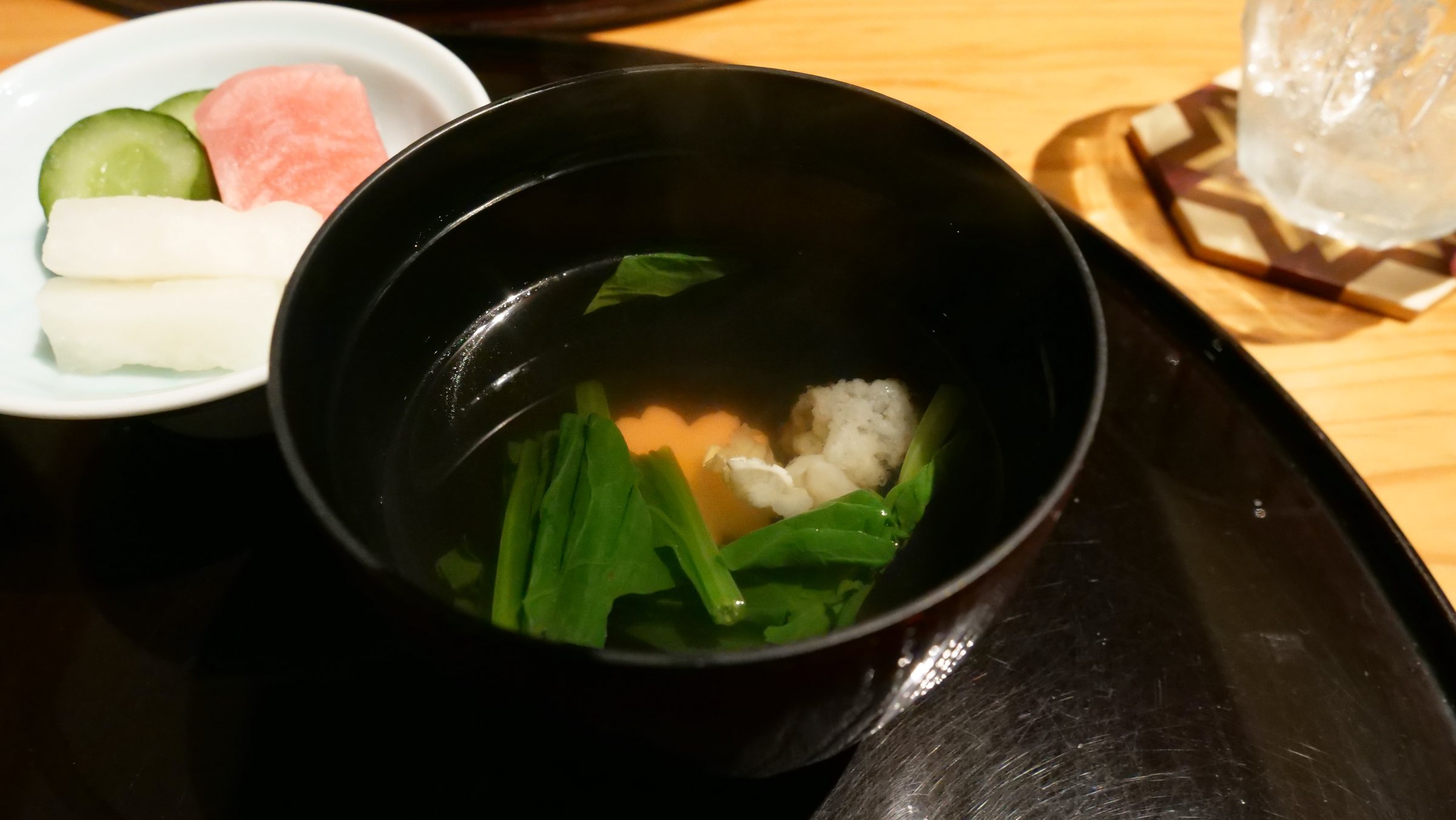
A question for the kitchen
Overall, we found the cooking strongly sweet, and asked our nakai (the attendant serving us), “Is the sweetness deliberate, a traditional style of seasoning?” The answer: “The head chef designs the dishes, so I’m afraid I don’t really know.”
We had asked because we wondered whether the seasoning recreated the flavors of the Meiji era here in the mountains, so an answer showing so little awareness was disappointing. At some other ryokan, head chefs have told us that every member of staff tastes the food and is trained to be able to explain each dish without fail. We would like to see that become a goal here.
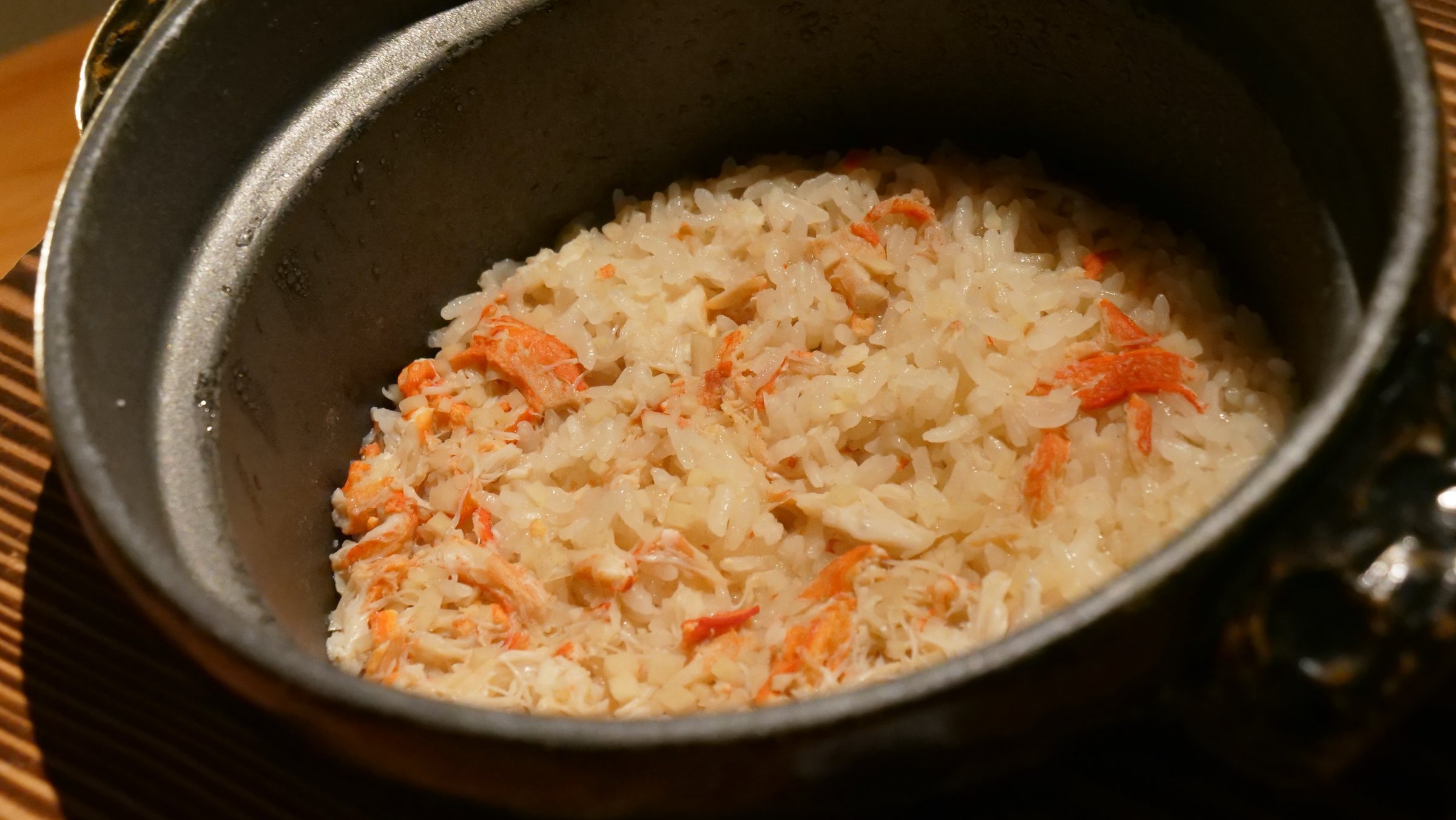
The closing rice was crab cooked with rice.
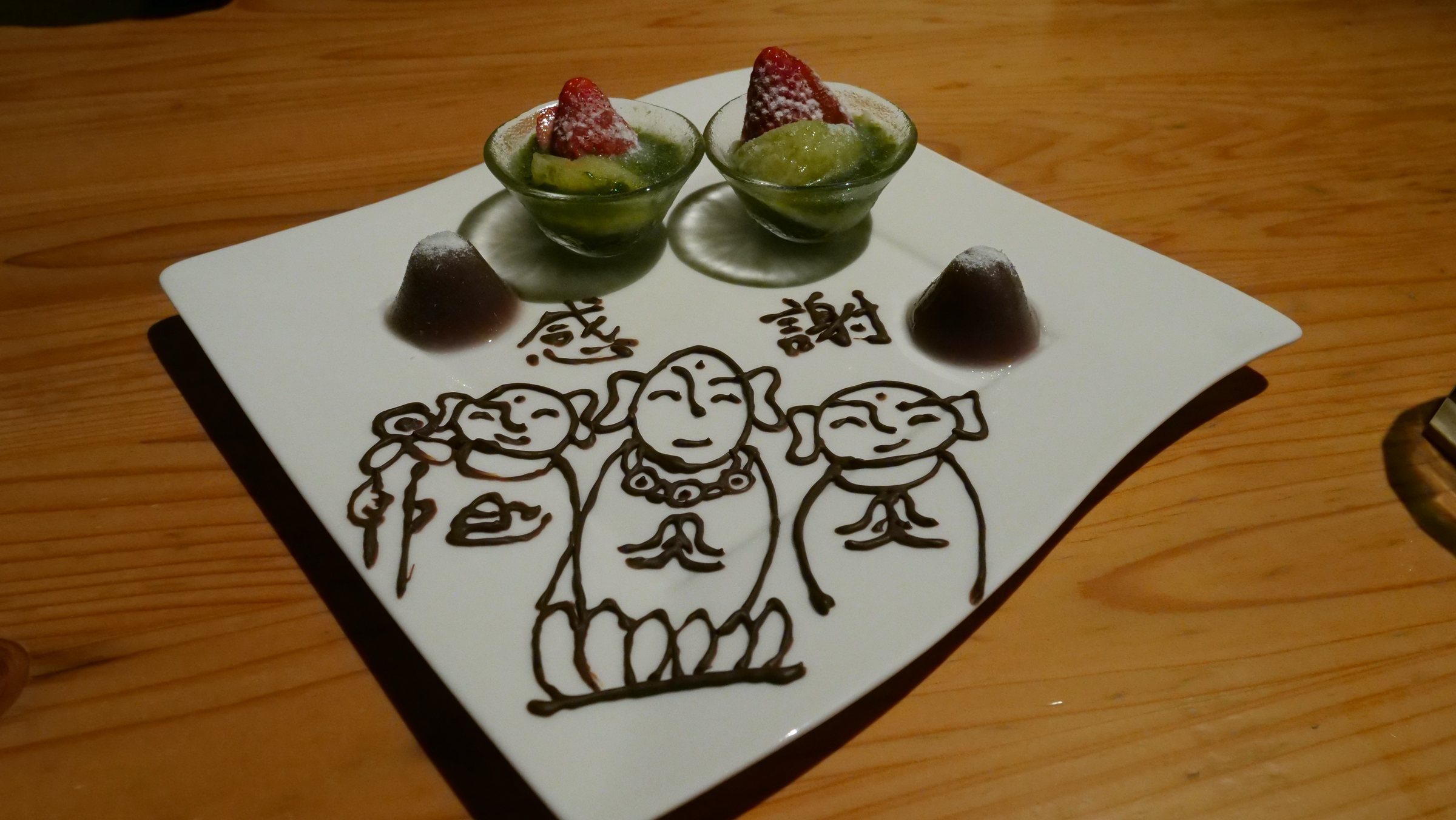
A charmingly thoughtful dessert lifted our spirits, and even the coaster, in yosegi (Hakone’s traditional wood marquetry), was beautiful.
The mirror, once more
On the way back to our room, we stopped once more to admire the mirror used by the Emperor. Its craftsmanship and design, and the imperial crest upon it, were magnificent.
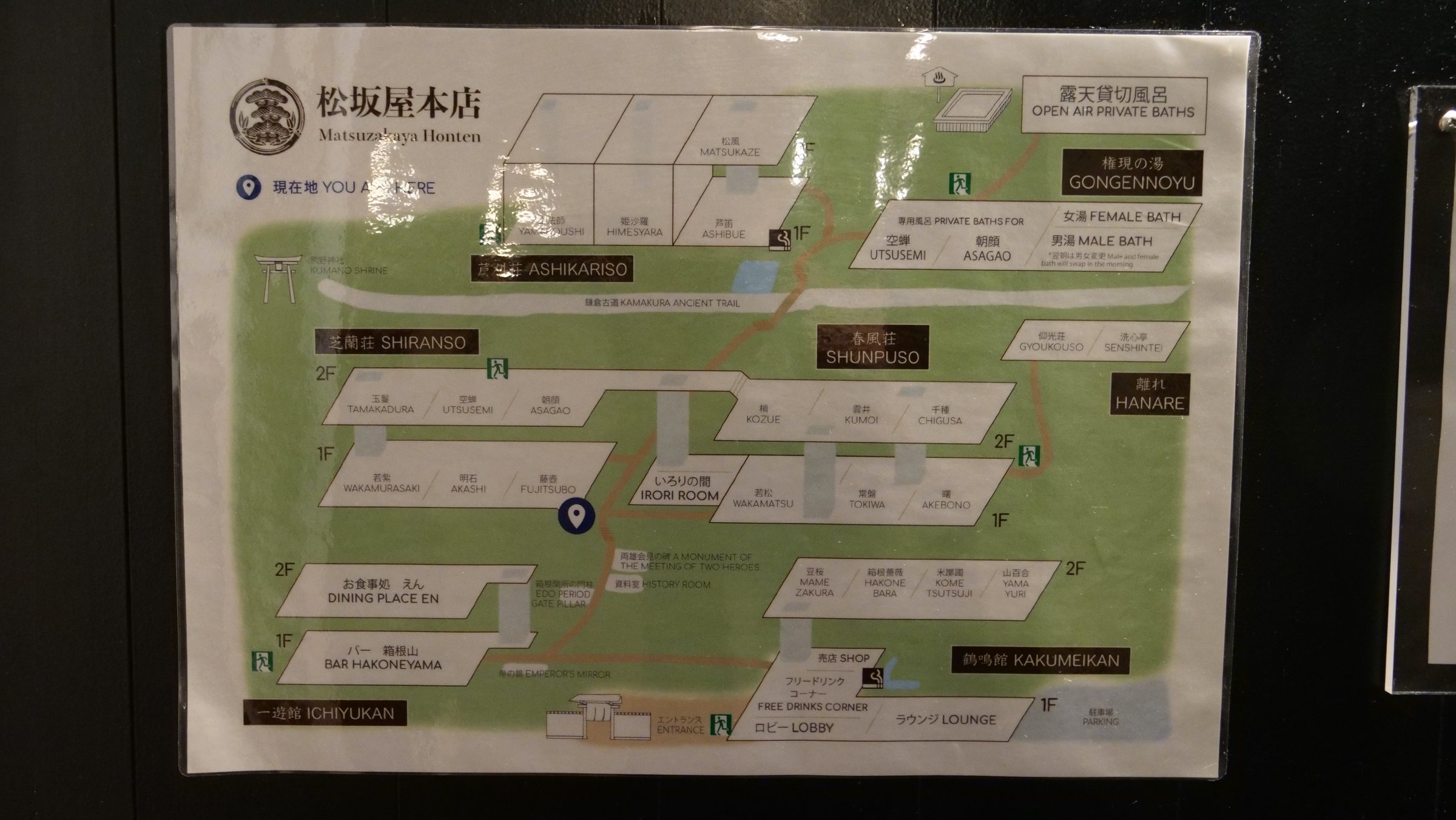
When booking, it may be worth consulting the ryokan’s floor plan and considering the distance to the baths and restaurant before choosing a room.
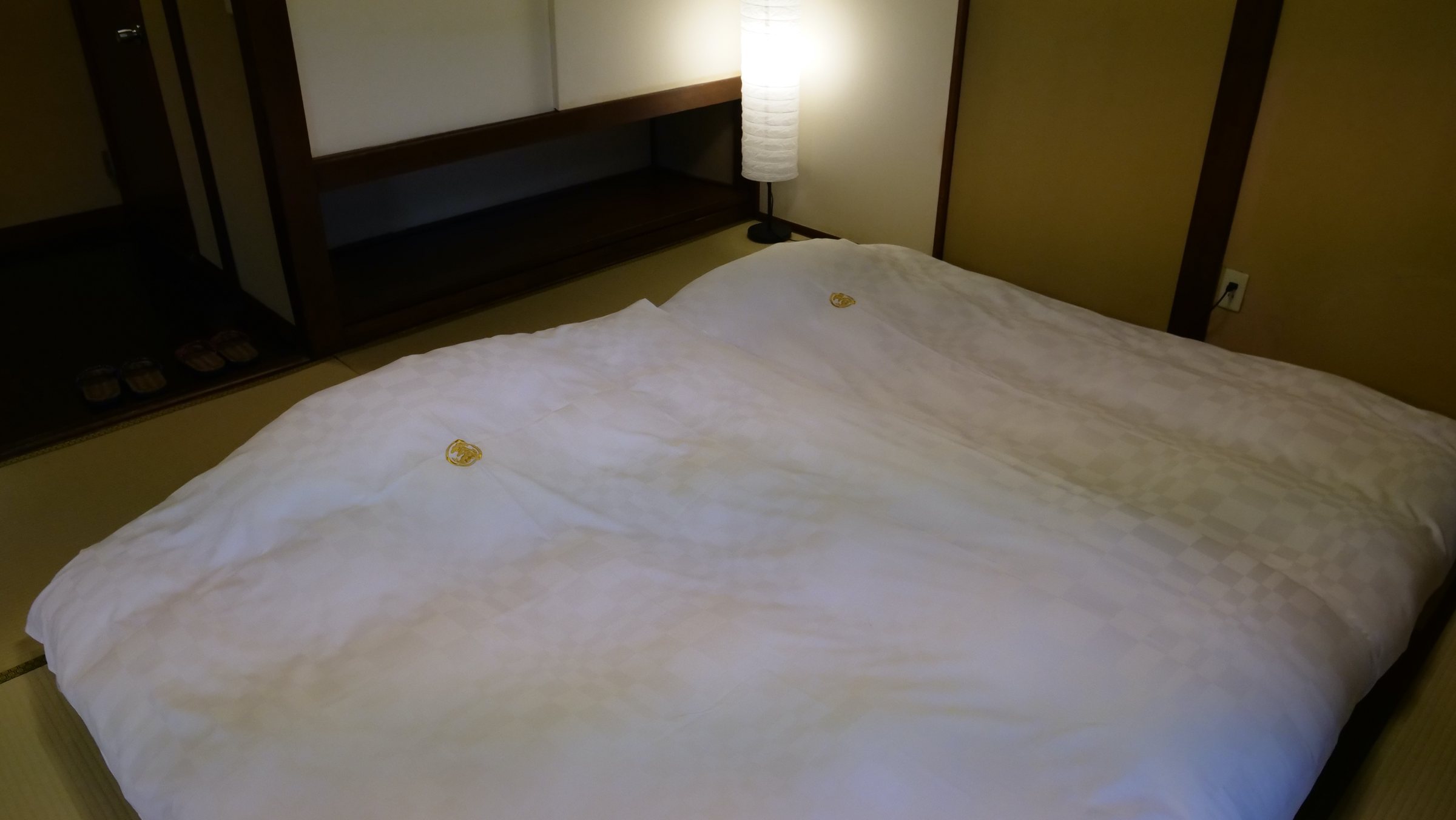
After a stroll around the area and another soak in the hot spring, the thick, generous futon wrapped our warmed bodies, and we slept soundly.
Breakfast
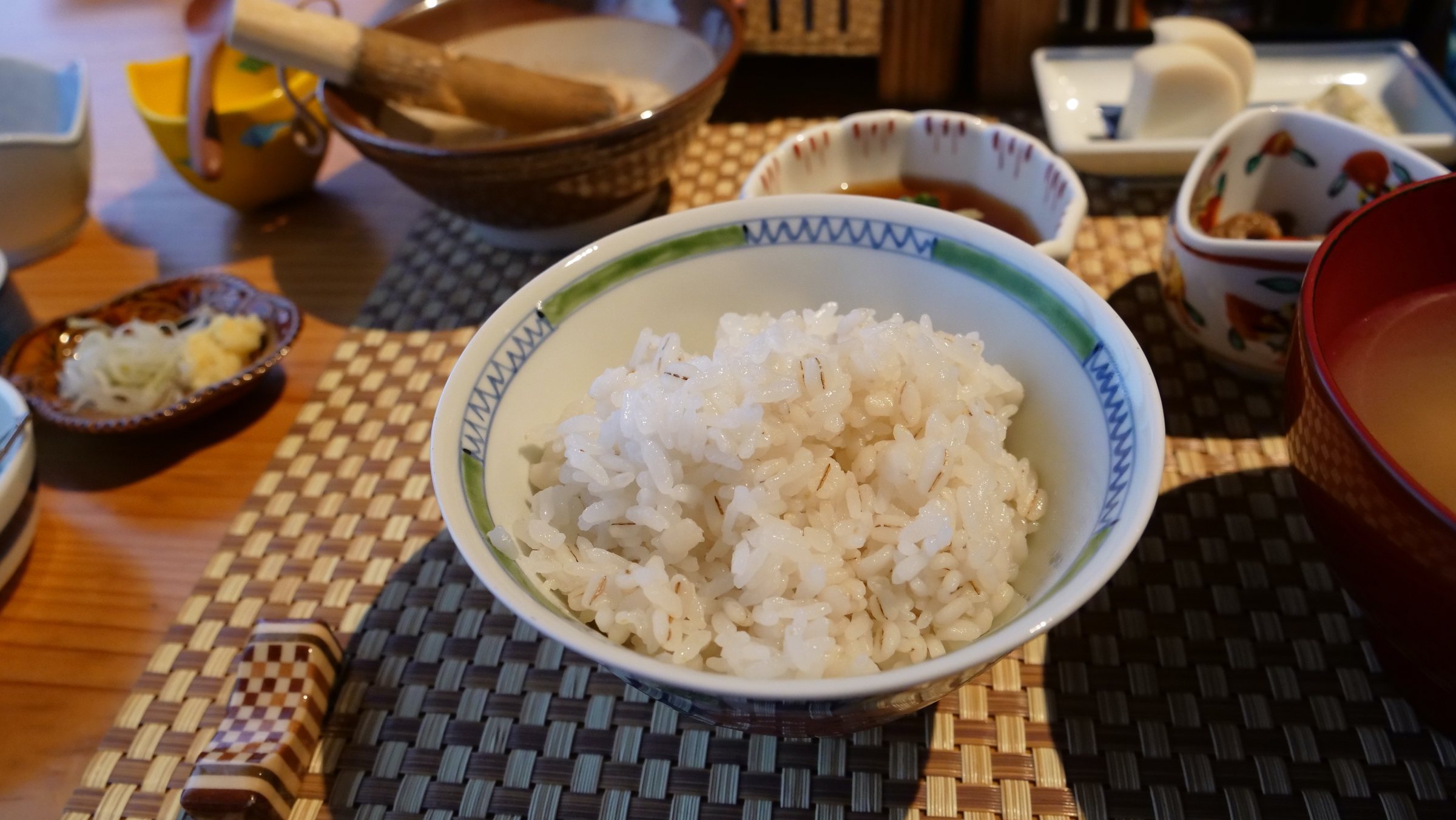
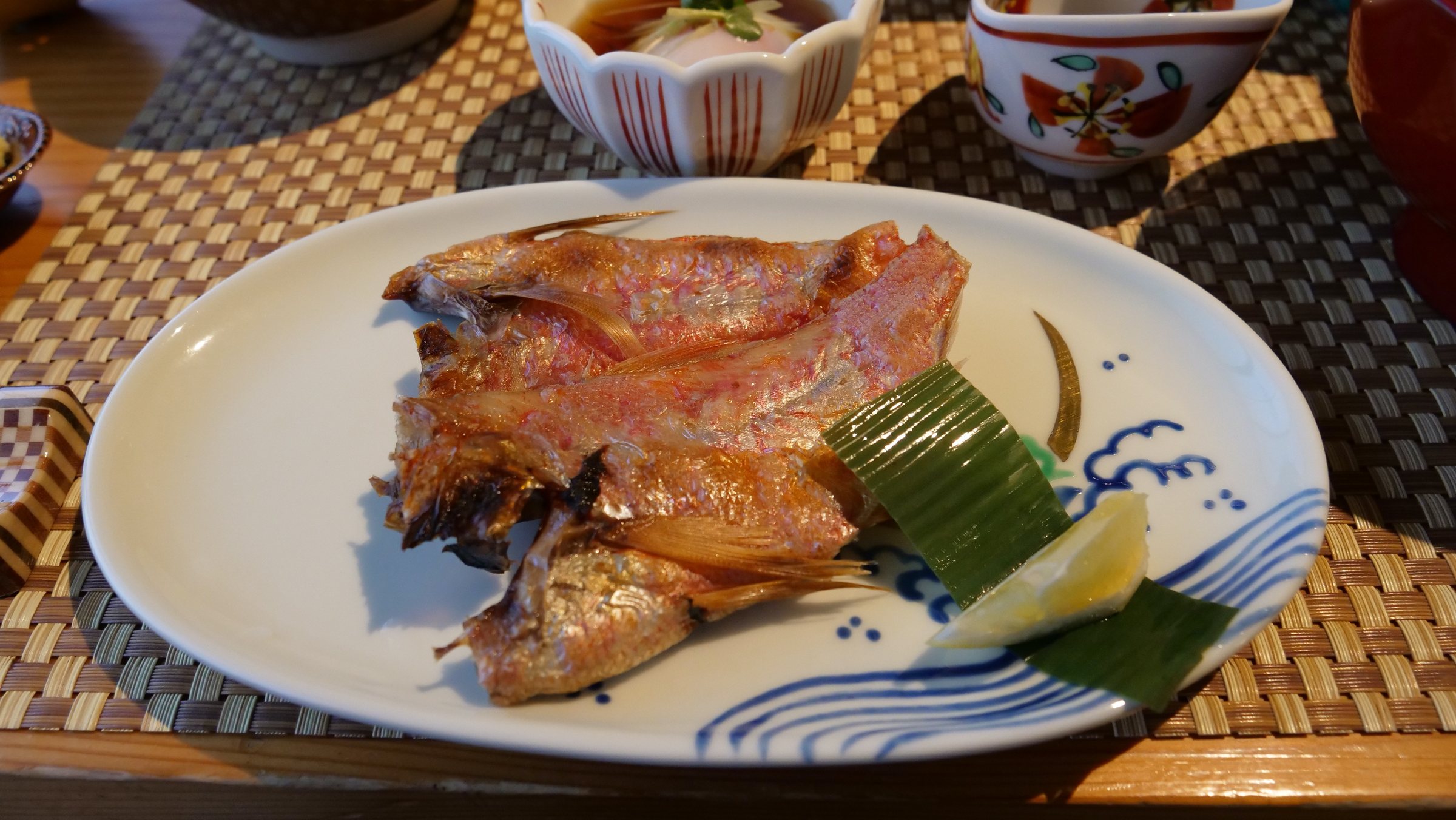
Breakfast was a spread of small side dishes in little bowls, the kind that makes rice taste good first thing in the morning.
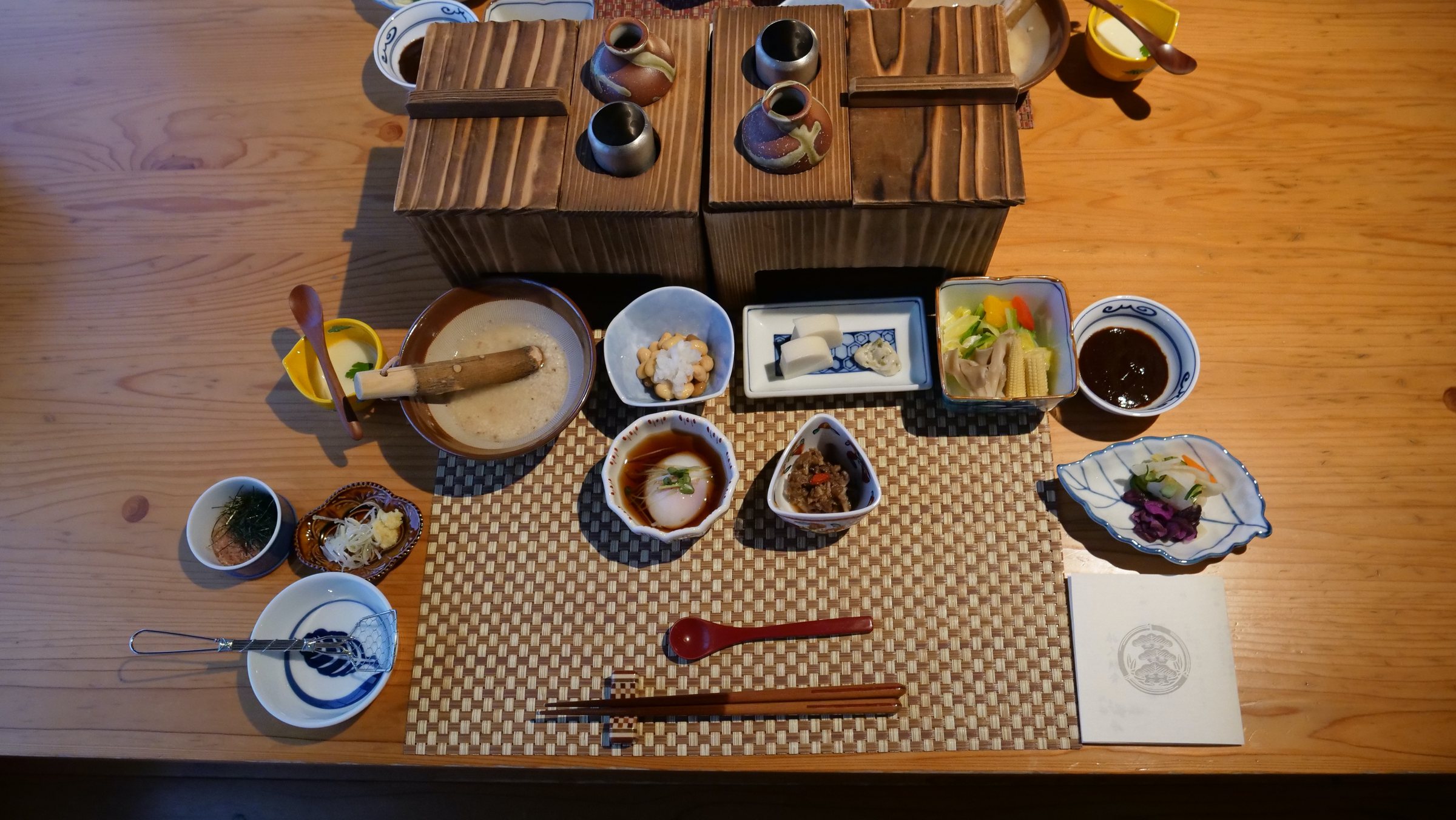
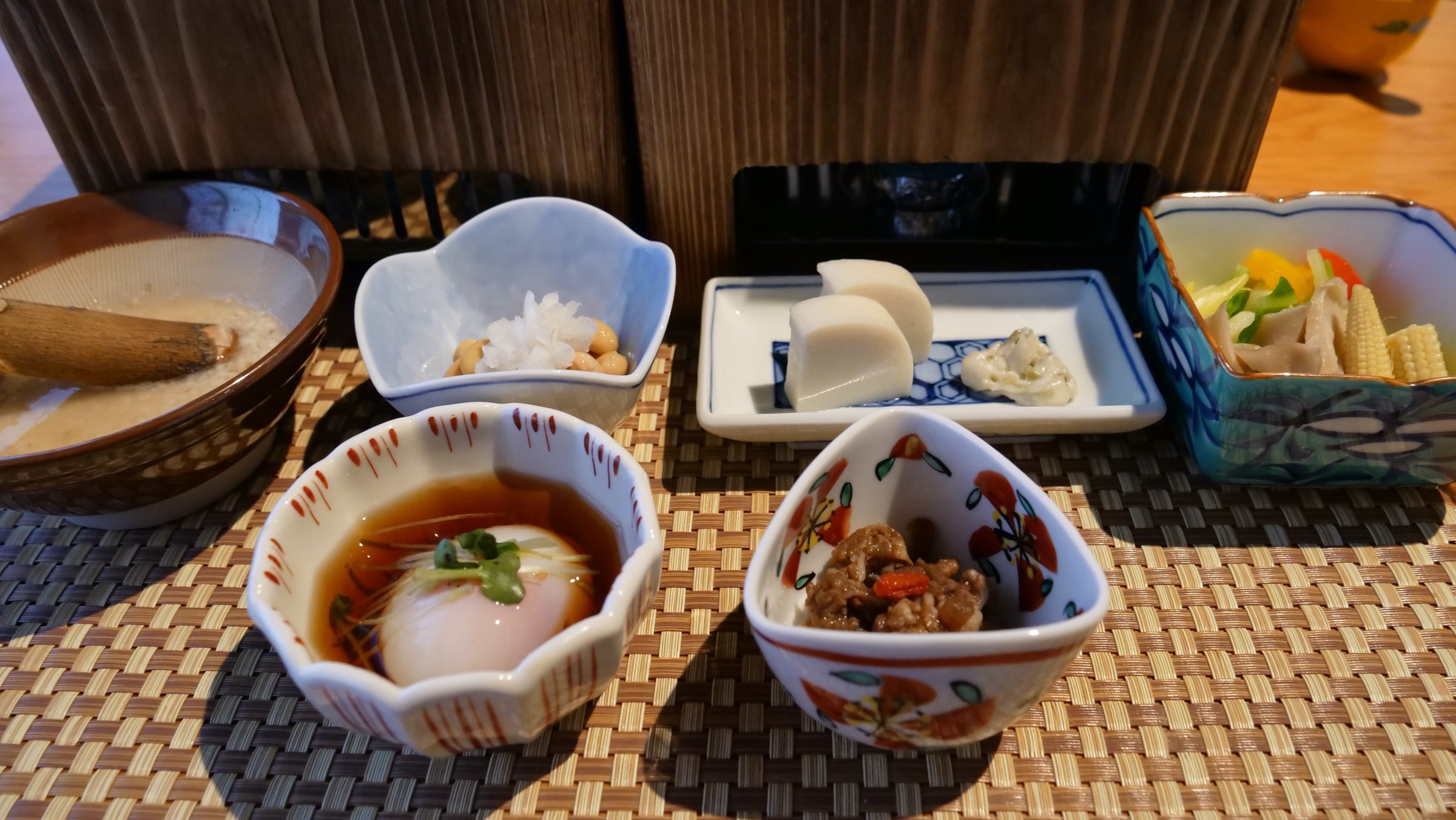
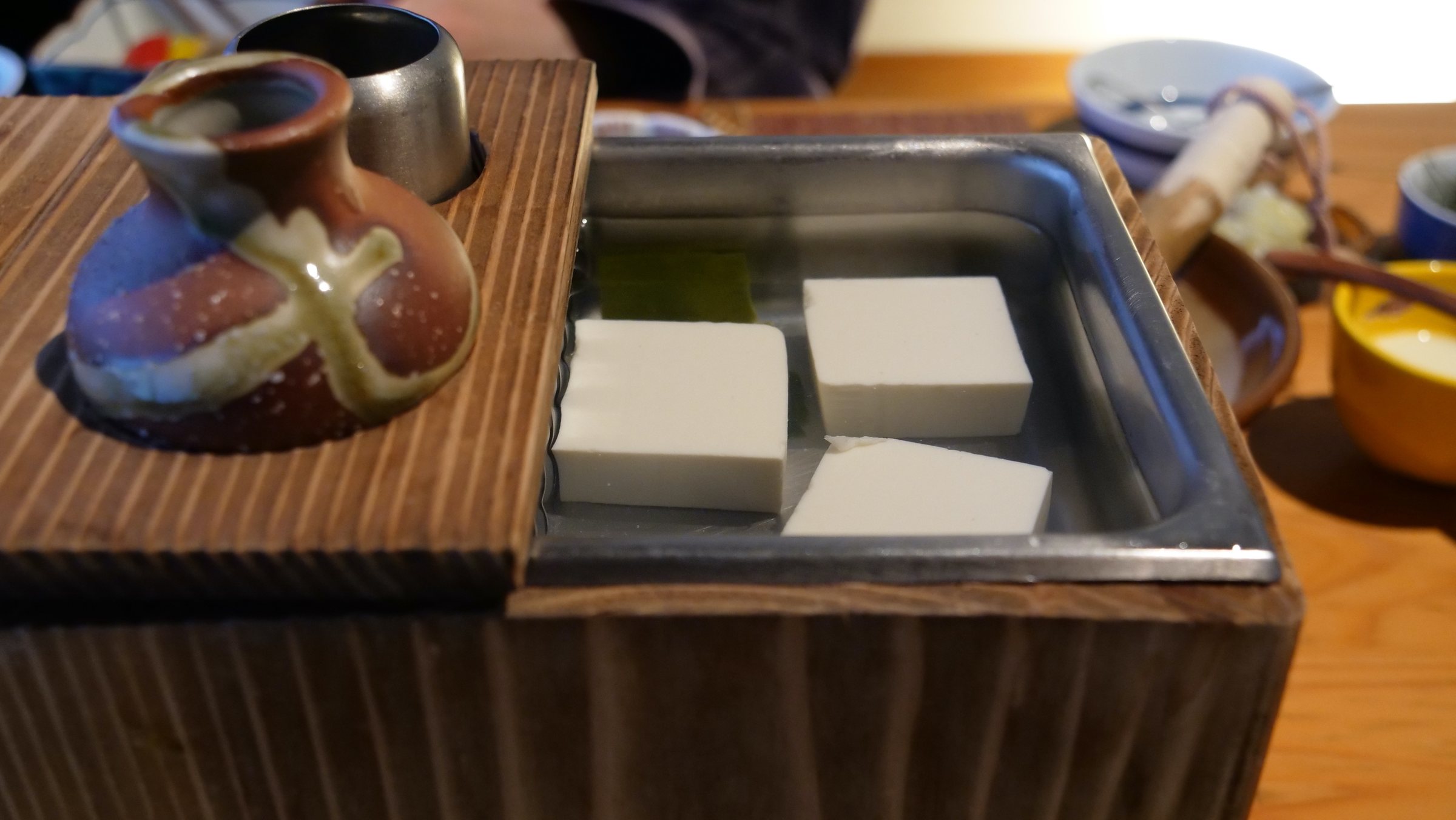
There was yudofu, tofu simmered at the table, in a vessel that warms the dipping sauce alongside it: so ingenious that we wanted one for home.
Rice cooked with barley was very welcome: light enough for the morning and quick to eat with tororo (grated yam). A classic ryokan breakfast brought our trip to a close.
Looking back
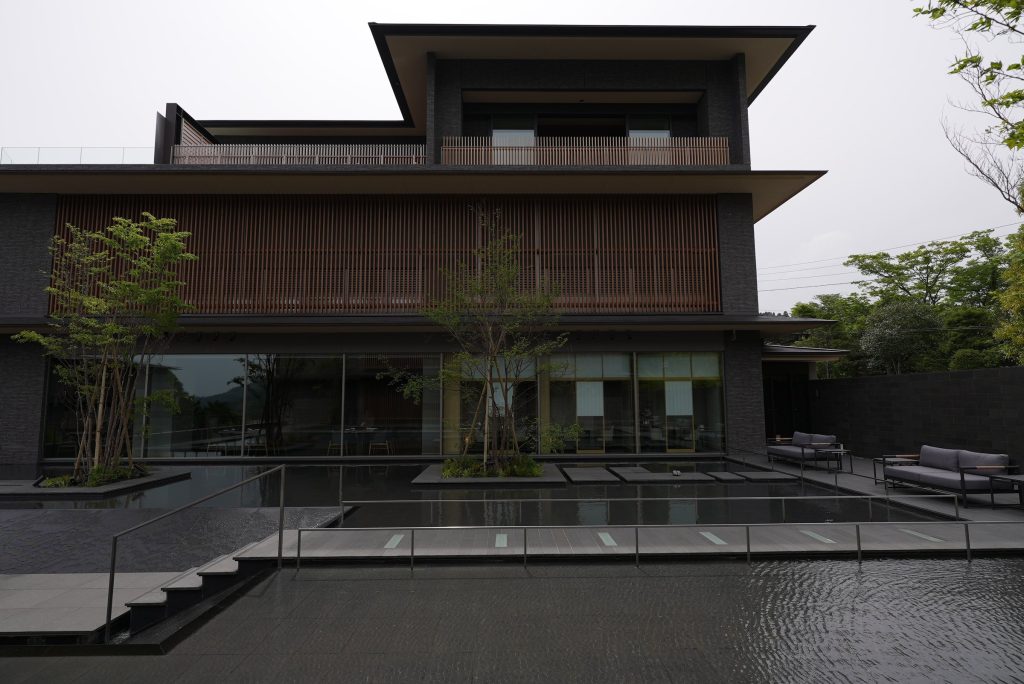
The newest, most polished ryokan have their appeal, but the historic atmosphere and sense of tradition at Matsuzakaya Honten inspire something more: a feeling of gratitude. With walking trails, small hills, shrines and power spots nearby, the area is well worth including in your travel plans.
This review reflects a stay in late 2020, during the pandemic. Room allocations, menus and facilities may have changed; please confirm current details directly with Matsuzakaya Honten before visiting.