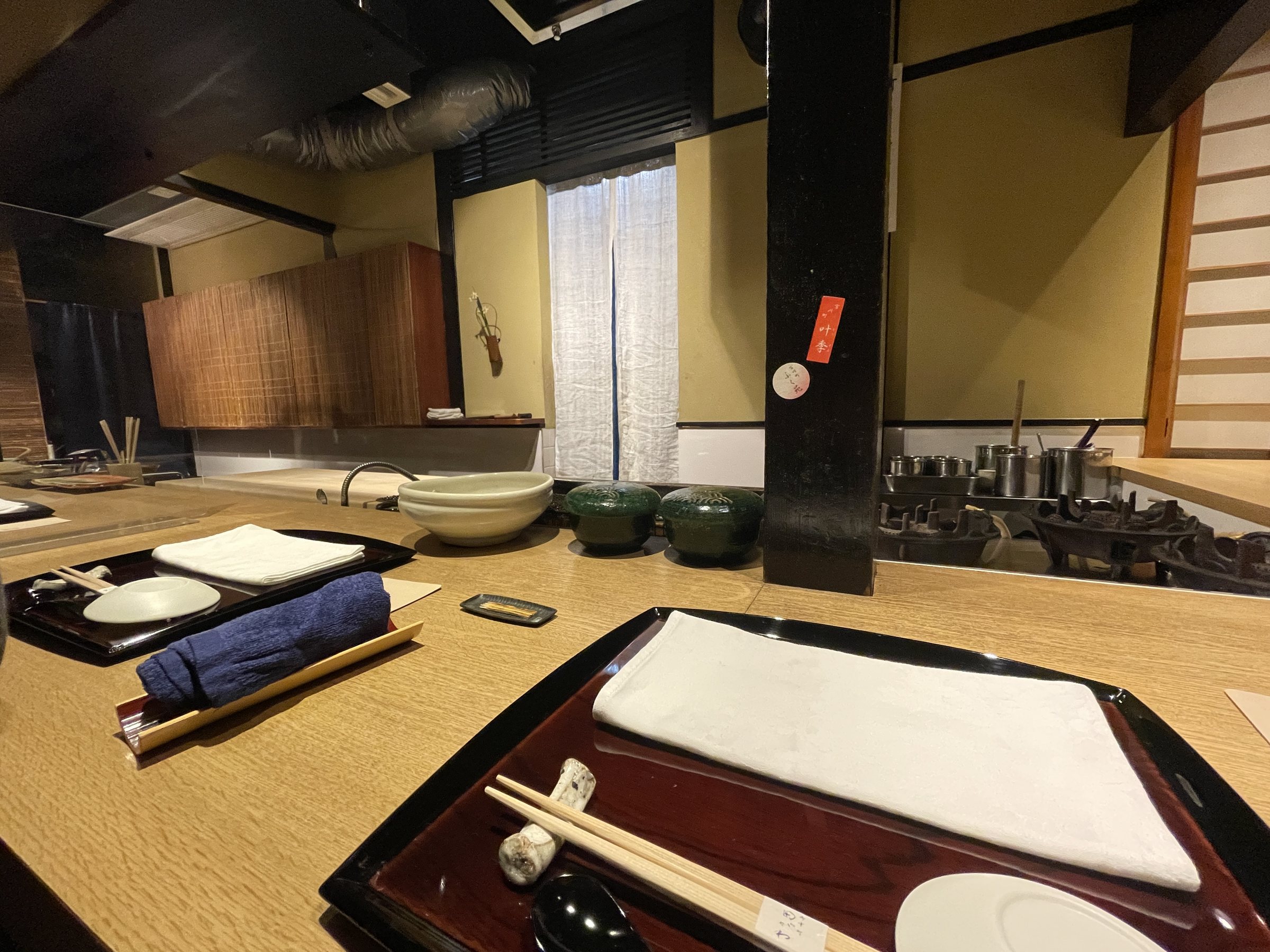
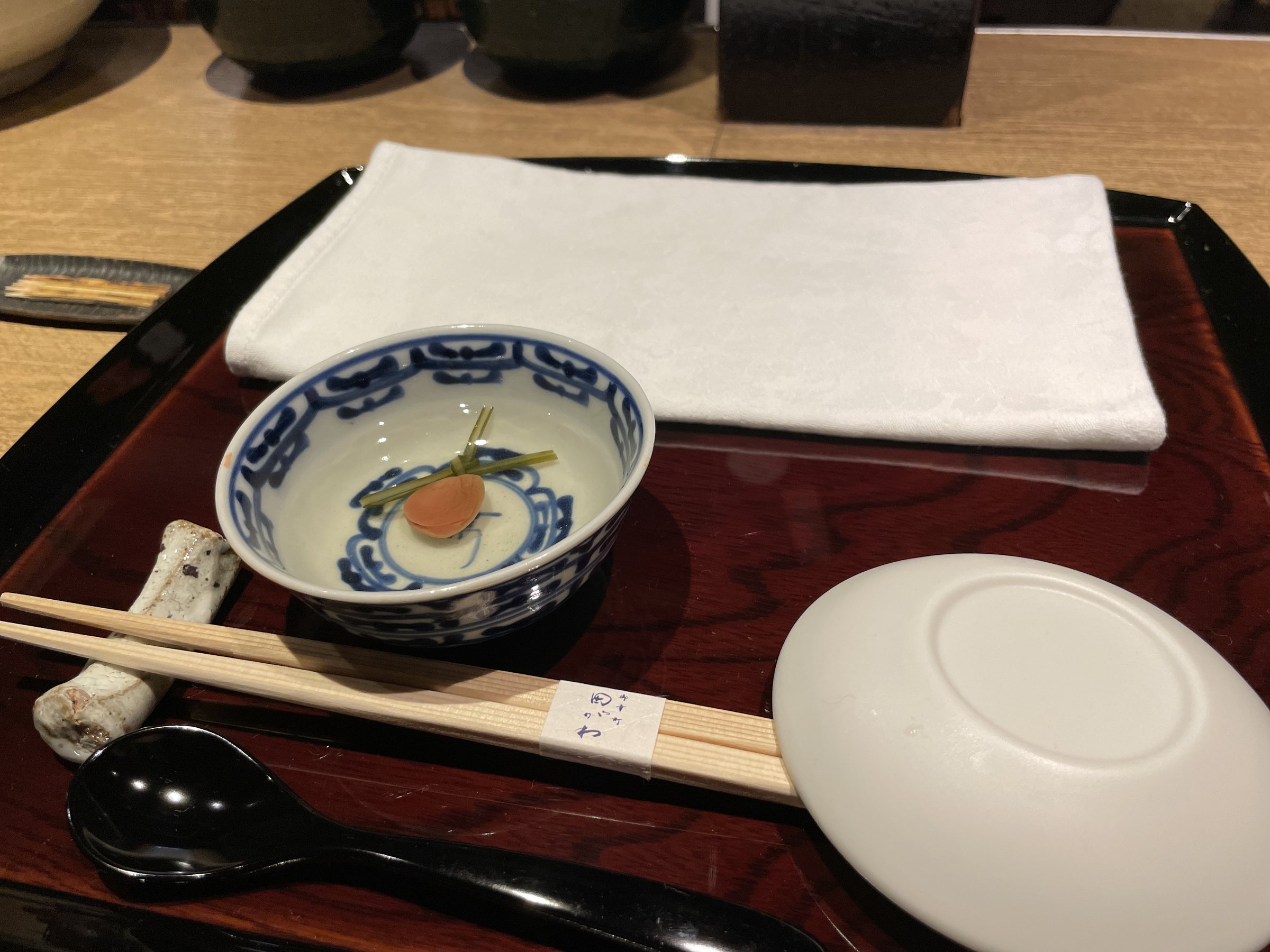
Tagawa is a kappo restaurant, where diners sit at a counter and the cooking happens in front of them, on Gokomachi street in central Kyoto. It is run by its owner and a second cook. As 2023 began, it was offering something special right from the start of the year, and we were back. New Year in Kyoto is exciting enough in itself; the thought of the owner’s cooking had us close to drooling. We were first served a cup of hot water with a plum and a knot of kombu floating in it, an auspicious welcome very much of Kyoto.
Fugu on the counter
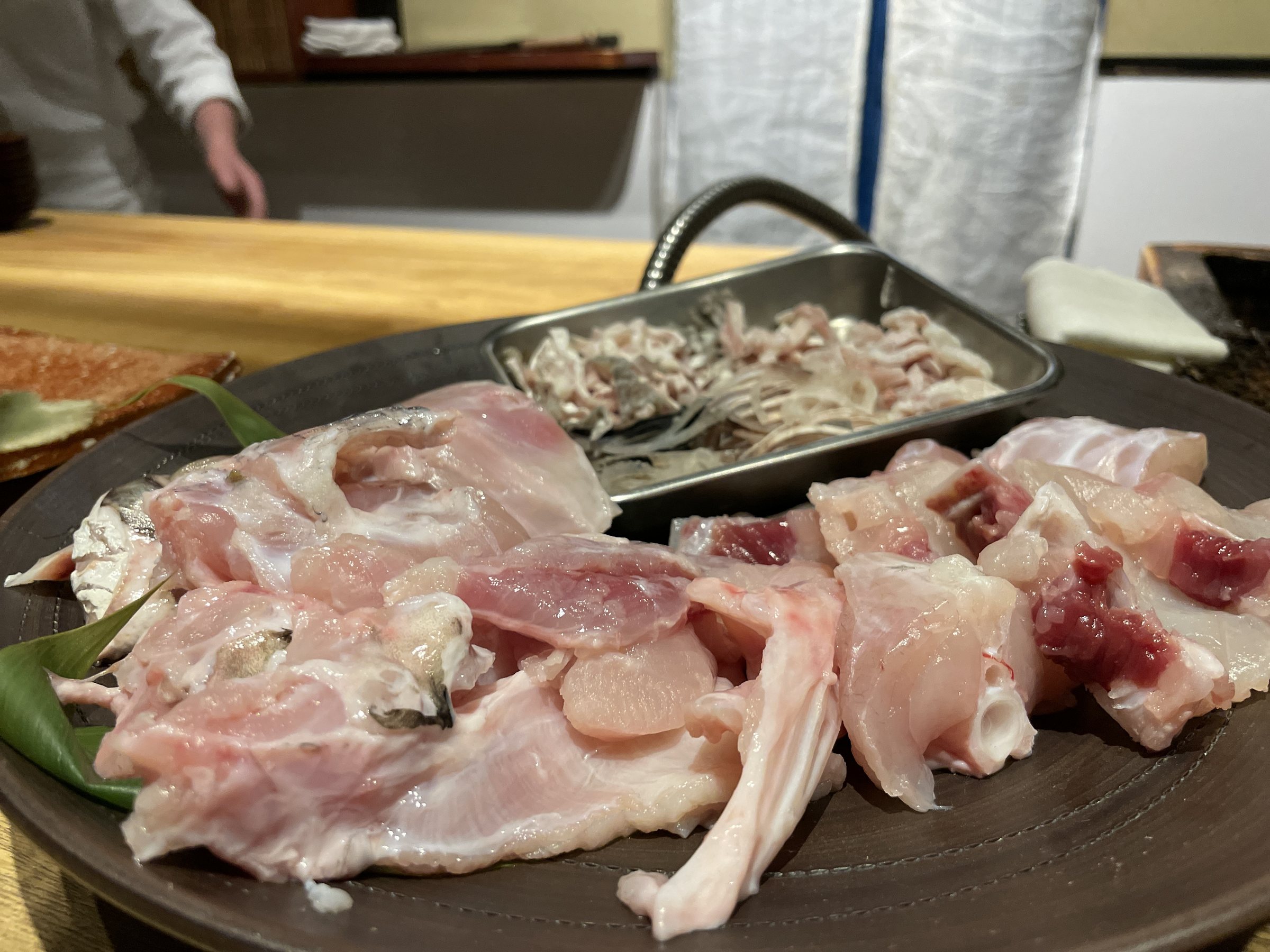
Today’s main ingredient was fugu, pufferfish. Enjoying the ingredients on display at the counter with our eyes first only heightened our anticipation.
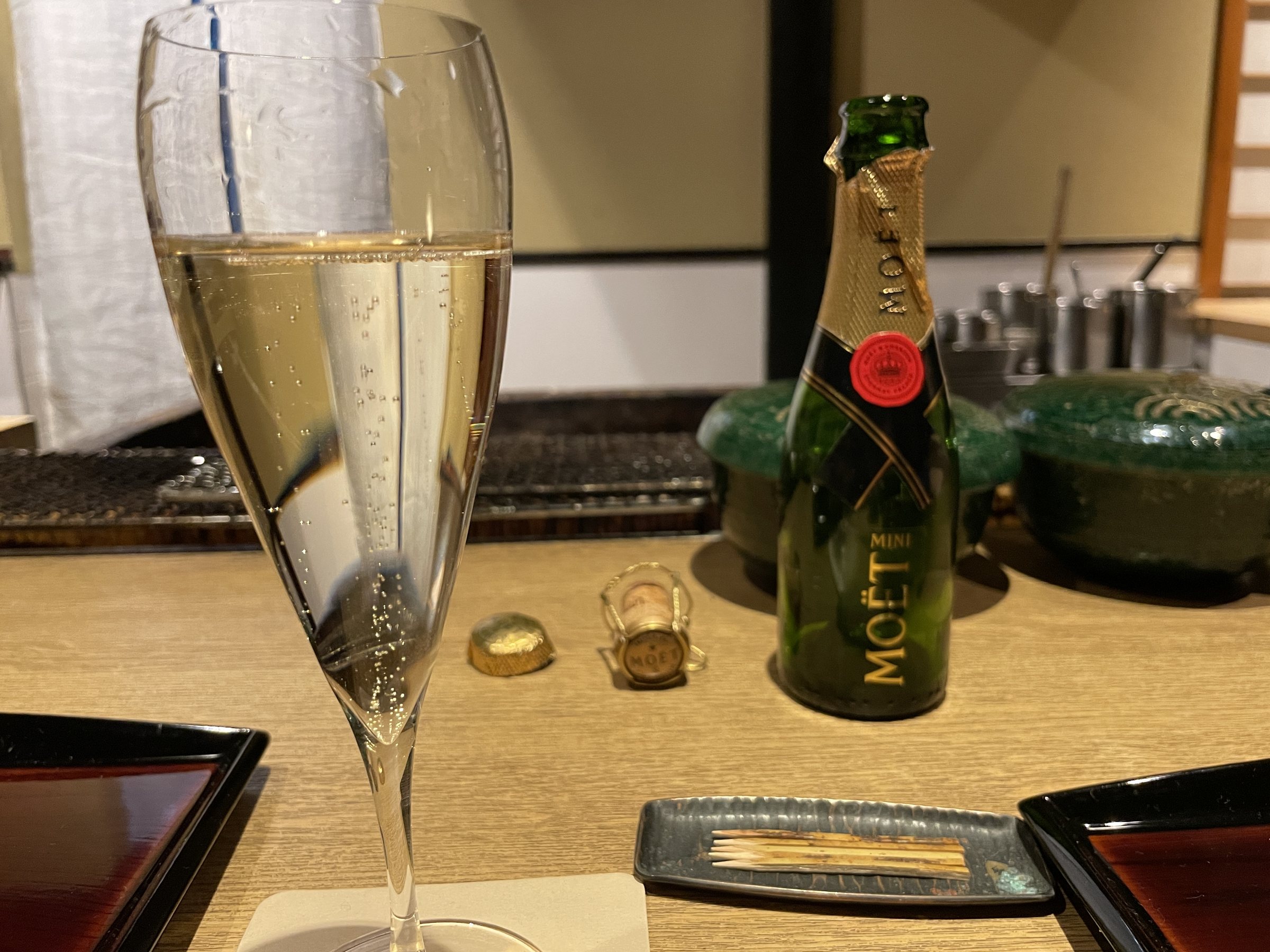
We were glad to see miniature bottles on offer. For the toast we had champagne, which felt suitably festive, and the owner and the second cook exchanged New Year greetings with each guest. While the owner concentrated on cooking and plating, the second cook, a young man, handled all manner of jobs and never once lost track of our drinks.
Skin, sashimi and a curious garnish
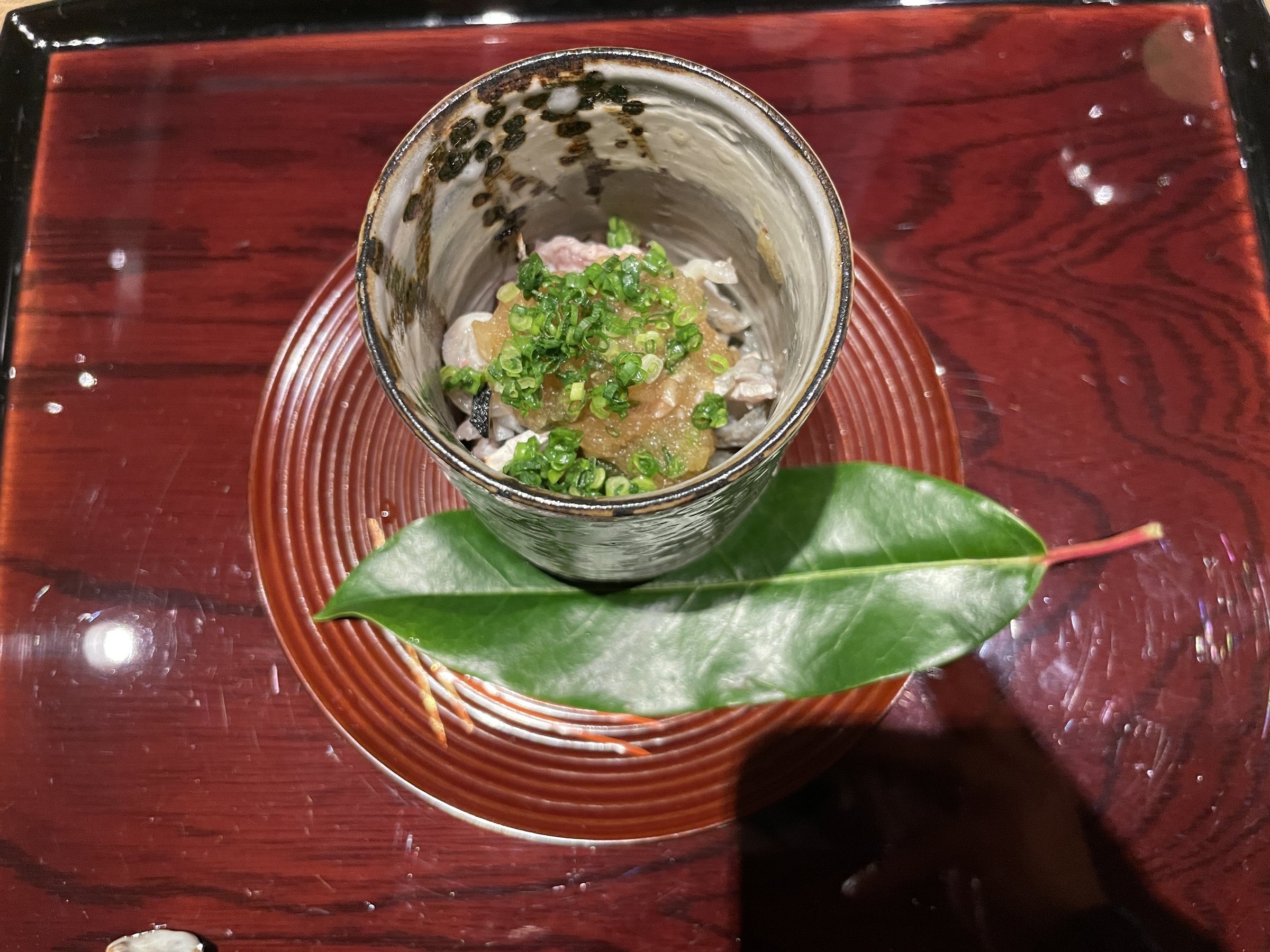
The first dish was a chilled starter of fugu skin and its gelatinous parts brought together with ponzu, citrus soy. A light cloud of grated daikon gave it an accent, and the acidity spread through the mouth at just the right level. After swallowing, the flavor of spring onion lingered, with the faintest hint of gelatin.
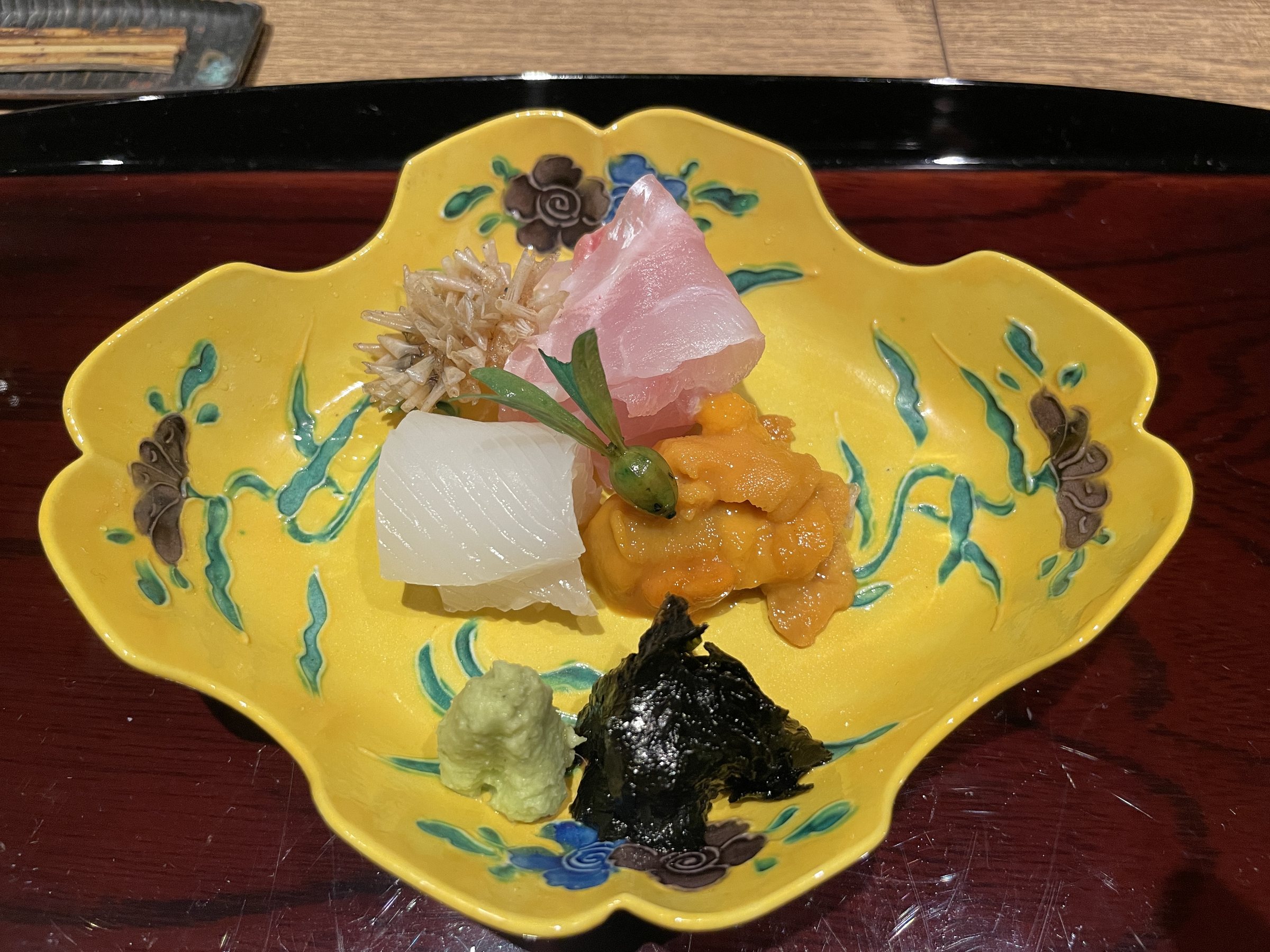
Then came the sashimi, a favorite of ours, along with amadai, tilefish, fried with its scales on so that they stand up crisp. The squid had been given beautiful hidden cuts, and the sweetness of the sea urchin kept the sake flowing. Instead of soy sauce we dipped into house-made nori tsukudani, seaweed simmered in soy, then topped each piece with wasabi: excellent.
Here too was a small, auspicious ingredient: a garnish of tsukubane, a plant pickled in vinegar. “It’s an unusual ingredient, but it feels like New Year, and you can eat it. Interesting, isn’t it?” said the owner. There is never any showing off of knowledge; the owner talks to amateur guests like us on our own level, and that says a great deal about the person behind the counter.
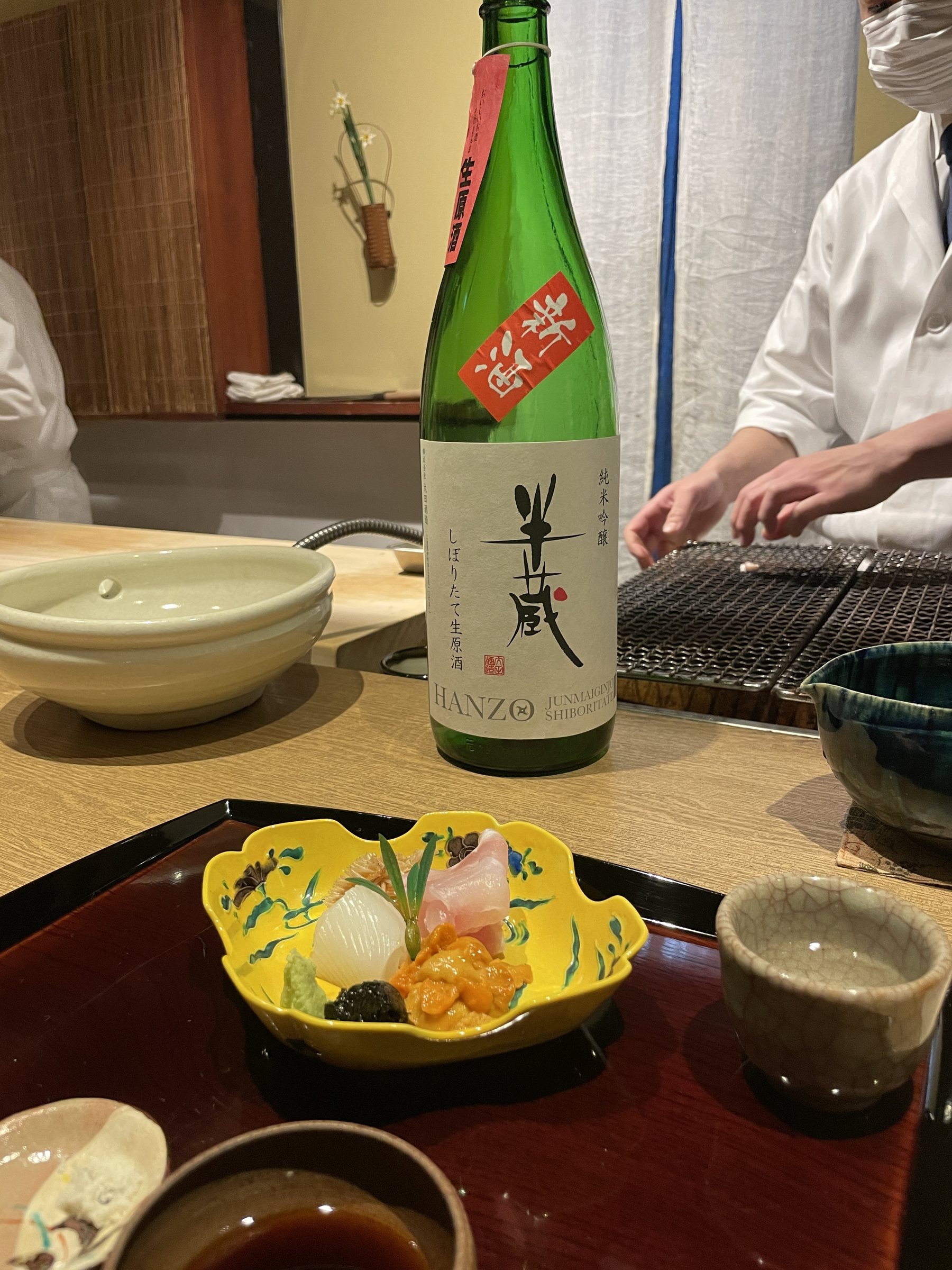
The local sake is chosen from all over Japan by the owner’s own palate to match the food. Rather than a narrow line-up, the style is to try many different things, which should make each visit something to look forward to.
Mochi on the hearth, and white miso zoni
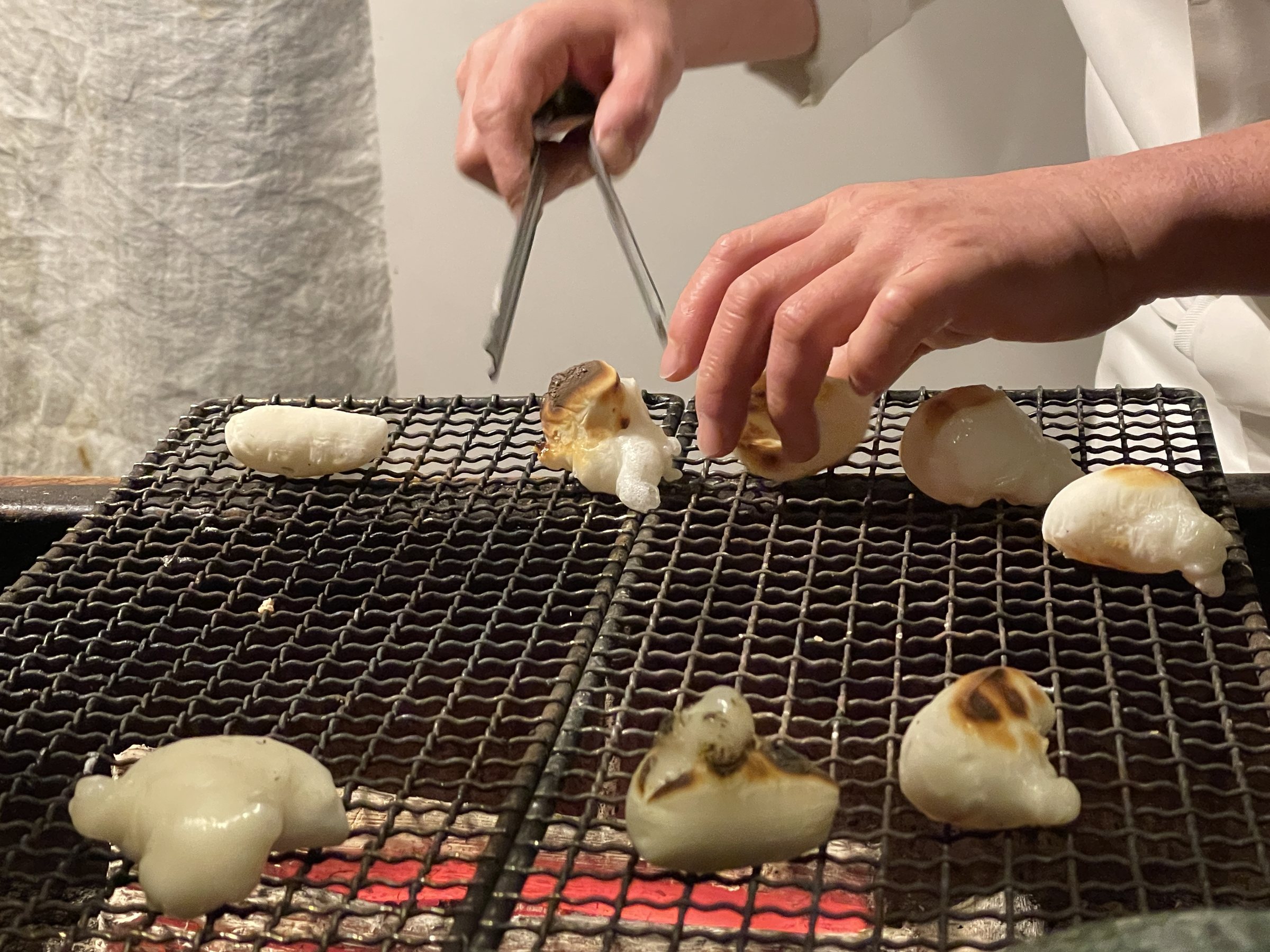
Charming little rice cakes were placed over the hearth. How would Tagawa serve this most traditional of New Year ingredients? We were drawn into every movement.
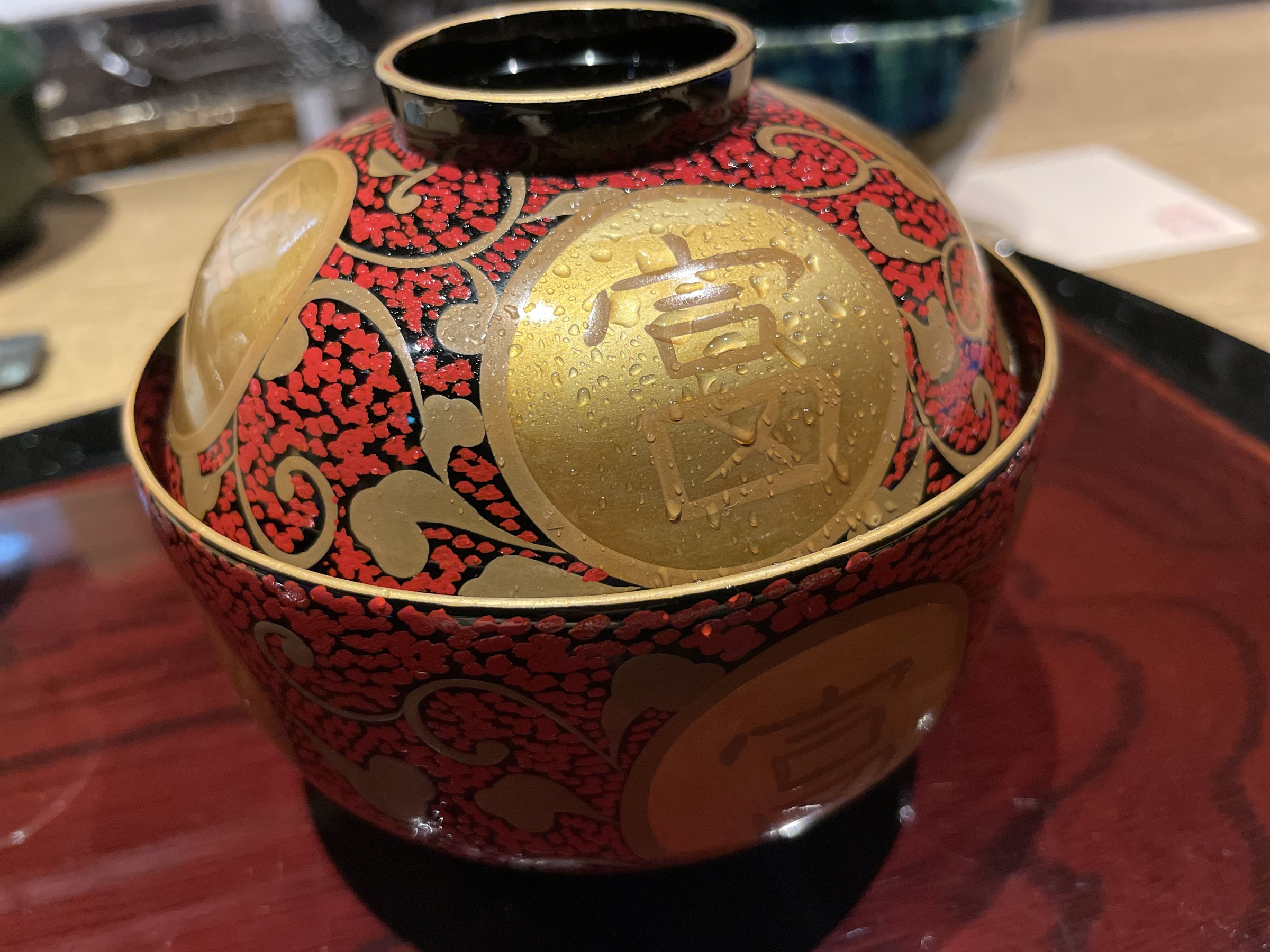
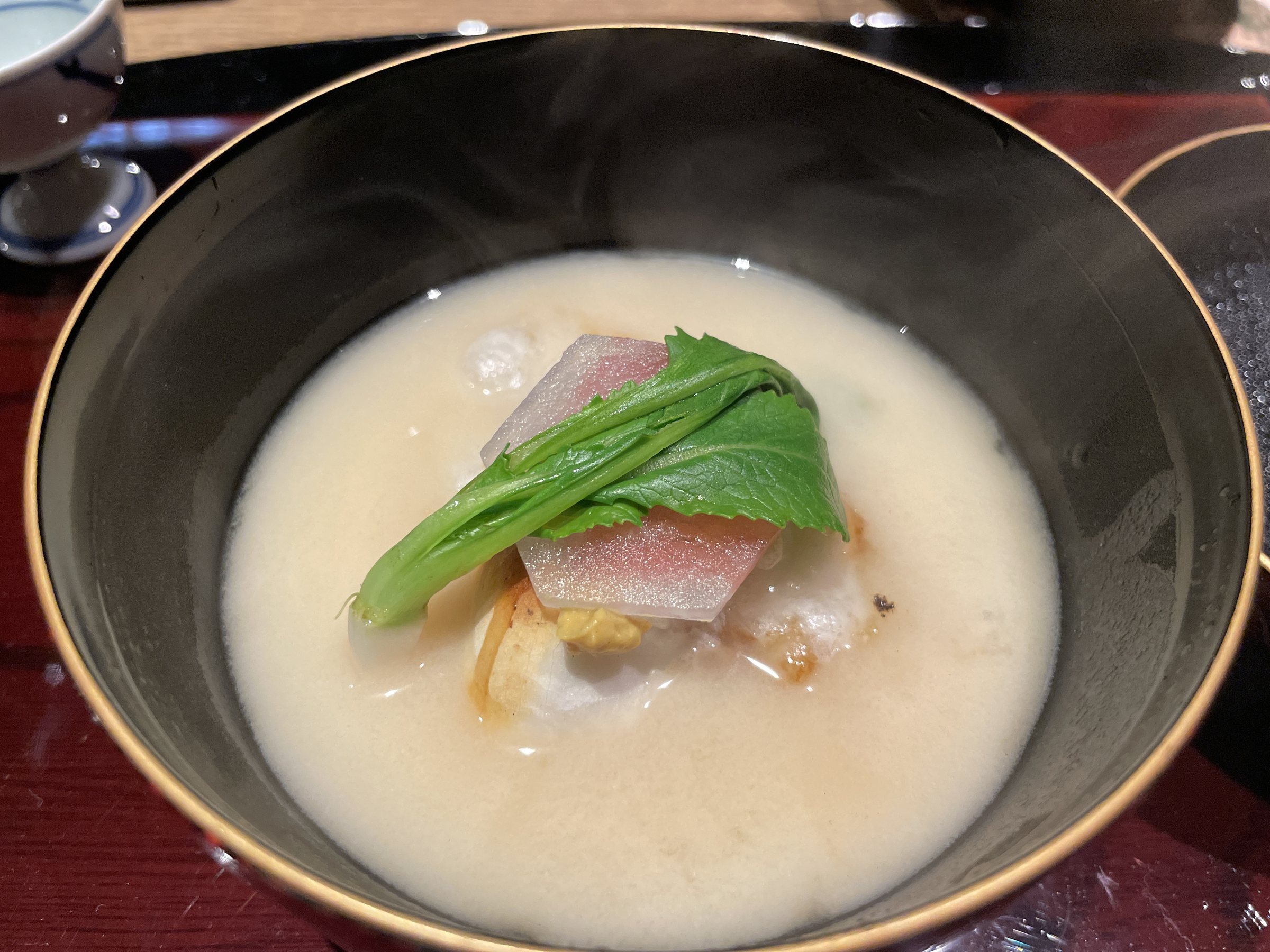
The happy, beautiful bowl was given a fine mist of water. This is part of the etiquette of Japanese kappo cooking, but the first time we saw it we asked about it ourselves. We would encourage you to do the same and learn the meaning through that kind of conversation.
The white miso zoni, the New Year soup, held fragrant toasted mochi. The vegetables, cut so finely that their red and white showed through, carried the gentle flavor of the dashi. Along with the rich dashi, the sweet aroma of white miso rose through the nose.
The hassun: osechi in a box
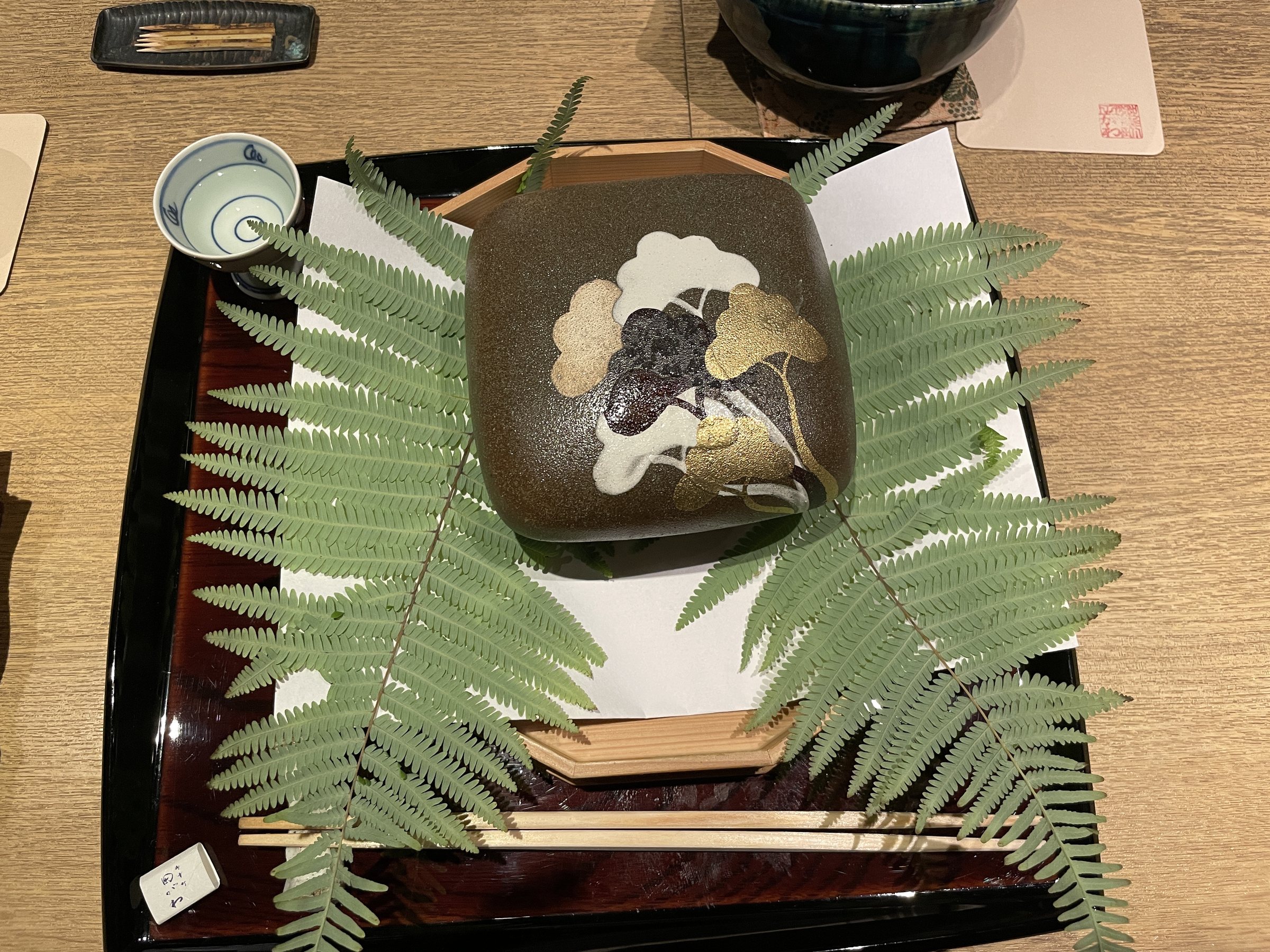
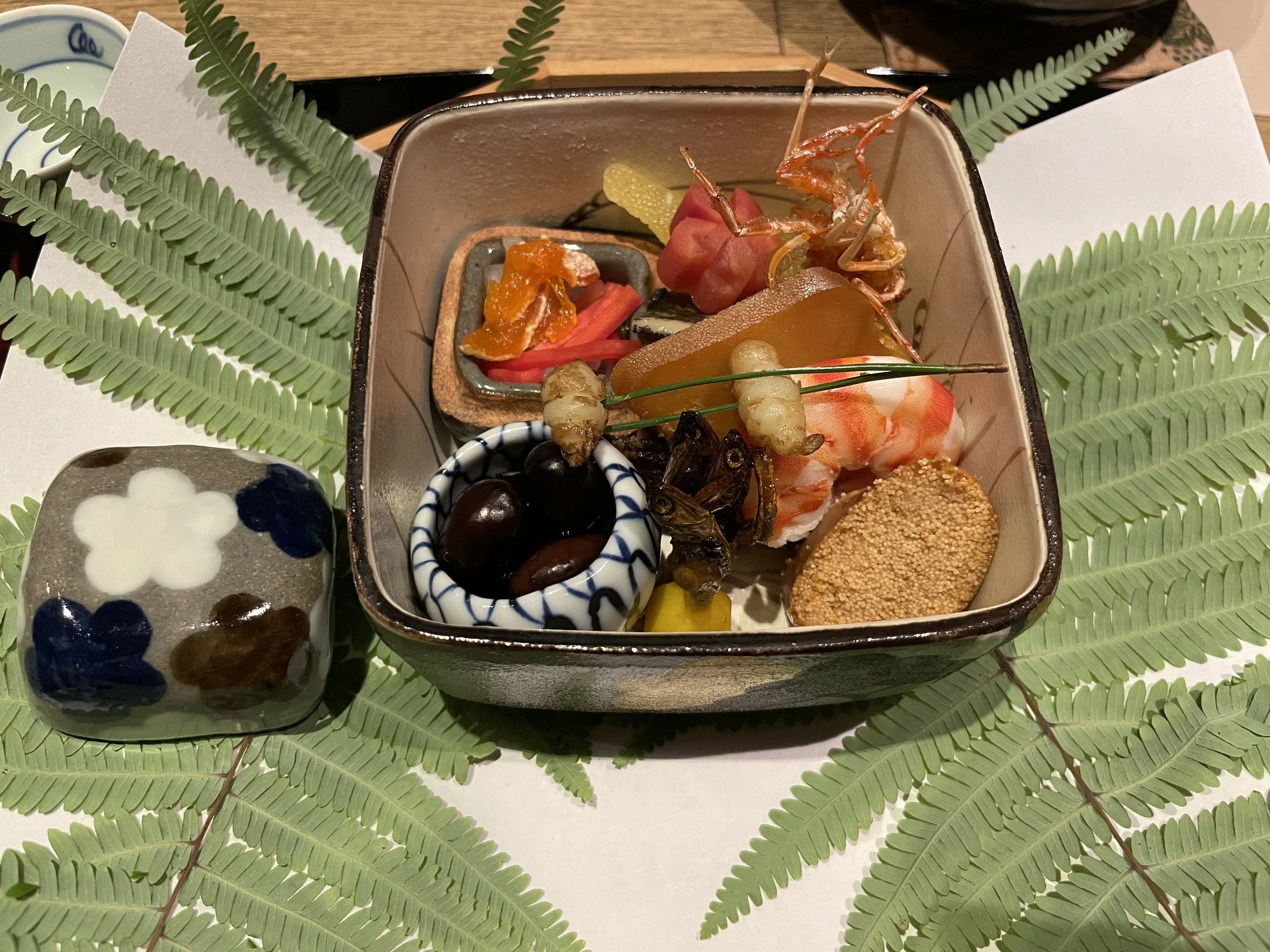
Then, with due ceremony, came the hassun. The decoration was simple yet striking and showed real flair, and it made us feel as if we had a tiered box of New Year food all to ourselves.
We enjoyed the bite of a fine prawn served with its head on, and sipped sake with thick, generous slices of house-made karasumi, dried mullet roe. The large, plump black beans were just as they should be, and the line-up of osechi, the traditional New Year foods, was complete down to herring roe and carrot cut into twisted plum blossoms. A vinegared dish in the style of kamasu, barracuda, had been given an extra touch, with apricot adding sweetness. We were delighted that the tazukuri, small dried sardines, had been tied into bundles so they could be eaten in a single bite. Hidden at the very end was a chestnut, its edges neatly beveled.
Grilled fugu, monkfish liver and a mystery croquette
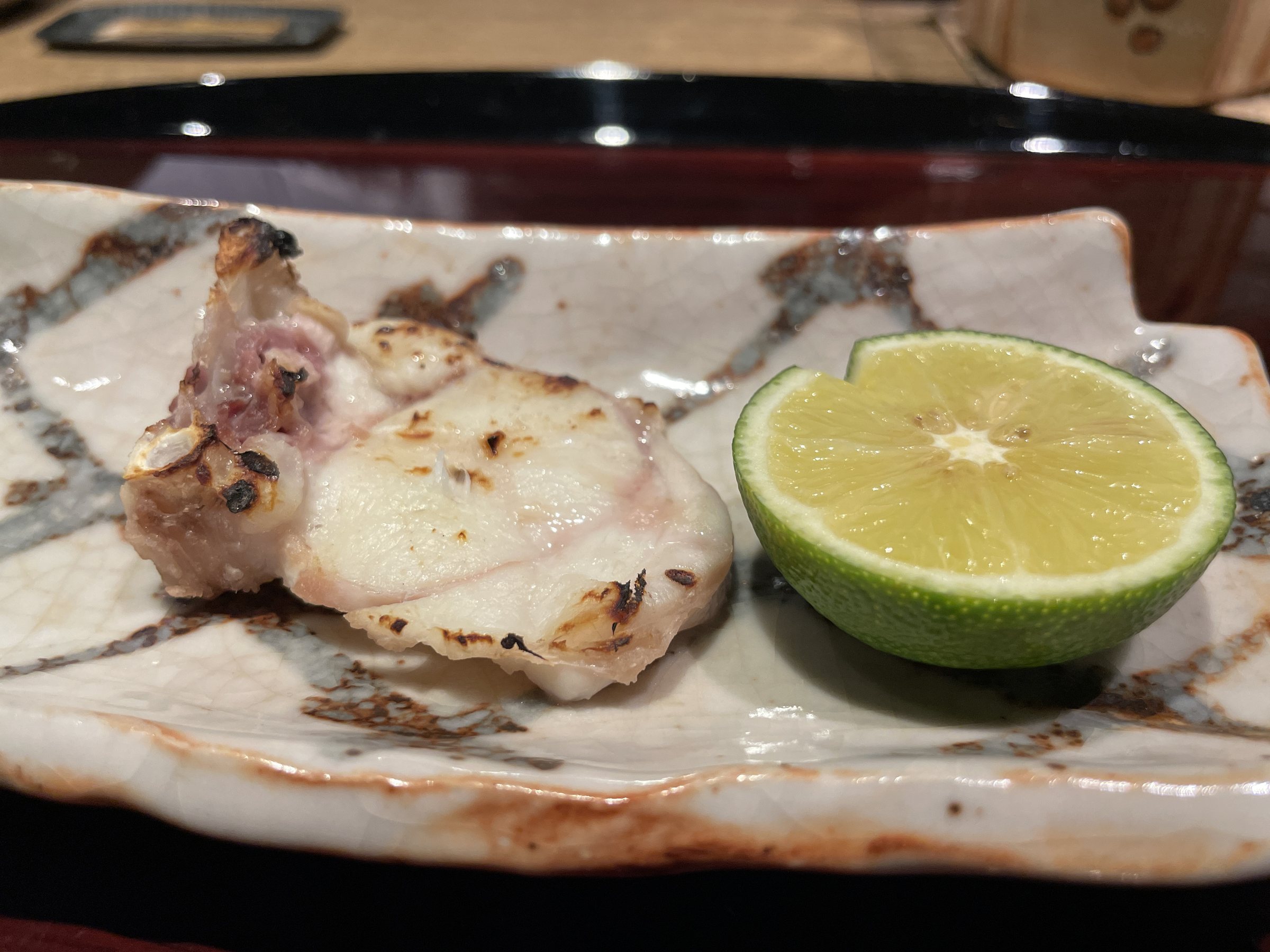
We were already well satisfied after the hassun when, as if to say “now we begin”, the main arrived: grilled fugu. A cut had been made around the rim of the kabosu citrus so that it could be squeezed with the lightest pressure. Thoughtfulness like this from a Japanese cook leaves us in awe.
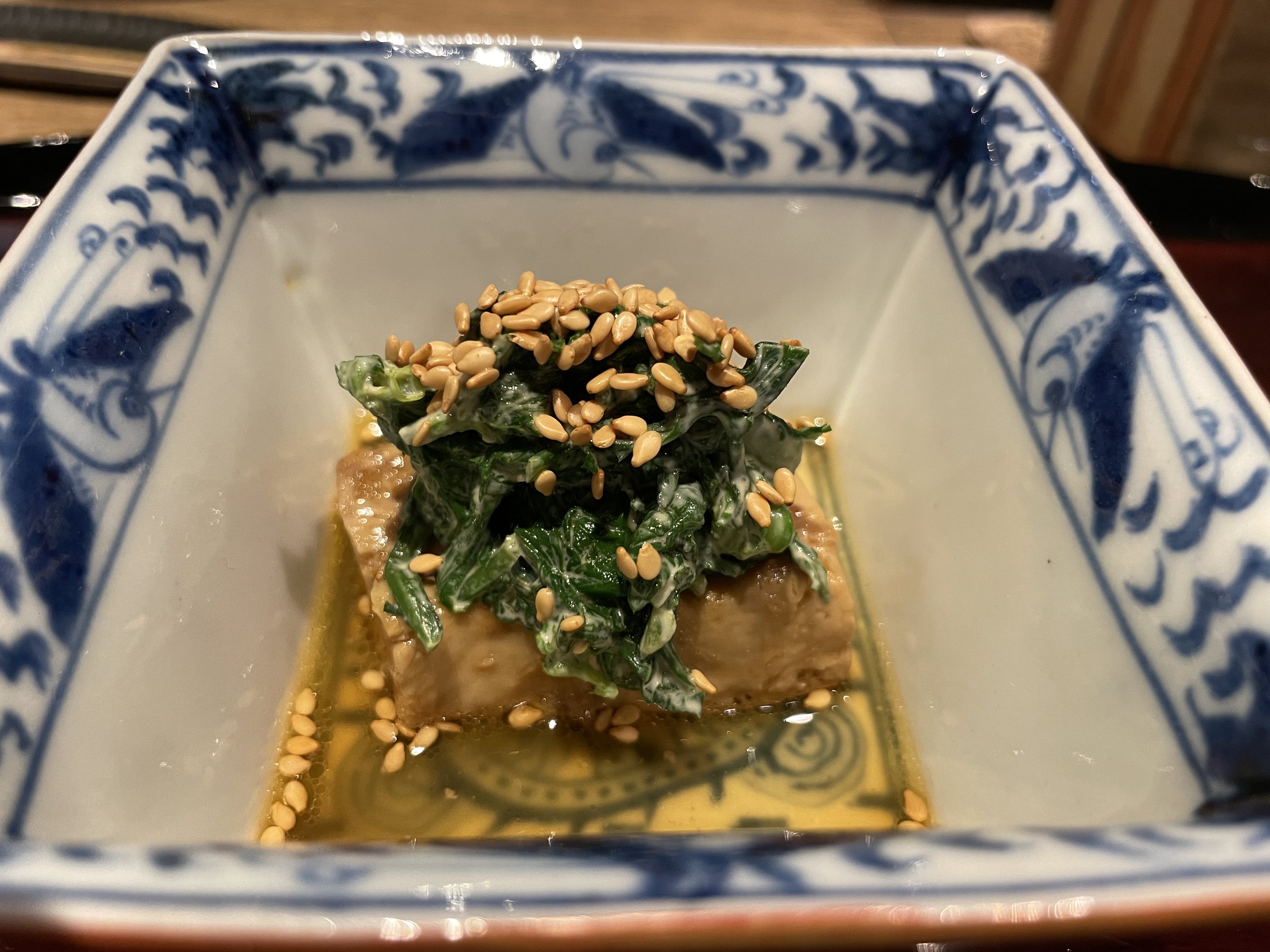
Next, ankimo, monkfish liver, with shungiku, chrysanthemum greens. Ankimo is one of our favorites, and we were very happy to see it. The bitterness of the greens kept the liver’s dense richness in check.
The fried course that followed was a suppon, soft-shelled turtle, croquette. We had stepped away briefly while the others ate theirs, so we started late. “See if you can guess what the croquette is,” the owner said with an innocent laugh. All we could make out was a gelatinous texture with sweetness and a little oil, and the answer surprised us even more.
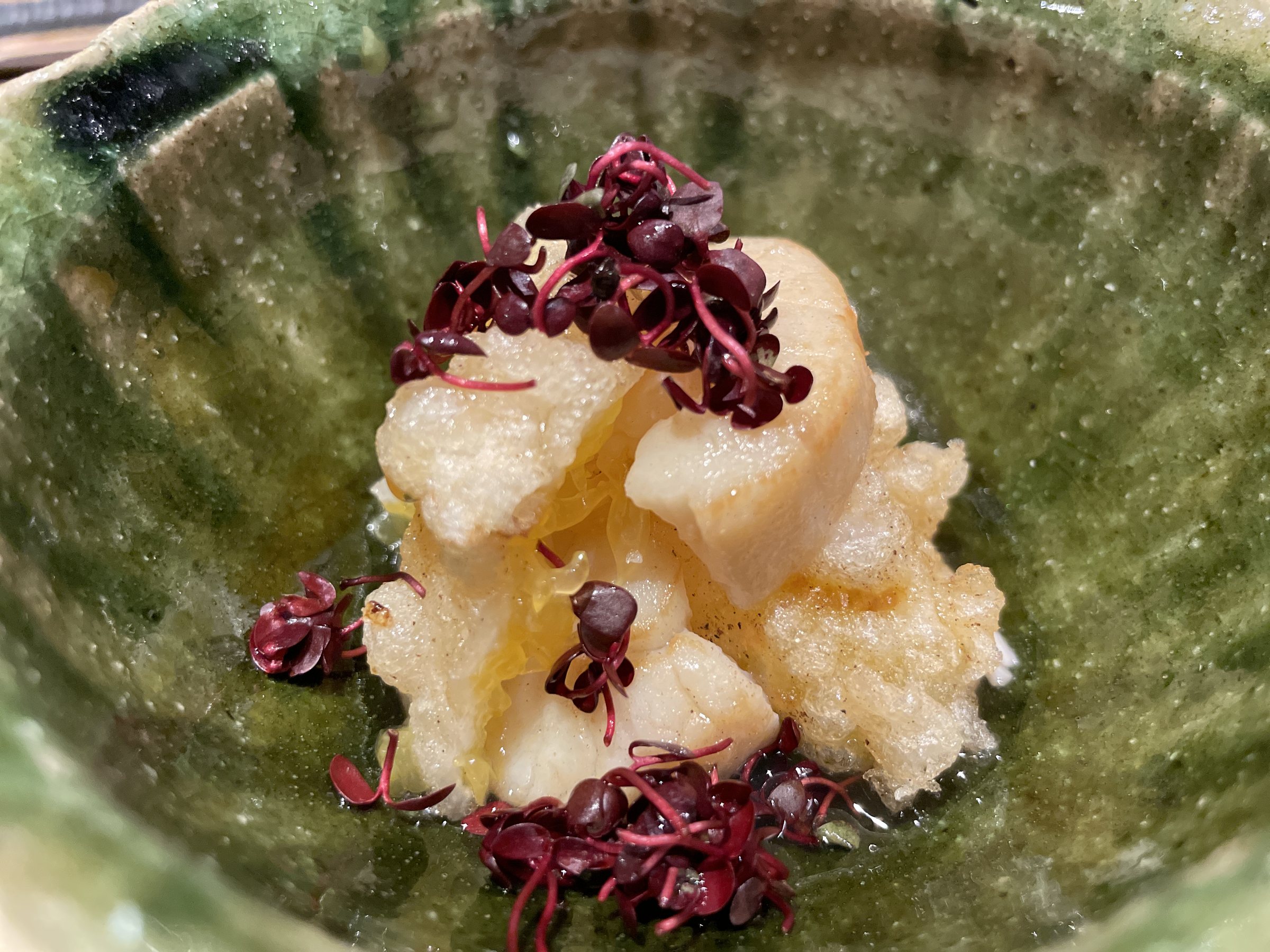
Scallop tempura came with segments of dekopon citrus and purple tade sprouts, and the colors against the green of the bowl were superb. Sweet, savory and sour all came through delicately, and the sweetness of the scallop still held its own. Outstanding.
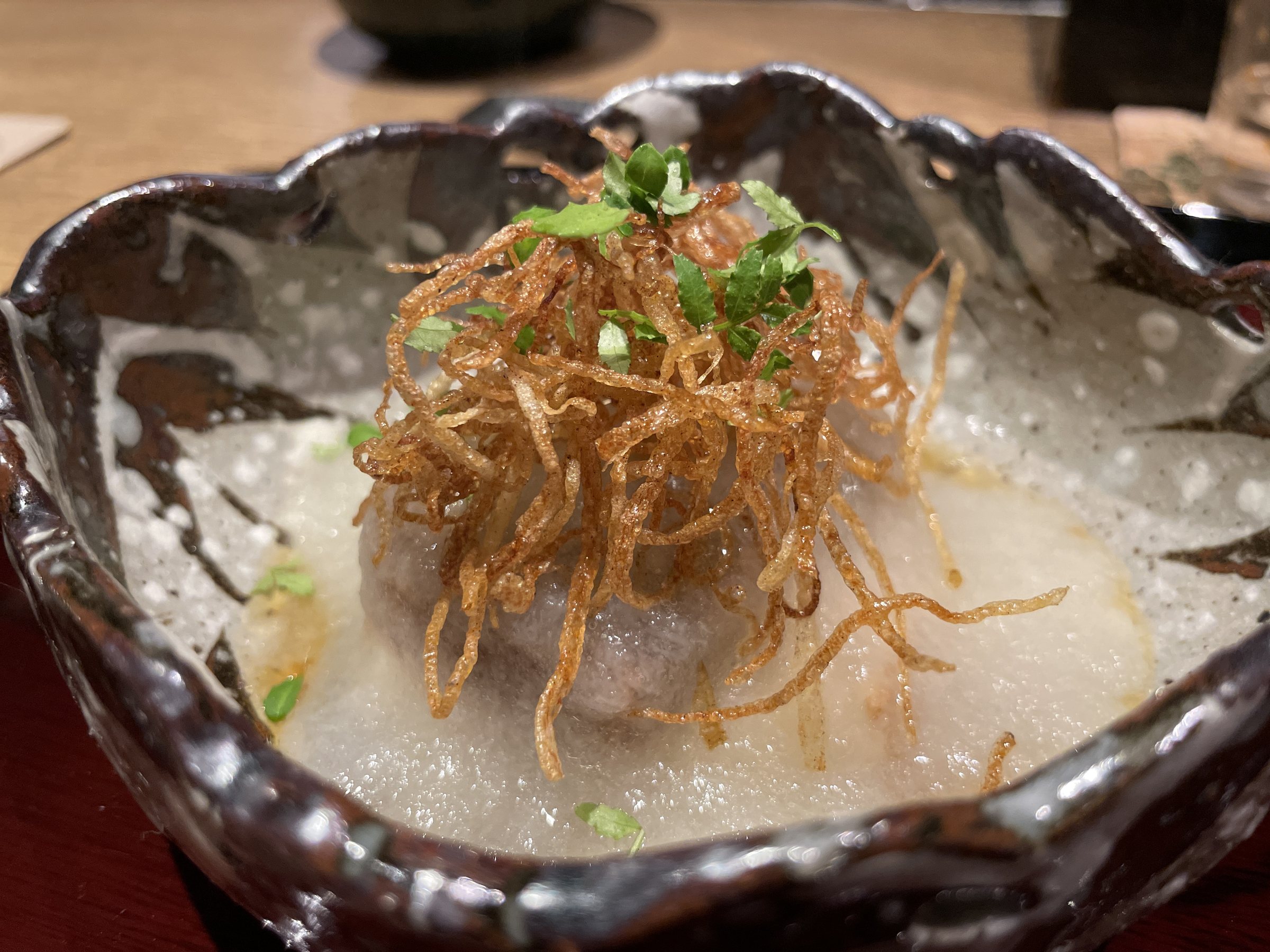
Then beef cheek, simmered until tender. One after another, every dish set before us was full of ideas, with a strong stamp of the owner’s own originality, quite unlike anything we had seen elsewhere. We had never eaten beef cheek with such a gentle flavor. Again and again we were impressed by the careful preparation that goes into each ingredient before it reaches the plate.
Eel rice, and two porridges
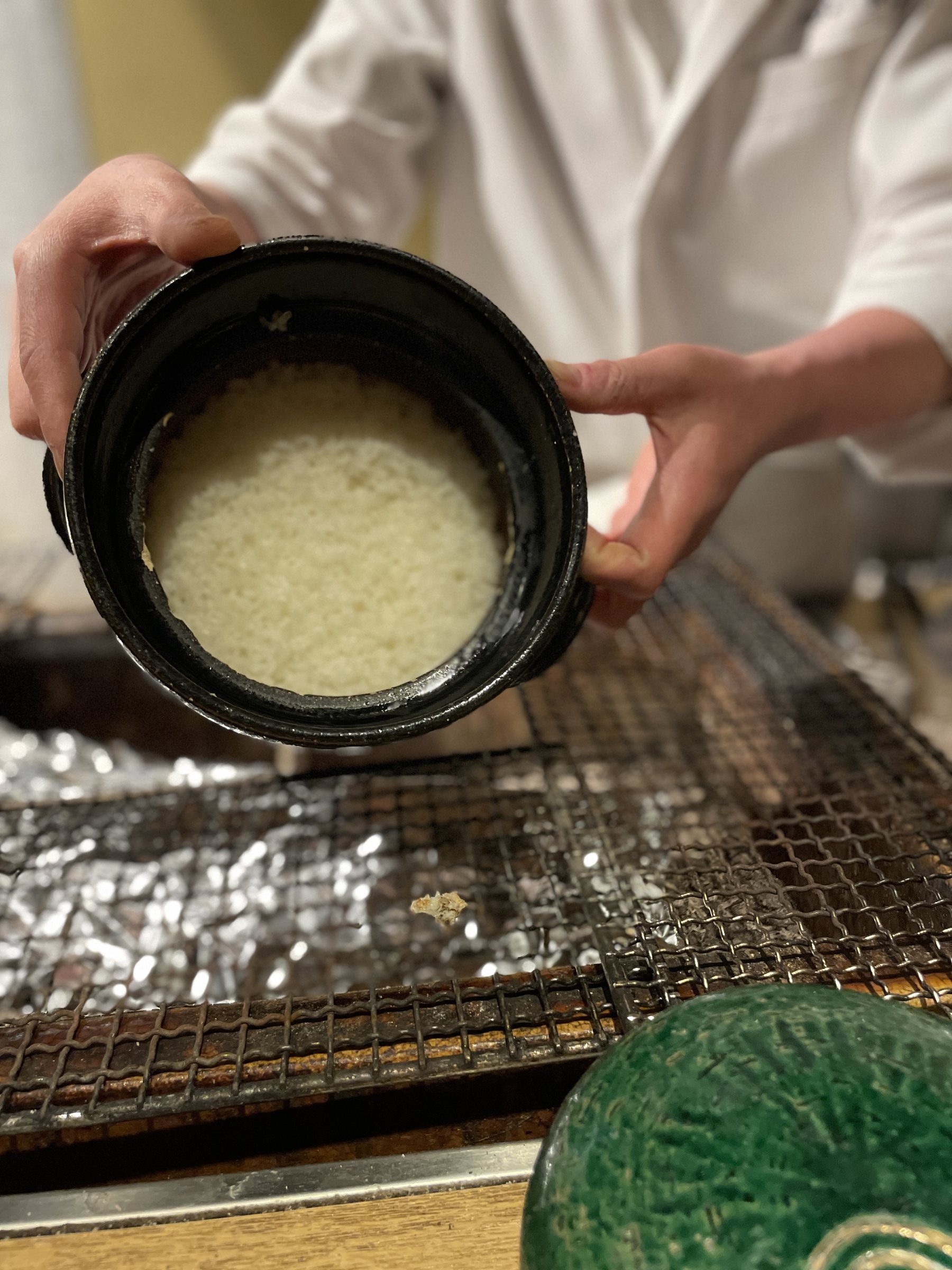
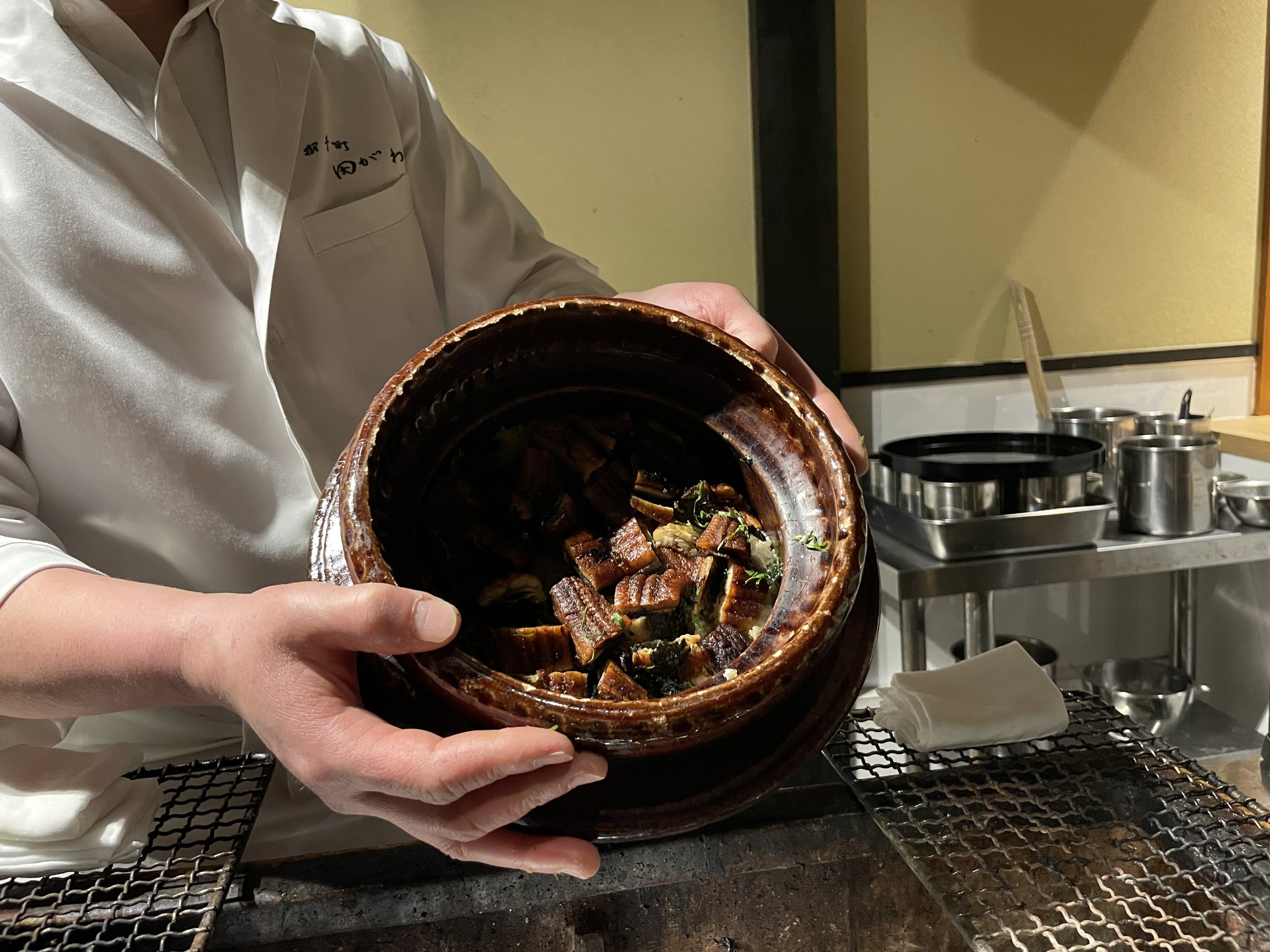
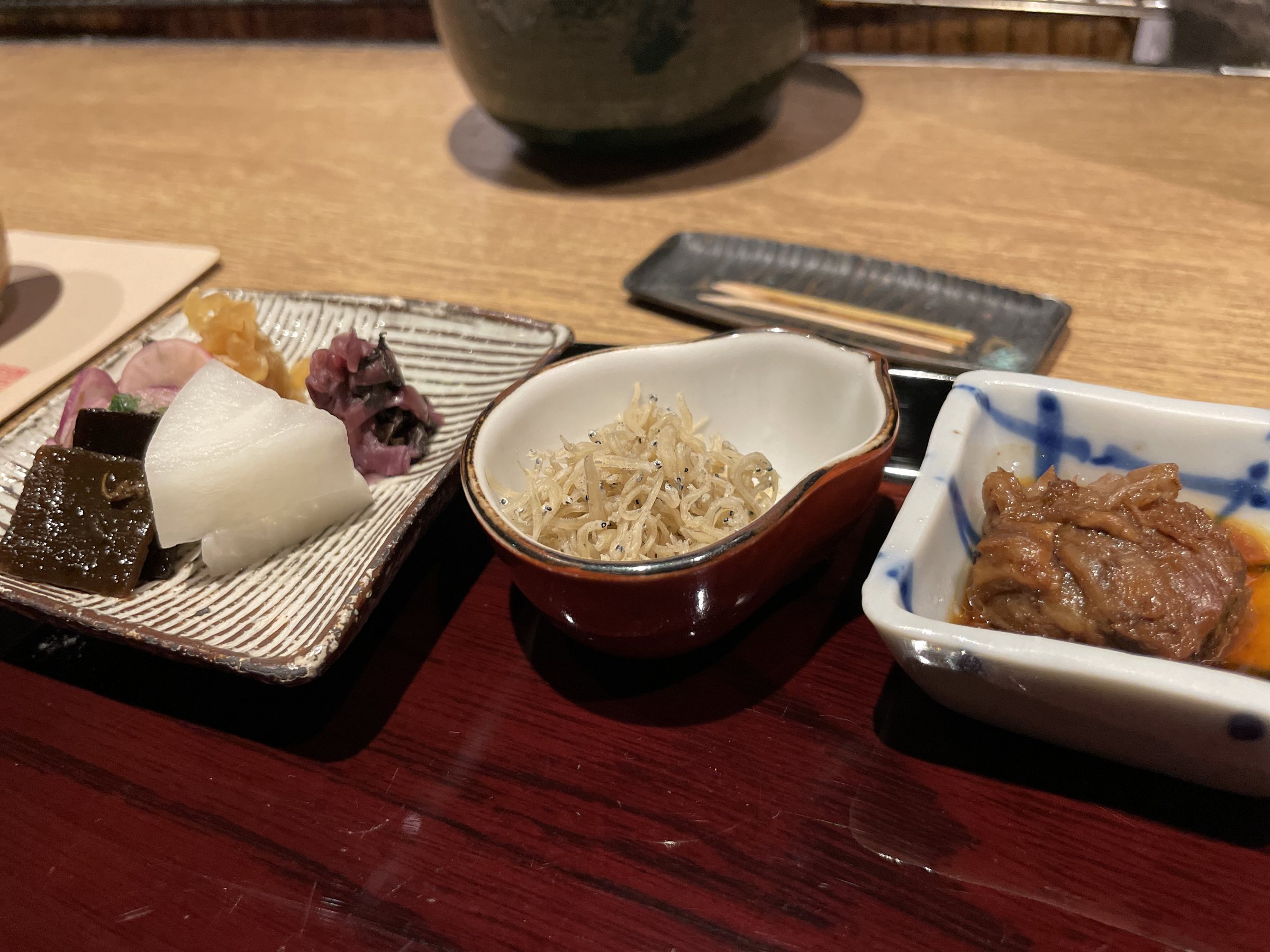
The last treat was rice cooked with eel. Small plates came alongside: sweet-savory simmered beef sinew, Kyoto’s classic chirimen sansho (tiny dried fish with Japanese pepper) and pickles. Every little dish was carefully made, and in the chirimen sansho the scent of the sansho pepper stood out vividly against the faint saltiness. Eating these with white rice, it was as if our sense of being full had been reset, and our excitement returned. Because it was New Year, there was also rice porridge. We ate our way through in turn, clearing bowl after bowl.
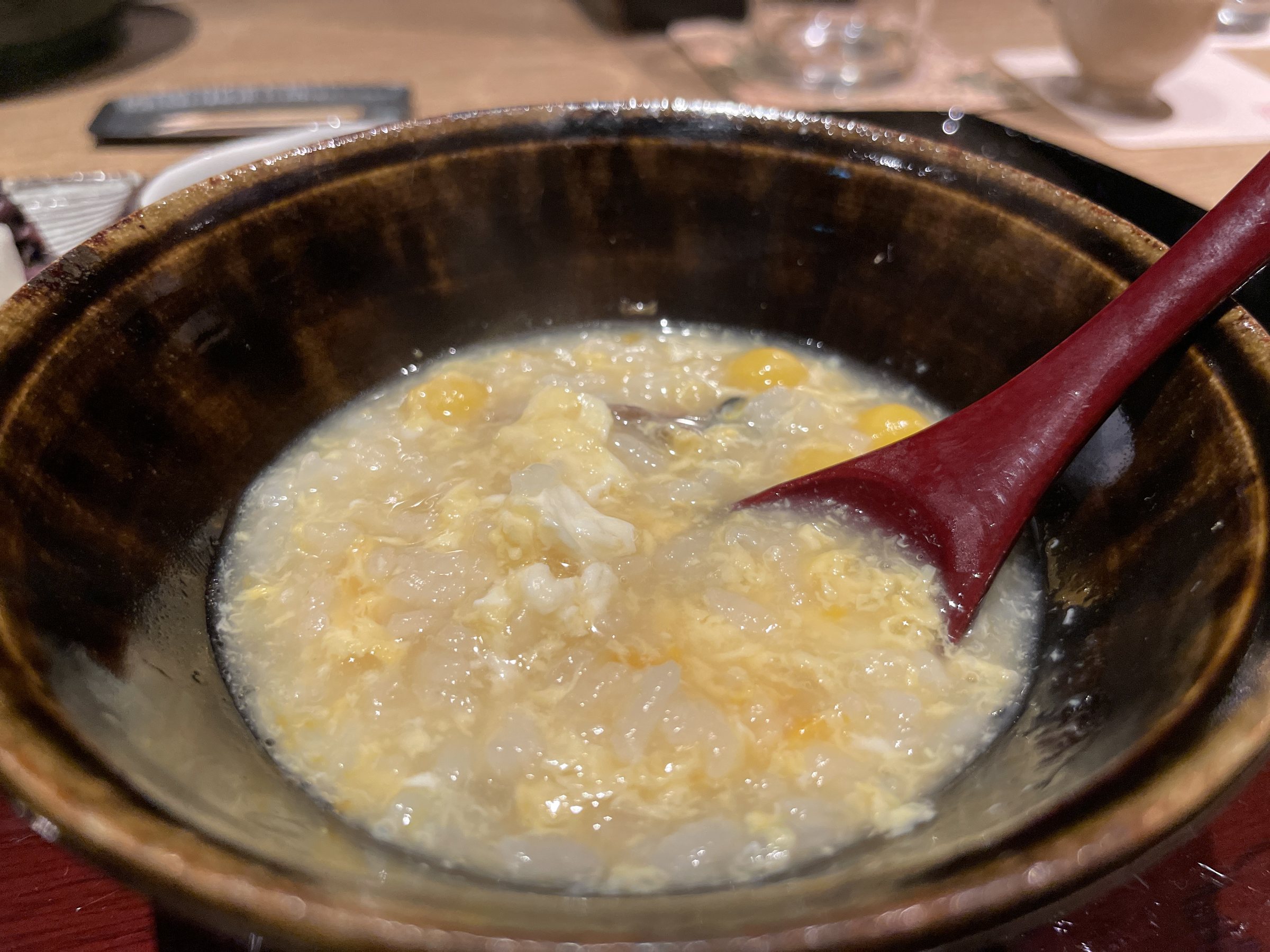
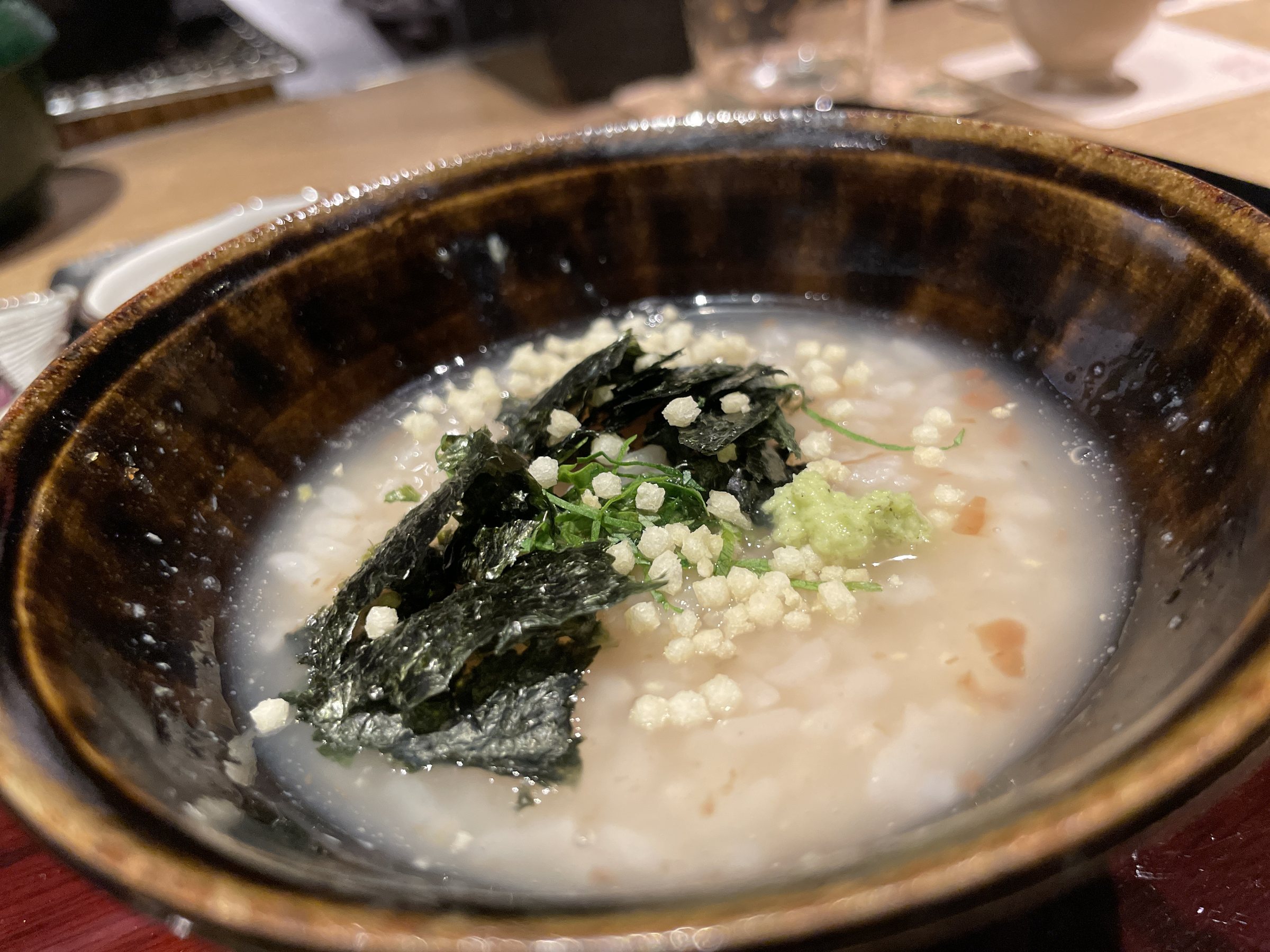
The porridge made with stock from the day’s fugu needs no introduction. It was light, yet the fugu broth coating the rice left its own distinctive flavor on the tongue, and even the egg was set exactly right. At the owner’s suggestion we greedily had a plum porridge too, with crisp rice crackers, nori toasted bowl by bowl and a faint note of shiso. In Tagawa’s hands, even porridge becomes this refined.
A sesame ice to finish
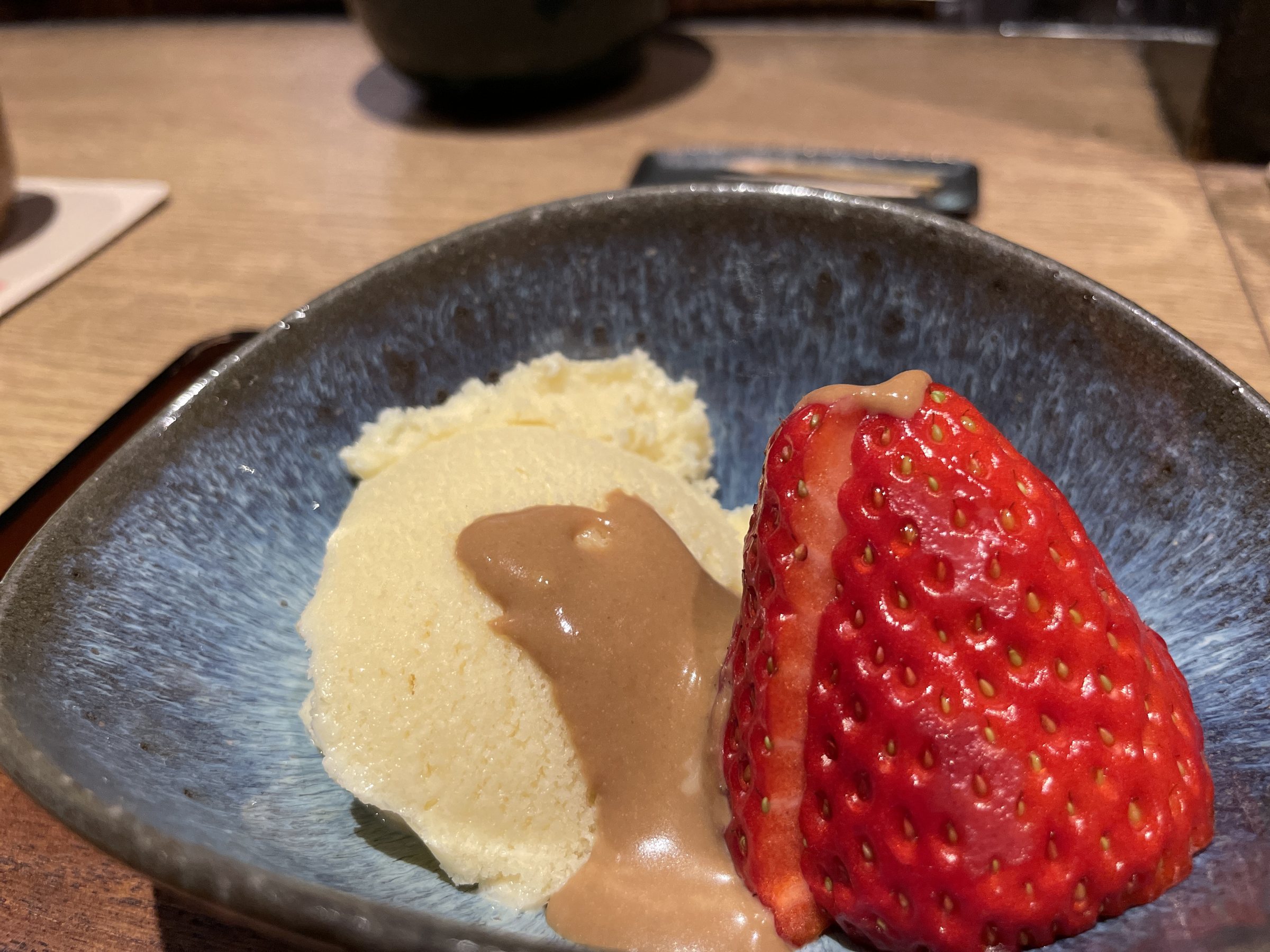
The white sesame ice had the texture of gelato, and with its creamy sauce it was like a good vegan dessert. The sweetness and acidity of a Beni Hoppe strawberry added further layers of flavor.
Final thoughts
We left with a courteous send-off and warm smiles. A refined, compact room, packed with knowledge and excitement of every kind: this is an exceptional restaurant.
This review reflects a visit at New Year 2023. Menus change with the seasons; please confirm current details directly with the restaurant before visiting.