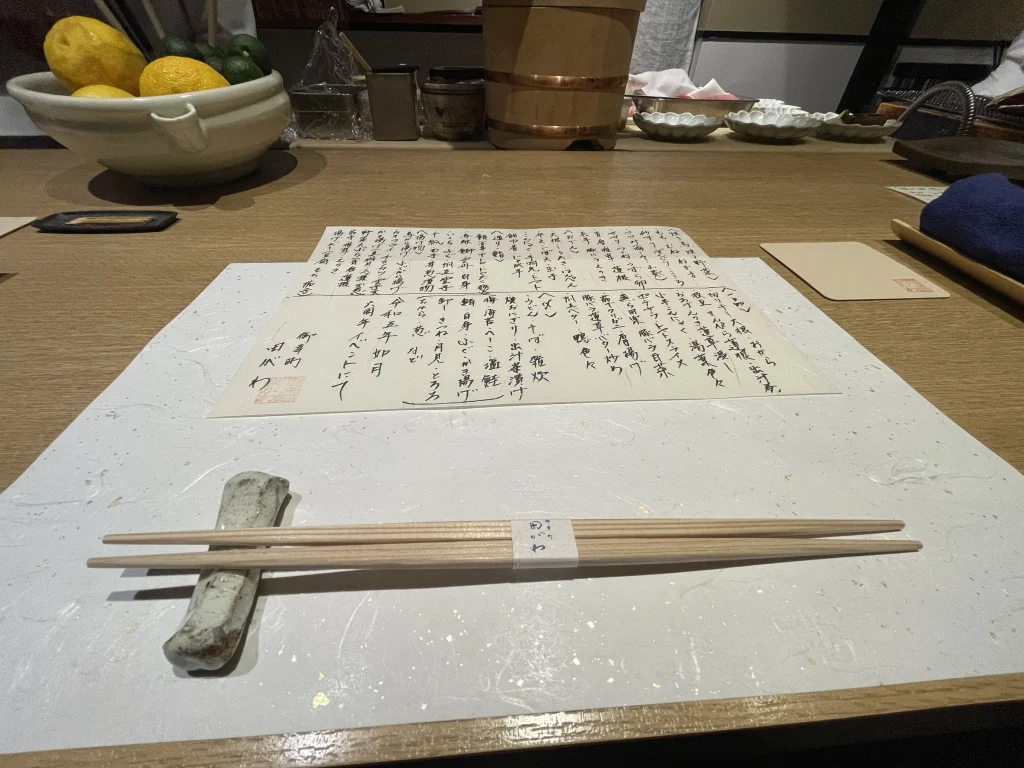
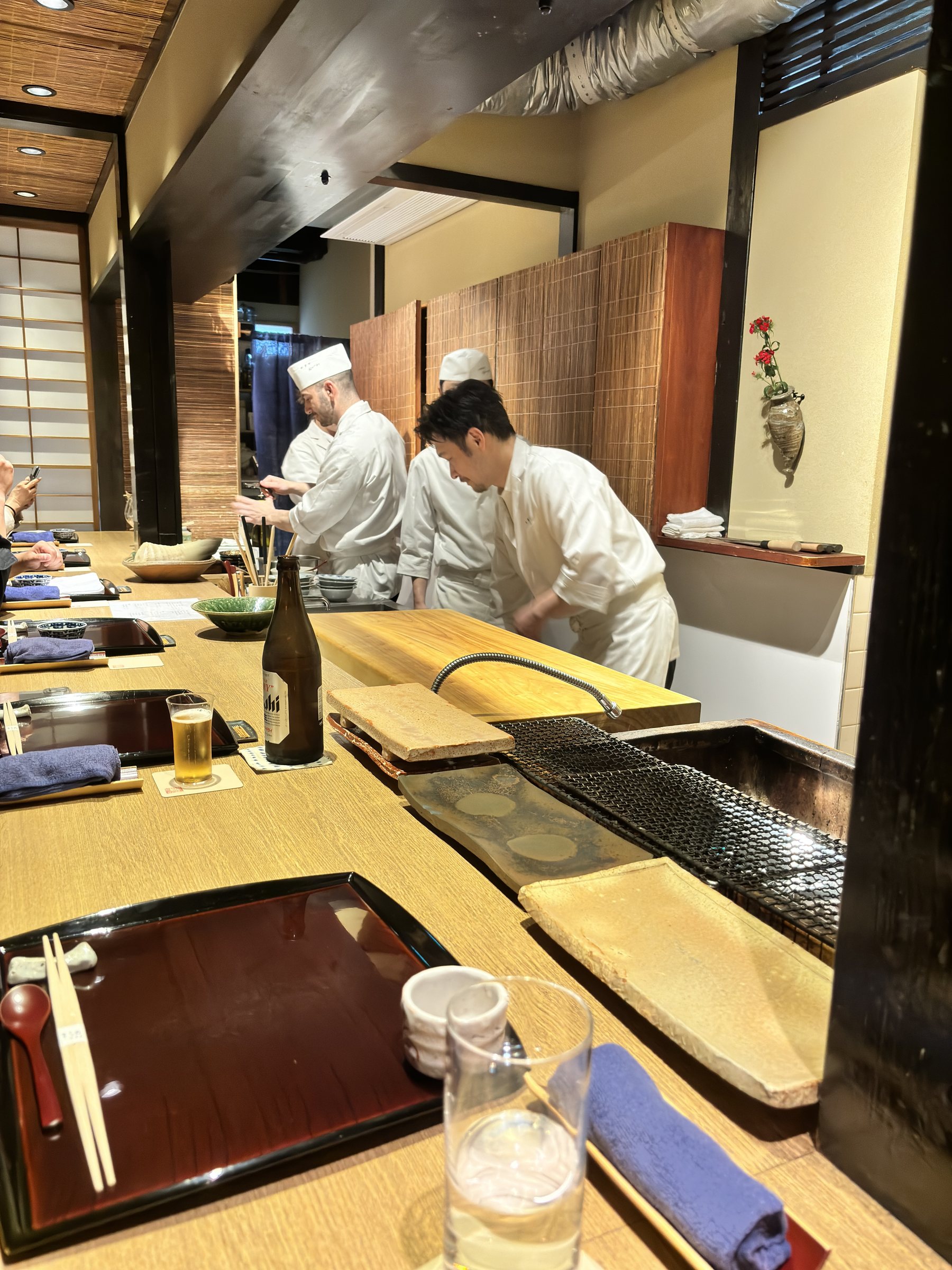
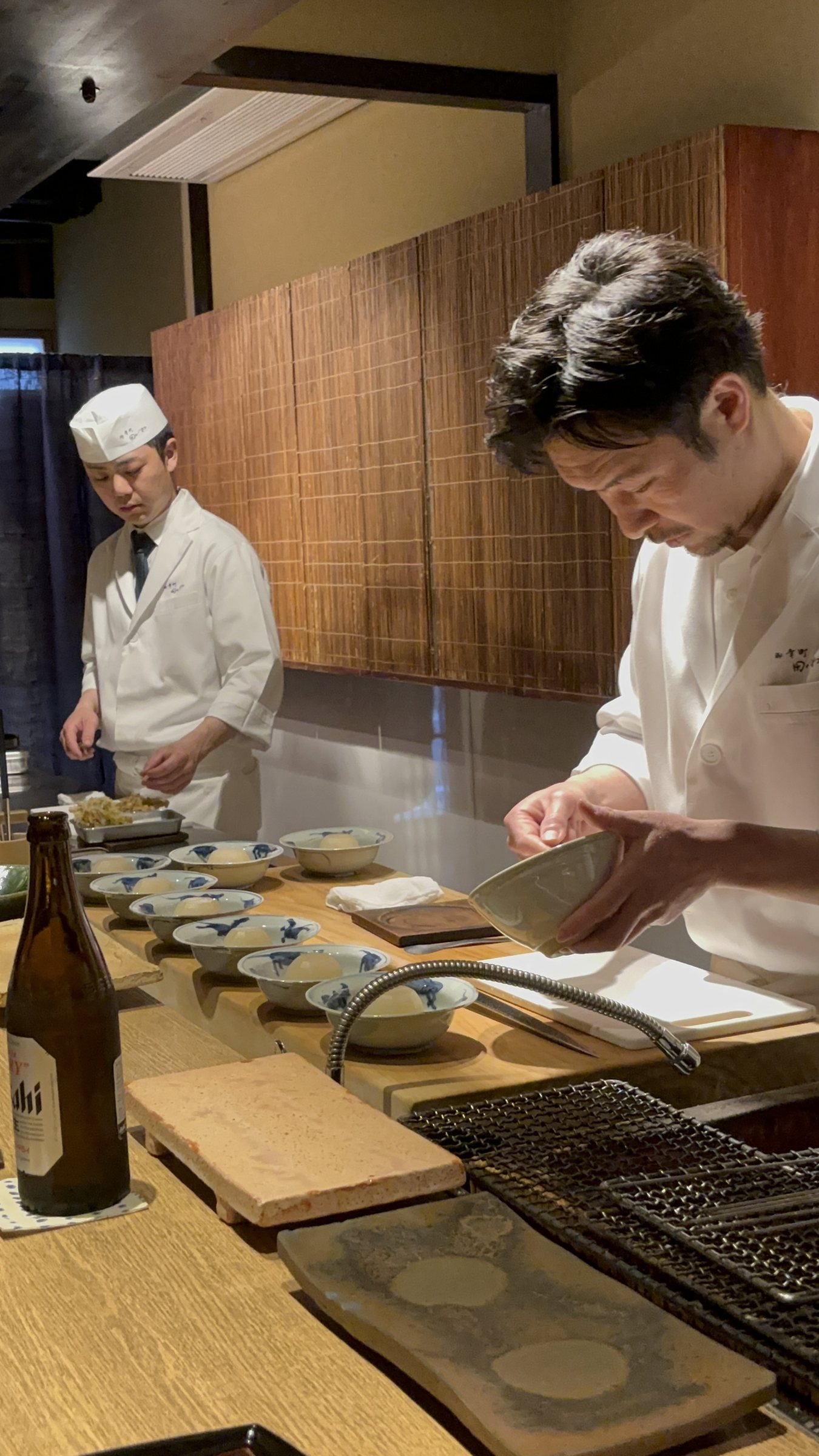
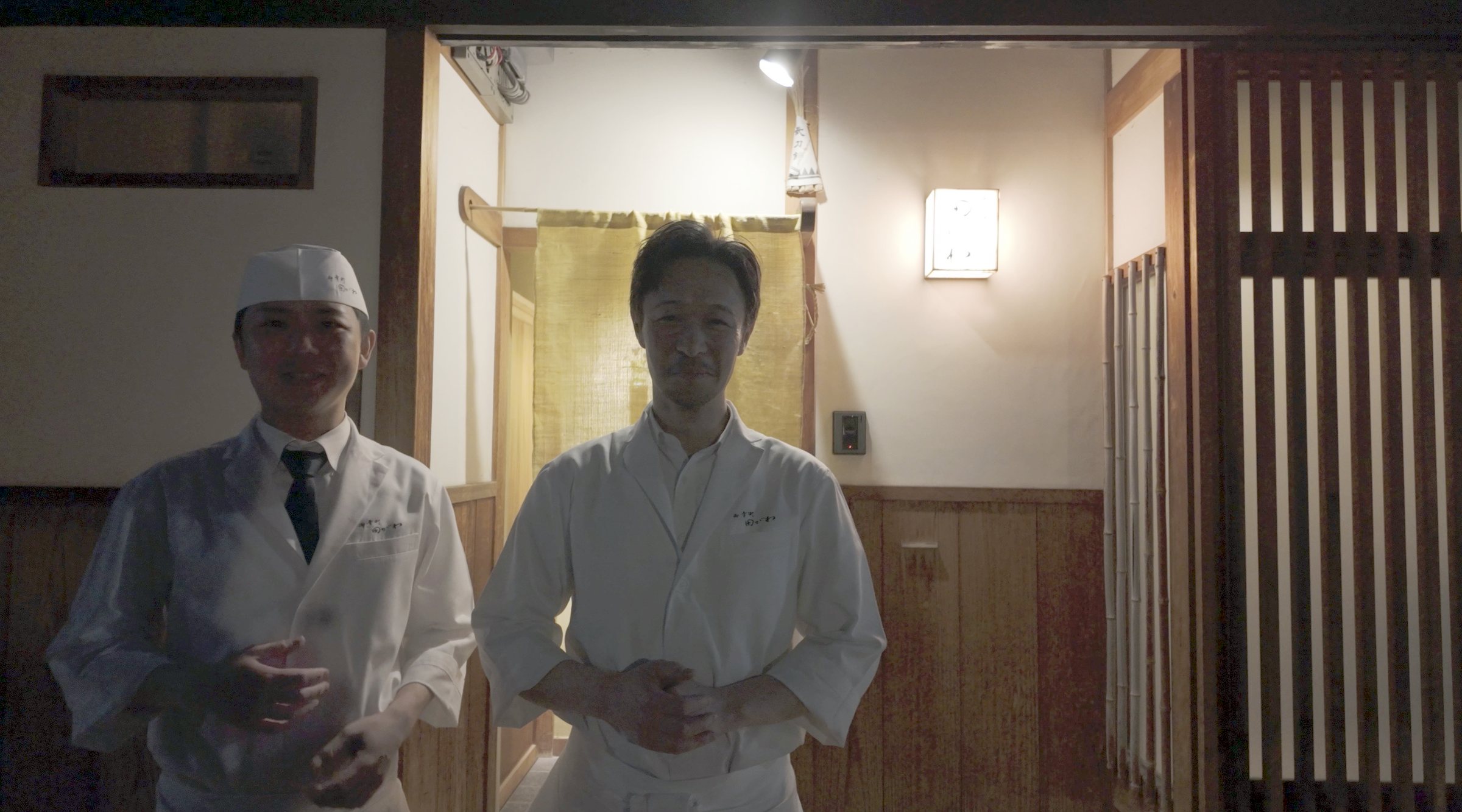
Tagawa is a kappo restaurant, where diners sit at a counter and the cooking happens in front of them, on Gokomachi street in central Kyoto. It is run by its owner and a second cook. We returned in mid-April. The sign appears quietly on a refined frontage, and the entrance, which at first glance might belong to a private house, is never showily dressed: sliding open a door like this is very Kyoto. The owner welcomed us with a gentle “irasshaimase” and was already simmering something. Visiting Tagawa, you are wrapped in an inviting aroma before you have even sat down. As we chose our drinks, the smiling glances from the staff put us at ease.
A changing counter
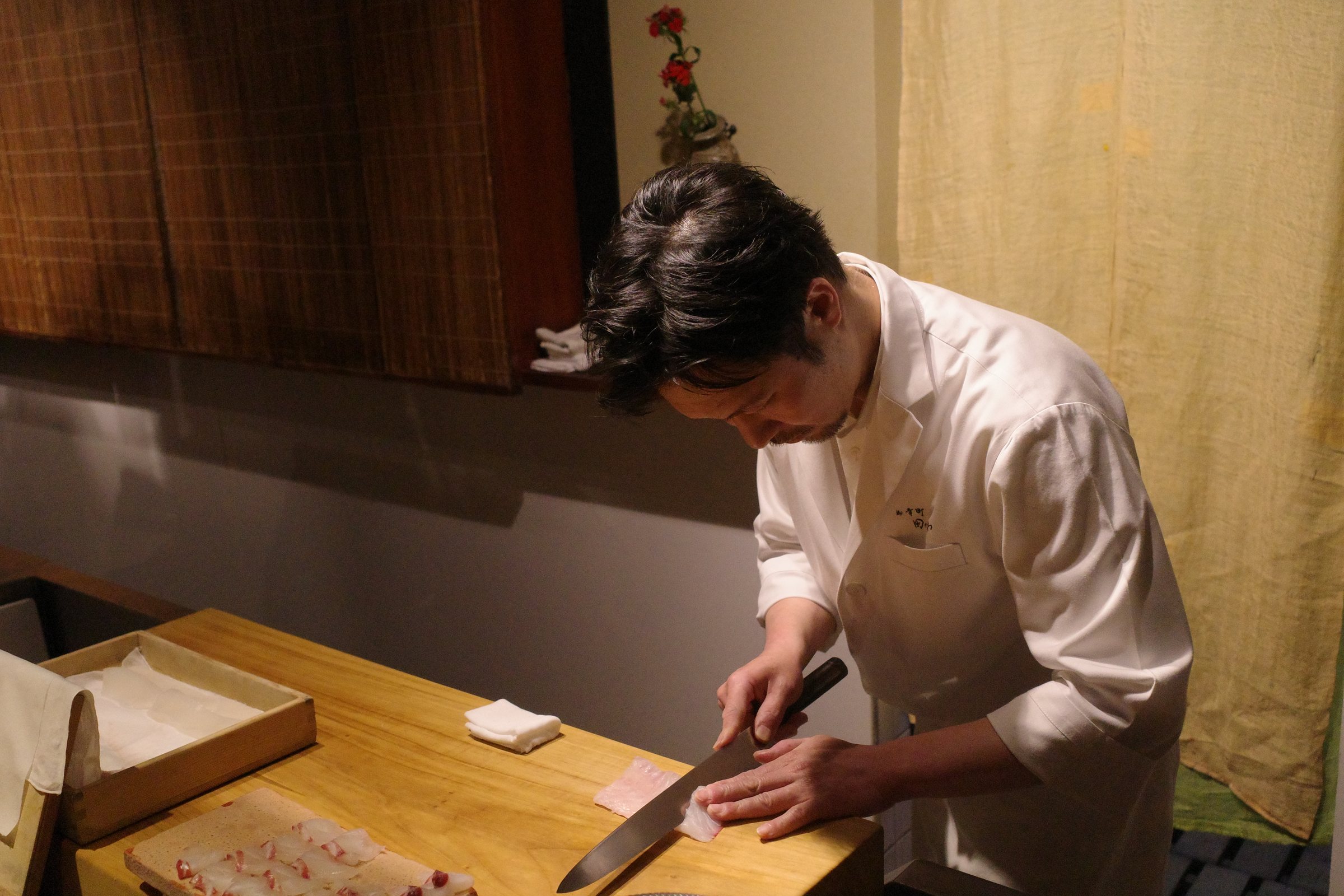
Supporting the owner, who moves briskly behind the counter, we could now see a member of staff from overseas. Inbound bookings are said to be flooding in, and the arrangement also answers the staff member’s own curiosity about Japanese food. Something on skewers was grilling over the hearth, and we could see soft-looking simmered turnip. More than half the guests at the counter that evening had come from abroad.
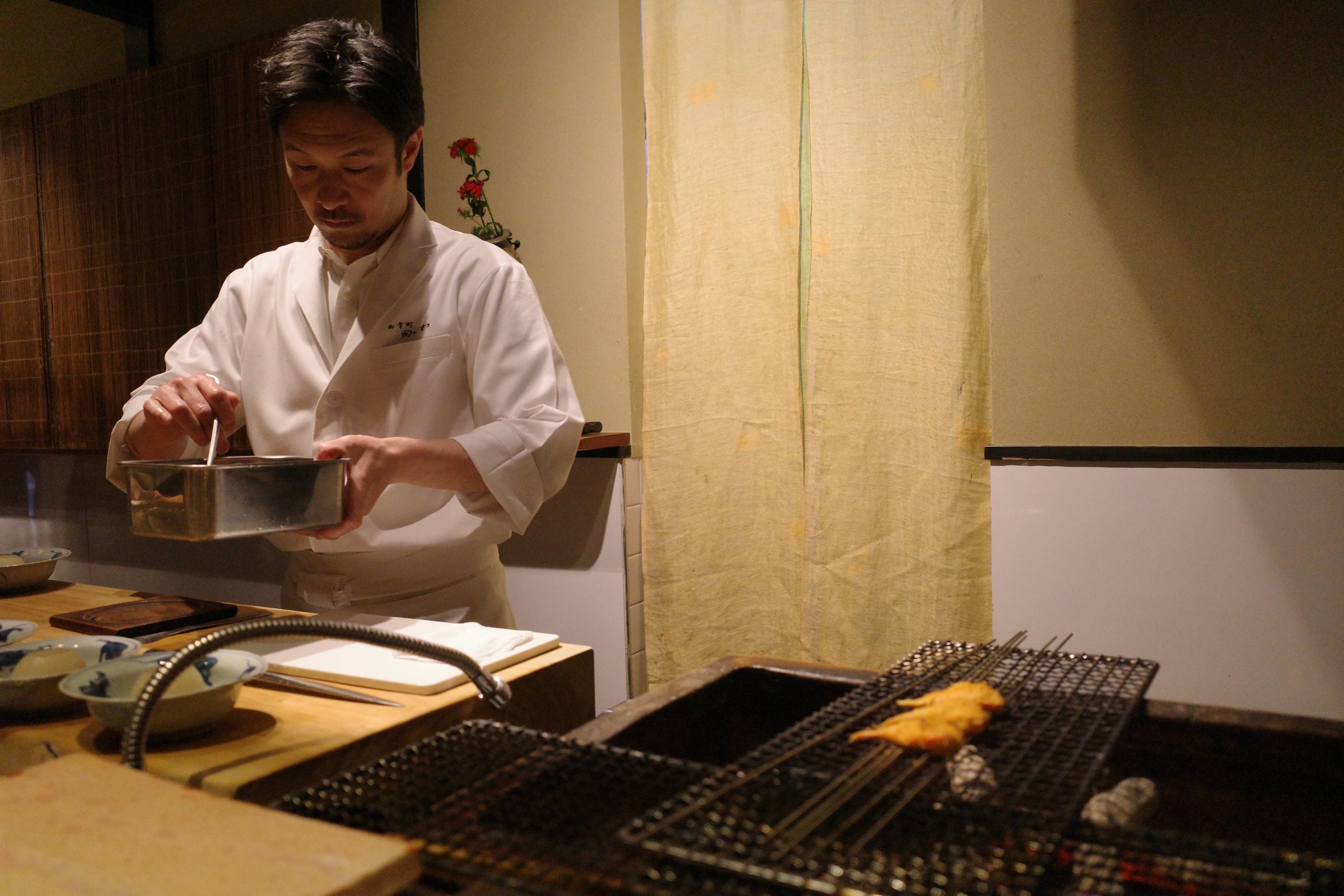
Simmered turnip and bachiko
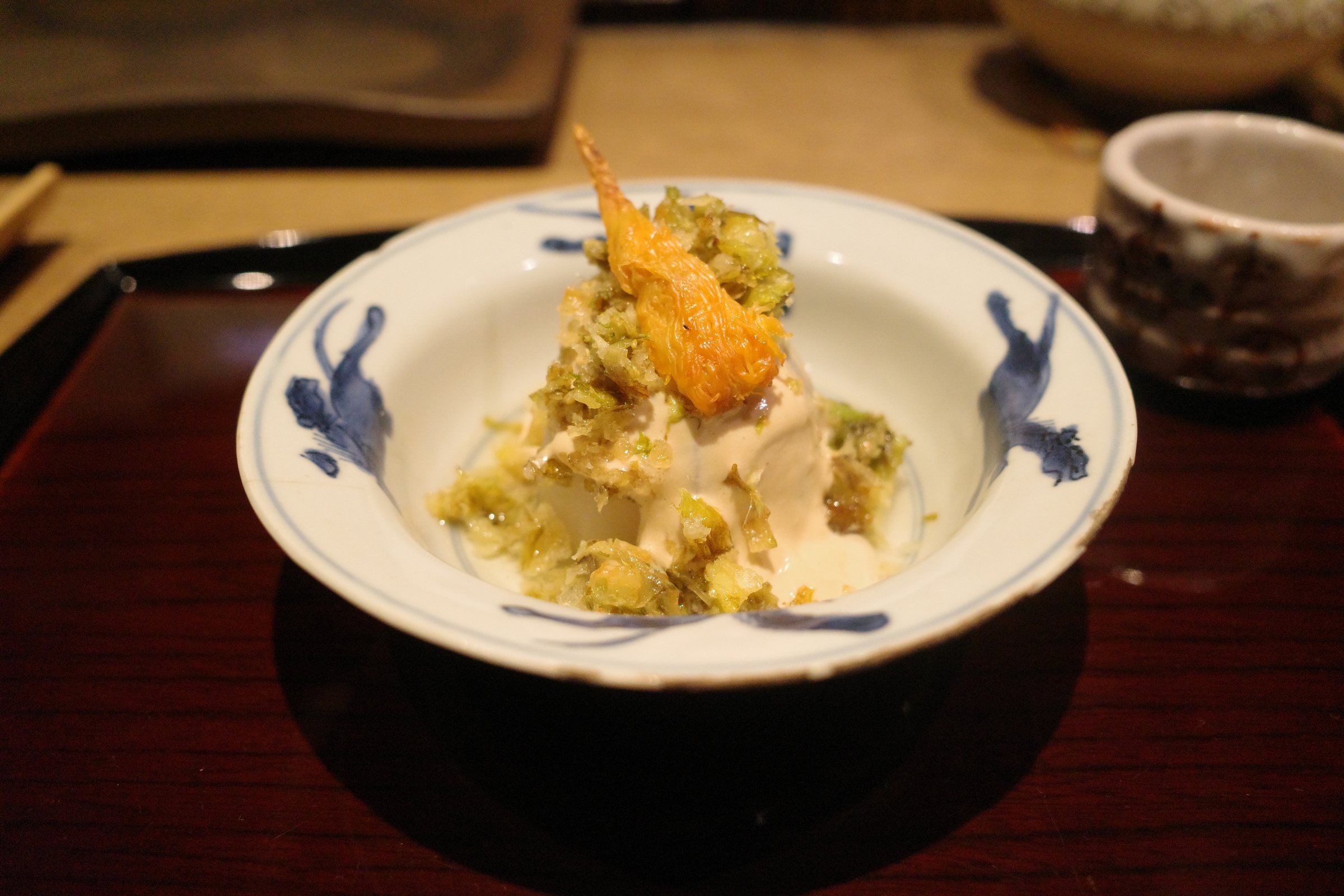
The first course was turnip, simmered for a long time in dashi and then chilled. Crumbled fuki no to, butterbur shoot, fried as tempura, was scattered over the top, and a piece of bachiko, sea cucumber ovaries half-dried until full of savory depth, was given a quick toasting and set on top.
Hairy crab in a spring broth
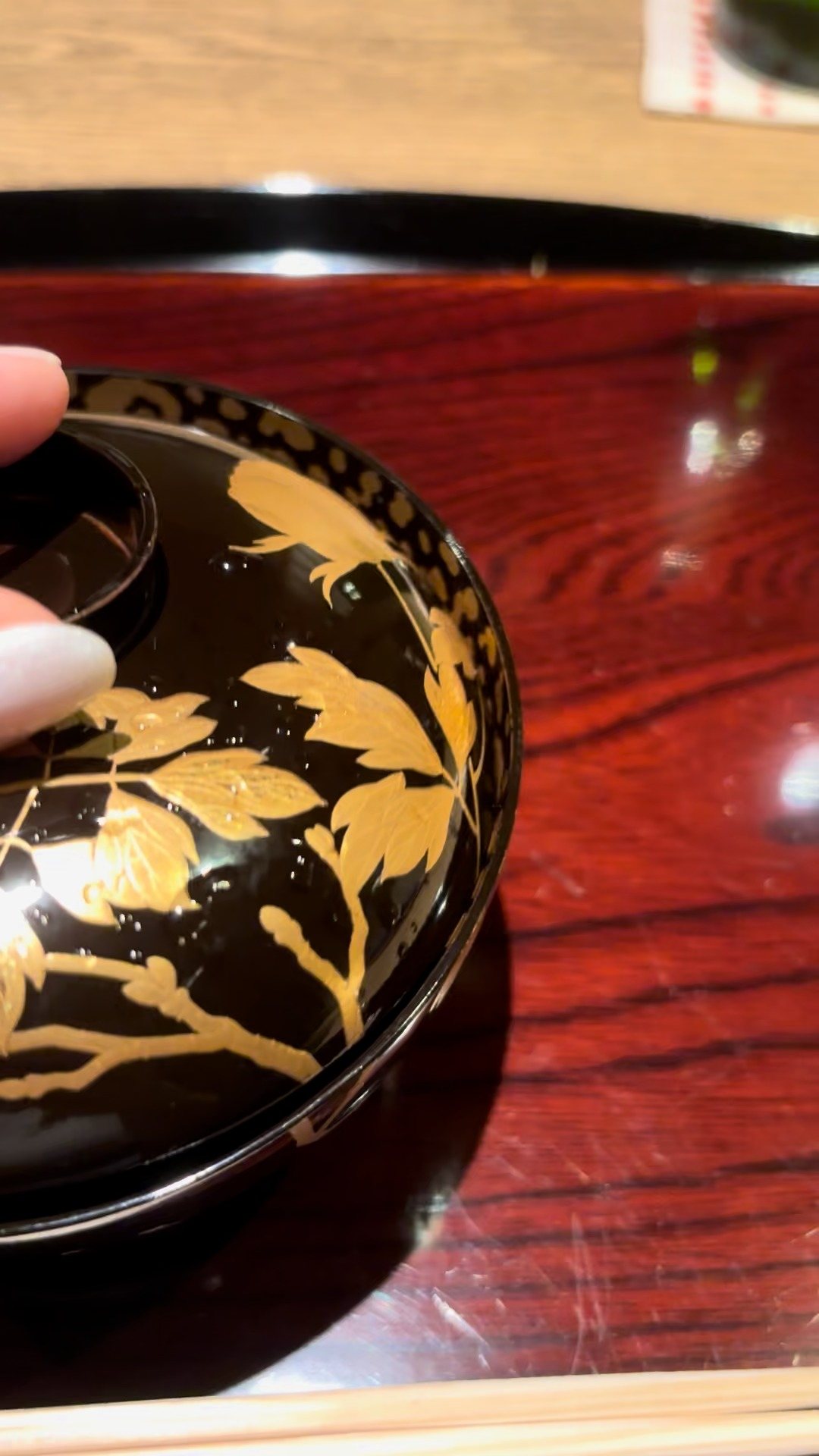
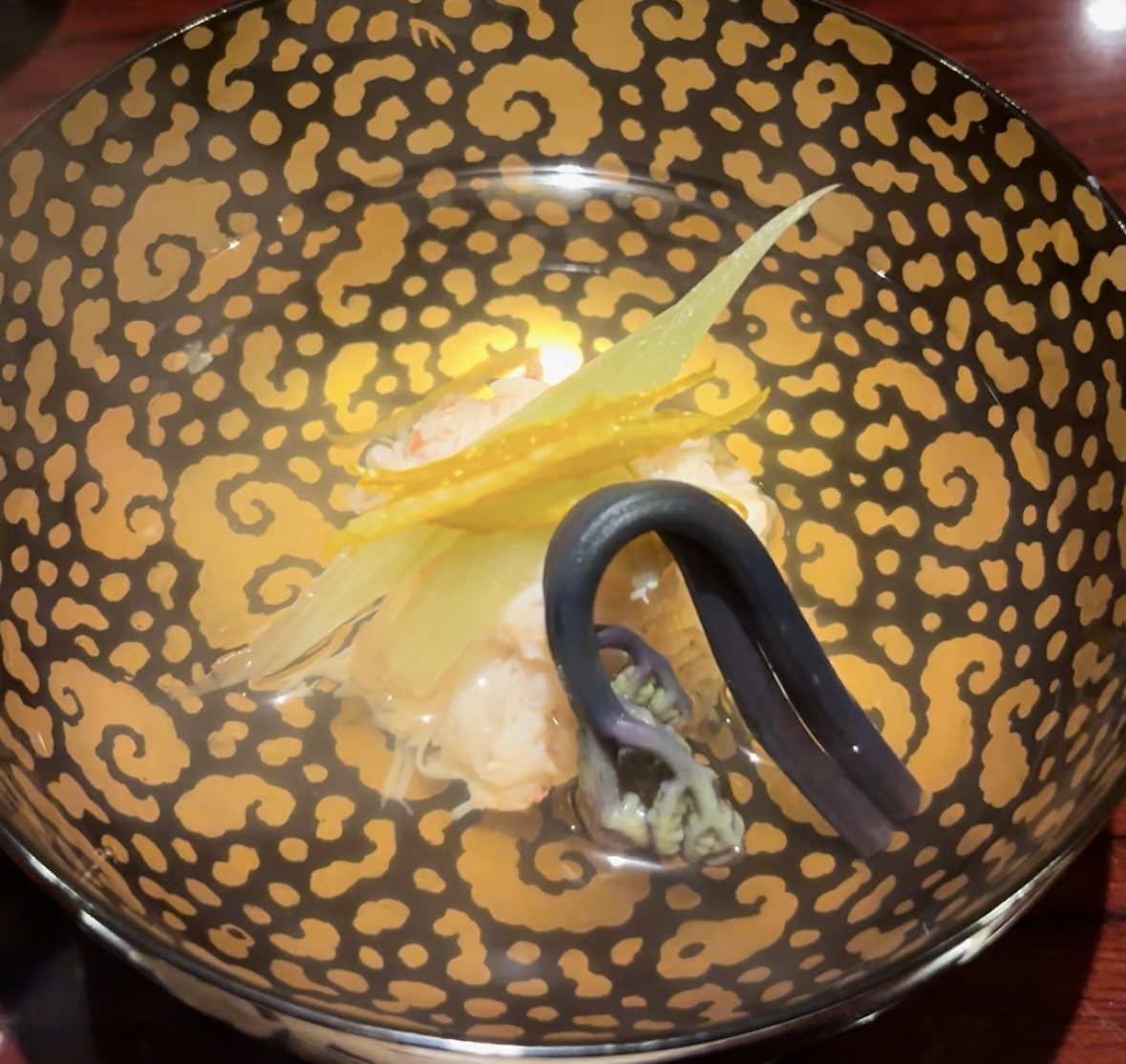
Next, hairy crab, flaked and pressed together, sitting in a dashi garnished with bracken, fuki (butterbur stem) and yuzu. The dashi, of bonito and kombu, had a simple spring fragrance.
Sashimi with iri-zake
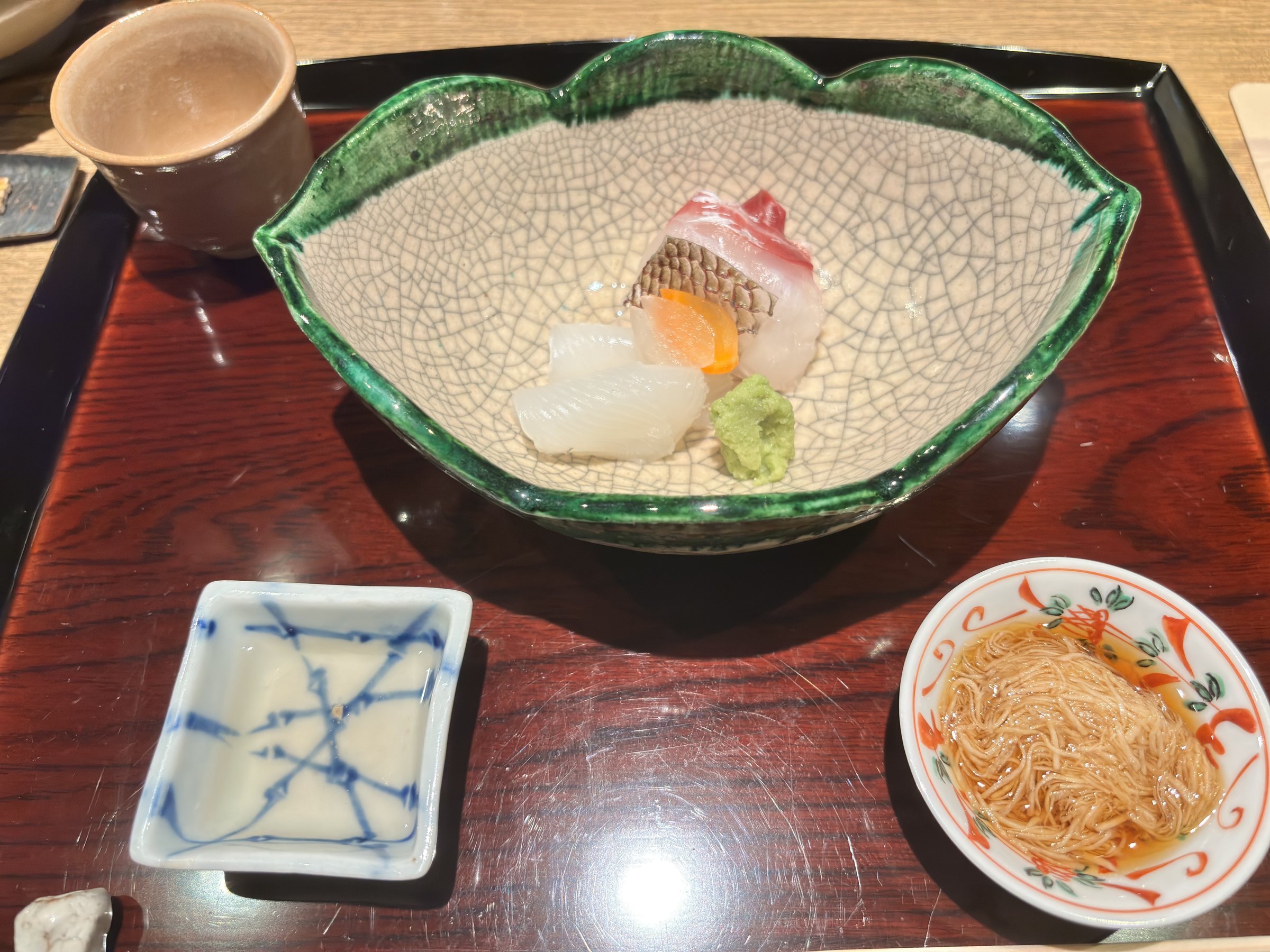
Then the sashimi we had been looking forward to: sea bream from Akashi and cuttlefish from Wakayama, with seared sea bream skin and daikon and carrot cut to resemble cherry blossom petals. To season them came iri-zake, made from pickled plums, deeply toasted rice and sake with the alcohol cooked off, and Chinese yam pickled in soy sauce. A combination that raised our expectations.
Tsukahara bamboo shoots
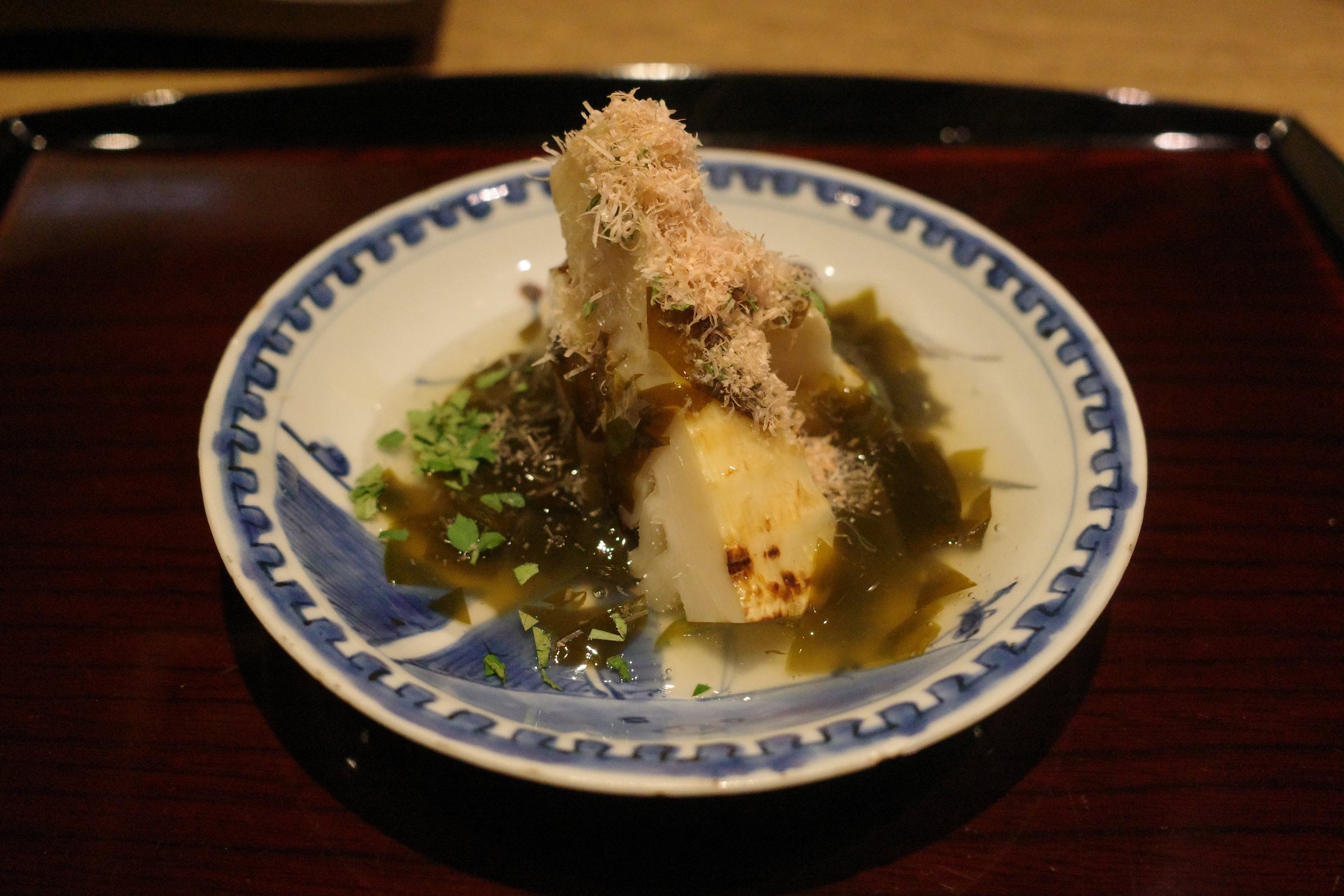
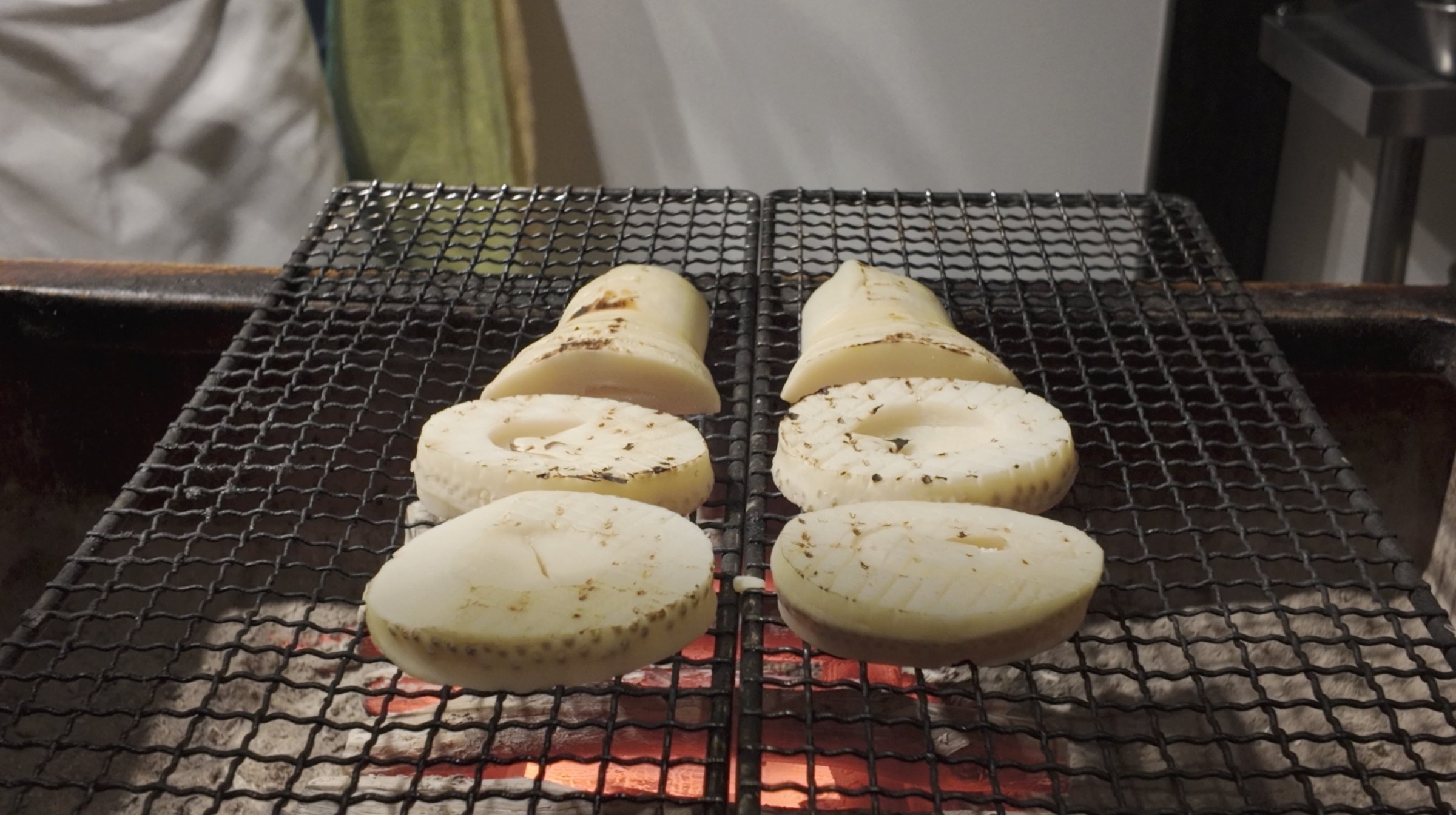
The grilled course, served as an oshinogi, a small interlude, was bamboo shoot from Tsukahara, considered the finest in Kyoto. Dug that morning, it was brushed with soy sauce on one side and grilled over charcoal until fragrant. The shoots are so good that they need no soaking to remove bitterness and were simply boiled as they were. Garnished with wakame and kinome, young sansho leaves, the dish became a version of wakatakeni, the classic spring pairing of bamboo shoot and seaweed.
Kisu and wild garlic
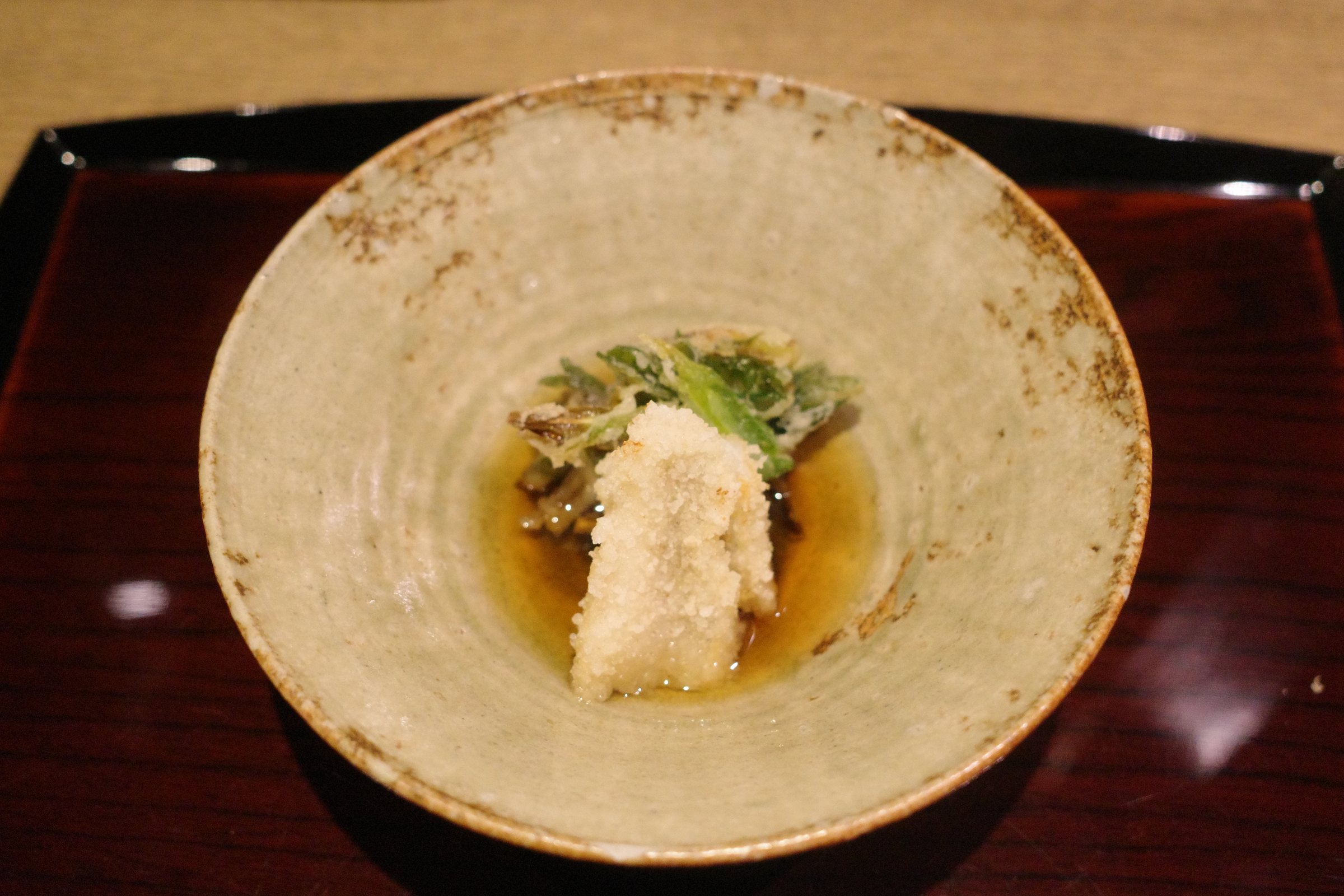
The fried course was kisu, sillago, fried in a crisp coating of rice-cracker pieces, alongside a kakiage fritter of gyoja ninniku, Alpine leek, a kind of wild garlic. From the moment it was set in front of us, the smell of good oil and a faint note of garlic rose from the dish. The kisu came from Minami-Awaji in Hyogo, a town known for its fresh fish, and the wild garlic was a speciality of Aomori. The oil melting into the Japanese-style dipping broth glittered beautifully. Wild garlic is a rare vegetable that you seldom come across.
The hassun, mid-meal
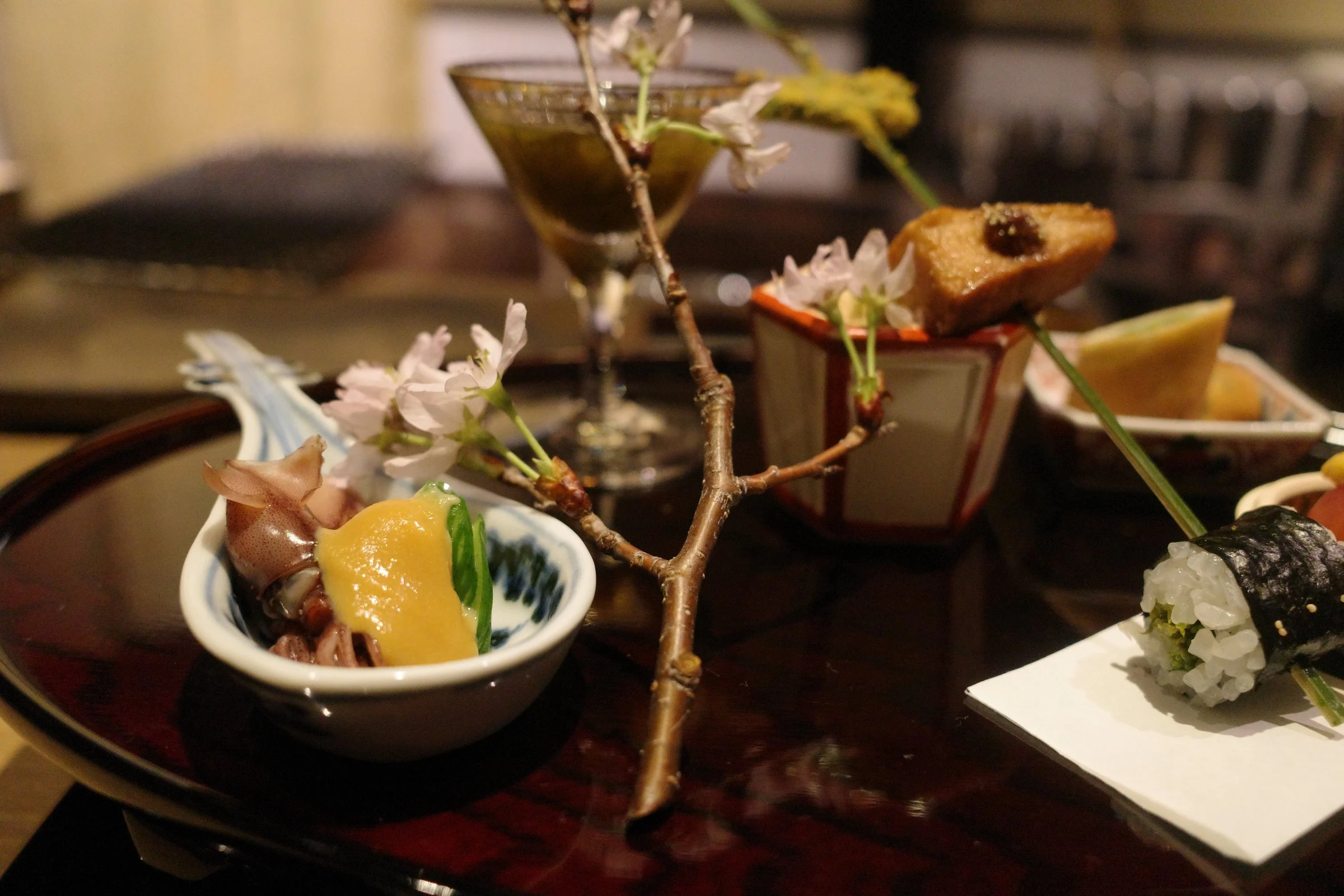
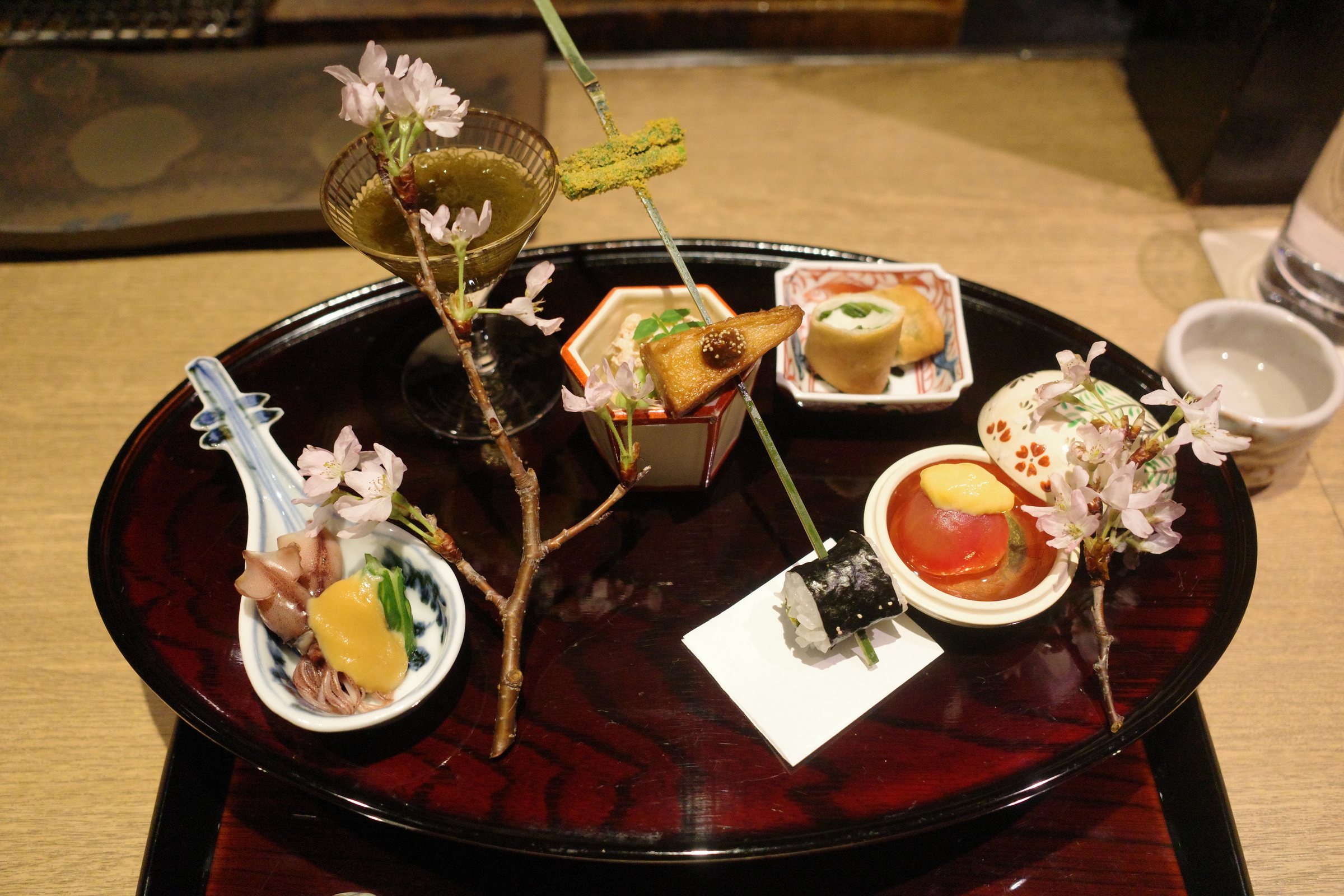
Bringing out the hassun at this point is where Tagawa shows its true character. Sweet-vinegared mozuku seaweed; broad beans with kinome and sea bream roe; spring rolls of sea bream milt wrapped in shiso; a peeled cherry tomato; jabara cucumber, cut in an accordion pattern, with firefly squid in mustard miso; and a skewer of rape-blossom sushi roll, asparagus dressed with karasumi (dried mullet roe) and awafu millet gluten with a miso glaze. The tray was full of spring and of carefully thought-out dishes. This beautiful piece of Japanese cooking, practically the main event, is surely what everyone comes for.
Young ayu, just for a taste
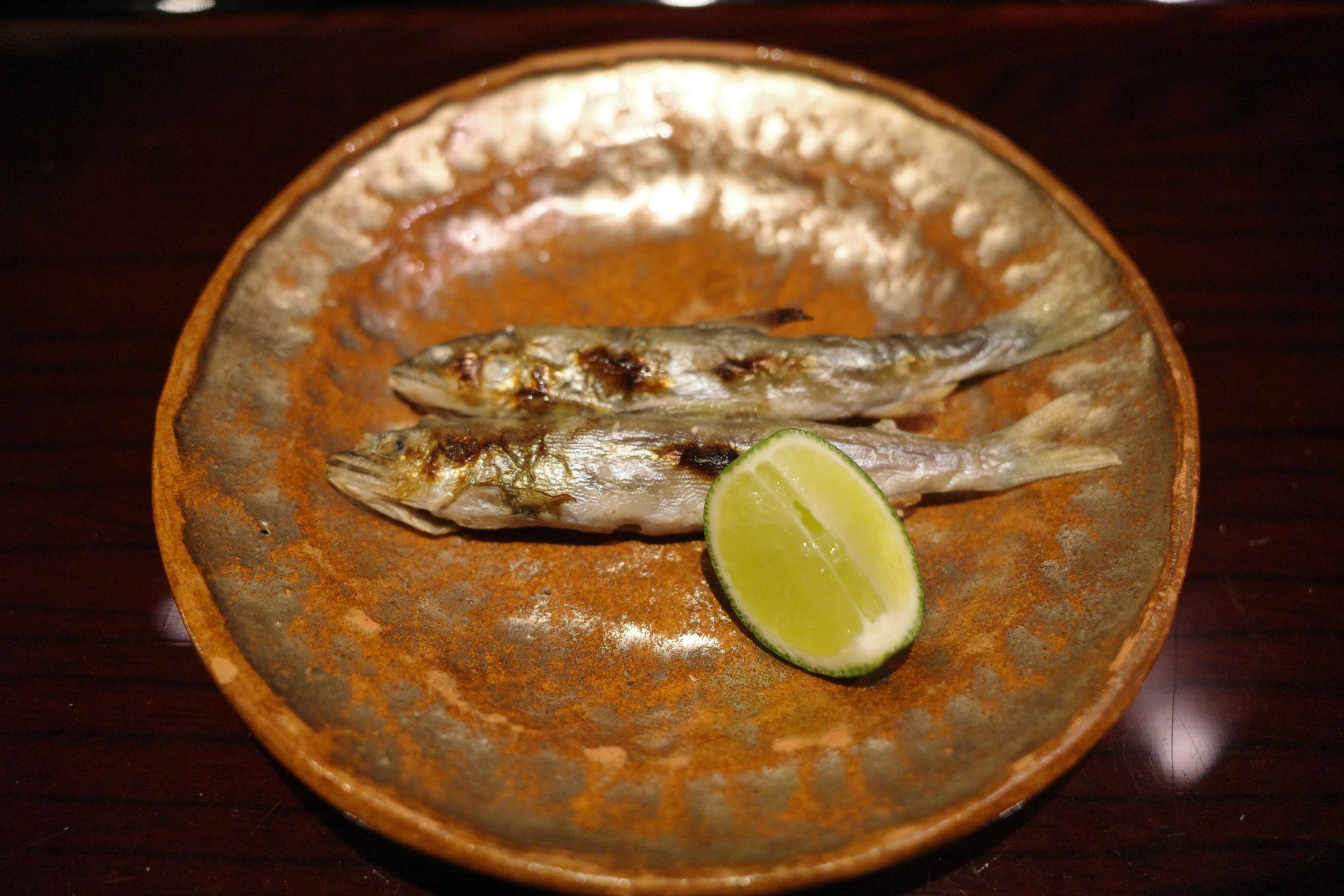
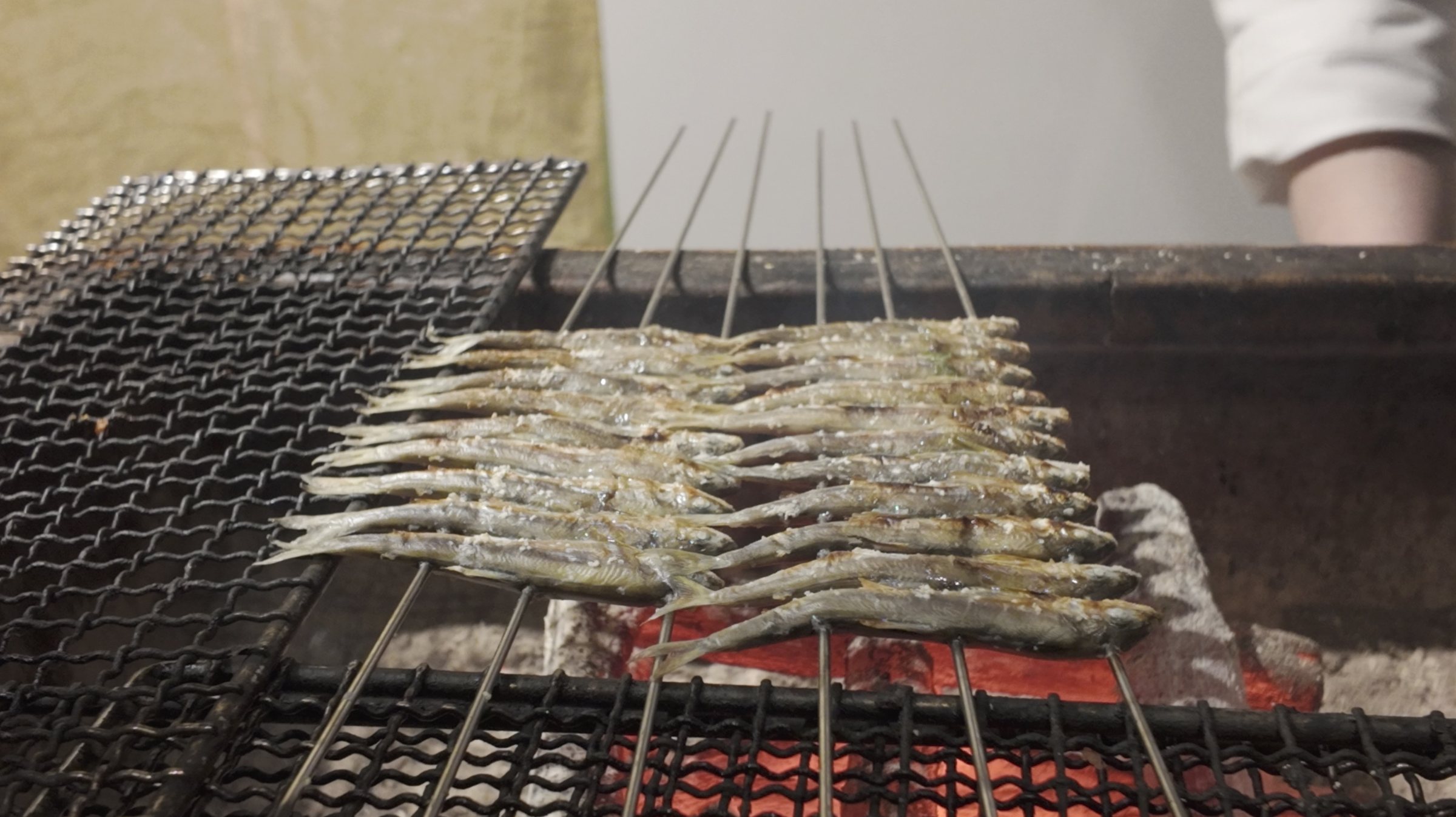
Young ayu, sweetfish, which you can only meet in early spring, grilled over charcoal and served with sudachi. As we chatted, the owner offered this simple, bold dish almost as a bonus, saying “Have a taste” with a boyish expression.
A vinegared refresher
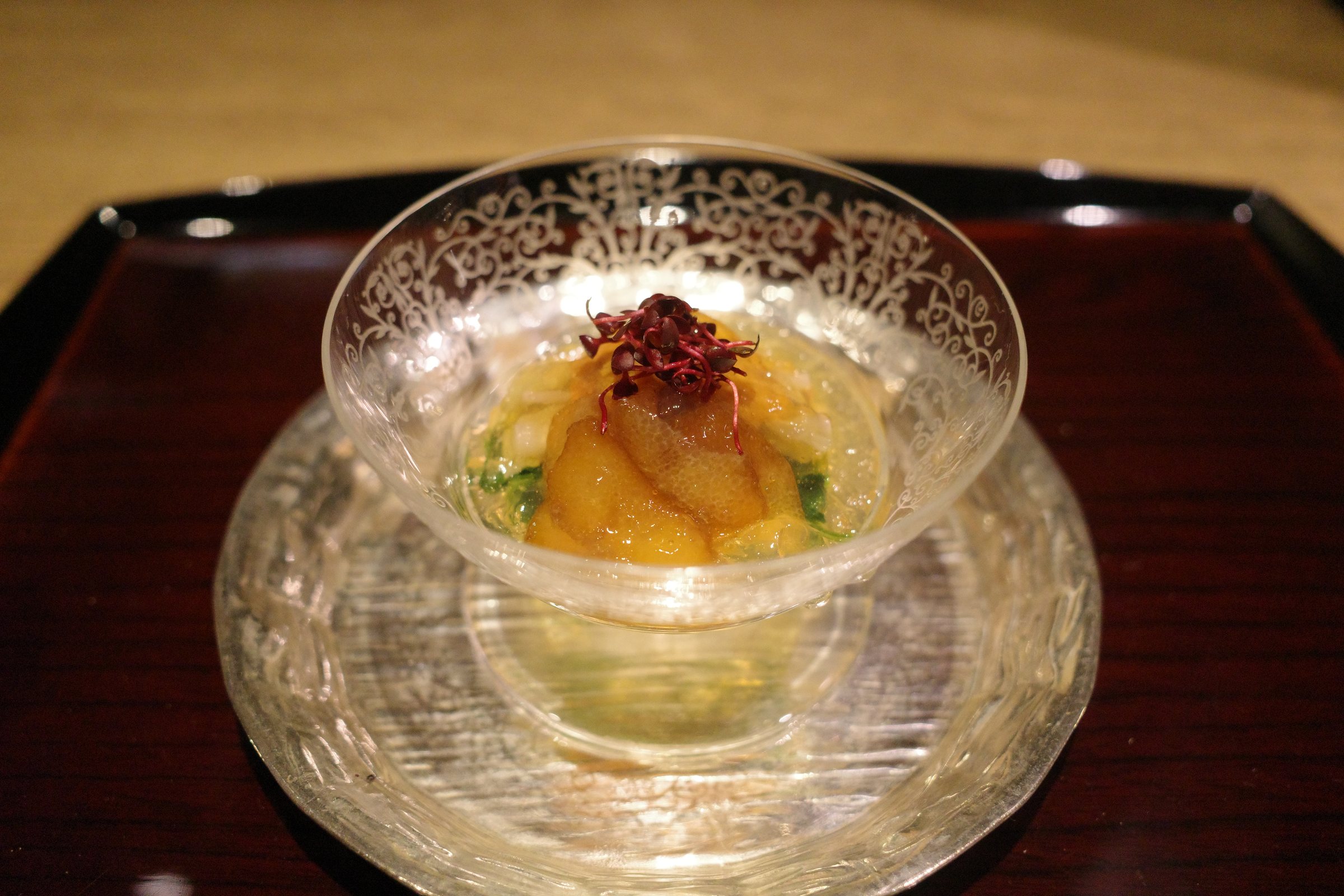
Next, a vinegared dish of herring roe, fresh sea urchin, udo (a mountain vegetable), watercress and red tade sprouts, brought together in a tosa jelly flavored with bonito. A lavish palate cleanser. The briny flavor of the roe and the urchin gained a taste of the mountains from the udo: a very original match.
Beef and flower sansho
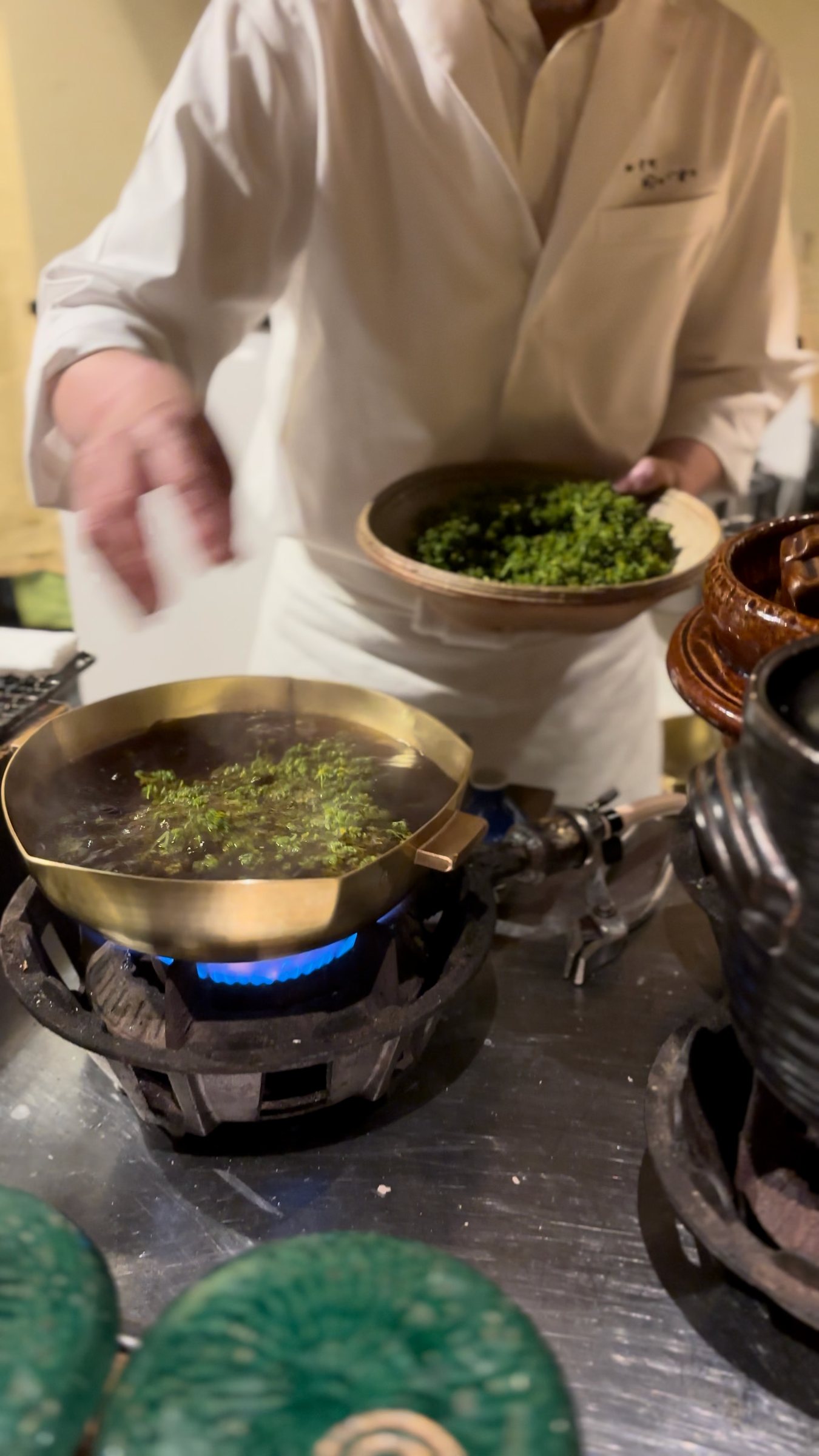
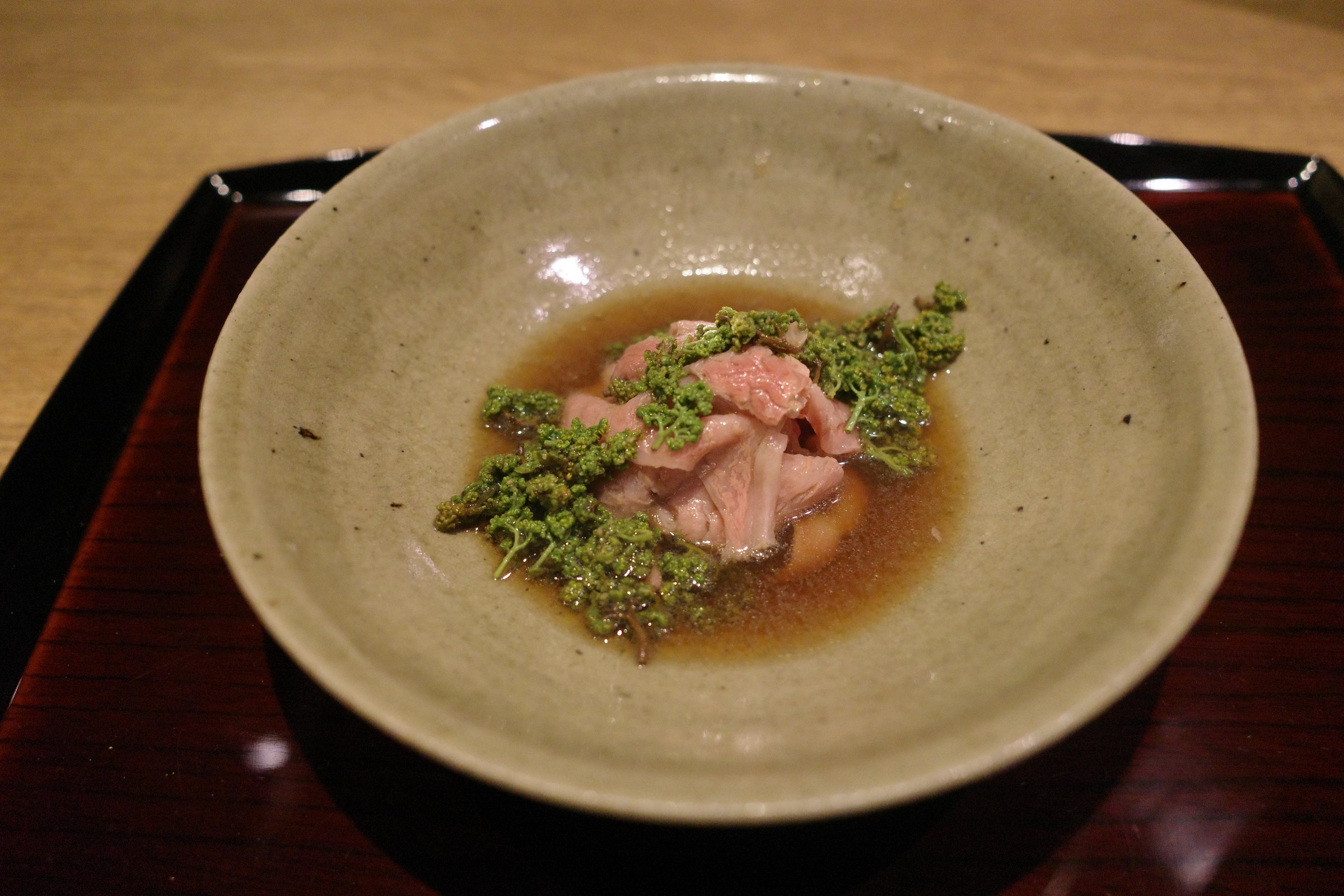
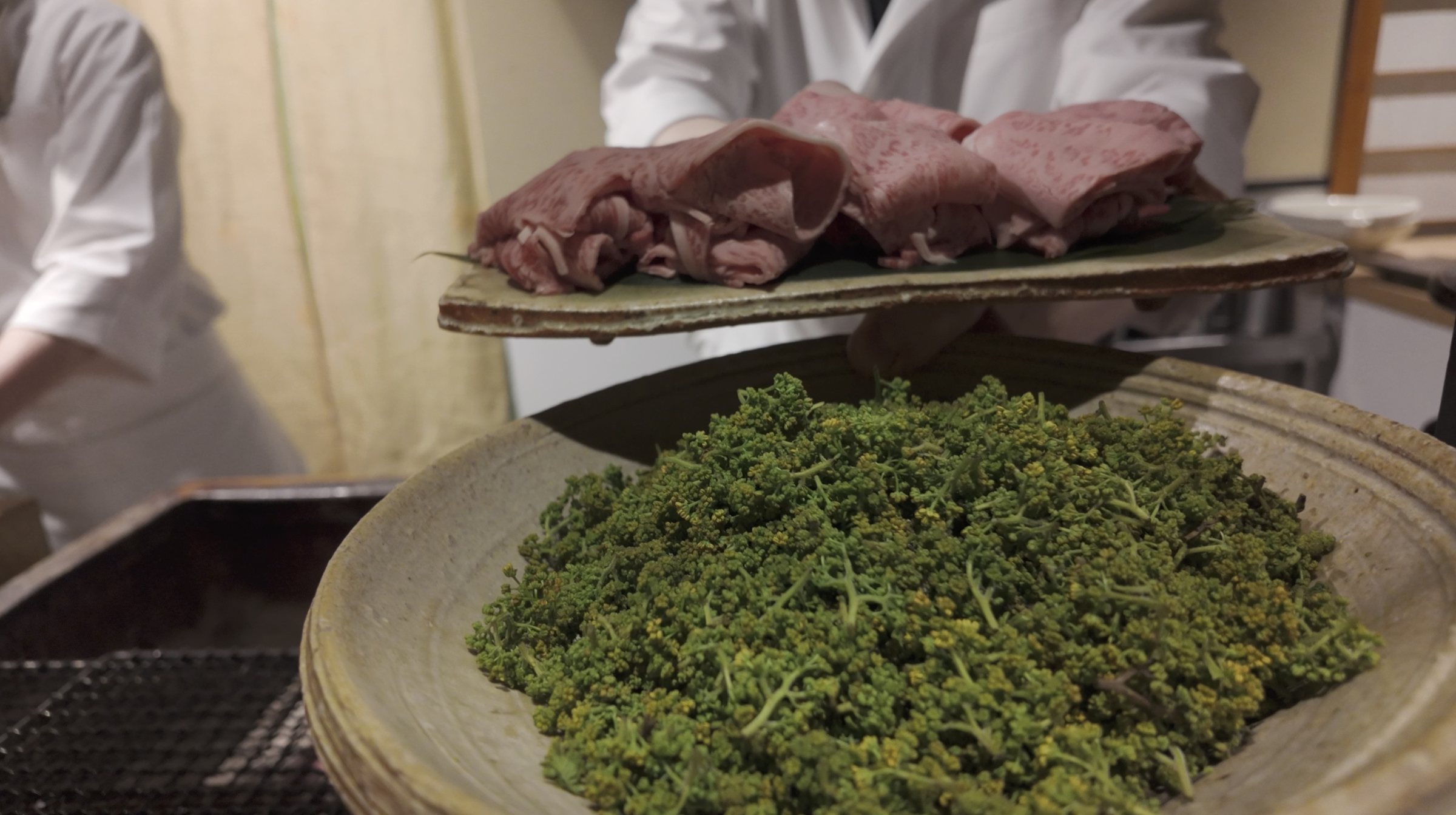
Spring in Kyoto. Beef cut evenly to 2mm, so that you taste its savoriness while feeling as little fat as possible, came with hana sansho, the flowers of the Japanese pepper tree, which take several days of work to separate from their stems. Passed briefly through hot broth, it was made into a shabu-shabu, with the sweetness kept down so that it would not become sukiyaki.
Three pots of rice
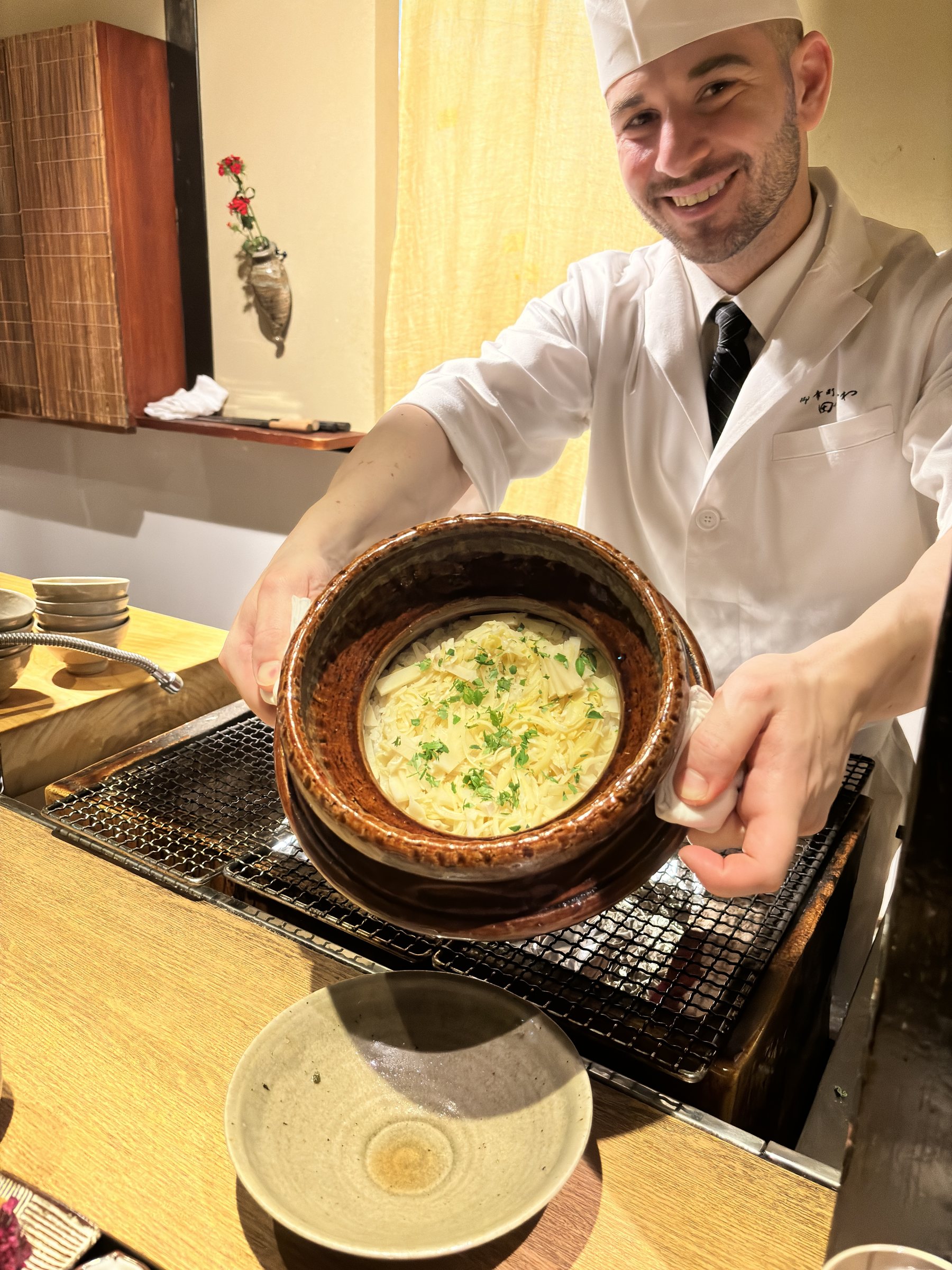
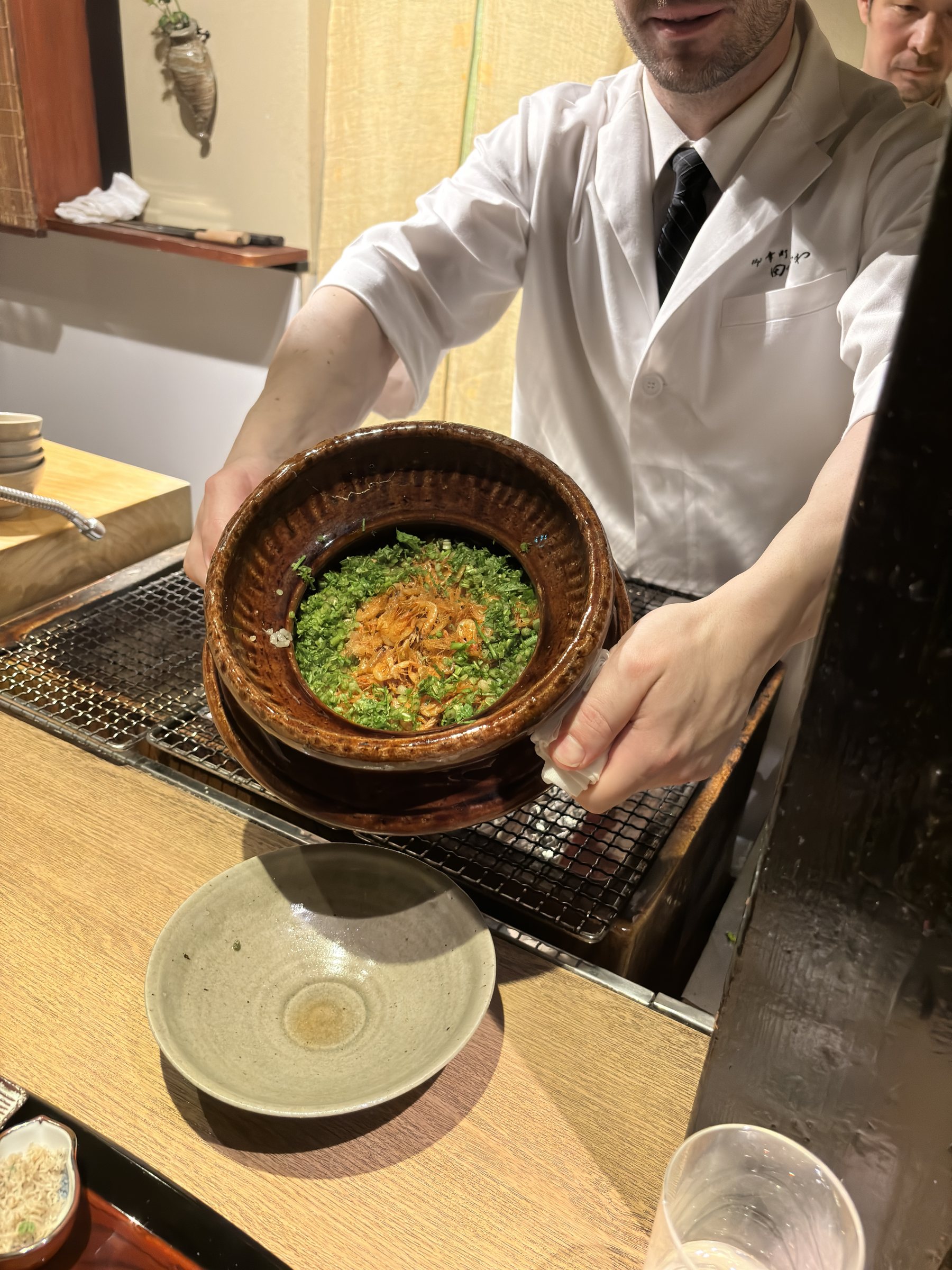
Throughout the meal, the staff member from overseas had been explaining the dishes to the foreign guests in English. He interpreted skillfully, describing ingredients and techniques that are hard to express even in Japanese. He clearly understands Japanese cuisine, and we were deeply impressed by how fluently the words came, down to the varieties of each ingredient and where they came from.
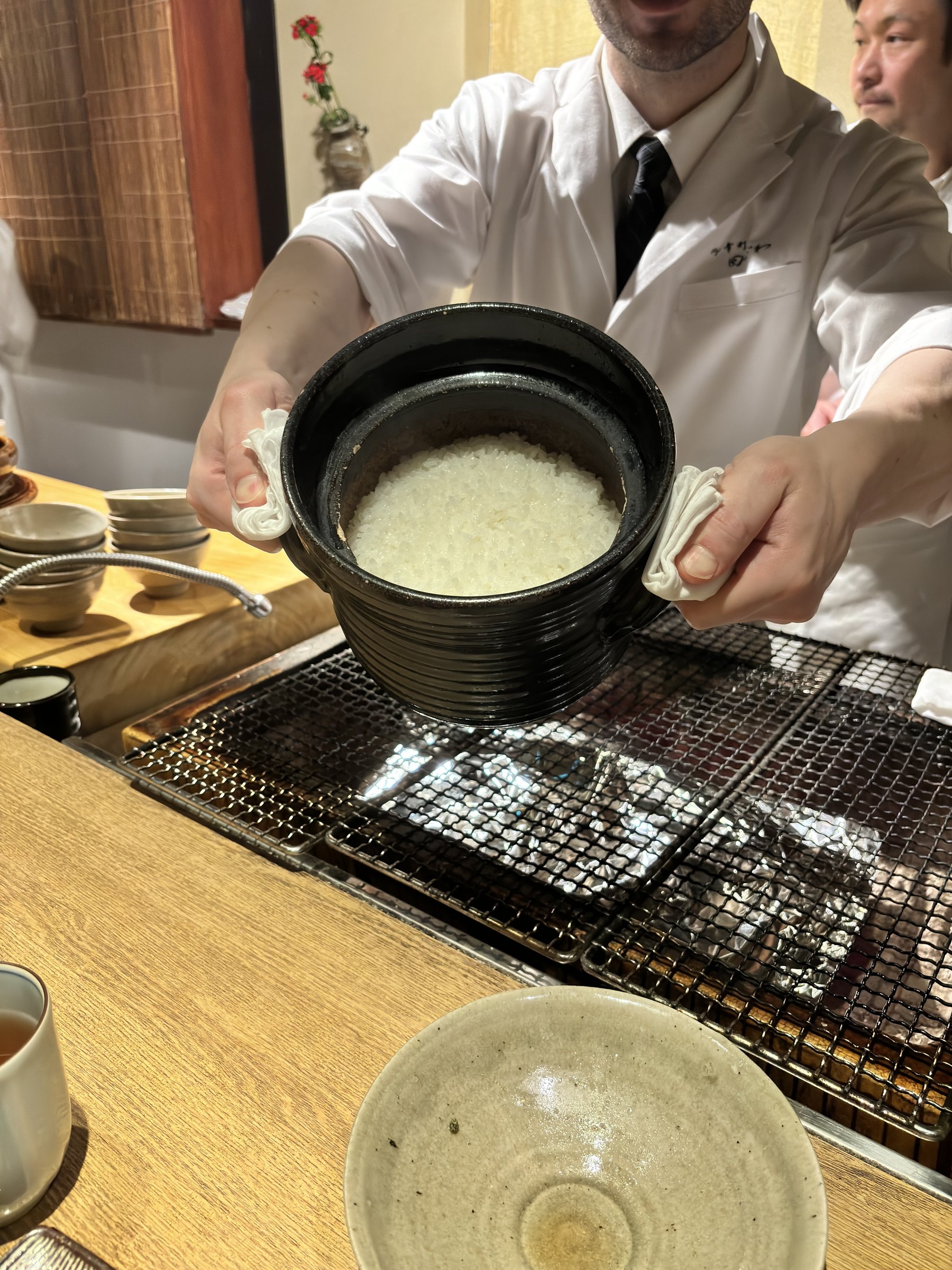
As the meal drew toward its close came Tagawa’s popular trio of rice cooked in earthenware pots: bamboo shoot rice made only with the tender inner sheath, himekawa; Koshihikari rice; and rice cooked with sakura ebi, tiny pink shrimp.
Porridge from the shabu-shabu
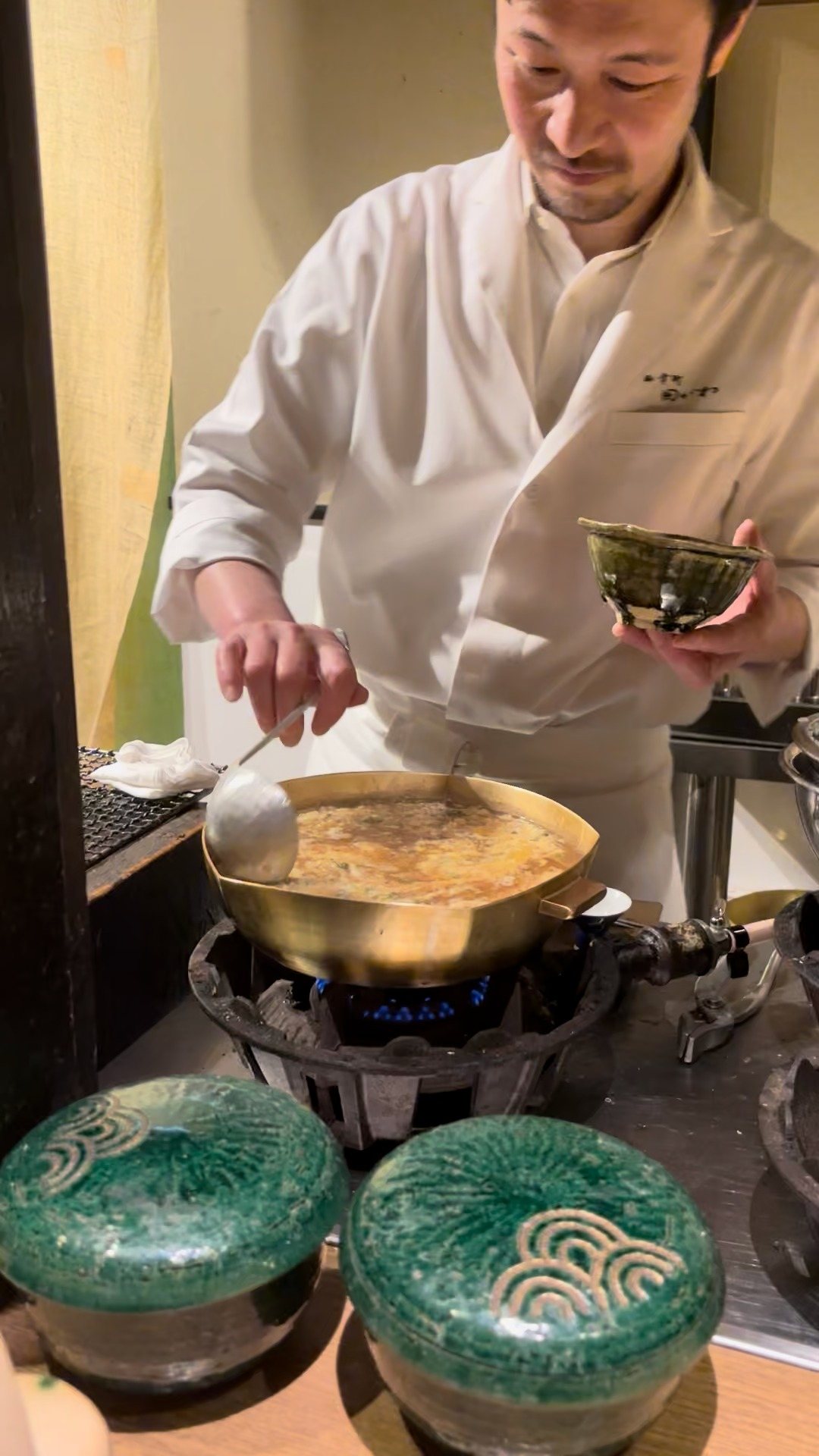
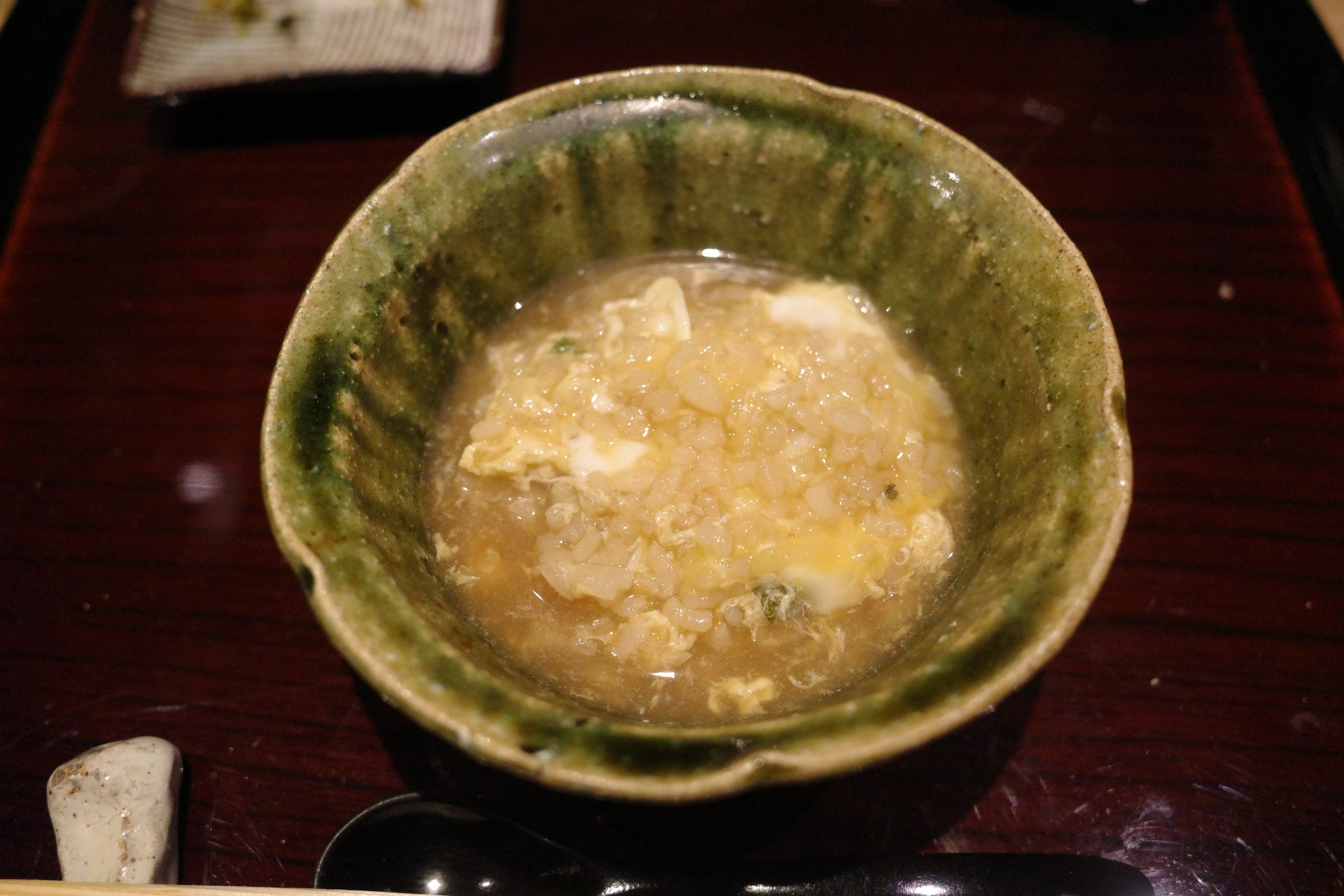
Then the owner worked a little magic to send the food lovers’ satisfaction even higher: ojiya, rice porridge made with the shabu-shabu broth, concentrated with the flavor of the beef and flower sansho. As it began to bubble, every guest at the counter was practically drooling.
Zenzai in an orange
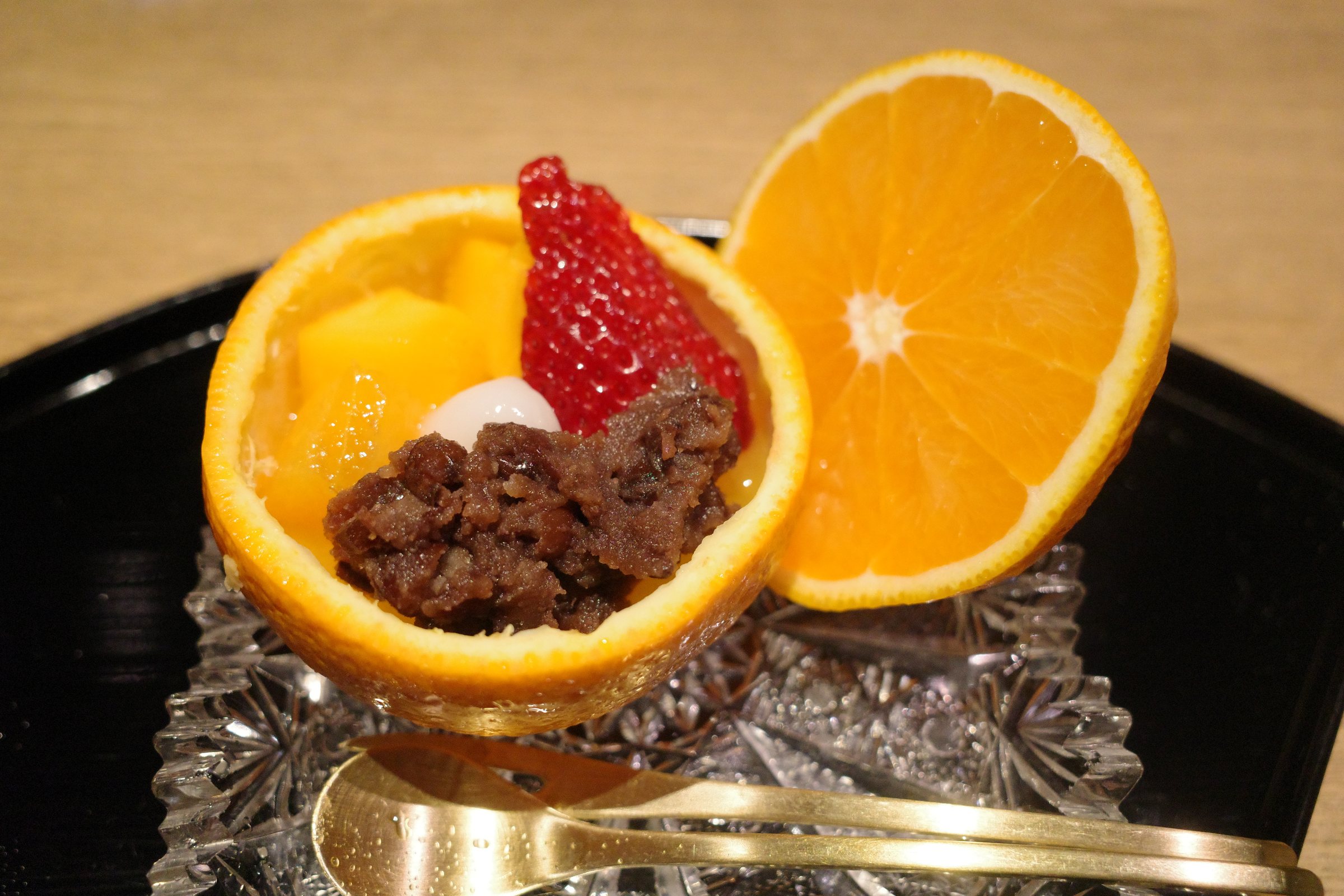
Dessert was in the style of zenzai, house-made sweet bean paste with shiratama rice dumplings, served in a hollowed Kiyomi orange. Akihime strawberries alongside brought the meal to a close with a fresh acidity.
This review reflects a visit in April 2024. Menus change with the seasons; please confirm current details directly with the restaurant before visiting.