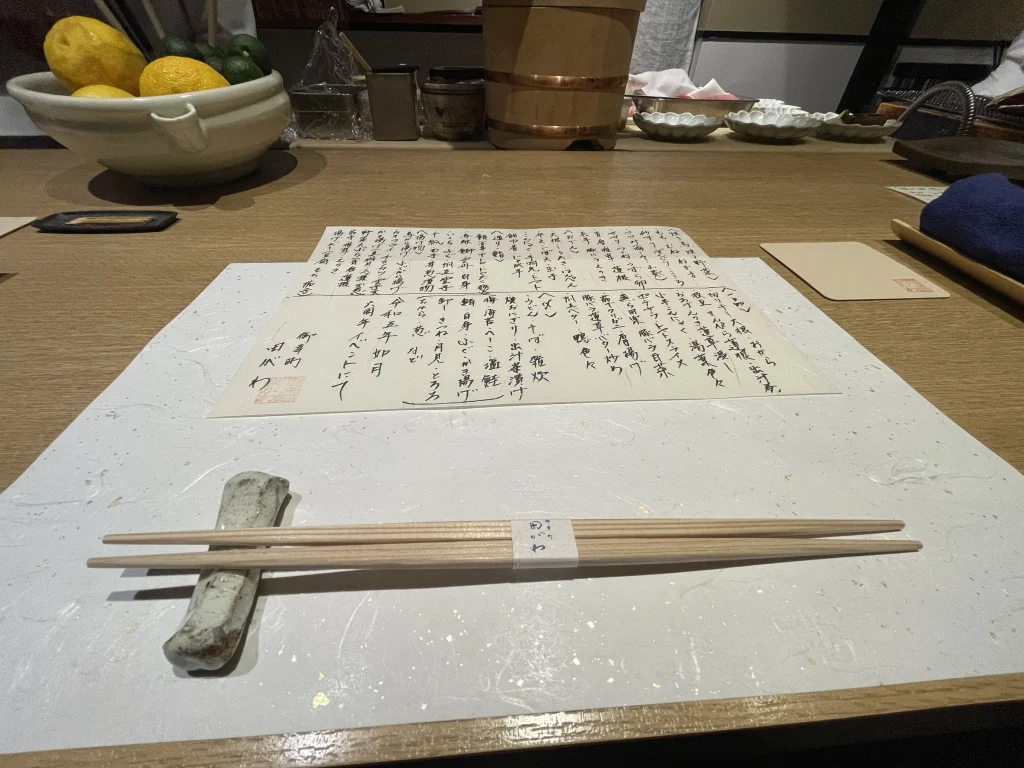
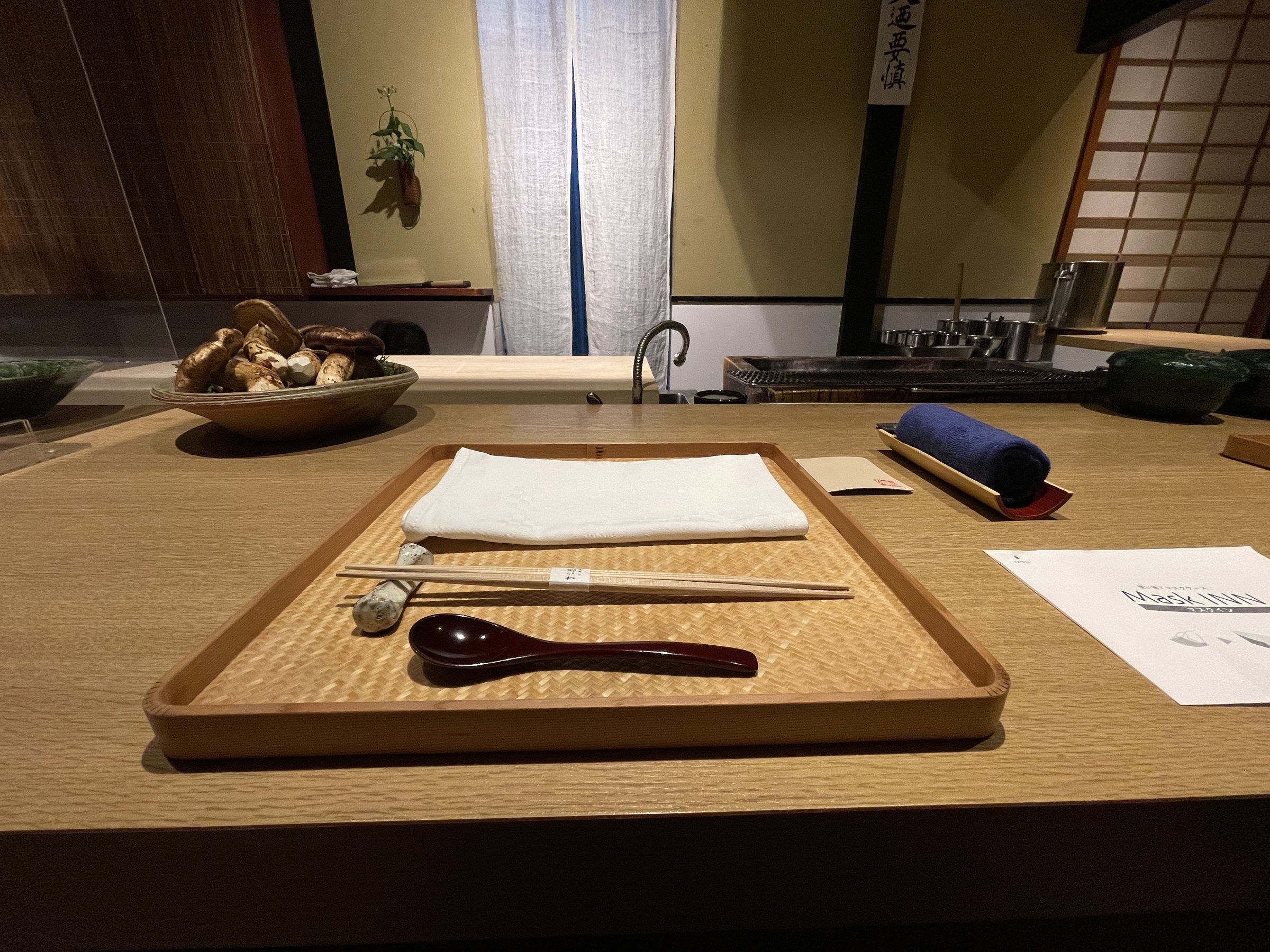
Tagawa is a kappo restaurant, where diners sit at a counter and the cooking happens in front of them, on Gokomachi street in central Kyoto. It is run by its owner and a second cook. The entrance is refined and quietly set back from the street. Stepping through the noren curtain, we looked into a room of beautifully grained wood and were greeted by the owner with a gracious smile.
Every seat faces the kitchen across a single counter, with the chopping boards in full view and charcoal smoke rising from the grill: a room built to feel live. Once we sat down, a large charcoal hearth caught the eye.
Tonight’s ingredients, on display
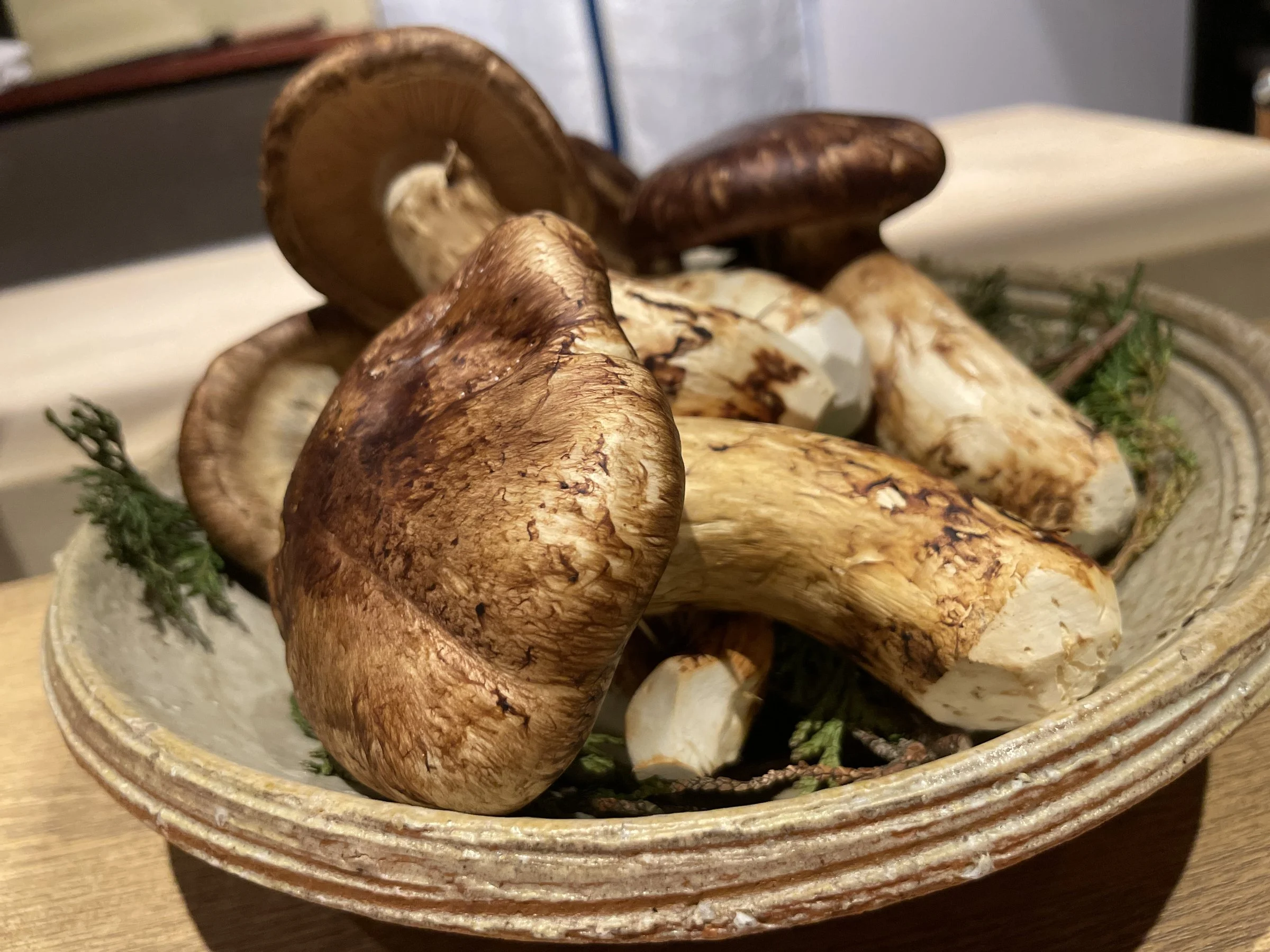
Sitting proudly on the counter was a splendid bowl of matsutake. These days, we were told, it is possible to find matsutake of excellent aroma and quality even among those grown in China, if you know where to look.
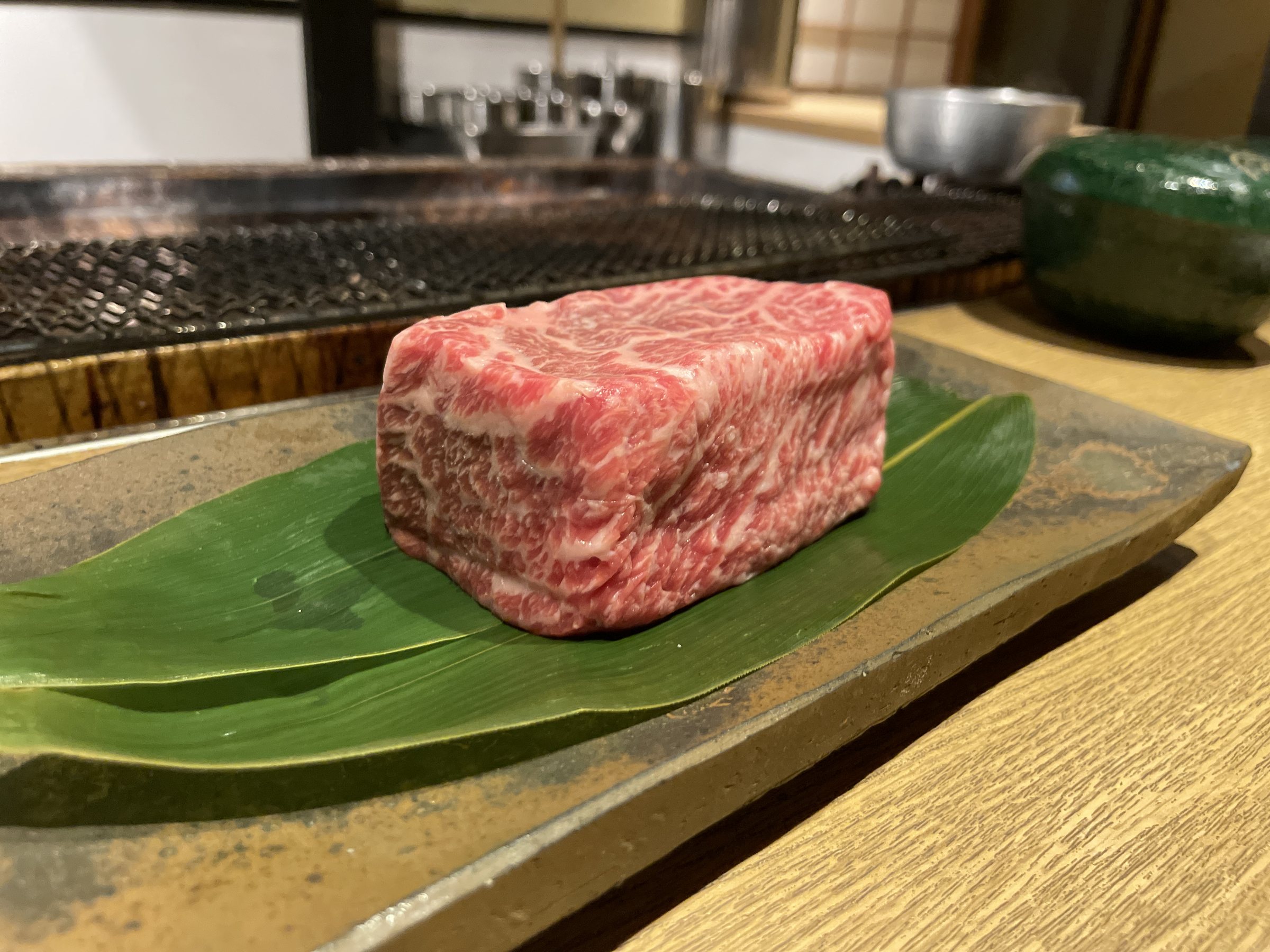
Next to the mushrooms sat a block of beef round. Simply having the day’s ingredients in front of you changes your mood. It works as a small piece of theater, and it builds the guests’ curiosity and expectations before the first course arrives.
Cutlassfish and bottarga
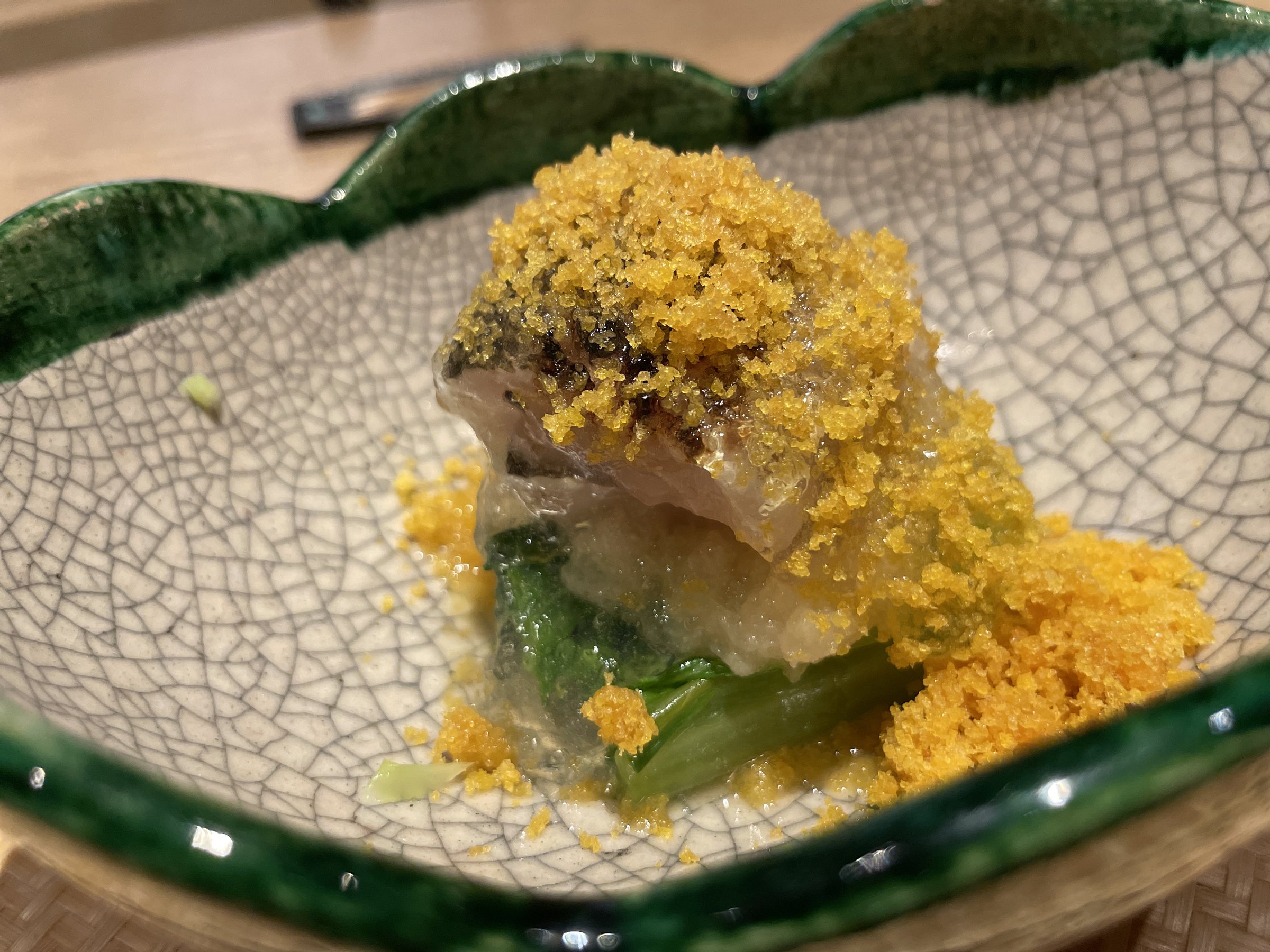
Seating is by reservation only, and once every guest had arrived the owner welcomed us all. The first dish was a starter of seared tachiuo, cutlassfish, served as sashimi and layered with leafy greens, then covered with a generous scattering of karasumi, dried mullet roe. The gentle saltiness of the bottarga met the richness of the fish, which was unexpectedly fatty. Grated daikon tucked between the layers gave it an accent, and the pleasure lay in the moment when everything came together in one mouthful.
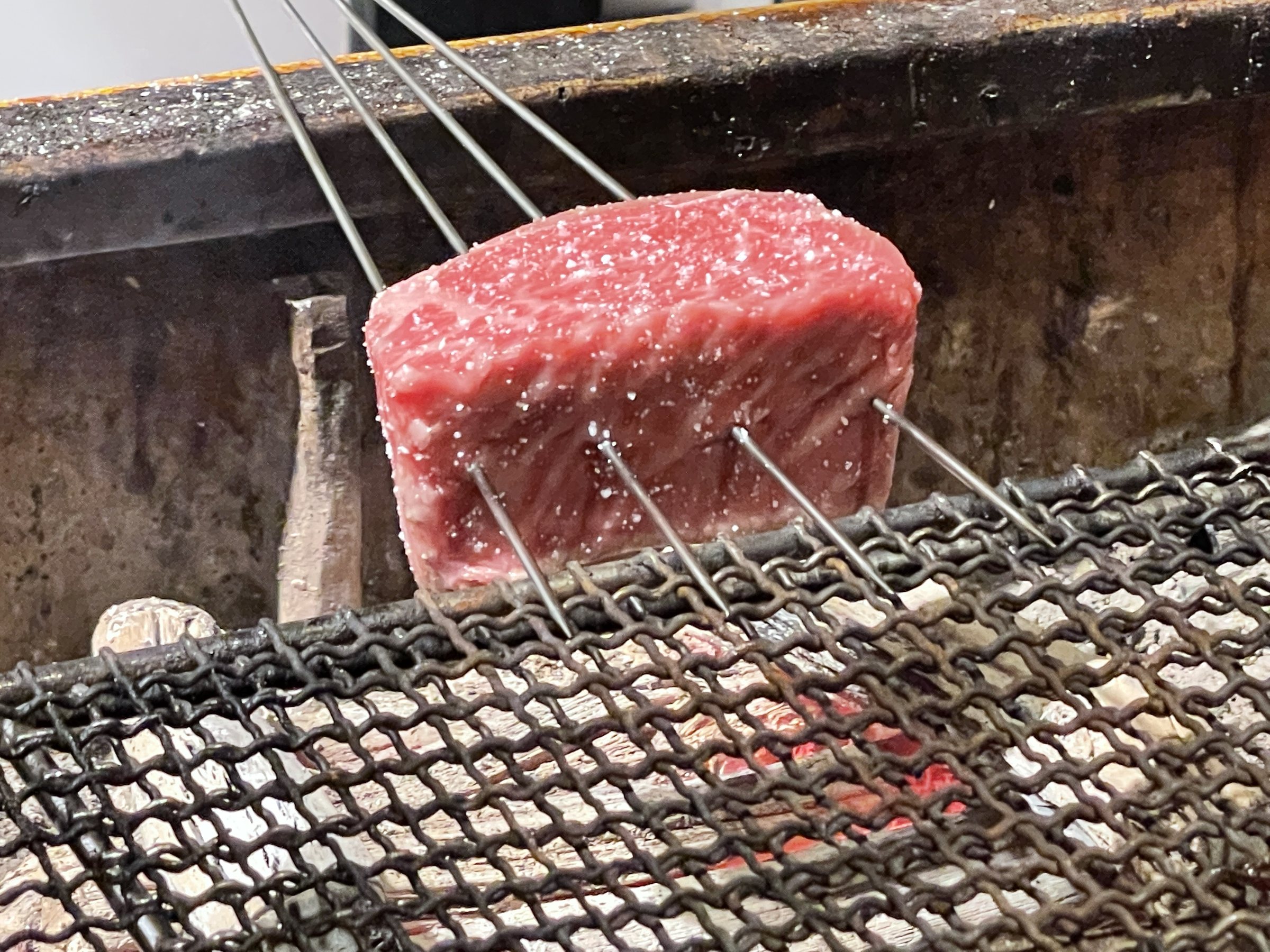
The block of beef went onto the hearth. Many restaurants in Kyoto cook over a hearth like this, and the soft red glow of binchotan charcoal and the smell of the rising smoke must be a scene that Japanese diners love.
A broth to finish
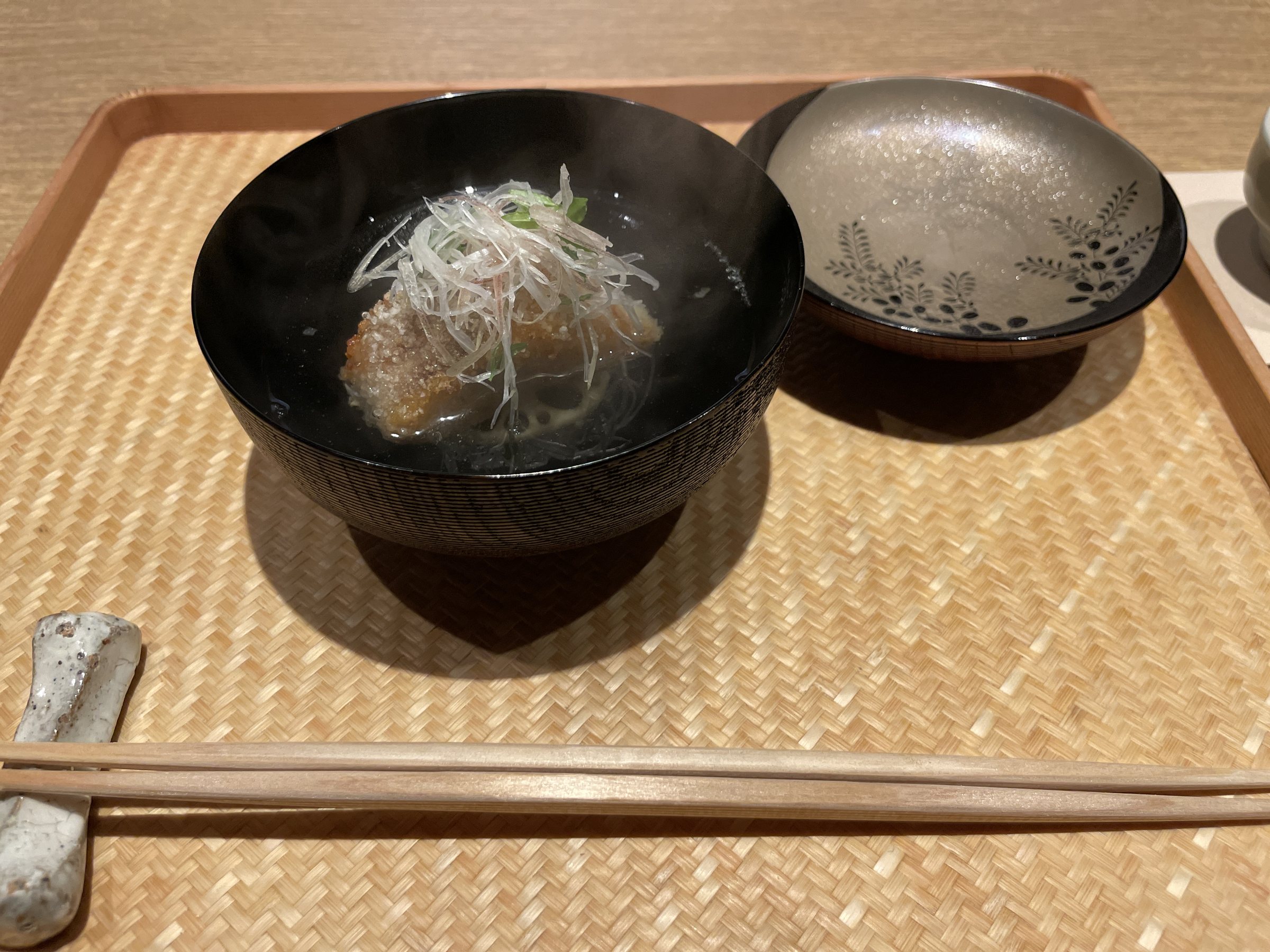
The soup course was a bowl of perfectly clear broth holding fried amadai, tilefish (or so we remember). The fragrant dashi is this kitchen’s signature move, and the light richness of the fried fish gave it real body. We drained the bowl and found ourselves chasing the aroma even in our own breath.
Conger eel, raw
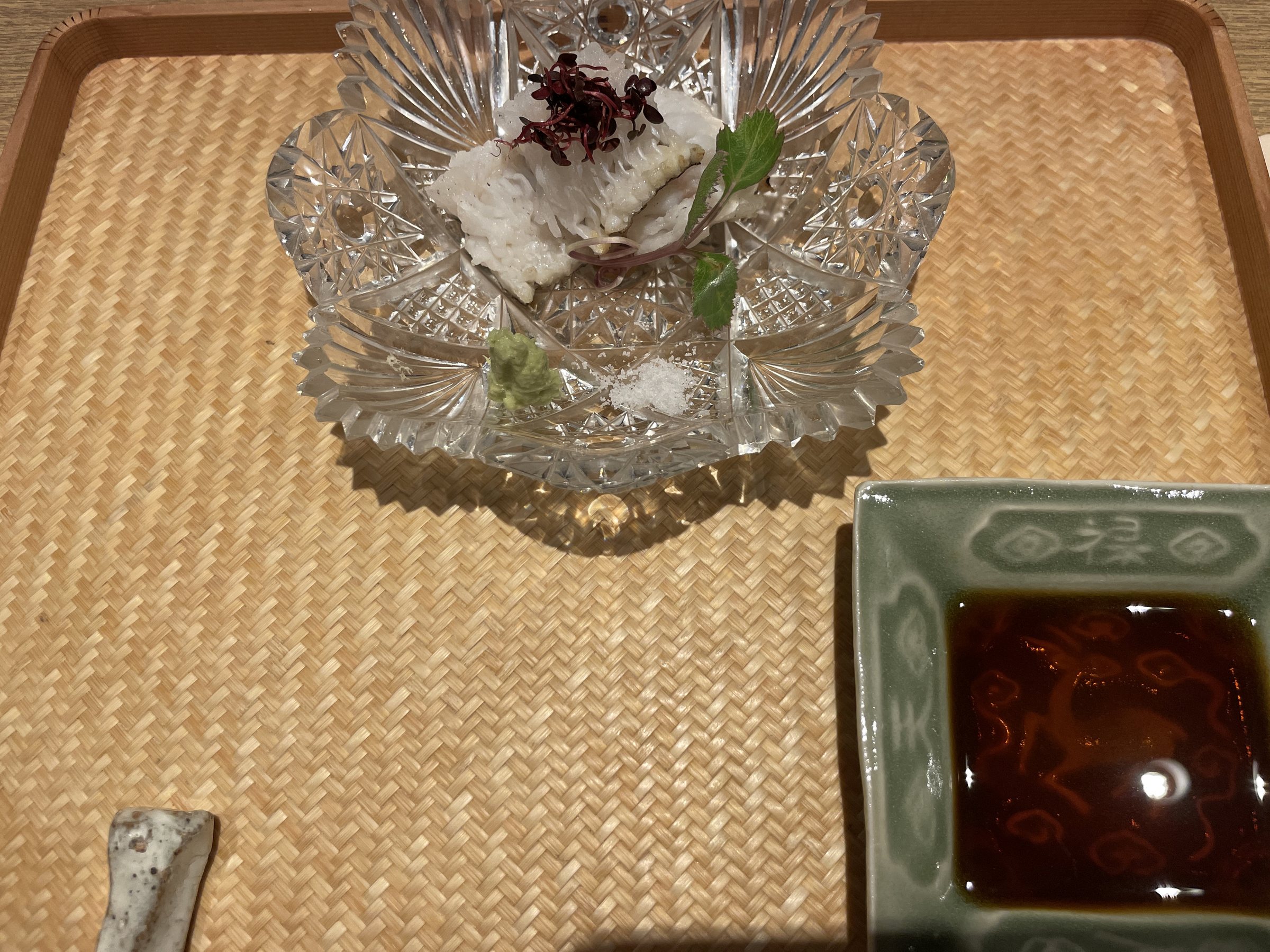
The sashimi was anago, conger eel. We had never eaten it raw and were curious, and it genuinely surprised us. Anago is a difficult fish that needs laborious preparation to deal with its odor and slime. Here the flesh was tender yet plump and springy, and the sweetness of its own fat came through all at once.
This is food that wants sake, and the good-natured owner serves chilled sake carefully selected from around the country. The owner told us that the aim is not to stock only Kyoto ingredients and Kyoto sake, but to offer flavors personally judged worth serving. As soon as we arrived, we had even been offered a tasting to choose our first glass of the evening, a thoughtful touch.
The hassun
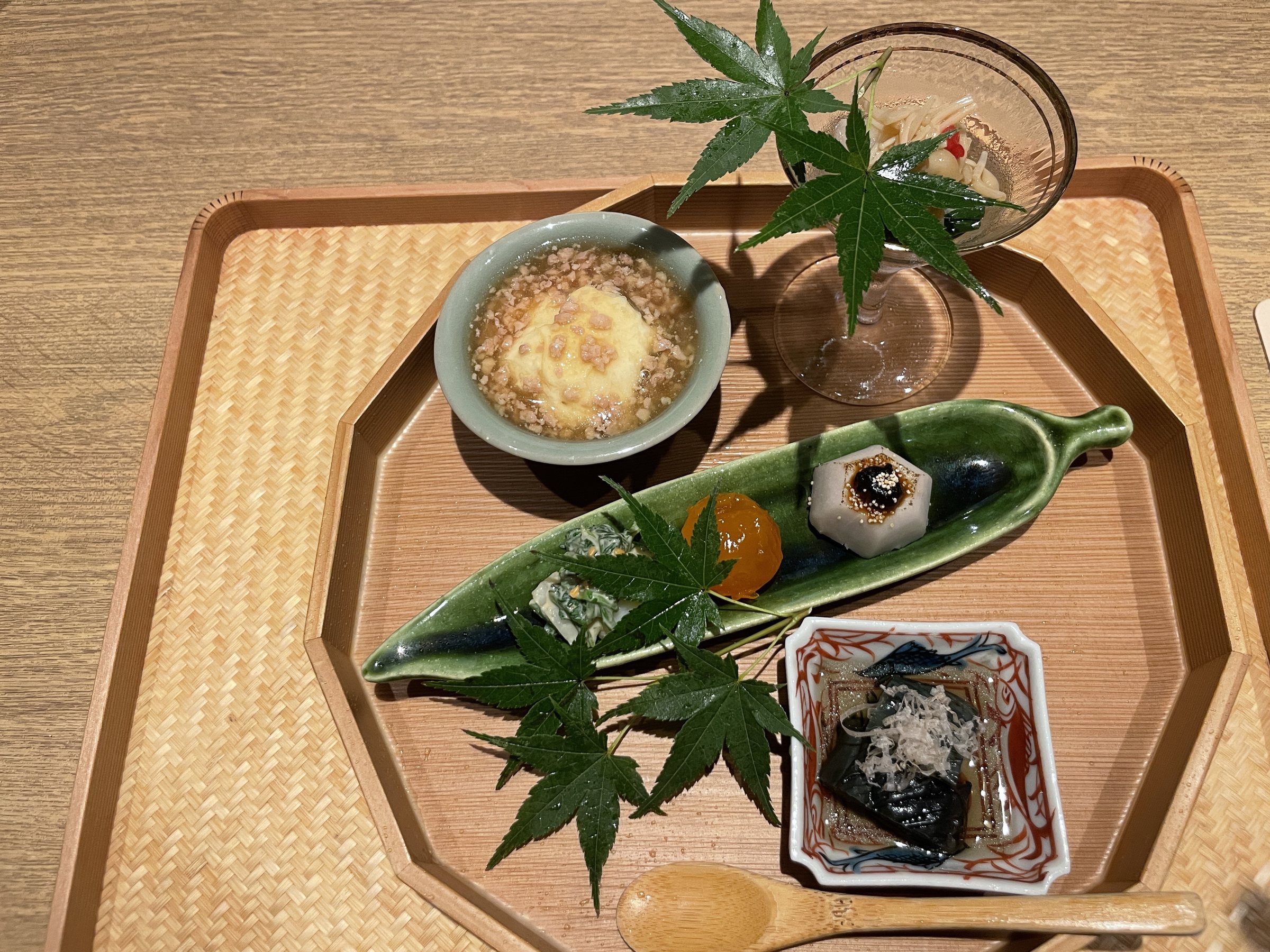
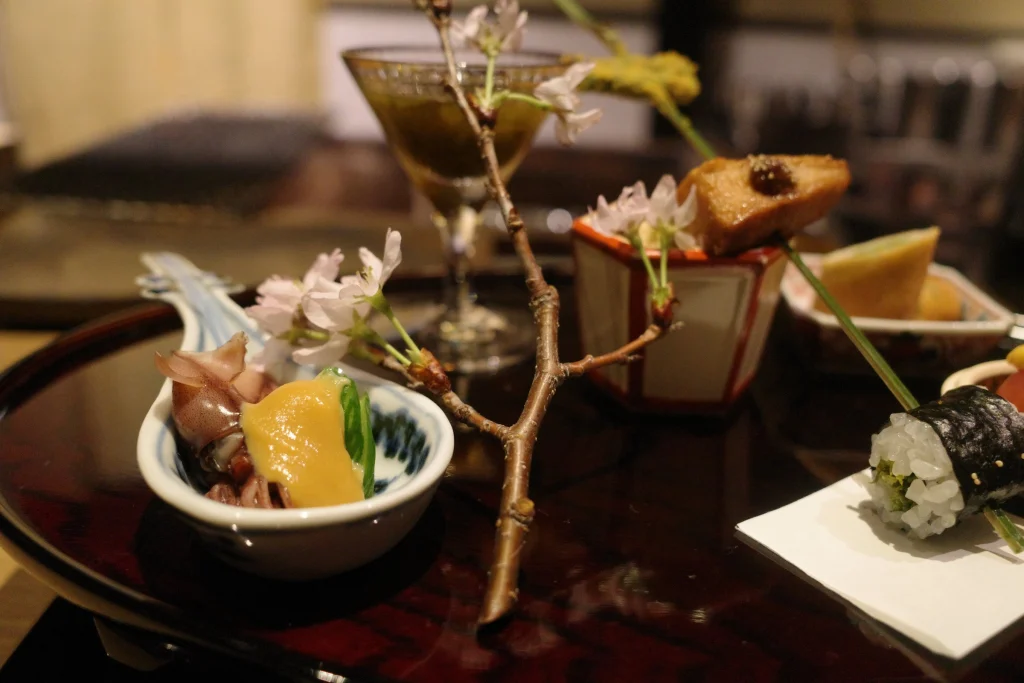
At last came the hassun, the seasonal platter. On a tray dressed beautifully for late summer, simmered eggplant in dashi invited us to settle the palate first. On the bamboo-leaf dish were ebi-imo taro with a miso glaze, egg yolk cured in miso, and Kyoto greens dressed with sesame. A line-up of delicacies like these made the sake taste better still. The dashi in the yuba with a minced sauce was intensely fragrant, and we worked through everything in turn, deciding for ourselves when to cleanse the palate with the chilled mushroom dish in its glass cup.
Roast beef, Kyoto style
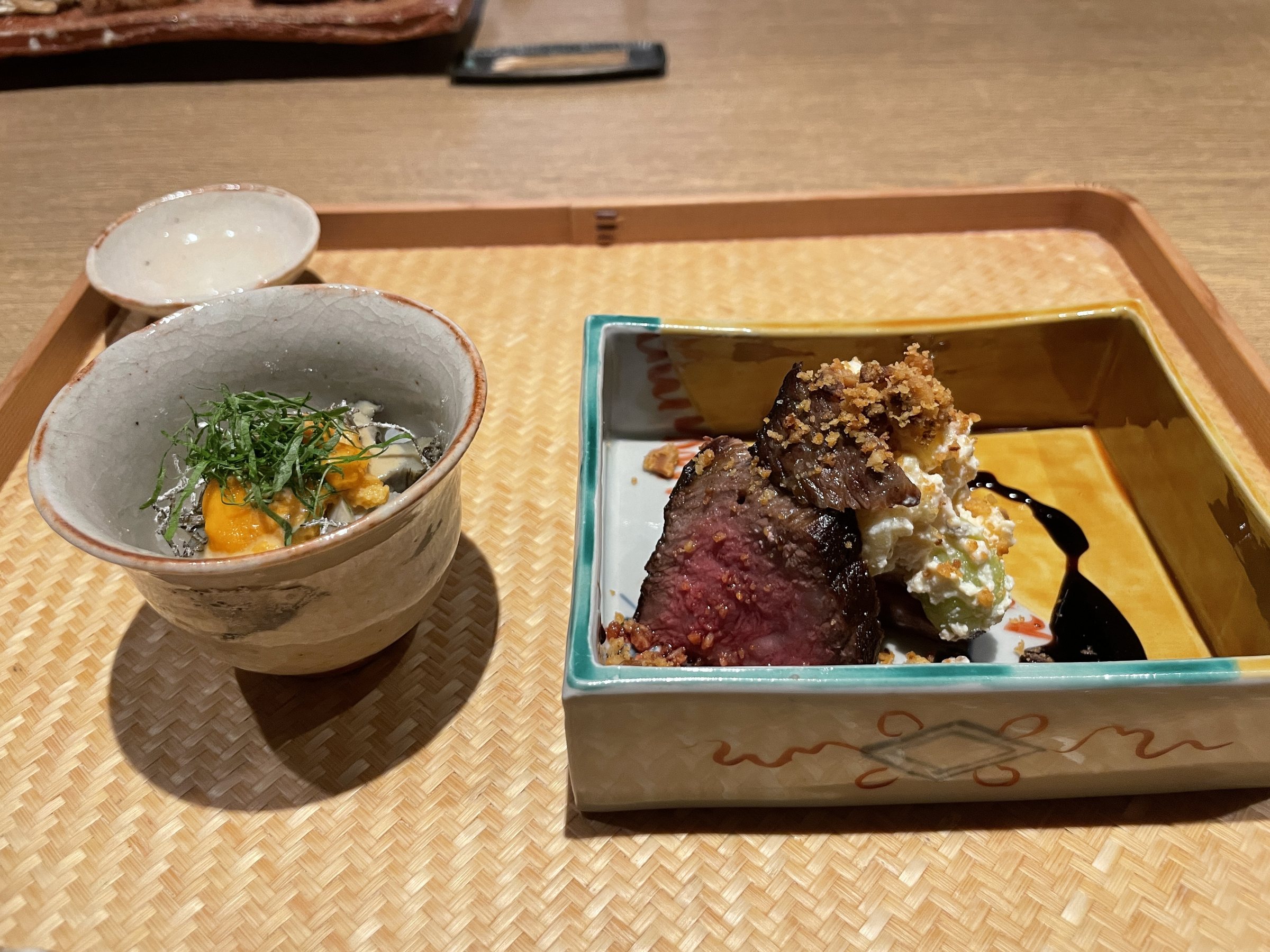
Once the beef had finished roasting and rested, a dish arrived that changed the mood. The round had been roasted slowly over charcoal in the manner of a roast beef, and served with a garnish of shira-ae, the Kyoto-loved tofu dressing, hiding cream cheese, muscat grapes and figs, topped with roasted nuts. This playful meeting of Japanese and Western produced a flavor we had never tasted before.
Alongside it came a small bowl of sea urchin and abalone mixed with salted kombu and shiso, with a little vinegared rice hidden underneath: a lavish piece of sushi to be eaten in a single bite.
Soba from a friend
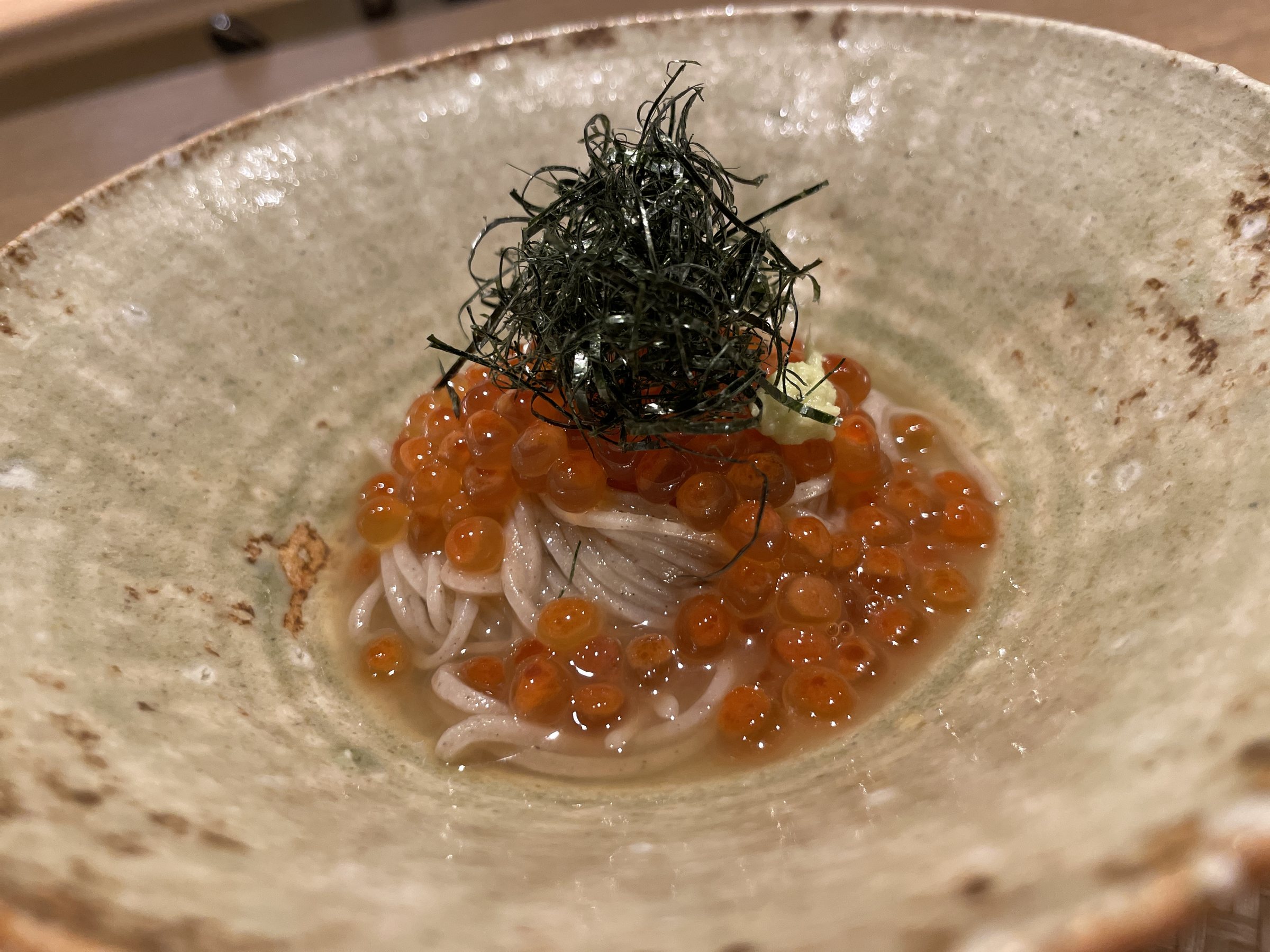
The owner introduced soba hand-made by a friend whose noodles the owner particularly admires. It was an elegant dish, with the happy pop of fresh salmon roe. The thin noodles had a firmness you would not expect from looking at them, and as we chewed we were struck by how precisely the seasoning had been calculated, allowing for the salt in both the soba broth and the roe.
Turtle, and the harvest moon
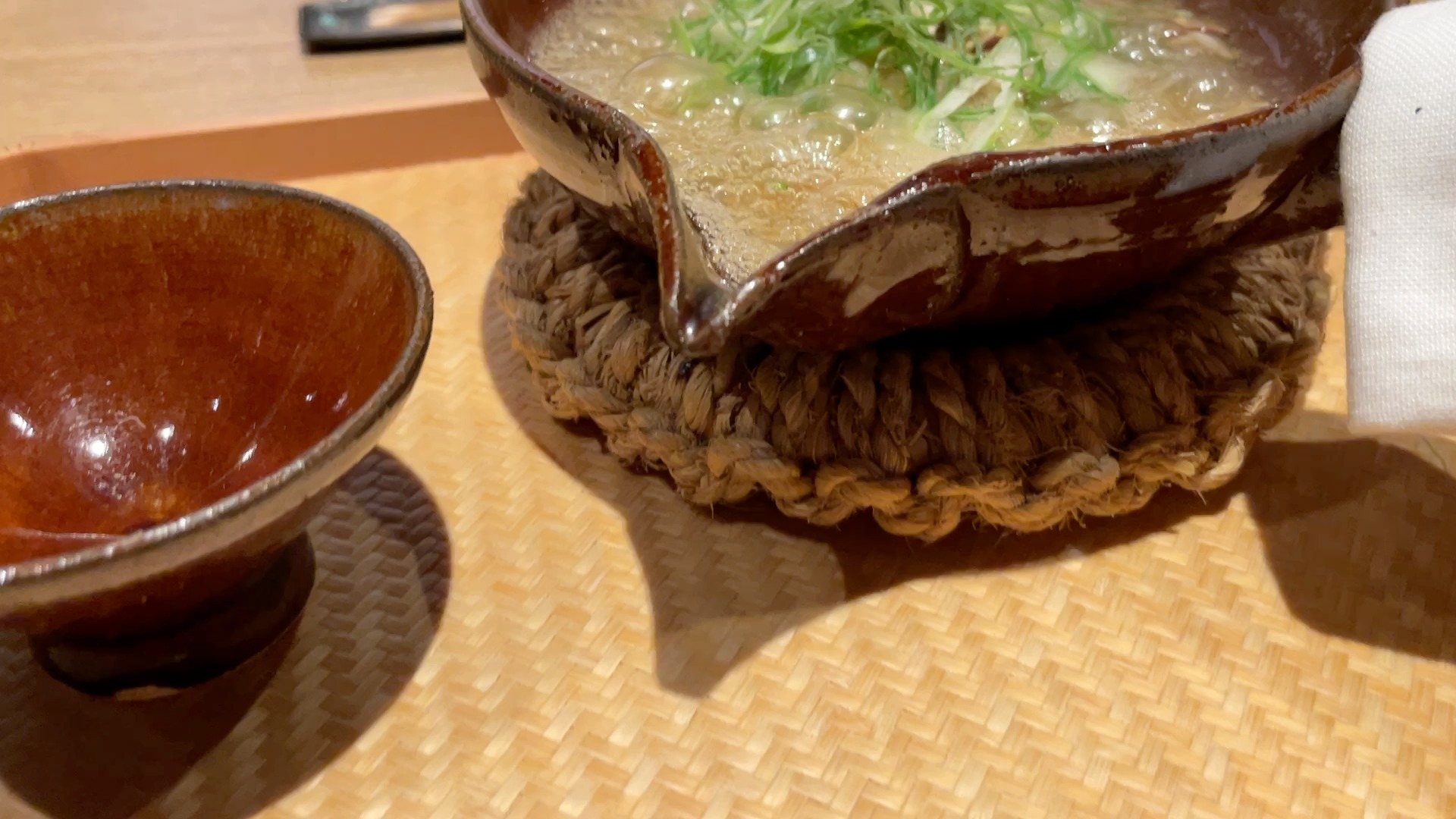
A faint scent of leek rose from the bubbling sauce. The broth turned out to be suppon, soft-shelled turtle, and the main ingredient was a turtle tofu shaped to suggest the mid-autumn harvest moon. This sense of season is what gives Japanese cuisine its depth: a graceful dish that lets you enjoy the turning of the seasons through both taste and sight. The powerful flavor of the turtle was coated in a kuzu-thickened sauce of just the right consistency. We learned that the thickness of the sauce is adjusted to the season’s temperatures: a light, loose sauce in the summer heat, and a thicker one in winter to warm the body. It is that kind of attention to detail.
Rice from the kamado
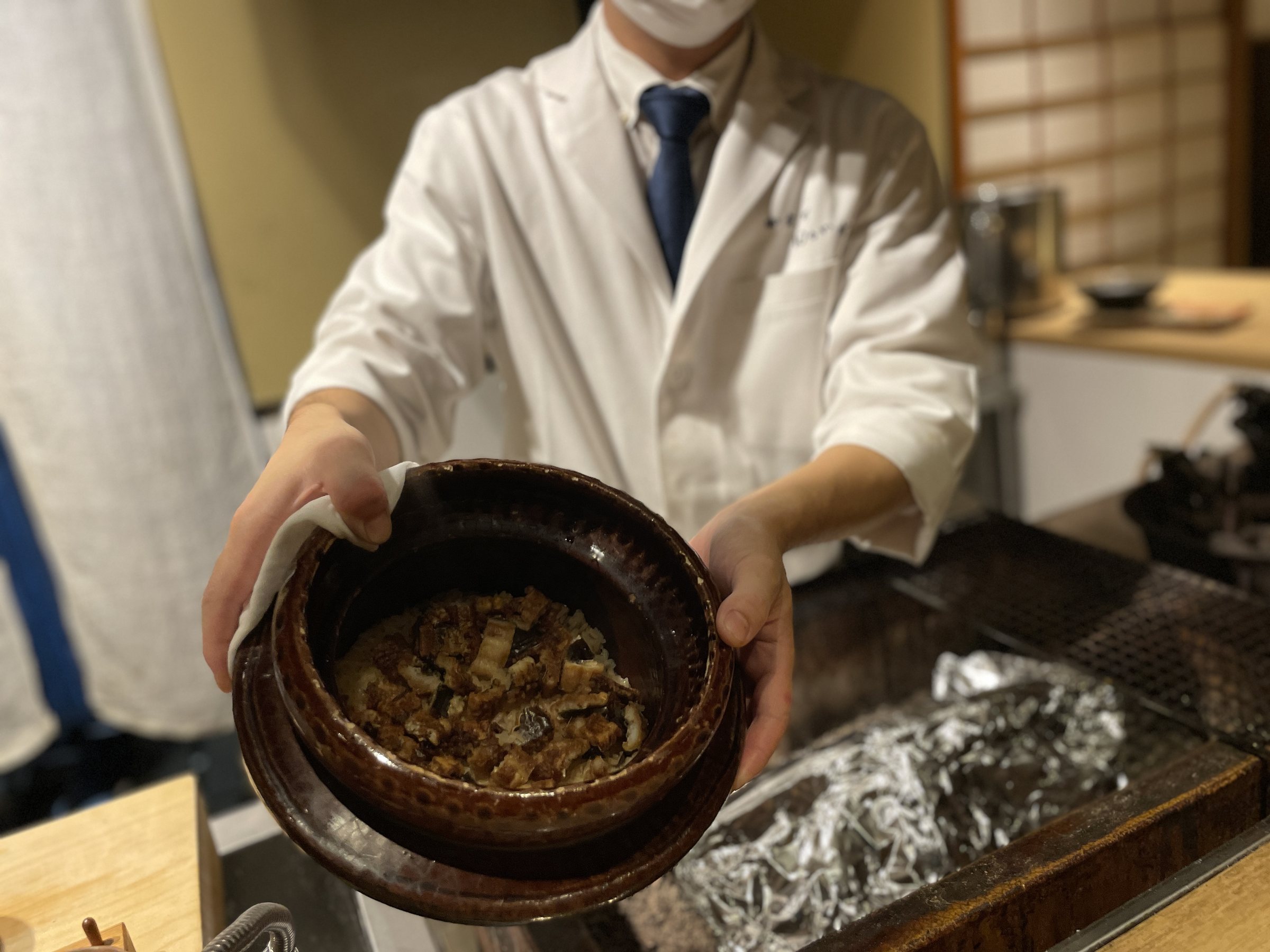
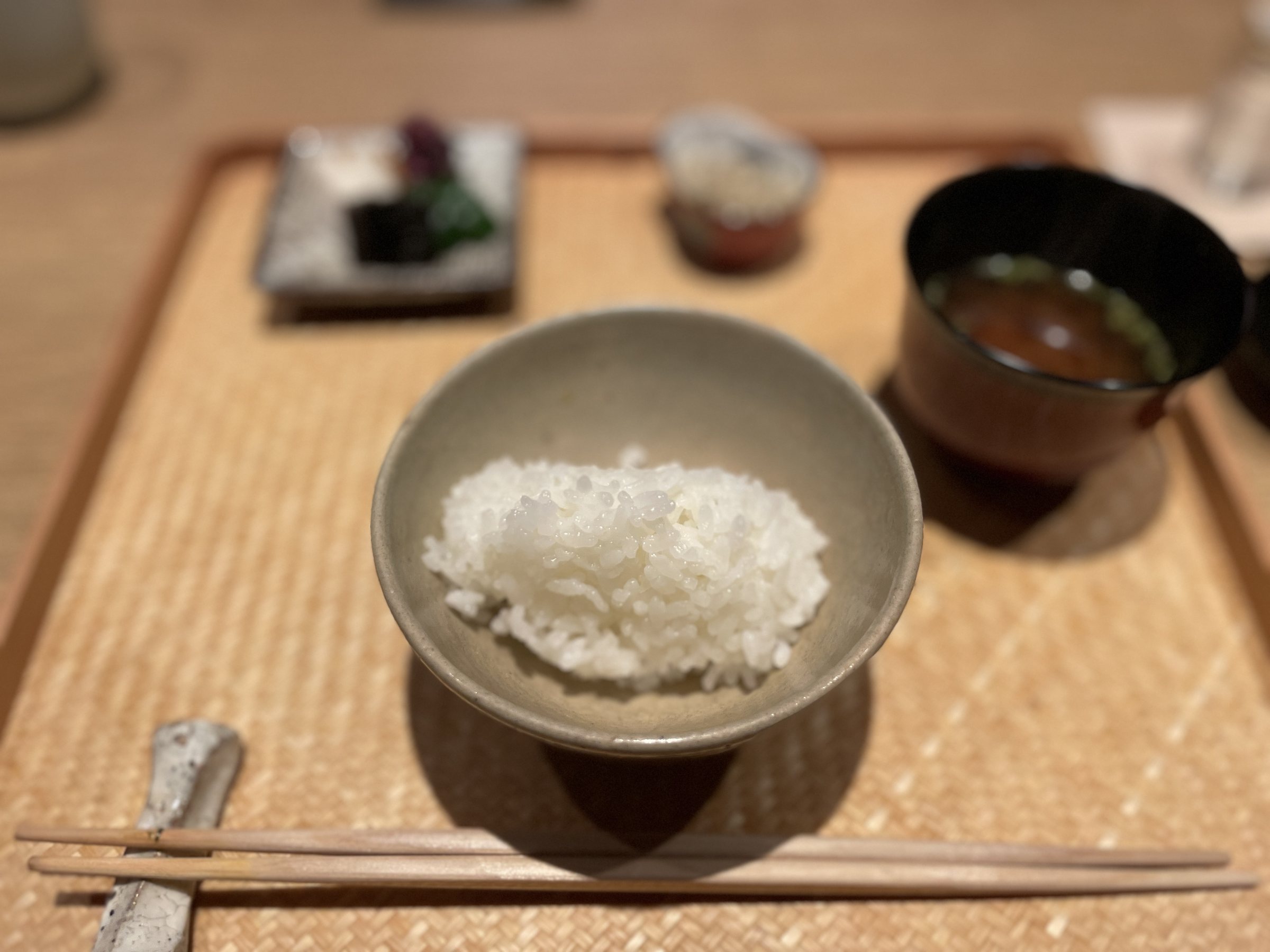
Finally came the closing rice, cooked in the kamado stove. The one that caught our eye first was the rice cooked with conger eel. Tagawa serves three kinds of rice cooked in earthenware pots; after ordering what we liked and enjoying it, we were even given rice balls to take home.
Final thoughts
We enjoyed Kyoto cuisine wholeheartedly while being taught all kinds of Japanese cooking techniques. The owner talks about the unfamiliar history of the tableware and the manners and conventions of kaiseki with a remarkably light touch. The highlight for us was watching a fine mist of water being sprayed onto the lid of a finished bowl, and asking why it is done.
Between the lively cooking in front of us and the owner’s gentle conversation, it is a room where time slips by unnoticed. The owner’s personality makes the place, and the second cook moves with perfect precision in support, at times handling the soup course and at times the fryer. Simply watching these cooks at work is an education.
We were seen off warmly, and promised that we would be back.
This review reflects a visit in September 2022. Menus change with the seasons; please confirm current details directly with the restaurant before visiting.