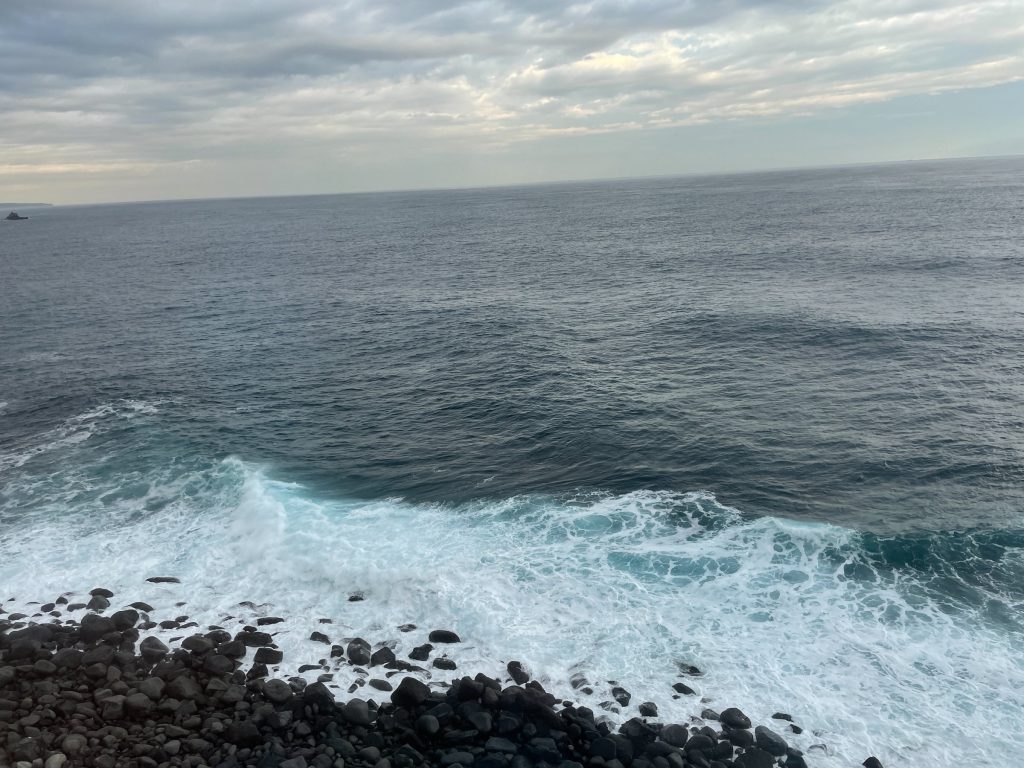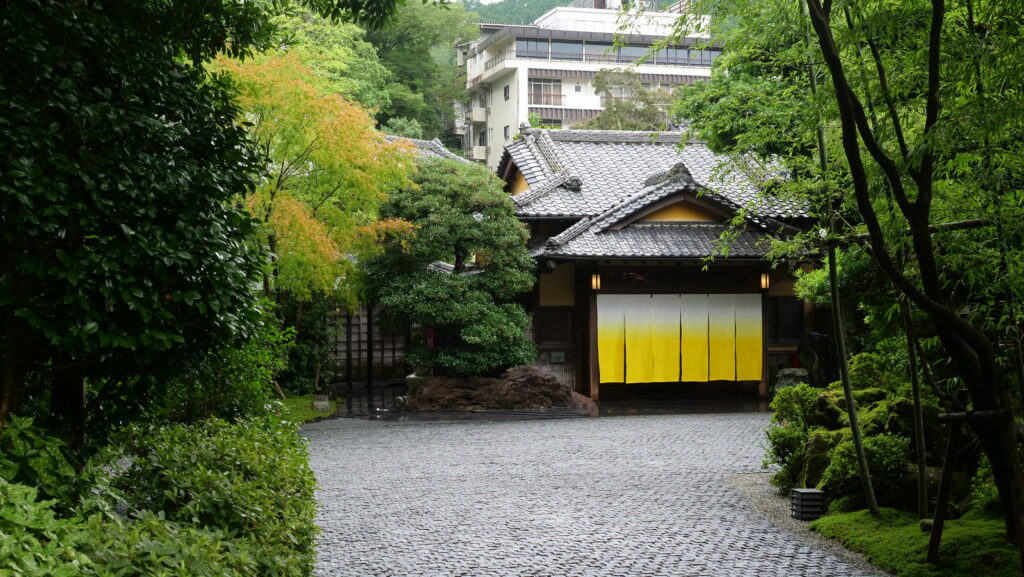
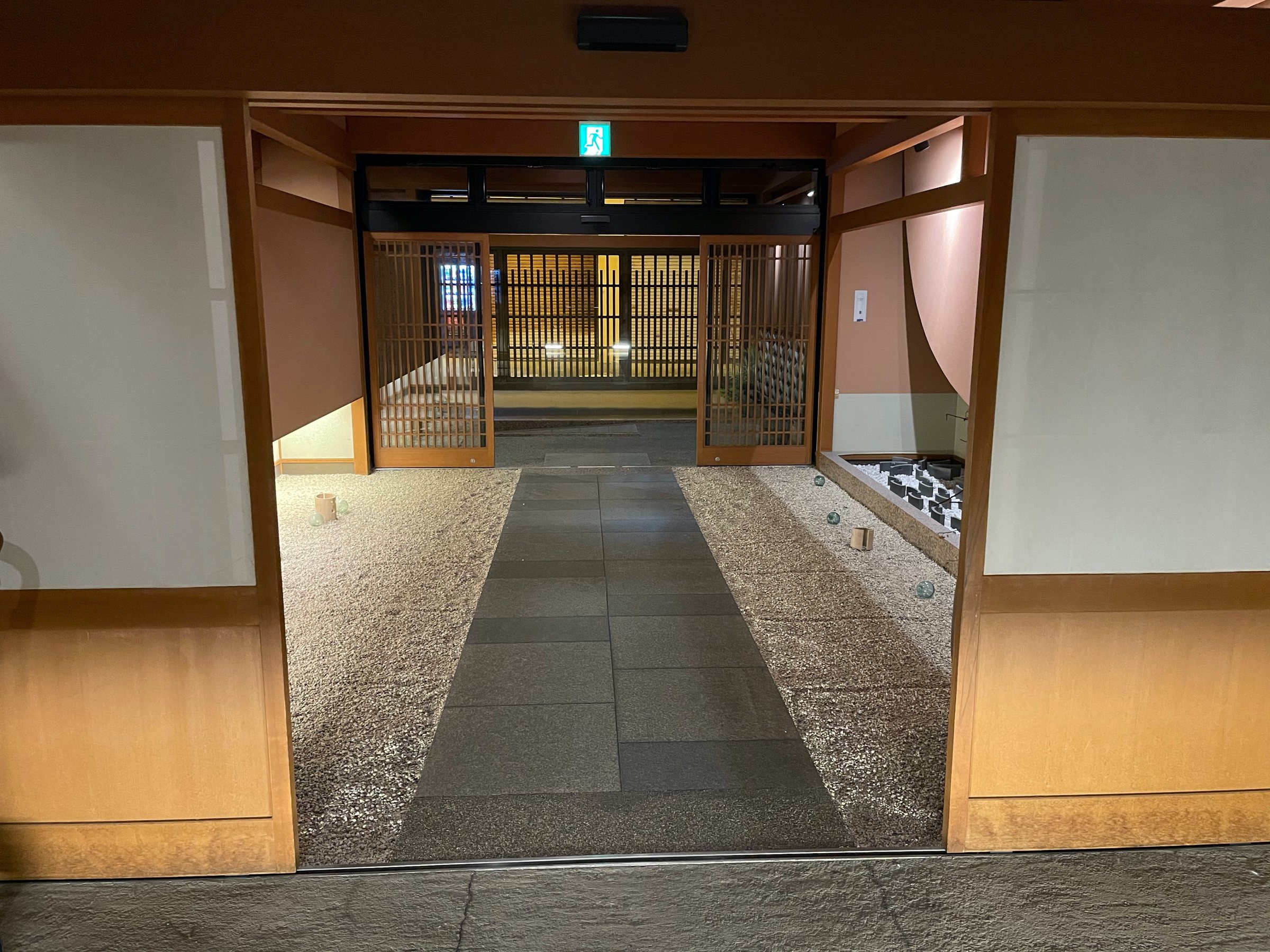
Drive far enough down the Izu Peninsula and the sea opens out in front of you, all the way to the horizon. Facing that endless expanse stands Senoumi, an imposing ryokan at Inatori Onsen. The moment our car drew up at the entrance, the banto, the ryokan’s head porter, was there to meet us; we handed over the keys, our luggage was carried in at once, and check-in went without a hitch.
The name, we learned, refers to an undersea hill, a rise on the ocean floor. It set the tone for the day, which we spent as though we had come to visit the place where the fish live.
Tatami underfoot, champagne in hand
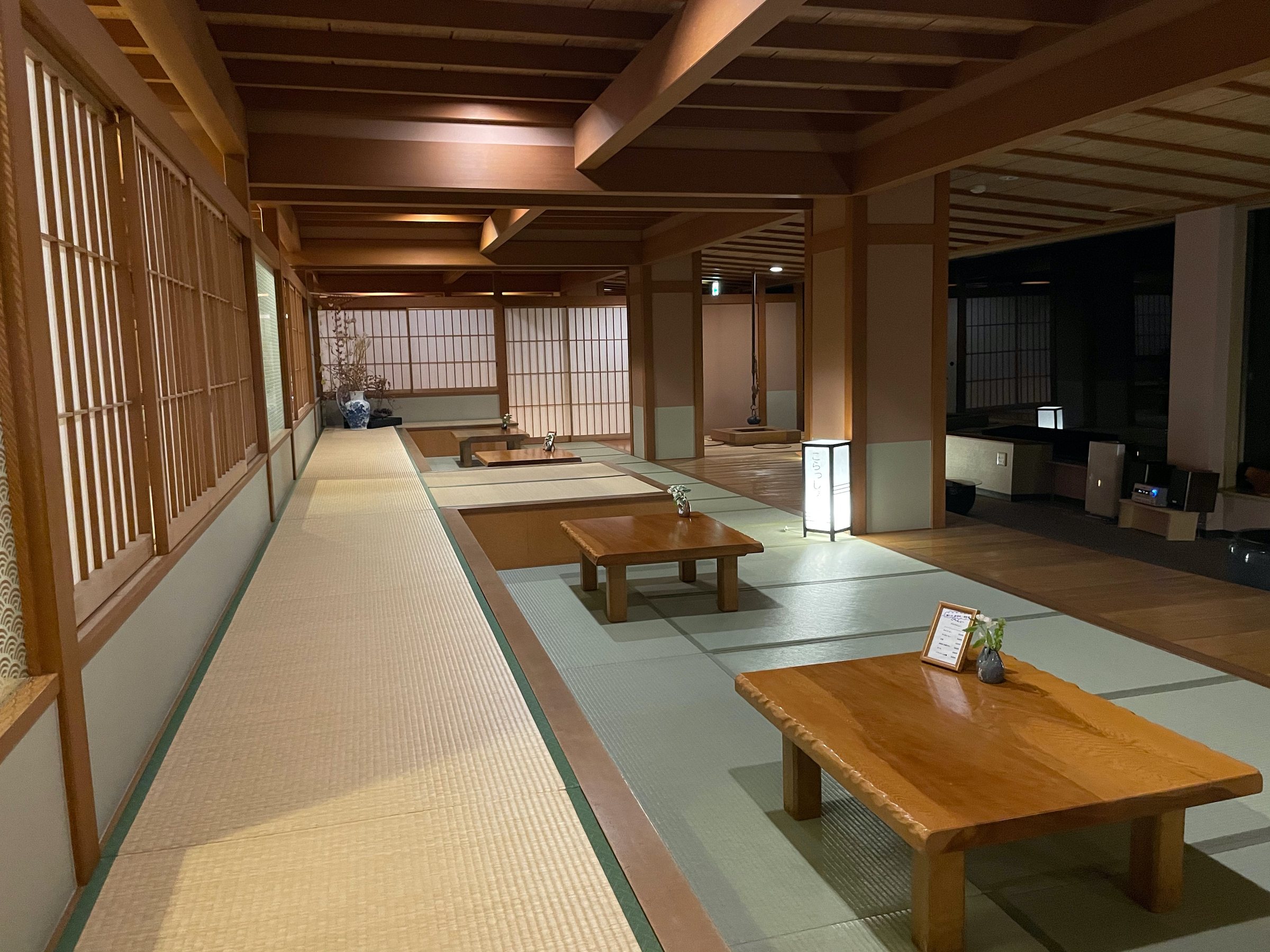
The spacious lobby doubles as a lounge, and it is laid with tatami, a pleasure underfoot when you are barefoot.
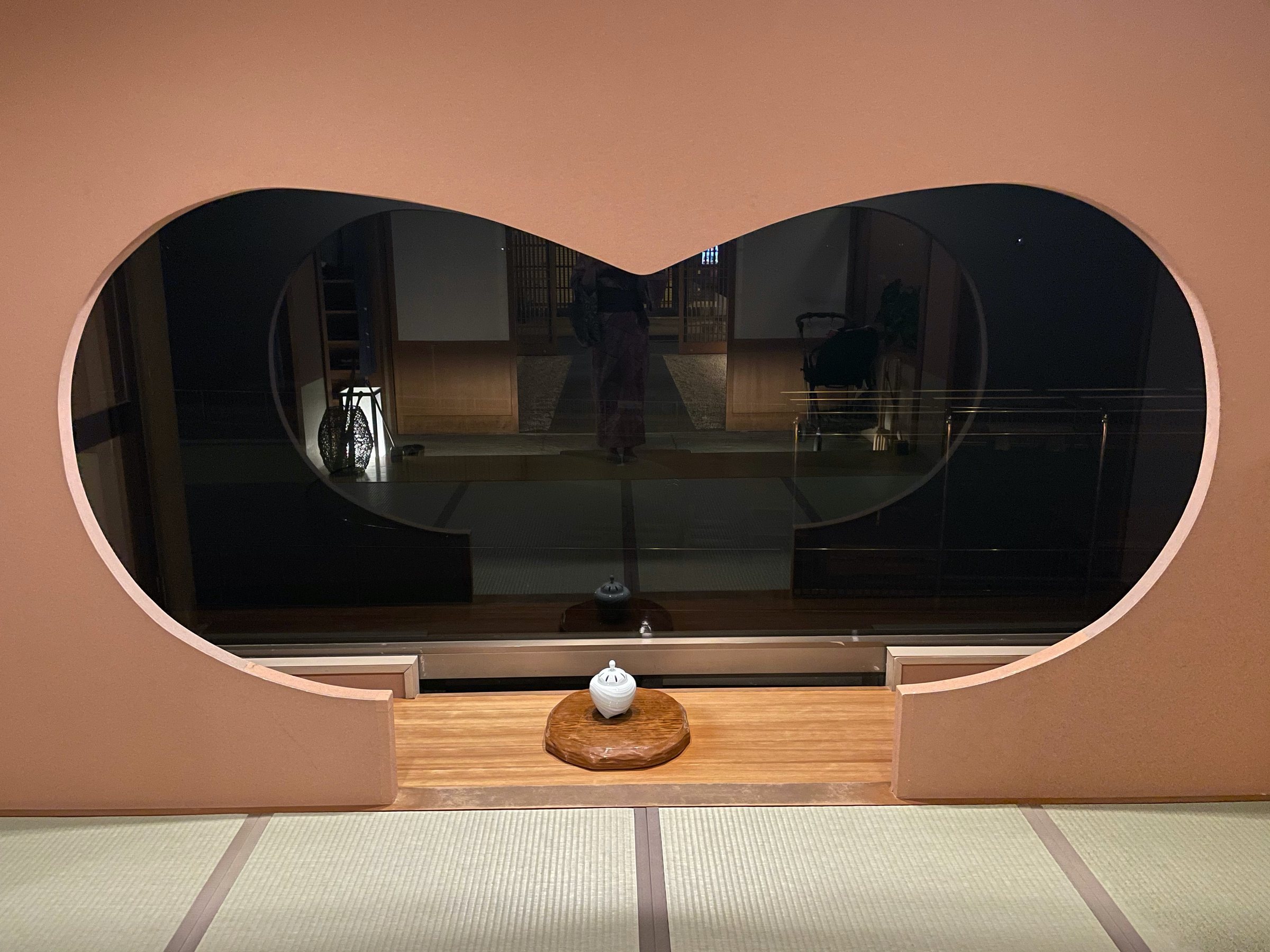
Once the formalities were done, we were welcomed with chilled champagne. Champagne and Japanese sweets so early in the day felt almost too indulgent.
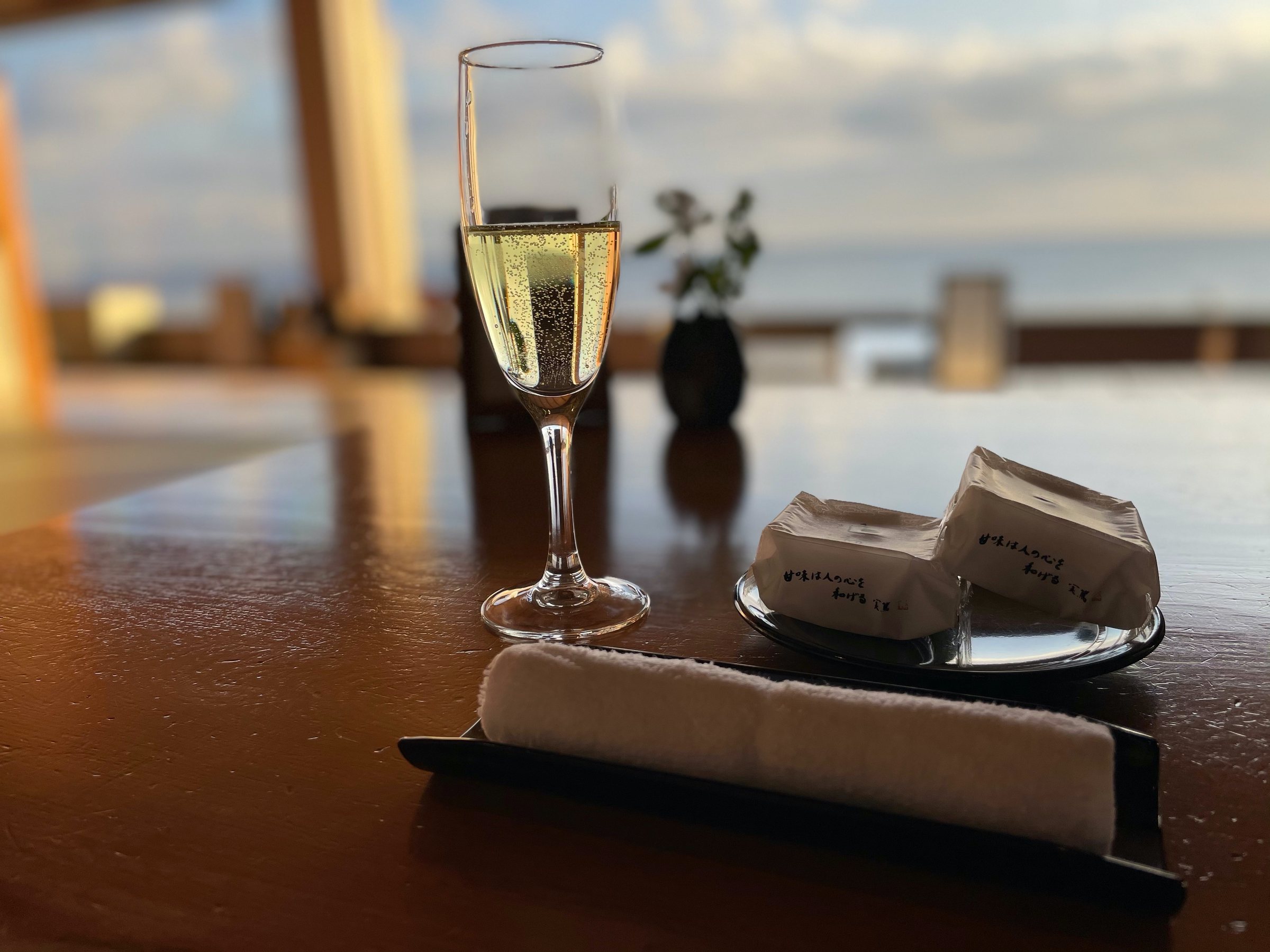
A panorama of ocean
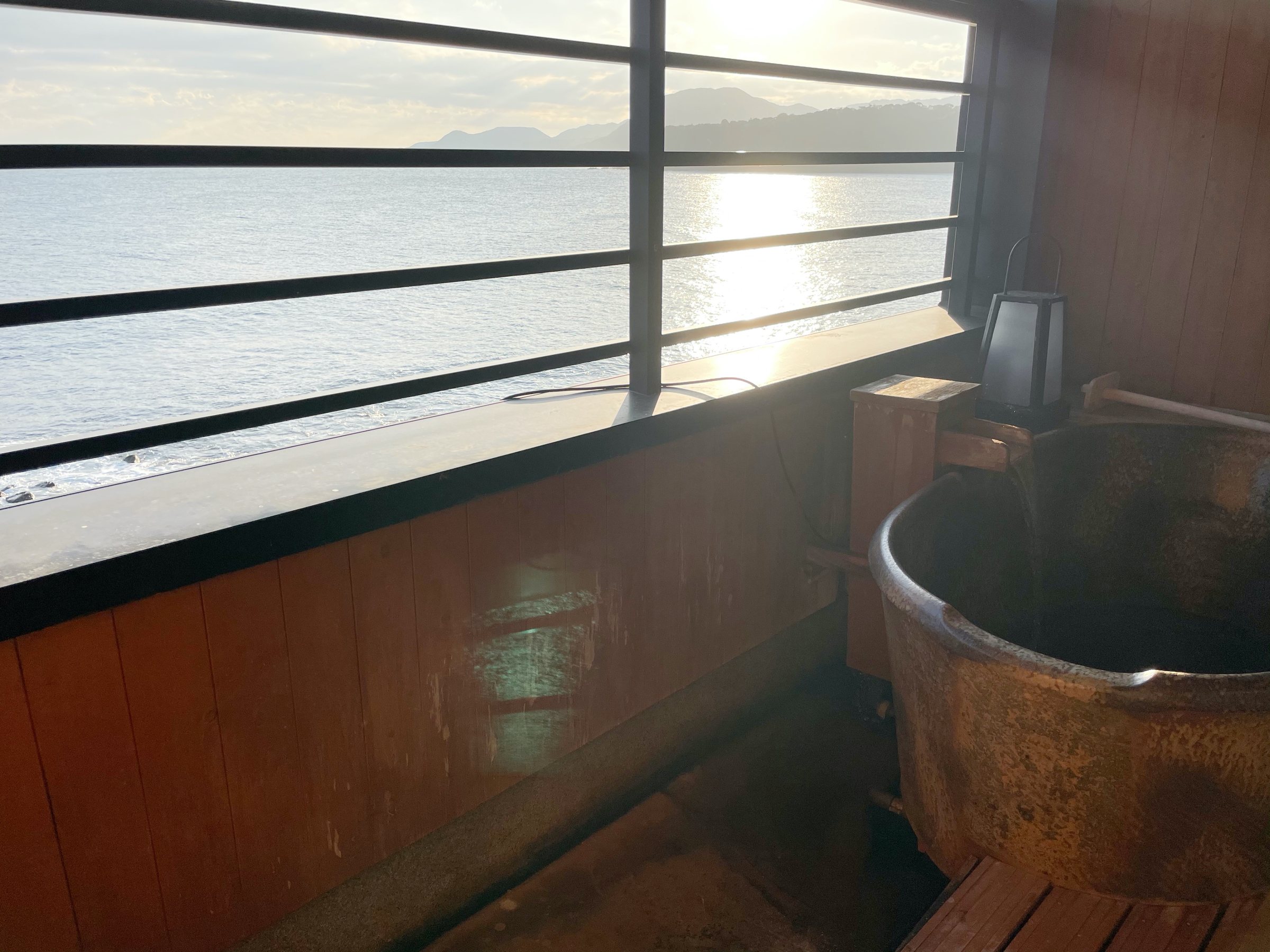
Our room was a standard Japanese-style room with its own open-air bath. From the bath and from every part of the room, the sea stretched out in a wide panorama, giving the whole space an open, airy feel.
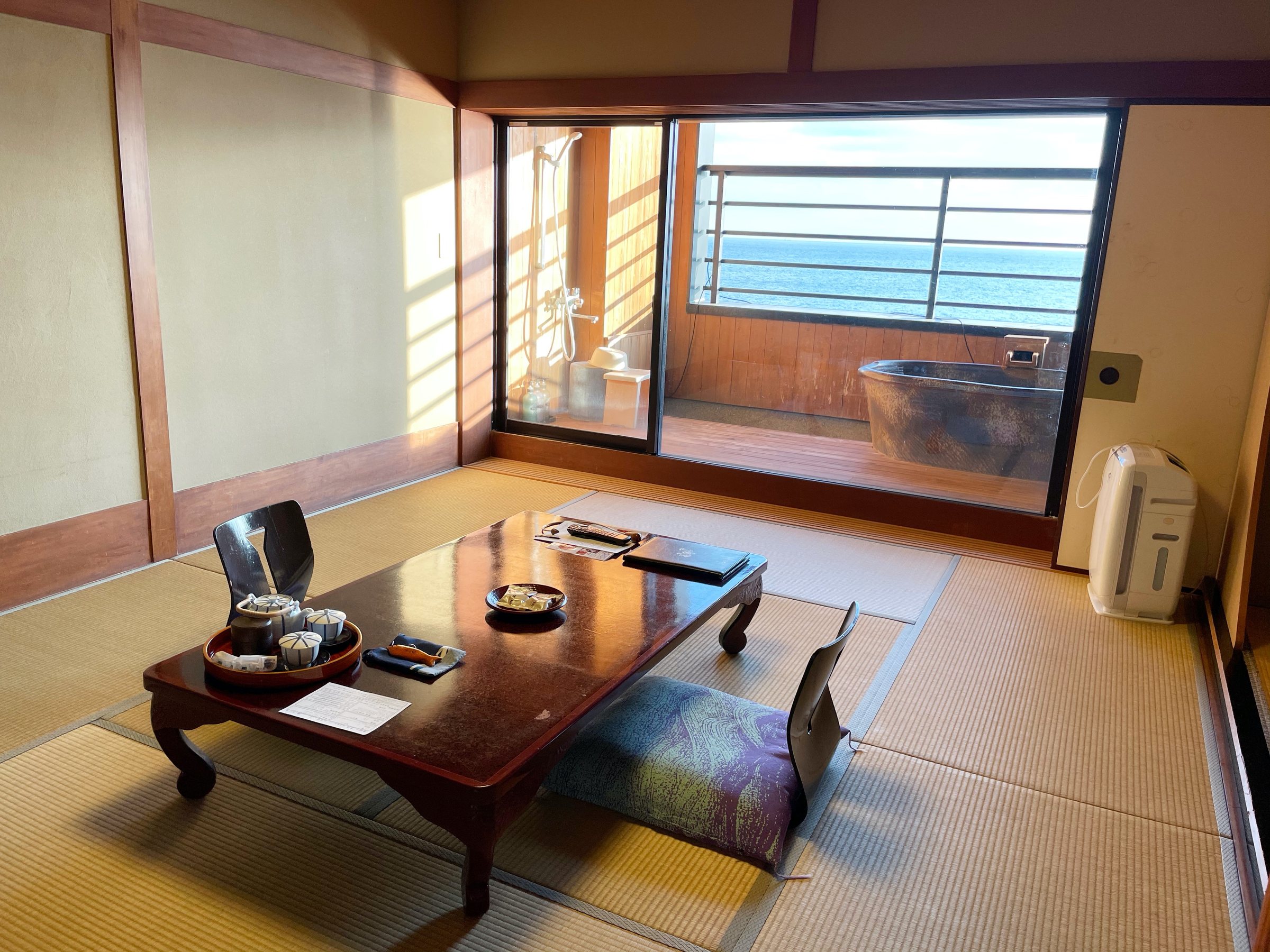
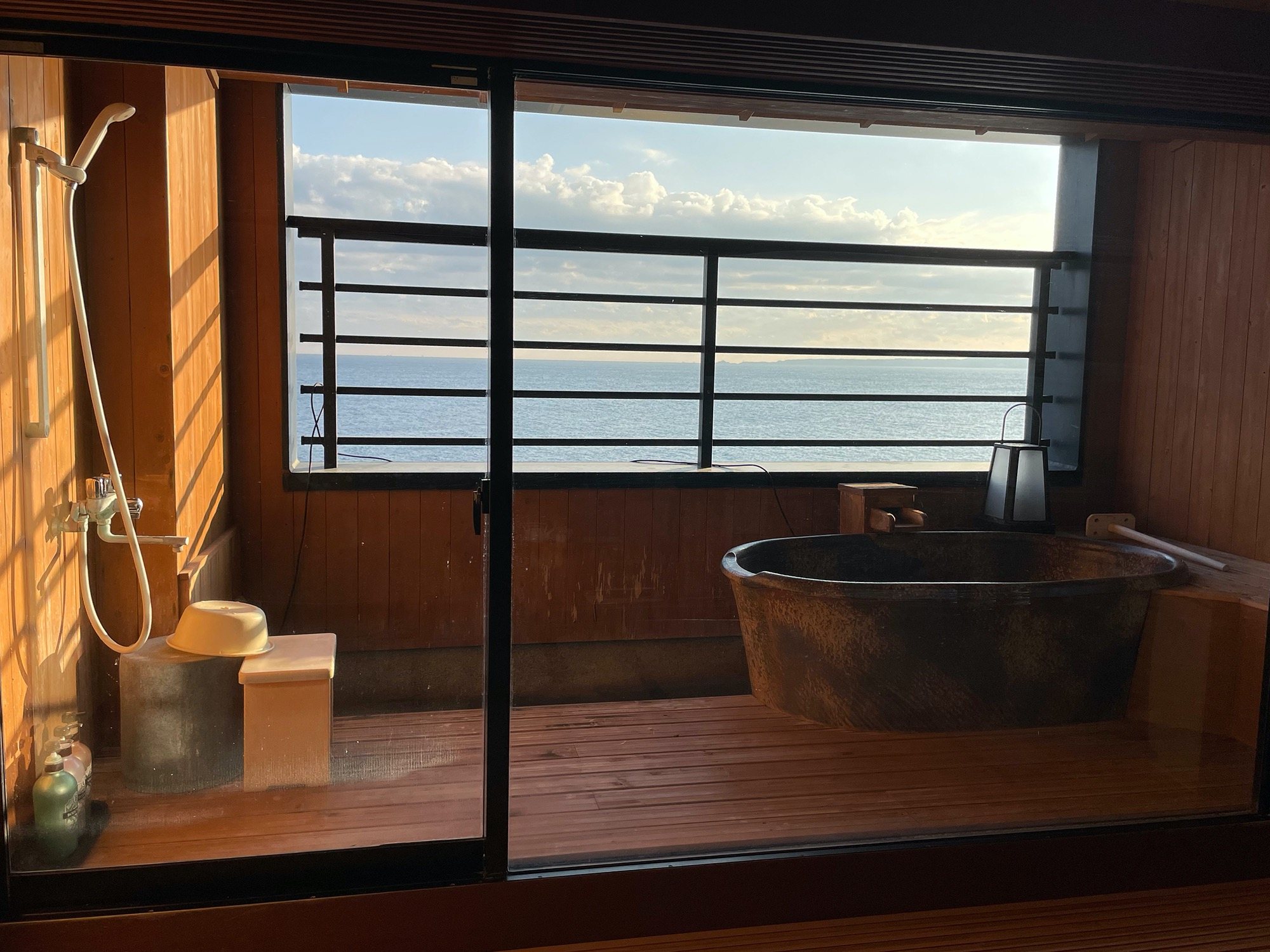
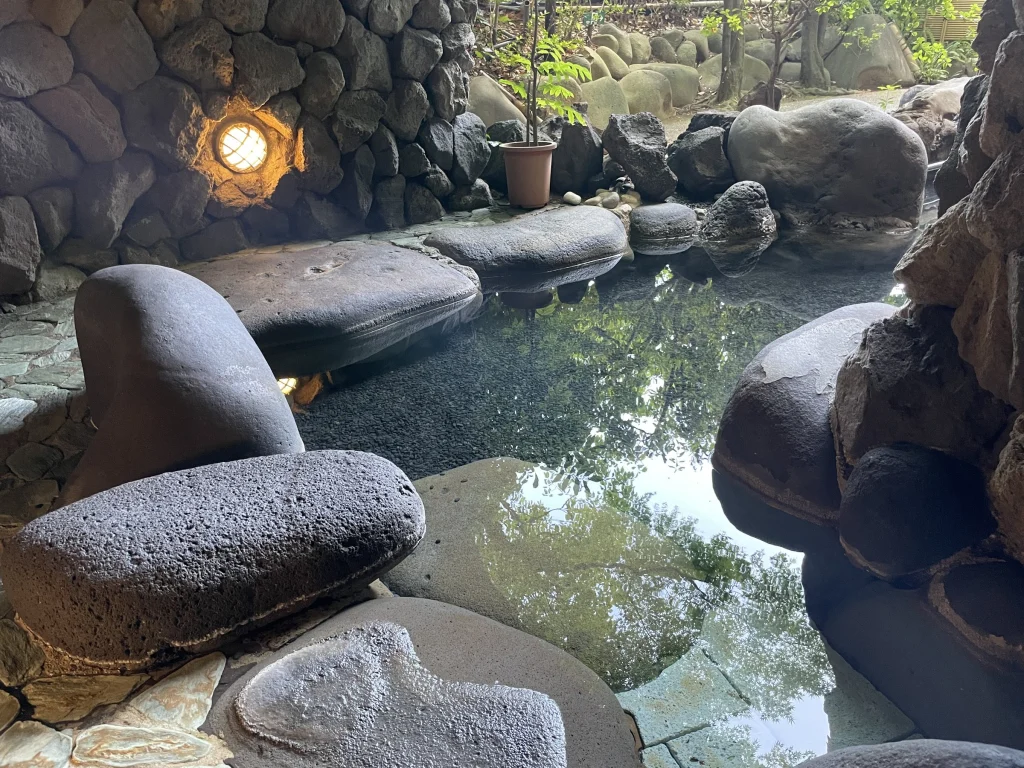
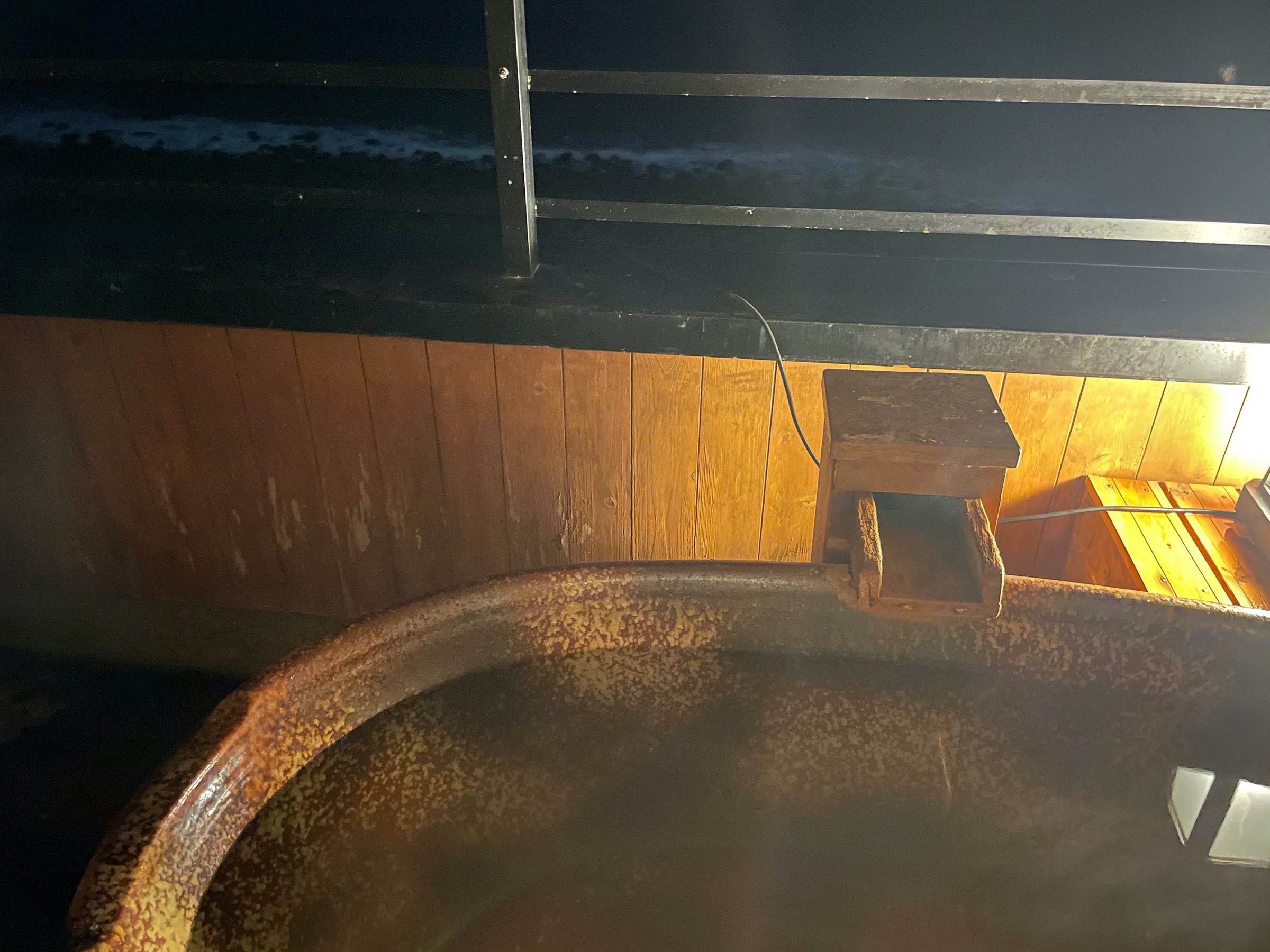
The in-room open-air bath comes fully equipped with a shower, a washing area and shampoo. Occasionally a terrace bath cannot be used with shampoo because of its plumbing, so this was reassuring. From the compact tub, made for one or two, we watched the Izu sea glare under the setting sun.
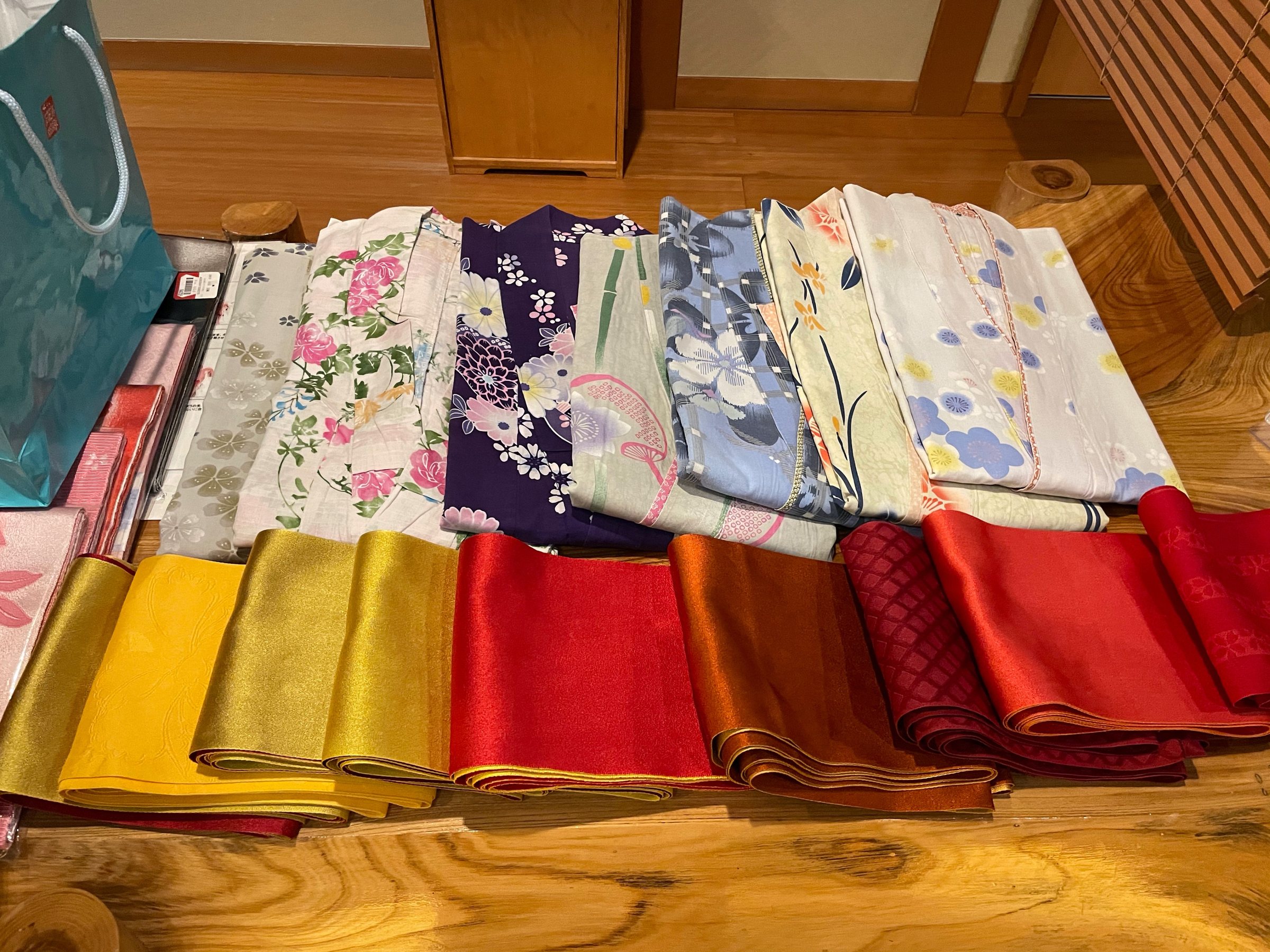
There is a thoughtful service for women guests, too: a choice of yukata, the light cotton robe worn at hot-spring ryokan, and hanhaba obi, a narrow half-width sash. Few ryokan offer the latter. Dressed like this, a stroll around the streets of Izu would be a pleasure.
Fire, shell and spiny lobster
We booked dinner a little early that evening, eager to taste the cooking of Izu, a treasure house of seafood. It was served in a private dining room, and this was the menu.
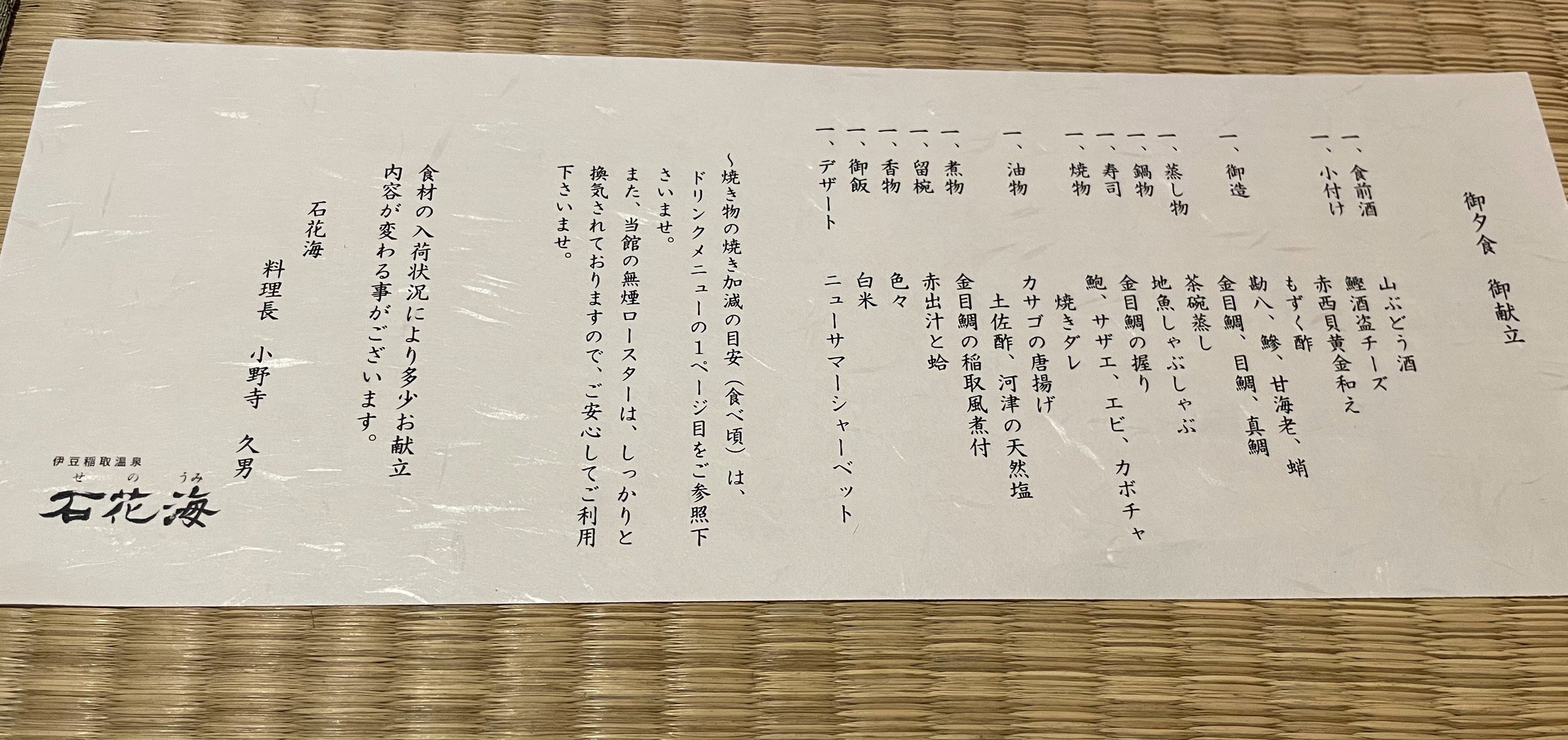
A grill in the middle of the table gave it real presence, but the most commanding presence of all was the seafood around it.
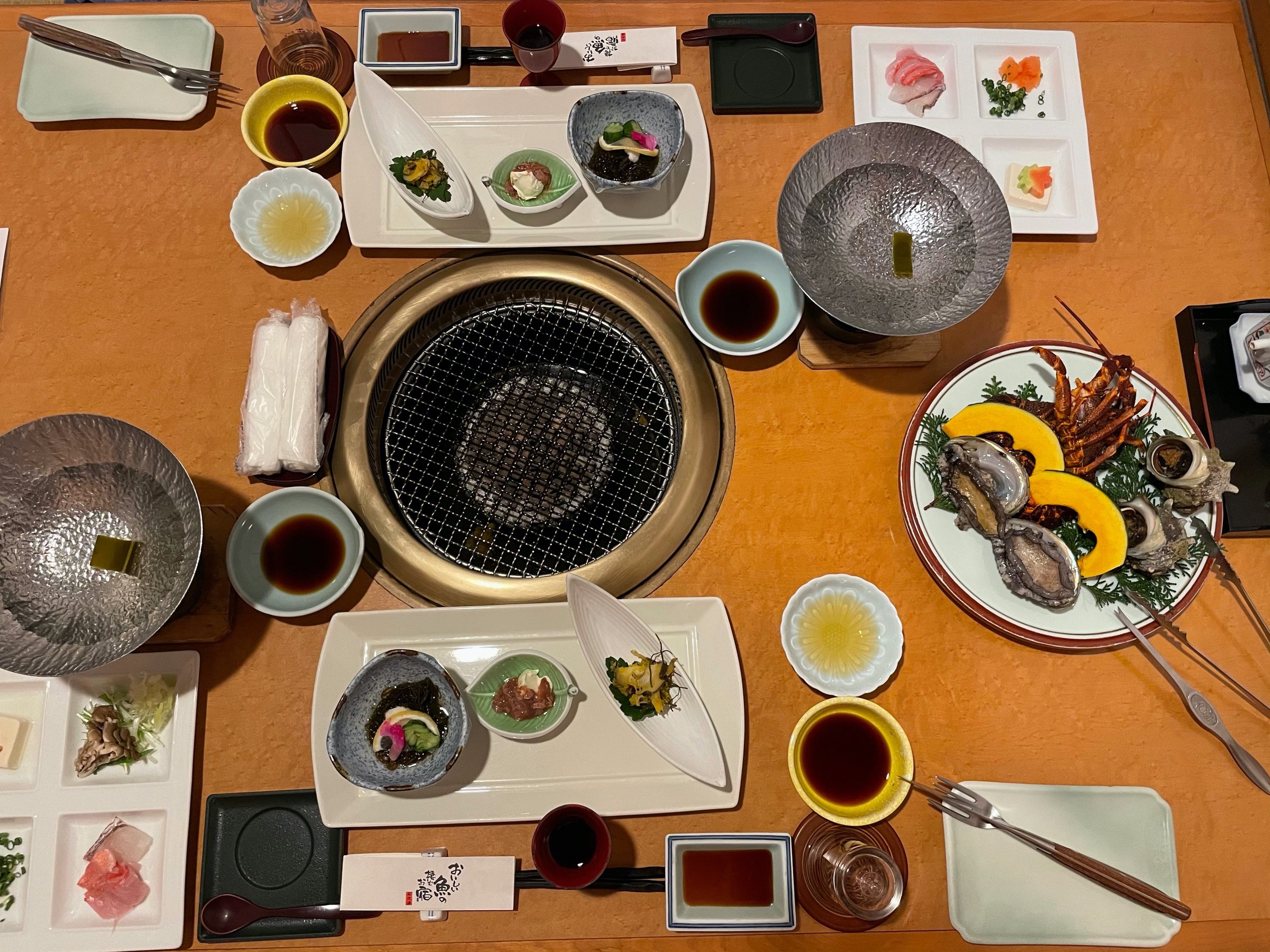
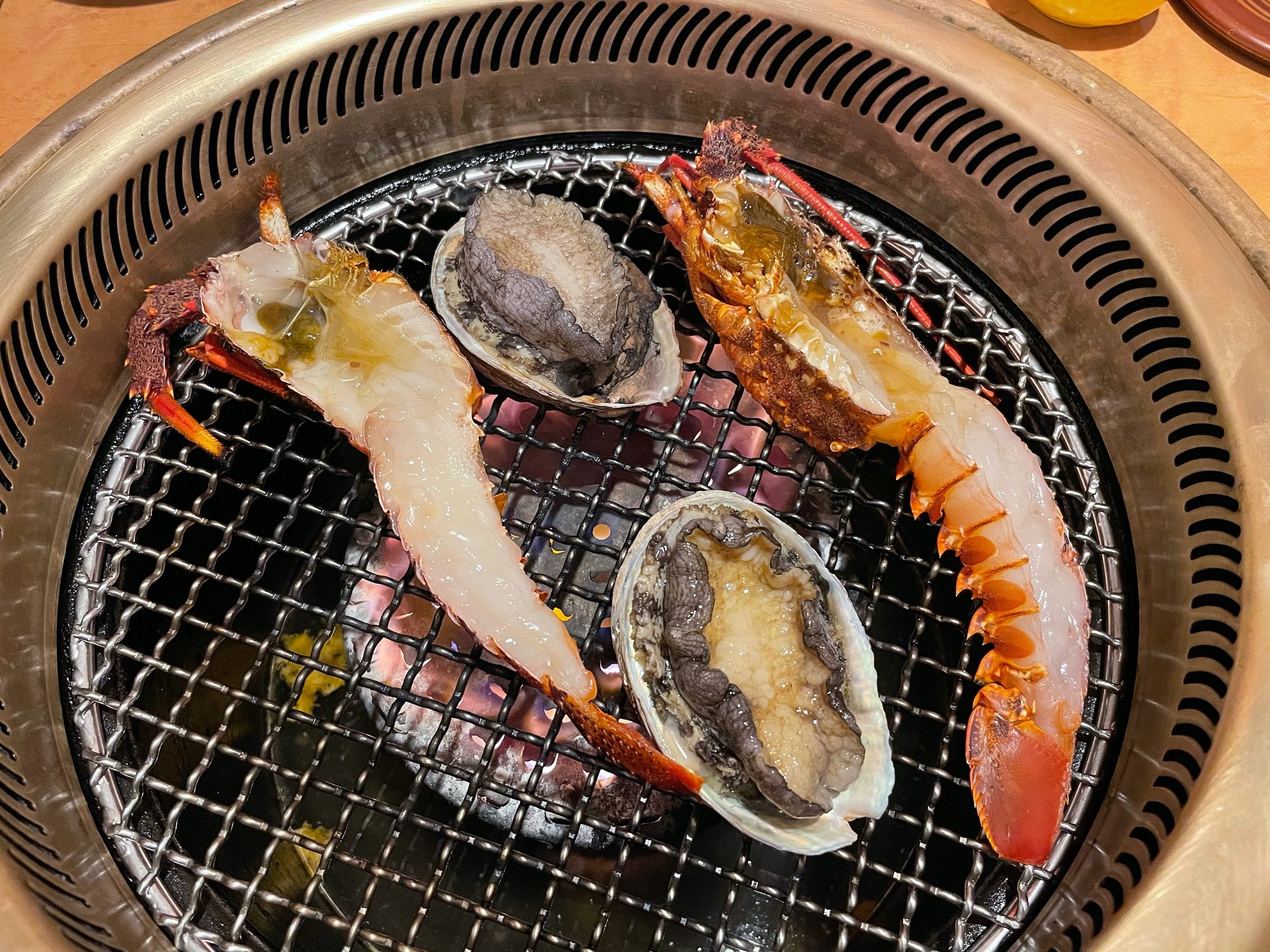
Magnificent abalone, ise-ebi (spiny lobster) and sazae (turban shell) were piled up generously.
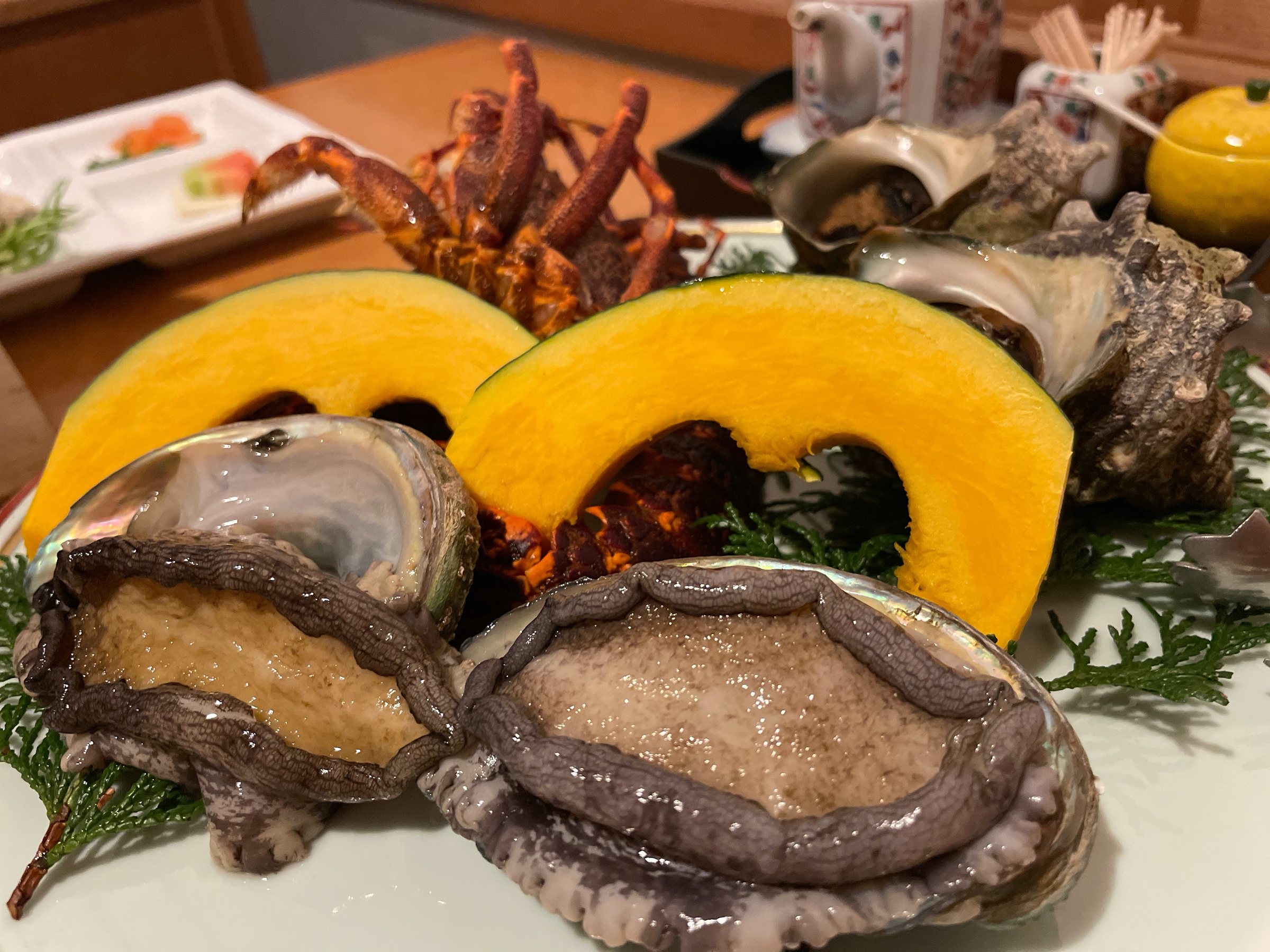
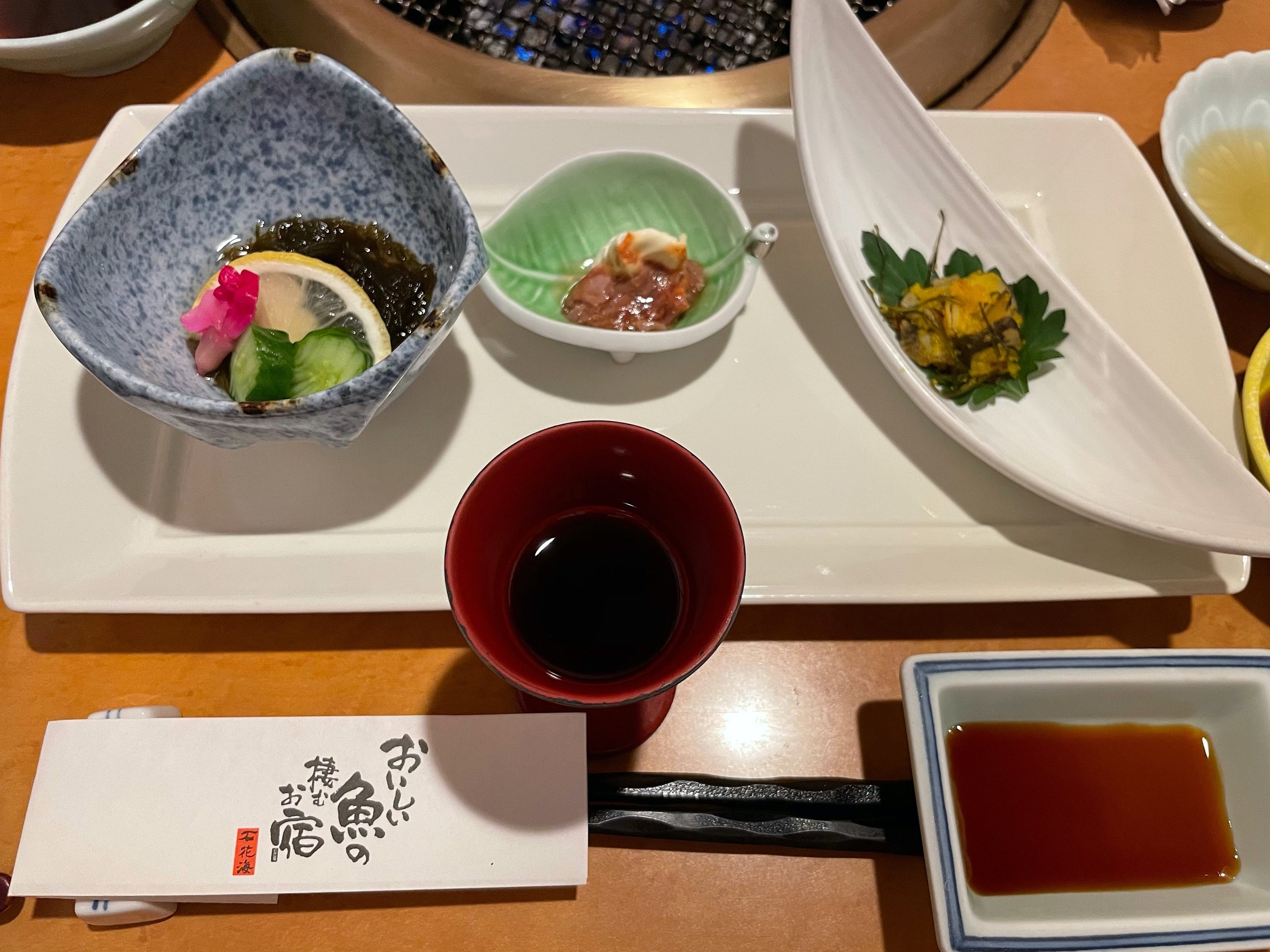
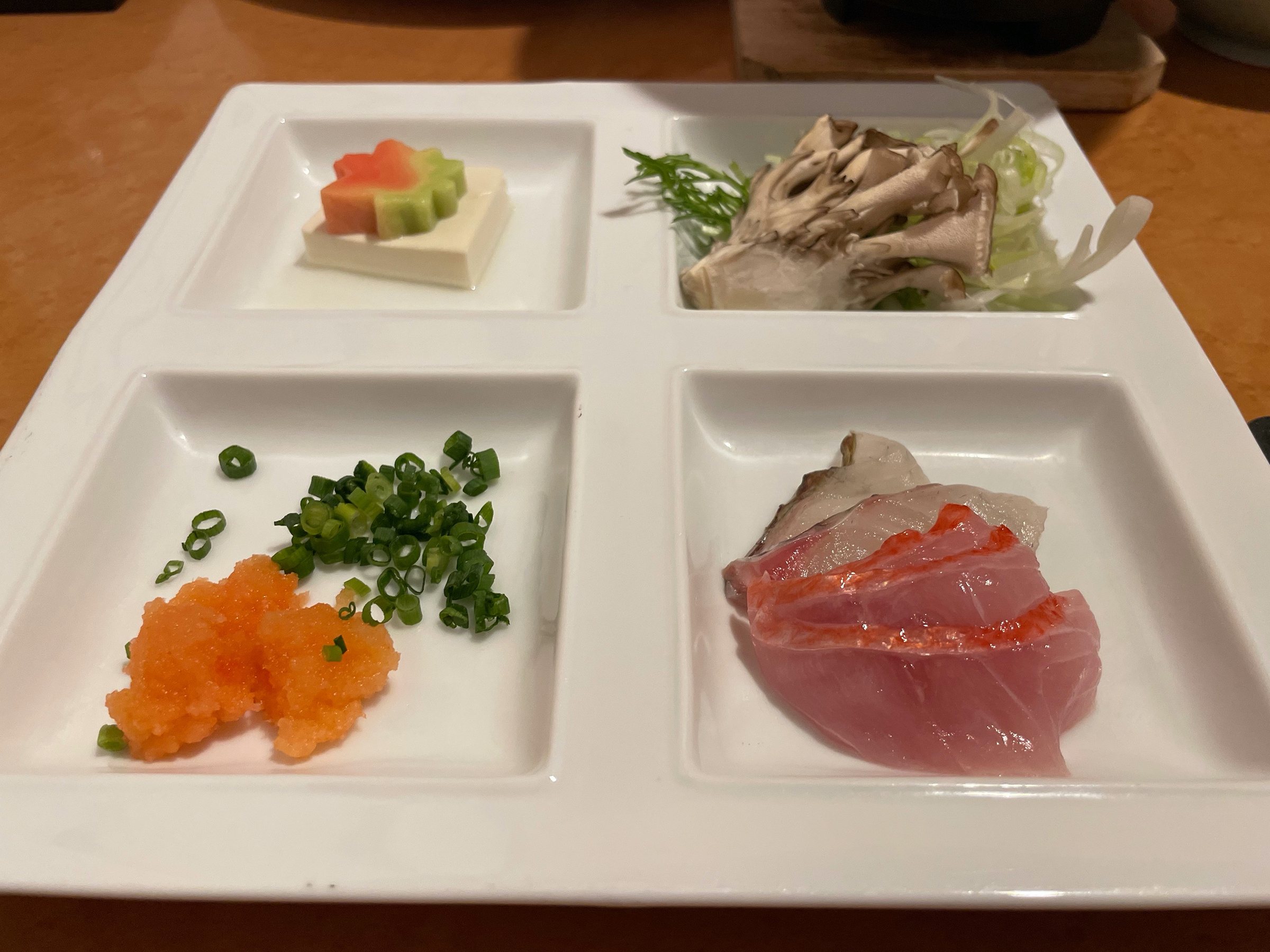
Picking at small dishes that would also go well with sake, we set about the grilling.
Simply grilling the seafood ourselves made the evening feel different from the everyday. As the heat took hold, the shellfish gave off an ever stronger smell of the shore, and we let them cook slowly.
Golden-eye, every way
There was a hot pot, too, for kinmedai (golden-eye snapper) shabu-shabu, the slices swished briefly through simmering broth. It made a welcome interlude, so the wait for the grill never felt long.
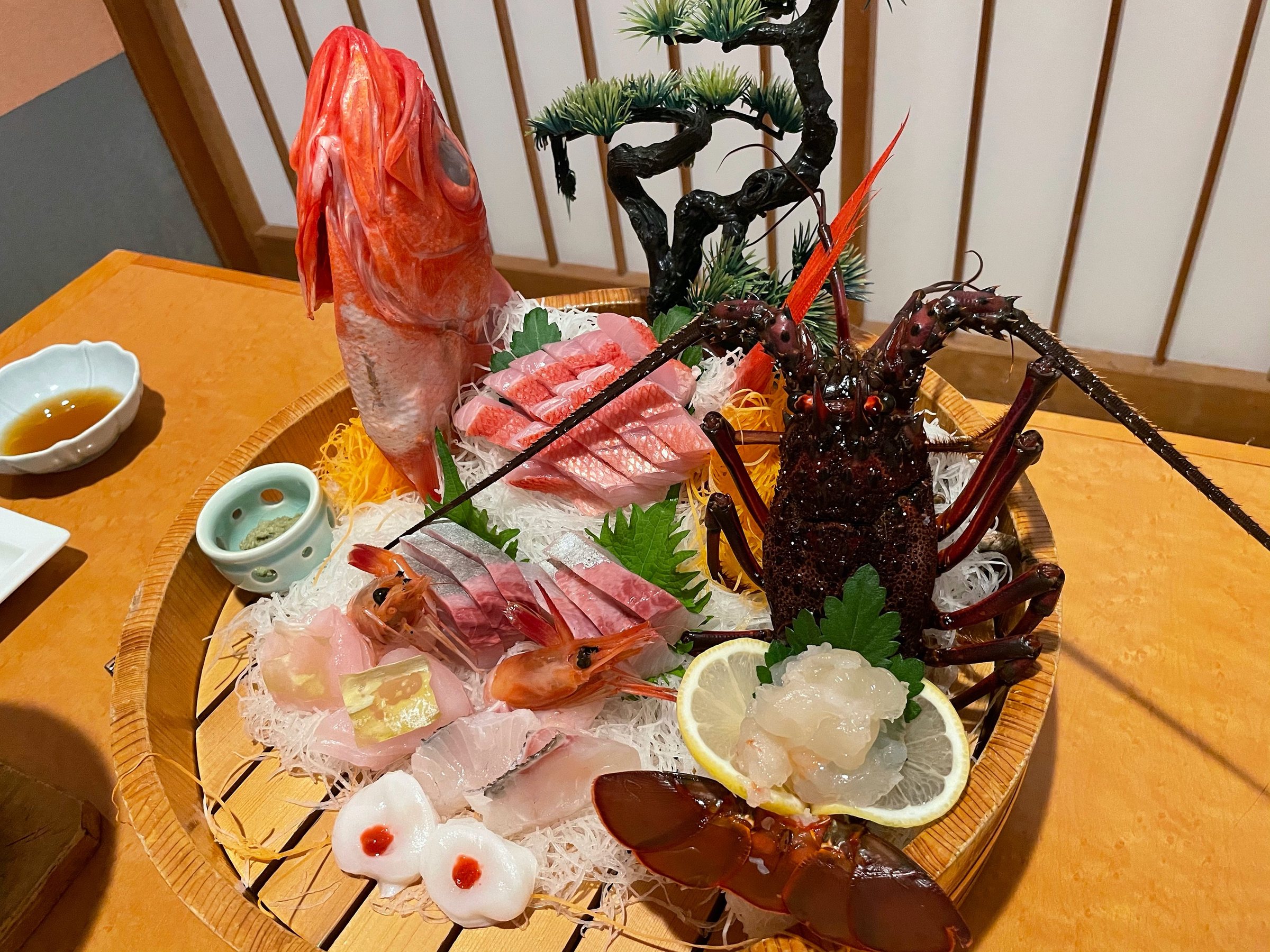
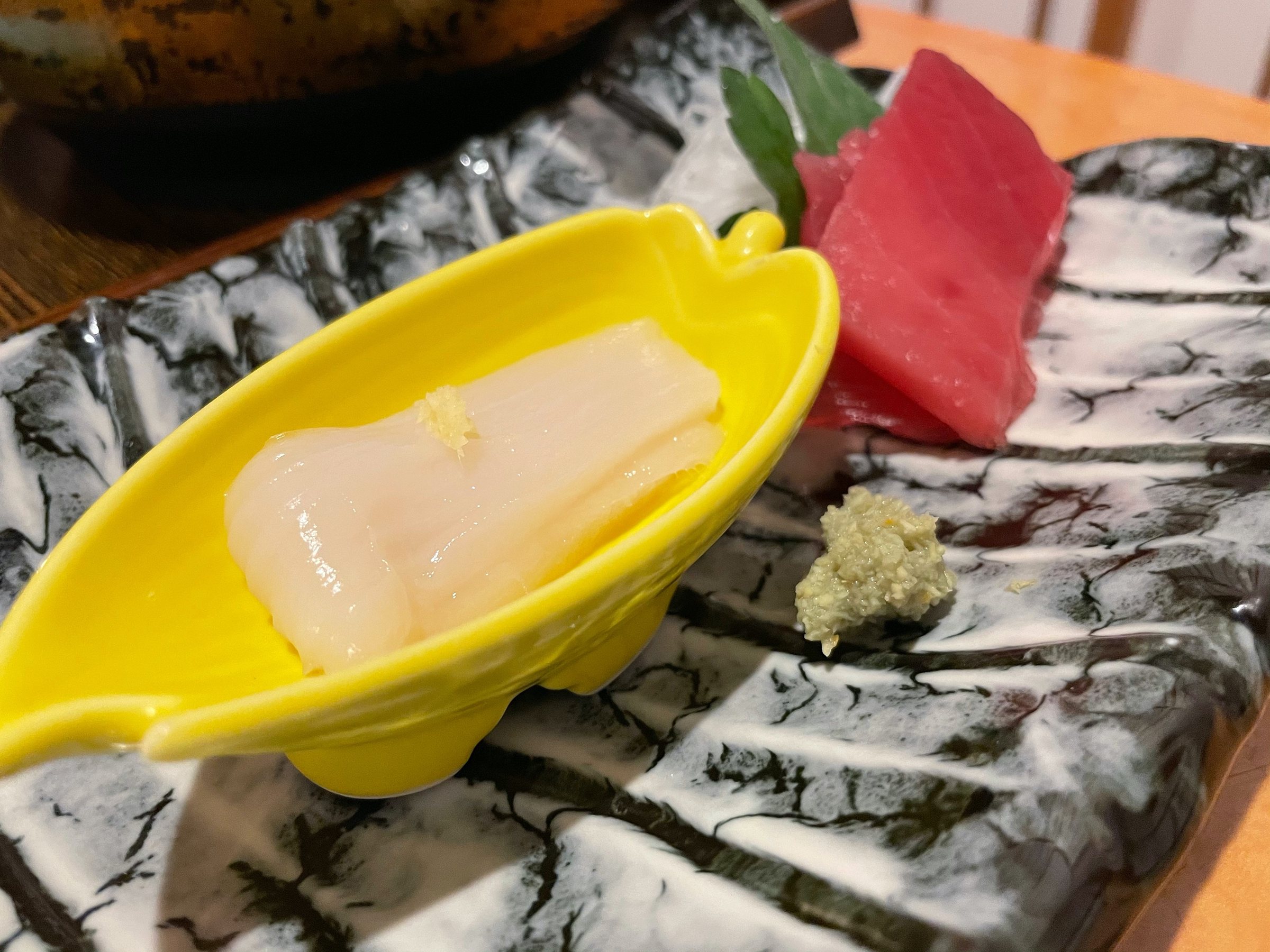
Meanwhile, a lavish boat of sashimi arrived. This is a ryokan that champions kinmedai, and the platter was as generous as it could possibly be; the size of the spiny lobster’s flesh astonished us. For a sashimi platter for two, the quantity showed a real spirit of generosity.
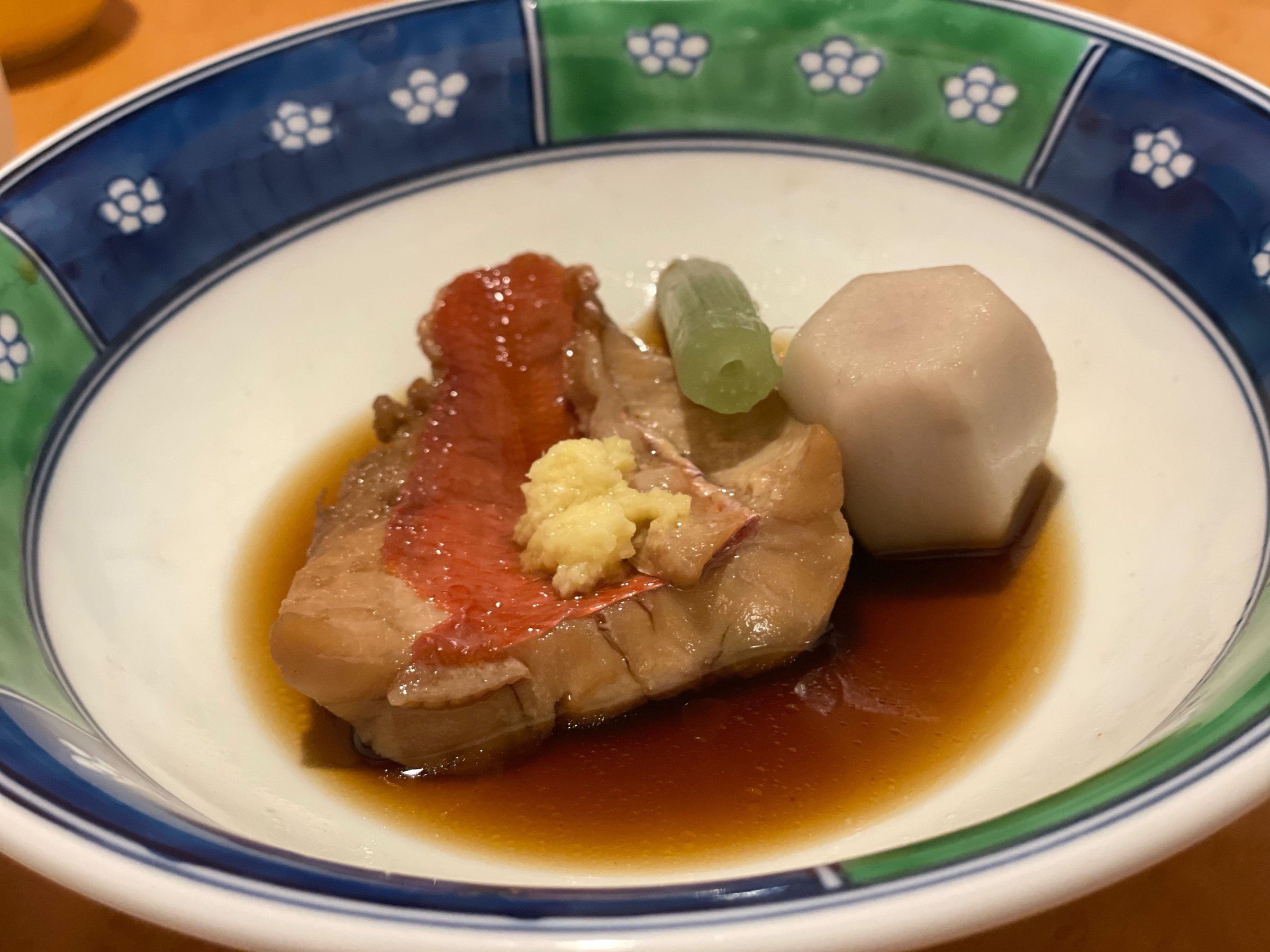
And as if that were not enough, there was kinmedai nitsuke, simmered in sweet soy. It is Izu’s classic local dish, and the ryokan could hardly leave it out.
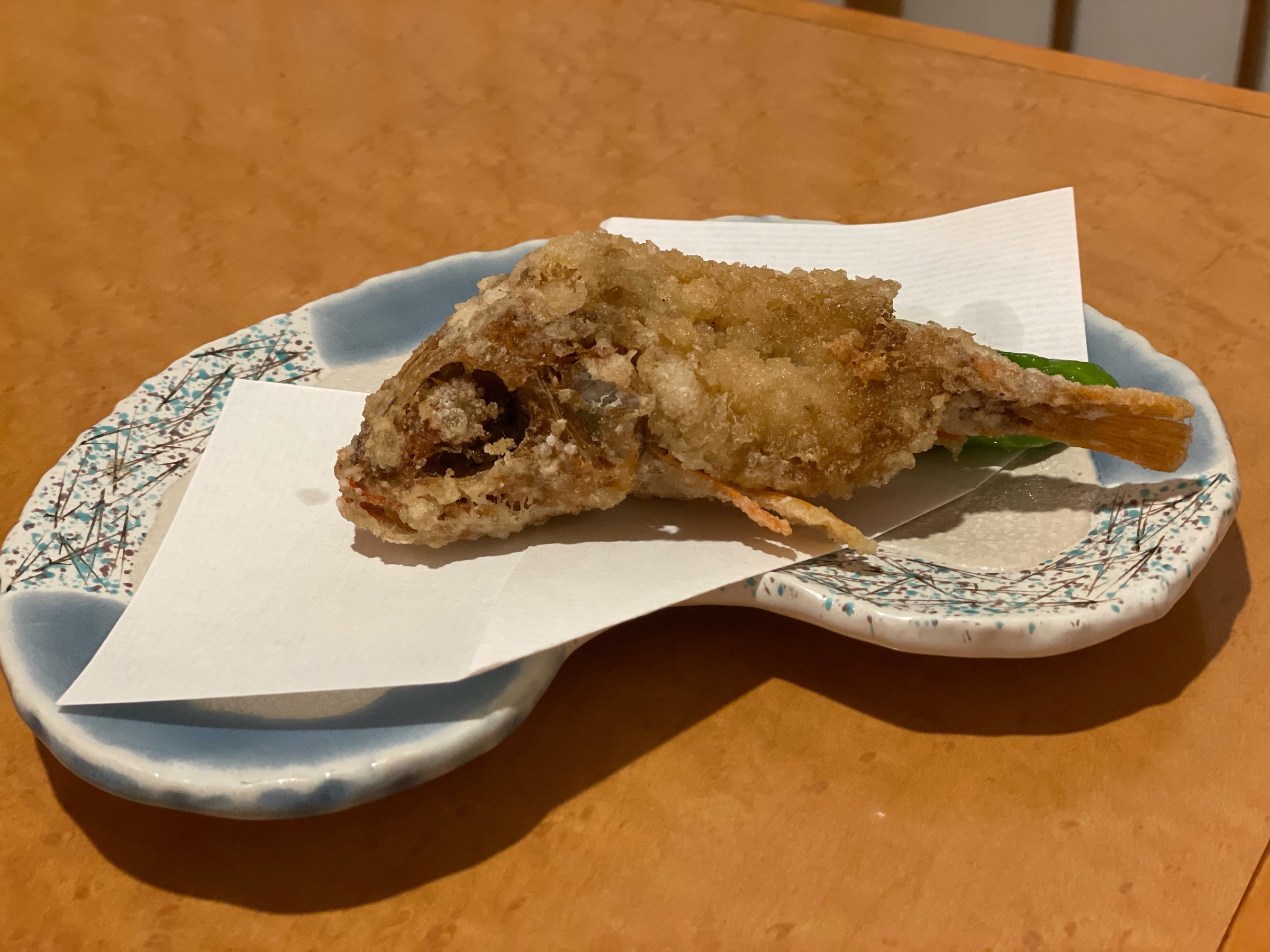
Then came kasago (scorpionfish) karaage. It is brought to the table straight from the fryer, so you can bite into it head and all. The flavor of the fish is concentrated, and it goes beautifully with the frying oil.
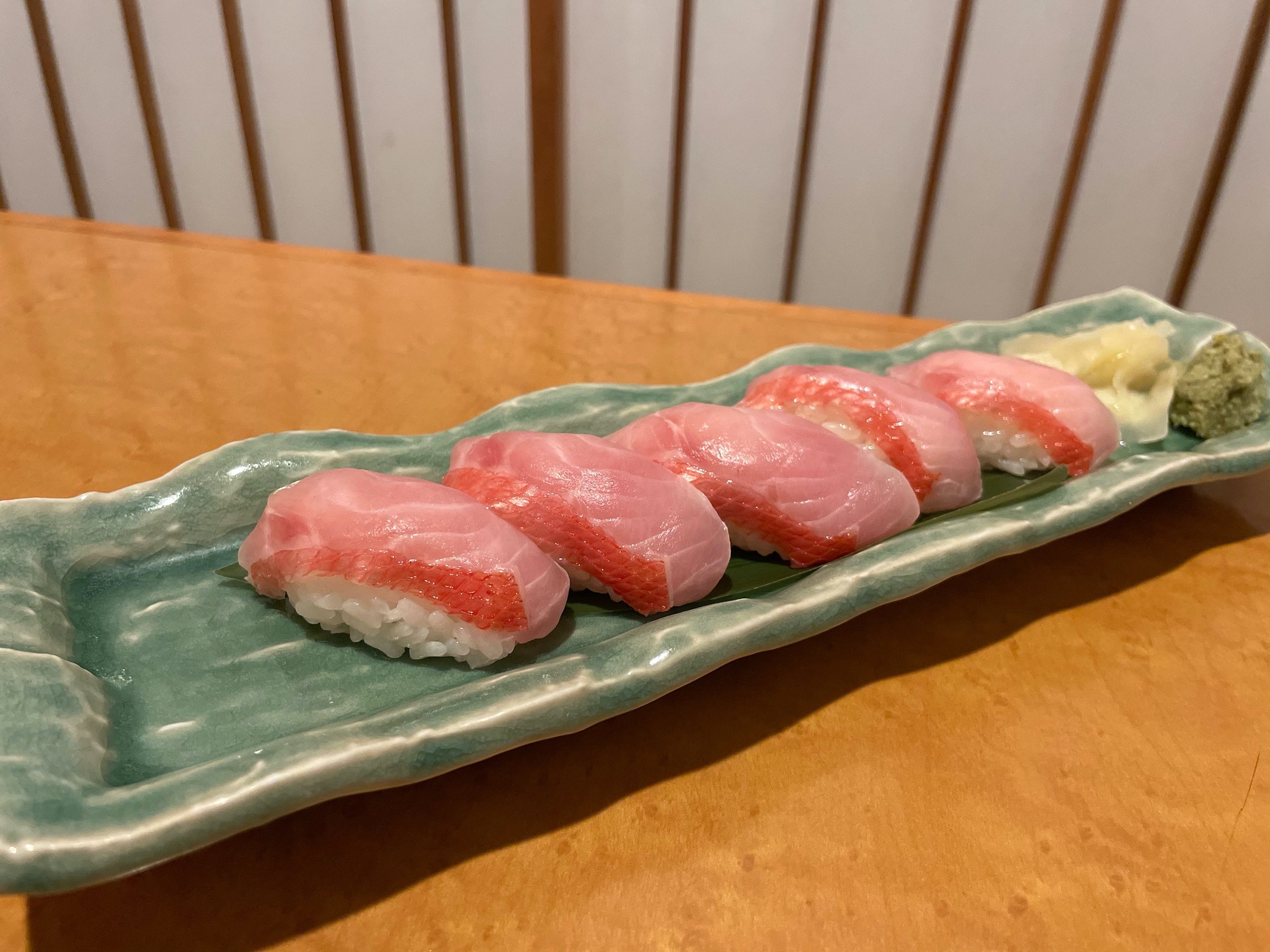
Remarkably, at this point came yet more kinmedai, this time as sushi. The pieces were so plump that just looking at them was filling, and what you see in the photograph is a single portion.
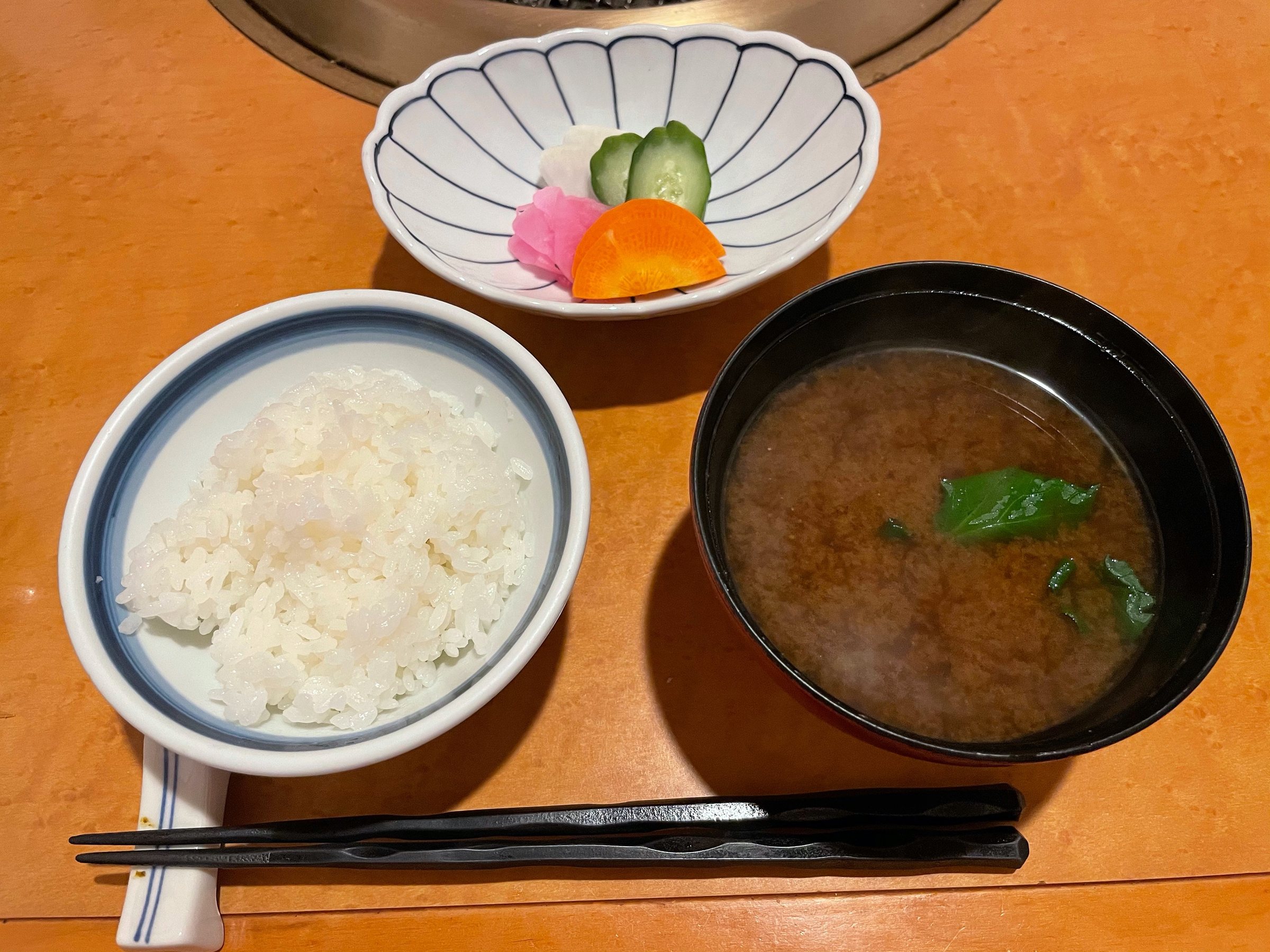
A final set of rice, soup and pickles is served to close, though with the sushi you can decline it. Equally, if you would rather eat rice with the sashimi, you could ask for it earlier.
We were overwhelmed by the parade of fish, one after another, led by kinmedai. Every one had sweet flesh and a firm texture. This is not sashimi that has been worked on and aged; it is fresh fish from the market, served boldly as it is.
A rooftop bath between sky and sea
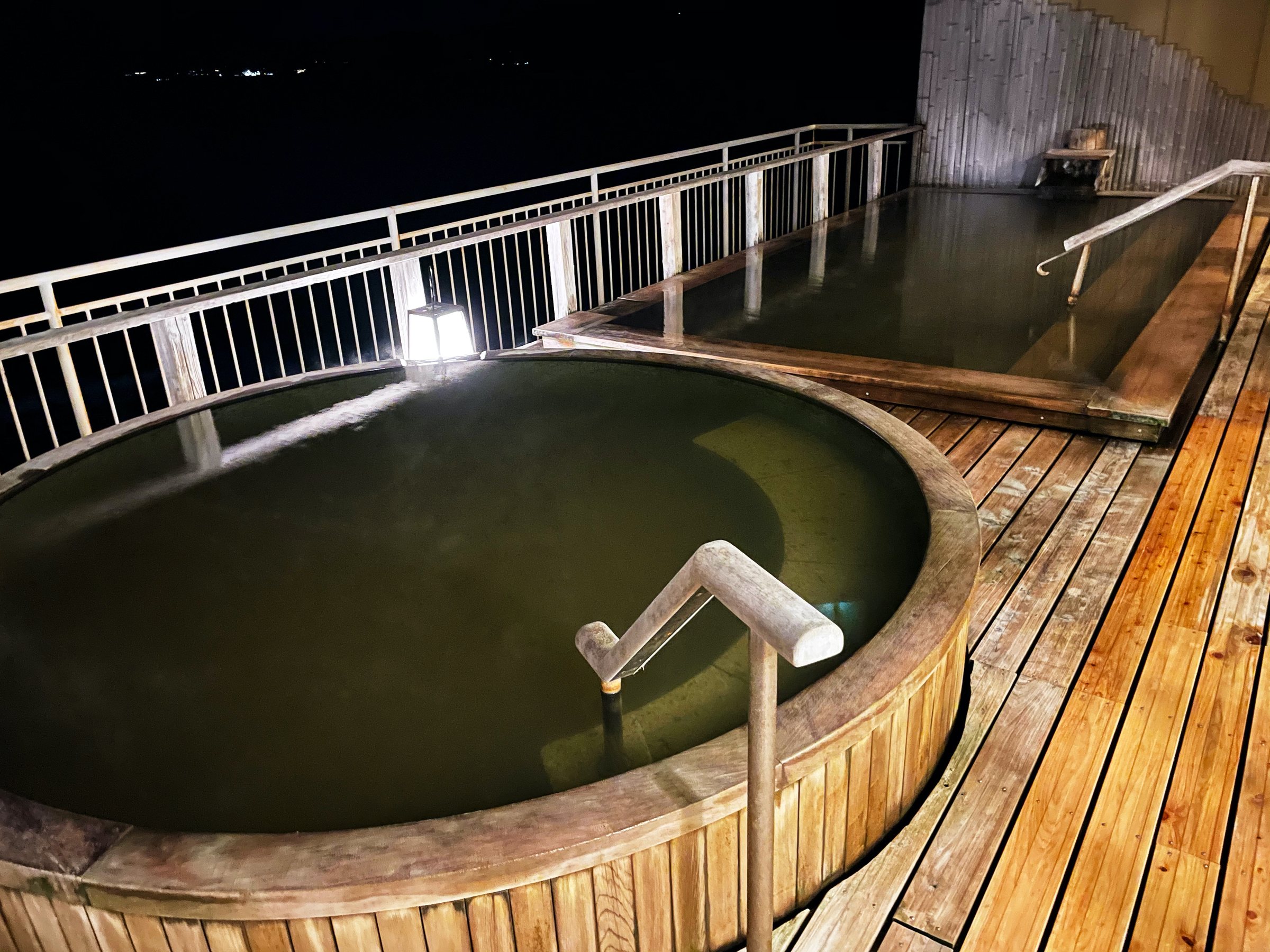
Thoroughly full, we headed to the main baths. Up on the roof, the night sky and the night sea merged into one. The baths are full of character, fed with tea-brown spring water that is gensen kakenagashi — flowing straight from the source and allowed to overflow. It is not especially hot, yet it seems to warm you from deep inside. In the sea breeze, we wanted to go in and out again and again. Touch a little of the water to your tongue and you really feel you have come to a seaside onsen.
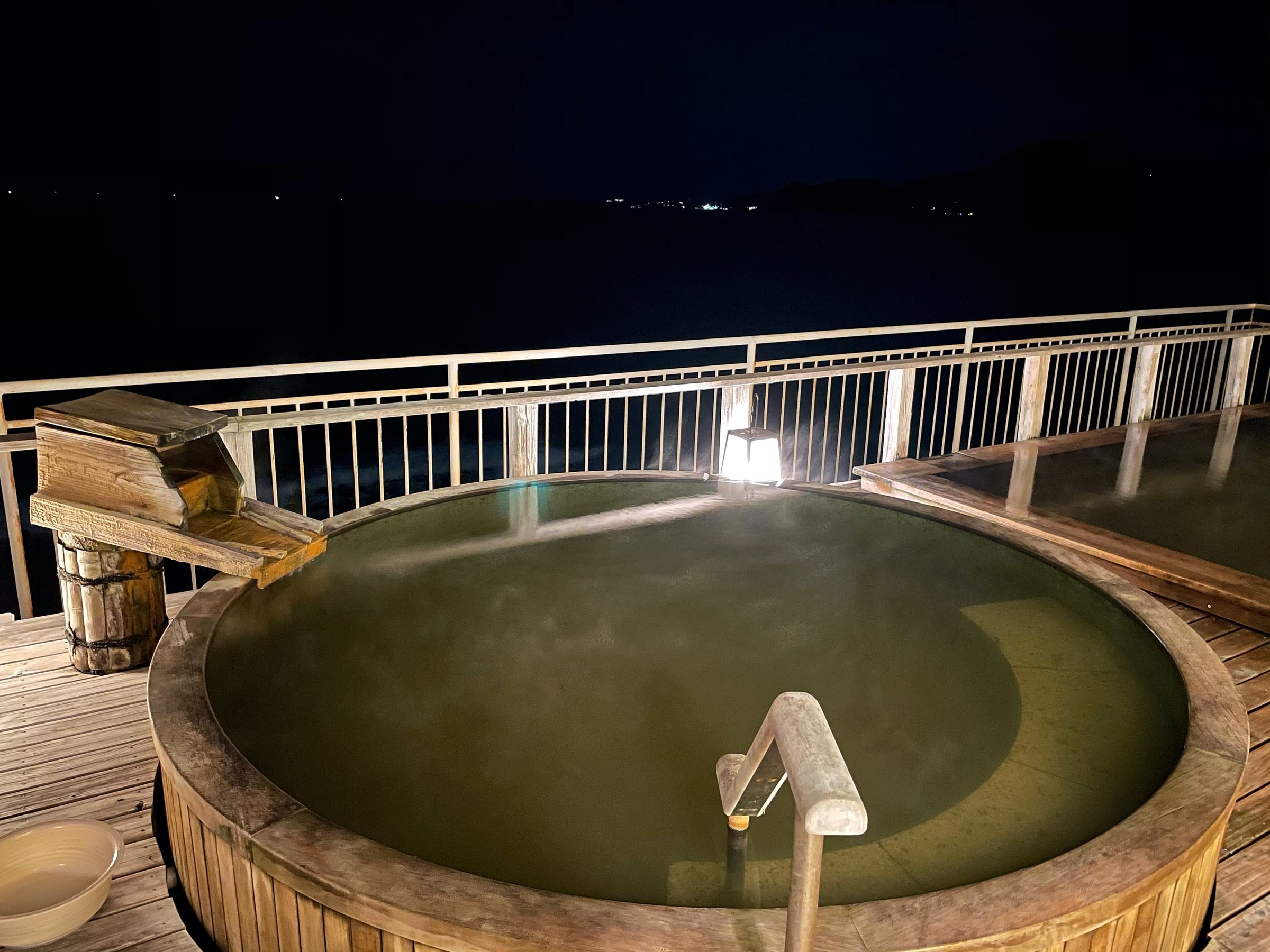
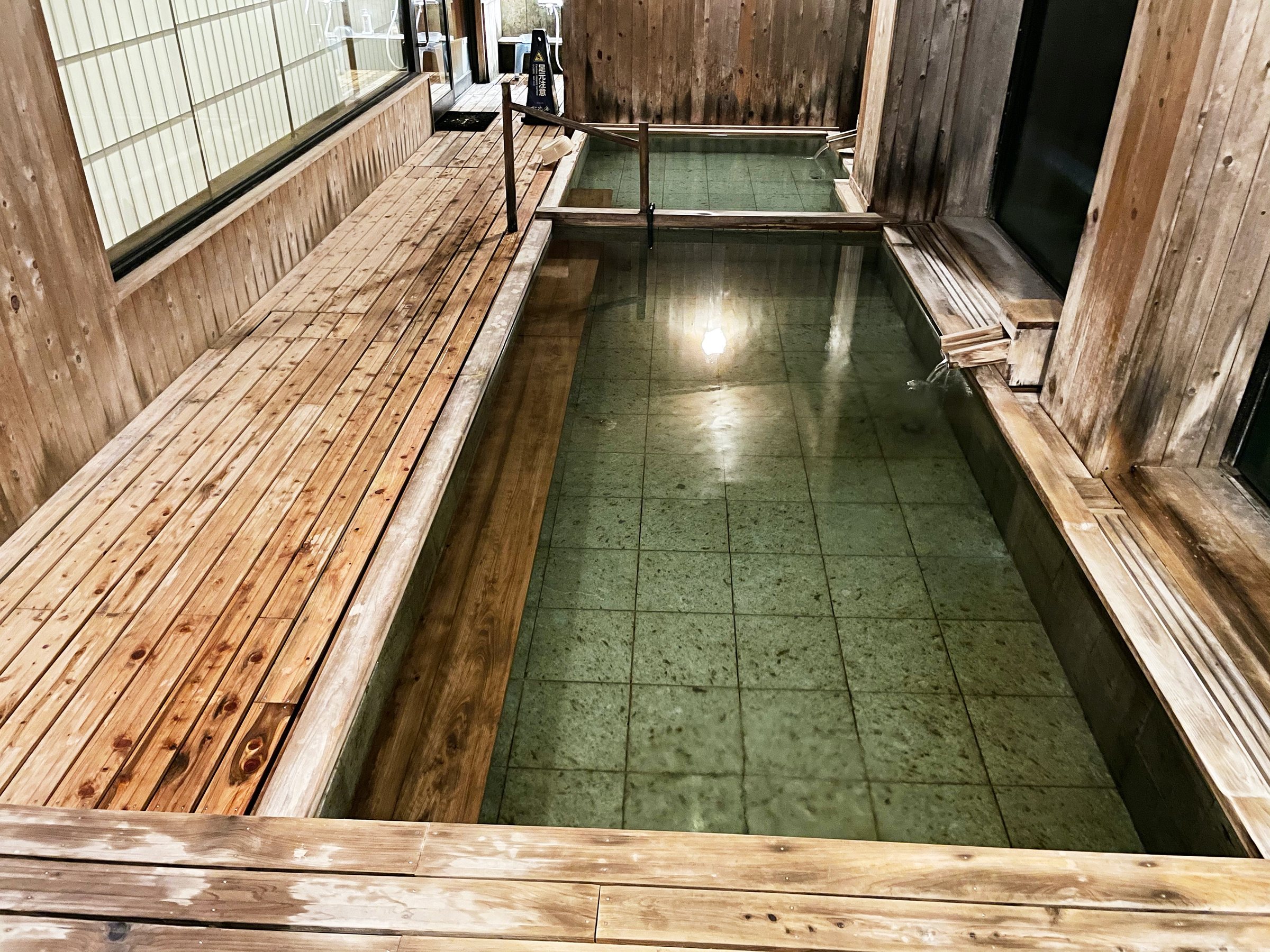
The curious thing about these baths is that their entrances are in different places, each with its own changing room, yet somehow the baths connect on the inside: an unusual piece of design.
Back in the room, we enjoyed the night sea once more from our own open-air bath. That it, too, is fed straight from the source is deeply satisfying. After so many soaks, we were ready for a good night’s sleep.
A fishing-town breakfast
The next morning brought breakfast.
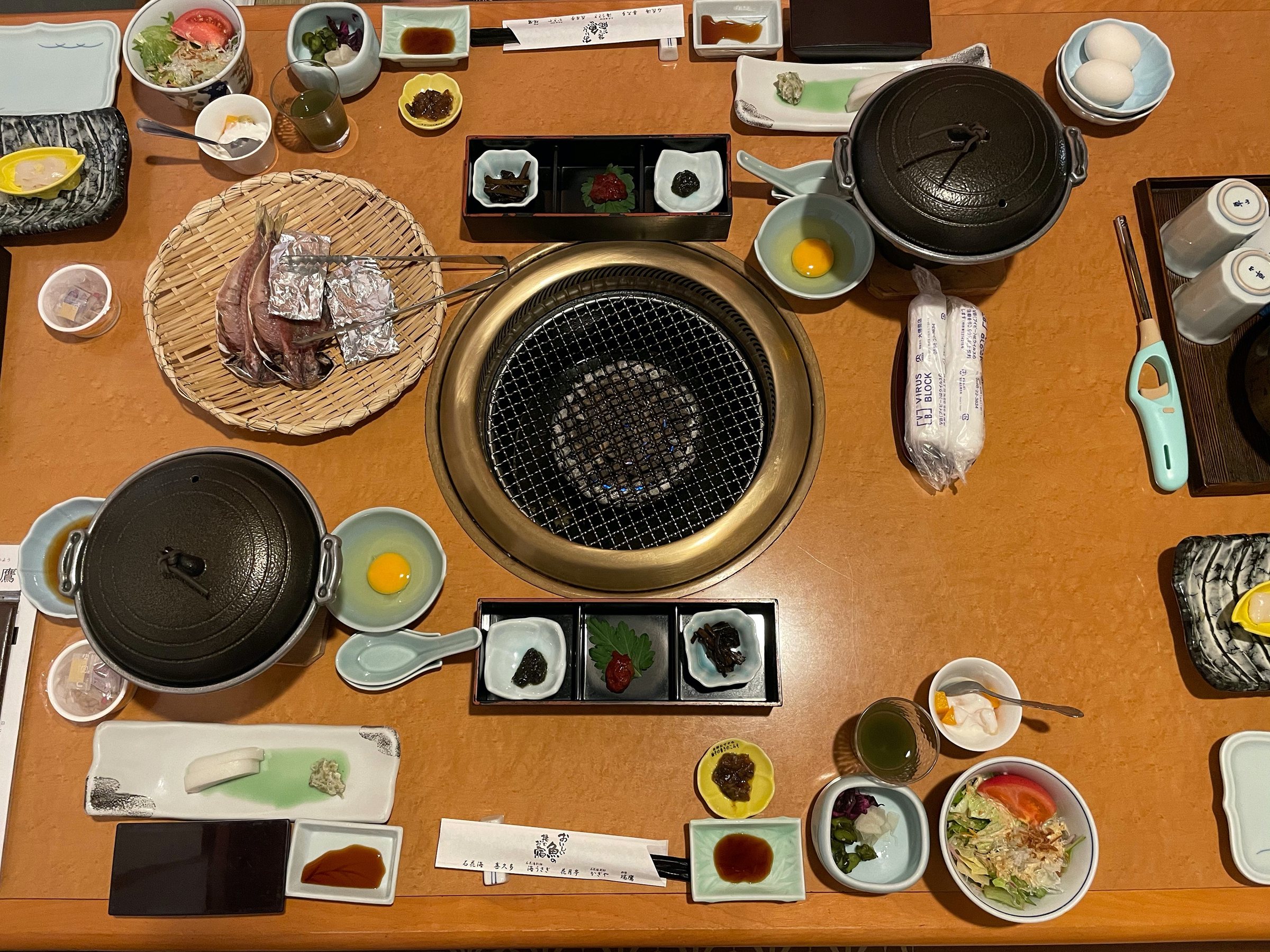
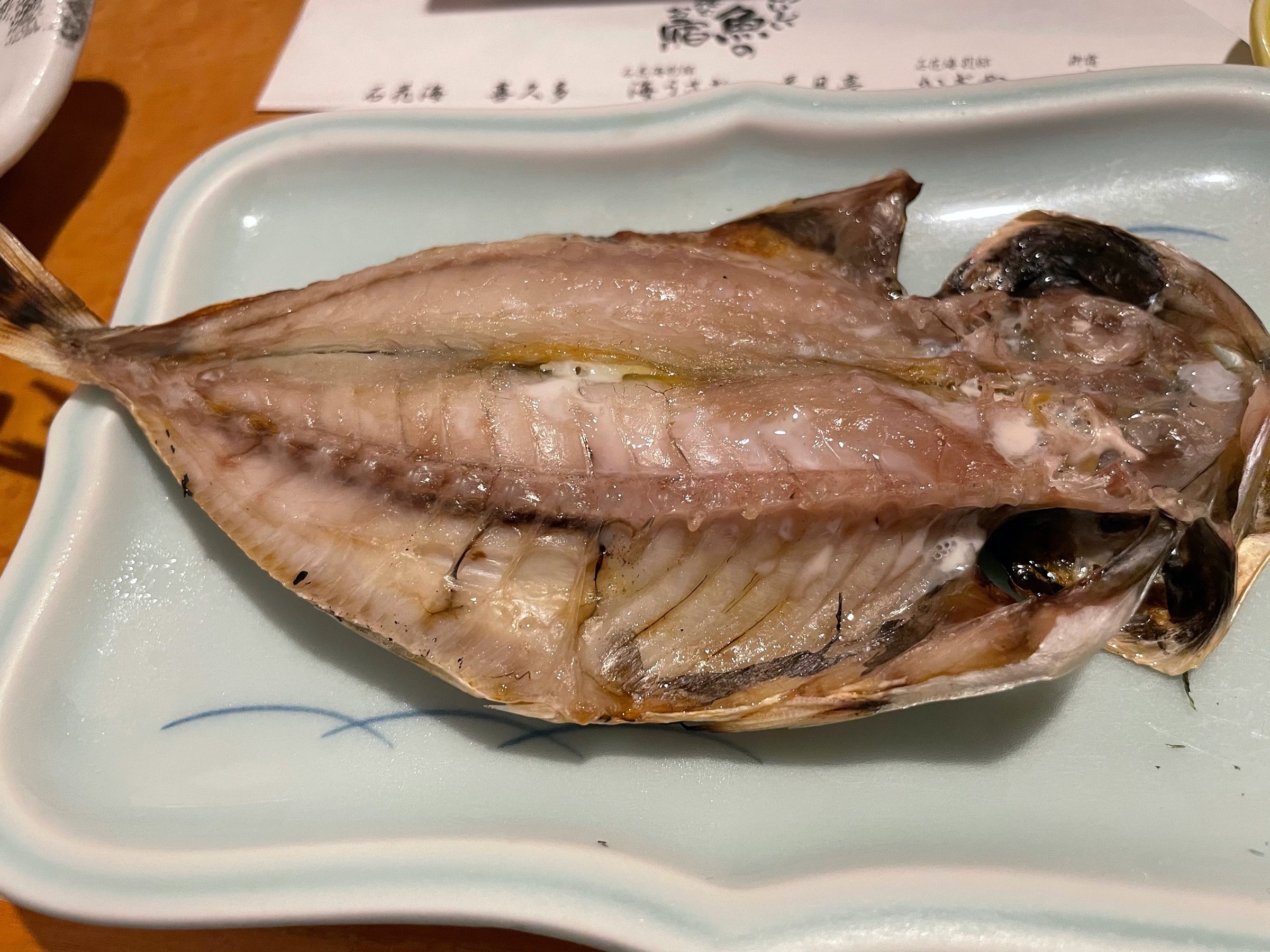
Aji no himono, split and dried horse mackerel, loses its flavor and aroma if it sits for even a little while. Being able to grill it in front of us, exactly when we wanted, is a real advantage.
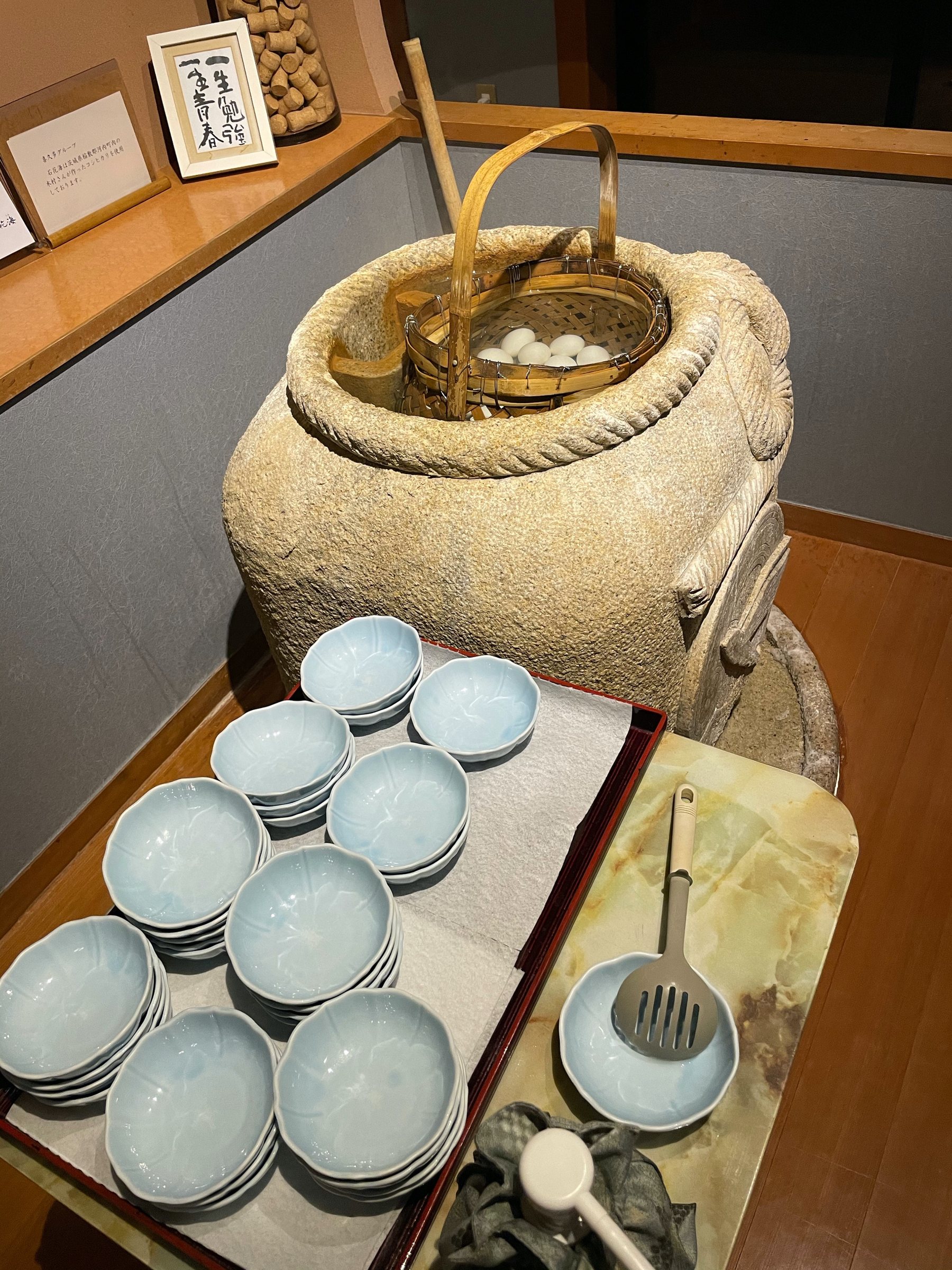
Eggs cooked in the ryokan’s own hot spring are self-service, as many as you like. The staff who explained the dining room and brought the dishes had the air of seasoned veterans. One in particular, as energetic as a mother in a fishing town, called out, “Yes, yes, I’ll put the sauce on for you! Now eat plenty!”
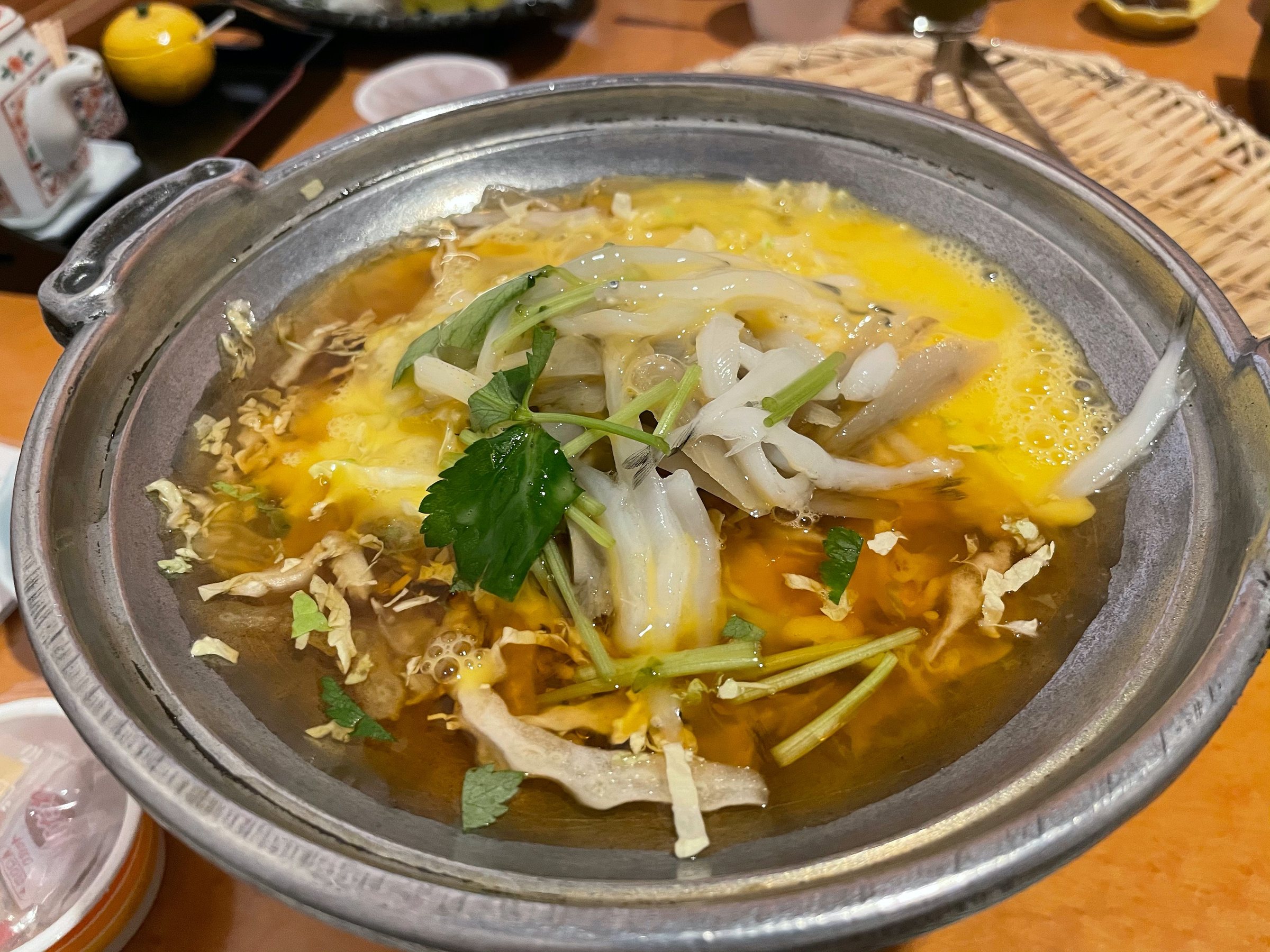
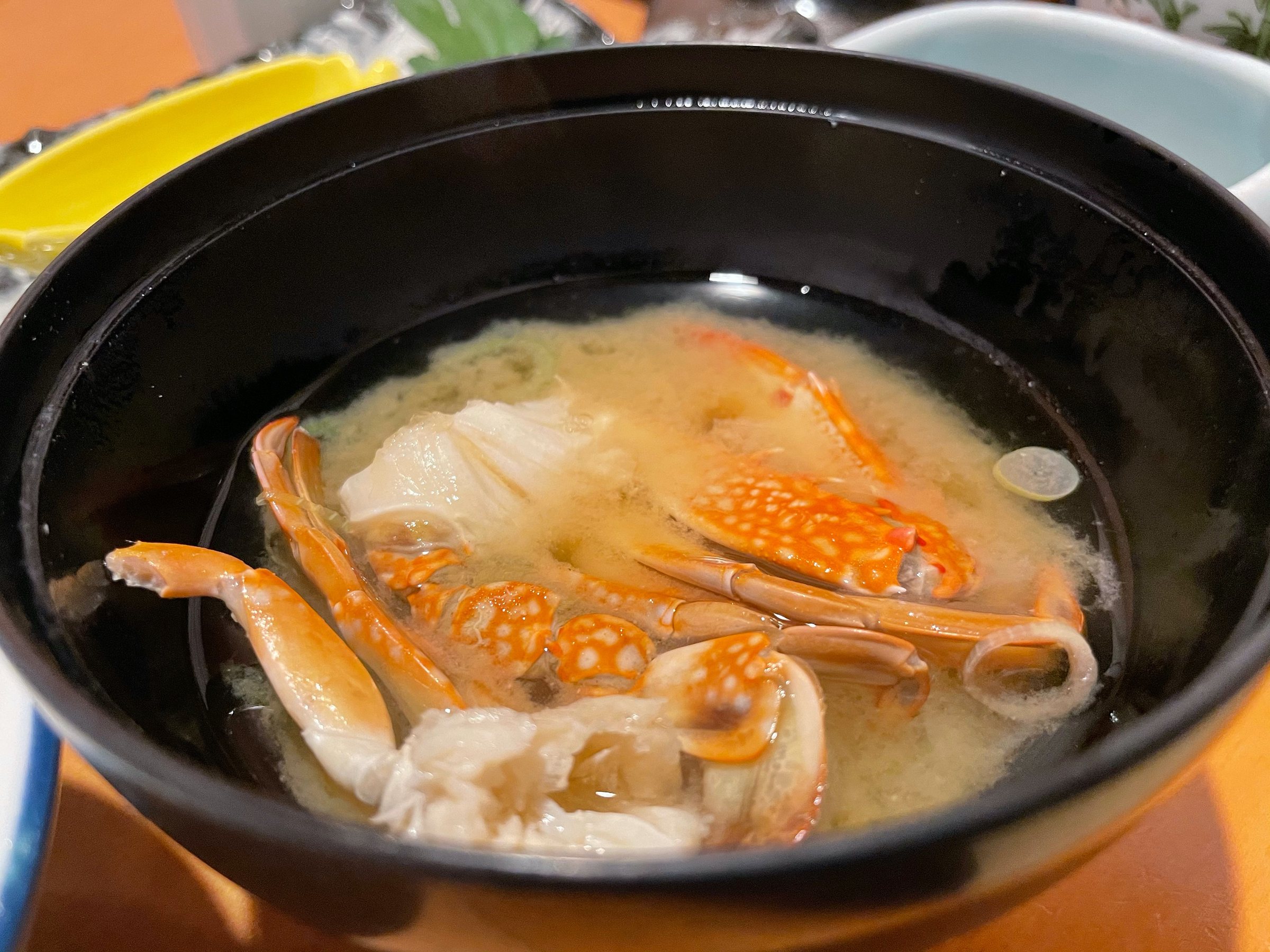
There was also squid sashimi, a Yanagawa-style dish bound with egg, and miso soup with crab. We were full from first thing in the morning.
Looking back
The wish to let guests enjoy the fruits of the sea to their hearts’ content comes through in everything here, and you feel, unmistakably, that you have come to a ryokan by the sea. After a full day of free-flowing hot spring water, rich in natural minerals, our skin was glowing the next morning.
This is a powerful ryokan, where the strength of Izu comes to the table in the form of magnificent fish.
This review reflects a stay in winter 2020–21. Menus, room types and services change; please confirm current details directly with the ryokan before visiting.