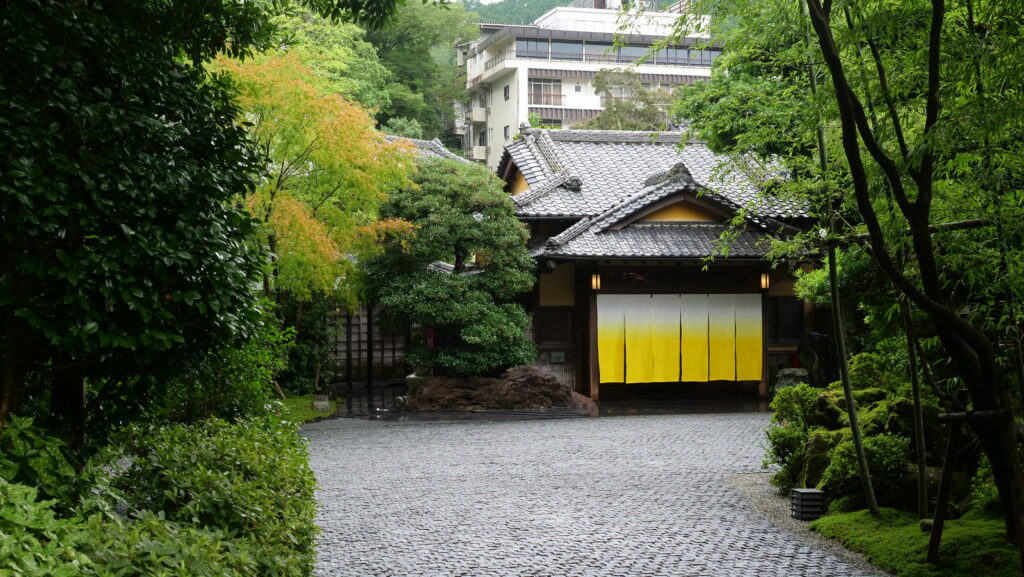
Hamanoyu opened in 1969 with just five rooms. It has since grown into a large ryokan that can fairly be called the flagship of Izu-Inatori Onsen. It styles itself a taberu oyado — an “inn for eating” — a name chosen in the hope that guests will make the most of the seafood cooking of the coast.
A few years ago it was popular enough to be featured in the media.
Surrounded by sea
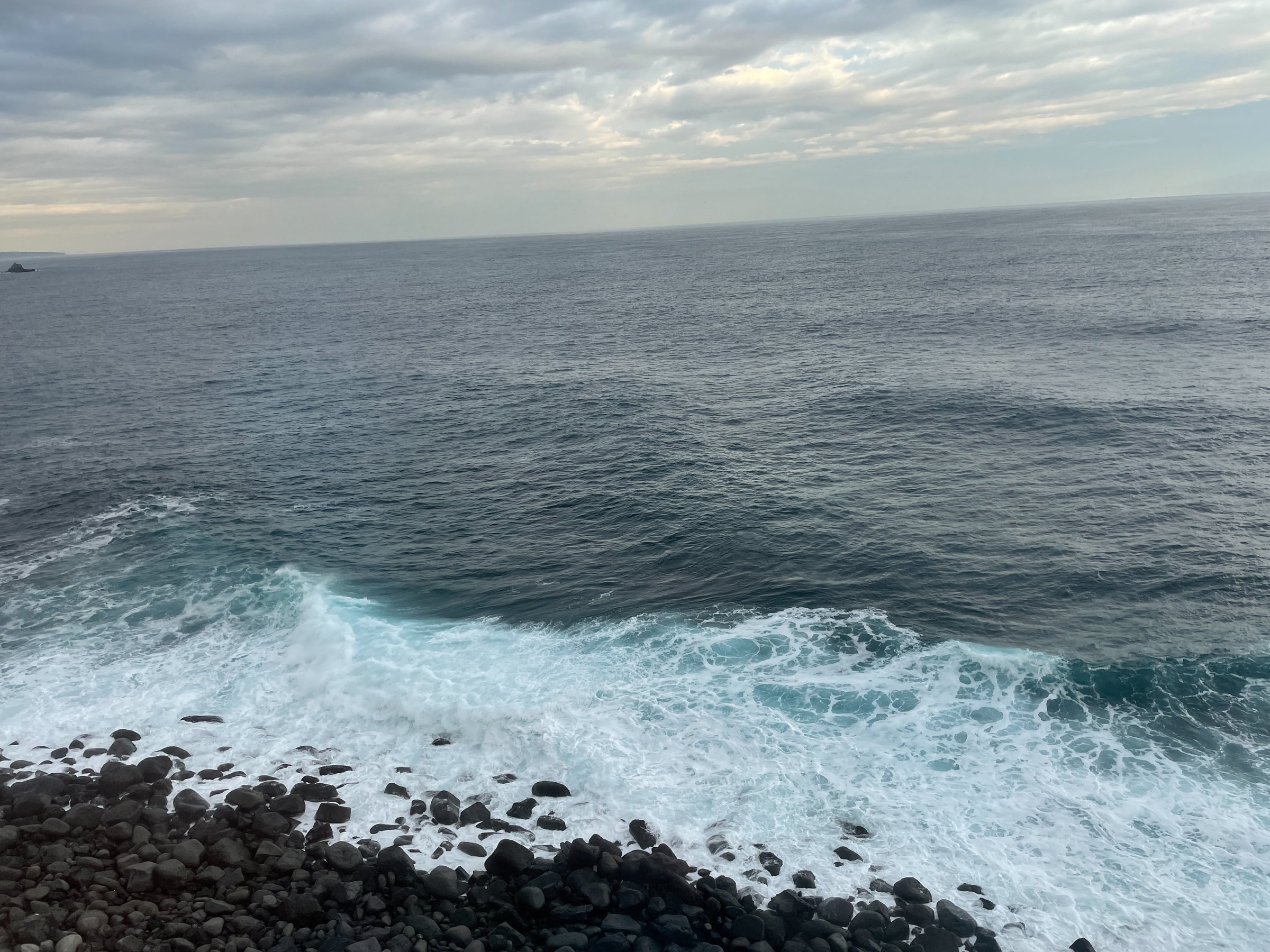
The ryokan sits at the very edge of Inatori, with the ocean all around it. Even with the big, rough waves of winter rolling in, the aquamarine water is beautiful. A breakwater runs just in front of the building, and beyond it lies the open sea.
When you pull up at the front, staff come straight out to greet you. They took care of the parking, whisked our bags away and showed us in with smooth efficiency.
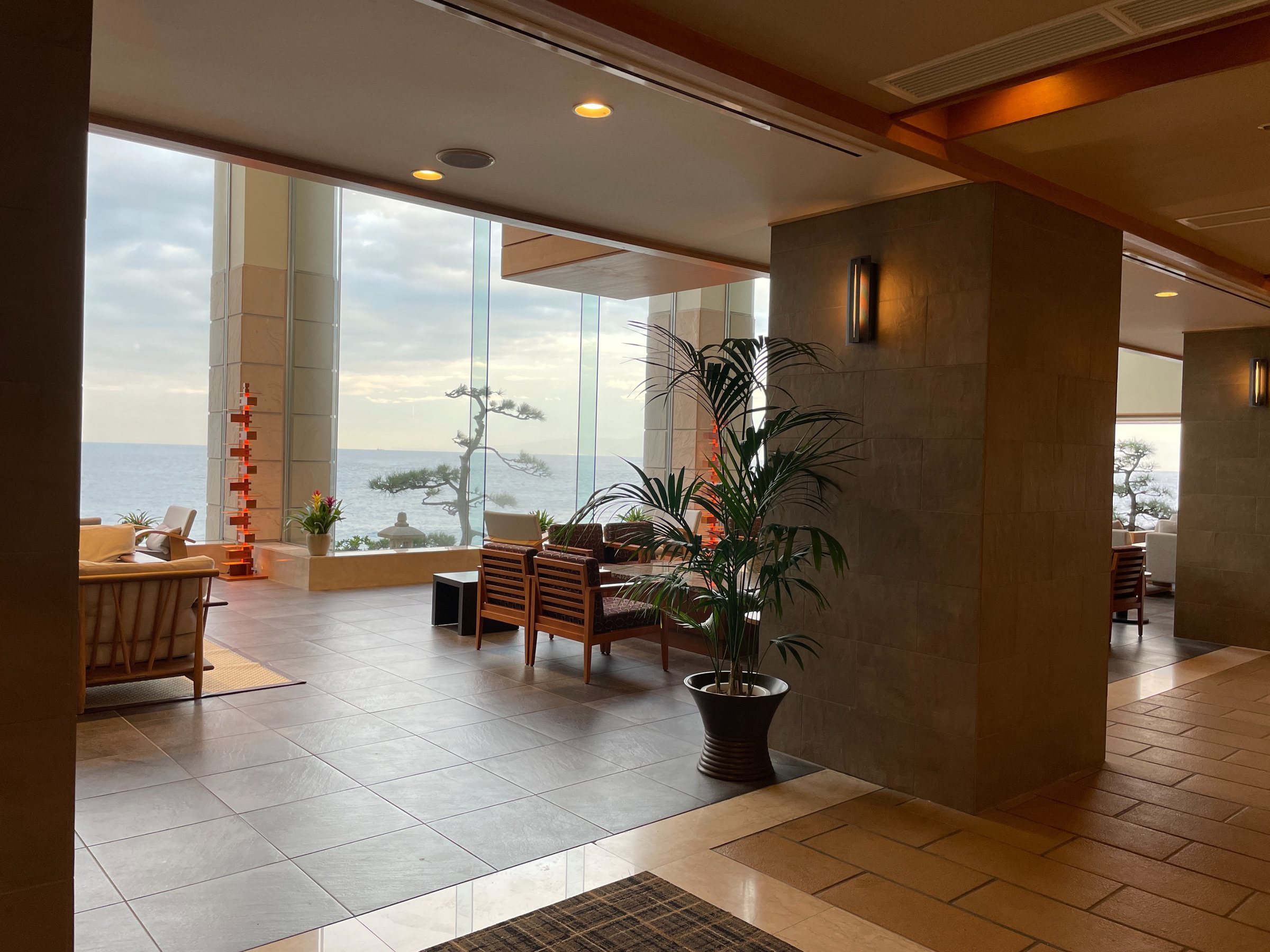
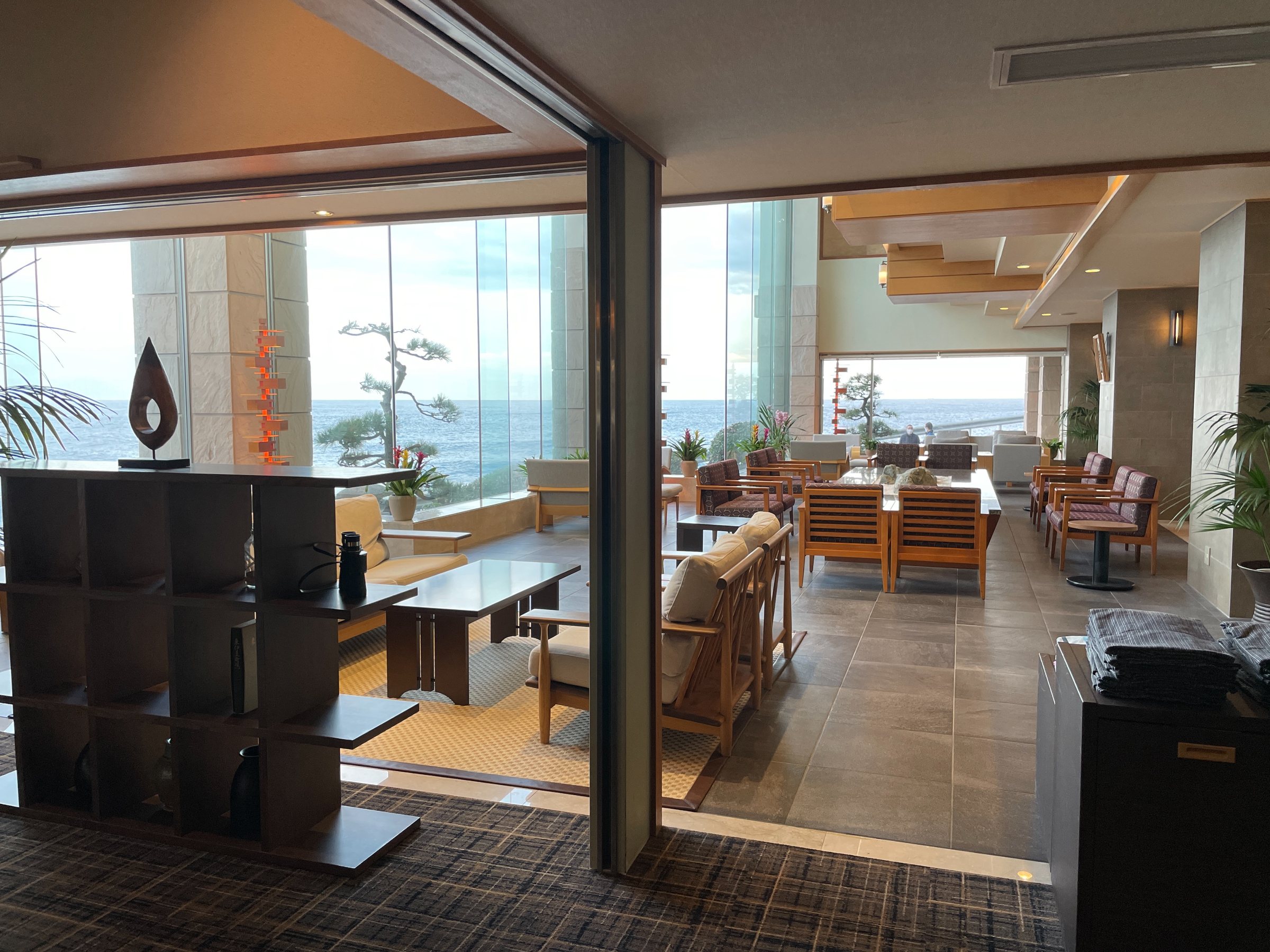
The spacious lobby is glazed on every side, framing sea and sky like a painting. It is clean, and the entrance is warmly lit. Because of Covid, check-in took place in our rooms.
Ocean-view rooms
From the large windows, the sea, naturally, fills the view: these are ocean-view rooms in the truest sense. The room was a comfortable size and easy to live in. There are no special fittings, but nothing was lacking. Amenities are limited to the ryokan’s own skin toner, toothbrushes and the like.
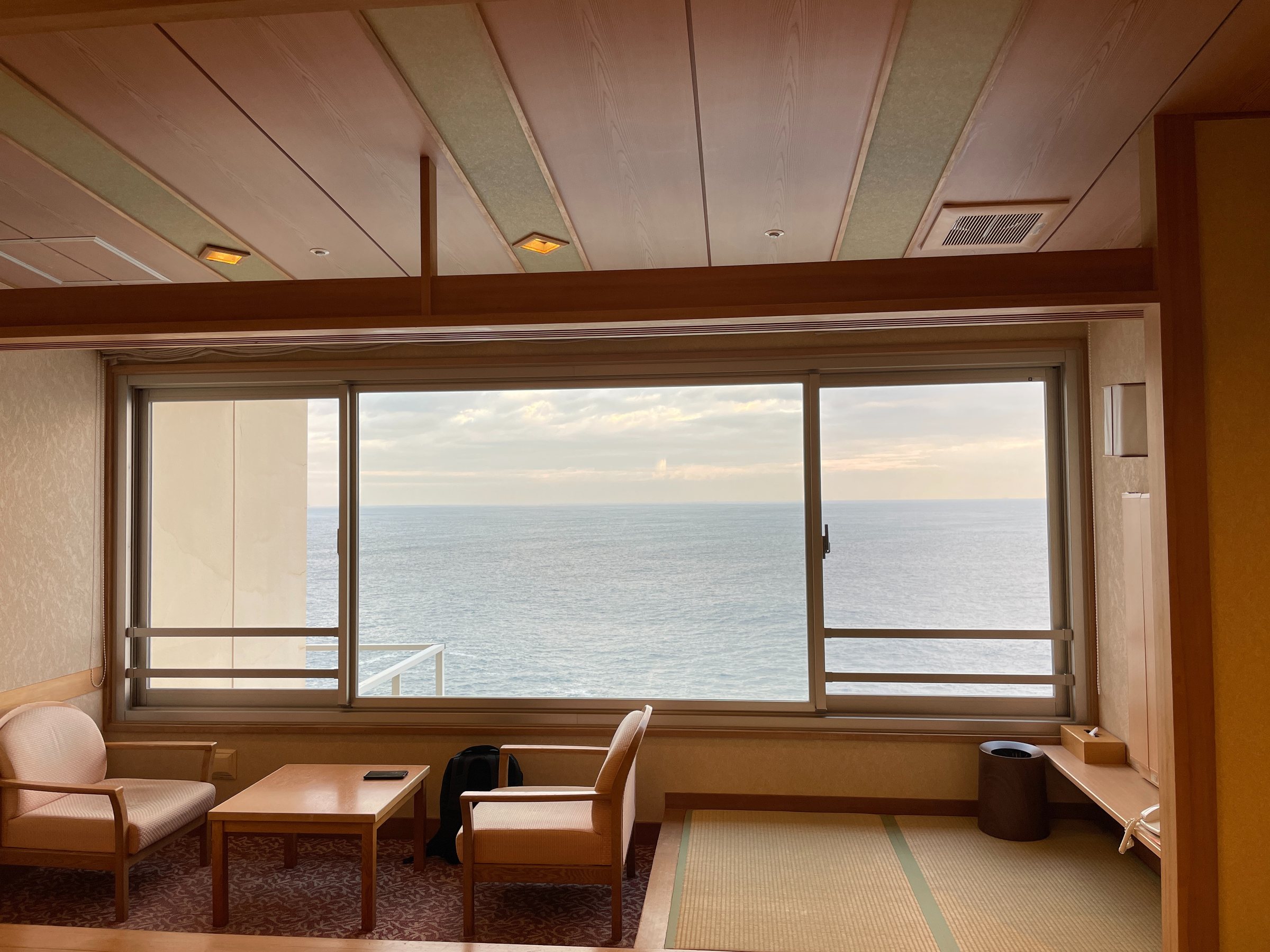
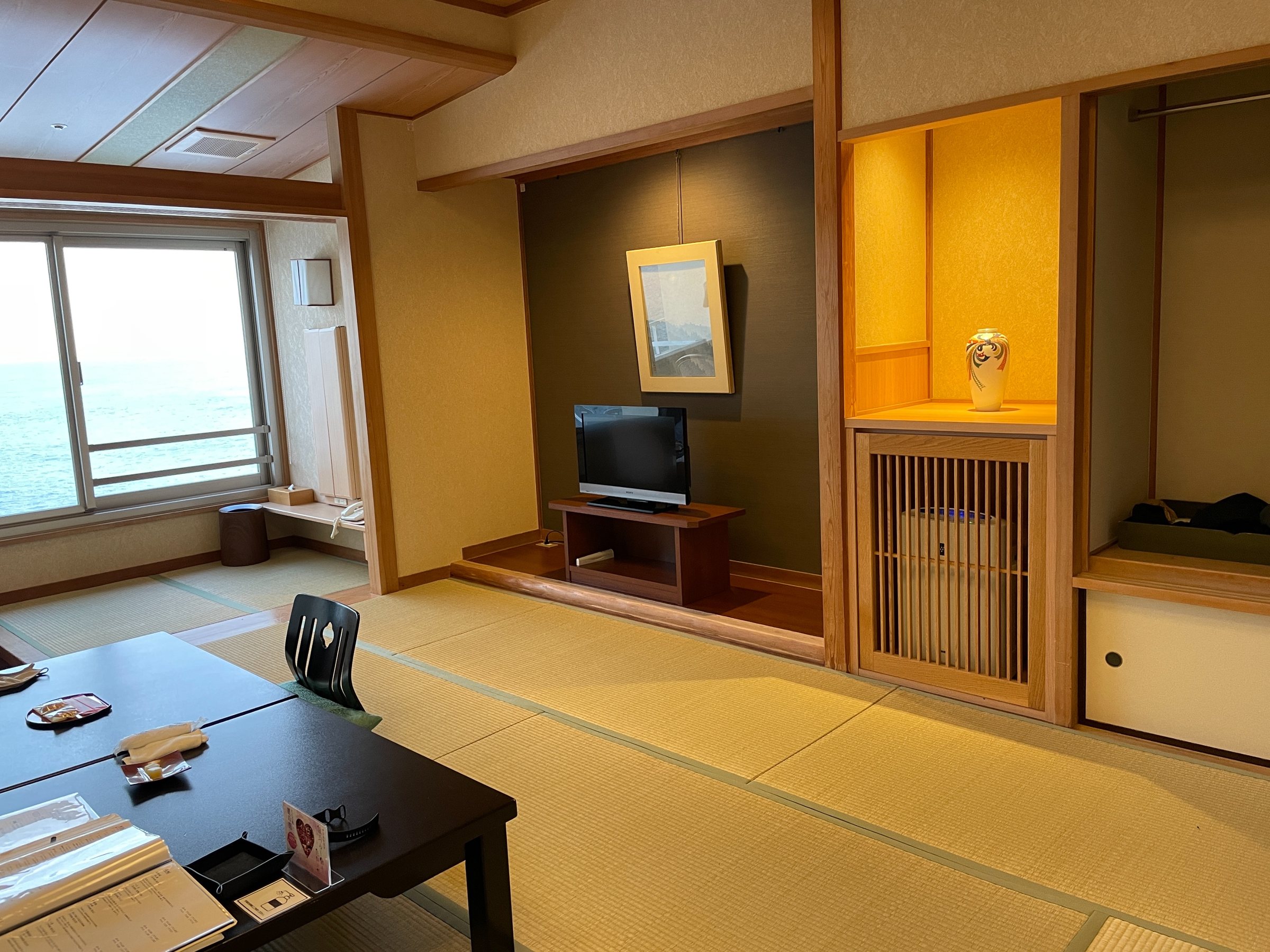
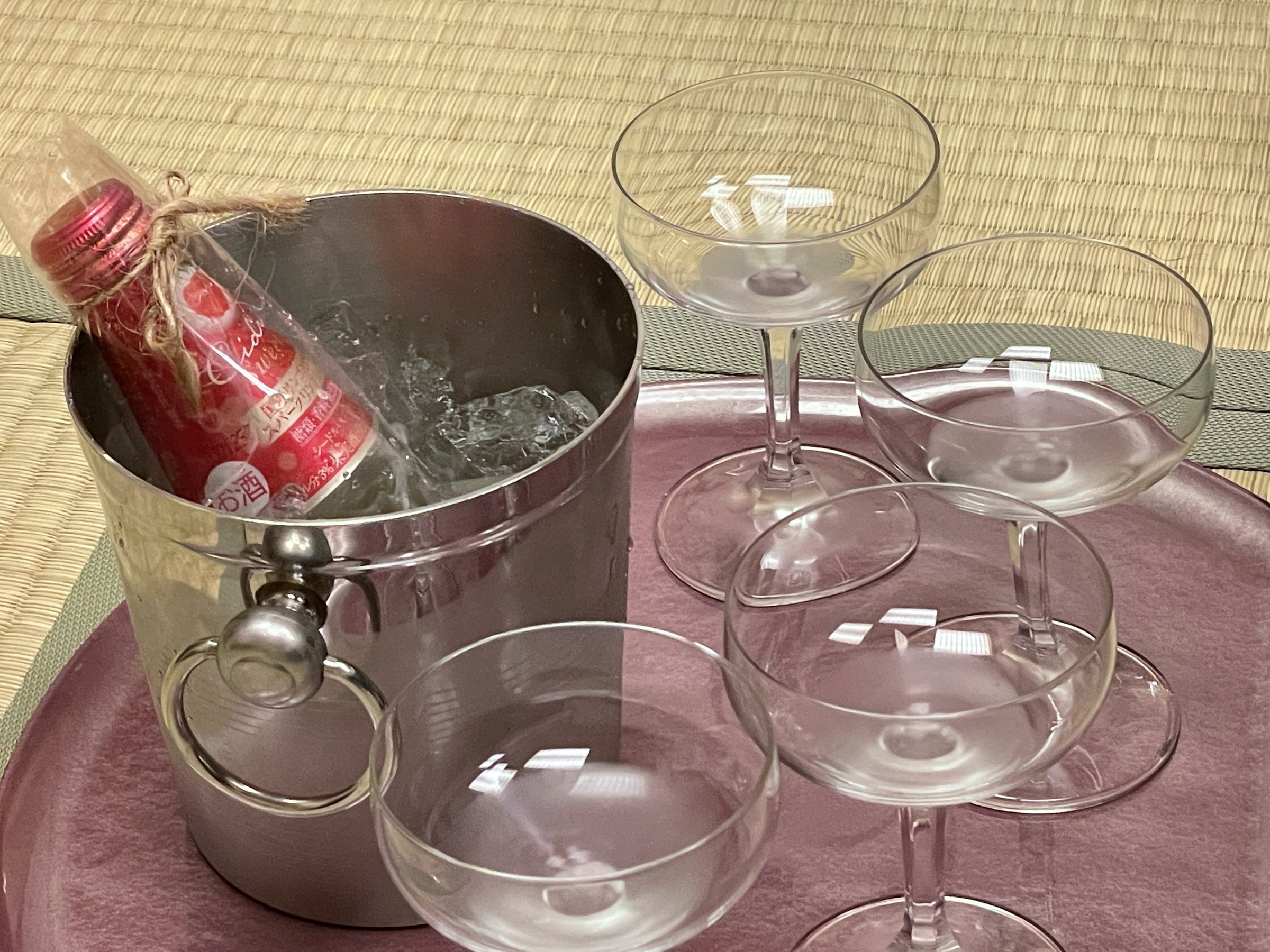
Our room attendant, or nakai, was young and clearly new to the job. When she was showing us around and we mentioned that we were marking a special occasion, she offered to add a celebration banner to dinner and to present us with a small bottle of sake.
An infinity bath above the waves
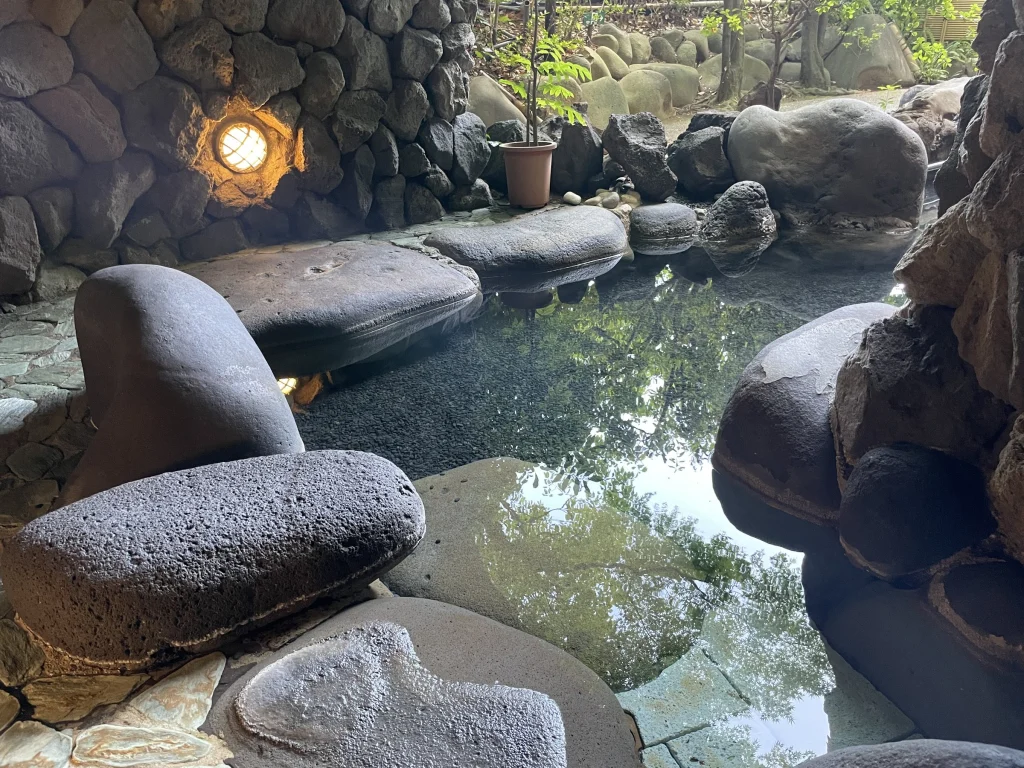
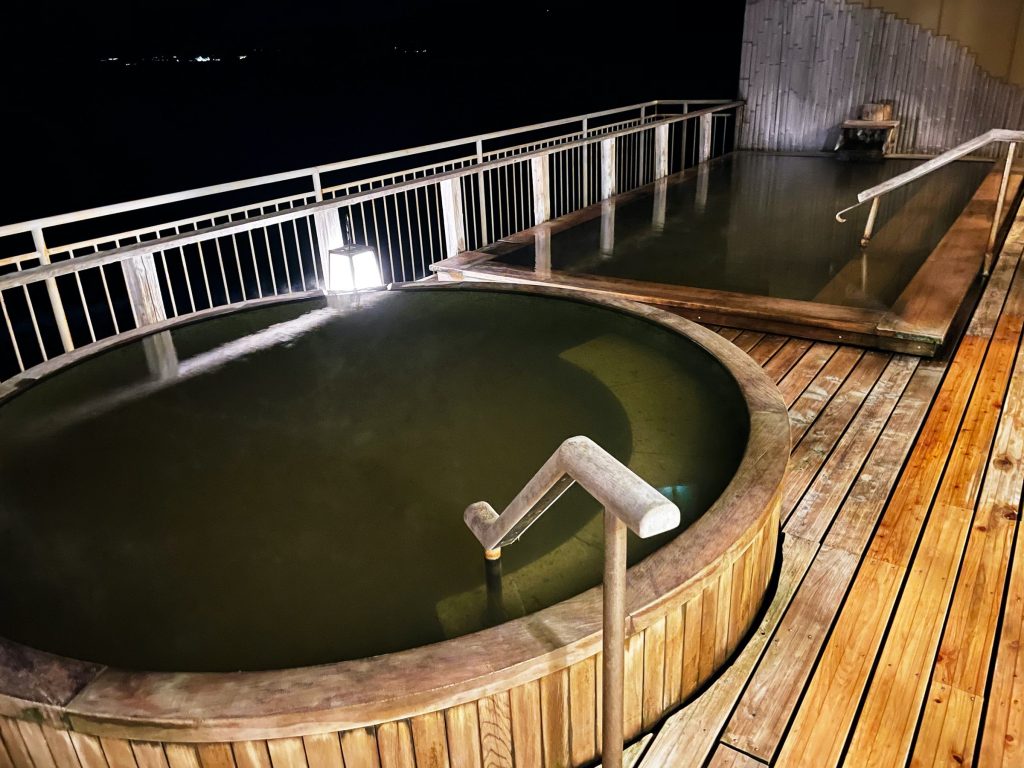
The main baths are Hamanoyu’s centerpiece, among them an observation bath whose design recalls a famous hotel in Singapore. The men’s and women’s baths swap over, so which one you get on a given day is a matter of luck. This one looks out over the sea to the horizon, and it is long, shaped very much like a swimming pool.
At night, sea and starry sky merge into one. In total darkness, with only the starlight, it is almost like floating in space. Listening to the waves, this is an infinity bath well worth experiencing. The other main bath is a rock bath, dramatic in a different way, where you can smell the salt on the sea breeze.
The water is not gensen kakenagashi — fed continuously from the source and allowed to overflow — but the tubs are clean. During the pandemic they appeared to be disinfected with hypochlorous acid. For details of the main baths, private baths, spa and other services, it is worth checking the ryokan’s website.
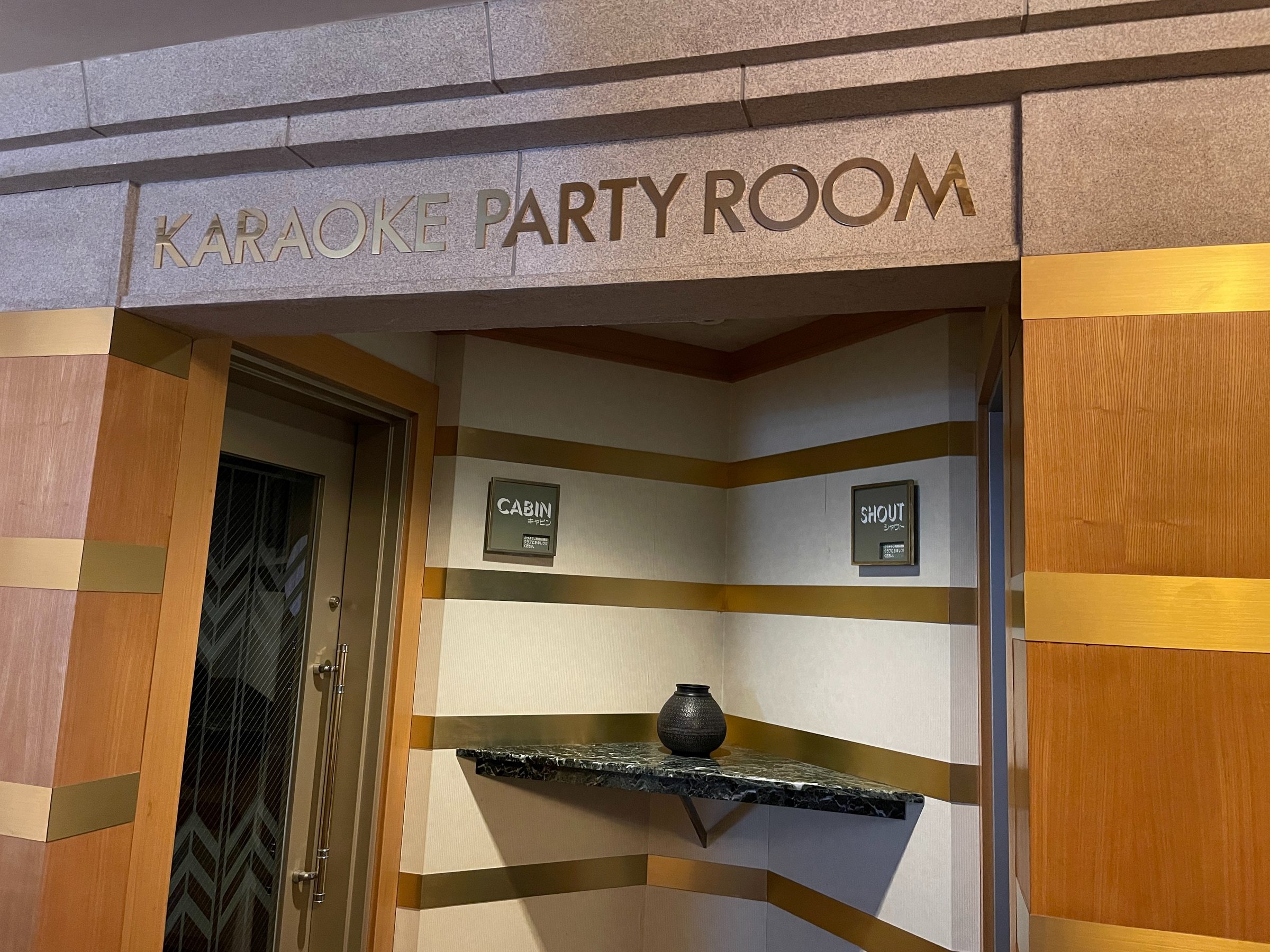
There is also karaoke and a small bar, though neither was open at the time. In a ryokan this size, they must be busy in the season for group tours and year-end and New Year parties.
Dinner: a table that could not hold it all
Then came the long-awaited dinner. True to its name as an inn for eating, the meal was substantial. All four servings were laid out at once in a single room, and still the dishes would not all fit on the table.
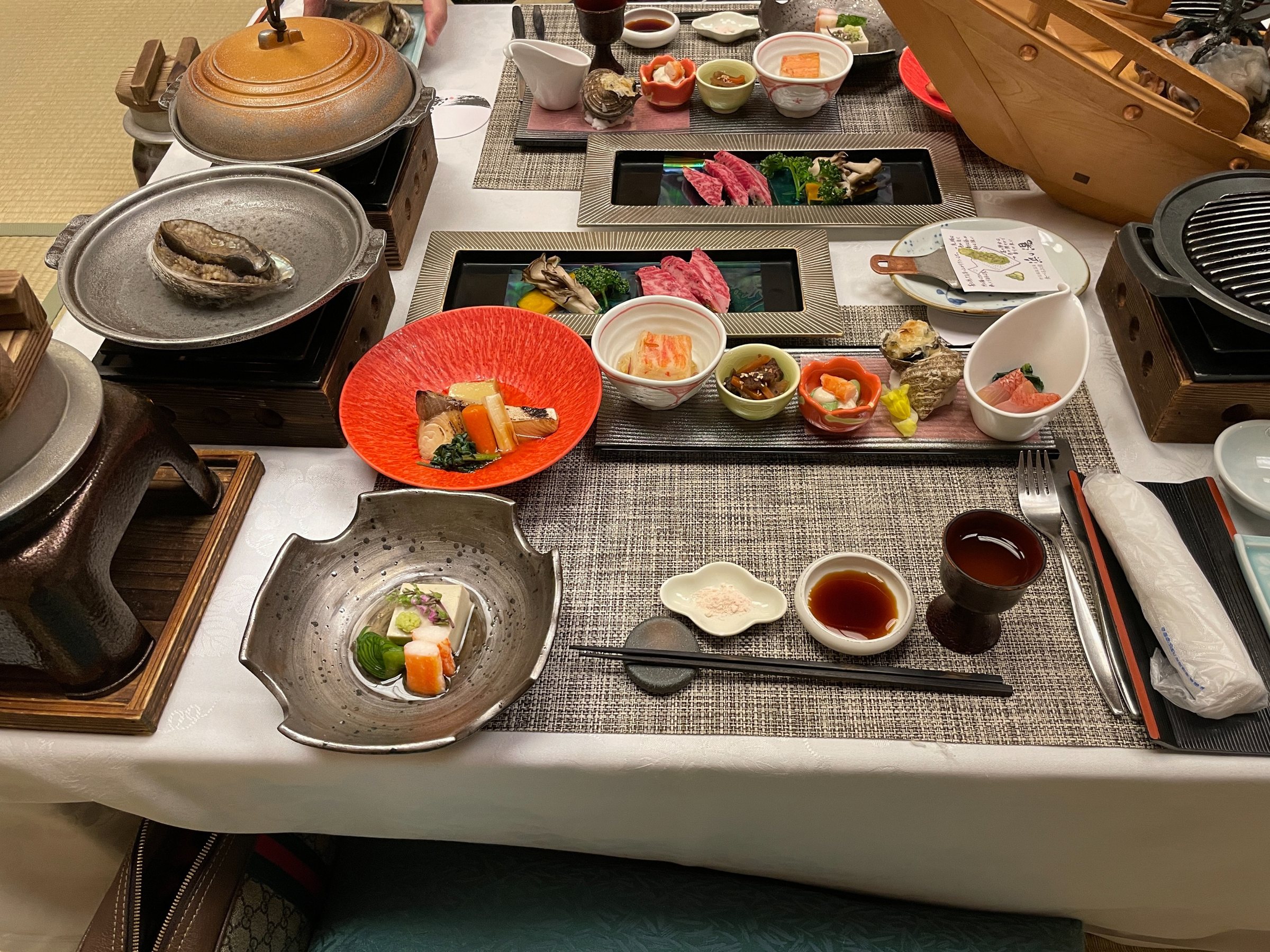
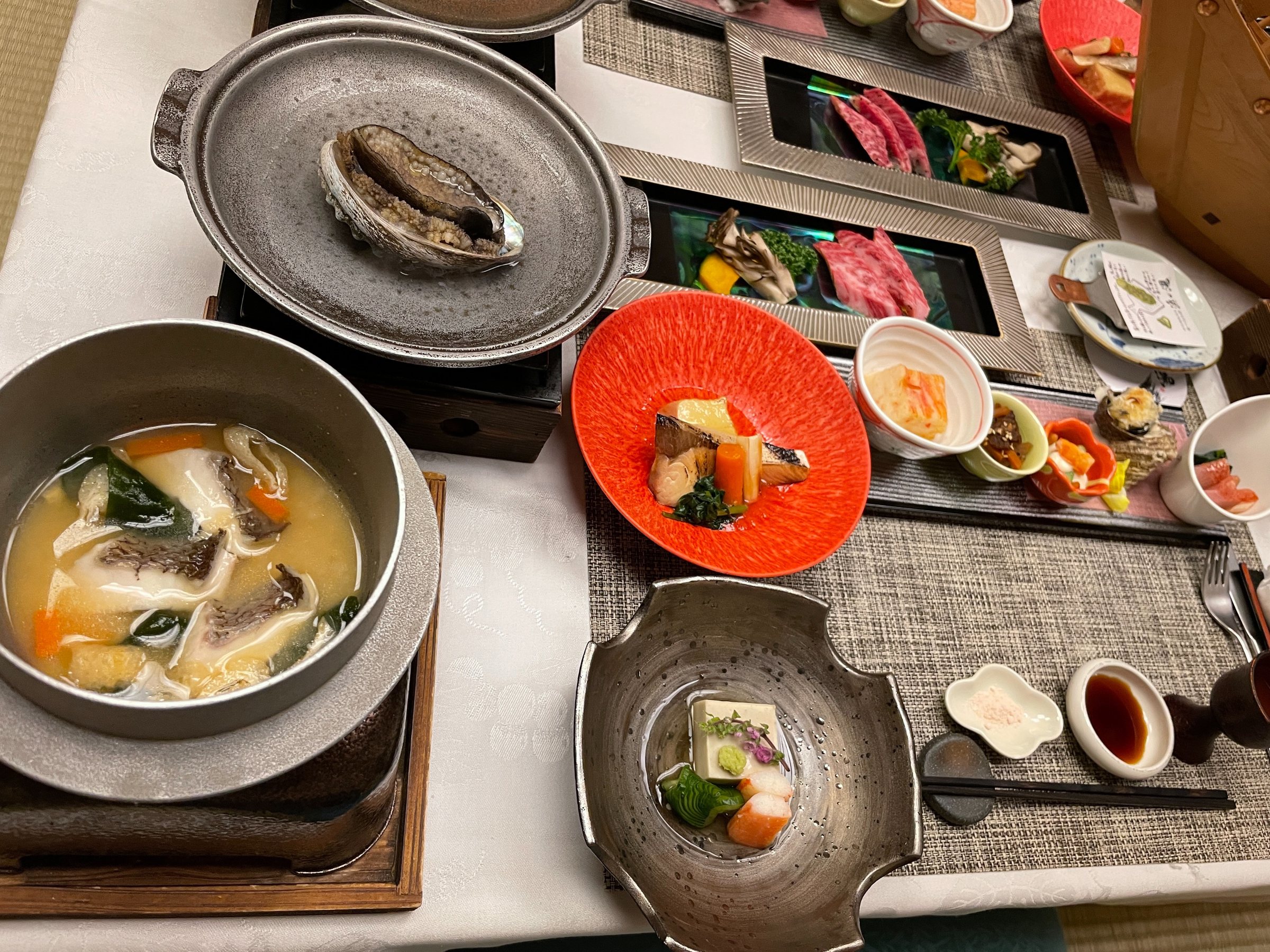
We started with a drink and some small, charming sakizuke appetisers. Then came grilled yellowtail, an abalone steamed in sake for each of us, Ashigara beef cooked teppanyaki-style on a hot plate, and seasoned rice cooked in a pot and brought to the table.
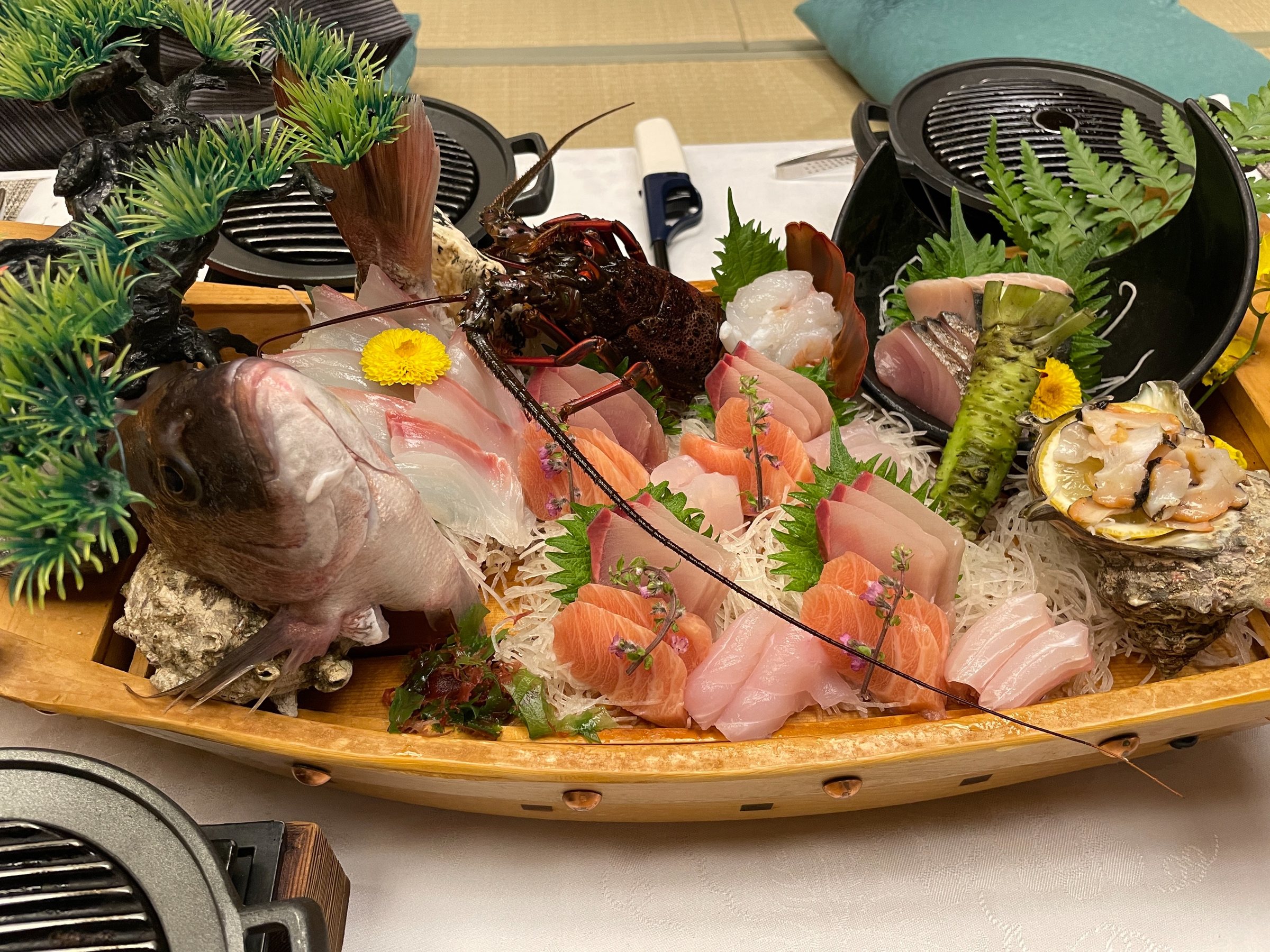
The boat, and the banner
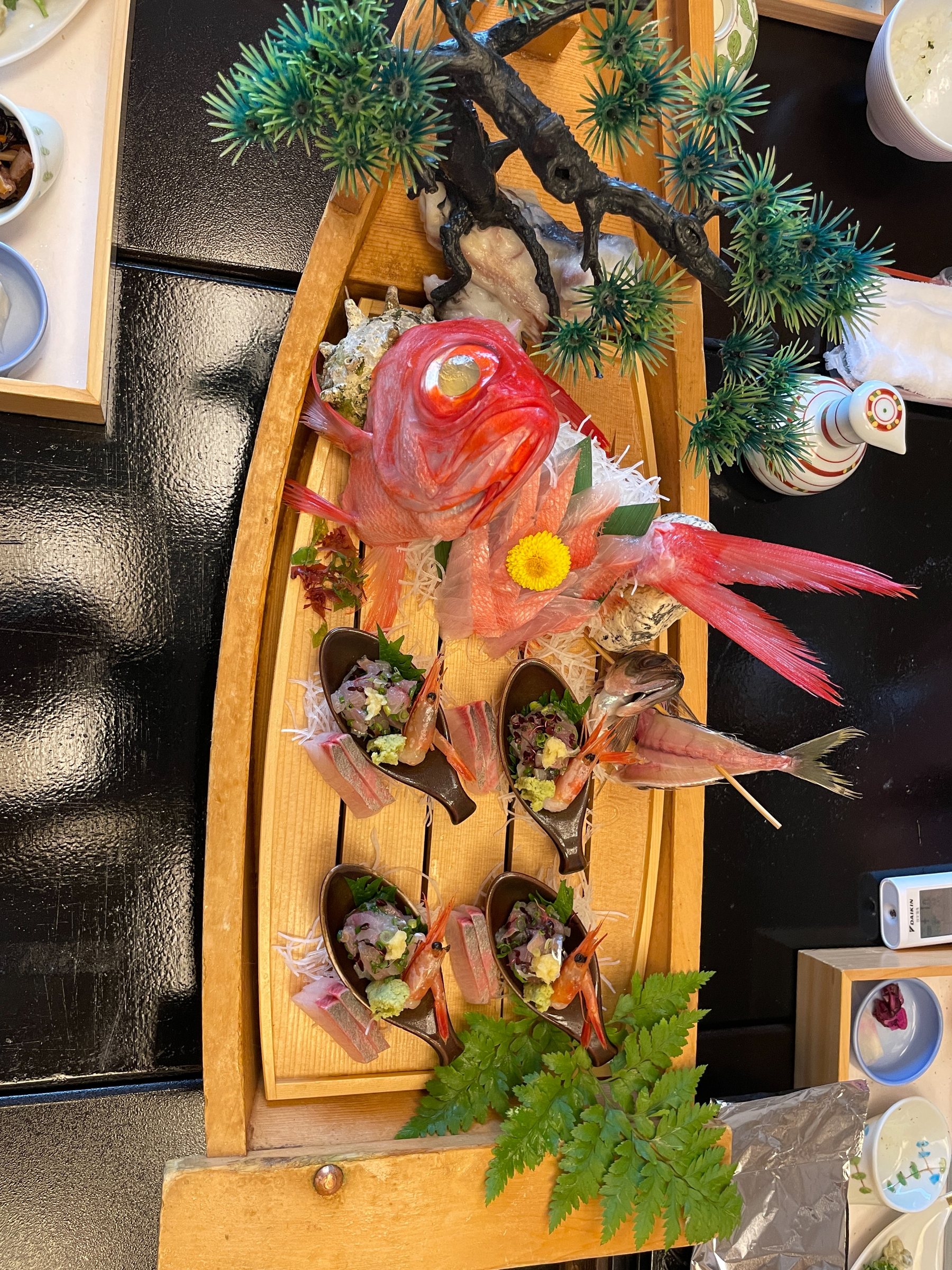
The main event arrived: the funamori, a wooden boat laden with sashimi. The flag decorating it carried a personal celebration message, an unusual and delightful touch. Prepared for four, it looked lavish. That said, the turban shell and spiny lobster were served in such small amounts that they hardly seemed enough for four; the rest of the sashimi, however, came in generous cuts.
Two golden-eye snappers
Then another of the ryokan’s signature dishes: simmered kinmedai, or golden-eye snapper, arrived as two whole fish on one great platter. Simmered kinmedai is a staple at ryokan all over Izu, but of the many versions we have eaten, this ranks near the top for sheer impact. By this point the number of dishes alone was enough to fill us, and with drinks as well we were close to bursting. Ideally, pace yourself with this finale in mind, so that you can finish it with rice and its sweet-savory sauce.
The meal includes kamameshi, rice cooked in an individual pot, but plain white rice is available on request, and we urge you to try the fish this way.
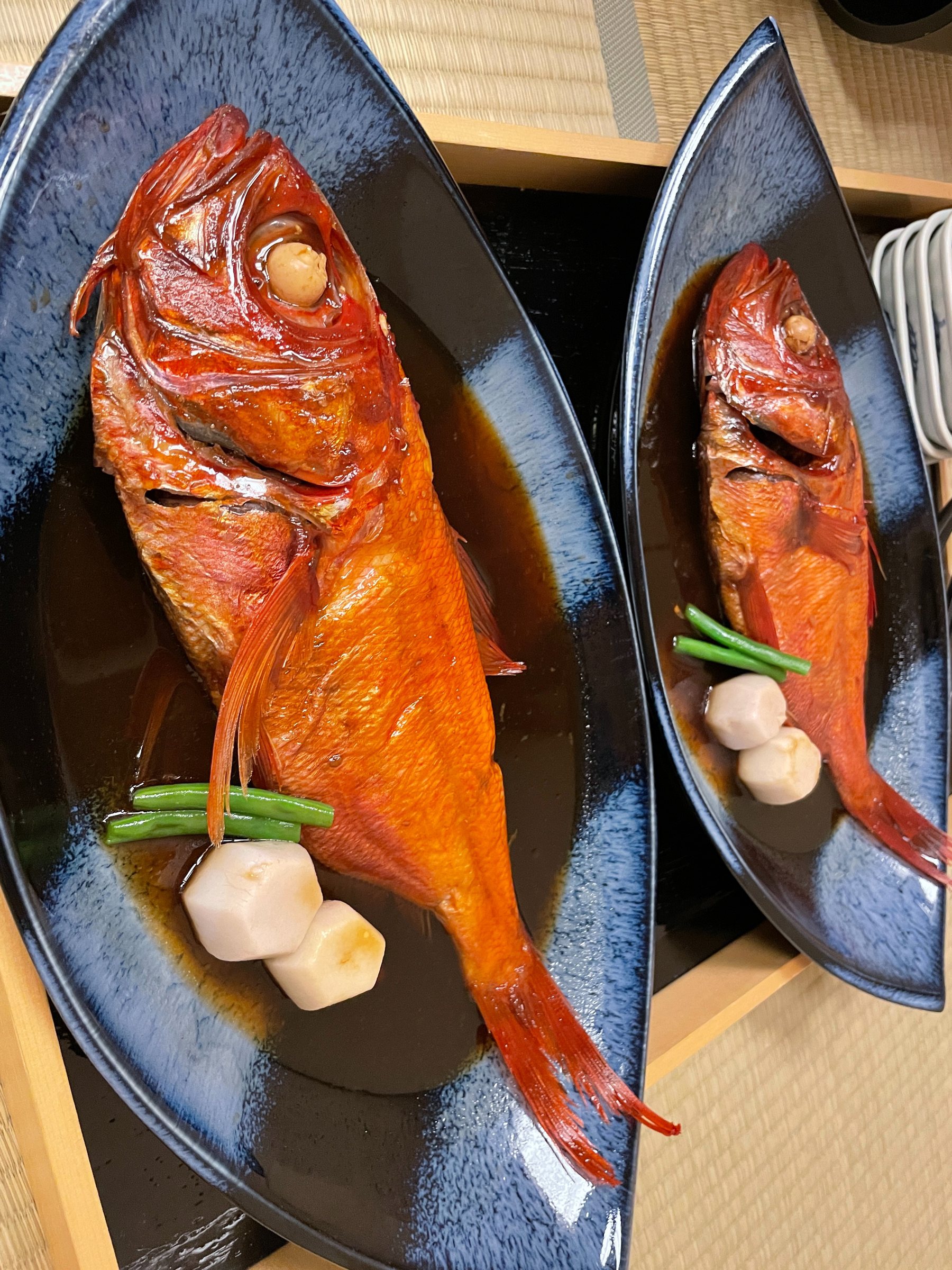
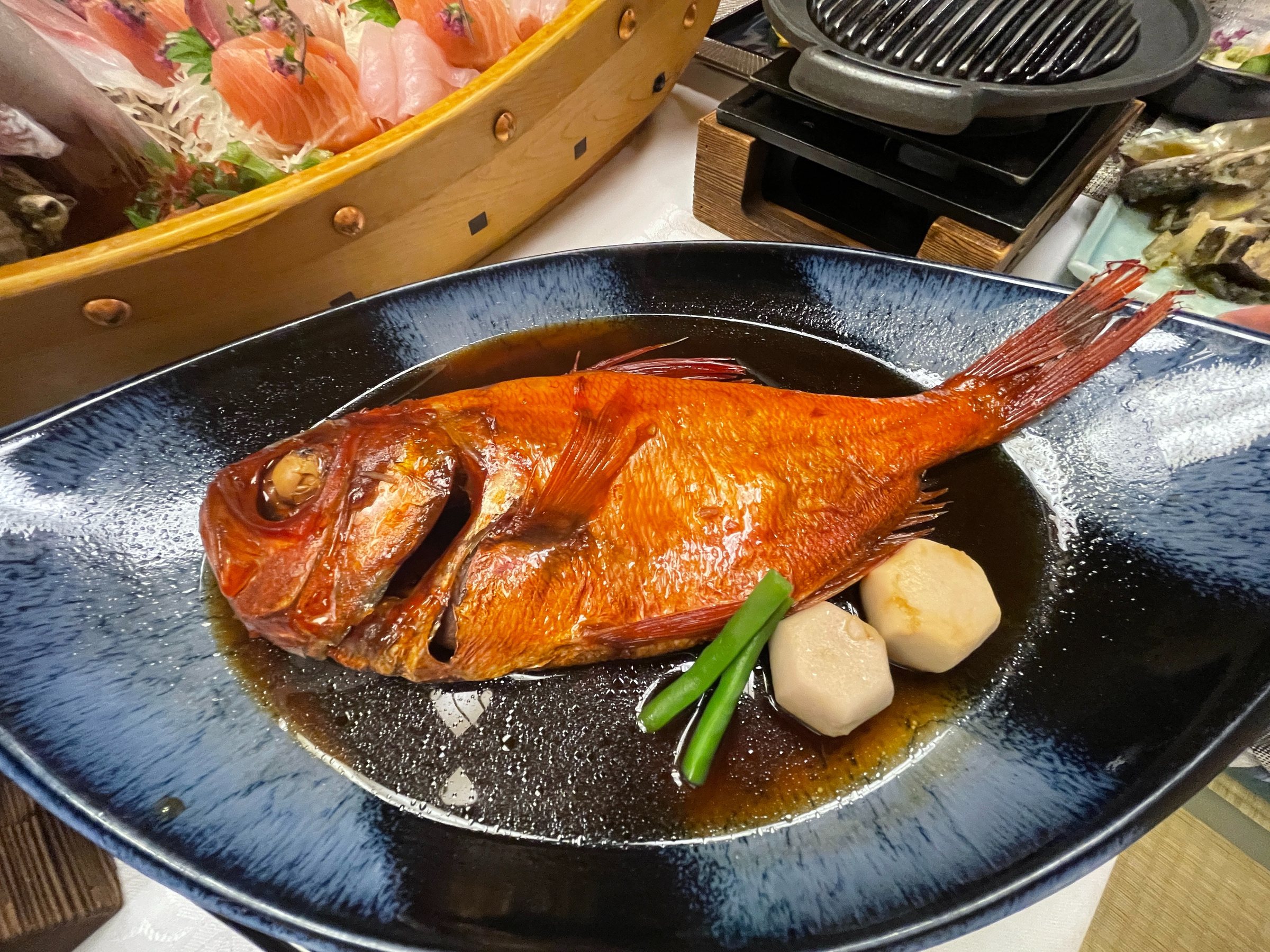
Our nakai, juggling many tasks, was a little forgetful at times, but she carried, cleared and chatted for four people’s meals single-handed. It looked like extremely busy, demanding work. Her constant smile and earnest effort left an impression, and were quietly endearing.
Only when everything had been eaten and the drinks were gone did the promised celebration bottle arrive. We were not entirely sure this was the right moment to present it, but the four of us enjoyed it all the same. Even a small gesture like this is a pleasure to receive.
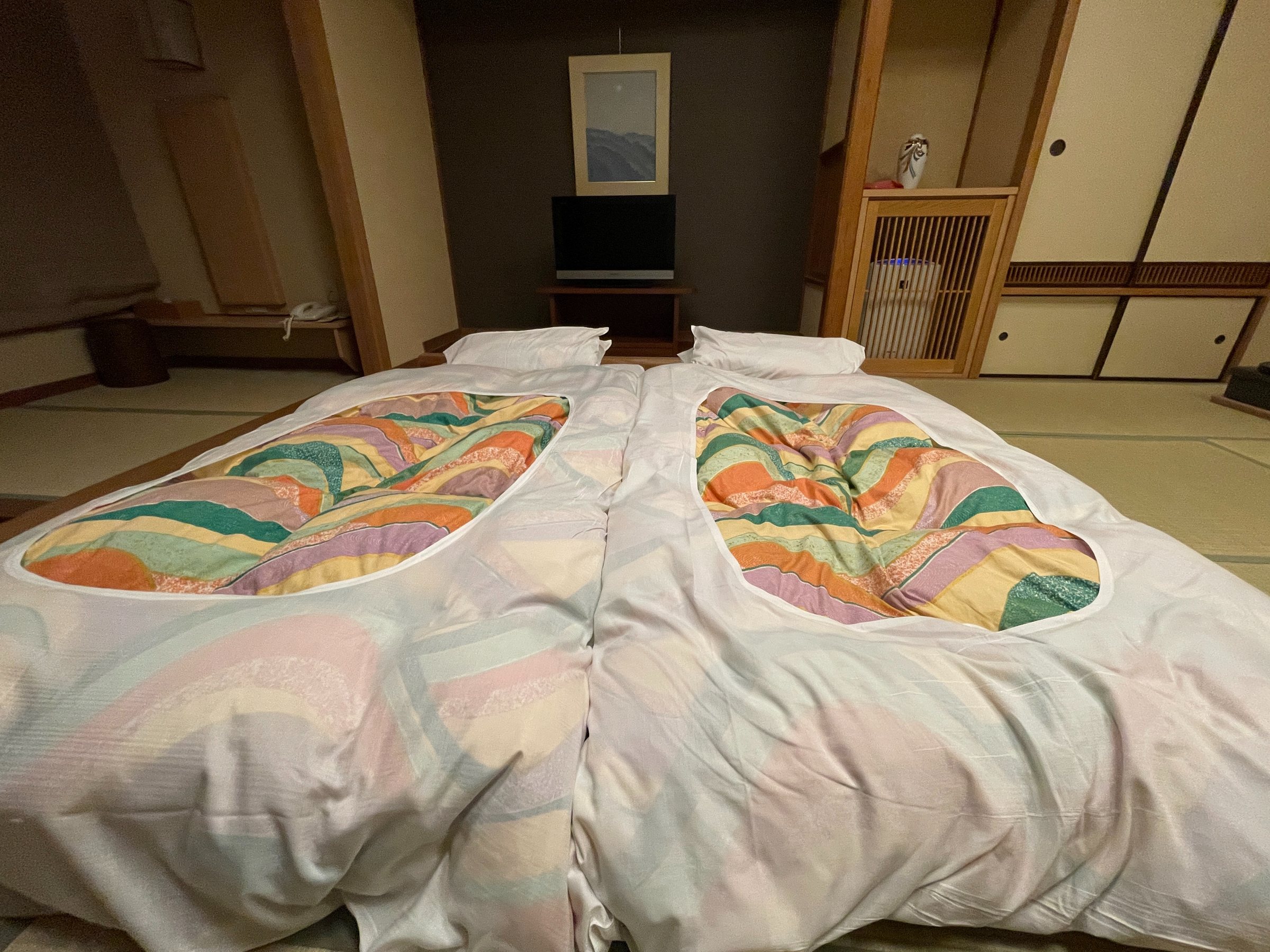
After a night-time soak in the main bath, we came back to cool off and found fluffy futons waiting.
Morning: the bath at sunrise, and kanten
The next morning, what we looked forward to most was the main bath at dawn. Bathing in the open air as the sun comes up is wonderfully refreshing.
At breakfast, we gathered to compare impressions of the ryokan over a special kanten, a house-made agar jelly, brought to the room. The meal begins with this kanten and the gentle sweetness of brown sugar.
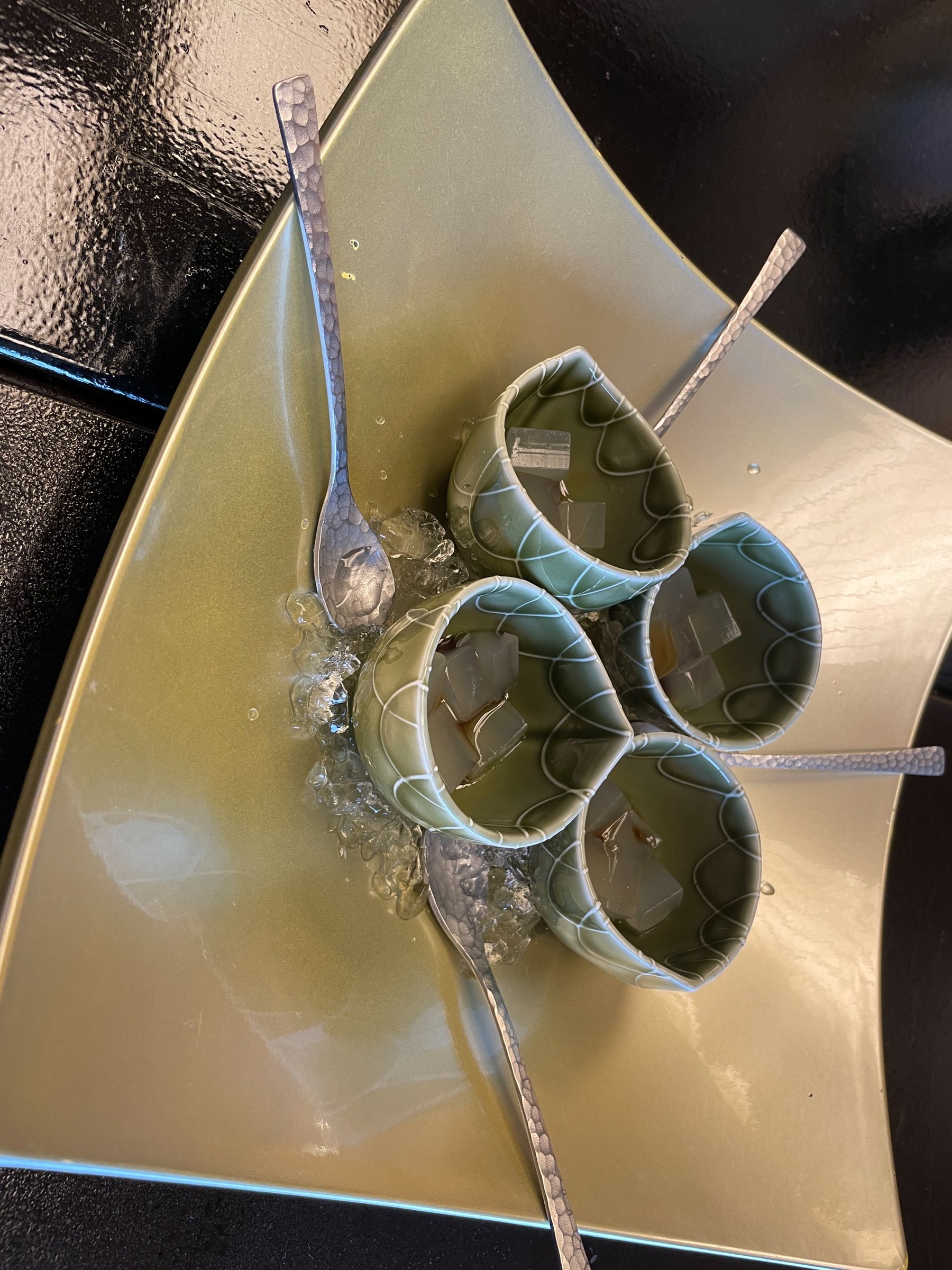
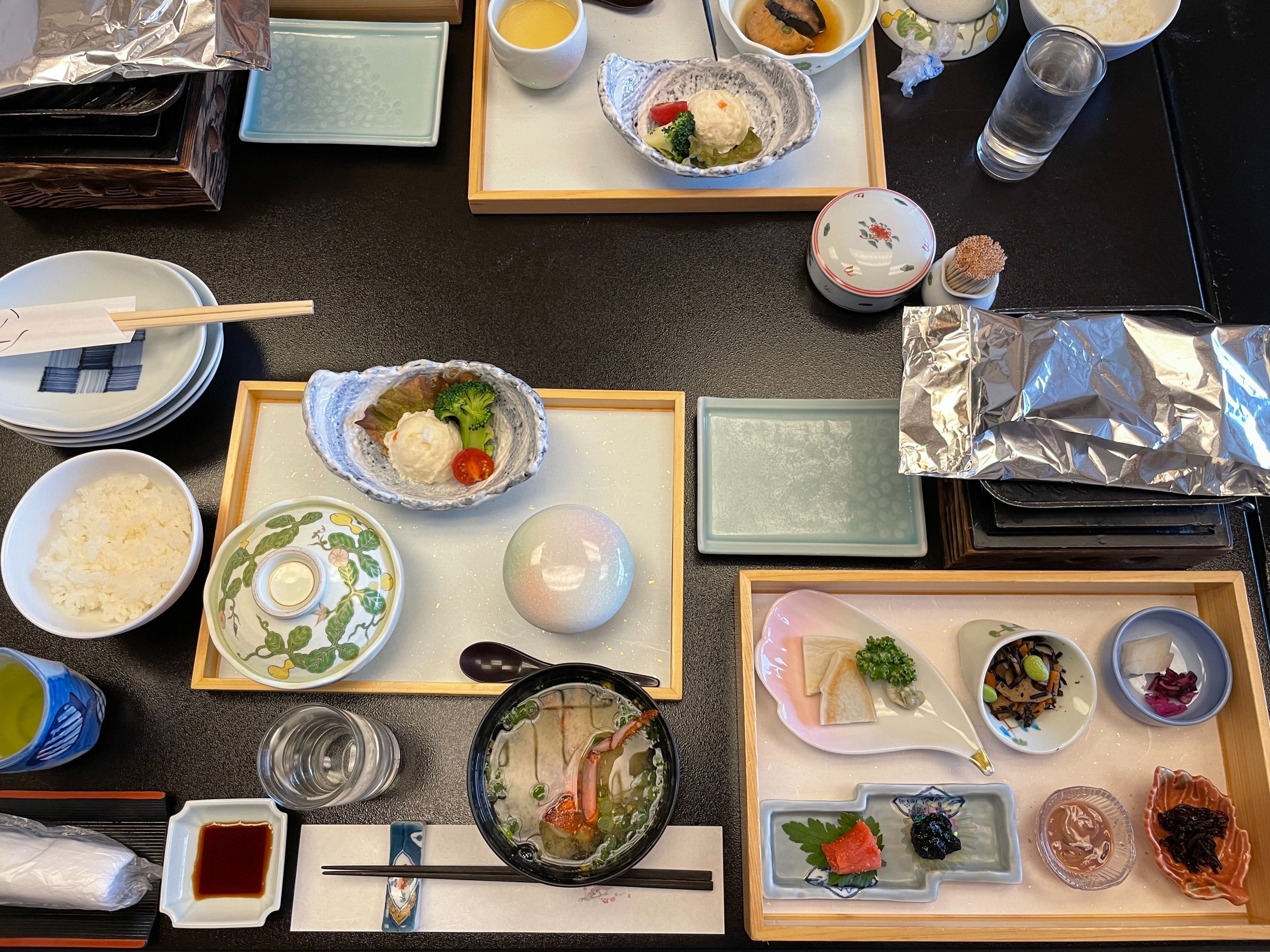
Breakfast was a healthy Japanese one. With the previous night’s dinner still making itself felt, the modest quantity was very welcome.
The funamori appears at breakfast too. Sashimi first thing in the morning is a luxury that is hard to resist.
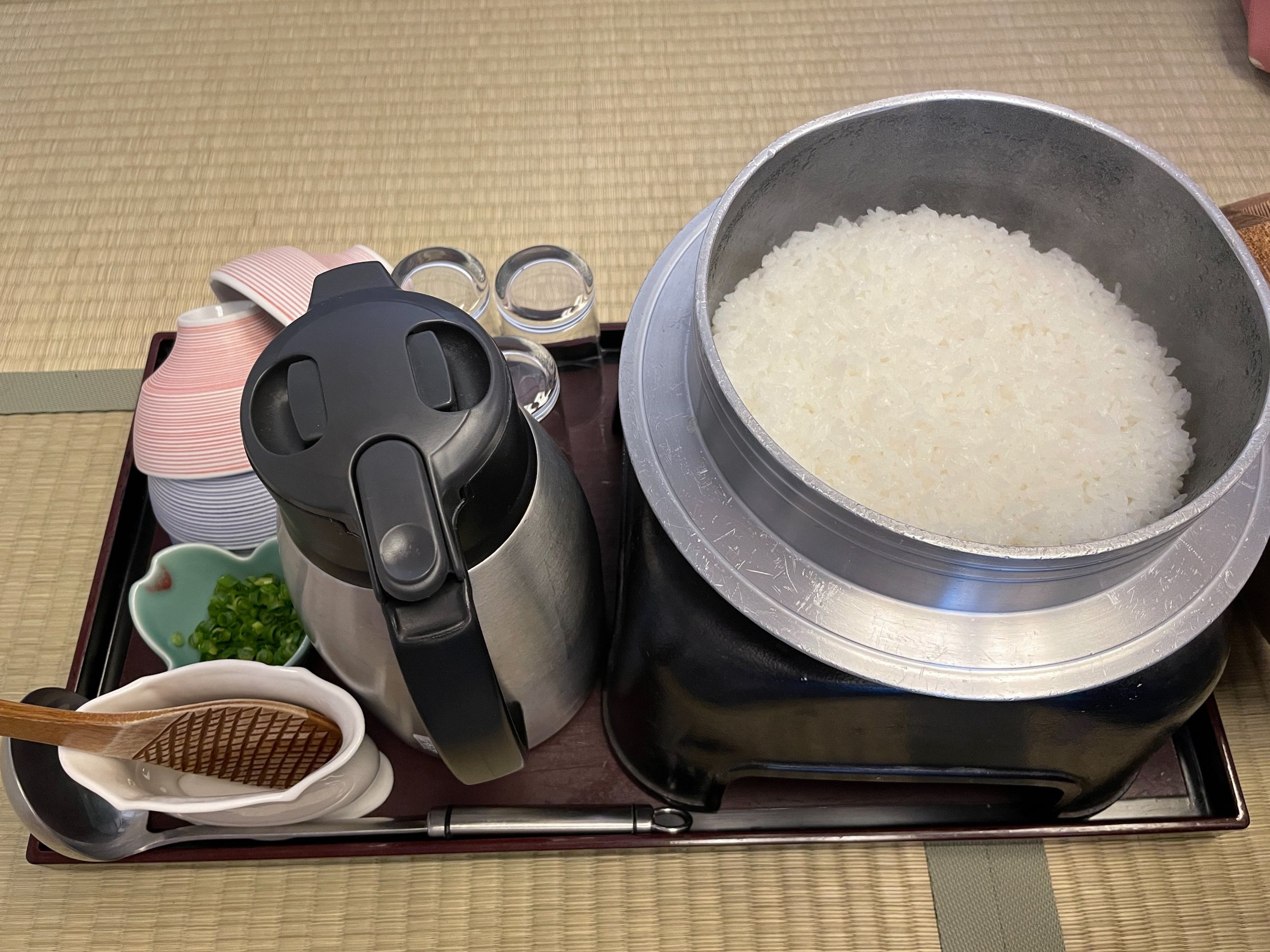
The rice, cooked over a traditional kamado-style stove, was good enough to go back for seconds, even at breakfast.
A parting gift
Breathing in the smell of the shore to the very end, we checked out reluctantly. As a perk of booking through a travel agency’s membership program, the ryokan also gave us a bottle of kinmedai simmering sauce and a teacup.
The staff are, on the whole, young. Every one of them greeted us with a smile whenever our eyes met, and their greetings and manner suggested thorough training.
Final thoughts
Hamanoyu is a ryokan of spectacular open-air bathing and seafood in quantities that will leave you full. Seaside ryokan can easily start to feel interchangeable; Inatori may be just the place to discover a new way to enjoy them.
This review reflects a stay in winter 2021. Menus, baths and services may have changed since; please confirm current details directly with the ryokan before visiting.