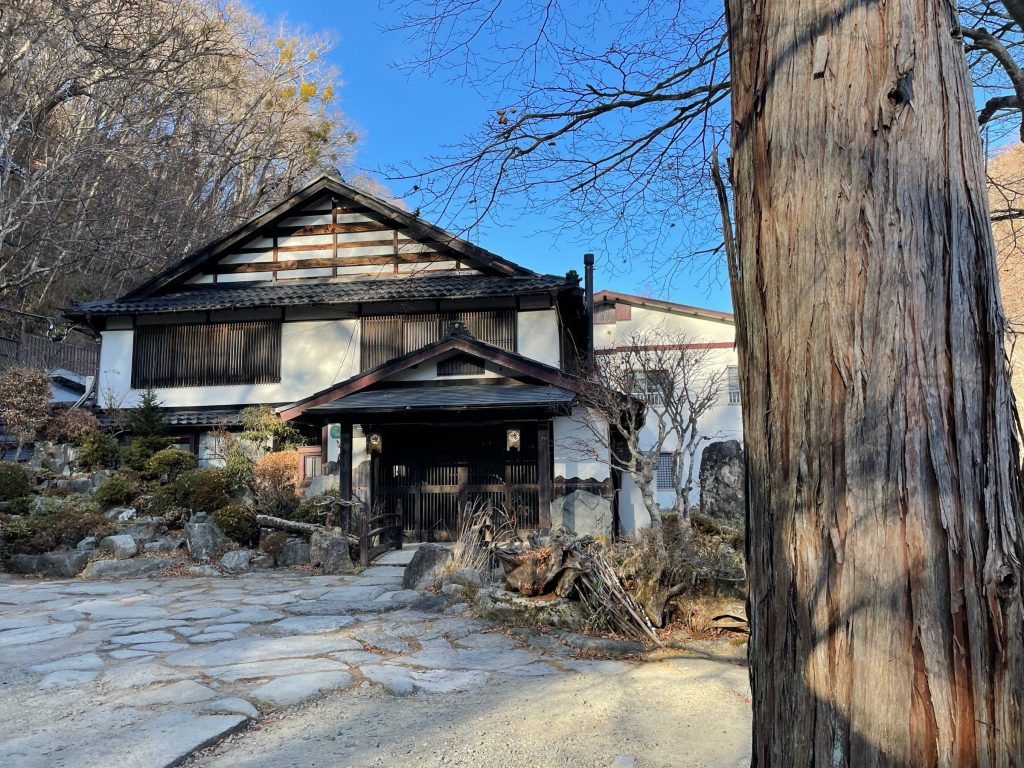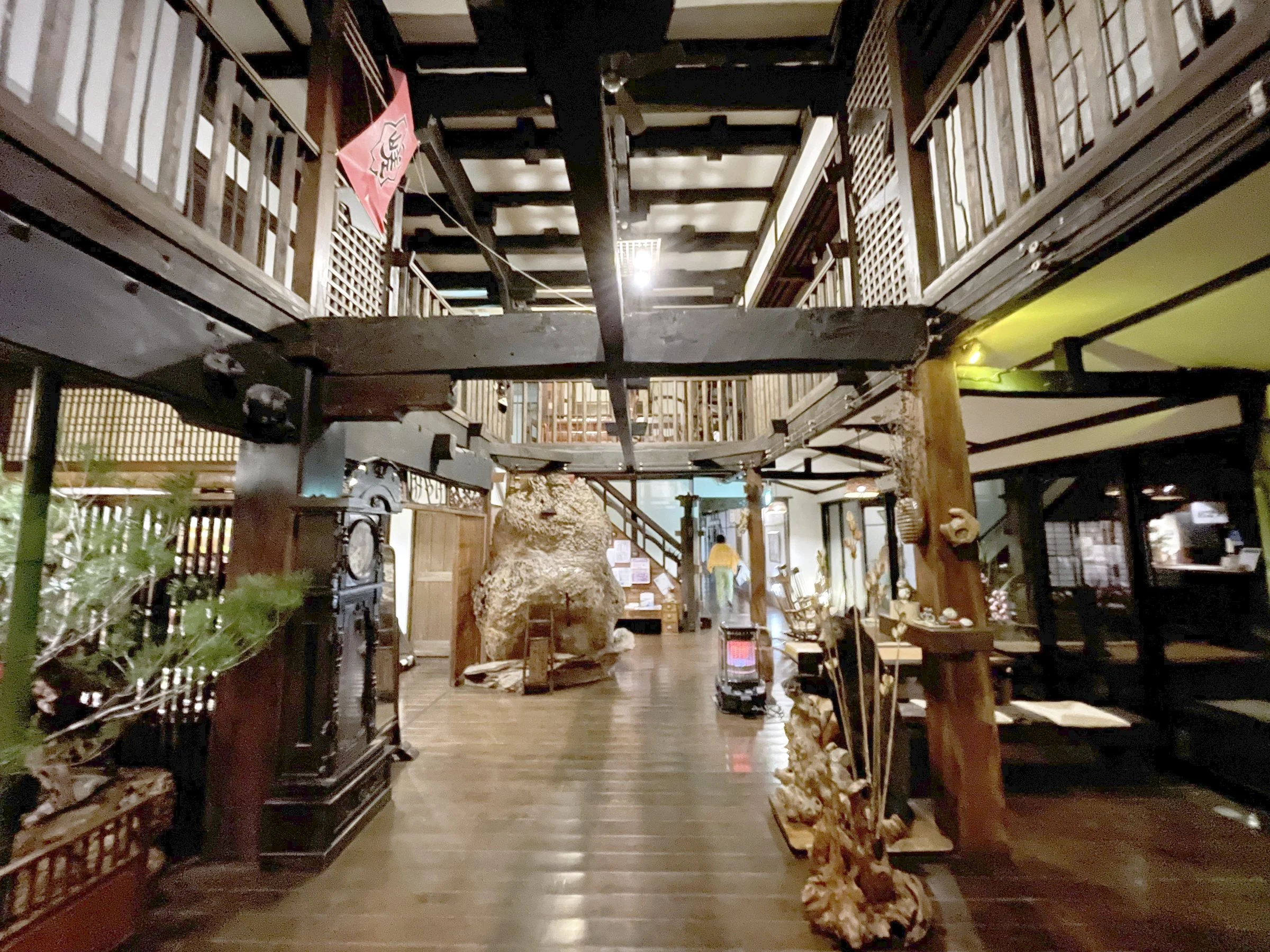
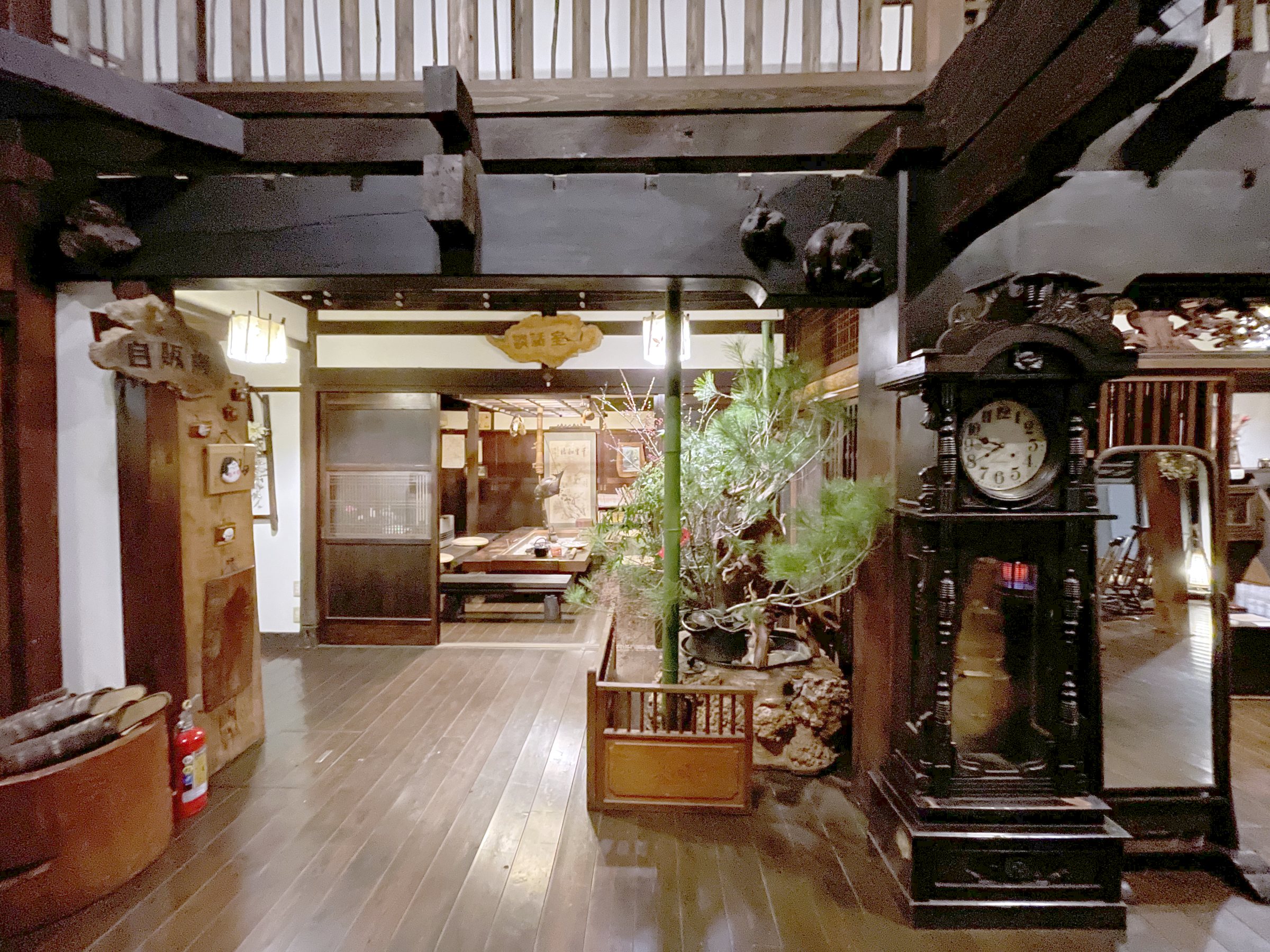
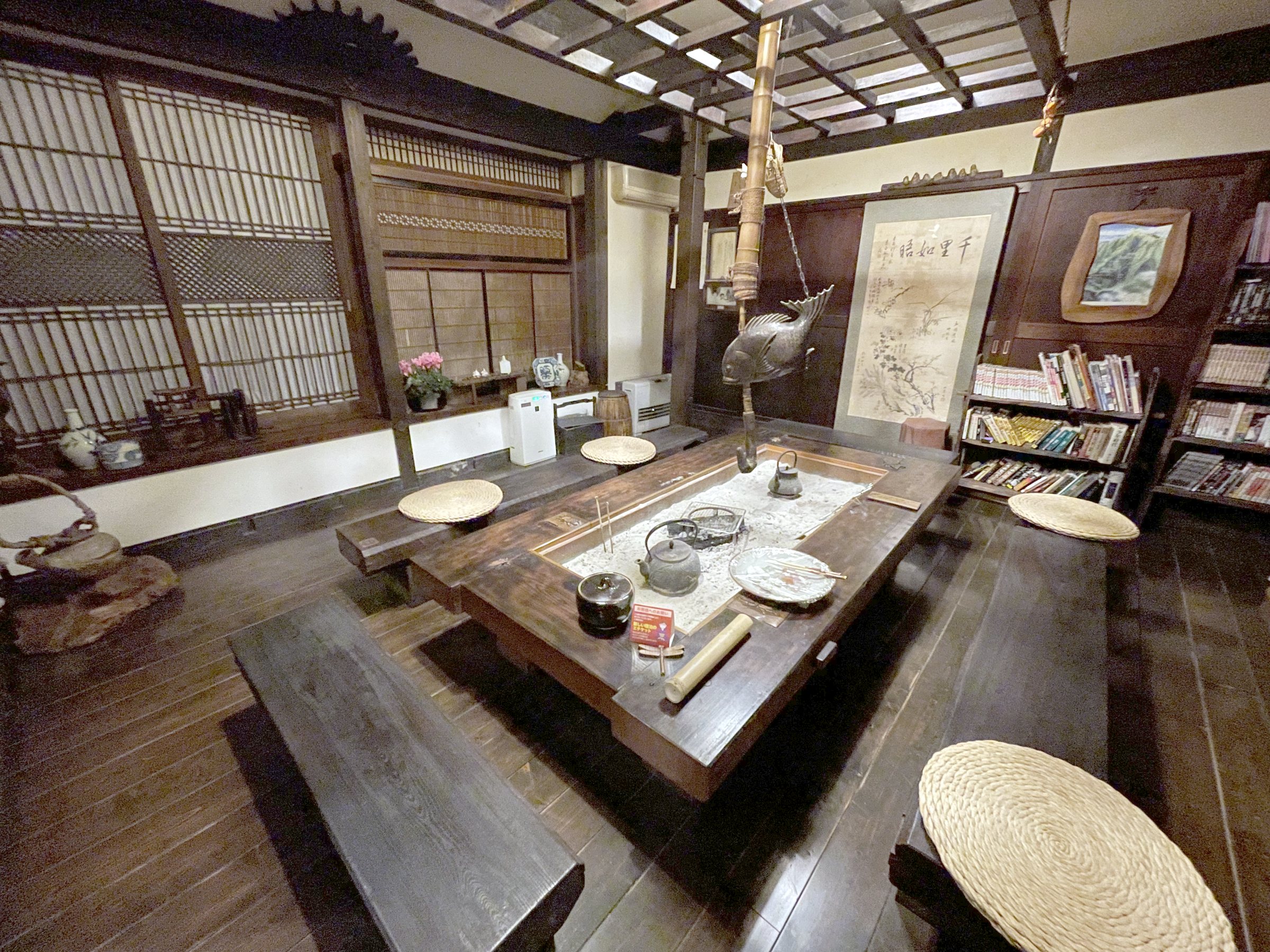
Sagashiokan is a small ryokan tucked away at Sagashio in Yamanashi. Its warm wooden interior is built around beams and pillars handed down through the generations, and decorated with small wooden pieces made by the owner himself. We have stayed here several times now, and each time the spotless state of the building impresses us all over again: there is always a member of staff going over the corners of the shelves and the stairs with a cloth. The house itself, with its strong sense of beauty, deserves a visit of its own; this time, though, we want to introduce the dinner.

Wine at the front desk
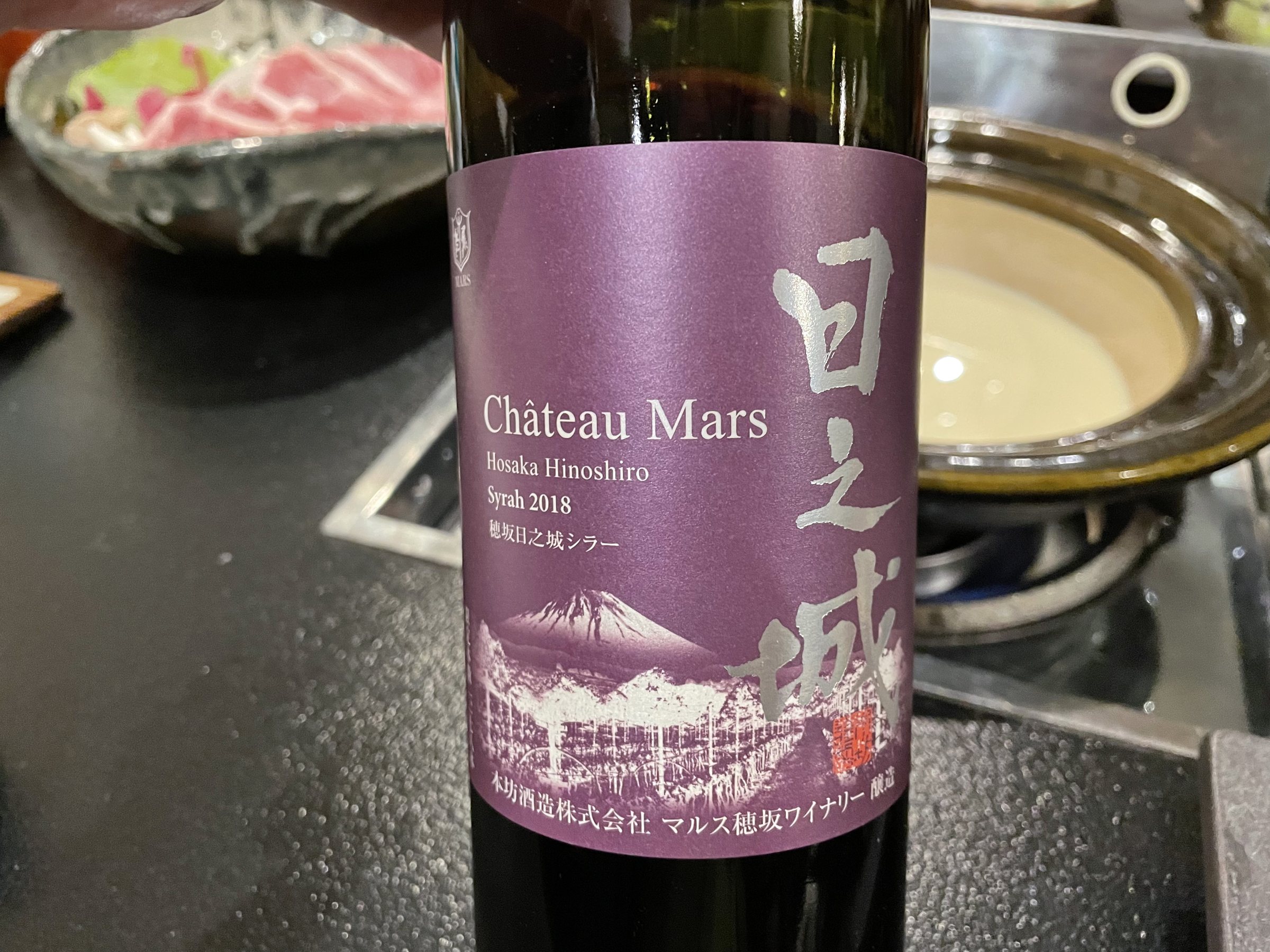
The cooking here is inventive and full of mountain produce, prepared by a woman chef. A member of staff who seemed to lead the team is, we gathered, a great lover of wine and knows a great deal about it. She talked us through the wines while we were checking in at the front desk, so we ordered our drinks for dinner in advance. On her recommendation we chose a red from Hinoshiro and enjoyed it with a beautiful sakizuke, the opening appetiser plate.
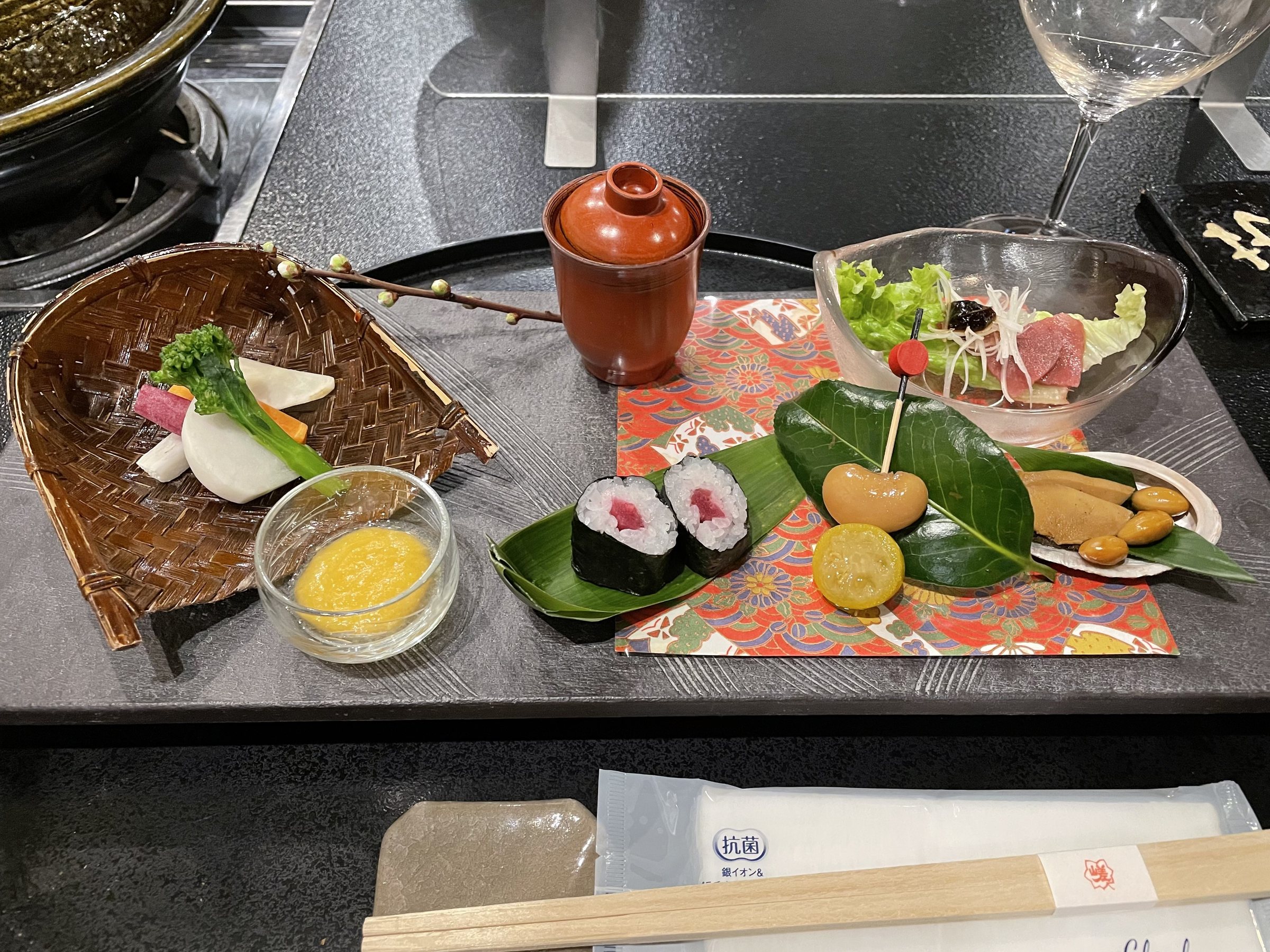
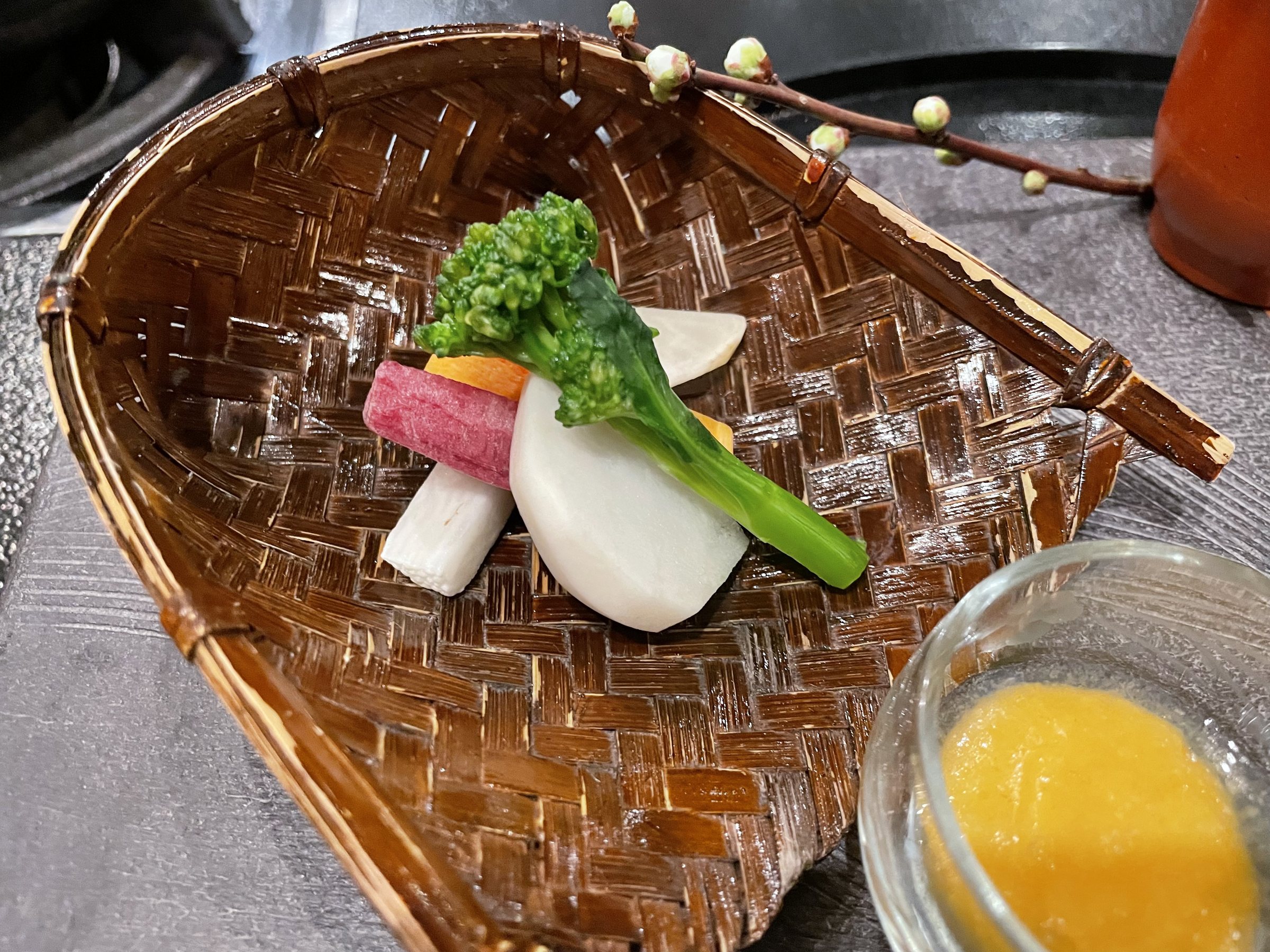
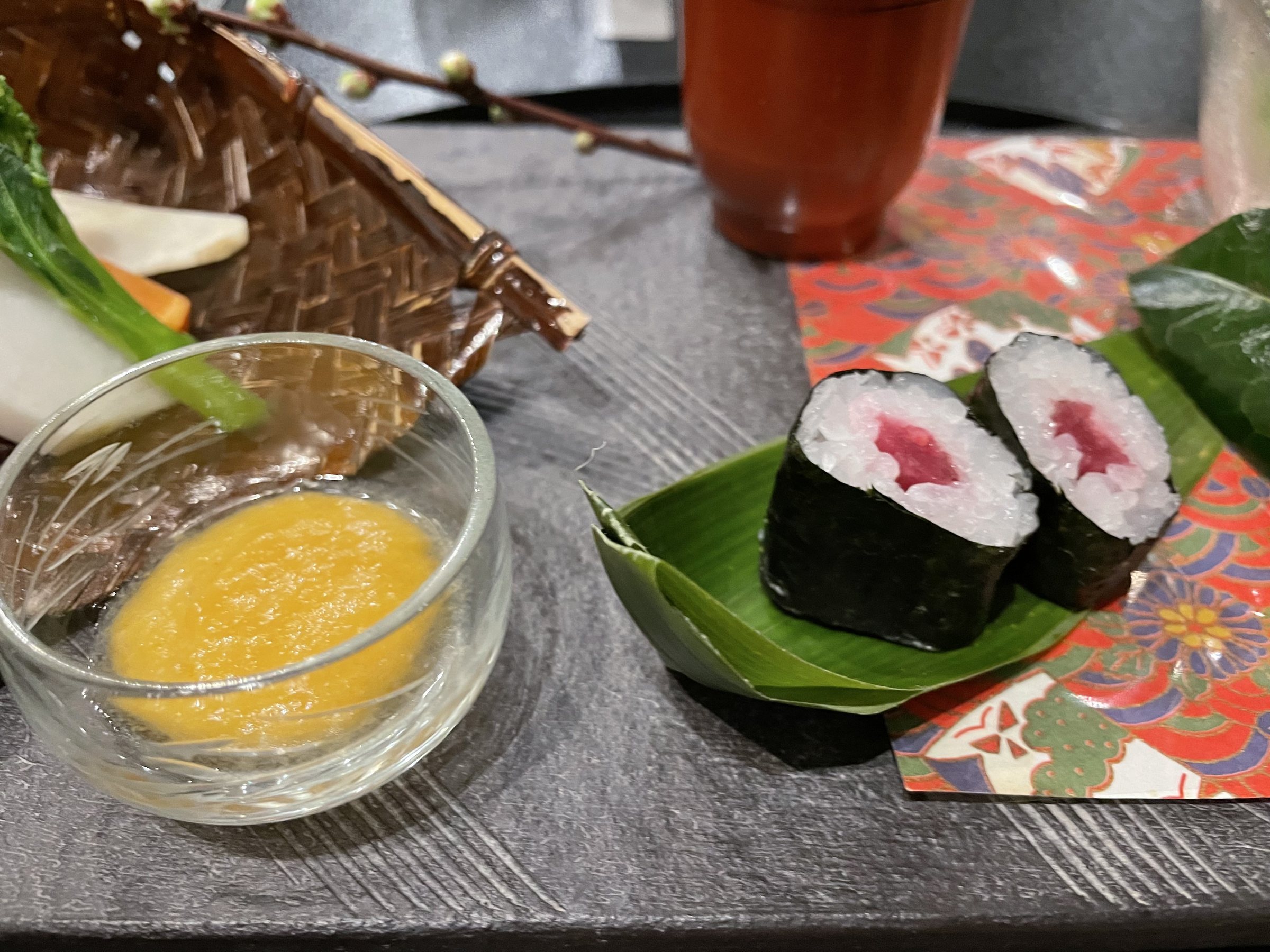
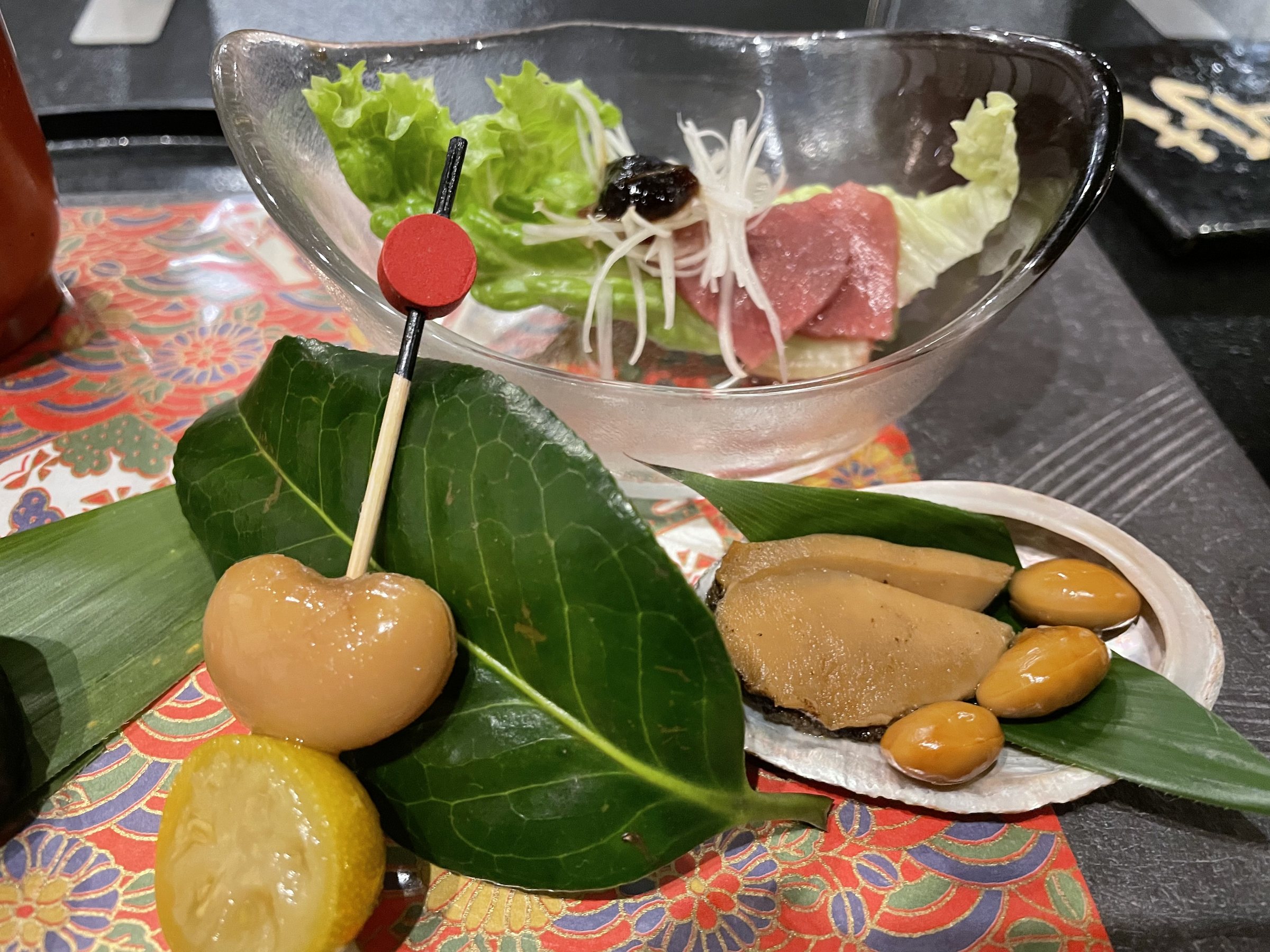
Top left were local vegetables, full of color and fragrance, with a house-made dip. In the center were rolled sushi filled with the ryokan’s own pickles, and a tomato compote had been threaded on to skewers with real flair. It made for a thoroughly charming plate.
River fish and duck
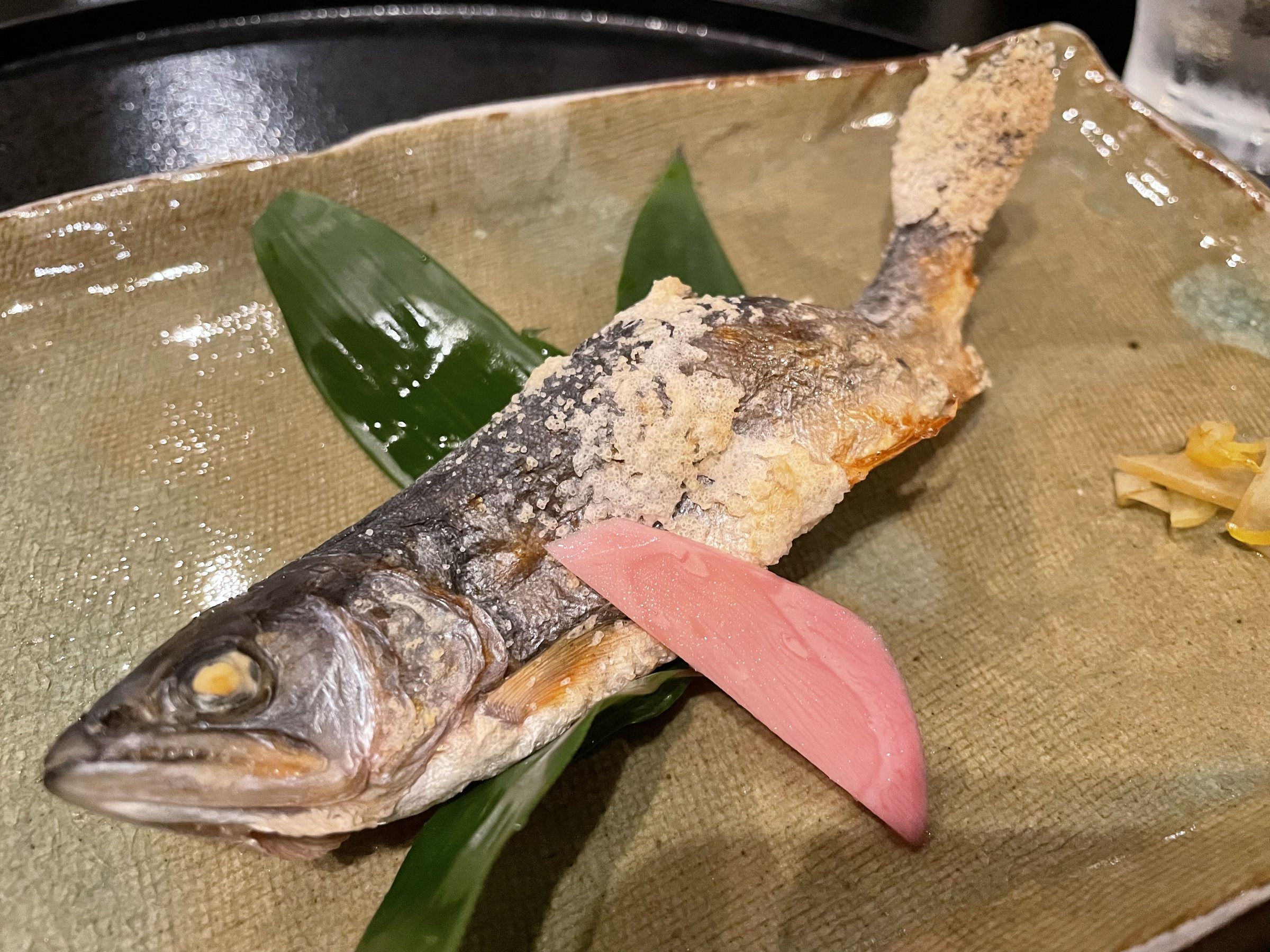
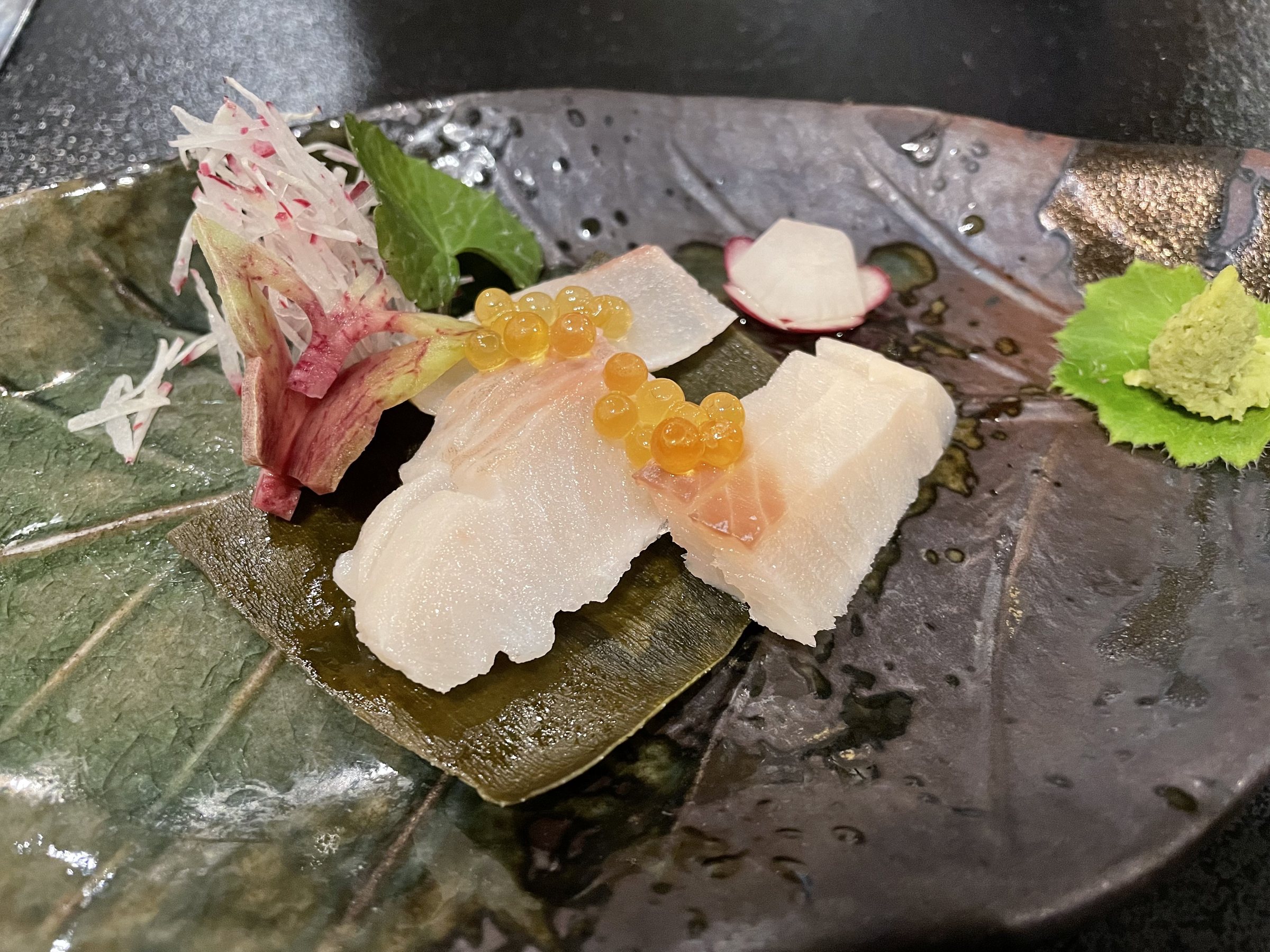
Next came iwana, a mountain char, grilled with salt. The fish was so fresh and so free of any muddy taste that we wondered whether it had just been caught in a nearby river. We could bite into it head first.
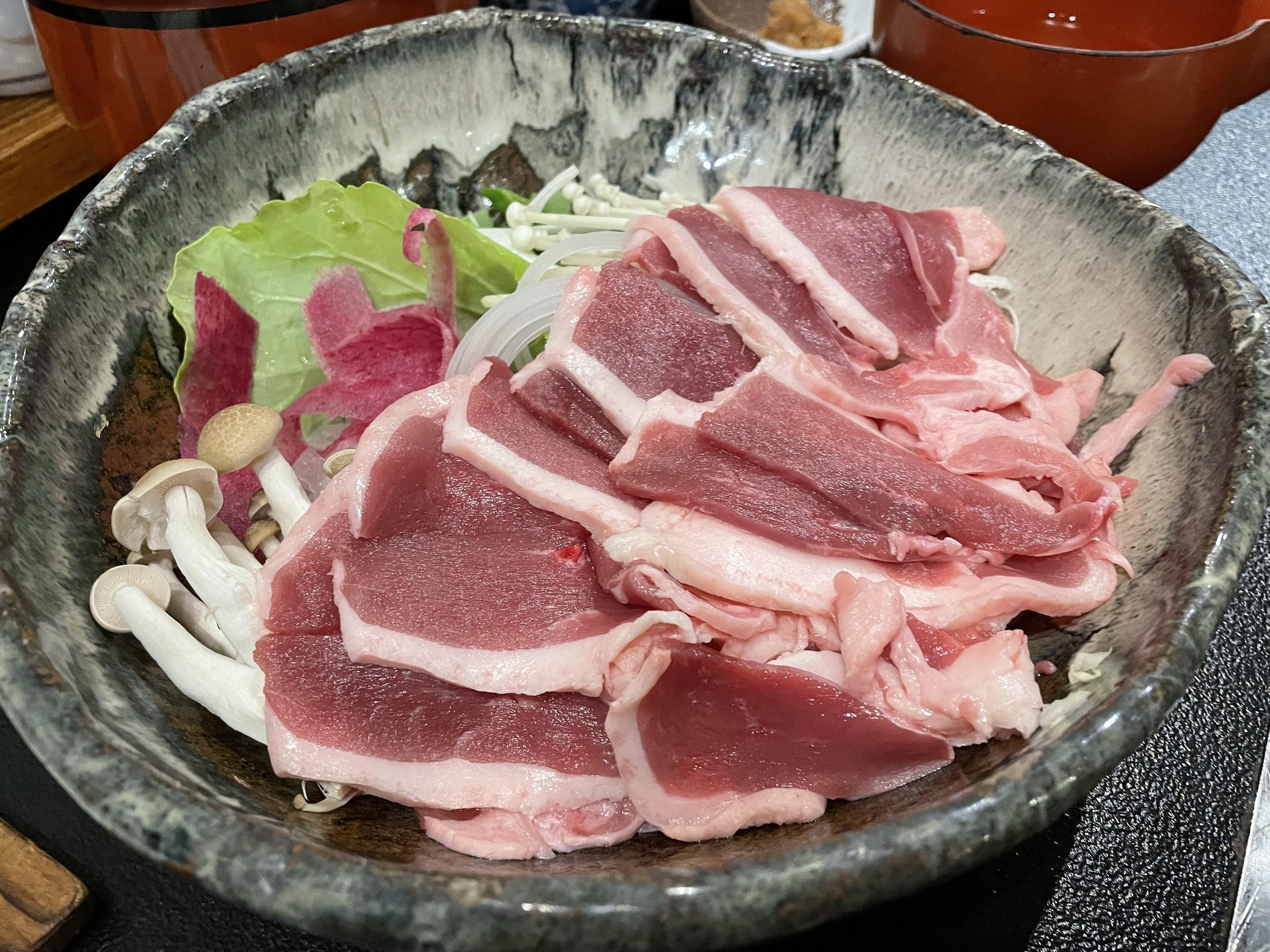
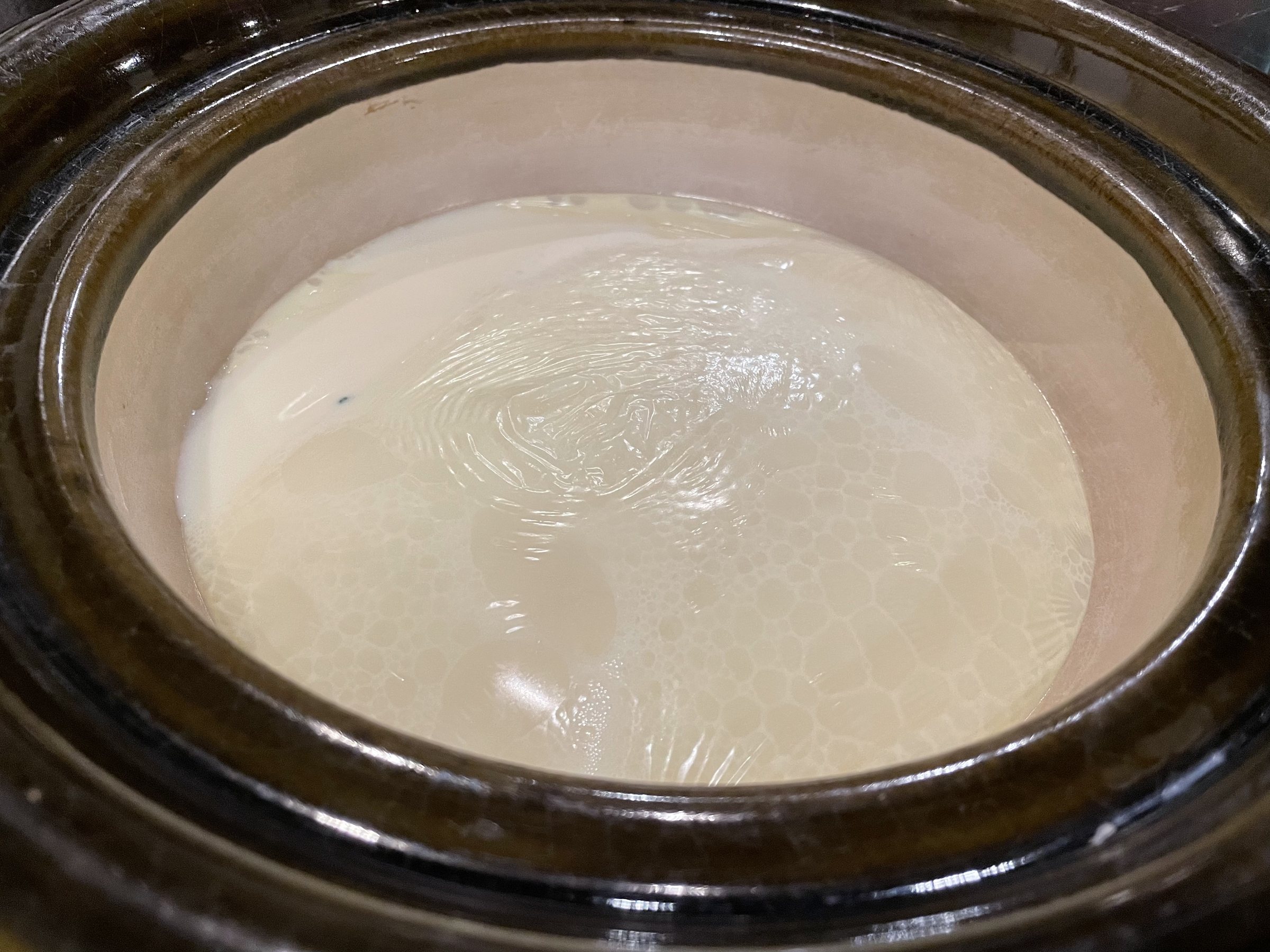
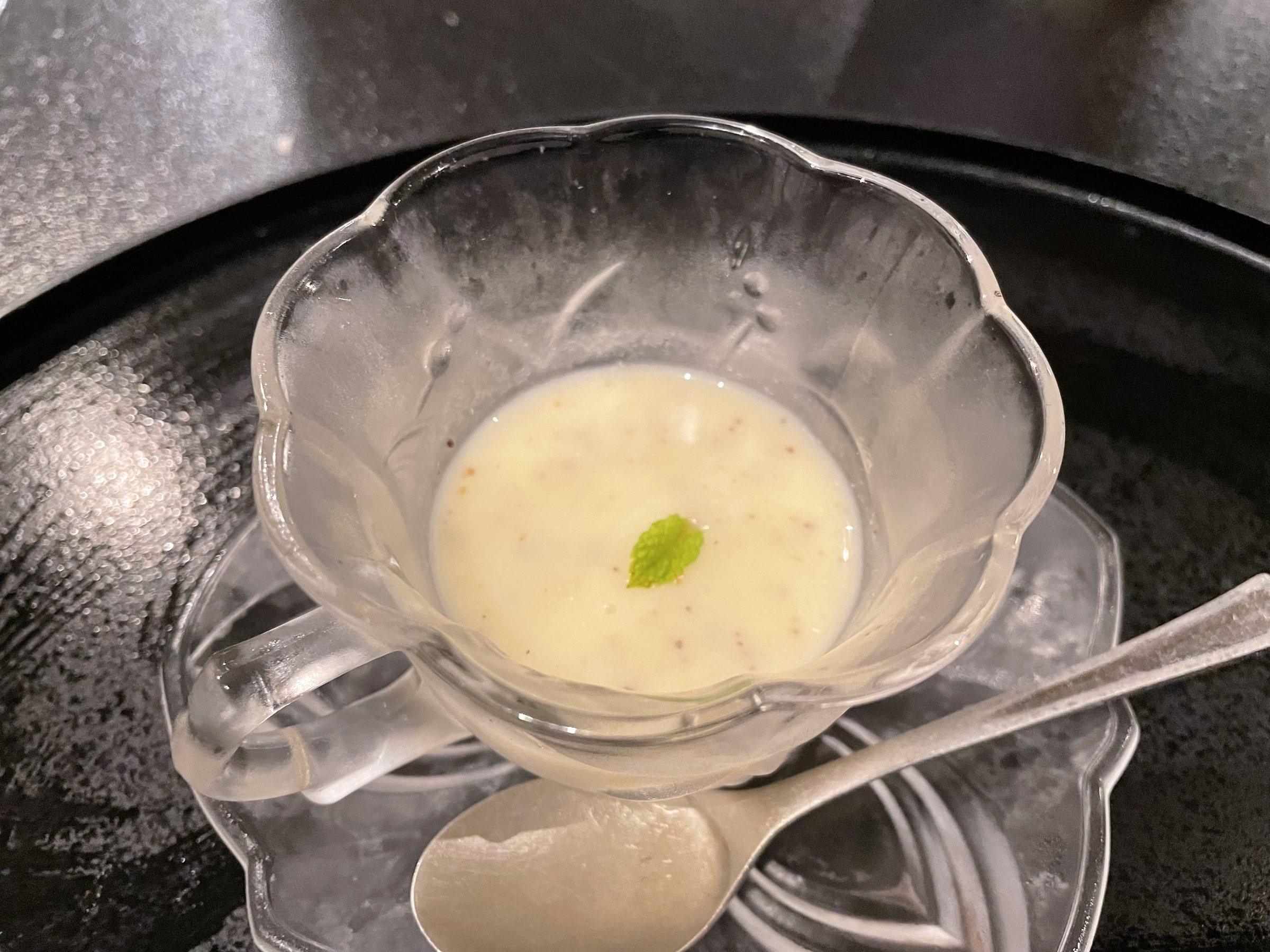
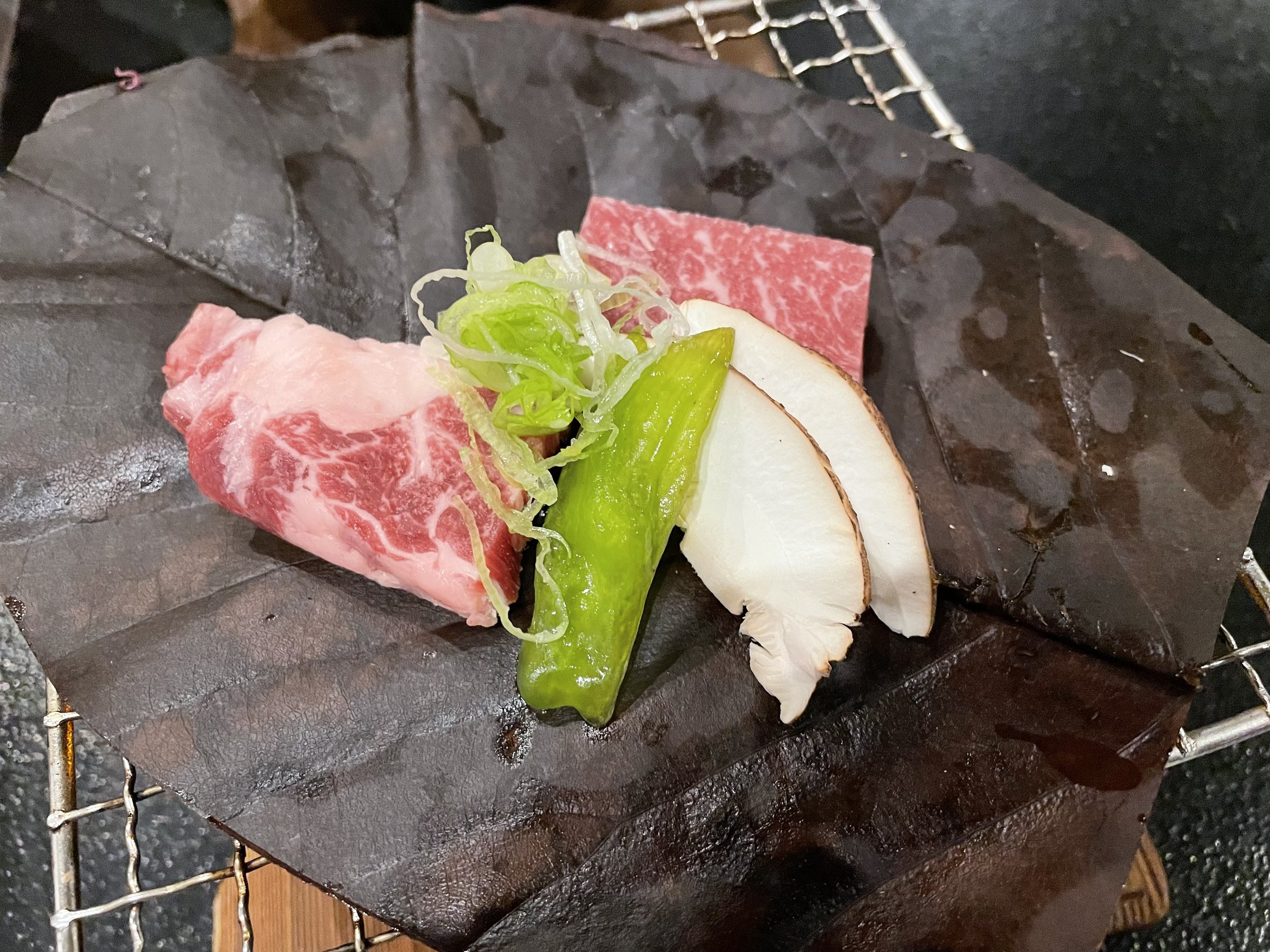
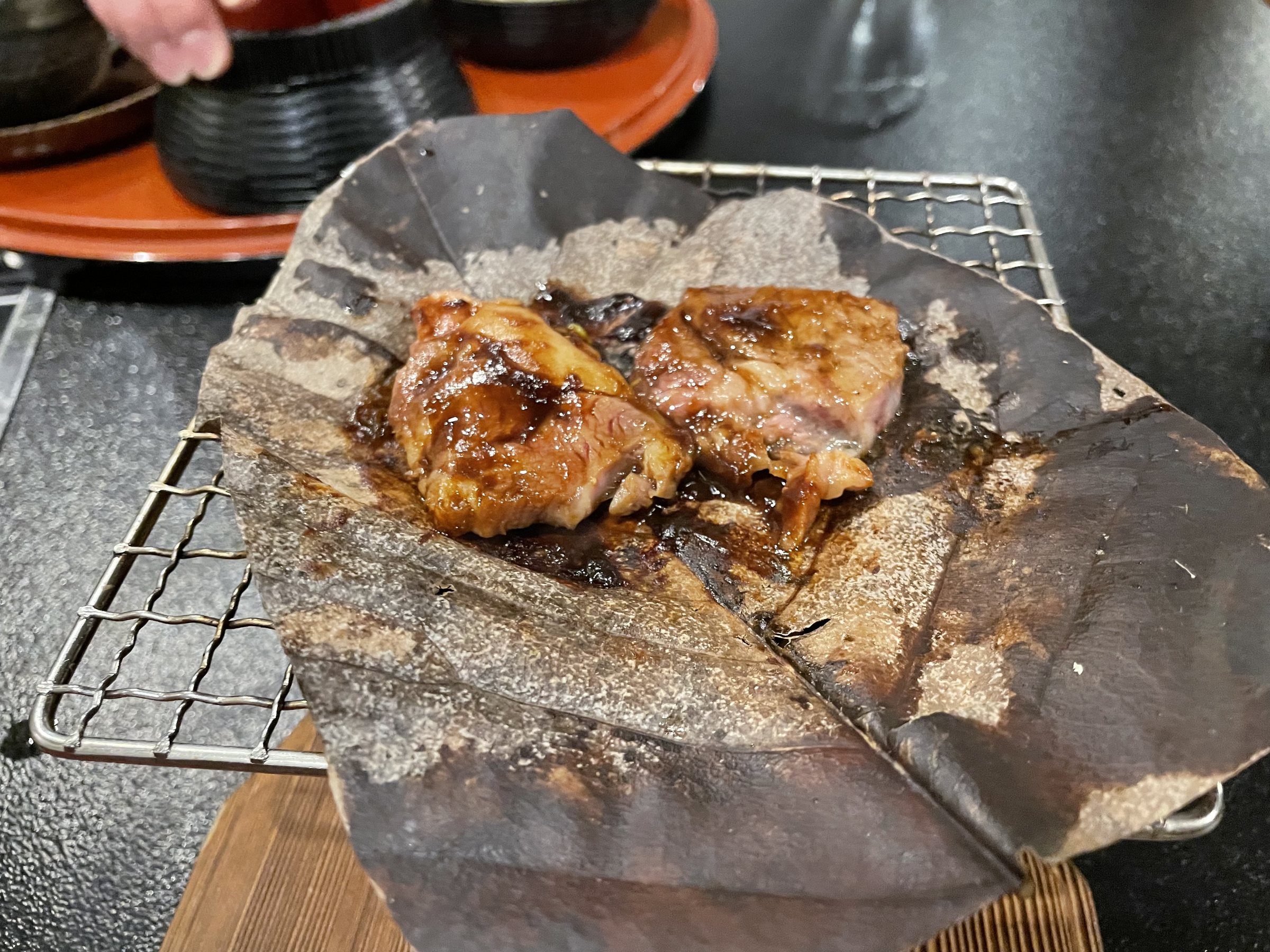
The duck, its color vivid and fresh, was swished through soy milk enriched with a good dashi. It is the kind of thoughtful idea that runs through this kitchen, and it left us feeling that what we were eating was naturally healthy.
Udon, rice and a raclette custard
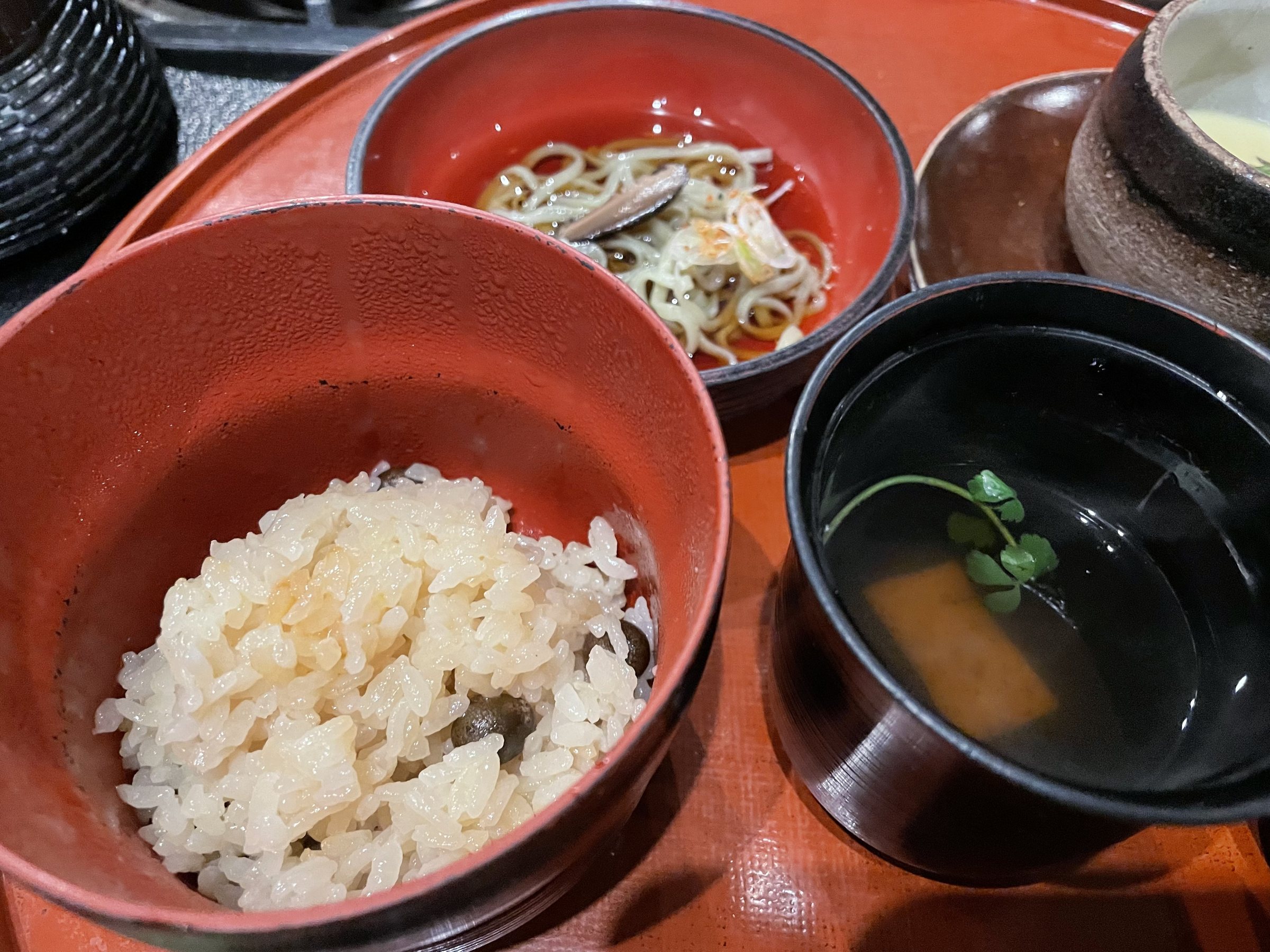
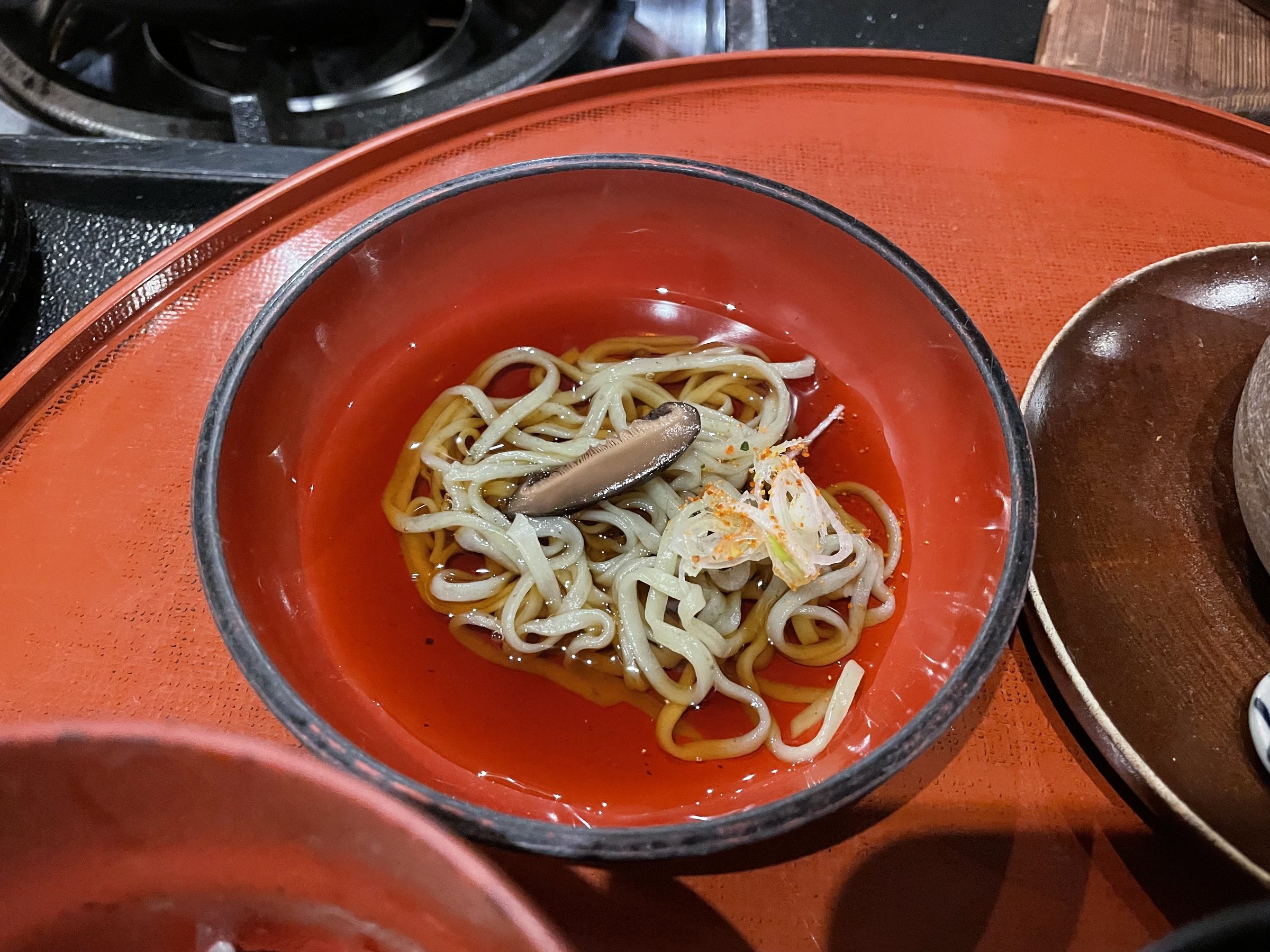
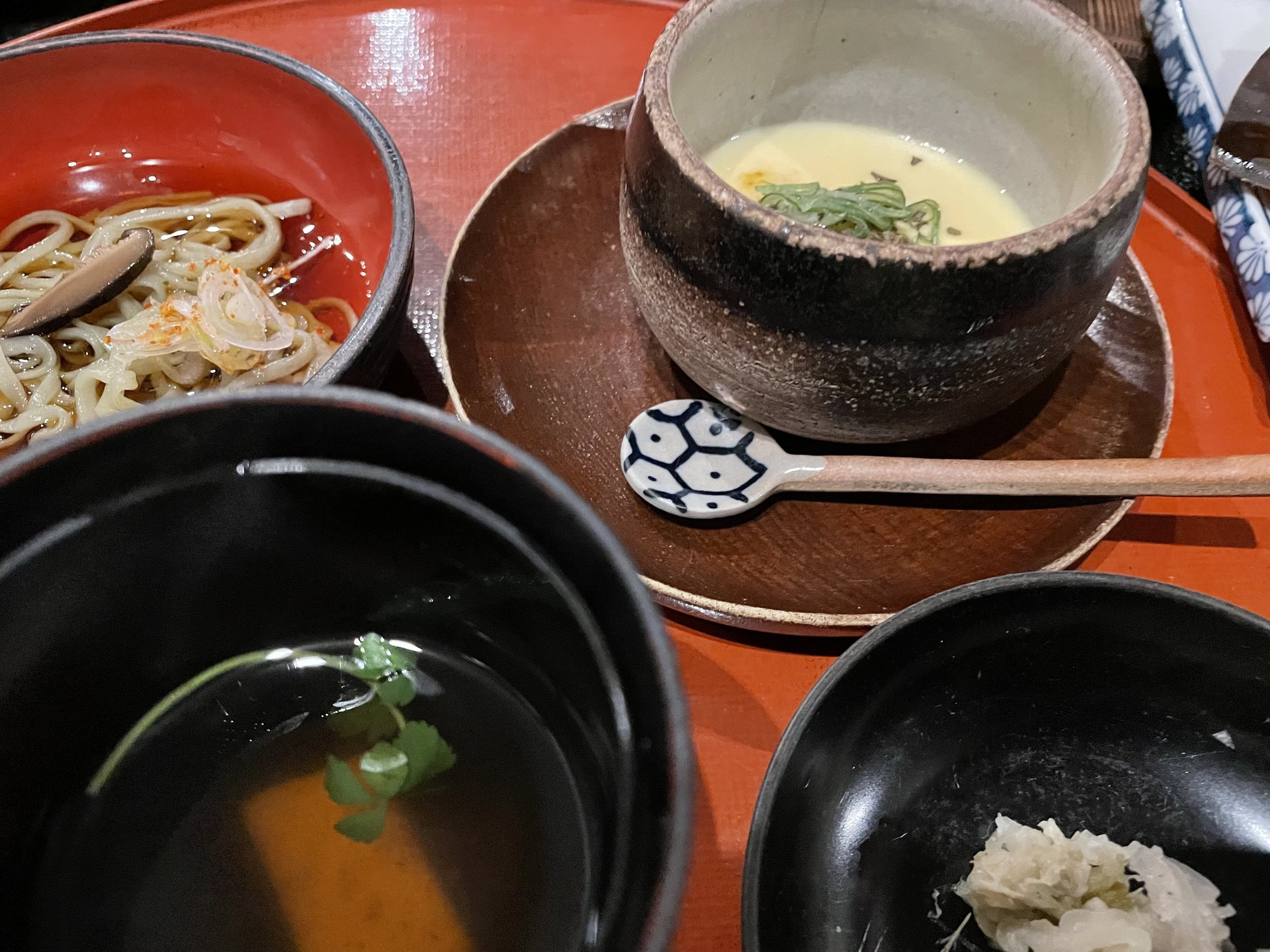
The closing rice course was entirely handmade. Even the udon is made by hand here, we were told, which delighted us; it came with a gently flavored shiitake dashi for dipping. The chawanmushi (savory egg custard) made with raclette cheese was a real surprise: deep and rich, with a flavor somewhere between Japanese cooking and cheese, and very good indeed. We polished off the seasoned mixed rice and the miso soup, and could not have been more satisfied.
Desserts without compromise
The line-up of desserts showed the same commitment. They are gluten-free, and the sweetening is limited to beet sugar and honey, which shows how thoroughly the idea is carried through. No fewer than three of the kitchen’s own cakes appeared, each with a natural sweetness.
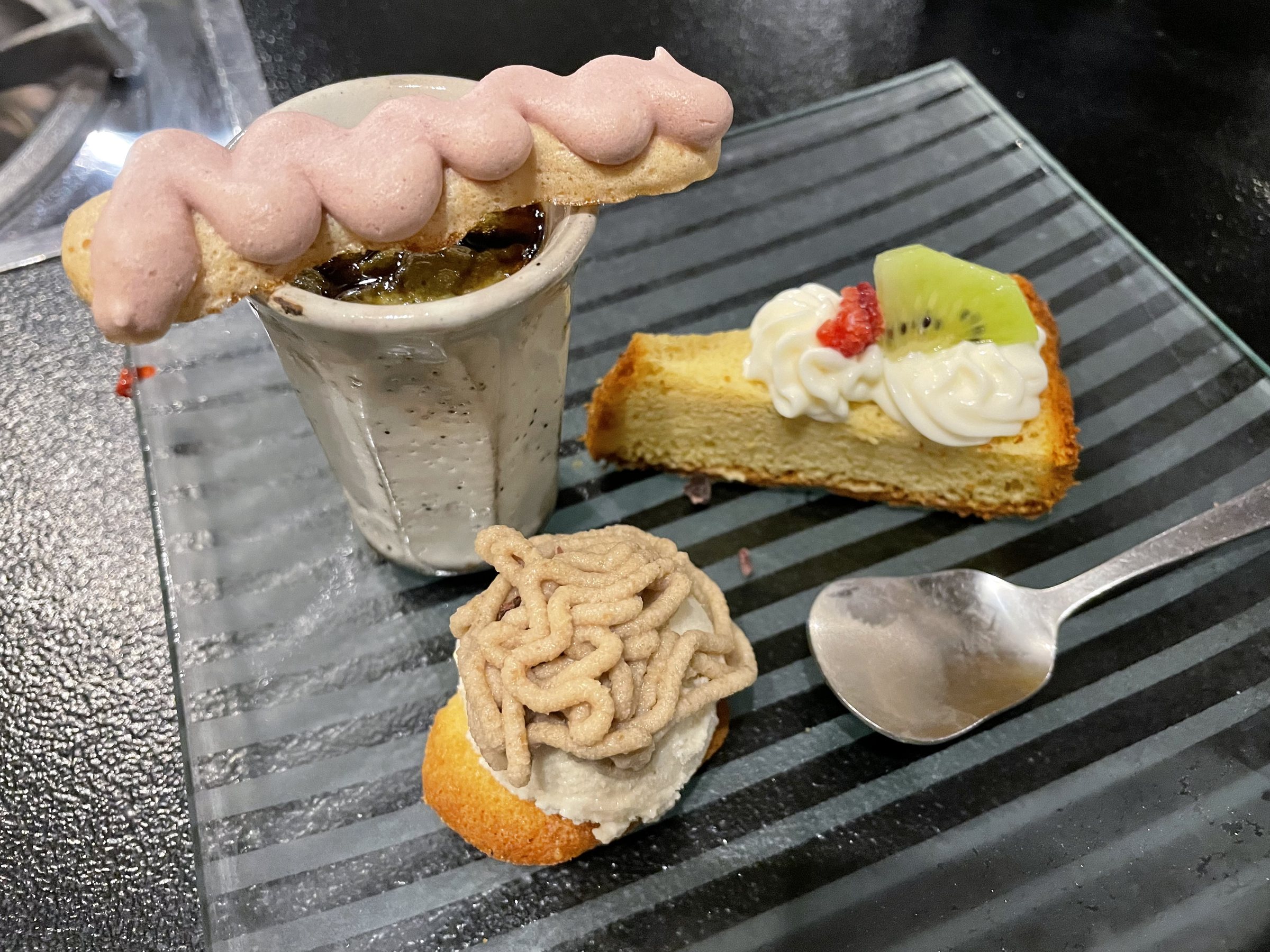
In every dish we felt the care and the effort that had gone into it, shaped by a perspective all the chef’s own. The thought given to the tableware and to the presentation made it clear that each dish was served with real heart.
This review reflects a visit in January 2022. Menus, wines and prices change; please confirm current details directly with Sagashiokan before visiting.