Sagashiokan stands not far from the foot of Daibosatsu, the Yamanashi peak counted among Japan’s Hyakumeizan, the “100 Famous Mountains”. We built our trip around it: a climb first, for the great view from the top, and then a night at this ryokan to rest our legs.
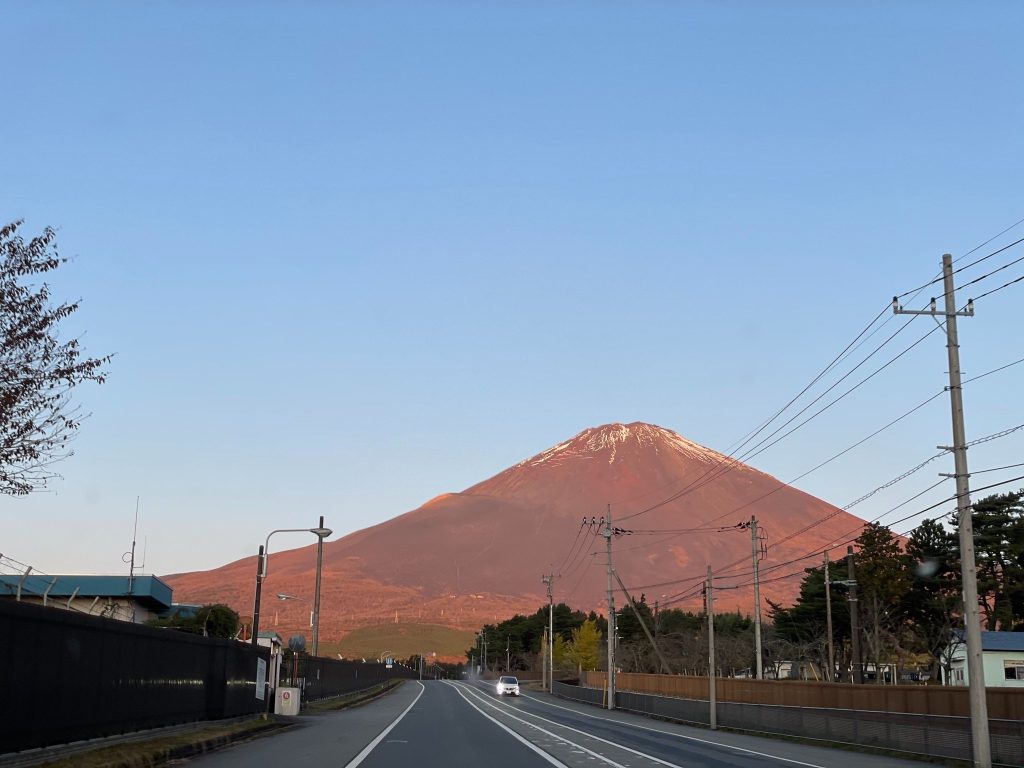
Fuji from the summit
Hiking is a regular pastime for us, and we had high hopes for a mountain of Daibosatsu’s height. The trail turned out to be steeper than we had expected, and the rocky ground near the summit was a real struggle. The view from the top, though, was overwhelming: Mt. Fuji straight ahead, with lakes and ridge after ridge of mountains laid out like a painting.
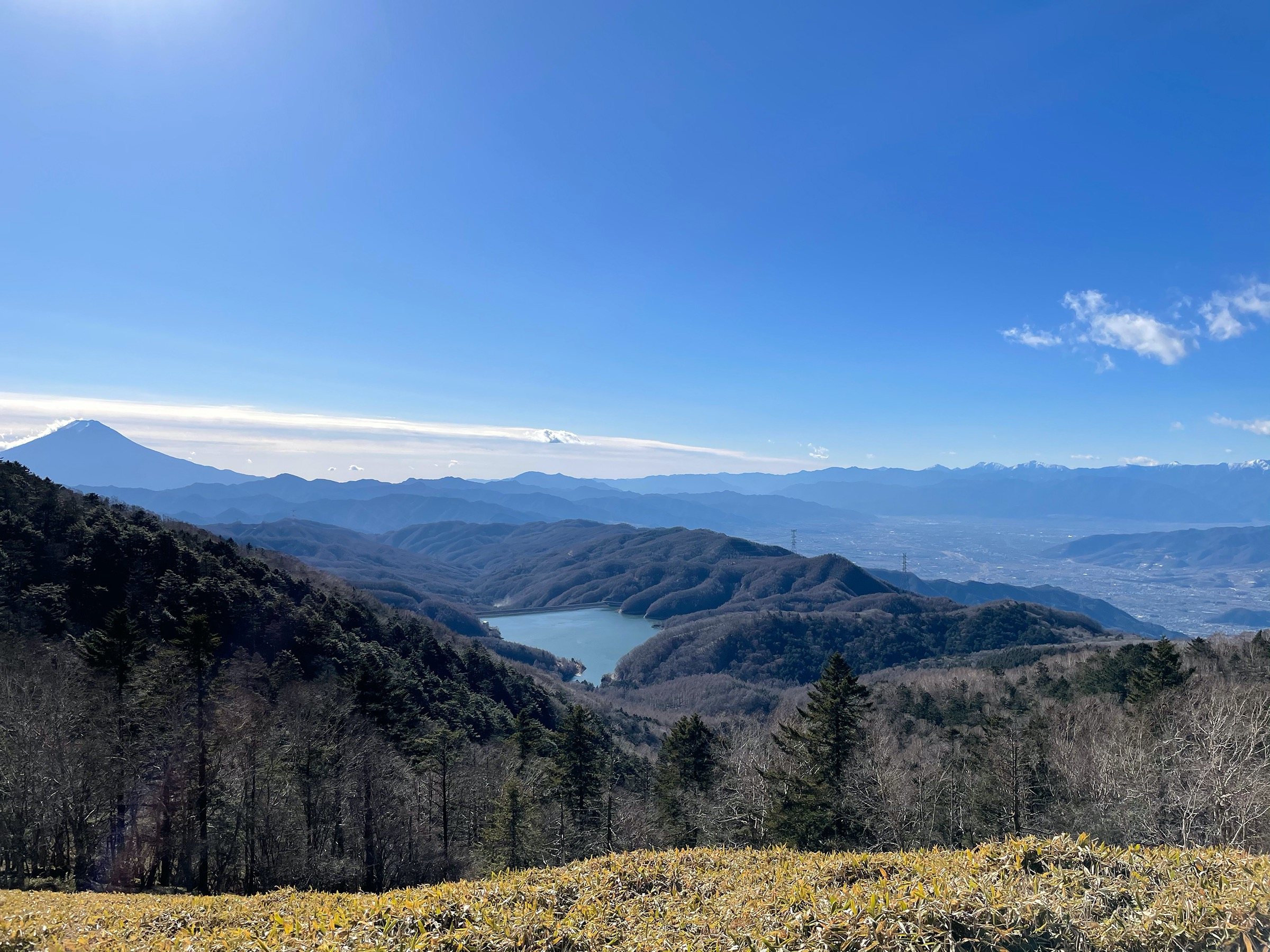
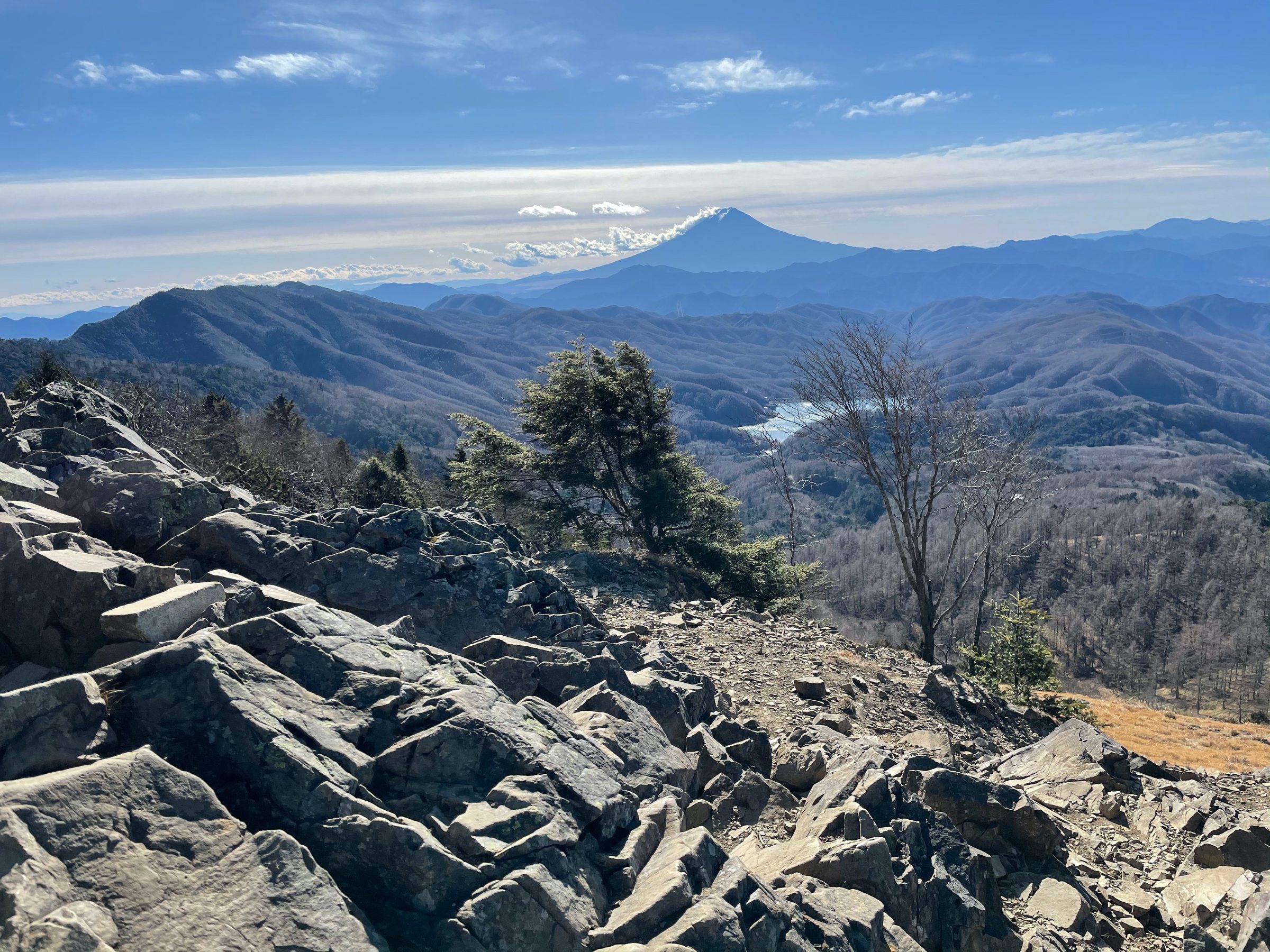
Winter on Daibosatsu is colder than you might imagine. The mountain water had frozen, and the wind across the summit stung the tips of our noses. We took our time over the view and the clear, cold air, and the descent, which takes its own toll on the legs, left us gently perspiring. Ahead lay the reward we had been looking forward to all day: Sagashiokan.
A mountain hut, lovingly made
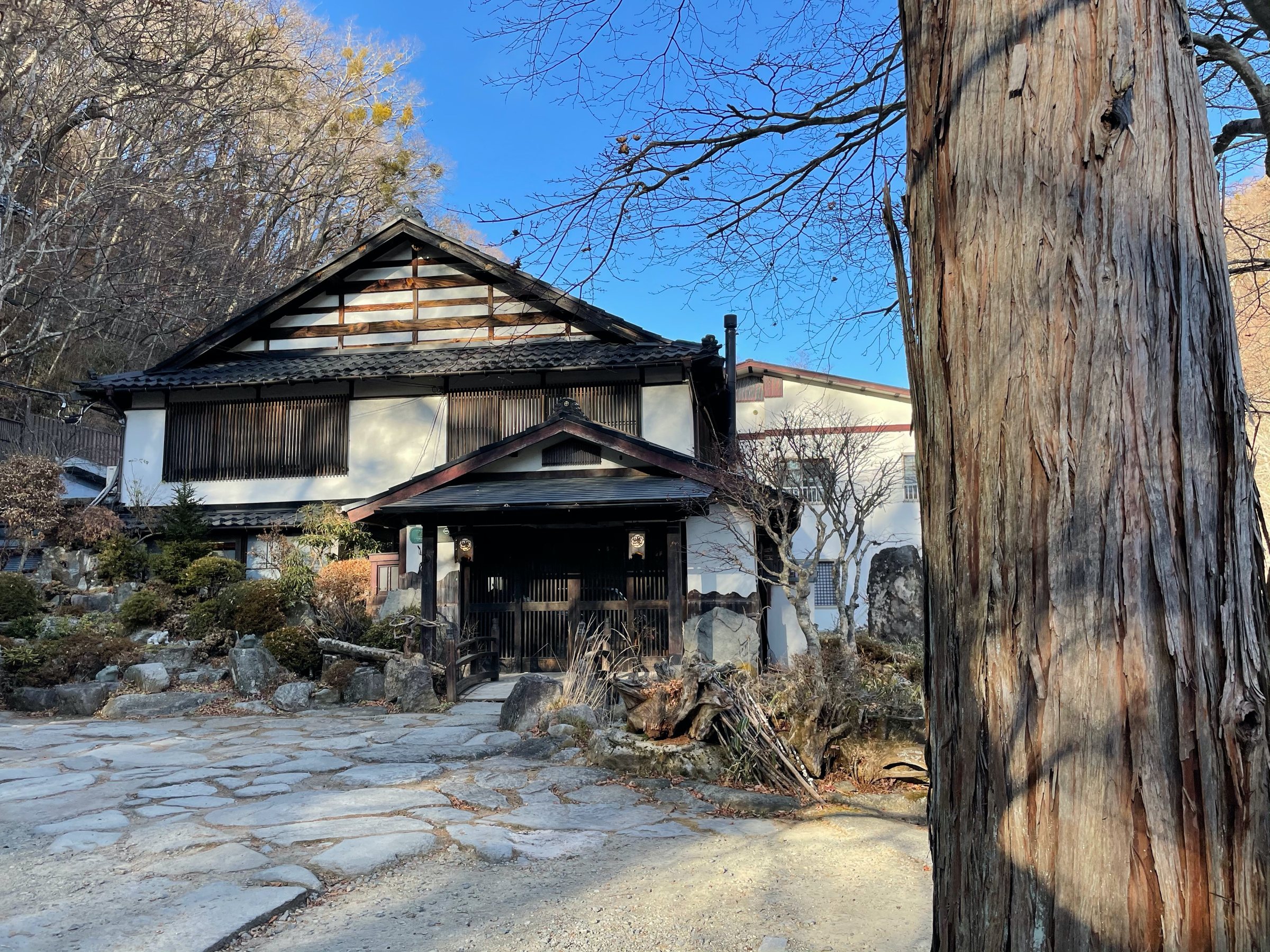
It is a small ryokan with the look of a mountain hut: a thoroughly charming, atmospheric building, wrapped in trees and set deep in the woods.
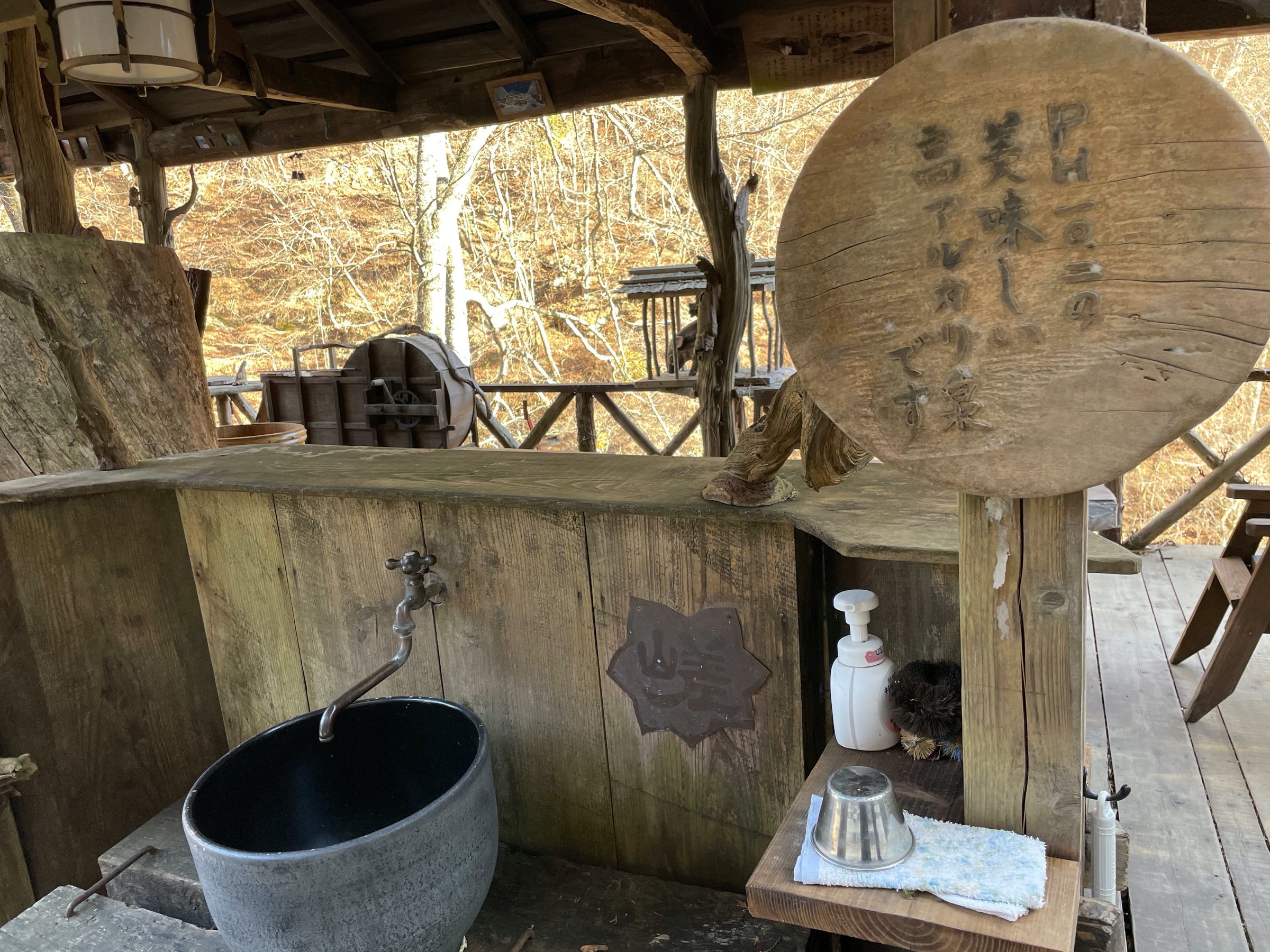
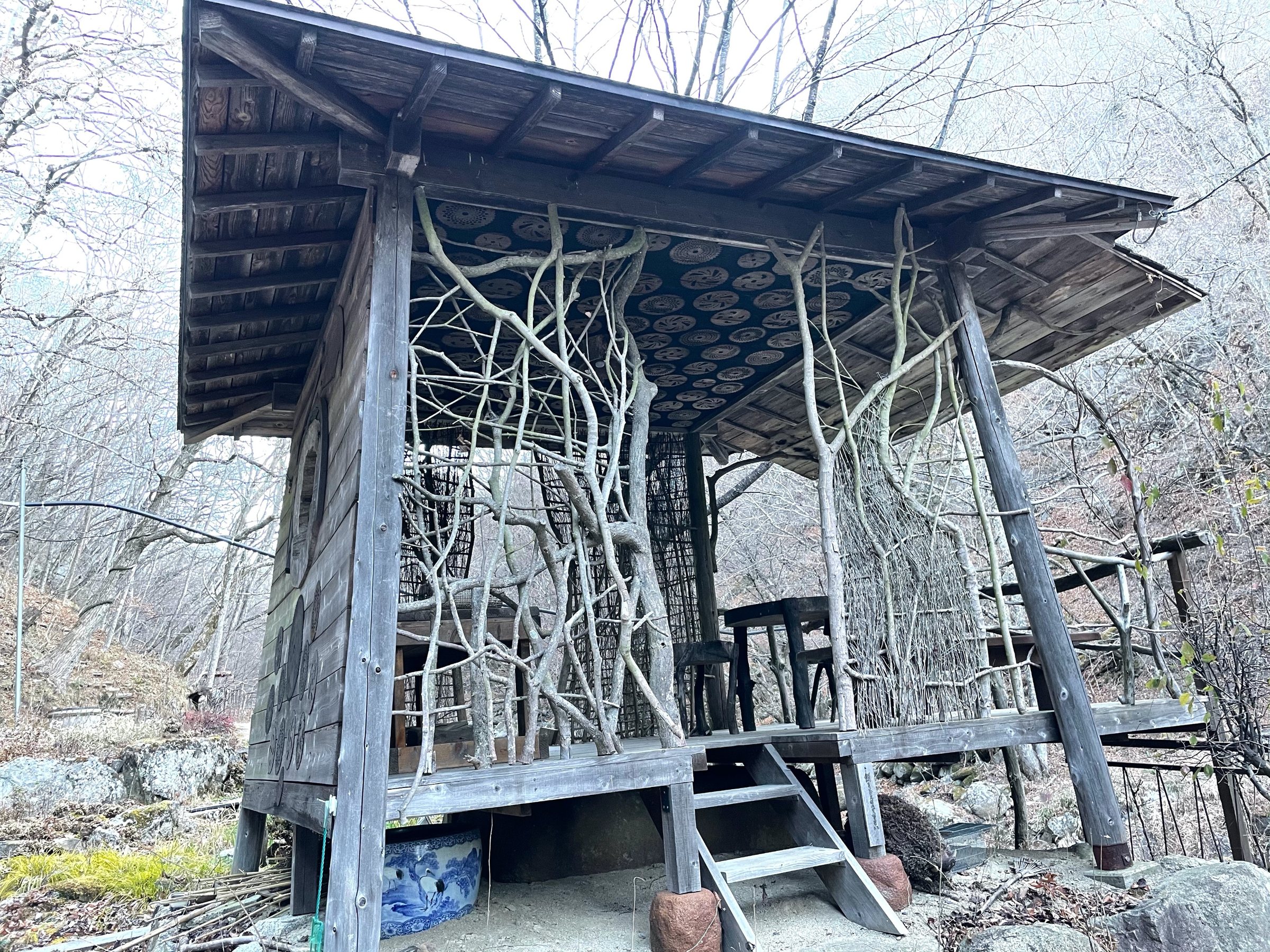
Near the parking lot there is a spout of drinkable natural water and a handmade resting place, small touches that hint at a hospitality all its own.
A museum of mountain treasures
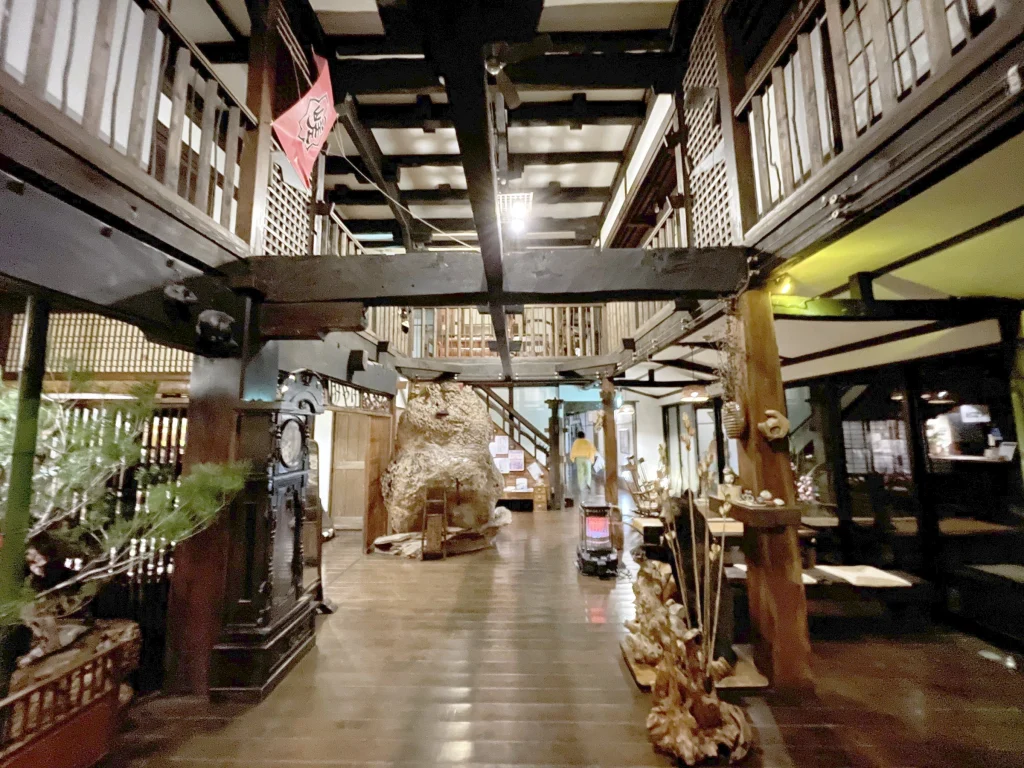
Through the entrance lies a lobby crowded with objects of every kind. It feels like a small museum of mountain treasures. Glance upwards and you find a fur draped over a handrail, and ornaments tucked even among the timbers near the ceiling, all placed with great care.
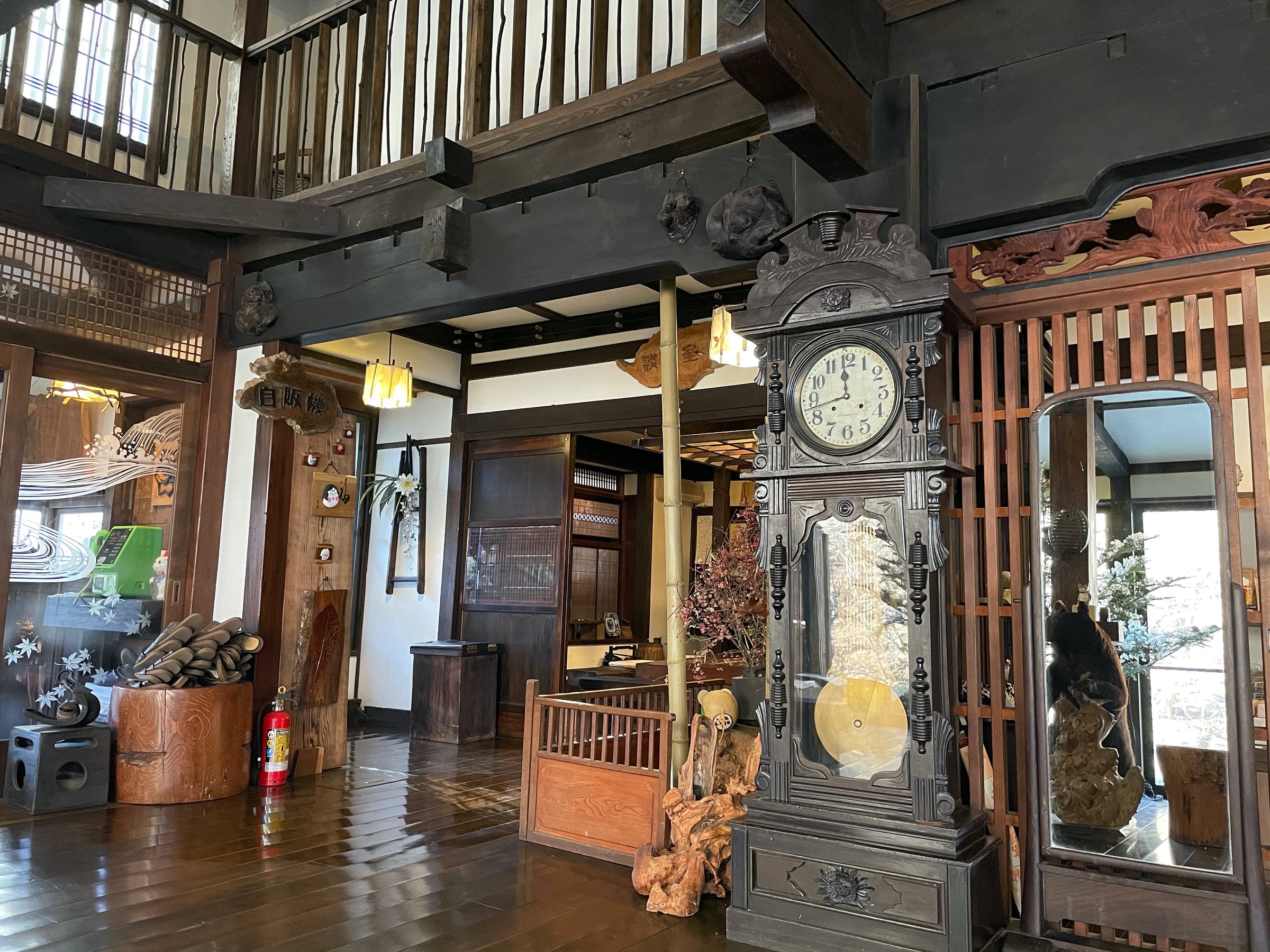
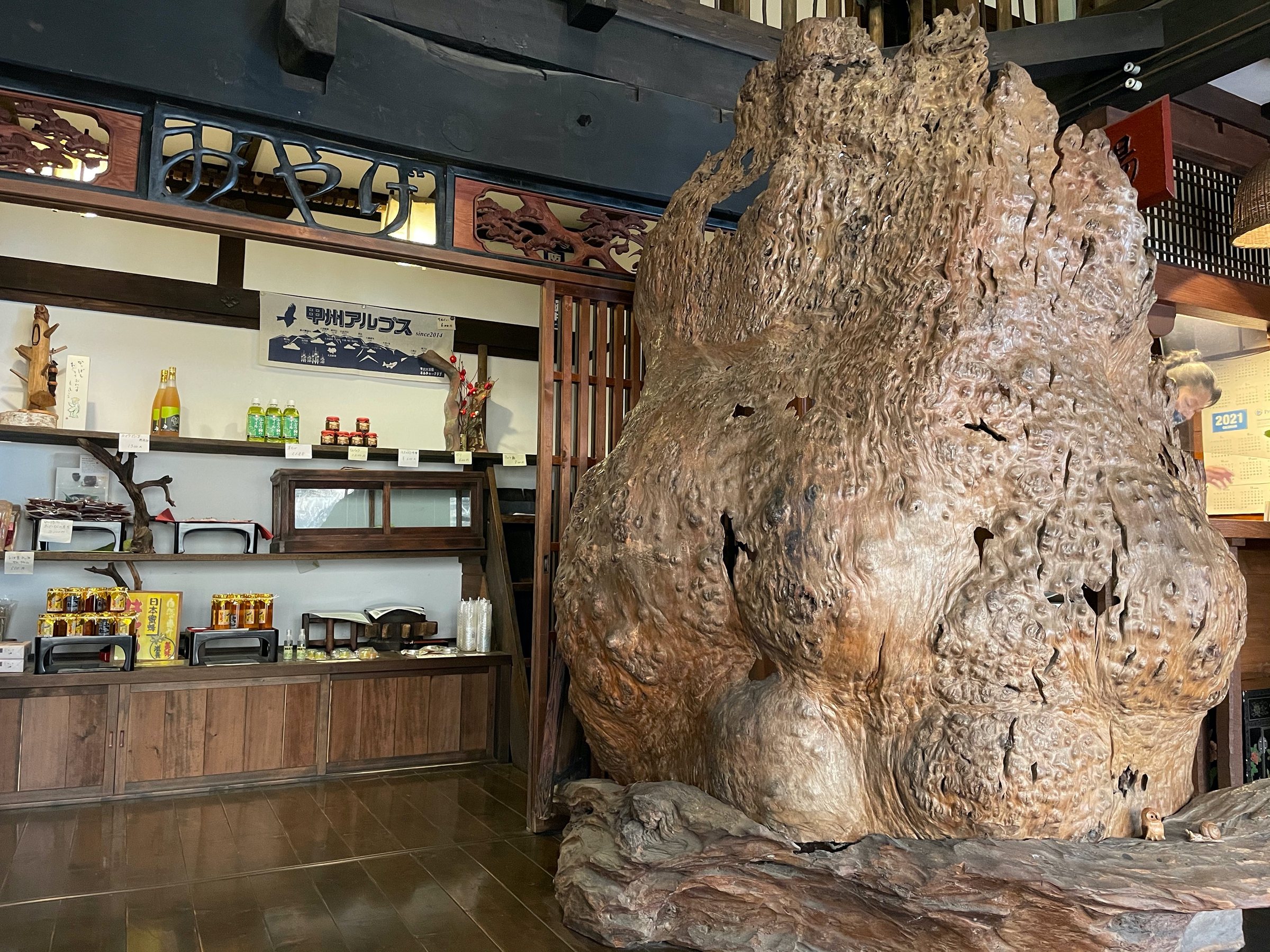
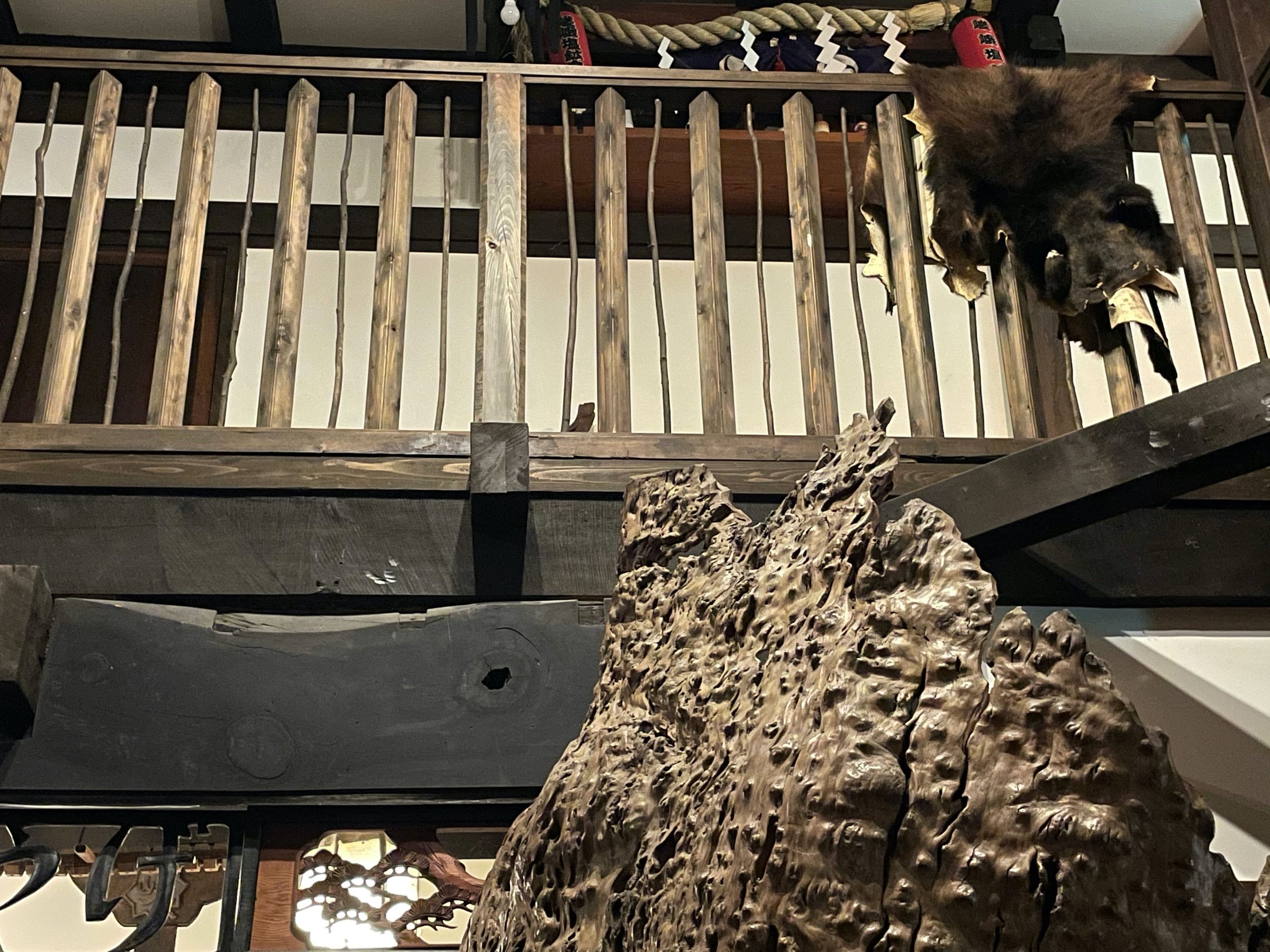
Look more closely and many of the pieces turn out to be handmade works and carvings. When we asked, we were told that they are the owner’s: a hobby that grew into a passion, he makes the small objects and furnishings himself to delight his guests. Each one is carefully crafted, a work of art in its own right.
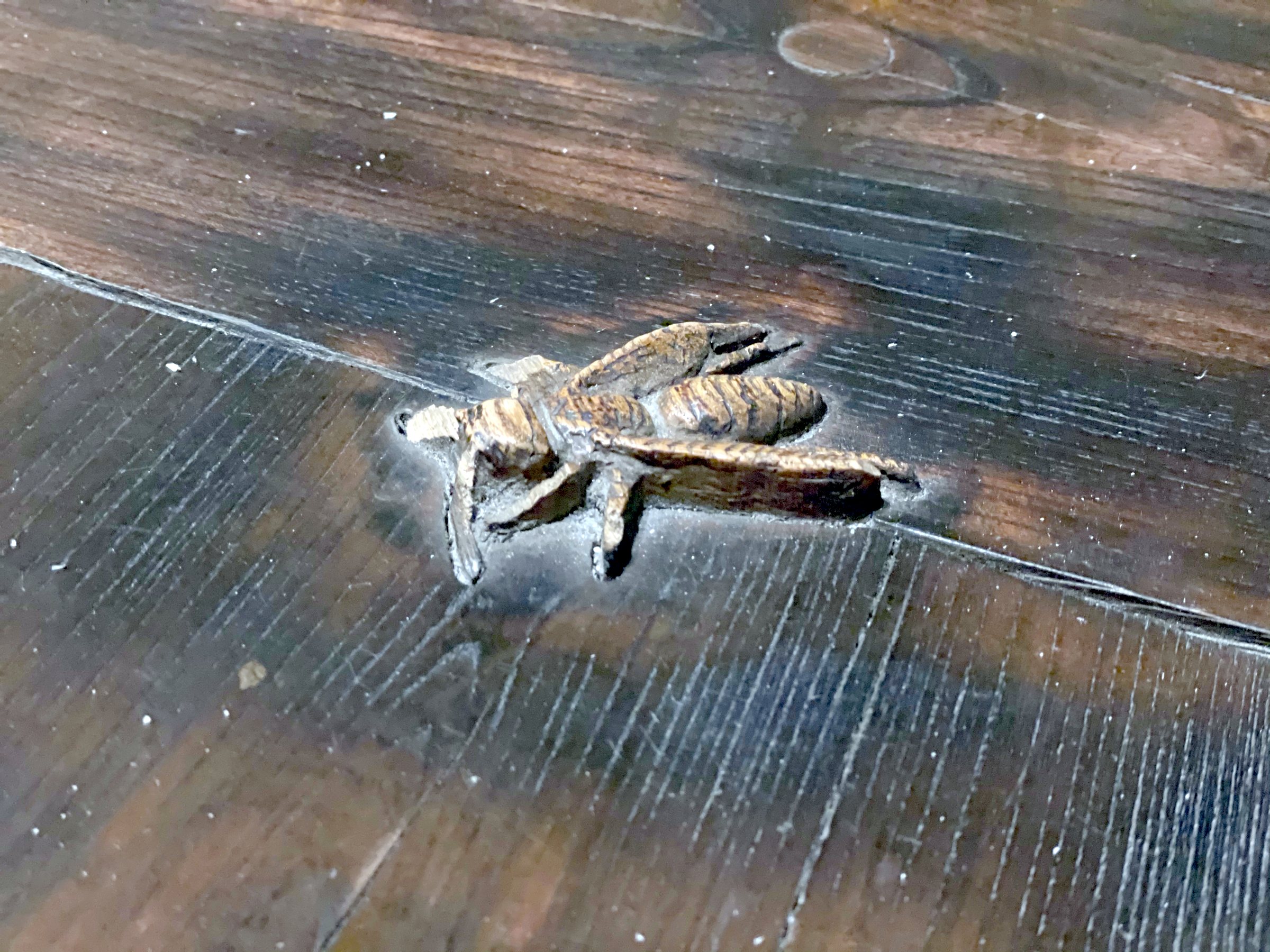
Corridors full of surprises
The corridors, too, are scattered with decorations and curios, so simply walking along them, looking for the next one, is fun. Outside our room we found yet another stylish lamp.
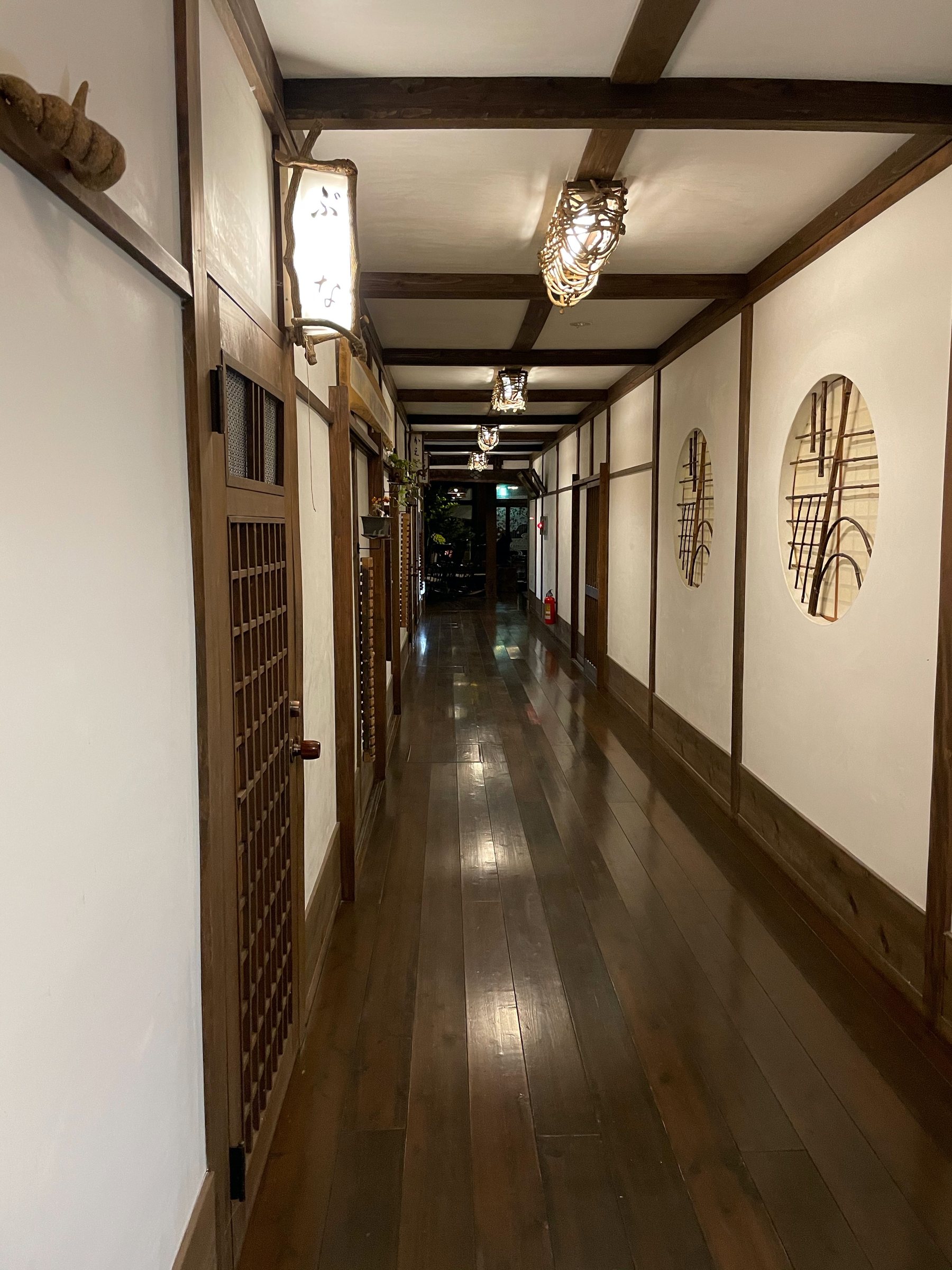
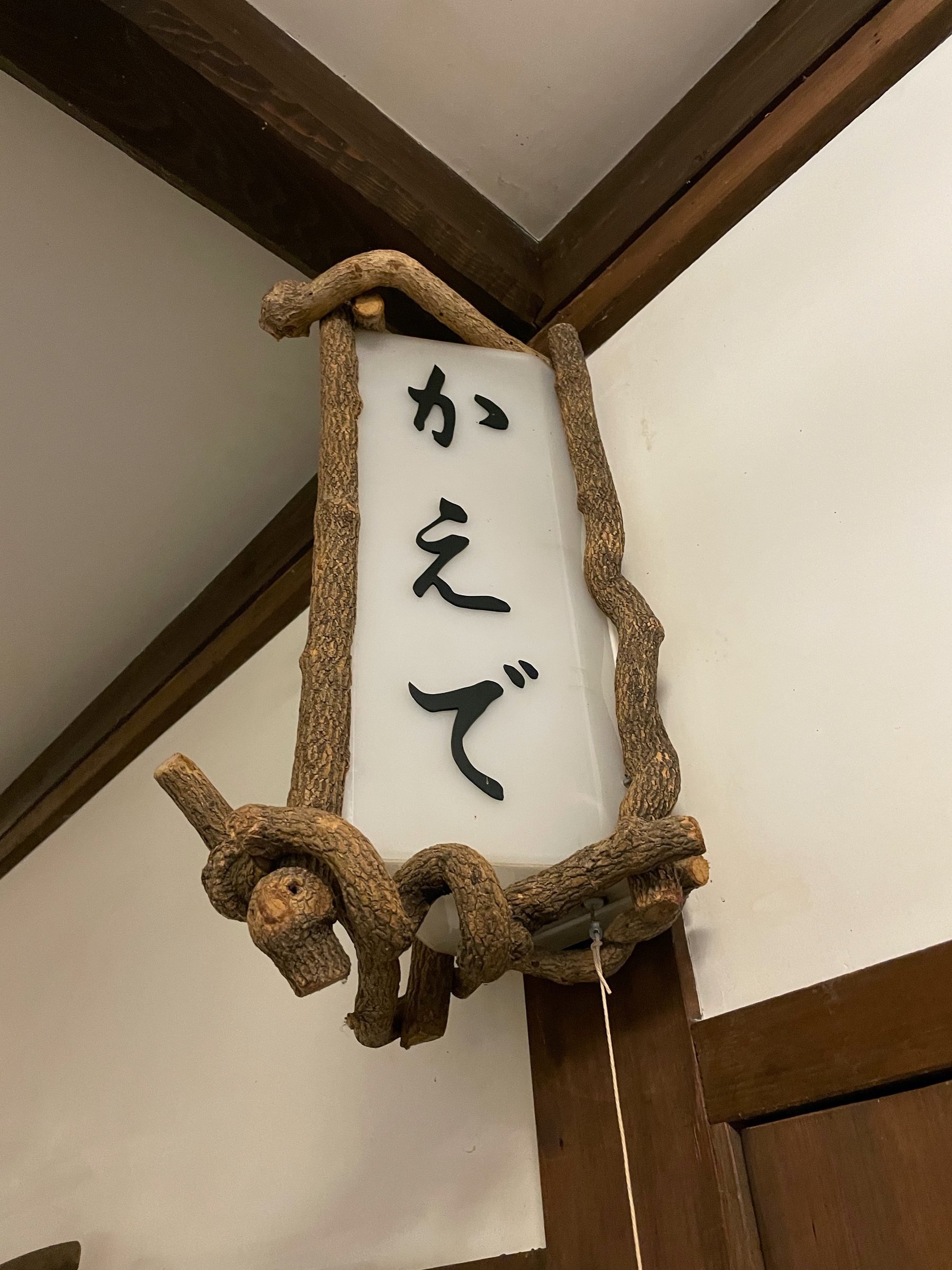
The futon had been laid out for us before we arrived. It is a small Japanese-style room, but a sunken living area one step down makes it a comfortable size in which to relax. Look carefully and there are playful touches everywhere.
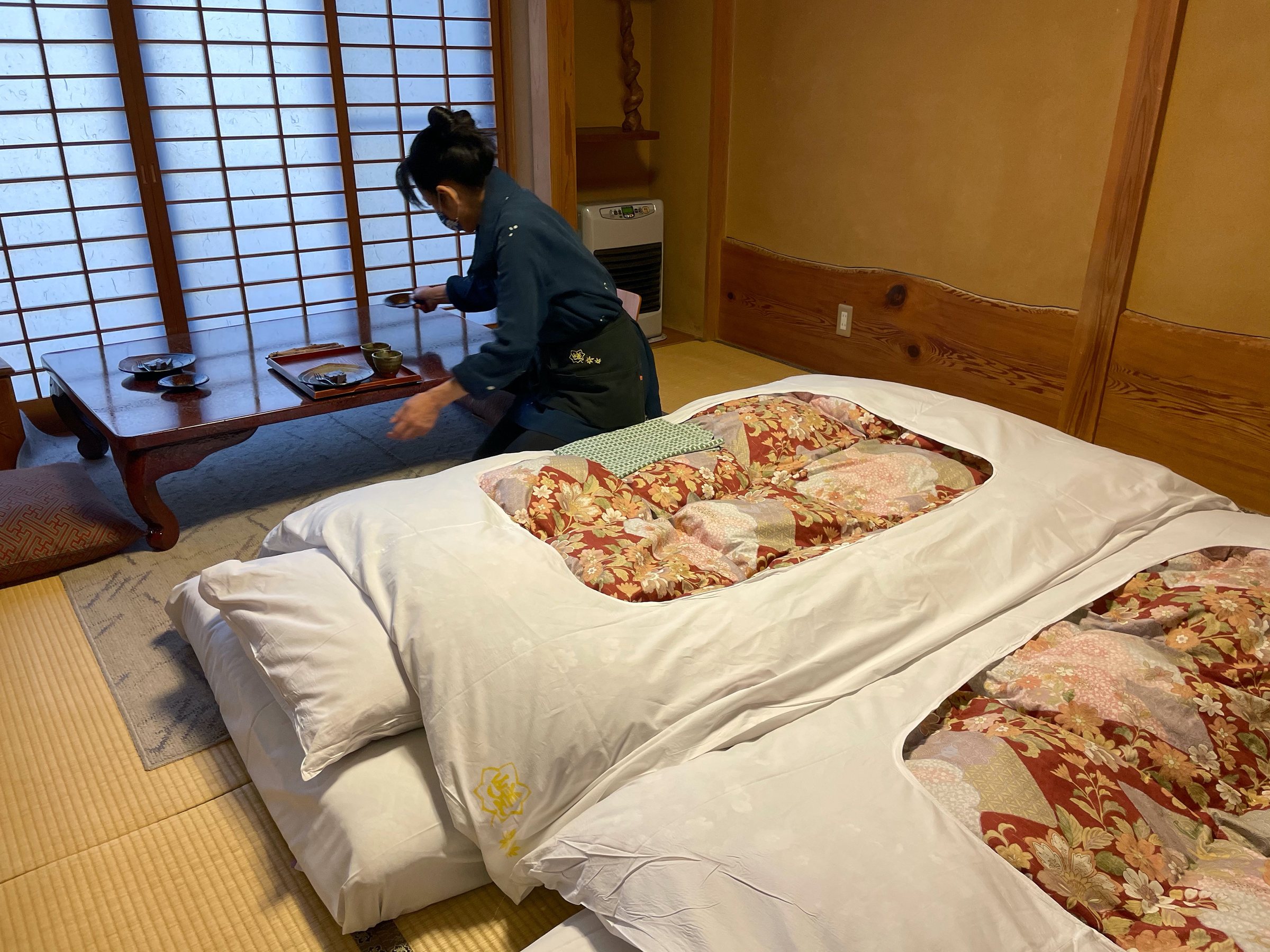
The building has a real sense of age, yet it is spotlessly clean and beautifully kept. Both when we checked in and later in the corridors, we saw staff hard at work wiping and cleaning. The standard of housekeeping here is obvious.
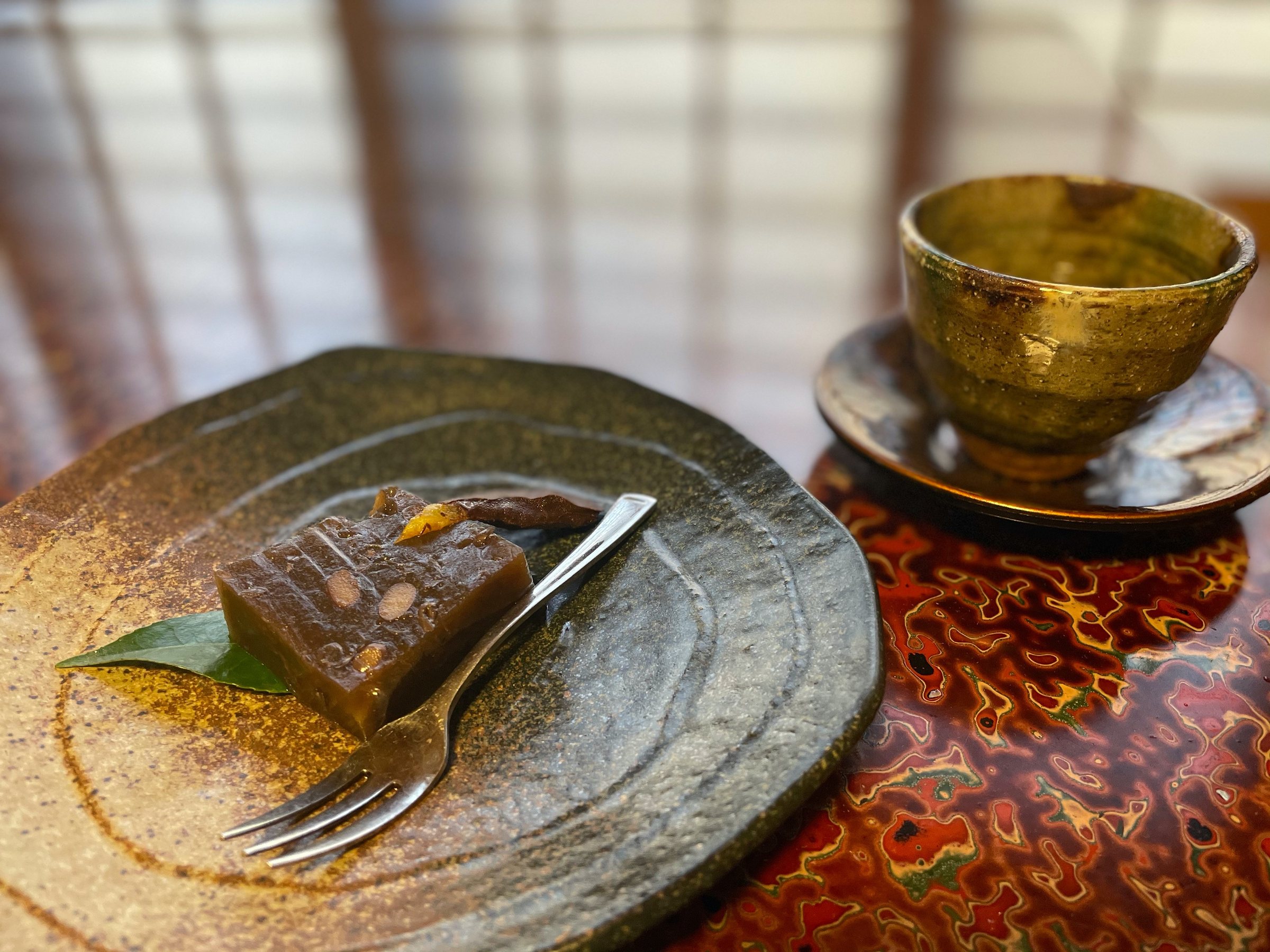
In the room we were served handmade yokan (a firm sweet jelly of bean paste) and the ryokan’s own tea, another thoughtful piece of staging.
Waters of pH 10.2
The main bath and the open-air bath draw on a strongly alkaline spring of pH 10.2. It is a mineral spring that can also be drunk, we were told, so it soothes from the inside as well. The water feels silky and smooth, and it is kept slightly on the cool side, so you can stay in for a long, unhurried soak. Once you hear it is said to be good for the skin, you are tempted to splash it on at the spout like a toner. This is a wild sort of hot spring, enjoyed in the company of the deep mountains.
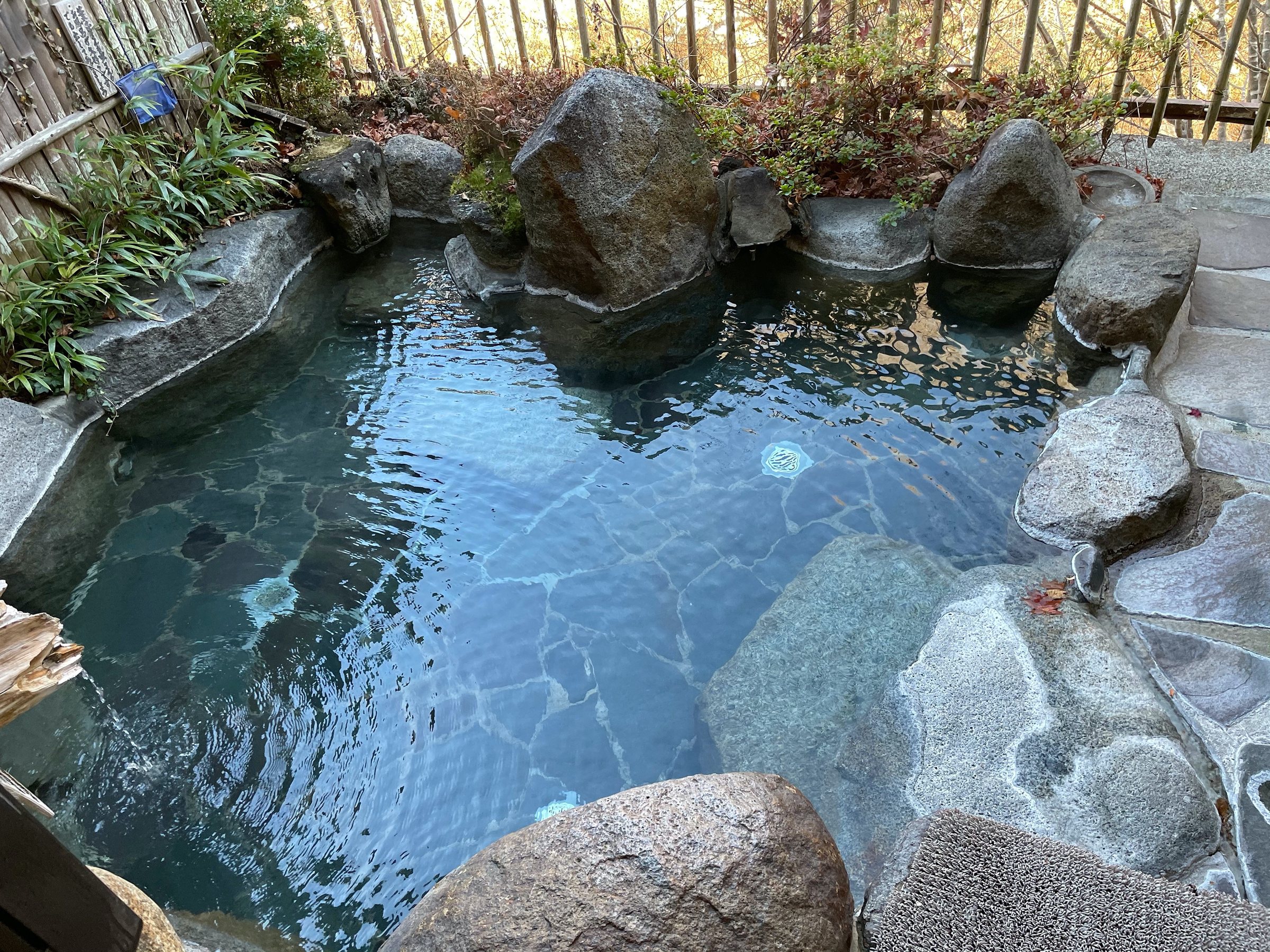
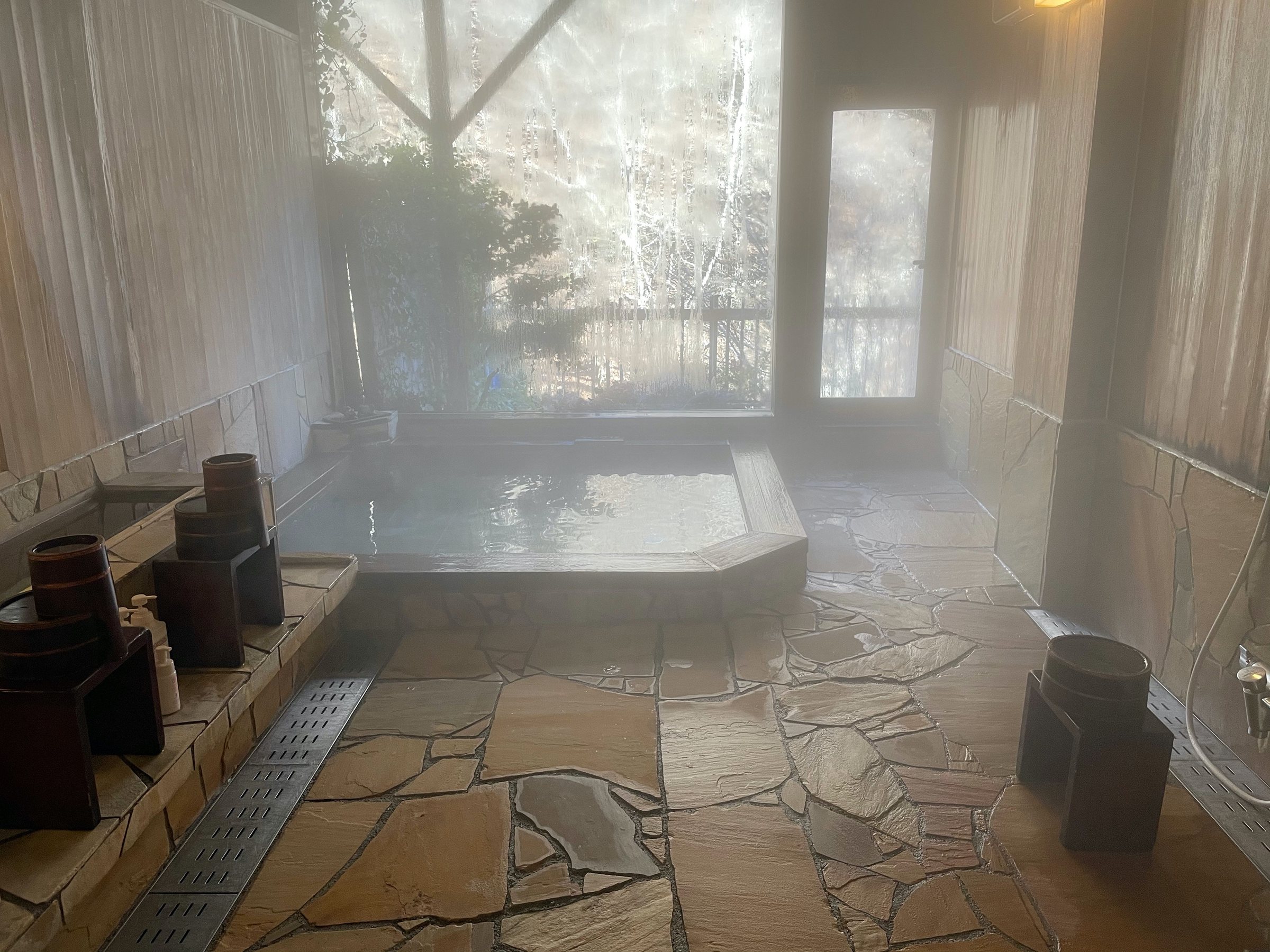
The men’s and women’s baths swap during the day, so you can enjoy two different baths in a single stay, which we appreciated. At night, the open-air bath in the stillness of the mountains is something special. There is also a private bath, free to use.
Creative country cooking
Then it was time for dinner. The ryokan describes its cooking as creative local cuisine. The presentation is charming and the dishes delicate and lovely to look at: food made by hand, and with feeling.
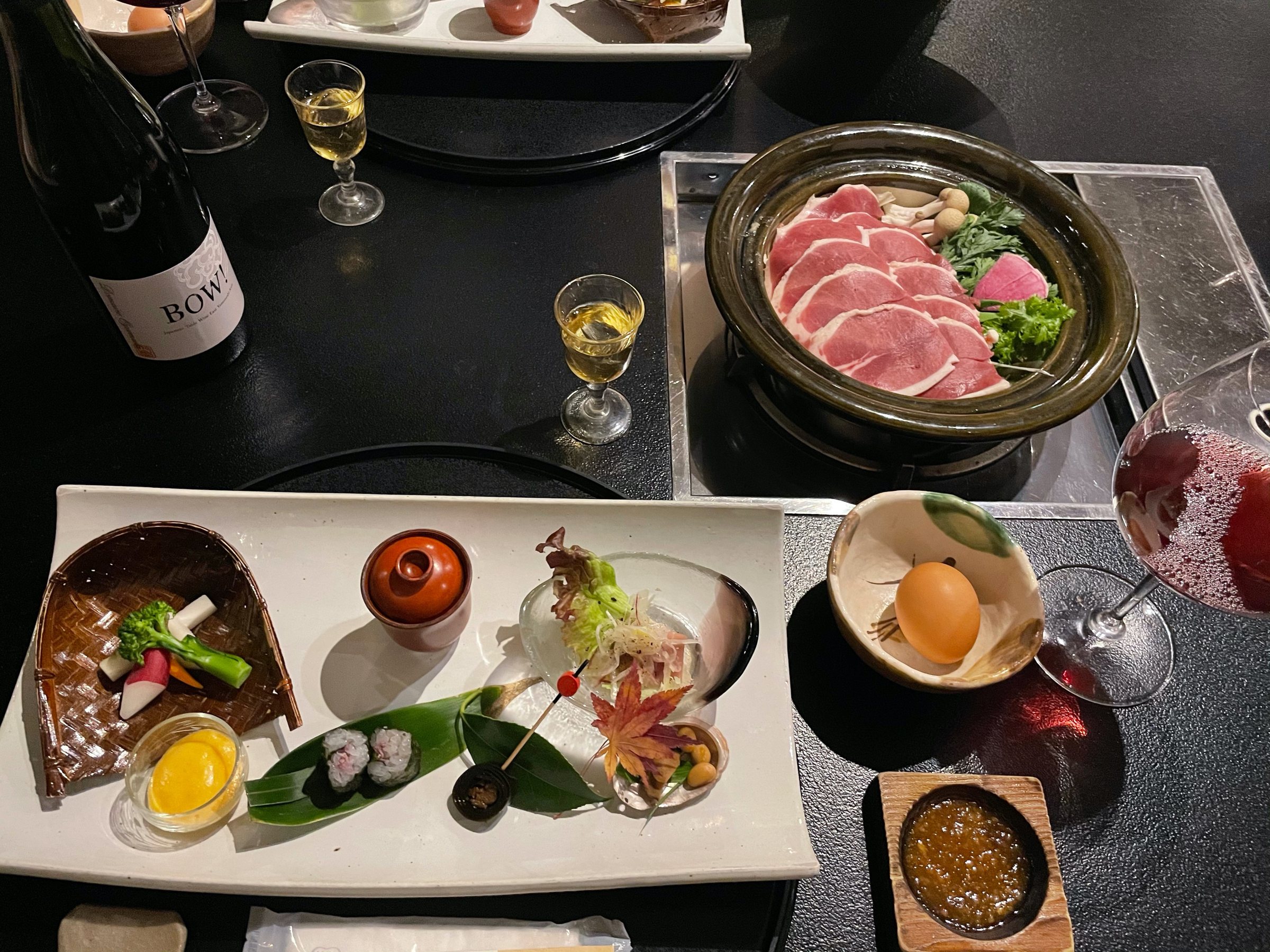
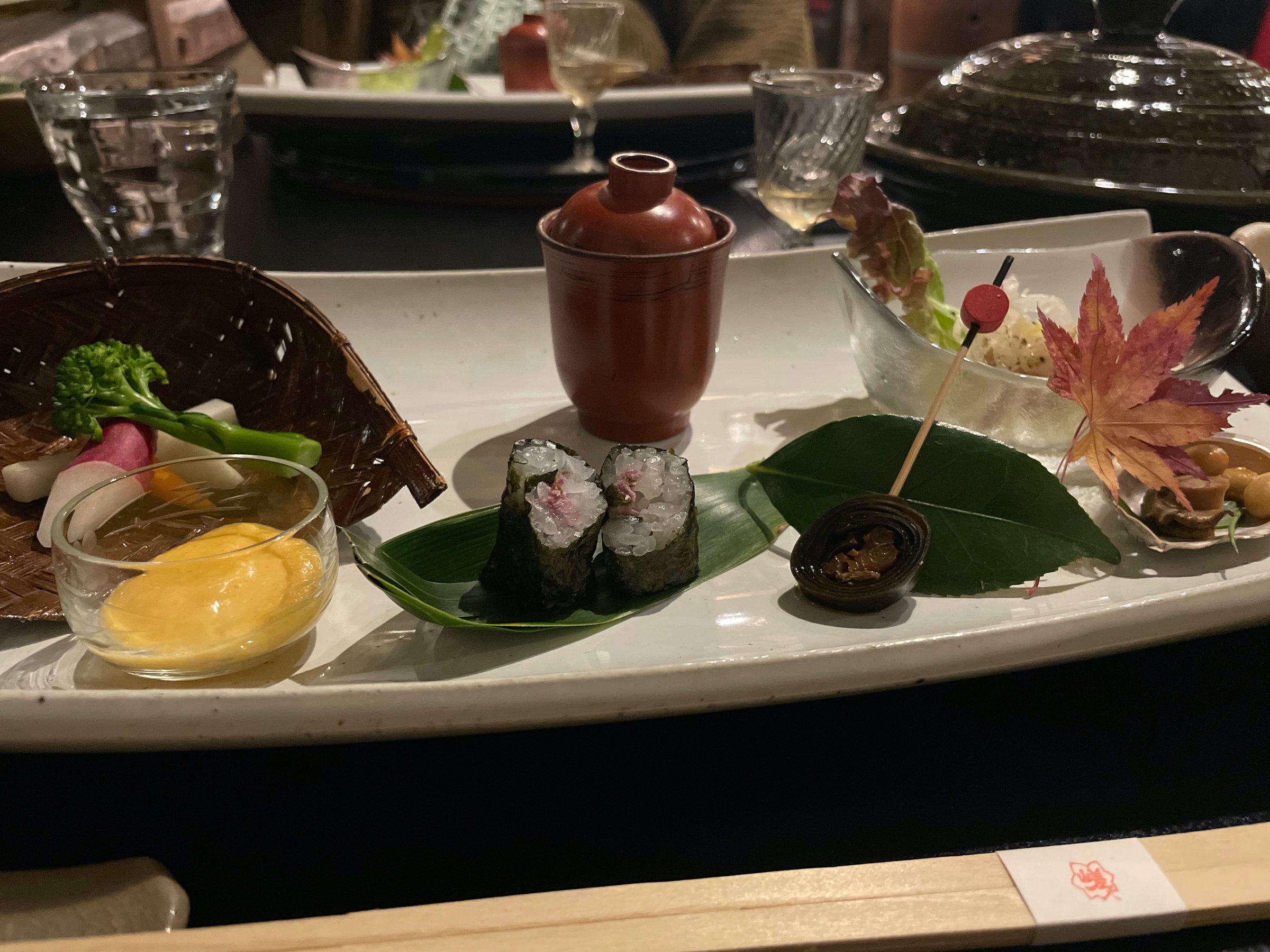
While we worked through the appetisers, the burner under the duck hot pot was lit. The duck had no gaminess at all, a sign of careful preparation.
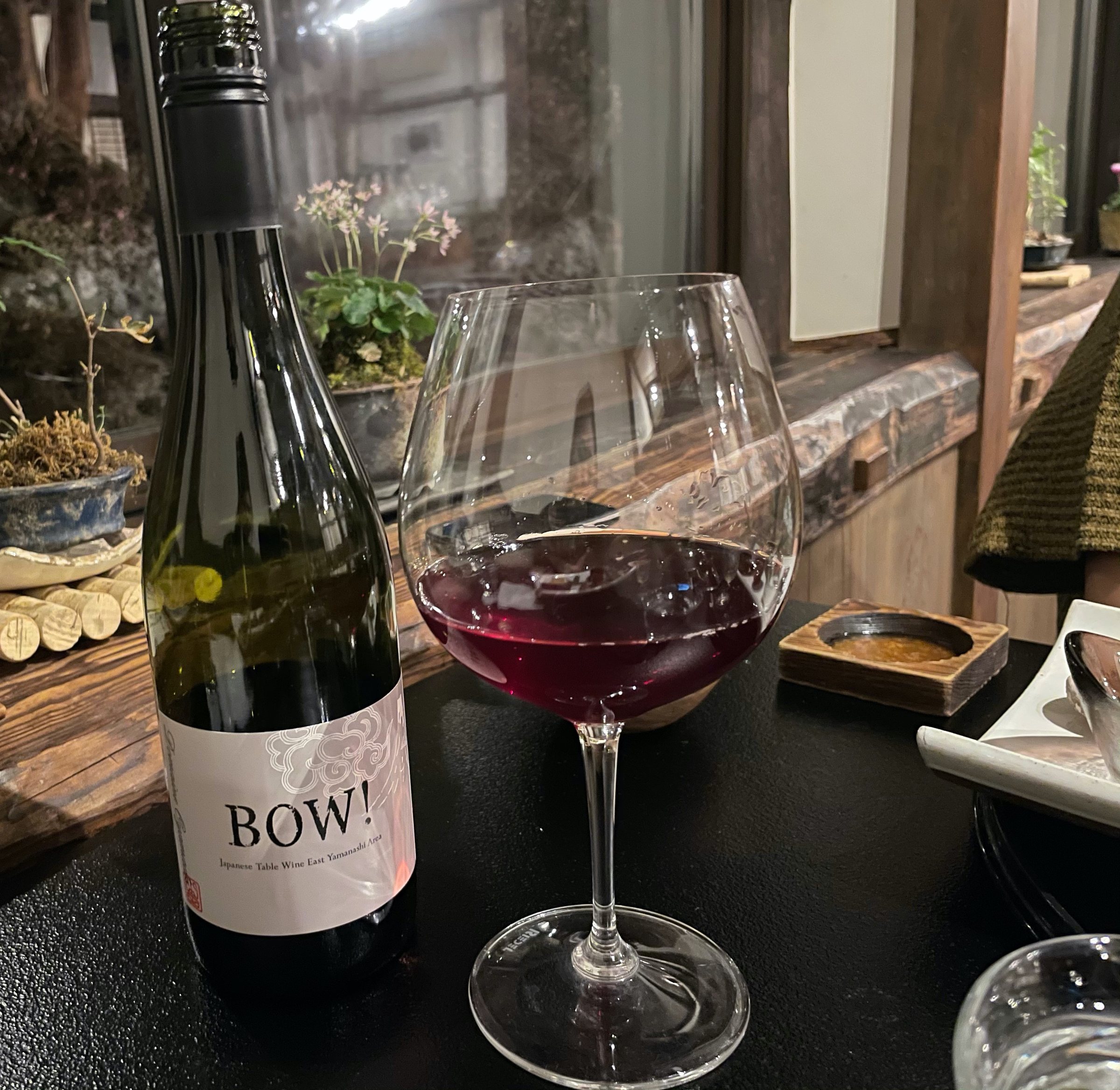
This is Yamanashi, after all, and the wine list was well chosen and sensibly priced, a policy we were glad to see. As we picked this bottle, remarking to each other how fair the price was, a woman who appeared to be the okami (the ryokan’s proprietress) laughed: “You must love wine. You even know the prices.” She was also the one who brought out the dishes, explaining each with care.
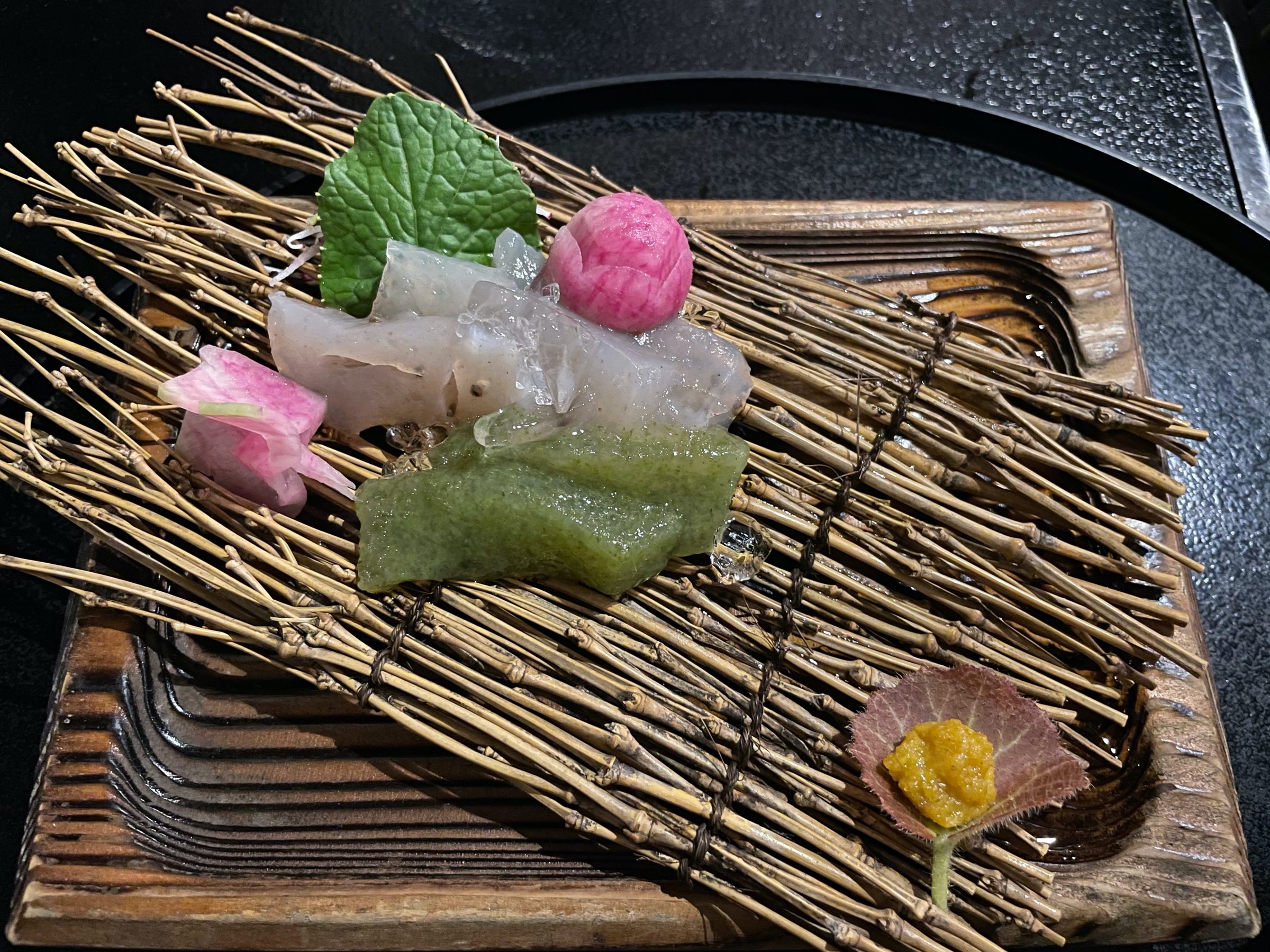
Handmade sashimi konnyaku (konjac jelly sliced and eaten like raw fish) was smooth on the tongue and slipped down easily.
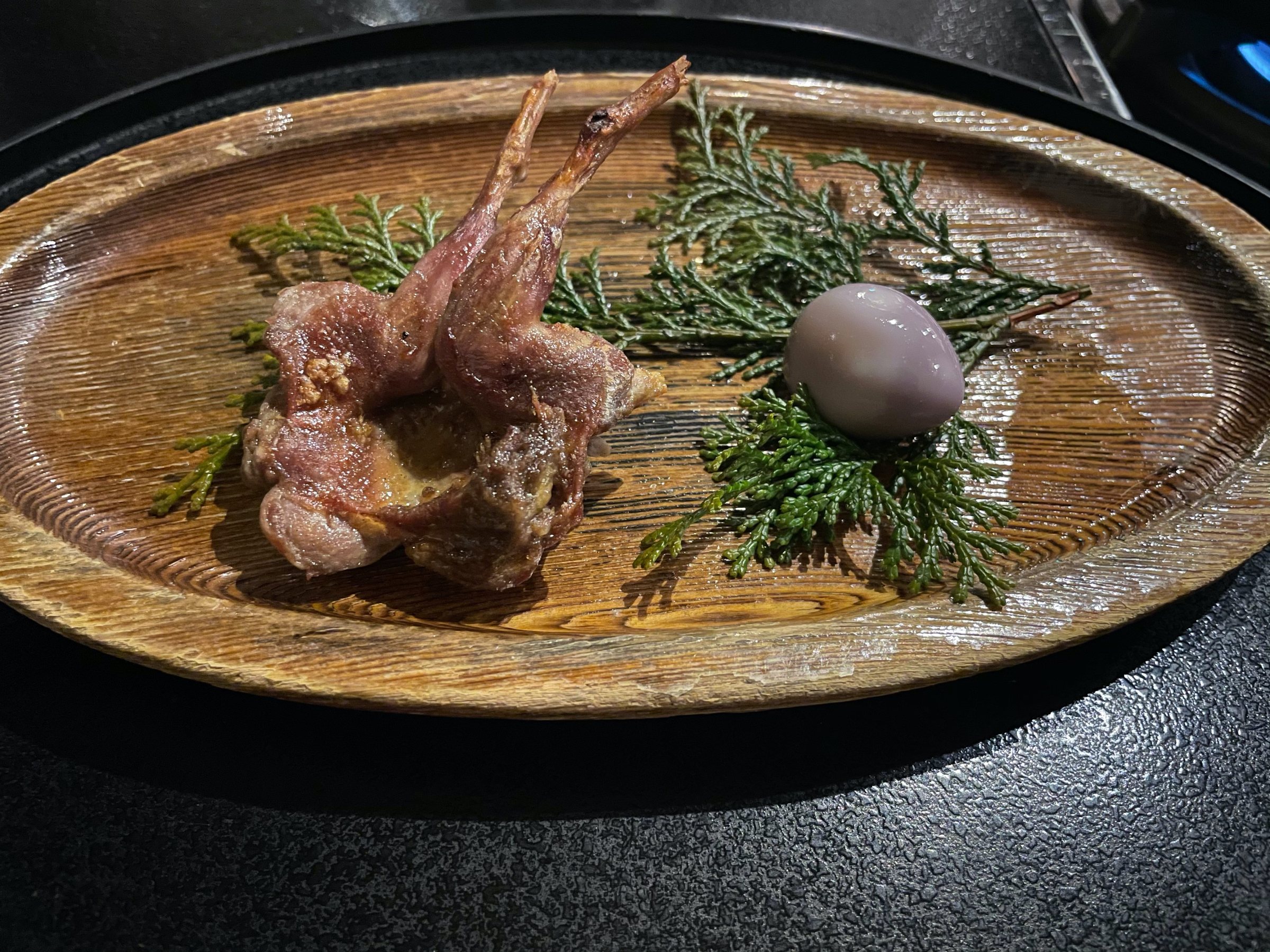
Grilled quail was small but concentrated in flavor, and its texture, quite unlike chicken, was a pleasure in itself.
A self-taught chef
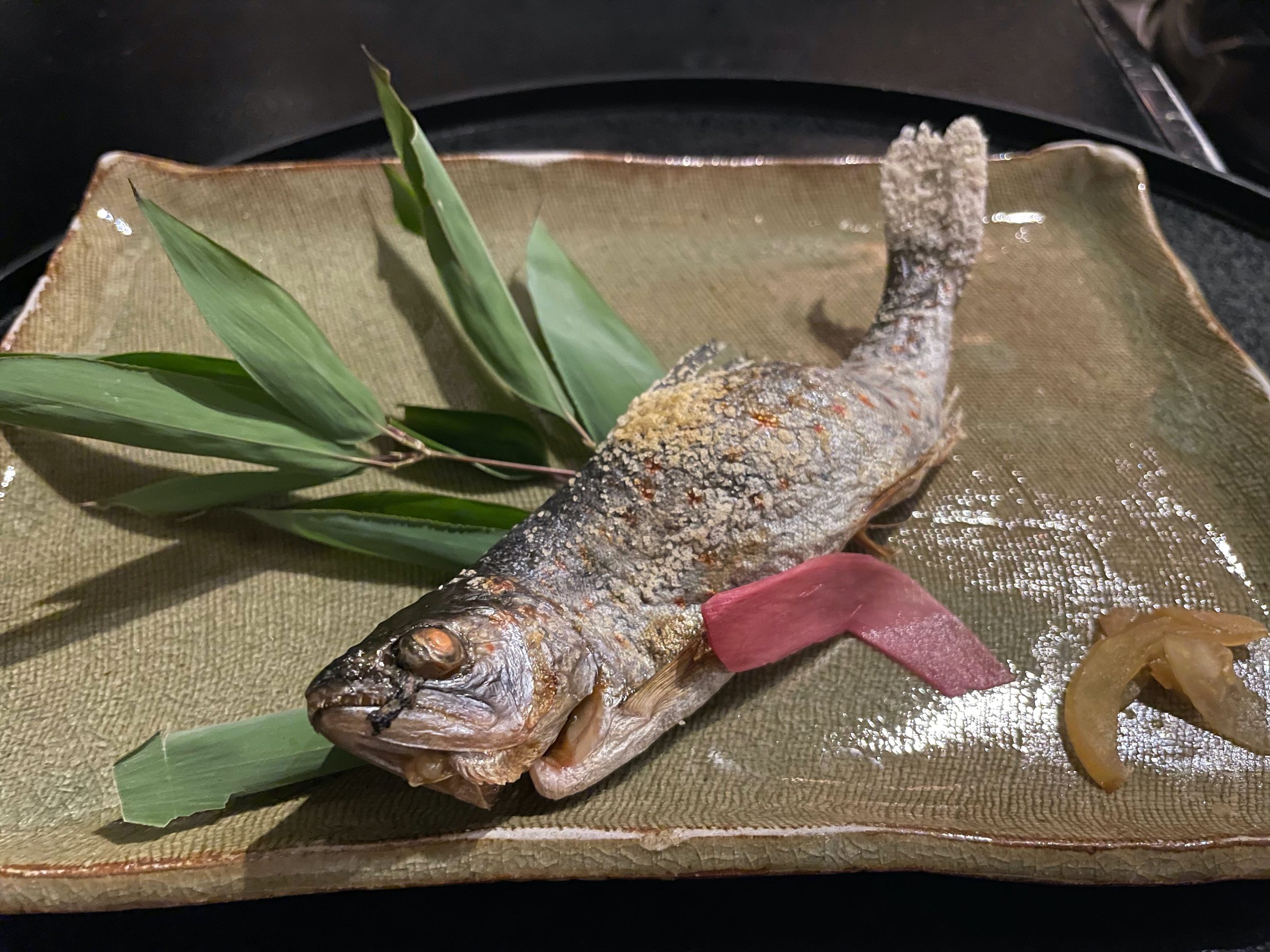
These were dishes that made us feel we were eating the bounty of the mountains. The seasoning was delicate and refined, and everything was so good that we asked where the cook had trained. The answer was nowhere: the chef had studied alone and arrived at these flavors entirely self-taught. The seasoning was so finely judged that you would assume years of training in a kappo restaurant (a refined, counter-style Japanese kitchen). We were even more surprised to learn that the head chef is a woman. There is, indeed, a softer touch to the presentation that makes the dishes a pleasure to photograph.
Women chefs are still rare in Japanese restaurants, and seeing her run this kitchen as head chef struck us as something powerful, and something to be proud of.
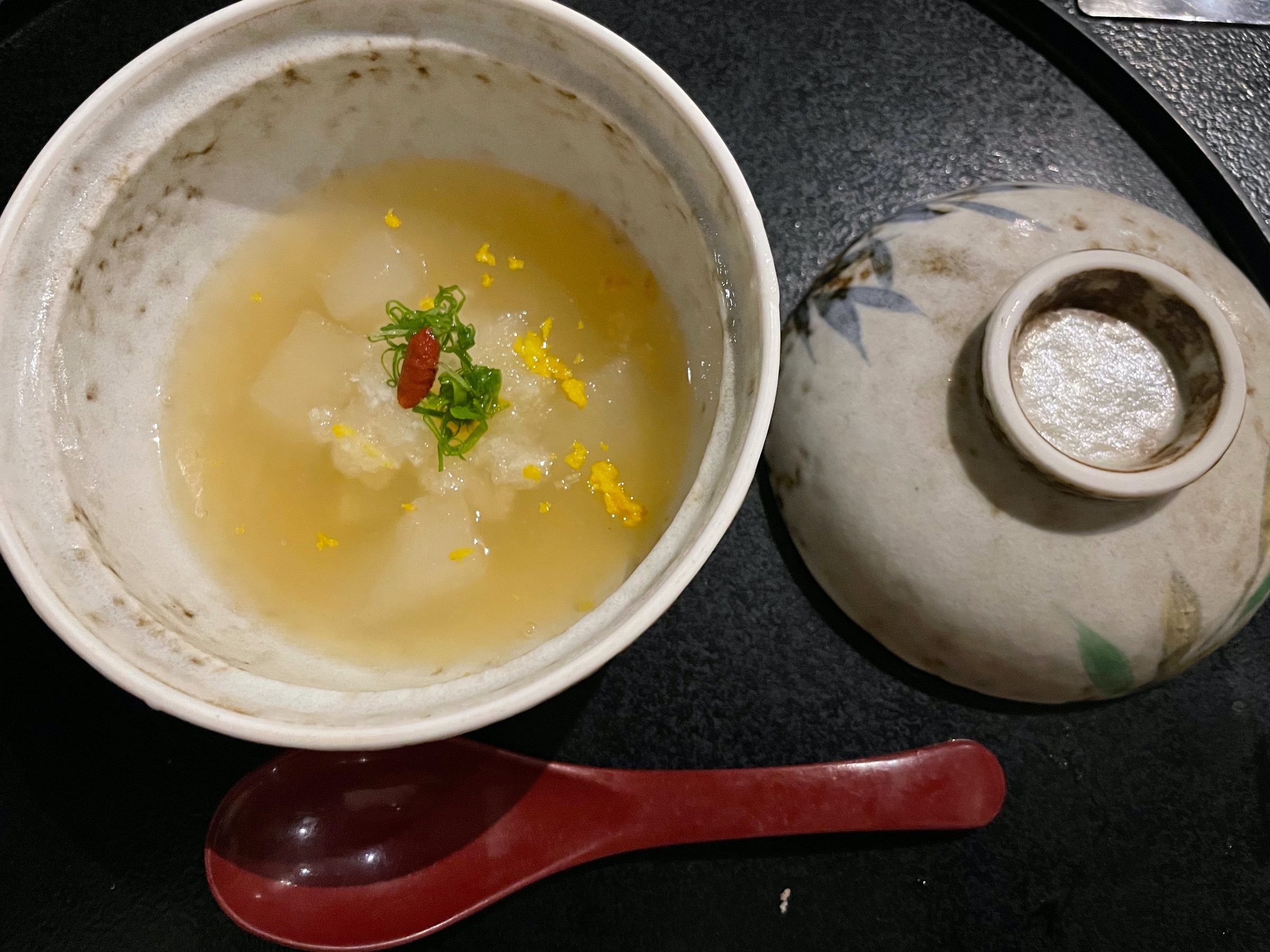
Next came a wanmono (soup course) of winter melon. Its gentle seasoning and lightly thickened broth tasted of winter, and the balance of salt showed a way with dashi you would not come across in the Kanto region.
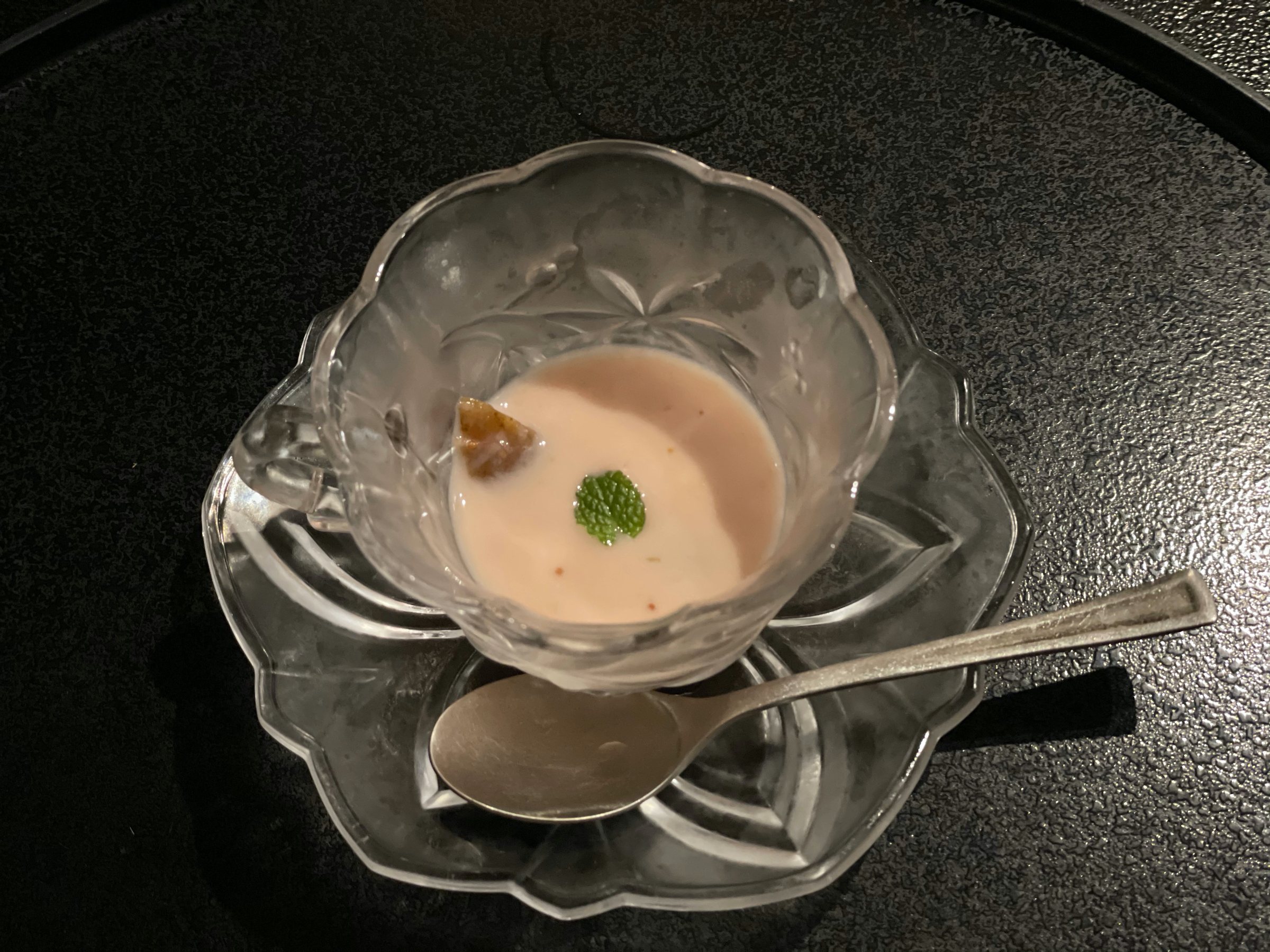
After that, a chilled fig soup. We had not expected an okuchi-naoshi, a palate cleanser, and a course so reminiscent of French dining surprised us all over again. It is a dish full of ideas.
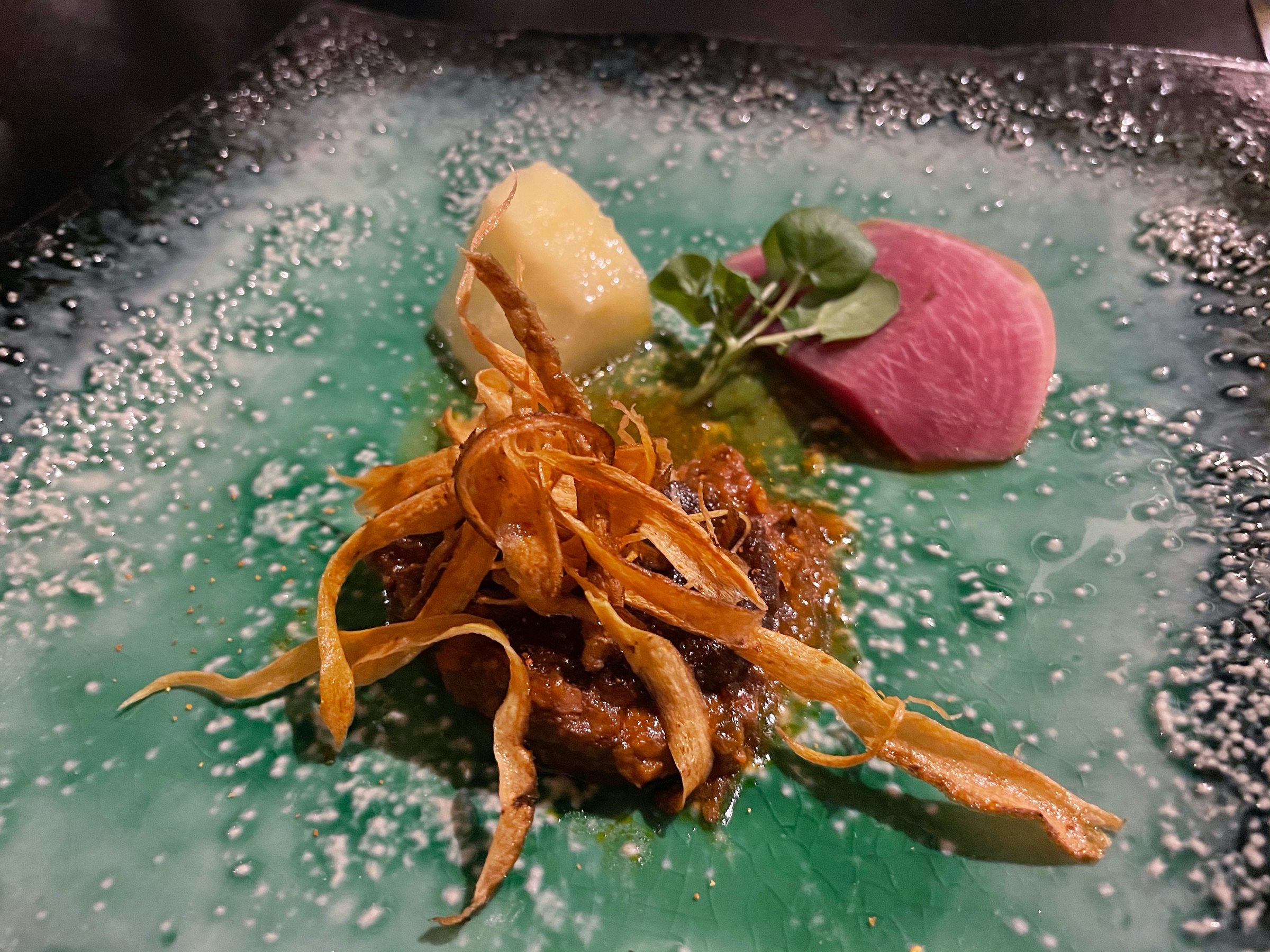
A proper meat dish follows as the main course. The tableware here is full of character too, and makes the food all the more vivid.
Rice, udon and a cheese custard
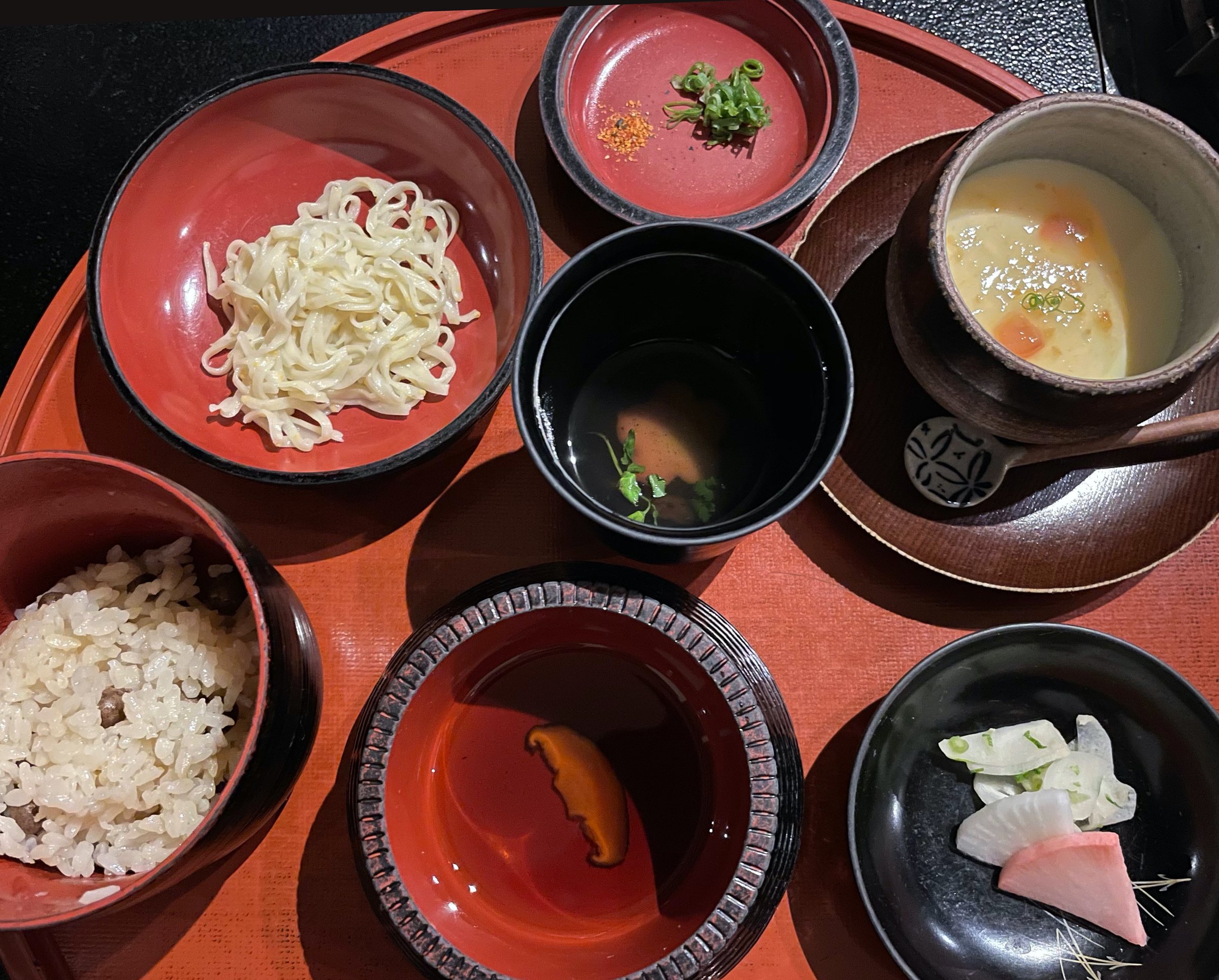
To finish, rice with mukago (the tiny aerial bulbs of the mountain yam) and handmade udon. Seeing what hearty eaters we were, the woman serving us asked, “Shall I give you a little more rice?” It is small words like these that make a meal.
The chawanmushi (savory egg custard) served alongside tasted of cheese. We had heard that this is a technique often used in kappo cooking, but this rich, springy custard was especially good. Back home, we tried to recreate it with shop-bought cheese and found that the result varies a great deal with the type used. At Sagashiokan, we learned, they use a blend based on mascarpone. It all showed how thoroughly the cooking has been researched.
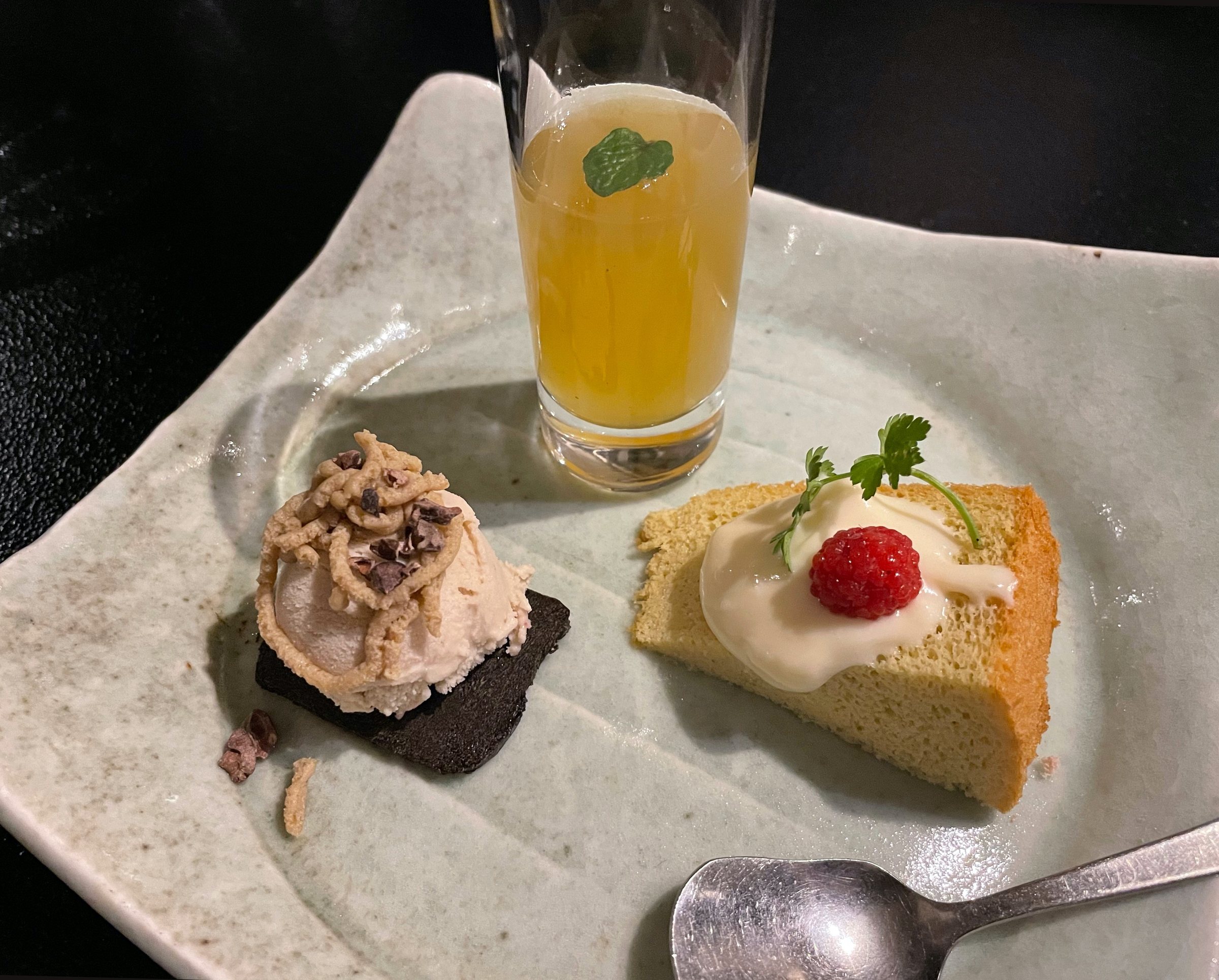
Last came the sweets. These, too, are handmade, and low-carb: no white sugar, but honey, beet sugar and soy milk instead, keeping the calories down. The head chef, who keeps a close eye on food trends and is quick to adopt them, is, we were told, over fifty. A chef who loves cooking this much and studies this hard has our deepest respect.
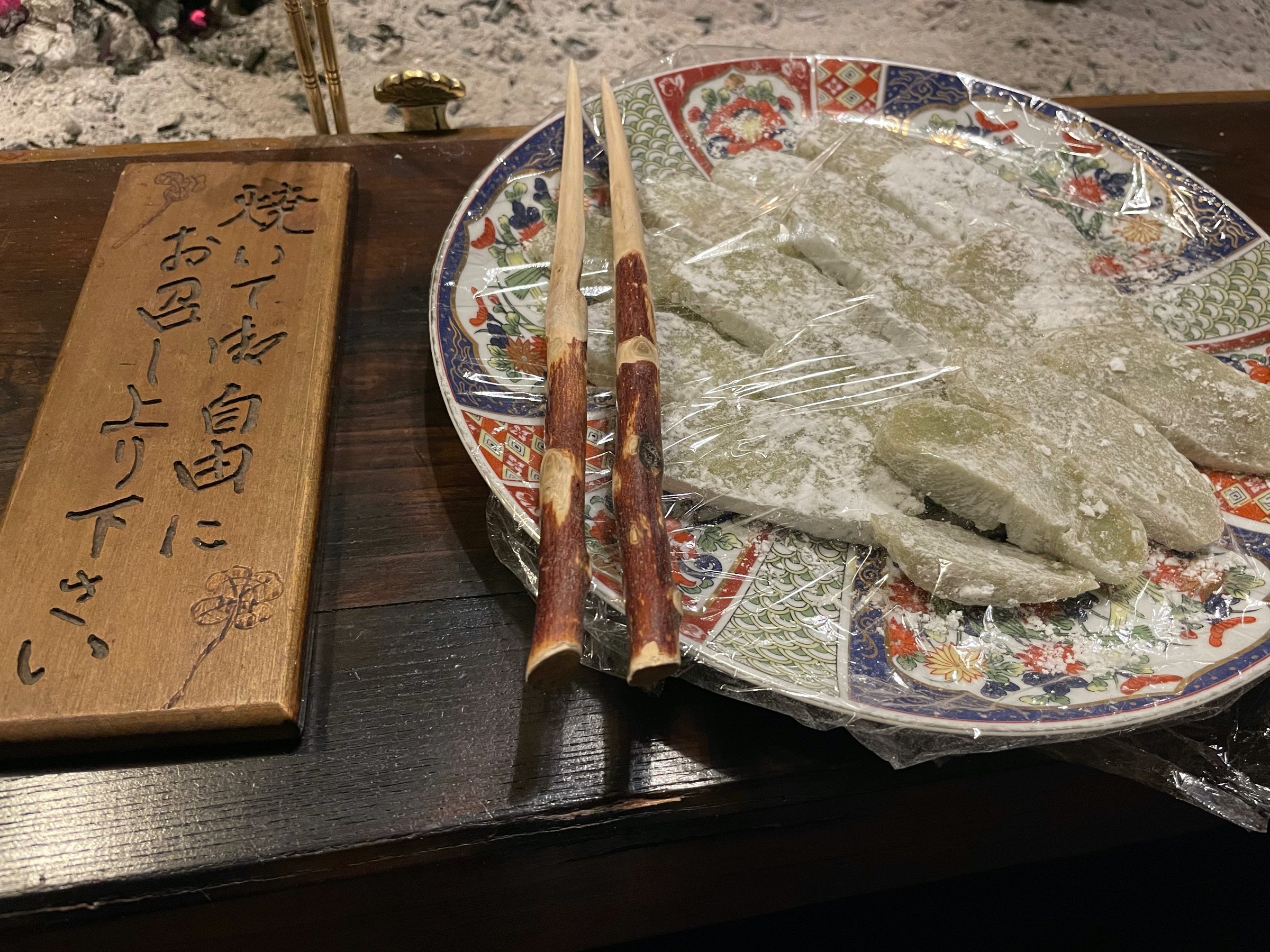
Rice cakes by the hearth
After dinner, in the room with the irori (a traditional sunken hearth), we found these laid out for guests. Once dinner has settled after a bath, they make a late-night snack. Toasting rice cakes in a place like this is a memory in itself.
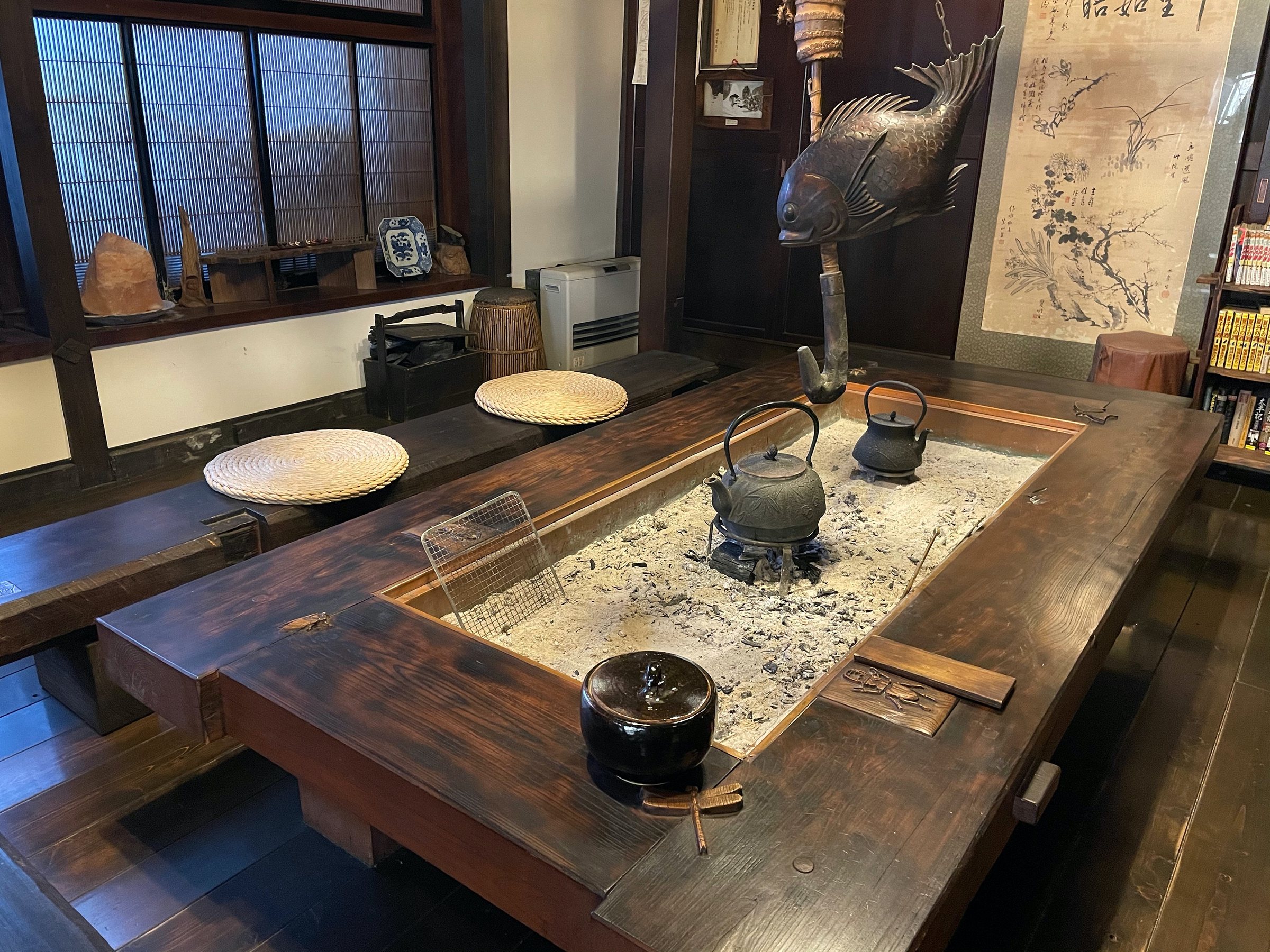
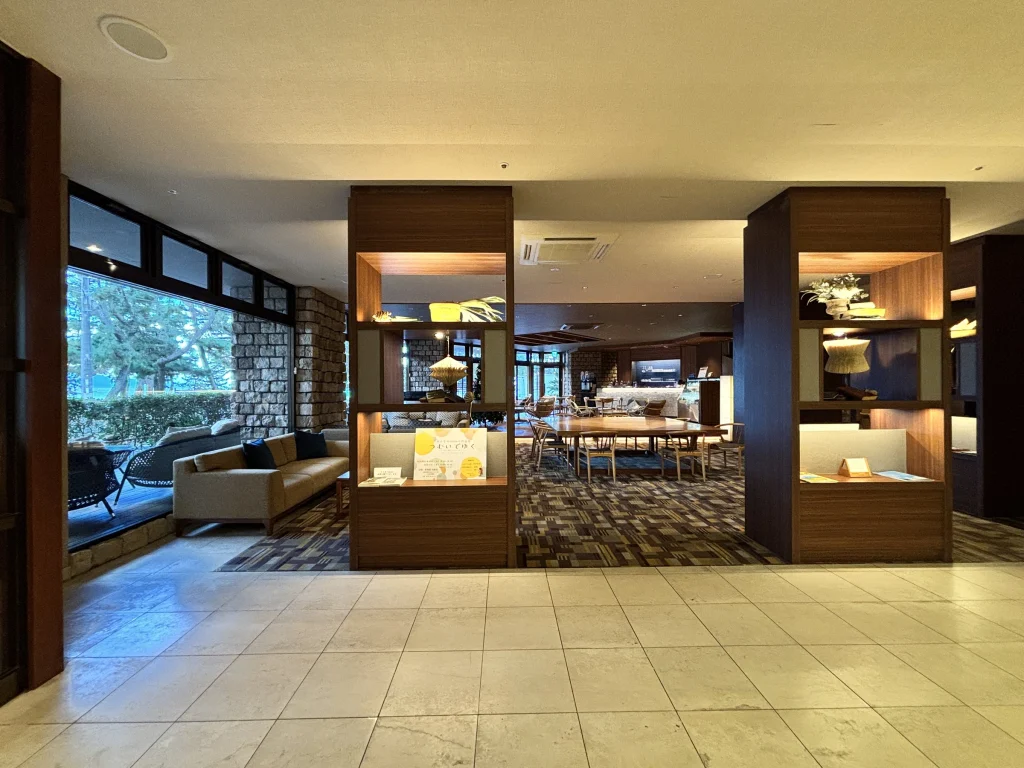
A ryokan wrapped in mountain silence has a comfort all of its own. We sat in a lobby chair doing nothing at all, listening to the crackle of the fire.
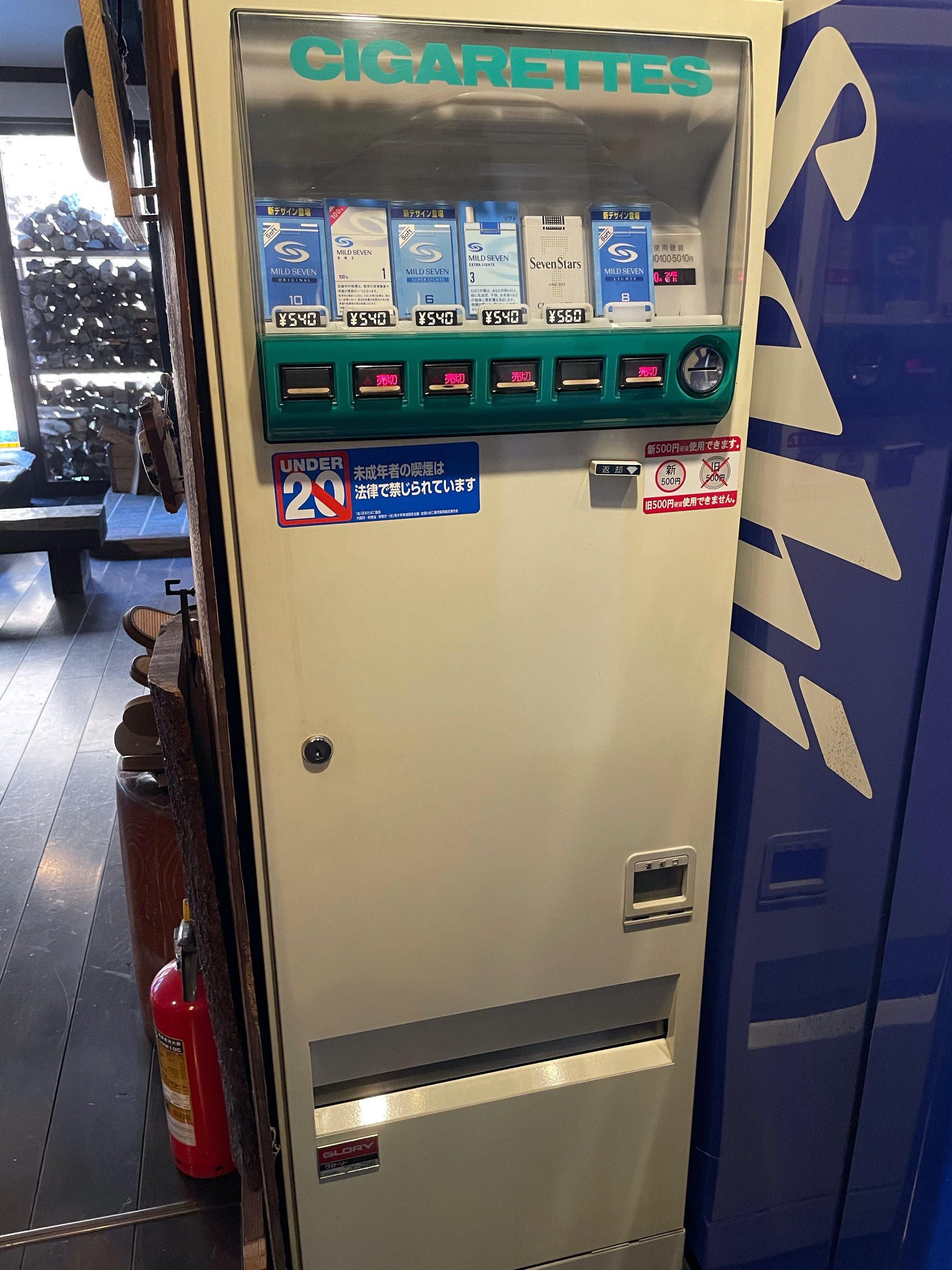
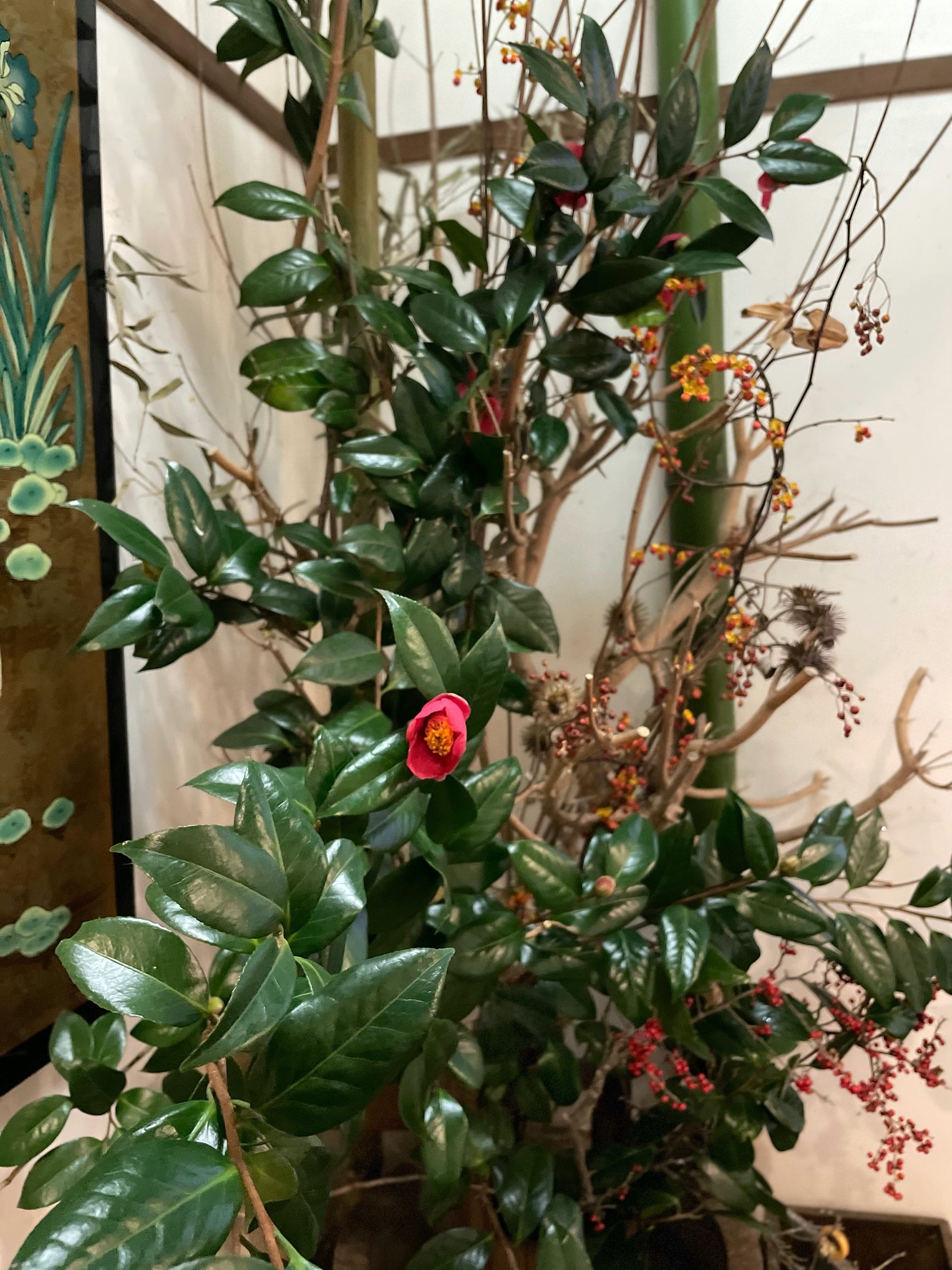
There is plenty to please the eye, too, from a vintage vending machine of a kind you rarely see any more to the glossy mountain camellias.
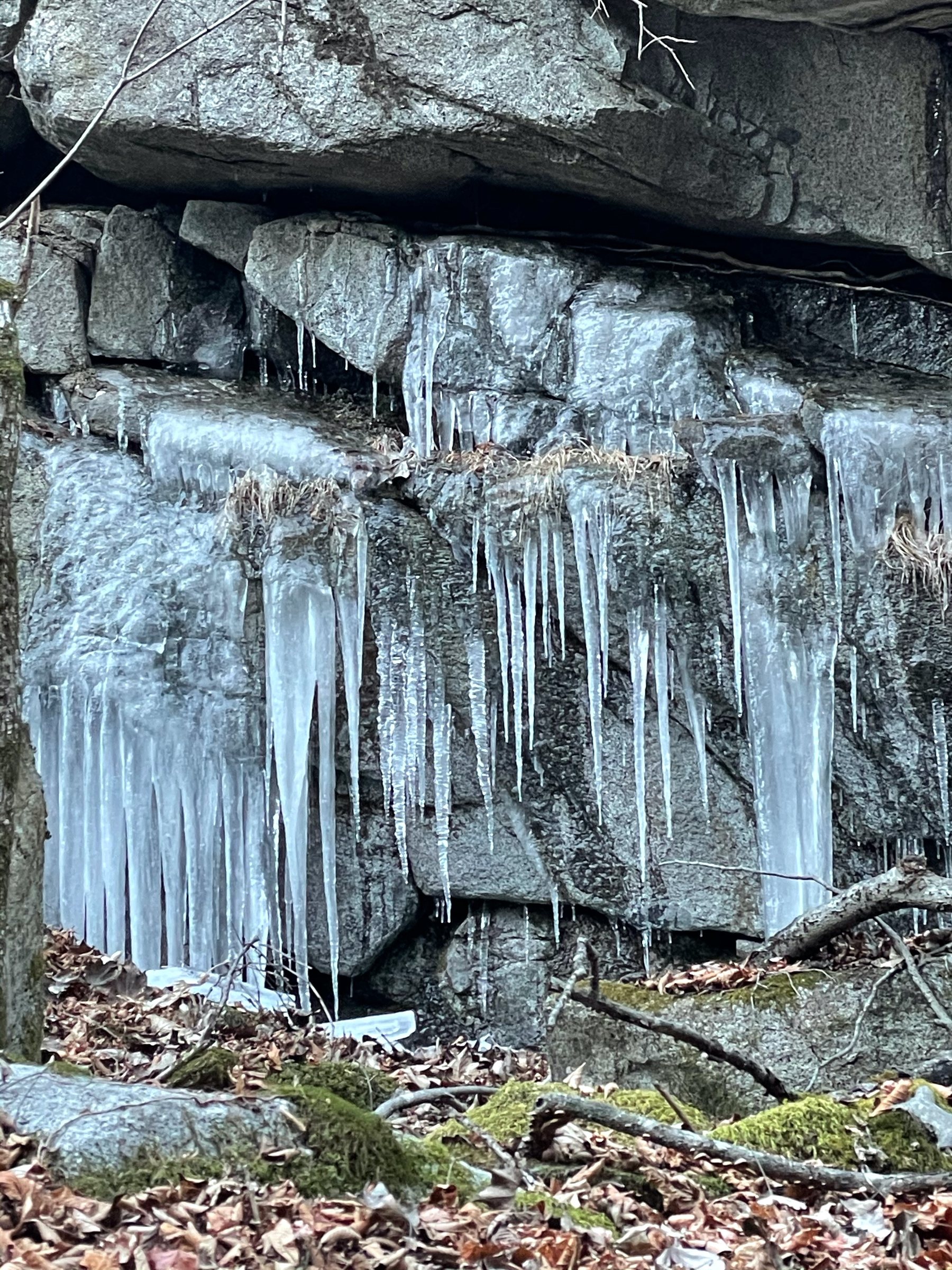
Ice sculptures in the back garden
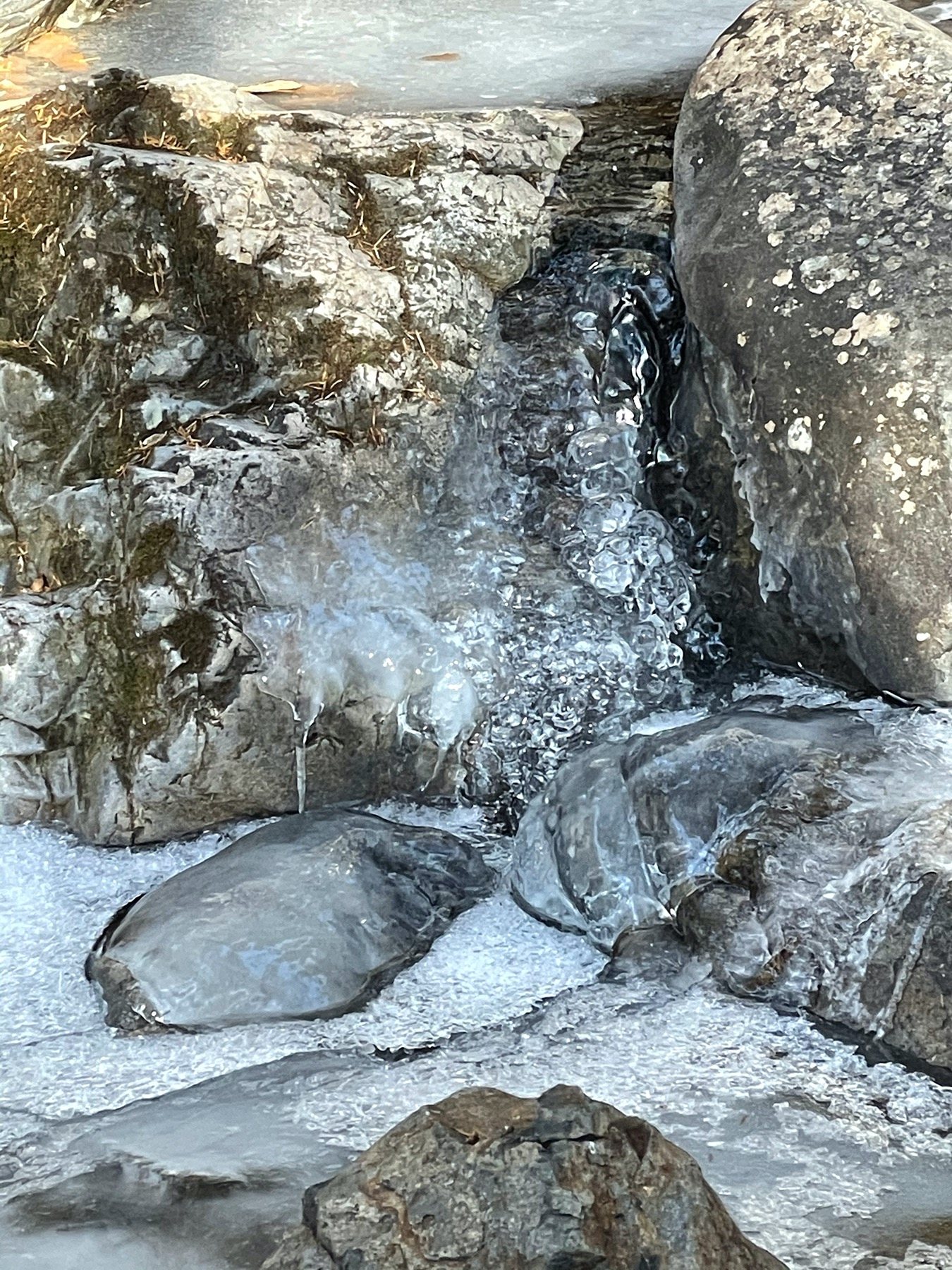
The next morning we explored the walking path behind the ryokan. Early in the day the temperature drops below freezing, and the waterfall and stream had turned, as you can see, into great, dramatic sculptures of ice.
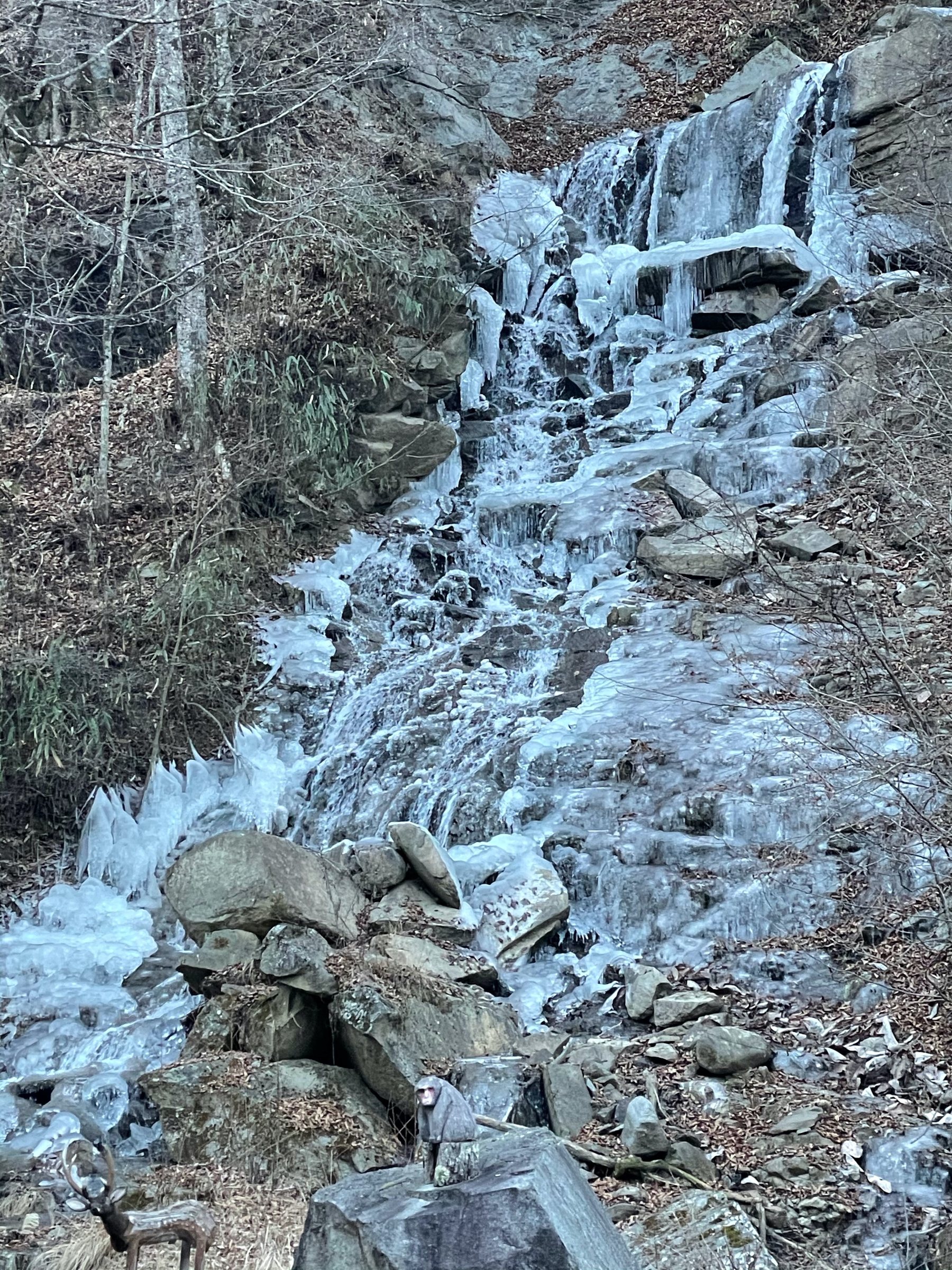
The owner’s artworks are dotted around this back-garden space as well, and each time we came across one we thought, delighted, “even out here!” The intention comes through clearly: to delight and surprise everyone who visits. There is even a small outdoor play area that young children will enjoy.
Breakfast from the mountains
After the walk came a morning bath, and then breakfast. The mountain breakfast arrived in tableware that looked as if the owner might have made it himself.
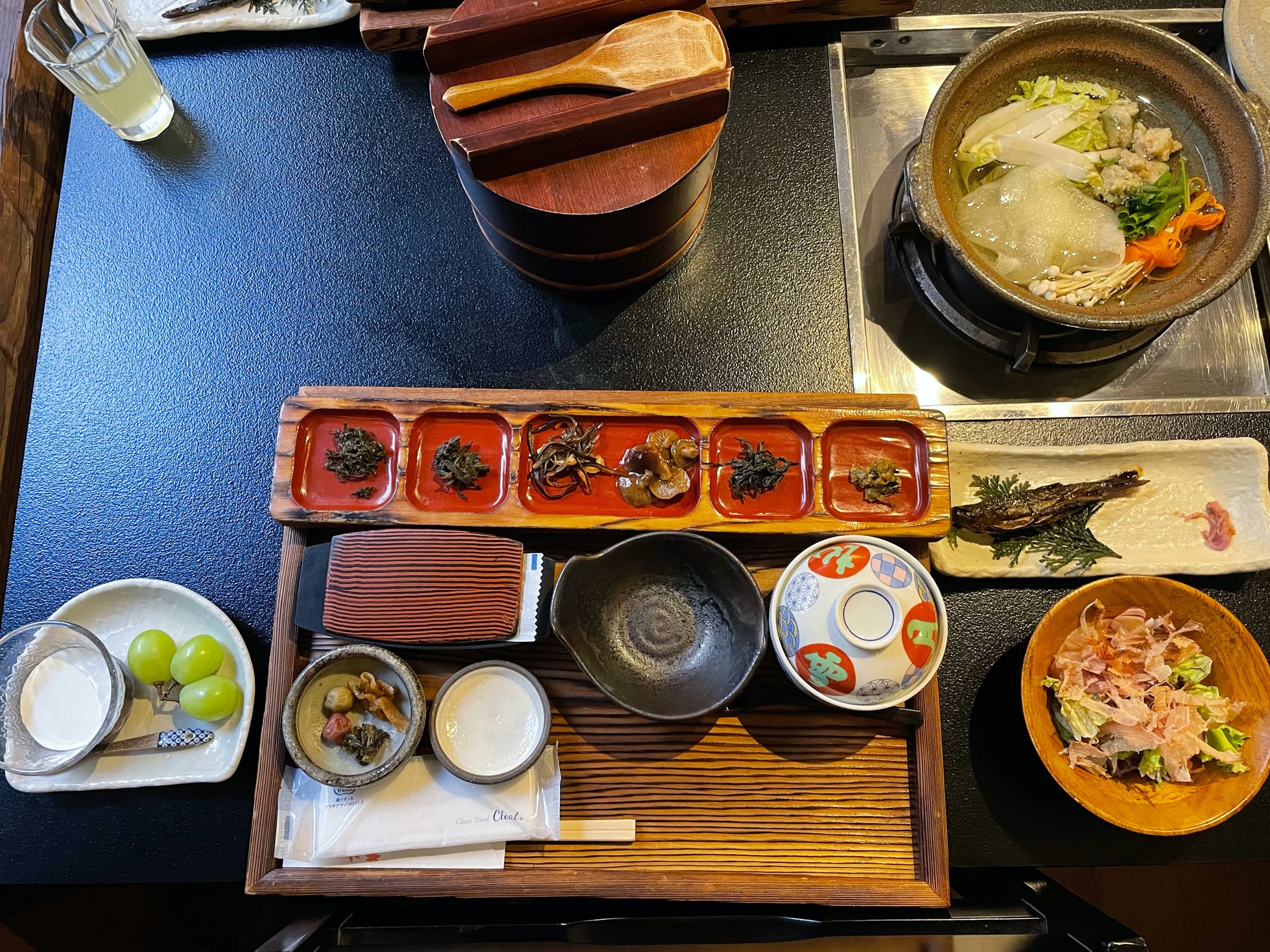
The hot pot, a gentle dashi full of the sweetness of vegetables and enriched by the fat of chicken meatballs, was exactly what you want to eat in the morning. The broth was perfectly balanced, neither too thin nor dominated by the dashi. The meatballs were tiny, yet tasted intensely of chicken.
A long dish arrived lined with accompaniments for rice: unusual tsukudani (ingredients simmered down in soy) in which the flavor of each ingredient came through clearly. The tsukudani are sold in the ryokan’s shop as well, an original Sagashiokan product that makes a welcome souvenir.
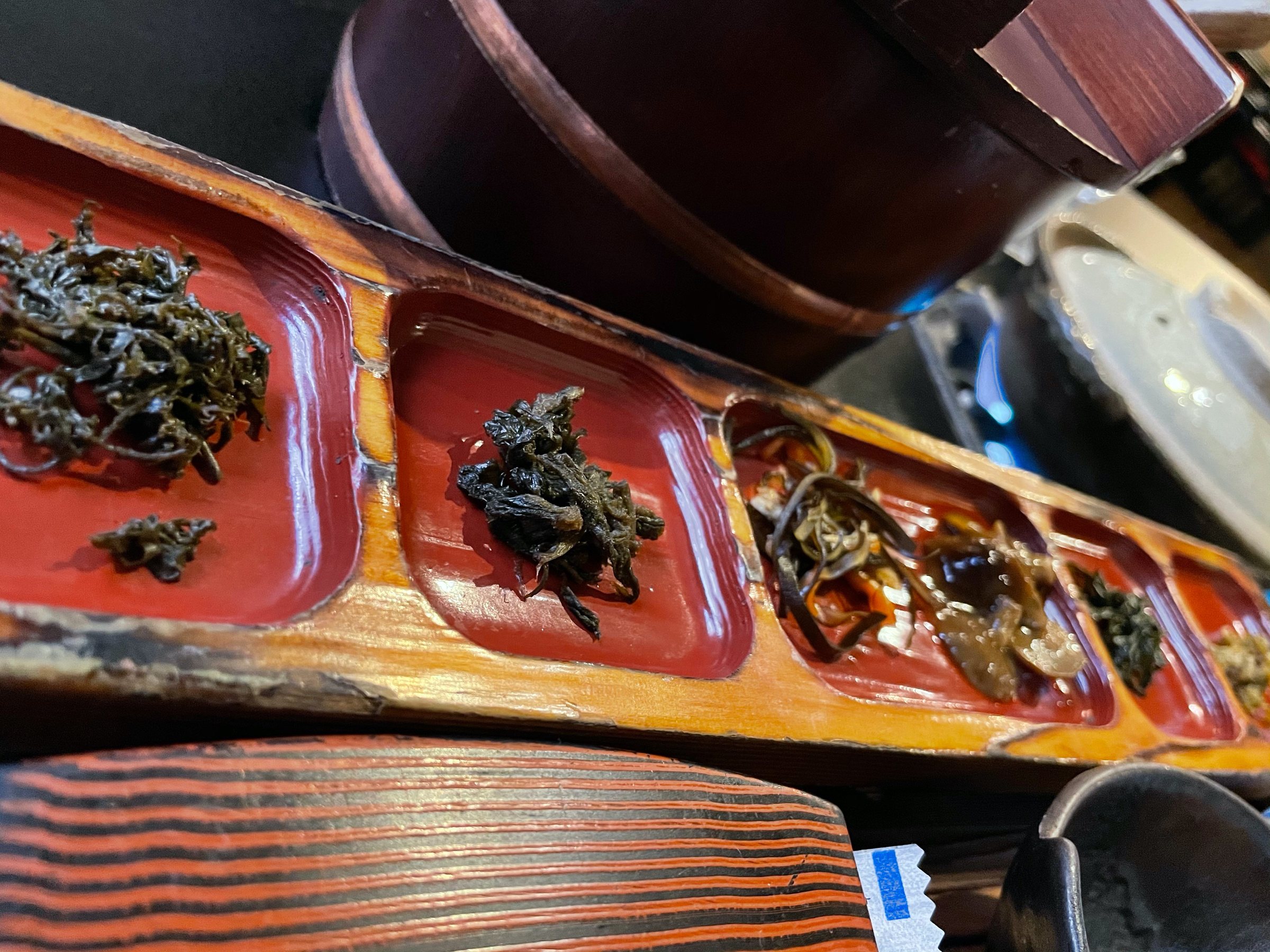
Eating breakfast surrounded by wood somehow sharpened our appetites, and we came away full of gratitude.
With such wholesome ingredients and carefully prepared dishes, we did not feel the least bit guilty about eating too much.
Looking back
This time we had the chance to talk with the okami, to hear about the cooking and the thinking behind the ryokan, and to tell her at length how much we had enjoyed it and what a lovely place it is. Sagashiokan is very reasonably priced, and for that price you get all of this: a ryokan of genuine value.
Like a secret hideaway deep in the mountains, it has plenty to restore not only hikers but anyone who has traveled a long way to get here. There will be discoveries and flavors that are not in this article, and each will add another way to enjoy it. Do come and experience the mountain cooking and the natural hot spring for yourself.
This review reflects a stay in winter 2020–21. Menus, baths and prices change; please confirm current details directly with the ryokan before visiting.