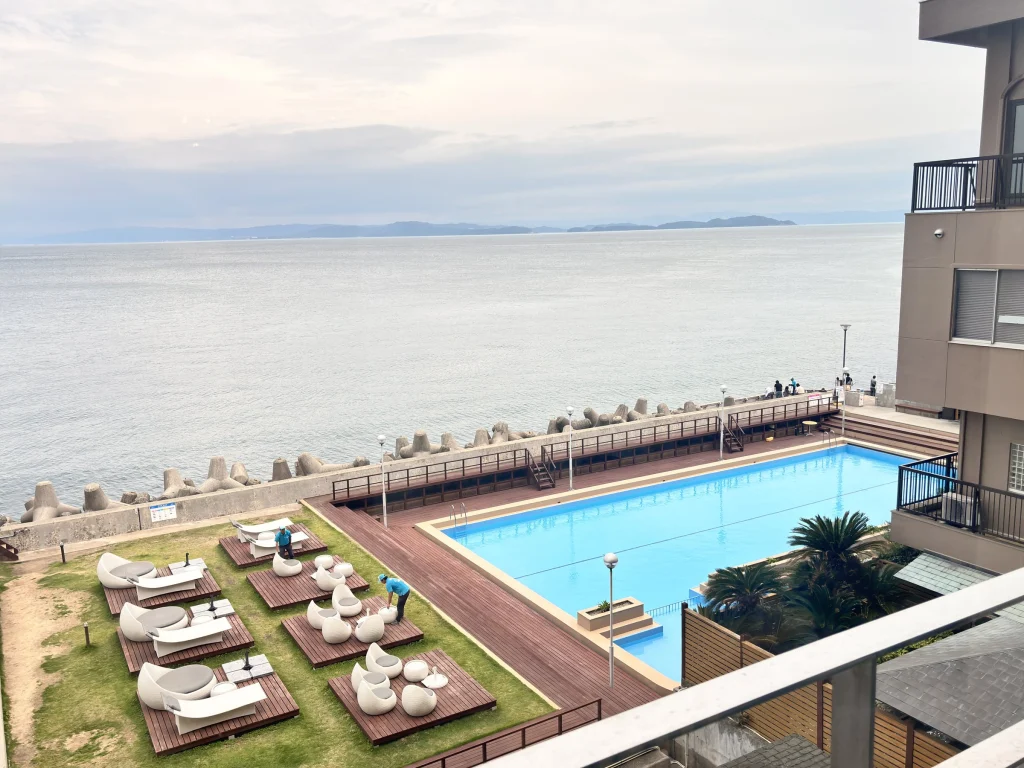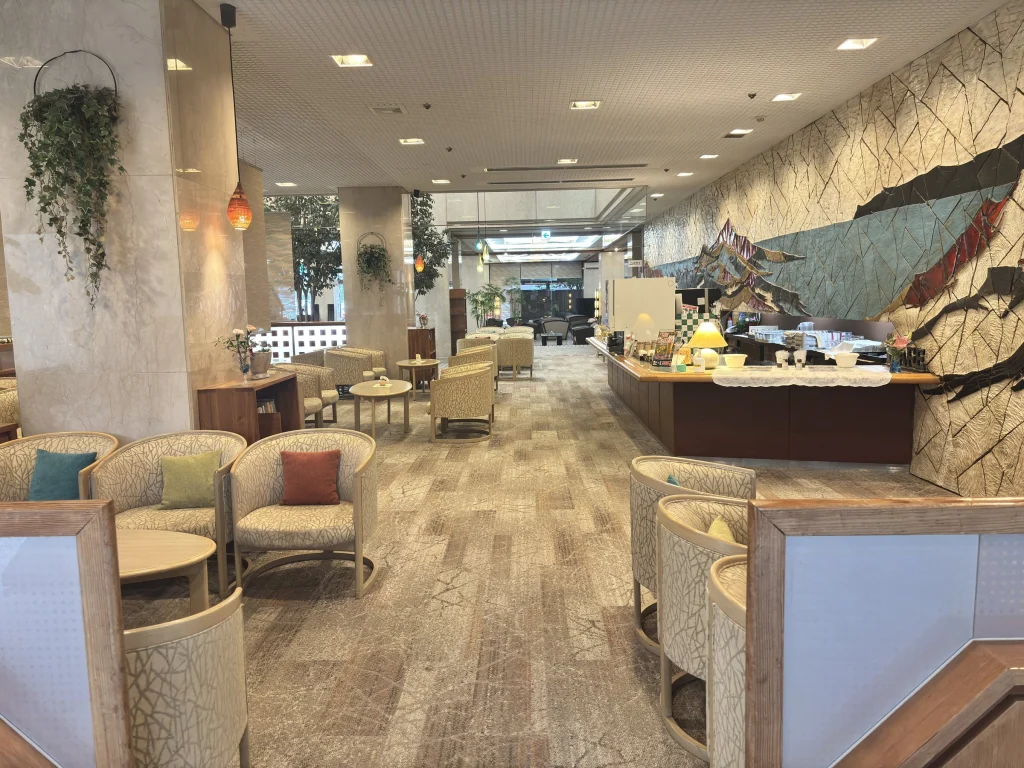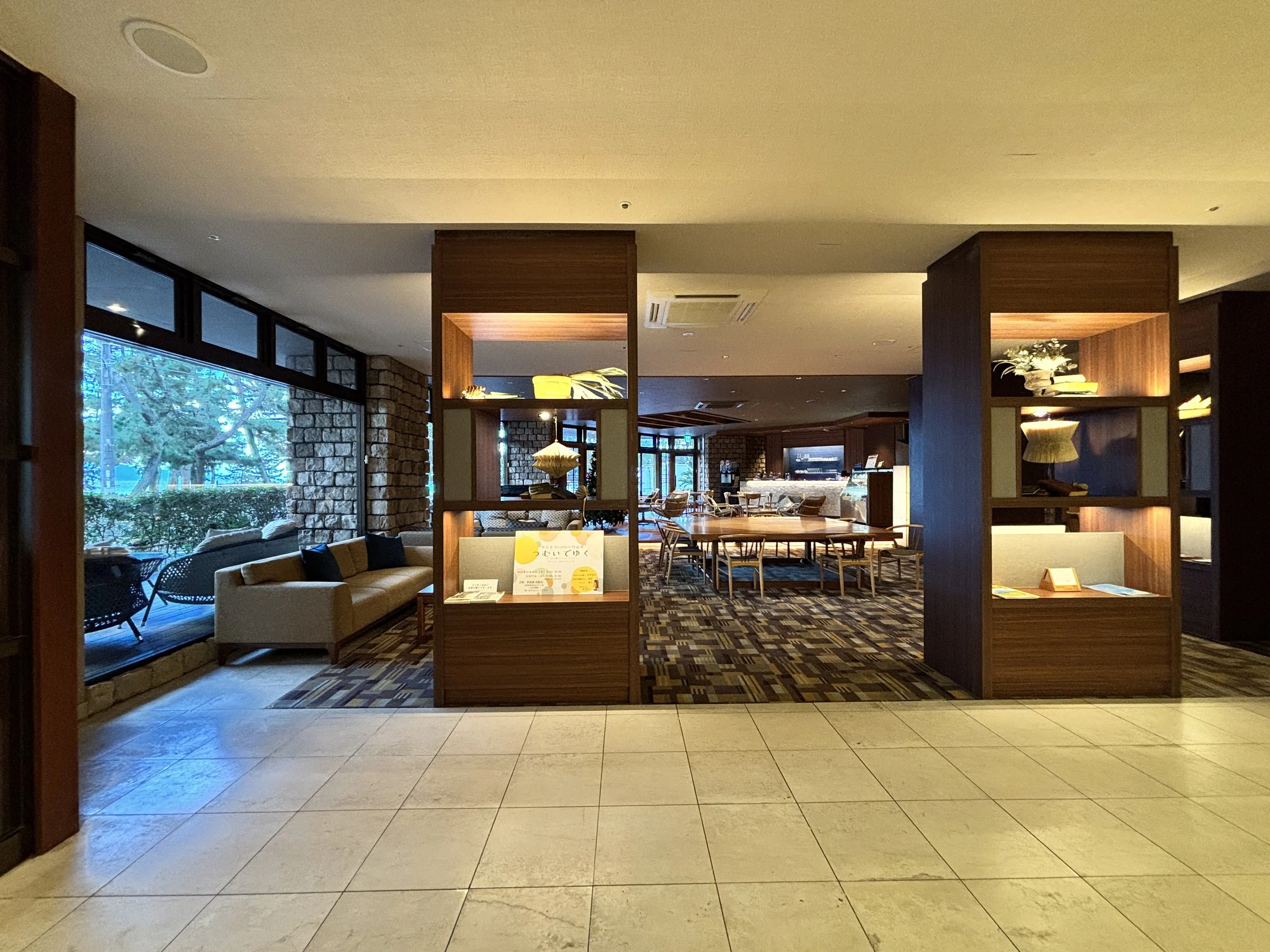
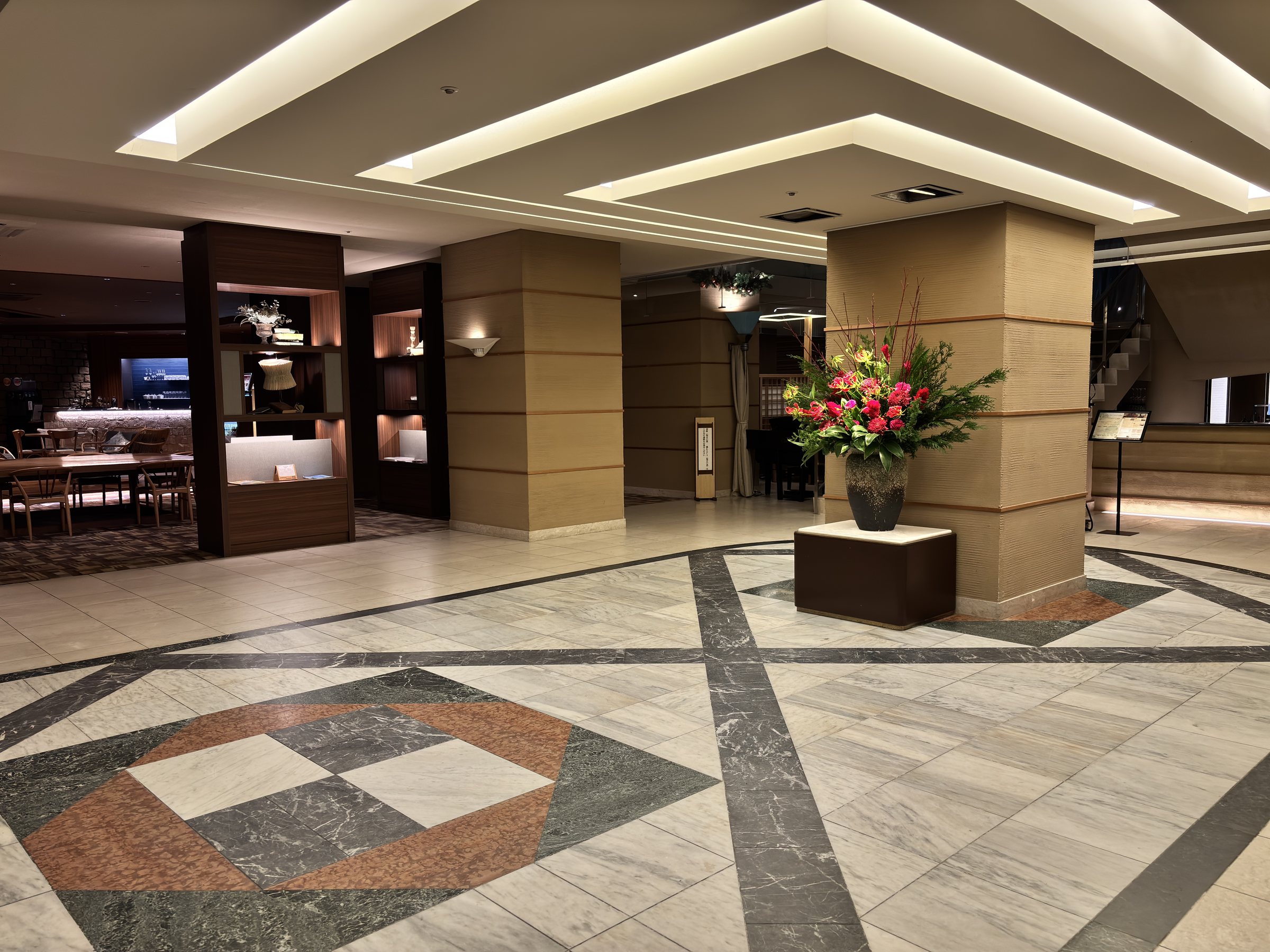
Staff guided our car right up to the entrance, where four of them were waiting to greet us with broad smiles. We were asked to check in first, and the woman at the desk explained everything with a smile and an engaging manner. The whole floor is lavishly built, with stone and tile used generously throughout. There is a faint touch of the Showa era (roughly the mid-20th century) about it, and that gives the place a sense of nostalgia alongside its quality.
The lobby and the bar
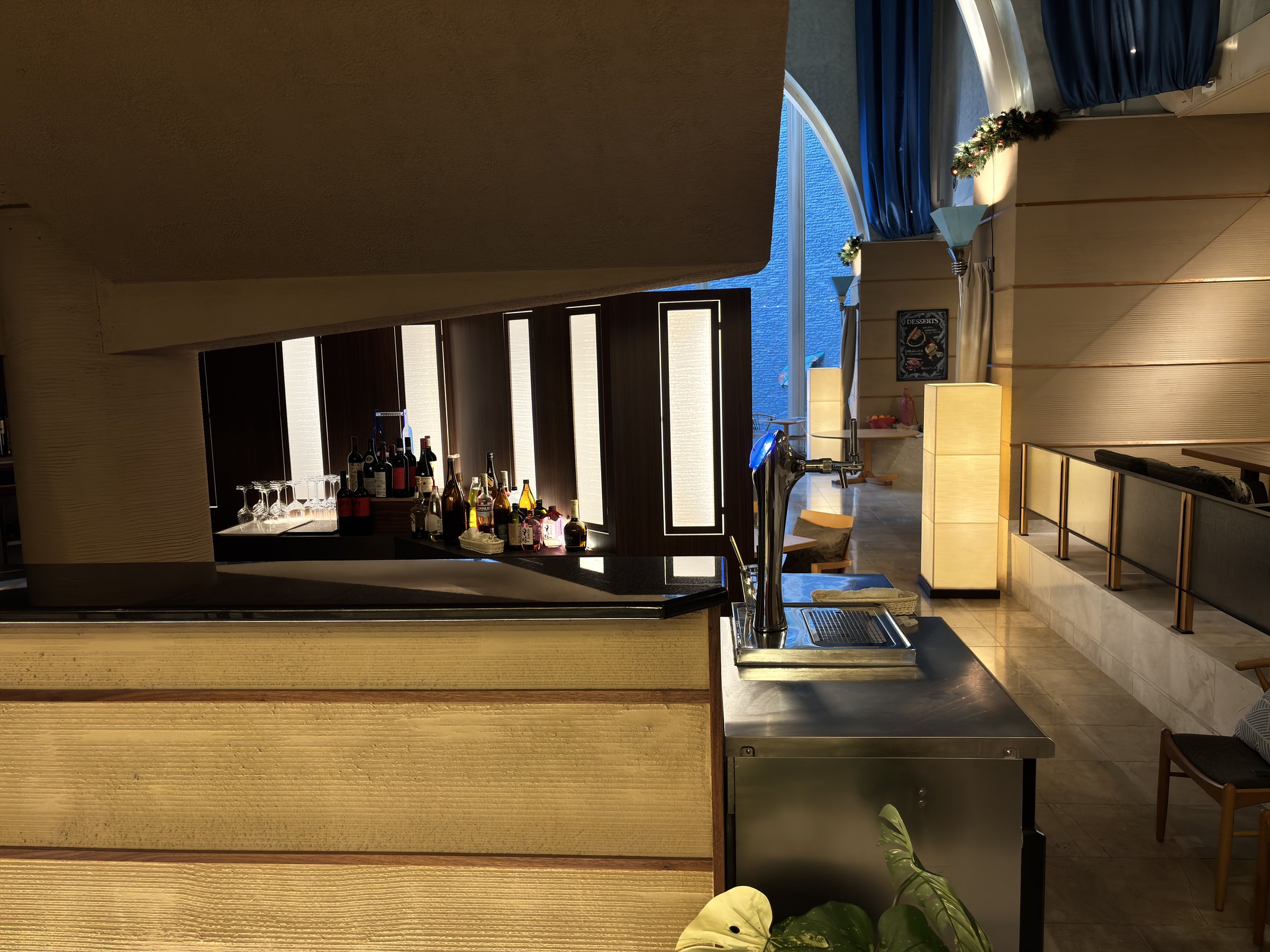
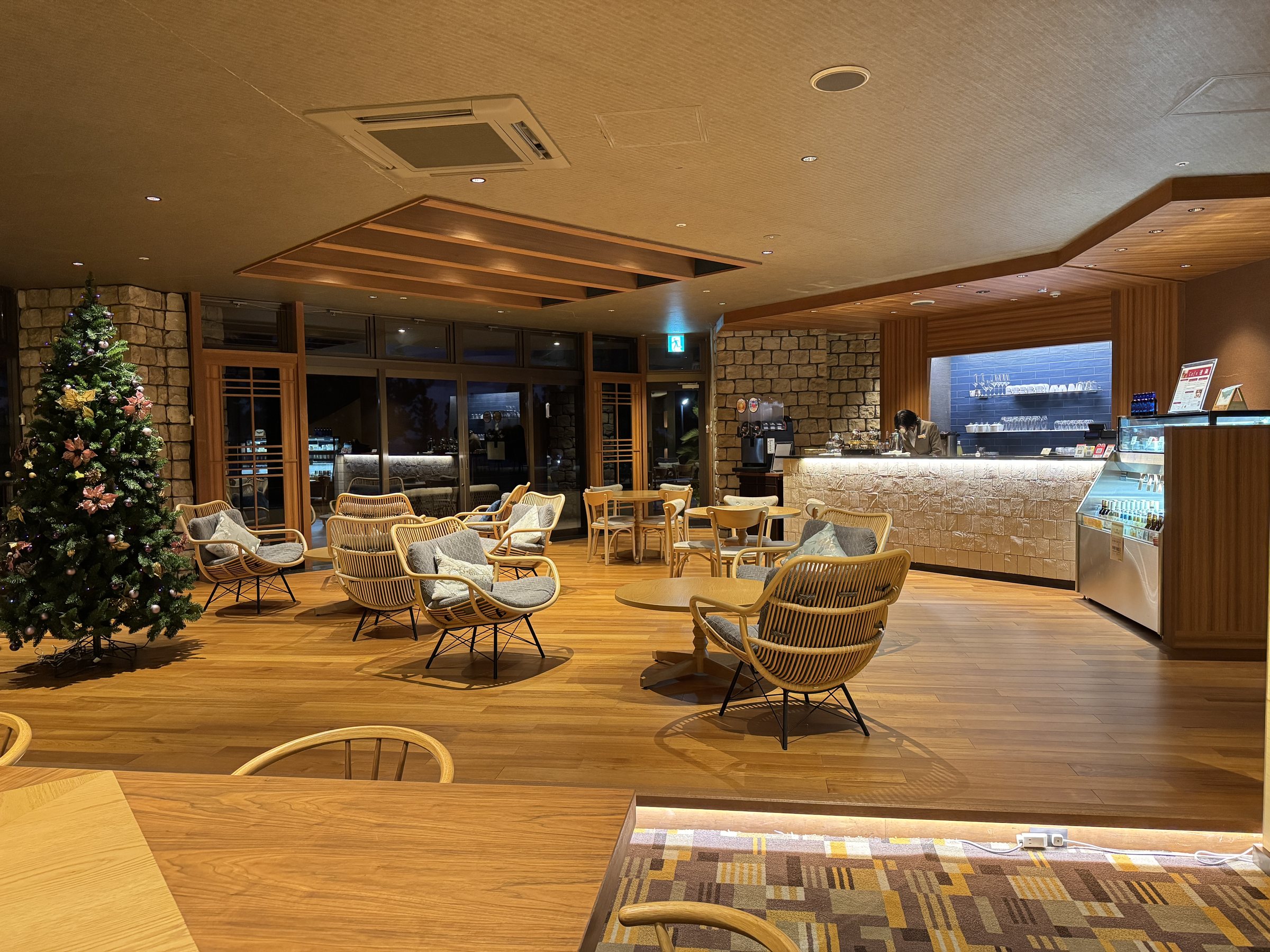
What you can see at the back is the drinks corner set up in the dinner buffet venue. Bottles of alcohol, apart from the more prestigious labels, would be better kept out of guests’ direct line of sight. Above all, used and dirty glasses and bottles in view can badly damage the impression of hygiene and service quality, so keeping this area tidy is essential.
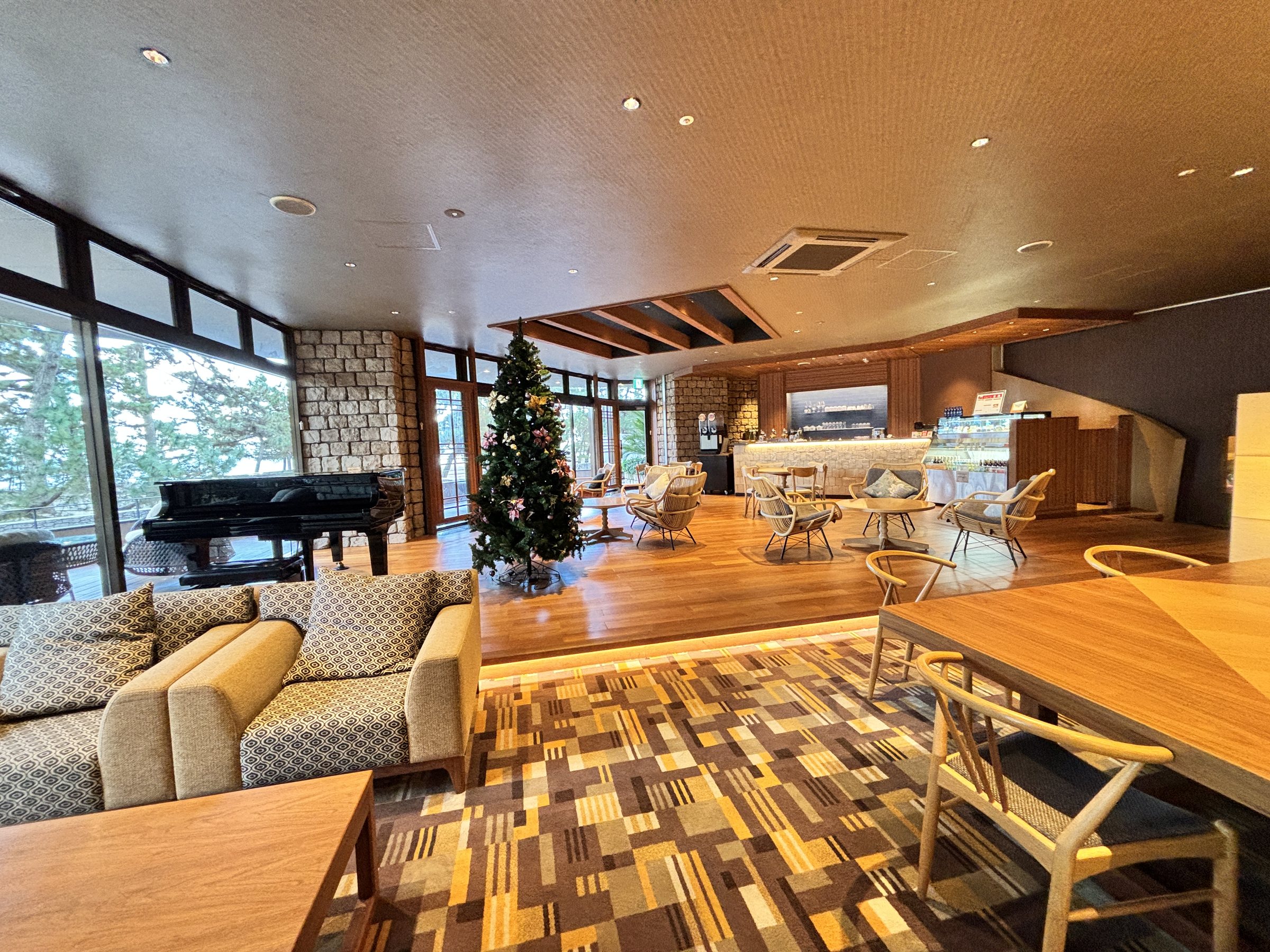
Opposite the check-in counter are a piano and a bar counter serving Awaji Island beer and several kinds of cocktail. Alcohol sales in the building seem to be concentrated at this bar. That makes things easy for guests to understand; at the same time, we felt that the way drinks are served and presented could do more to lift the atmosphere and appeal of the hotel as a whole.
The room
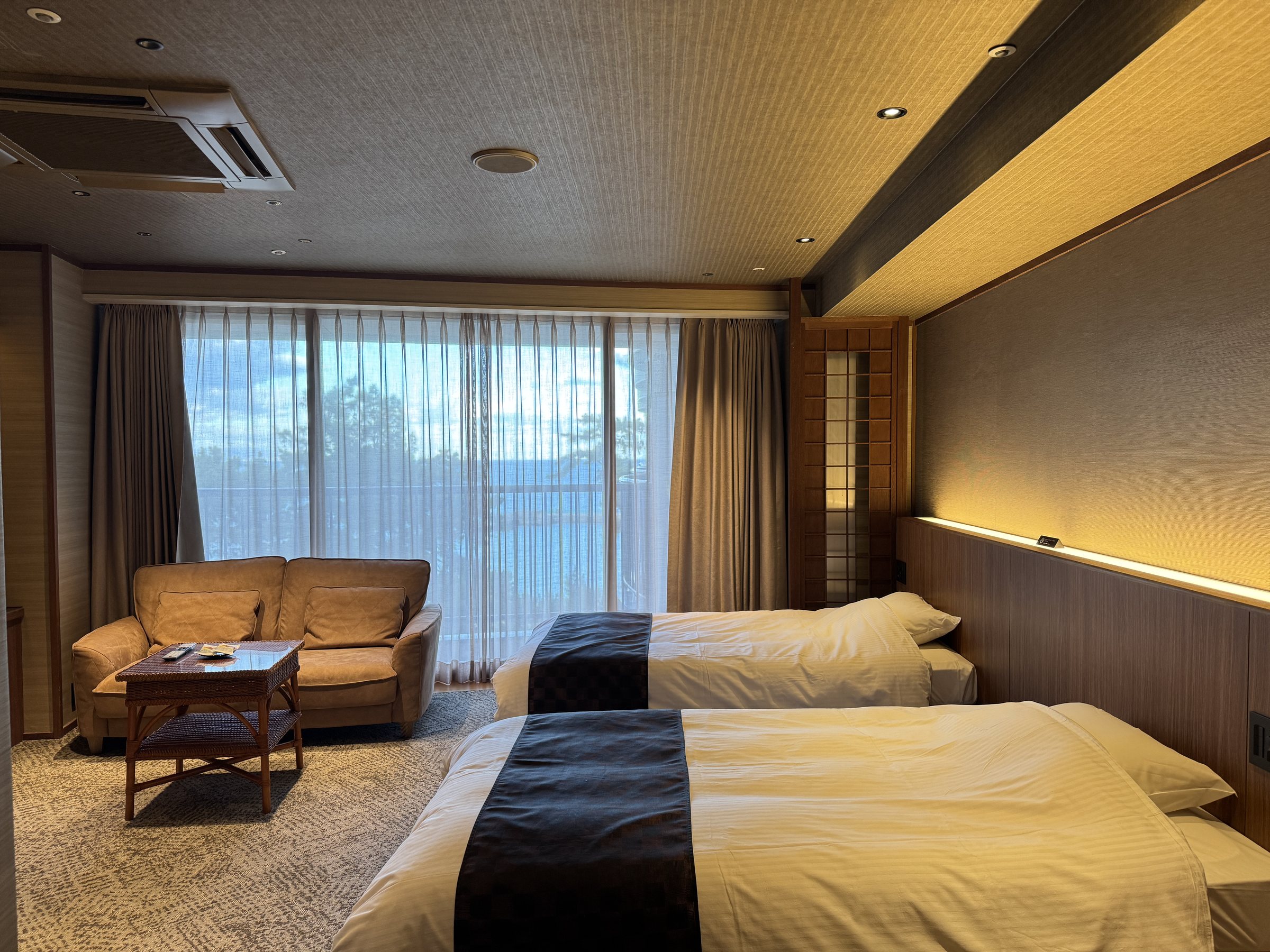
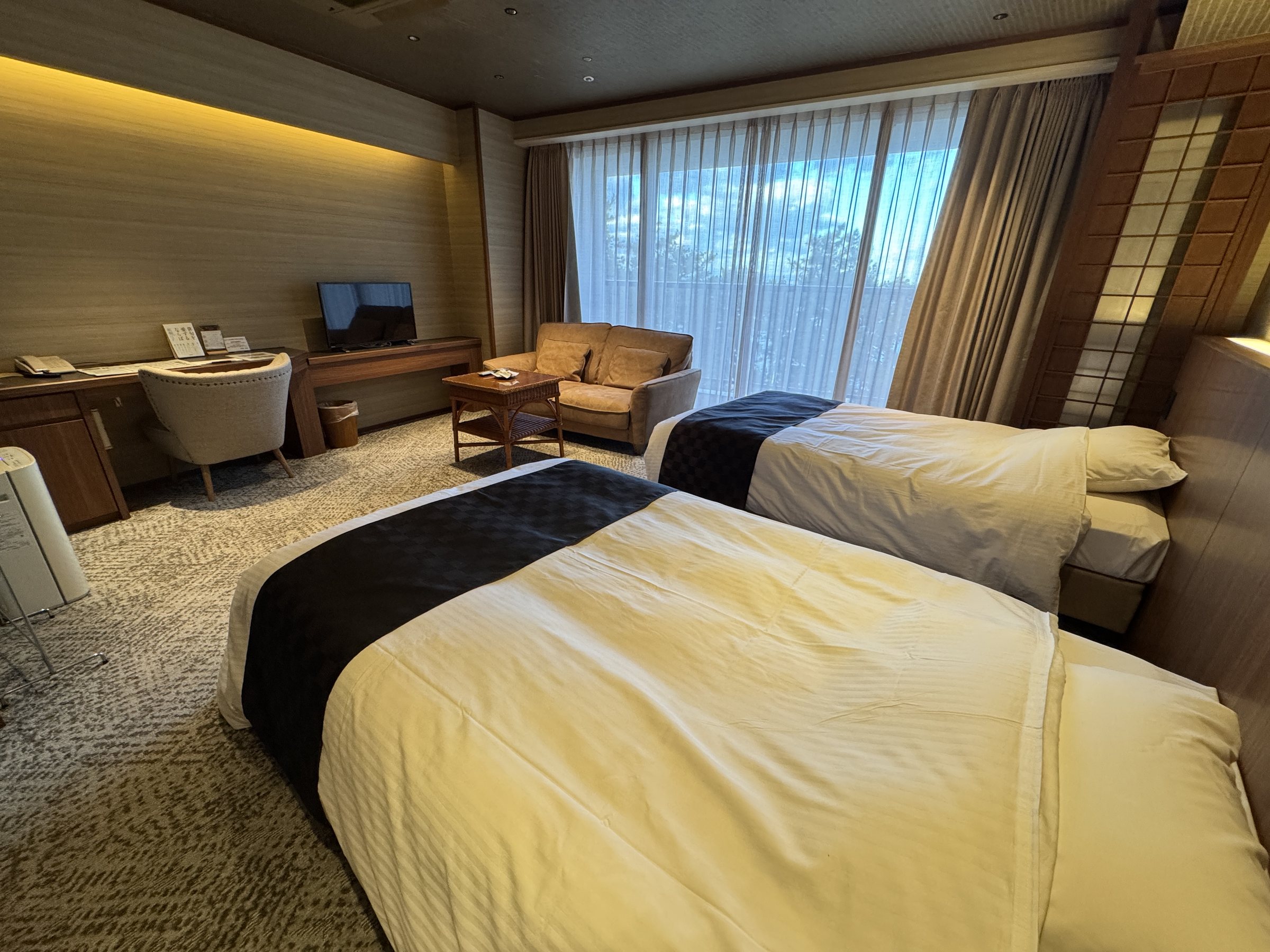
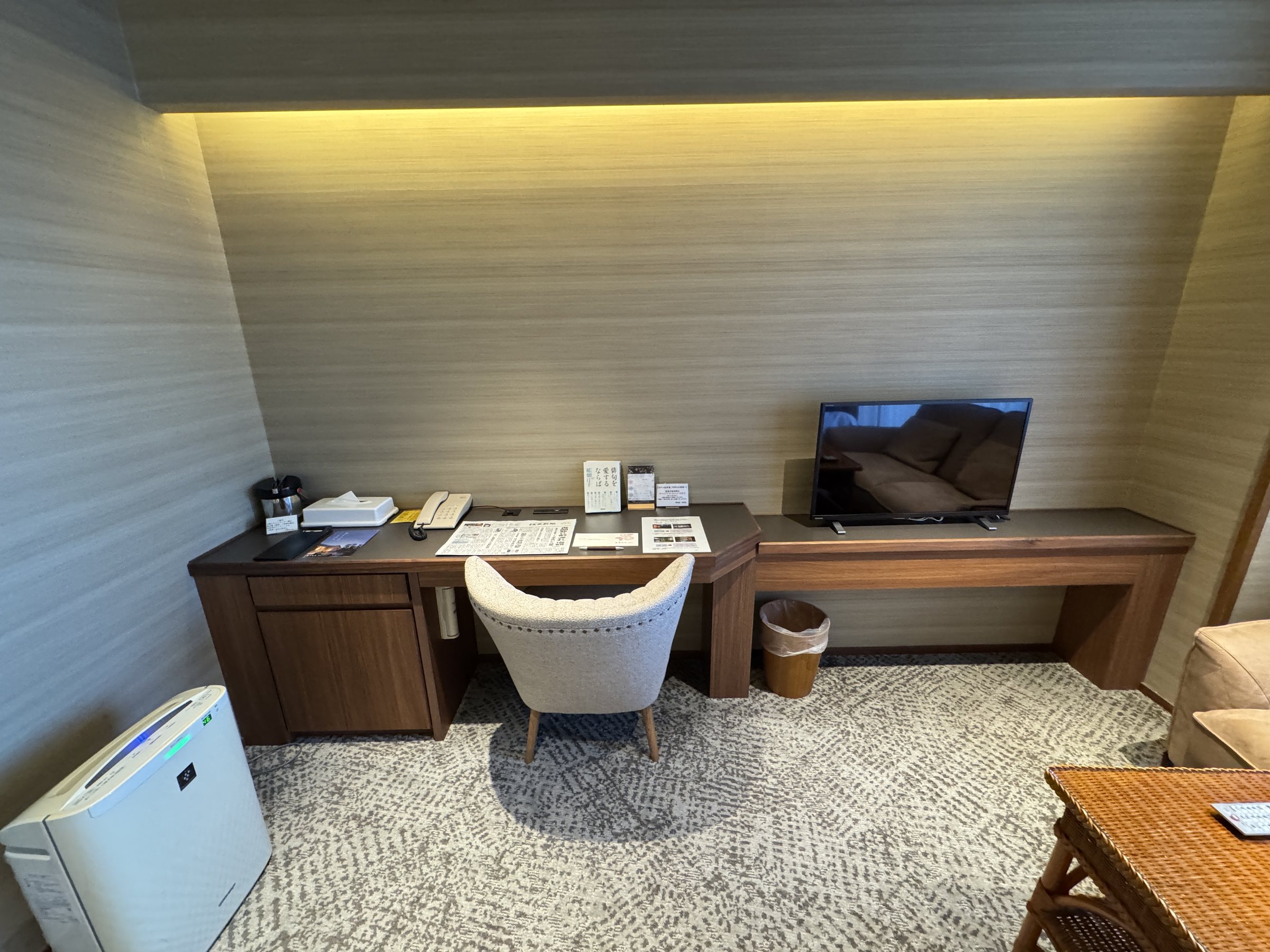
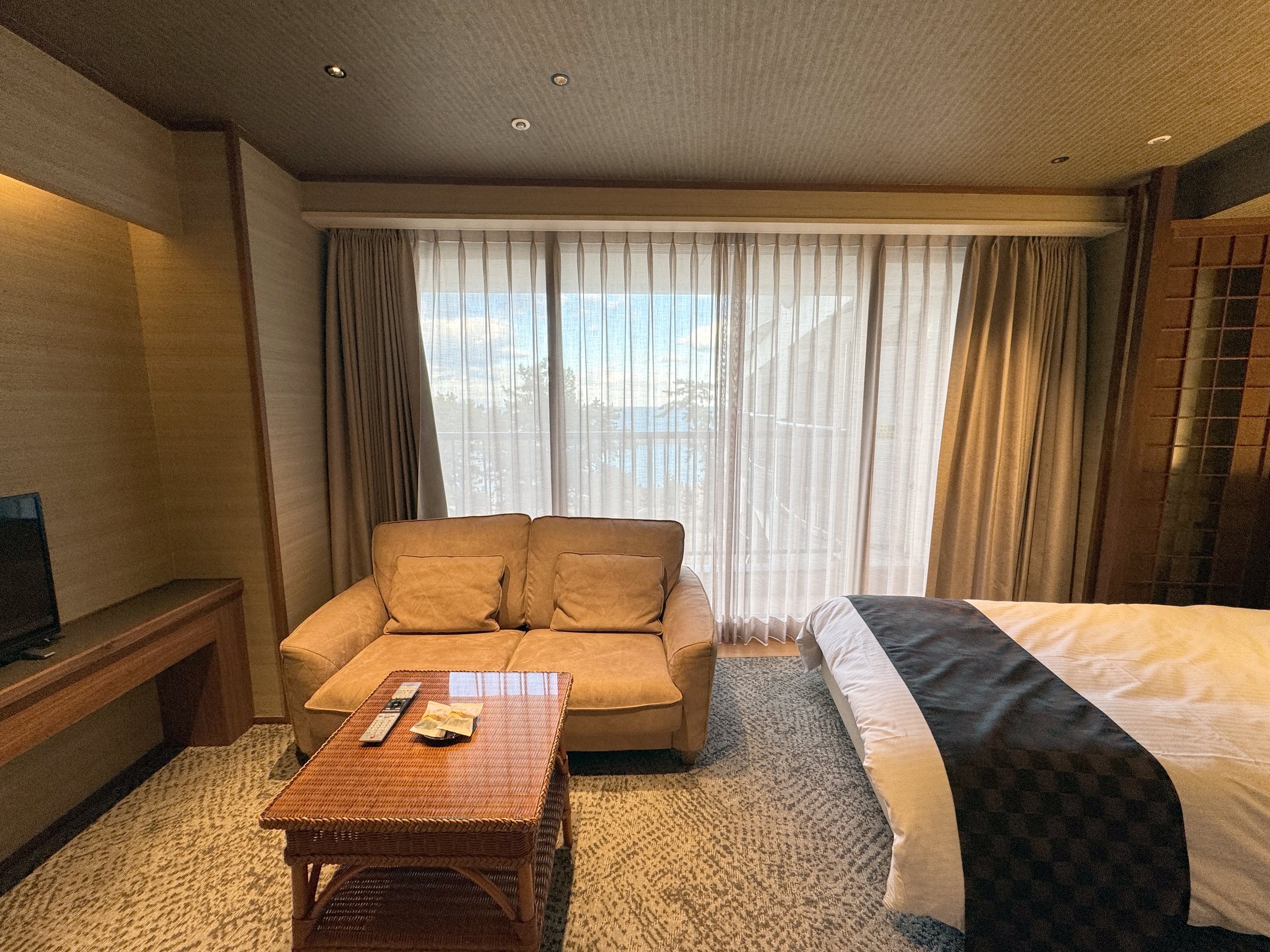
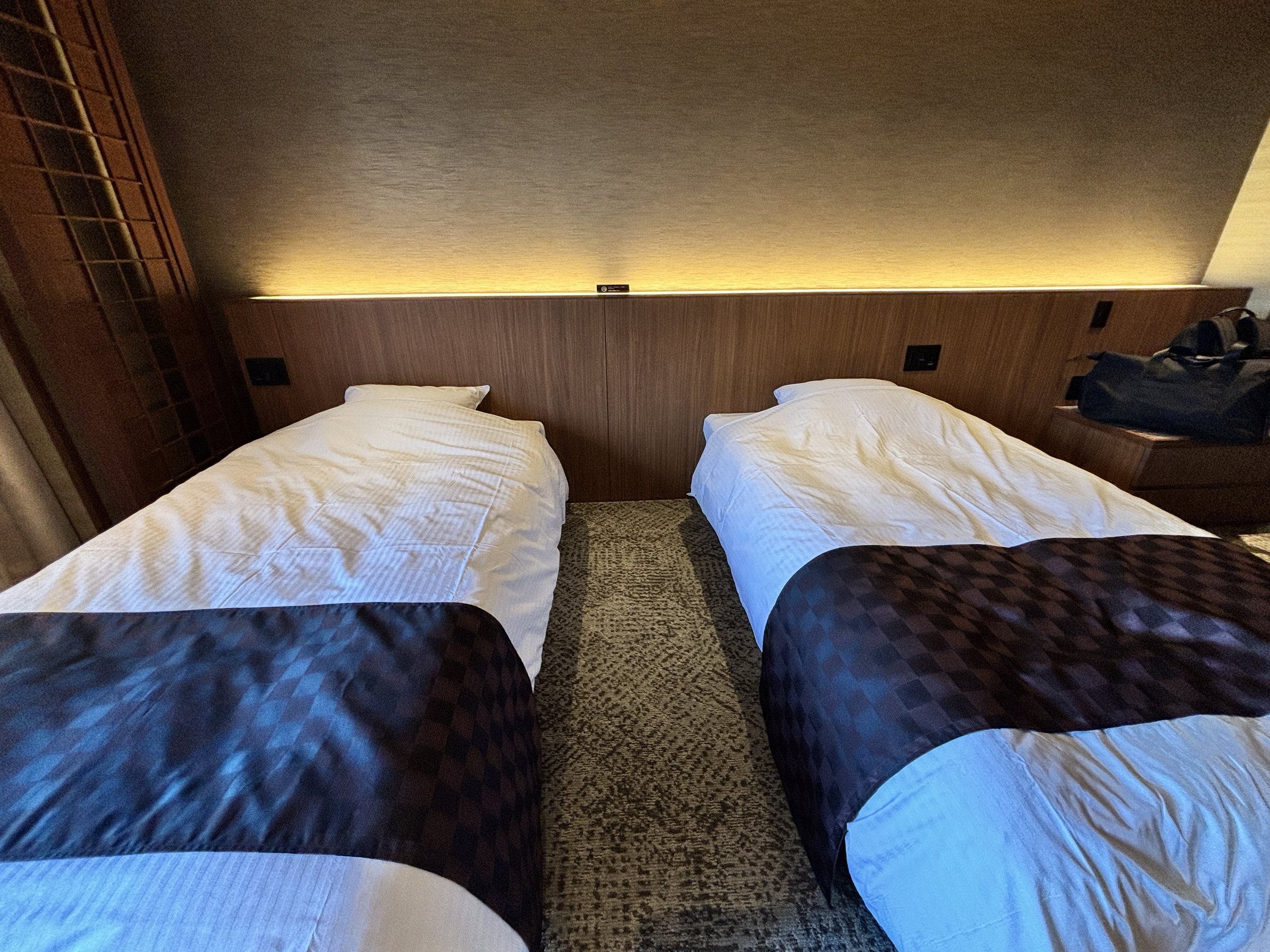
The room is lit only indirectly, so it feels a little dark for putting on make-up or having a snack. On the other hand, there is plenty of space overall, and it never felt cramped during our stay.
The television was smaller than we expected, but it can show YouTube and other streaming channels, which is a plus. The sofa had a good seat height and cushioning, and it was comfortable to sit in. The mattress was on the firm side with a strong spring, and depending on your preference it may feel as though it gives your lower back too little support. One small disappointment: there was no complimentary mineral water in the room, and everything in the fridge, soft drinks included, was charged.
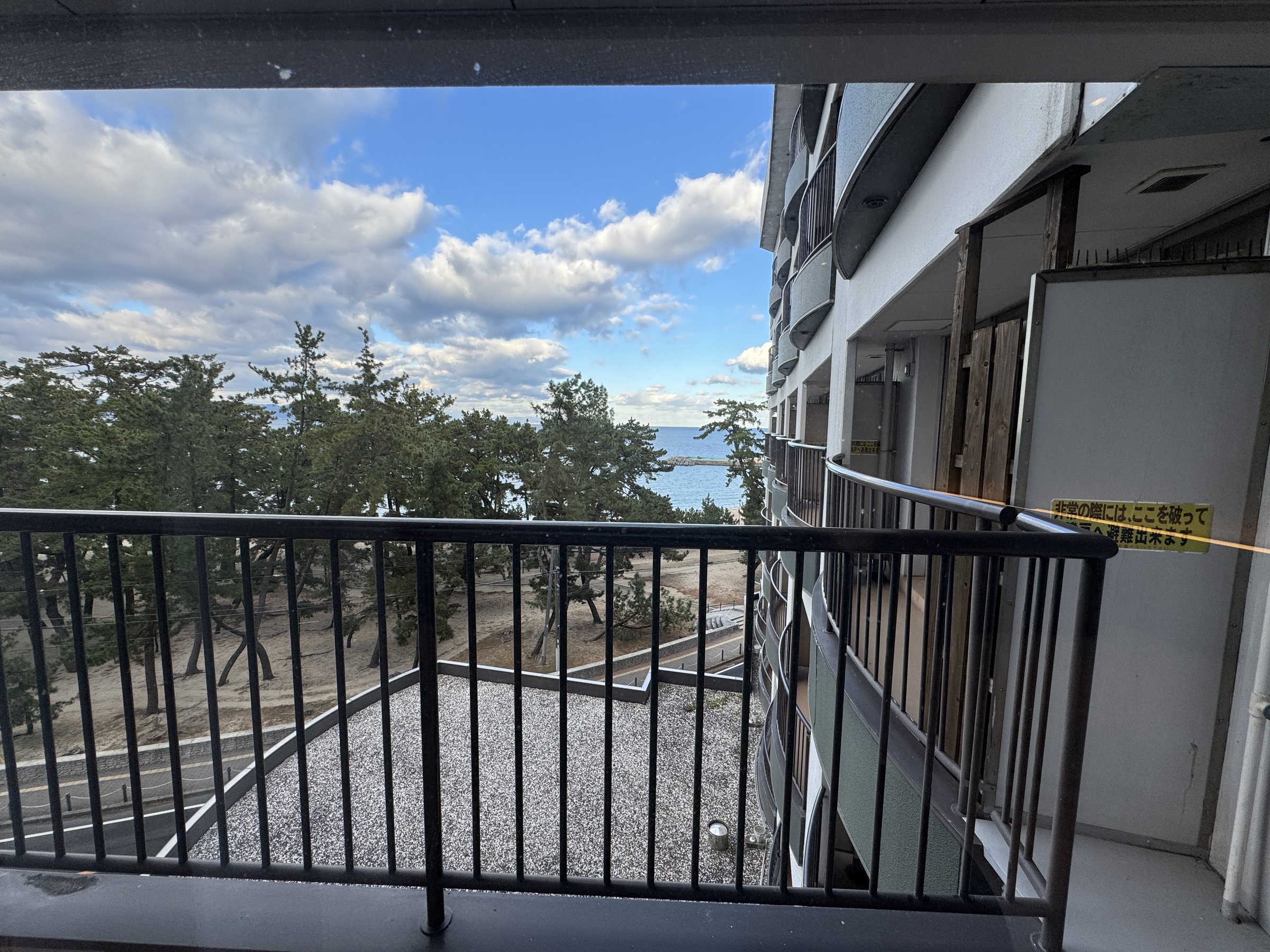
The view from the window takes in a sweeping stretch of the Seto Inland Sea and makes you feel, very strongly, that you are staying somewhere special on Awaji Island. The expanse of sea and sky is one of the great attractions of the room.
The room was generally well cleaned, and the floor and bathroom were in good condition. One exception: dust had built up on top of the headboard, and we could see fine particles floating in the light. The cleaning staff need to pay more attention to high and hard-to-see places. The walls were also thinner than we expected, and we could hear our neighbors talking.
The main building’s baths
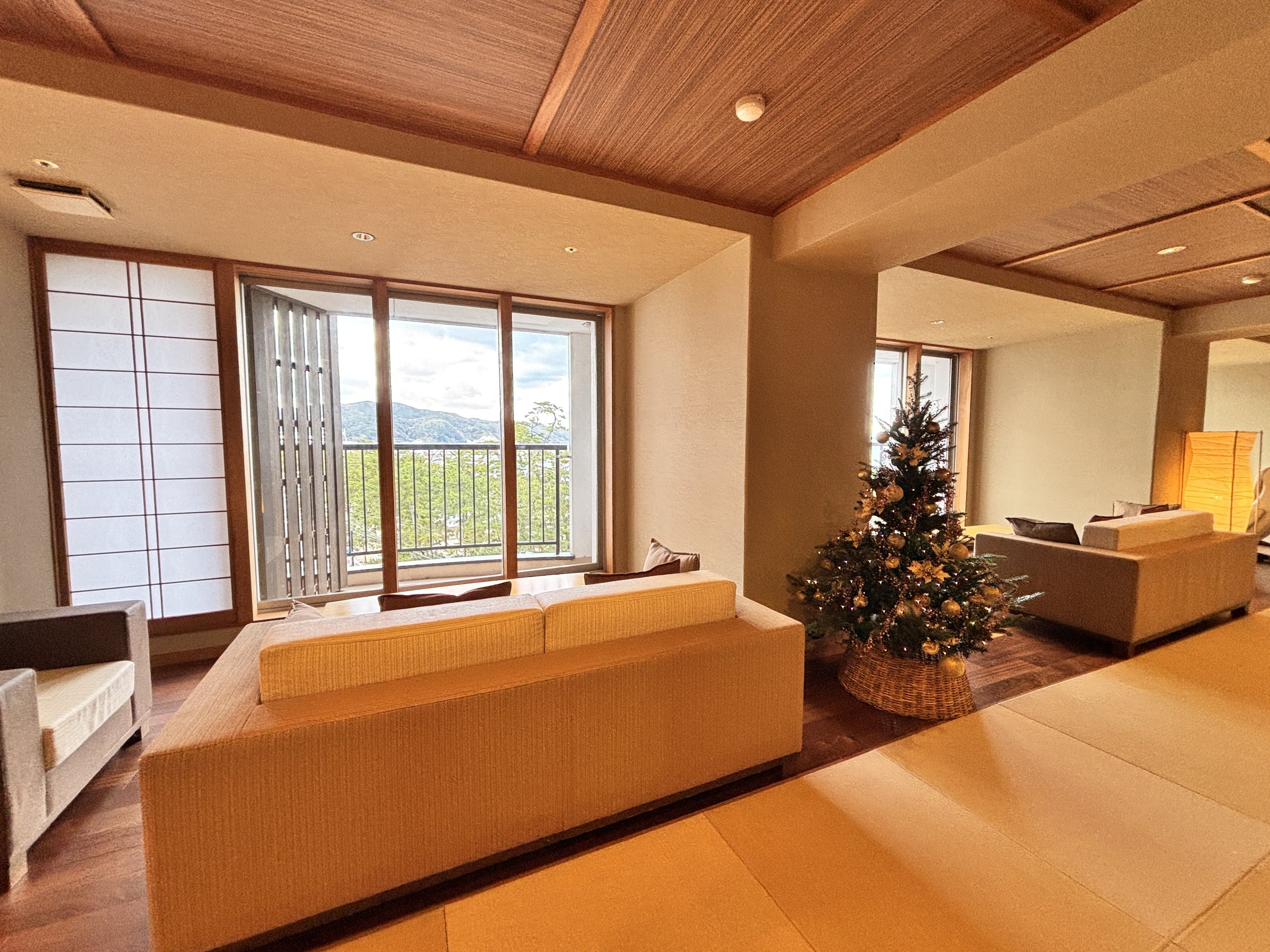
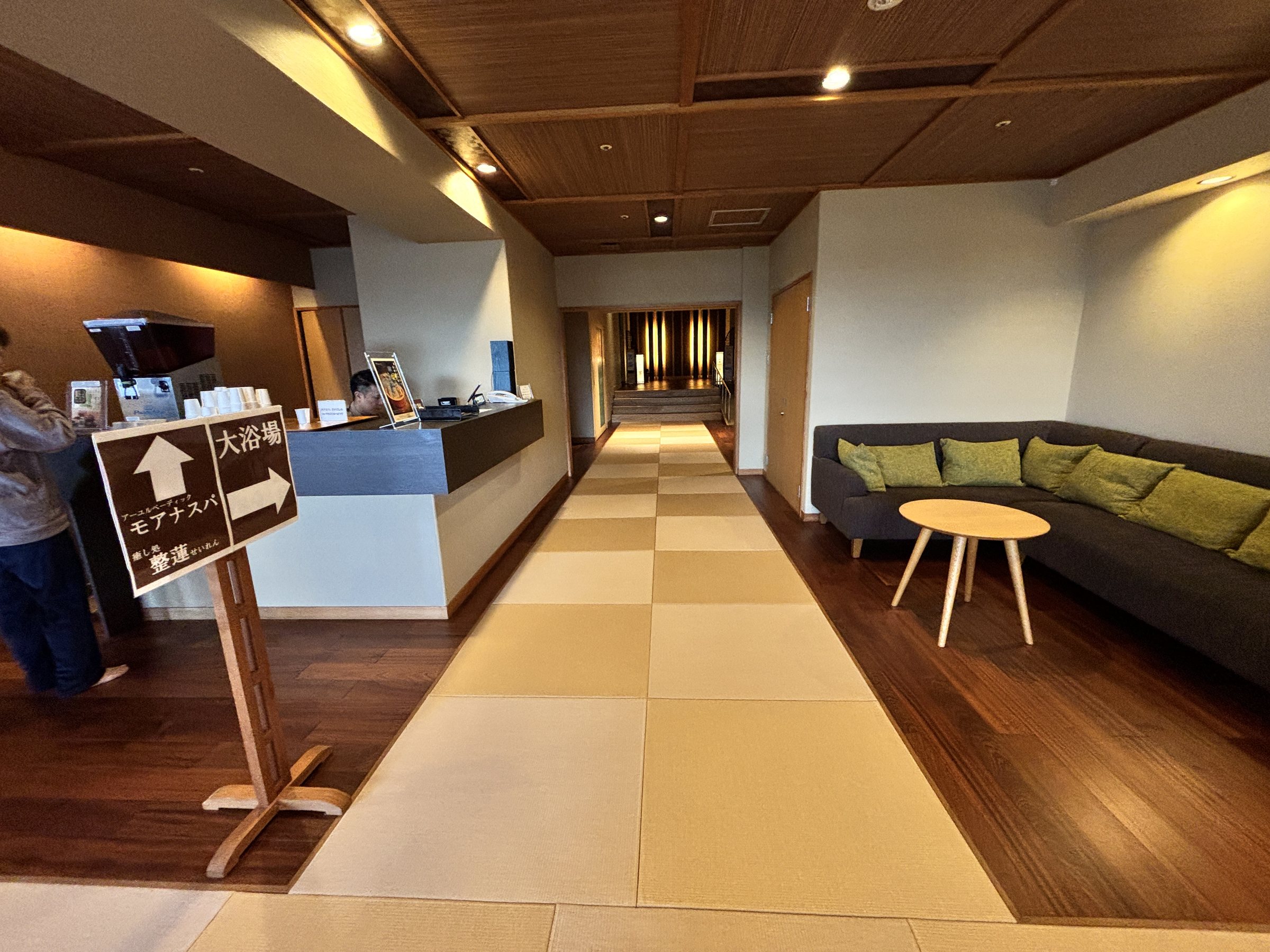
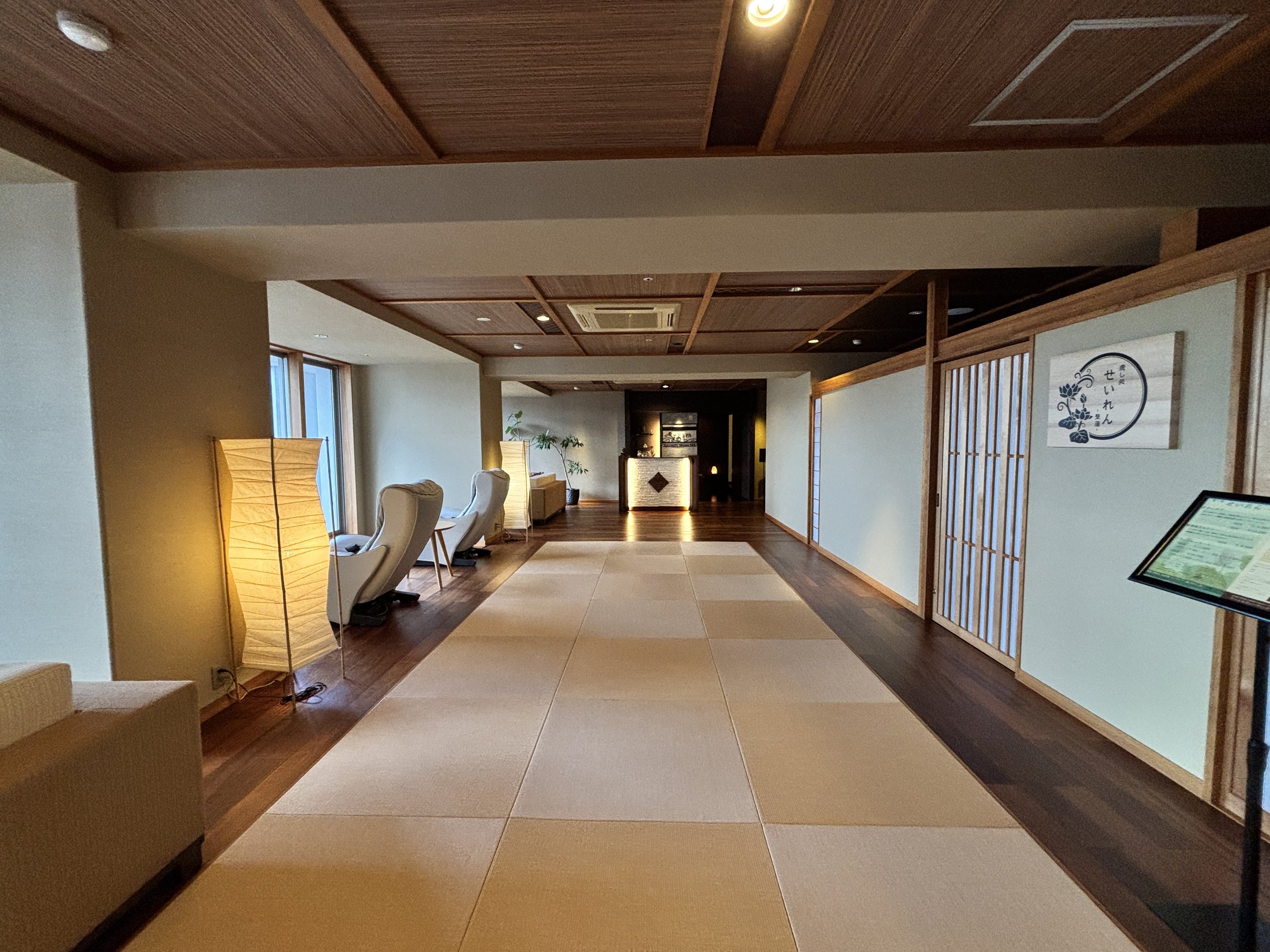
There are two sets of large communal baths, one in the main building and one in the annex; these are the main building’s. The route to them takes you along long corridors and past rest areas, and along the way you can help yourself to black soybean tea.
The spacious shared area has chairs and tables arranged with room to spare, a generous layout for relaxing after a bath. It combines a sense of occasion with a practical place to rest, and seems designed with the value of the whole stay in mind.
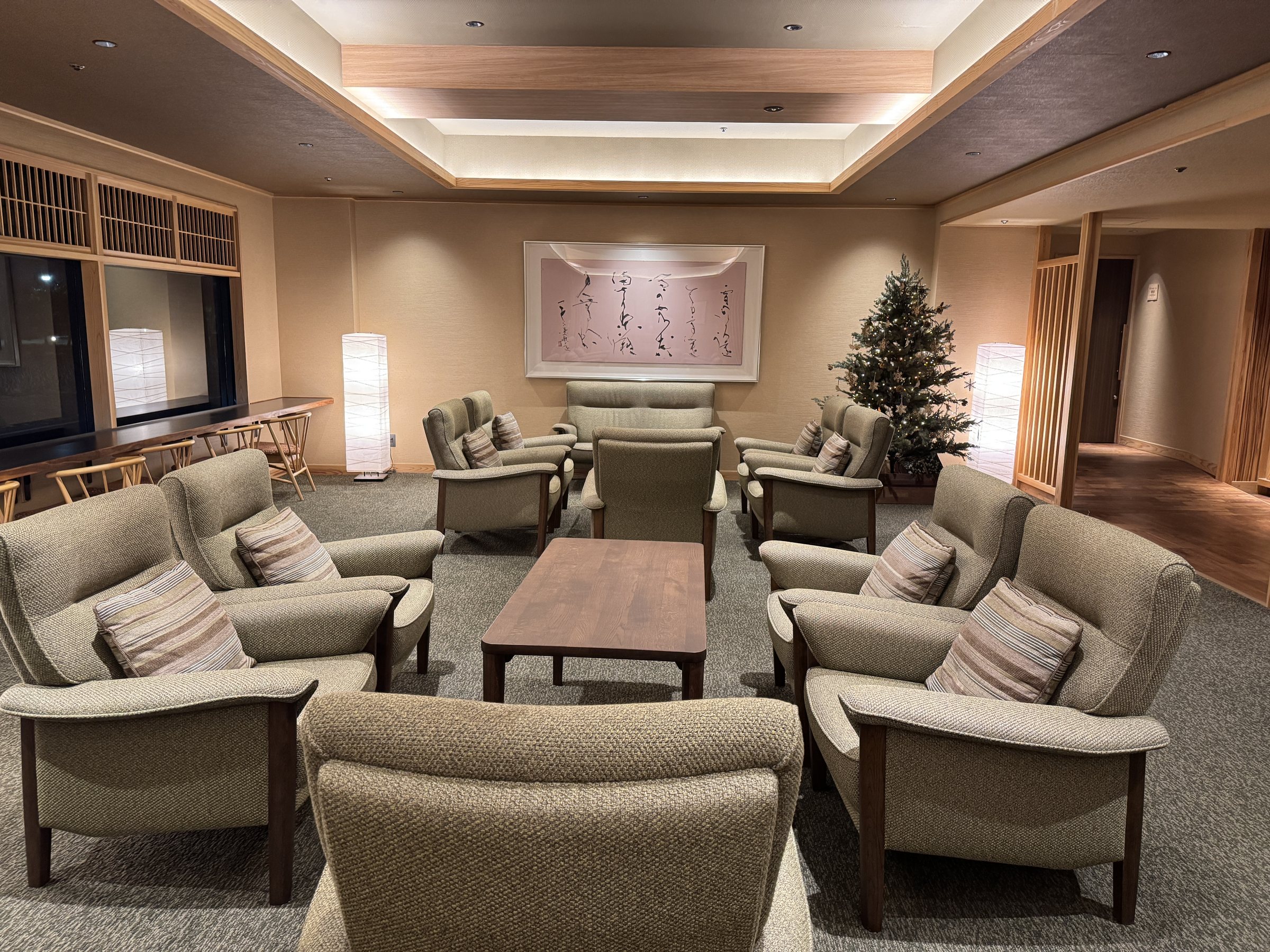
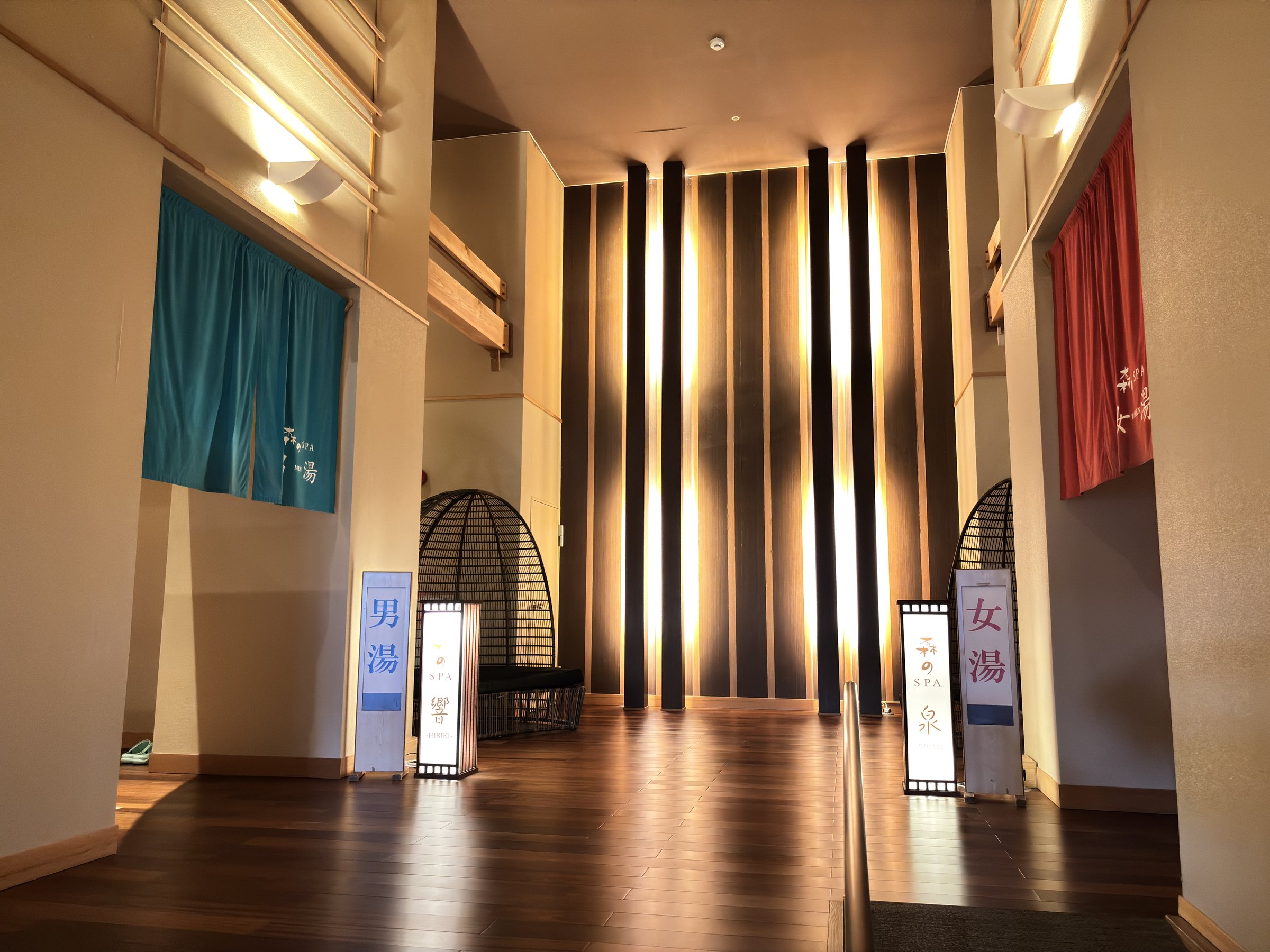
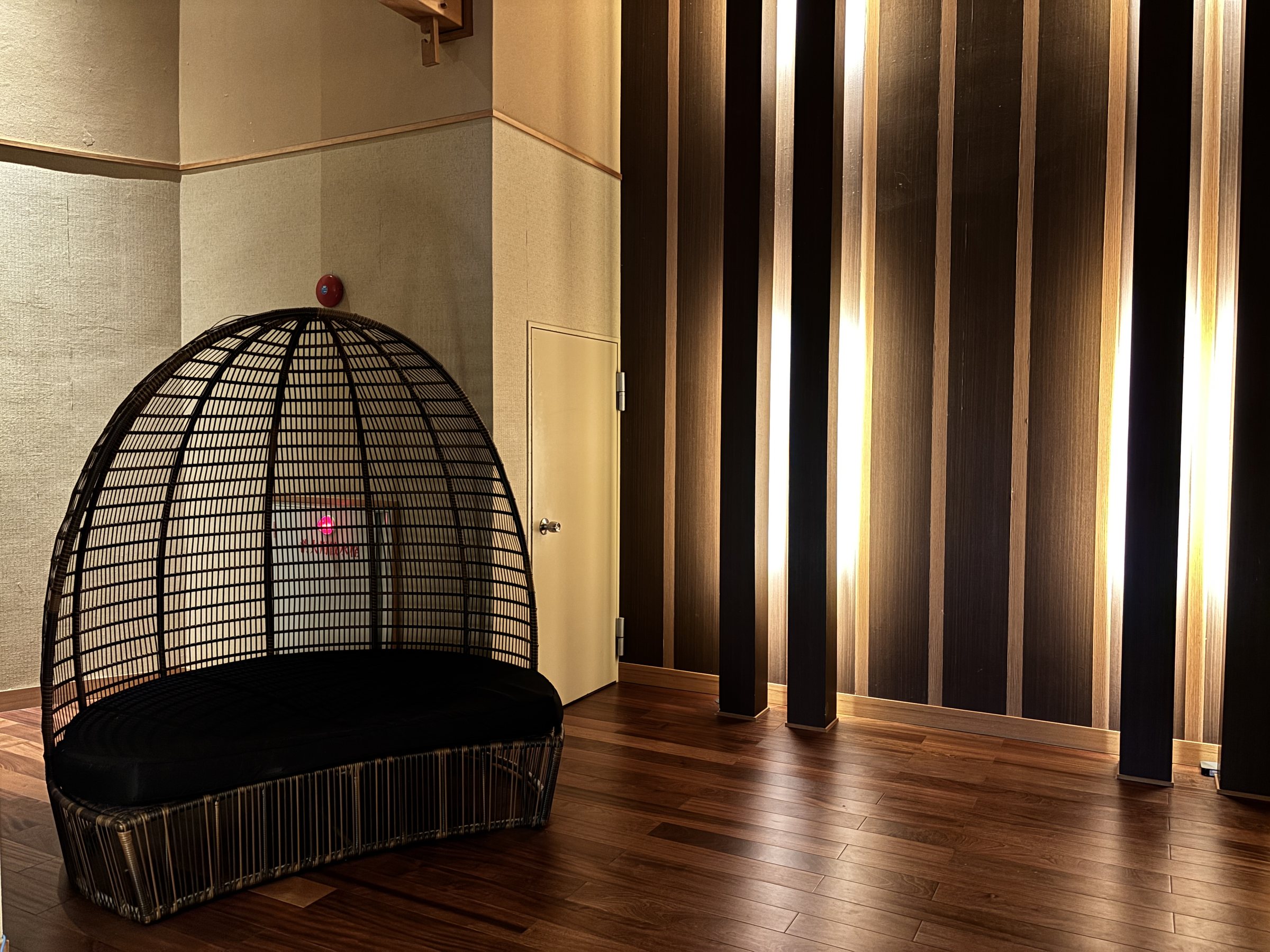
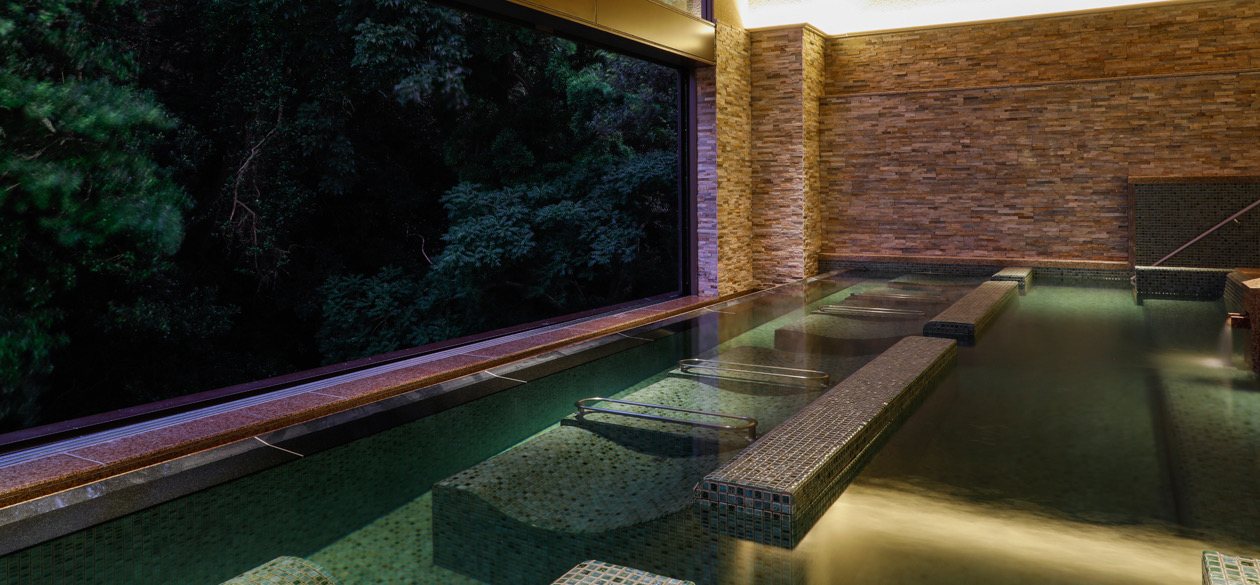
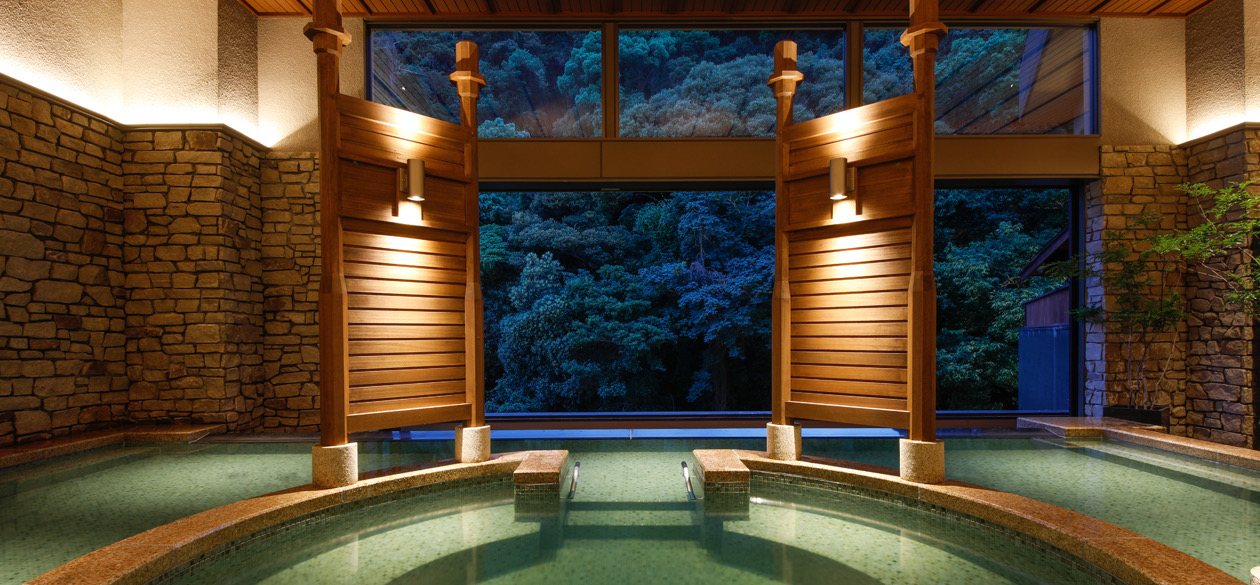
Rather than open nature, what lies in front of you is forest, and it is overwhelming; underfoot, the tiled floor has a firm, distinct feel. The interesting part is that this is a bath where you lie down side by side and take in the view. Every section is filled to the brim with hot spring water. The stylish partitions make each one feel like a separate tub, but seen another way they even give a sense of privacy, which surprised us.
For children
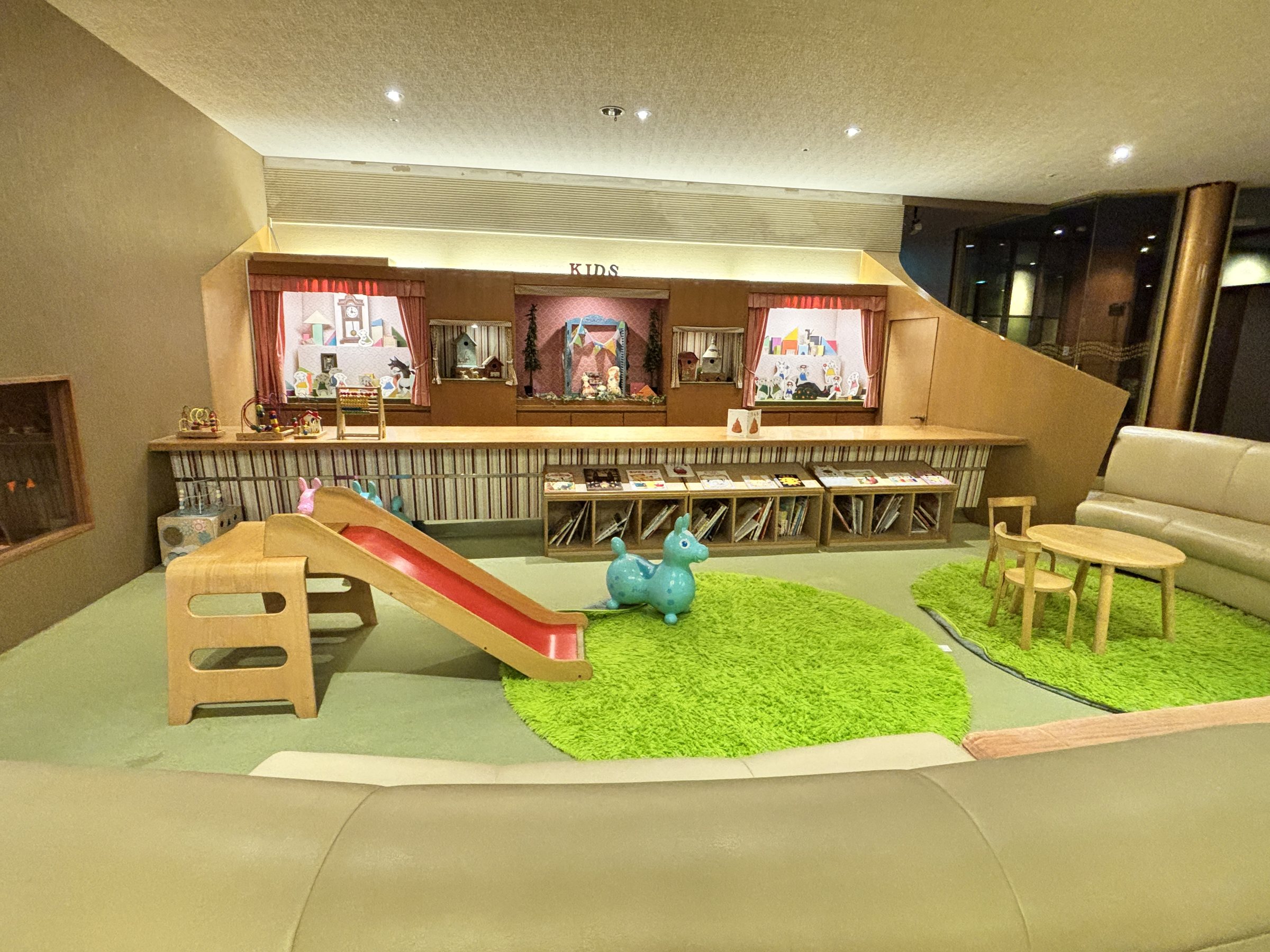
There is a kids’ corner in the building with building blocks, picture books, a slide and a full set of play equipment where small children can play safely. It is a thoughtful way to lift the mood of a child who has grown grumpy in unfamiliar surroundings.
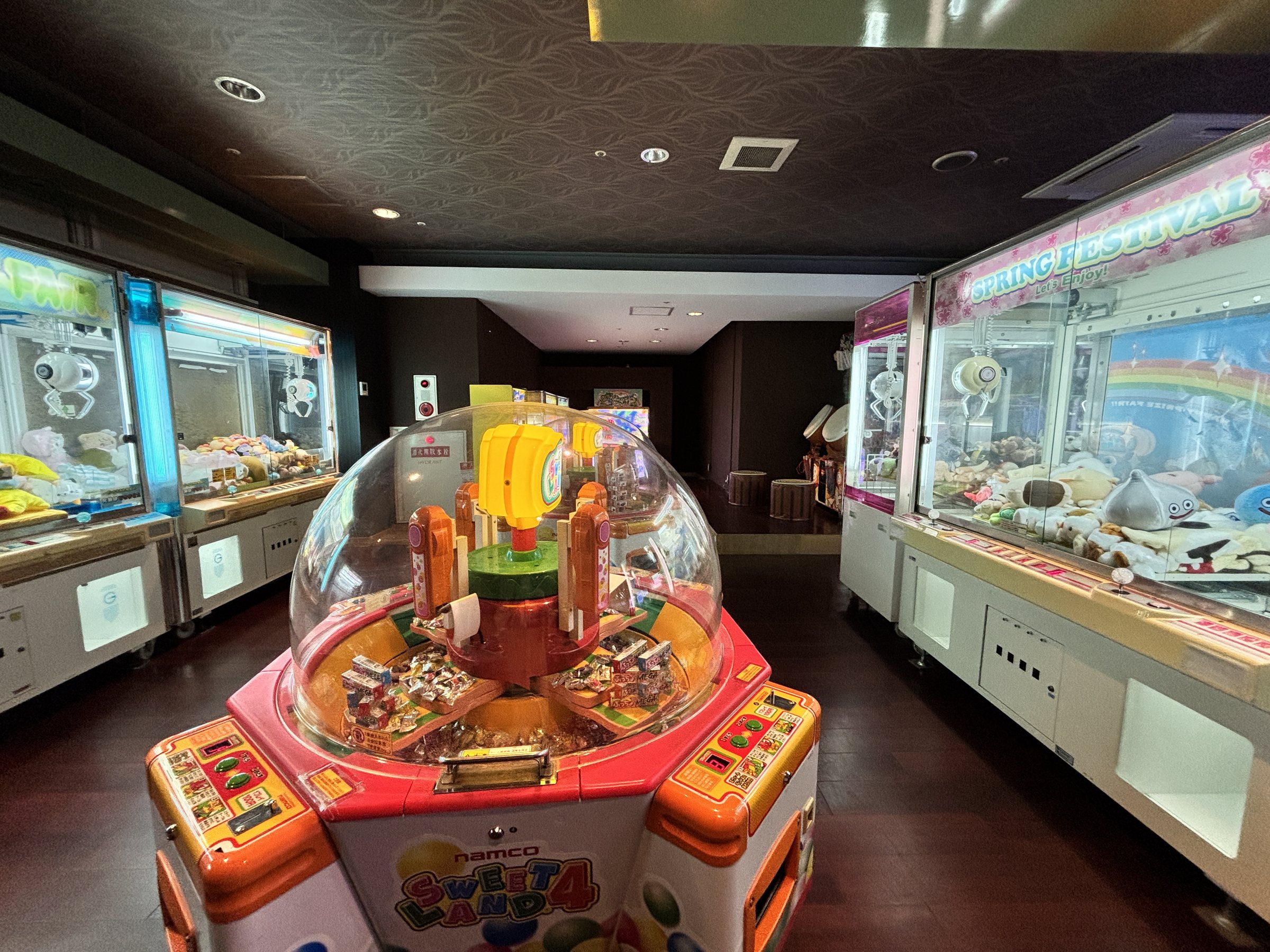
In a separate area there is also a game corner, with a line-up that recalls the Showa and Heisei eras (roughly the 1970s to the 2000s), something rare these days. With old-fashioned crane games and an air hockey table, it offers a nostalgic time not only for children but for adults too.
The annex baths by night
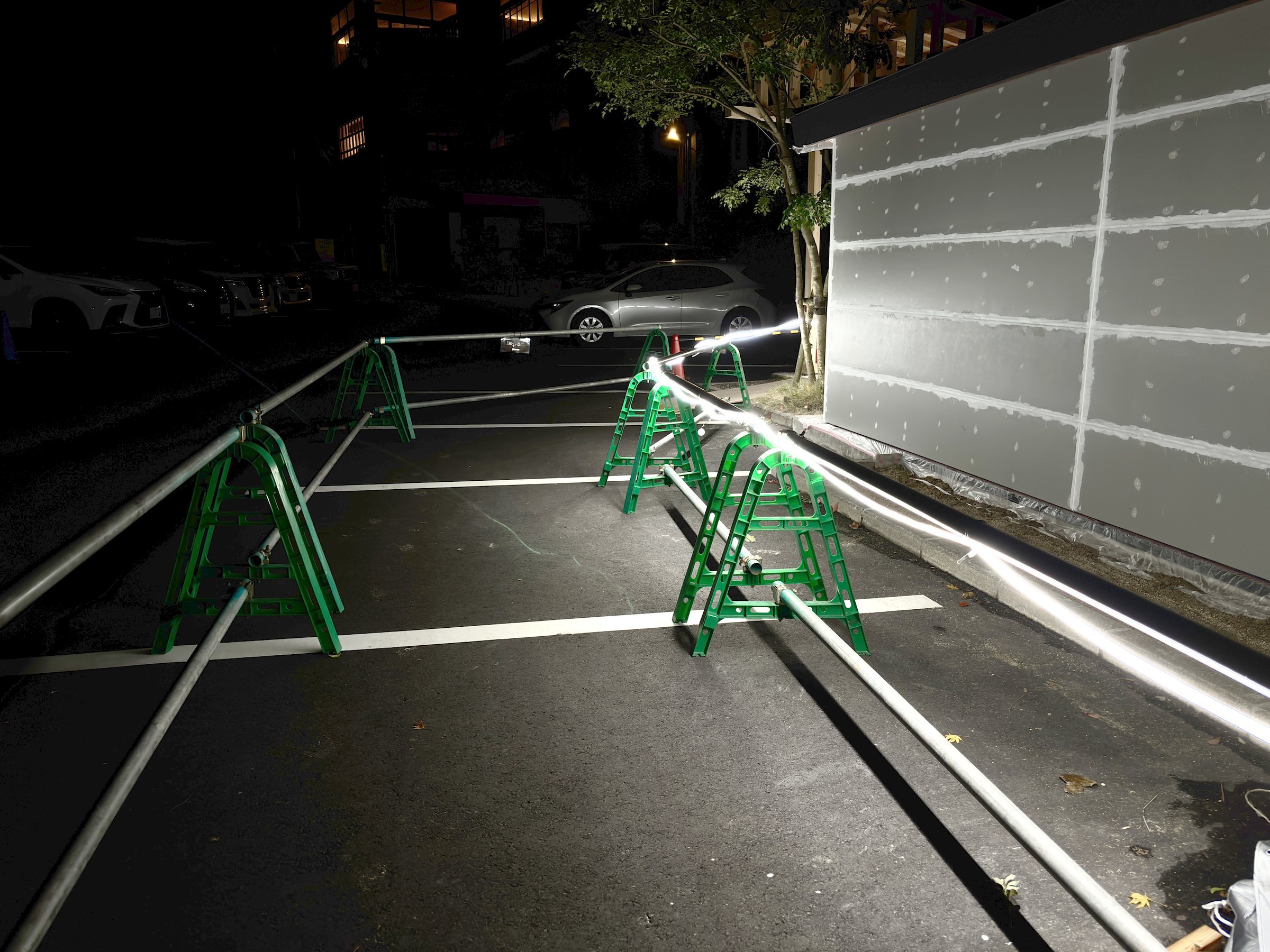
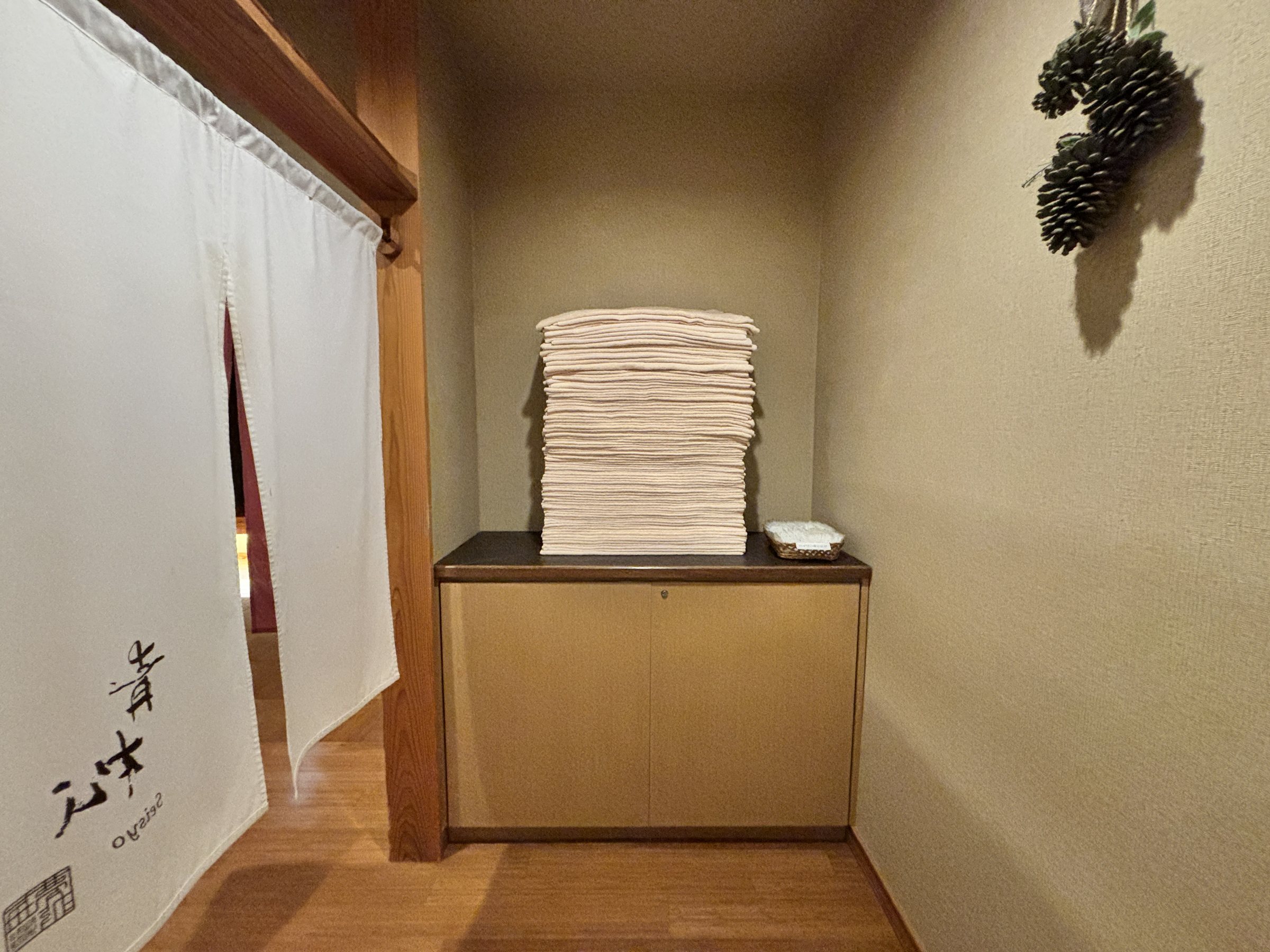
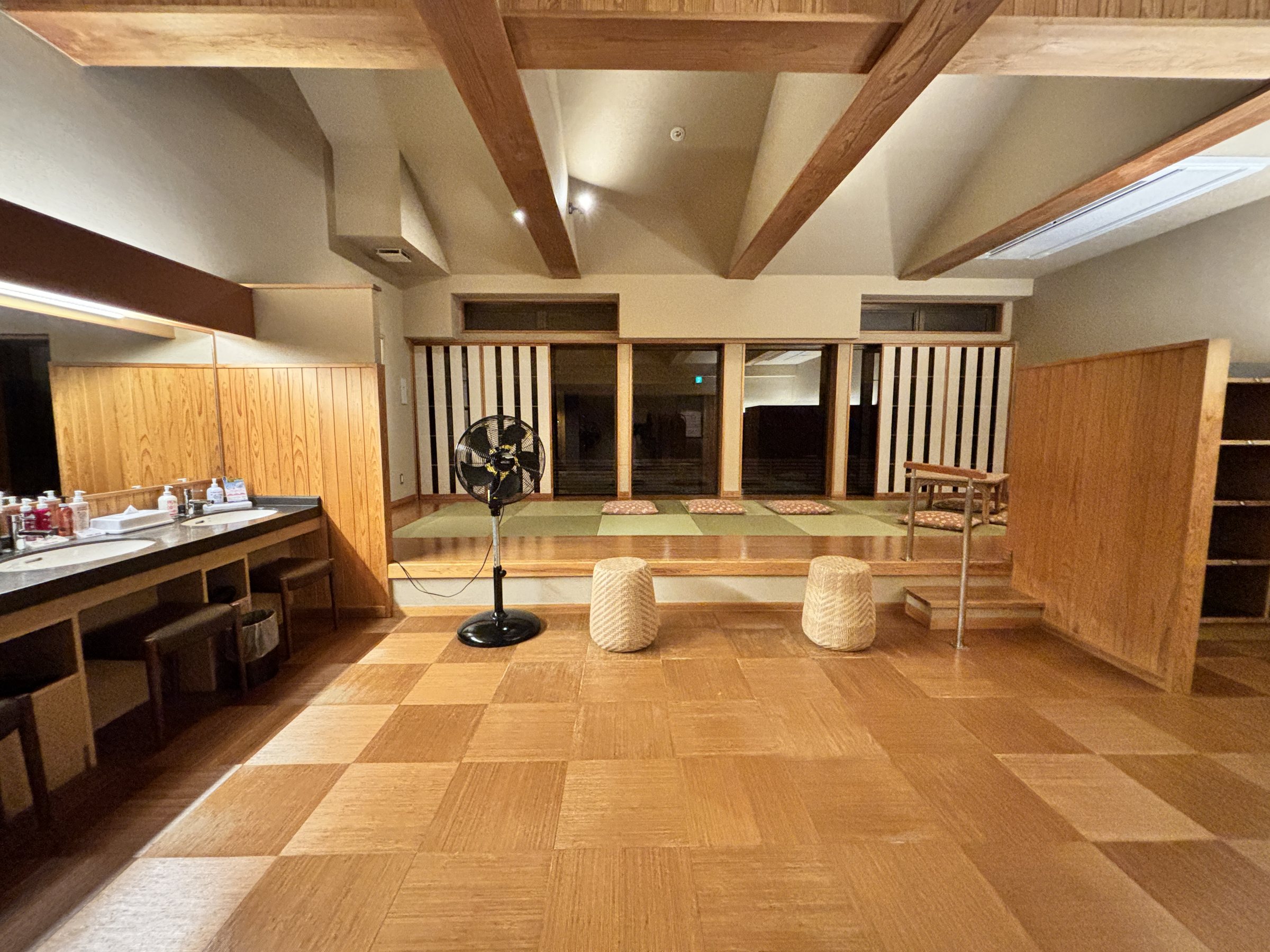
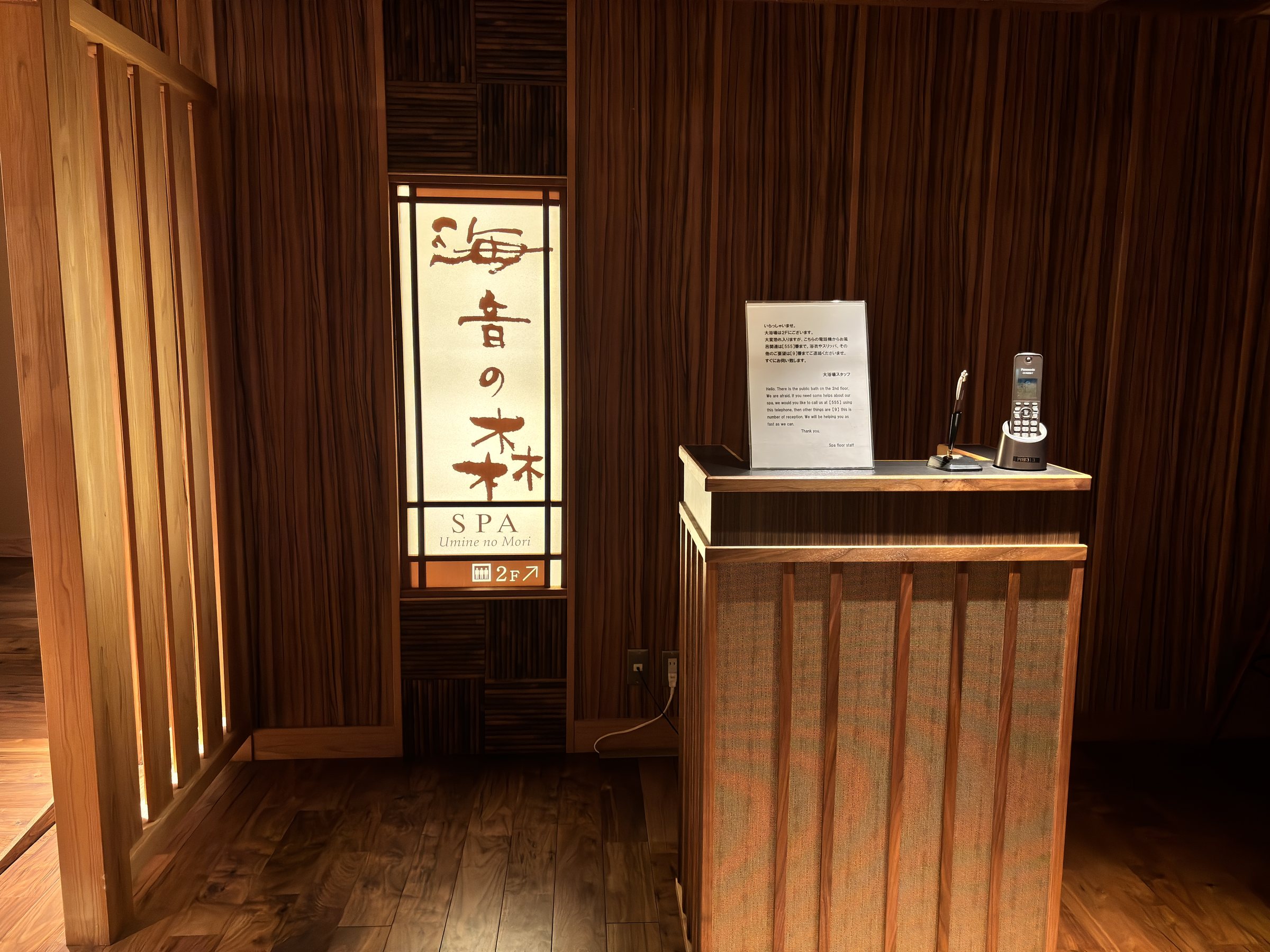
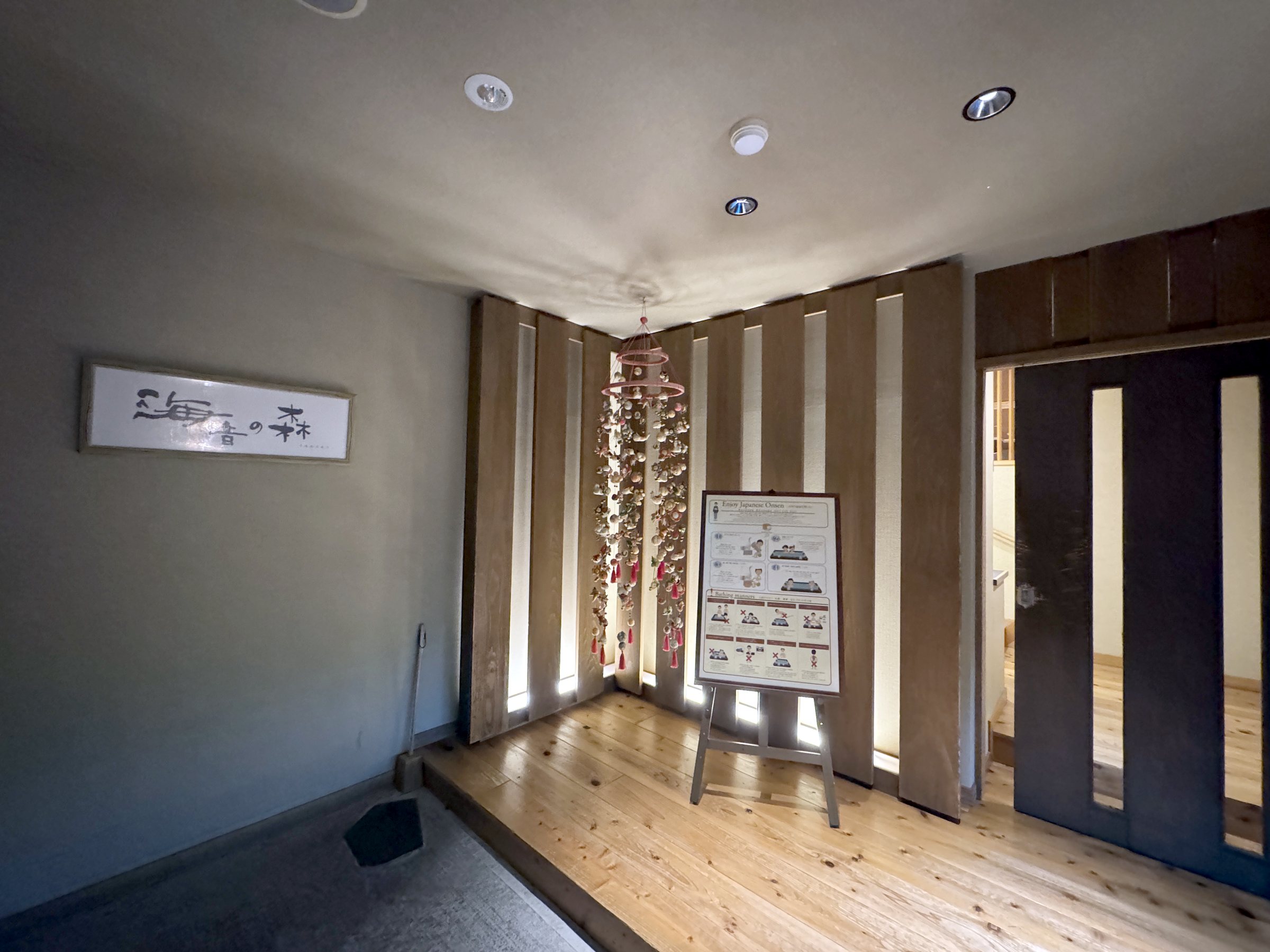
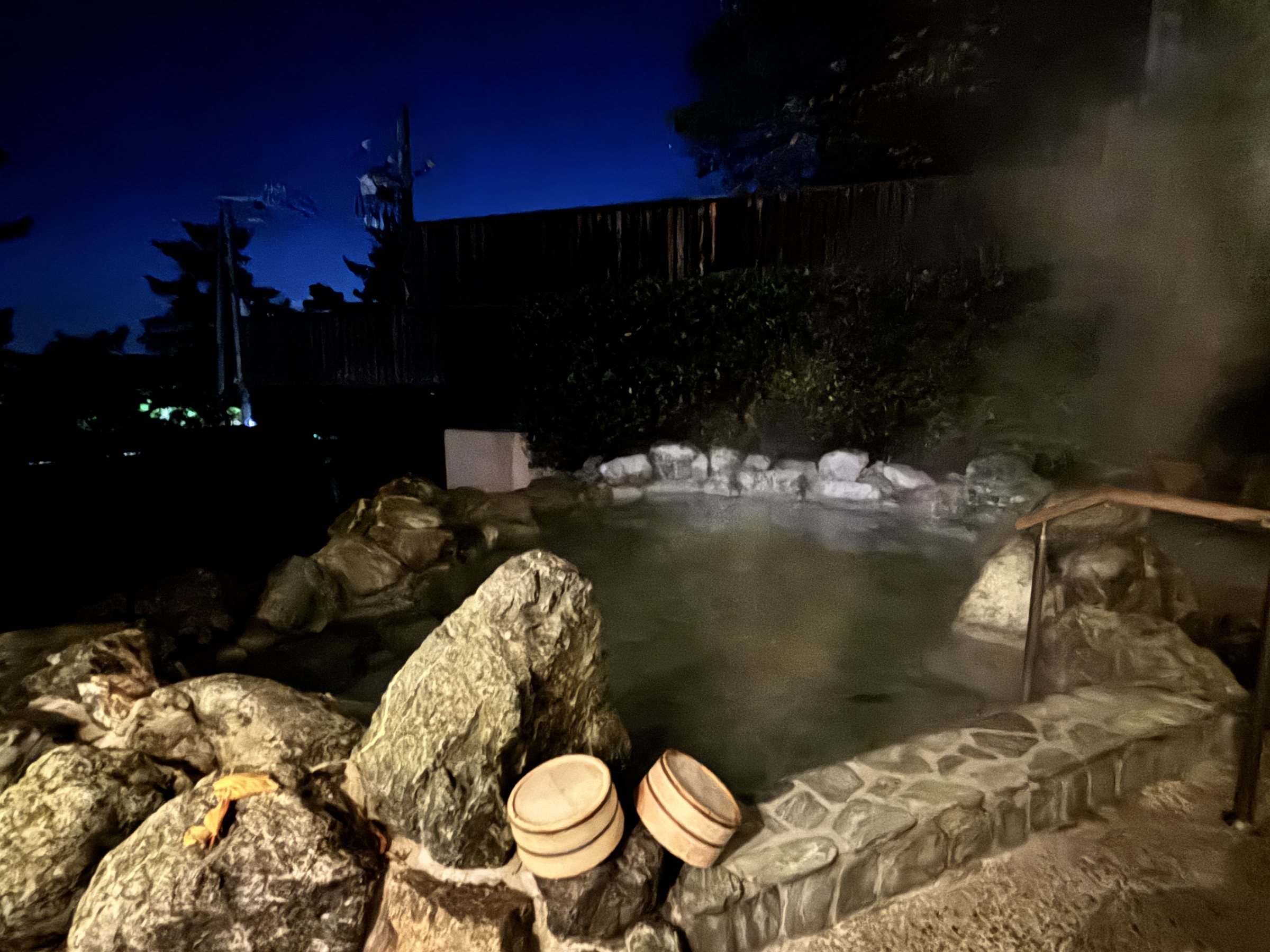
To reach the annex baths you have to walk along a rather chilly path beside an area under construction. In winter, though, that chill seemed only to heighten the anticipation of the open-air bath ahead.
The moment we opened the door, we were struck by the sheer size of the changing room and a special sense of cleanliness, as if we had a space of our own. Underfoot is a pleasant flooring with a texture reminiscent of bamboo matting. It is a joy to find a space that reminds you so strongly of the pleasure of walking barefoot.
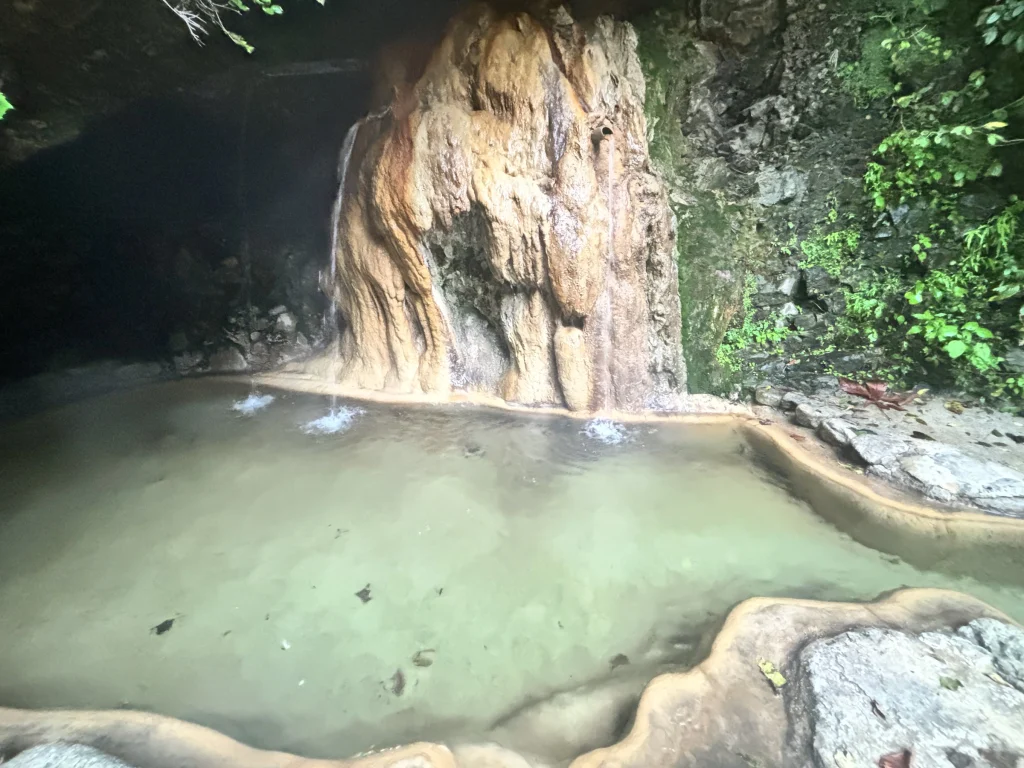
The indoor baths have a calm atmosphere overall, but the rock-built open-air bath in particular has a sense of openness and charm, and is a wonderful place to spend time under the stars and the moon. Going late at night or early in the morning is worth it: slipping into the hot water before your skin has adjusted to the cold air gives an irresistible thrill.
The buffet
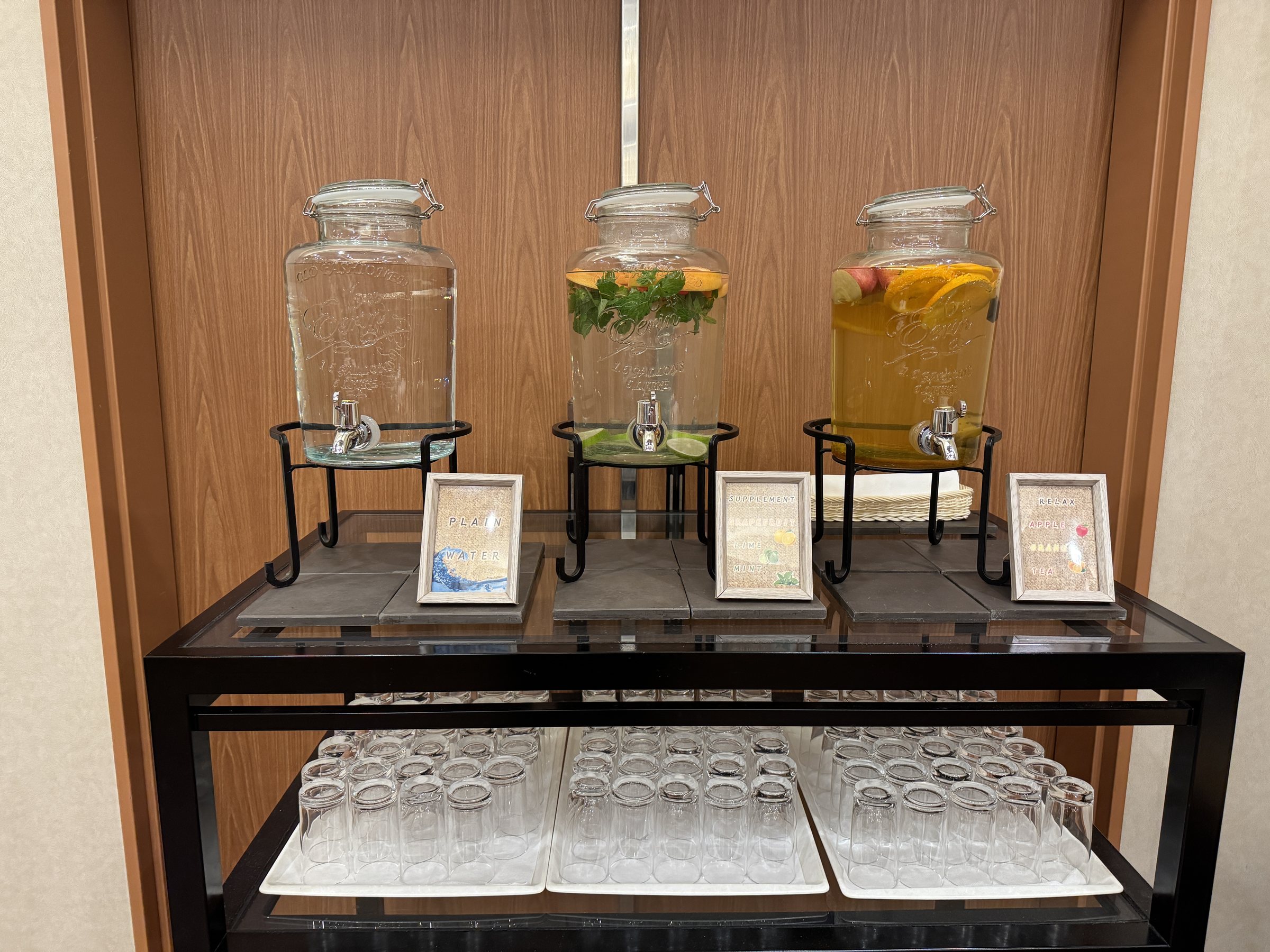
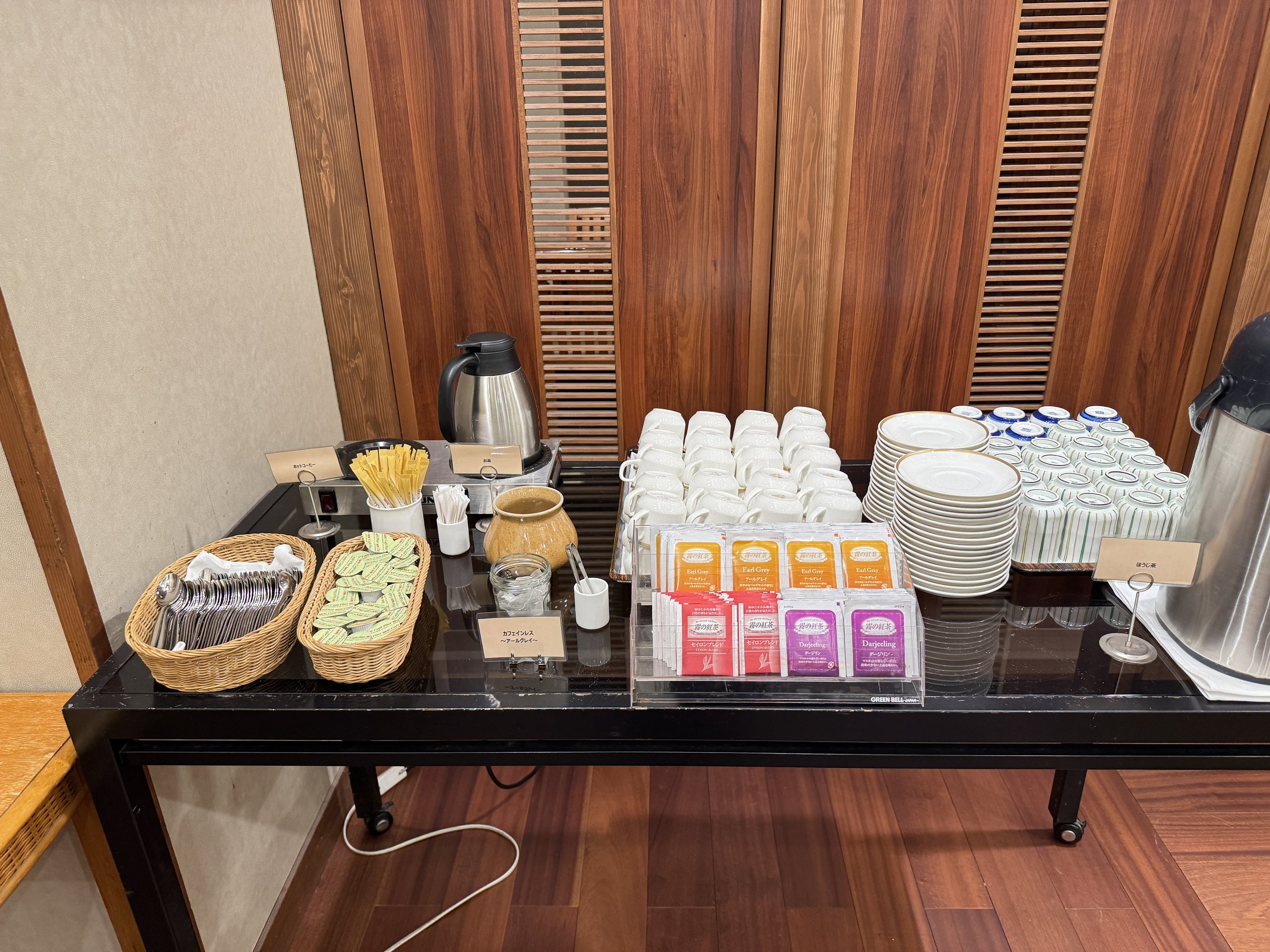
We were surprised that the entrance to the dining room is directly opposite the front door. We have rarely come across a hotel where the lobby that welcomes guests arriving from outside and the dining venue share the same area, and it was not a comfortable arrangement.
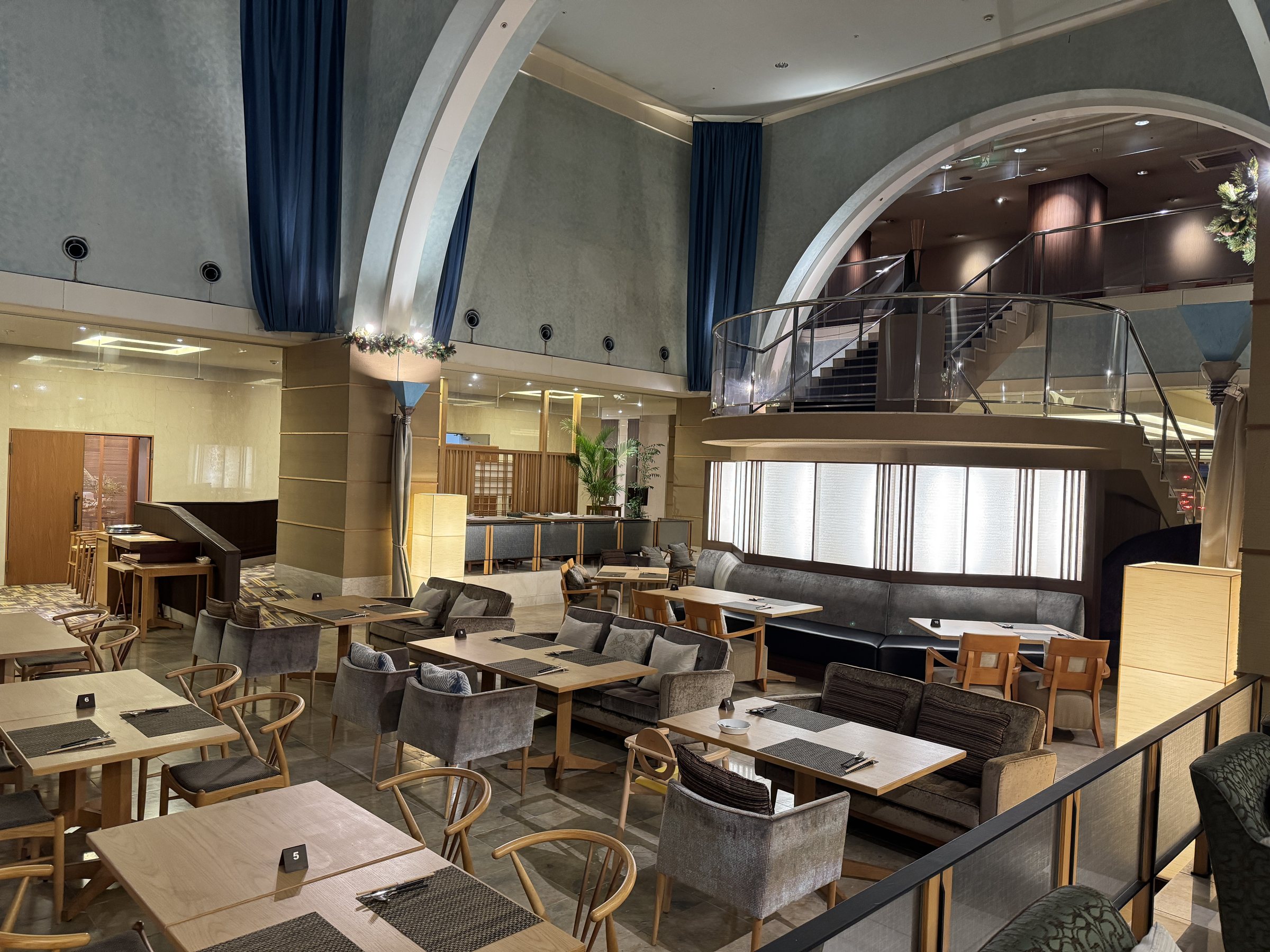
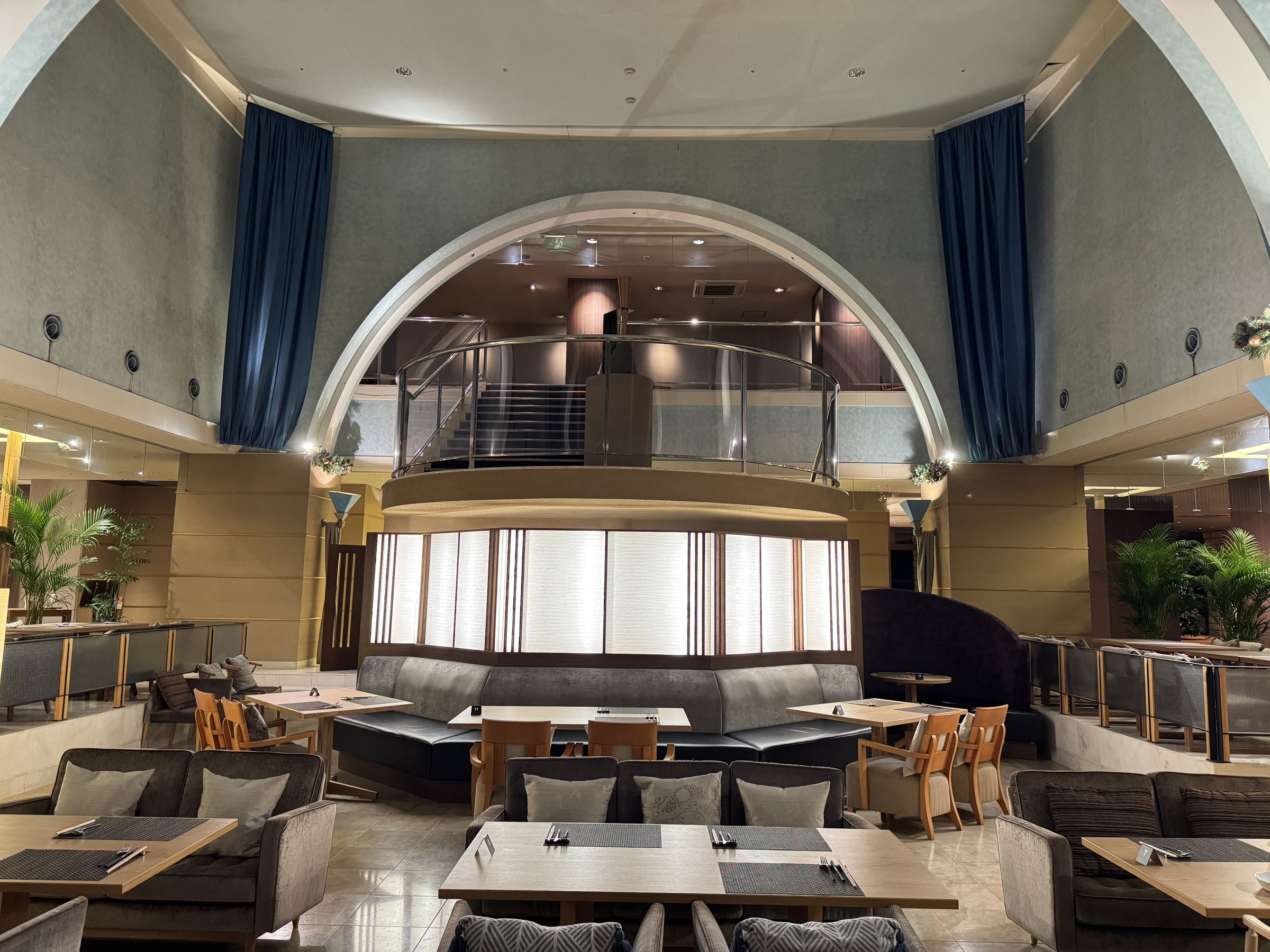
The drinks corner is cleverly done, so you can enjoy it from the moment you start choosing. Mineral water with fresh herbs and fruit floating in it looks vivid, and there is a wide choice from cold drinks to hot ones for a moment of calm.
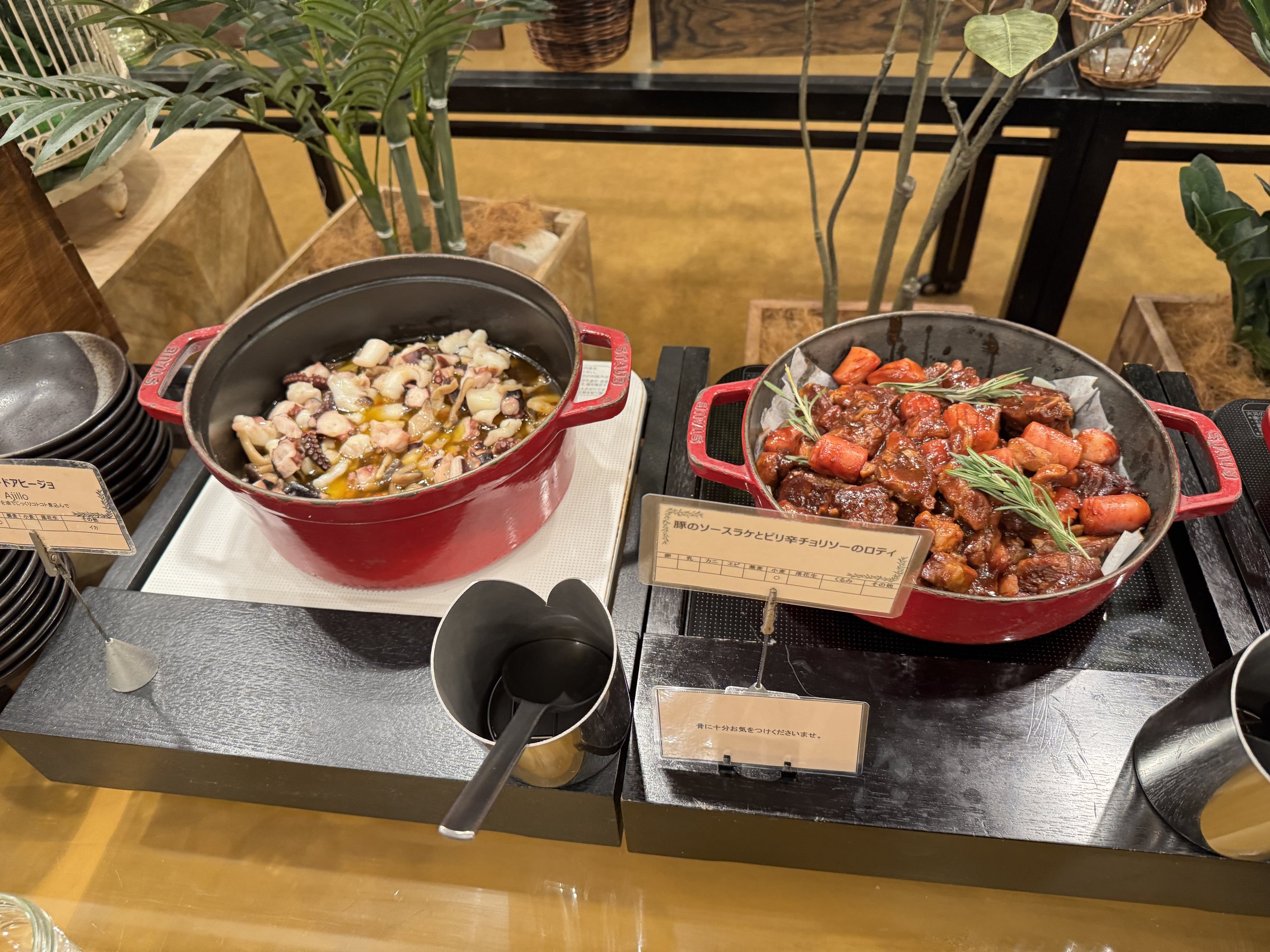
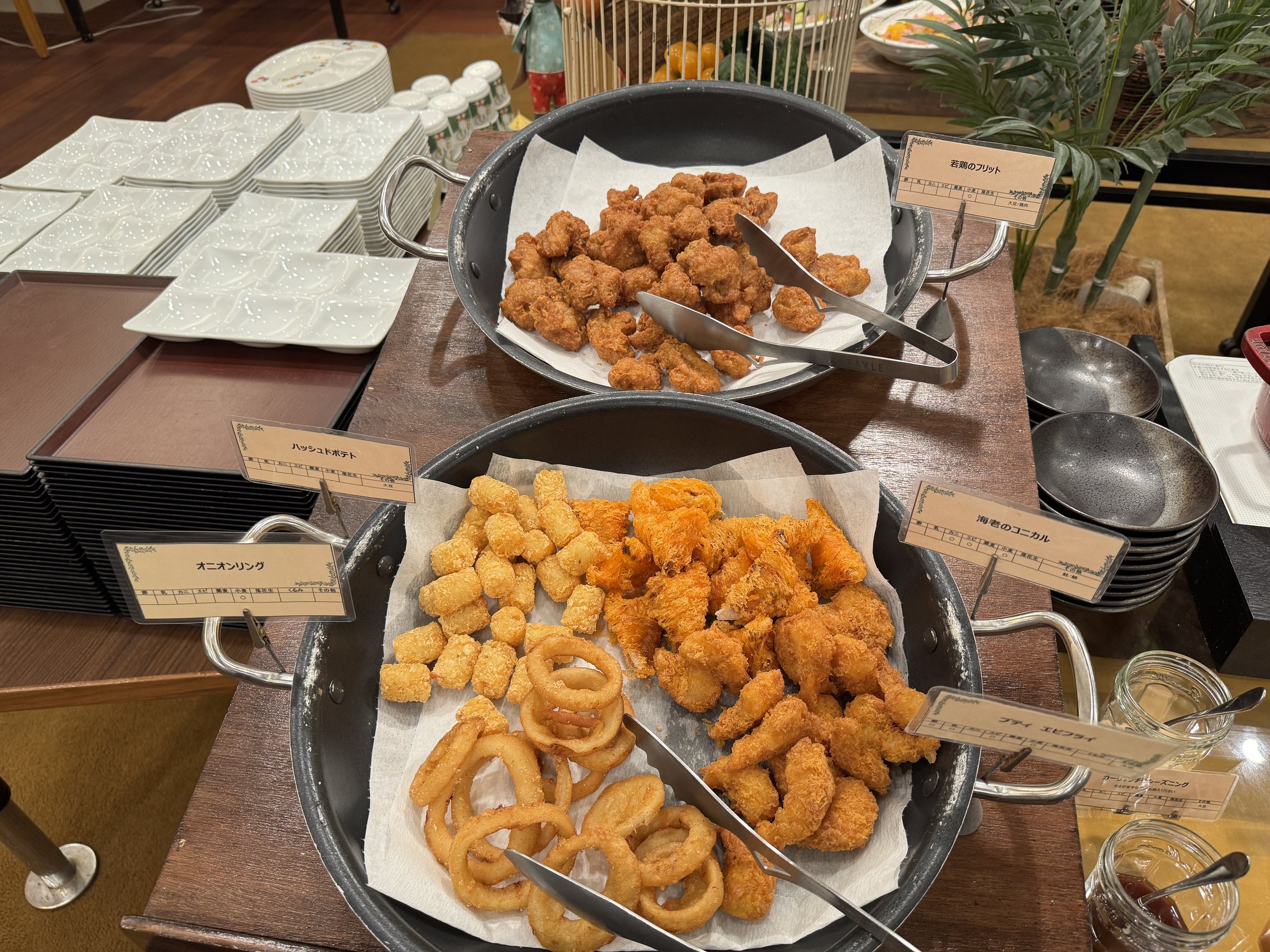
The buffet theme this time was “Spanish”. On entering, the first thing to catch the eye is the open kitchen behind glass. At the back, the cooks work carefully through each step, and you can see directly that everything is handmade. The dishes range from classic fried food to inventive side dishes. Each aims for originality, but what lies beneath them all is a passion for serving Awaji Island ingredients and local cooking.
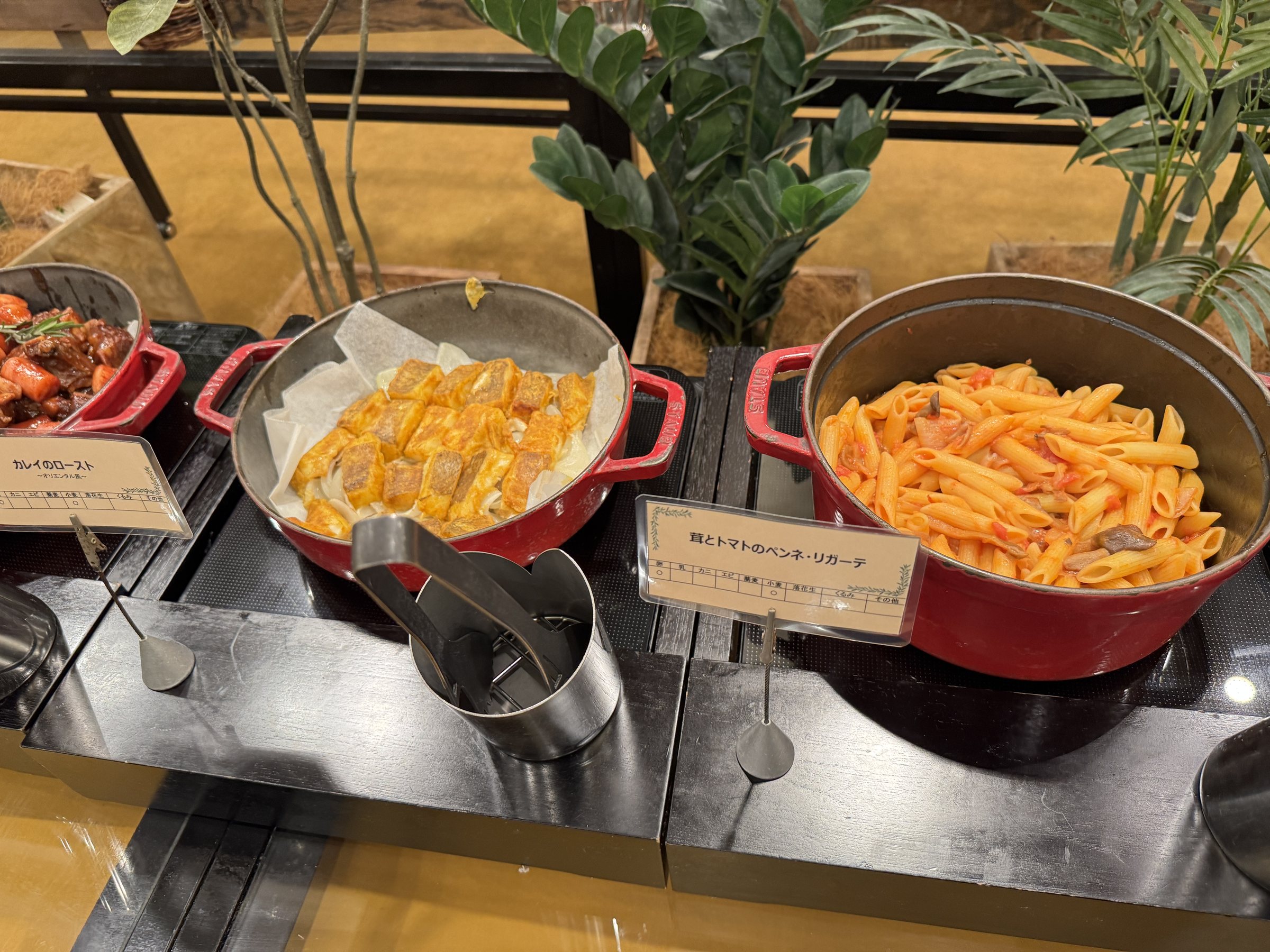
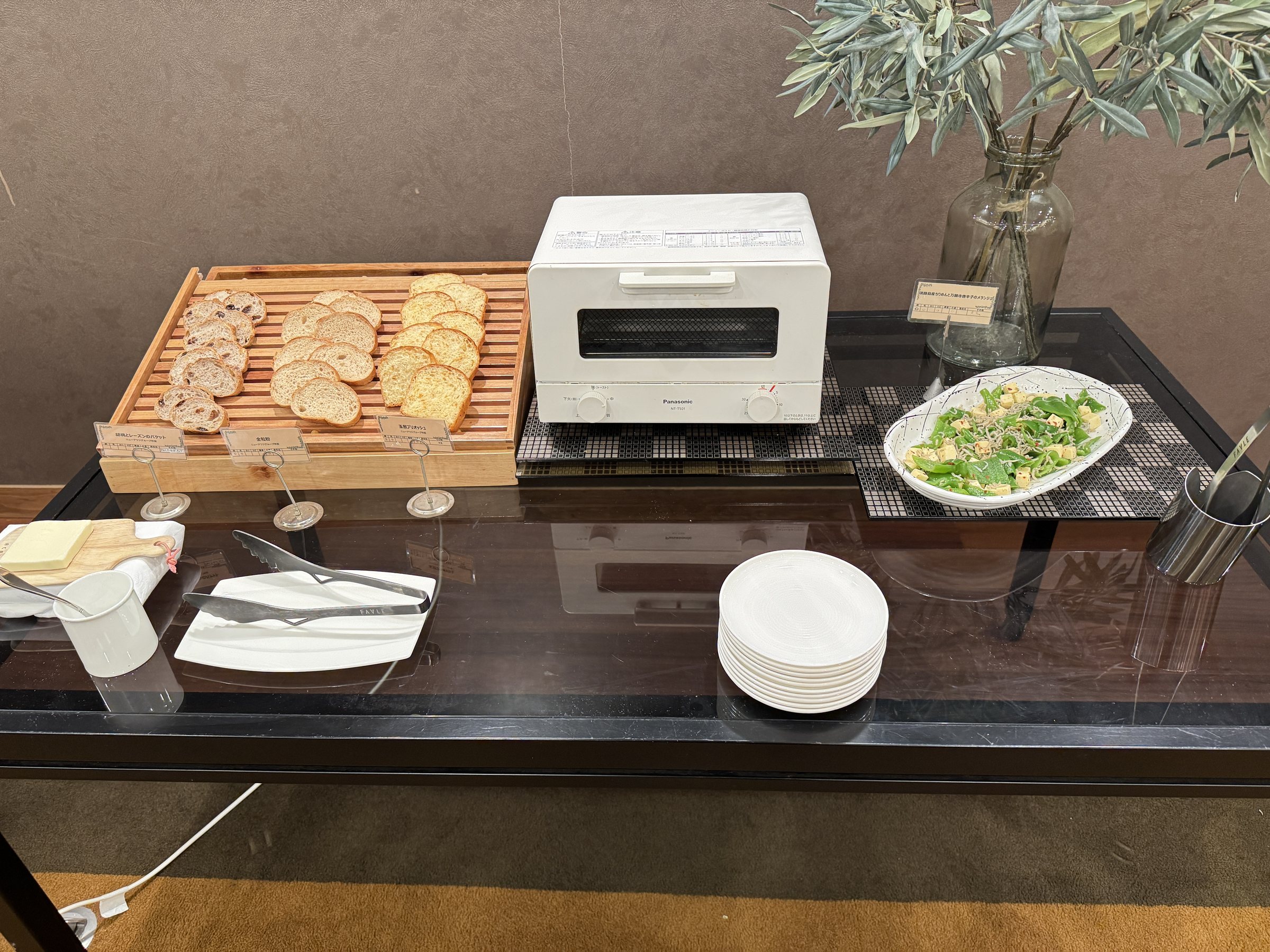
What stood out further was the care taken over a wide range of guests. Alongside the distinctive specialities, there is a full line-up of dishes that children will love. The kitchen seems determined to offer exciting choices for every generation.
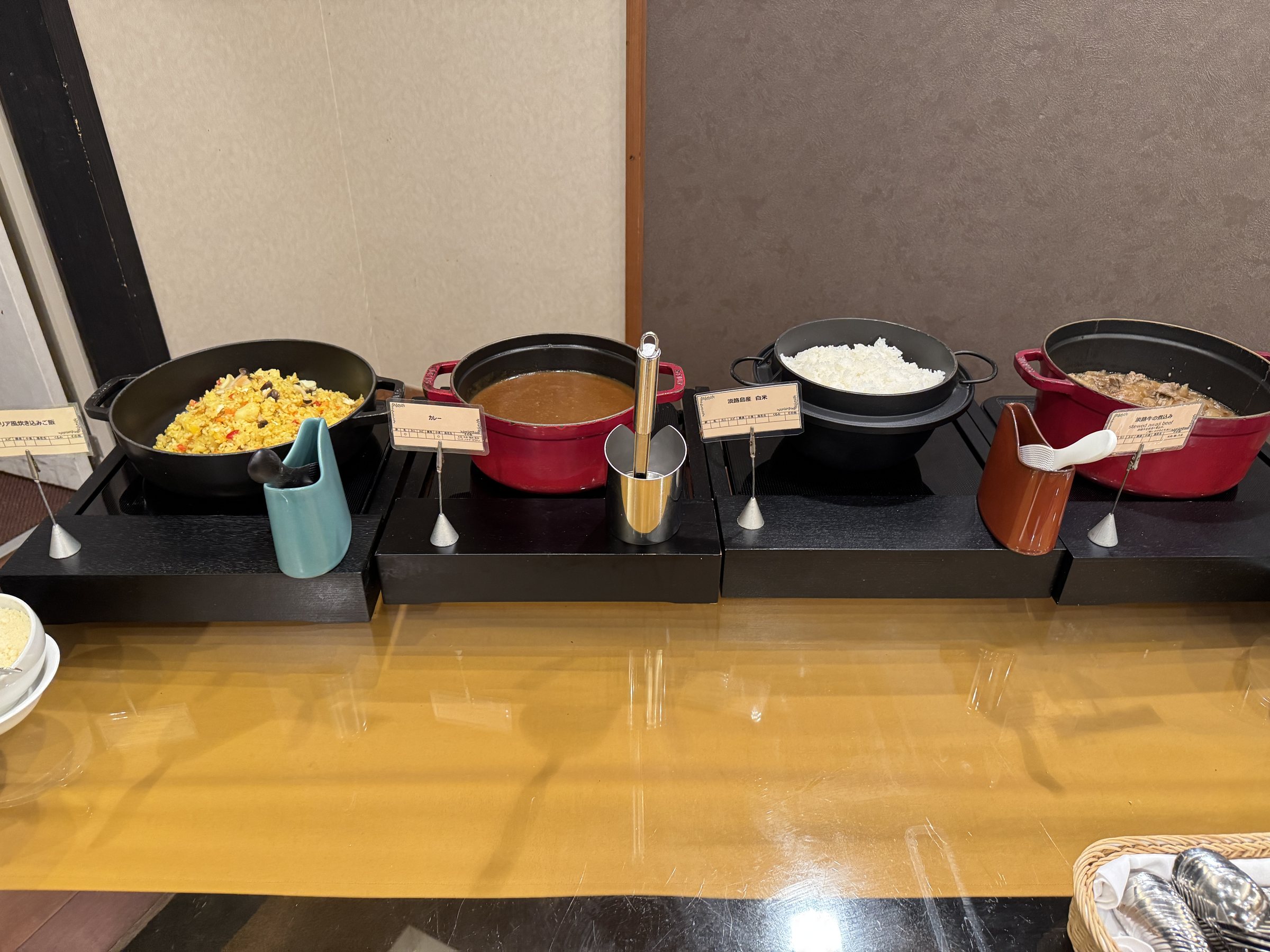
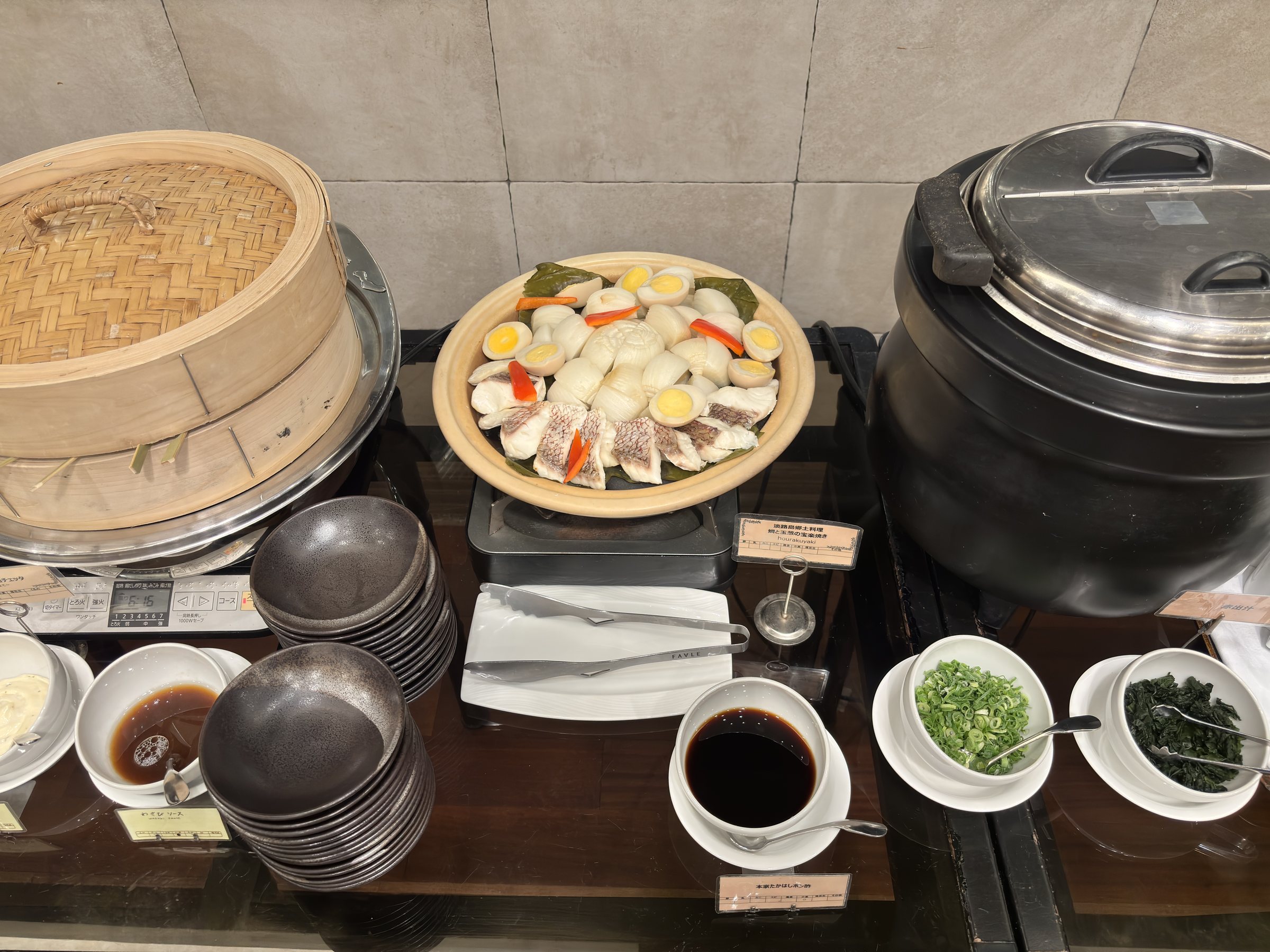
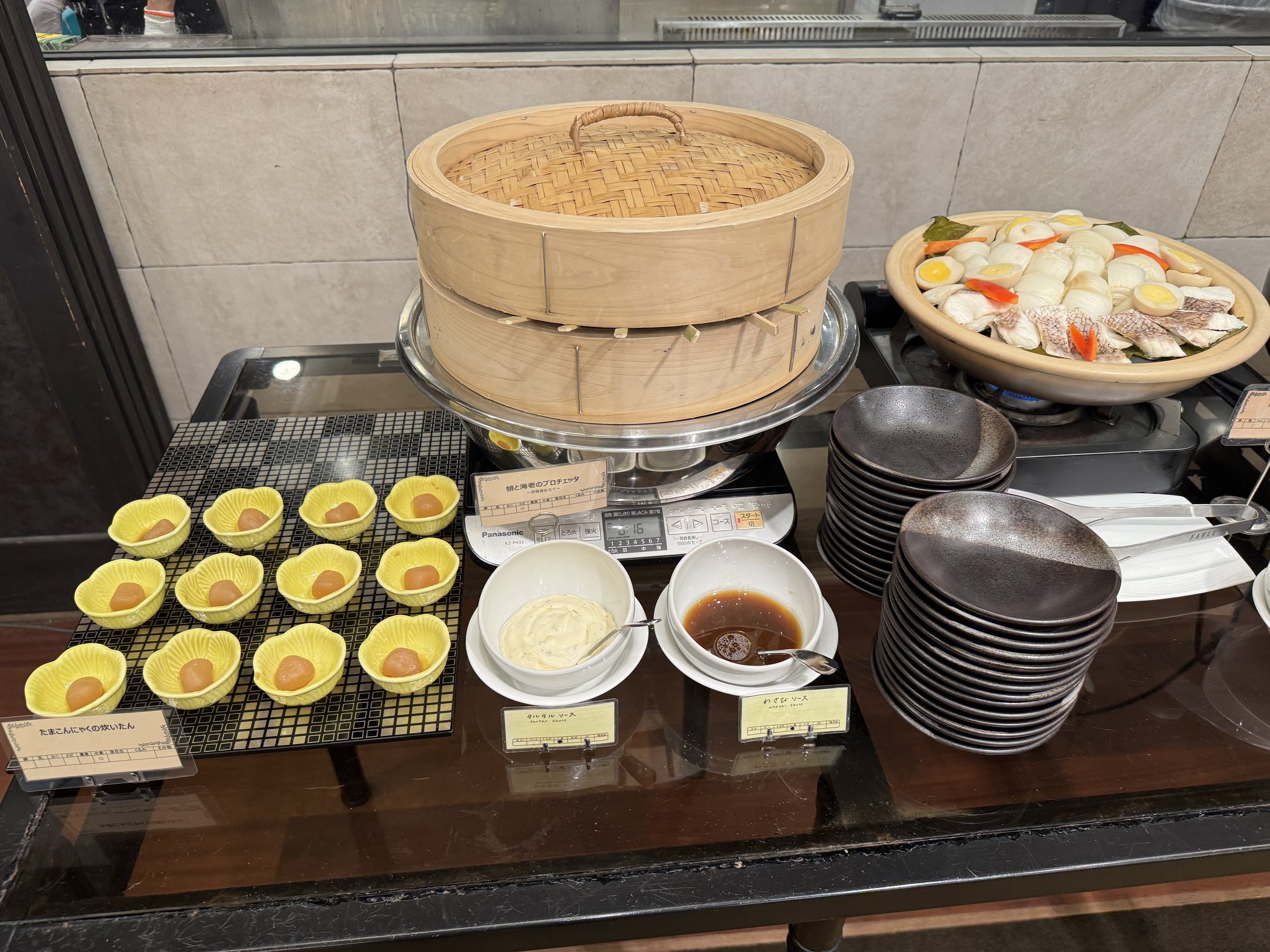
What visitors to Awaji Island expect, above all, is vivid seafood and high-quality fish dishes. The wish to taste the rich bounty of the Seto Inland Sea, different again from that of the Pacific or the Sea of Japan, is very real.
The food showed a sincere determination to meet that wish head on. We sensed from the people who made it a desire not merely to serve ingredients but to show off, on a single plate, the brand value of Awaji Island itself. A few dishes would have been better received if served differently. When we ventured to mention this as a guest, the reply came with a smile: “Actually, I think so too.”
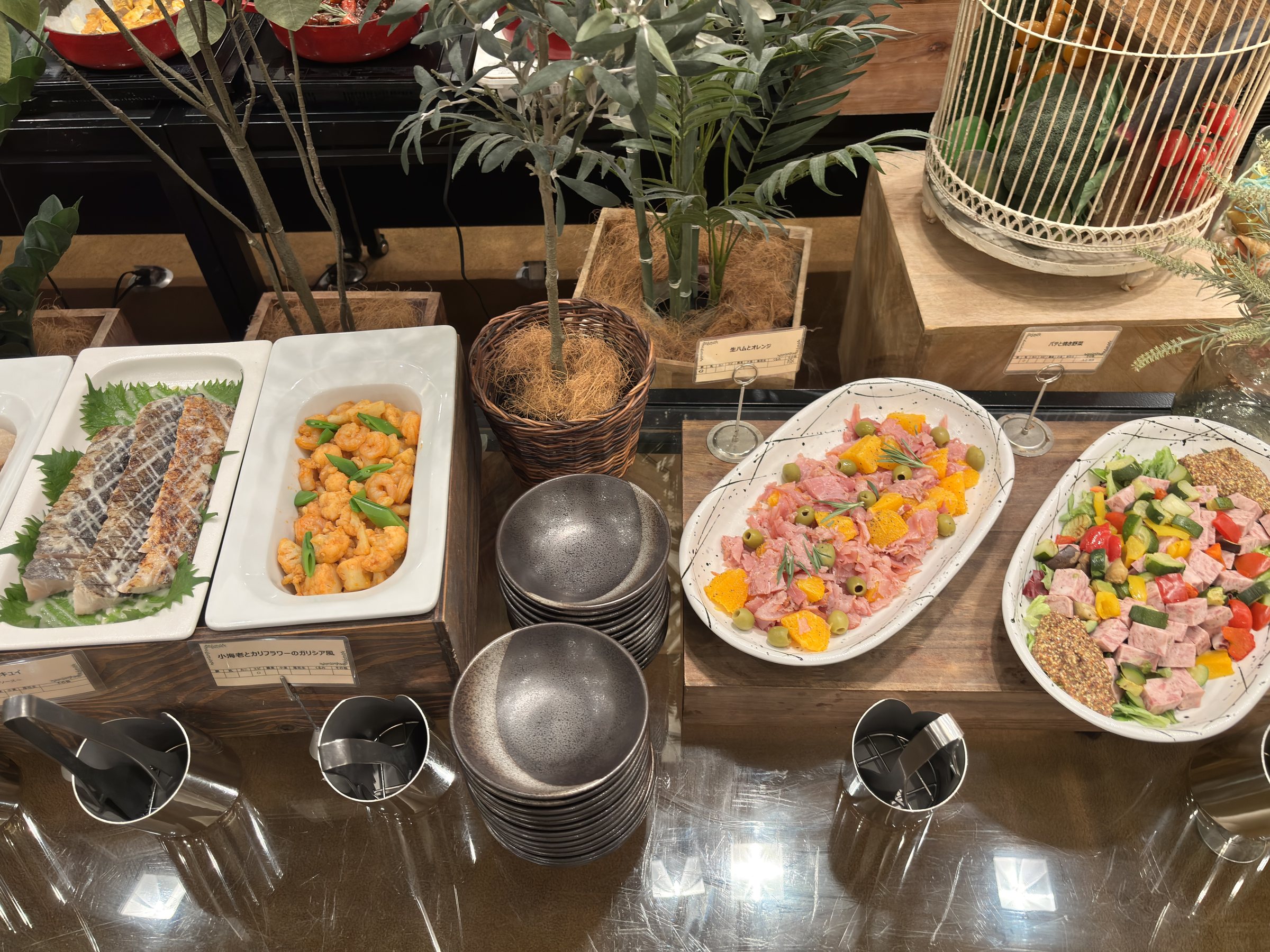
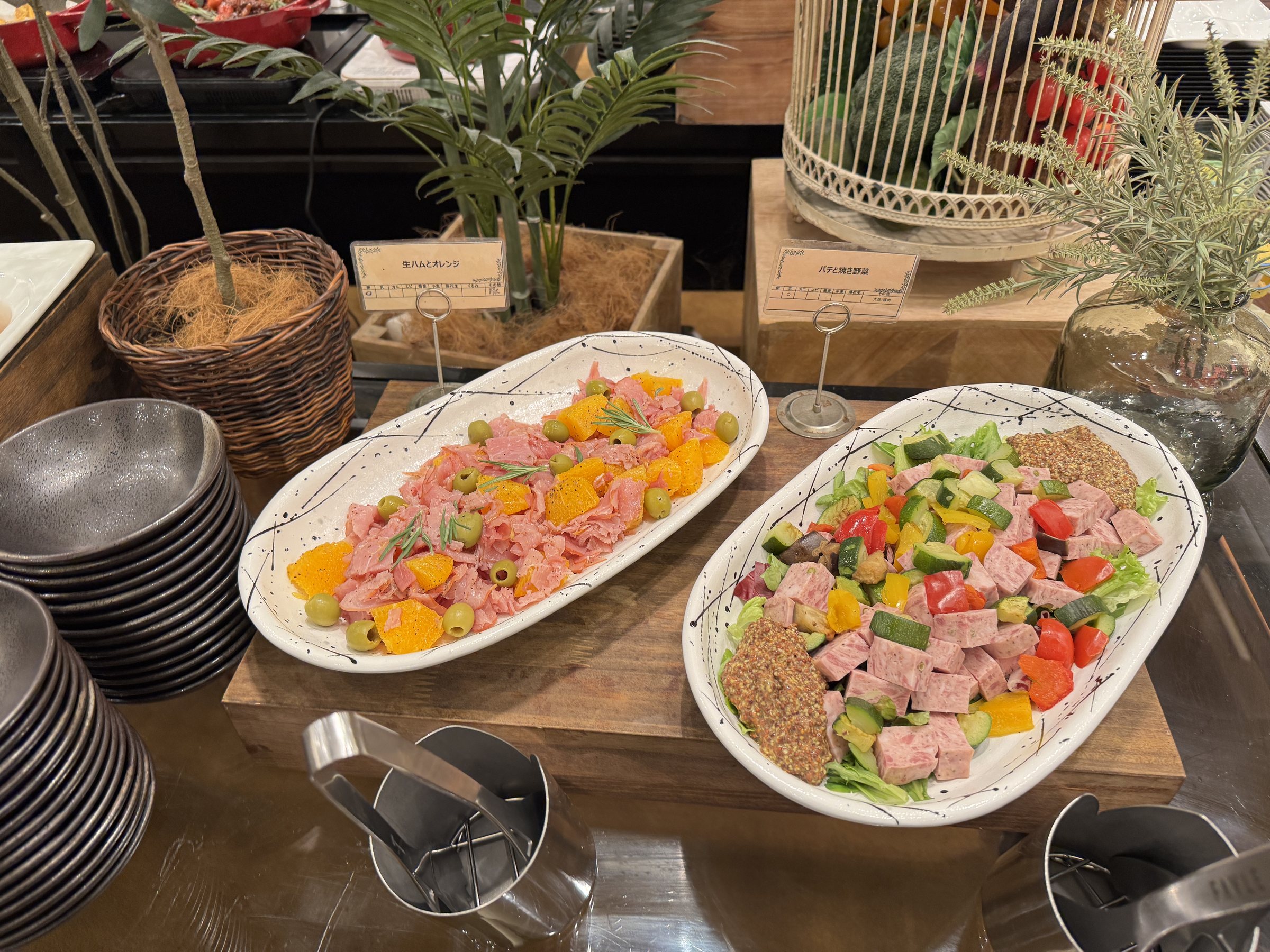
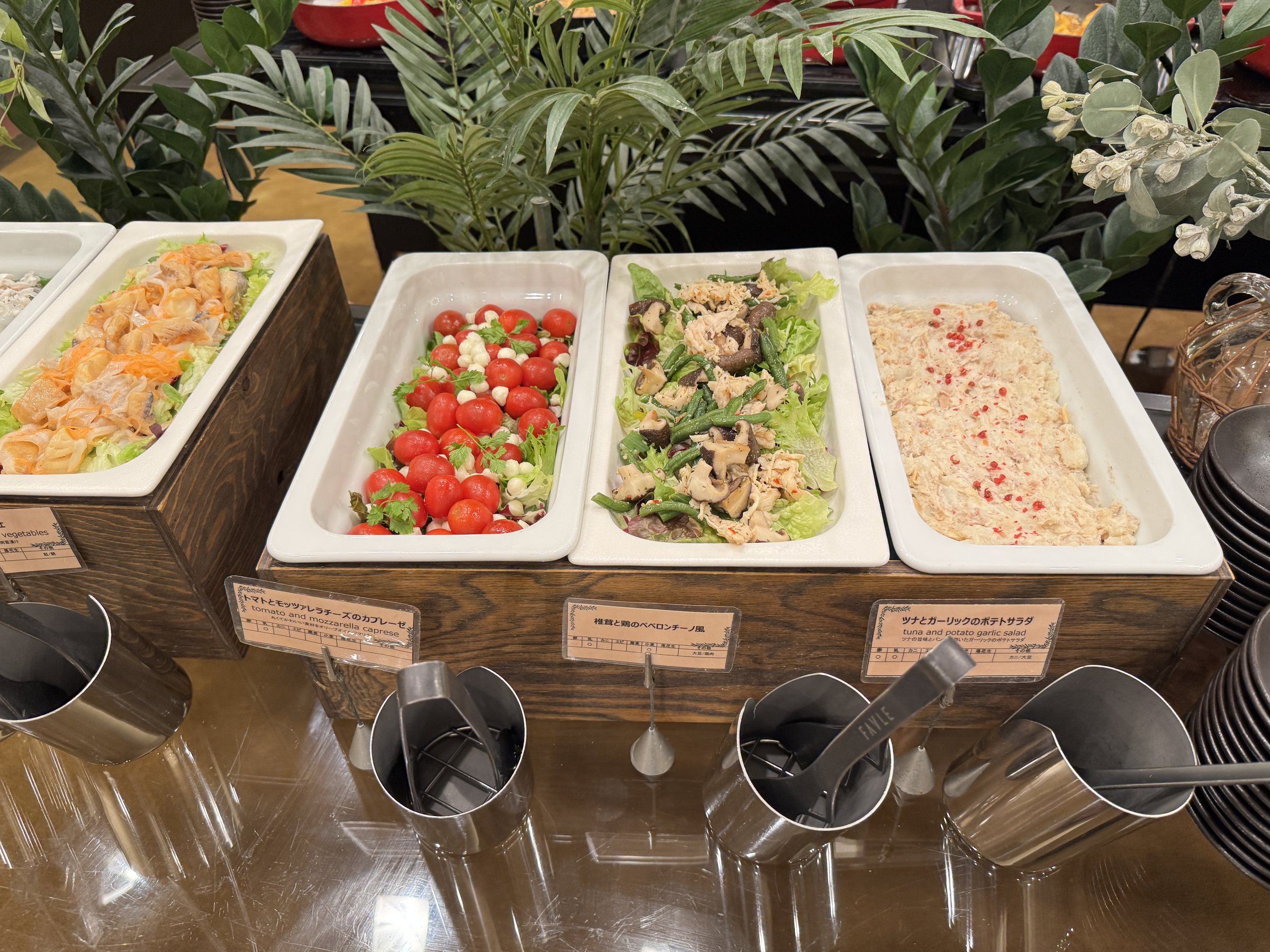
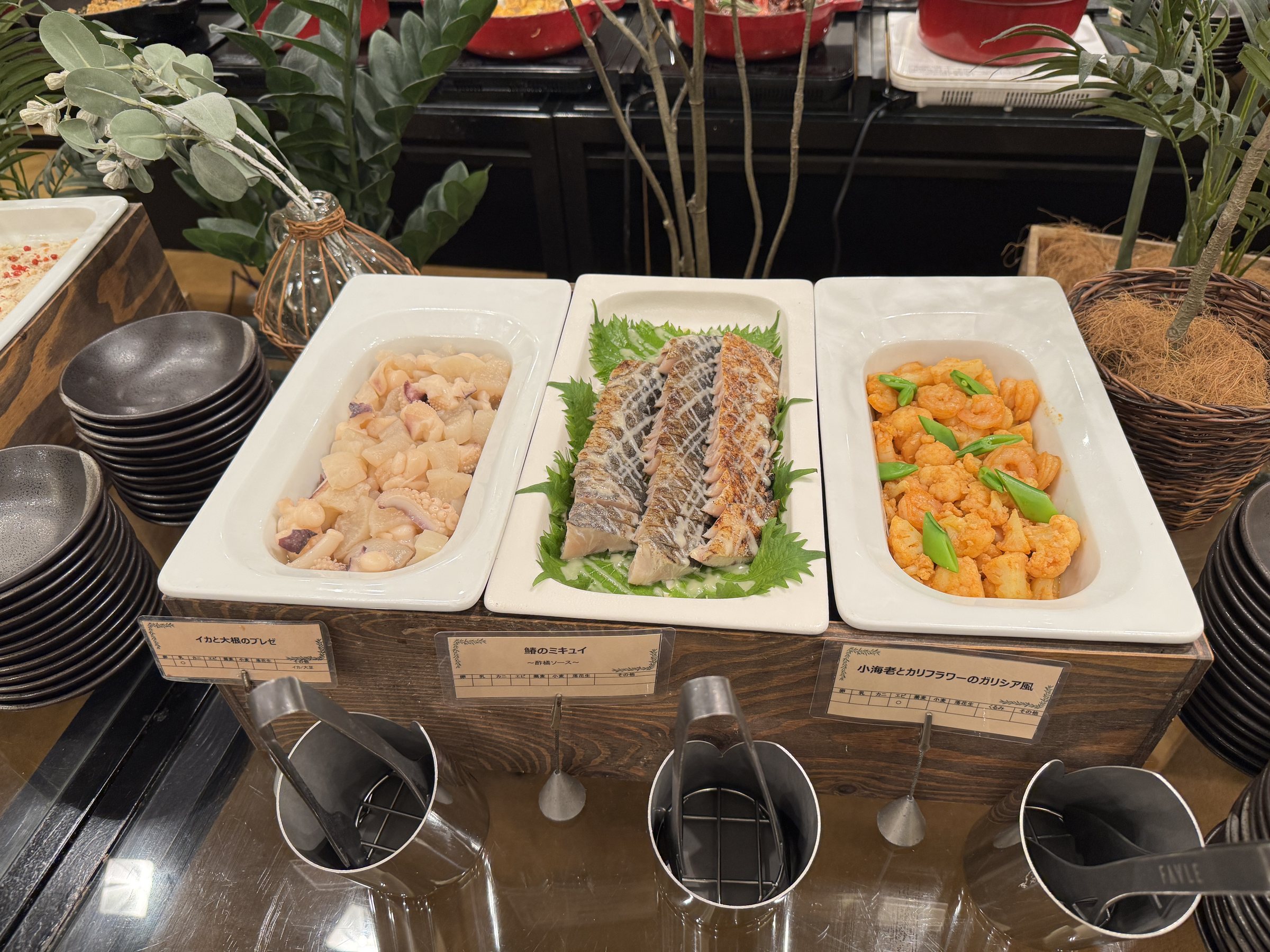
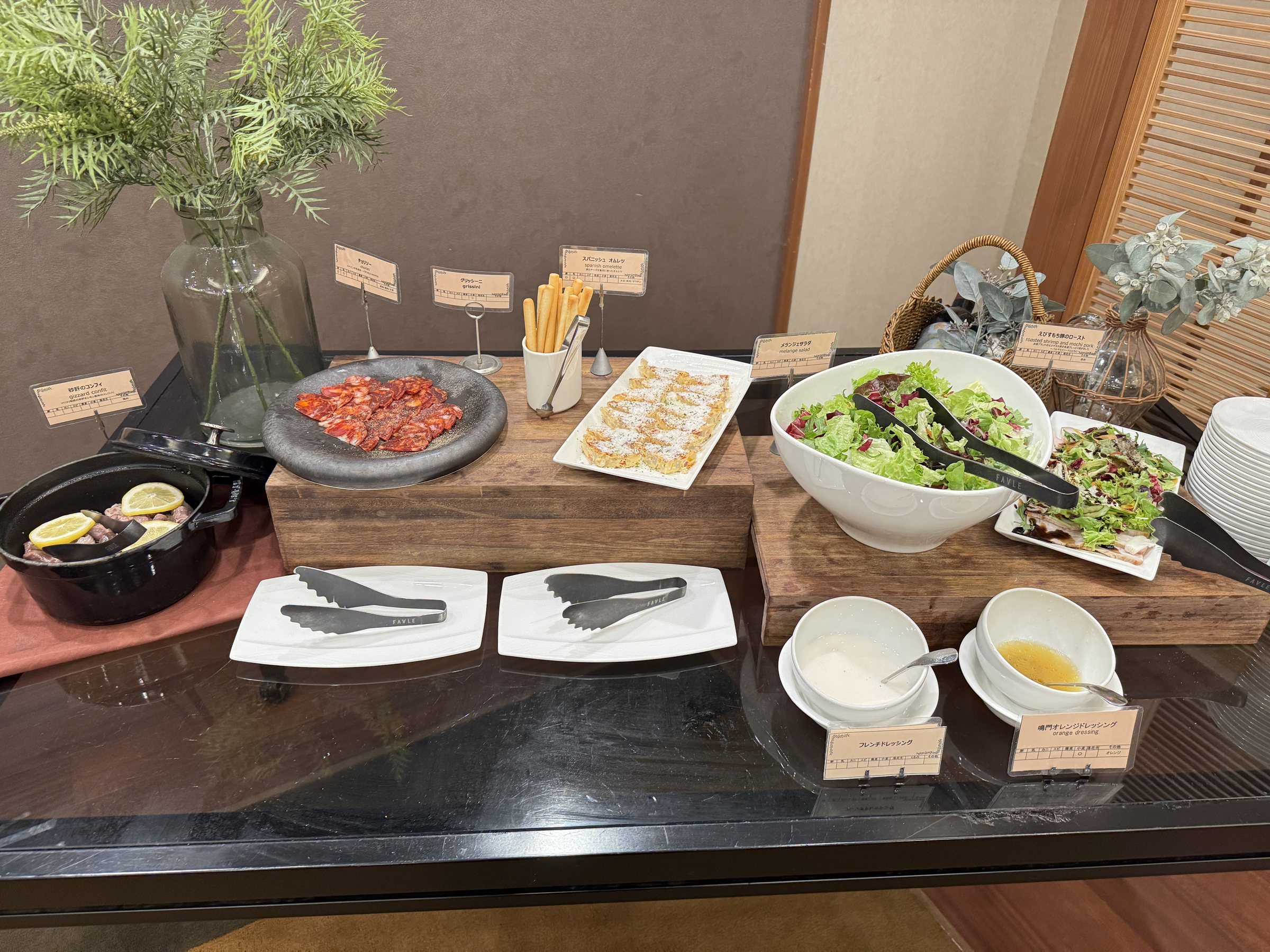
For the variety of its menu and the fact that every dish is made by hand, this fish-led Spanish buffet deserves very high marks.
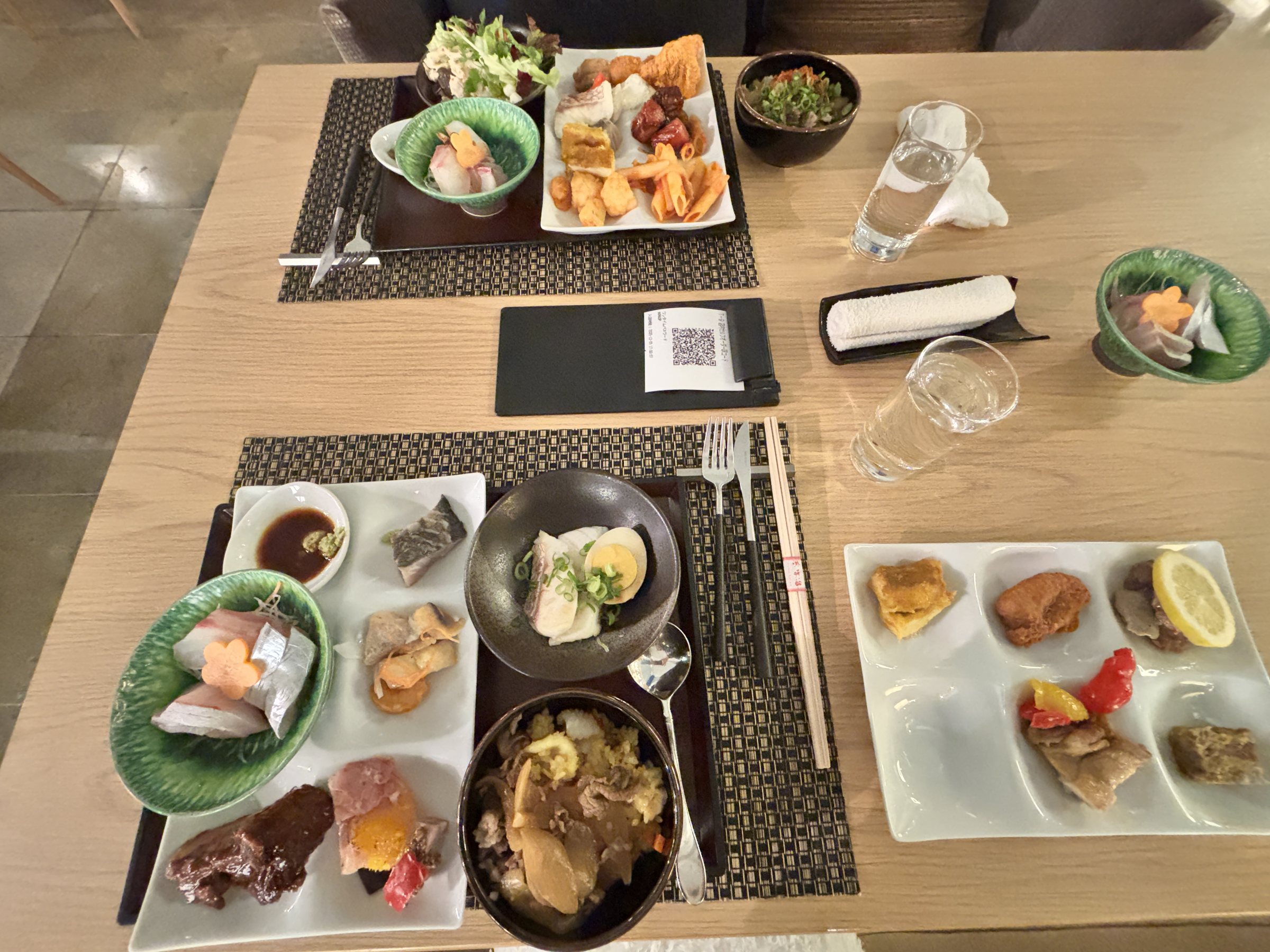
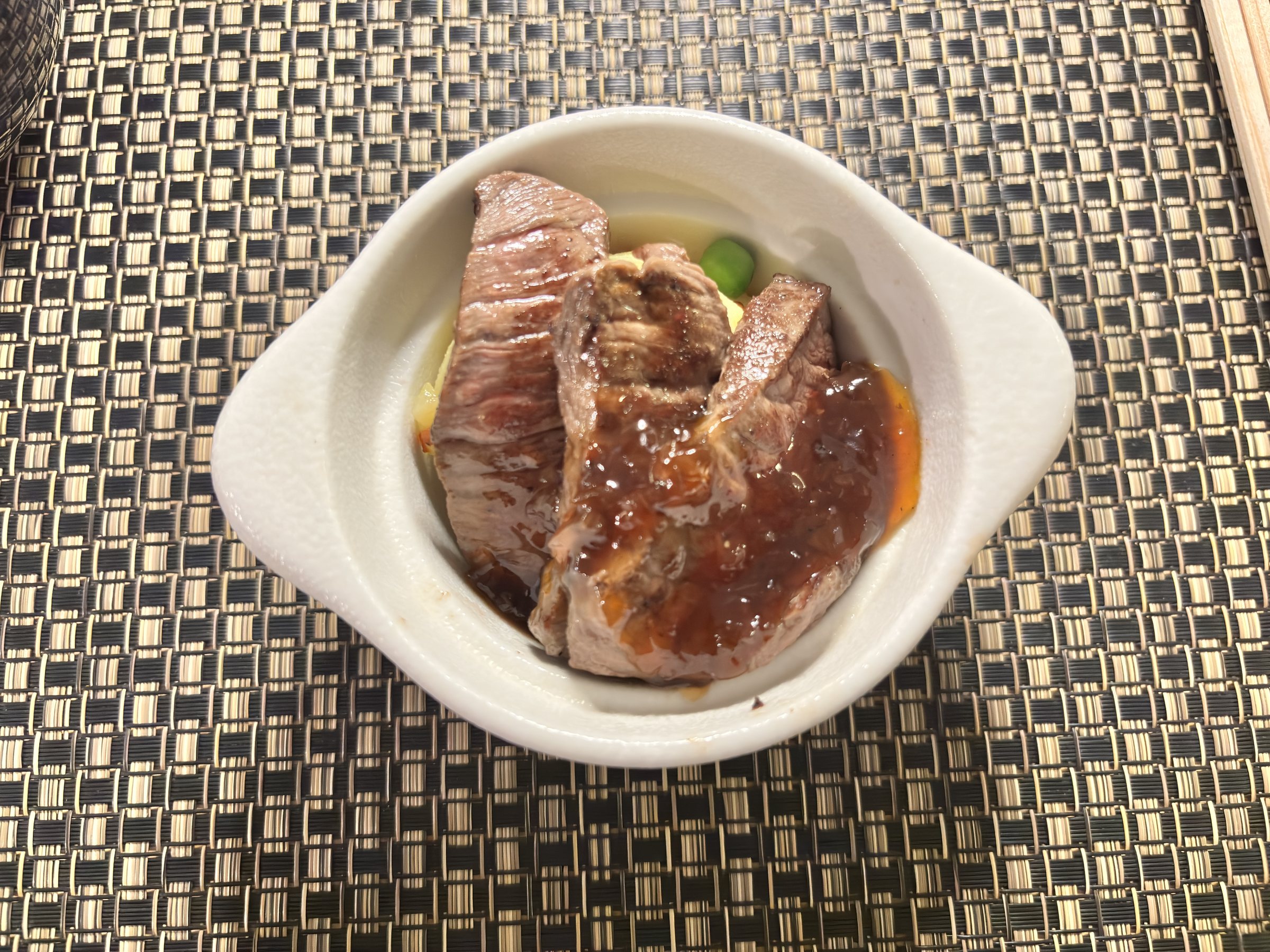
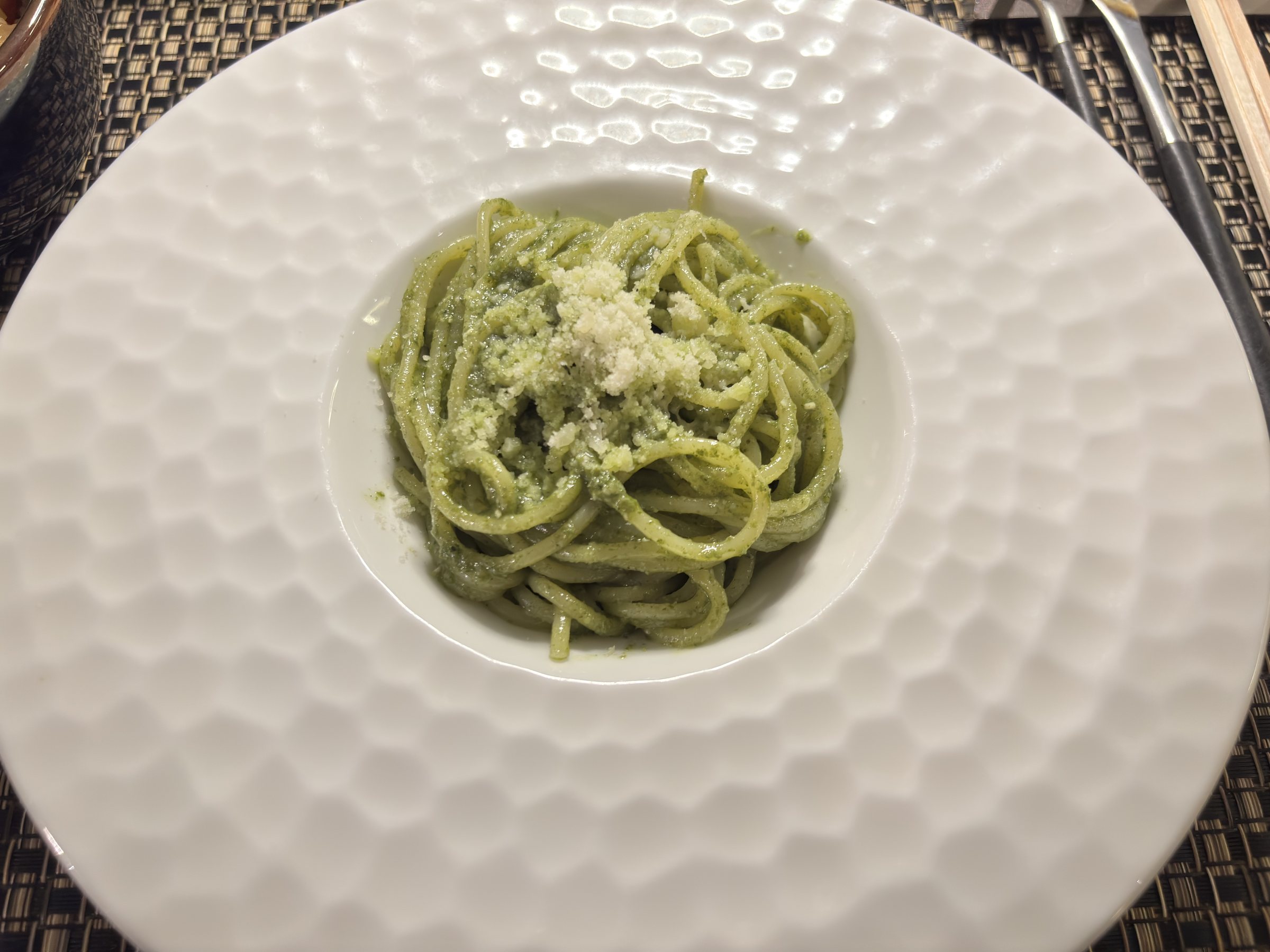
The main course is chosen freely and cooked to order. We chose Awaji beef steak and pasta Genovese. These were dishes that combined a commitment to local produce, with what must have been careful thought about freshness and how to handle it, with a real sense of luxury. They brought a feeling of occasion to a buffet that already offers so many items, and they tasted delicious. We were very satisfied.
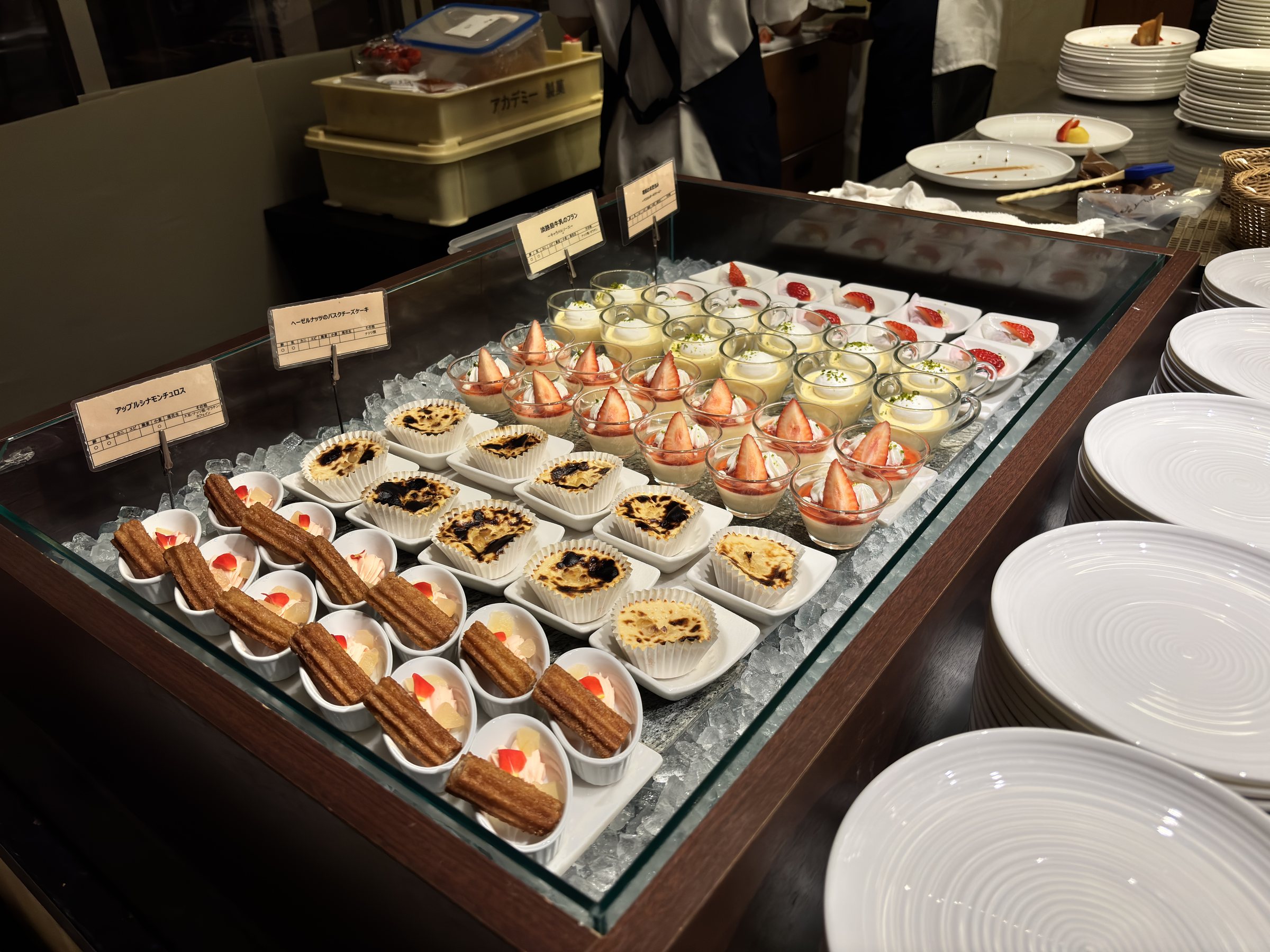
The sweets at the dessert corner are all handmade too. Each is carefully finished, and they are a fitting end to the buffet.
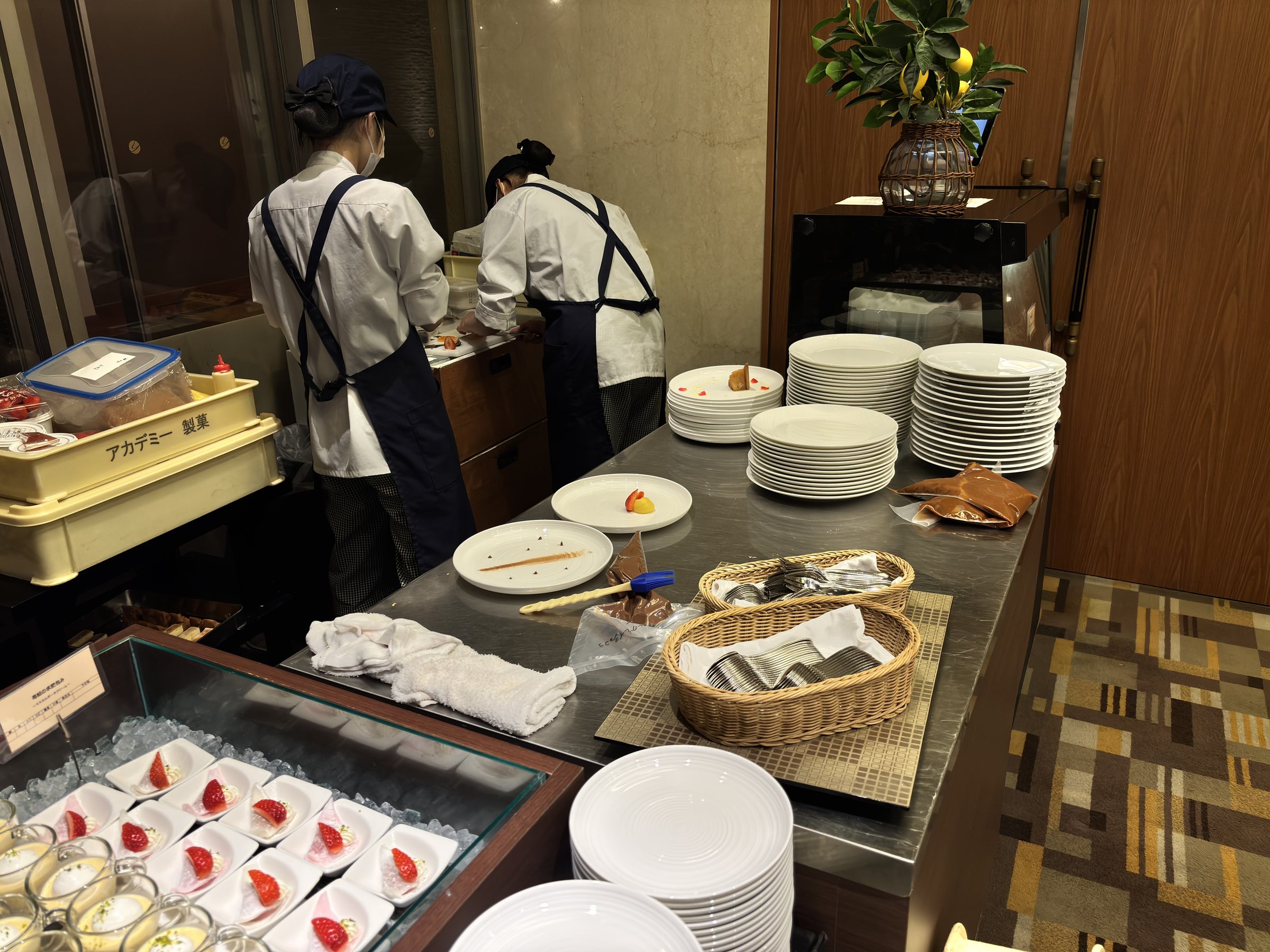
We also saw students from a confectionery school on a work placement. Plating desserts to order in real time, now and then a little shy with the guests, they were endearing to watch.
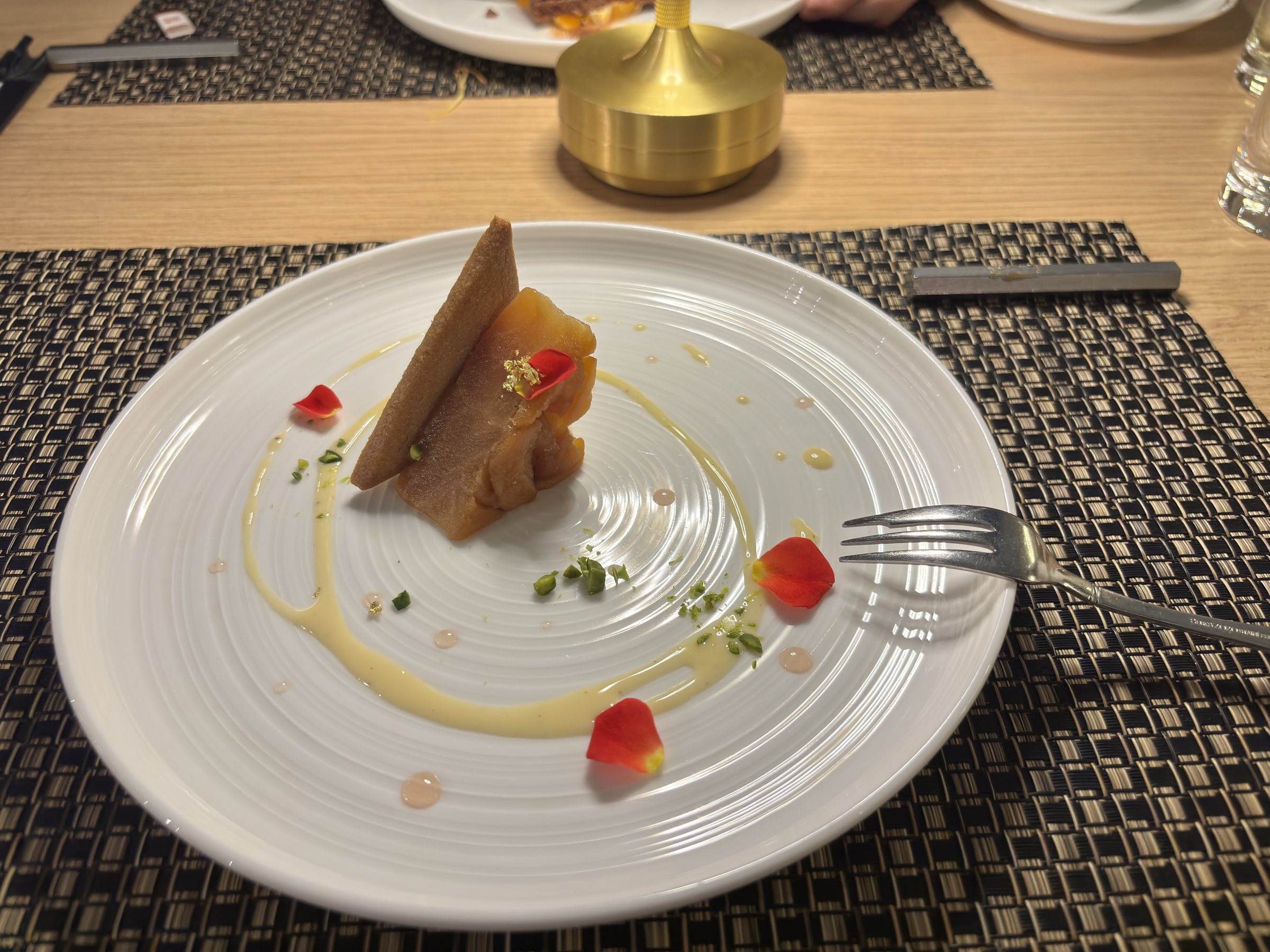
The dessert was presumably an original creation, but the flavors did not quite come together. We hope they keep studying which ingredients to pair and which direction to take the sweetness. Even so, the dish served with such effort carried the freshness of a trainee and clear signs of hard work in a real kitchen.
Final thoughts
The ingenuity found throughout this hot-spring hotel, and the dynamic design of its baths, are well worth seeing. What stays with us most is its attentive care for families with children. Reconsidering the location of the dining room, and the lighting levels so that dark areas are properly addressed, would make it an even more complete place to stay.
We have a very warm regard for its efforts to delight guests with a buffet built on Awaji Island produce, and with food that suits the mood of the room. Then there were the gentle smiles of the staff who greeted us, and the way they stood at the entrance waving until our car was out of sight. In that, there lives a delicate kindness and a sincere spirit of omotenashi, Japanese hospitality.
This review reflects a visit in December 2025; please confirm current details directly with Yumekaiyu before visiting.