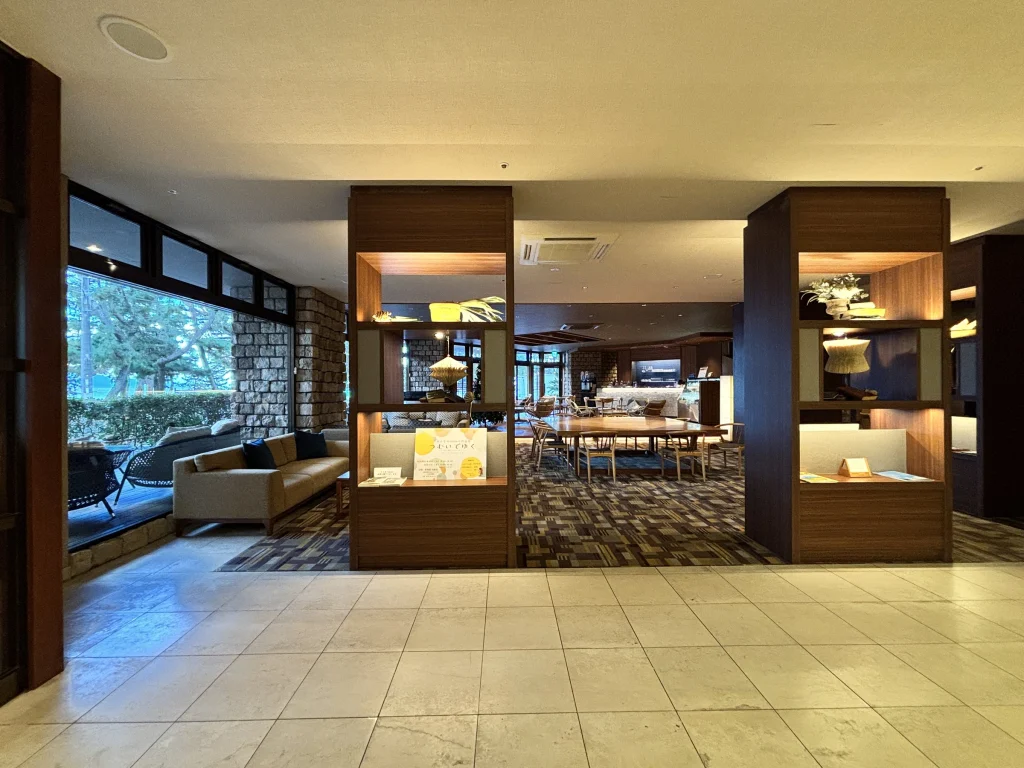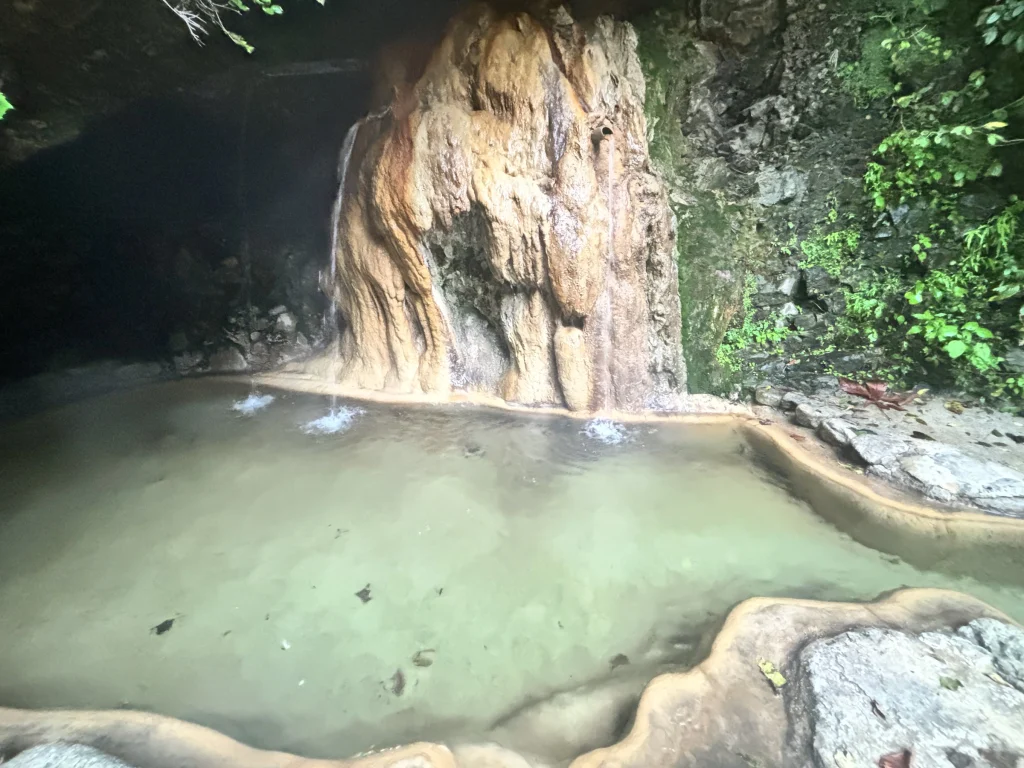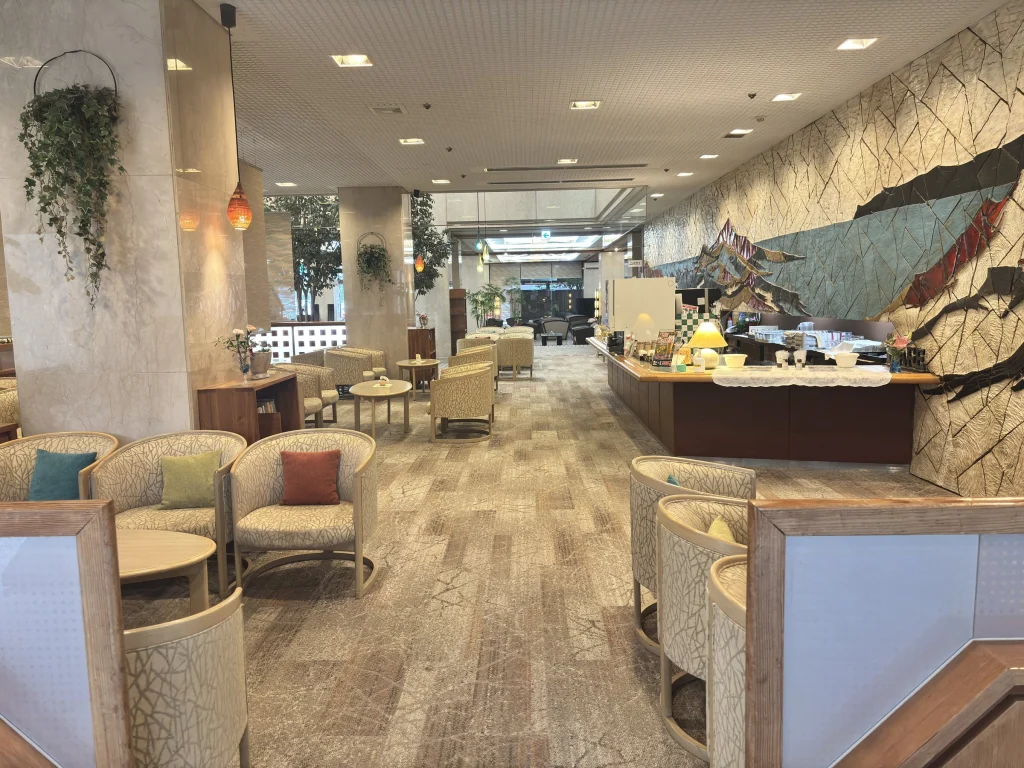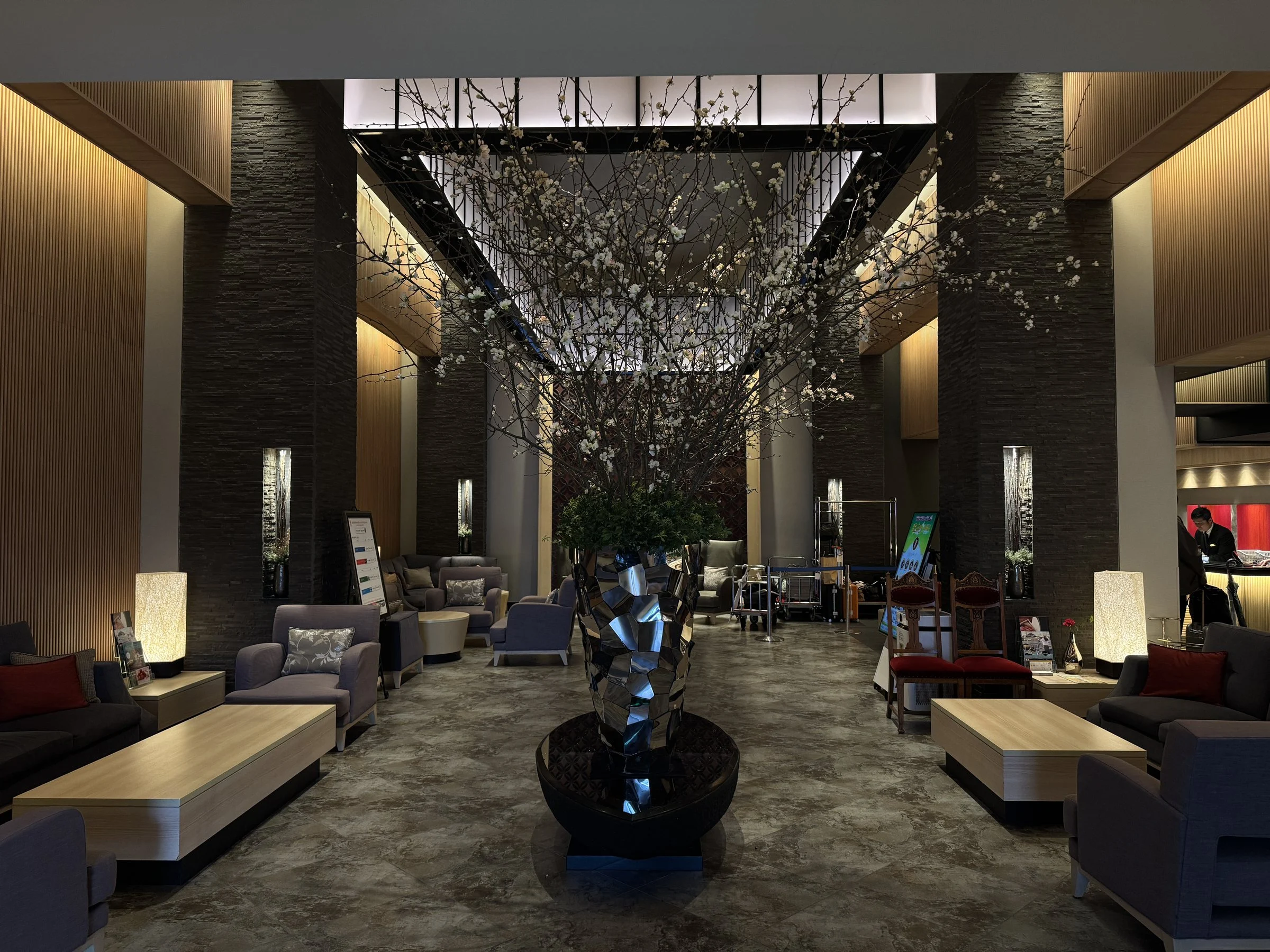
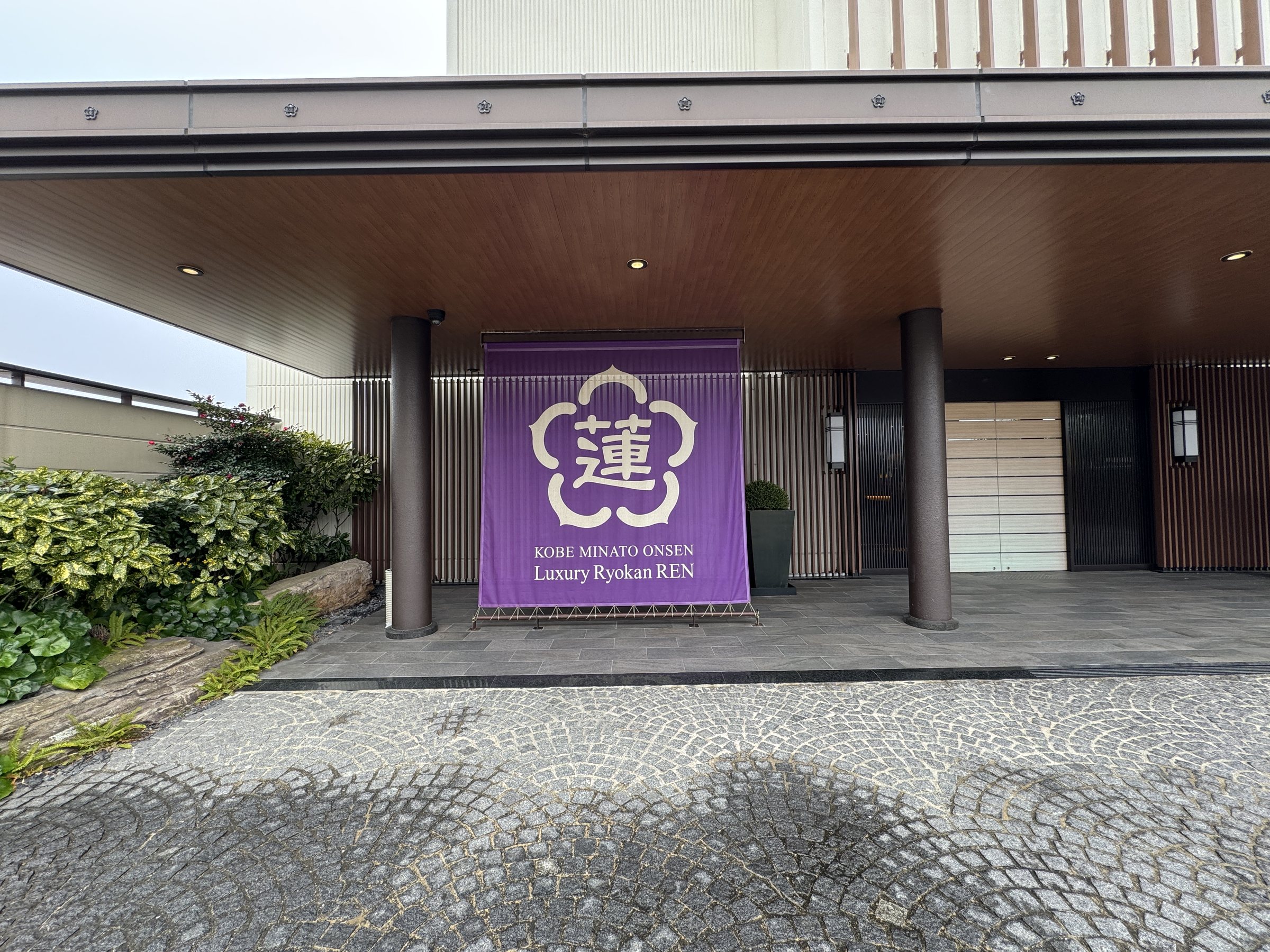
Ren stands right beside Kobe’s harbor, with the Seto Inland Sea spreading out in front of it. A fairly brisk sea breeze and the smell of salt greeted us as we arrived at the tall building. At first glance it hardly looks like a ryokan at all, yet it calls itself a luxury ryokan, and that was what had brought us here.
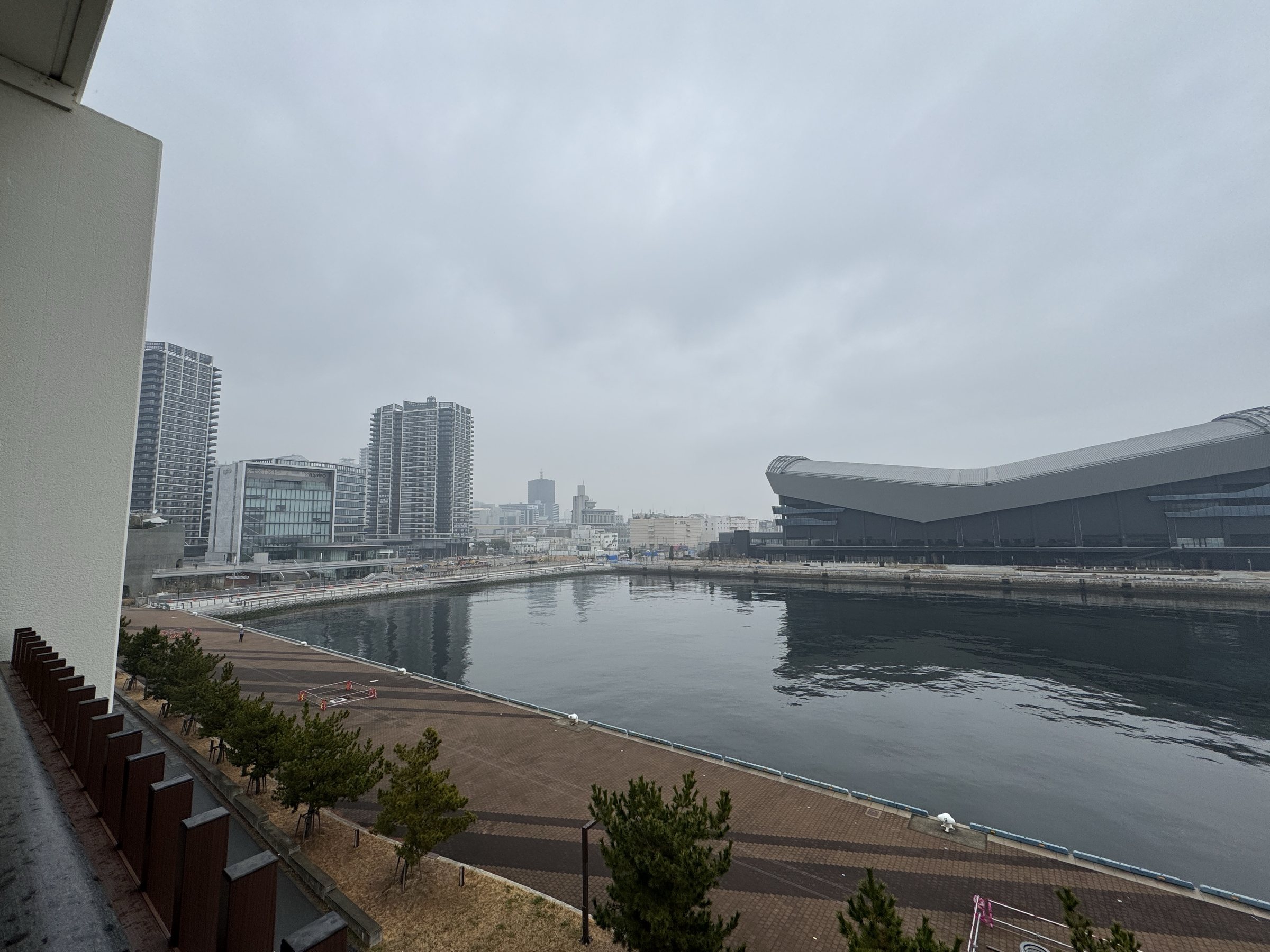
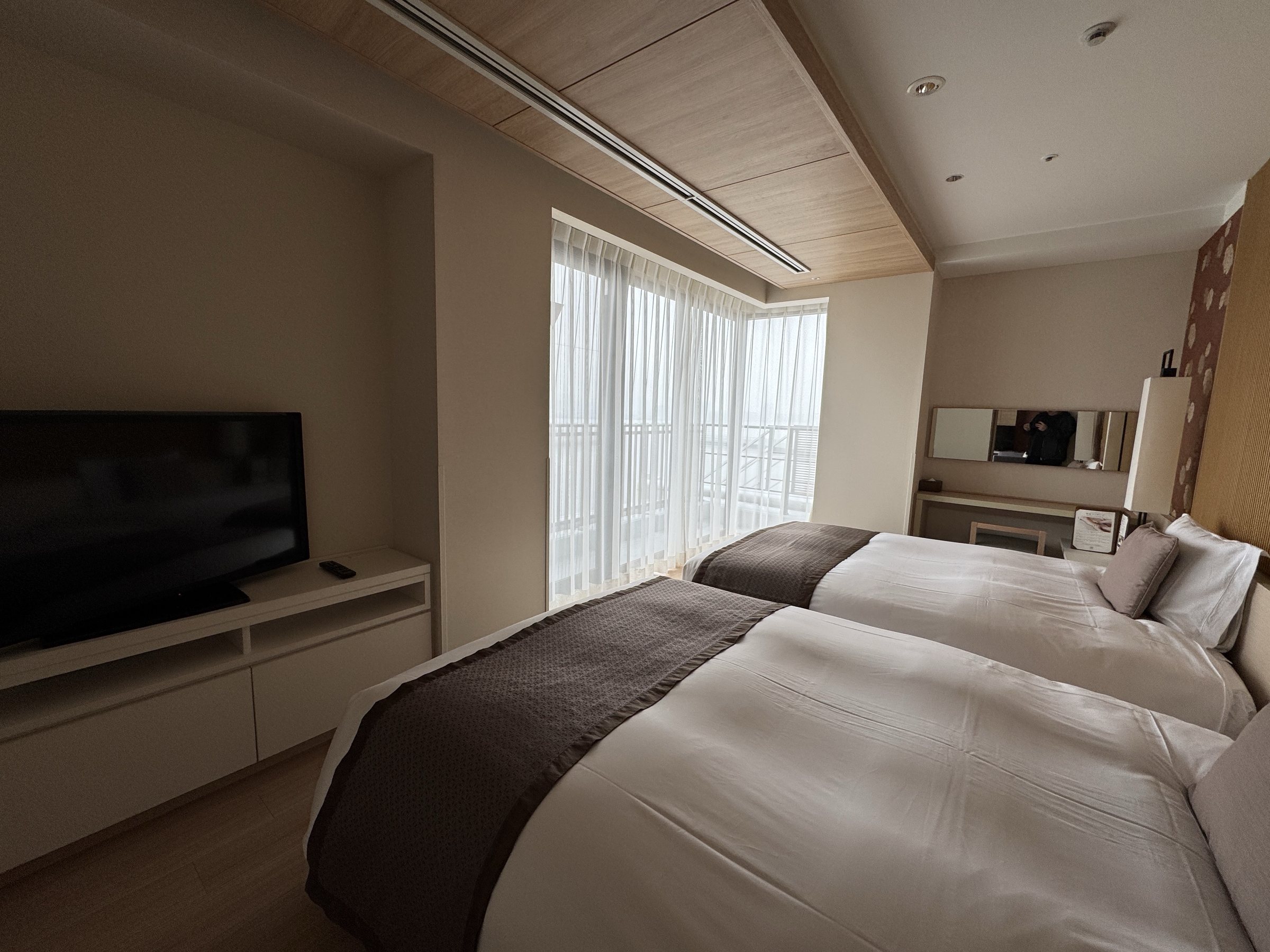
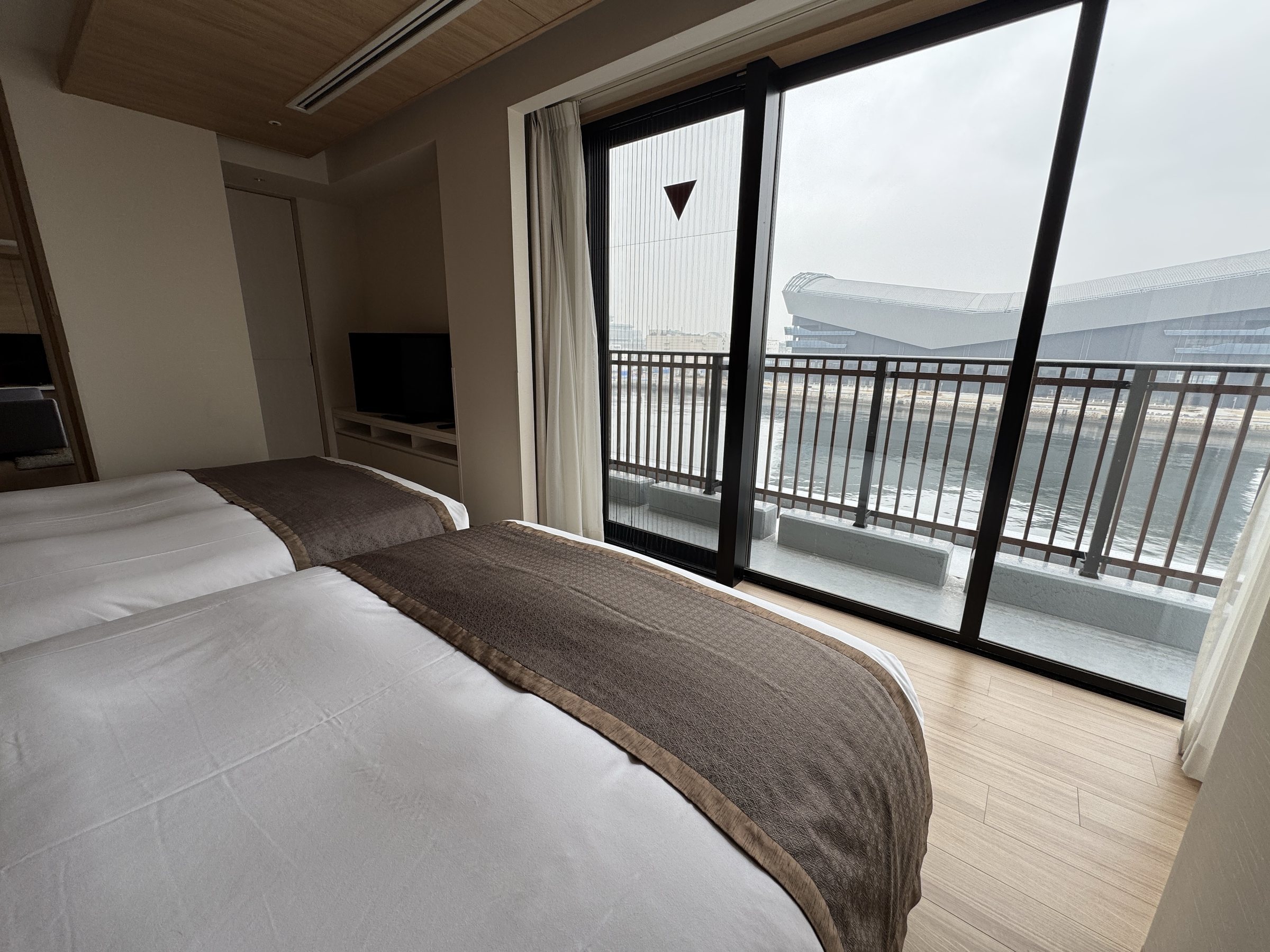
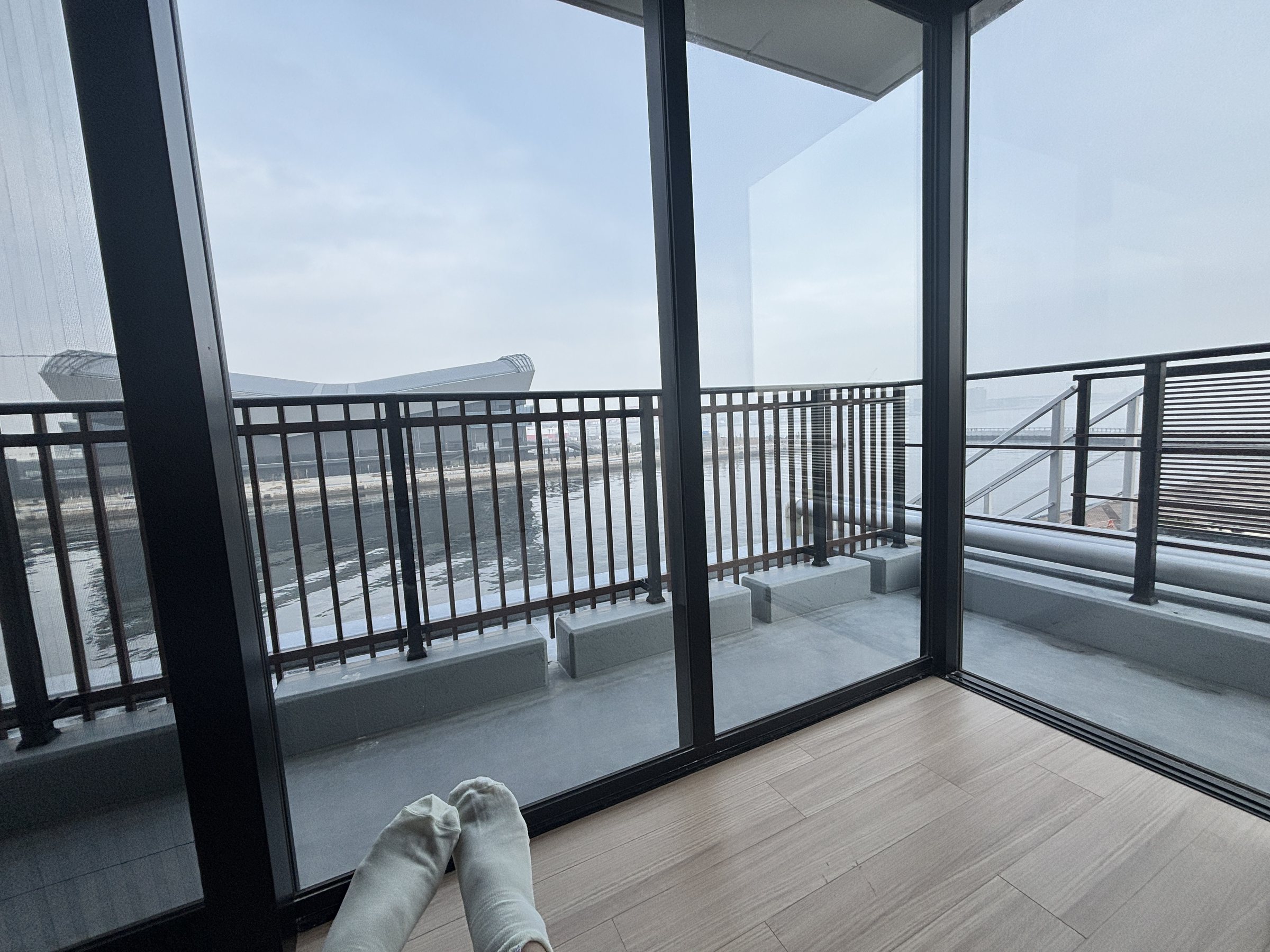
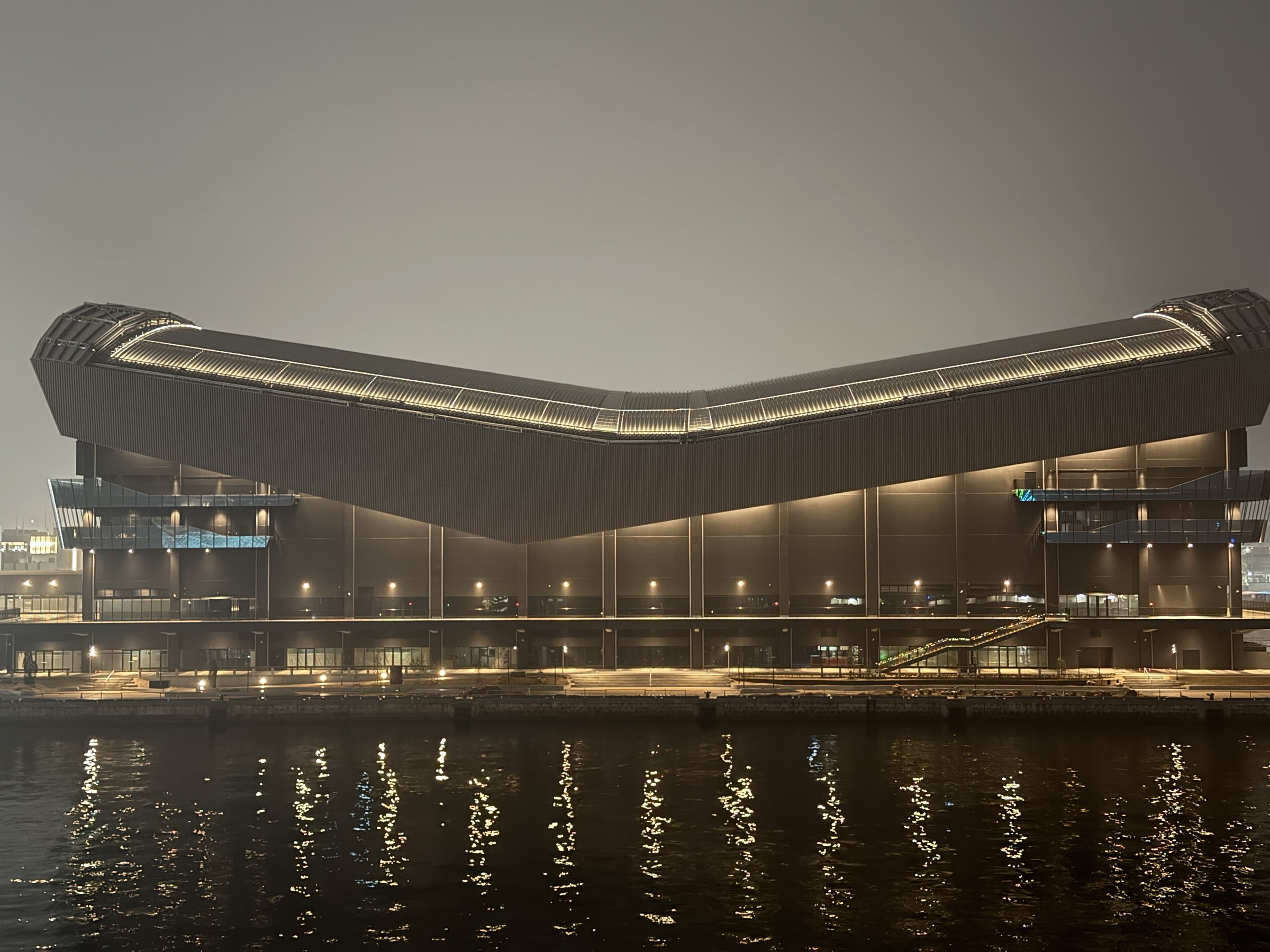
From the moment we walked into our room, the arena across the water filled the view, and the effect was almost otherworldly. The suite felt less like a room than a self-contained cabin: a run of connected spaces, each with its own theme. From the bedroom, too, a wall of glass took in the arena and Kobe’s harbor, giving the sense of floating on the water.
The long walk to the Harbor Suite
Our room was a Harbor Suite, and the long corridor that led to it was spotless. The cleaning staff we passed along the way greeted us warmly. The suite is a corner room at the very far end. It is not exactly cut off from the other rooms, but it is a long way from them.
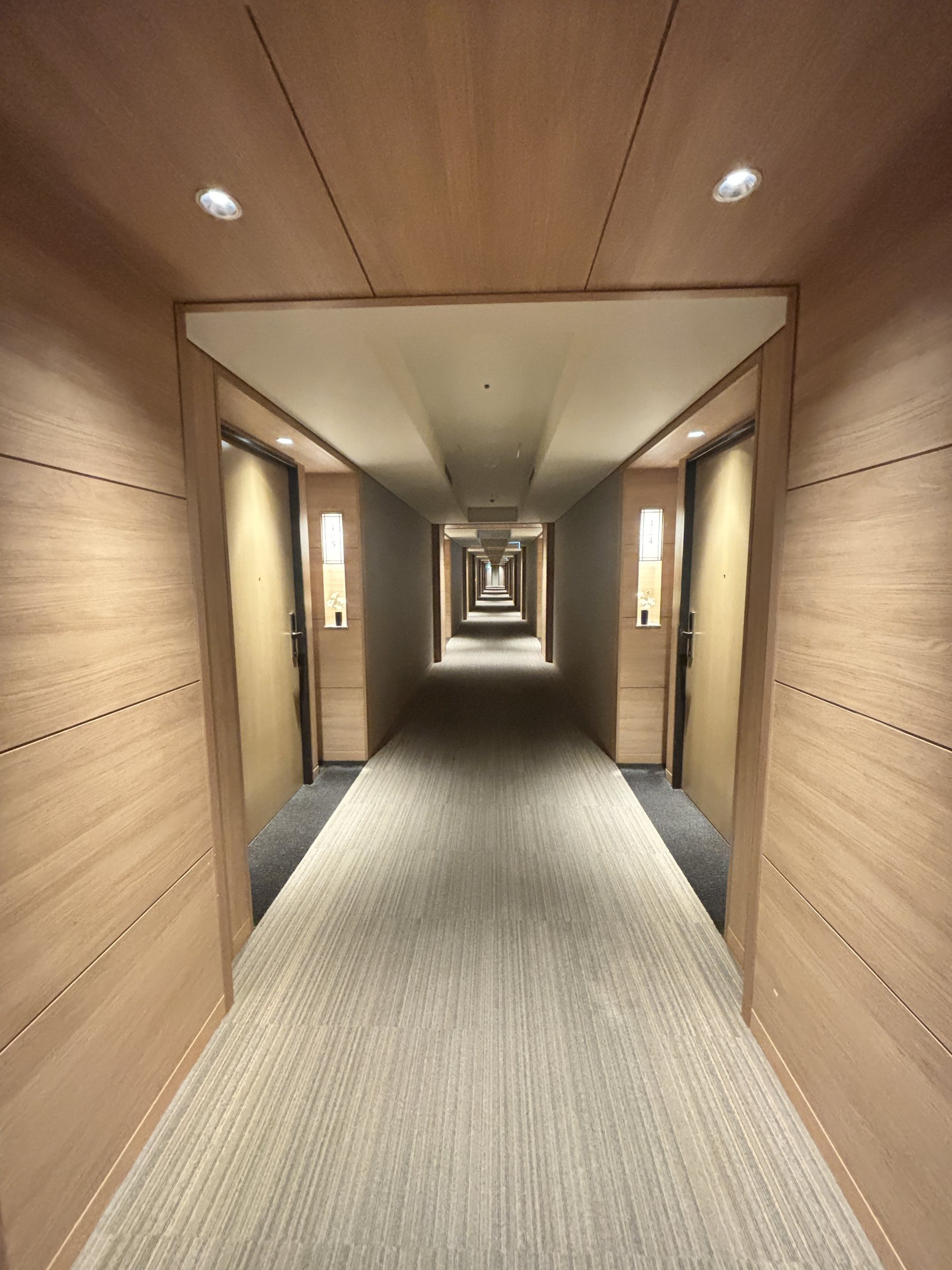
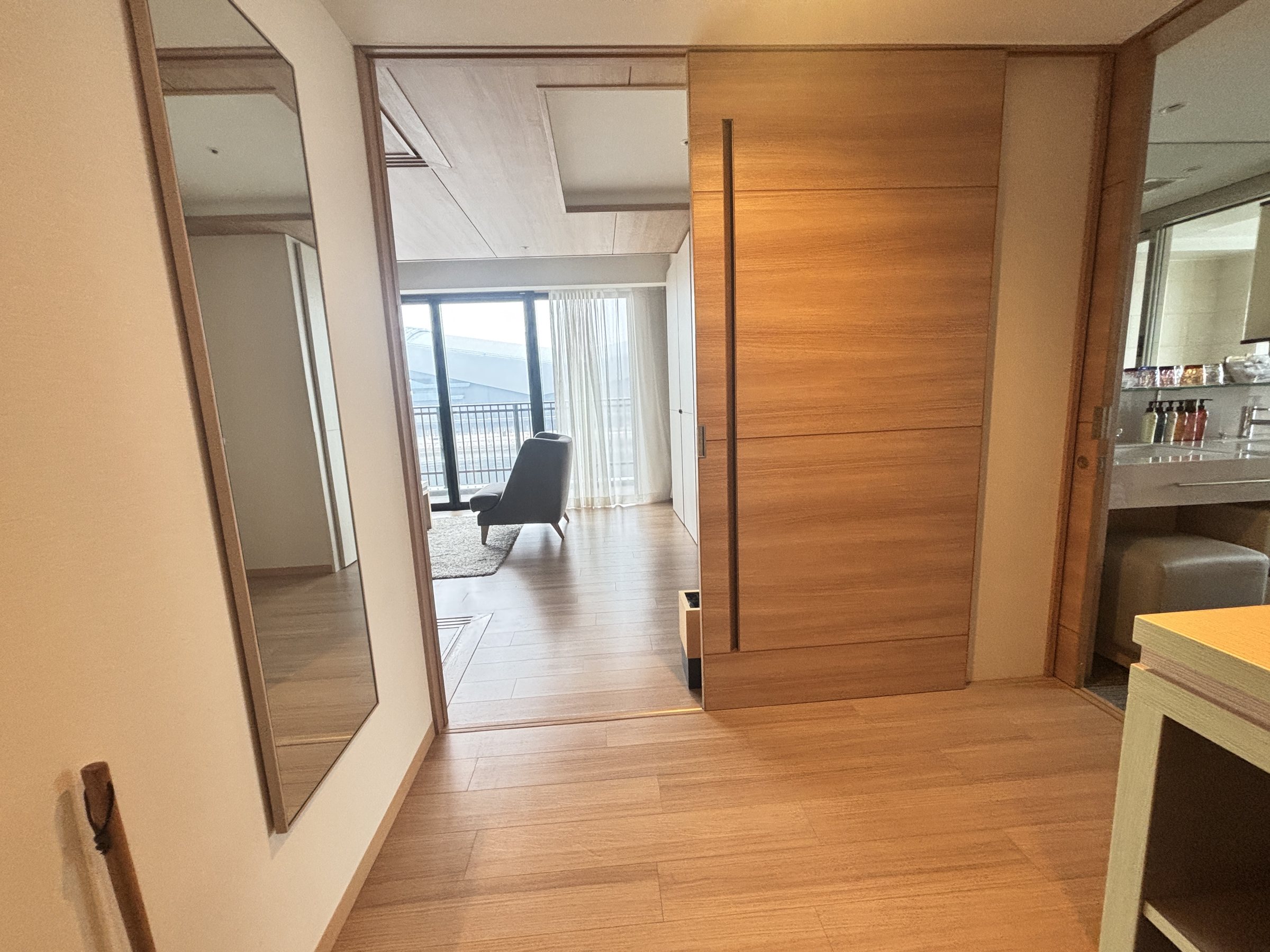
It was cloudy that day, but enormous windows still let in plenty of natural light, and the harbor was visible through them. The layout was generous, a properly luxurious amount of space. The interior was built around the warmth of wood, and there were no steps anywhere: the whole suite is designed to be completely flat.
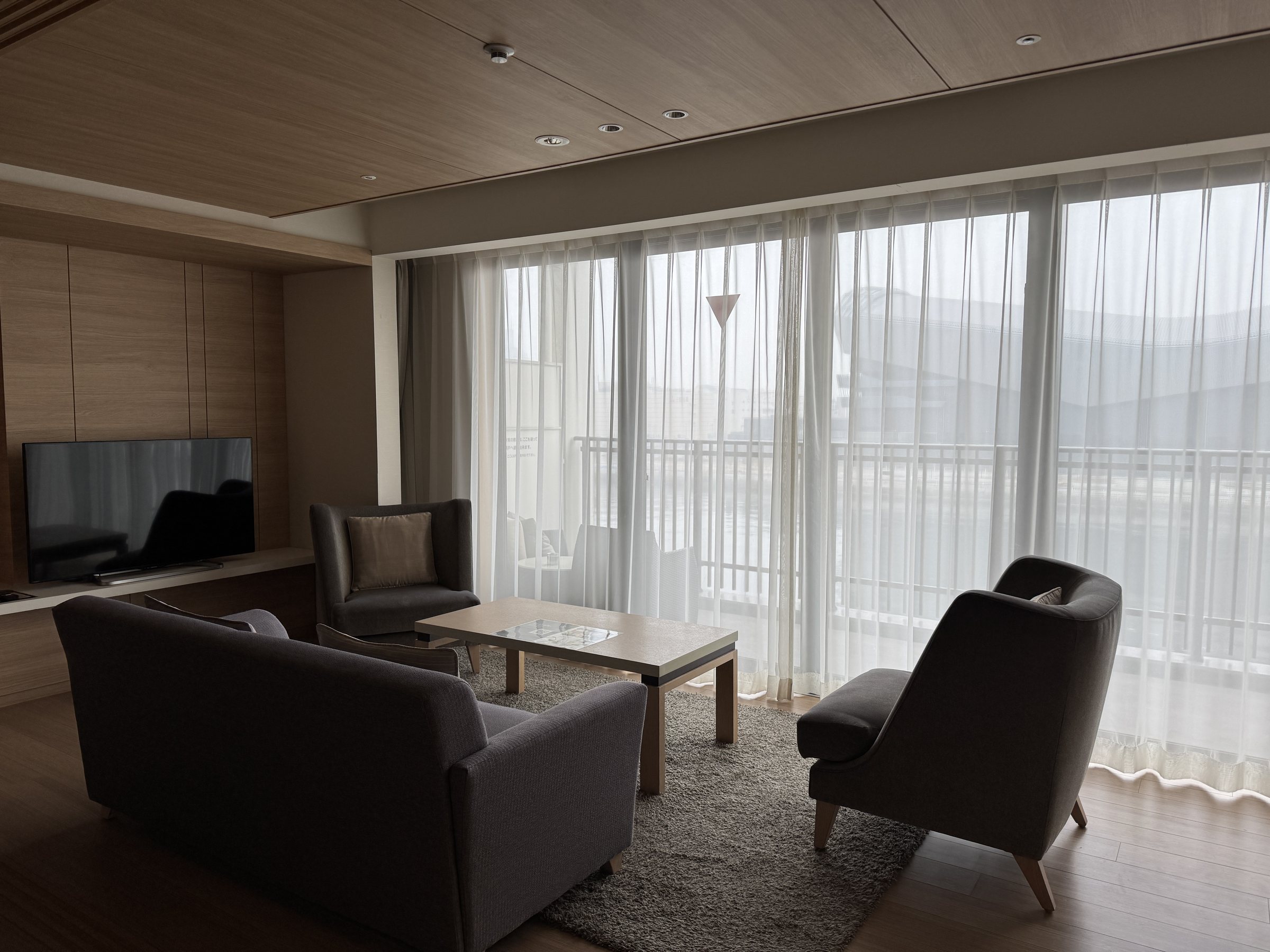
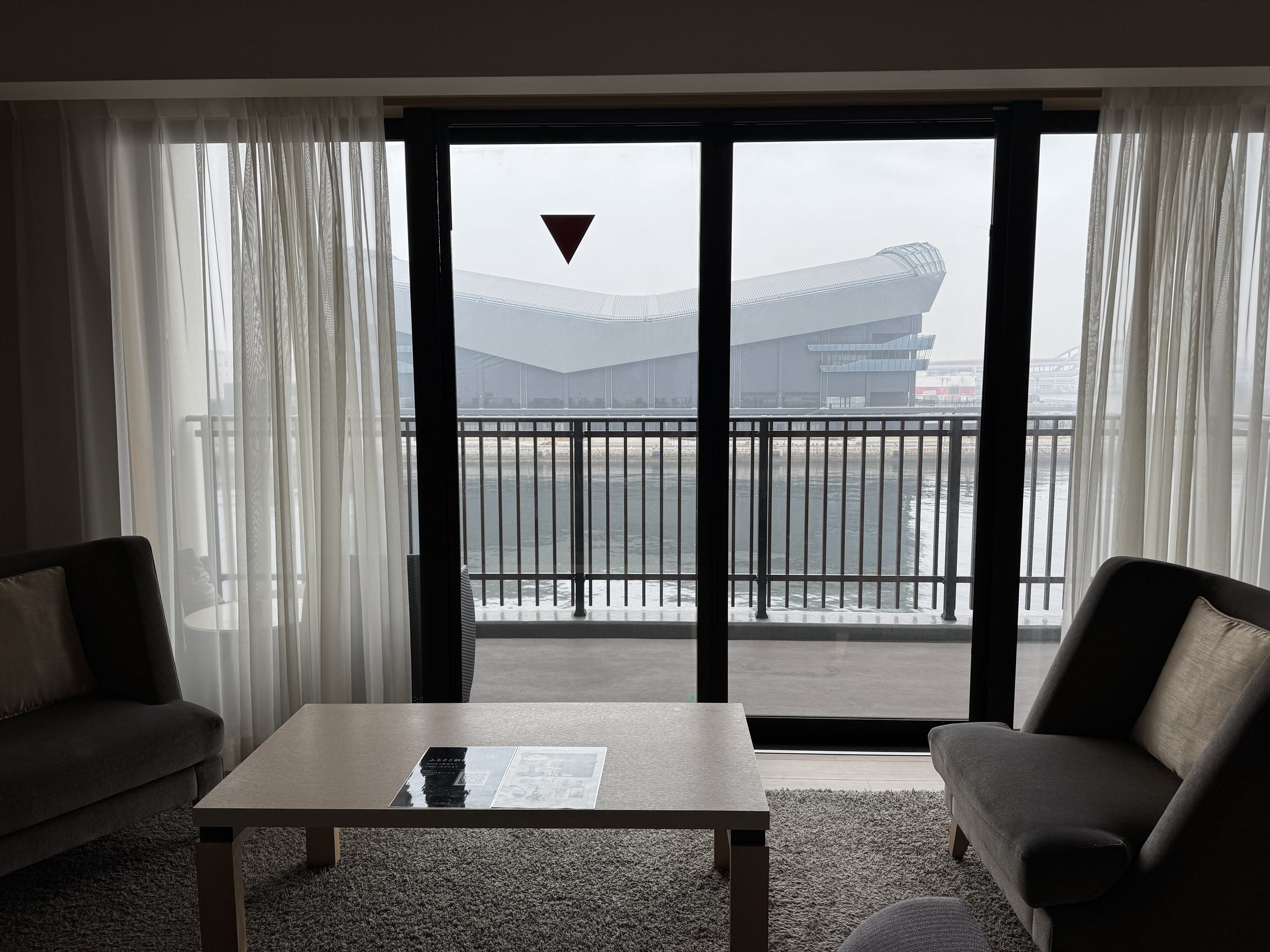
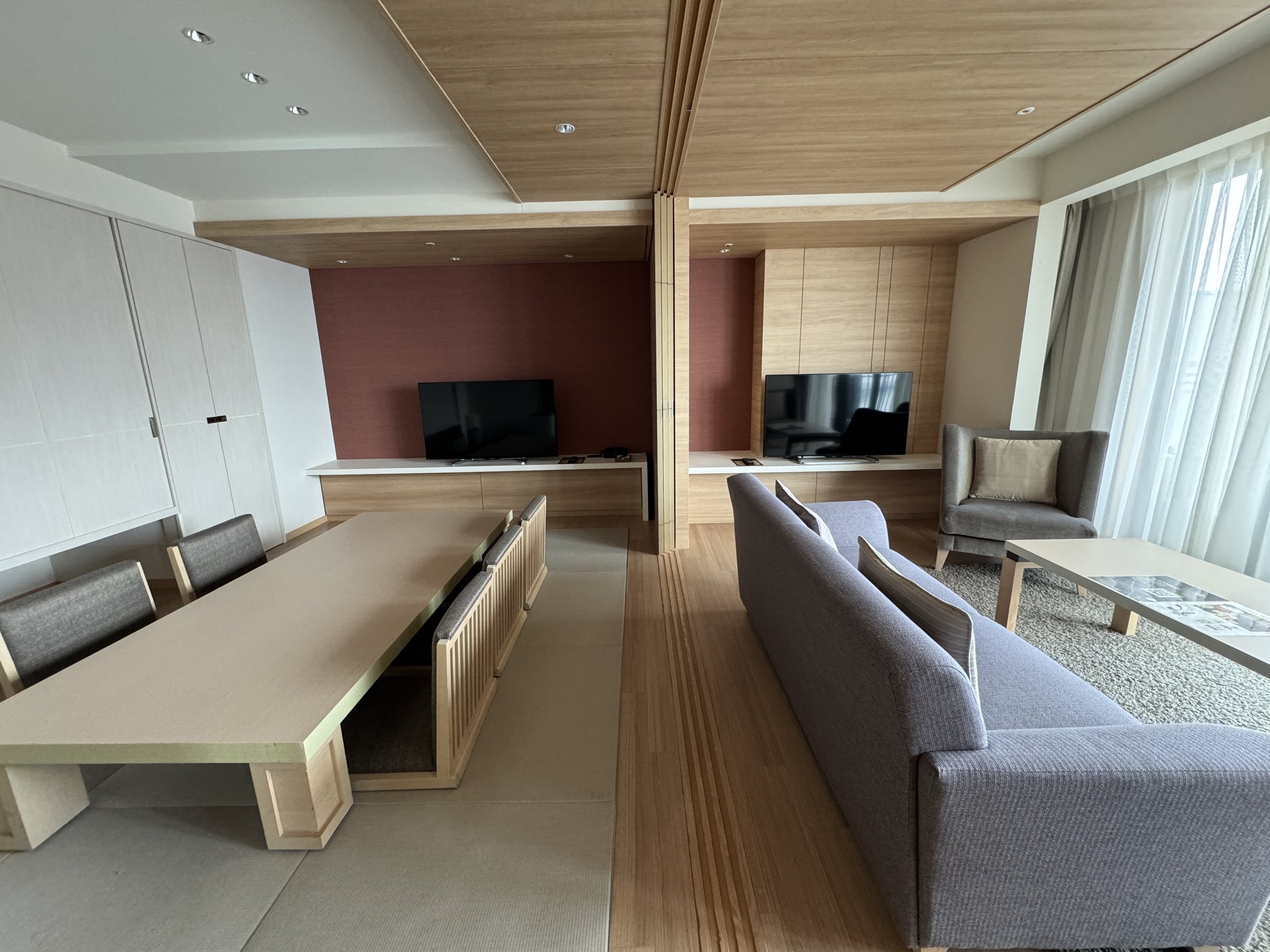
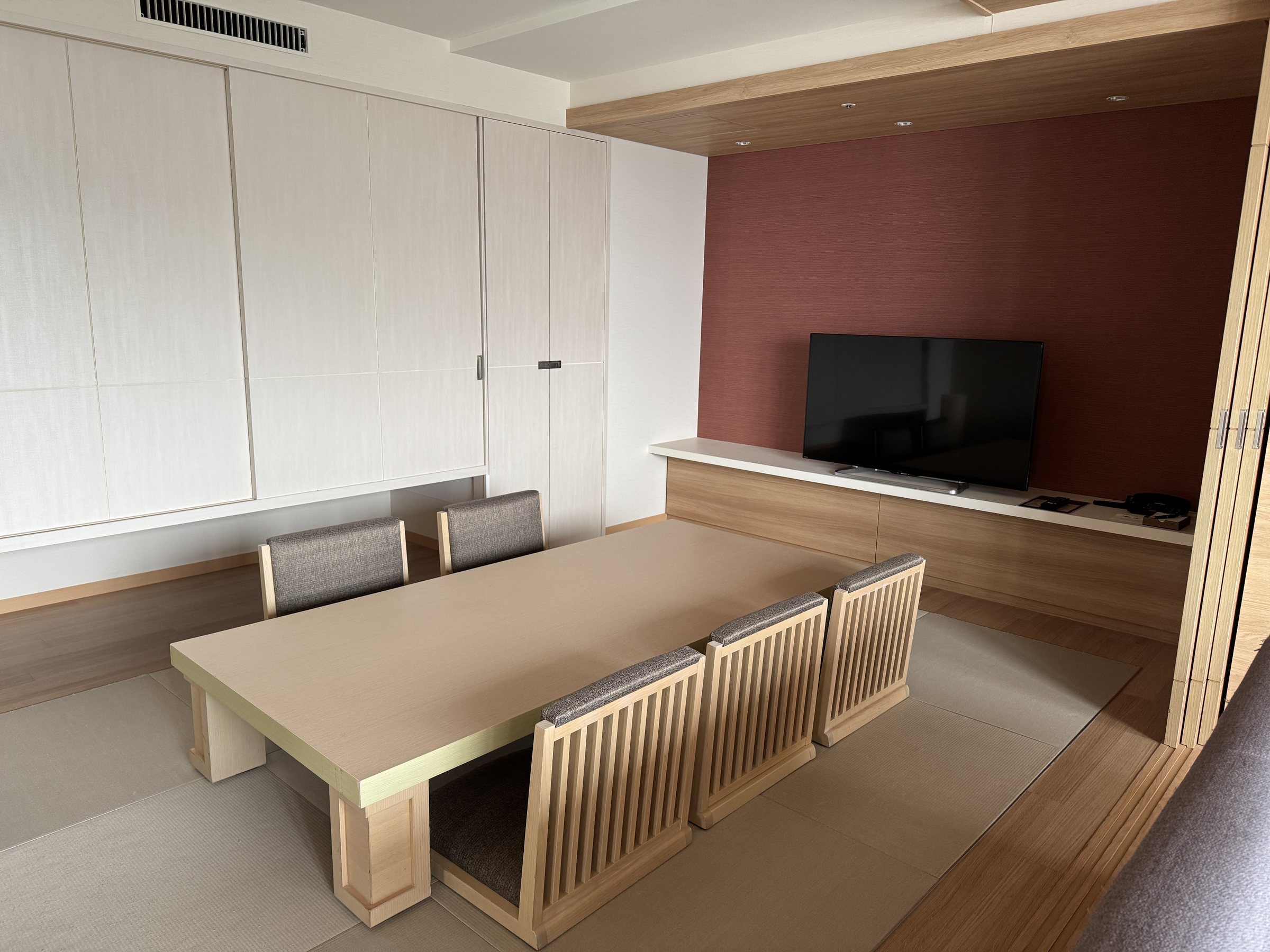
A Japanese-style room with beautiful tatami (woven rush mats) is part of the suite, and remarkably, every room has its own television.
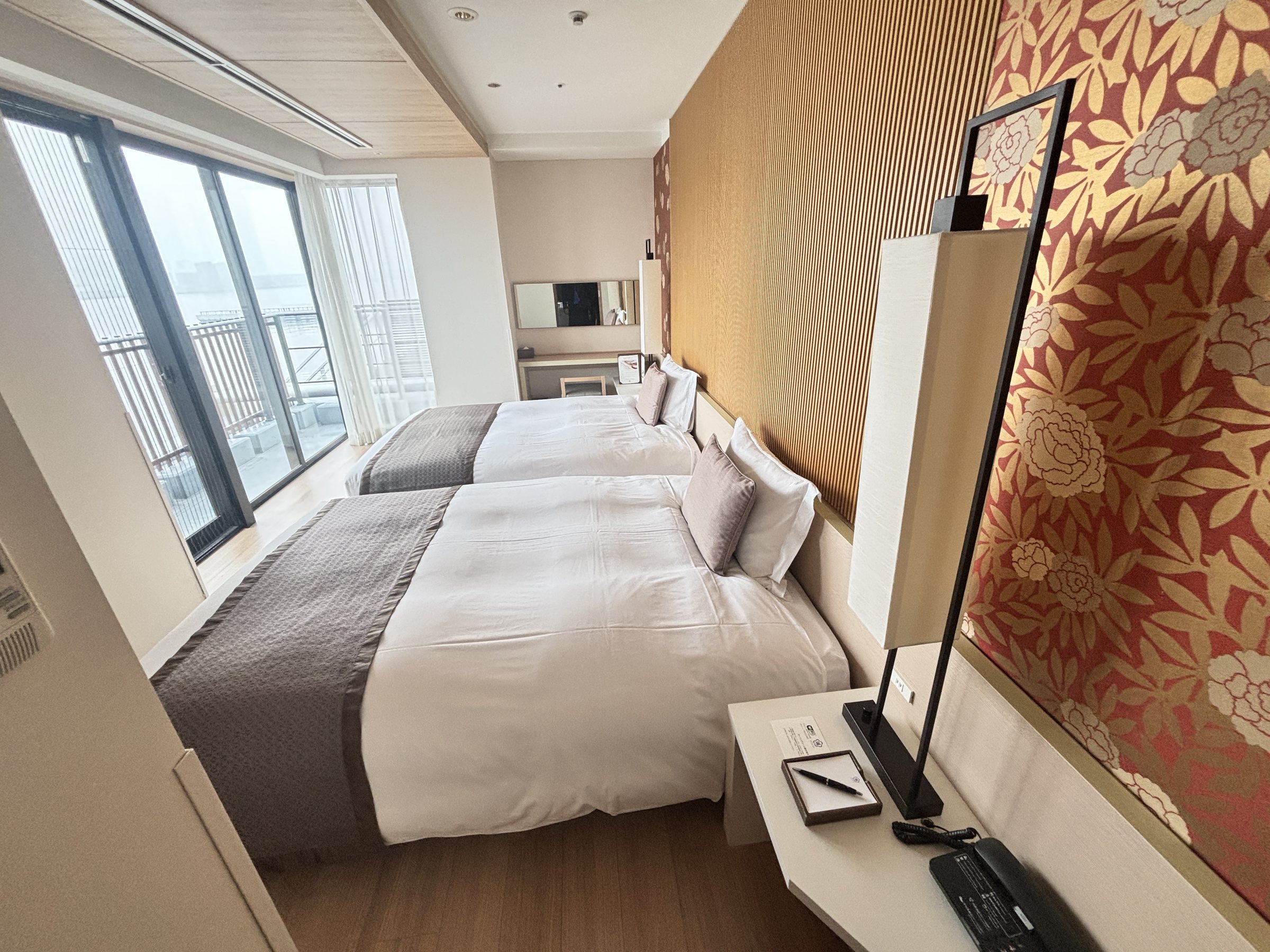
The bedroom window, too, brought Kobe’s harbor sweeping into view. The beds use Simmons mattresses, very much a hotel-style experience, and having so much space around them felt like a real indulgence. A make-up dresser and mirror sit beside the bed, a thoughtful piece of design that clearly considered how guests actually use a room. Lying in bed, we looked out at the huge arena as if from the surface of the water.
A hot spring of our own
Naturally, we went to look at the room’s own hot-spring bath: a semi-open-air bath of natural hot spring water, supplied gensen kakenagashi, straight from the source and never recirculated. The marble-look bath was a special space to have to ourselves, and we made good use of it. Depending on the room grade, the rooms themselves have source-fed hot spring water.
The changing area had towels and bathrobes neatly laid out, as the photo shows. Buttons let you top up the bath with hot water or adjust its temperature. The amenity corner held a full range of toiletries and supplies. Our favorite detail was the disposable toothbrush, which had soft, good-quality bristles. Two hotel-style washbasins always strike us as more than we need, and of course there was a make-up mirror and a hairdryer as well.
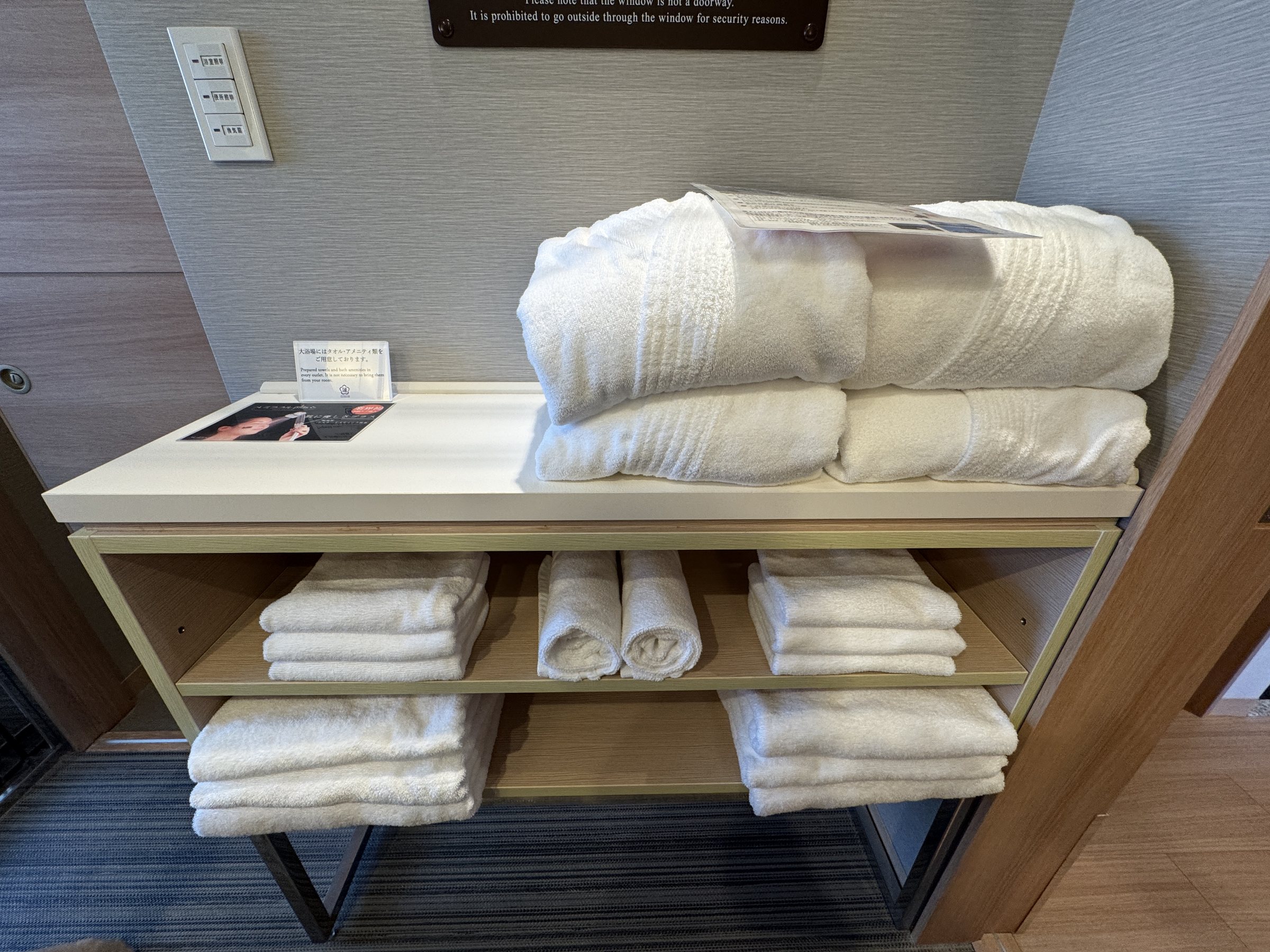
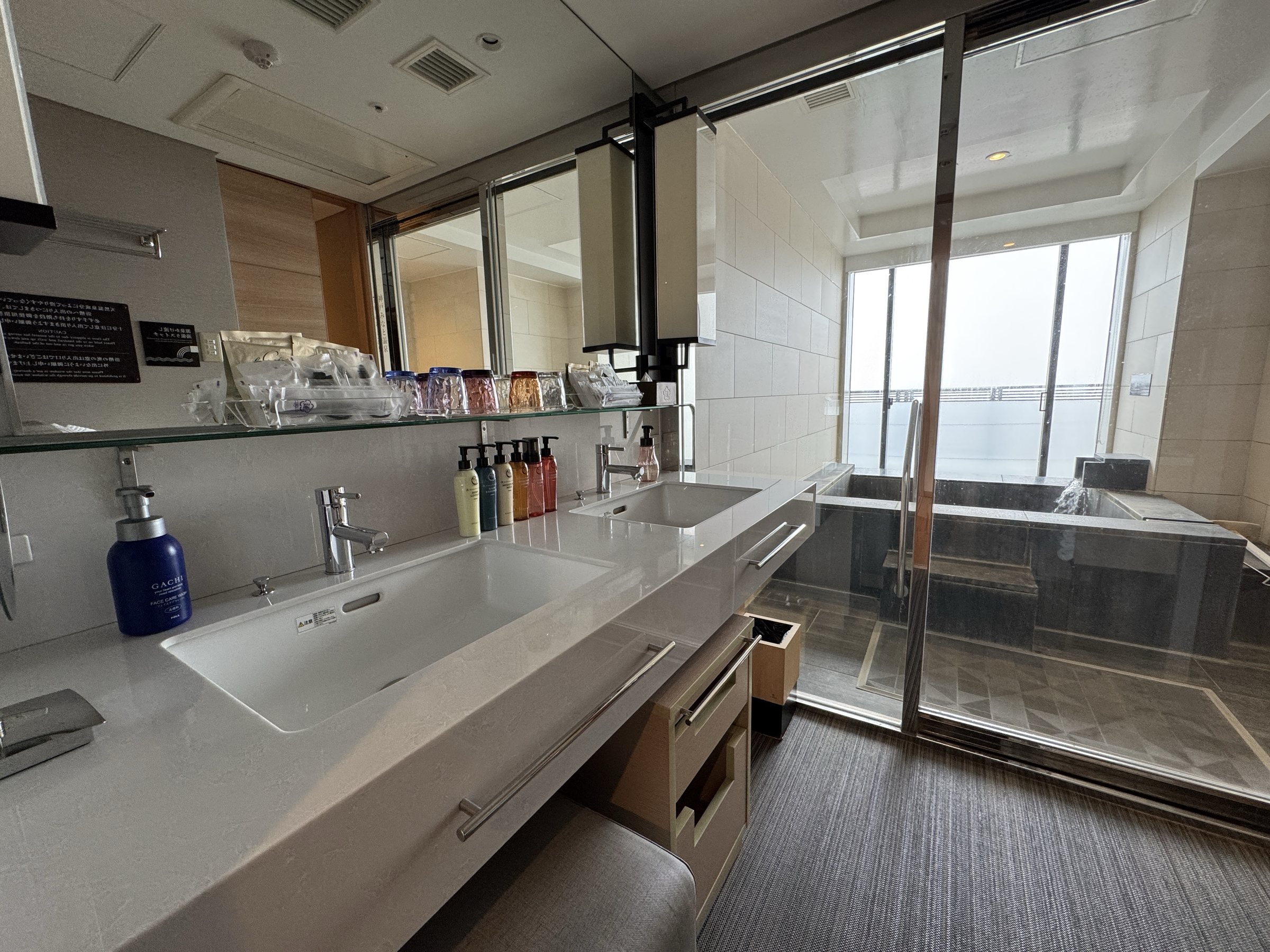
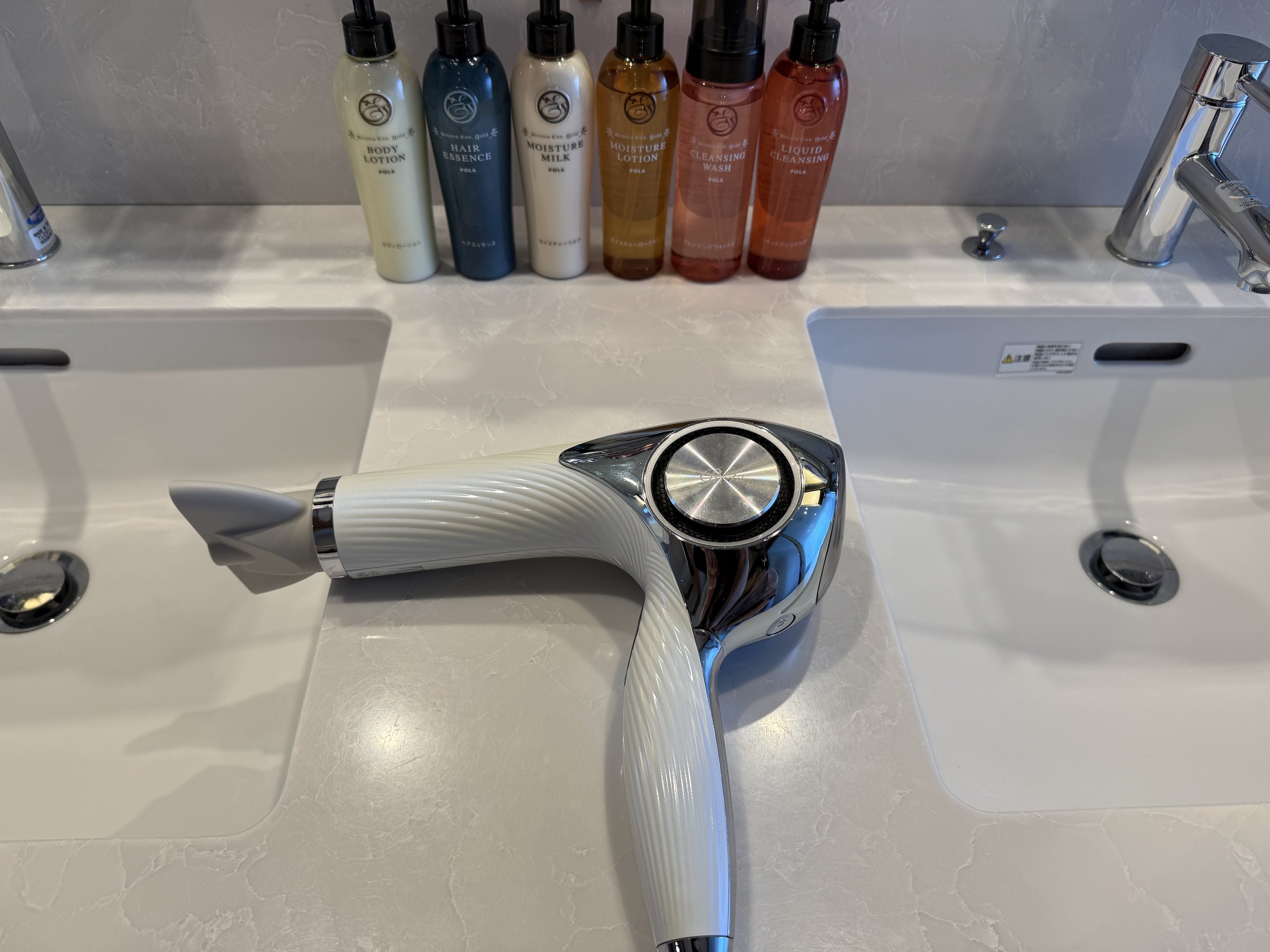
A full-length mirror by the entrance is genuinely useful. In hotels and ryokan, it is surprisingly rare to be able to see yourself head to toe while getting ready. The standard of cleaning, which you might take for granted, was very high: the mirrors over the washbasins and the dresser did not show so much as a wipe mark.
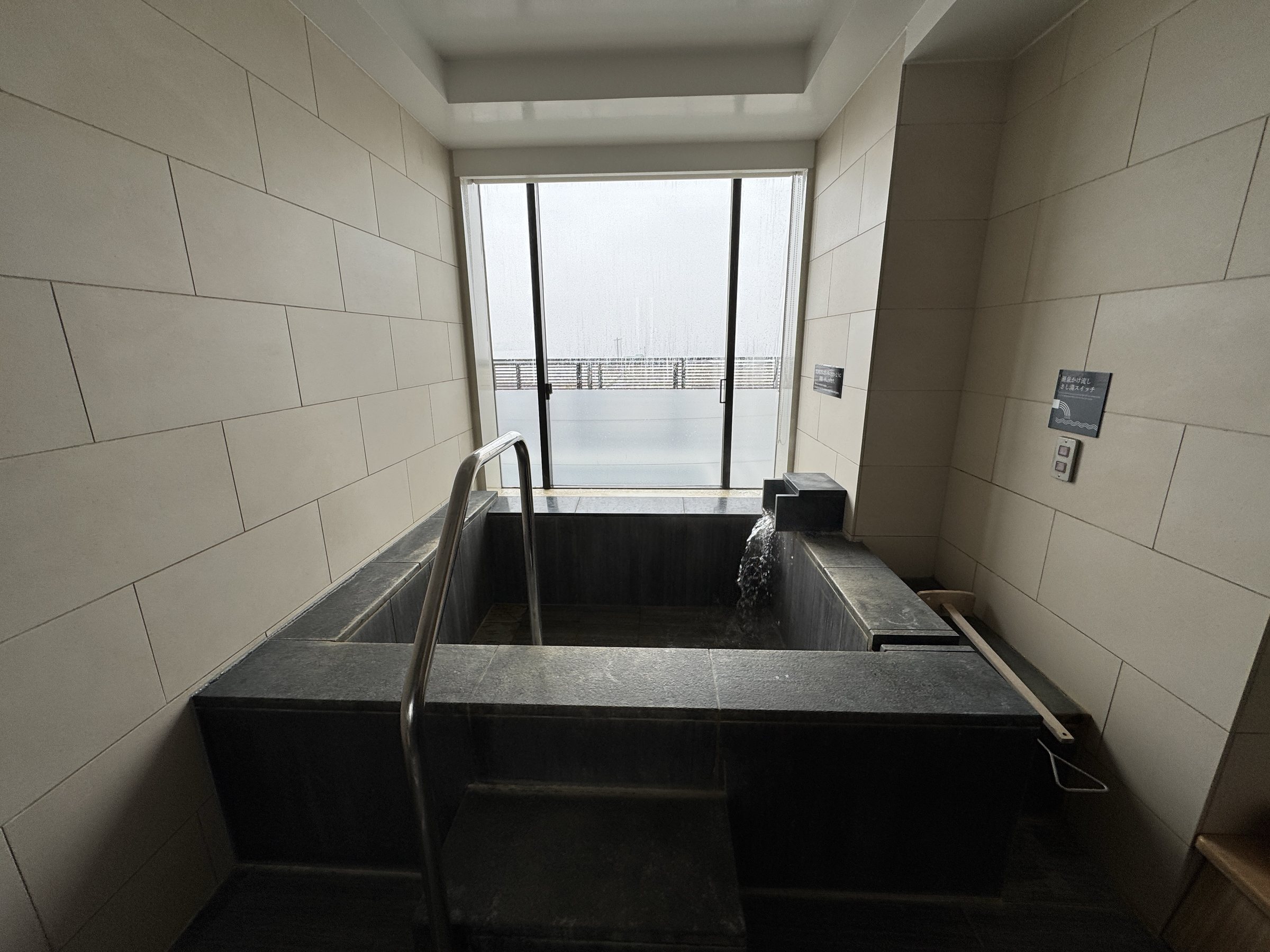
With natural hot spring water piped in, the semi-open-air bath was a place of our own that we could use whenever we liked. The sea lies straight ahead, and we could smell it even from the bath. Open the window a little and it is pure bliss, the perfect setting for getting away from everyday life.
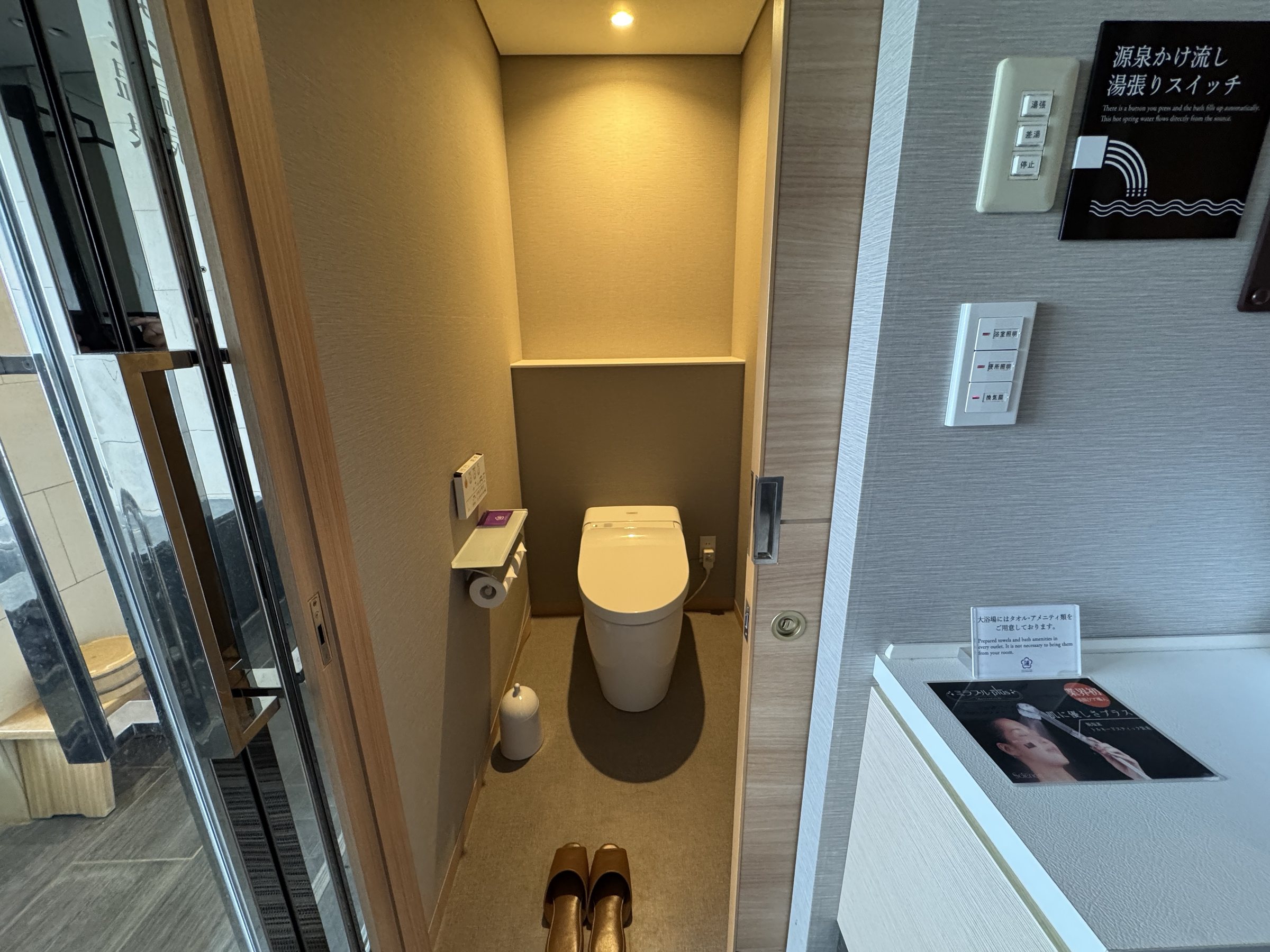
A small detail, but the toilet paper was very soft, a double-ply roll. That is rare at a time when so many places cut costs in the name of being eco-friendly.
A bathing complex to get lost in
Ren is said to rank as the yokozuna (grand champion) of the West in one hot-spring ranking, and it is highly regarded both as a day-visit onsen and as a health facility. It was certified by the Minister of Health, Labor and Welfare as an “onsen-use health promotion facility”, a place where hot springs and exercise can be used safely to improve health, and was the first in the Kyoto–Osaka–Kobe region to receive this. There are combined admission tickets with nearby facilities, yoga lessons and health-tourism programs.
The large baths are designed so that there is plenty to enjoy, and you can choose from a wide range of options: a fitness pool, yoga, a gym and saunas, an outdoor pool open in summer, and a bedrock bath among them. Day visitors and overnight guests are kept separate, with different lounges and even different reception desks. There is so much on offer that you could not get round it all in one day.
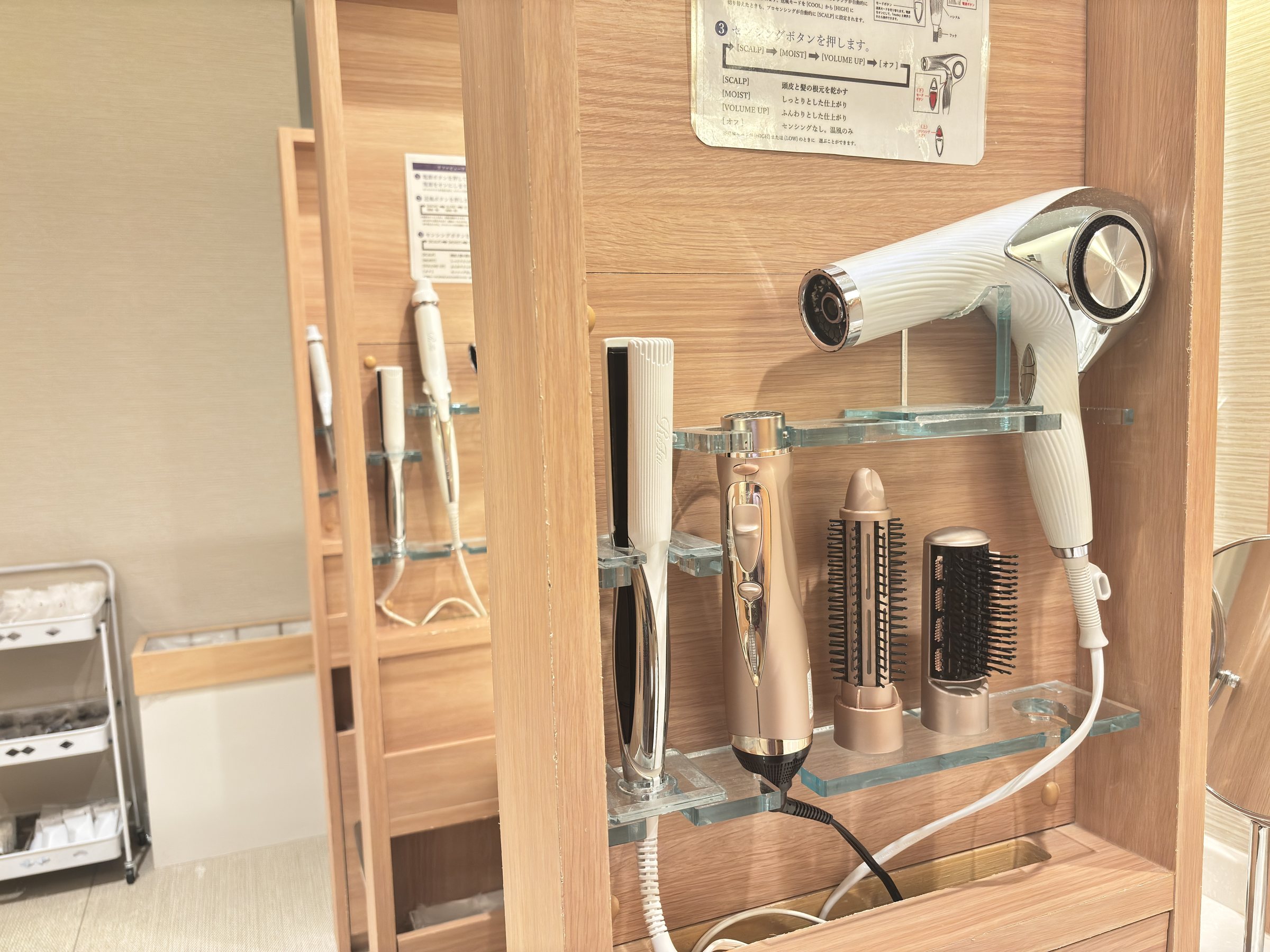
The amenities went beyond anything we had expected. The hair-care products in the large baths come from the beauty brands of MTG, and there is a whole row of ReFa products, the kind many people would like to try at least once. This was the first hot-spring facility we had come across that provided everything from a straightening iron to a curling iron. It felt like a place living up to its “luxury onsen” billing.
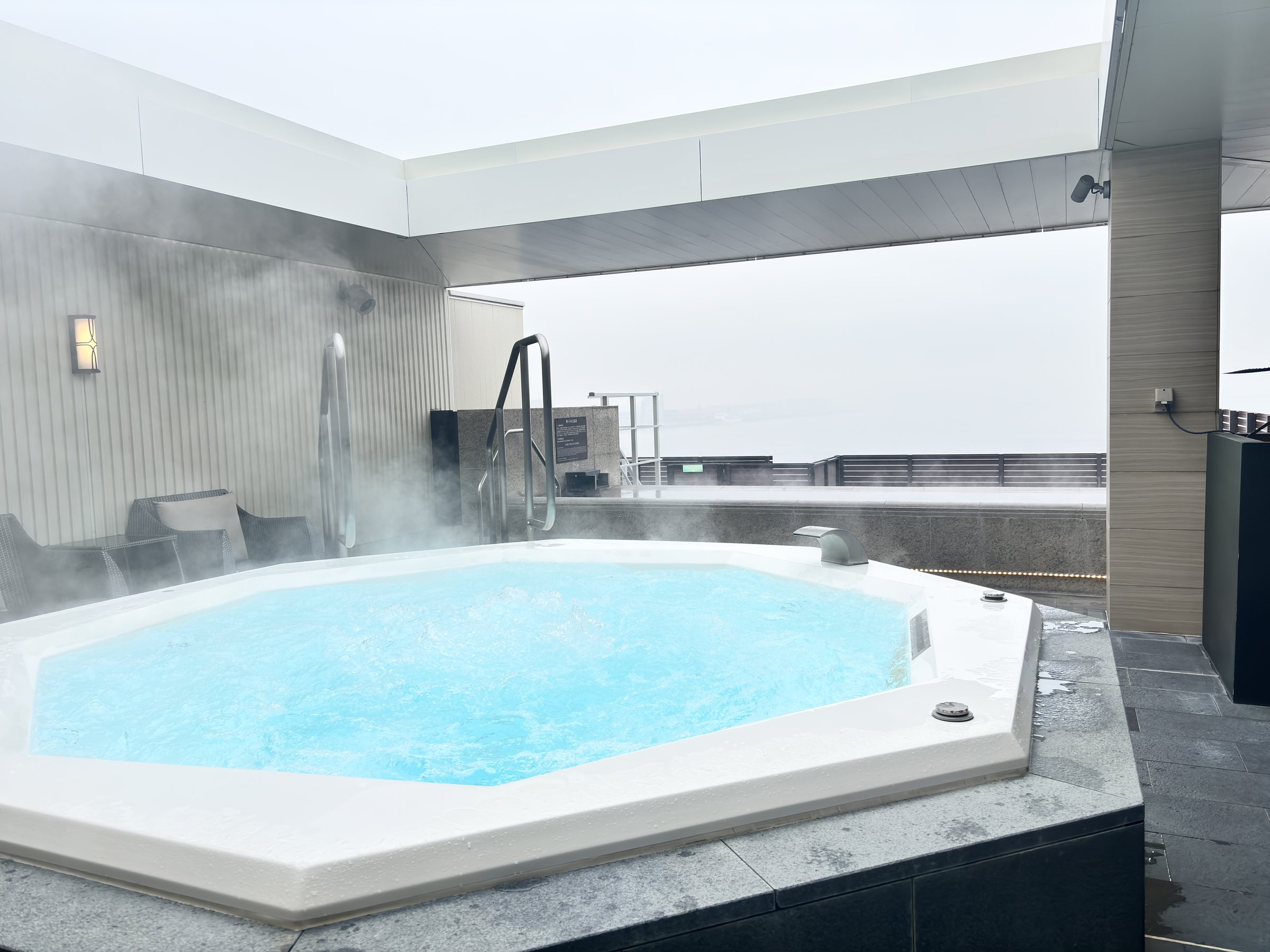
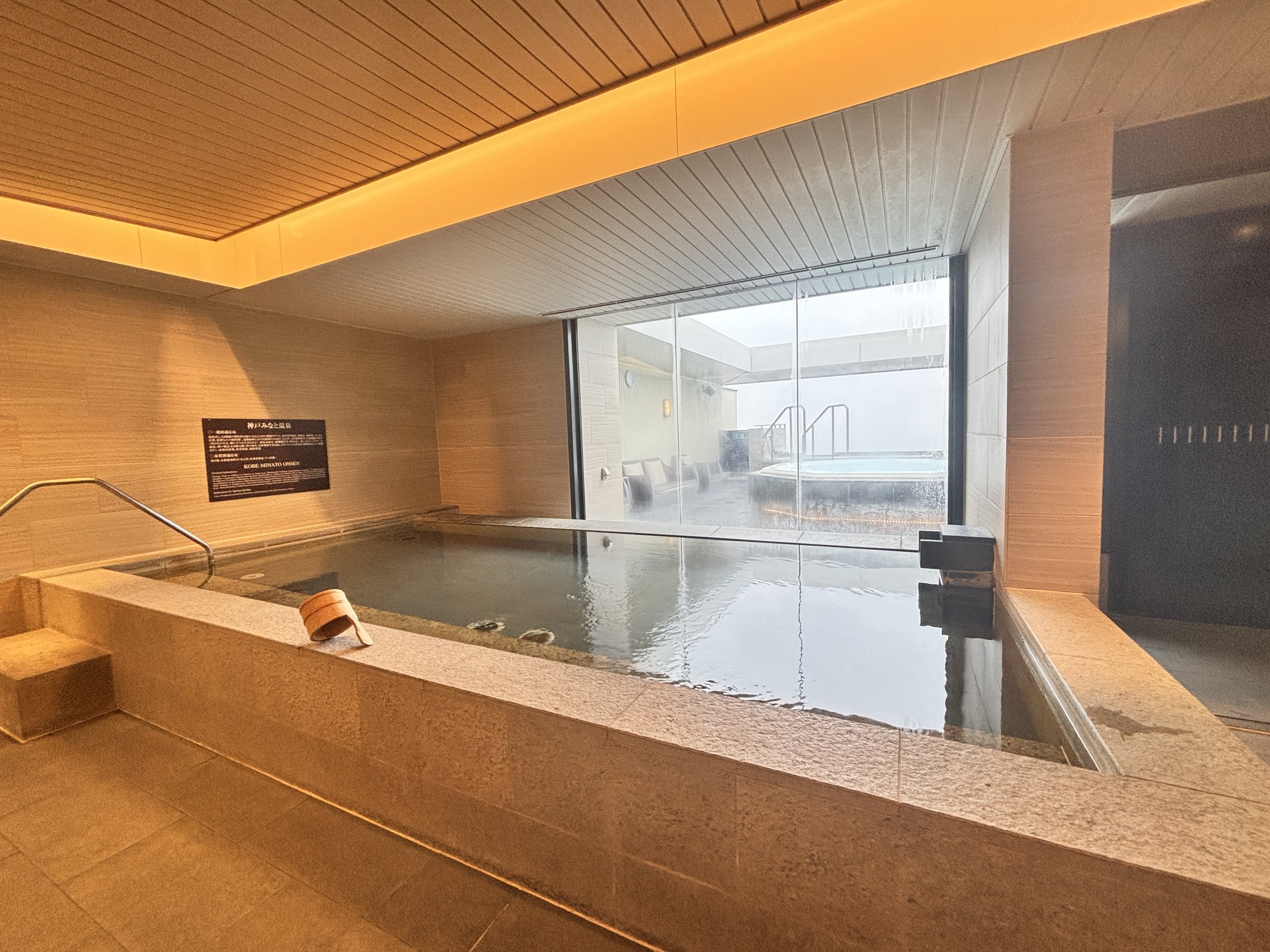
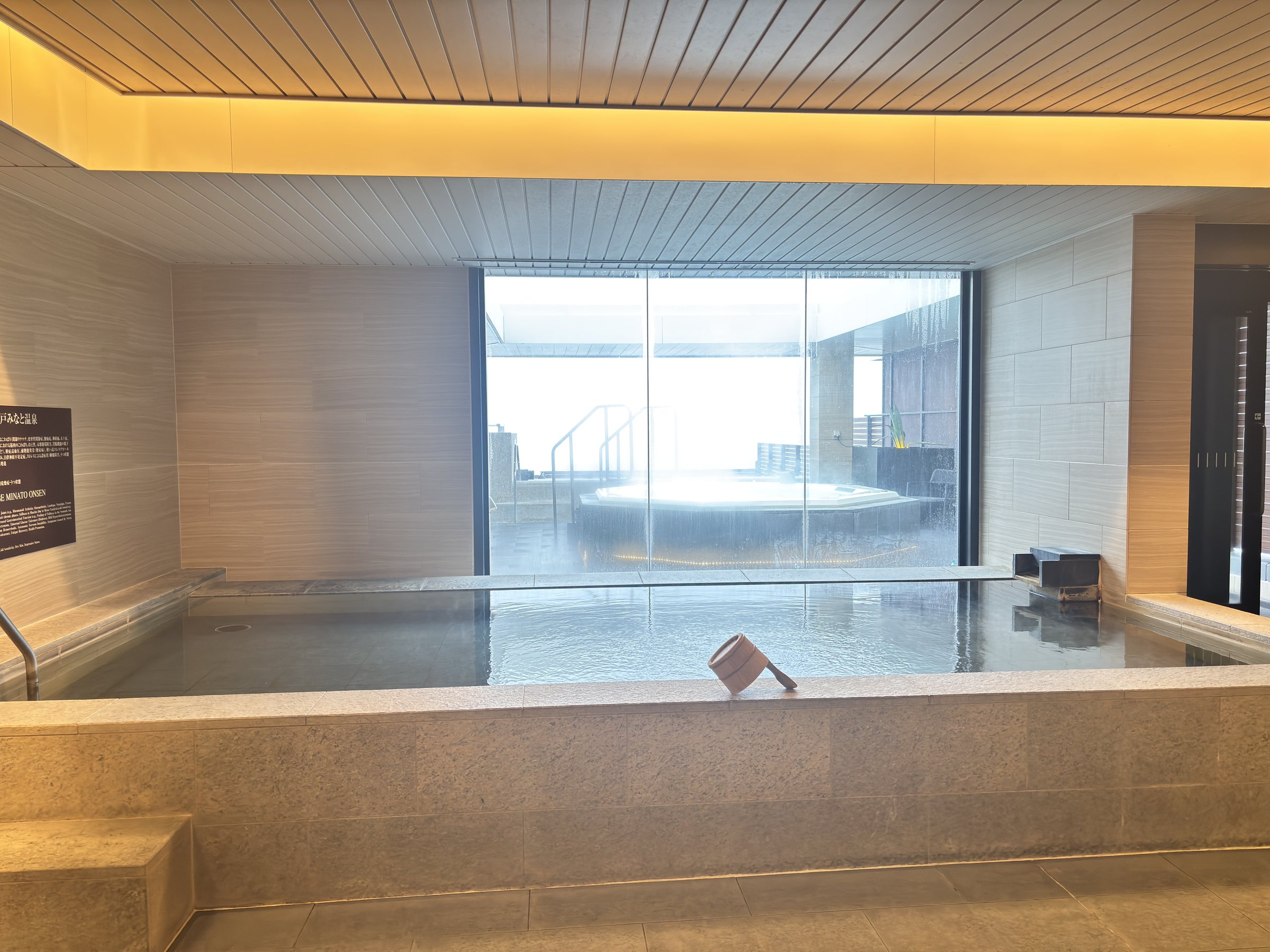
The large baths make the most of the natural hot spring water. The indoor bath was on the hot side, so we warmed up there before heading outside. It was not a sunny day, but the observation bath was spacious enough to take in the whole of the Seto Inland Sea, and we enjoyed both that and the jacuzzi (the jacuzzi is not hot spring water).
The water is a sodium bicarbonate spring (jūsōsen), said to soften the surface of the skin, and true enough, our skin felt remarkably smooth afterwards. Seaside hot springs are also said to be good for healing cuts, with the salt expected to have a strong antiseptic effect.
Day-visit bathers come here too, but because the facility itself is so large and day visitors have their own large baths, overnight guests are kept apart, which we appreciated. Overnight guests may also use the day visitors’ baths, which have a sauna. There are heated pools both indoors and outdoors.
On the way to the large baths, there is even a space with windows built specifically so you can look out at a ship moored on the water. Having a sight like that inside the building shows real thought for guests: it would give children plenty to talk about, and couples too.
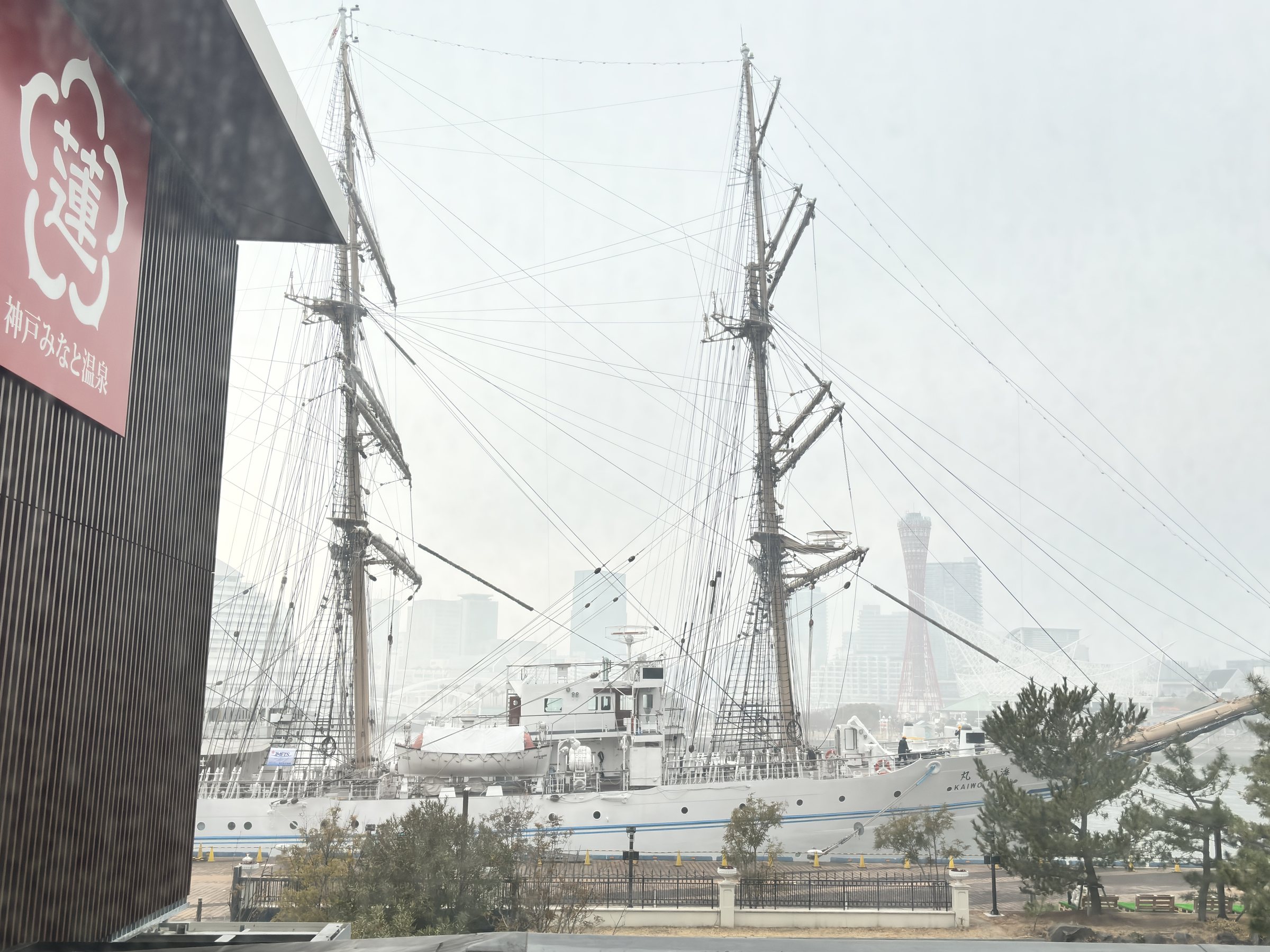
The cleaning throughout the building was immaculate, and every member of staff we met greeted us pleasantly. For a ryokan this large, the number of places kept entirely free of dust genuinely impressed us.
Dinner: a harbor buffet
Dinner is a buffet, and choosing it became a little journey of its own, pushing a handy trolley in search of things to eat. Under bright, beautifully adjusted lighting, the spread was what you would hope for in a port: Kobe specialities, sashimi, sushi and grilled fish, along with soups and roast beef. The centerpiece was a sukiyaki hotpot of Kobe beef, which added a real sense of excitement.
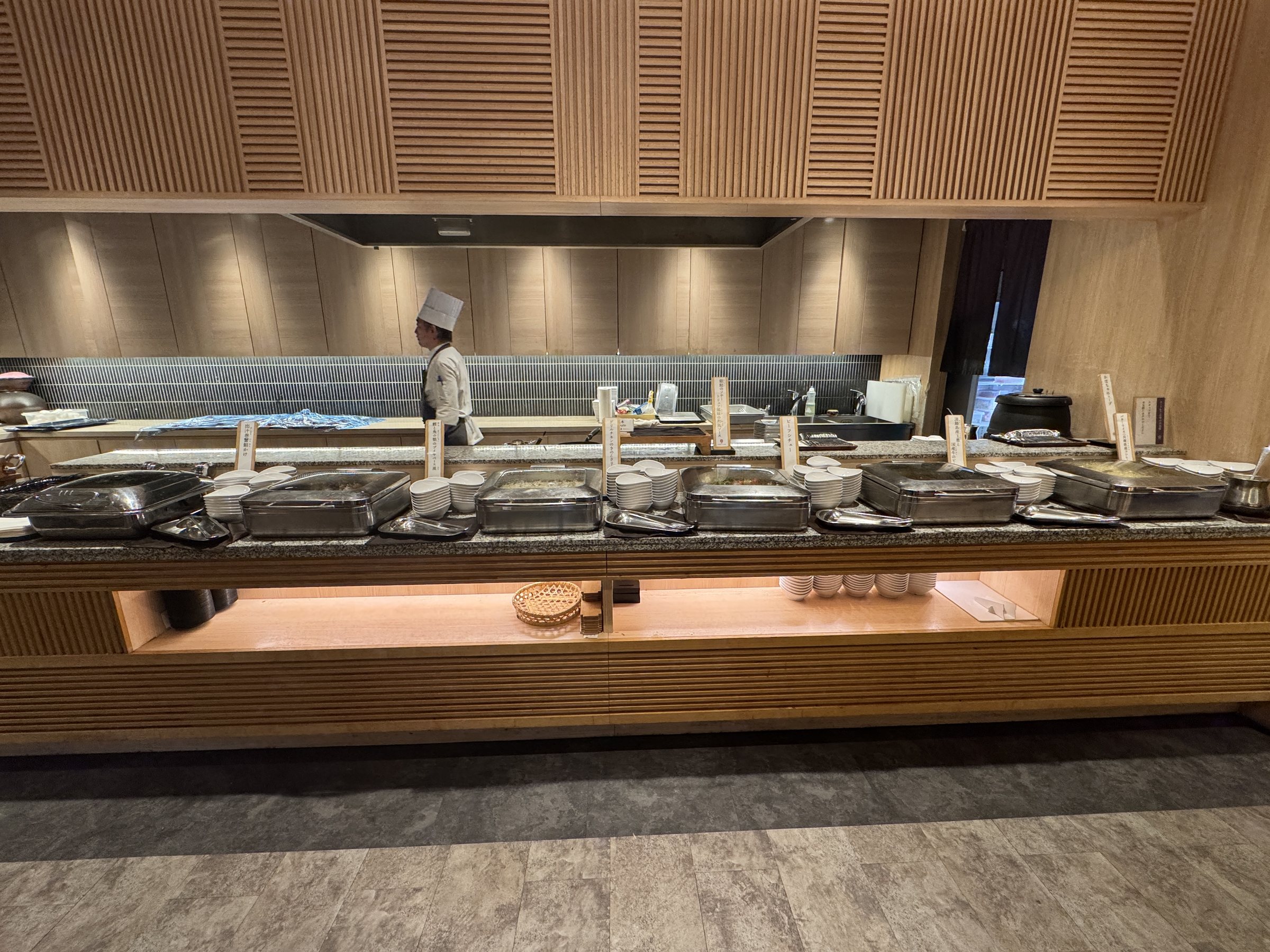
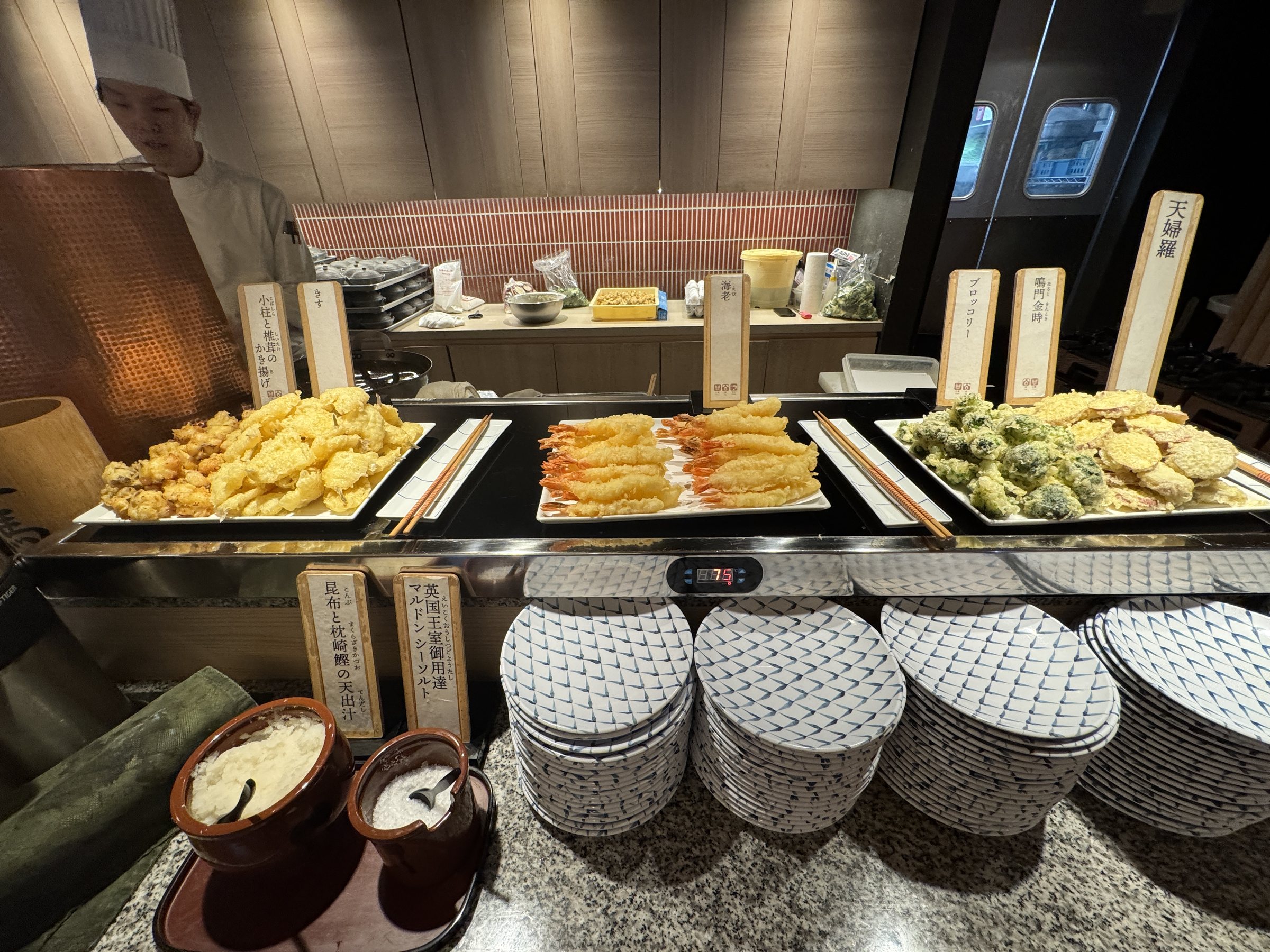
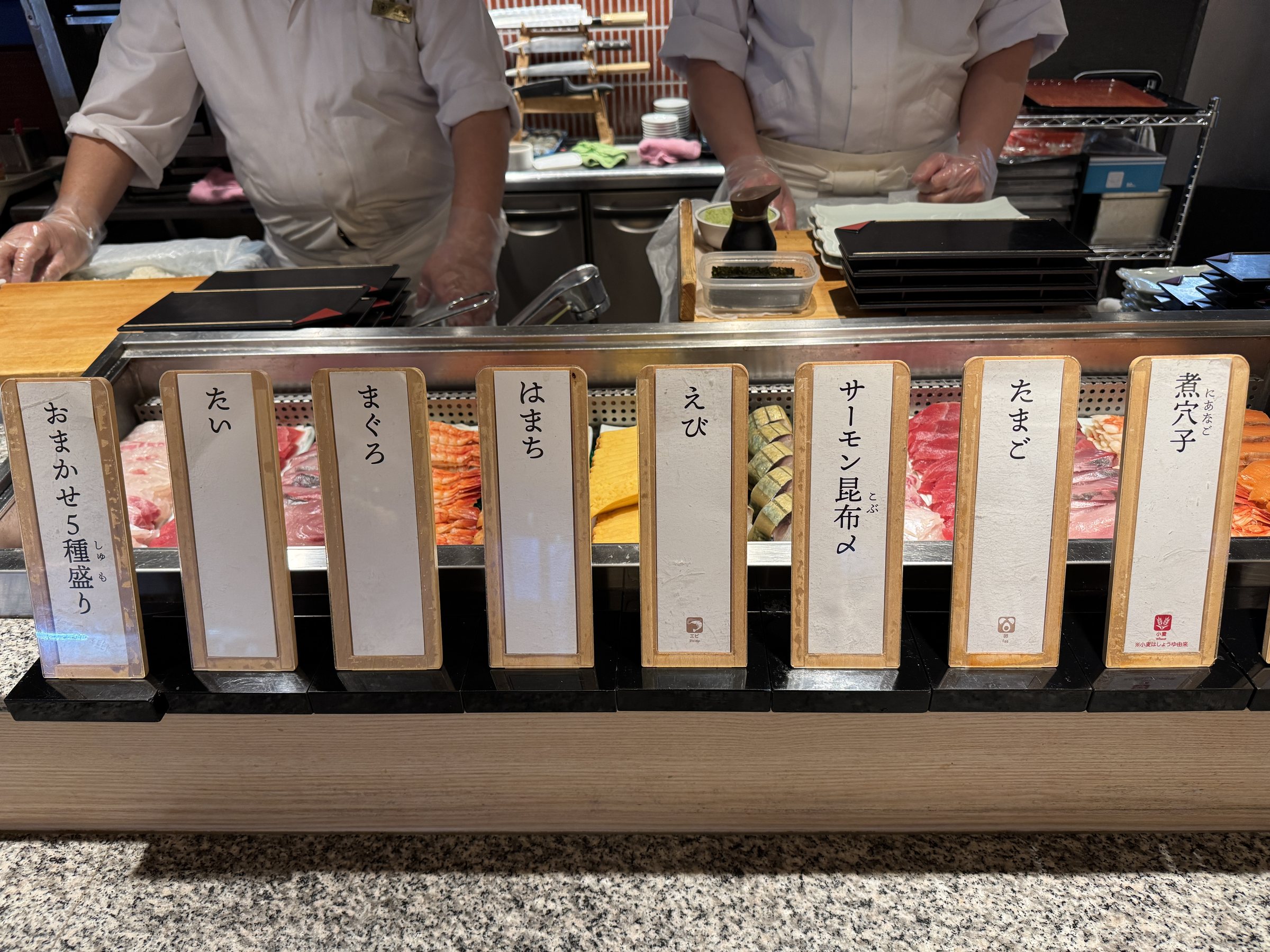
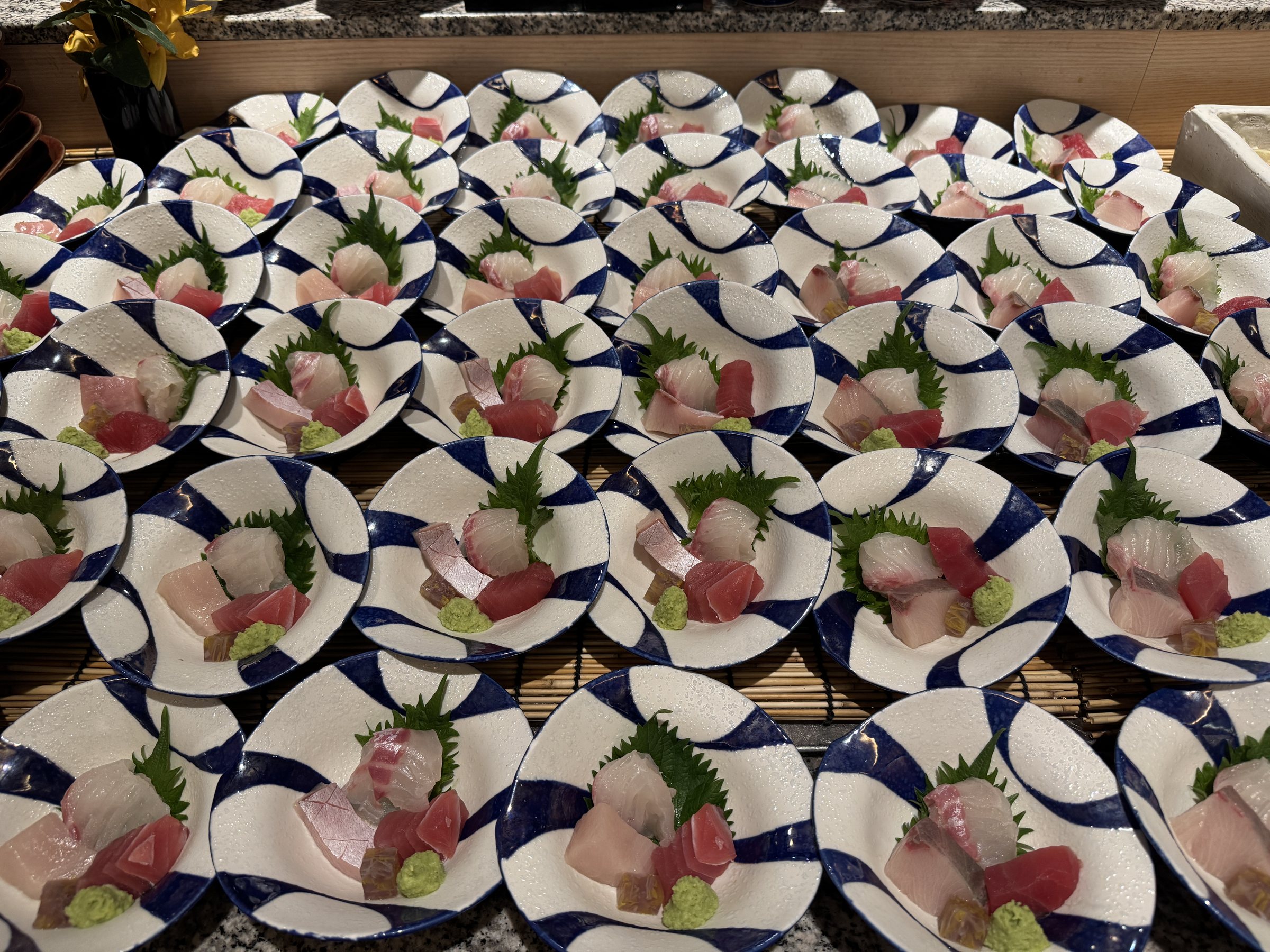
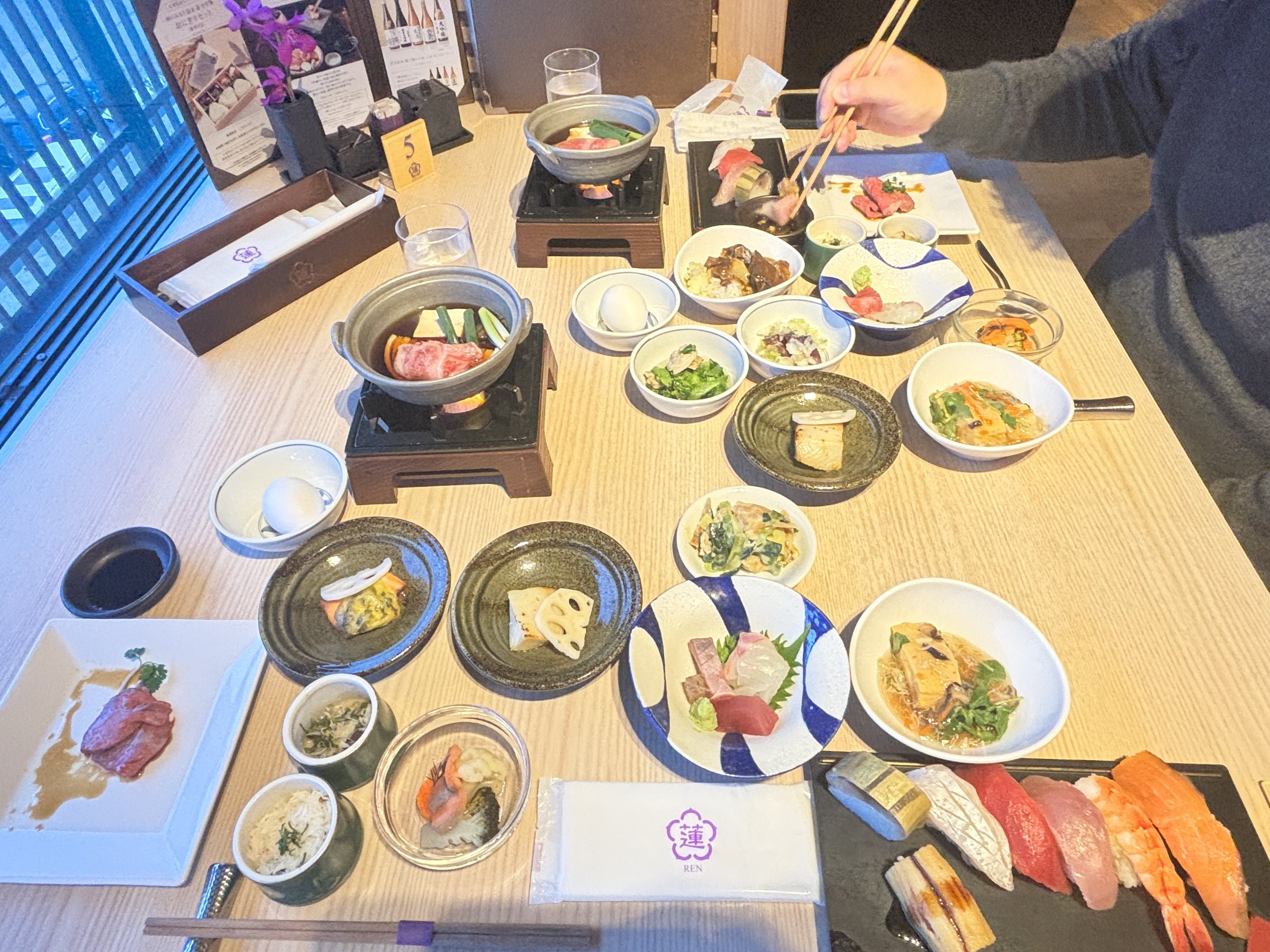
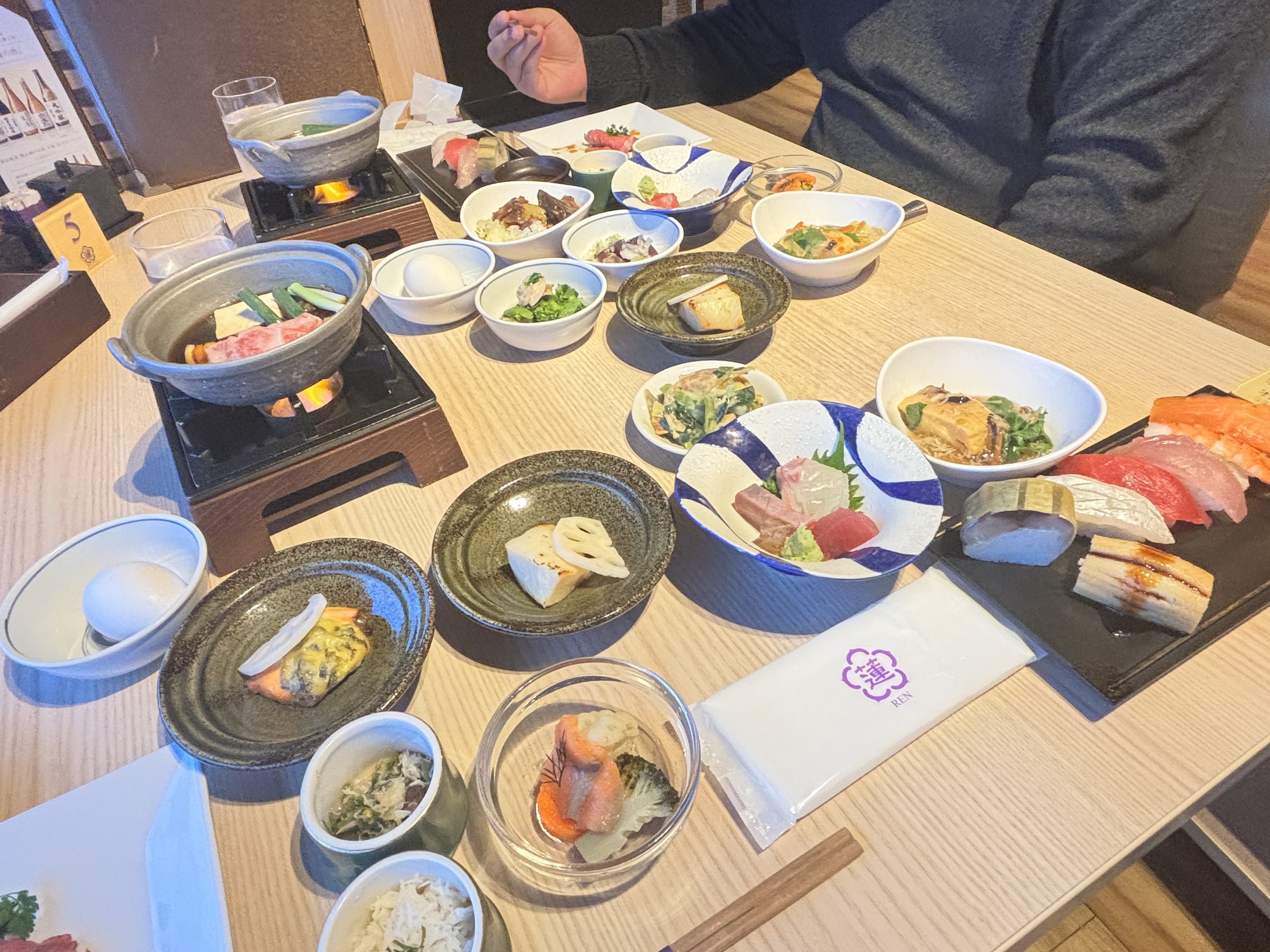
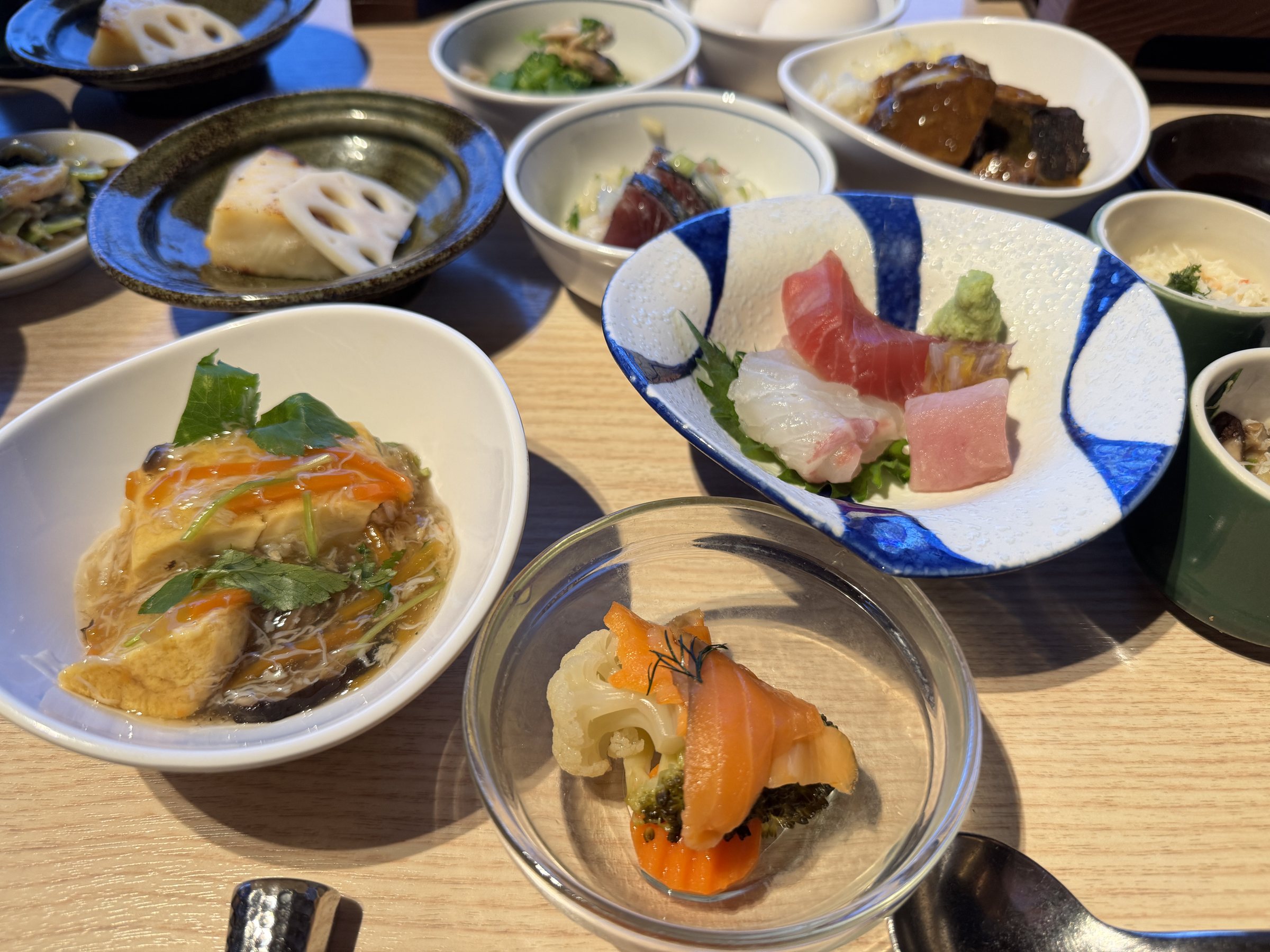
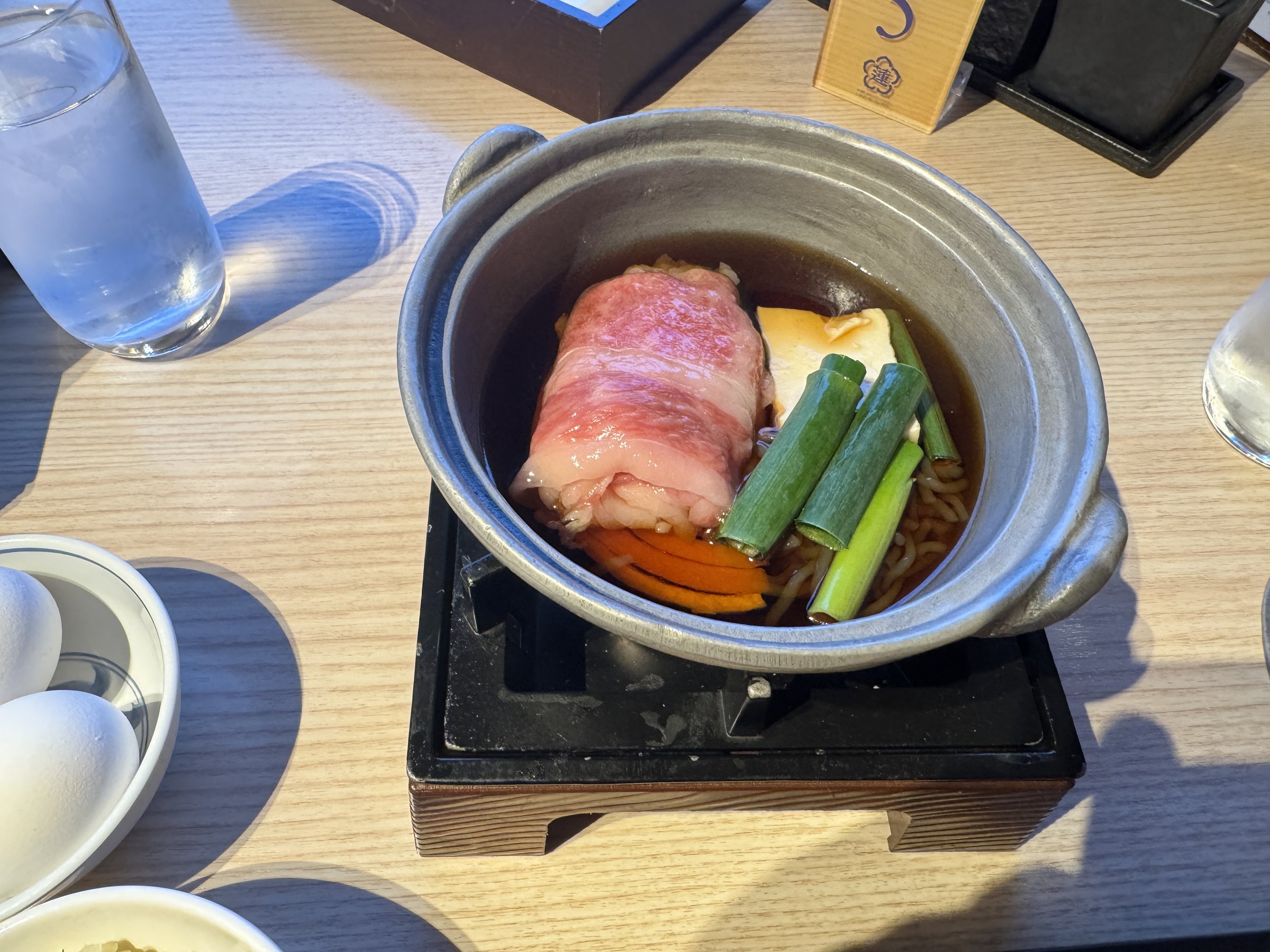
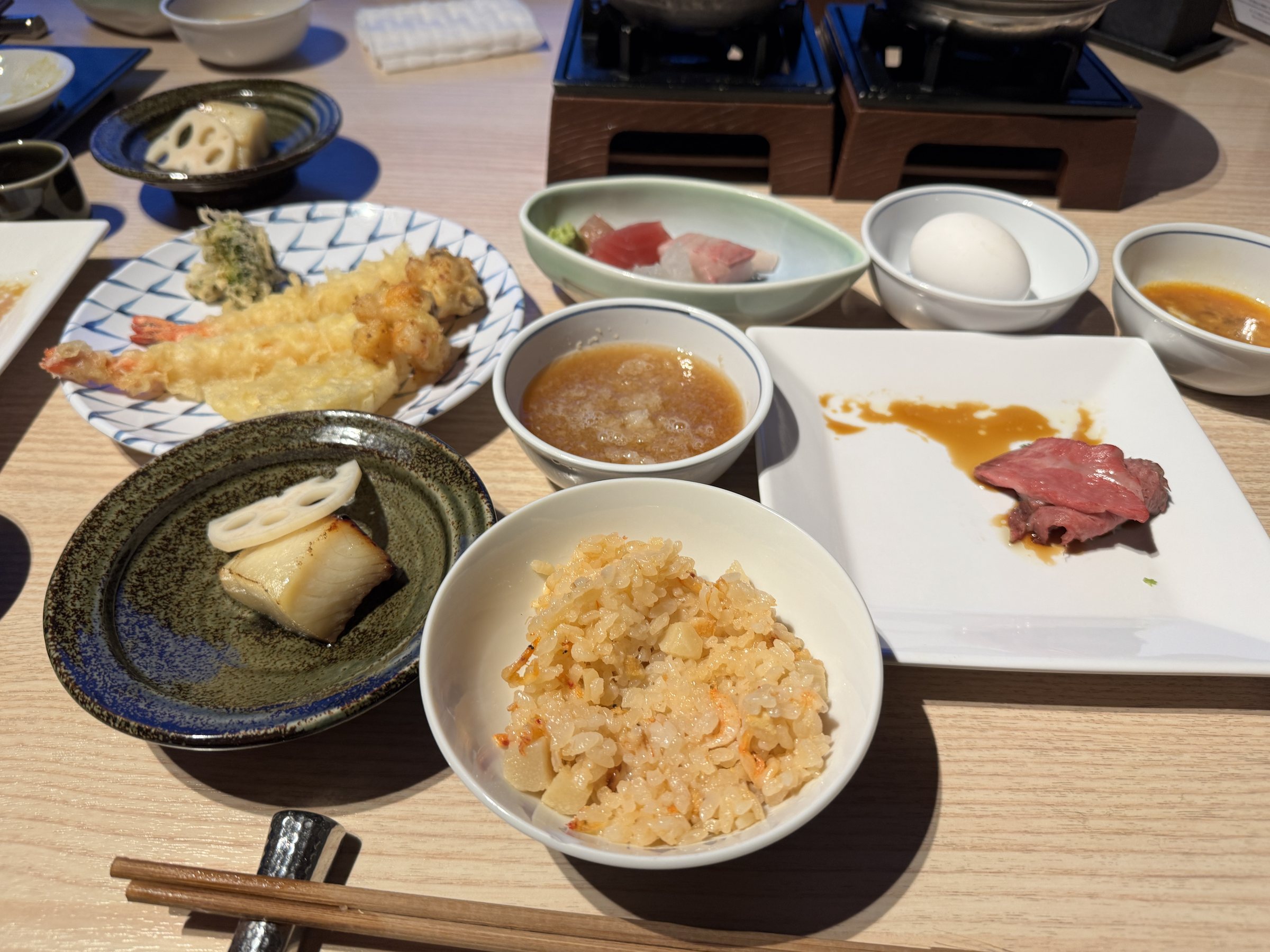
The best thing of all was the saikyō-yaki, fish marinated in sweet white miso and carefully grilled. The clearest sign of care in the kitchen was how the fish was cut: the overnight-dried fish and the saikyō-marinated fish had been portioned into bite-sized pieces that held together, with beautifully clean edges. Every dish was of a high standard for a buffet. The seasoning leaned toward the healthy, with salt kept in check and well balanced, and the use of sweetness showed the skill you would expect in the Kansai region.
The dining room was spacious, so even with many guests it never felt crowded. Some guests were enjoying a plan with free-flowing drinks (at extra cost). The diners we saw were mostly older, and the sight of retired guests with time on their hands, taking their time over a beer and laughing together, stayed with us.
A bar above the harbor
On the way back from dinner, an announcement mentioned a bar, and we could not resist stopping in. It is on the top floor, with a night view, and we took our seats at once.
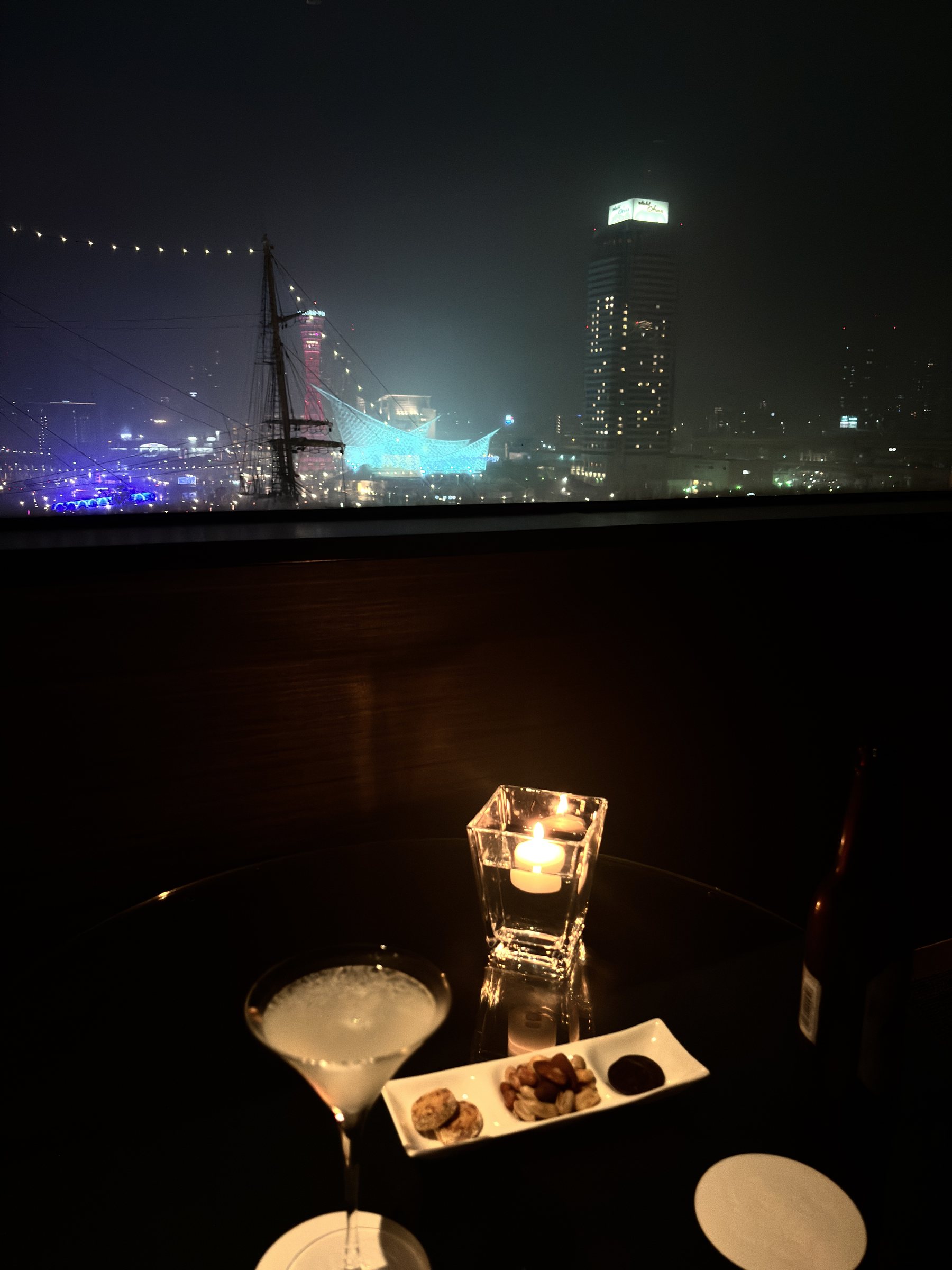
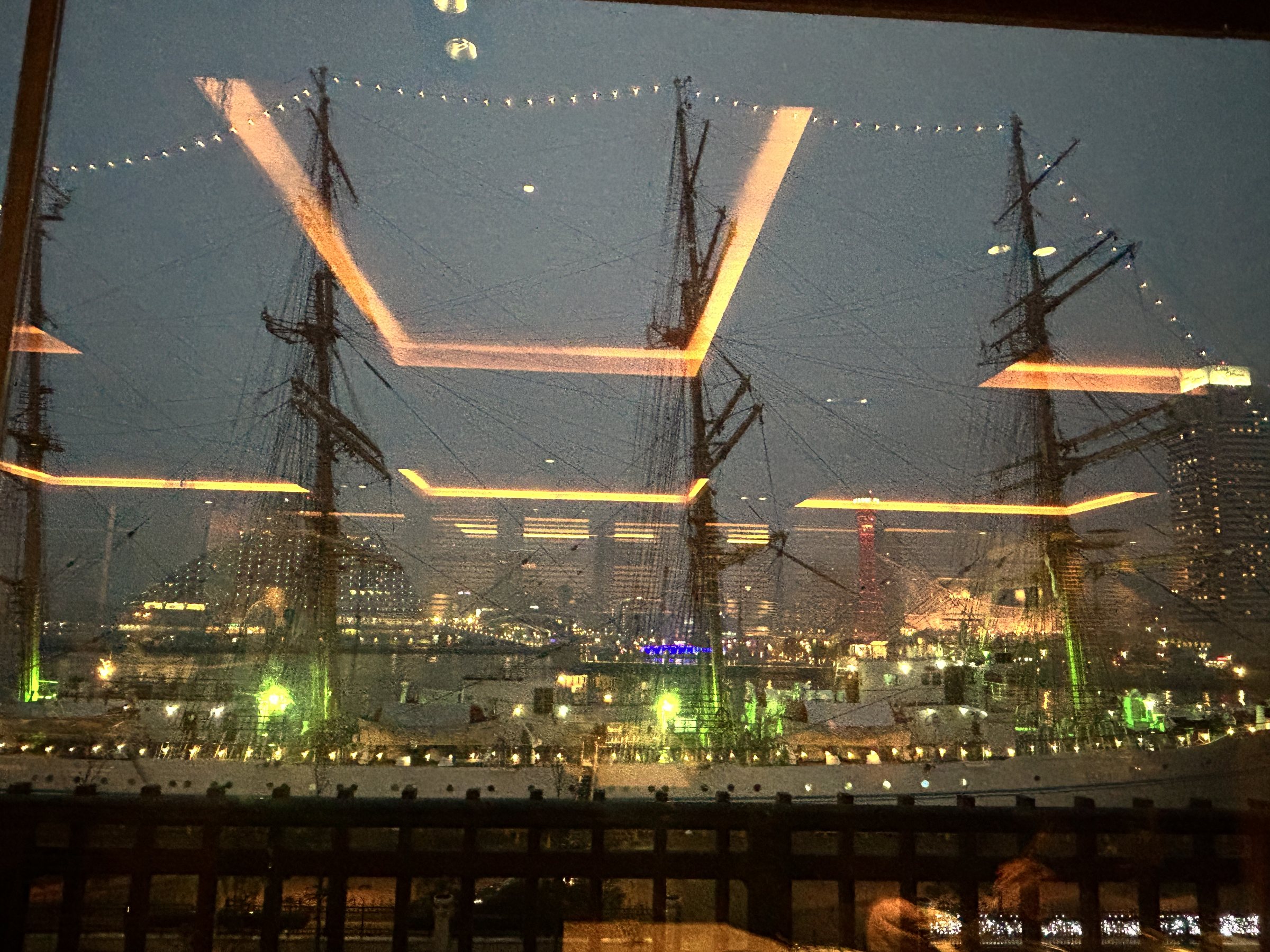
The glittering night view and the sound of a cocktail shaker being worked in earnest make for an experience in a class of its own for a hot-spring facility. The bar seems to have been placed precisely so that the city lights and the illuminated ship meet in its windows. Kobe’s skyline shifted through one color after another, and we never tired of it. Sipping an original cocktail with a night view to rival Yokohama’s, we could feel the prosperity of this port city.
The baths at night
Back in our room, we took the indulgence to its peak with another soak in the in-room bath.
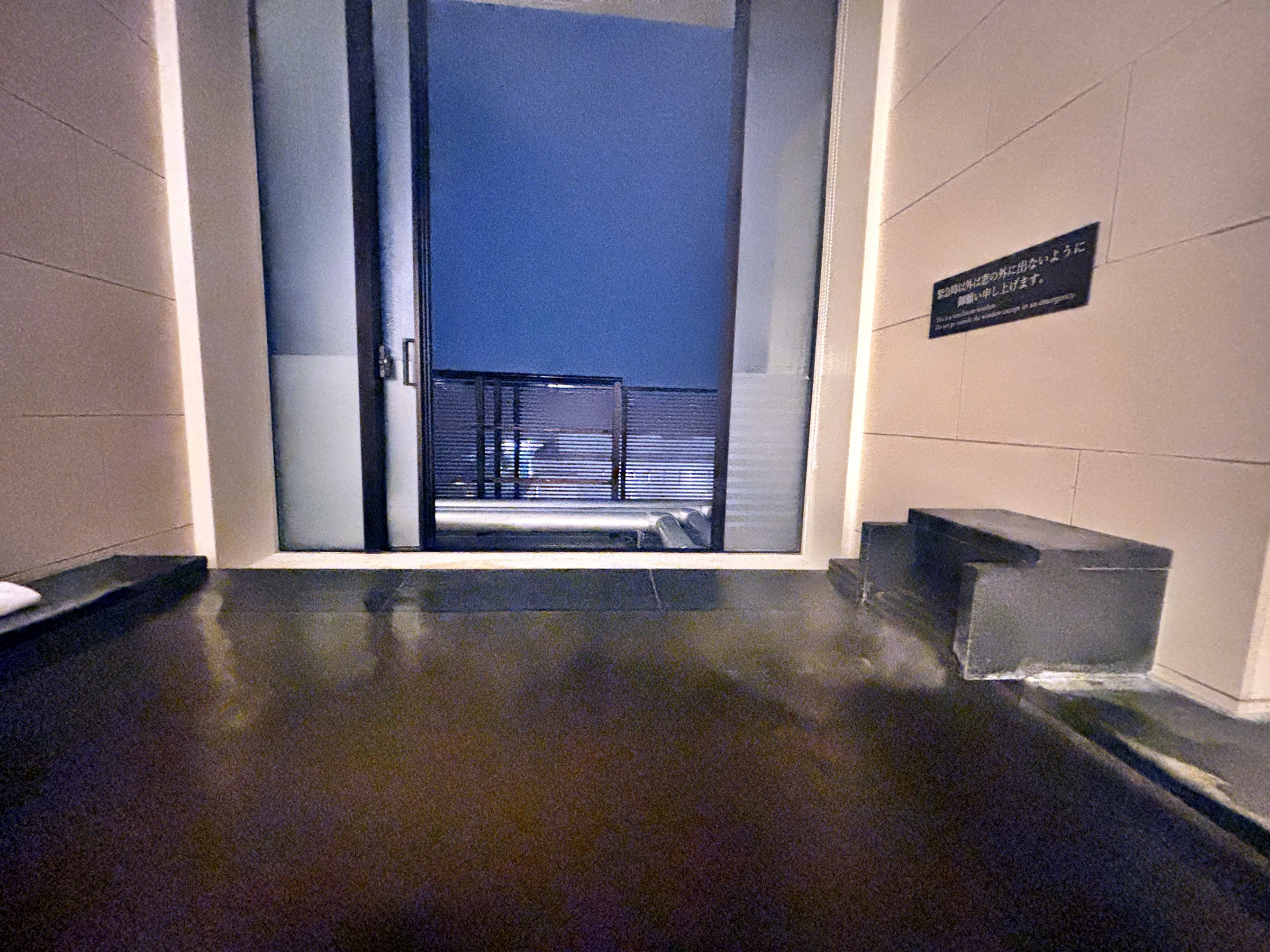
The large baths and open-air baths are irresistible at night, too. The atmosphere of the whole place is so high-end that you half believe you are in a hotel, and then, suddenly, rock and hinoki (Japanese cypress) baths of source-fed hot spring water appear. It was a delightful contrast that our minds could barely keep up with.
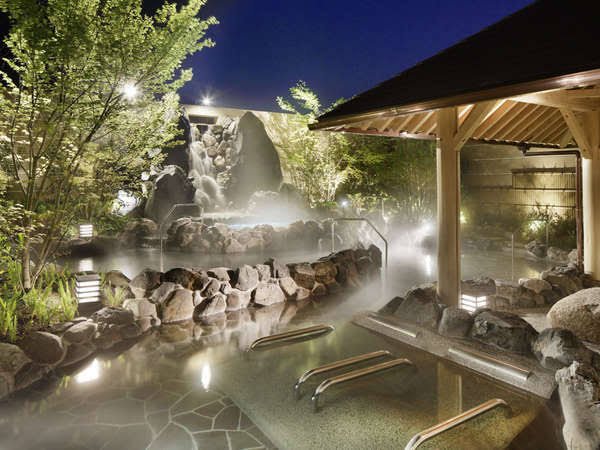
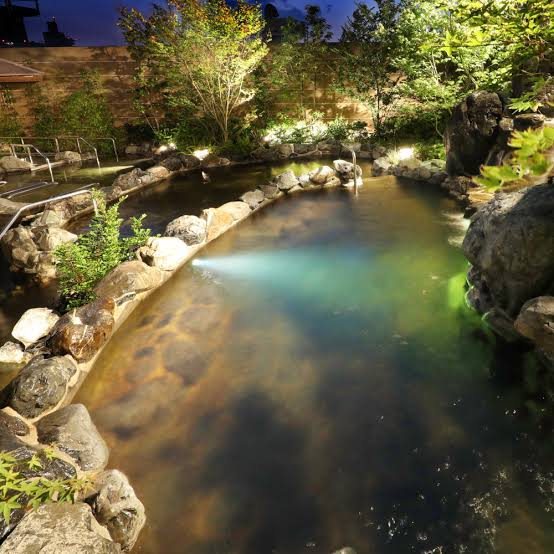
Even beyond what we managed to try, there is an almost overwhelming list of services: a bedrock bath, a lava-stone bath, a mist sauna, a gym, hot yoga, a massage room, a head spa and more.
Breakfast
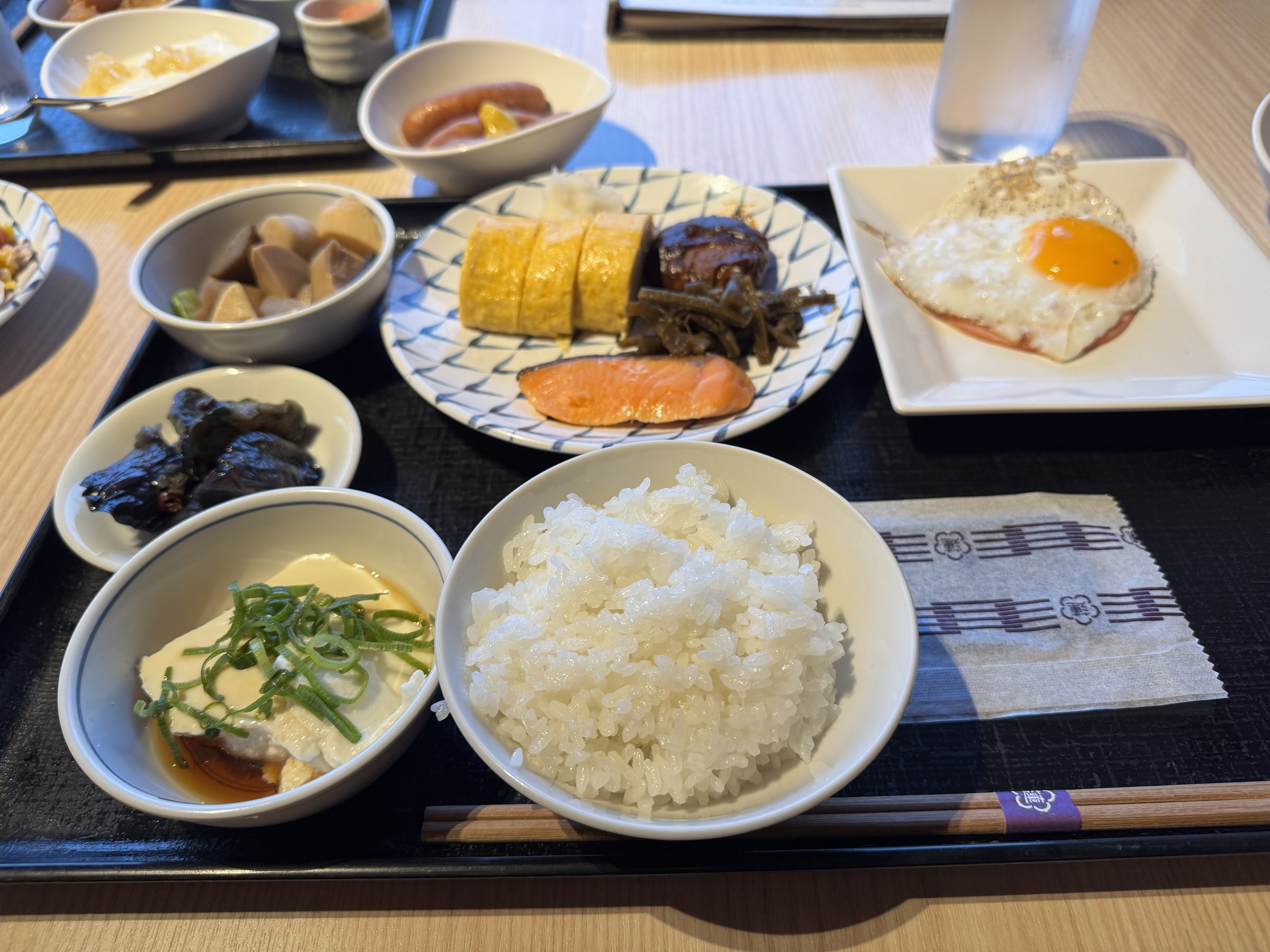
Breakfast was a buffet like dinner, with both Japanese and Western dishes to choose from.
Final thoughts
There are clear reasons why Ren is so highly rated overall. It is far from cheap, but as an occasional treat it is ideal.
Beyond the ryokan: lunch in town
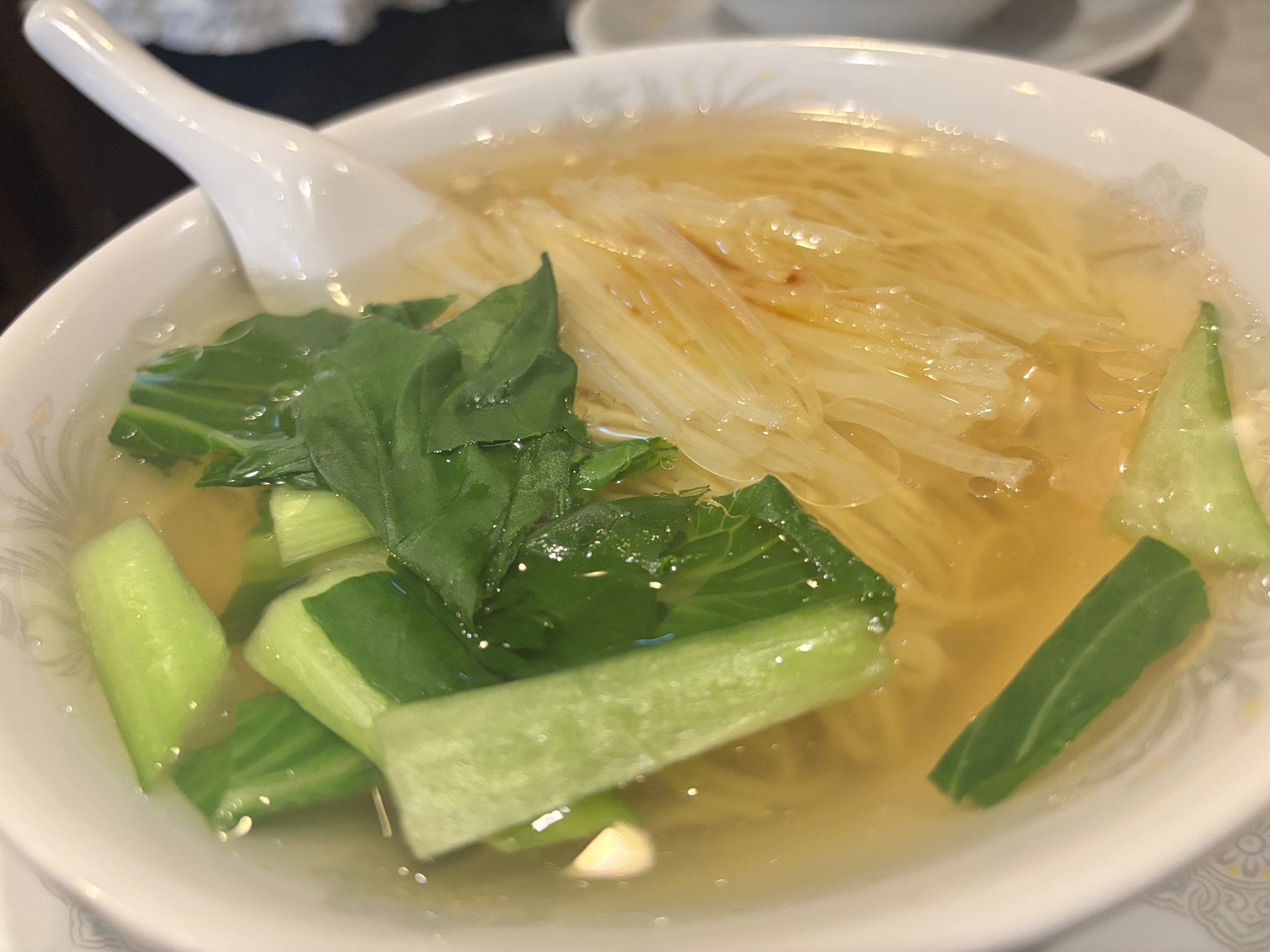
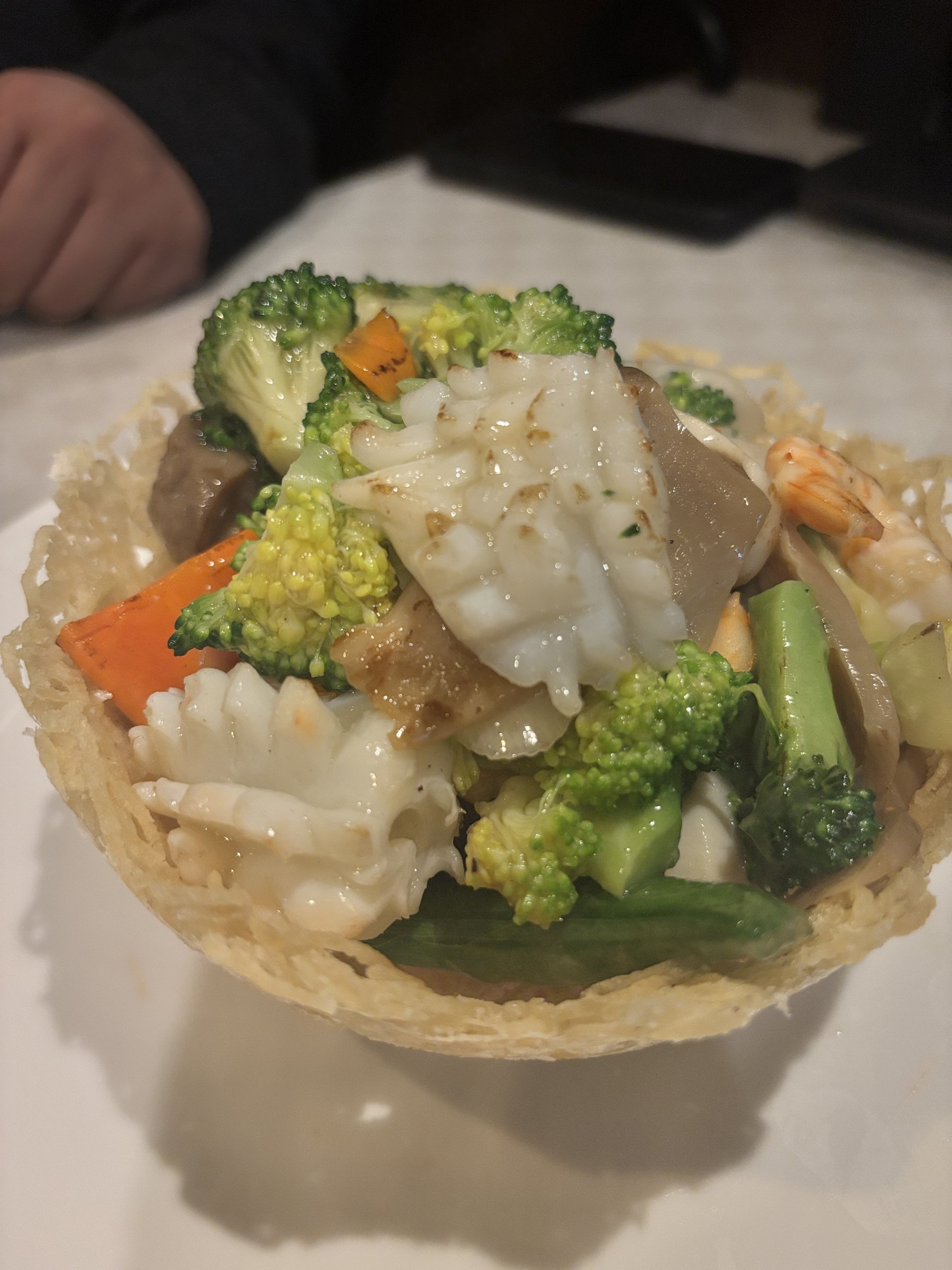
Kobe’s neighborhood Chinese restaurants need no introduction and have fans all over Japan. With so many excellent places crowded together, we chose Juntoku for lunch and ordered its signature spring-onion noodle soup and a Chinese stir-fry.
The people of Kobe as a whole are full of life. The city has an atmosphere that brings back a whiff of the Shōwa era, and the laughter of those who like to enjoy themselves on a grand scale is full of energy. At the same time, it is a city where you can enjoy yourself in a more refined way, too.
This review reflects a stay in March 2025; please confirm current details directly with Kobe Minato Onsen Ren before visiting.