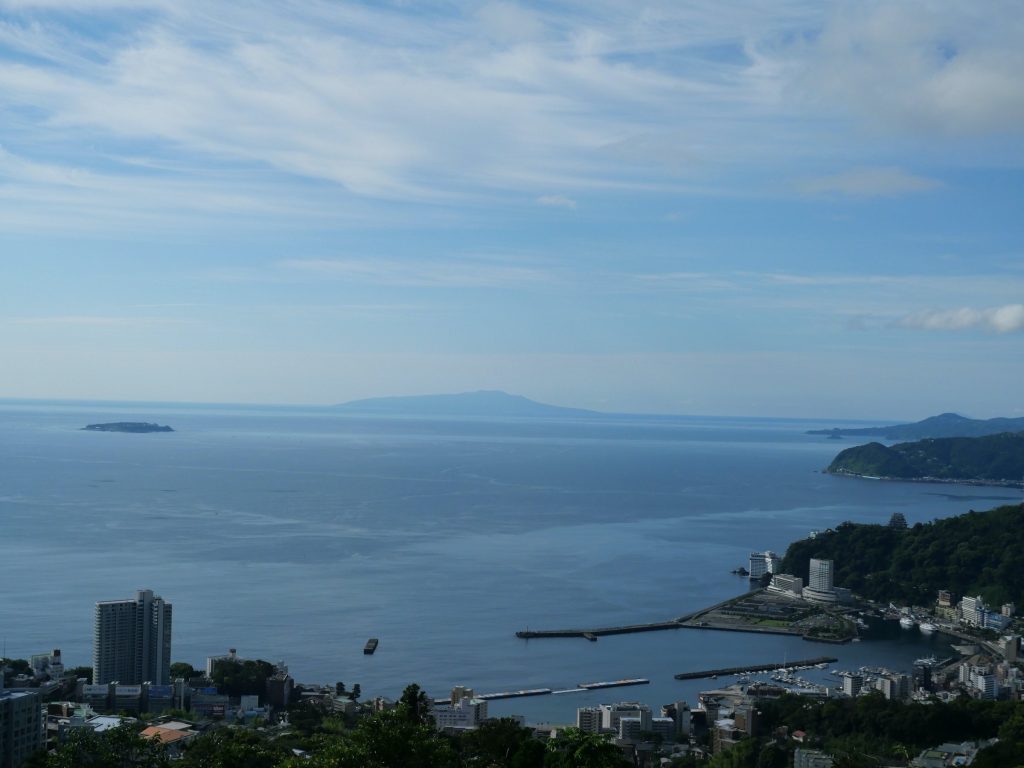
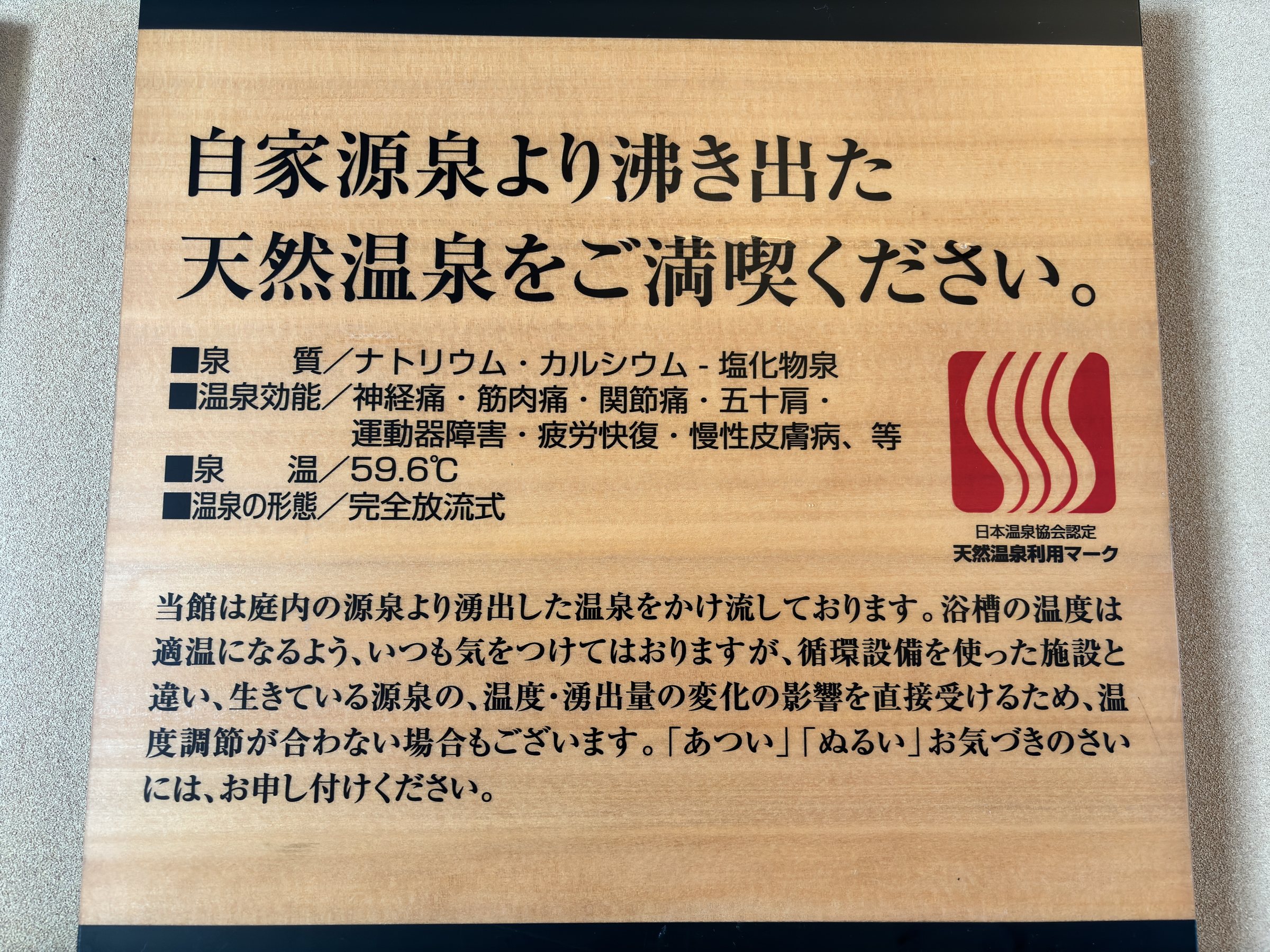
Taiseikan calls itself a gensen ryokan, one that draws its hot spring water from its own source, and it stands right on the shore at Ajiro, at the southern end of Atami. We arrived on a bright July day.
A lobby with a shop and a hearth
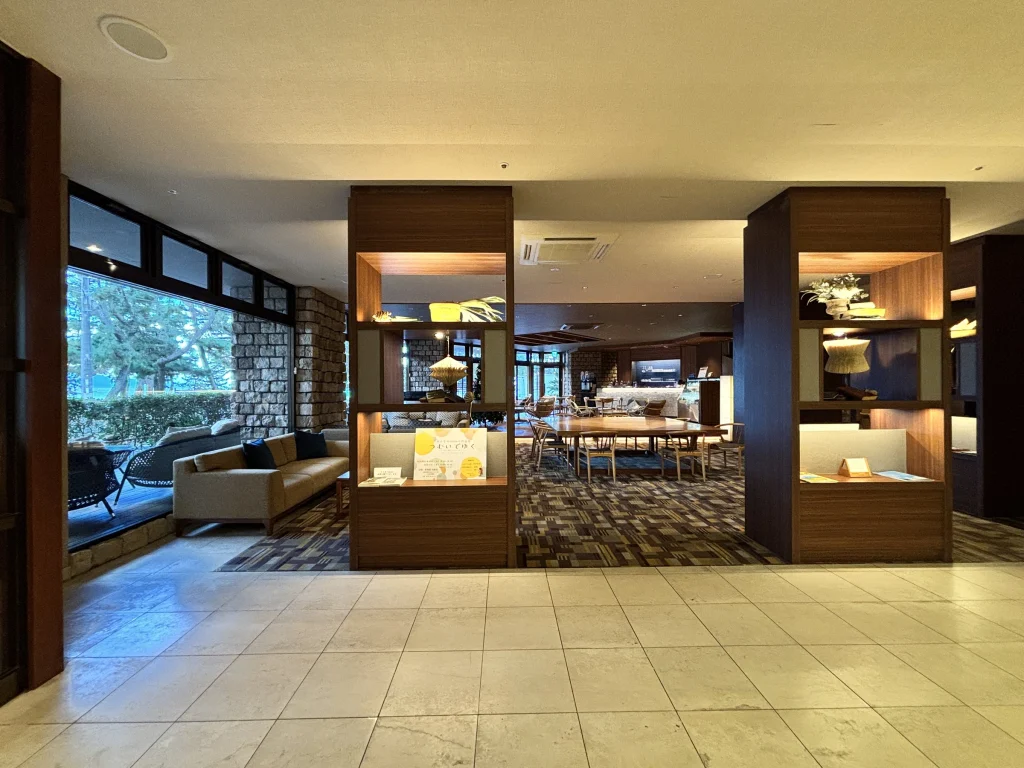
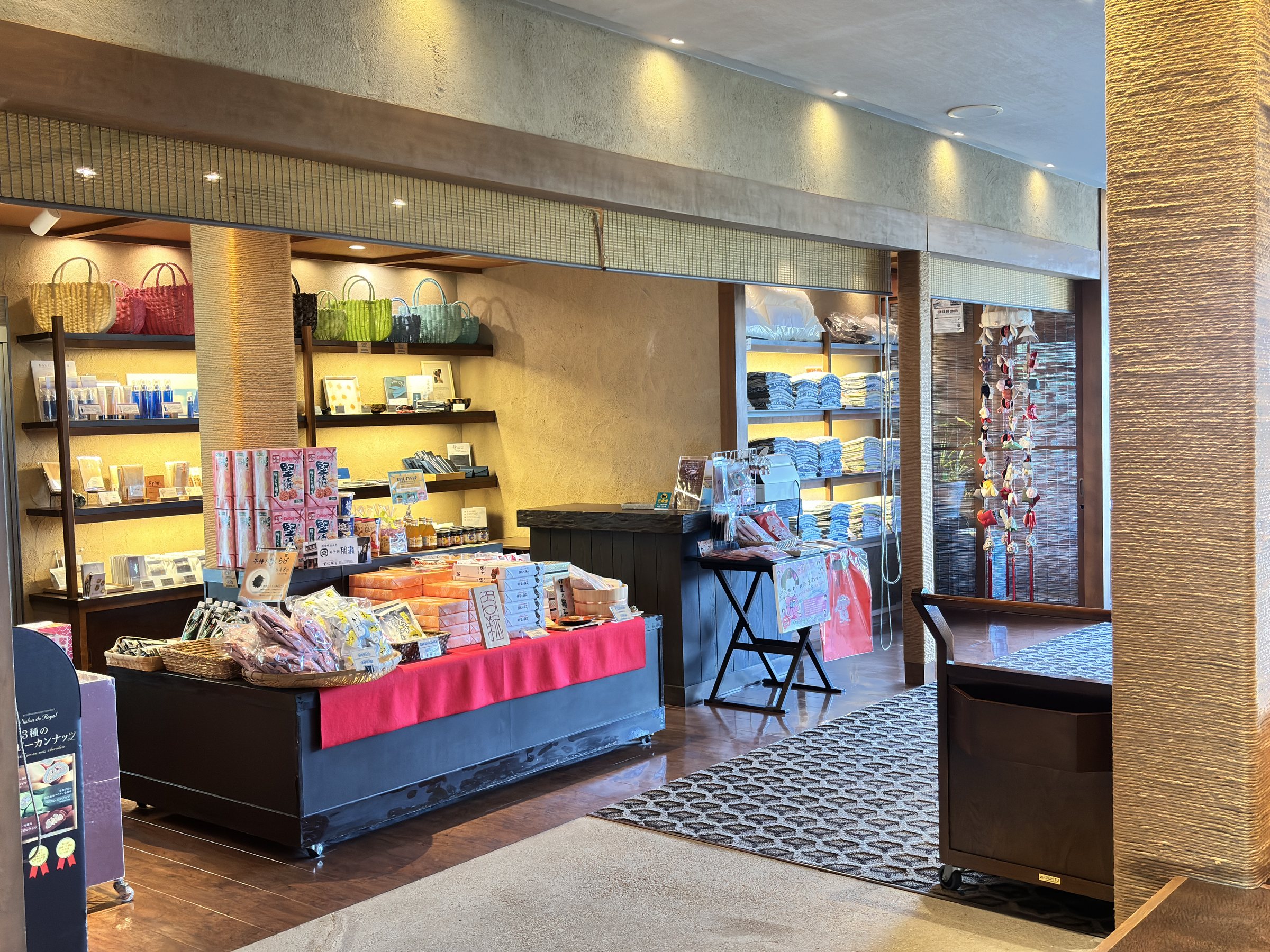
Right beside the lobby is a gift shop, its shelves neatly stocked with local specialities, sweets and cheerful, colorful basket bags. Festive red cloths and softly lit display shelves make it a space that is fun simply to look at, at once lively and elegant: the kind of place where you want to take your time choosing a souvenir or a present for someone at home.
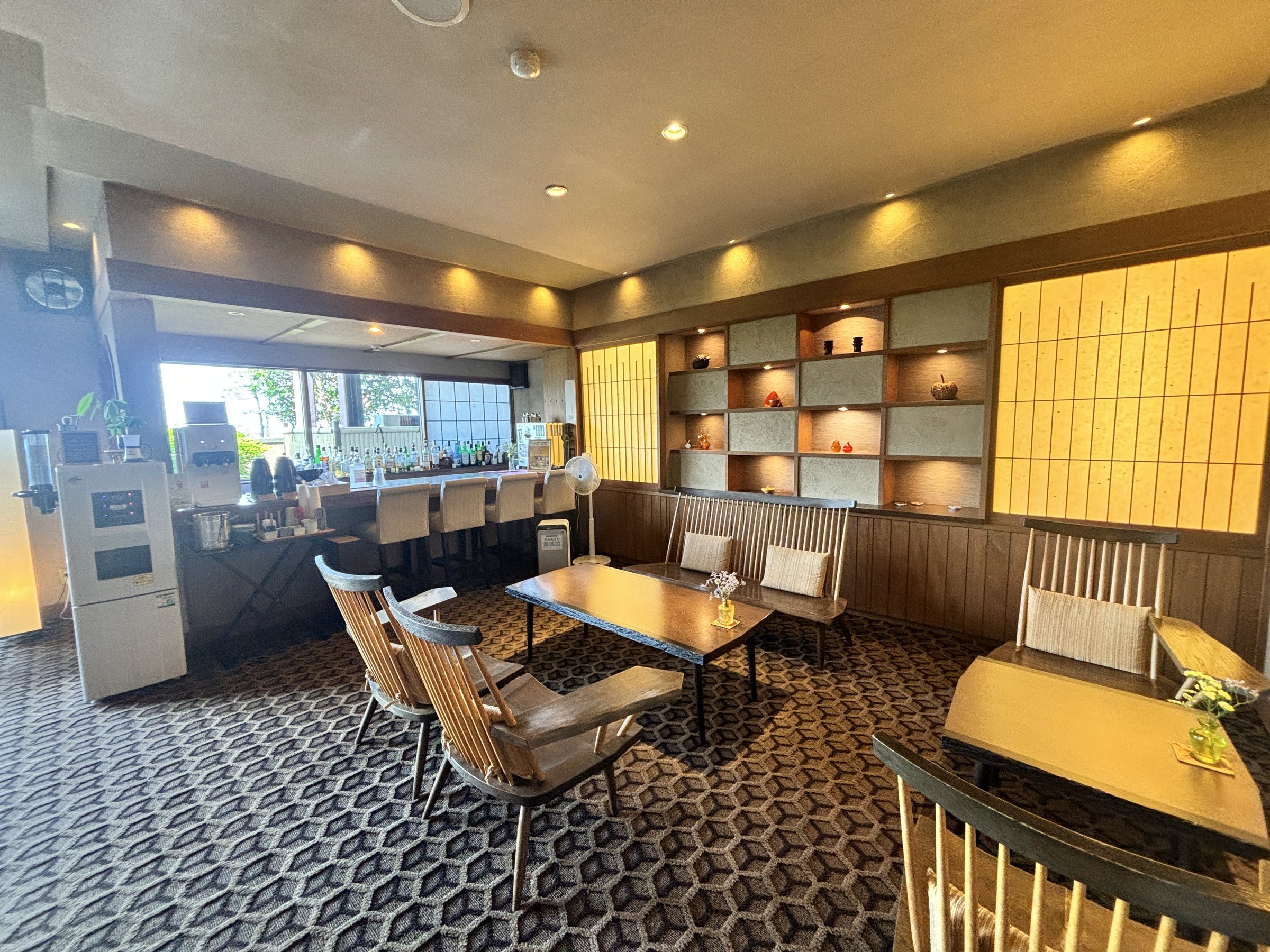
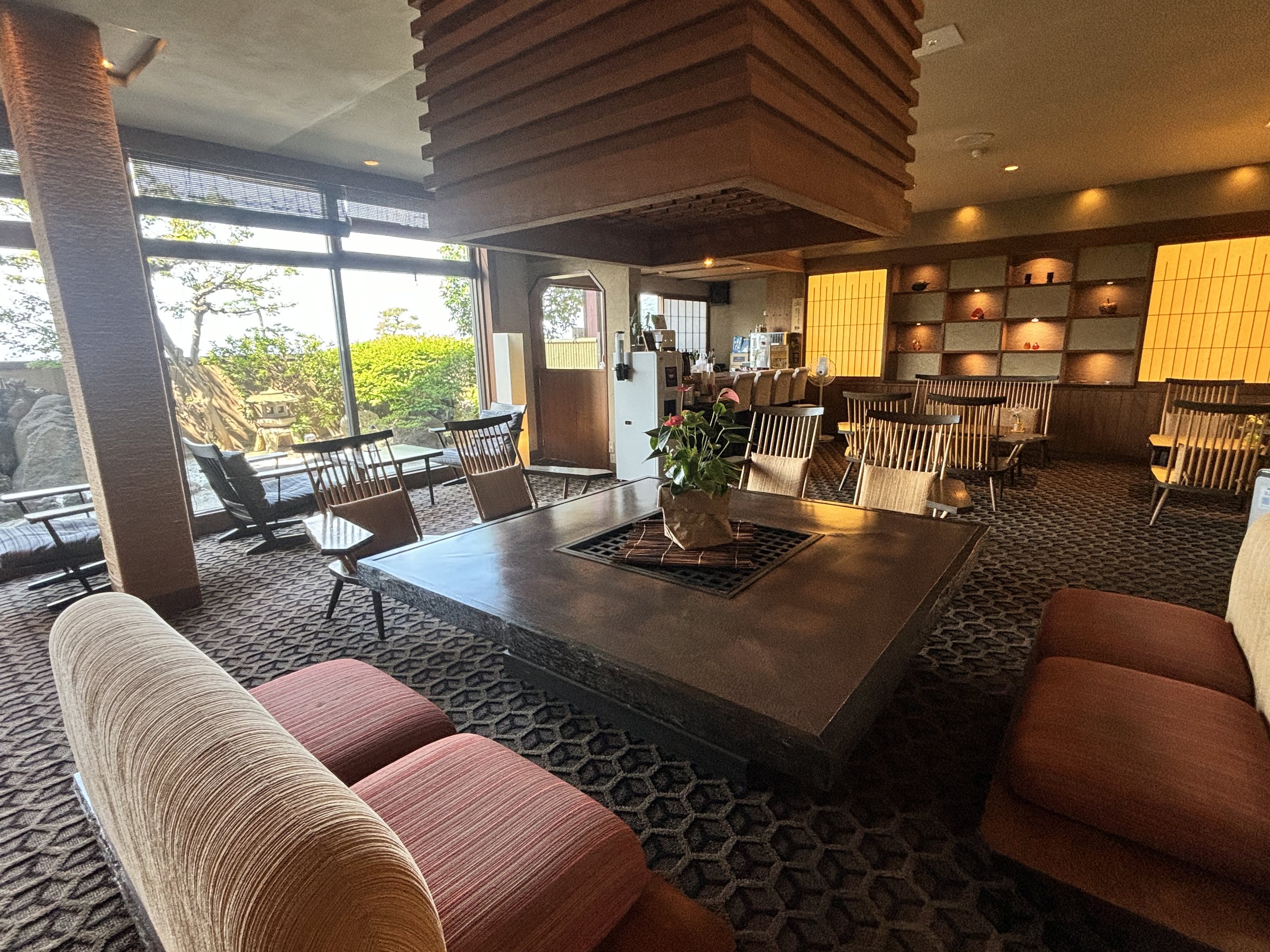
In one corner of the lobby is a lounge with a smart bar counter and well-made wooden chairs that are warm to the touch. Soft light through the shoji paper screens and a chic display shelf bring out the Japanese character of the room, and there was a quiet, luxurious air about it, like a hideaway for grown-ups.
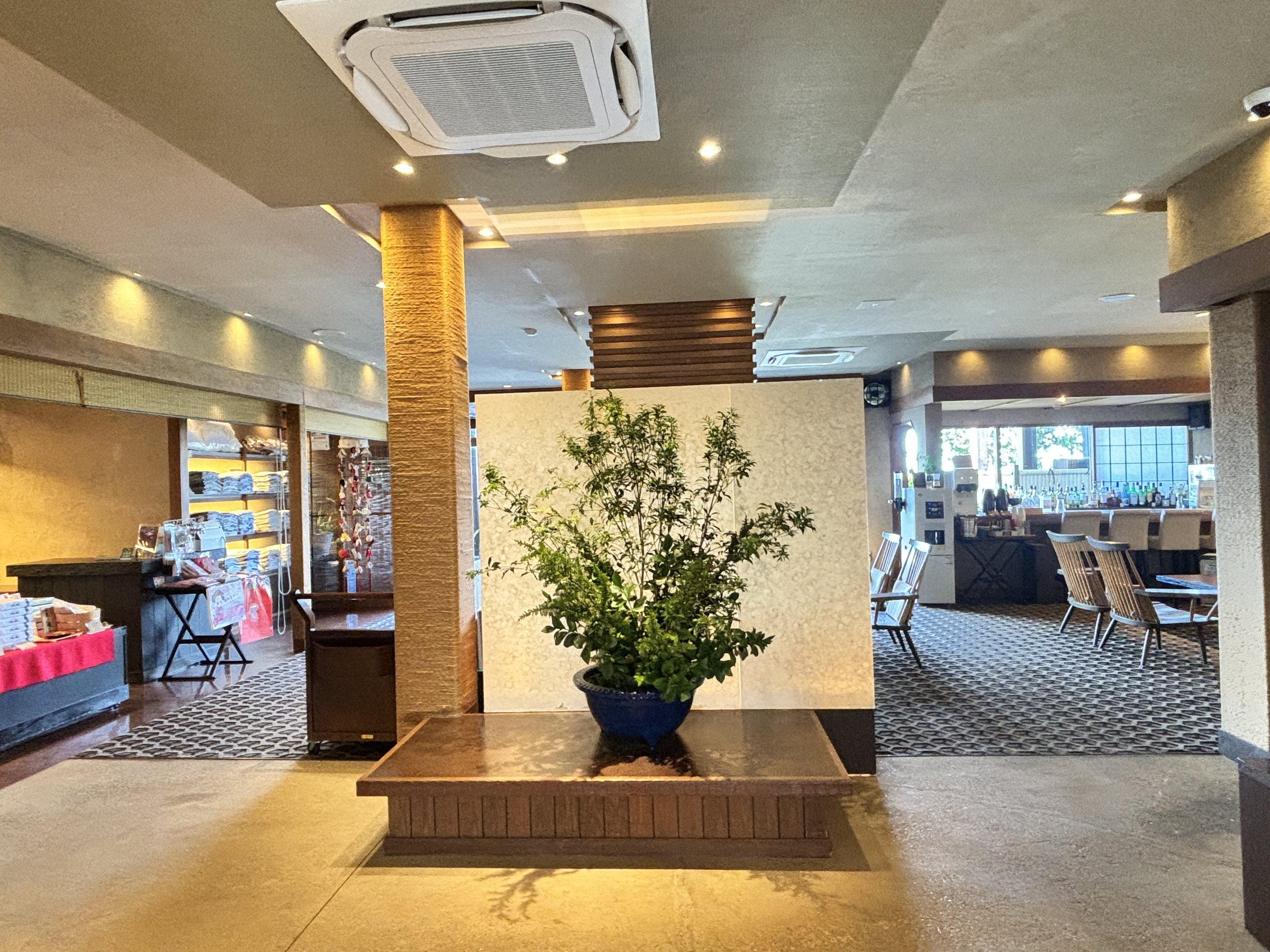
On the way further inside, a bold arrangement of fresh greenery stands out against a clean white wall, set on a heavy wooden plinth that makes the most of the grain.
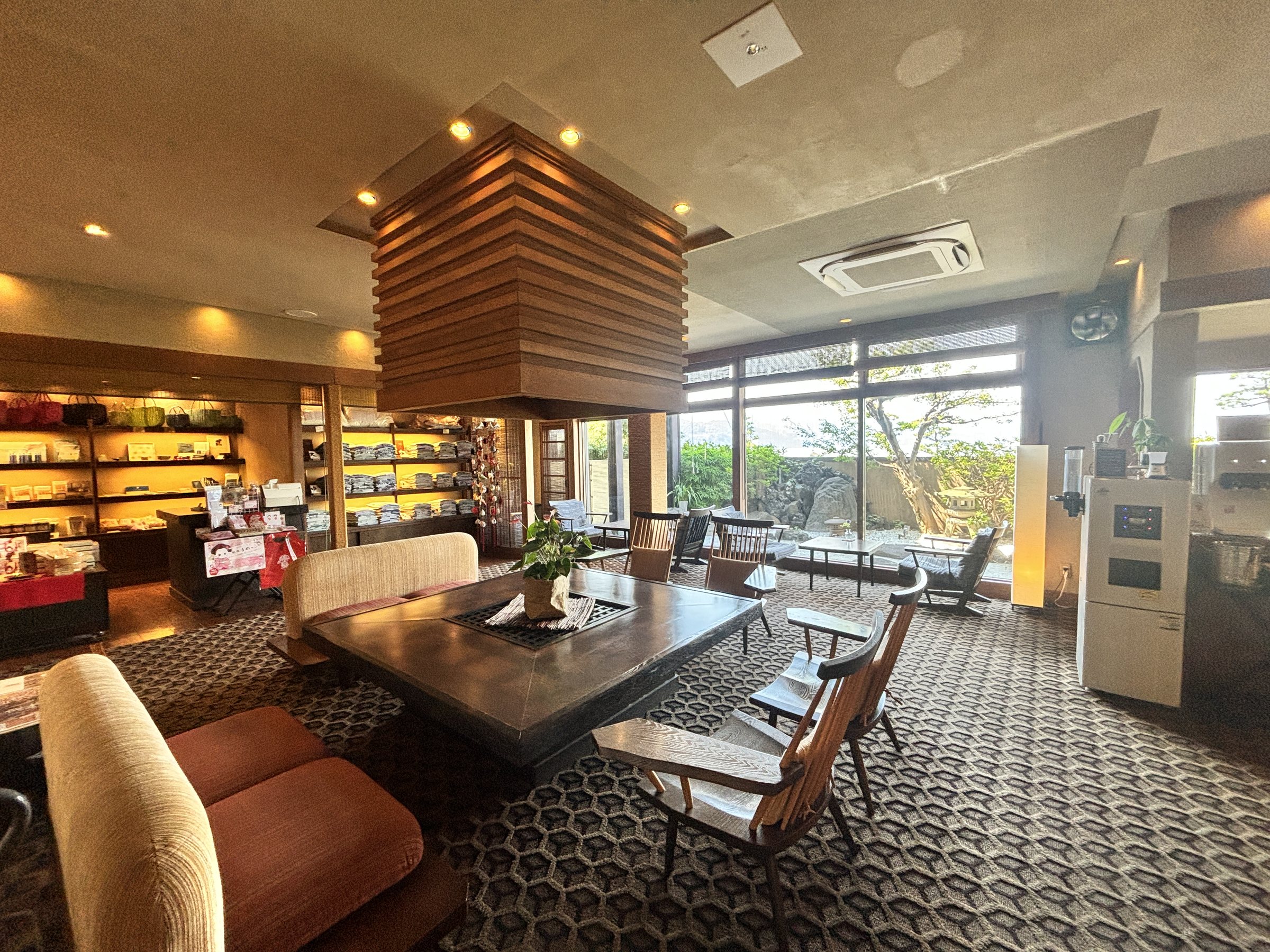
At the center of the lounge is an impressive irori, a sunken hearth, surrounded by low sofas that feel like the best seats in the house, as relaxing as being at home. The interplay of natural light from the windows and the soft indirect lighting inside is lovely, and gives the space a real sense of depth.
The room: the sea in the window
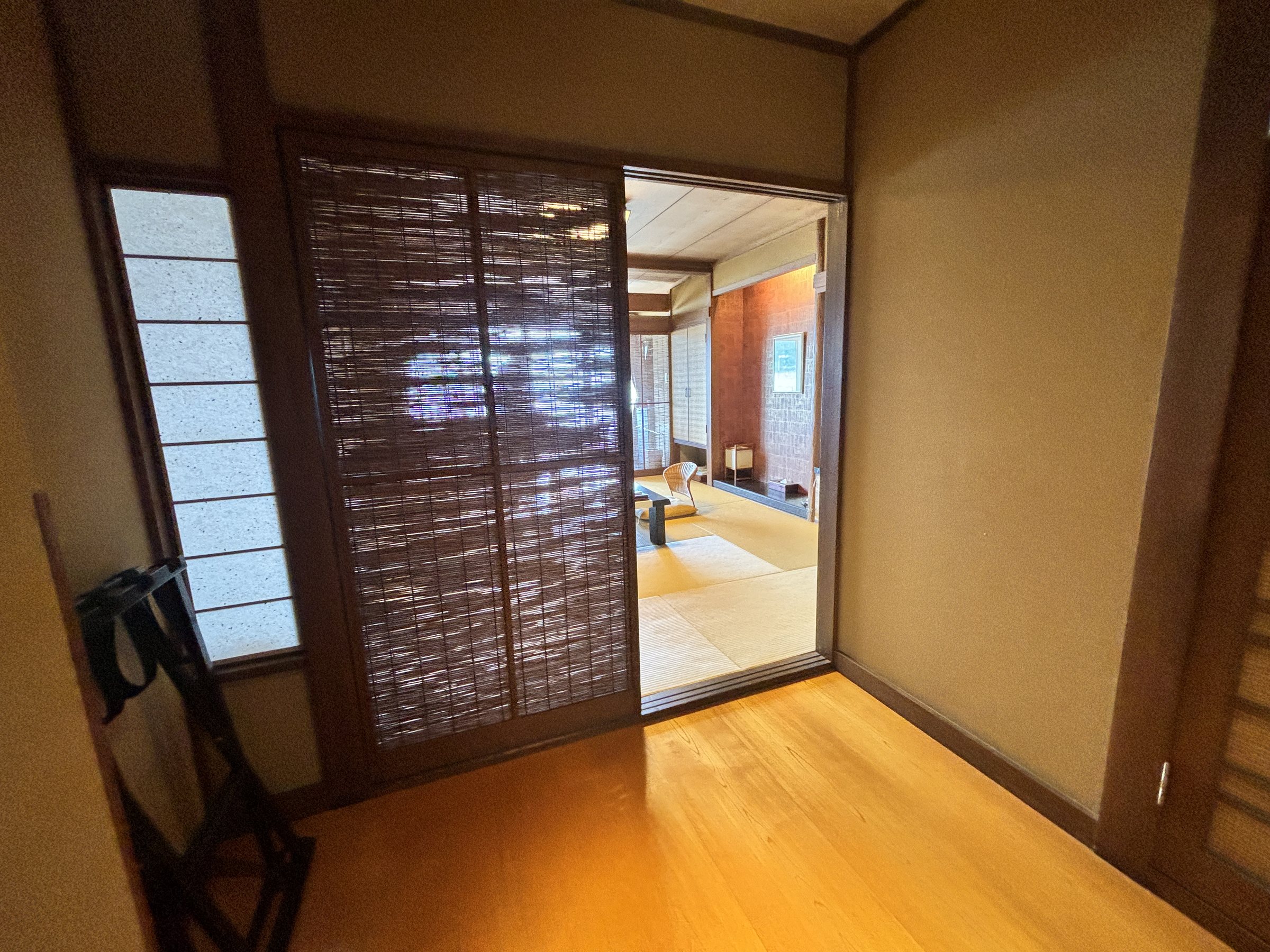
Sliding open the door to the room, we were greeted by warm solid-wood flooring and fine, reed-blind-style fittings. The approach leads from a calm, traditional entrance area through to the tatami room beyond, and it heightens the anticipation of the private time ahead. Quiet and Japanese in feeling, it gave us the reassuring sense of arriving back at a holiday home, with a good deal of privacy.
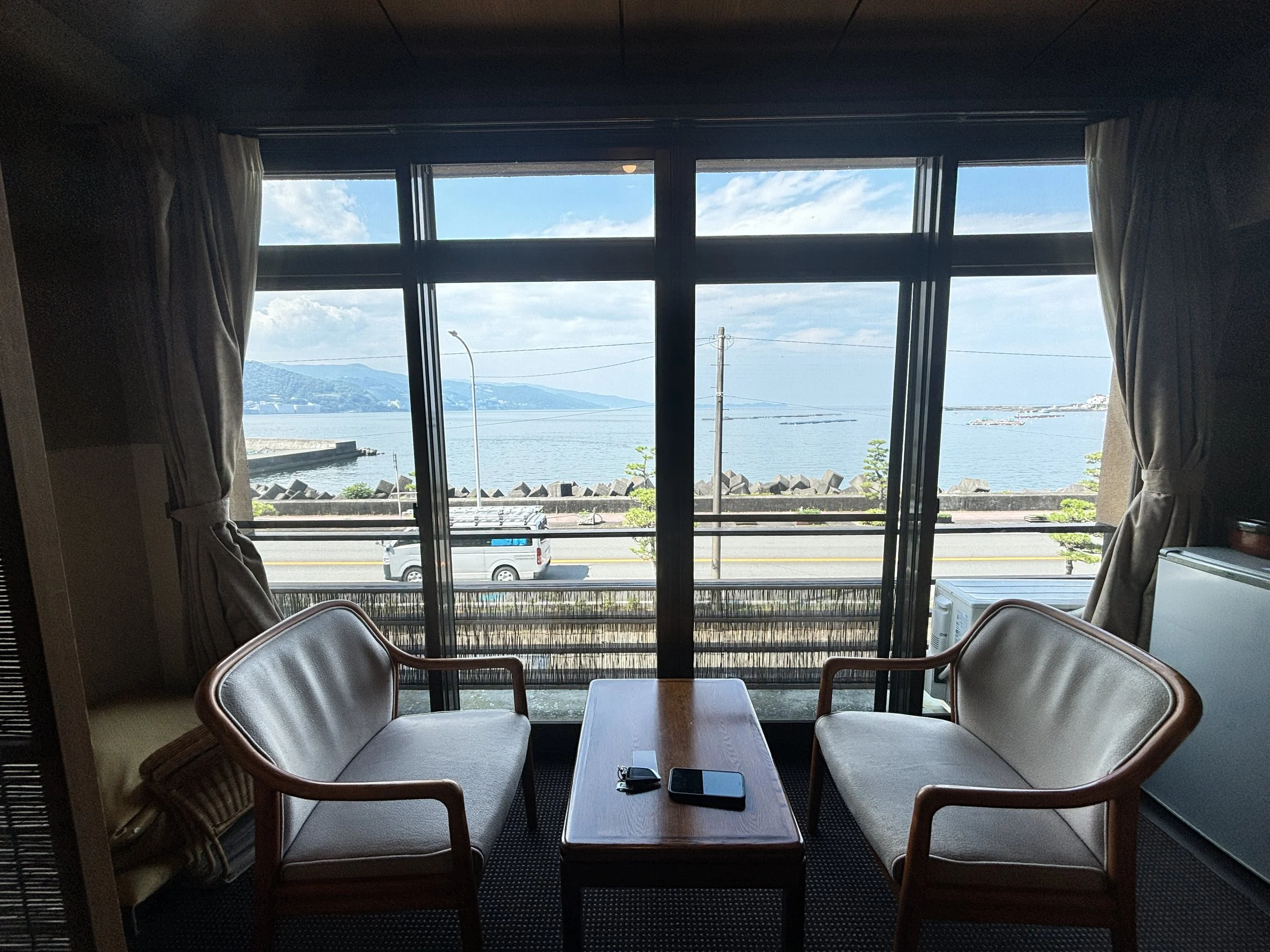
Standing at the room’s large window, we found an unbroken view of the sea spread out before us, and could not help exclaiming. The pair of comfortable low chairs and table by the window are the best seats from which to watch the sea change from moment to moment: blue sky, a calm horizon and the presence of the waves, all ours from inside the room.
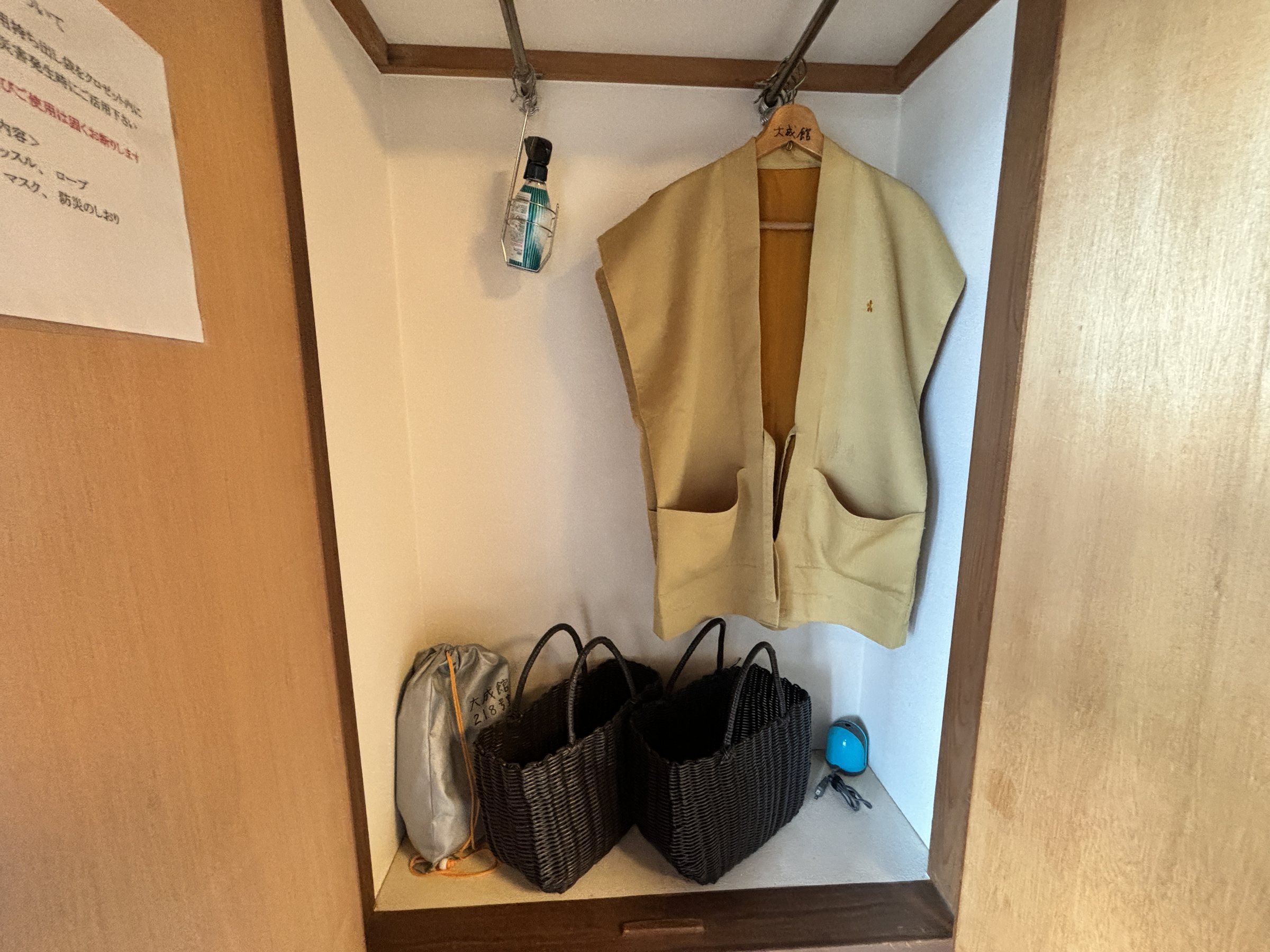
In the wardrobe, a haori, the short jacket worn over a yukata at hot spring resorts, hung neatly, and below it waited black bath baskets and drawstring pouches for carrying things to the baths. Being able to pick up a basket and head straight for the hot springs is a practical and thoughtful touch, and simply changing into the house clothes put us in the mood for an onsen trip.
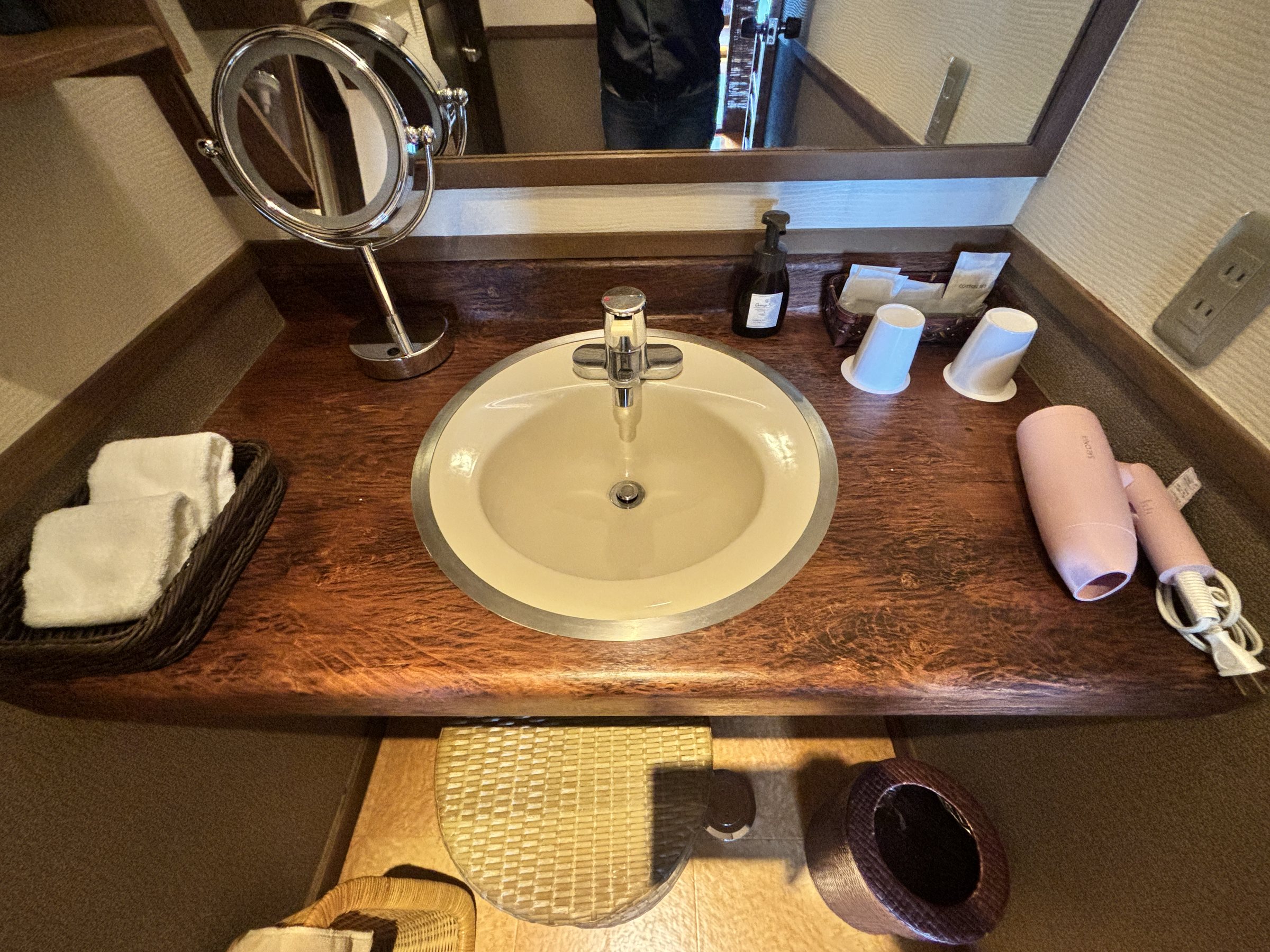
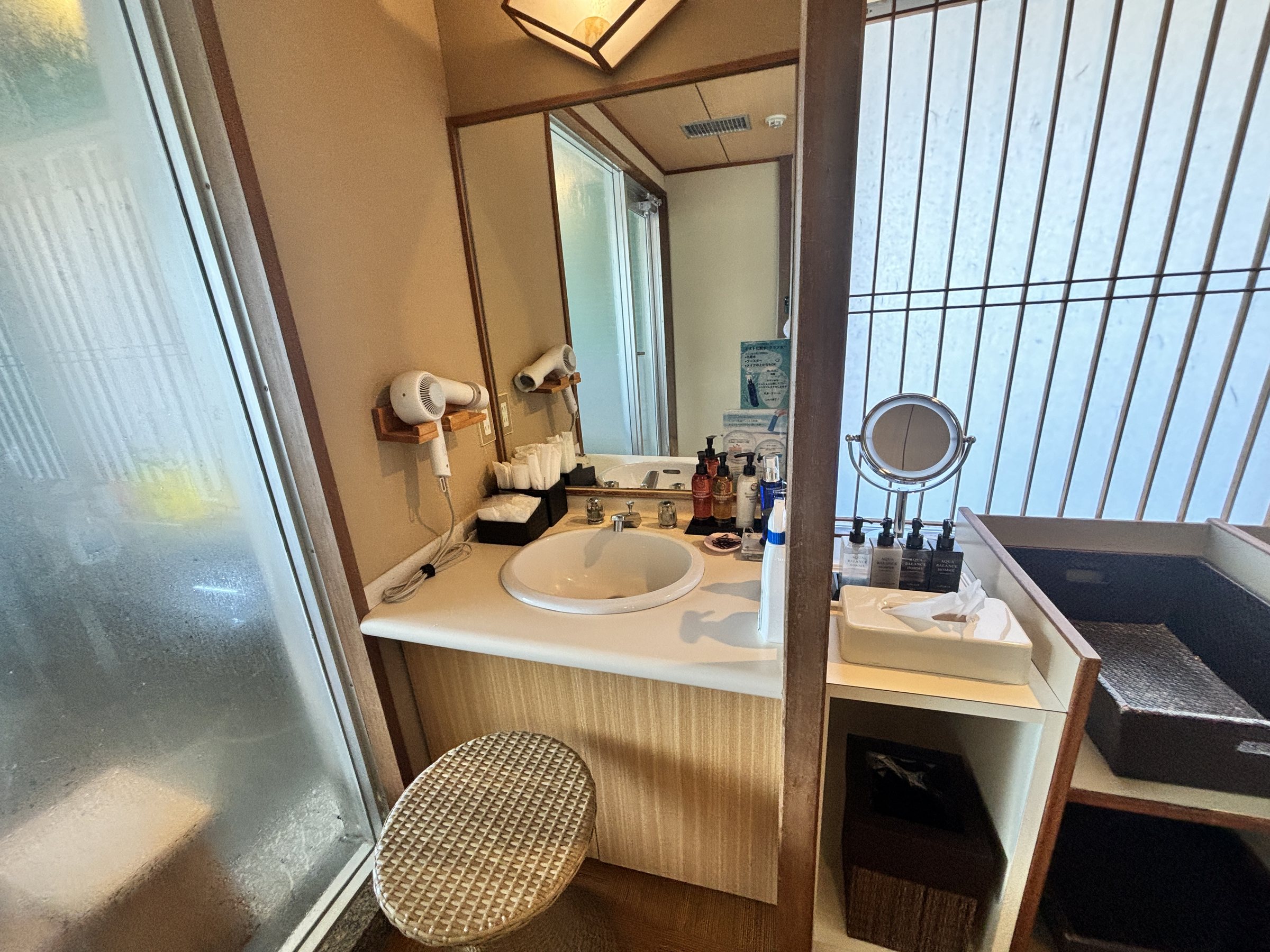
The washbasin is spotless: a round ceramic bowl set into a heavy single-slab counter with beautiful wood grain, with stylish lighting, a magnifying mirror that is handy for make-up, and an easy-to-use hairdryer.
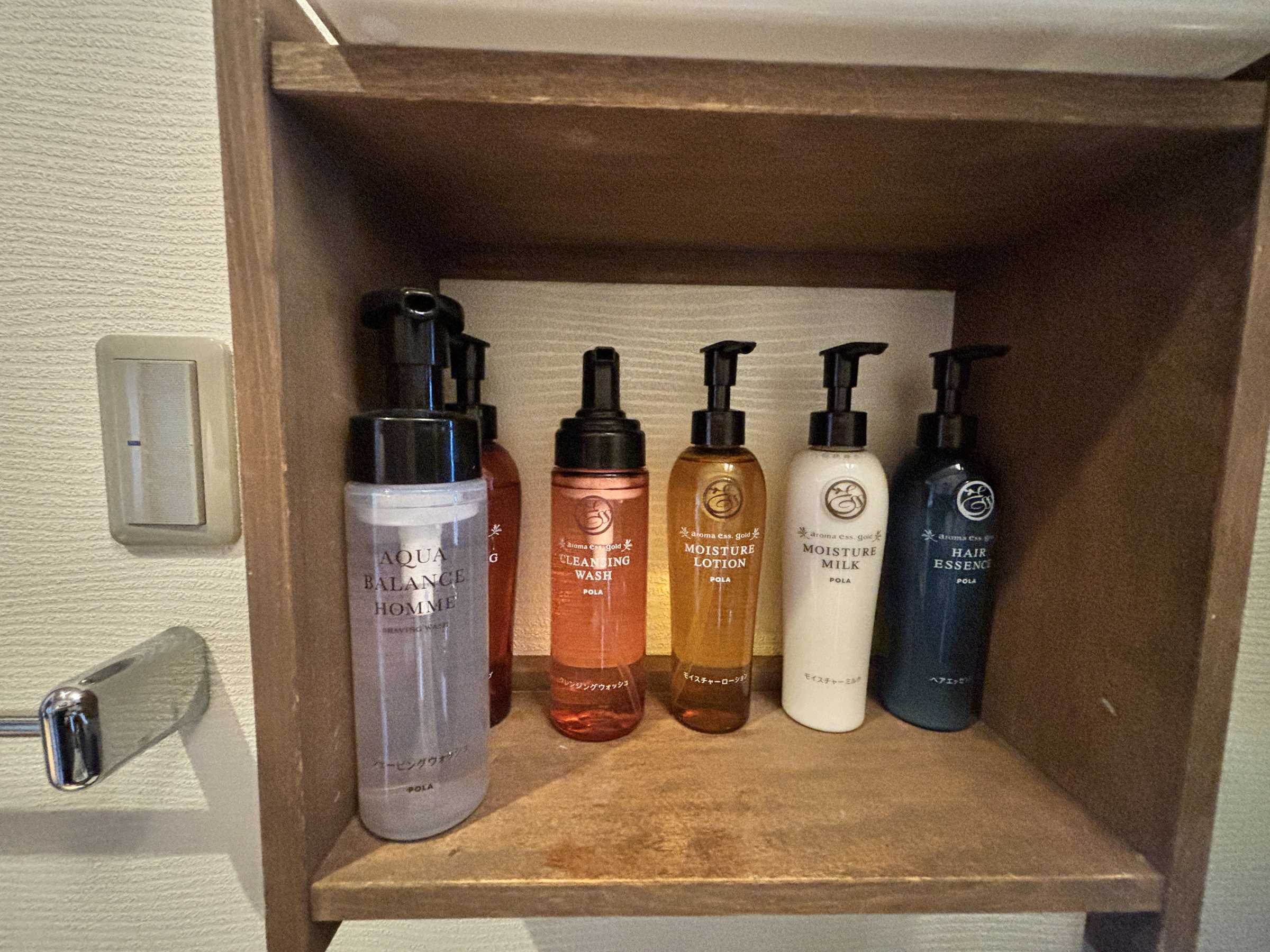
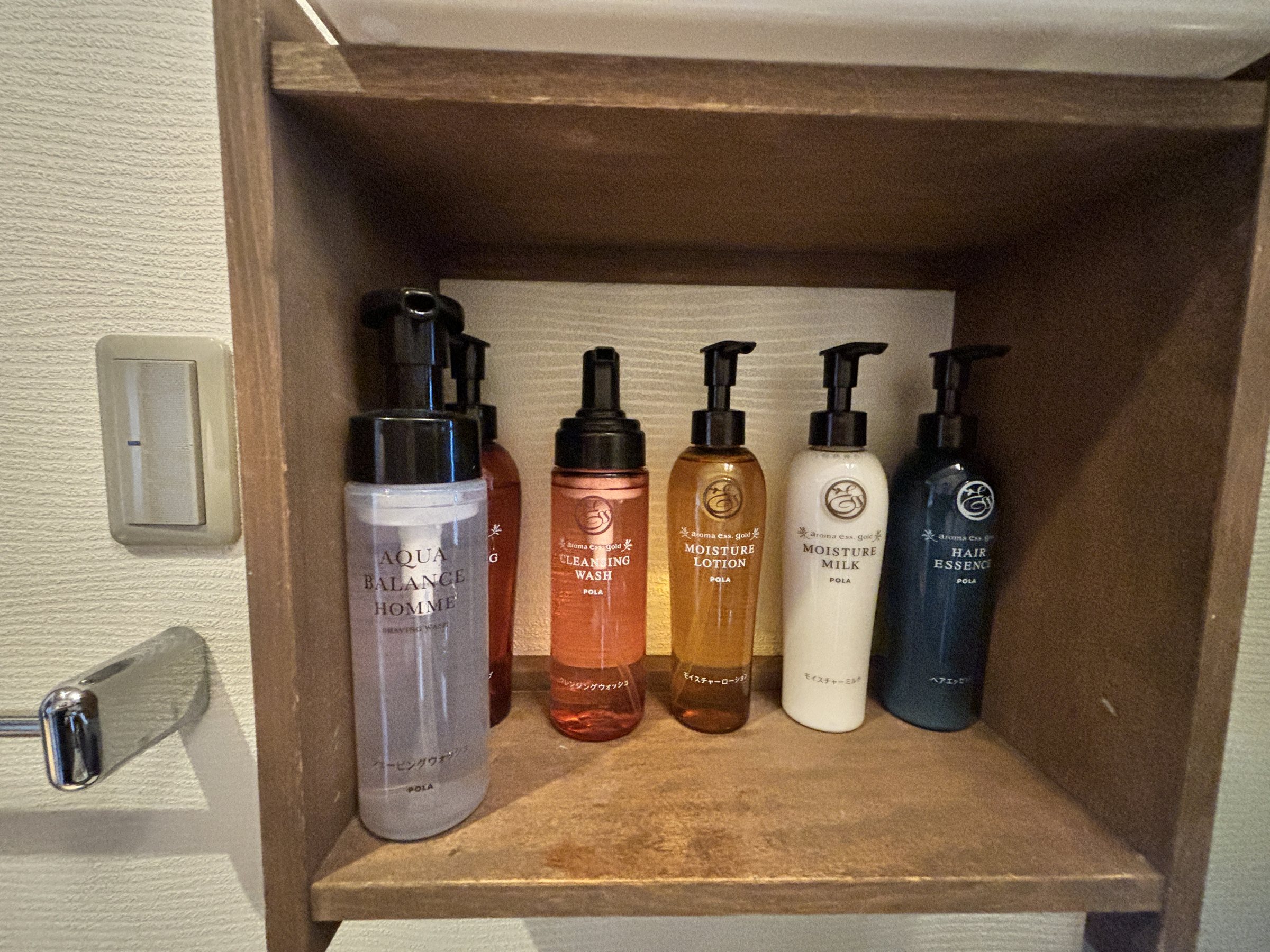
A neat row of quality POLA amenity bottles stood ready, covering everything from men’s care products to cleanser, toner, lotion and hair essence, so you could arrive empty-handed without worry. If we were to be a little demanding: these days many places arrange for manufacturers to supply Korean cosmetics or brands popular with younger guests, and that might be worth considering here.
Baths with a view of the sea
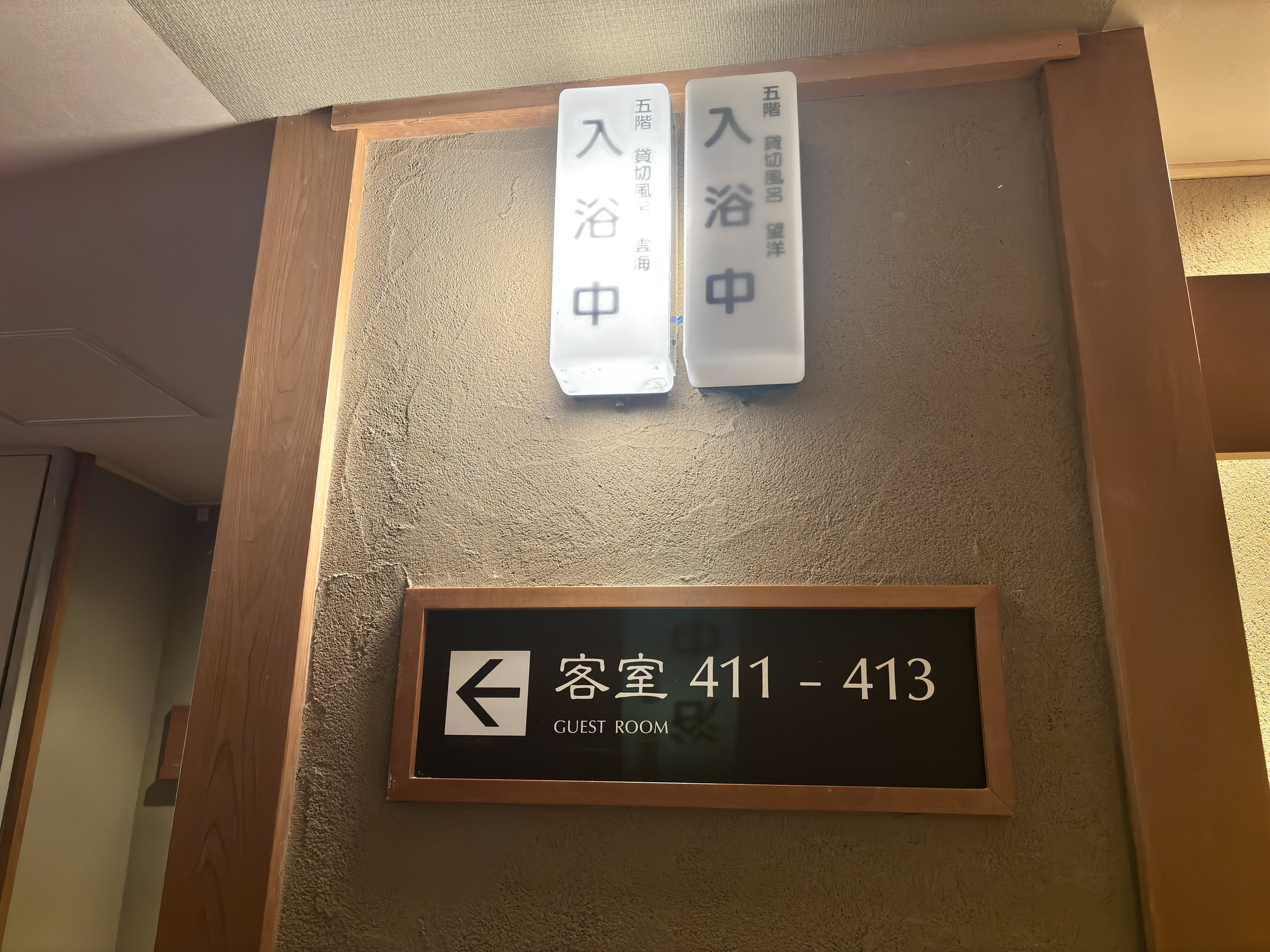
Heading down the corridor, we noticed a board showing whether the private baths on the fifth floor were in use. Being able to see at a glance whether a bath is occupied saves repeated trips, and it is genuinely practical.
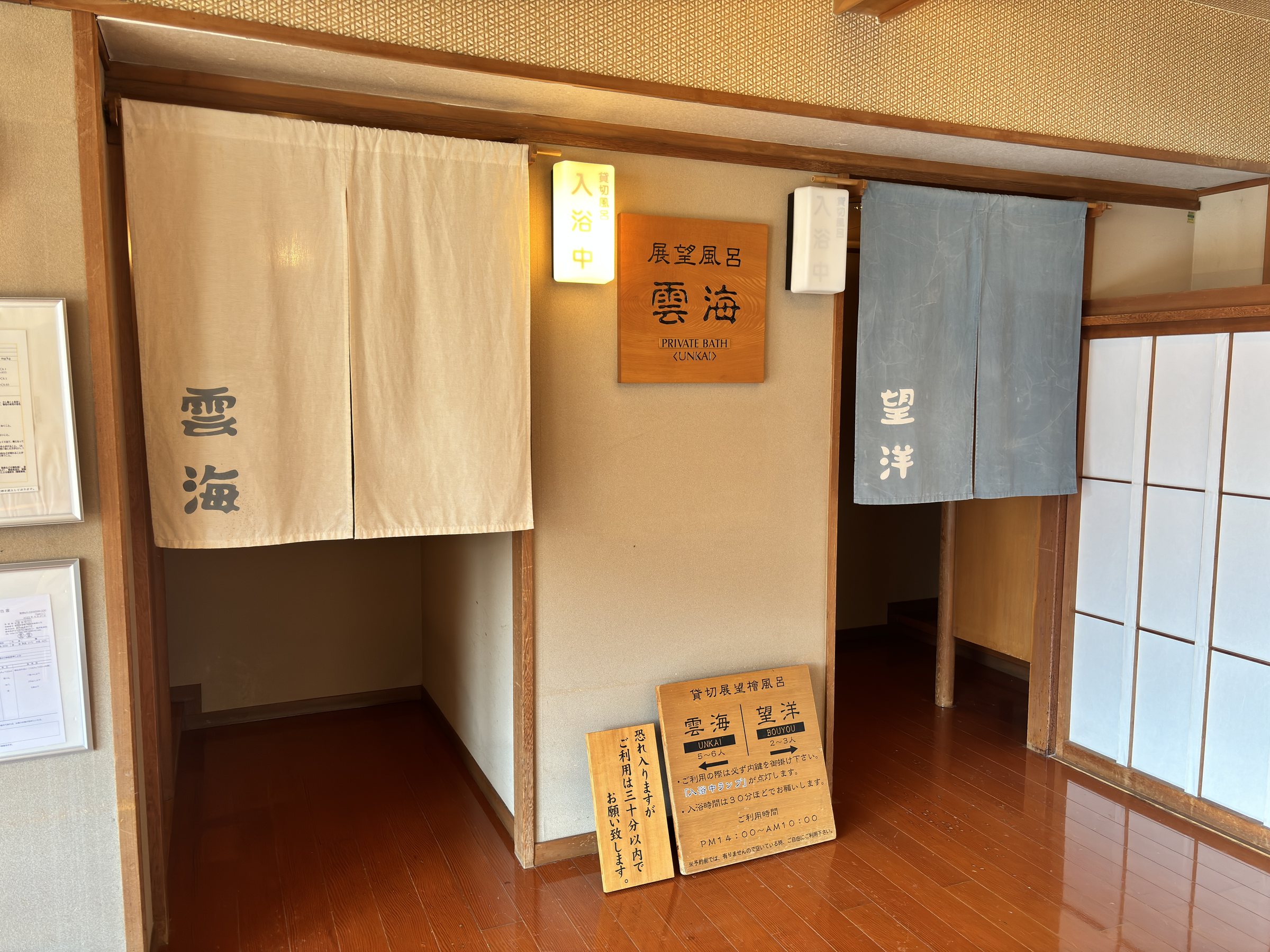
Then we reached the entrances to the lookout baths, “Unkai” (Sea of Clouds) and “Boyo” (Ocean View), hung with calm white and indigo noren curtains that give them a strongly traditional feel. Wooden signs with instructions for use stand at the threshold, a sign of how carefully the ryokan protects these private spaces.
A baby changing station had been installed as well, a thoughtful touch for families with small children. It was clean, with a gentle, homely atmosphere in which we felt instantly at ease.
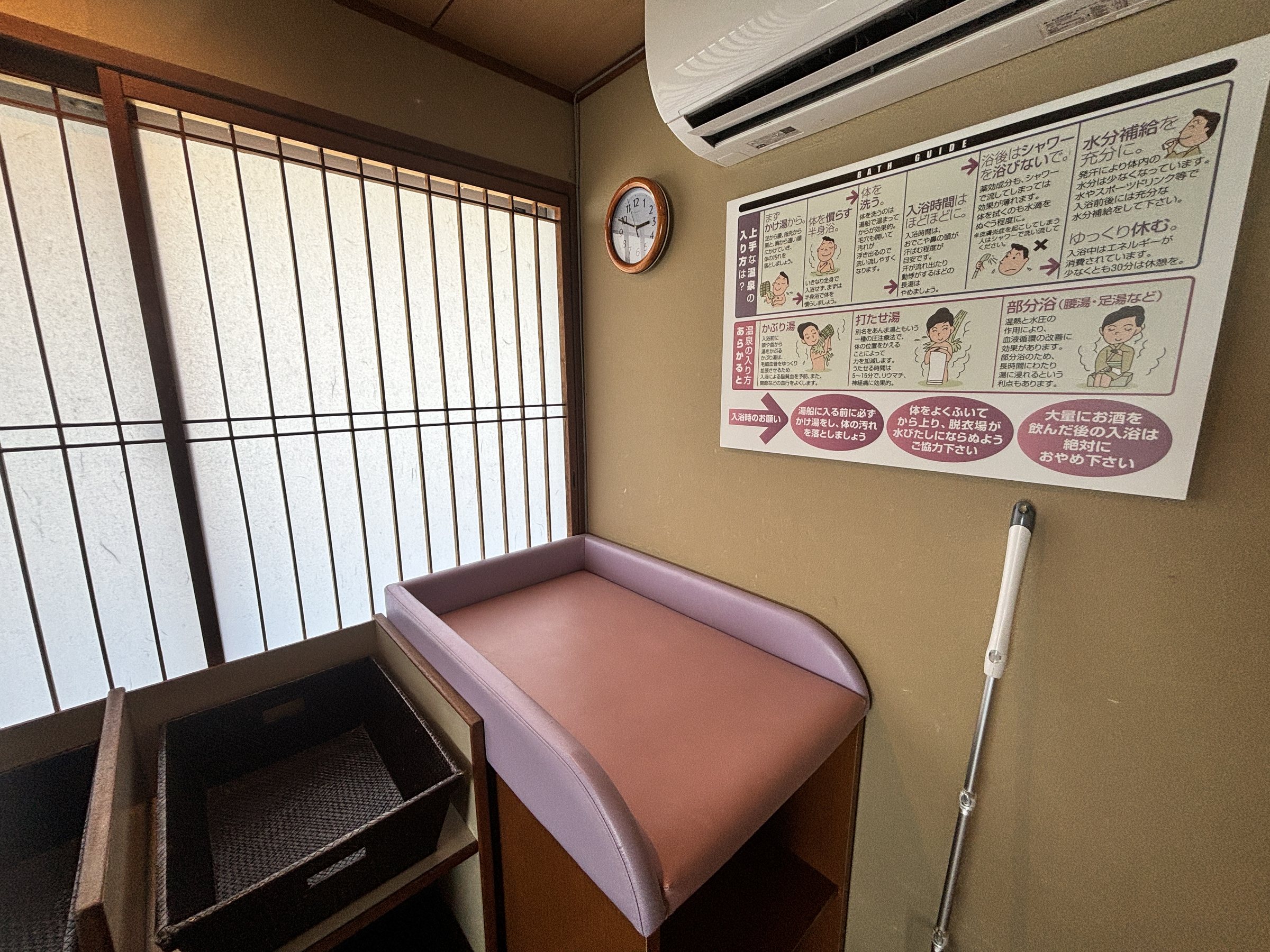
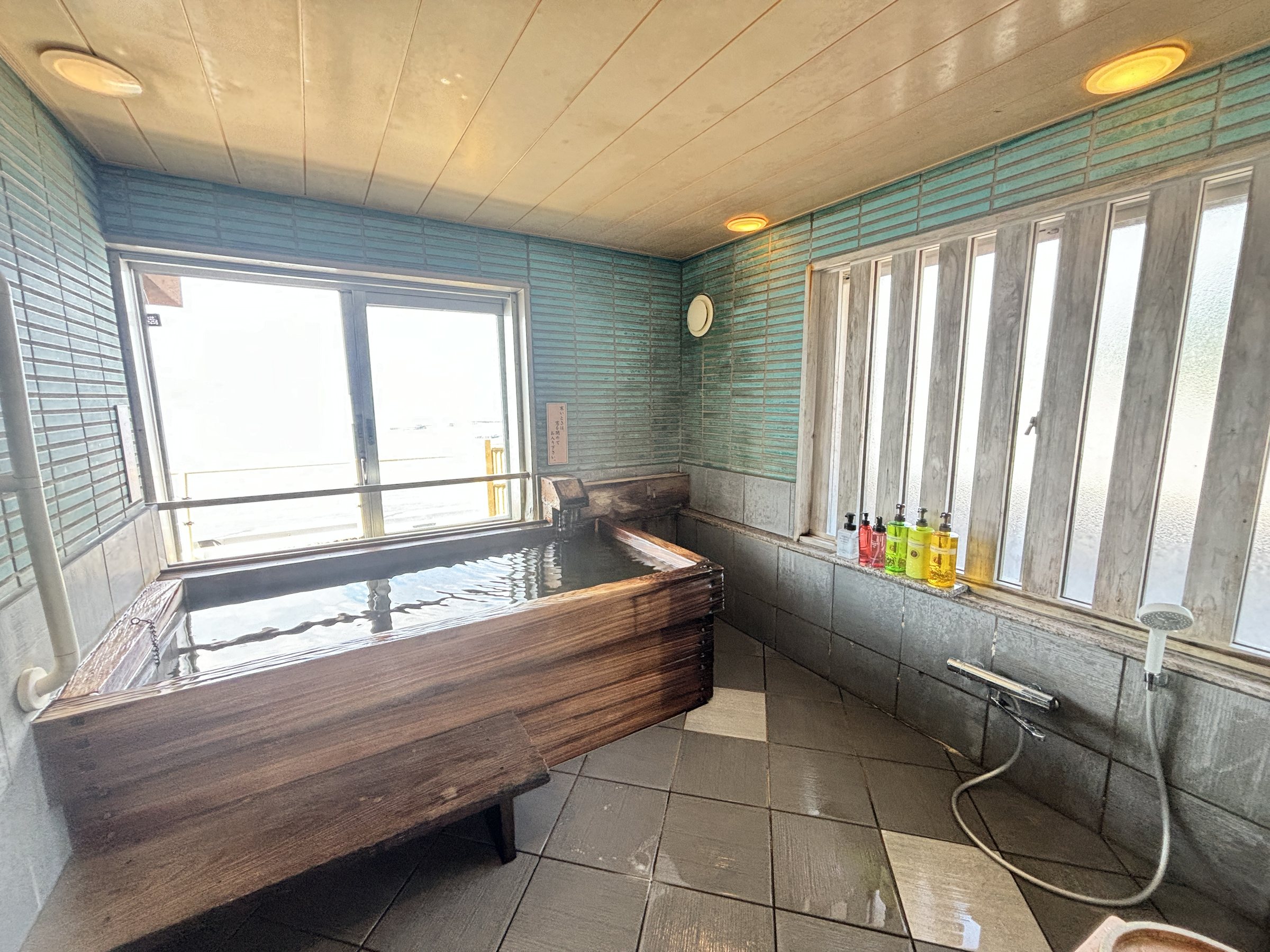
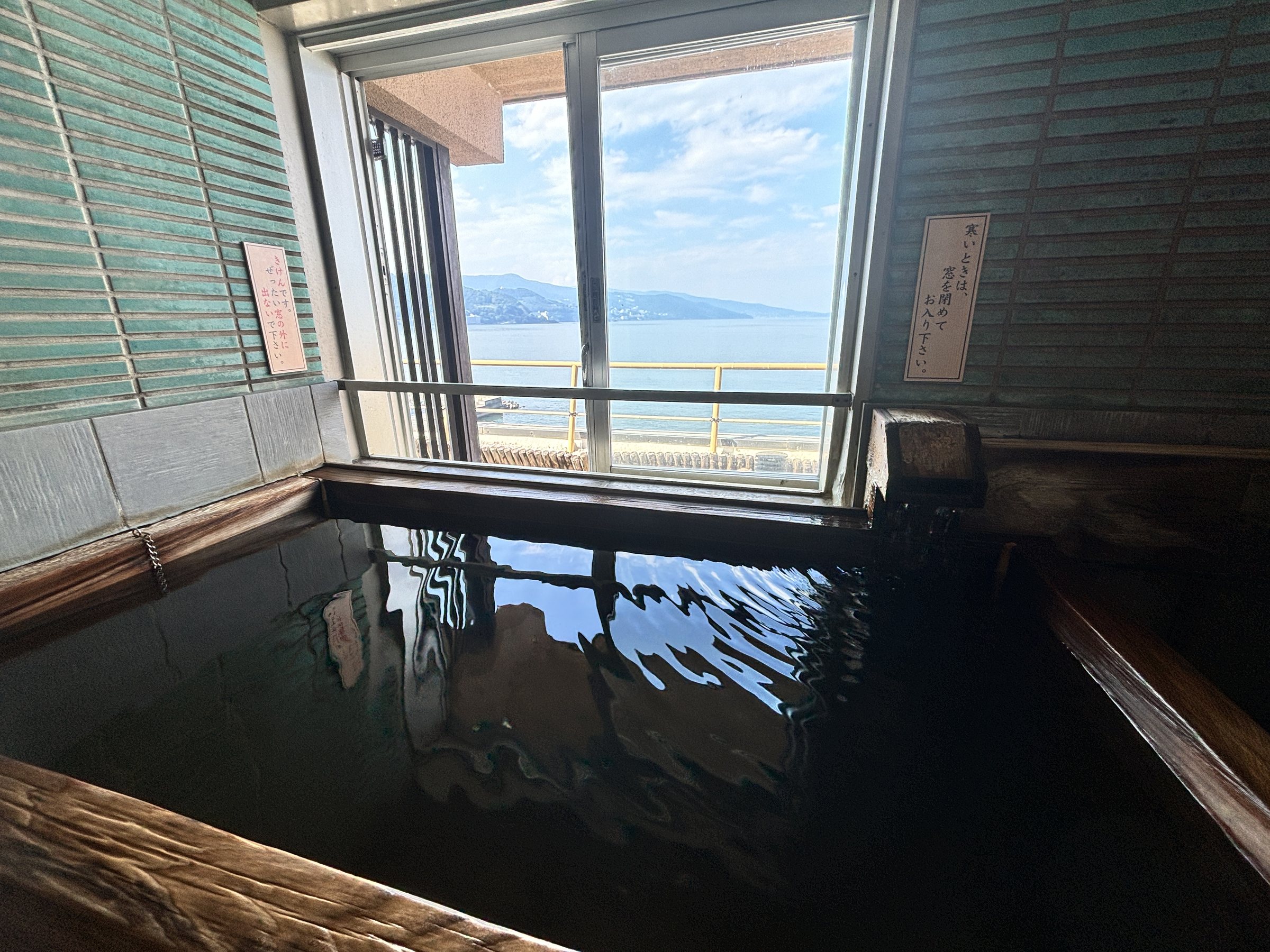
Sinking into the tub, we had an unbroken ocean view through the window. The light reflecting on the water and the calm horizon outside merged into one, so that it felt almost like floating on the sea. The temperature was comfortable, and with the waves close by, the tiredness of everyday life simply melted away.
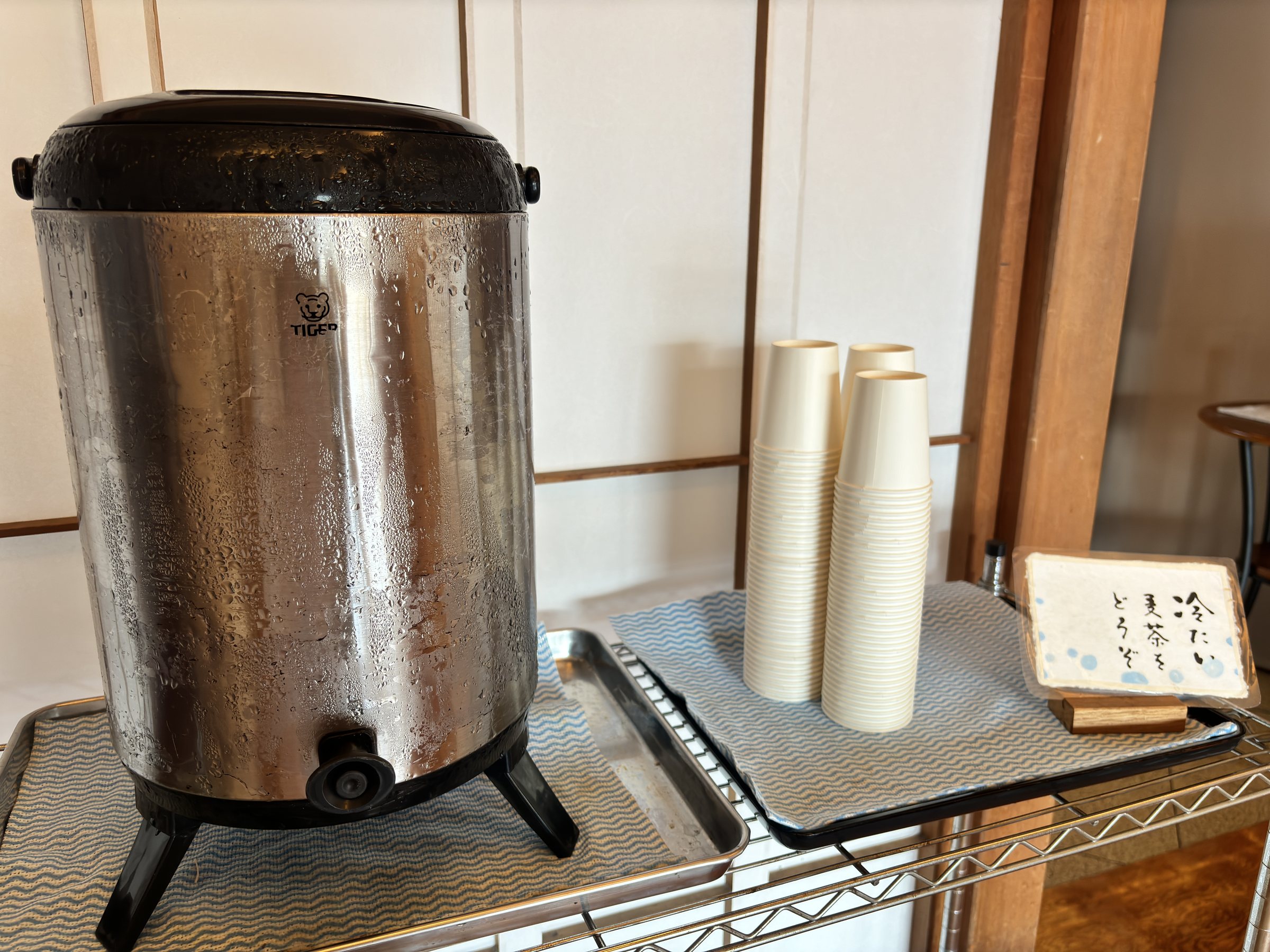
In the rest area after the bath stood a stainless-steel urn of cold barley tea, its surface covered in beads of condensation that told you how cold the tea was: the perfect way to rehydrate a body flushed from the bath. A small sign, in handwritten style, read “Please enjoy some cold barley tea.”
Dinner
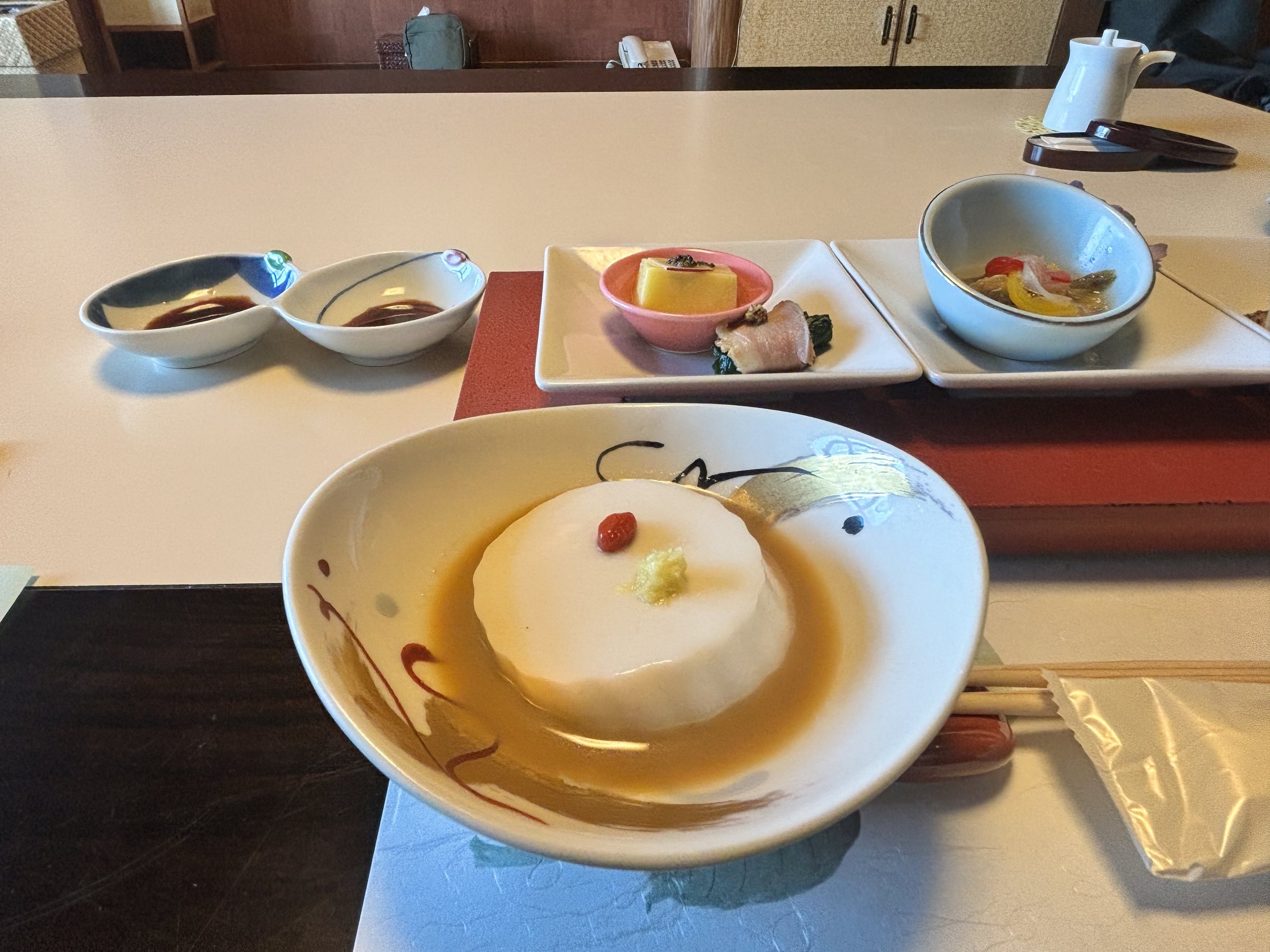
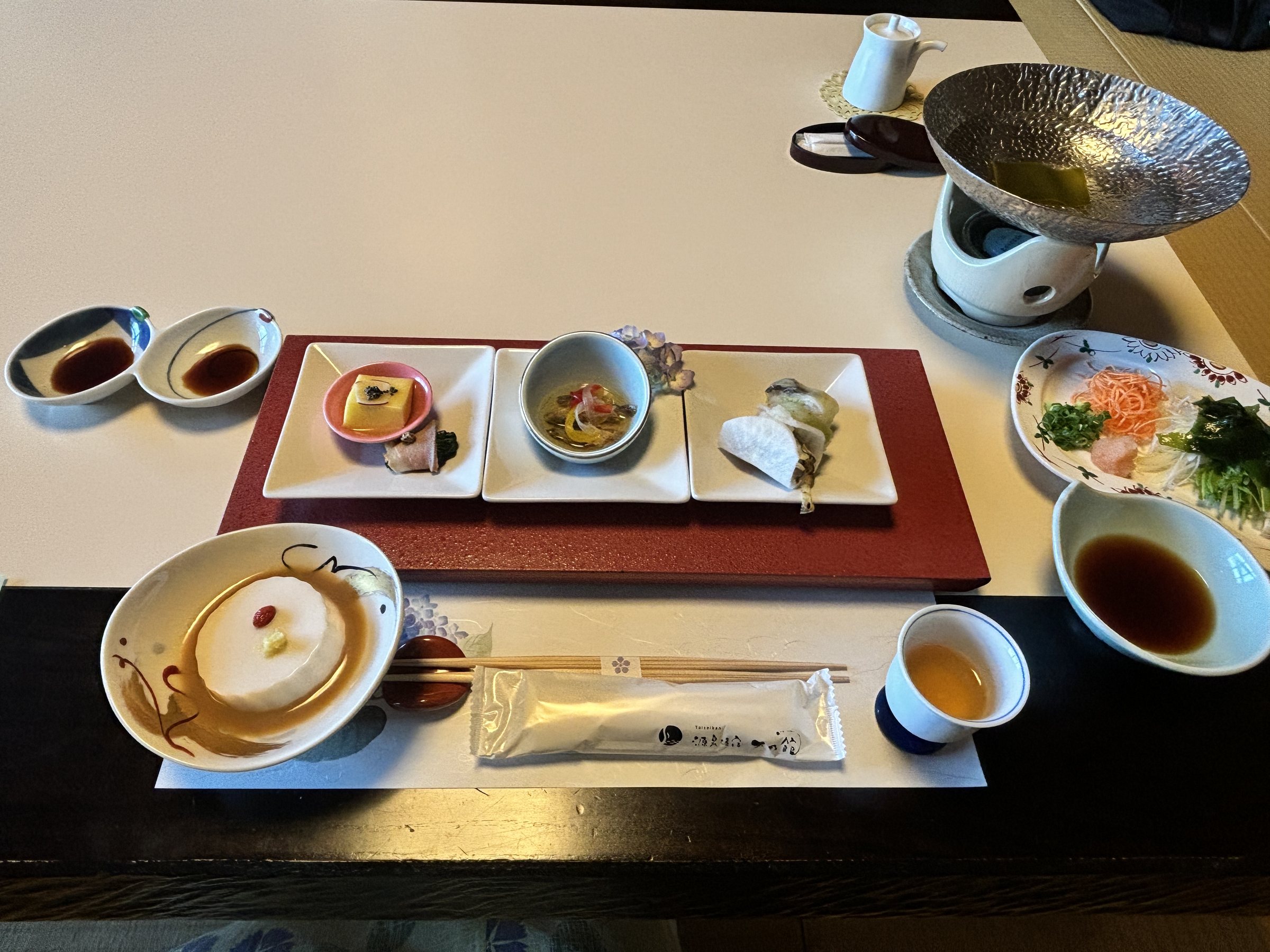
Dinner time arrived. The first dish, in a beautiful bowl, was tofu, accented with goji berries and ginger at its center. It set us looking forward to the course of fine handiwork to come.
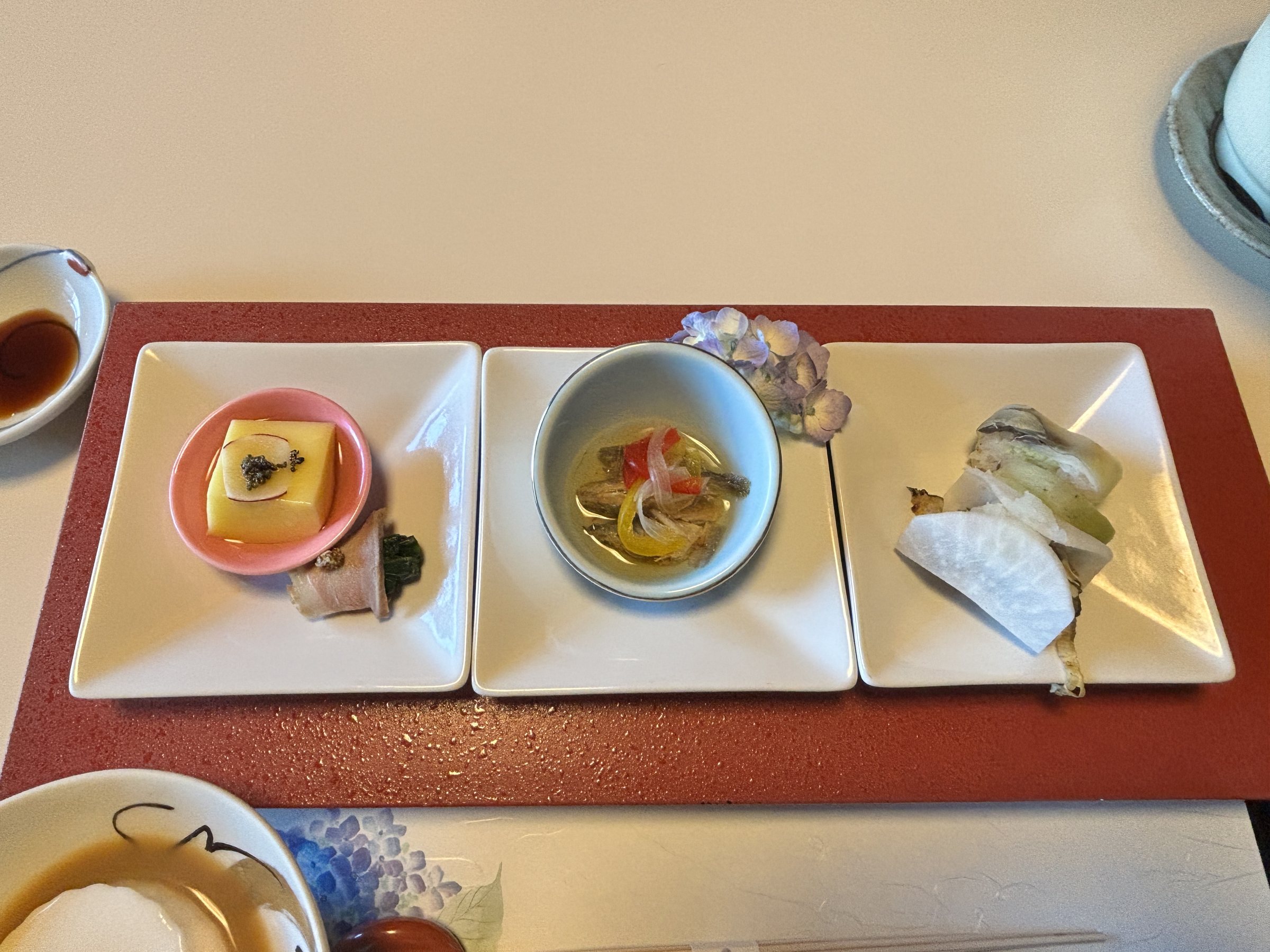
The presentation was designed to show the passing of the seasons to the eye as well as the palate, a well-judged touch that lent the meal a refined, grown-up atmosphere in which to take time over good ingredients. From left: a castella-like egg custard, greens wrapped in roast beef with nanbanzuke (fried fish marinated in a spicy vinegar), and sushi of vinegar-cured fish.
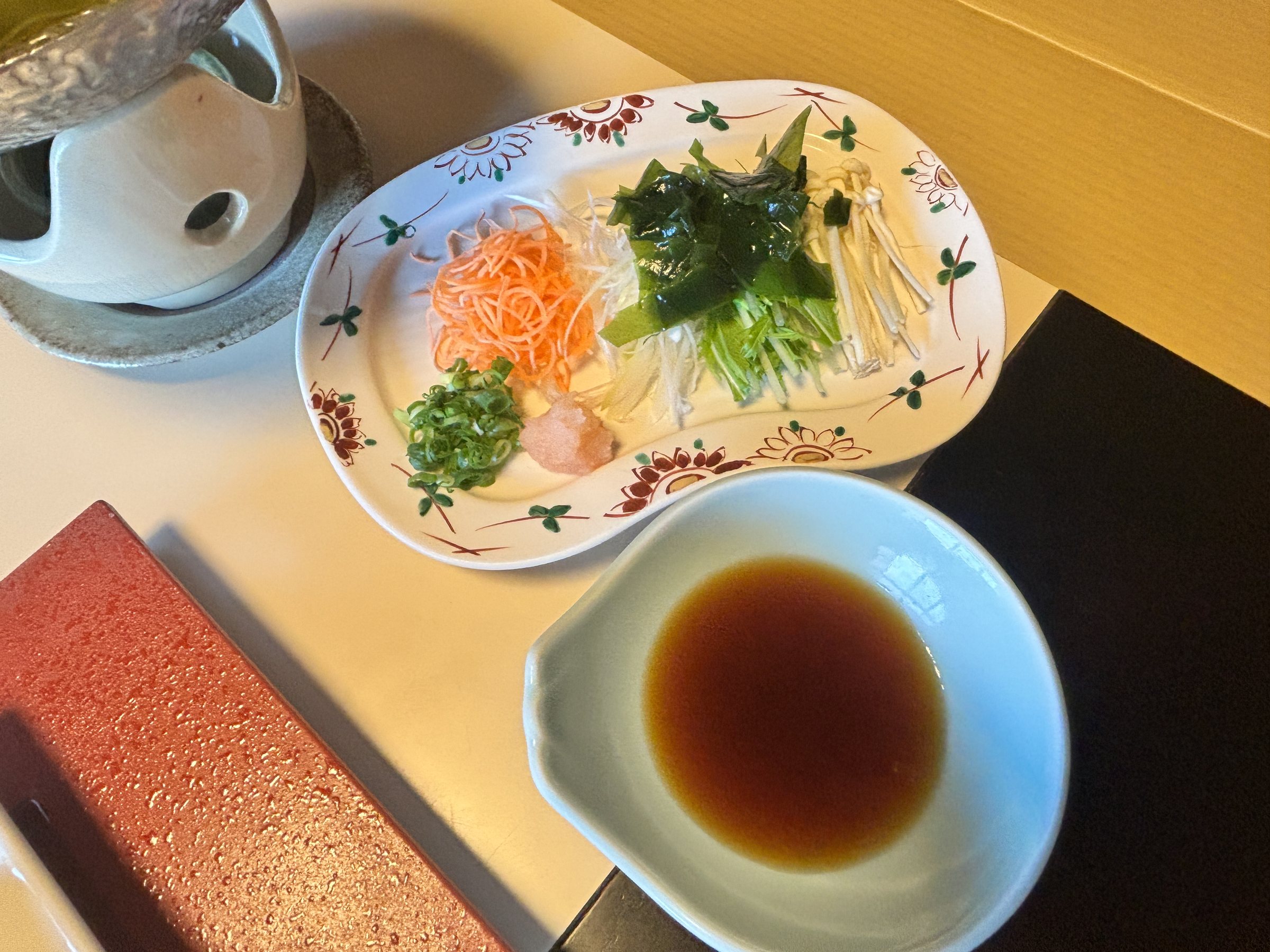
Next came a plate of brightly colored vegetables and condiments: shredded carrot, spring onion and momiji oroshi (grated daikon with chilli), all fresh and crisp, showing real care over ingredients. The house ponzu set beside it promised to lift the meal further still.
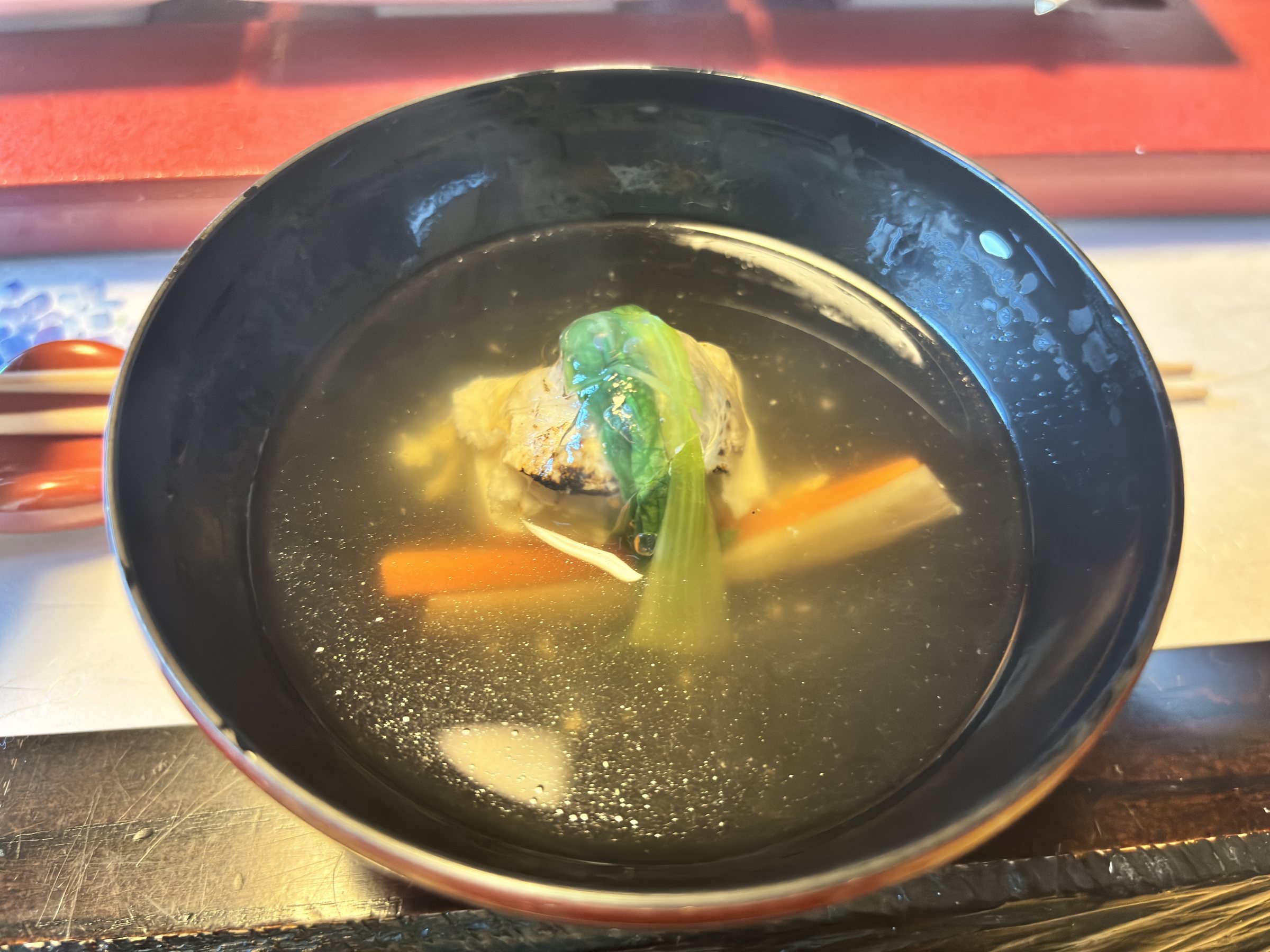
Lifting the lid of the lacquer bowl released a gentle scent of dashi. It should have been a carefully made clear soup, but a slight fishiness lingered, which was a pity. Otherwise the natural flavor of the ingredients was concentrated, and the greens and carrot added beautiful color, a fitting preparation for the main dishes to come.
A box of local fish
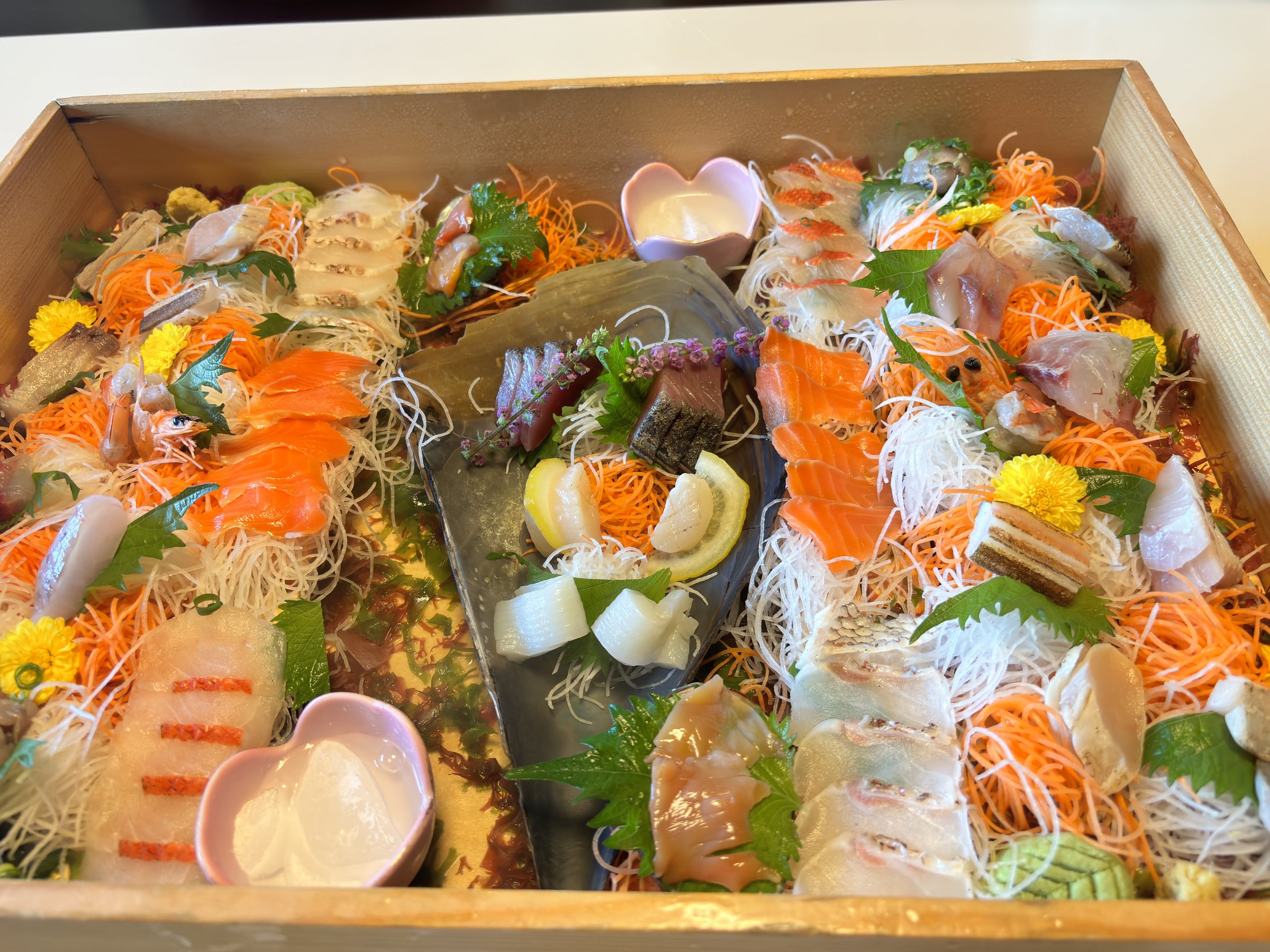
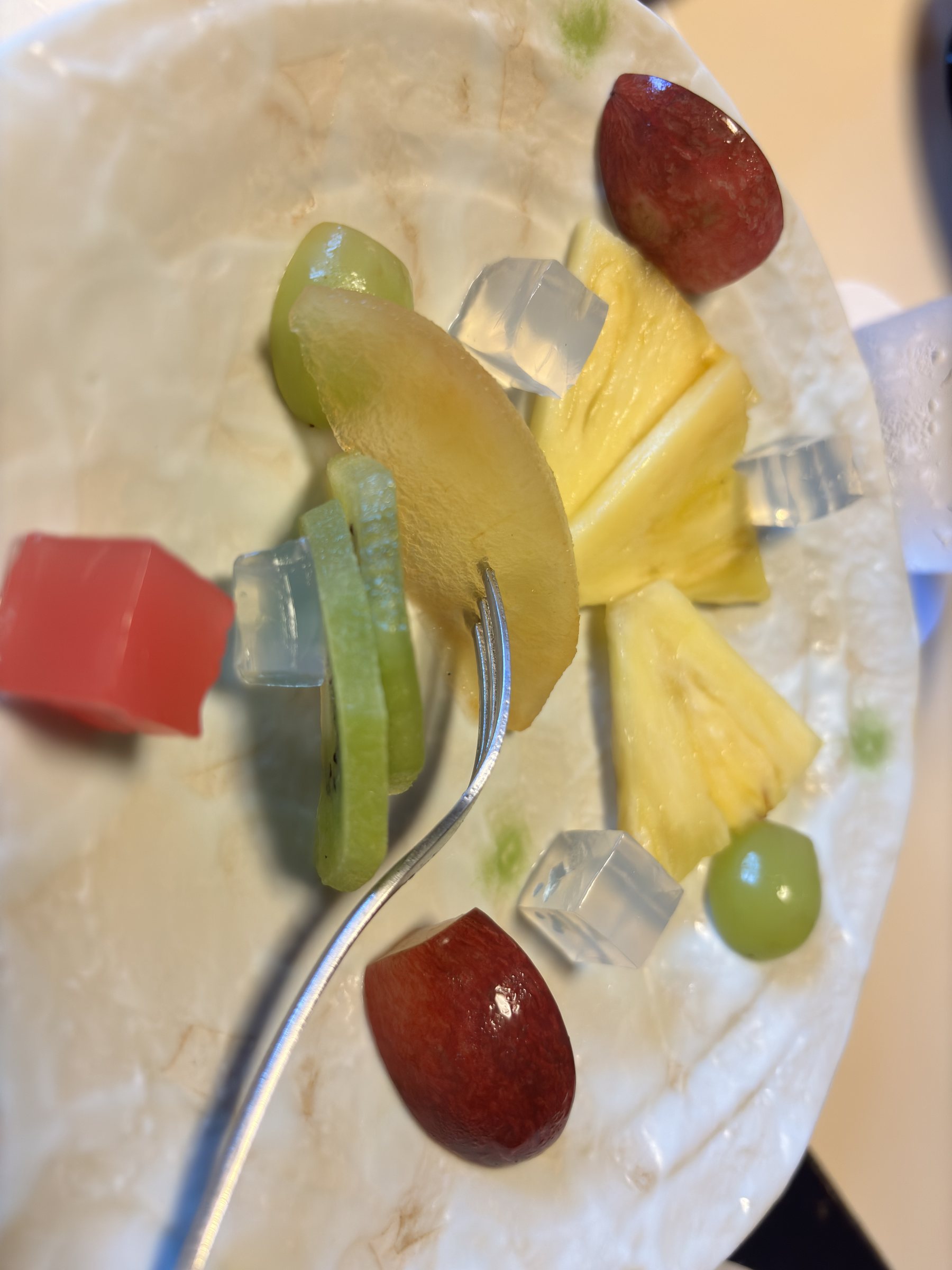
The sashimi platter, packed tightly into a wooden box, had an overwhelming presence. Its lid was lifted with a puff of smoke, like the magical treasure box of the Urashima Taro folk tale. The contents were as follows.
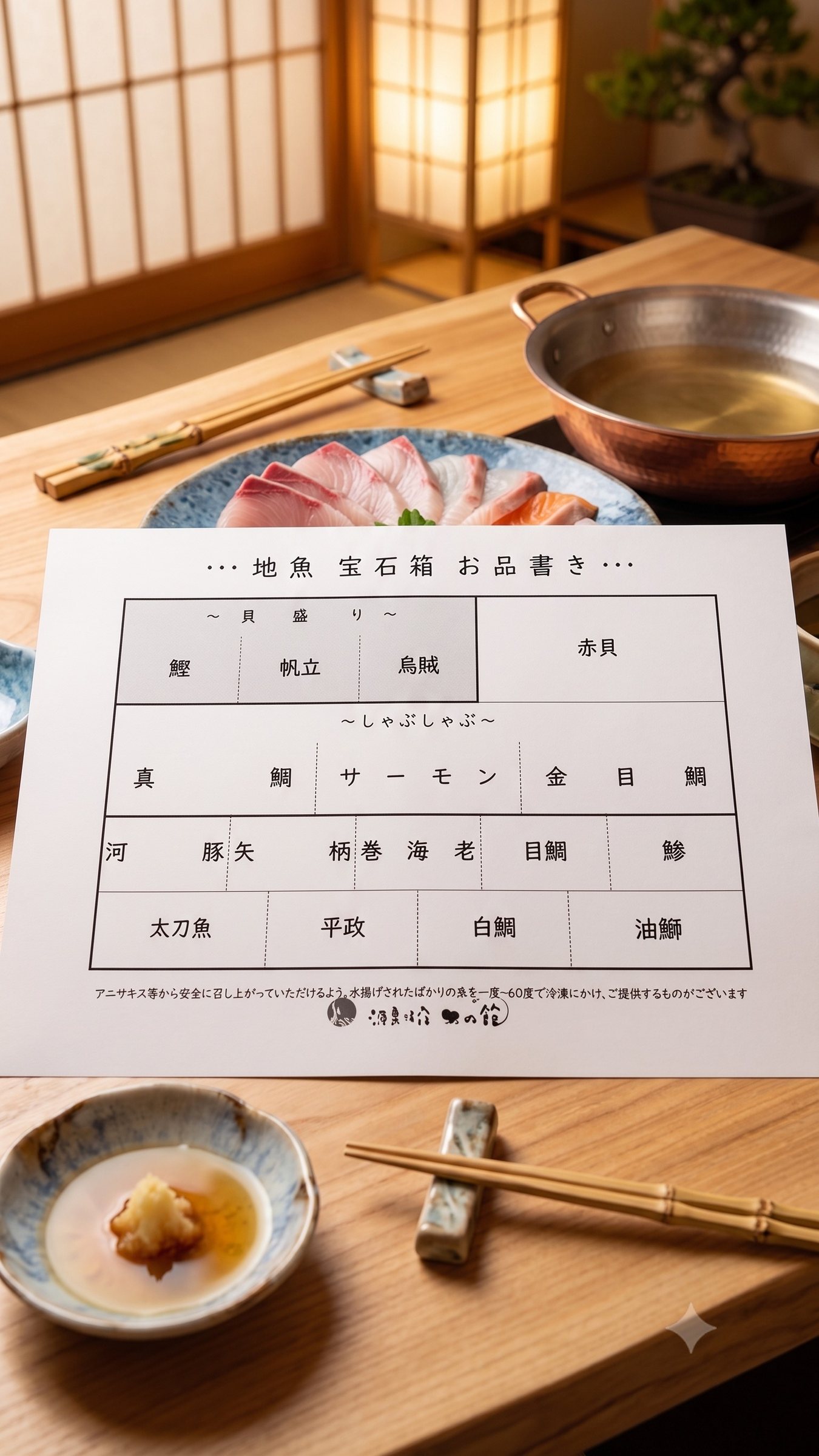
One sumptuous dish after another left both our stomachs and our eyes full. From the griddle in front of us rose a sizzle and a savory aroma. The beef, nicely marbled, was tender and released a rich flavor with every bite. The vegetables grilled alongside it, peppers, kabocha squash and onion, were all fresh and took on extra sweetness from the beef fat.
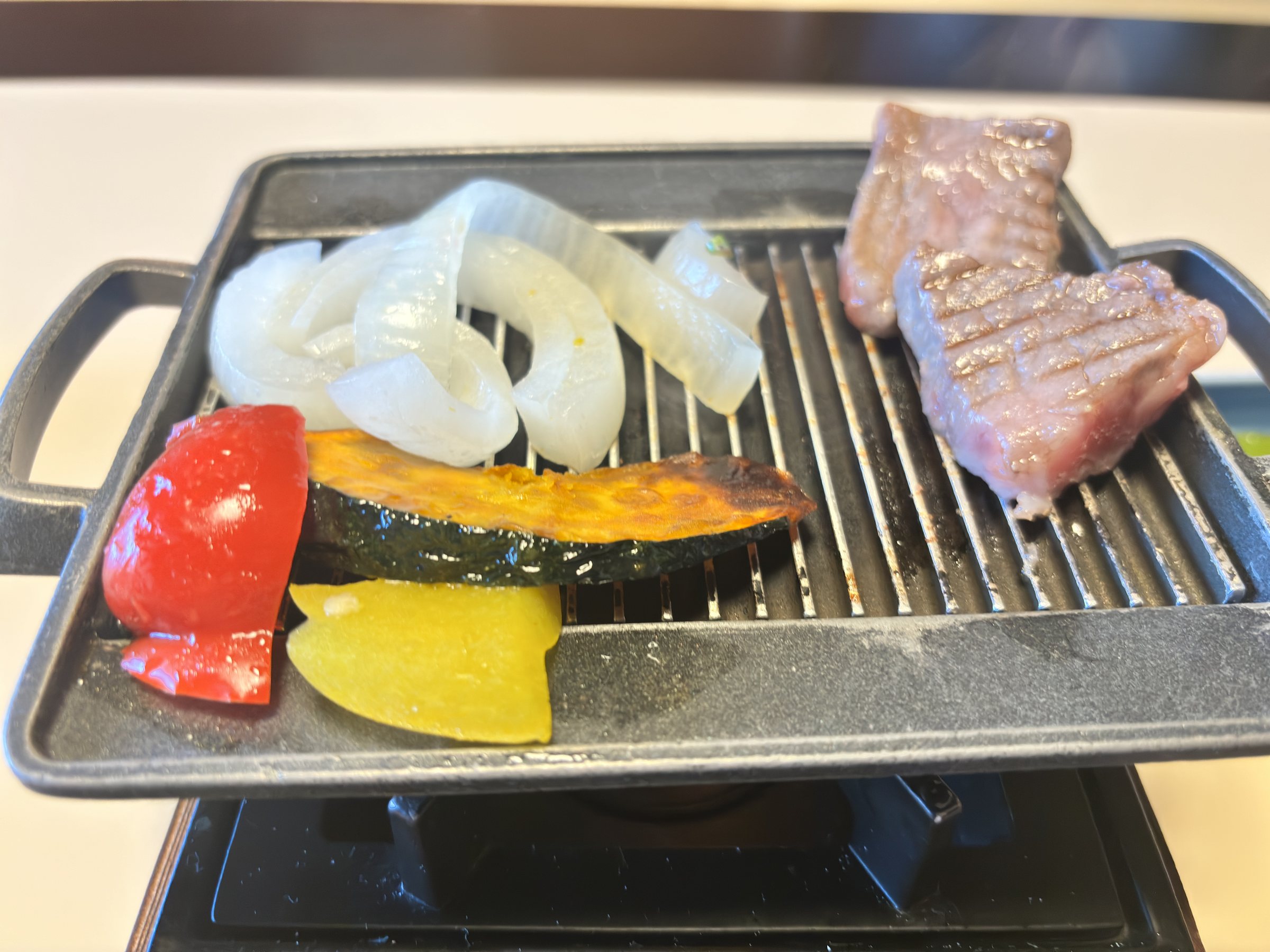
To close the meal, takikomi gohan, rice cooked with seasonings and finely chopped ingredients, arrived in a lidded bowl. The plump rice had soaked up all the flavor of the ingredients, and even on a full stomach we kept reaching for more.
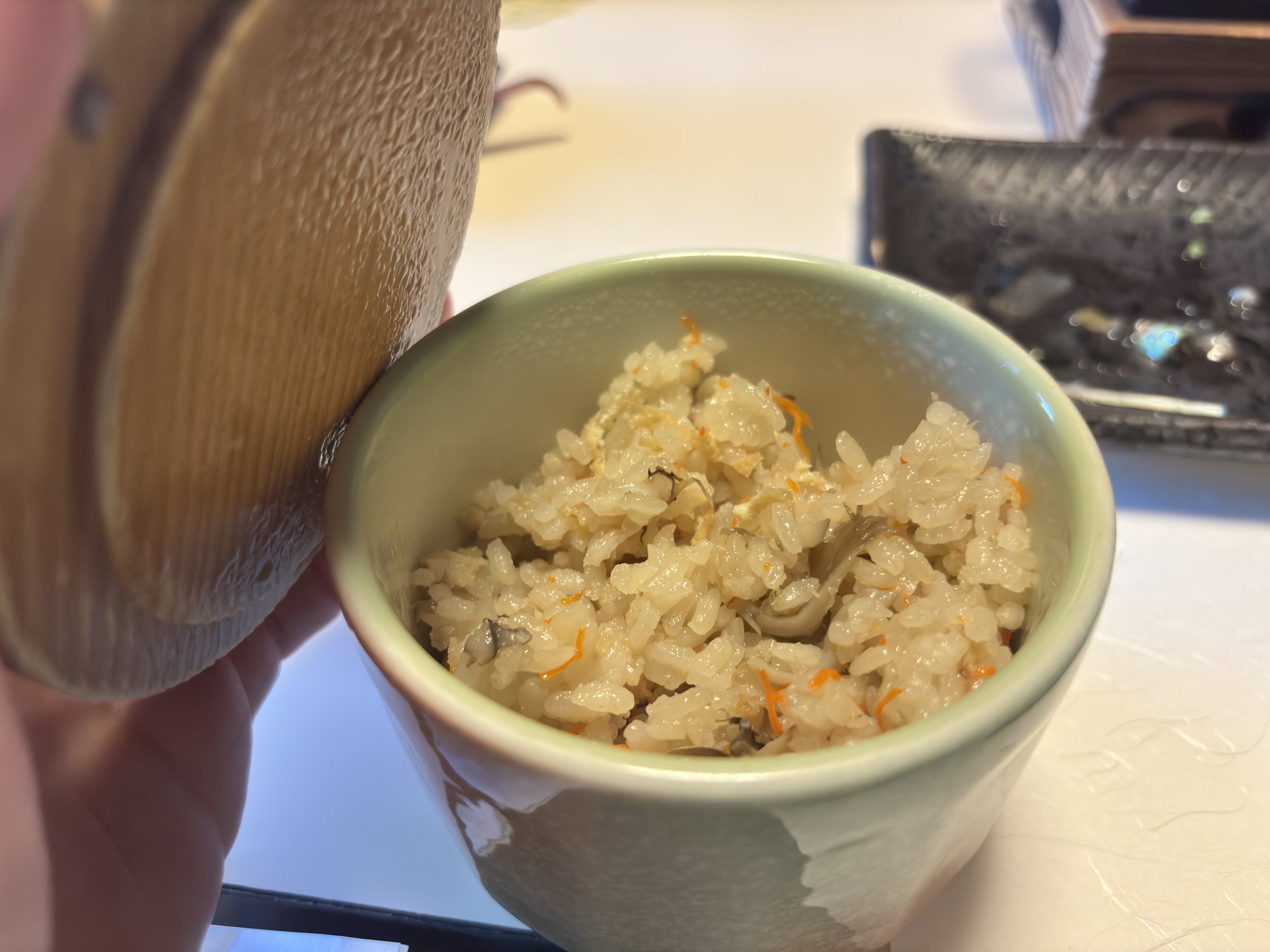
For dessert there was a platter of colorful fruit and glistening kanten jelly. Pineapple, kiwi, grapes and apple were beautifully cut, and their light sweetness left the palate refreshed.
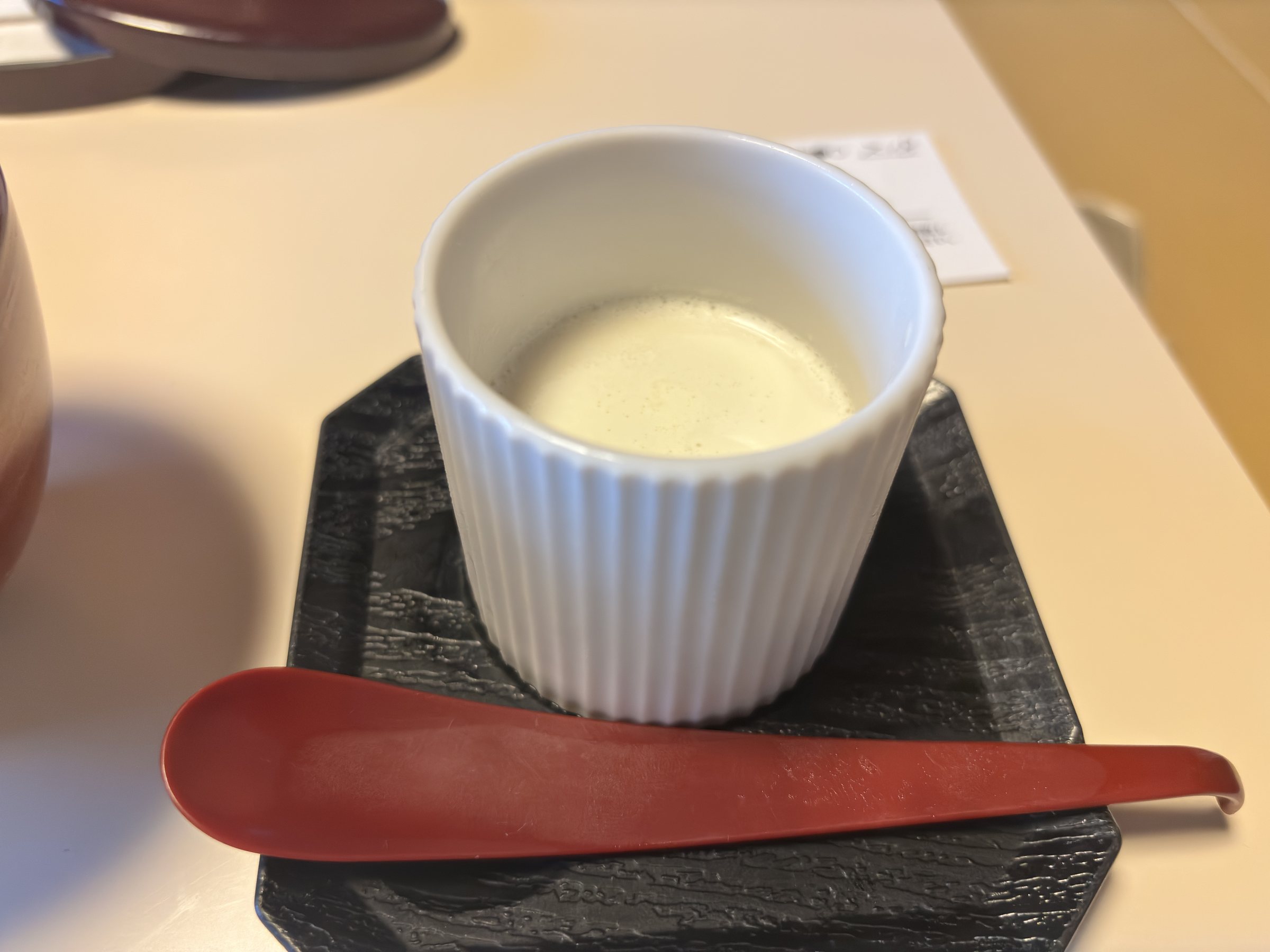
Smooth homemade pudding followed. Rich yet only lightly sweet, it had a very refined taste.
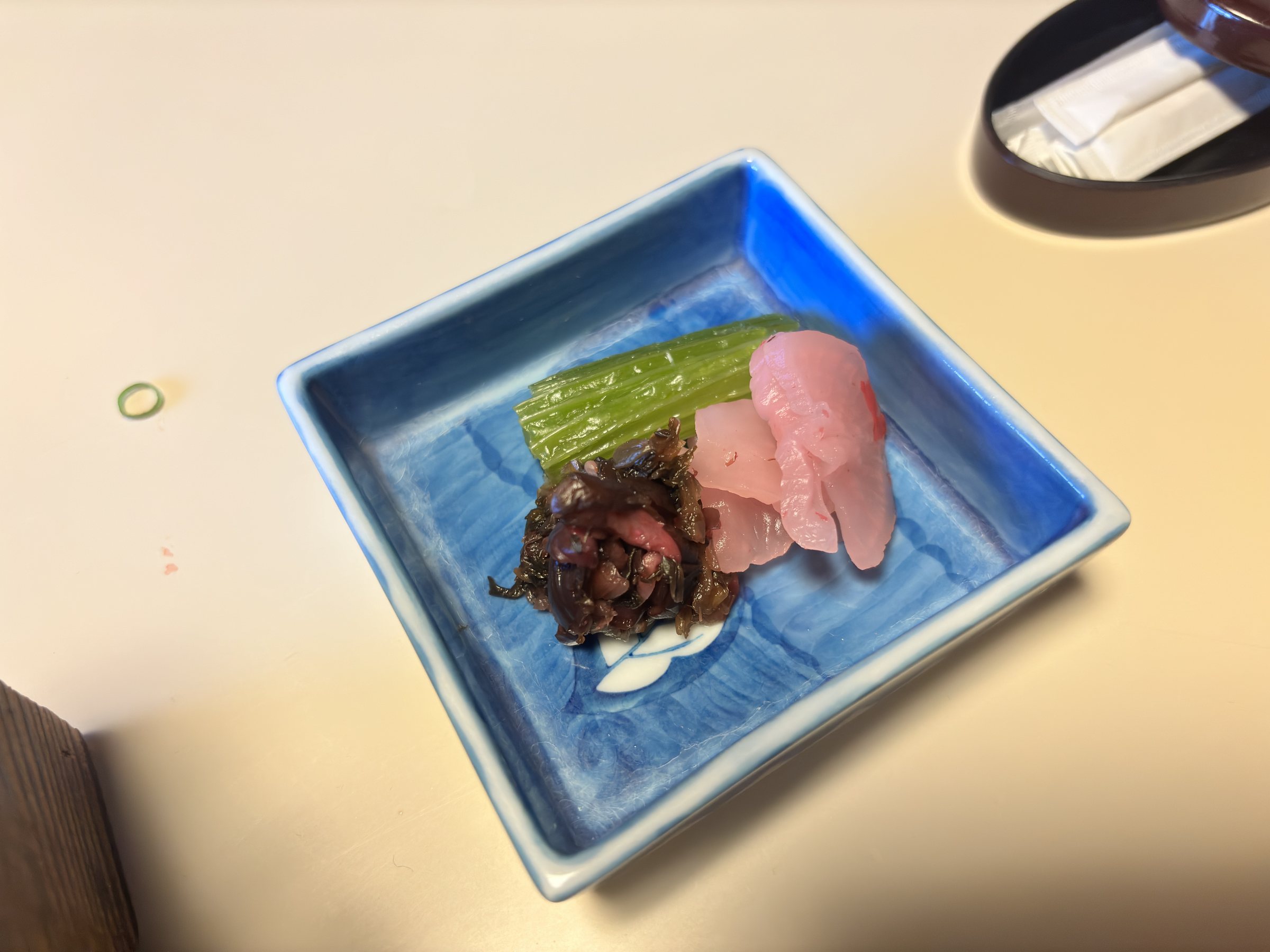
At this point our nakai, the attendant who serves the meal, brought out a plate of assorted pickles that had been forgotten earlier. We had already finished our rice, but they were nicely balanced between sweet and salty and very easy to eat, so we enjoyed them with tea after the meal.
The baths by night
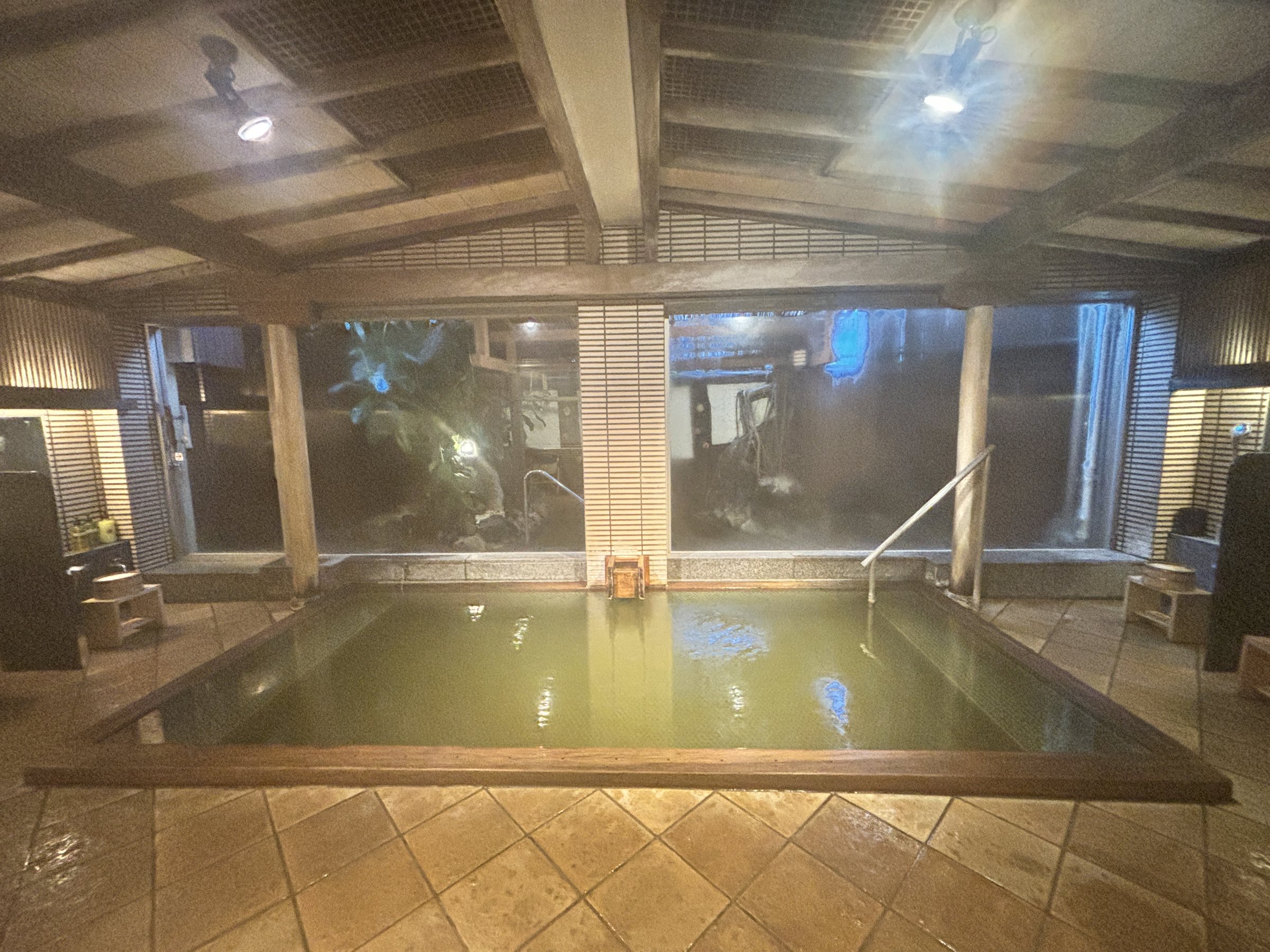
Visited after dinner, the large communal bath had changed completely from the daytime, wrapped in a quiet, almost dreamlike atmosphere. The broad tub was filled to the brim, and the ceiling lights reflected softly on the water, creating beautiful shadows. Through the large windows we could see trees lit up in the night, and the only sound was the quiet flow of the water. There was no one else there at all: our plan of an early dinner had paid off, and it left us deeply relaxed, body and mind.
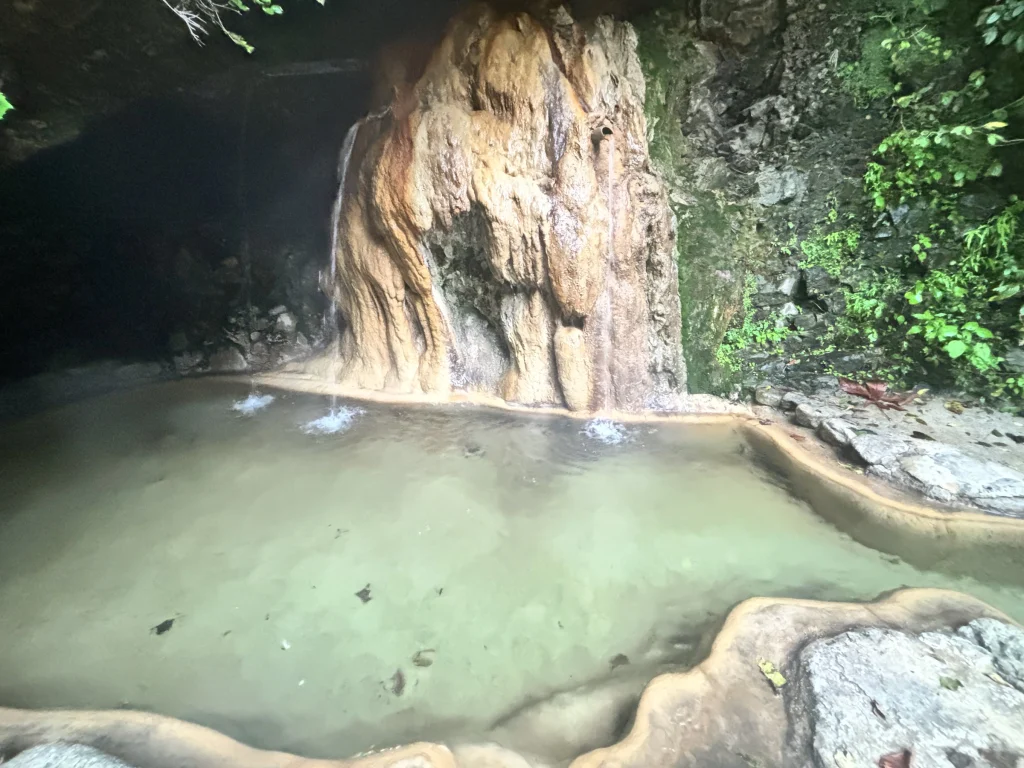
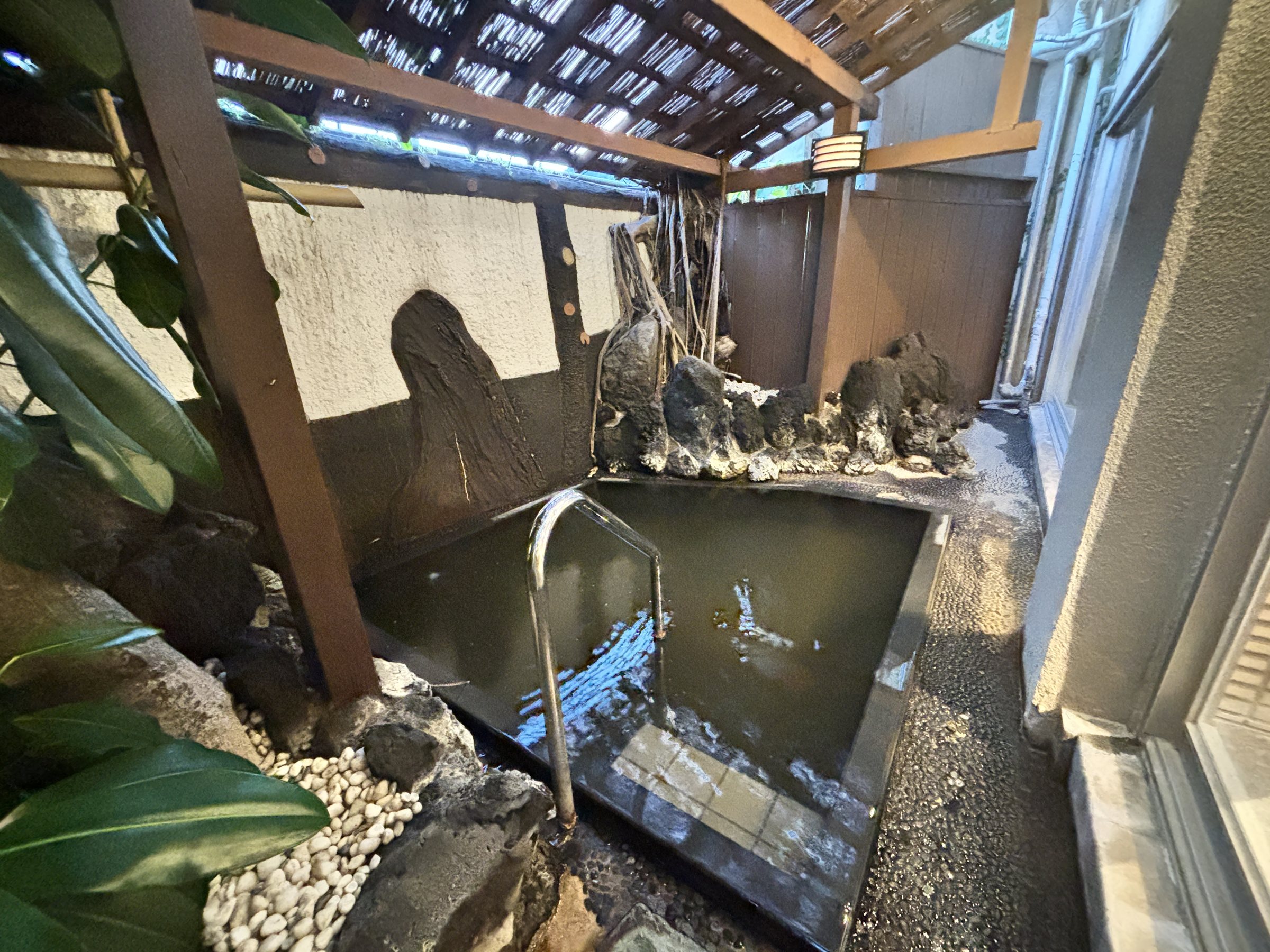
This is the open-air bath of one of the private baths. Straight after dinner we went on a hot spring crawl, settling into an atmospheric outdoor bath surrounded by rocks. Seen from under the roof, the world outside felt somehow mysterious, and the steam rising out of the darkness only added to the sense of travel. With a cool head and a warm body, we savored a quiet, luxurious stretch of time.
A photograph from 1955
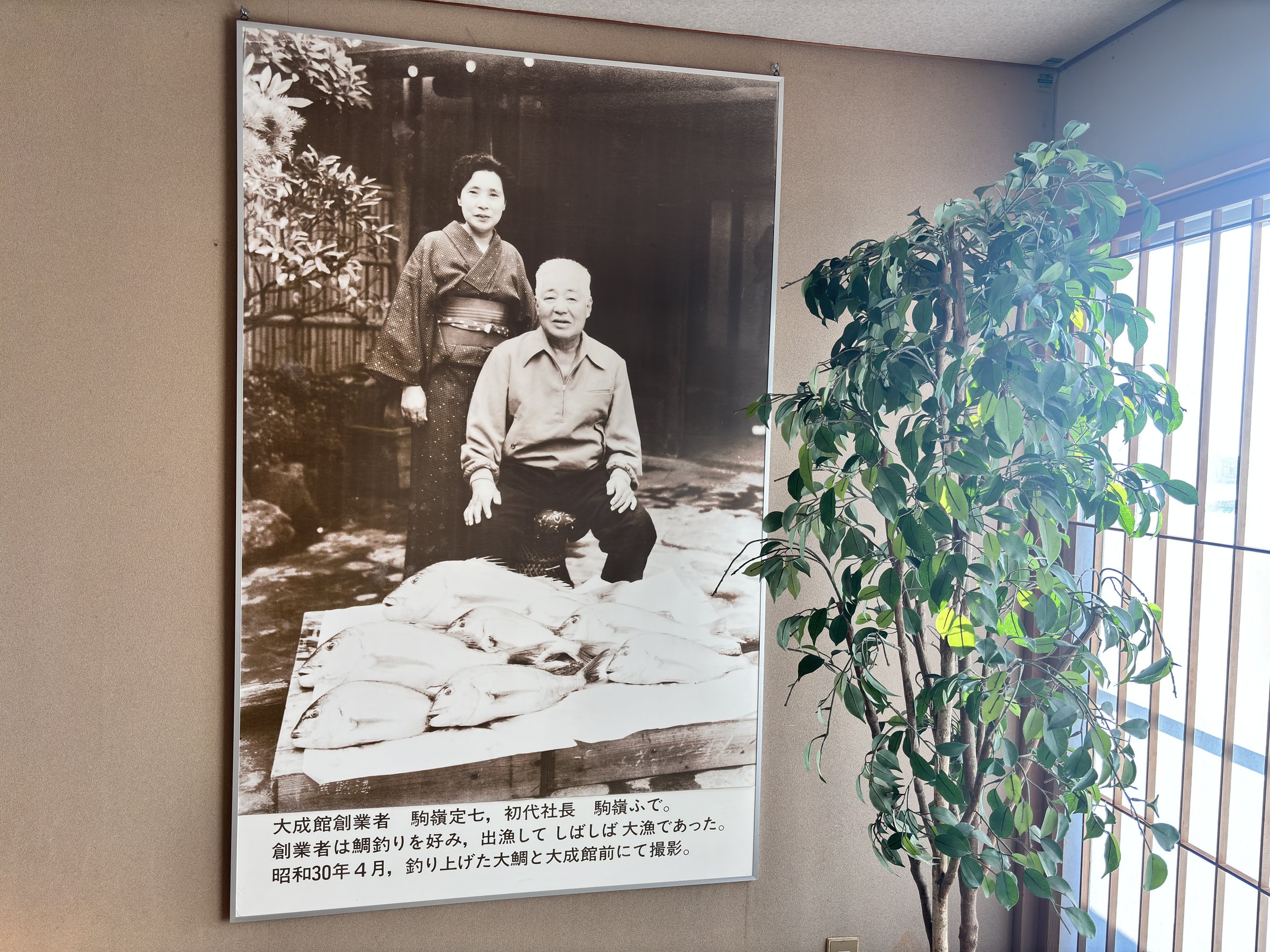
In one corner of the building hangs a historic black-and-white photograph of the ryokan’s founder, Sadashichi Komine, and its first president, Fude Komine. It was taken in April 1955 in front of Taiseikan, with the large sea bream the founder had caught himself. The caption tells how he loved fishing for sea bream and often came back with a large catch, and the photograph brings that story vividly to life. It gave us a real sense of the ryokan’s long history and tradition, and of its pride in the road it has traveled: dignified, and warm.
Breakfast
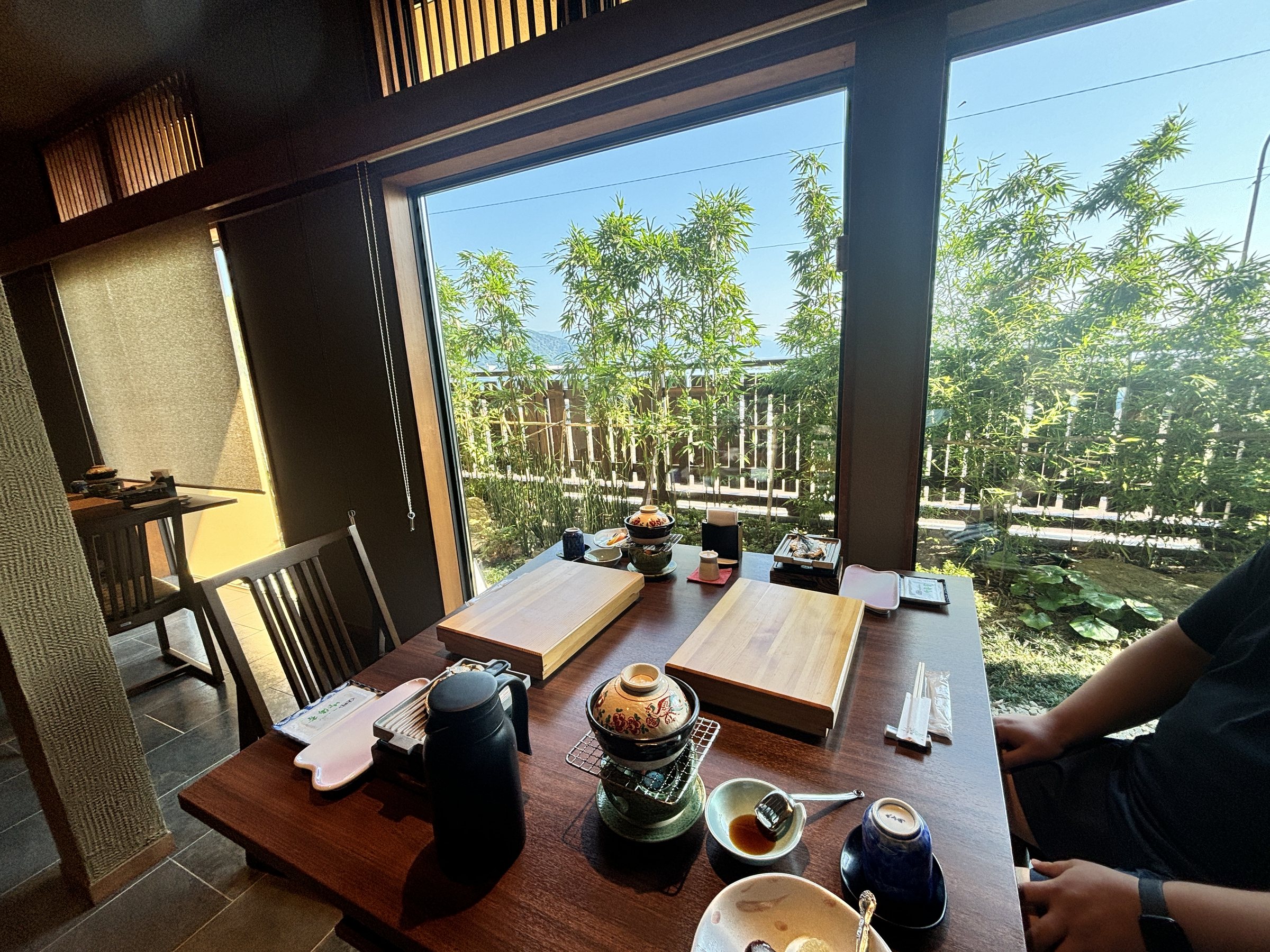
Breakfast the next morning was served at a bright, open table with morning light pouring through a large window and a lush green bamboo grove outside, a fresh and pleasant start to the day. The table was already set with a griddle and a small pot, and the prospect of warm dishes being finished in front of us raised our expectations.
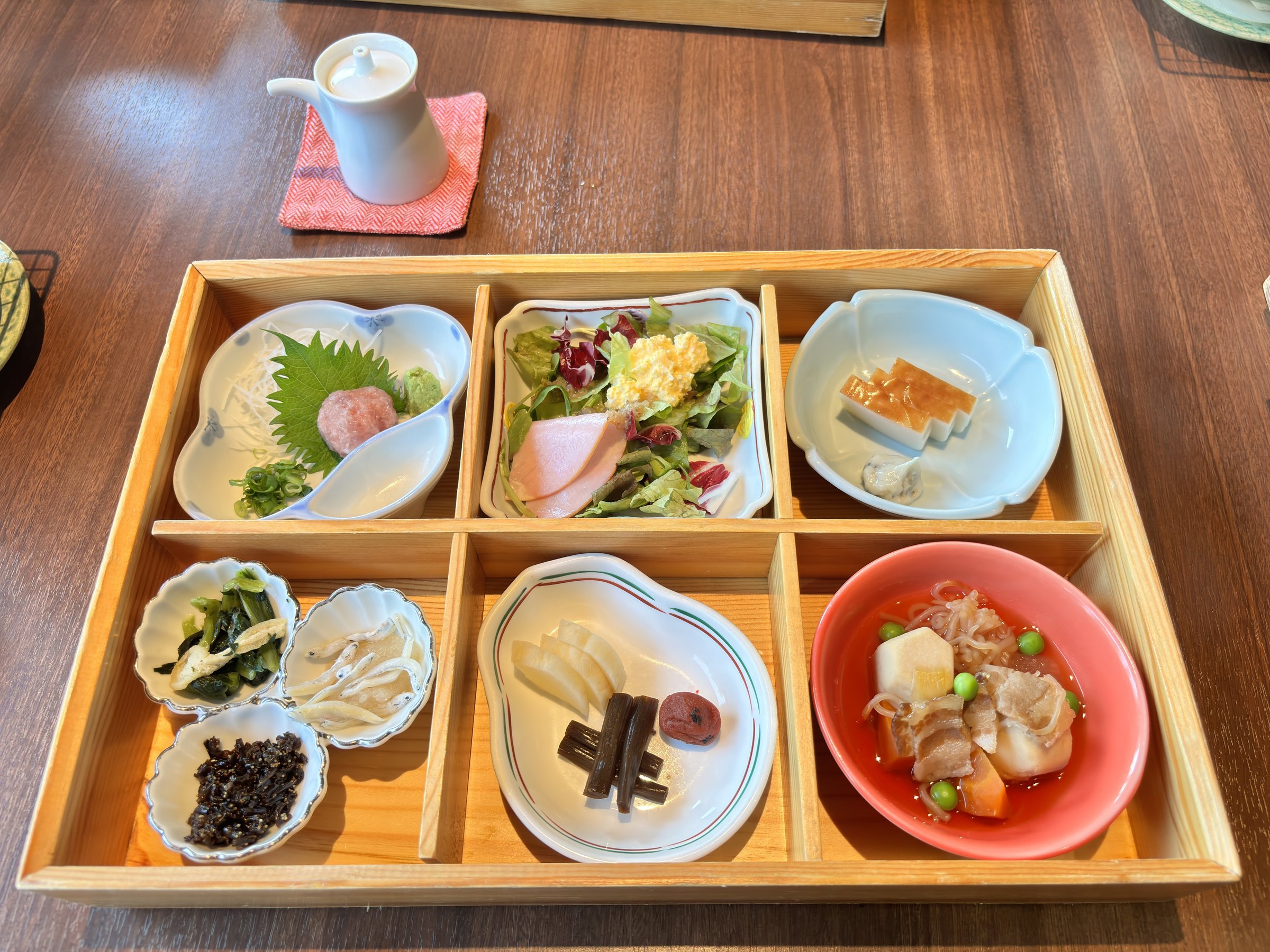
Breakfast arrived as a beautiful wooden box packed with small, colorful dishes: homemade nikujaga (simmered meat and potatoes), fresh salad, sashimi, tsukudani (preserves simmered in soy) and shirasu (whitebait), each in a small, well-balanced portion that was a pleasure just to look at. The healthy dishes had gentle flavors that seemed to soak into the body, a warm and generous breakfast that suited a morning away.
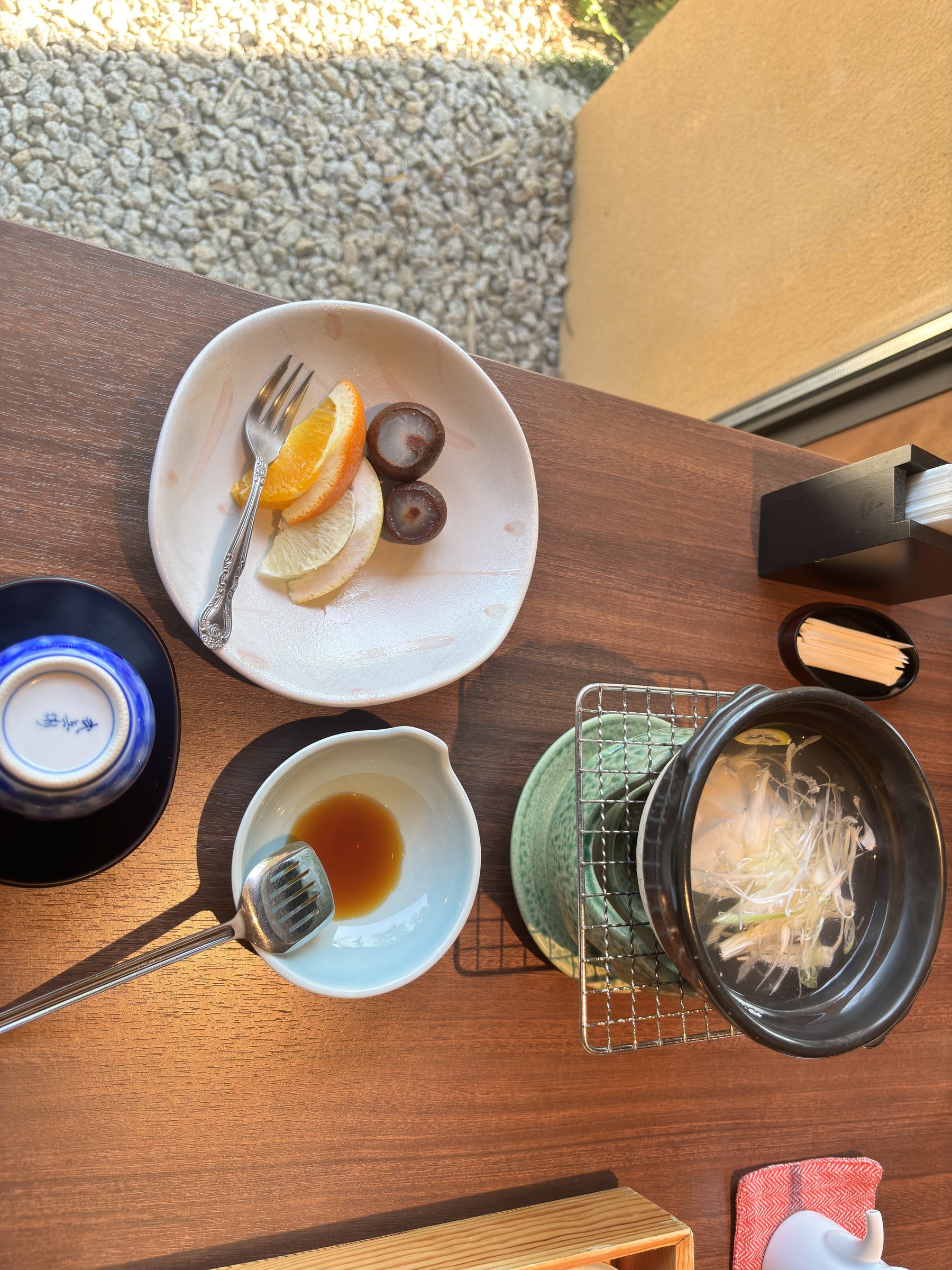
Small plates of neatly arranged fruit, orange, kiwi and lychee, were lined up, and beside them a small pot warmed slowly over a fuel burner, gentle steam rising from it, kind to the stomach first thing in the morning.
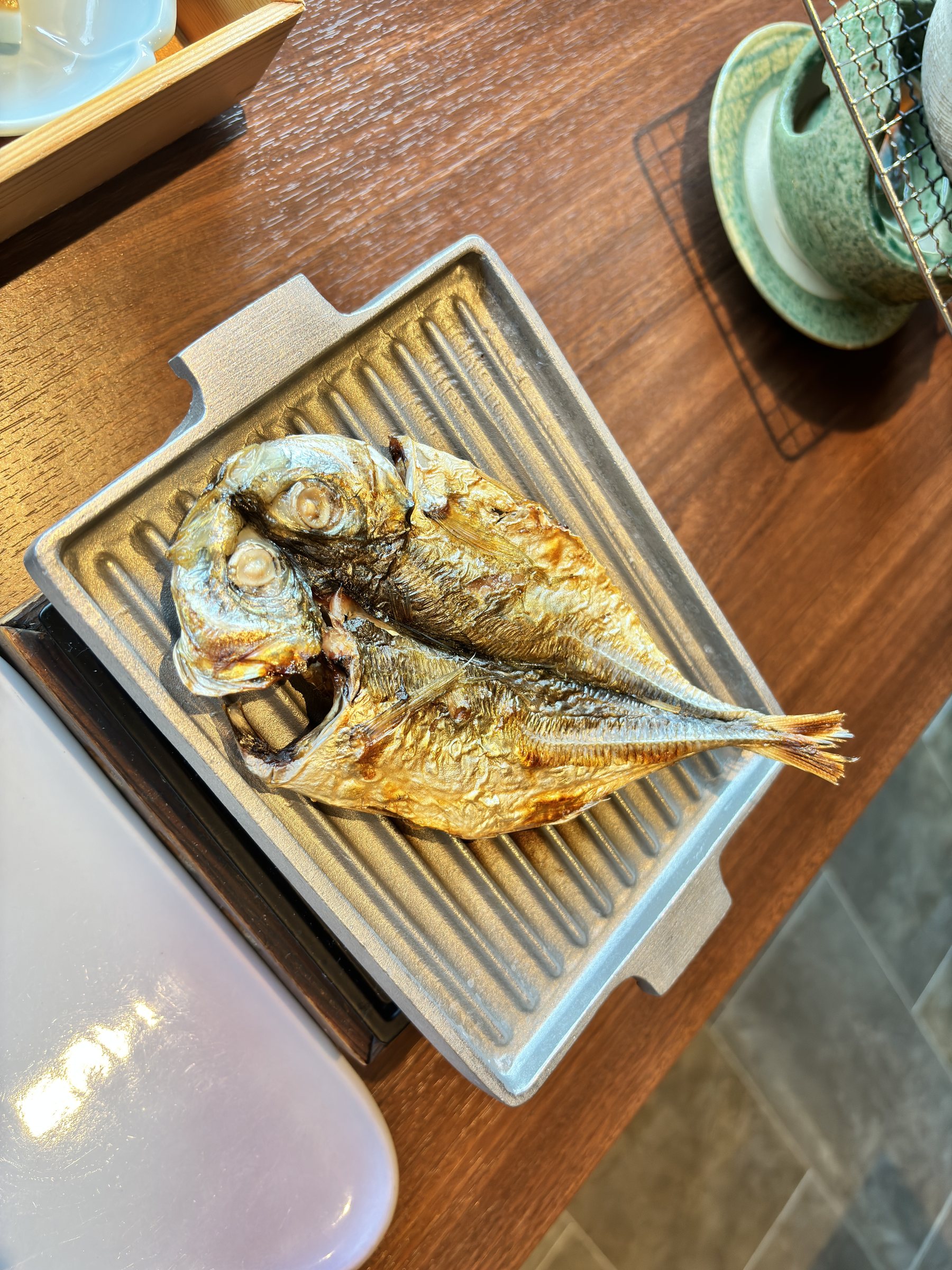
A dried horse mackerel was grilled slowly on the griddle in front of us. The skin turned crisp and the flesh plump and juicy, and with this alone you could eat bowl after bowl of freshly cooked rice.
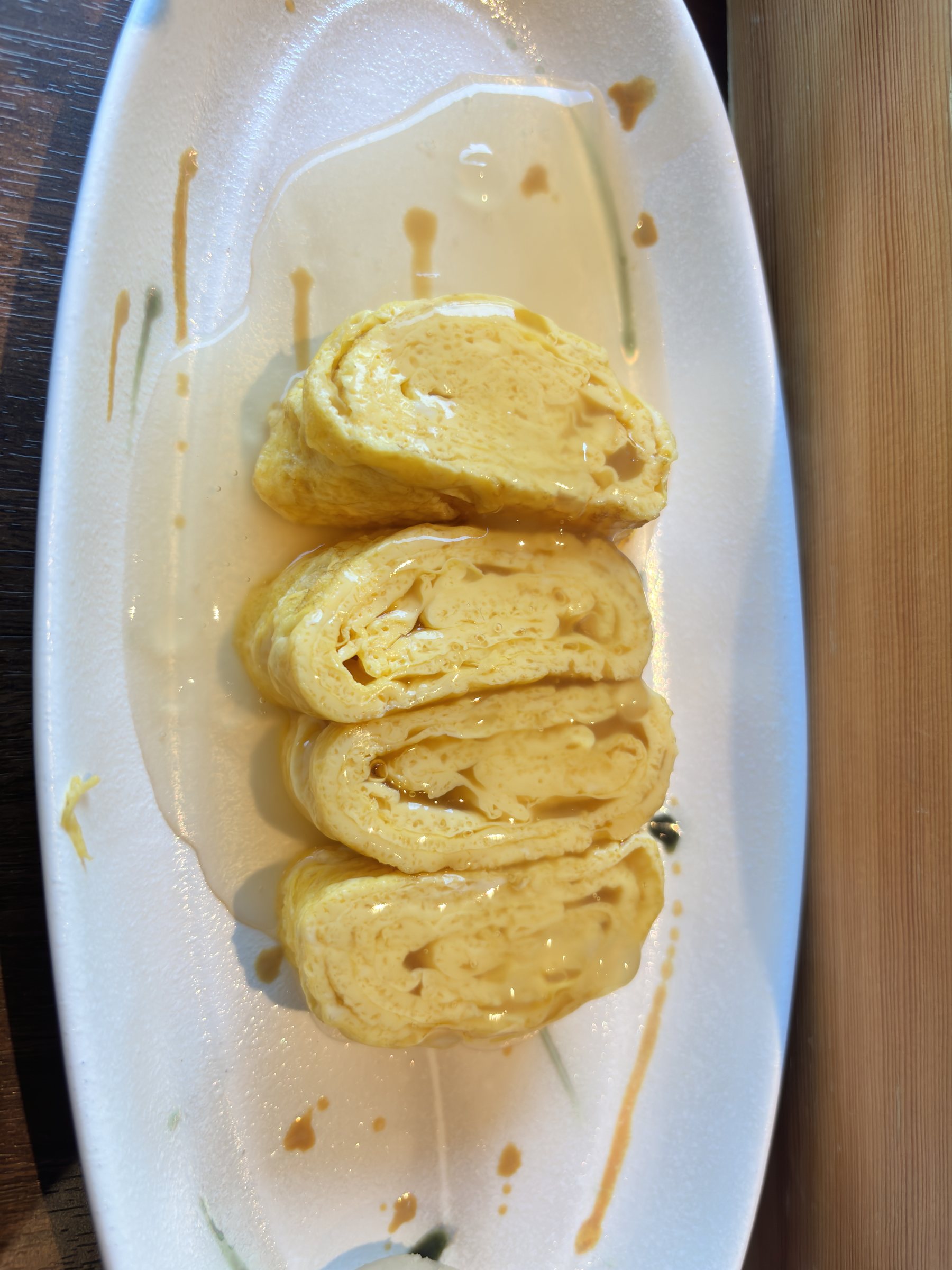
We were very impressed that the dashimaki tamago, the rolled omelet made with dashi, was cooked fresh on the griddle and served straight away. The seasoning, however, seemed somehow at odds with the name dashimaki, and it was a shame that this dish did not suit our taste.
Looking back
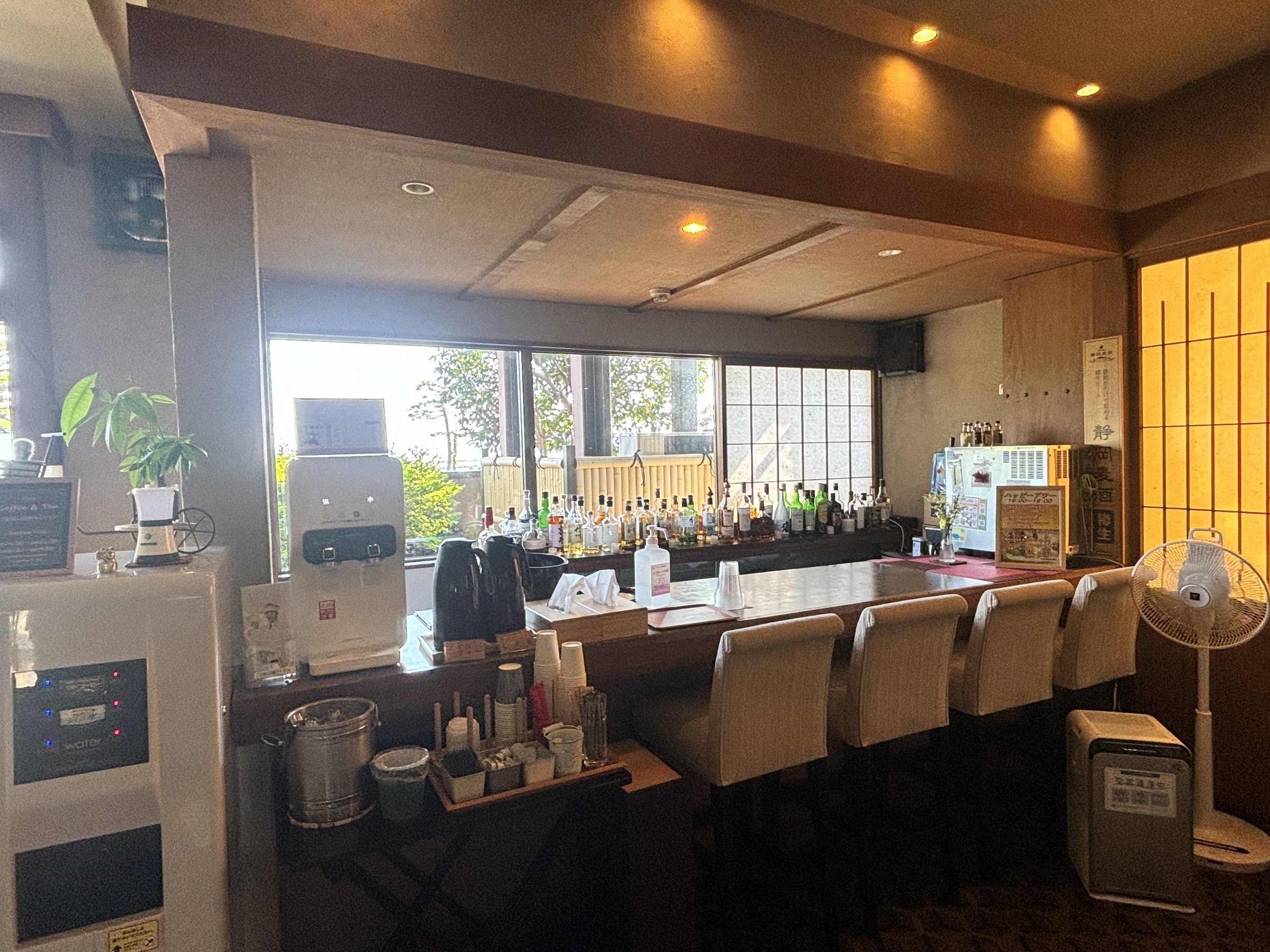
Behind the bar counter, rows of bottles caught the sunlight, and together with the soft light from the windows the room had a fresher face than it had shown the night before. Spending a quiet, settled, nostalgic evening here would be a fine thing too.
Restored in body and mind by the excellent hot springs, the food and the warm hospitality, we left the ryokan reluctantly, with wonderful memories: a close to the trip full of gratitude and calm.
This review reflects a visit in July 2024. Please confirm current details directly with the ryokan before visiting.