Kinosaki Onsen, in Toyooka in the north of Hyogo Prefecture, is a large hot spring town made for wandering. We came in winter to stroll its streets and eat the season’s best, and we based ourselves at Tokiwa Bekkan.
A welcome in the rain
When we pulled up at the entrance in the rain, two or three members of staff came straight out with umbrellas to greet us. During the pandemic years, most ryokan and hotels had dropped luggage service to keep contact to a minimum. Here, the staff picked up our bags at once and took care to keep them dry. A generation ago this would have been taken for granted; in times like these, it was heart-warming.
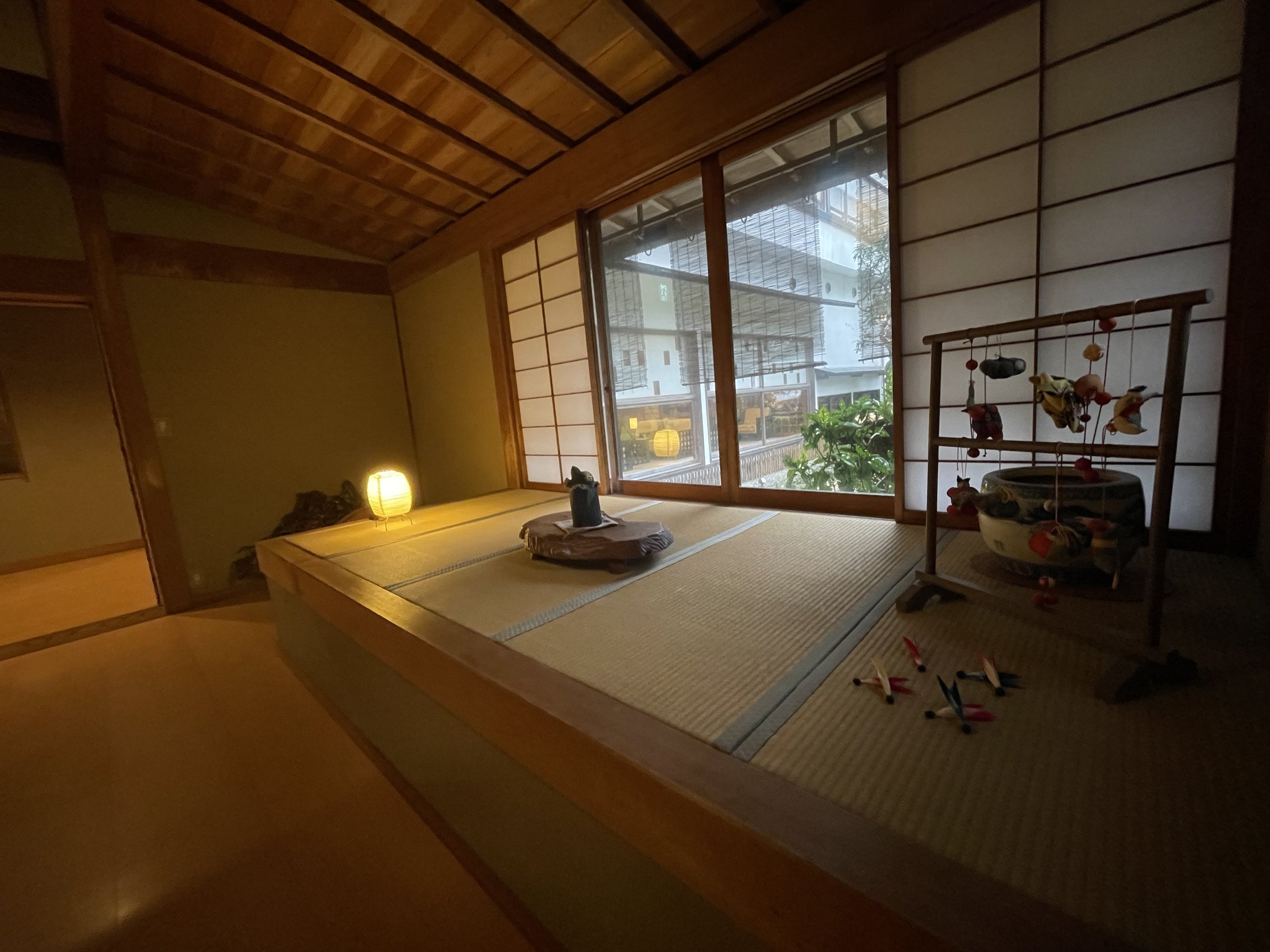
Check-in was smooth, and we were shown to our room straight away. The building is softly lit, and it has, in the best sense, the air of an old-fashioned ryokan.
The room and its garden
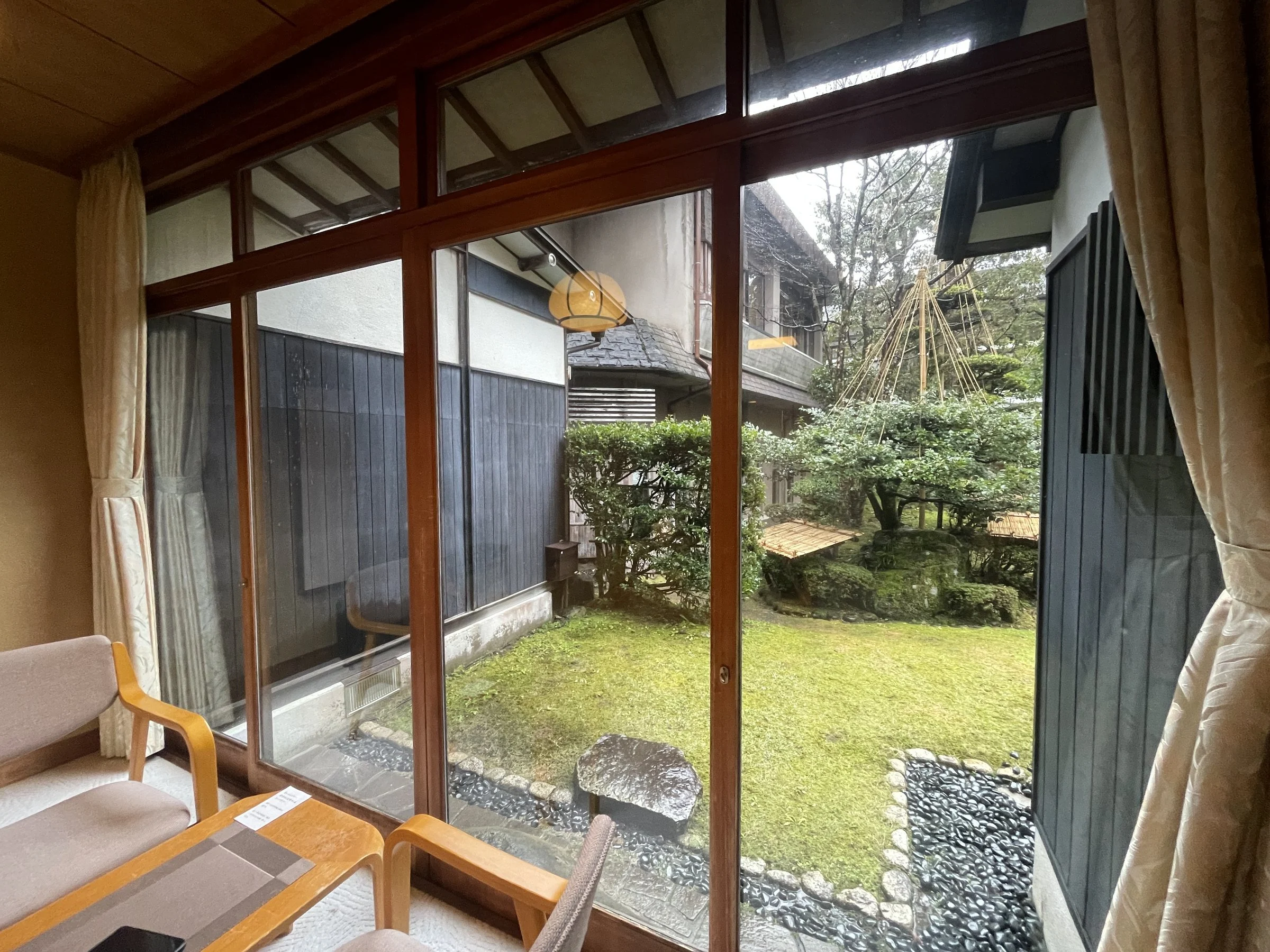
The room is purely Japanese in style, the sort of space in which anyone would feel at ease. It was thoroughly clean, with no unpleasant smells at all, and very comfortable. Stepping into such a tidy, well-kept room, we felt almost as if we had come for a traditional tōji, a long restorative stay at the hot springs.
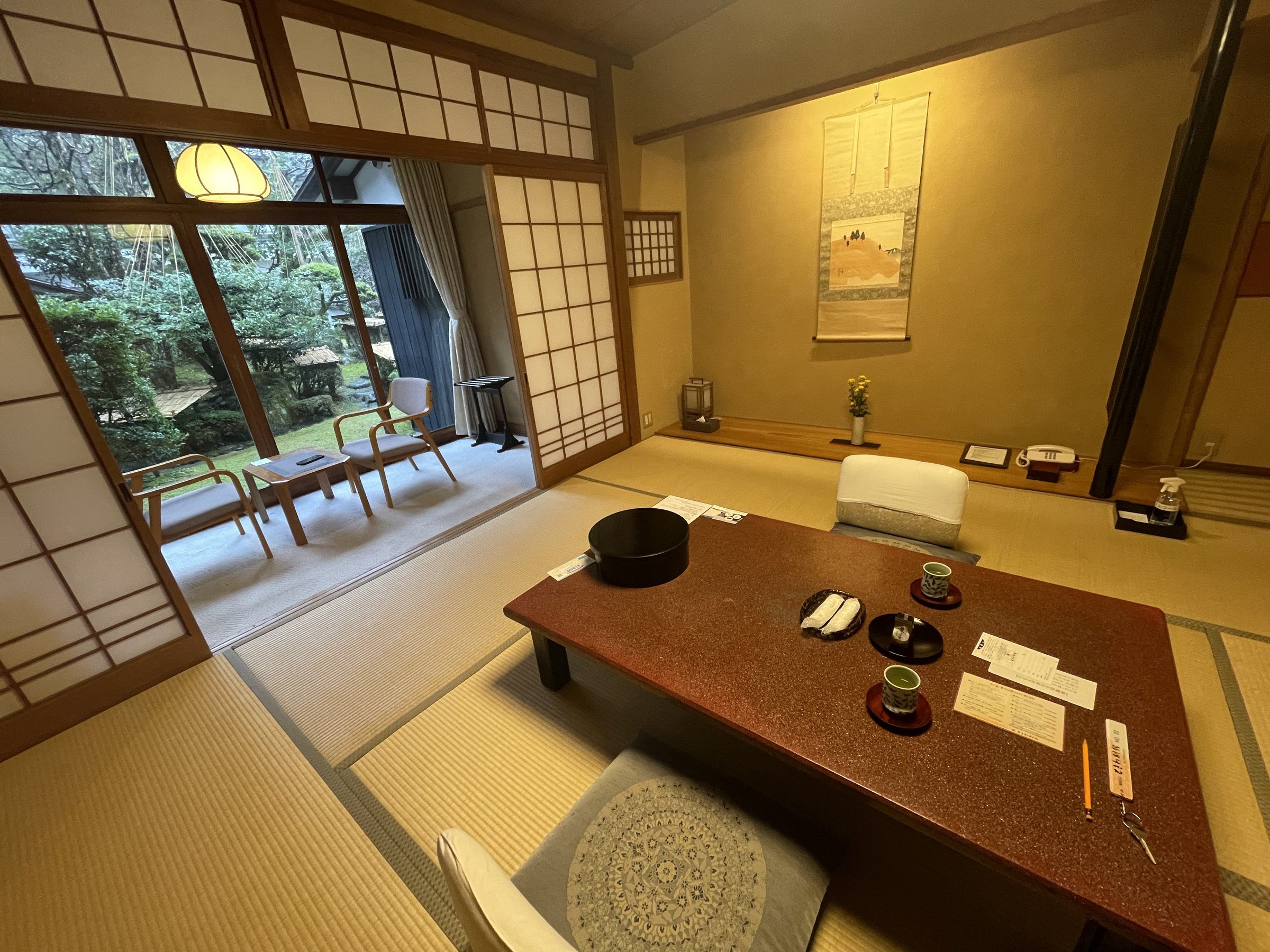
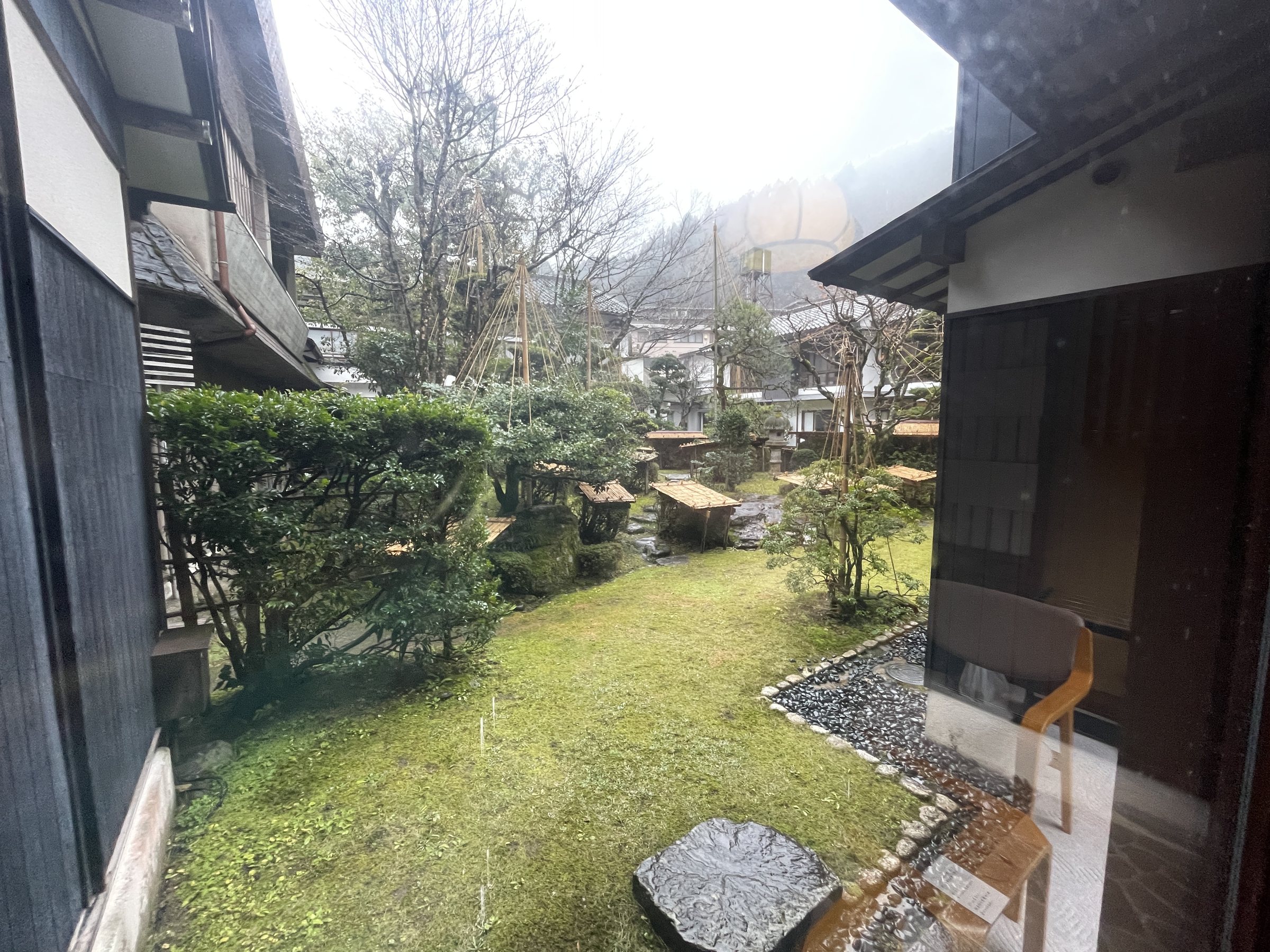
Beyond an atmospheric door is a small engawa, a wooden veranda, from which we could look straight out onto a courtyard garden that was all but ours alone. The yukitsuri, ropes rigged to protect the trees from the weight of snow, made a scene that speaks straight to a Japanese heart. Sandals were set out so that we could step into the garden, and we were impressed by how thoughtfully every corner had been considered.
Space to spare
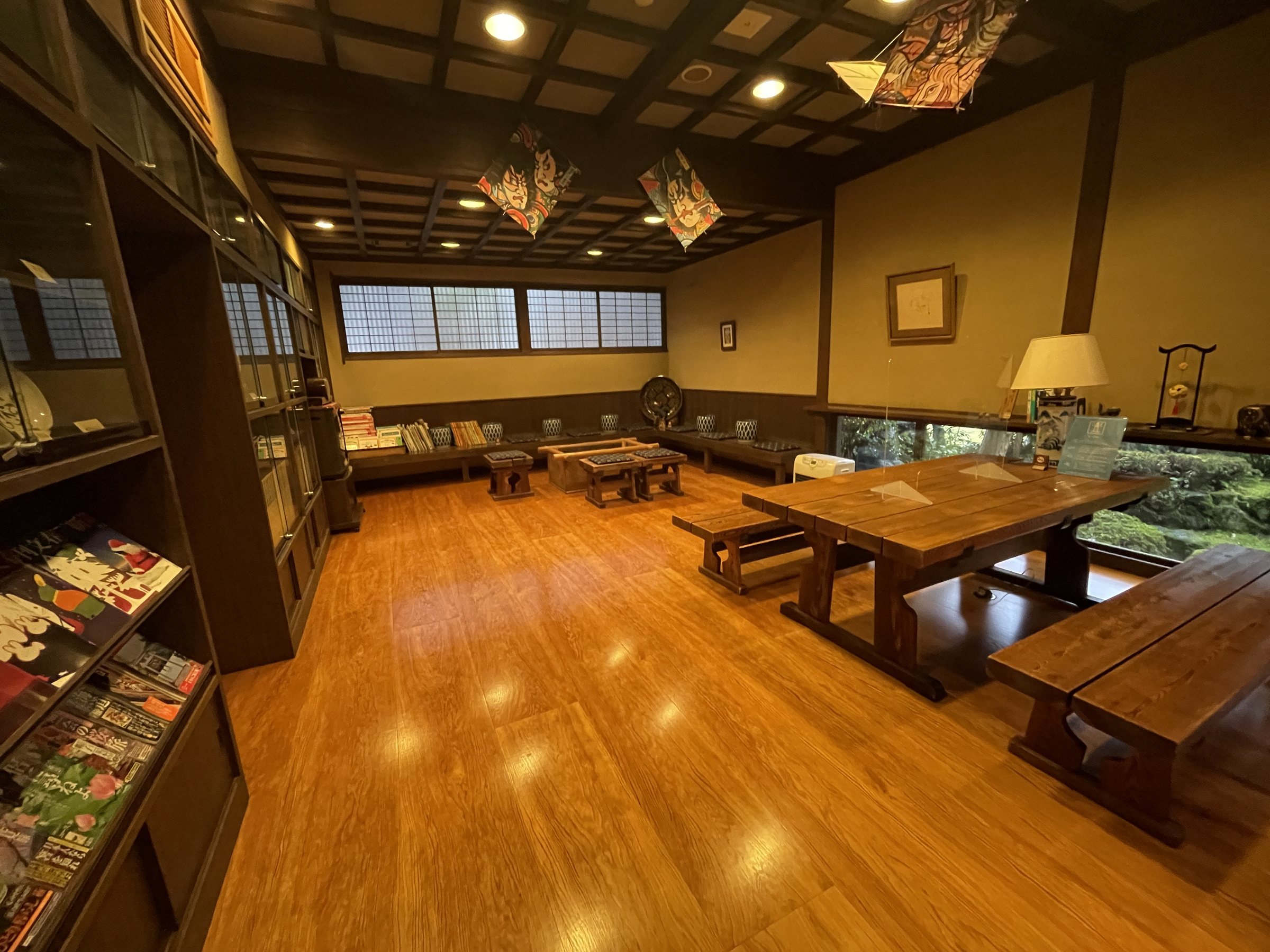
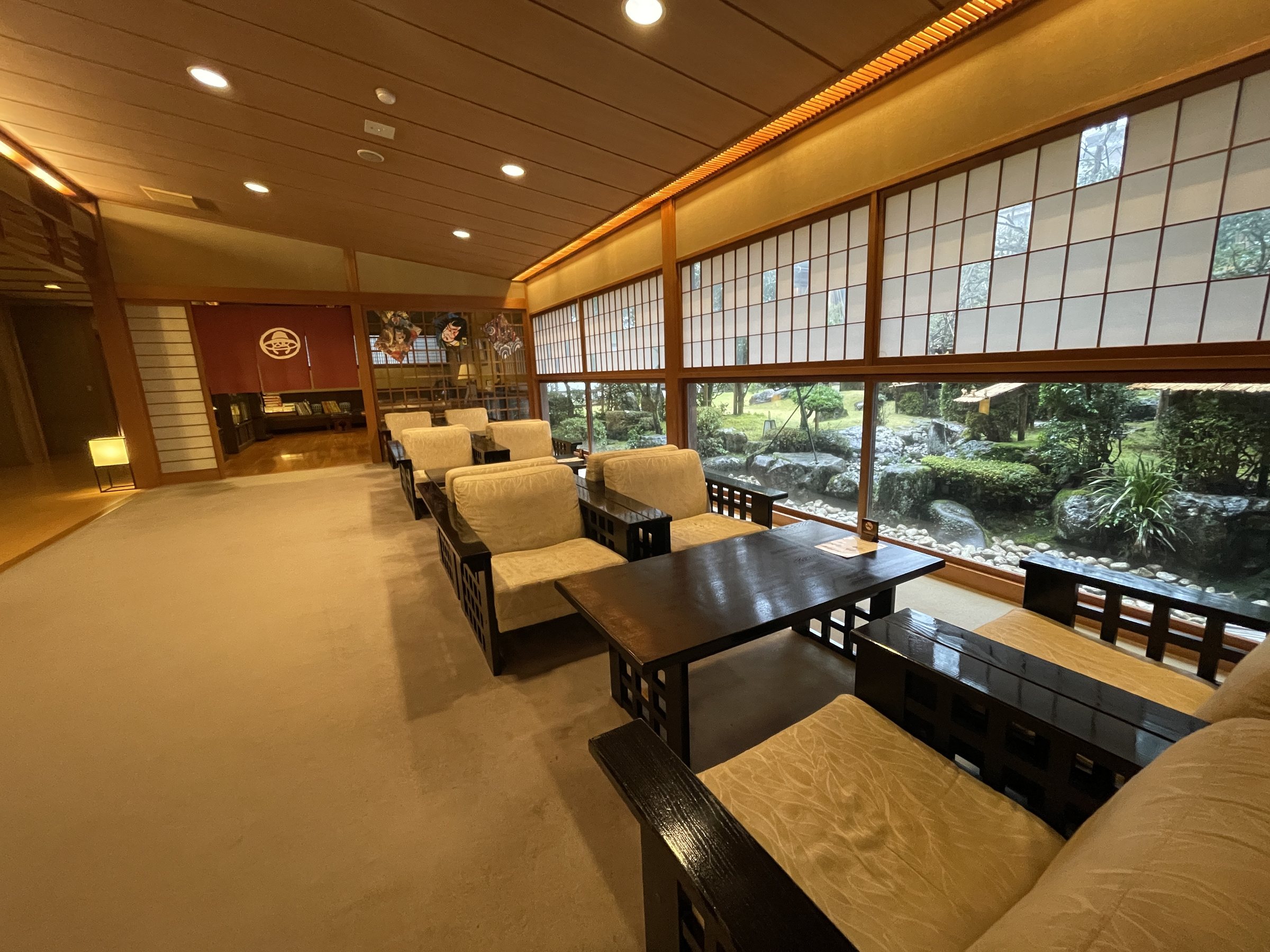
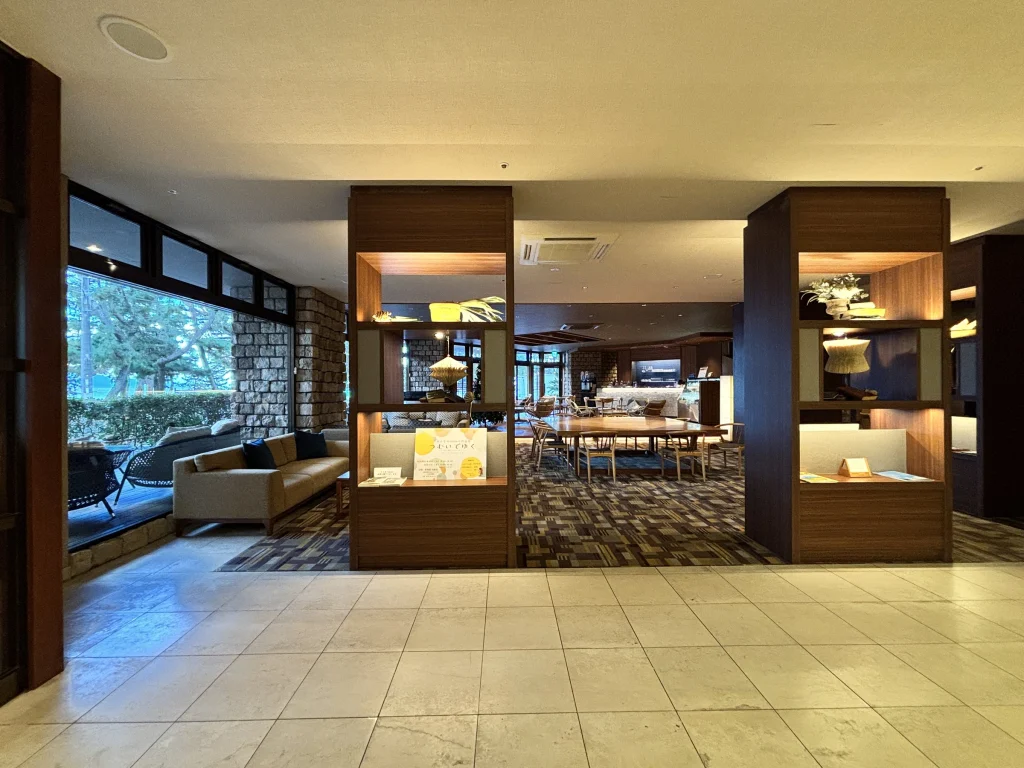
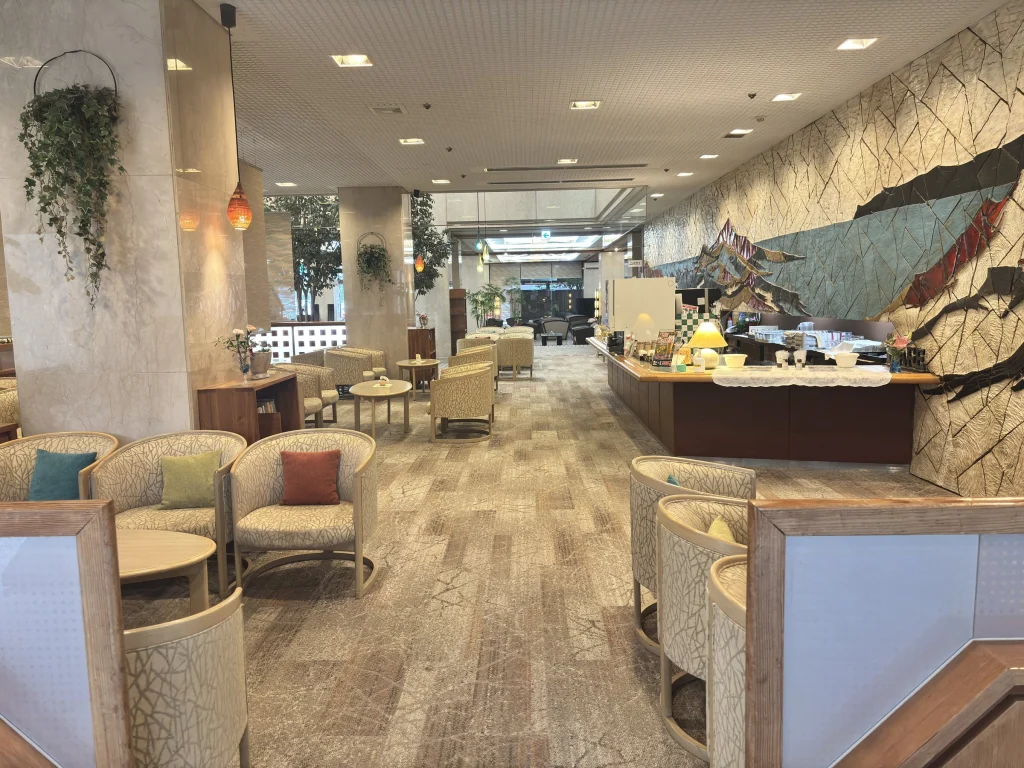
Next to the lobby is a spacious reading room with a cool, serene air. The communal spaces throughout the building are generously proportioned, and they put us in an easy, unhurried frame of mind. The rest area near the large baths is equally roomy: good for relaxing after a soak, for meeting up, or simply for chatting with friends.
Strolling the town
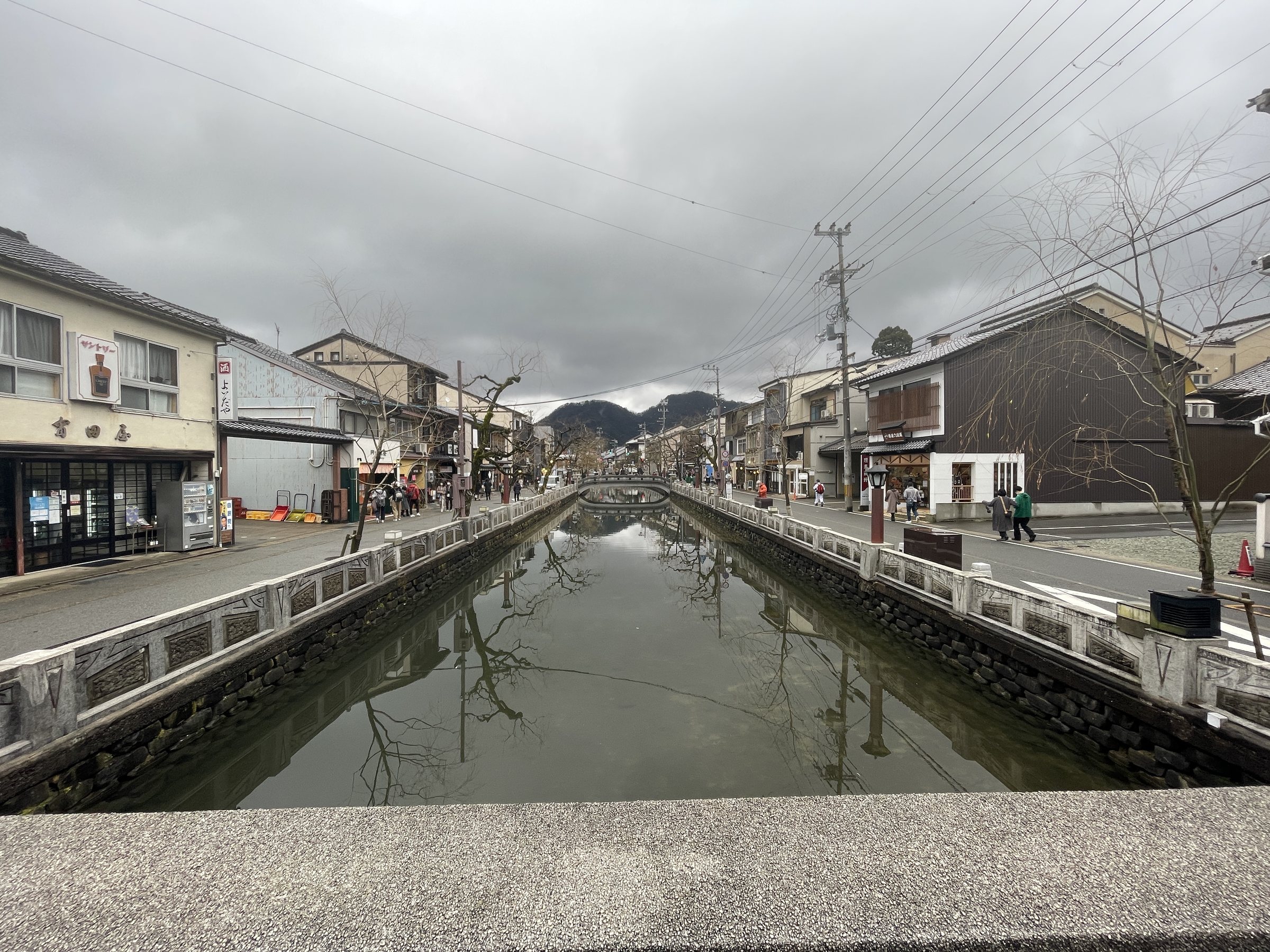
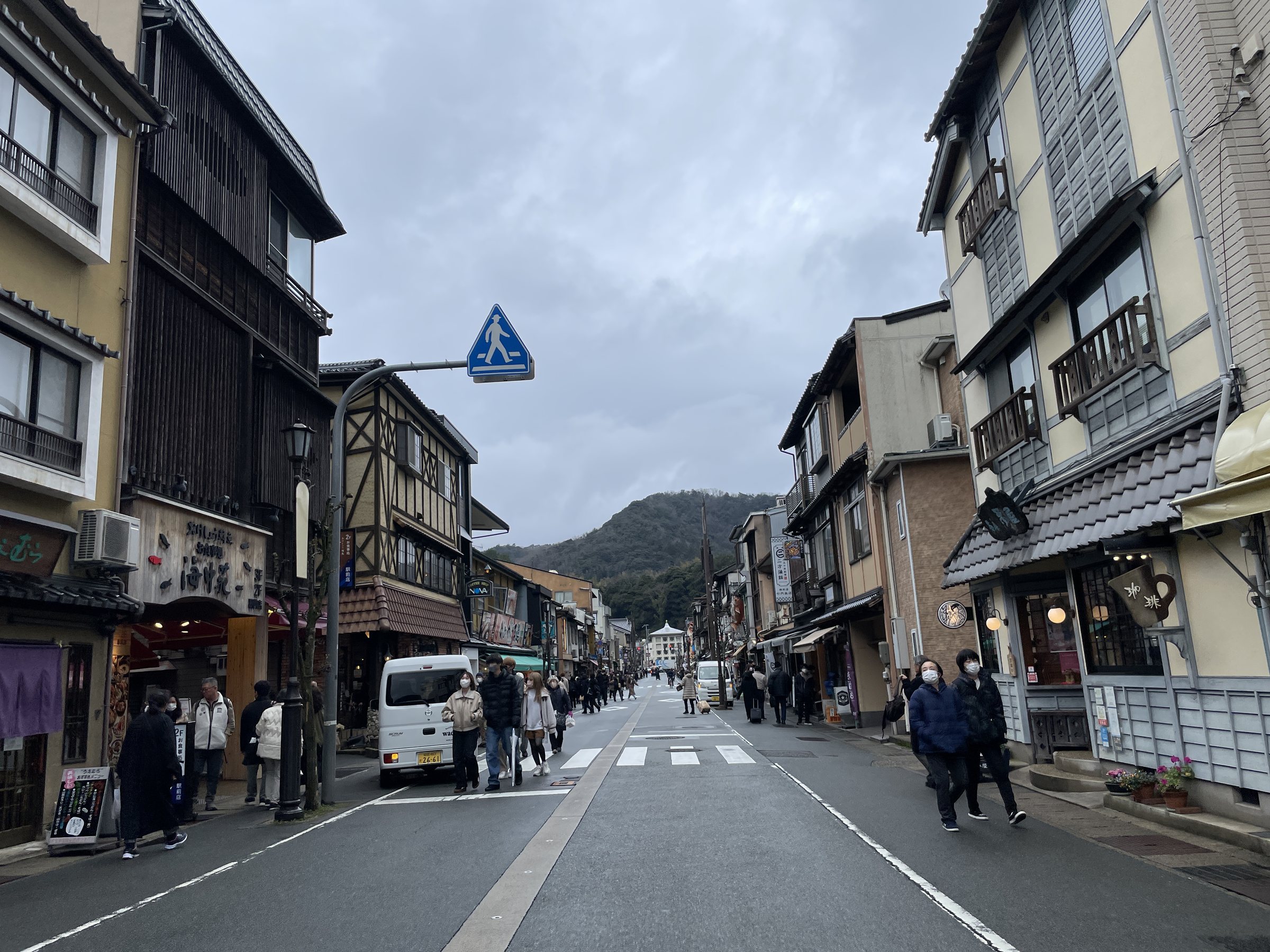
Kinosaki is a town to be enjoyed as a whole. Walk out of the ryokan and you come across one local speciality after another; the atmosphere of the streets alone is worth the trip. This is the hot spring resort in its purest form. The day was overcast and rainy, yet the town was busy with visitors.
Kinosaki is famous for matsuba-gani, snow crab, and crab signs hang everywhere. Some shops sell crab at knockdown prices, others let you eat it on the spot, and it is hard not to get excited.
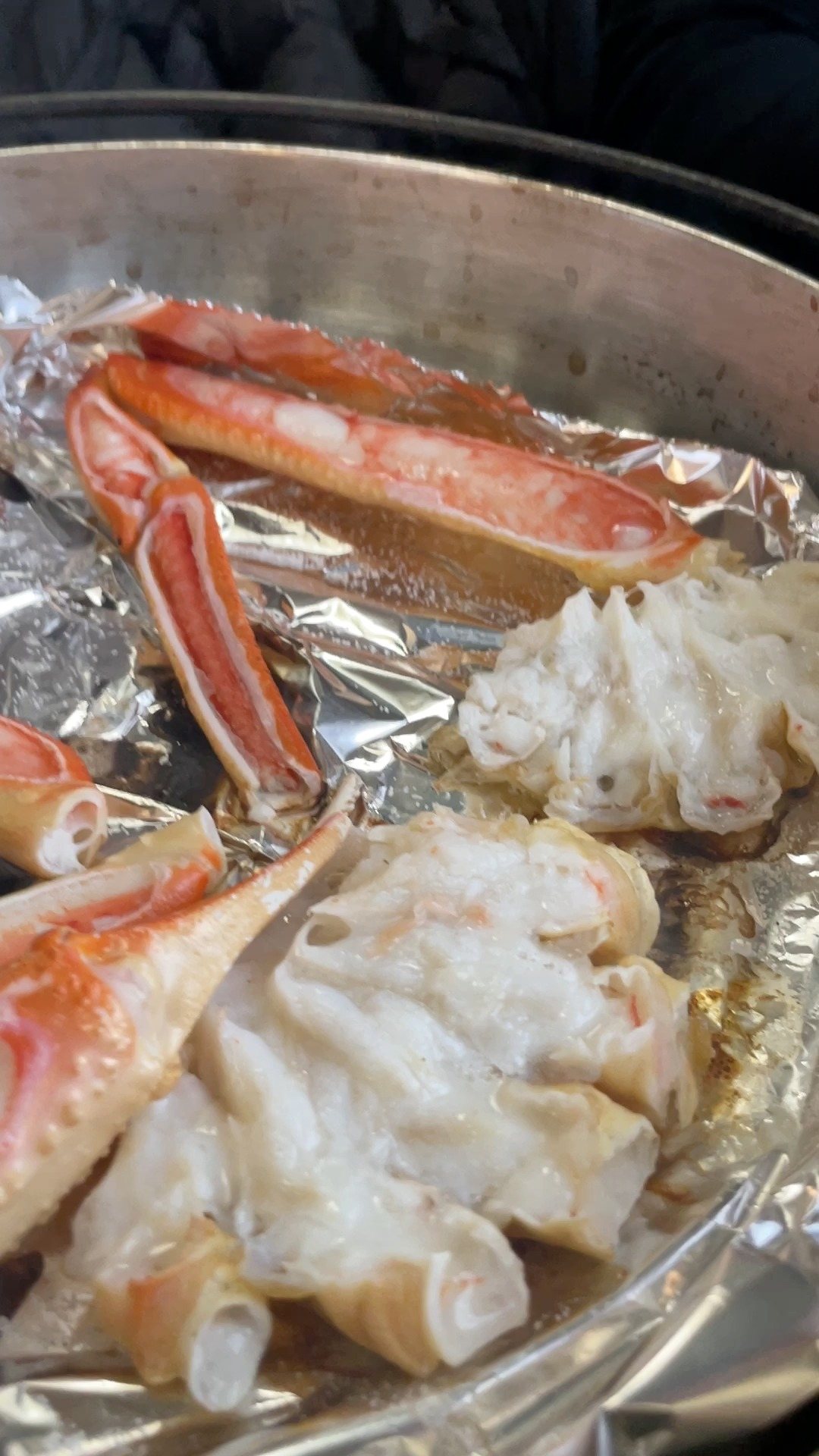
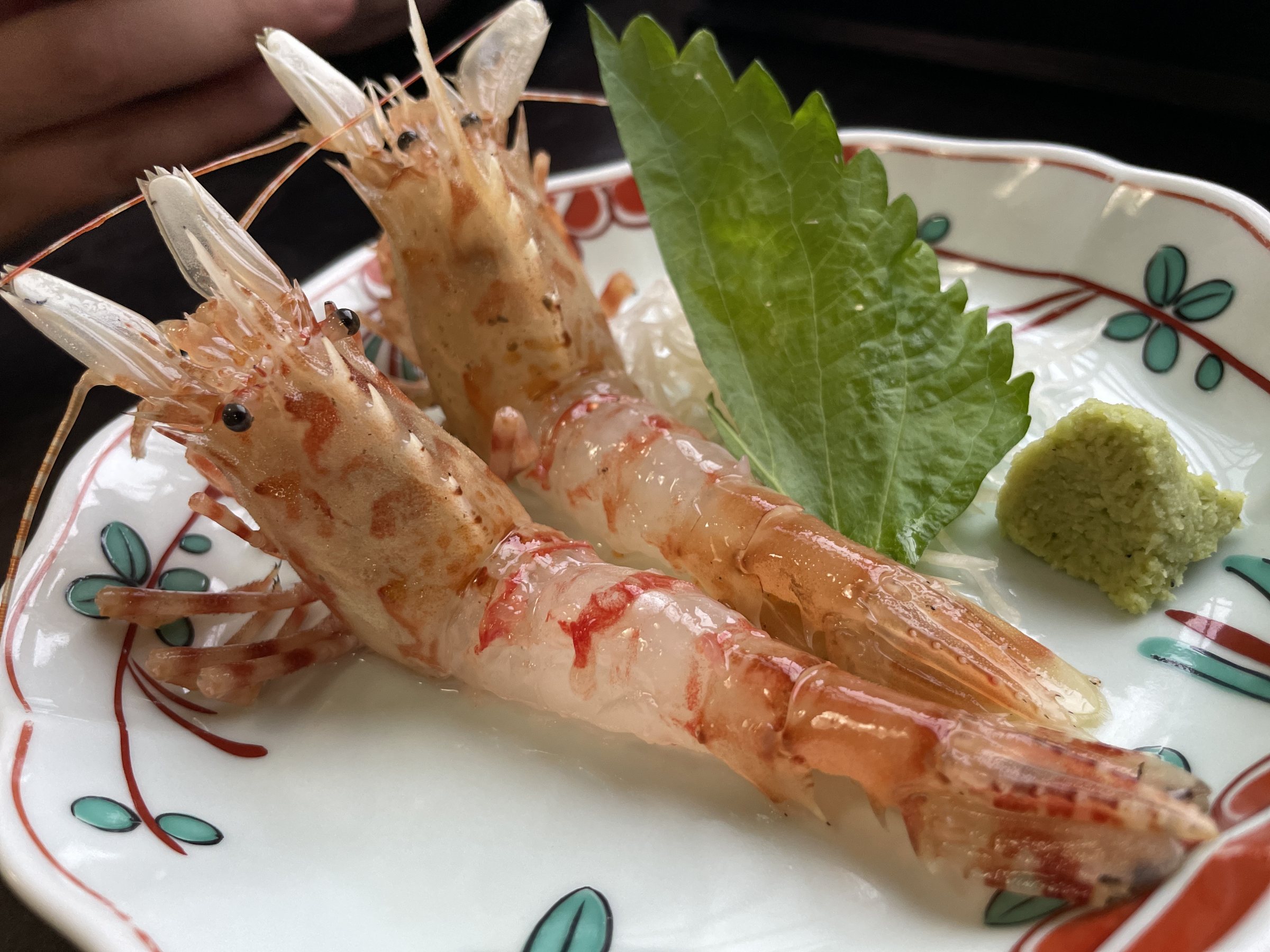
We started with steamed crab, eaten right there, and oni-ebi shrimp served as sashimi on the shopkeeper’s recommendation. He promised it was “better than kuruma prawn”, but personally we did not find the flavor all that remarkable.
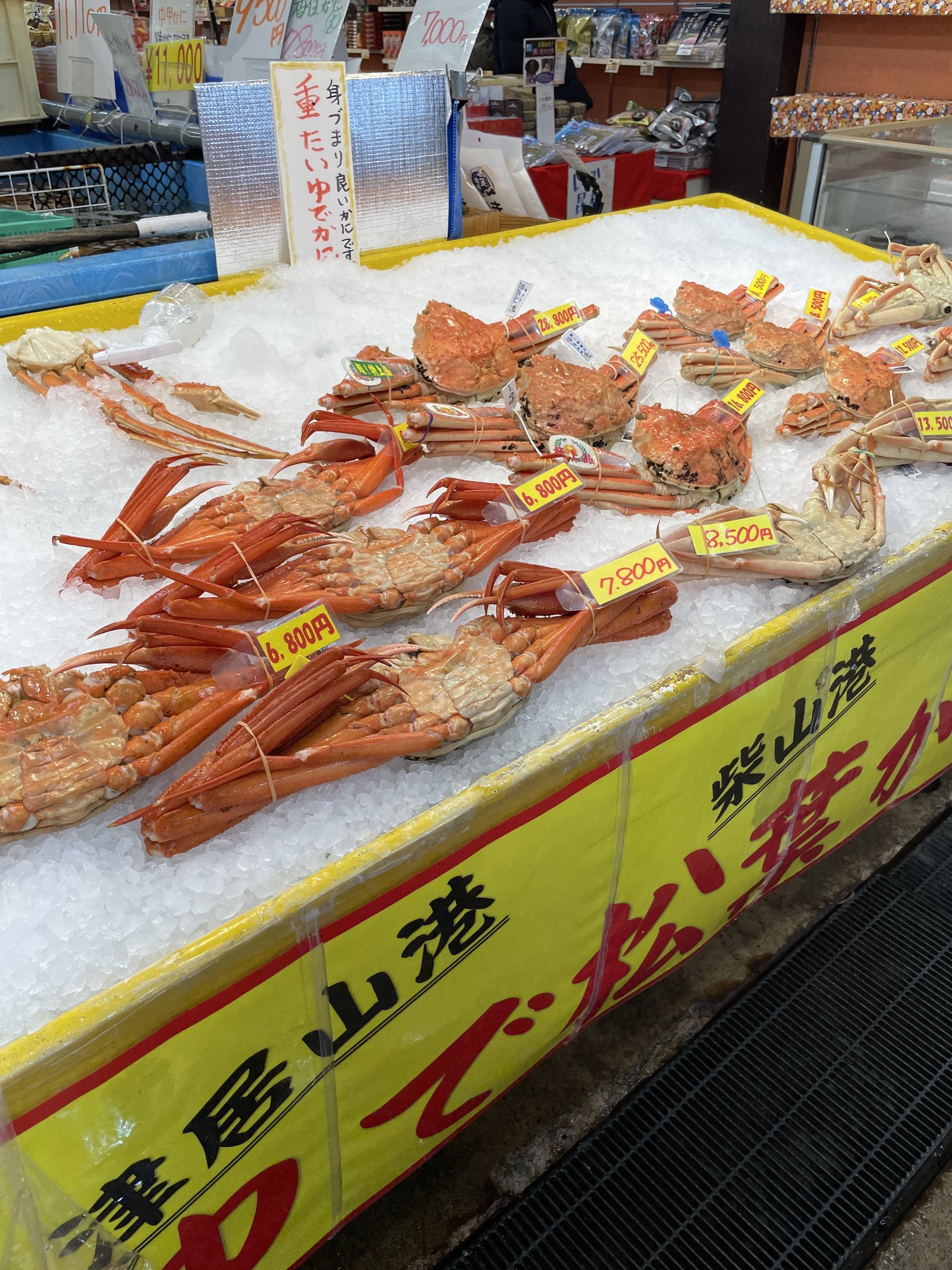
The many fish shops are a parade of crab, and we recommend working out the price per kilo and checking the going rate before you buy. On holiday it is easy to get carried away by unfamiliar sights and lose your sense of money, but we hope you will also enjoy the pleasure of judging quality for yourself.
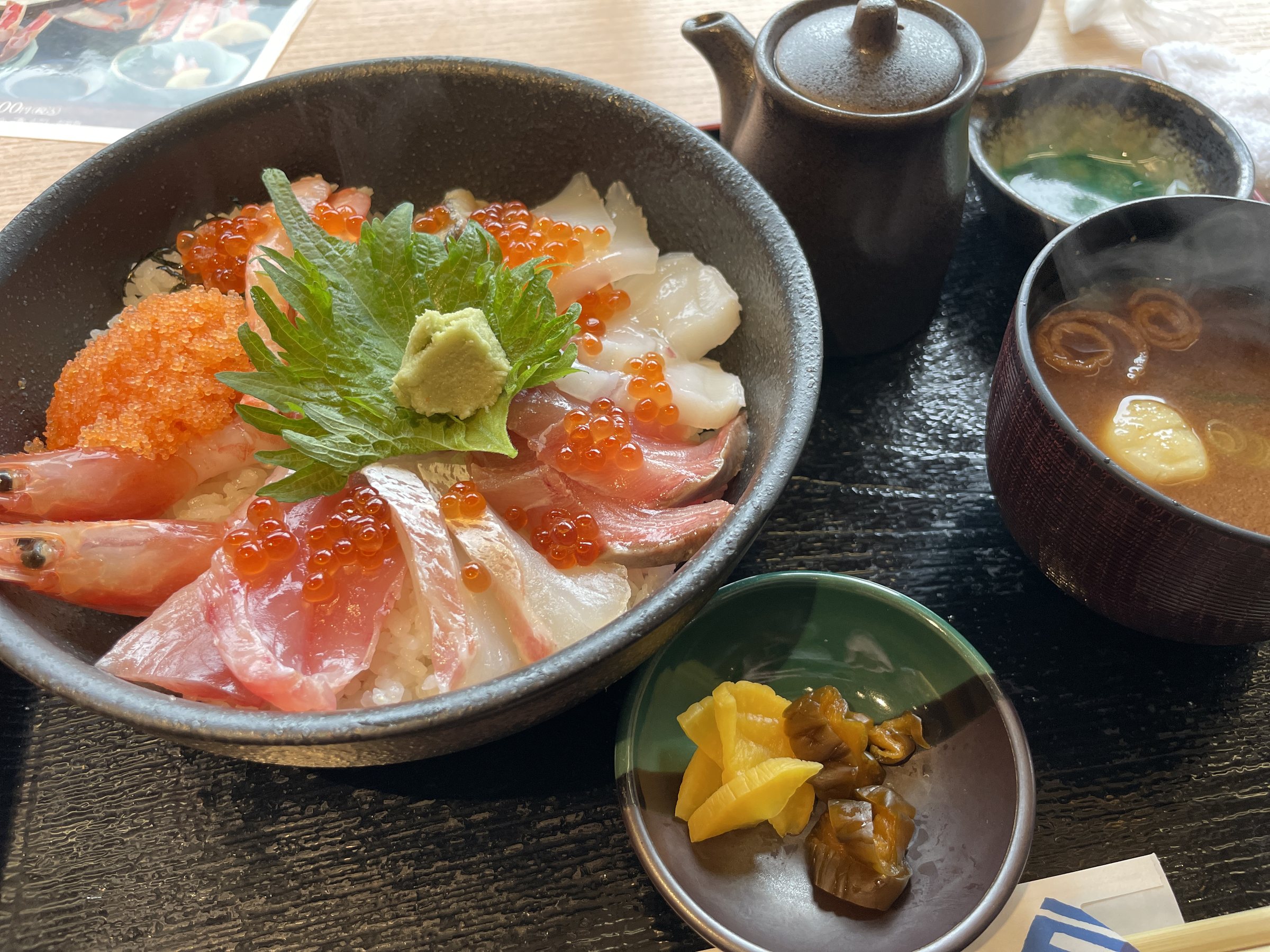
Another local favorite, advertised with flags, is the kaisendon, a bowl of rice topped with raw seafood. Anyone born in a landlocked prefecture, or living around Tokyo, will find it hard to resist. The restaurant was crowded with tourists, but the tables turned quickly, and although there was a queue we were soon seated.
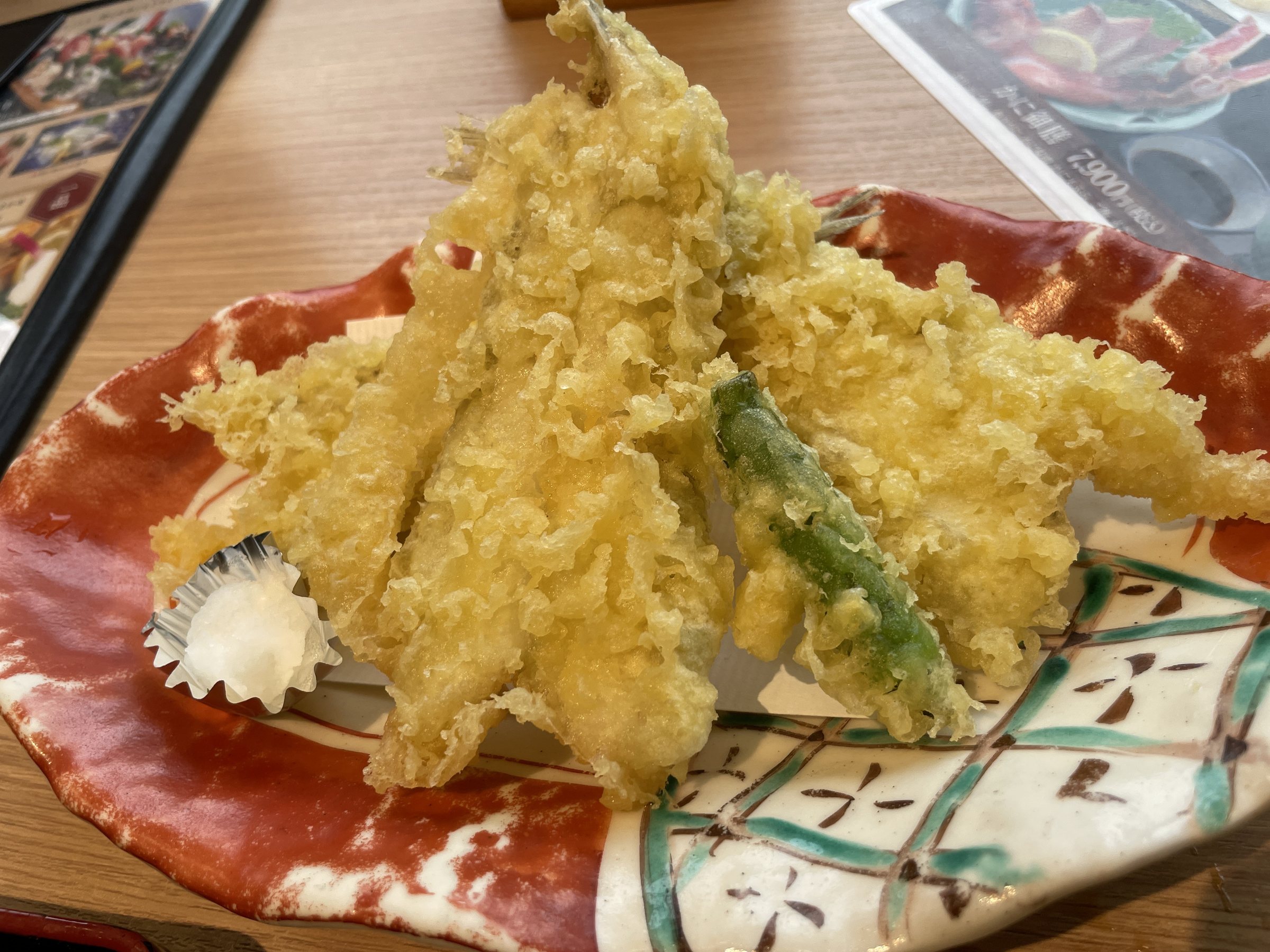
We also ordered a tempura platter. The kisu (Japanese whiting) tempura was wonderfully light, a small moment of bliss.
The baths
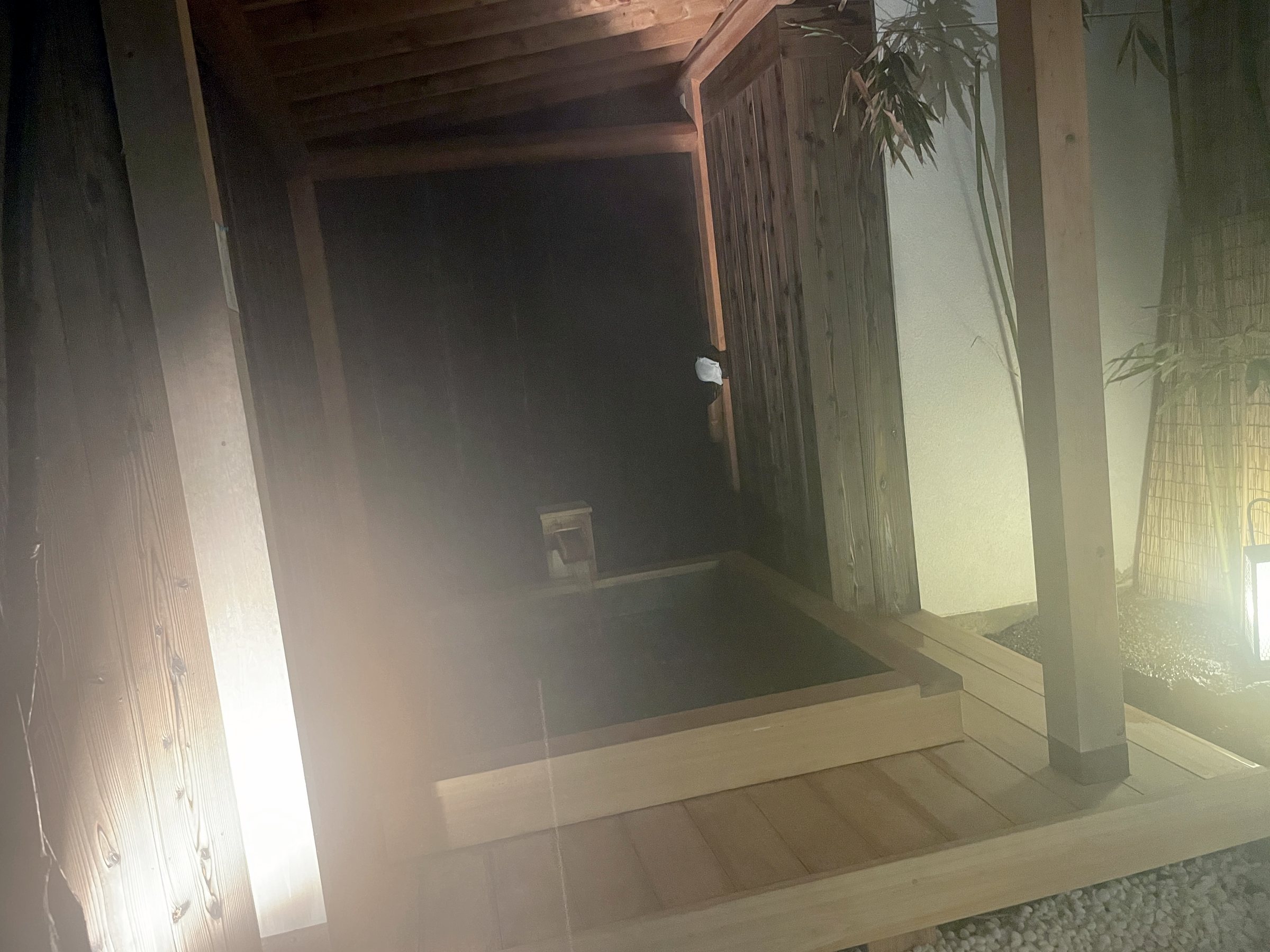
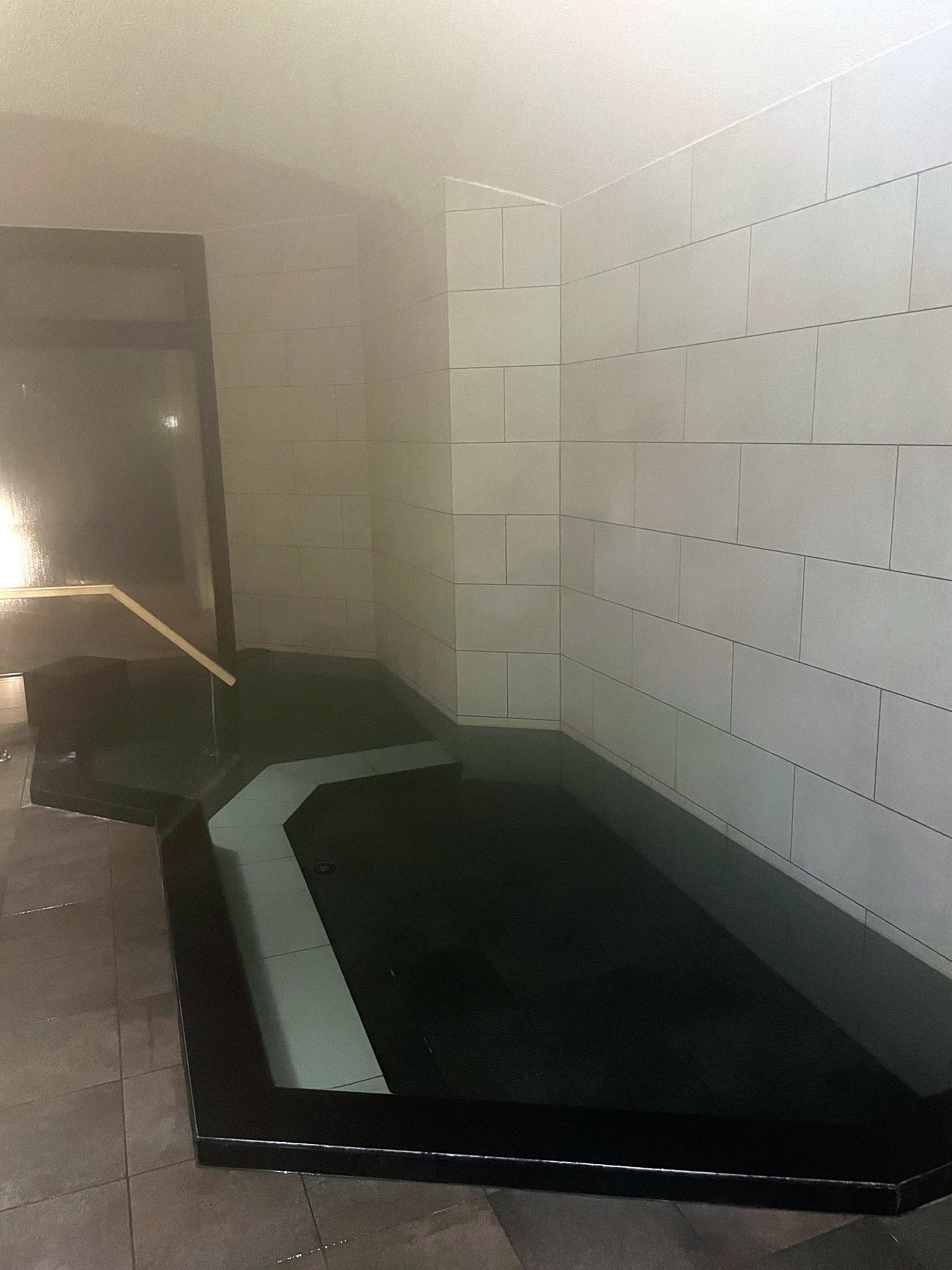
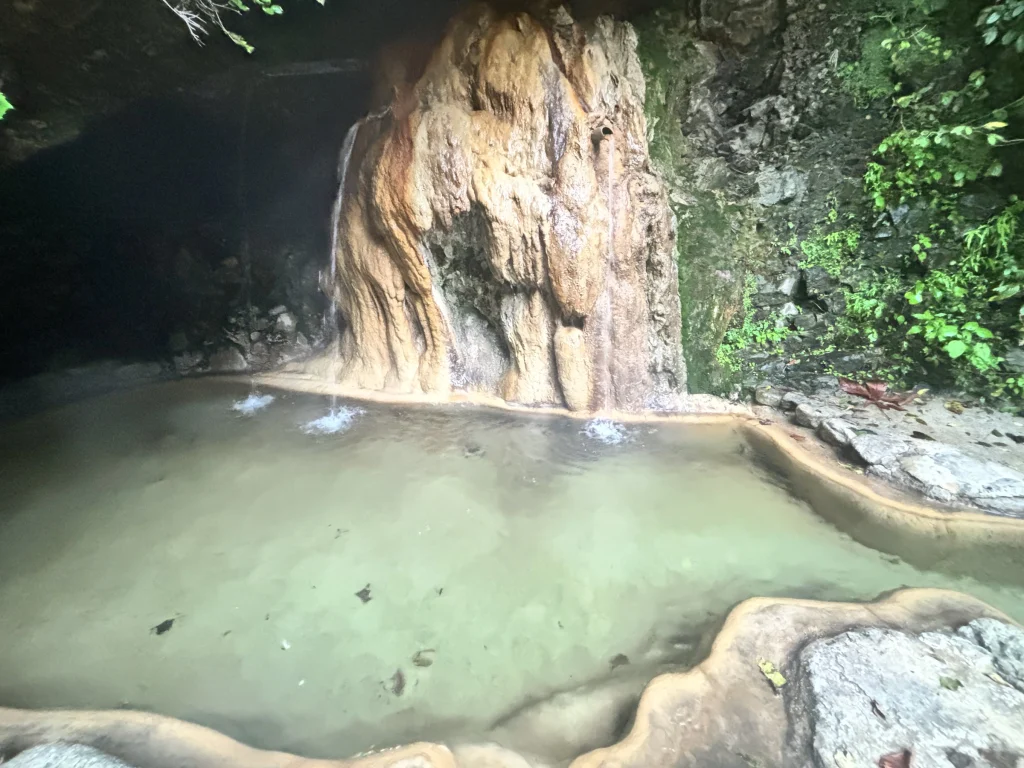
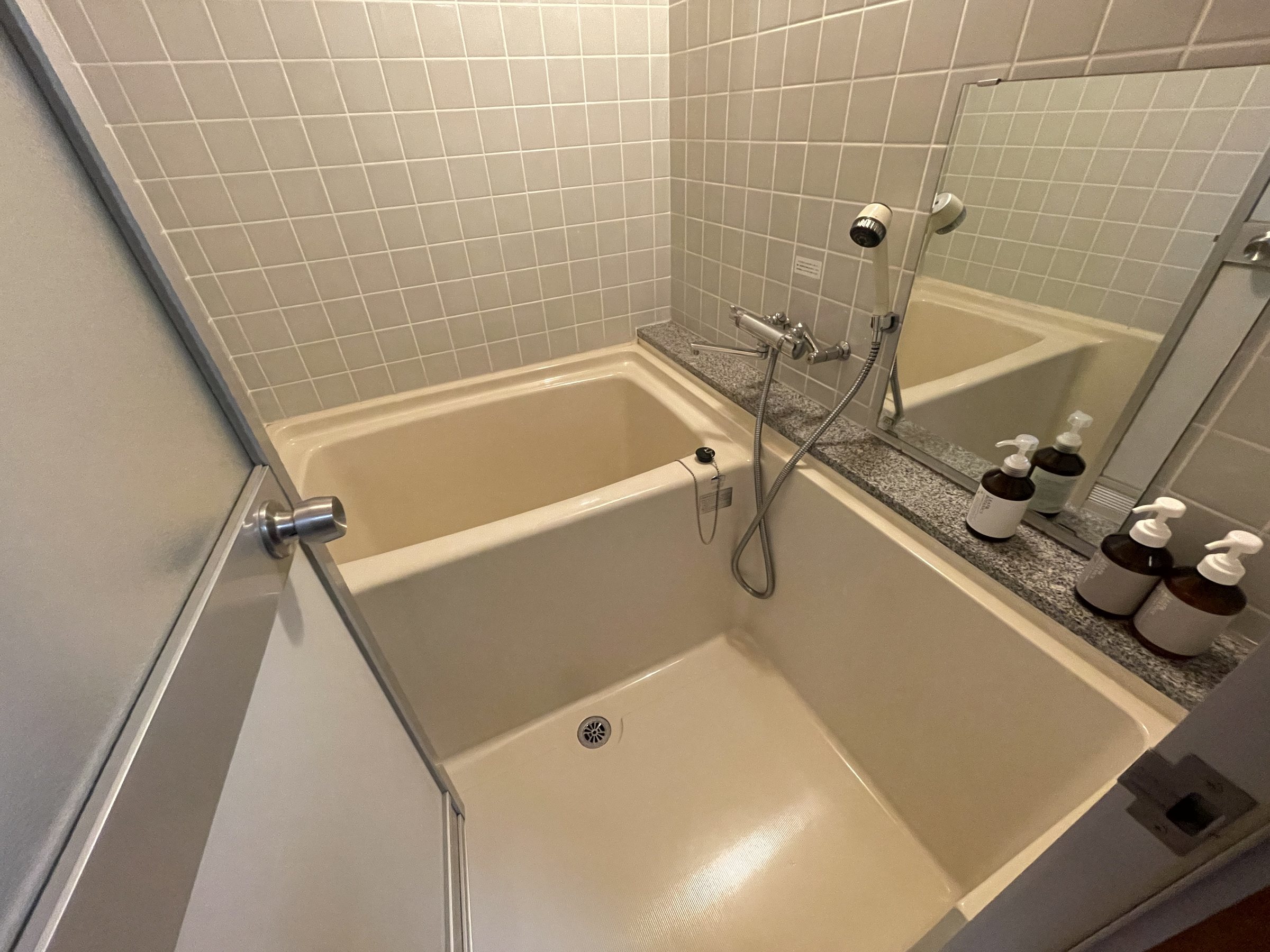
The photos, taken on a phone, do not do it justice, but the indoor bath has a smooth, silky water, with what seemed a faint scent of the sea, as befits a spring so close to the coast. The tub is compact, but the temperature was just right for a long soak.
The large bath also has a charming open-air tub, big enough for about three people. Made of soft hinoki cypress, it offers that blissful moment of being warmed to the core while a slightly chilly breeze passes over you. The lighting throughout the baths is soothing too.
A dinner of crab, and more crab
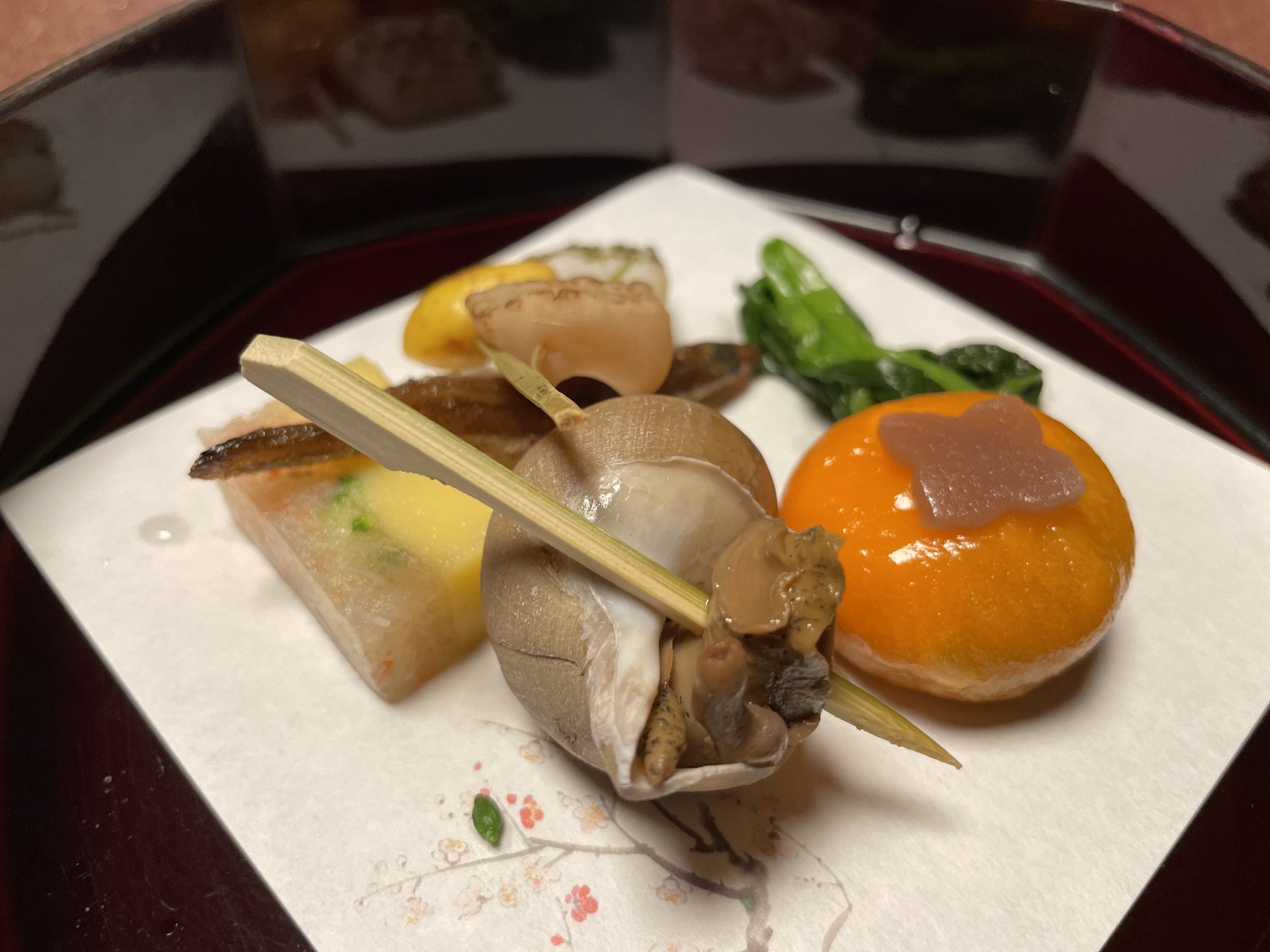
The ryokan’s own sakizuke and hassun, the small opening dishes of a Japanese course meal, were full of interest: simmered whelk, mochi made to look like a seasonal fruit, local greens in dashi, and a tiny dish set like a yōkan jelly, rather like a small aspic. All of them went perfectly with a drink.
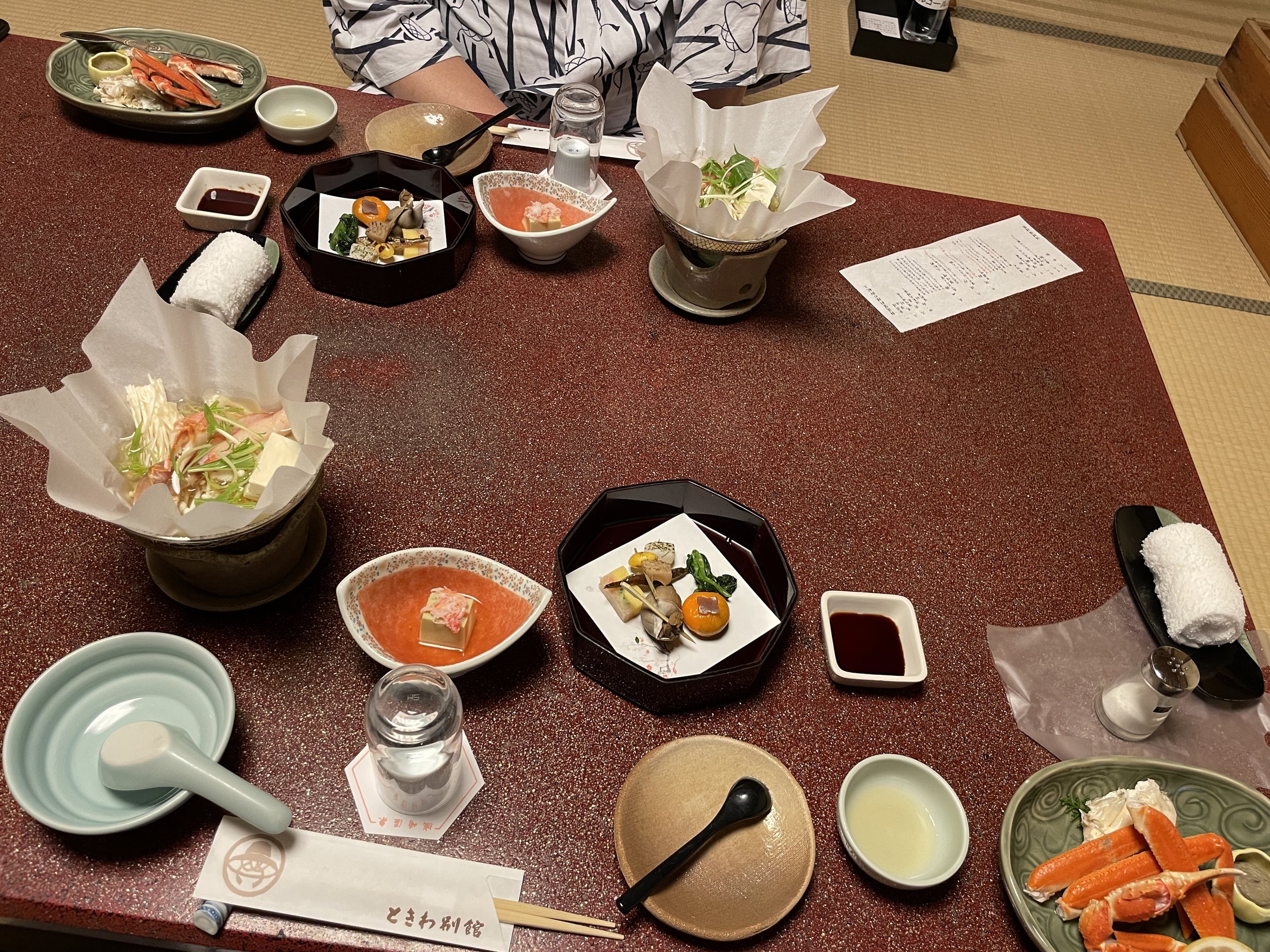
Then came the moment we had been waiting for: dinner, and the highlight of the day, a full crab course. After the carefully prepared starters came tofu made with crab miso, a crab hotpot, steamed crab and more, one dish after another. Being able to eat in our own room was a real bonus.
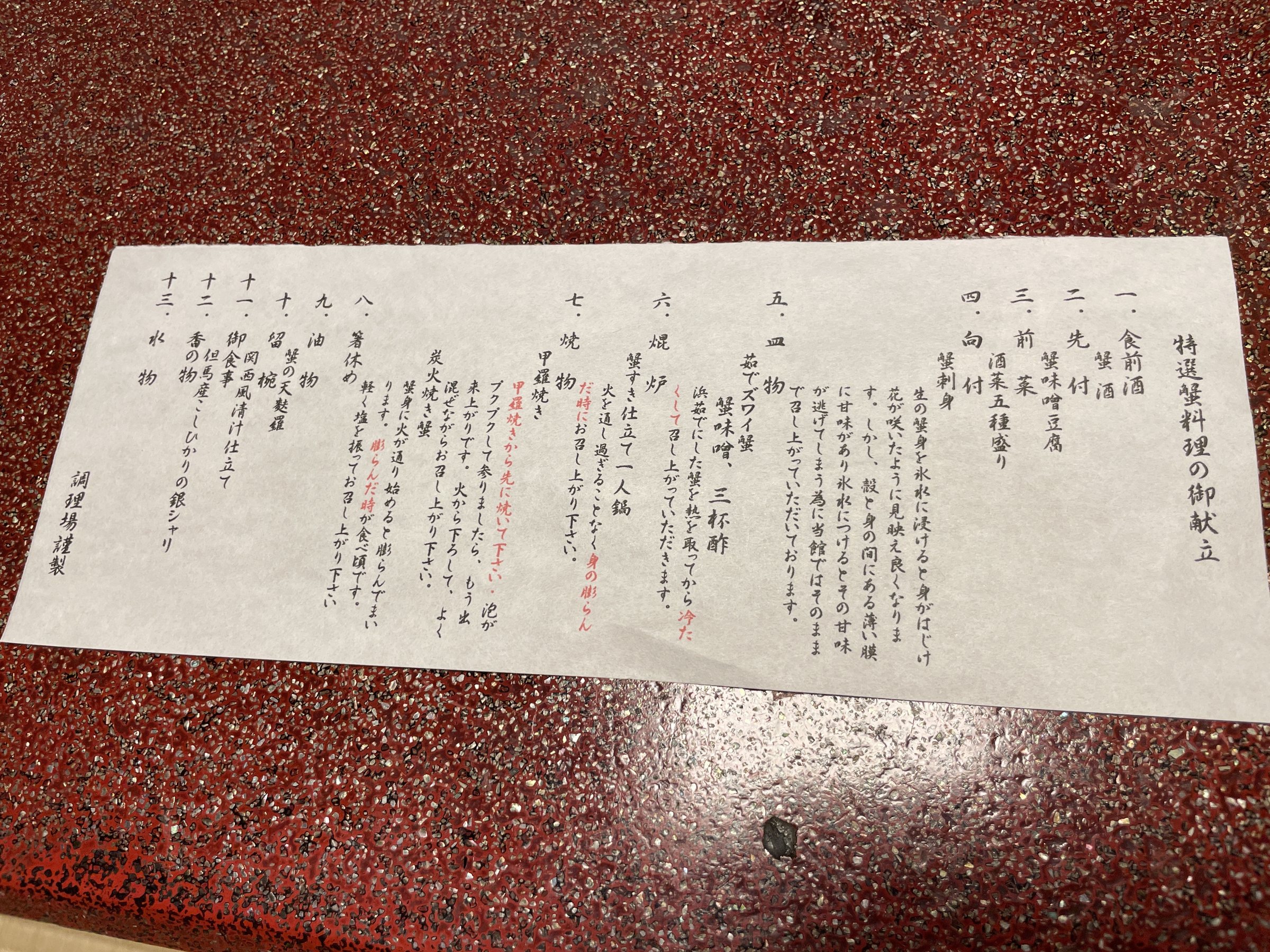
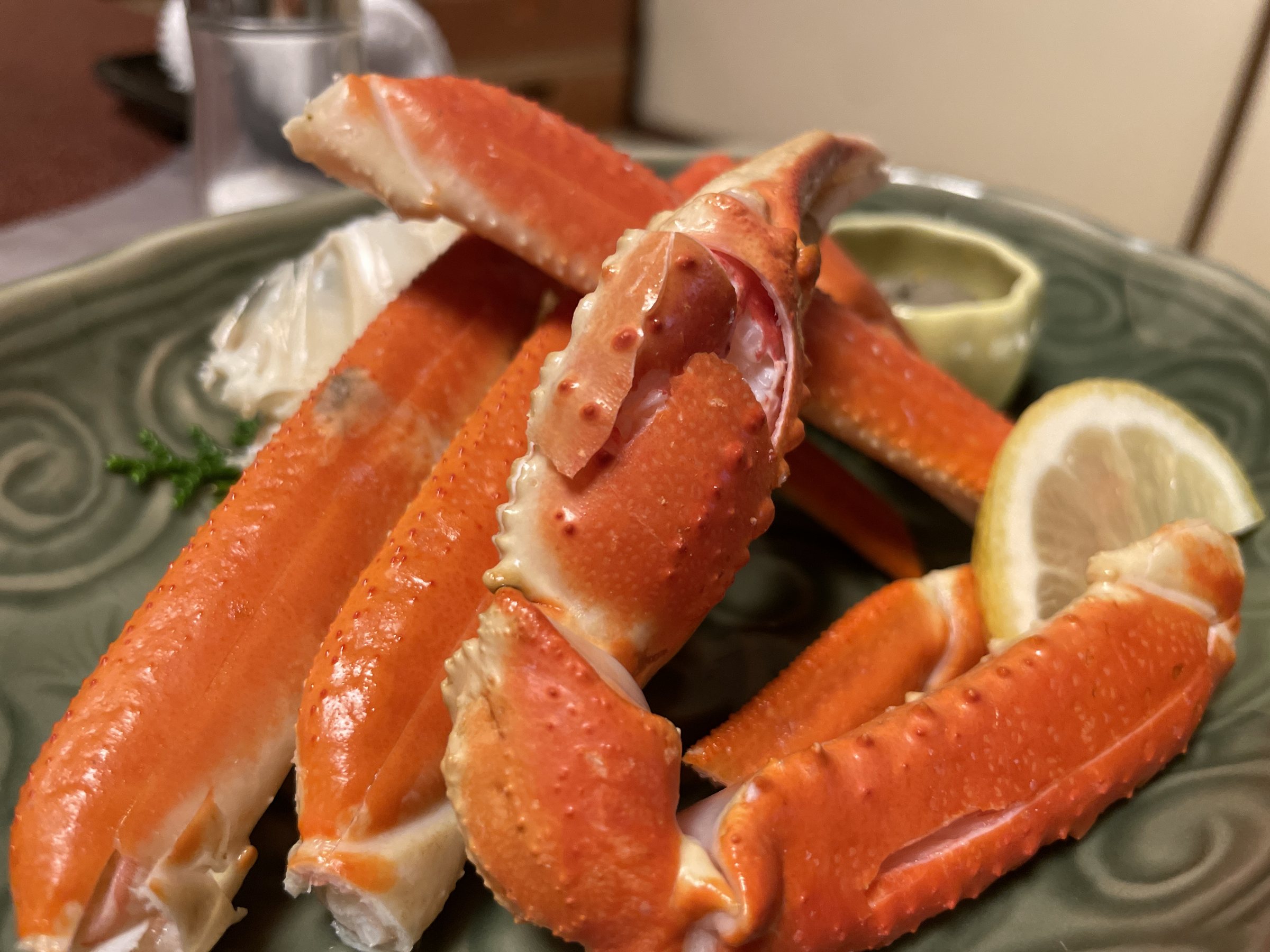
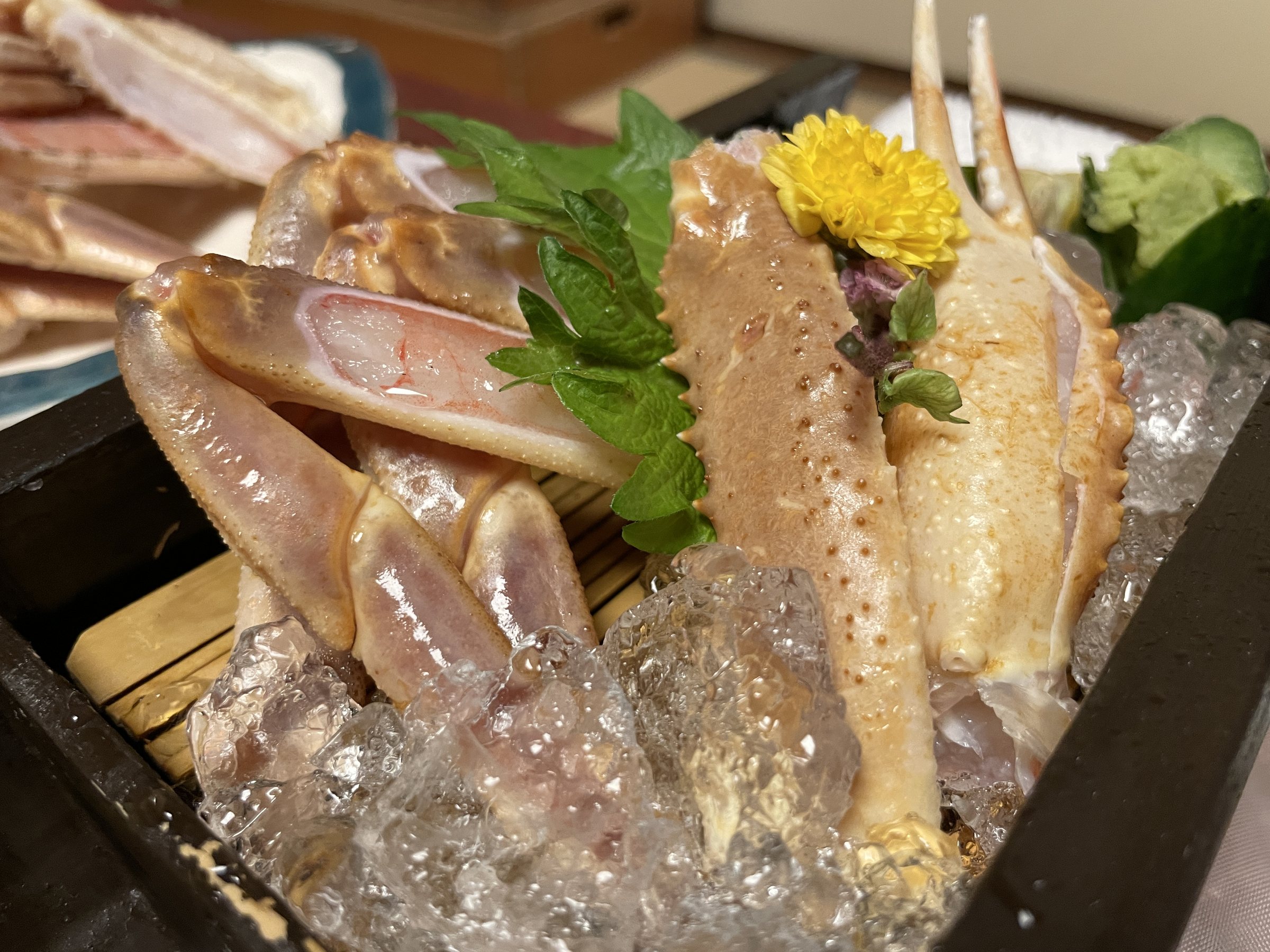
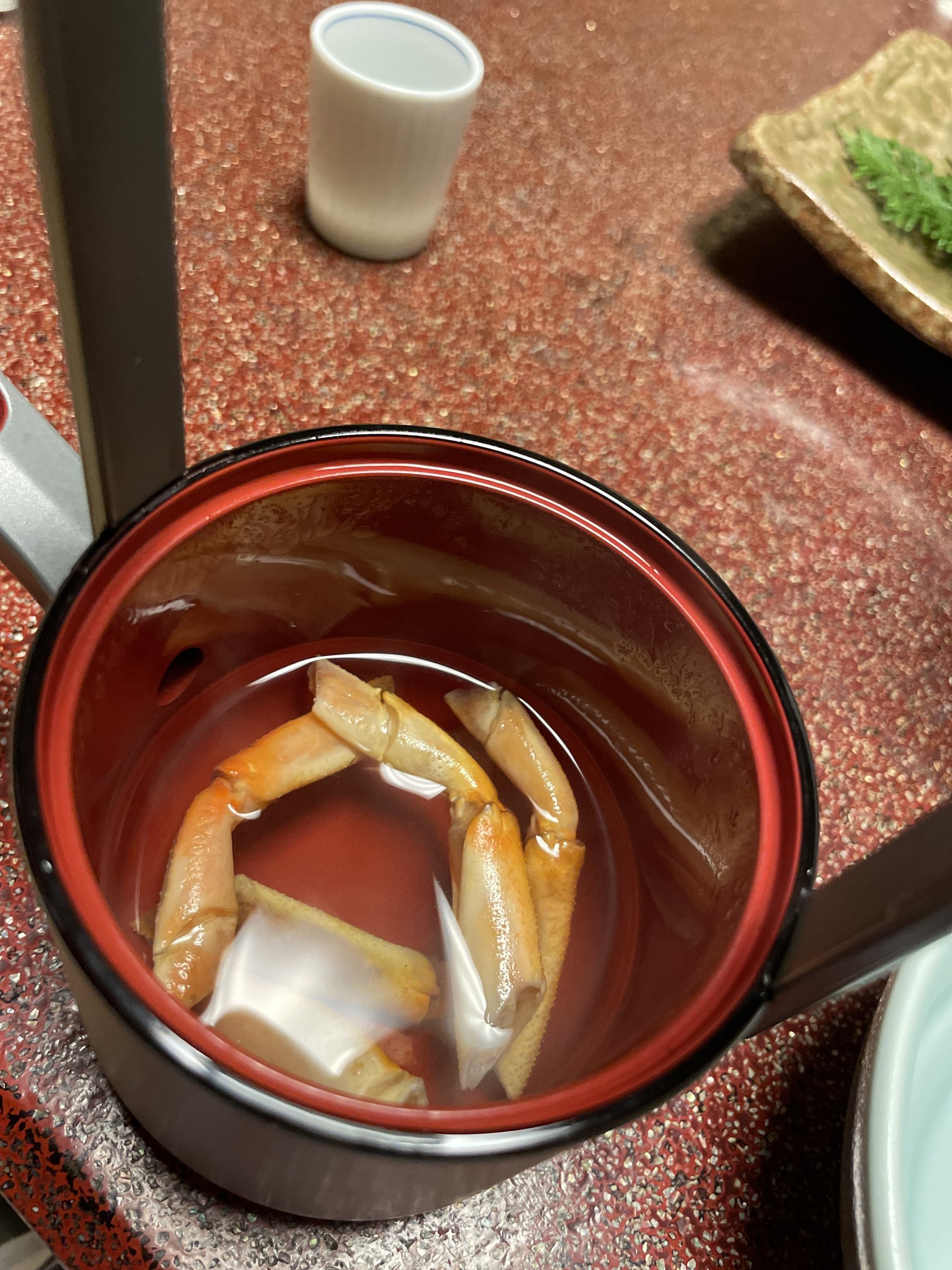
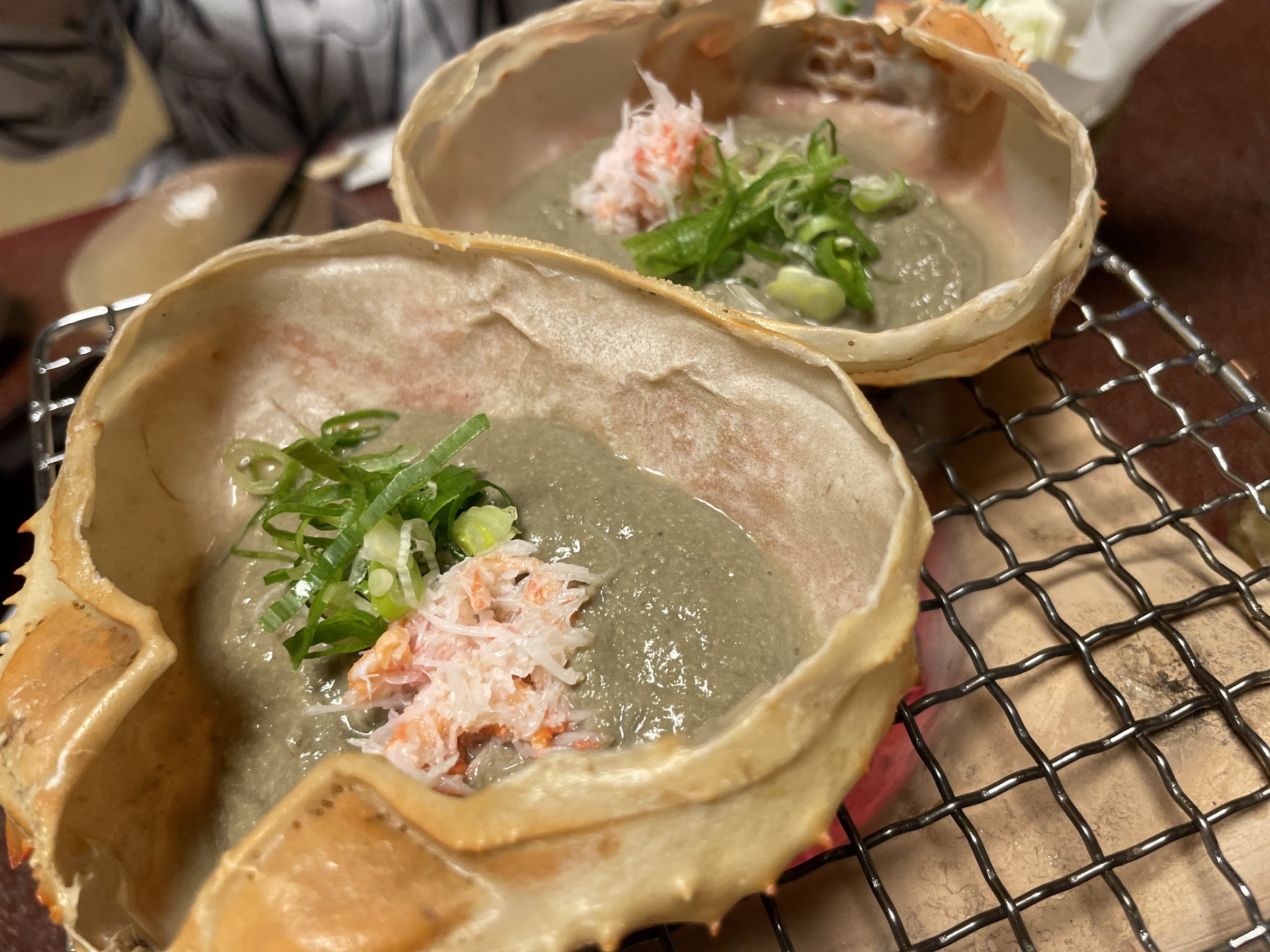
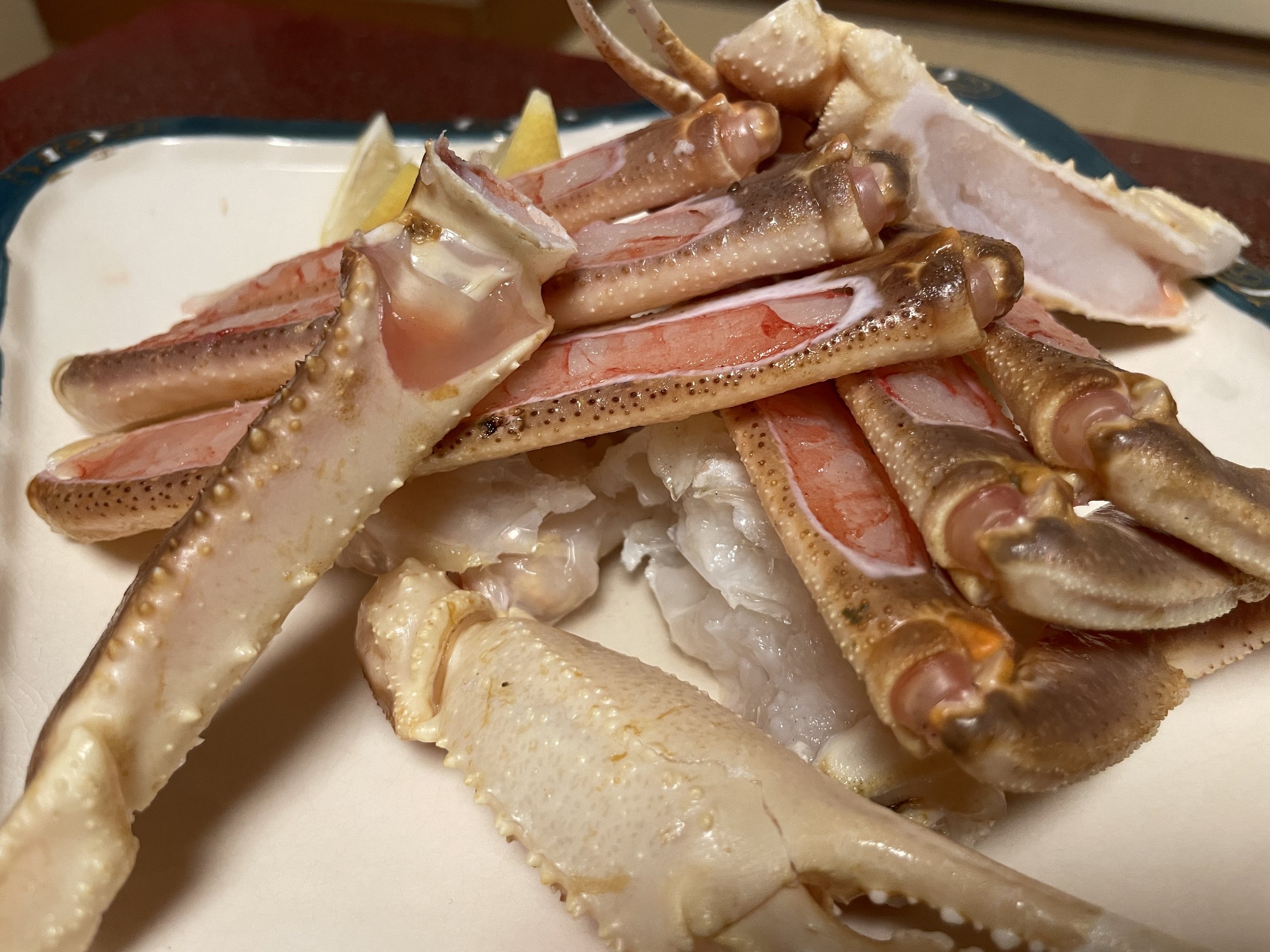
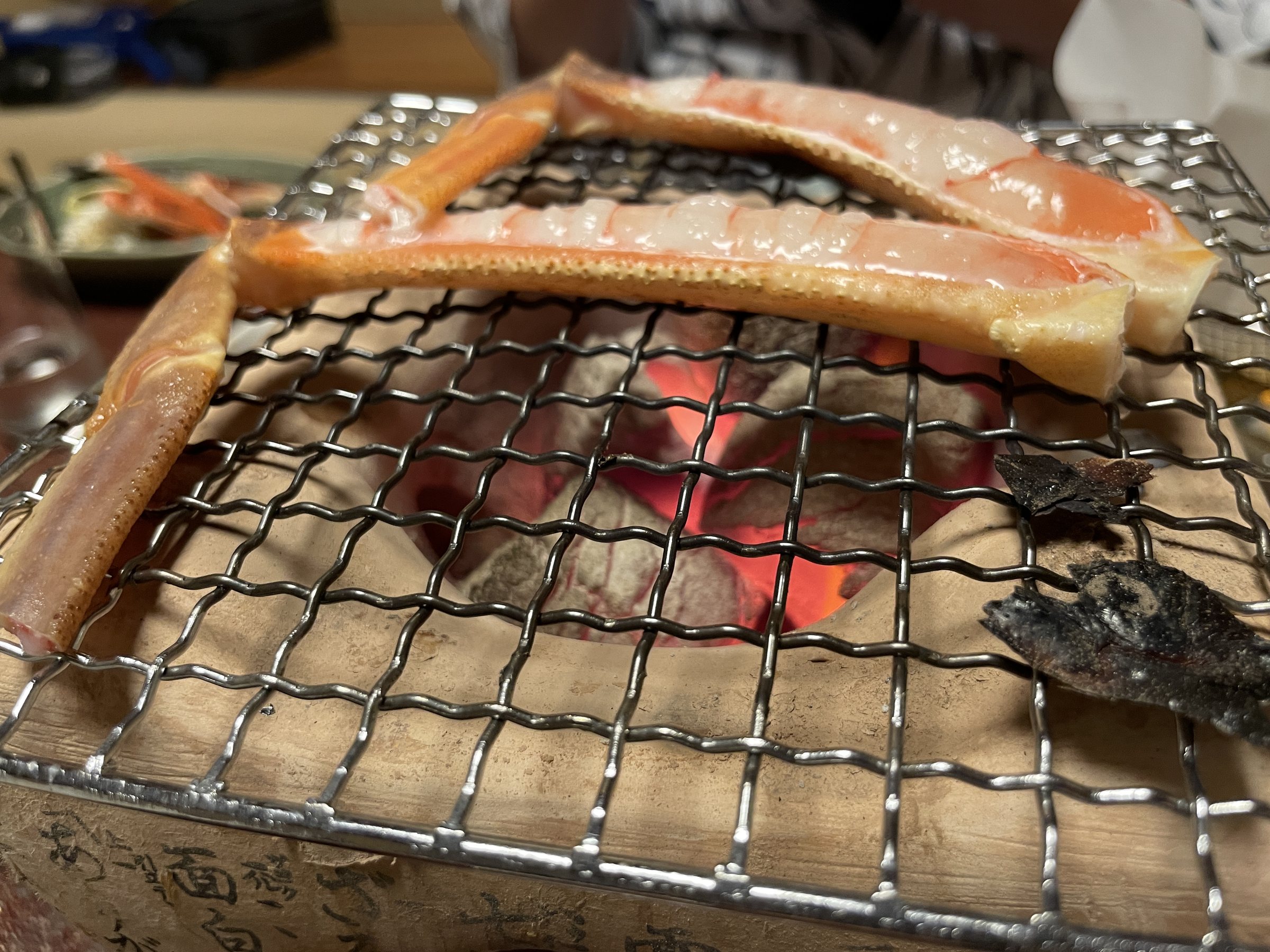
The sheer quantity of crab dishes was astonishing, and tasting the crab cooked in so many different ways was great fun. Perhaps the crab had been frozen, as the sashimi was a little watery. The best way to eat it, by far, was to dip the grilled meat in the crab miso, although that miso turned out to be a diluted, seasoned version.
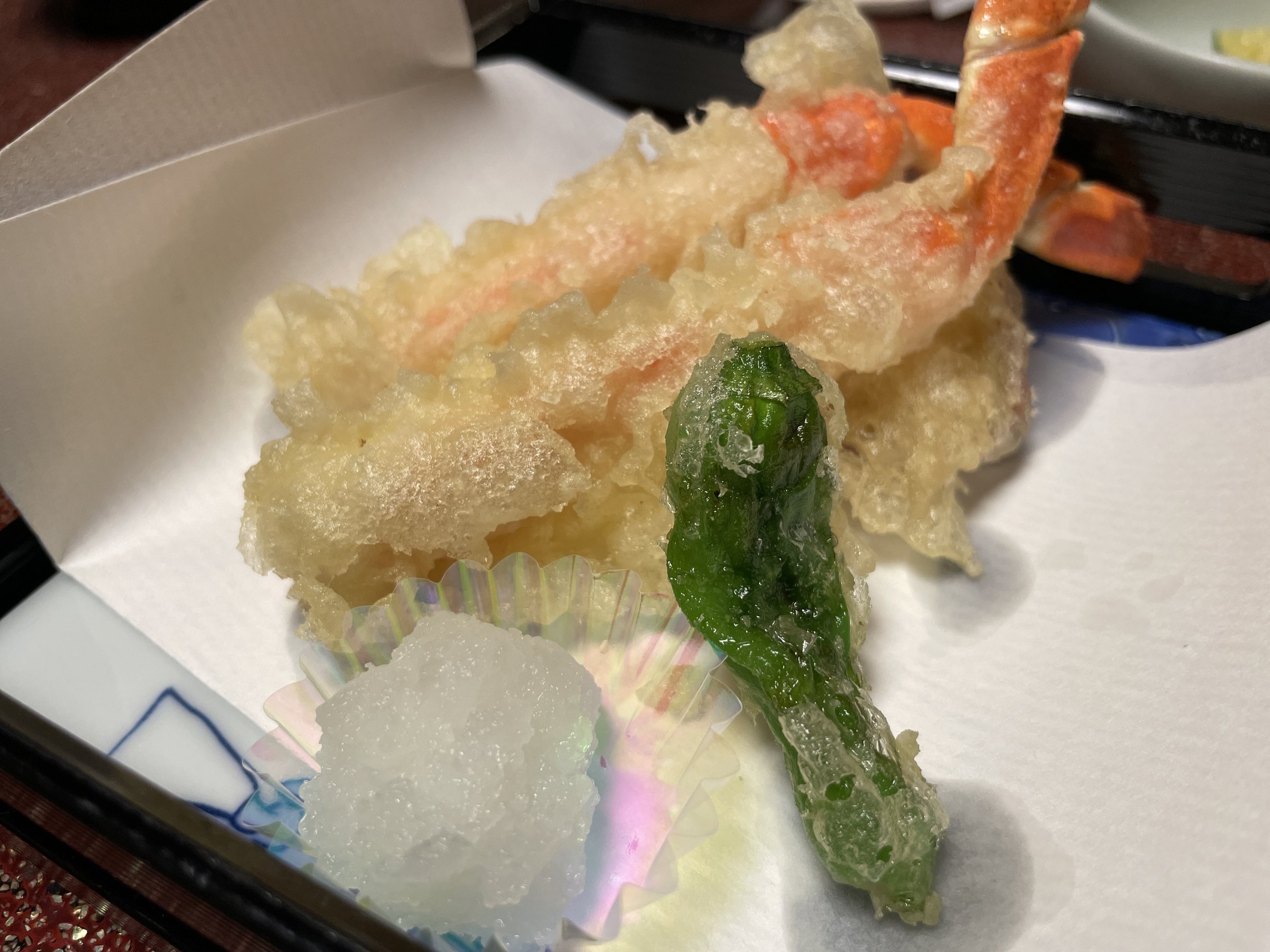
Even crab tempura appeared, the crisp batter giving way to firm, springy crab. With the courses arriving almost without pause, we were quite overwhelmed.
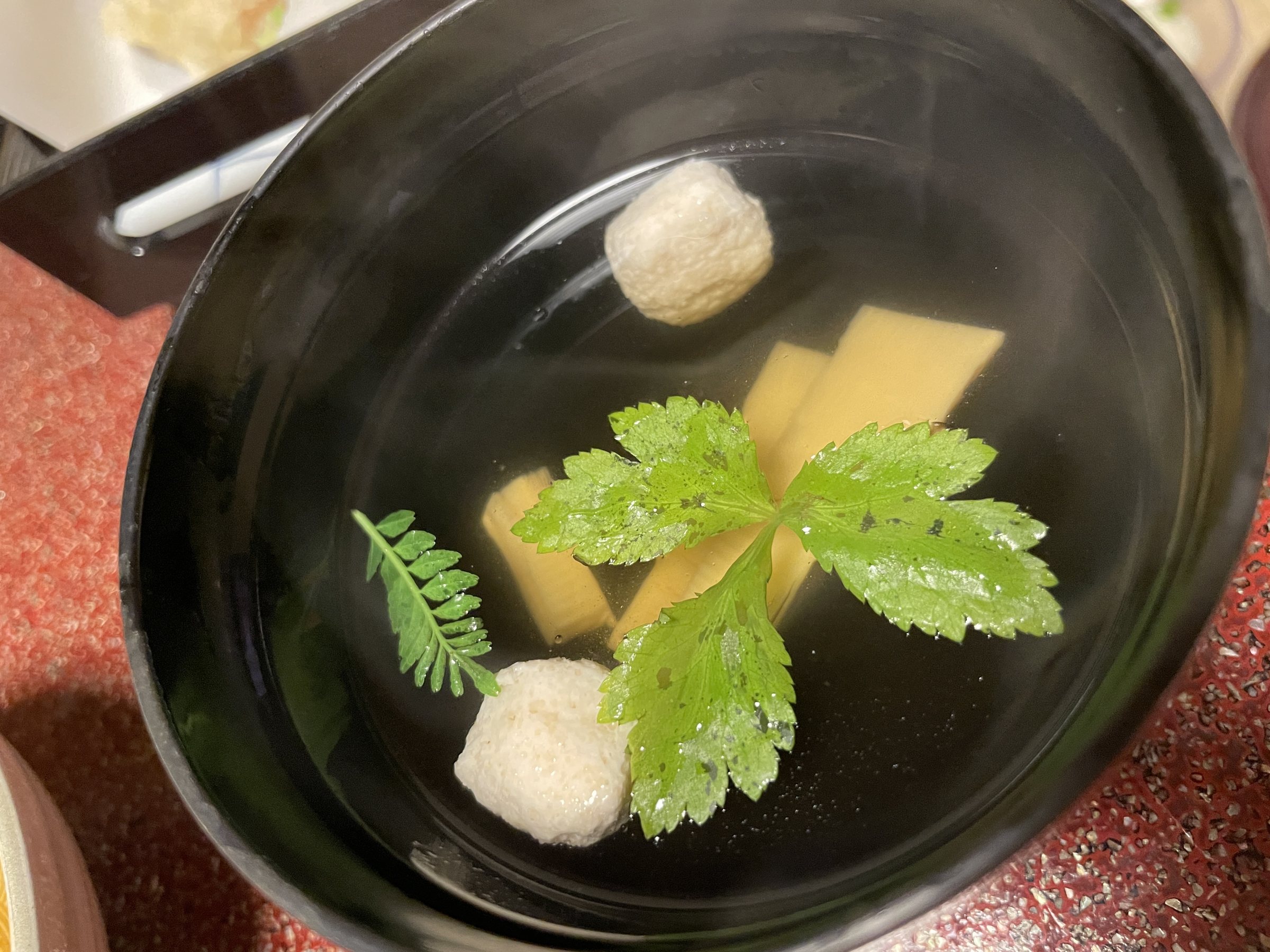
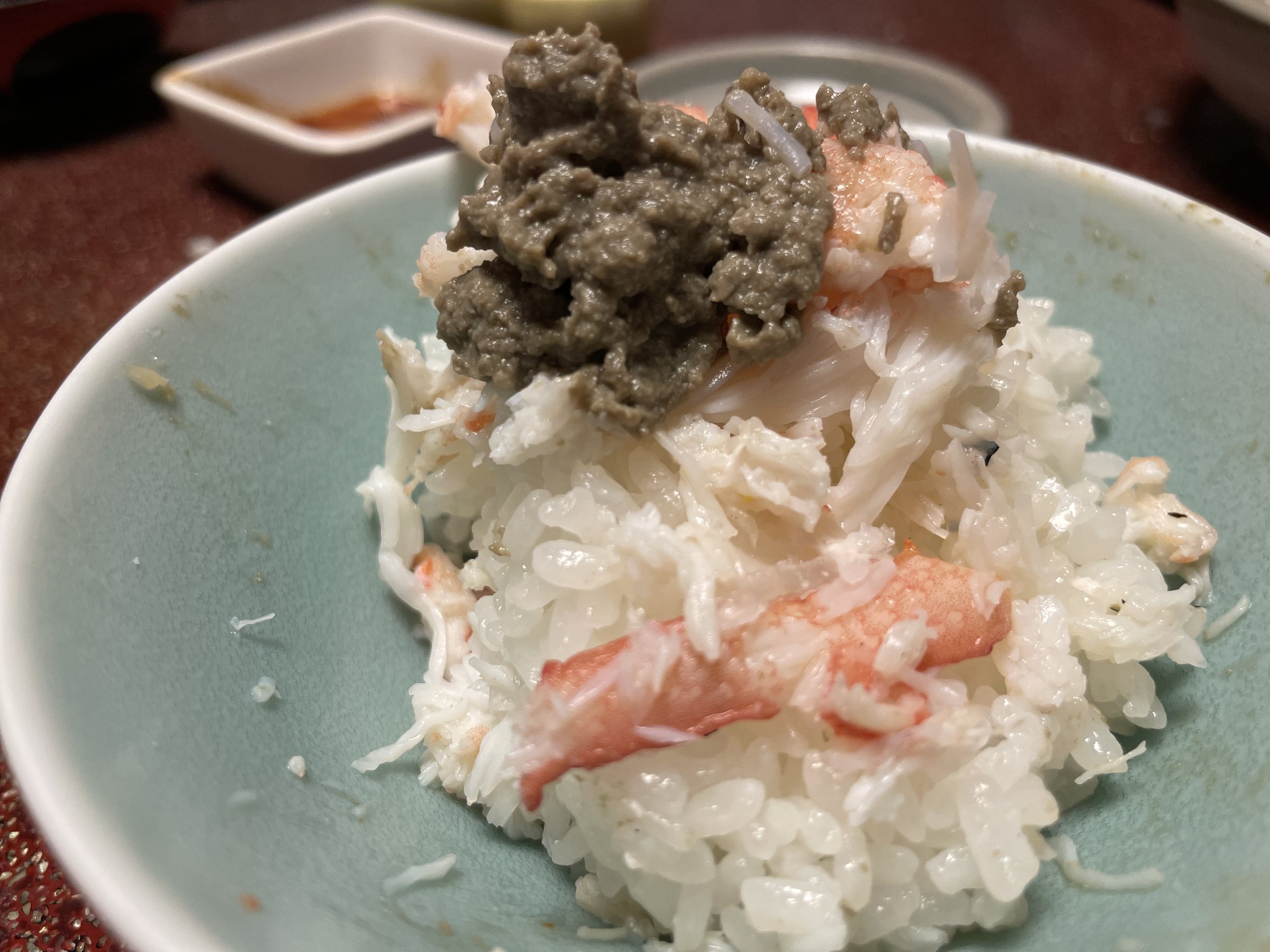
Finally came a clear soup and plain rice. We used them to make our own crab rice and ate it in a single mouthful; you can imagine the happiness. It was a dinner of crab from start to finish.
Dessert, by shuttle bus
We should have been full after dinner, yet of course we wanted something sweet. Knowing it was a lot to ask, we put an idea to the ryokan.
Having enjoyed a drink, we could not drive, and we were stuck. But the shopping streets were close by, and a quick search showed a sweet shop that did takeaway.
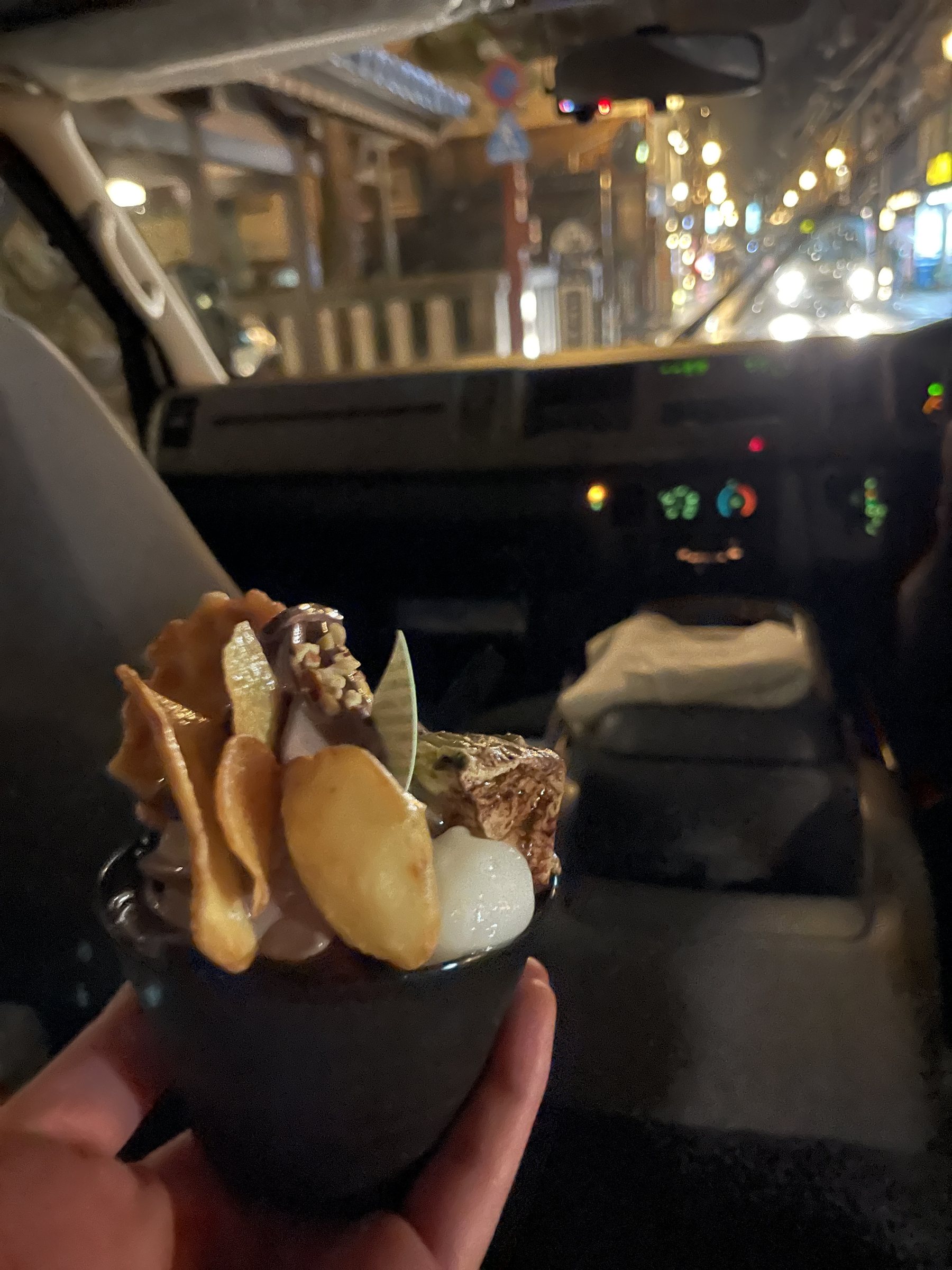
From the evening until about 9 p.m., Tokiwa Bekkan runs a free shuttle to the nearby public bathhouses for sotoyu-meguri, Kinosaki’s tradition of hopping between the town’s baths. The bus took us close to the sweet shop, and when we phoned, it turned straight round to collect us. “I’ll hurry, the ice cream’s going to melt!” the driver laughed. We were genuinely moved by the quality of the service. A single gesture like this is surely the quickest way to bring guests back.
Breakfast and beyond
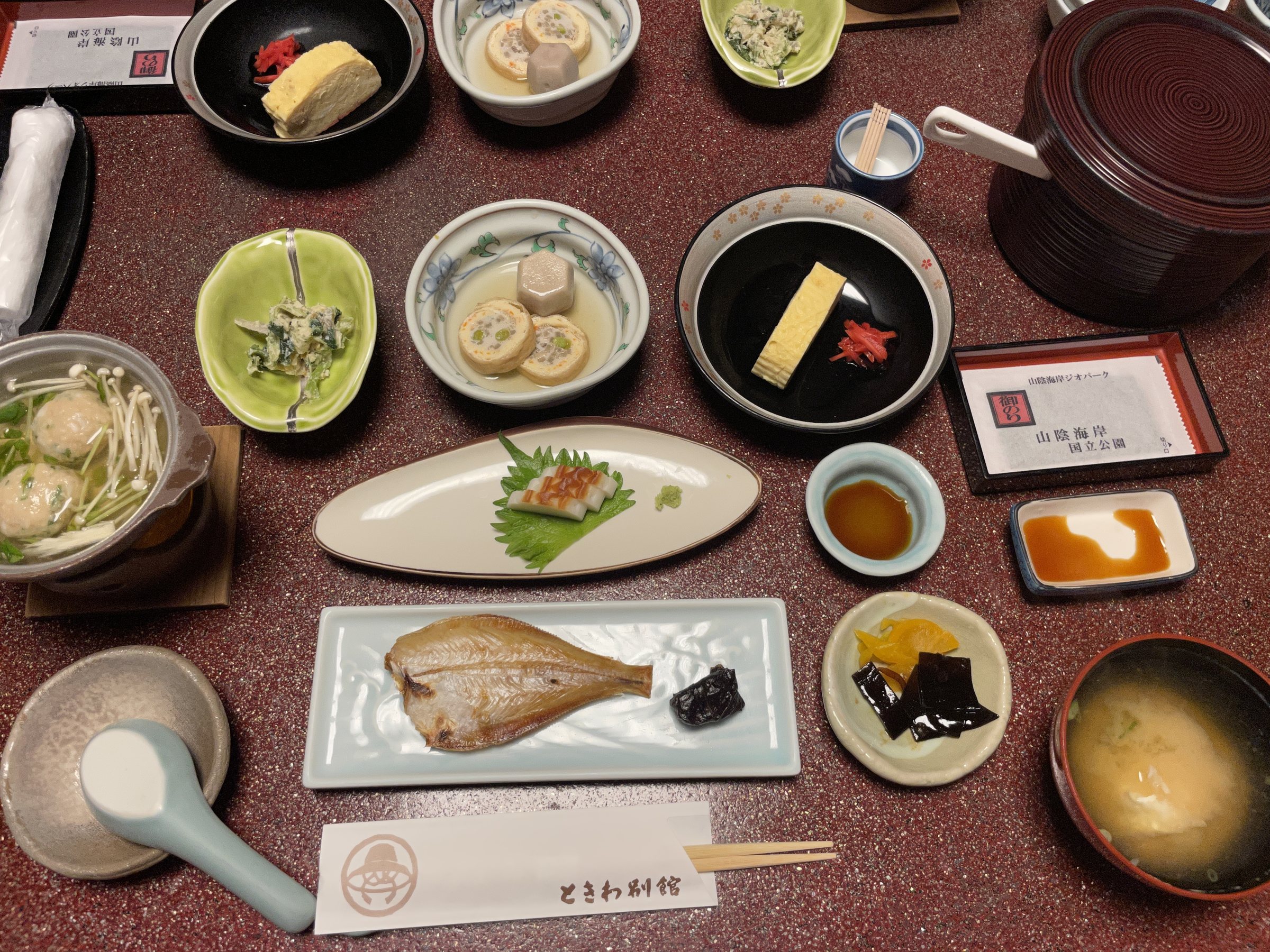
Thanks to another soak the night before, we slept soundly. Breakfast was also served in the room and arrived promptly: a wholesome Japanese breakfast with an unusual dried sasa-karei flounder and a gently flavored dashimaki rolled omelet. We cleared every plate.
After checking out there is still plenty to enjoy: more sightseeing, a visit to the fishing port, and more browsing in the fish shops. At the time of our stay, as a pandemic measure, guests were also given coupons for local souvenir shops. The local wakame and nori we bought as gifts were full of the scent of the sea, rich, mineral gifts from the ocean.
This review reflects a visit in January 2023; please confirm current details, including the shuttle service, directly with the ryokan before visiting.