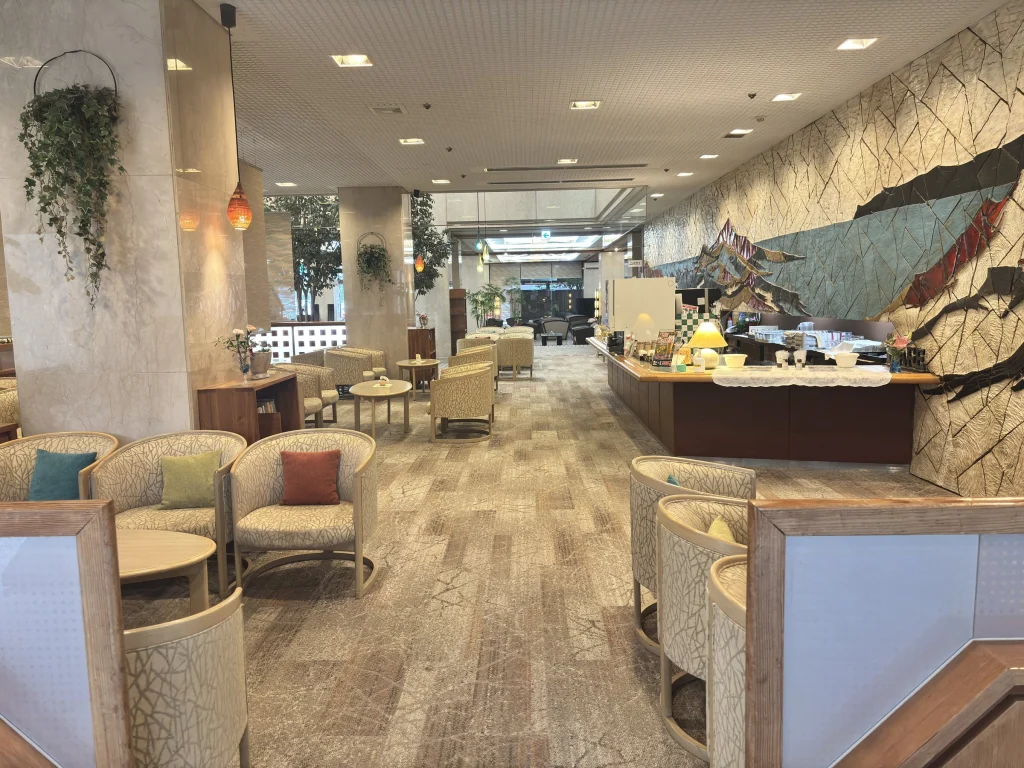
Awara Onsen is a hot spring town in Fukui Prefecture, in the Hokuriku region on the Sea of Japan side of central Japan. Behind its rows of bathing establishments rises a very large building: Grandia Housen. The lobby was bustling with guests of every age, from families to older travelers.
At check-in we waited about twenty minutes on a sofa beside a self-service drinks corner offering beer and juice. With so many guests arriving at once at such a large property, there did not seem to be enough staff. We could not help noticing people standing with heavy luggage, passing the time on their phones.
A room of many parts
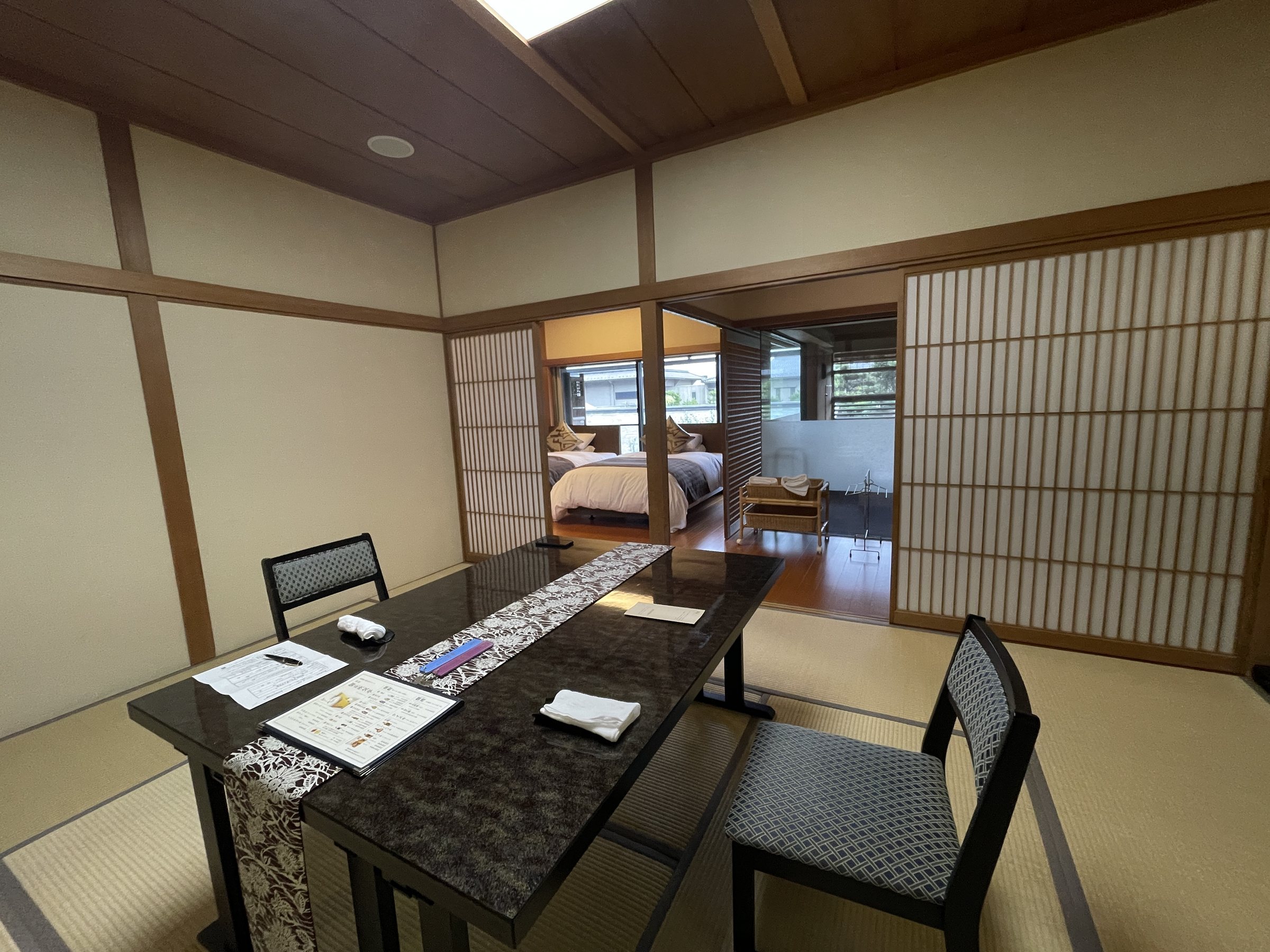
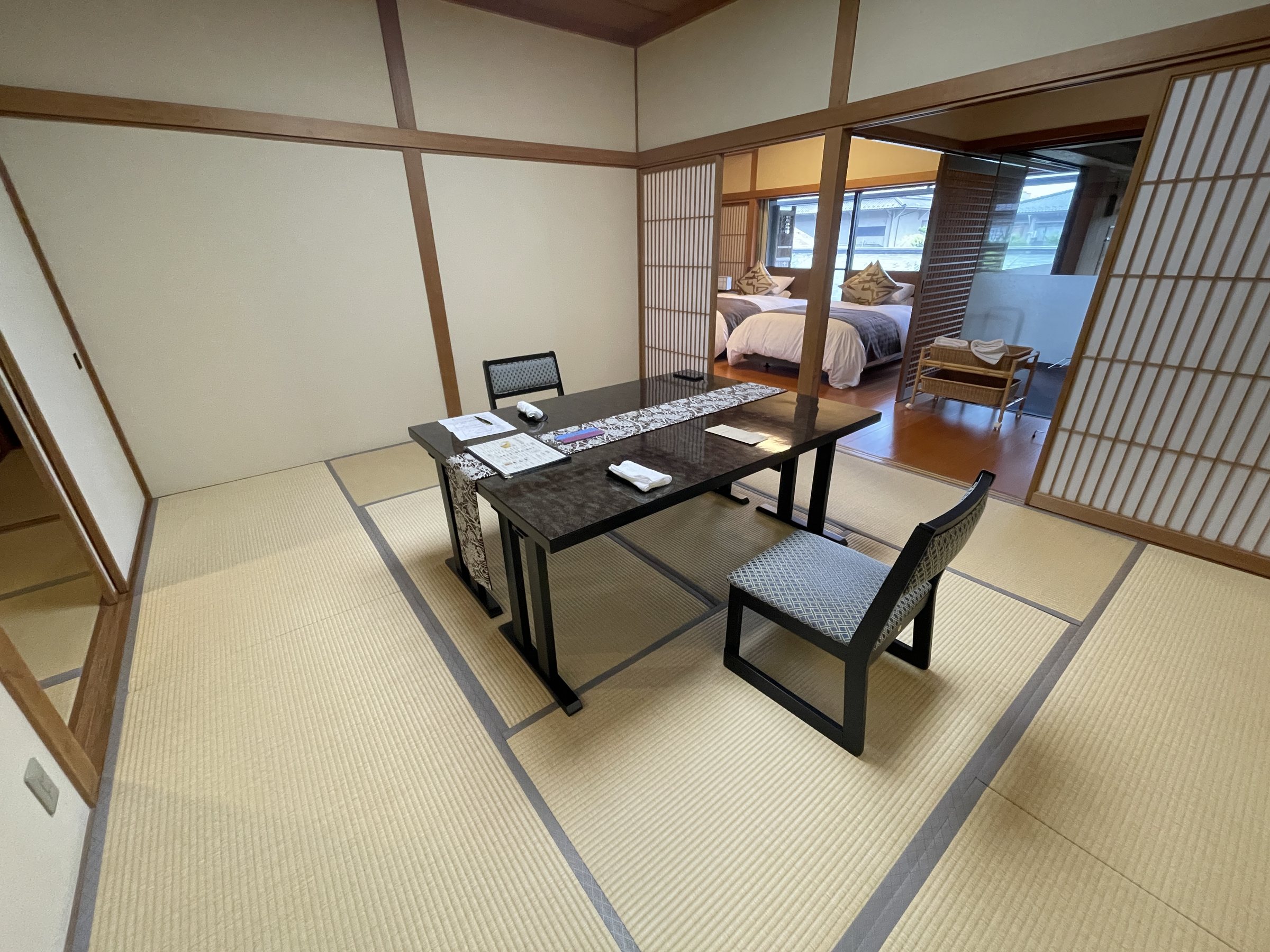
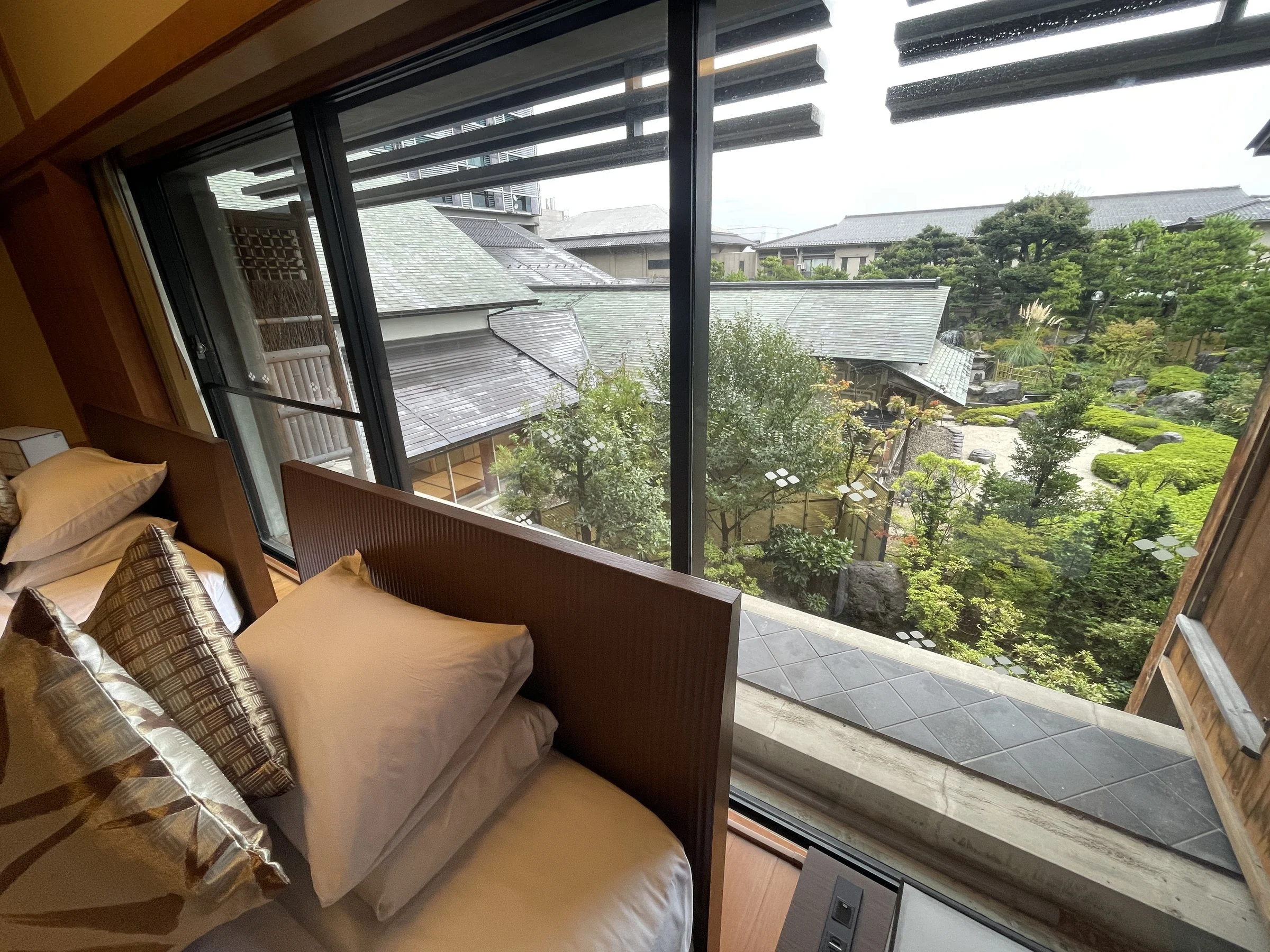
Opening the door to our spacious room, we were greeted by a handsome table and beds. The partitions are large, and when the windows are open the air flows through, giving the space a refreshing feel. Each area is self-contained, but slide all the partitions open and the rooms become a single space.
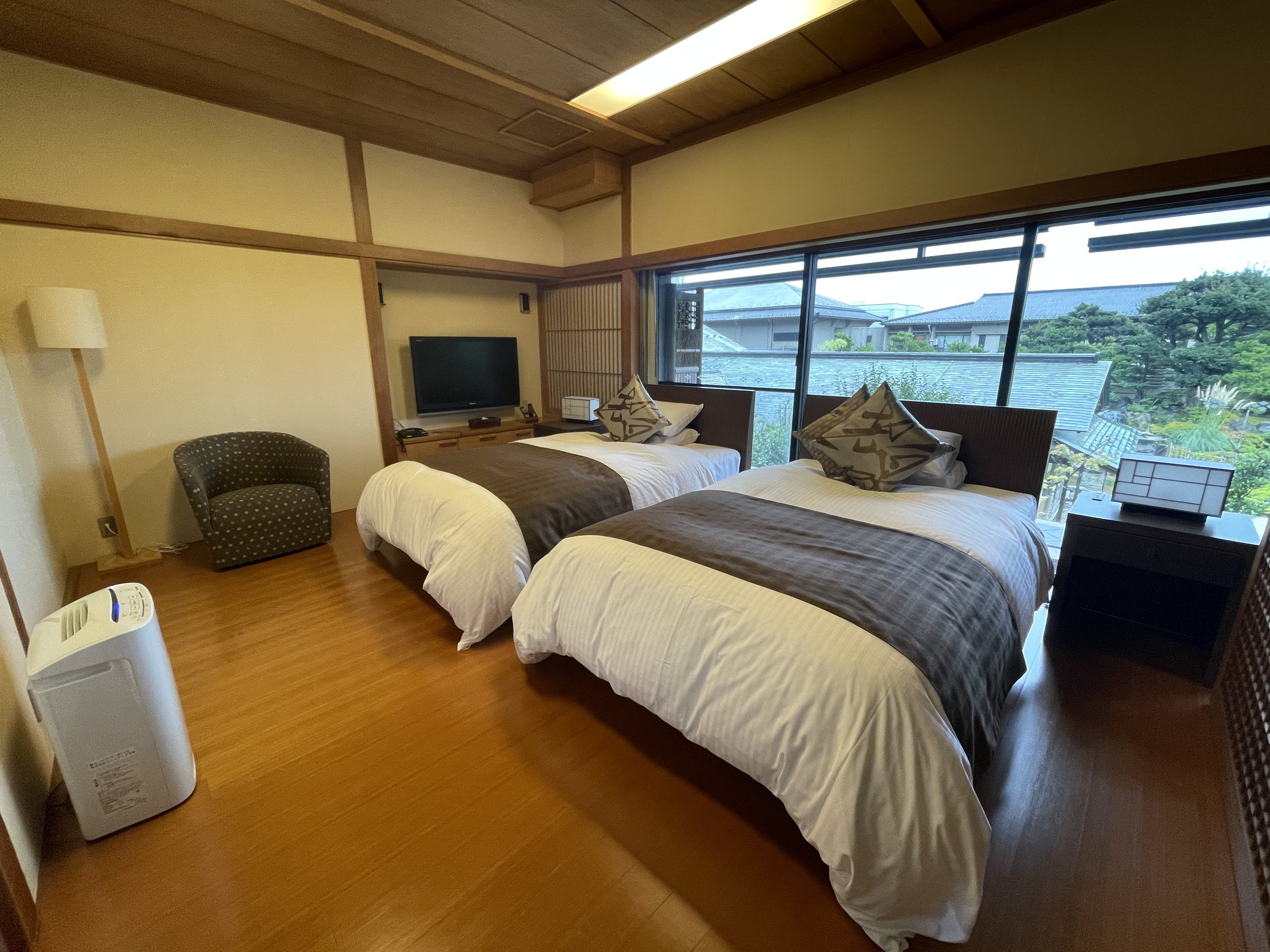
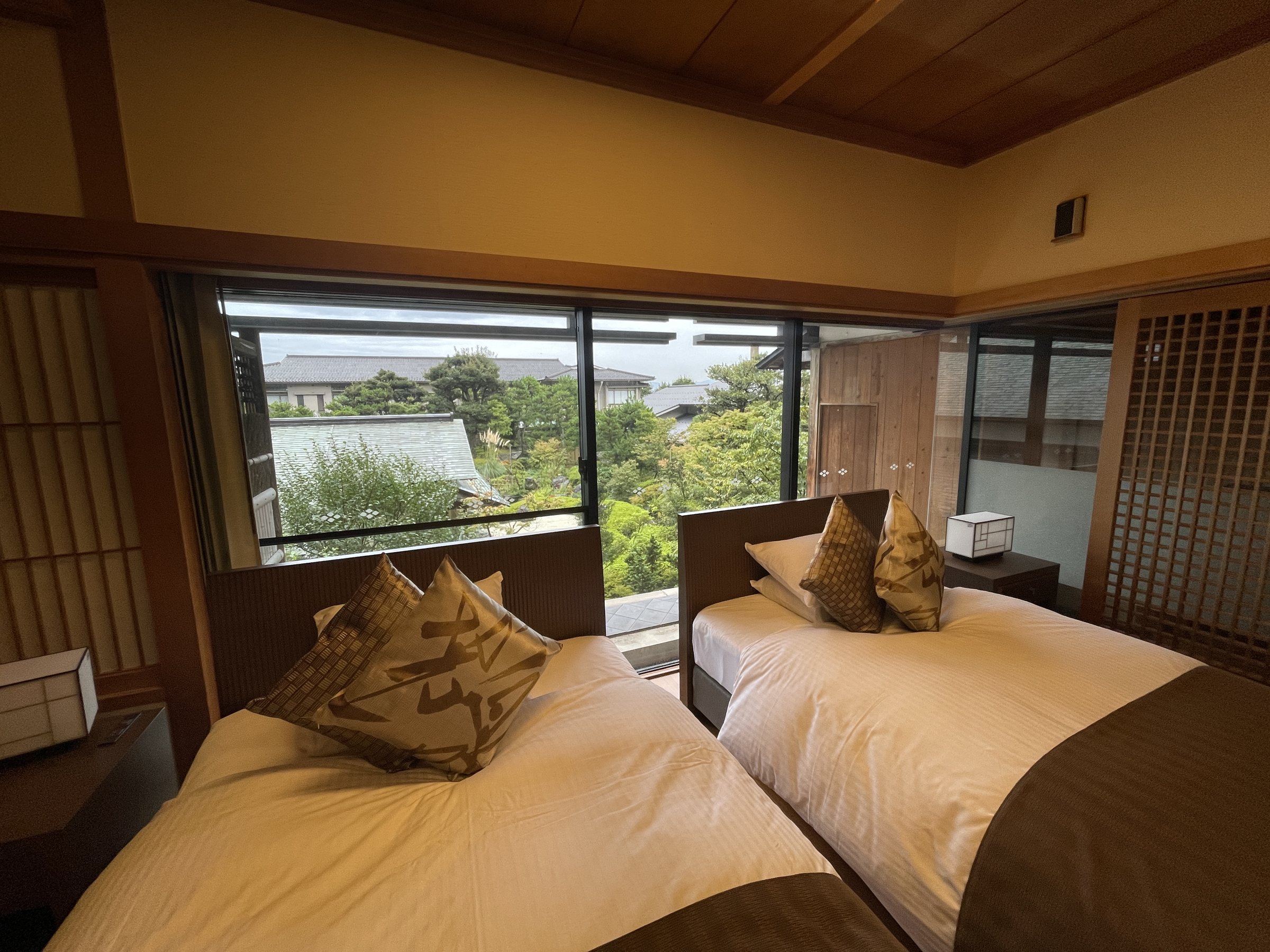
From the windows beside the large beds, the garden below was beautiful. We had thought of the place as an onsen resort, but the beds were made as perfectly as in a good hotel, which was a real pleasure to see.
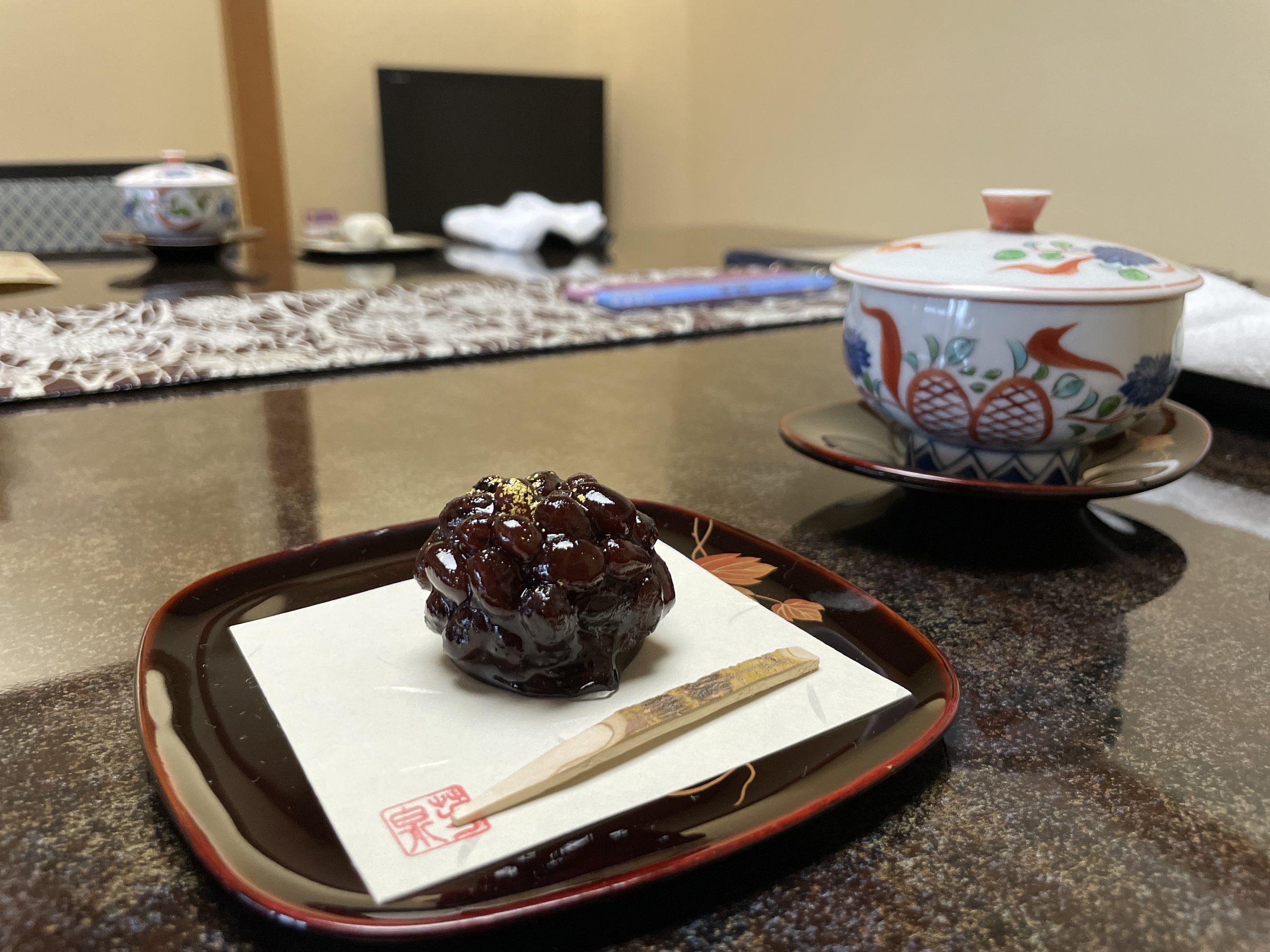
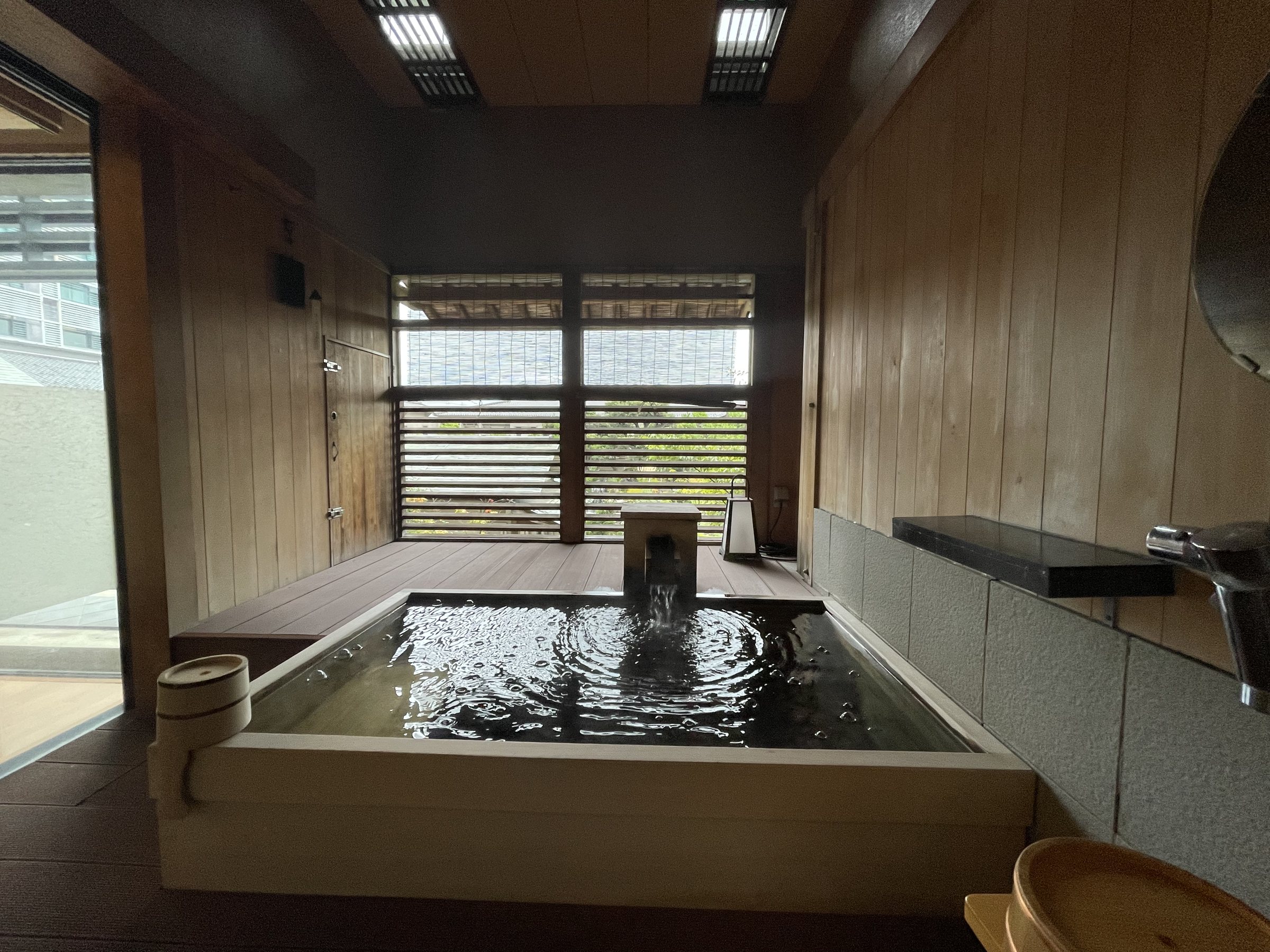
The room has its own bath, with plenty of hot water flowing. It is well appointed, and the tub is easily large enough for an in-room bath, which lifted our spirits. After a while, a member of staff brought a beautiful wagashi, a traditional Japanese sweet, and made us tea. When the welcome sweet is handmade, a ryokan’s standing rises a notch further. The gestures and greetings with which tea is poured, in the spirit of Japanese omotenashi hospitality, are something Japan can be proud to show visitors from abroad.
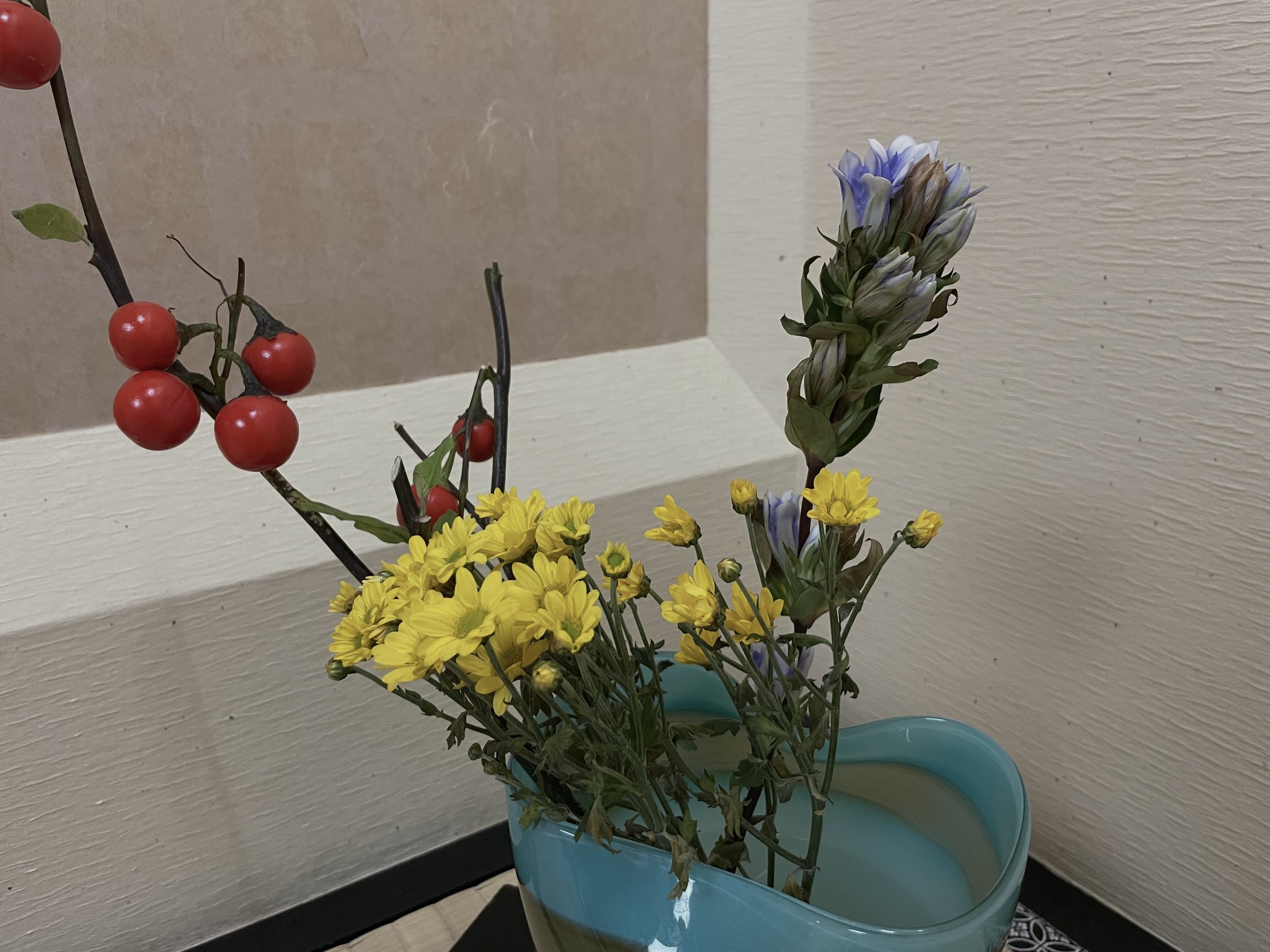
There were disappointments, though. The vanes of the air-conditioner were thick with dust, and the decorative flowers had no water and had withered. If a ryokan goes to the trouble of decorating its rooms, it needs to keep up the attention. Decoration that cannot be maintained is better left out.
The baths
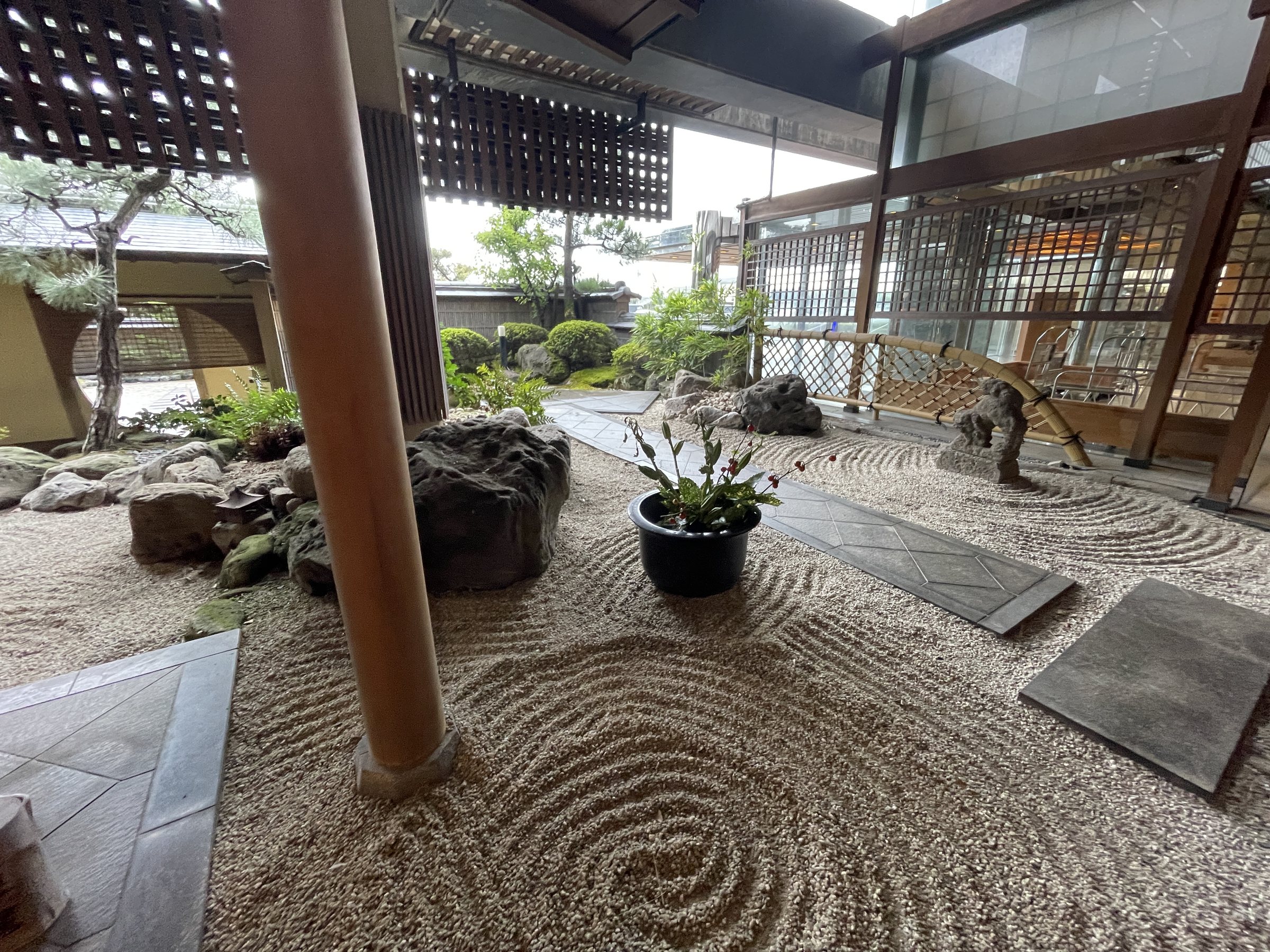
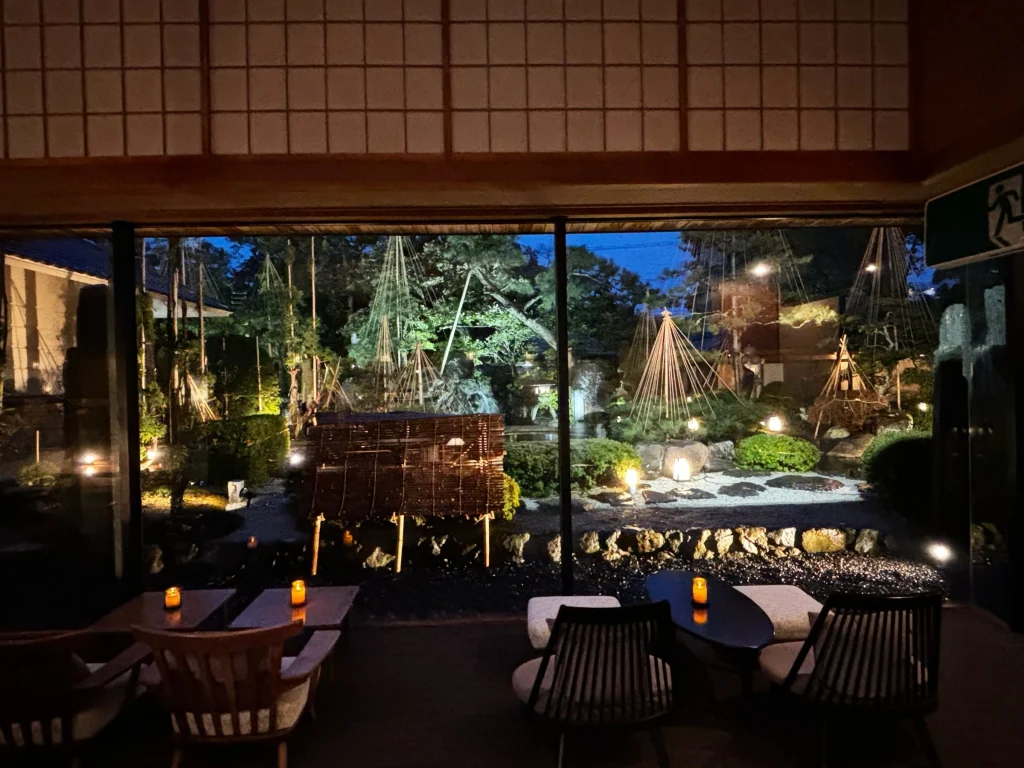
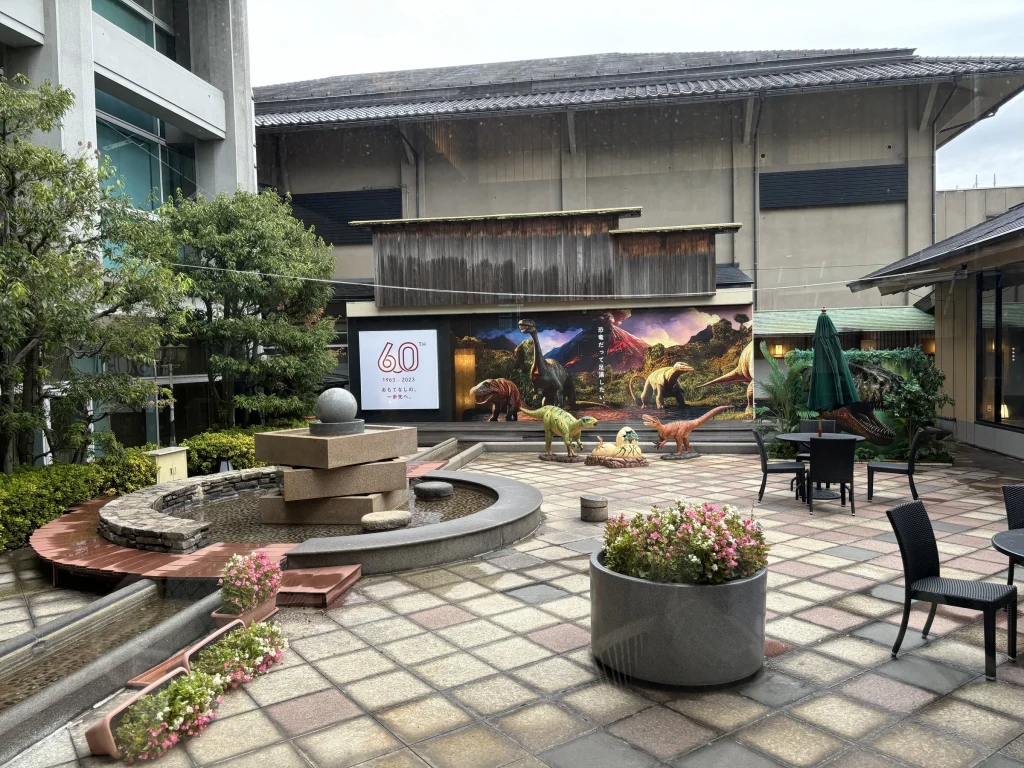
On the way to the large baths we came across a karesansui, a dry landscape garden, in a courtyard, the kind of sight that makes a Japanese heart skip. The building is huge, yet efforts have clearly been made to create atmosphere. What the owners and management choose to focus on when shaping a ryokan’s image says a lot. The garden sits along the corridor from the annexe, where we stayed, to the main building.
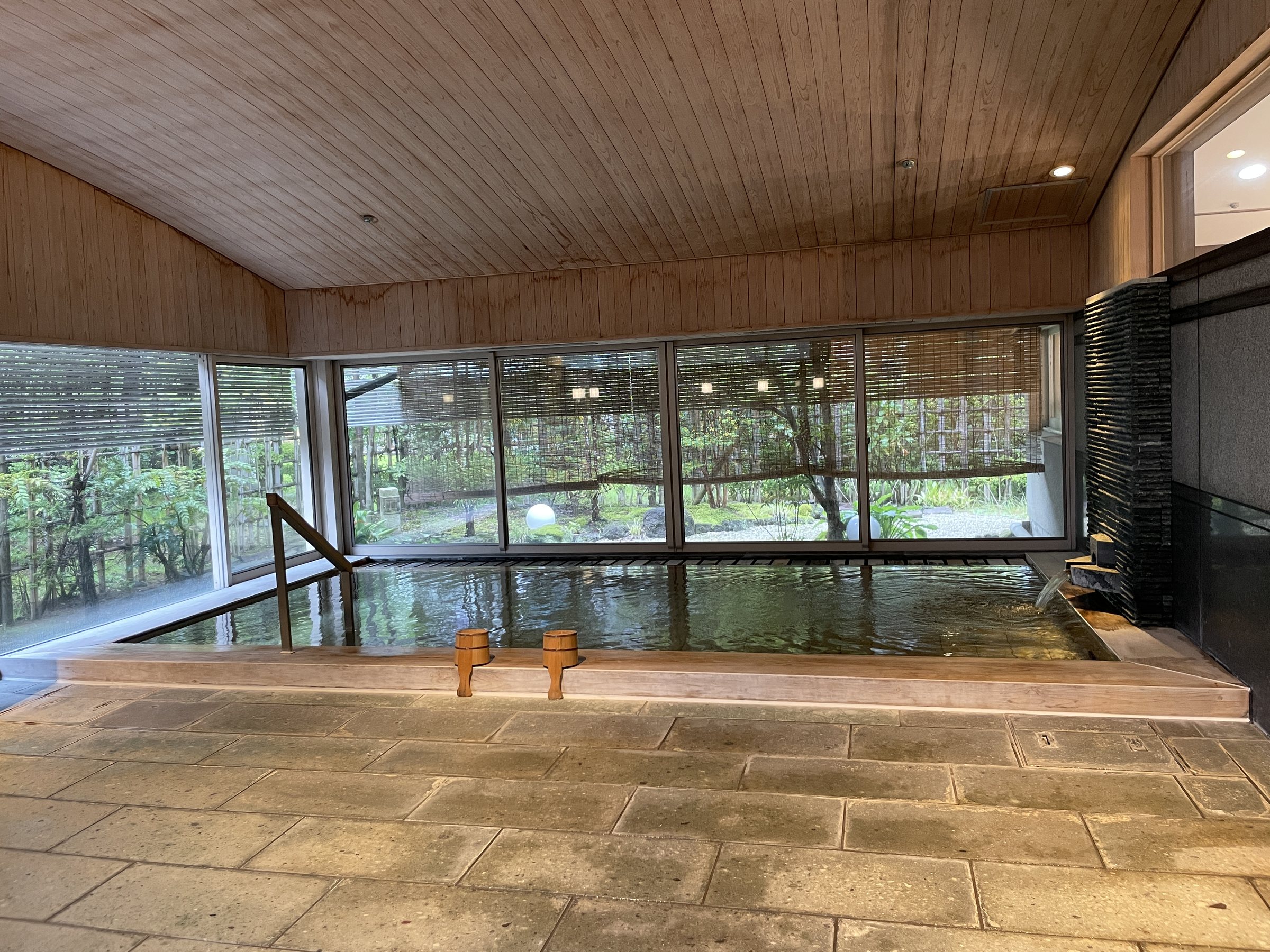
The large bath, with a sweep of greenery beyond its big tub, is a delight. The water is soft and the temperature slightly hot. Sitting near the spout, where the water pours in generously, we felt we were getting the benefits of the spring first-hand. Early in the day we had the bath to ourselves.
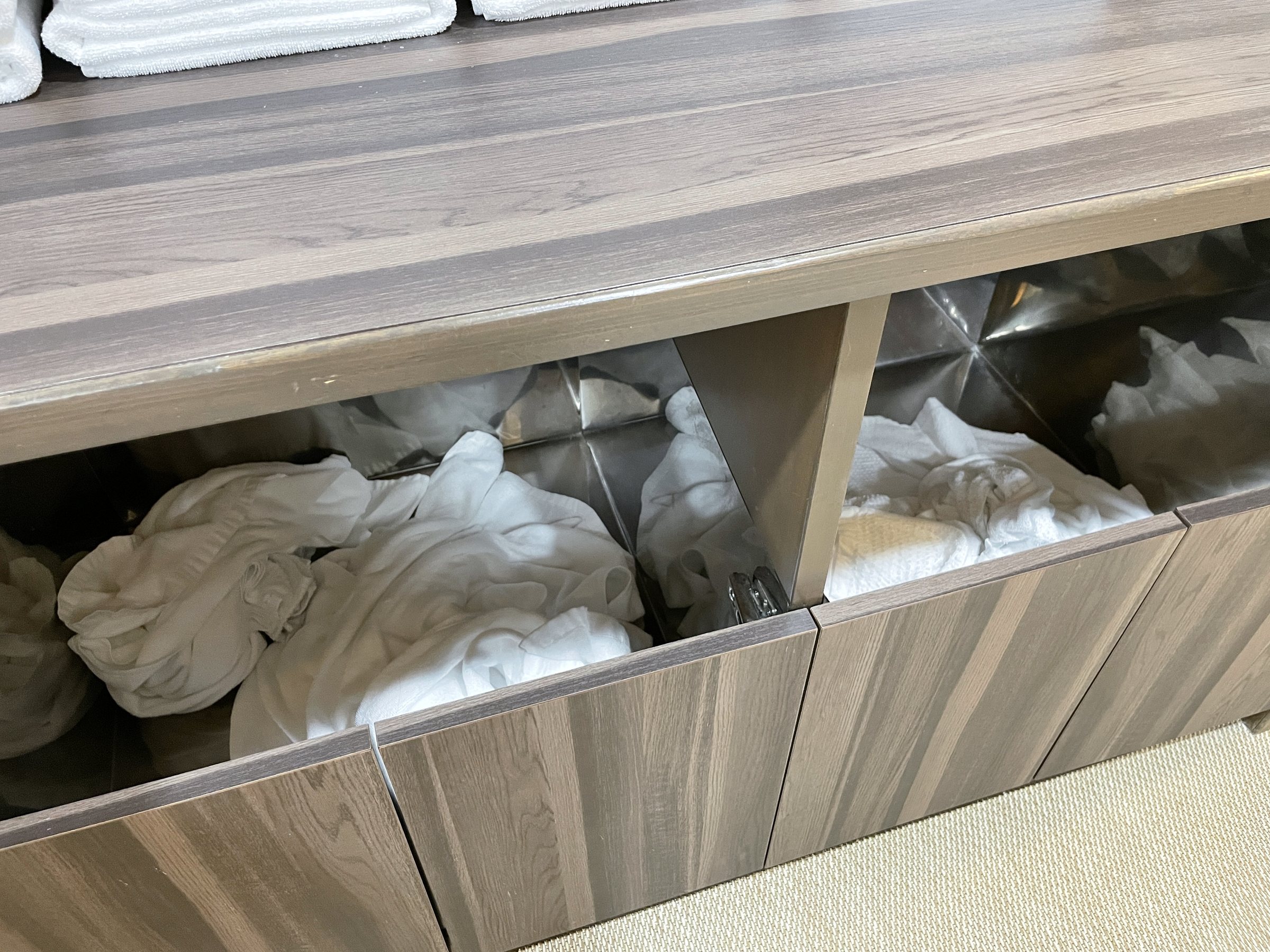
A small point: the used-towel bins had been left as they were. At what are fairly high-end onsen prices, it would be nice to have this area cleaned by the time new guests check in.
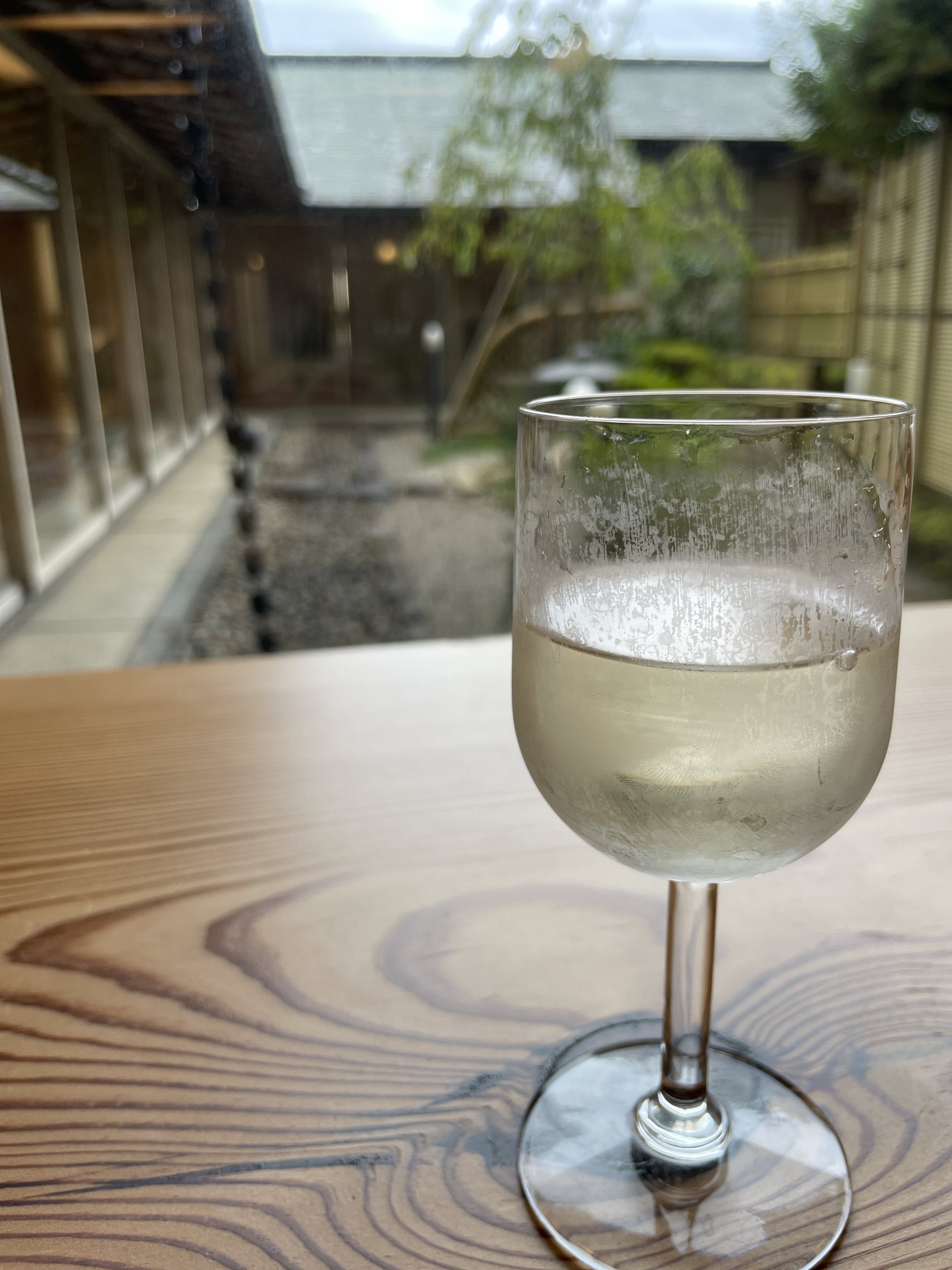
After bathing there are complimentary drinks to enjoy on the spot: coffee, mineral water, soft drinks and wine. Hardly anyone could dislike this service. The wine, however, was inexpensive and not very good; if cost is a concern, beer alone might be enough. A small garden can be seen in front of the counter, and wherever you are in the building you are aware of the scenery and nature outside.
An autumn dinner
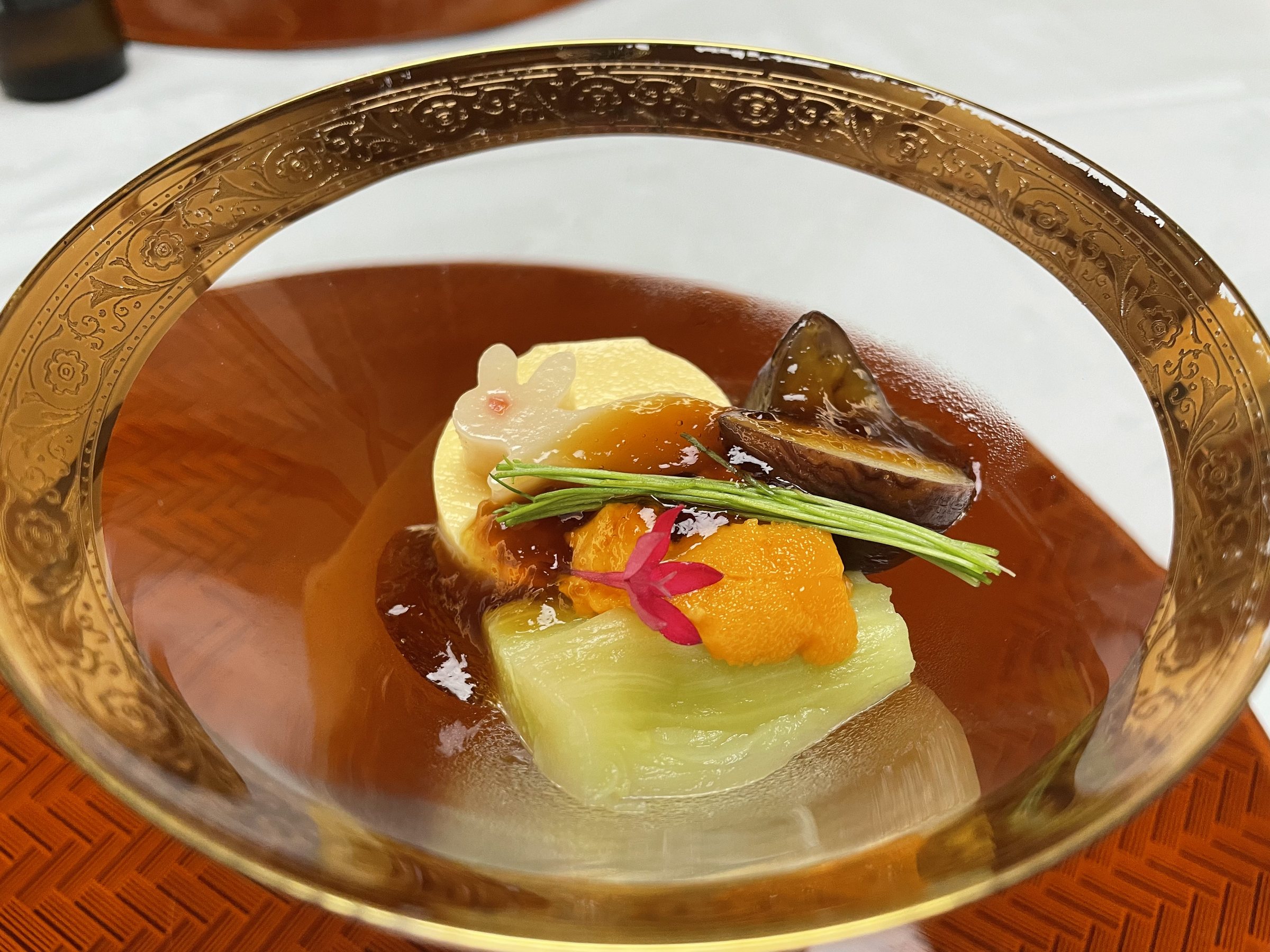
At dinner time, the meal was brought to the table in our room. The first dish was a beautifully composed starter: a chilled small plate in which hisui-nasu (eggplant peeled to a jade-green finish) and chestnut were delicious. In keeping with the moon-viewing season, a moon and a rabbit had been fashioned from kamaboko fish cake and topped with sprouting leek shoots and sea urchin. A soy-sauce jelly kept it all light and fresh.
The tableware was fine, but our eyes kept drifting to the gold rims, worn away all round. Having chosen such good vessels, we would have liked the kitchen to take a little more care over them.
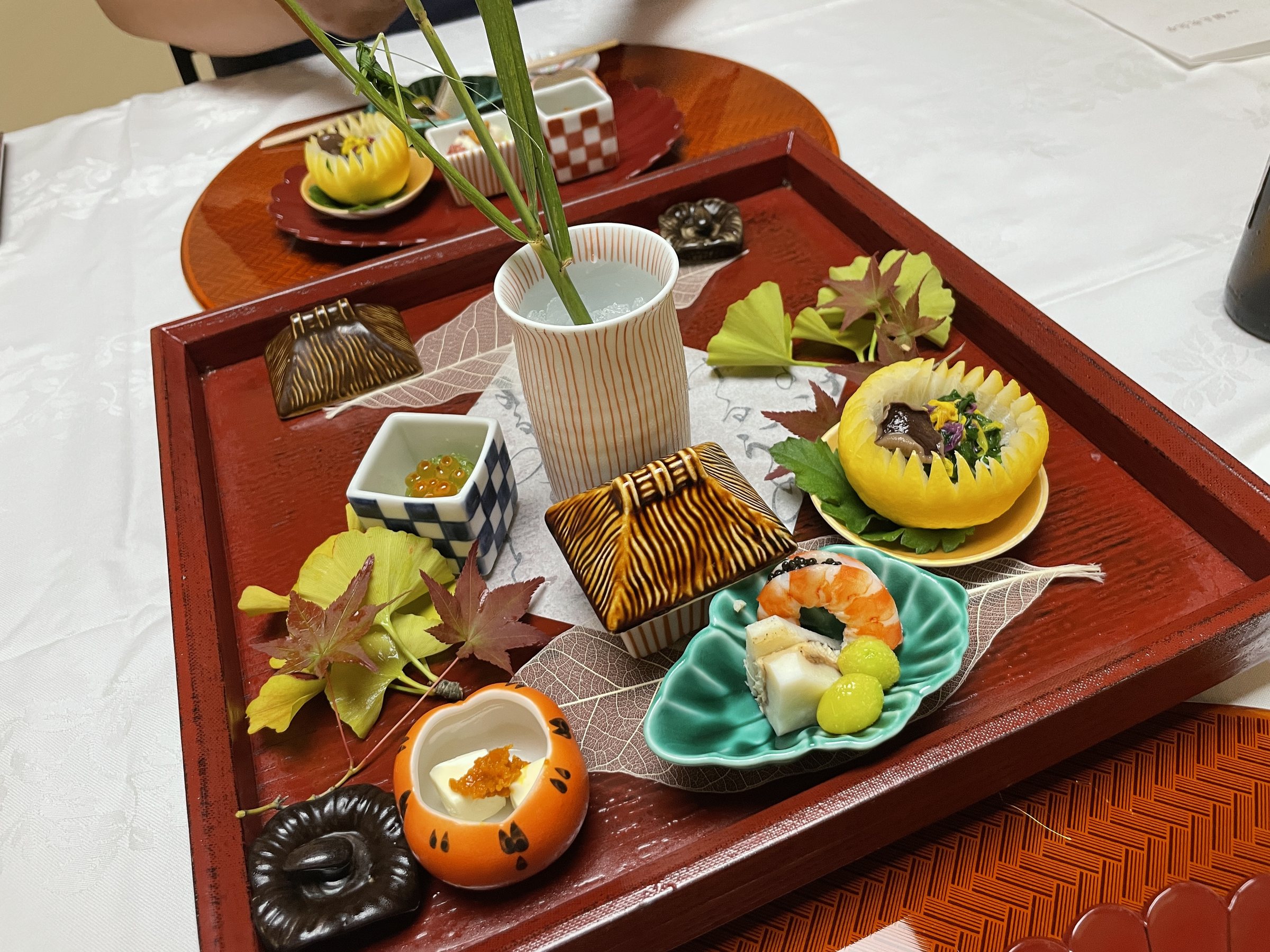
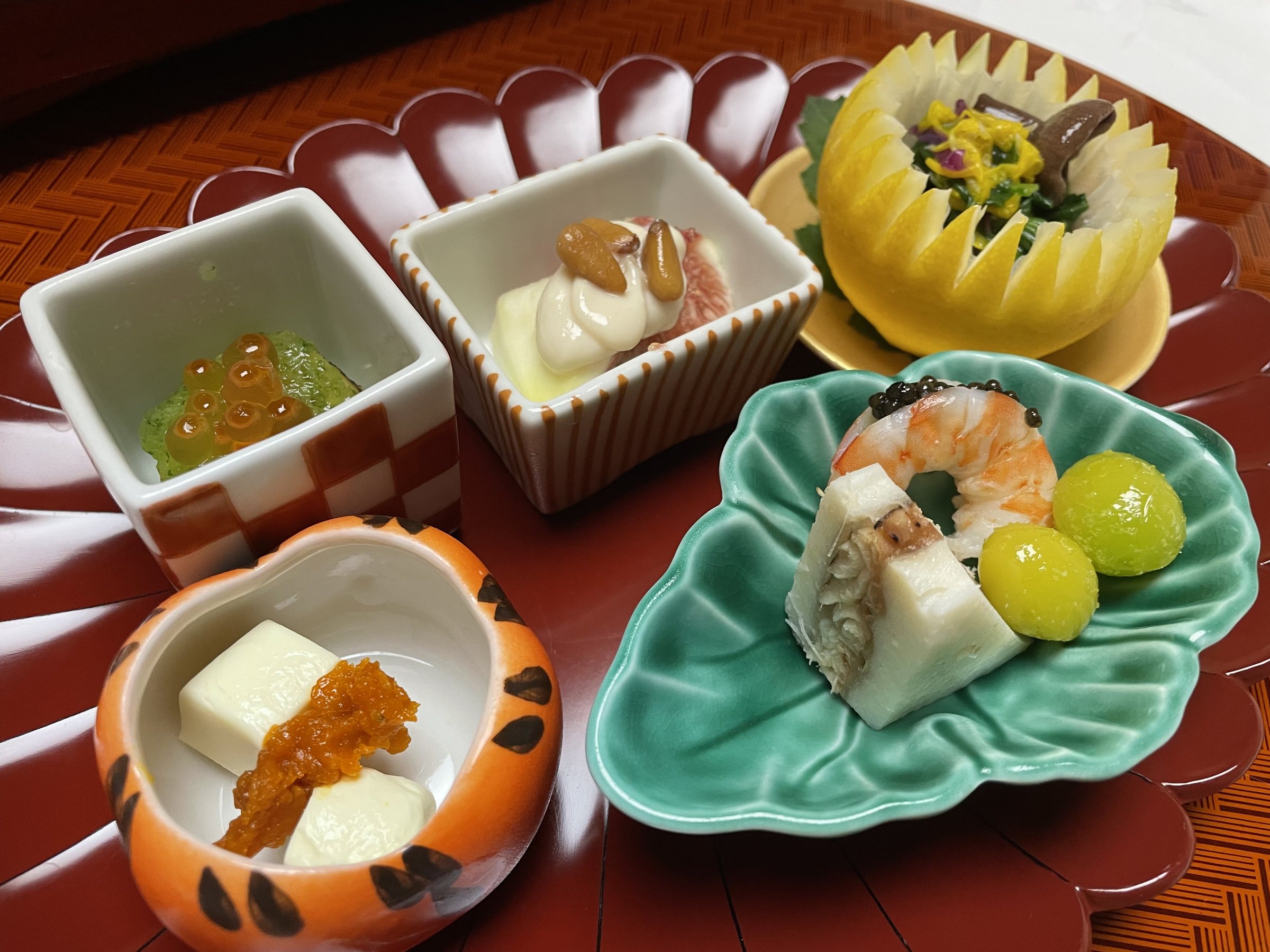
Next came the hassun, the seasonal platter. With its elegant autumn decorations it let us feel the season with our eyes as well. We enjoyed the small dishes on a beautiful lacquered tray and a lemon carved into a decorative cup, and tasted grilled scallop with vinegared cucumber. A Hakata-style shinjo of eel, served with prawn, was an inventive dish. Fukui is well known for its traditional lacquerware, so seeing which vessels would appear next was part of the fun.
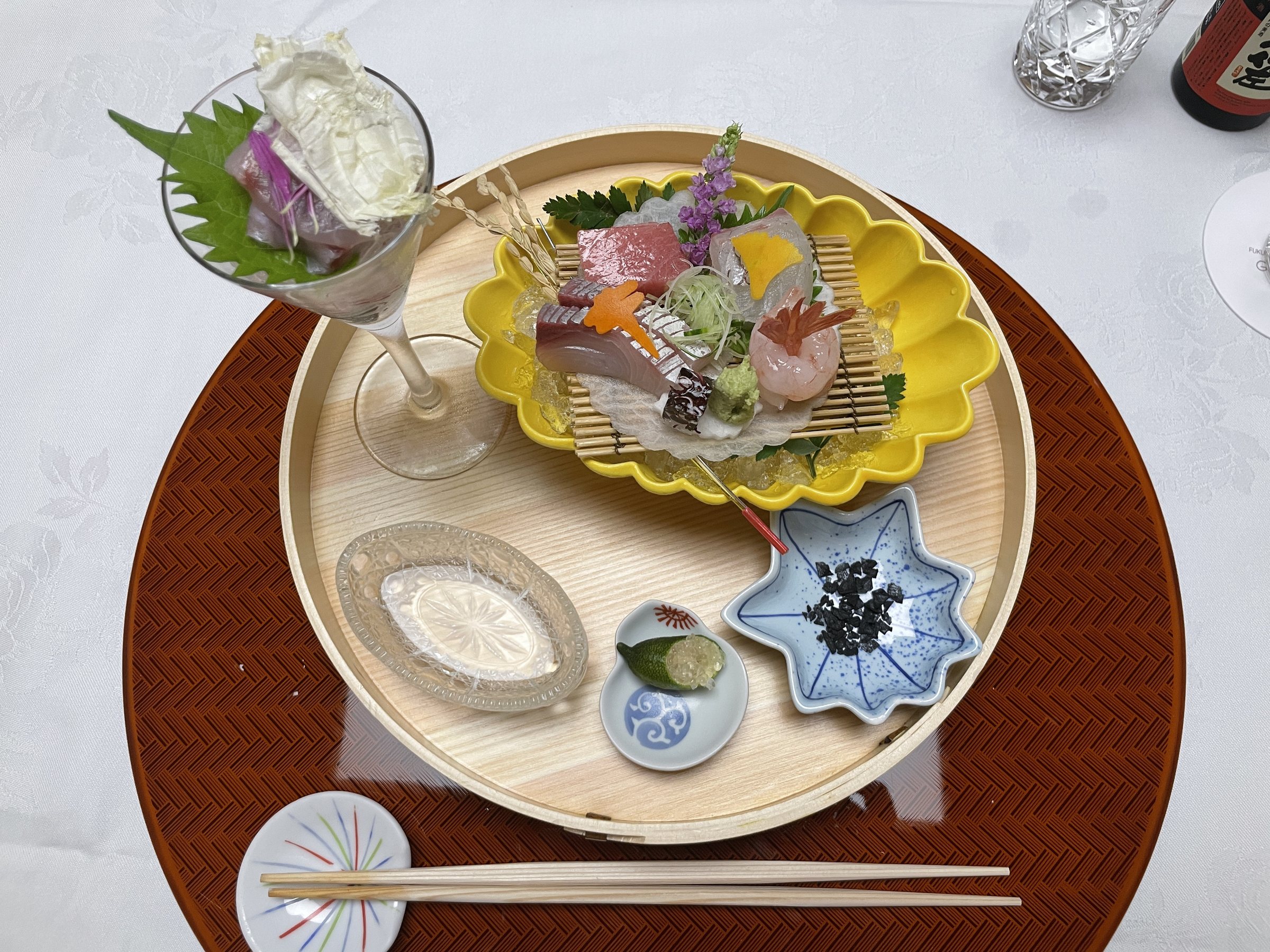
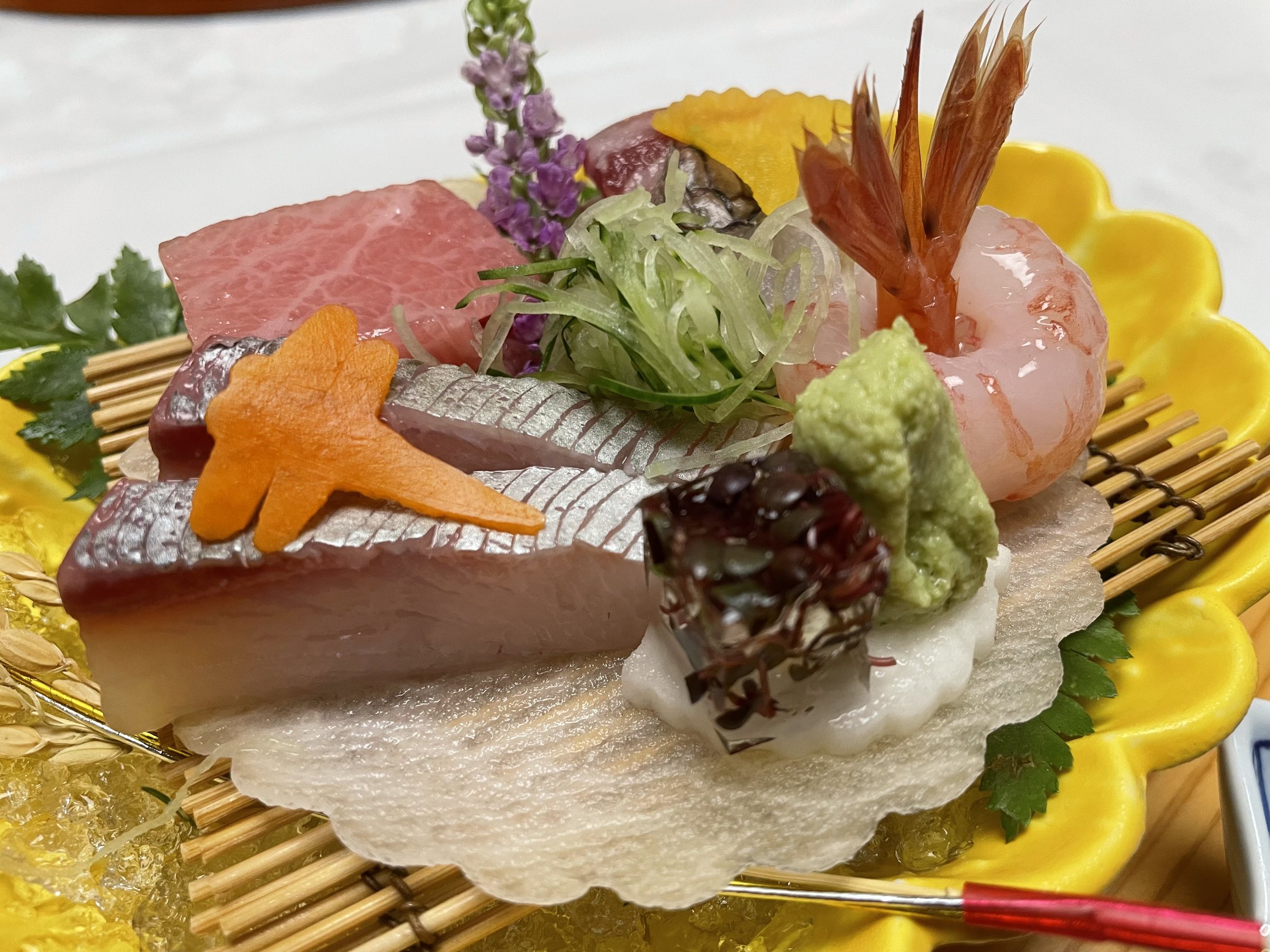
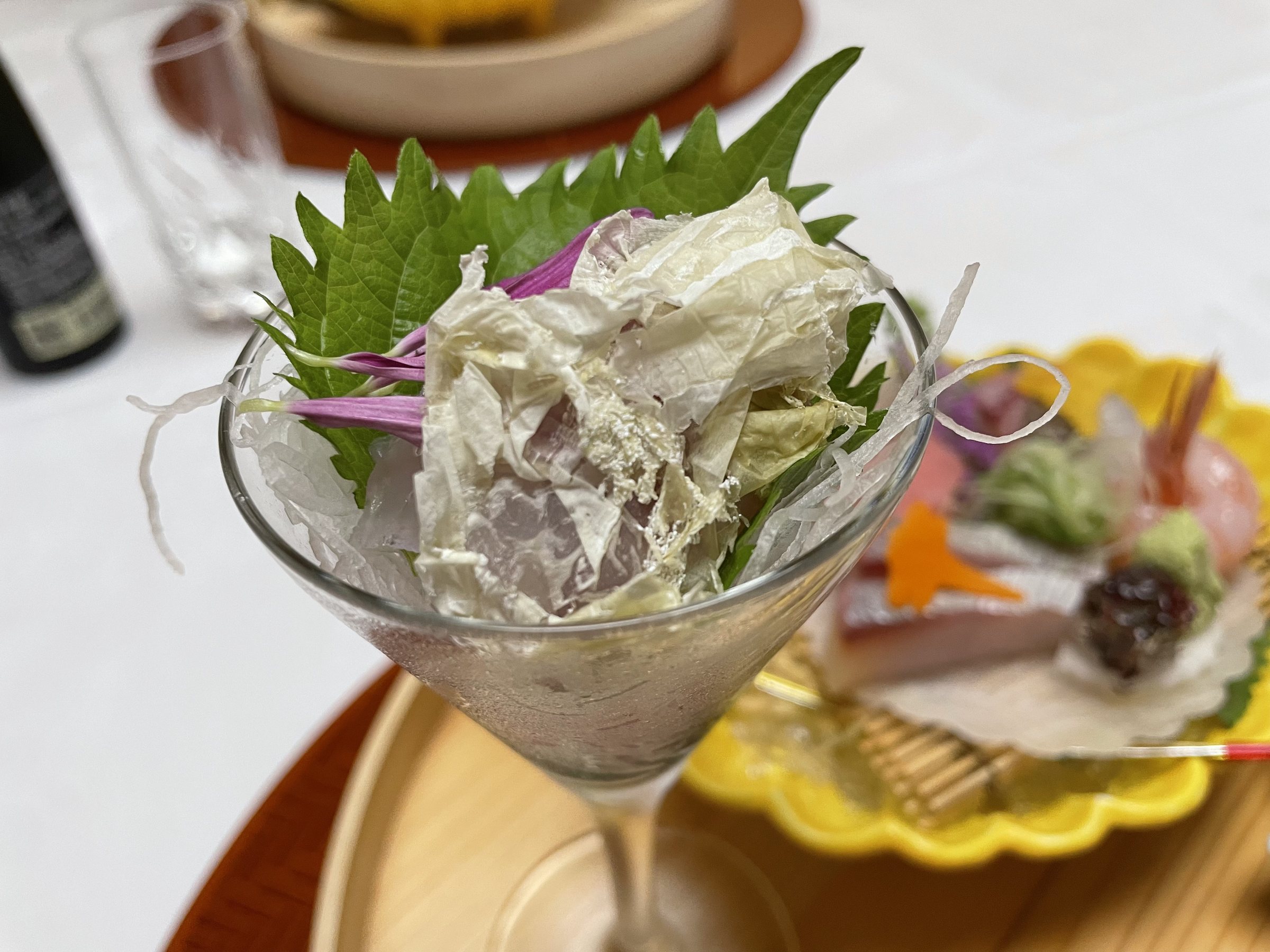
The sashimi in the glass at top left came with oboro kombu, finely shaved kelp; eaten together, the umami deepens. Fukui is also renowned for its kombu. The carefully arranged sashimi had been well prepared, free of excess moisture or any fishy smell, and was silky on the tongue. We had never before come across clear soy sauce: it looked refreshing and tasted saltier than the dark kind. Combined with the popping texture of finger lime and charcoal salt, it made for a medley of flavors. Sashimi and local sake: a perfect moment.
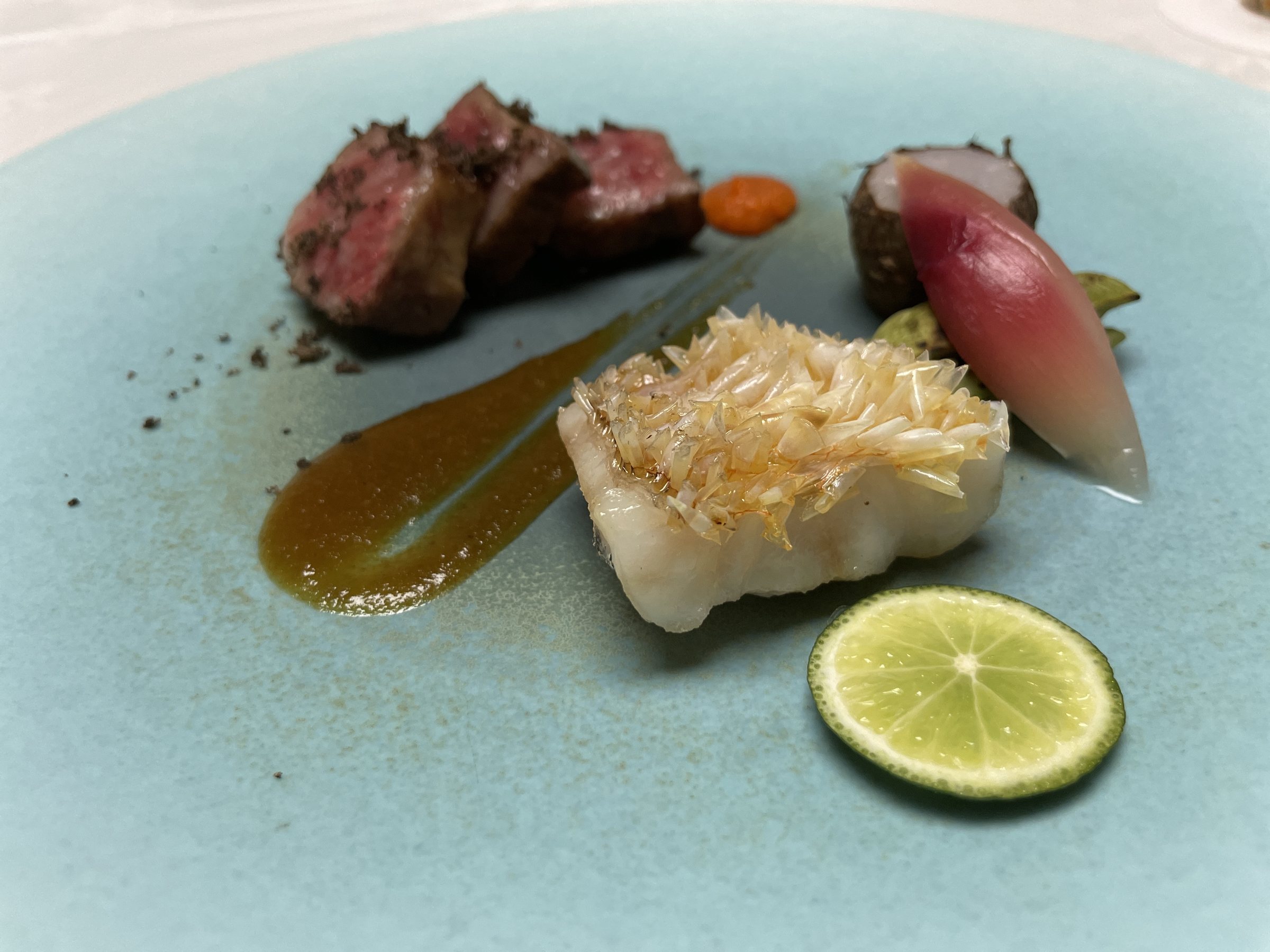
Next was amadai (tilefish), a local speciality, grilled uroko-yaki style with its scales left on. The skin crackled against the teeth and the sweetness the fish is named for spread through the mouth. Wakasa beef, which Fukui actively promotes, also appeared, in a plate that stepped a little away from Japanese cuisine and kept things interesting. It was dusted with truffle, but we felt a generous hit of pepper alone would have made it delicious.
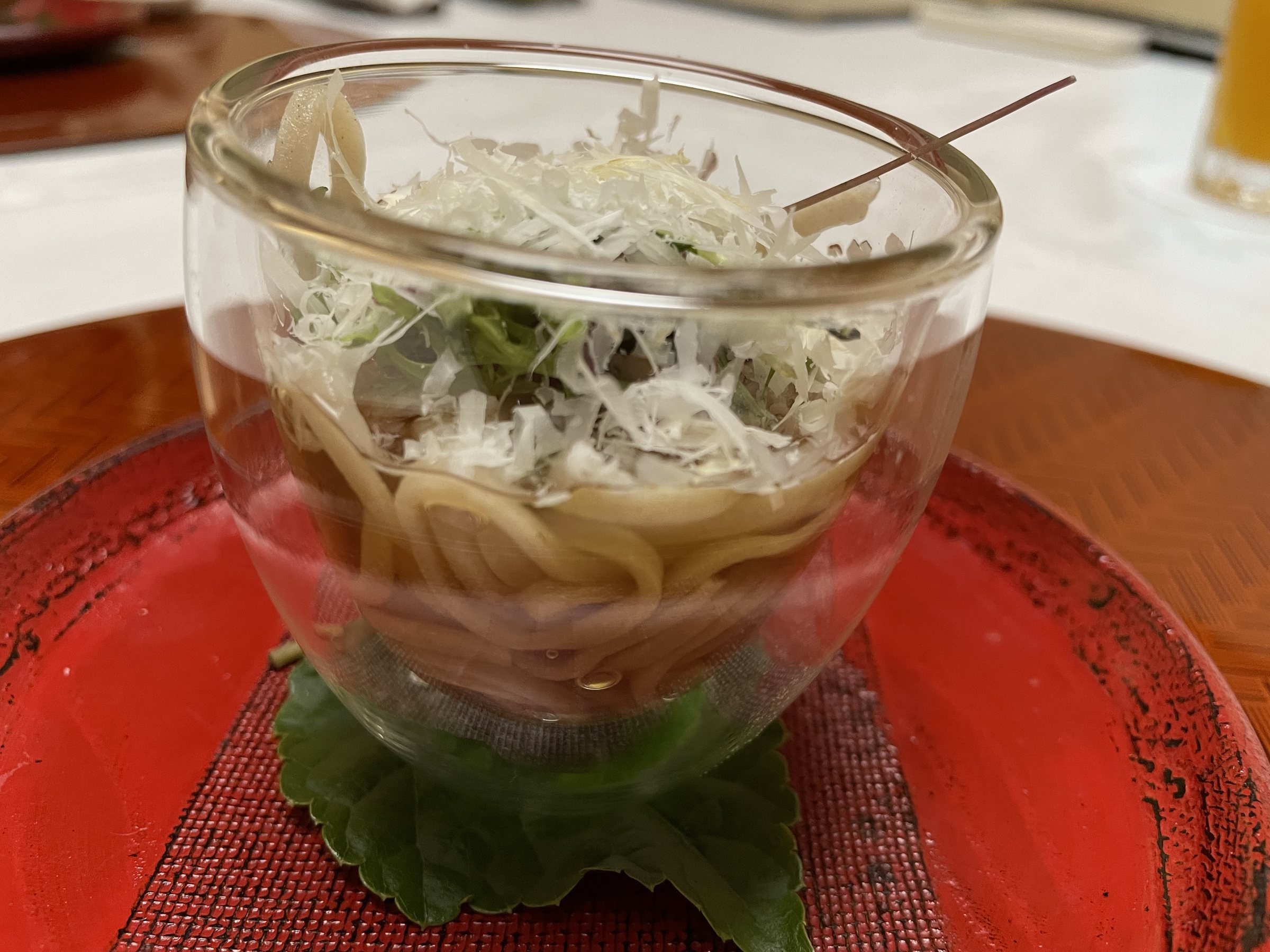
The famous Echizen soba came topped with cheese. Personally, we preferred it the traditional way, in its slightly sweet broth with bonito flakes and spring onion, rather than with a cheese that has some aroma of its own. The lacquered trays and vessels were varied with every course, a real effort to let guests enjoy the region’s traditional crafts.
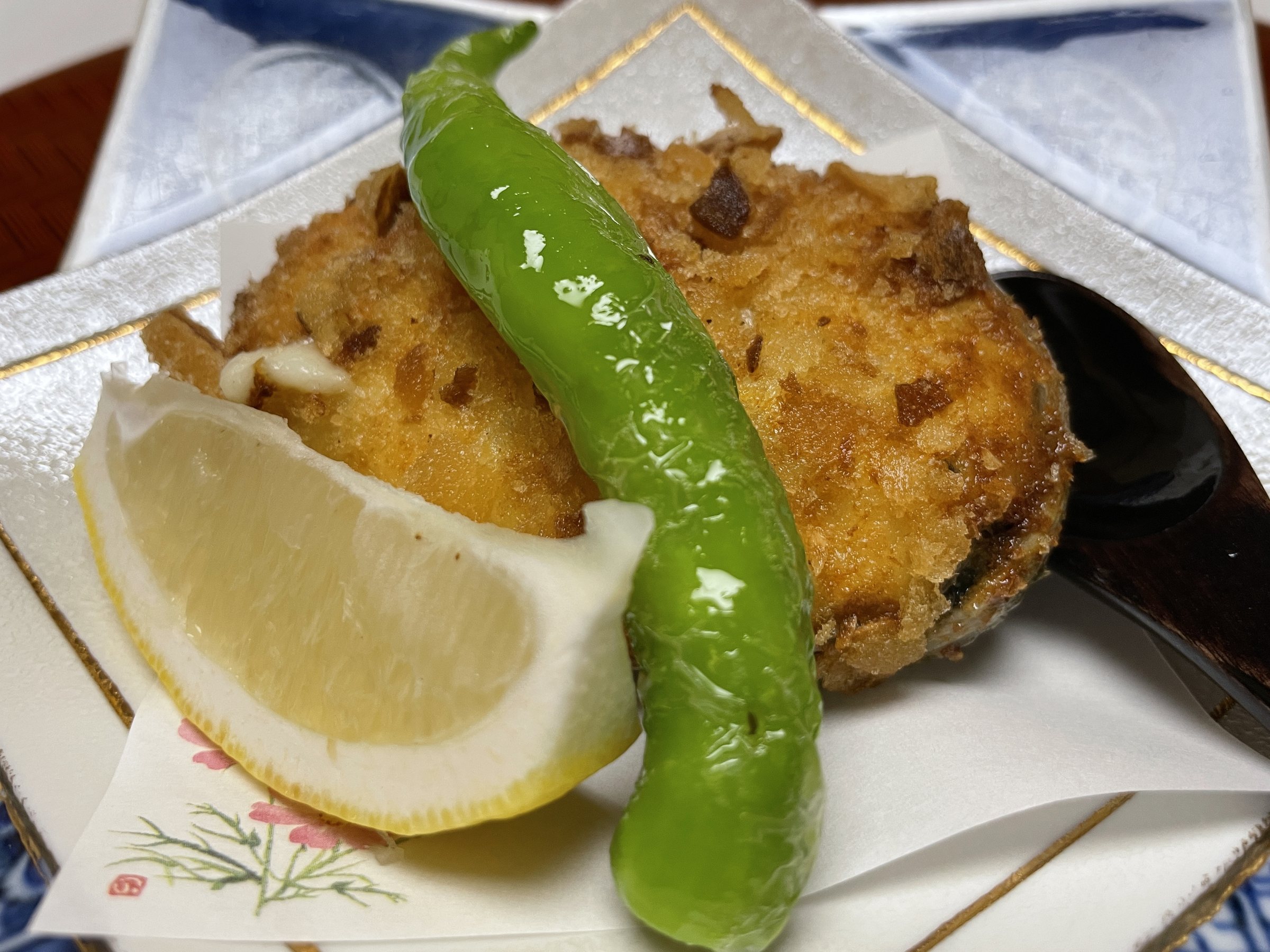
Next, a seafood gratin of sorts, made lavishly with abalone. At a long-established onsen ryokan, we could feel the kitchen’s passion for protecting Fukui’s traditional dishes and ingredients while devising new ideas so that guests never tire of them.
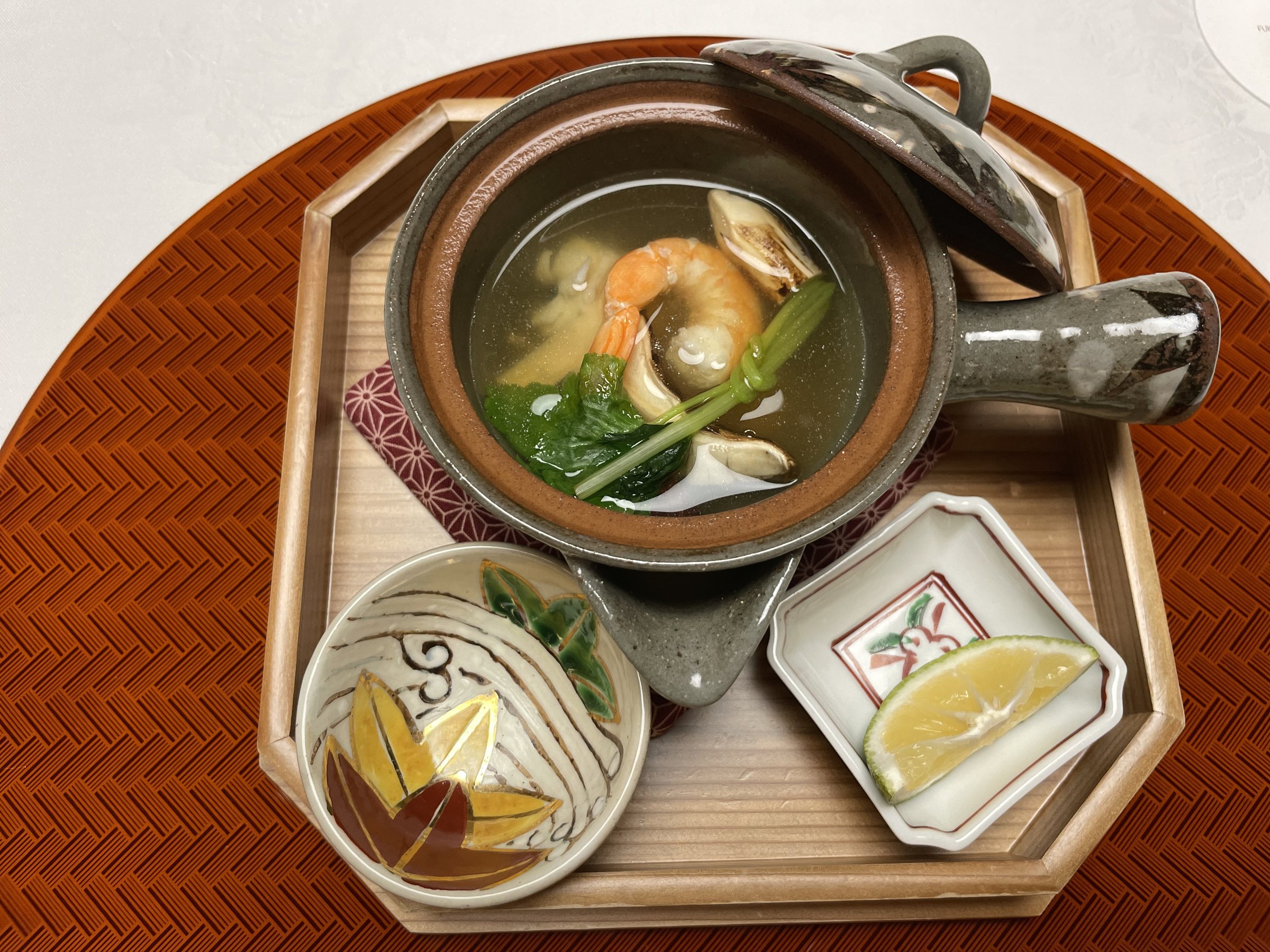
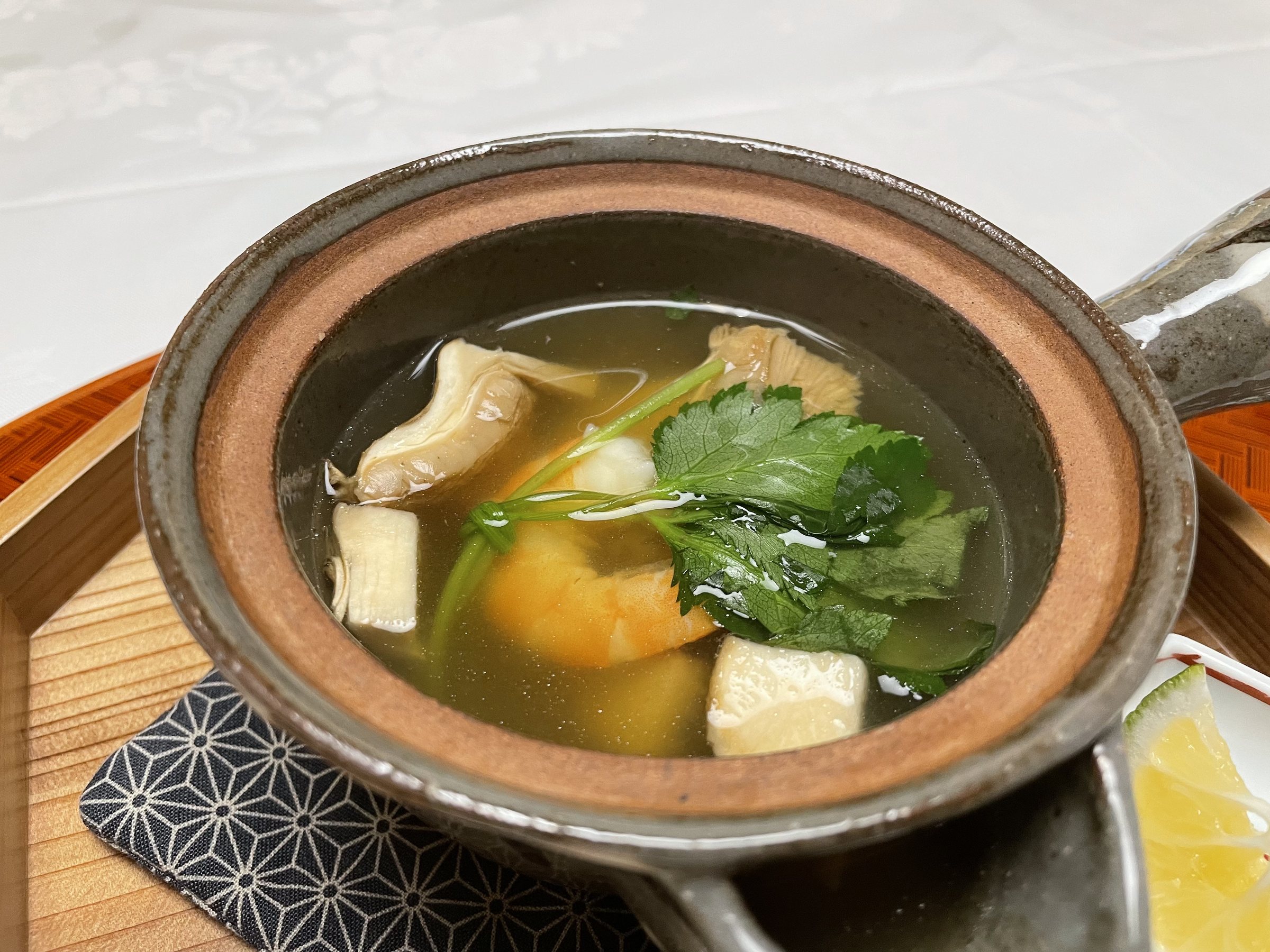
Dobin-mushi, a broth steamed in a small earthenware teapot, is a classic sign of autumn. To be strict, the ingredients were floating in a cloudy broth. A dobin-mushi with a clear, golden broth, and the aroma of matsutake that comes with it, is on another level. Dishes that look simple are surely the ones where careful preparation and time make all the difference to the result.
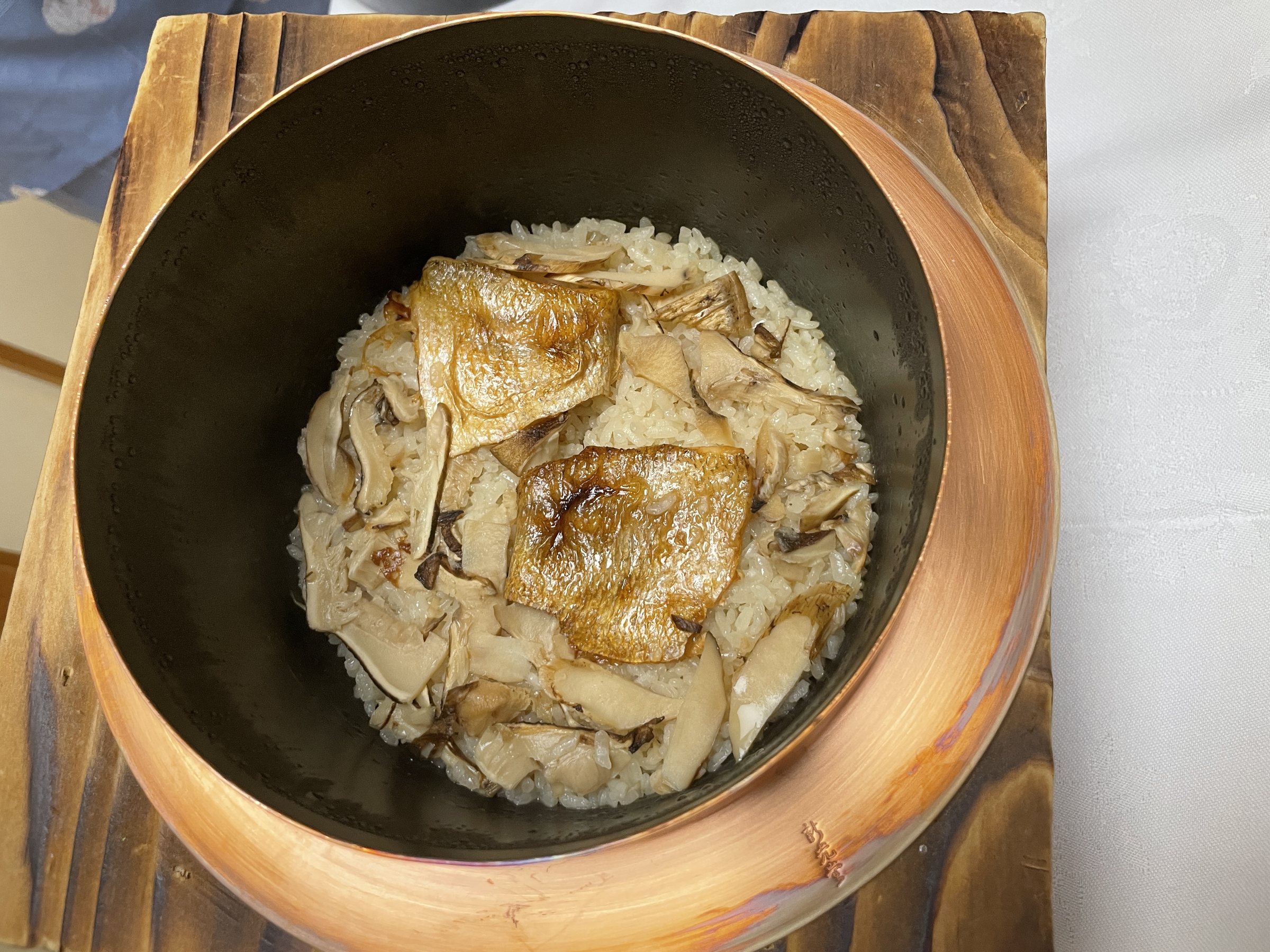
The meal closed with rice cooked with autumn ingredients. More and more places seem to serve takikomi-gohan, seasoned rice cooked with other ingredients, rather than plain white rice these days. Here it was a satisfying pot of matsutake and fish (small sea bream), with miso soup and pickles: no longer just the end of the meal but a dish in its own right. The nodoguro (blackthroat seaperch), sprinkled with yuzu, had no fishiness at all and was very good.
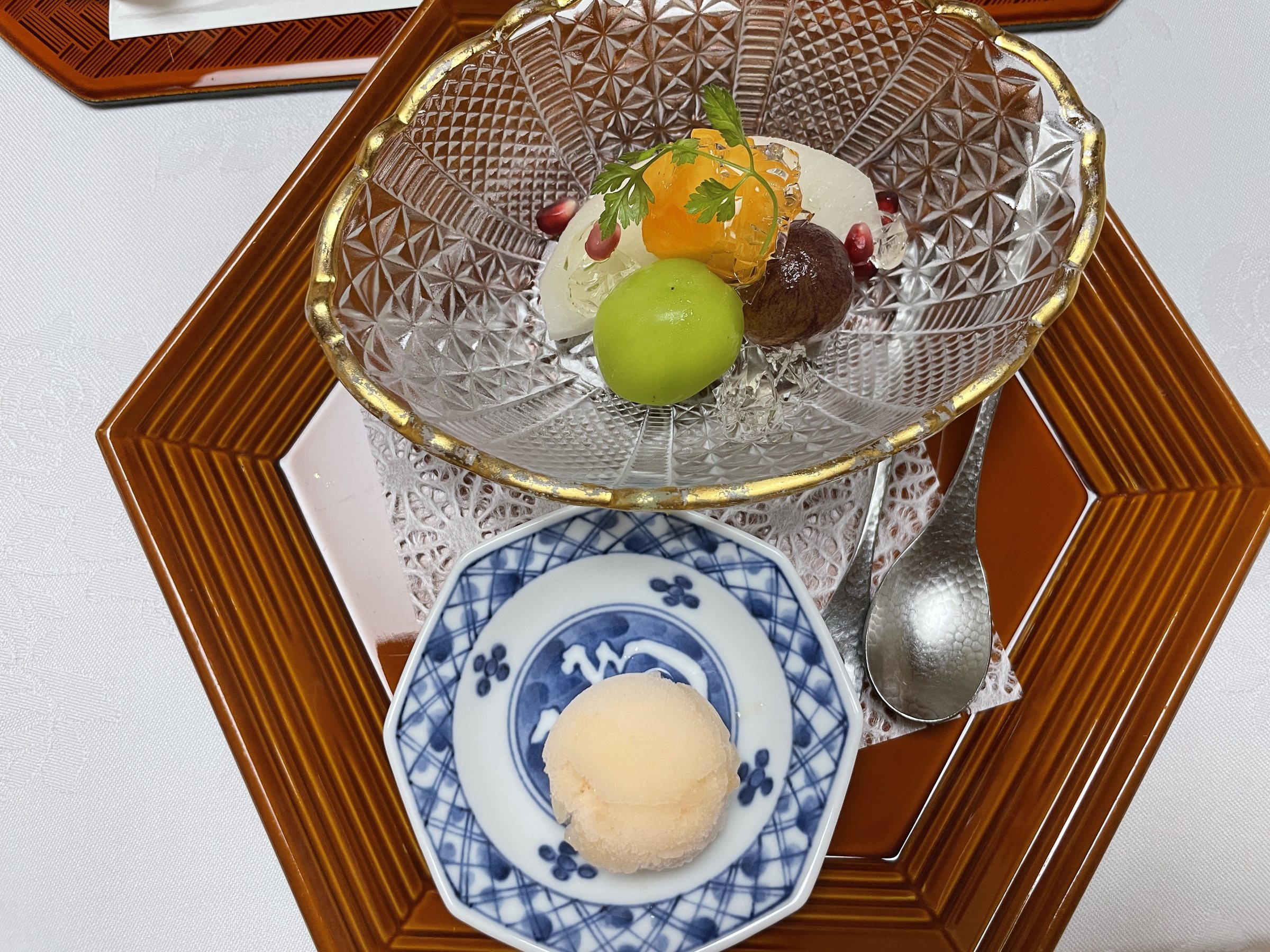
Right to the end, dessert was served on beautiful lacquerware. Juicy fruit with a well-judged balance of tartness and sweetness left us content.
We had been told that the drinks in the room’s fridge were complimentary, but the sake was one meant to be served warm, and it had been chilled, which was a little disappointing.
Breakfast
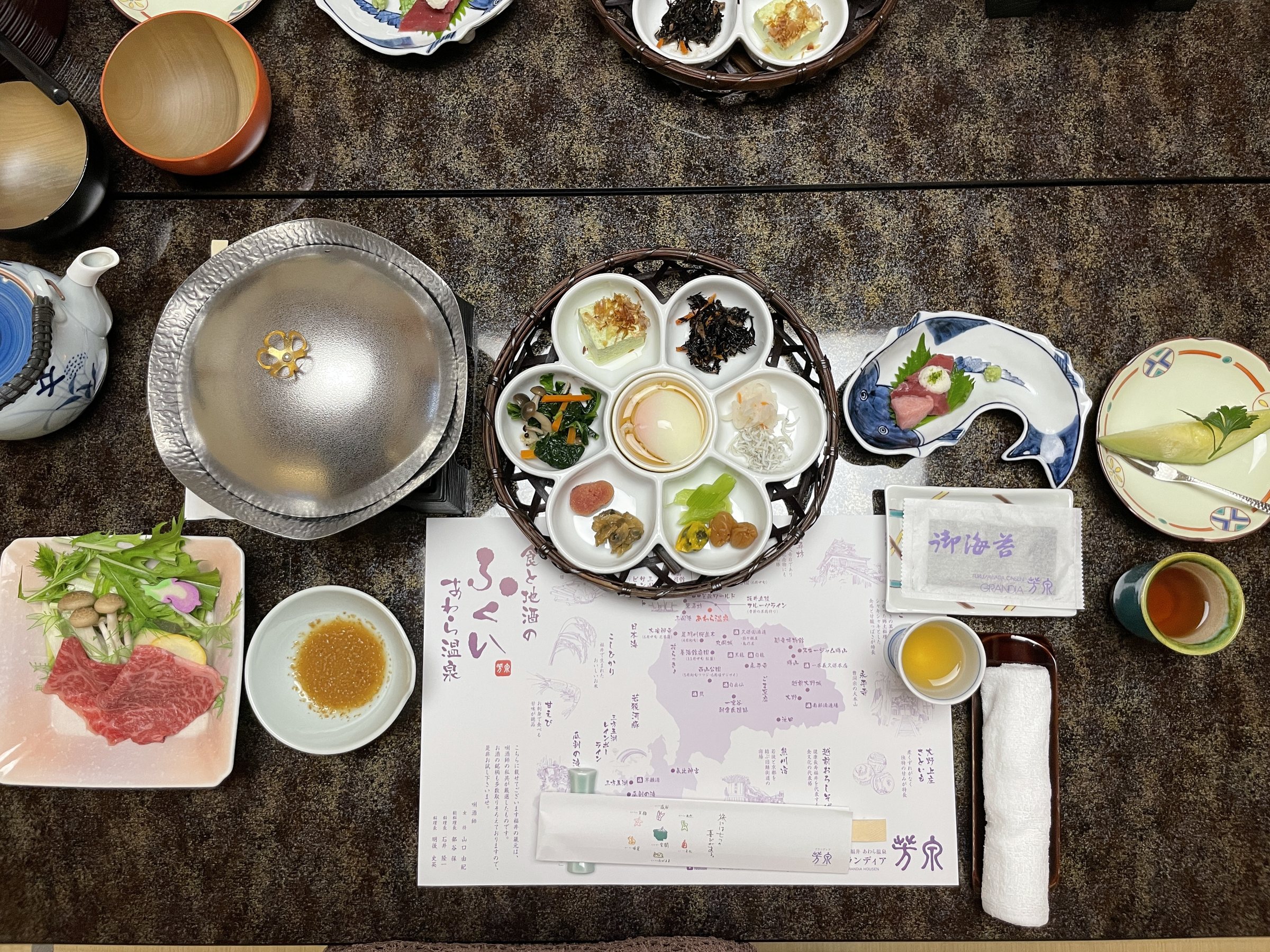
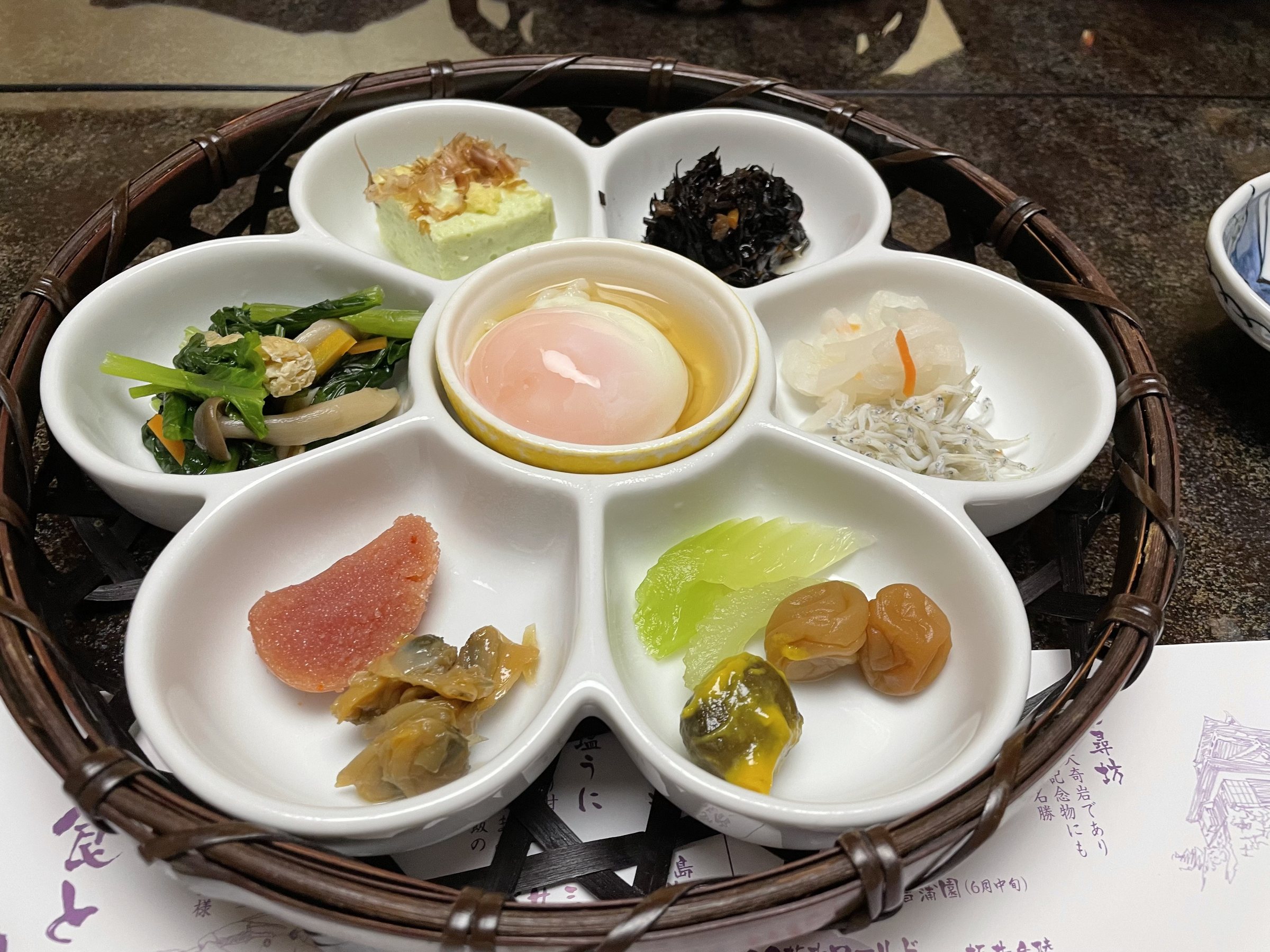
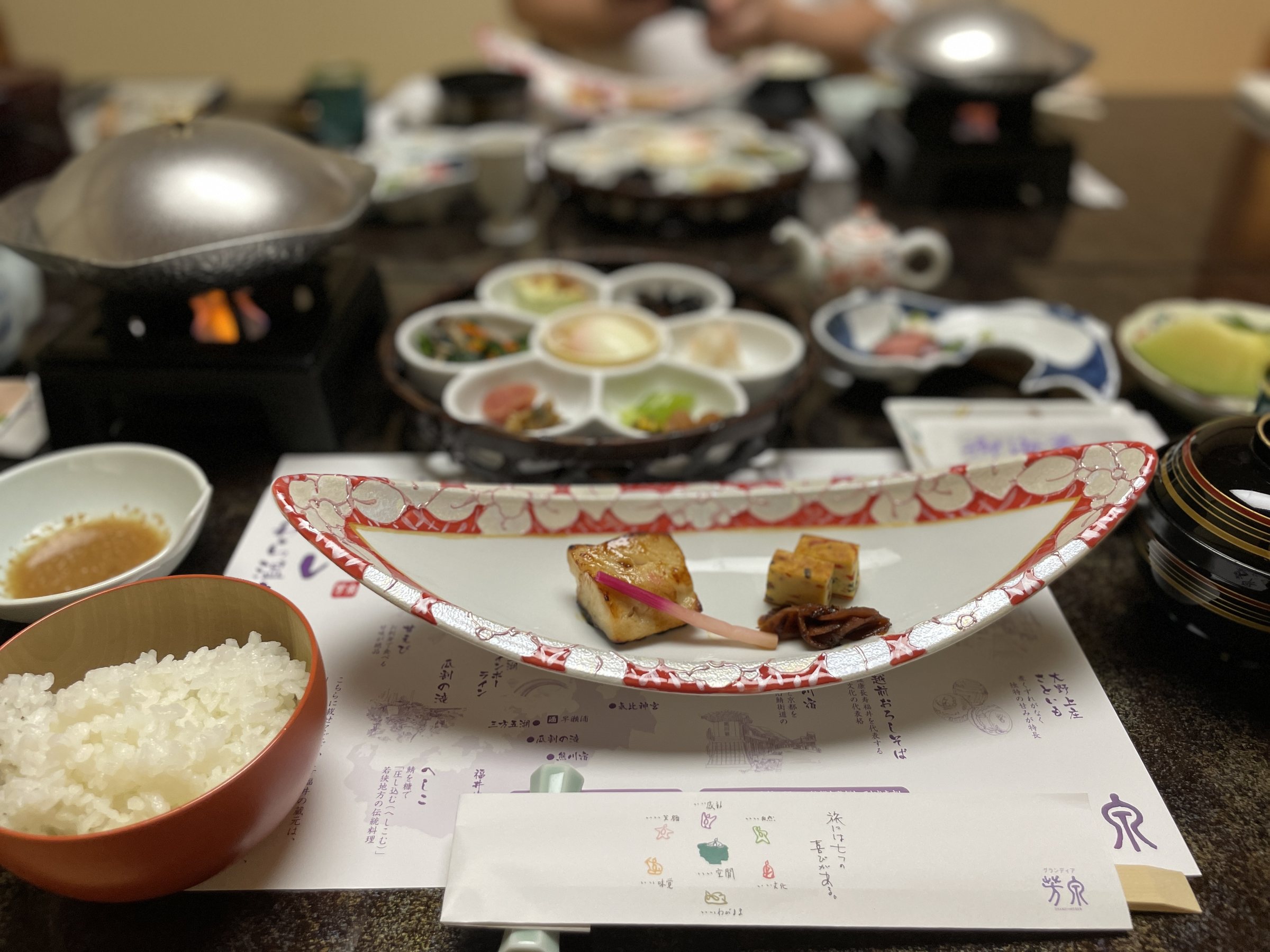
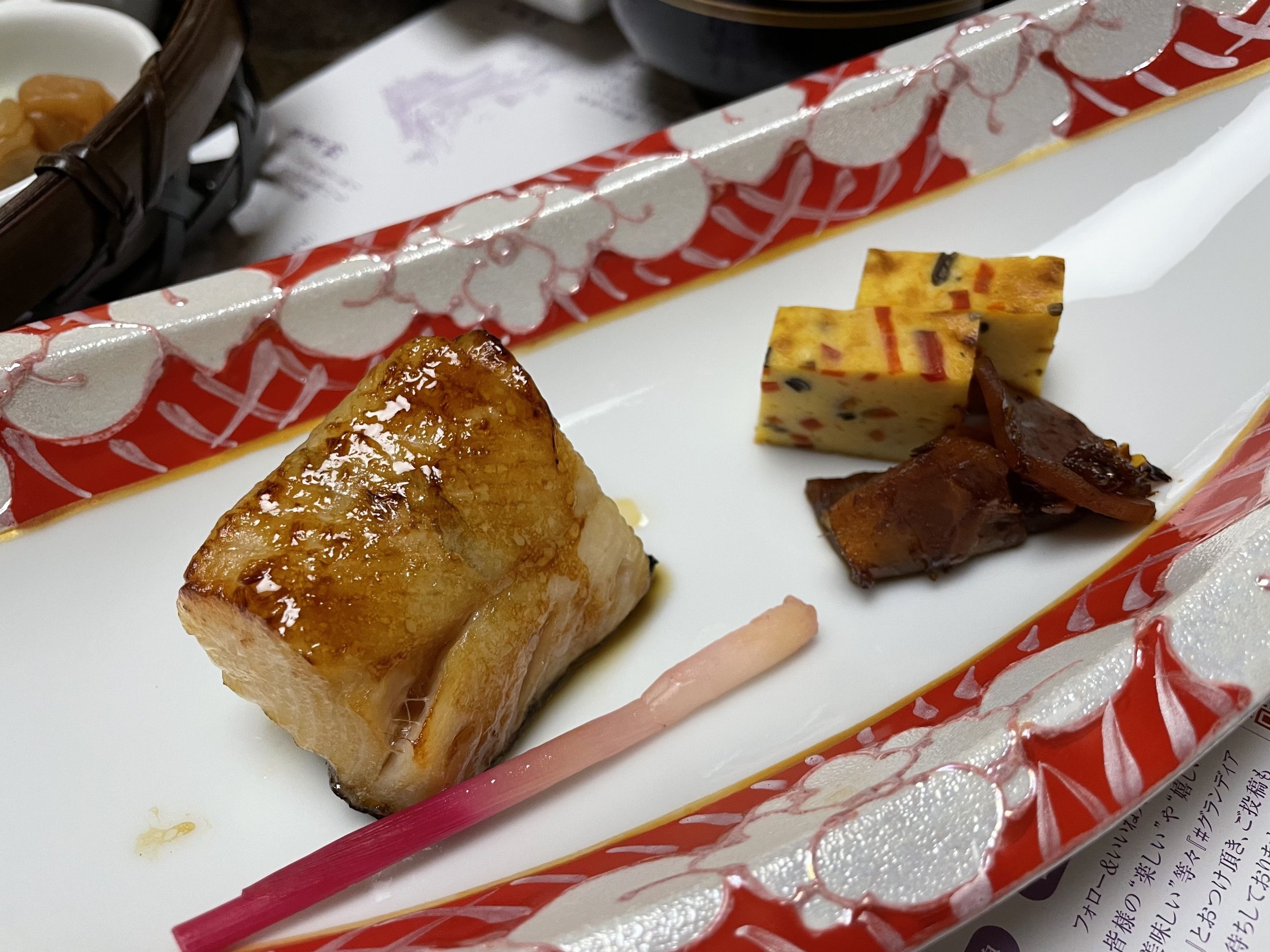
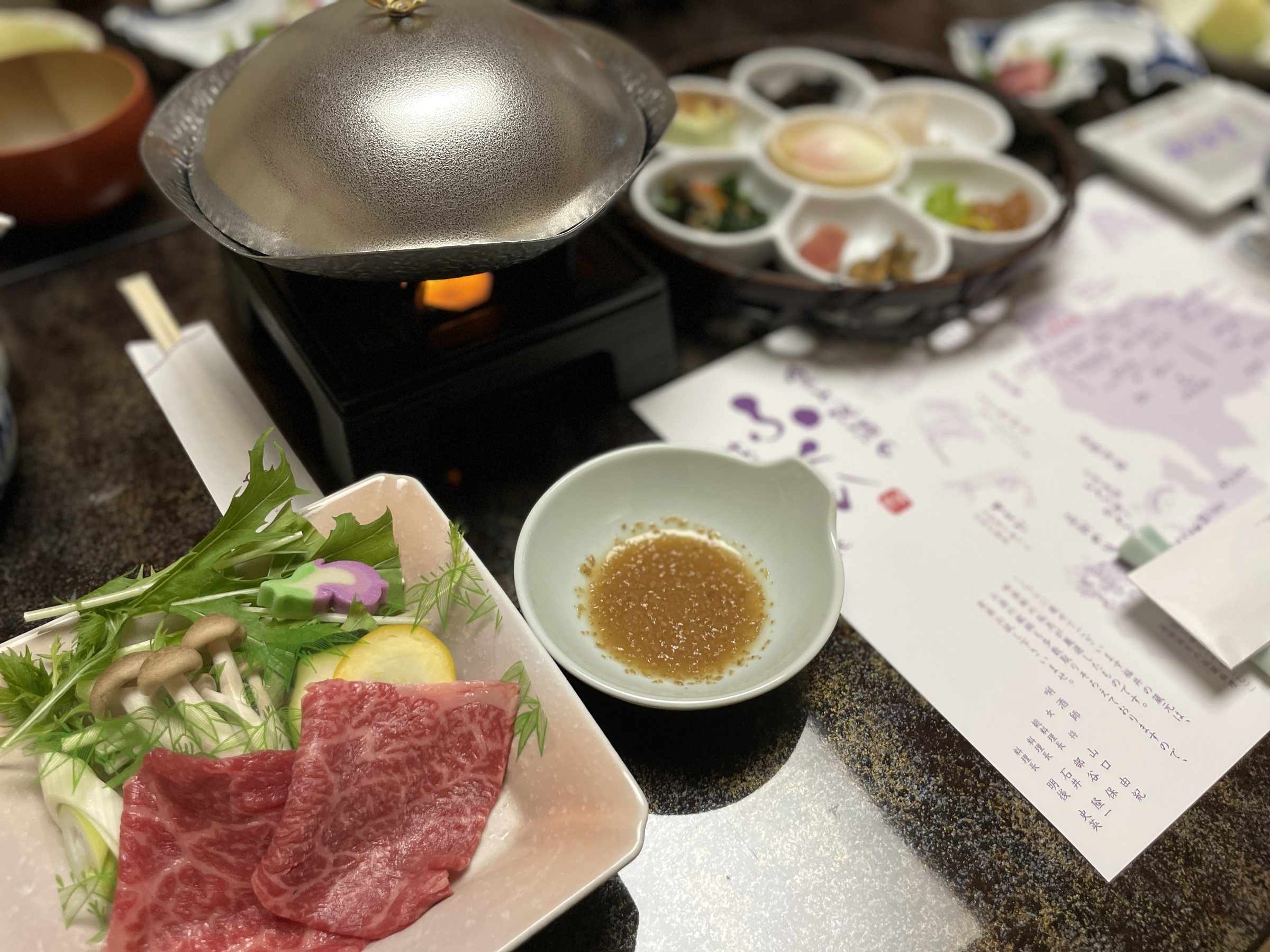
The next morning, breakfast was set out over a map of the Awara Onsen area. The menu was wide-ranging, with shabu-shabu and even sashimi first thing in the morning, and a hot grilled fish arrived a little later. The rice was served in a bowl like the ones we had come across the day before at a lacquer workshop we had visited, and we were struck by a table full of local crafts from the previous evening onwards. With lavish side dishes and freshly cooked rice, it was a thoroughly satisfying breakfast.
Final thoughts
Grandia Housen offers the scale of a large onsen resort, with its huge building and impressive baths. Its guests range from families to older travelers, and so do its rates. The cooking shows real commitment to local specialities and fresh ideas, and the number of dishes at dinner is satisfying. It is not the place for those seeking special service or deeply personal, high-end hospitality, but as a ryokan for getting away from everyday life, exploring Hokuriku’s sights, tasting its specialities and taking things slowly, it could well be ideal.
This review reflects a visit in September 2022; please confirm current details directly with the ryokan before visiting.