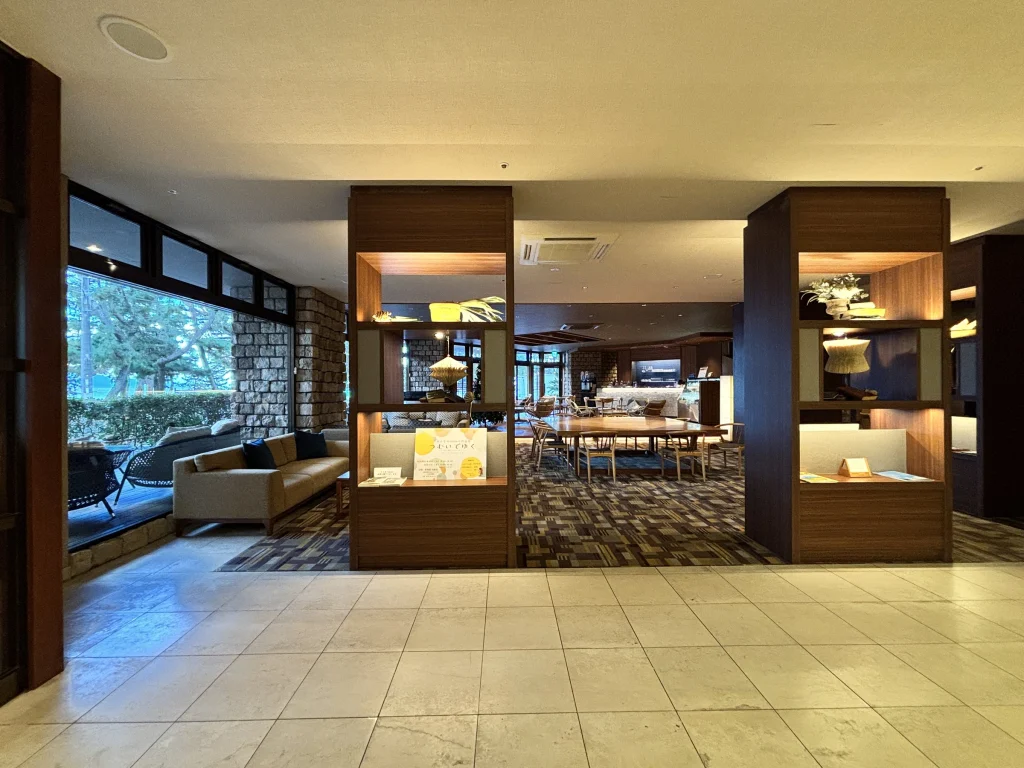
Hotel Grand Bach Atami Crescendo sits 361 meters up the slopes of Izusan, with Sagami Bay spread out below. A luxury hotel that reopened after renovation in July 2016, it wears its theme openly: step from the entrance into the lobby and the first things you see are a grand piano and a statue of J.S. Bach, and check-in takes place to a soundtrack of classical music.
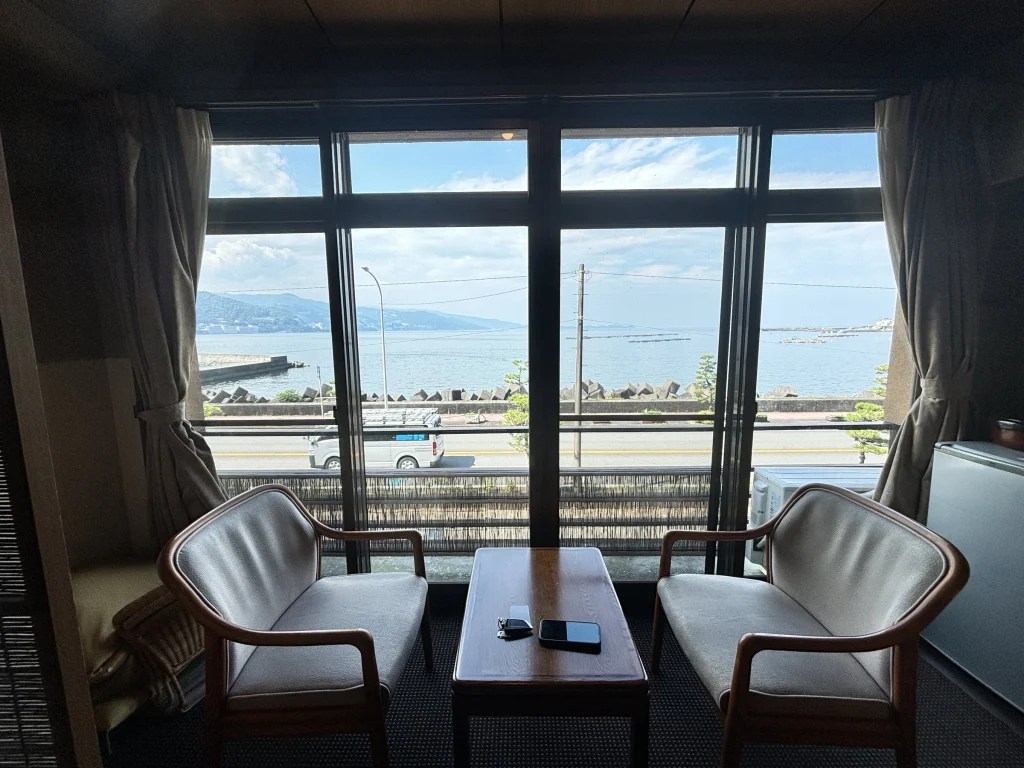
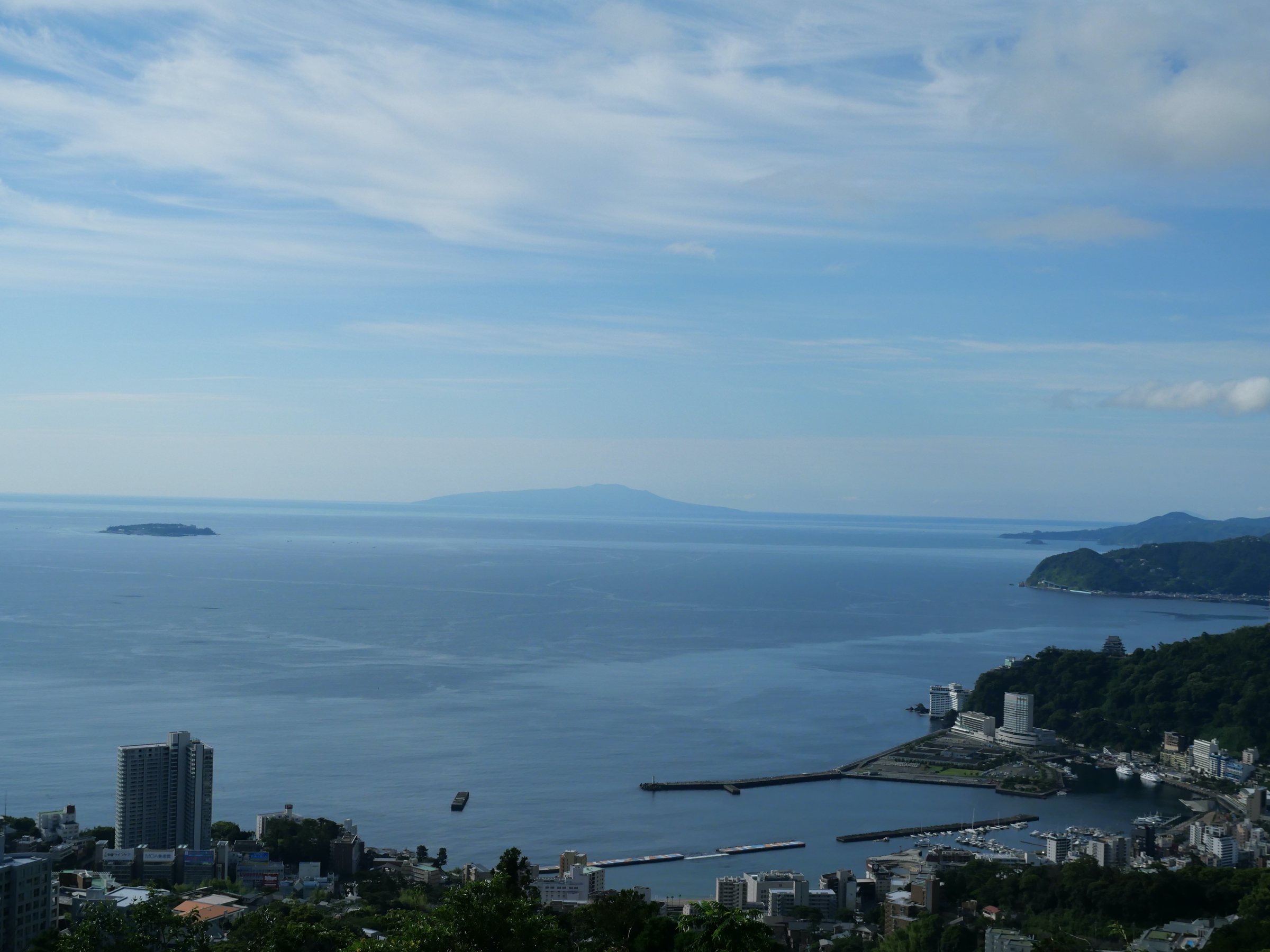
Set so close to the summit, the hotel enjoys a high, open outlook. The weather on the day we arrived was not kind, but on a clear day, apparently, the whole of Sagami Bay lies spread out before you.
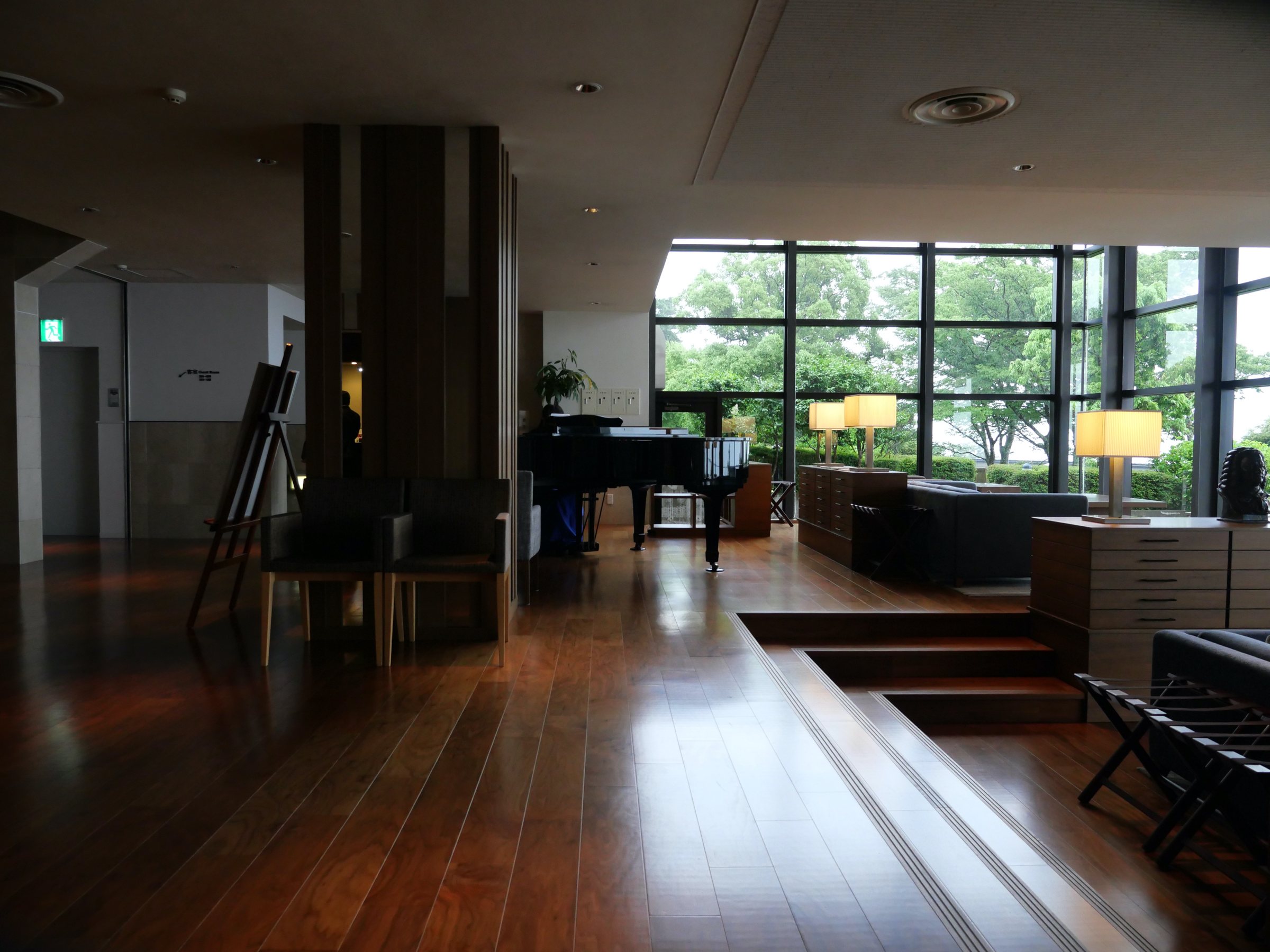
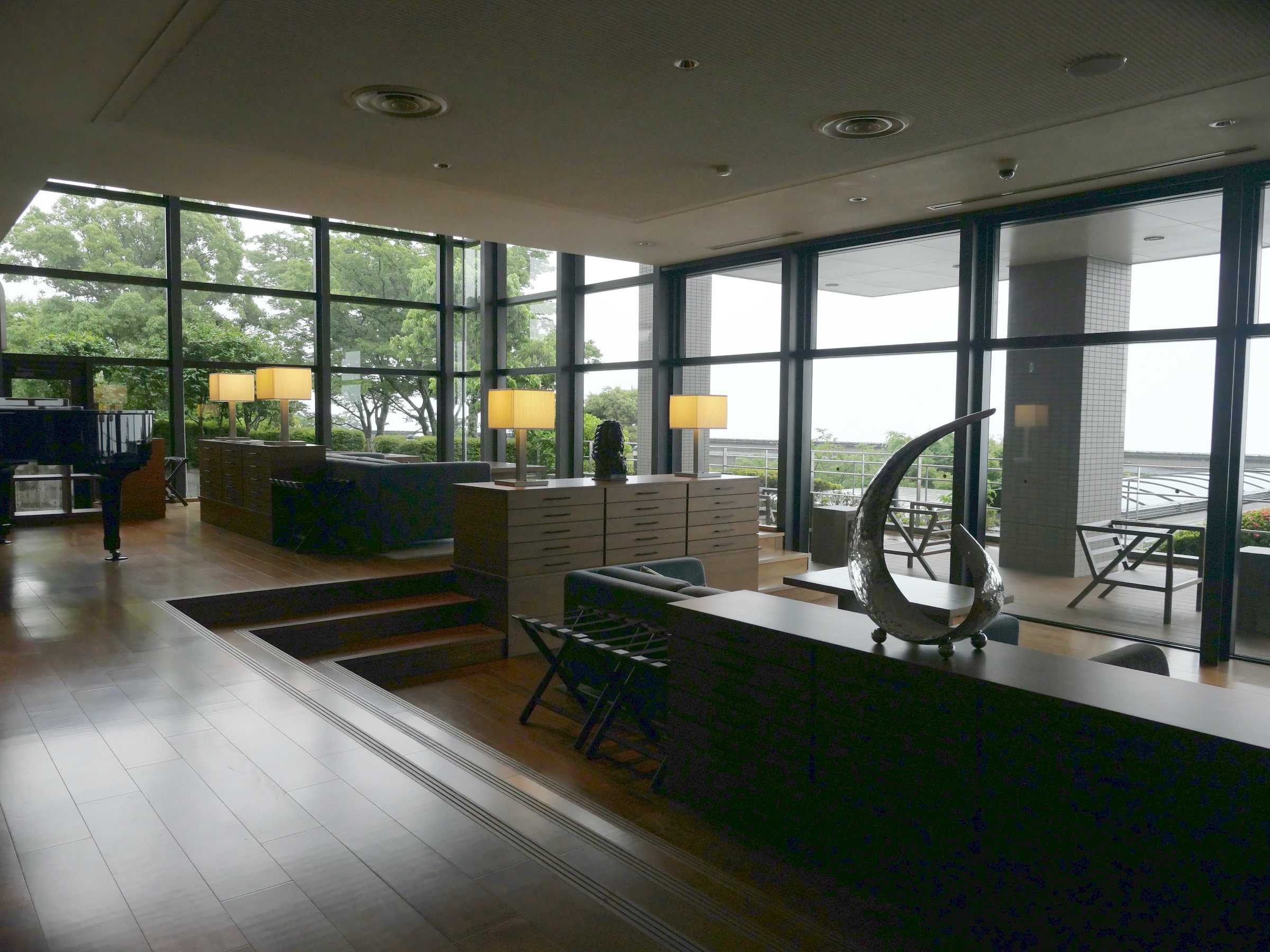
A house of small comforts
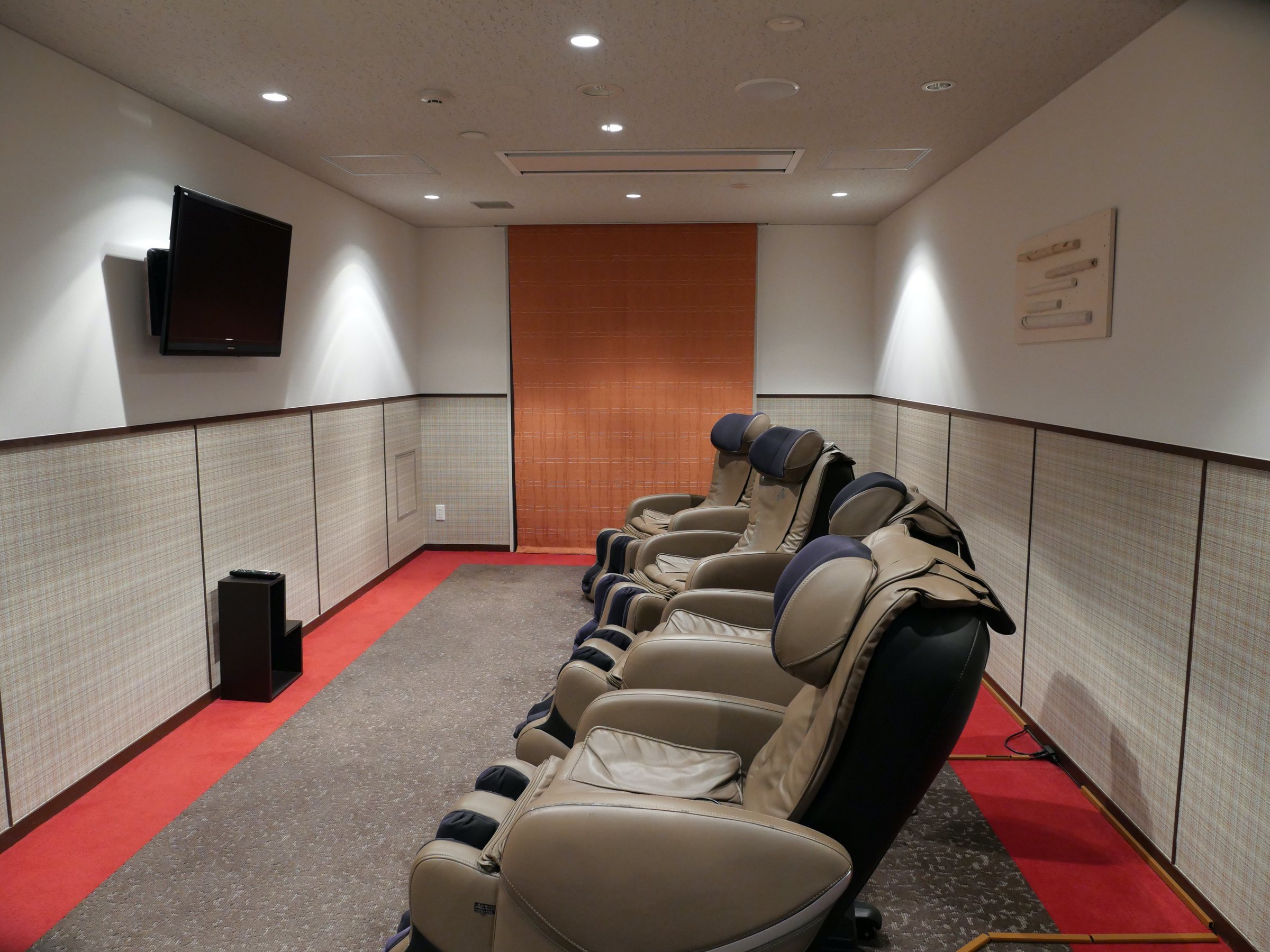
The public spaces are full of small comforts: a reading nook on a stair landing, a row of massage chairs and a small gym. Mineral water and milk are set out for guests all around the building, a simple courtesy that was genuinely welcome.
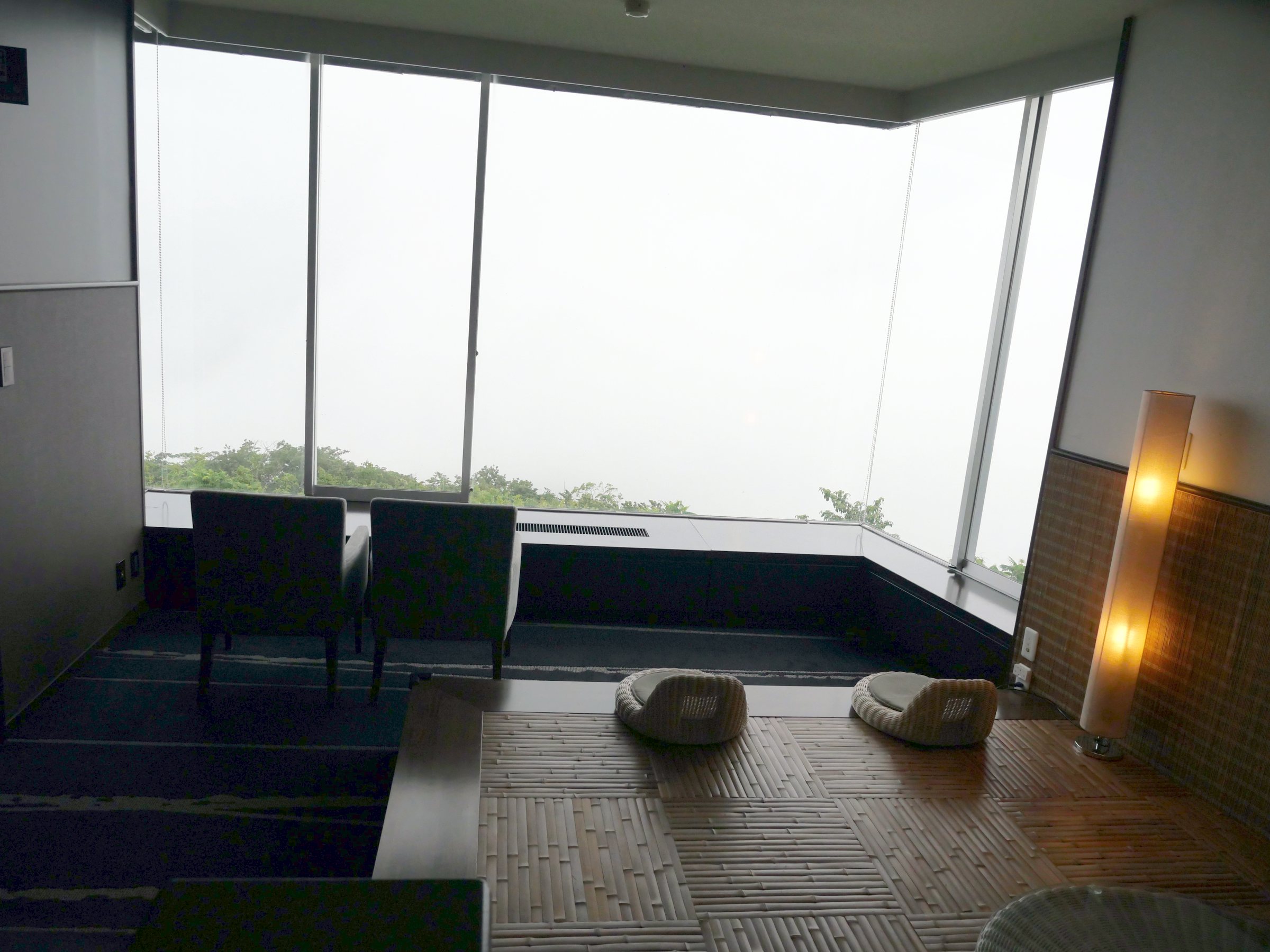
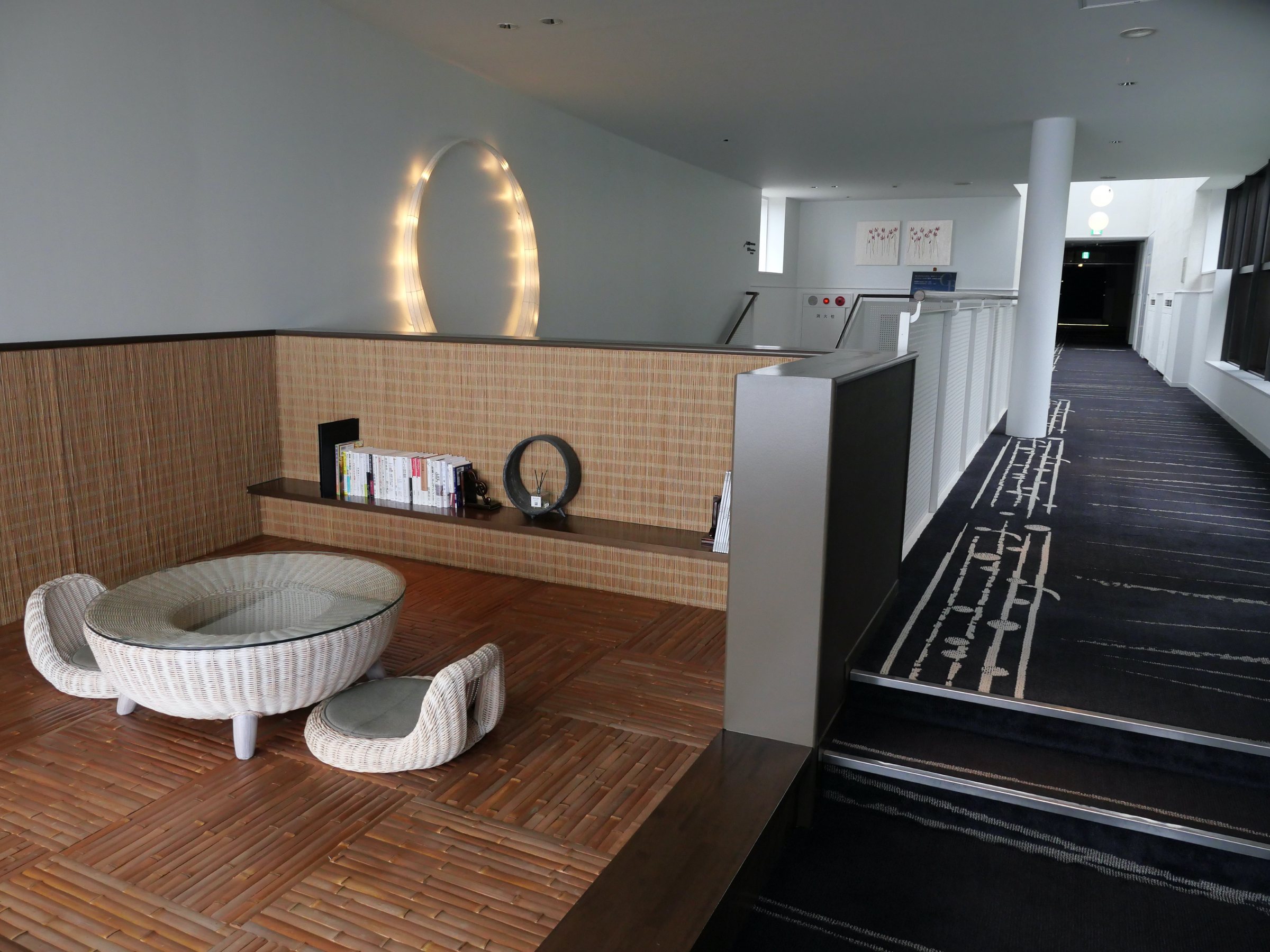
The lounge, and a cheesecake on the house
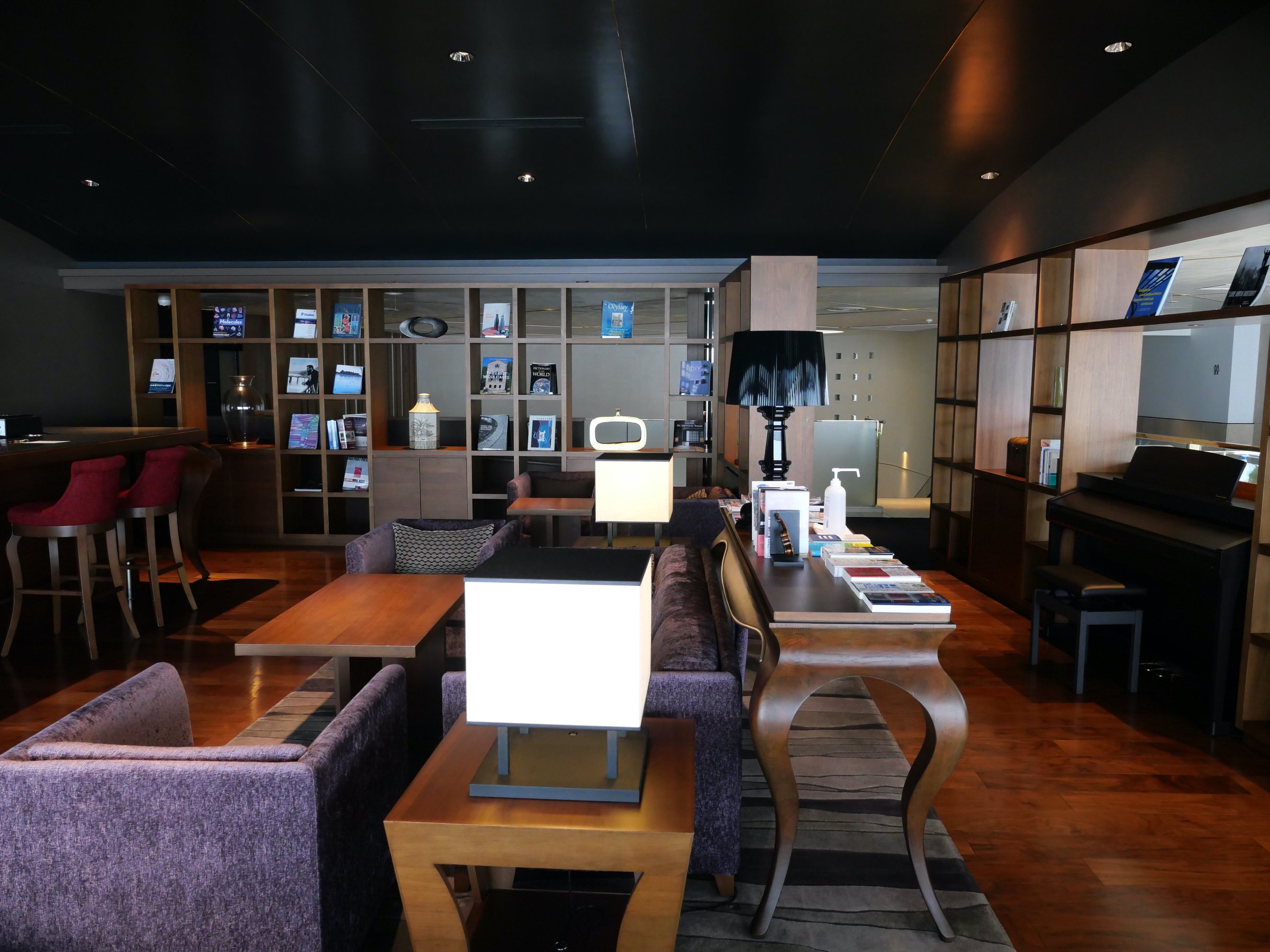
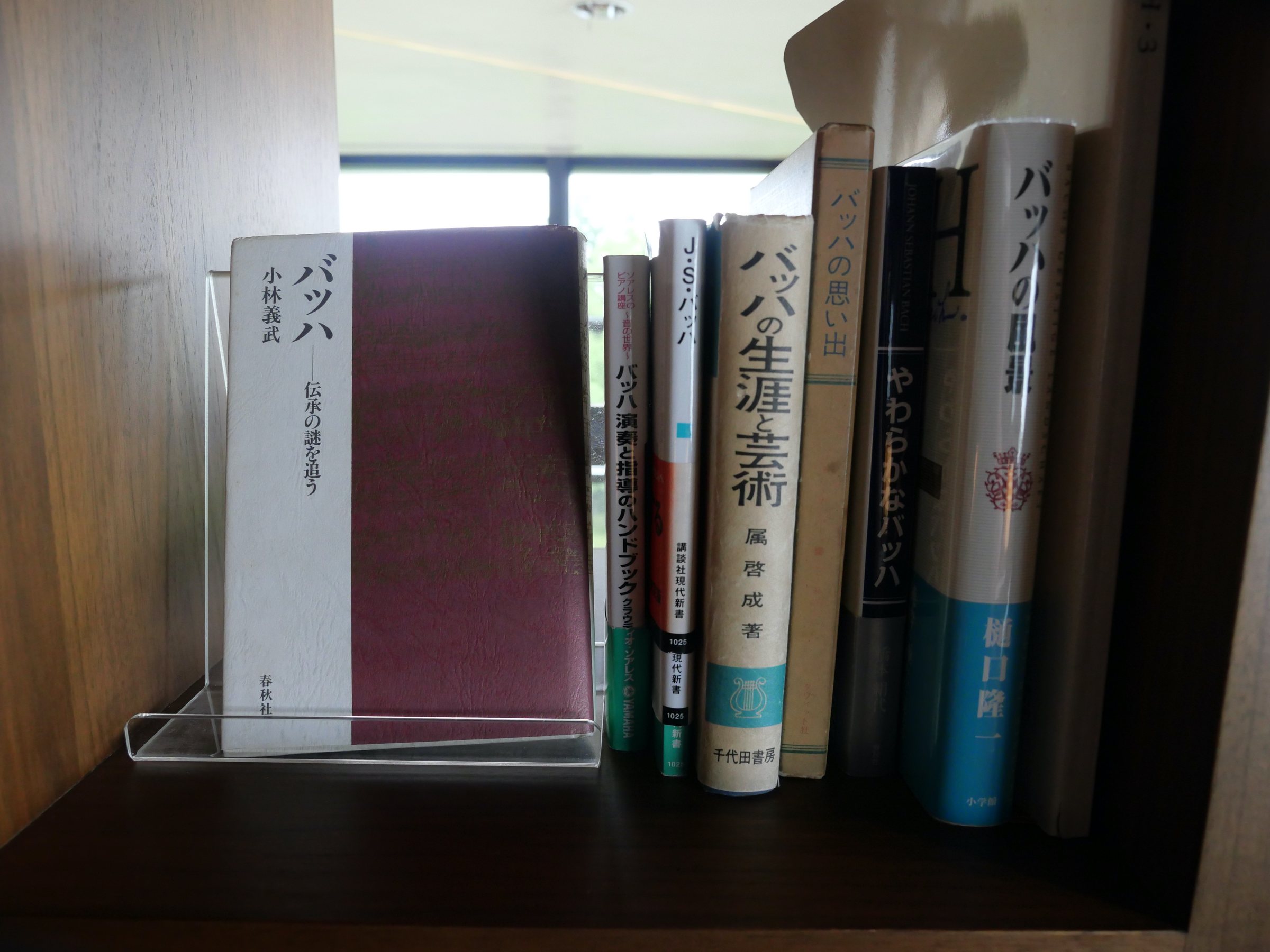
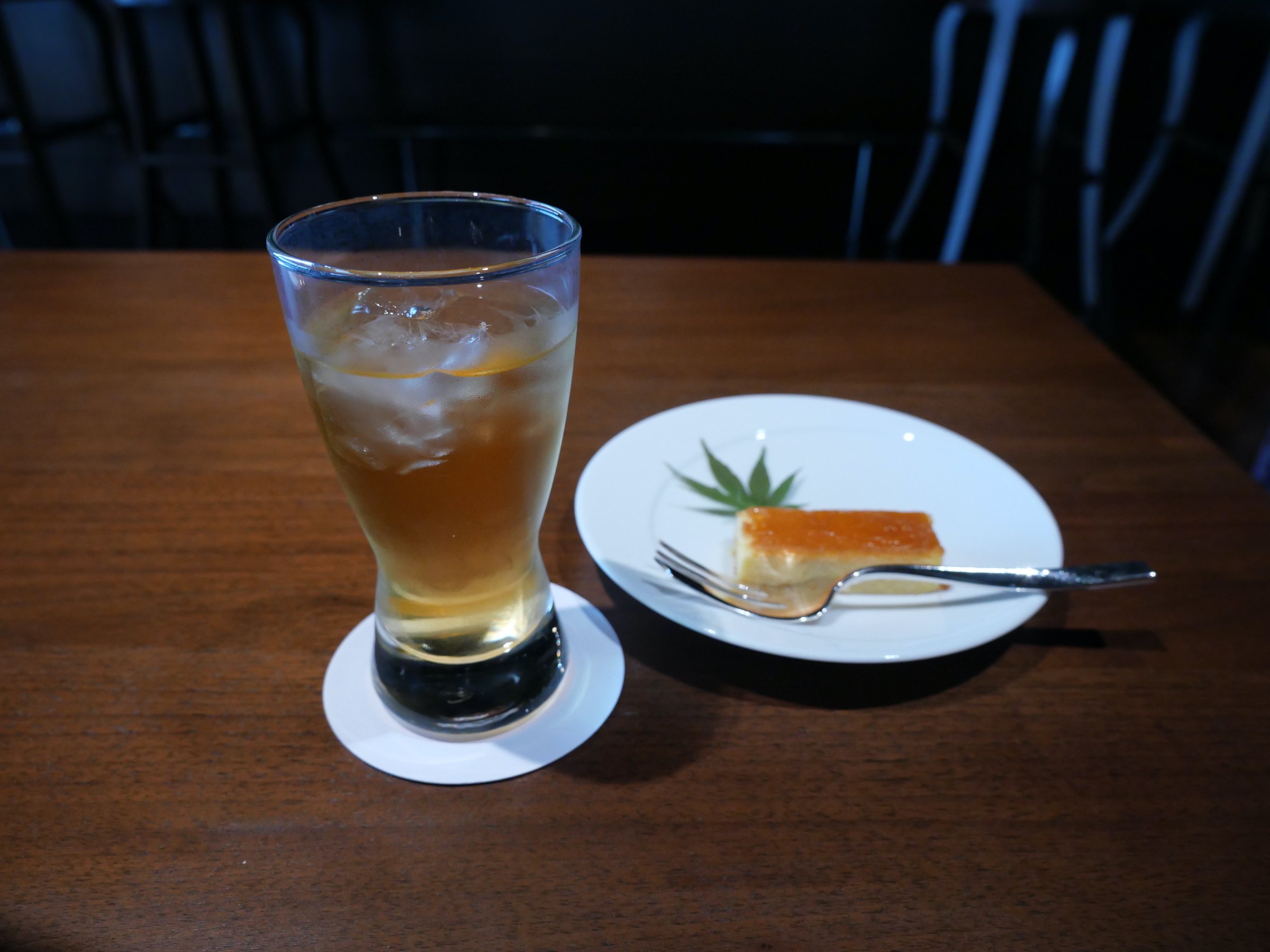
The lounge on the second floor, the hotel’s main floor, serves soft drinks by day and alcohol in the evening. Its shelves are lined with books on Bach and titles from abroad, and the mood is calm and settling. We stopped here for a slice of the hotel’s homemade cheesecake and an iced tea, both included in the room rate, and finally exhaled.
A room to rival Tokyo
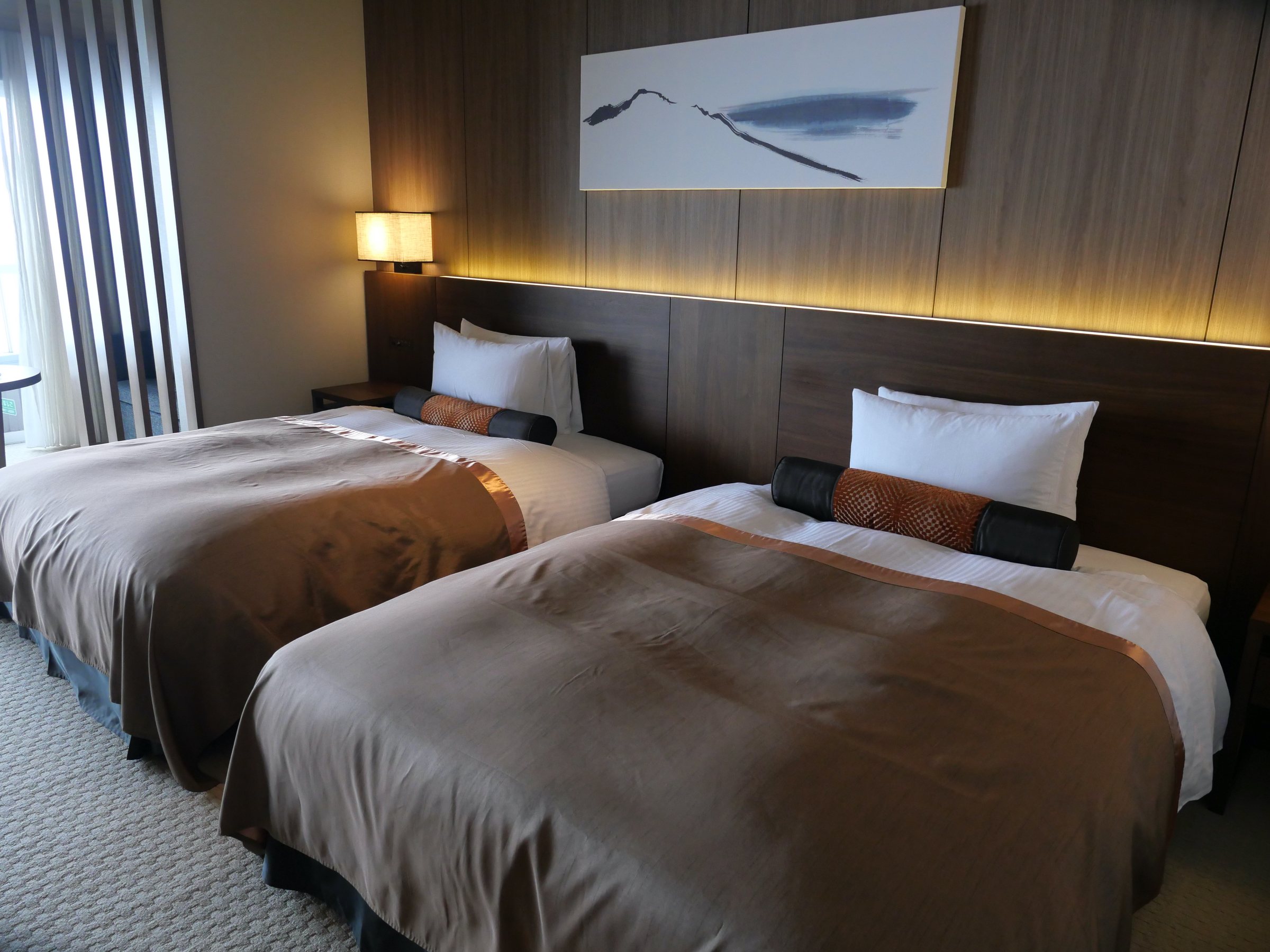
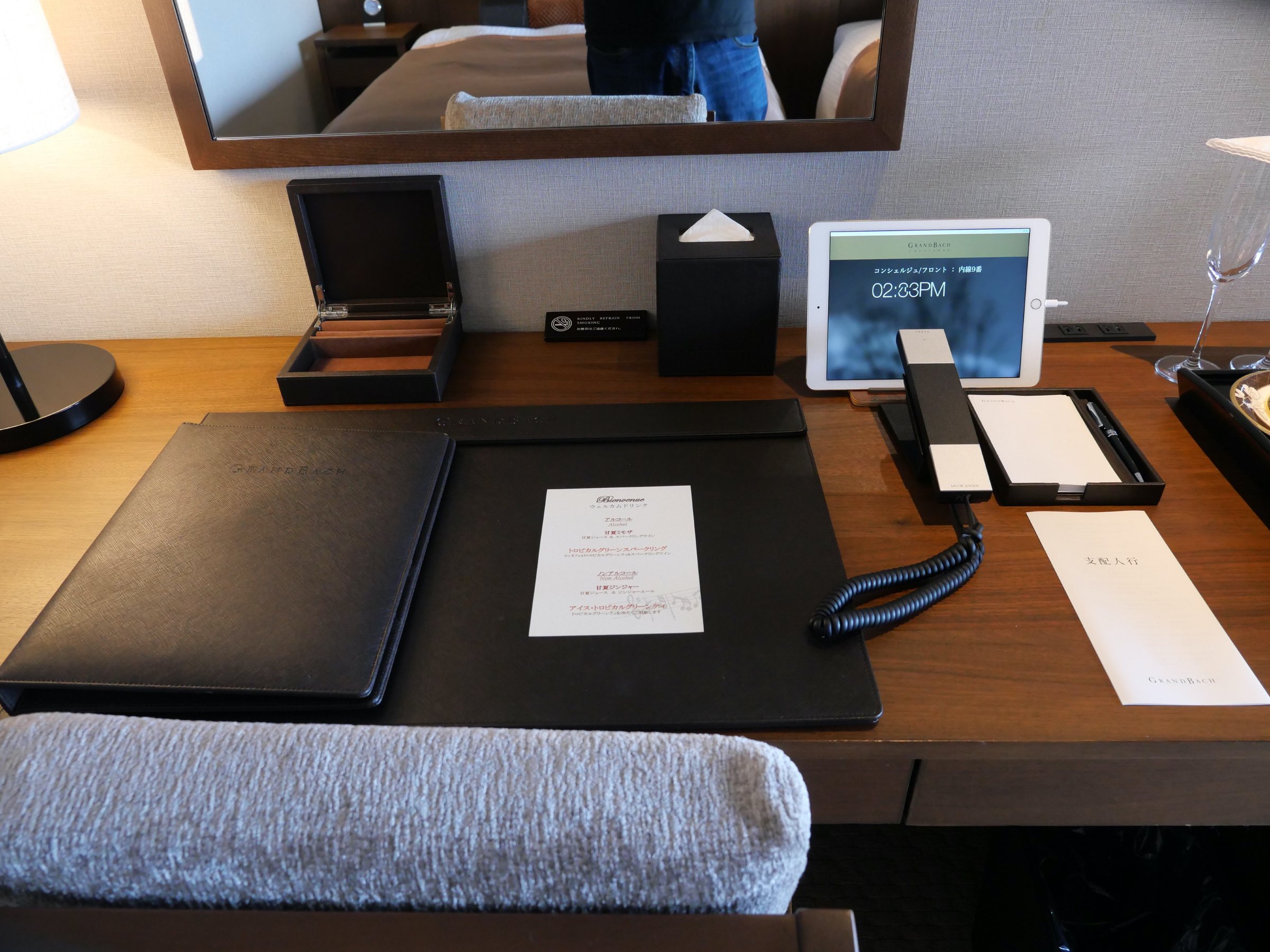
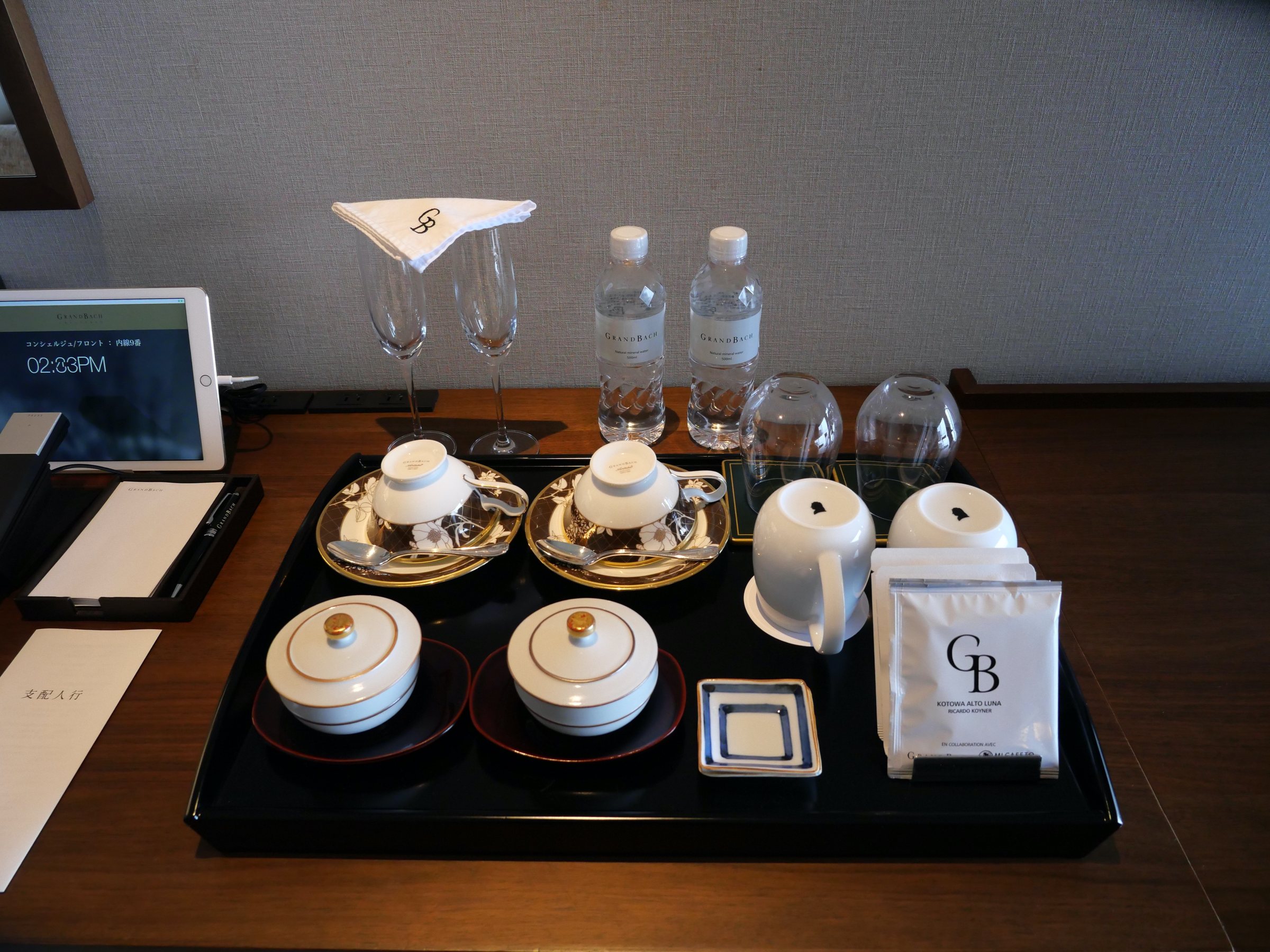
The rooms are fitted out to a standard that would not shame a top Tokyo hotel; even the toilet-roll holder gleamed. A tablet in the room takes orders for drinks and room service, and the coffee set is Grand Bach’s own. The beds have Simmons mattresses (as of 2020) and are exceptionally comfortable.
A spring of one’s own
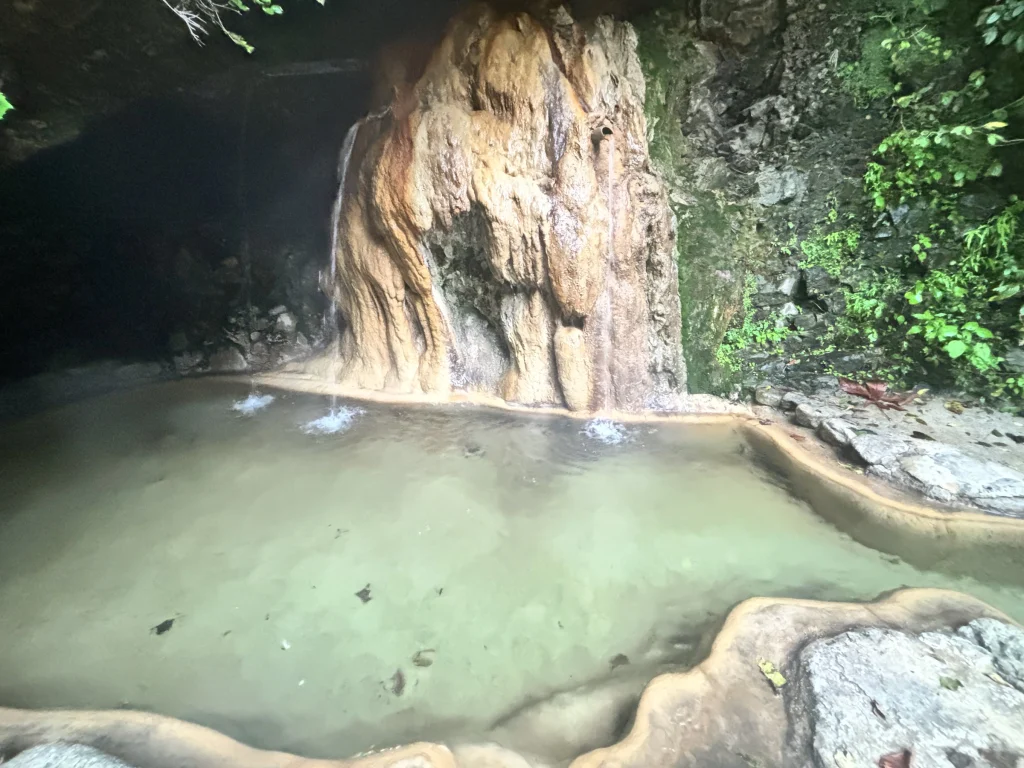
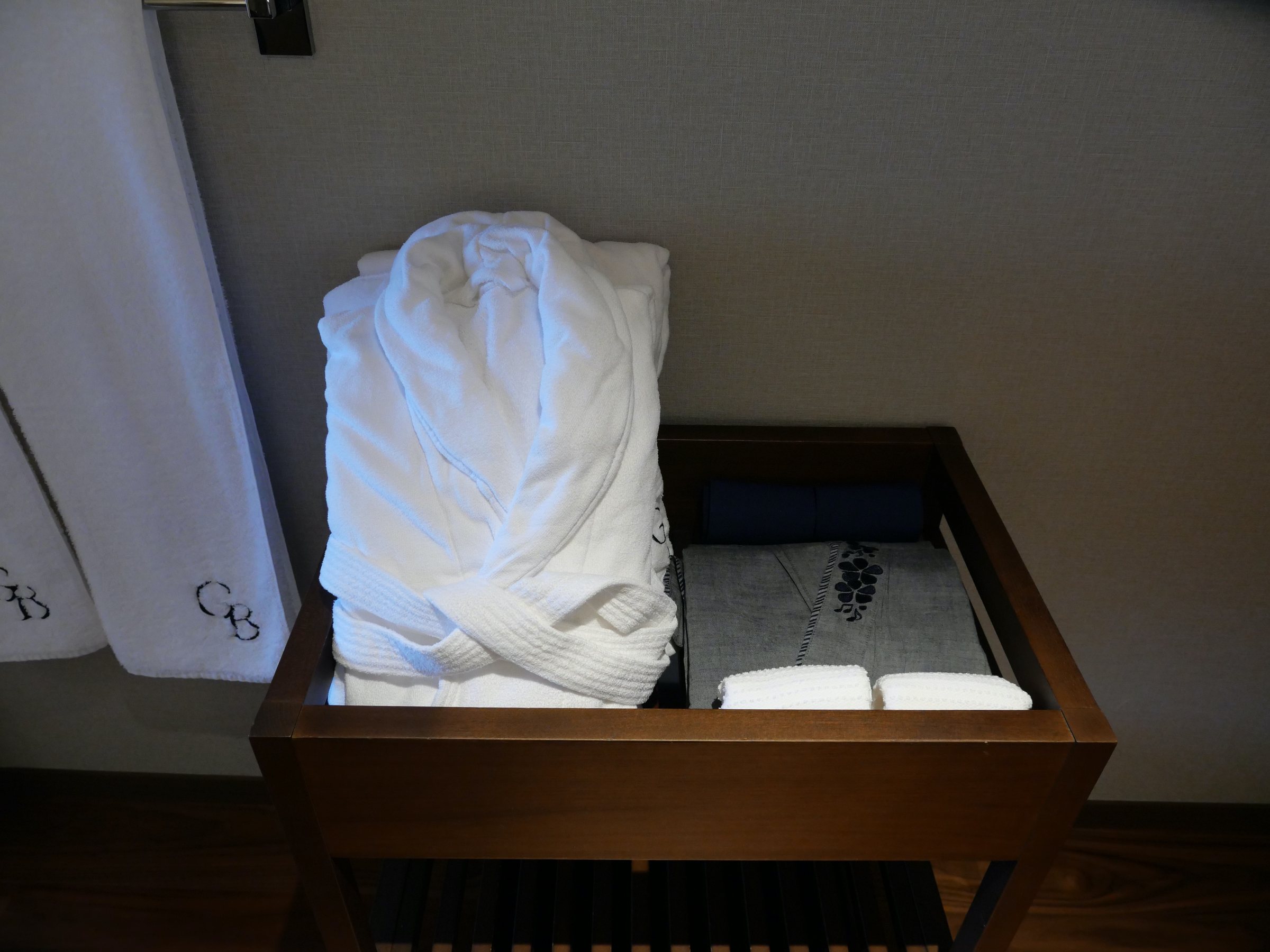
Our room came with its own hot-spring bath, fed entirely by free-flowing source water (gensen kakenagashi: the spring water runs straight into the tub rather than being recirculated). After a blissful soak in the glass-walled bathroom comes the further pleasure of choosing what to change into from a freshly laid-out selection of bathrobes, yukata (light cotton kimono) and loungewear.
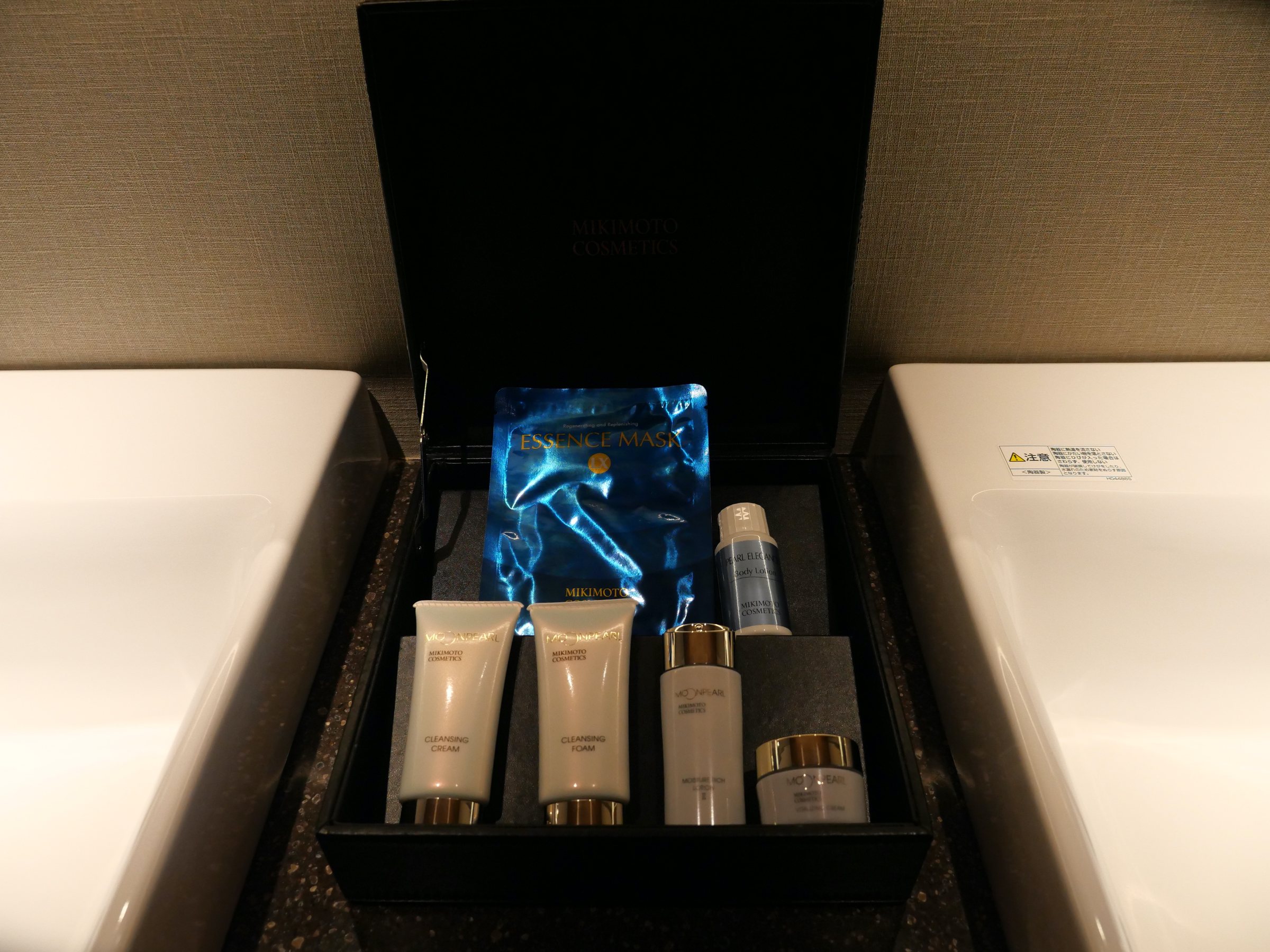
The amenities are by MIKIMOTO COSMETICS, and the make-up remover and face wash in particular were a real pleasure to use. We seldom use the amenities a hotel provides, but these left the skin feeling fresh and comfortable, without the slightest irritation.
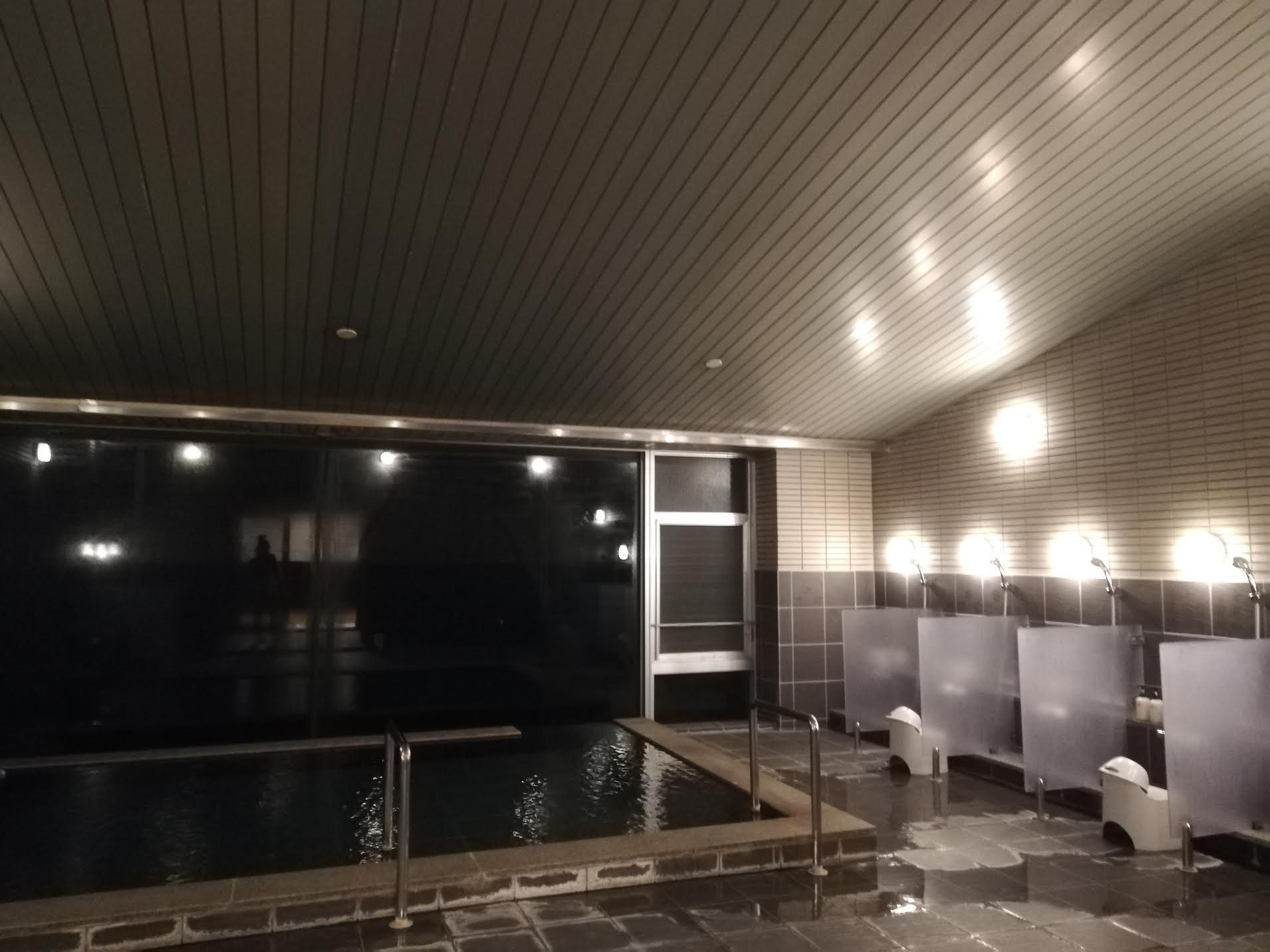
There is also a large communal bath looking out over Sagami Bay, but having a free-flowing spring all to ourselves in the room felt like the greater indulgence. Open-air baths seem to be reserved for the special-category rooms; ours was a simple, generous tub set in front of a wide panoramic window.
A box of treasures, and a misspelt name
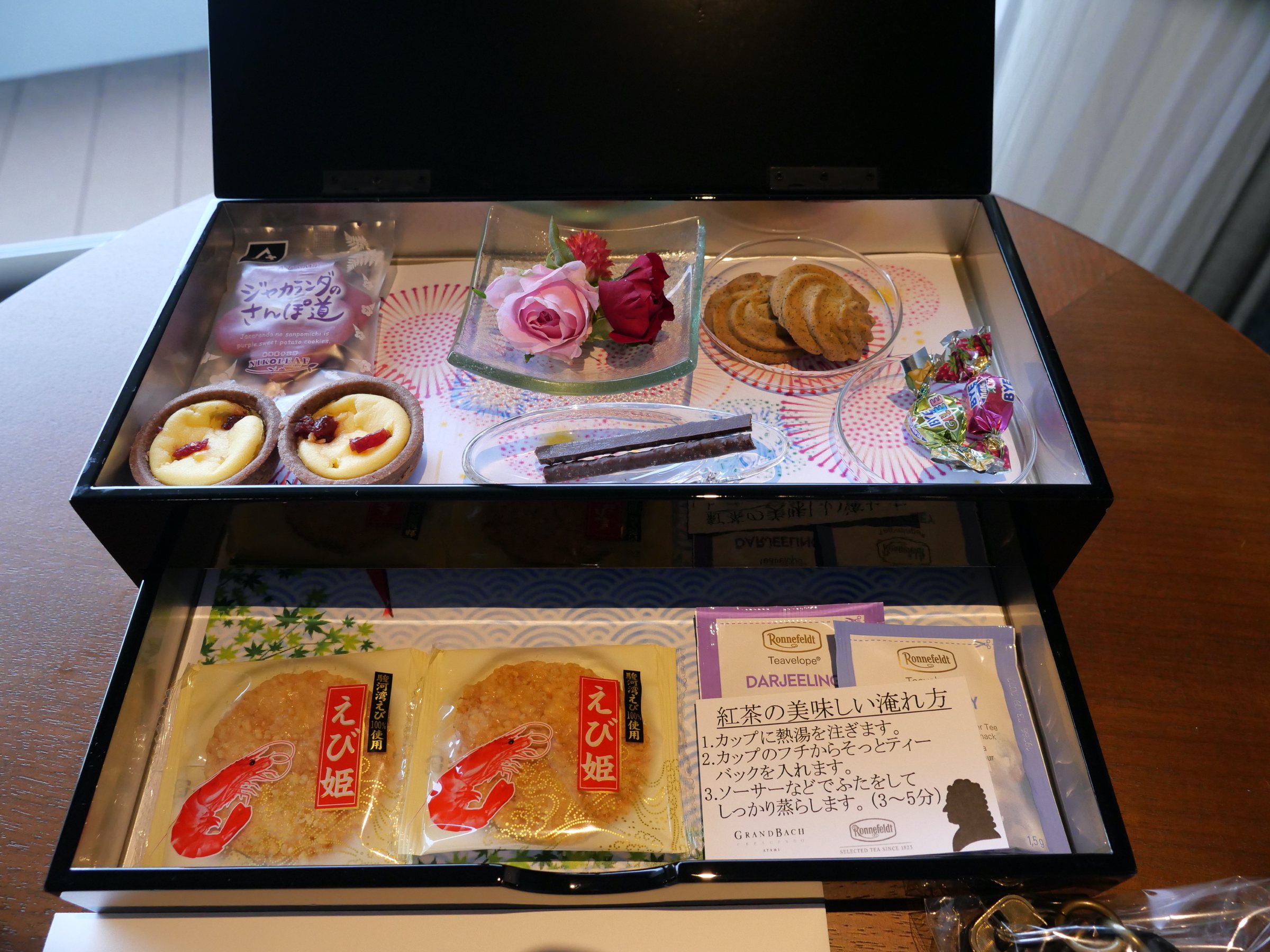
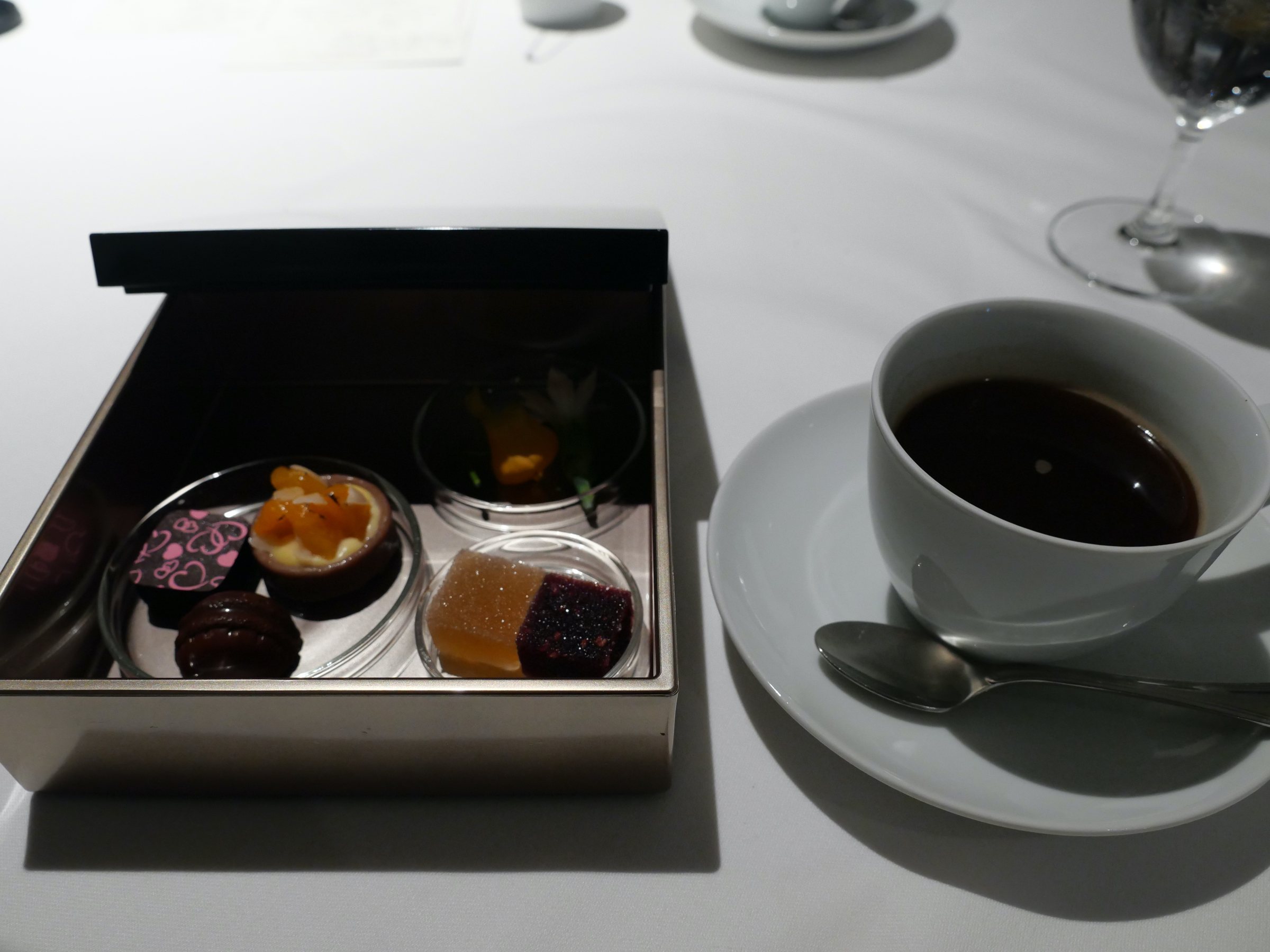
On the small table in the room were petits fours from the hotel, in a box labeled as a special tamatebako, the treasure box of Japanese folklore. With these little sweets to hand, we ordered a welcome drink through the tablet and enjoyed them with champagne. As part of the hotel’s pandemic measures, everything was served in the room, which, if anything, made it feel more special.
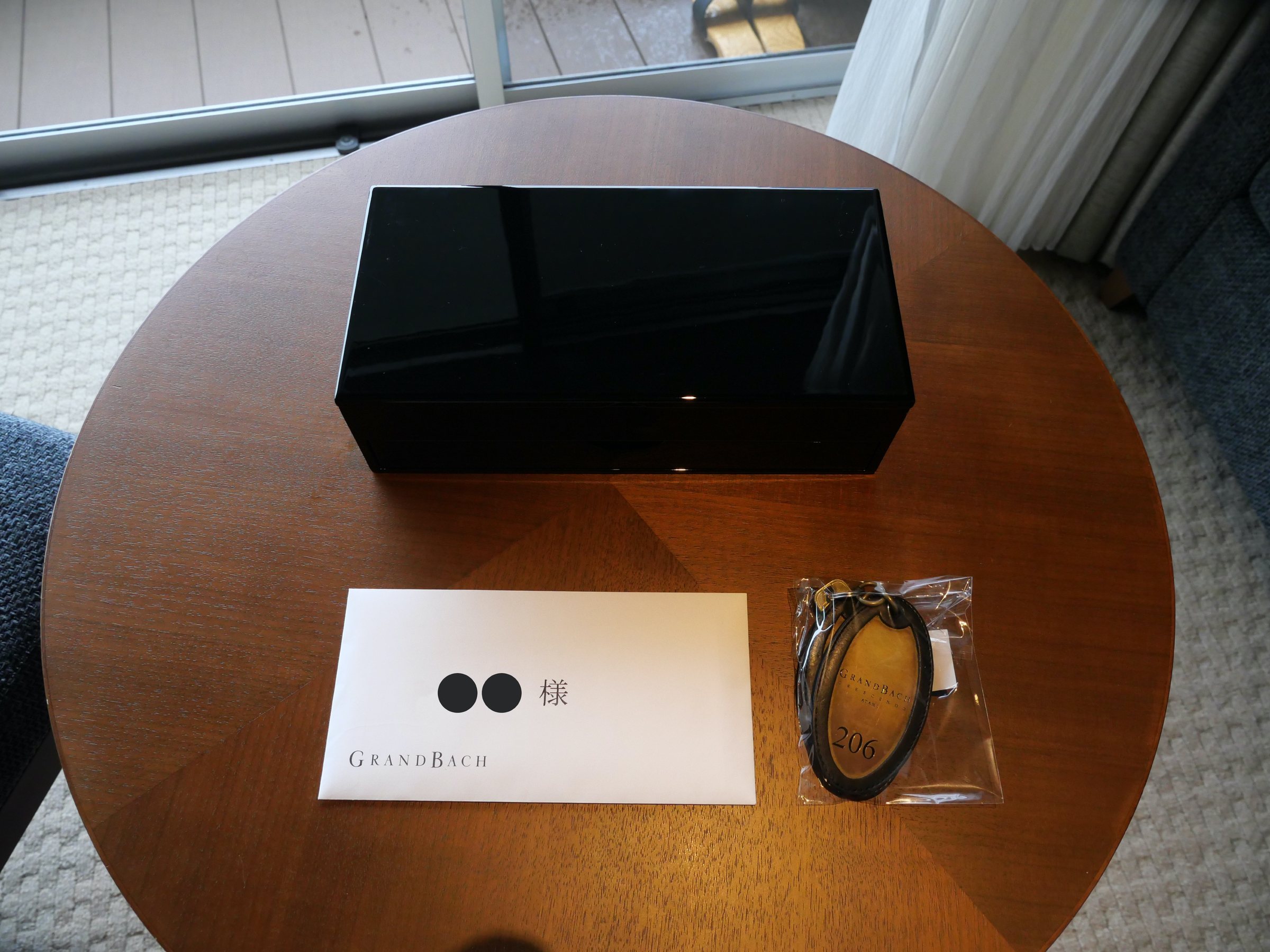
One thing did bother us: the kanji of the name written on our welcome envelope was wrong. It was a very small thing, and when a member of staff came to the room we mentioned it as gently as we could: “The kanji here is slightly wrong; it should be this character.” We file away the menus and letters from every place we stay as keepsakes, so it mattered to us. The response was a laugh and an “Oh, is that so?”, and nothing more. Mistakes happen; what counts is how they are handled afterwards, and here that was a disappointment.
Dinner: a creative French prix fixe
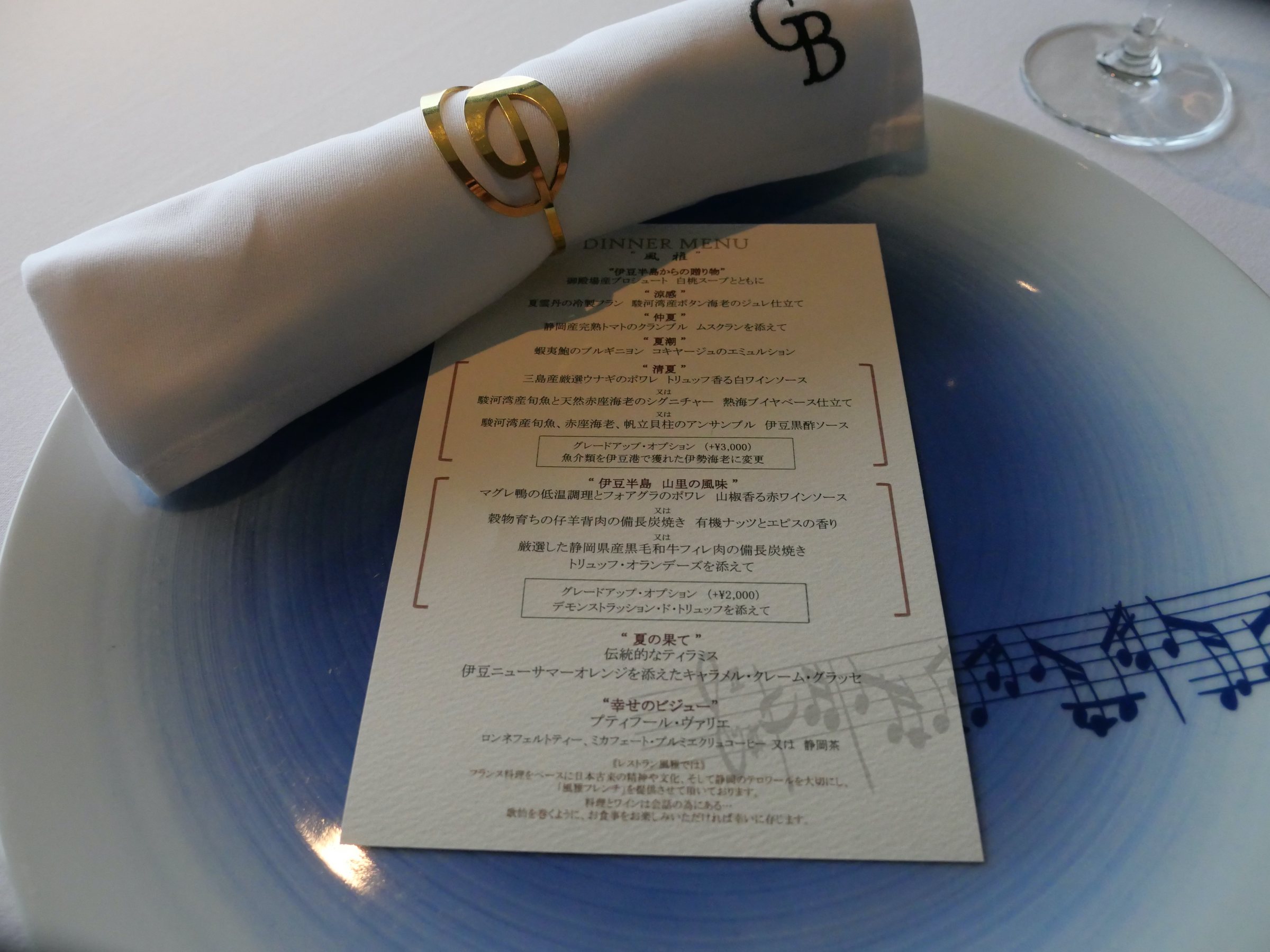
Dinner is served in the hotel’s restaurant. Against décor themed on musicians, the evening was introduced as a prix-fixe menu of creative French cuisine.
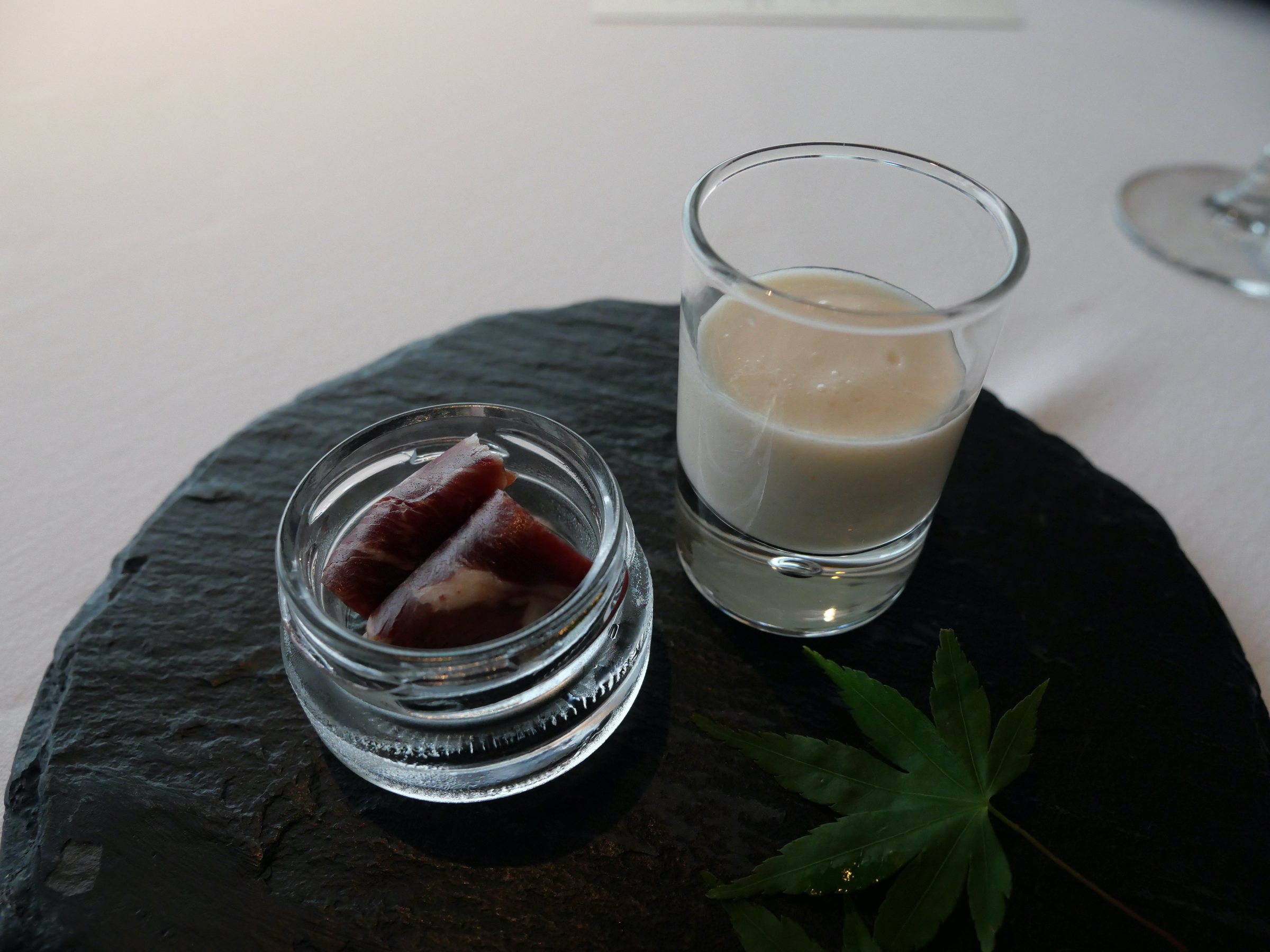
The first course was Gotemba prosciutto with white peach soup. Together, the sweetness of the peach and the saltiness of the ham produce that familiar, irresistible sweet-and-salty flavor.
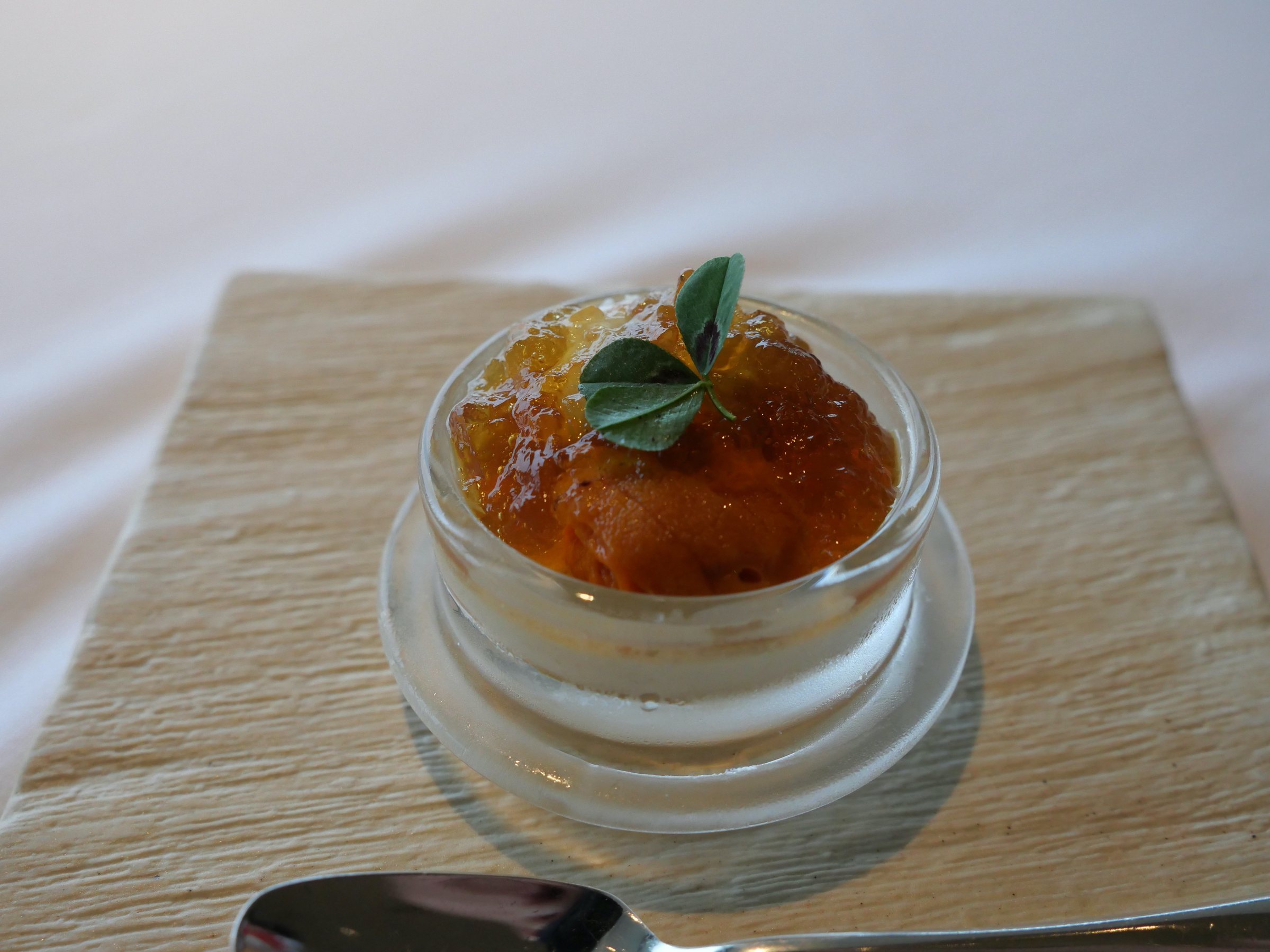
Chilled blanc of summer sea urchin with a jelly of Suruga Bay botan shrimp was a summery spoonful of luxury. It is the kind of dish one often meets in creative restaurants, but the mouthful of briny fragrance and creaminess was thoroughly satisfying, and the evident focus on local ingredients raised our opinion of the kitchen.
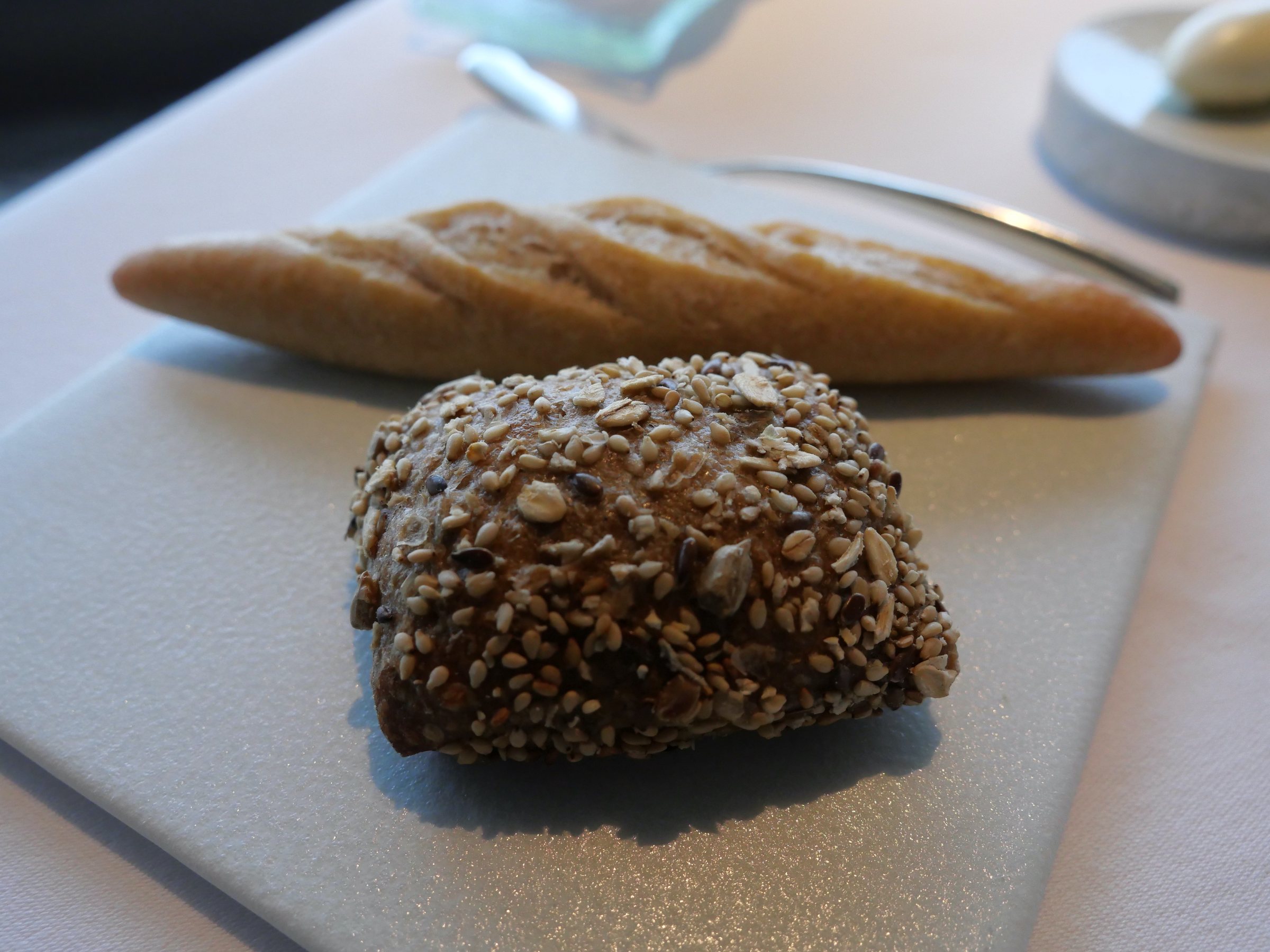
The bread, made with wholemeal flour, was fragrant with wheat, wholesome and fairly guilt-free. We would not have insisted on it being fresh from the oven, but we would have liked to taste it warm. (Perhaps warming bread is a uniquely Japanese custom.)
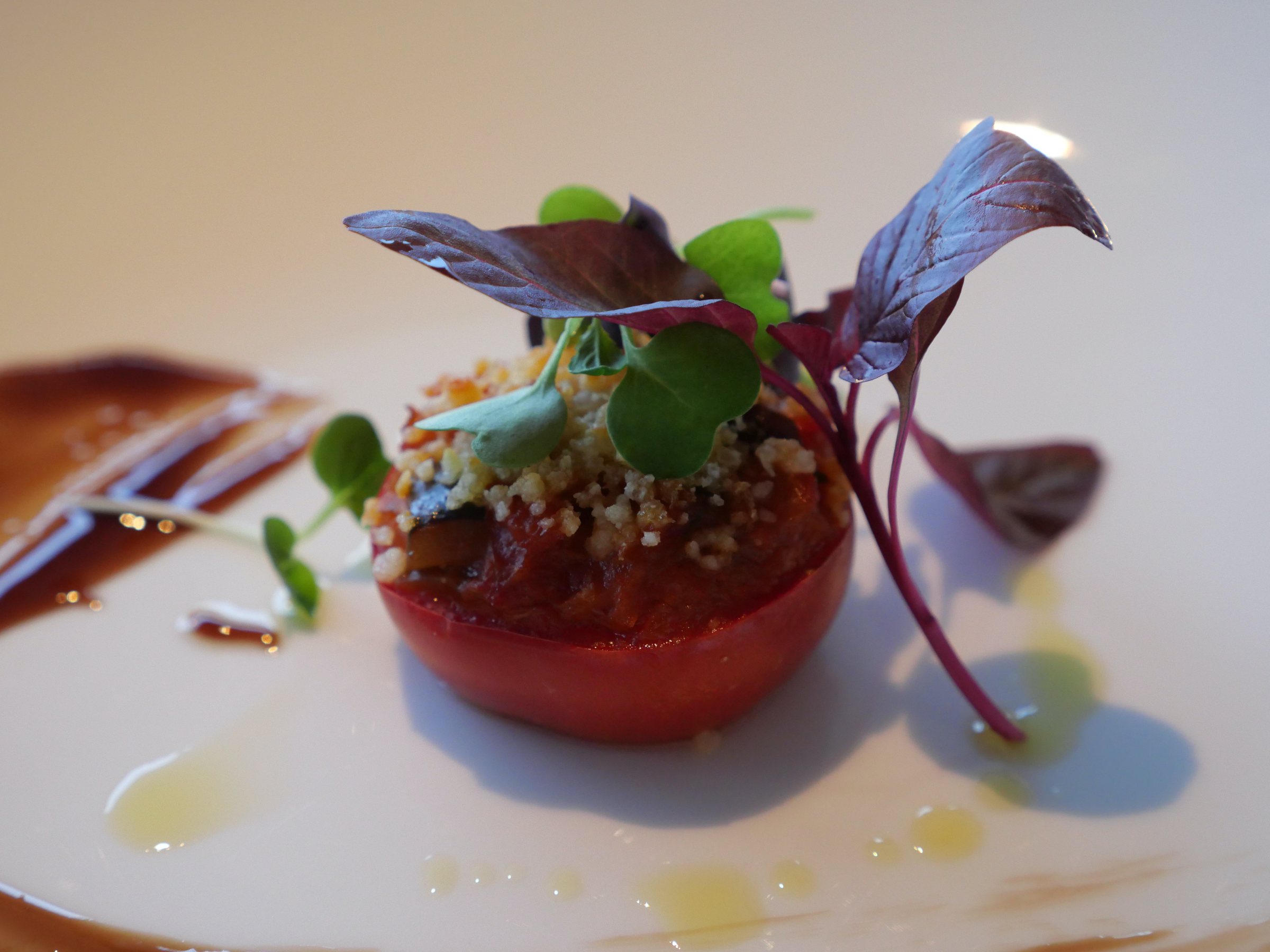
Shizuoka tomato crumble with mesclun. Purely subjectively, dishes built around tomato tend to feel more Italian than French to us. The pieces were very small and hard to cut with knife and fork, and the plate was deeper than expected; frankly, it was awkward to eat. We were tempted to finish it in a single mouthful but, treating it as a small work of art, we persevered. Mesclun was new to us, and we enjoyed its texture, which reminded us of couscous.
Around this point the live piano began. The grand piano stands at the center of the restaurant, and its elegant playing brought a pleasant flutter of anticipation: which piece would come next?
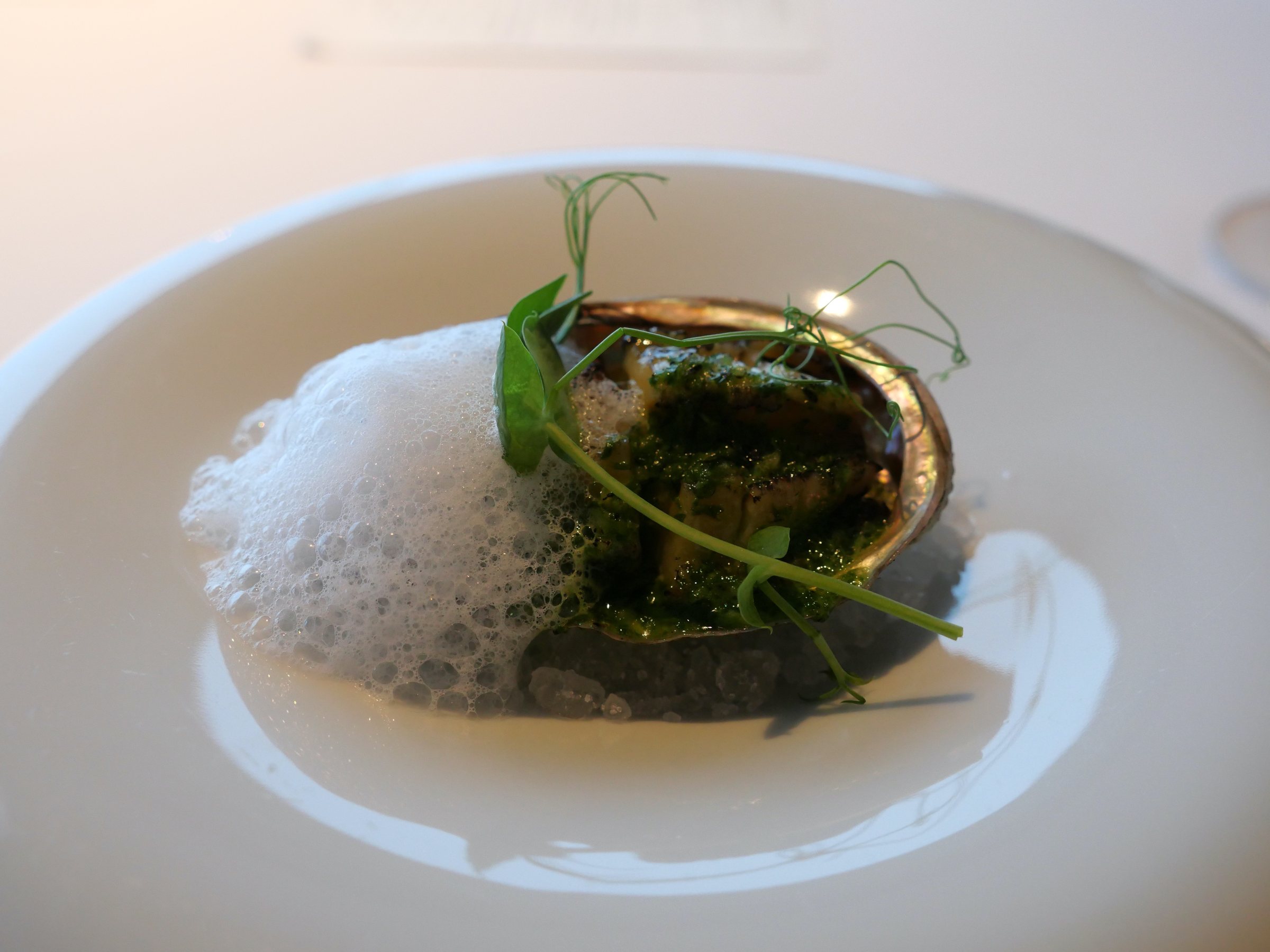
Ezo abalone bourguignon with an émulsion of shellfish. The abalone was steamed until tender, and dipping it into the seasoned foam heightened its scent of the sea. It was, however, smaller than we had imagined, and gone in a single bite.
Fish, twice over
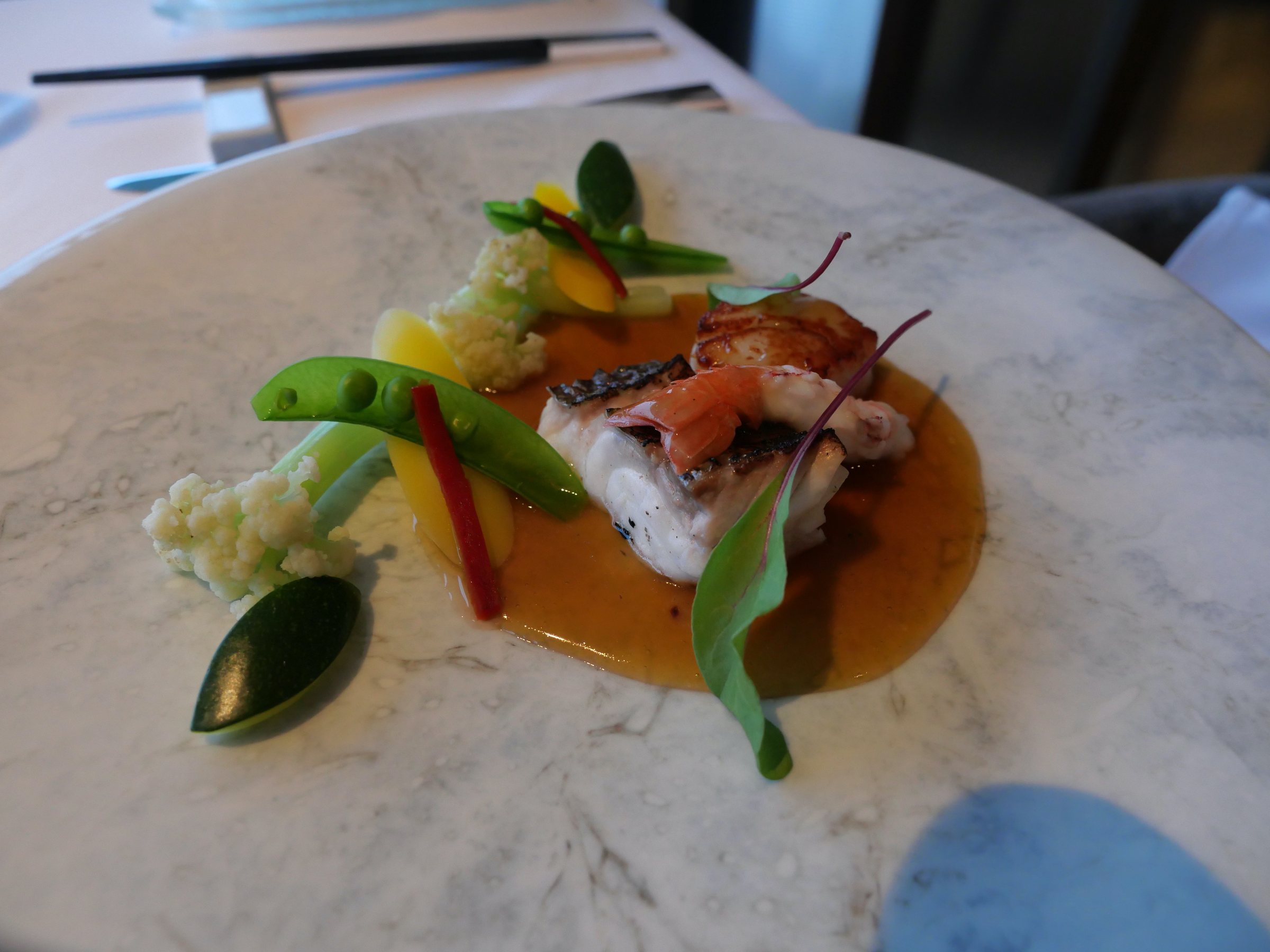
For the main course we chose an ensemble of the season’s Suruga Bay fish, wild red langoustine and scallop with Izu black-vinegar sauce: a colorful plate of vegetables and seafood with a pleasing range of textures and ingredients. From the fish course of a French menu we had expected crisp, crackling skin; this was closer to simple grilled fish.
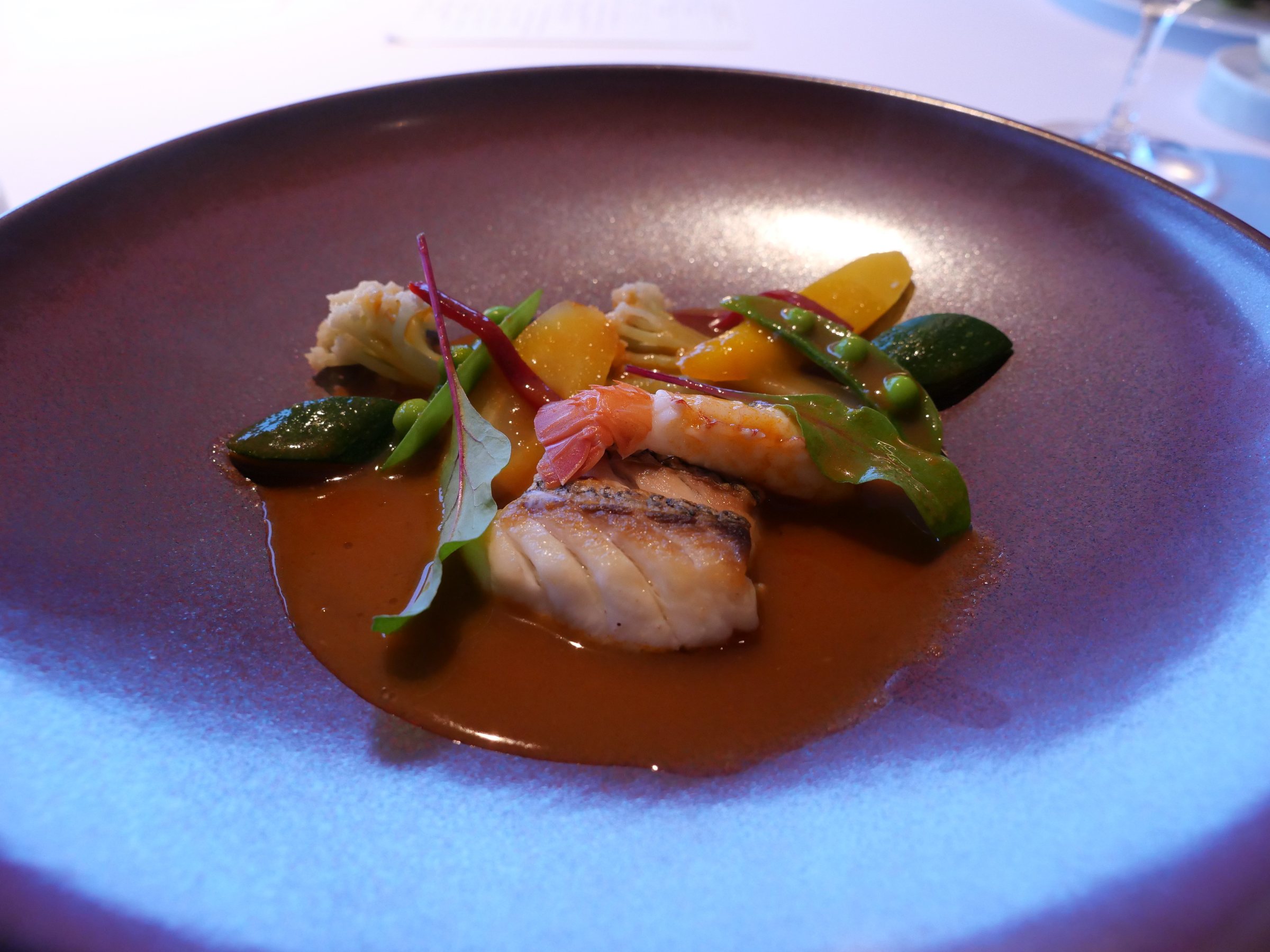
My companion chose the season’s Suruga Bay fish and wild red langoustine, in the style of the signature Atami bouillabaisse. That two options on the prix fixe shared the same principal ingredients was a slight disappointment.
The shape of this dish, too, left nowhere to rest knife and fork midway through, and around the room we heard cutlery clinking against china again and again at other tables. We think of bouillabaisse as a dish in which the broth is the point, so perhaps a deep bowl would have served it better.
Wagyu, lamb and an encore of curry
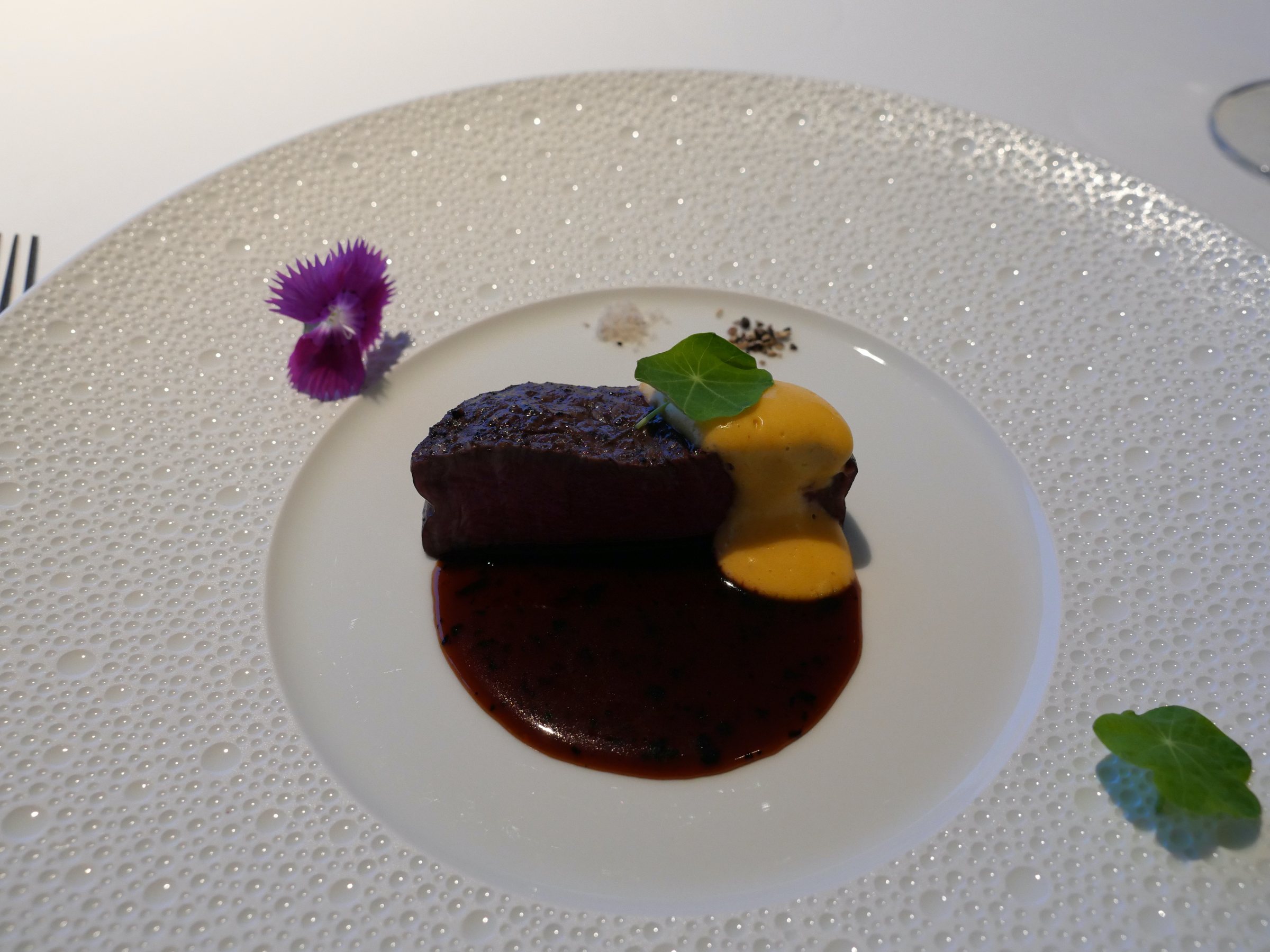
The meat main was selected Shizuoka Kuroge Wagyu fillet, grilled over binchotan charcoal, with truffle hollandaise. The hotel, we learned, puts particular emphasis on truffles, so truffle lovers should take note. The waiter explains each dish in some detail as he serves, so a little knowledge comes with every course.
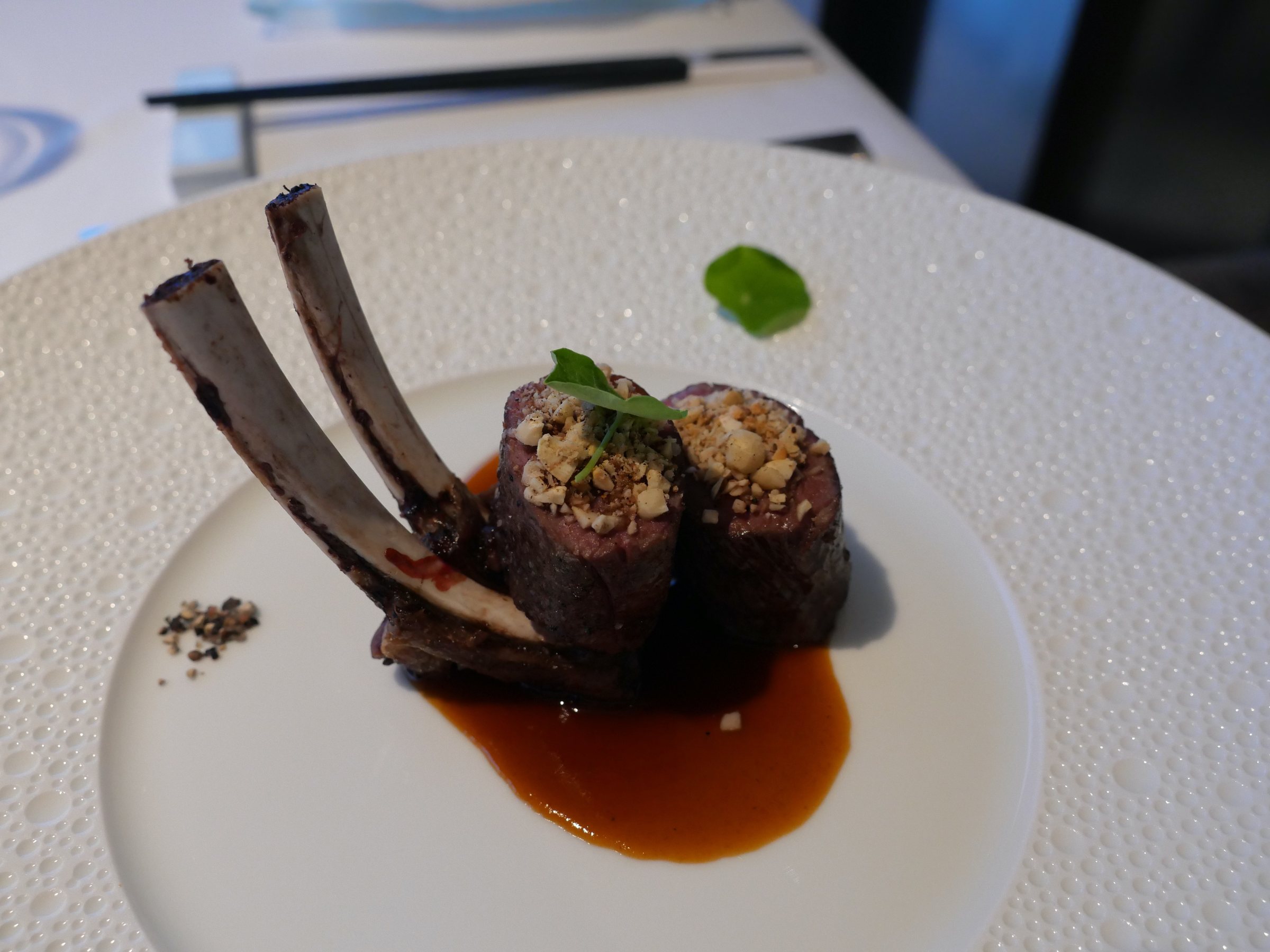
My companion’s meat course was grain-fed lamb loin grilled over binchotan, with organic nuts and spices. Carefully raised and carefully cooked, the lamb had no gaminess at all, and served rare it made a satisfying plate. For both the fish and the meat courses, we were told, guests can upgrade to premium ingredients for an extra charge.
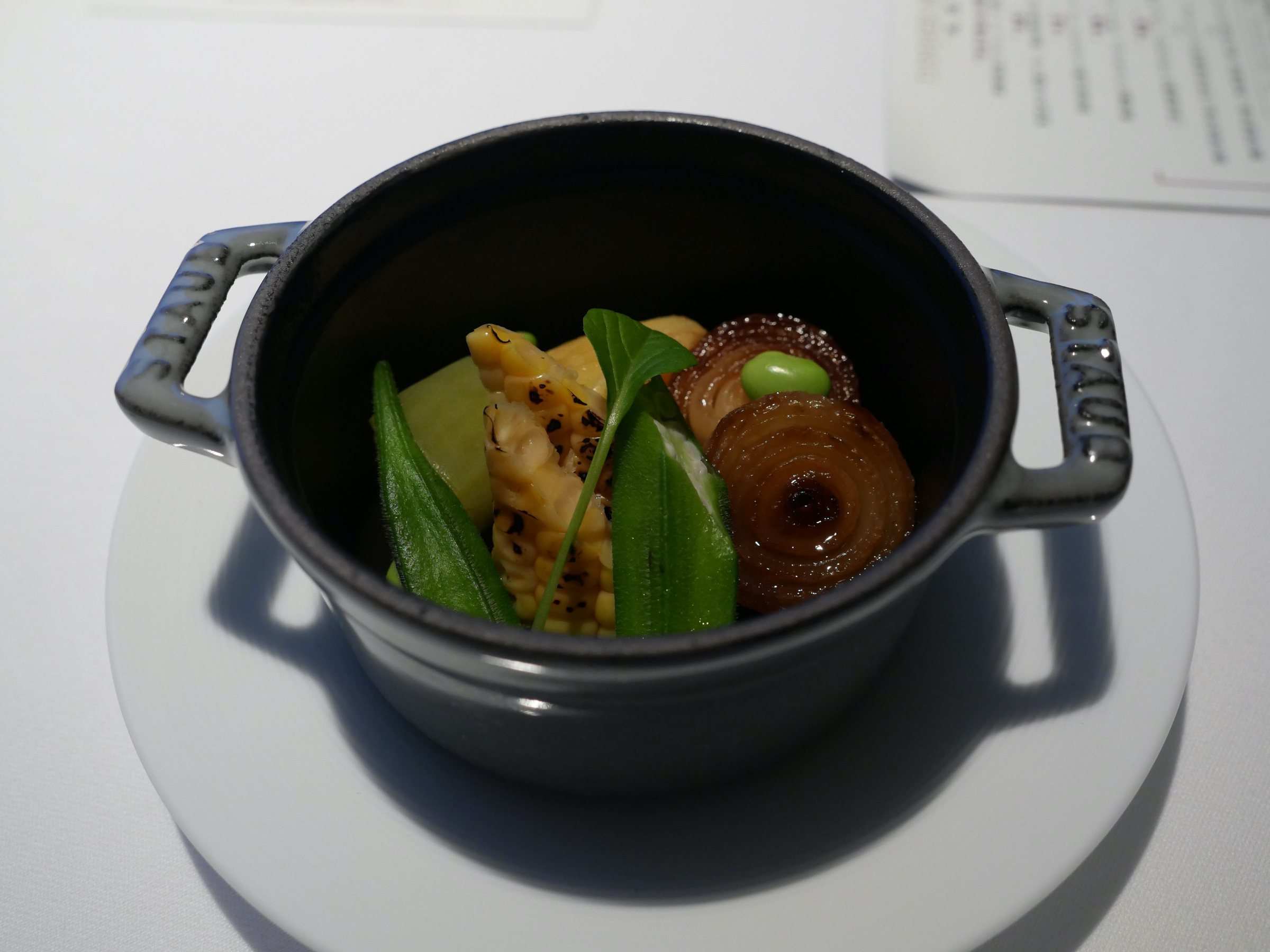
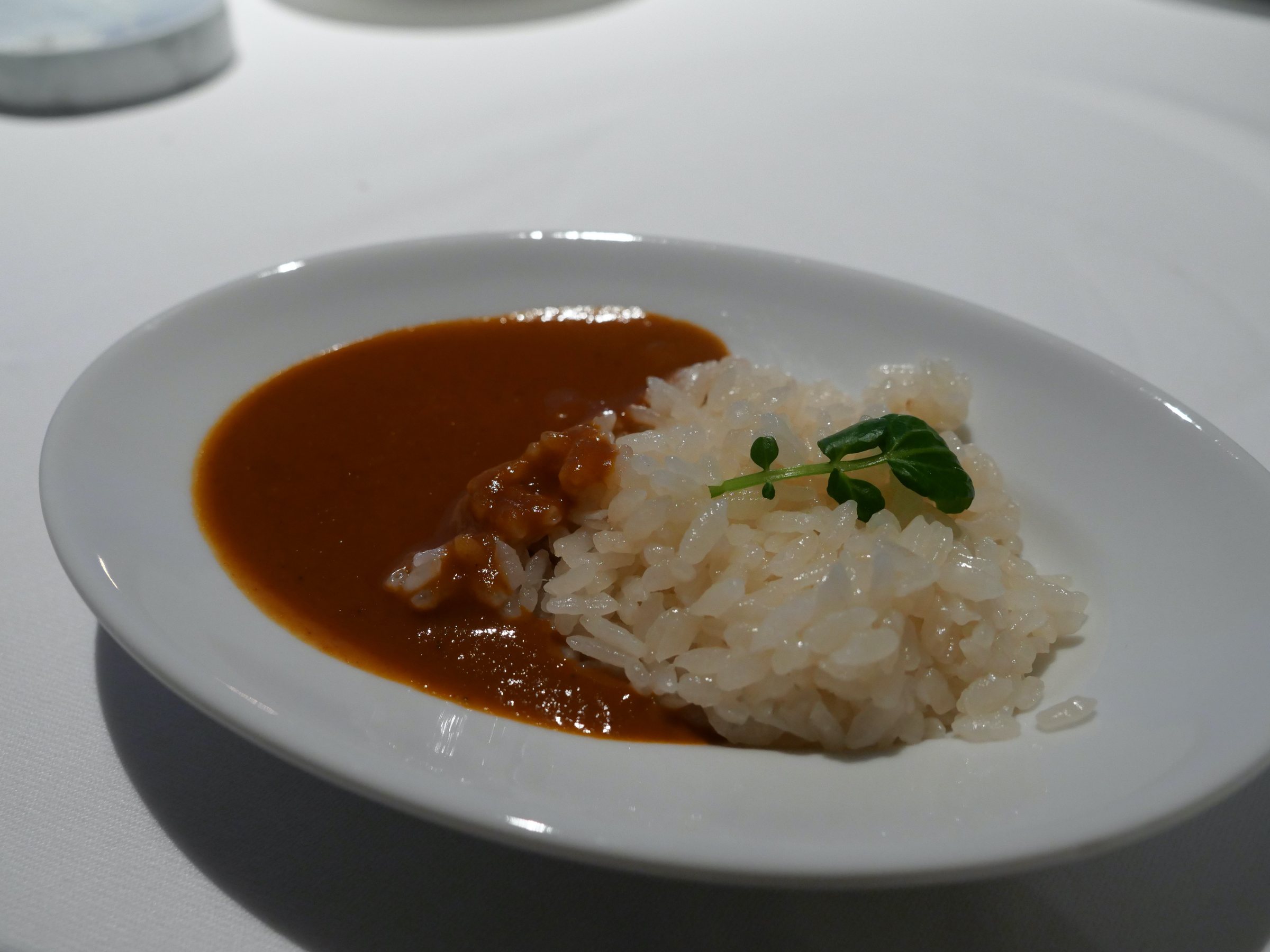
House cocotte curry finished with prawn sauce. Overall, we found the portions on the small side; we still had plenty of room. Guests who are enjoying wine with the meal may well find it enough. At this point a curry can be ordered on request, at no extra charge, so we did: butter rice and a curry concentrated with the savor of prawn, and at last we were satisfied.
Traditional tiramisu, and a caramel crème glacée with Izu New Summer orange. The local New Summer orange is something you really should taste when visiting Atami and Izu, and it closed the meal on a refreshing note. Ending a French dinner with an ice cream on a stick was a memorably unusual experience.
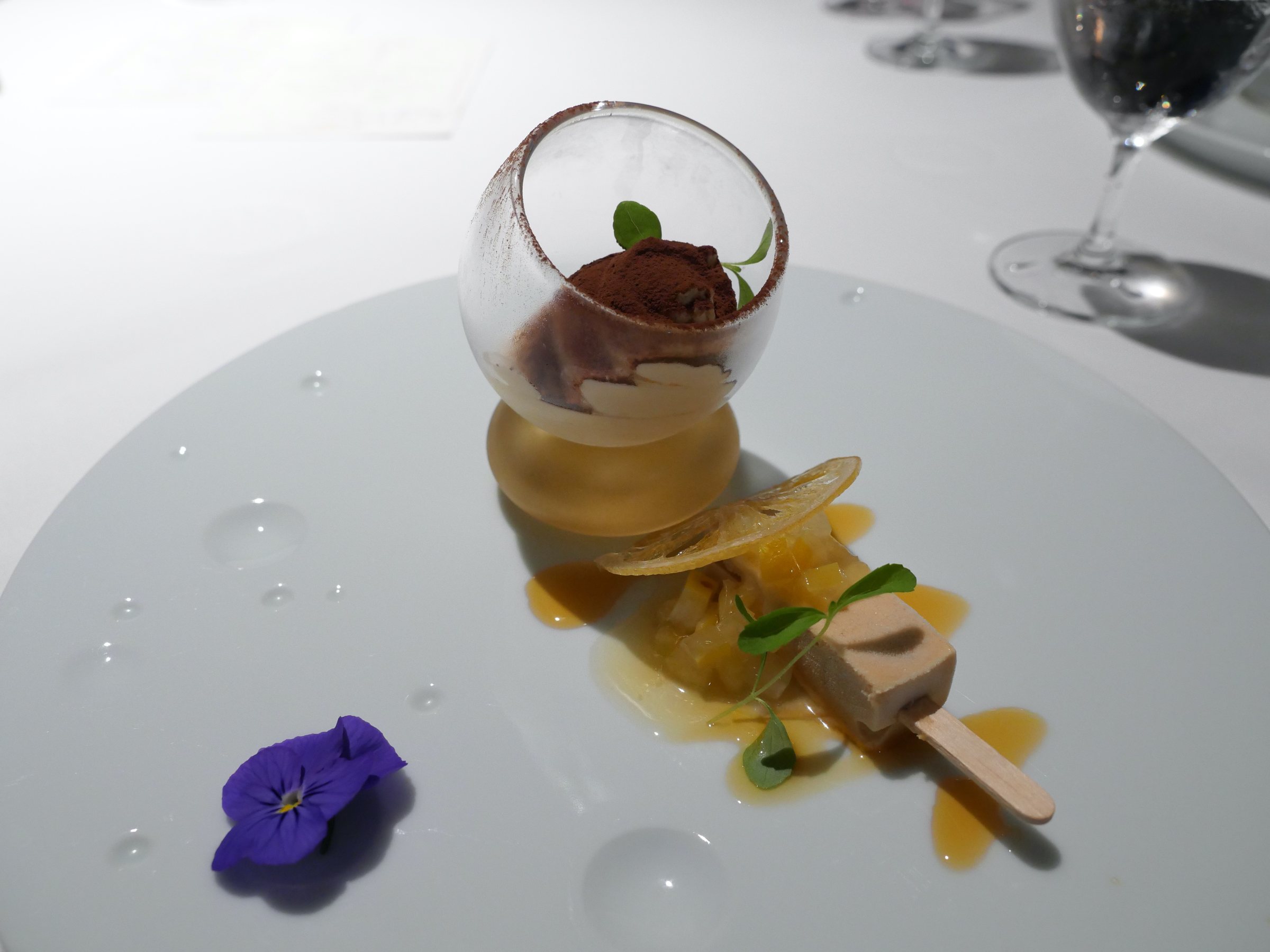
The petits fours, and a matter of service
At the end of dinner came another box of petits fours. We could not finish them at the table, so we asked whether they might be brought to our room later, whenever was convenient. “You are welcome to take them to your room,” the waiter replied; by ourselves, that is.
We wanted to take a stroll and visit the lounge after dinner, and carrying the box around seemed impractical, so we asked again. After a short pause came a somewhat reluctant agreement to bring it up. Were we being demanding, or was this a lapse in a luxury hotel’s hospitality? Judging service at this level is not always simple.
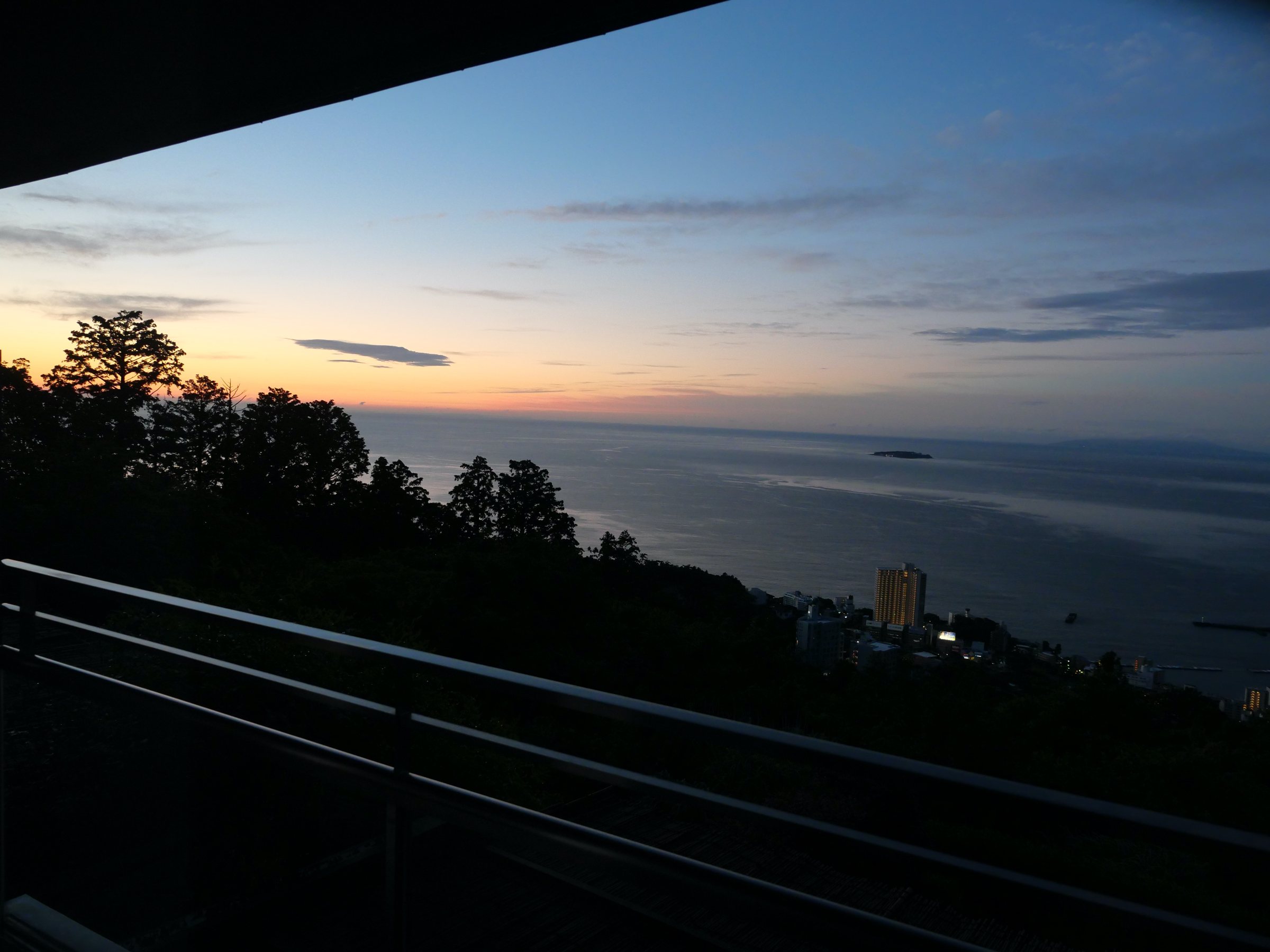
Dusk over the water
The cloud cleared, and after dinner we were treated to a beautiful sunset over the bay. High in the mountains, the hotel has no hot-spring town around it, no shops, not even a convenience store; in its way, that makes it a place apart. We went to bed hoping for a clear morning and breakfast with a view.
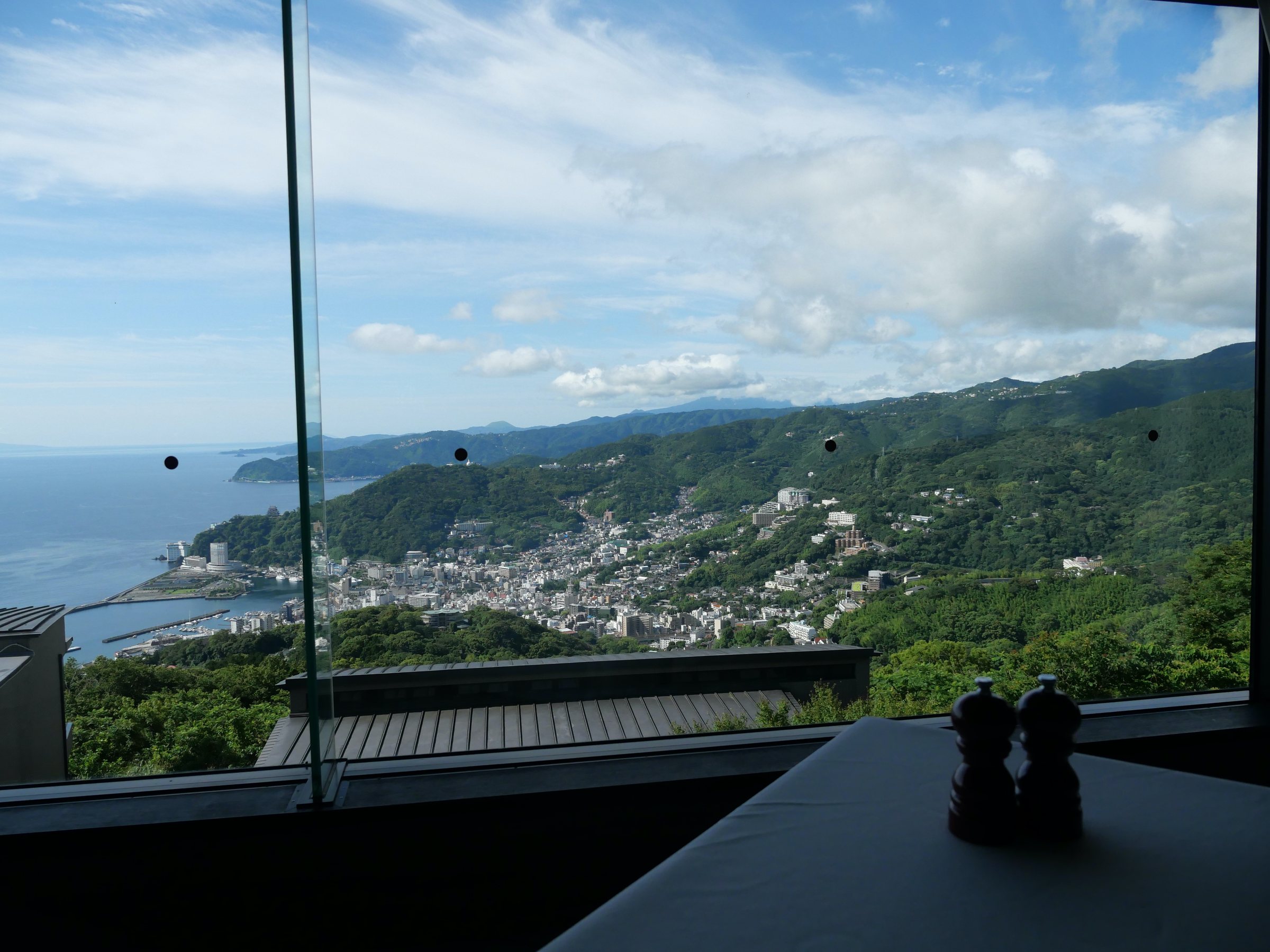
Breakfast at 500 calories
The next morning was as clear as we had hoped. The streets and peninsulas hidden by cloud the evening before were now in full view, and the restaurant, glazed from floor to ceiling, opens onto a magnificent panorama. In the morning, Bach plays softly in the background.
Starting the day under a clear sky, looking out over the towns of Atami and Izu, offers a kind of natural beauty quite different from breakfast at a Tokyo hotel.
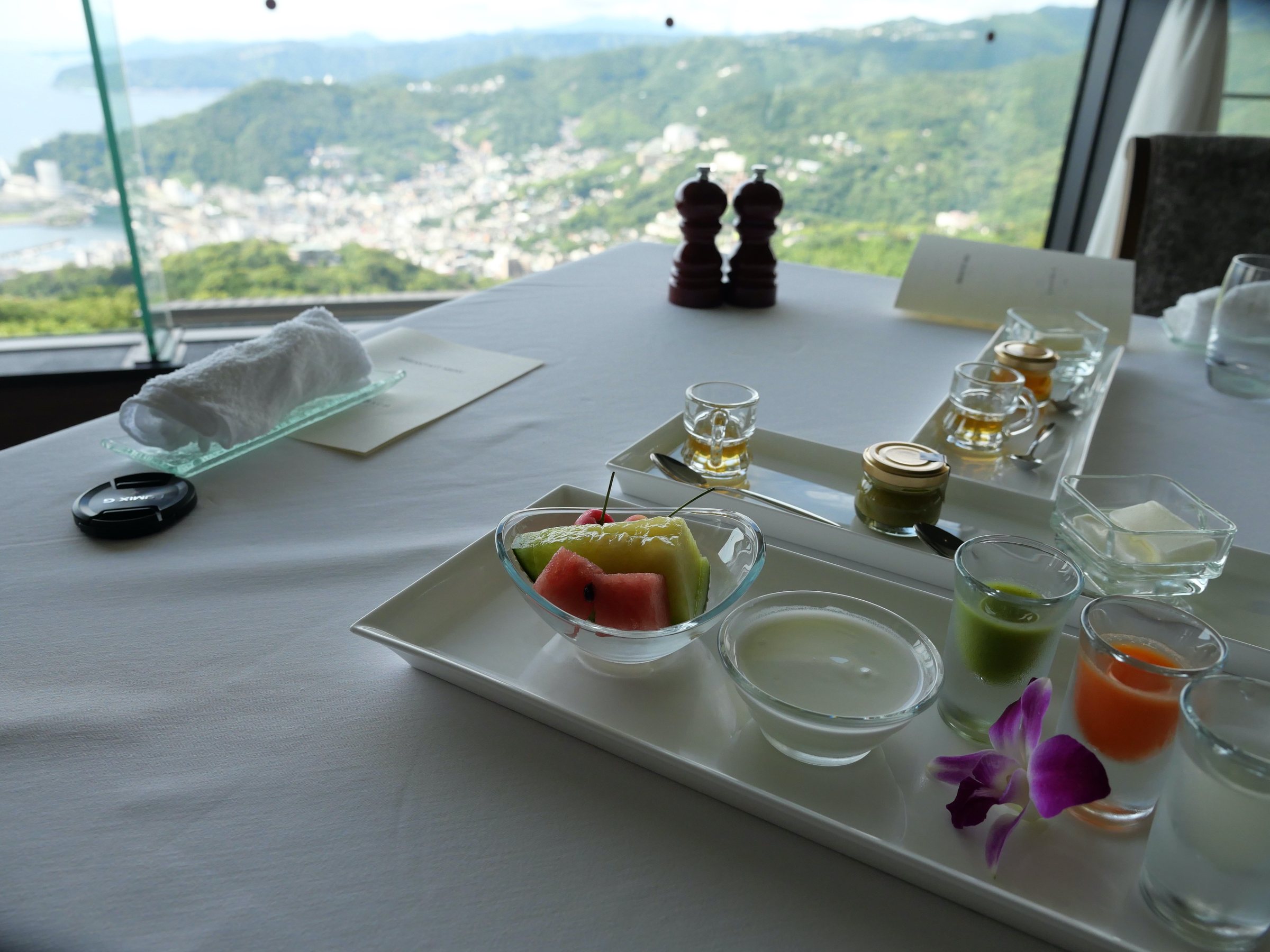
First to arrive were a morning drinkable supplement, “Nature” style; a Shizuoka fruit-vinegar drink; Tanna yogurt with natural honey; and Aroma melon and seasonal fruit from contracted Shizuoka farms.
In other words, a health juice and a fruit platter. Breakfast is the hotel’s signature: a meticulously calculated menu kept under 500 kcal. Learning of this calorie-conscious approach, we understood the portions at dinner the night before. It is a thoughtful touch for guests who care about health and beauty.
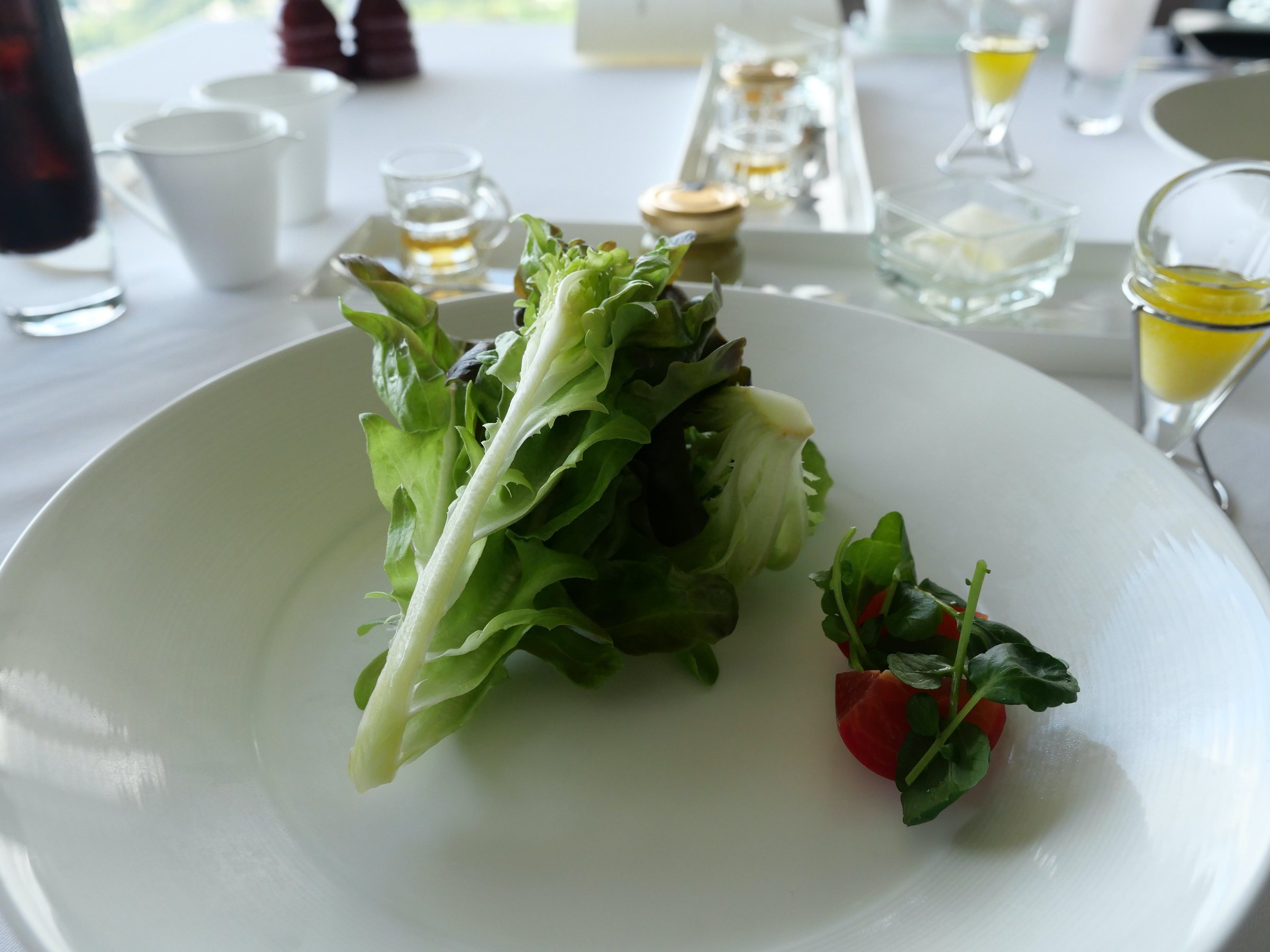
Fresh leaf salad from contracted Shizuoka farms, with high-sugar Tanna tomatoes and Shimoda watercress, dressed with Izu New Summer orange vinegar and olive oil. The salad is eaten with knife and fork; if that feels fiddly, simply ask for chopsticks.
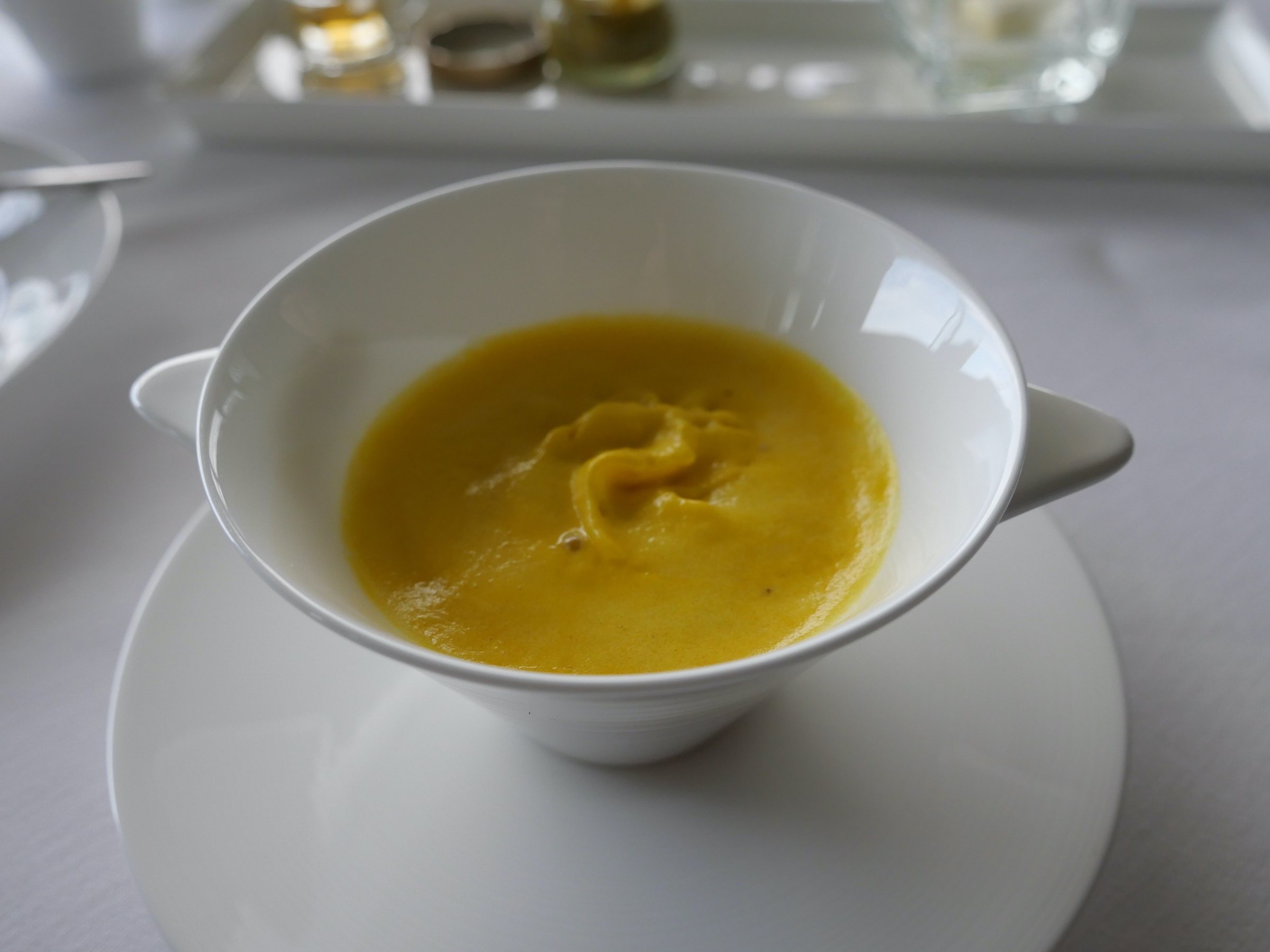
Espuma of yellow pepper. We took it for pumpkin soup at first, but this is, after all, a calorie-counted meal. Its gentle sweetness and warmth were soothing on the throat.
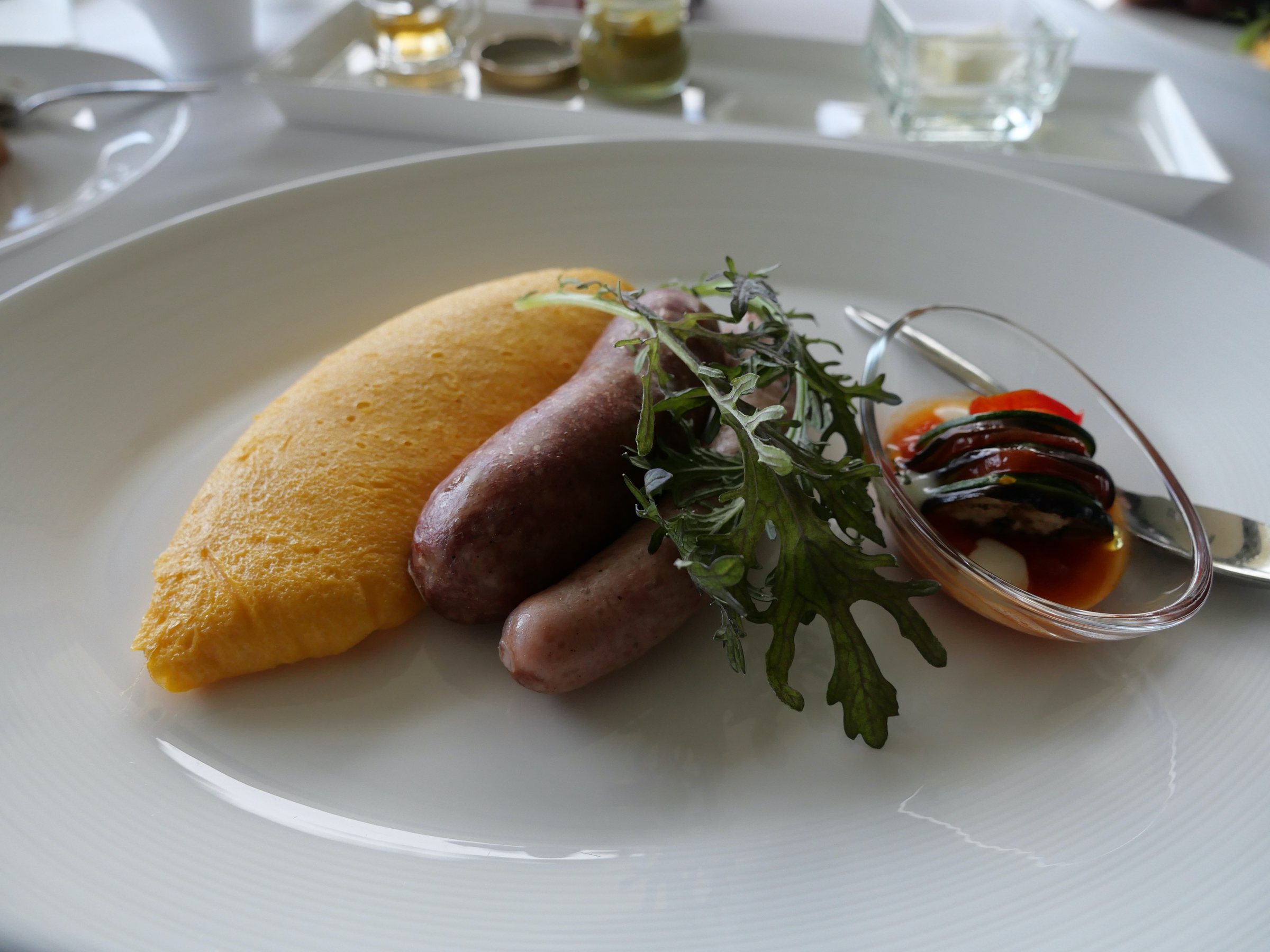
Guests choose how they would like their eggs (Fujitaro eggs, from hens raised on Mount Fuji’s spring water): omelet, fried, scrambled, poached or boiled. We chose our favorite, the omelet. It came with a garnish of Tanna cheese and eggplant, prepared in the style of a lasagne.
The sausages, made with game meat, were wonderfully meaty. There is also an optional menu at breakfast, with a wide choice of breads and drinks, hams, cereals and even ice cream. With the basic menu alone at 500 kcal, however, anything more is between you and your conscience.
This review reflects a stay in summer 2020. Menus, amenities and services change; please confirm current details directly with the hotel before visiting.