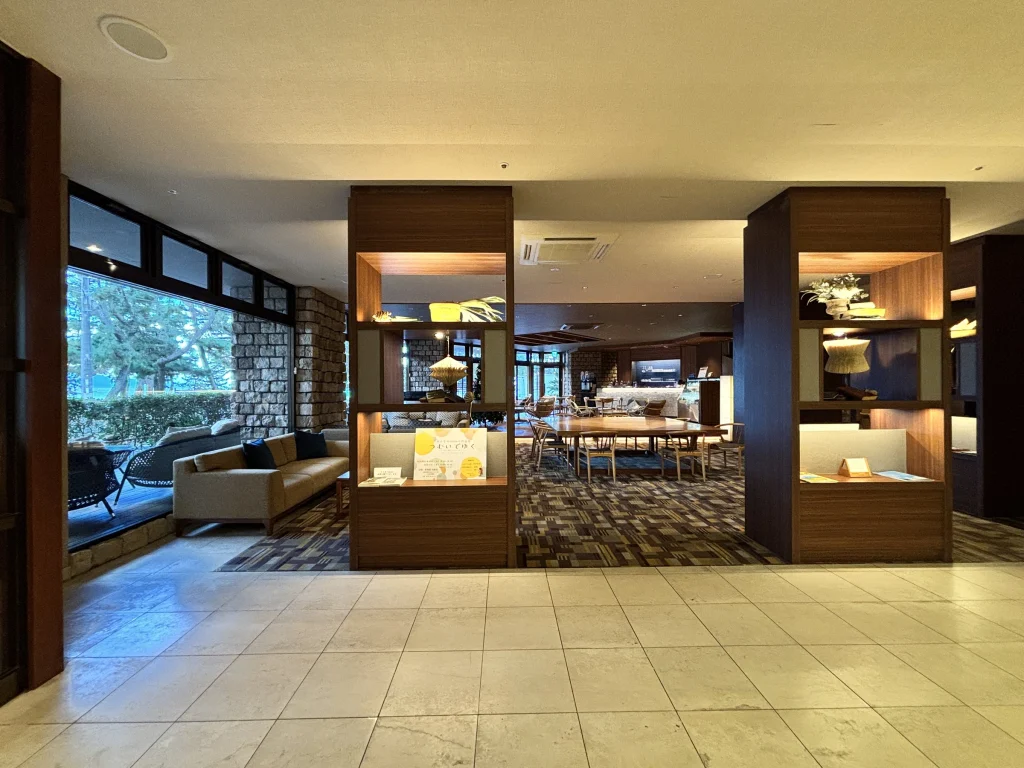
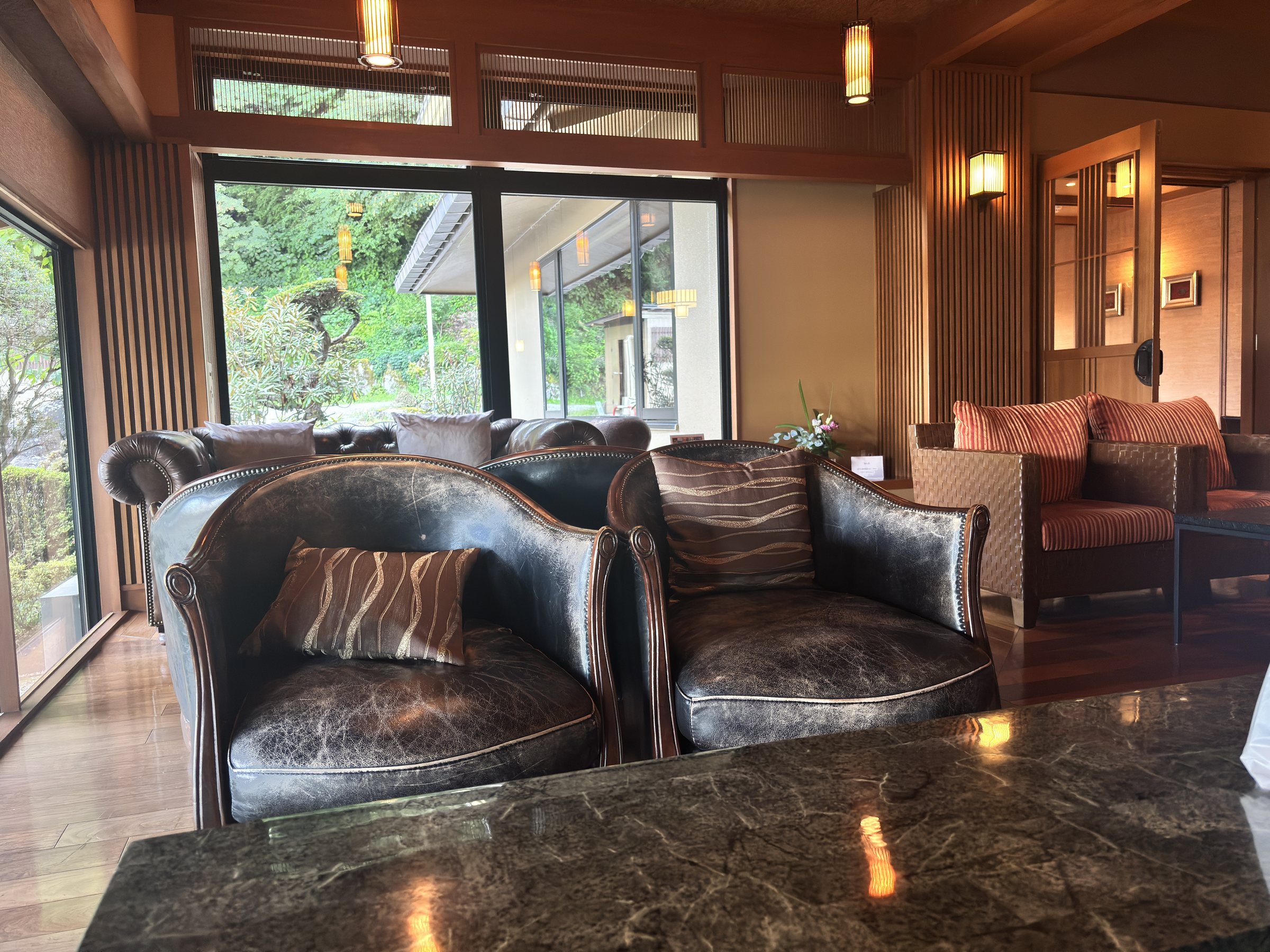
Futarishizuka stands on high ground on the Komagane highlands in Minami-Shinshu, the southern part of Nagano, and is known as a ryokan of sanyaso, the wild flowers and grasses of the mountains. It keeps the warmth of a mountain lodge while opening onto refined, modern spaces, and that combination quietly raises your hopes for a good stay. Past the entrance, families staying at the ryokan were chatting easily in the waiting area, and a comfortable mood ran through the whole building. We were shown to our room without fuss, and a slow, quiet afternoon began.
Beds in a Japanese room
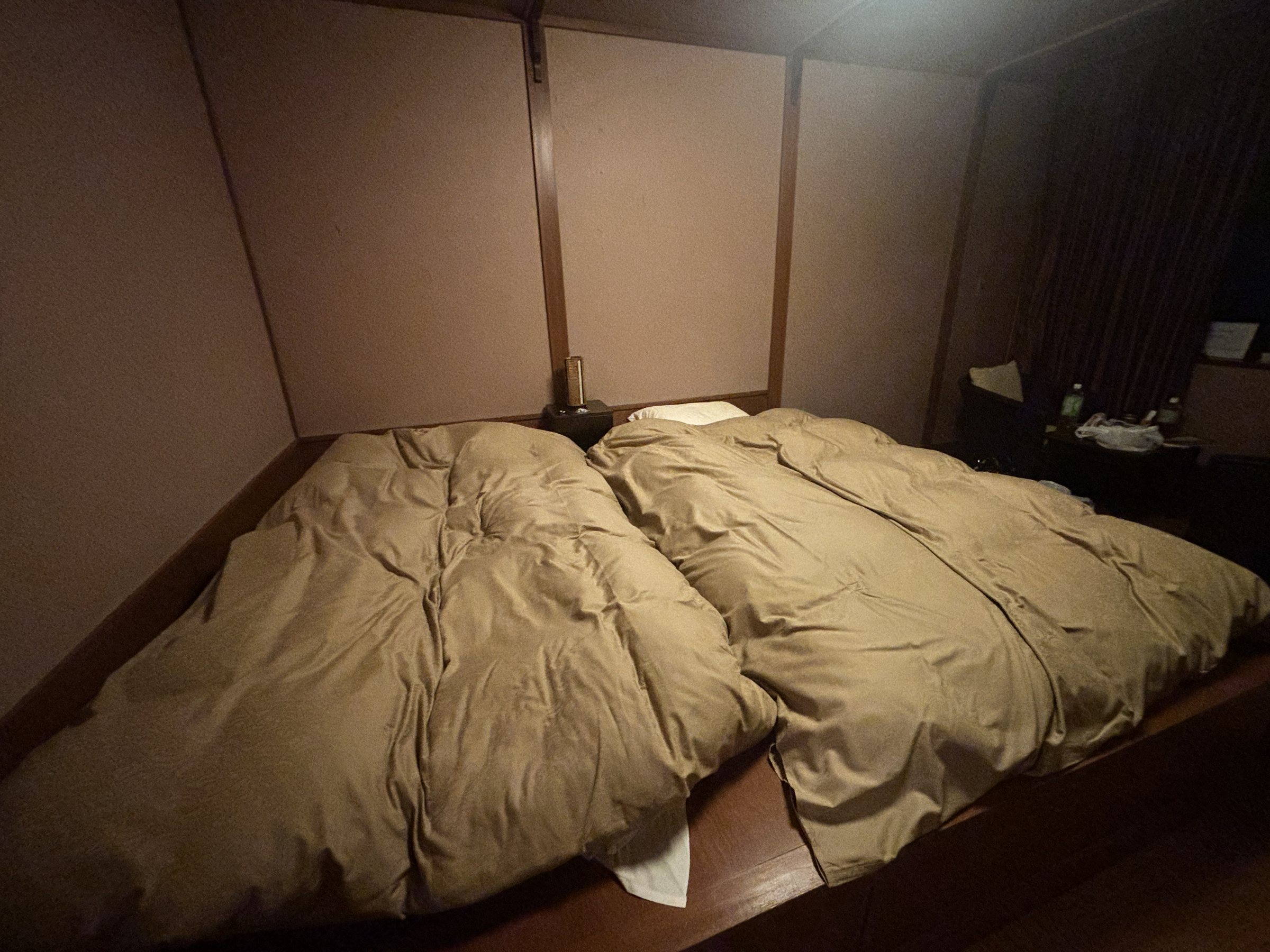
Opening the door, we were struck by the character of the Japanese-style room, and our eyes went to the alcove. There, neatly made up, were beds. For a tired hiker, being able to lie straight down for a nap is a welcome thing.
The warmth of tatami alongside modern beds: an odd pairing, yet a strangely restful one, as if two different eras had been laid one on top of the other.
Corridors from another era
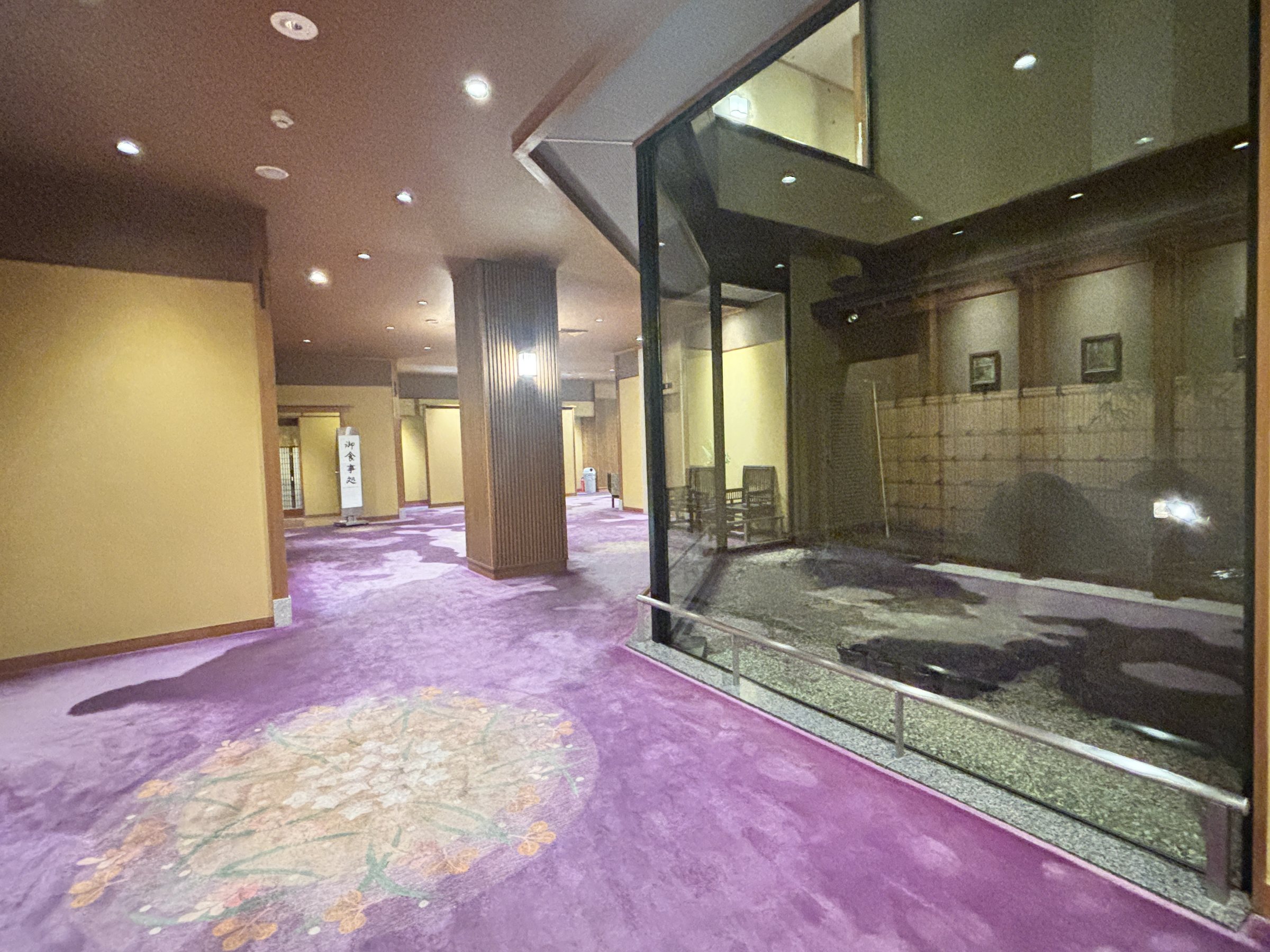
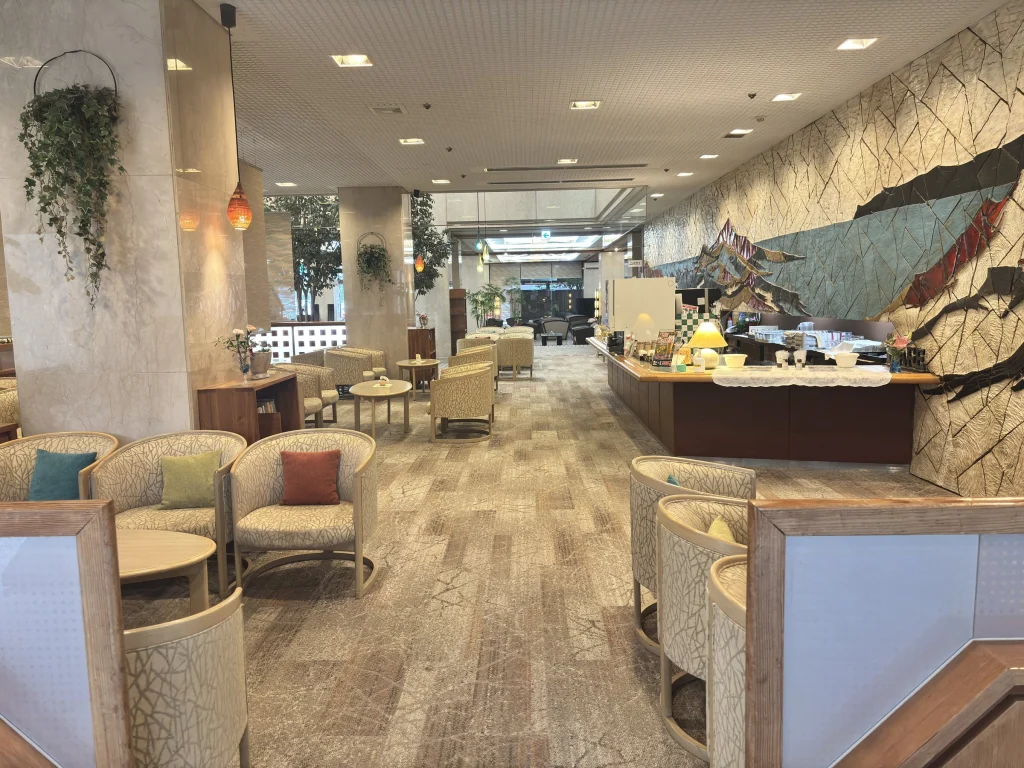
We walked on past carpets with Showa-era retro patterns, designs that stir a certain nostalgia. The corridors were flooded with light and surprisingly wide, as though they still carried the energy of a livelier time. Further on, in the large tatami hall and the banquet rooms, tables stood in neat rows, and it was easy to picture the grand parties that must once have been held here, time and again.
Hyakumeisui, the water of long life
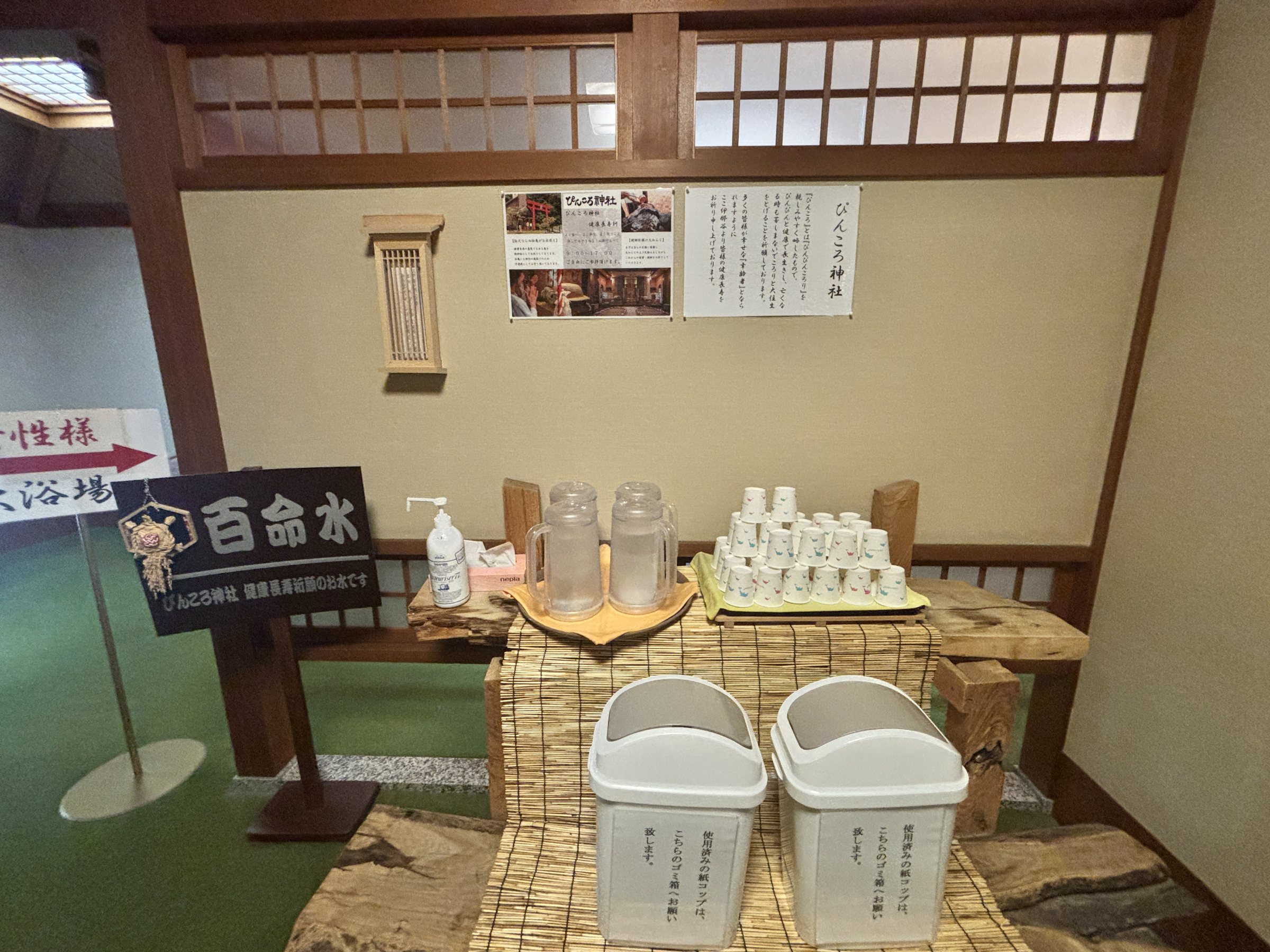
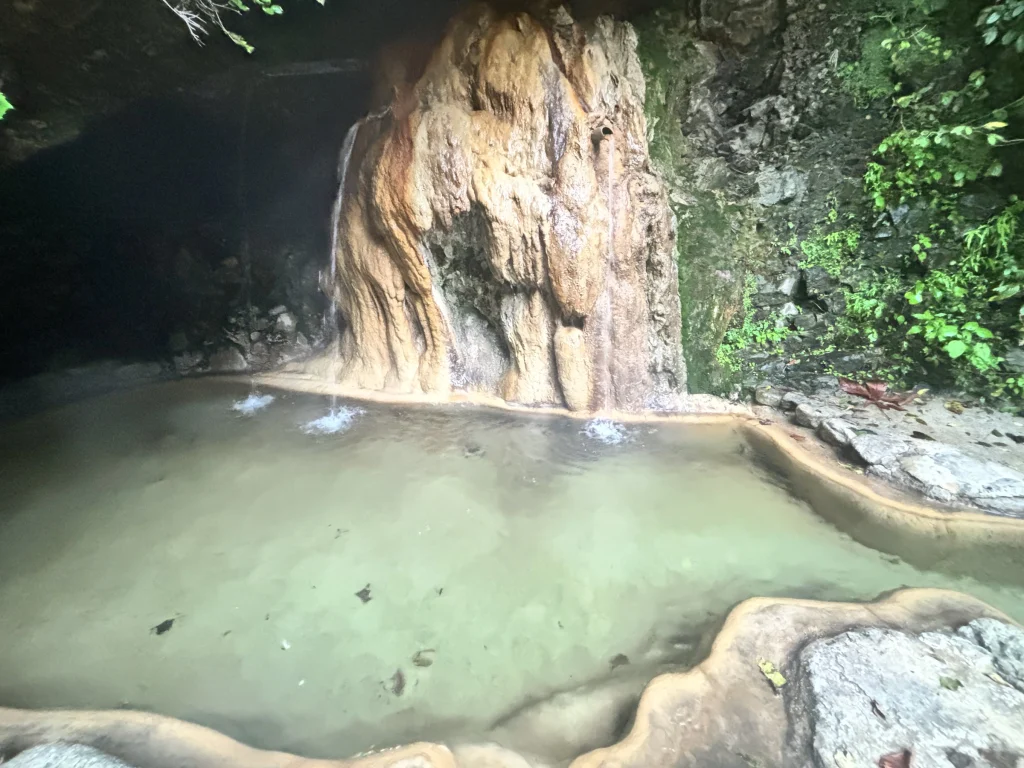
The area has a water with a long history, linked to a shrine and known as Hyakumeisui, loosely “the water of a hundred lives”. Valued as a water that brings long life, it seems to be much loved by local people. On our way to the large baths, its imposing setting made us stop. We took a sip with some expectation: a faint, almost sweet sensation passed down the throat, followed, we thought, by the slightest hint of salt. It left a curious aftertaste, as if the history and character of the land had dissolved into it.
The baths, hot and cold
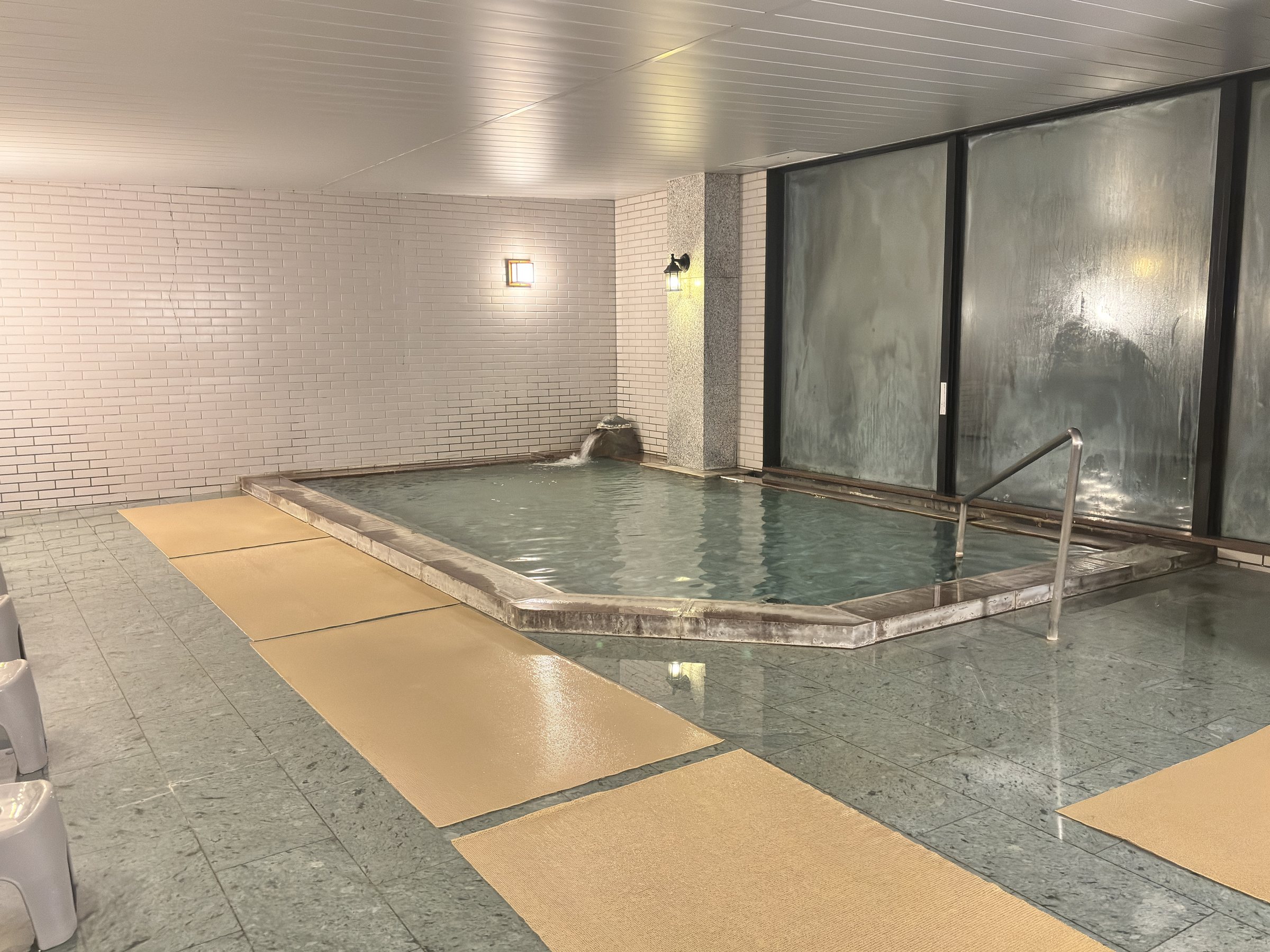
The hot spring is a simple alkaline spring, known as a bijin-no-yu, a “beauty bath”, for the way it wraps gently around the skin. It is said to help with fatigue and poor circulation, and after bathing our skin felt remarkably smooth and soft. Soaking while looking out over a garden colored by mountain flowers through the seasons, we felt the tiredness of everyday life slip away with surprising ease.
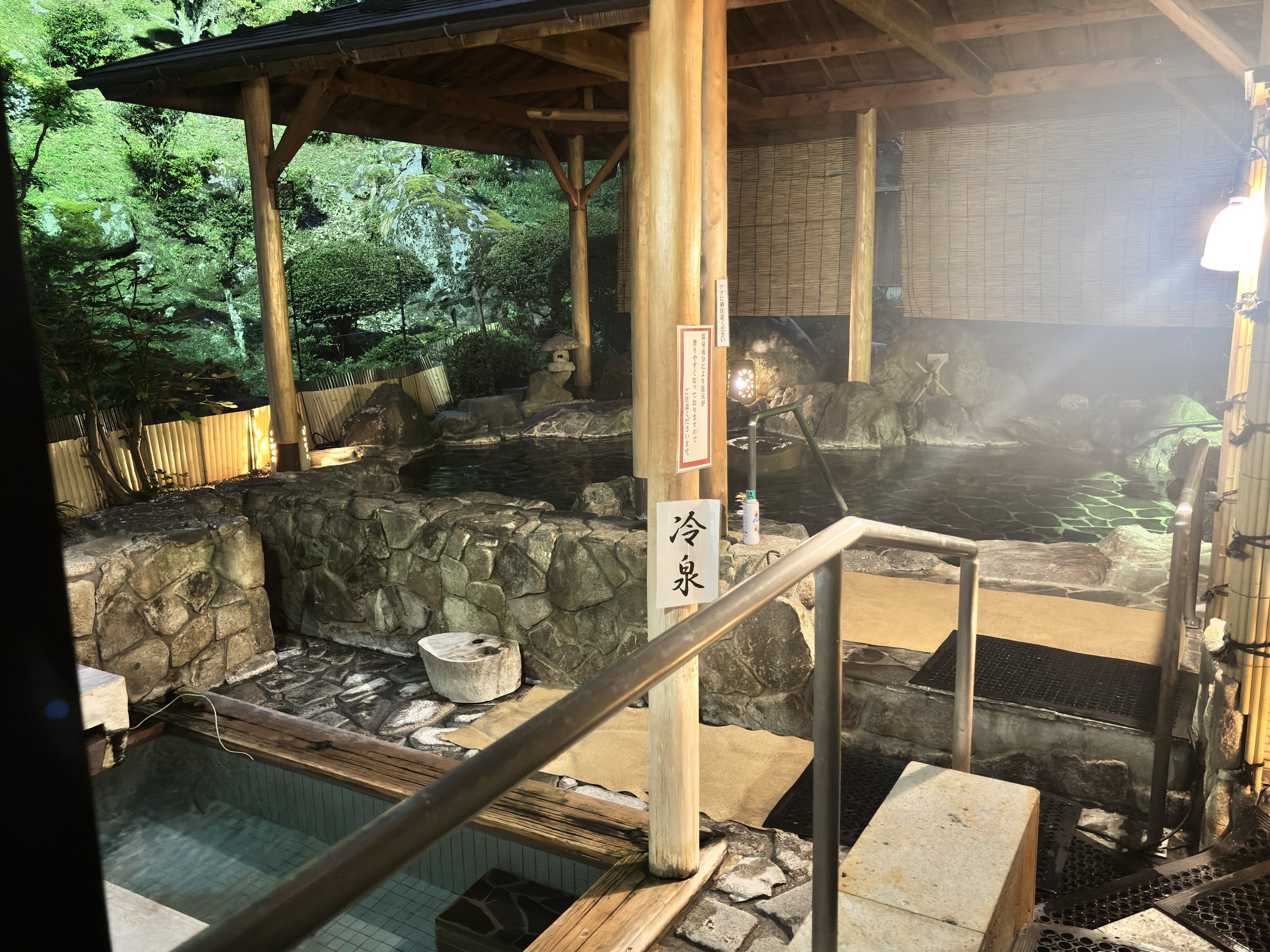
Out in the open-air bath, we found not only a hot spring but a cold spring as well. Alternating between the two is a serious form of toji, the traditional practice of bathing for health, which works on body and mind alike: moving between cold and hot is said to steady the nervous system and restore the body’s balance. At first glance it seemed a deep art, hard to master. Yet each time we cooled our flushed bodies in the cold spring and sank back into the warmth of the hot one, we felt something loosen from the core.
Dinner from the mountains
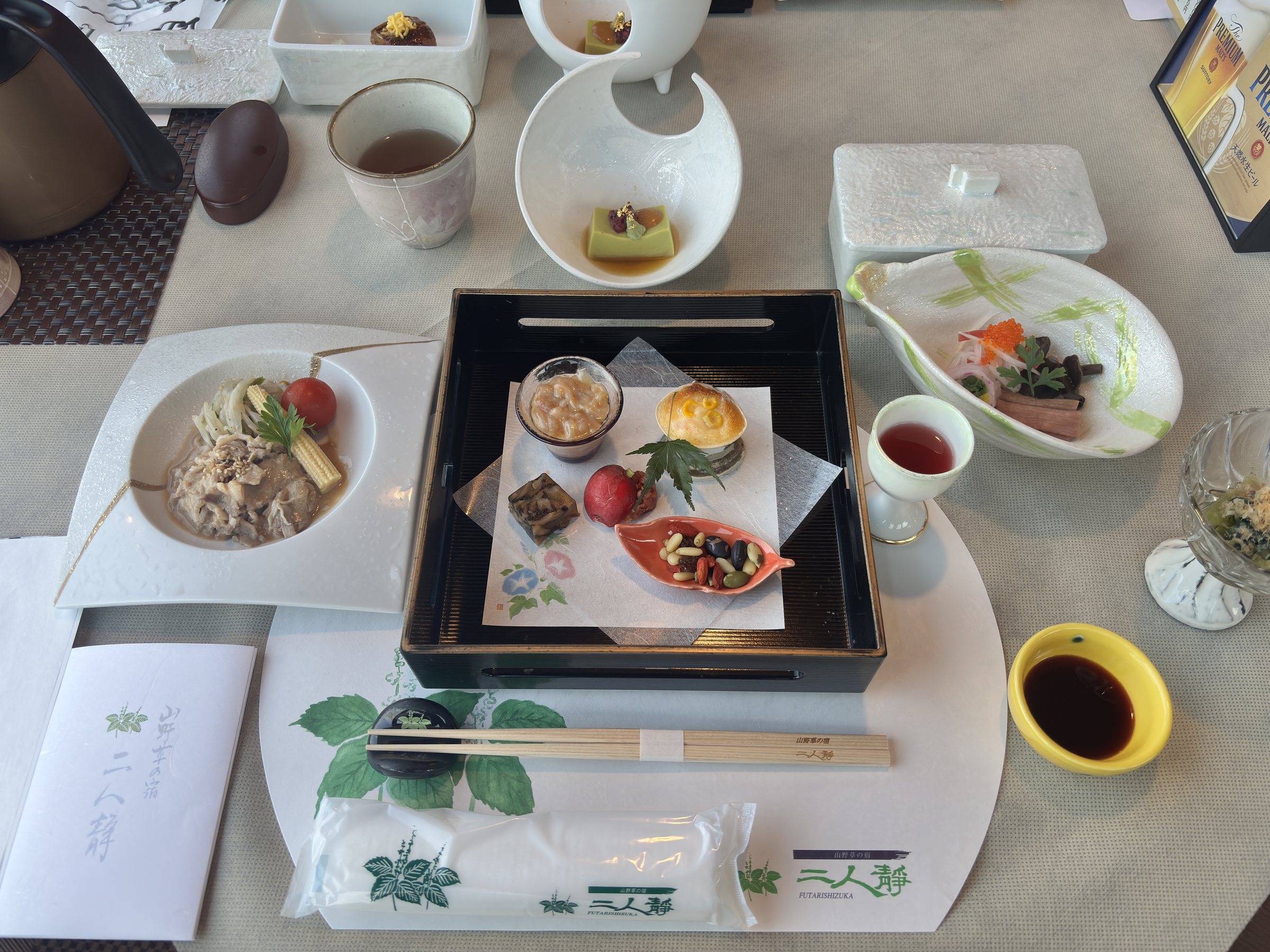
Dinner was a spread of handmade, inventive dishes that drew generously on the produce of the mountains. Seasonal ingredients were not simply served as they were; everywhere there were signs of an extra step, a small idea. With each mouthful we seemed to taste both the richness of the local landscape and the cook’s careful attention. It went beyond a meal: we could feel the cook’s wish to put the spirit of a mountain village on the plate.
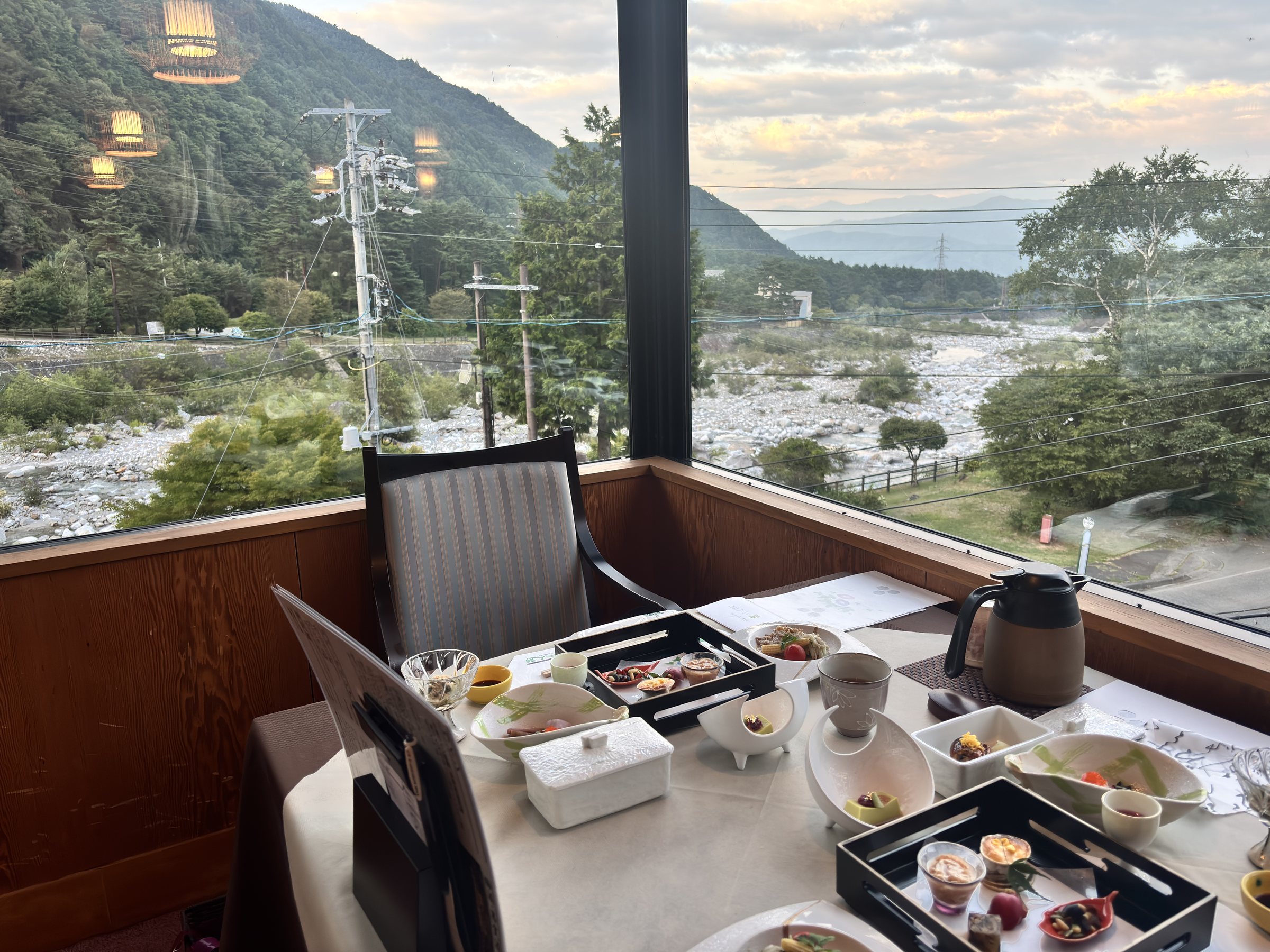
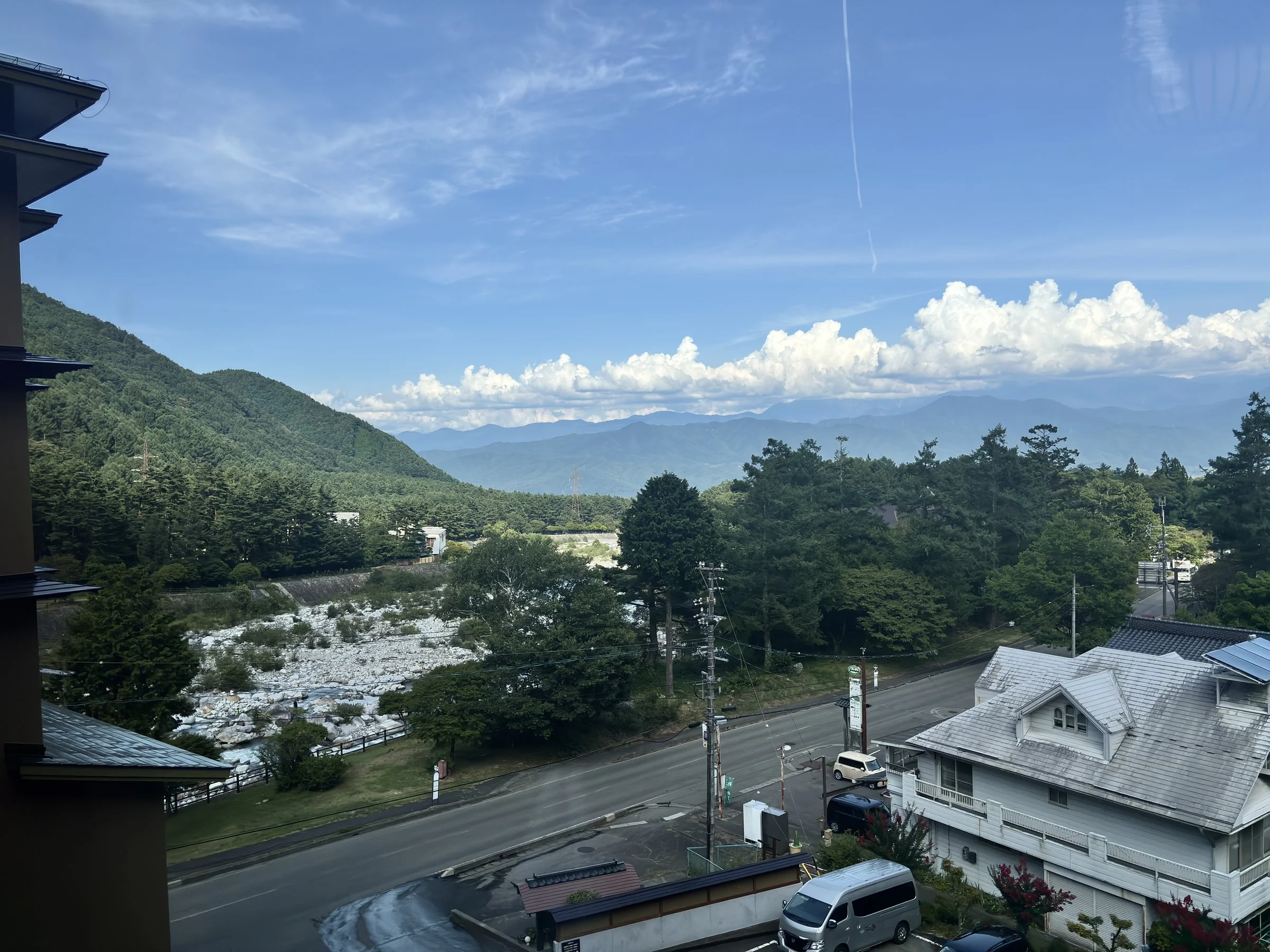
Beyond the large windows, a sweeping mountain range, a river running through Nagano and an open sky stretched out like a painting. Eaten against that view, dinner had a quiet, very Japanese grace.
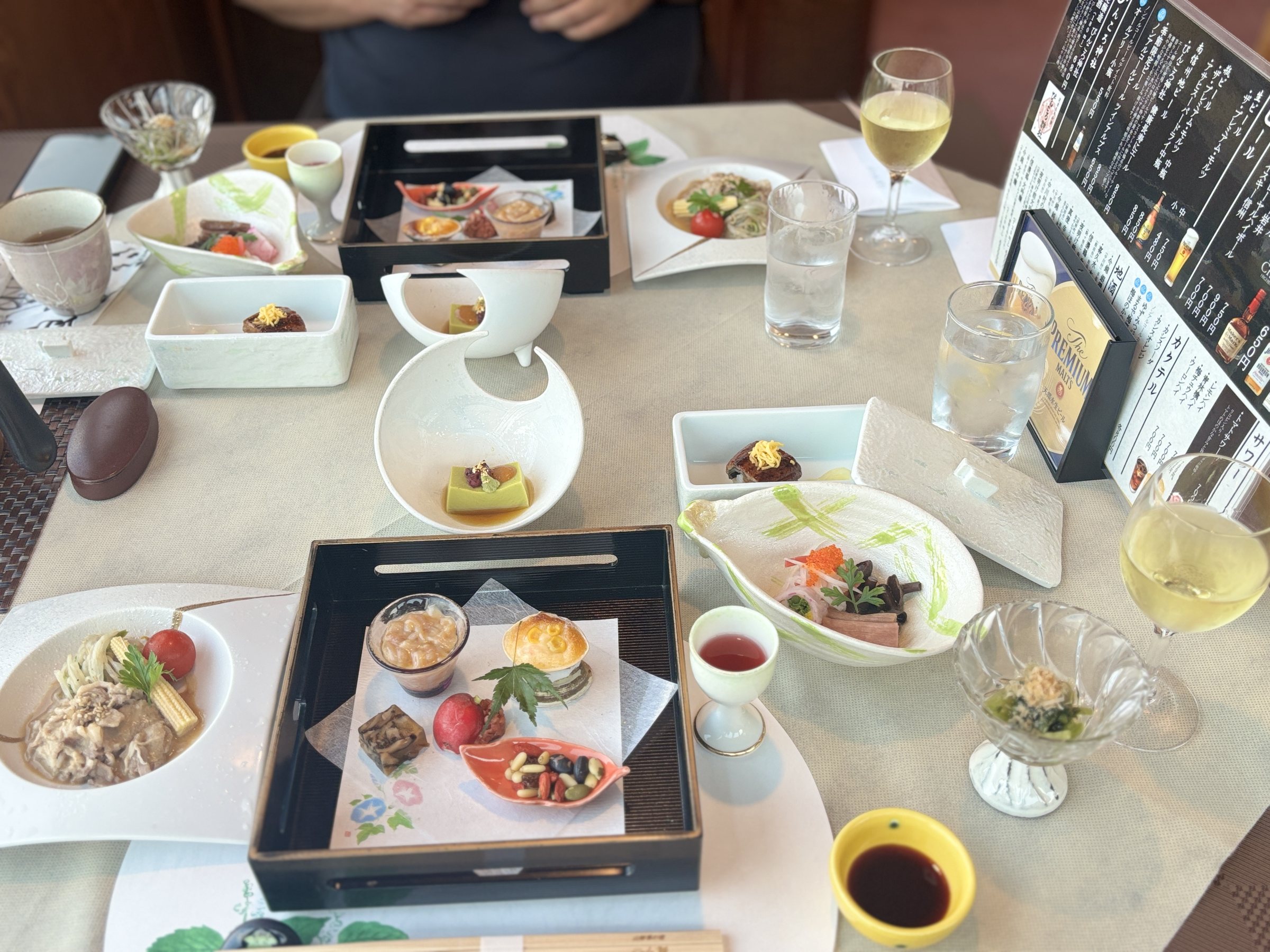
We gave ourselves over to the season’s produce and to Shinshu wine from Nagano. Time passed quietly and generously, nature and people in gentle harmony.
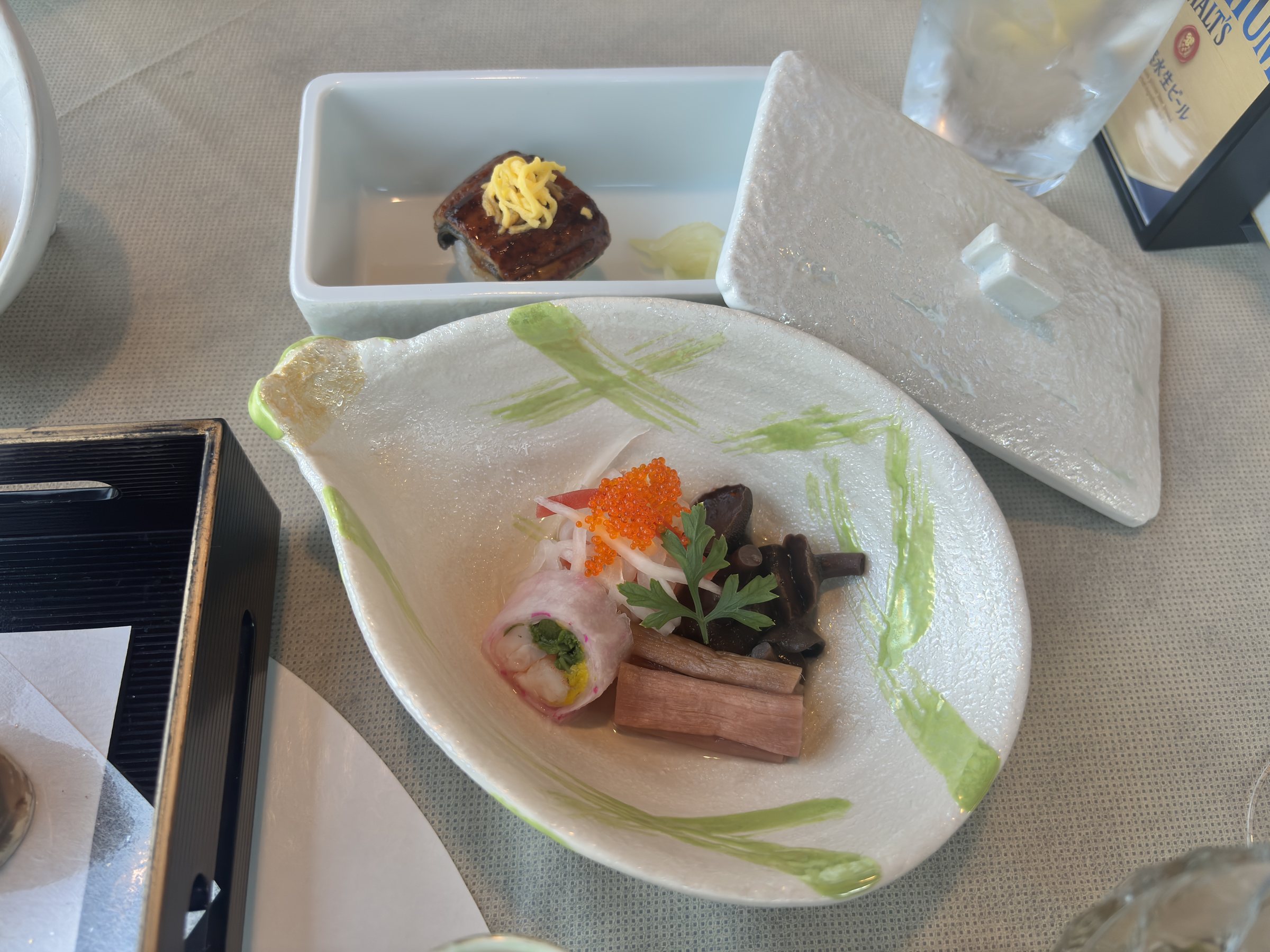
The dishes carried the warmth of country home cooking, with mountain produce such as zuiki, taro stems, used in abundance. The vinegar was pronounced, but the sweetness had been adjusted so delicately that it was remarkably easy to eat. Traditional local flavors sat alongside a modern lightness.
Egg somen and shinjo
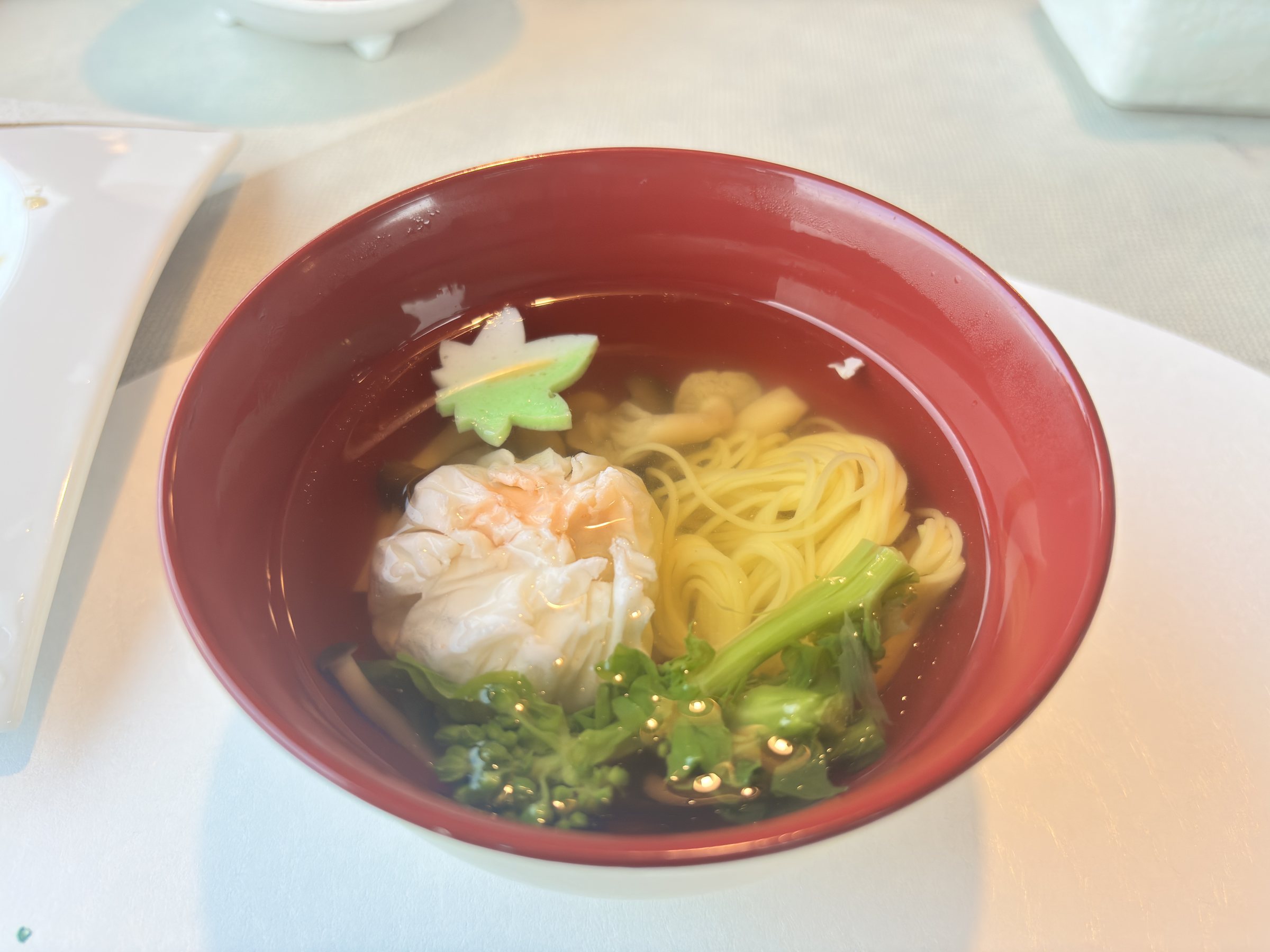
There was also tamago somen, egg noodles, and shinjo, a soft dumpling of minced seafood. The egg somen was so delicate and beautiful that we paused with our chopsticks in the air; it was silky in the mouth, and the gentle flavor of egg spread slowly. The shinjo had clearly been made with care, but its texture was coarse, perhaps from slightly too much steaming, or perhaps from too little of the binding ingredient.
Shinshu salmon and river fish
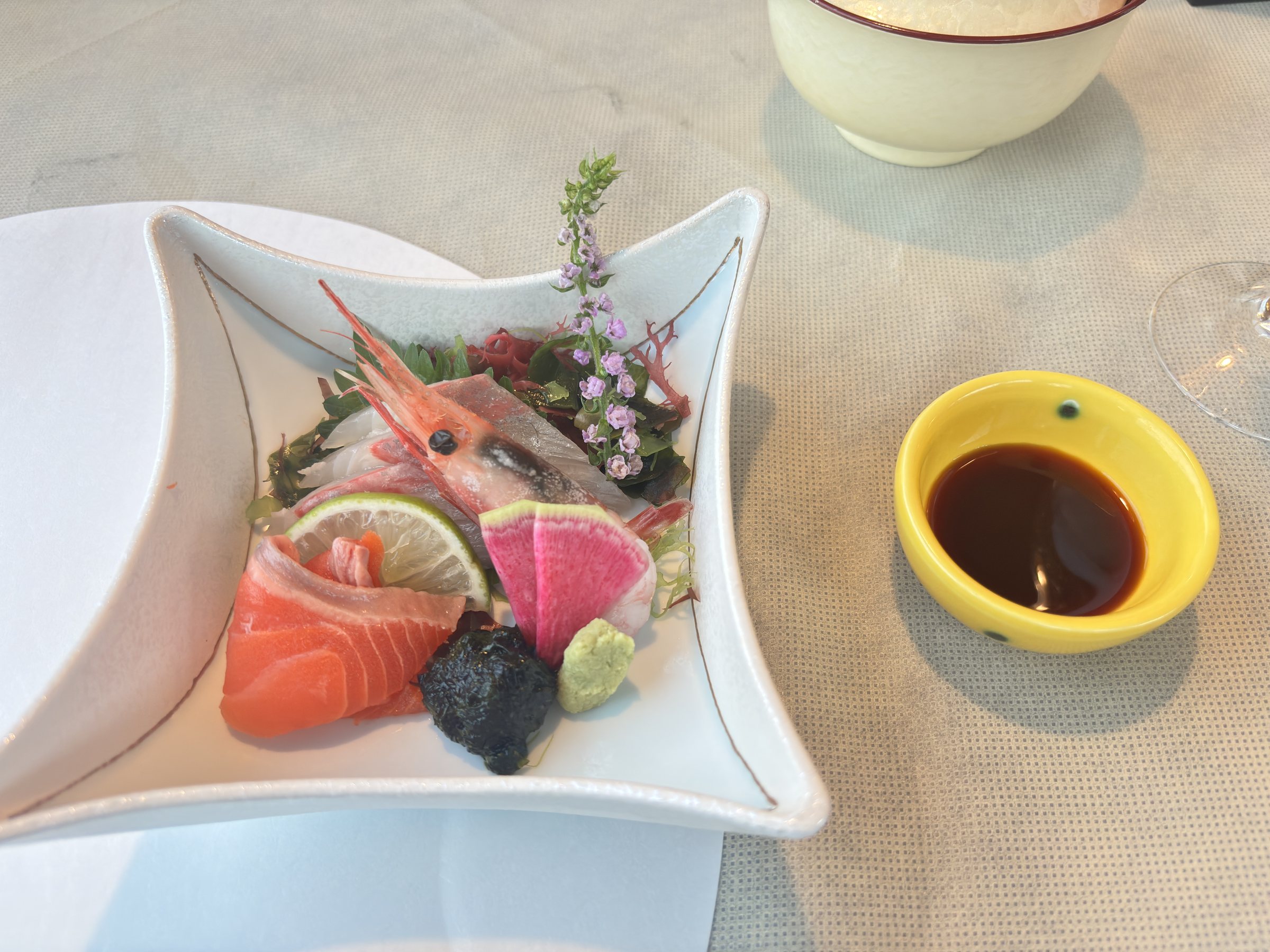
In Nagano, sashimi means, above all, Shinshu salmon, a local freshwater salmon. Its deep pink flesh is beautiful to look at and rich in flavor. What interested us was how it was meant to be eaten: topped with a little of the green-laver tsukudani, seaweed simmered in soy and sugar, served alongside, the scent of the shore and the sweet fat of the salmon came together in fine balance.
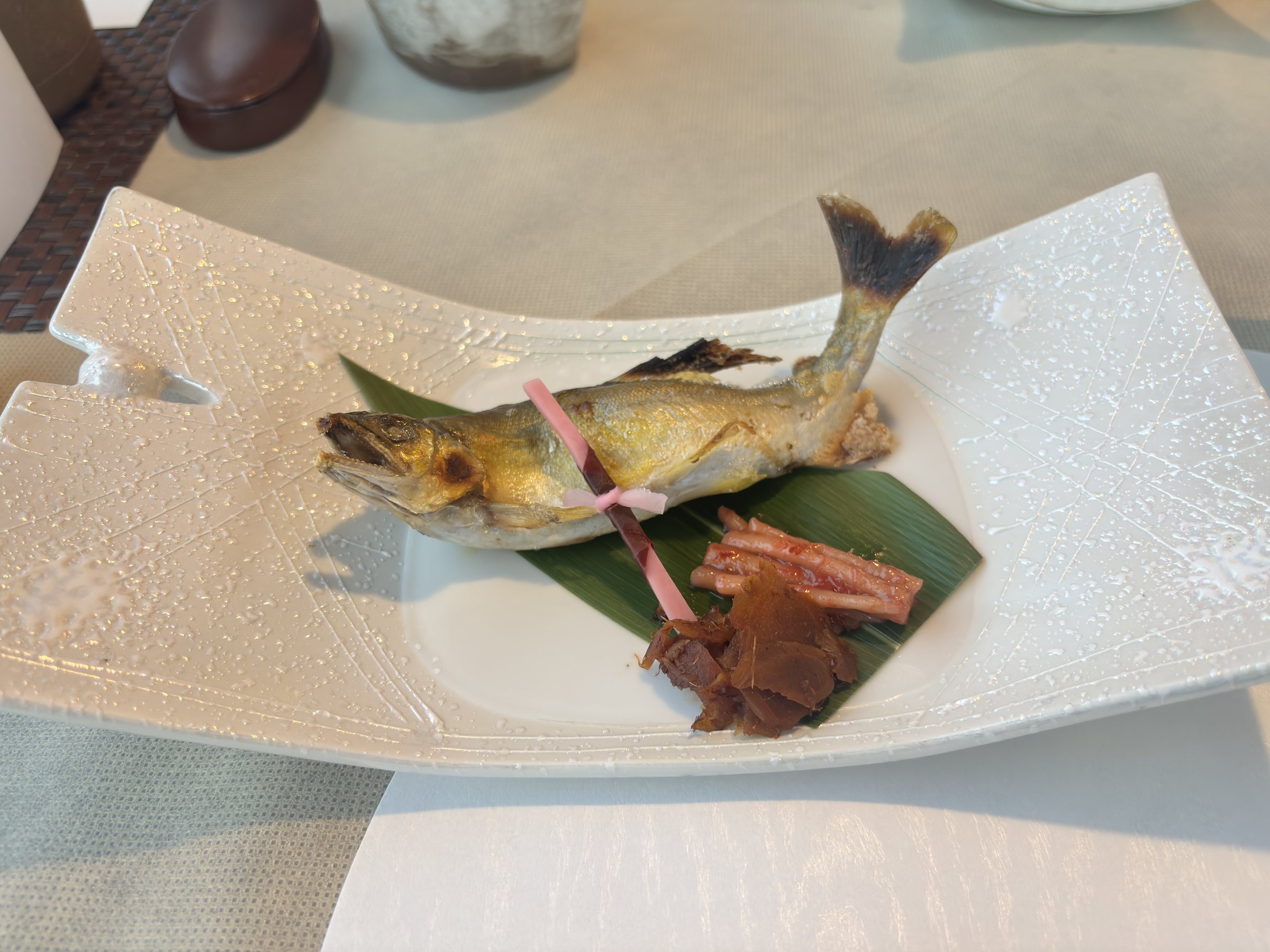
The other pleasure of eating deep in the mountains is river fish. The ayu, or sweetfish, had a fine balance of its particular sweetness and a faint bitterness, and the taste of the river grew with every bite.
Rice, red miso and a little extra
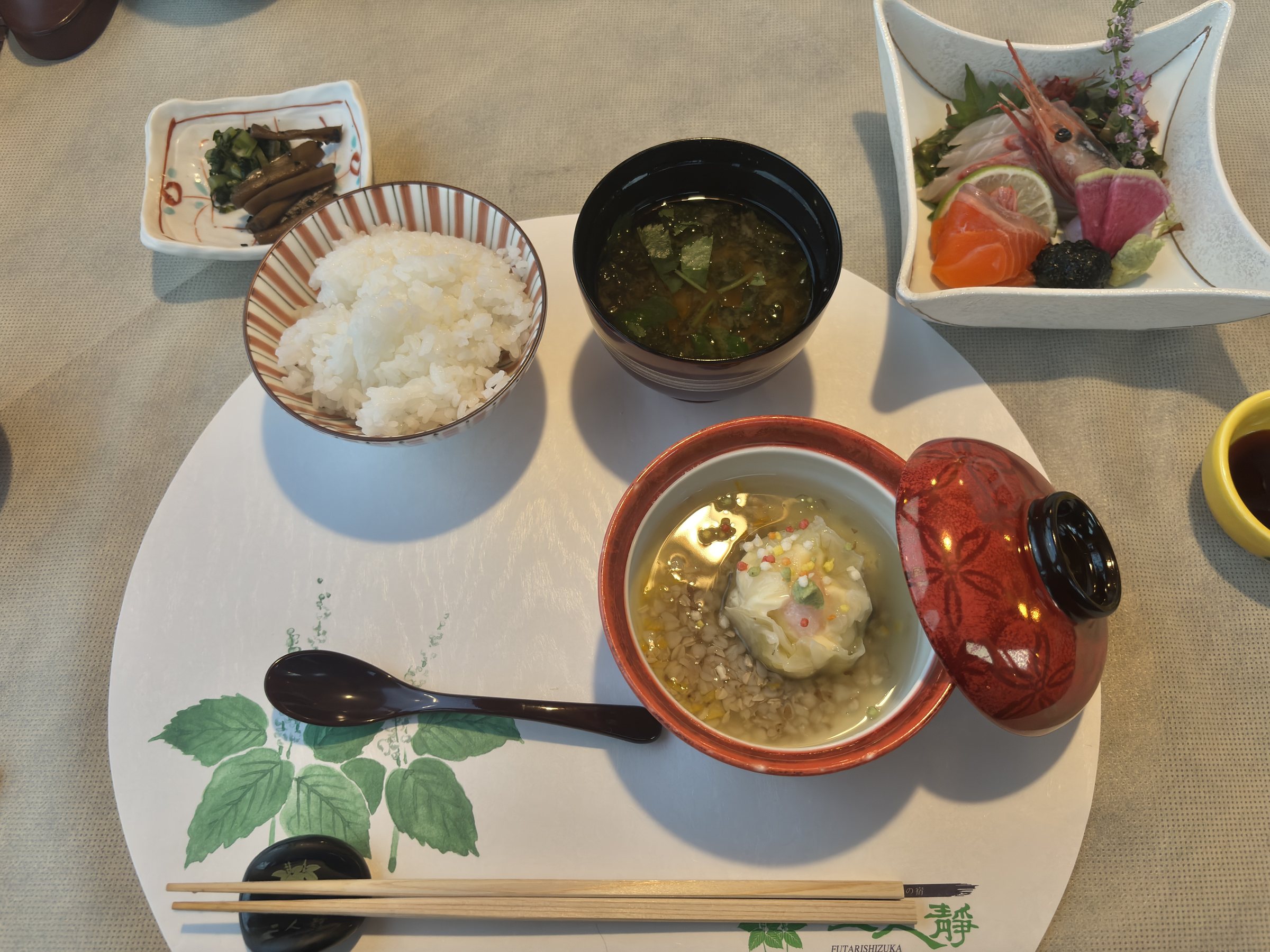
Next came a delicate pouch in a thick sauce, reminiscent of the earlier shinjo, its surface dusted with rice crackers, which looked charming. After this warm dish wrapped in its glossy sauce, we finished with hot rice, a flavorful red miso soup and the sashimi we had saved, and enjoyed a thoroughly Japanese ending to the meal.
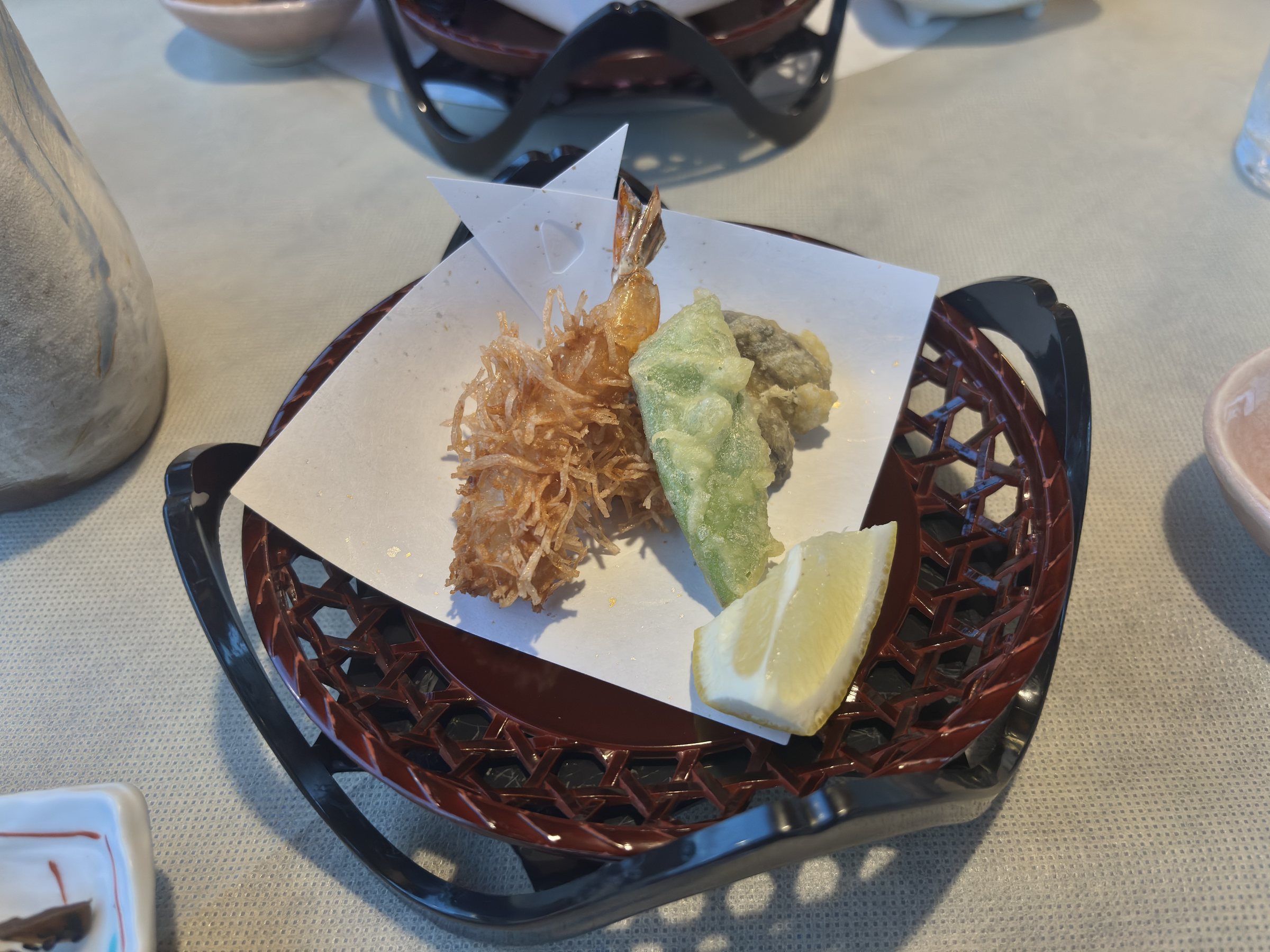
Because we had asked for plain rice early, so that we could eat our sashimi as a set meal with rice, this dish followed afterwards: crisp-fried gasu-ebi shrimp and tempura of local vegetables.
A paper cover, cut by hand
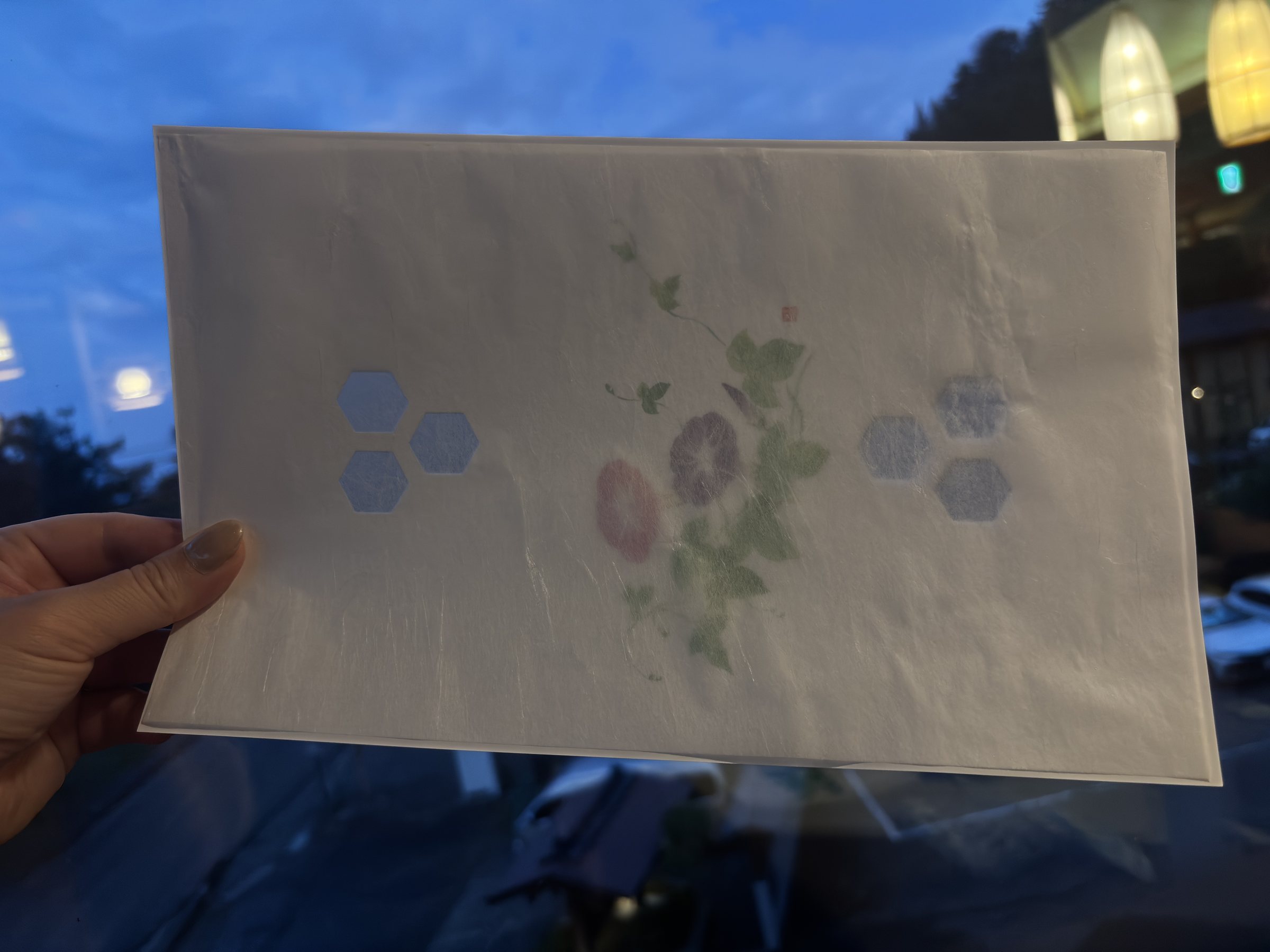
Looking closely at the sheet laid over the food to keep dust off, we saw that it had been made by hand from thin washi and kaishi paper, with patterns cut into it. We were genuinely moved; this is the spirit of Japanese hospitality. It is the kind of sheet that is thrown away with the meal or never even noticed, and we felt proud to belong to a people who would spend time and effort on it.
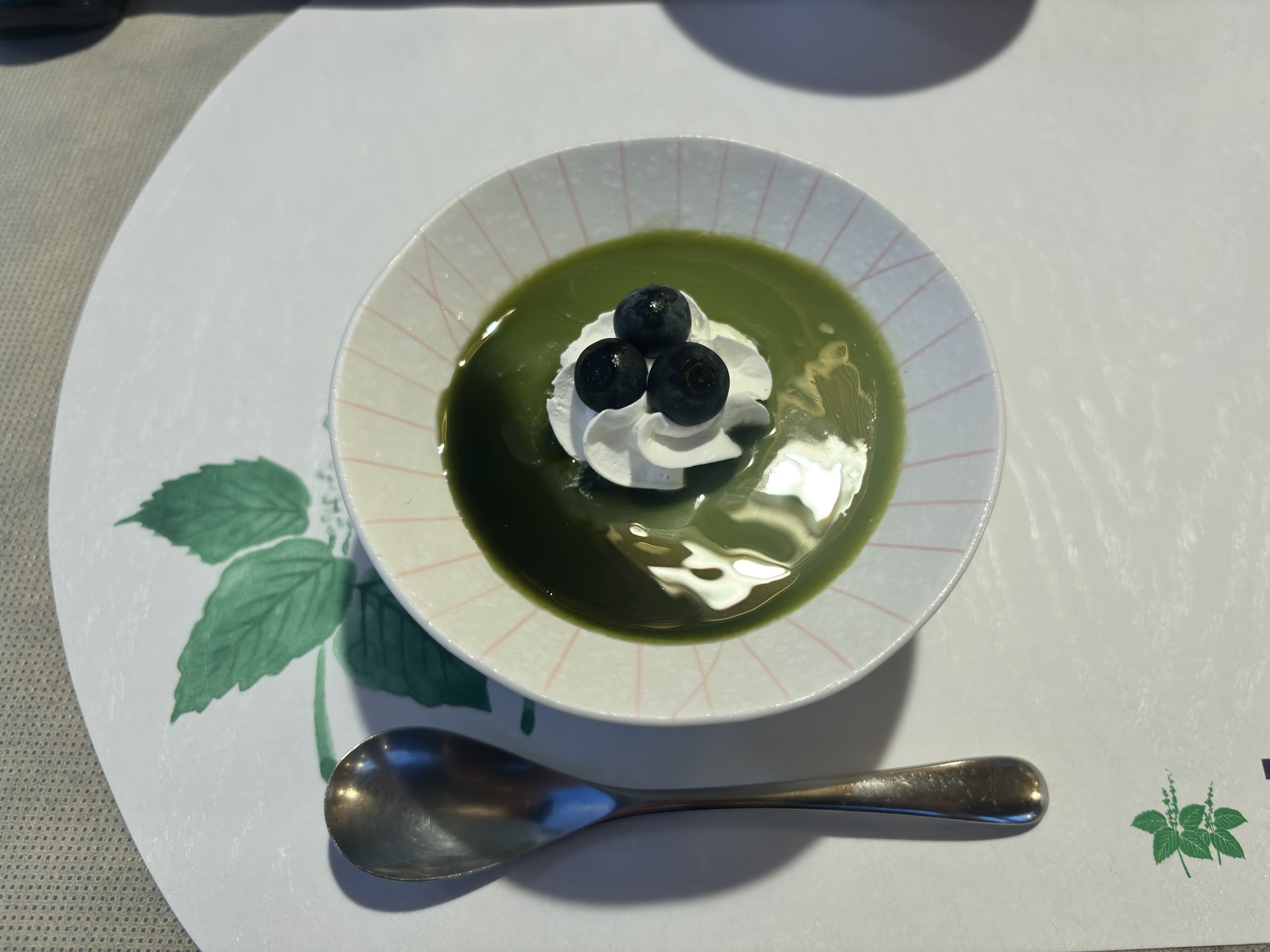
Dessert was a house-made matcha pudding. It was surprisingly rich, with the deep aroma and sweetness of matcha spreading generously across the palate: a blissful way to end.
Final thoughts
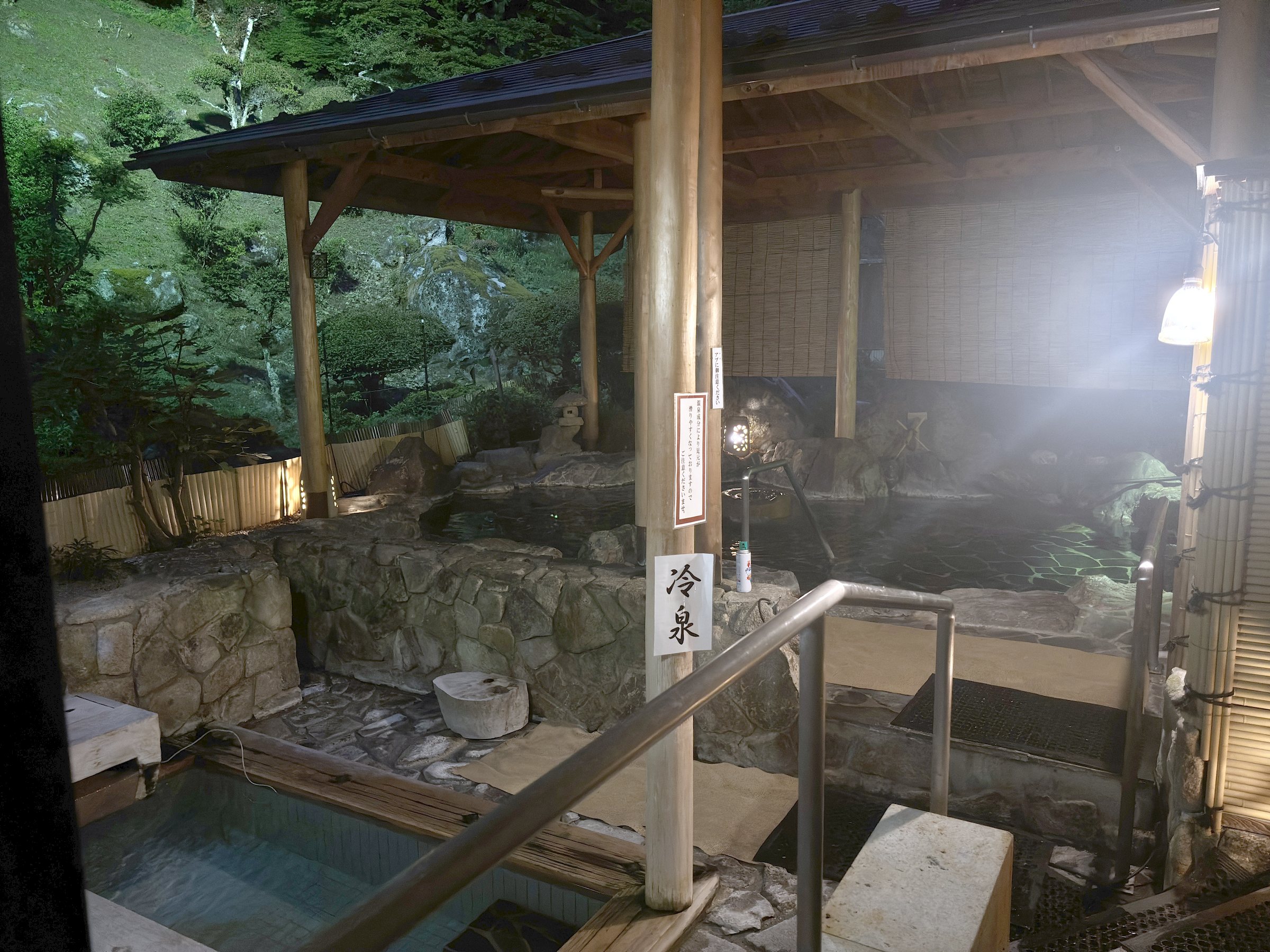
Soaking in the open-air bath under the moon, listening to the calls of insects we had never heard before and the stirring of the wind, was something special. So, too, was bathing early in the morning, before sunrise: a luxury nothing else can replace. Busy with travelers shaking off the road and hikers back from the surrounding peaks, this is a ryokan we would like to see carried on with care.
This review reflects a stay in August 2025. Please confirm current details directly with Futarishizuka before visiting.