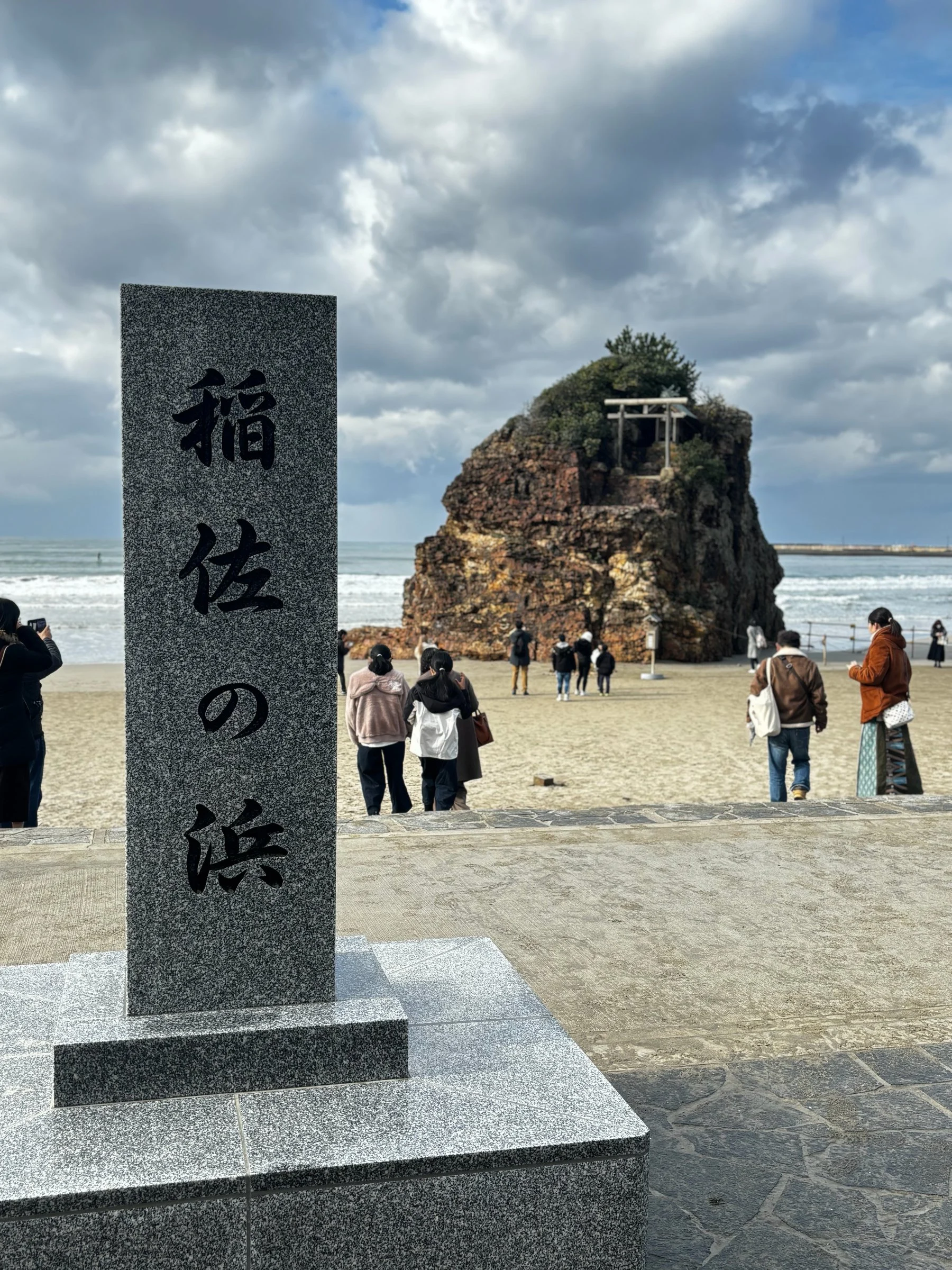
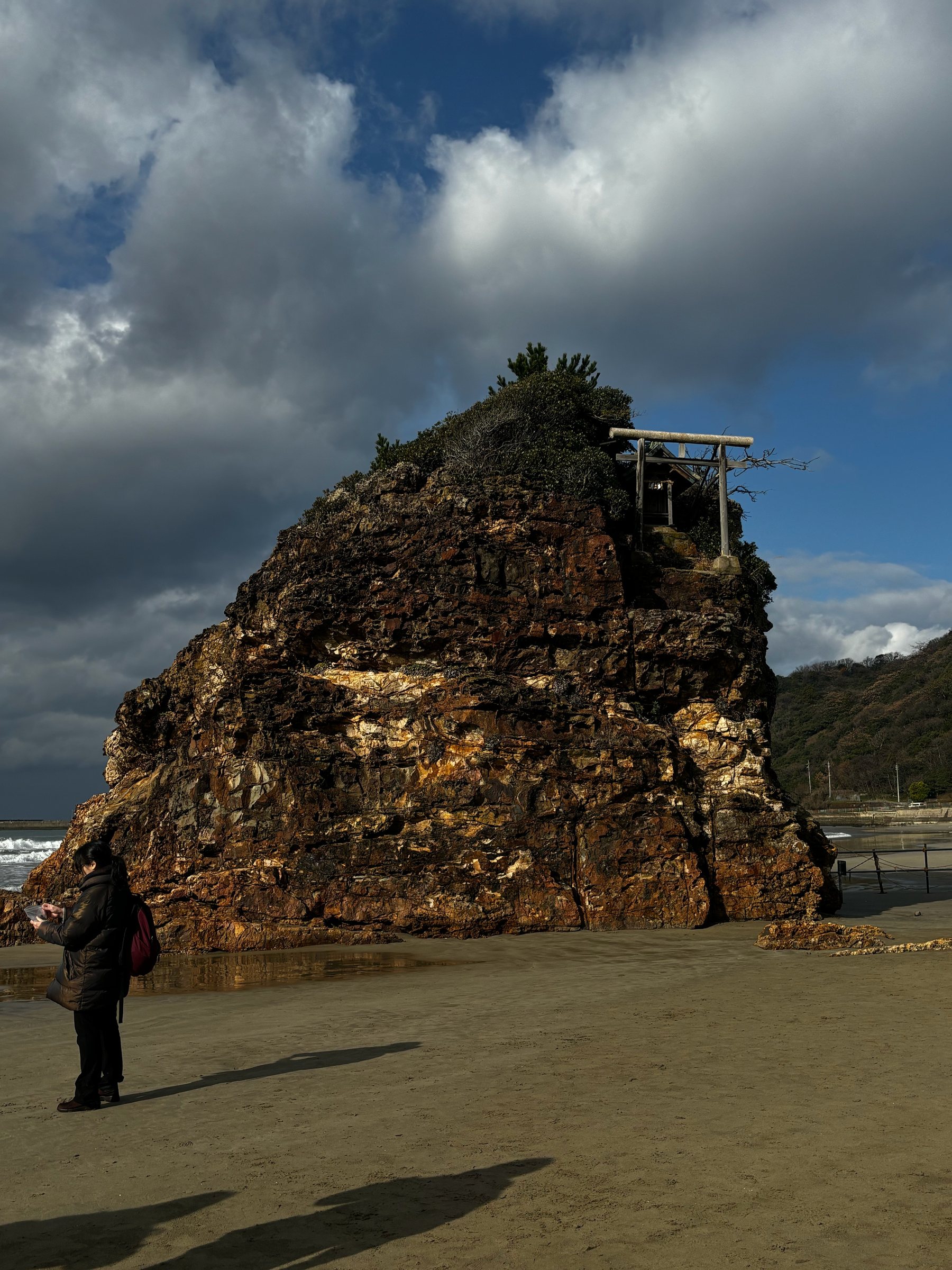
Before paying our respects at Izumo Taisha, there was one place we were determined to see: Inasa no Hama, or Inasa Beach, known as the setting of the kuniyuzuri, the myth in which the land is handed over to the heavenly gods. When we arrived, a broad stretch of sand and the sound of the waves were waiting for us, along with Benten-jima, the small rock islet that dominates the shore.
Sand from the beach, sand from the shrine
The beach is best visited together with Izumo Taisha. There is a custom of taking a little sand from Inasa Beach and exchanging it at the shrine’s Soga-no-yashiro sanctuary for sand that has already been purified, which you then carry home.
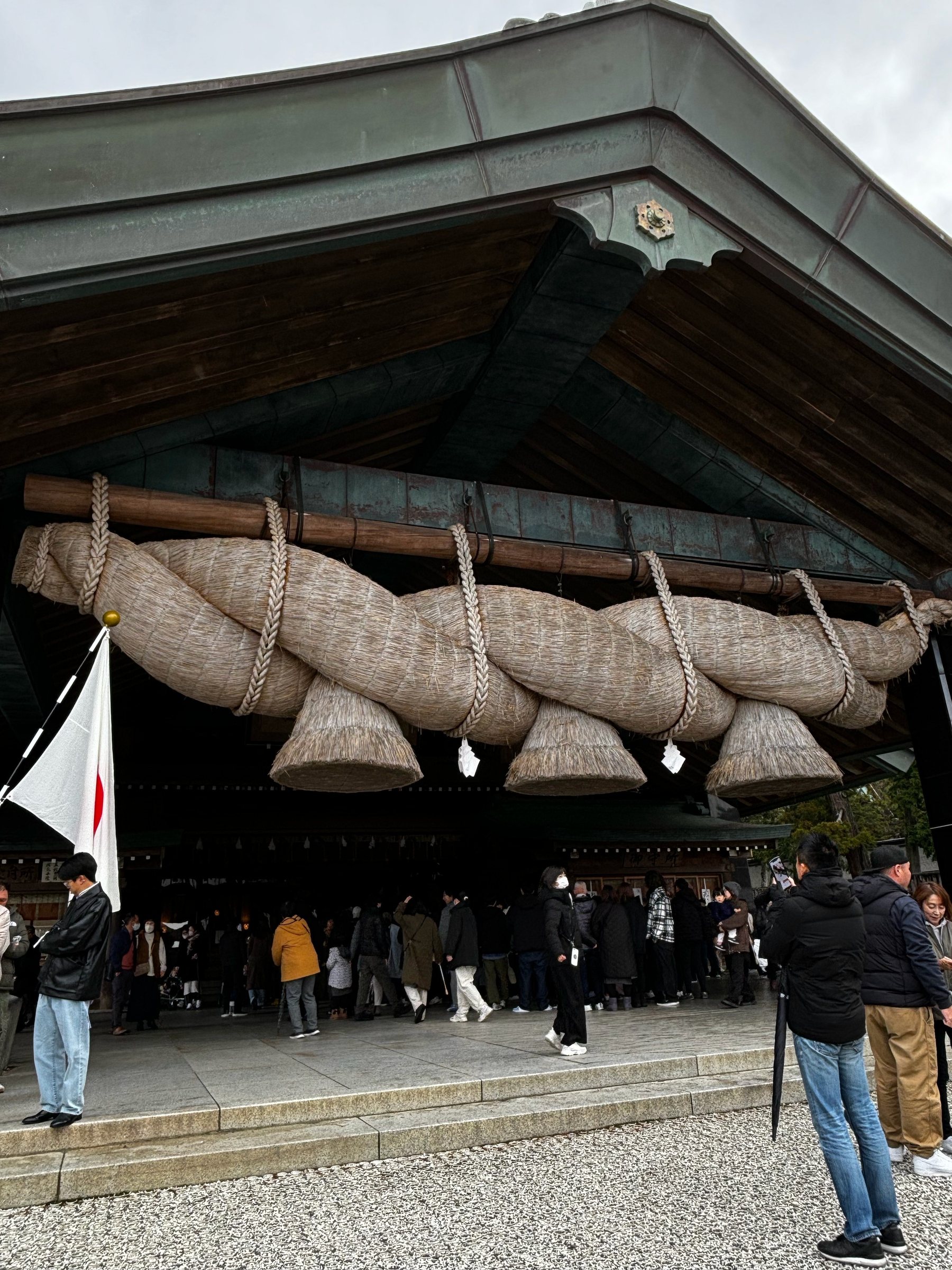
Izumo Ooyashiro
At Izumo ooyashiro we were overwhelmed by the colossal shimenawa, the sacred straw rope hung on the Kagura-den hall. The precincts were crowded with worshippers, and among them we could feel the weight of the shrine’s history and its sacred atmosphere; it was a solemn moment. We were surprised at just how imposing one of Japan’s foremost shrines could be.
The way of praying here is unusual, too. Instead of the familiar form, Izumo Taisha has its own: two bows, four claps and one bow. Clapping four times and then praying quietly, we felt that sense of sacred history settle deep inside us.
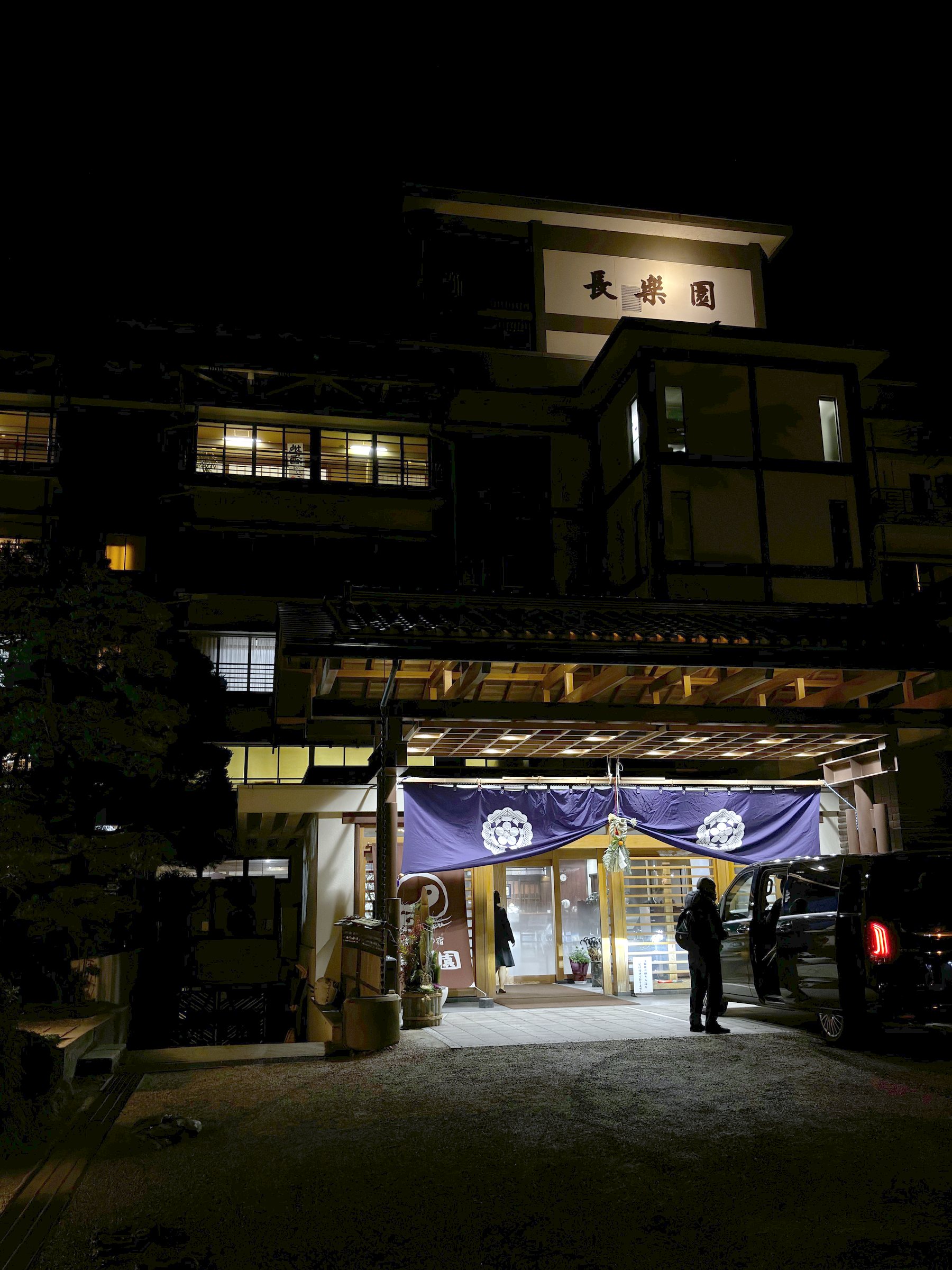
Arriving at Chorakuen
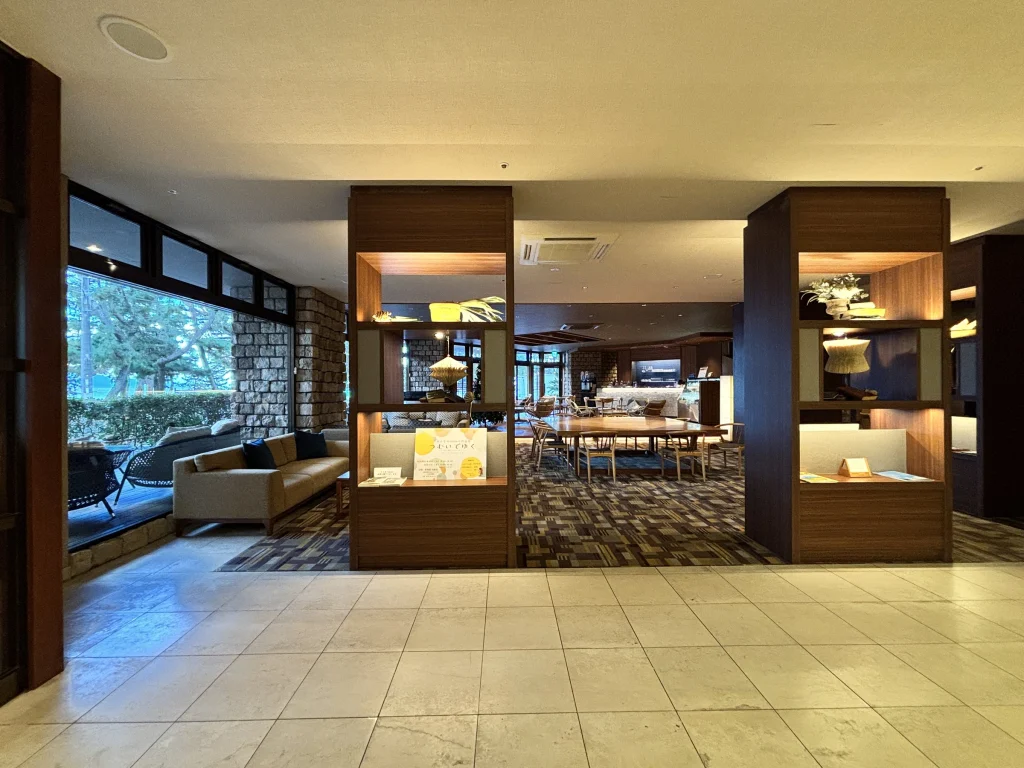
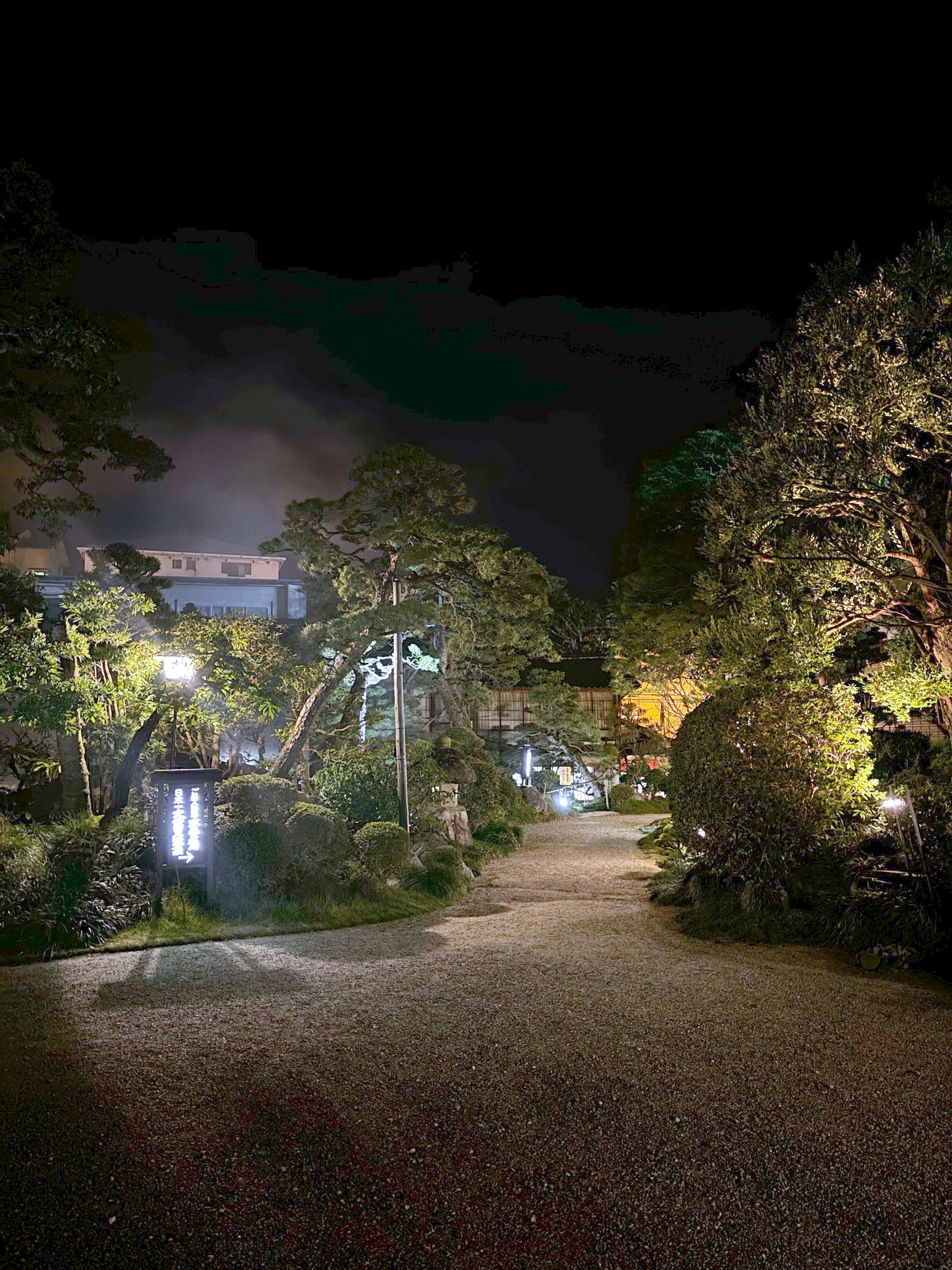
Night had fallen over the hot spring town by the time we reached Chorakuen, our ryokan for the night. Its stately Japanese building rose out of the darkness, and the blue noren curtains at the entrance, glowing with warm light, put us at ease at once.
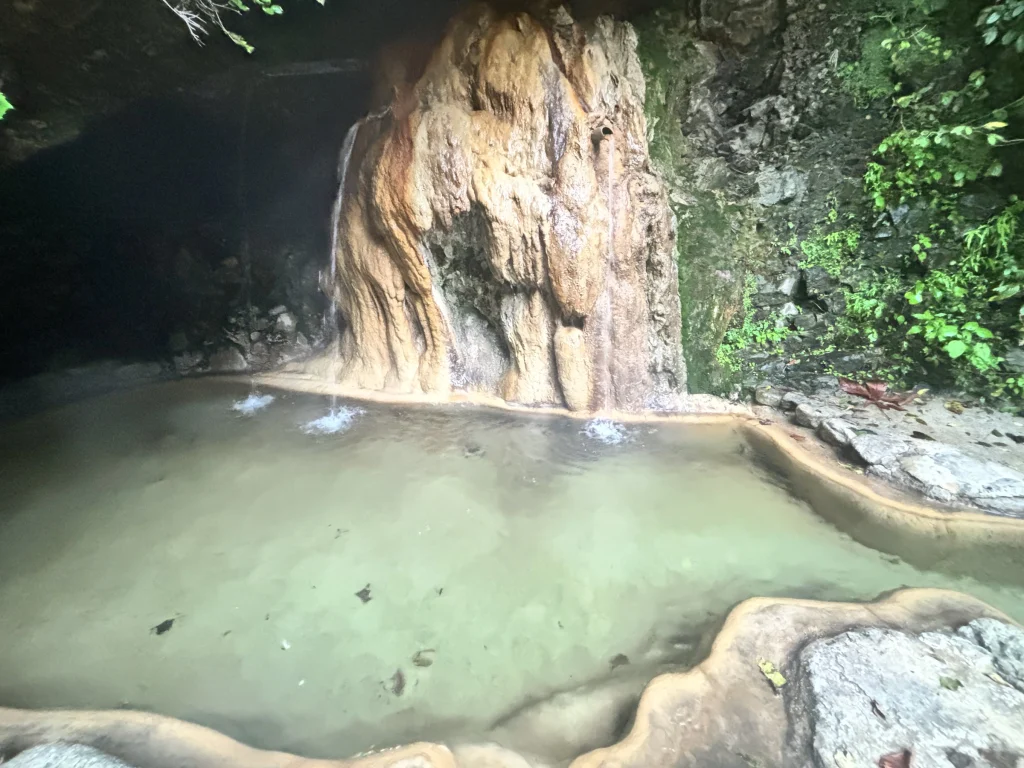
The ryokan’s pride is a vast mixed-gender open-air bath of some 120 tsubo (roughly 400 square meters). It is fed by the ryokan’s own spring, gensen kakenagashi (flowing straight from the source, never recirculated), and the water is known as the “water of the gods”. Bathing there, looking up at the night sky with all that open space around us, was pure bliss.
A lucky bento for dinner
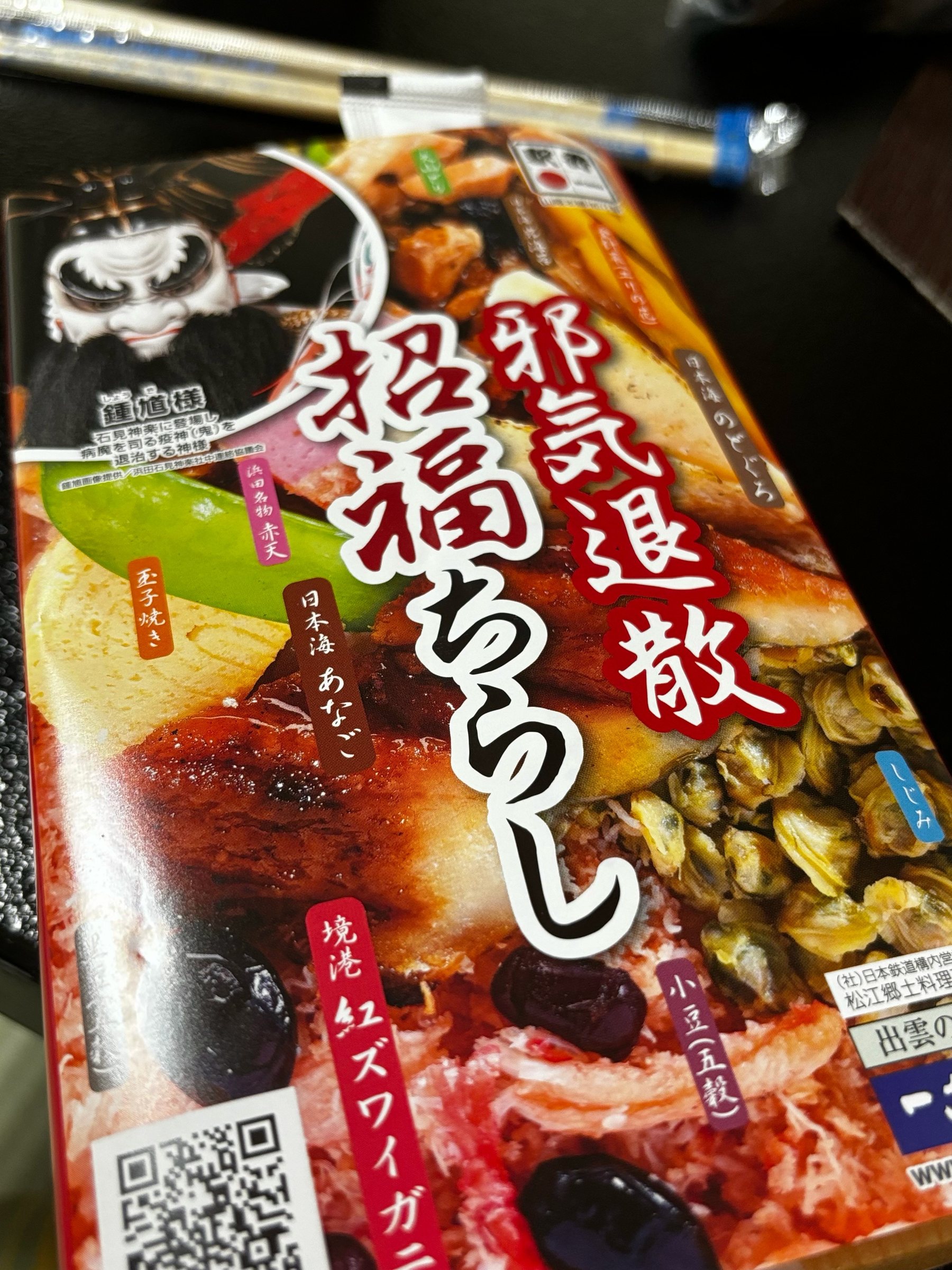
Dinner that night was a station bento we had picked up on the way, with a name full of good omens: Jaki Taisan Shofuku Chirashi, roughly “drive out evil, invite good fortune”. The package shows Shoki, the legendary queller of demons and disease, and inside was a generous assortment of San’in flavors: nodoguro (blackthroat seaperch) and conger eel from the Sea of Japan, red snow crab from Sakaiminato, and shijimi clams. Every mouthful showed off the bounty of the region, and it tasted all the more special for seeming to bring good fortune and a safe journey along with it.
The garden by night
The ryokan’s large garden, another point of pride, is beautifully lit after dark and takes on a dreamlike look quite different from the daytime. In the stillness of the night, trees and stone paths picked out in warm light built our anticipation for the baths ahead.
The baths
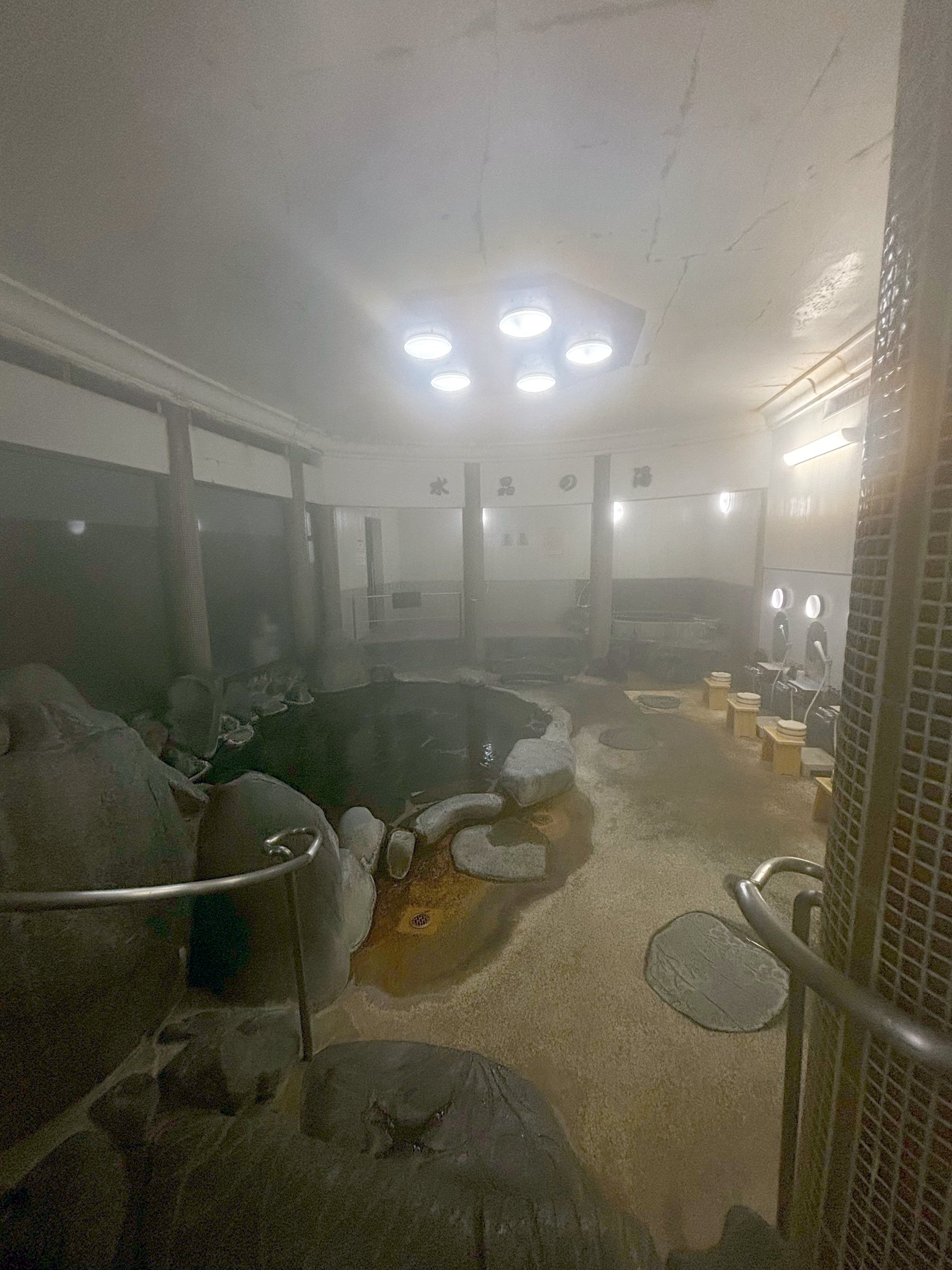
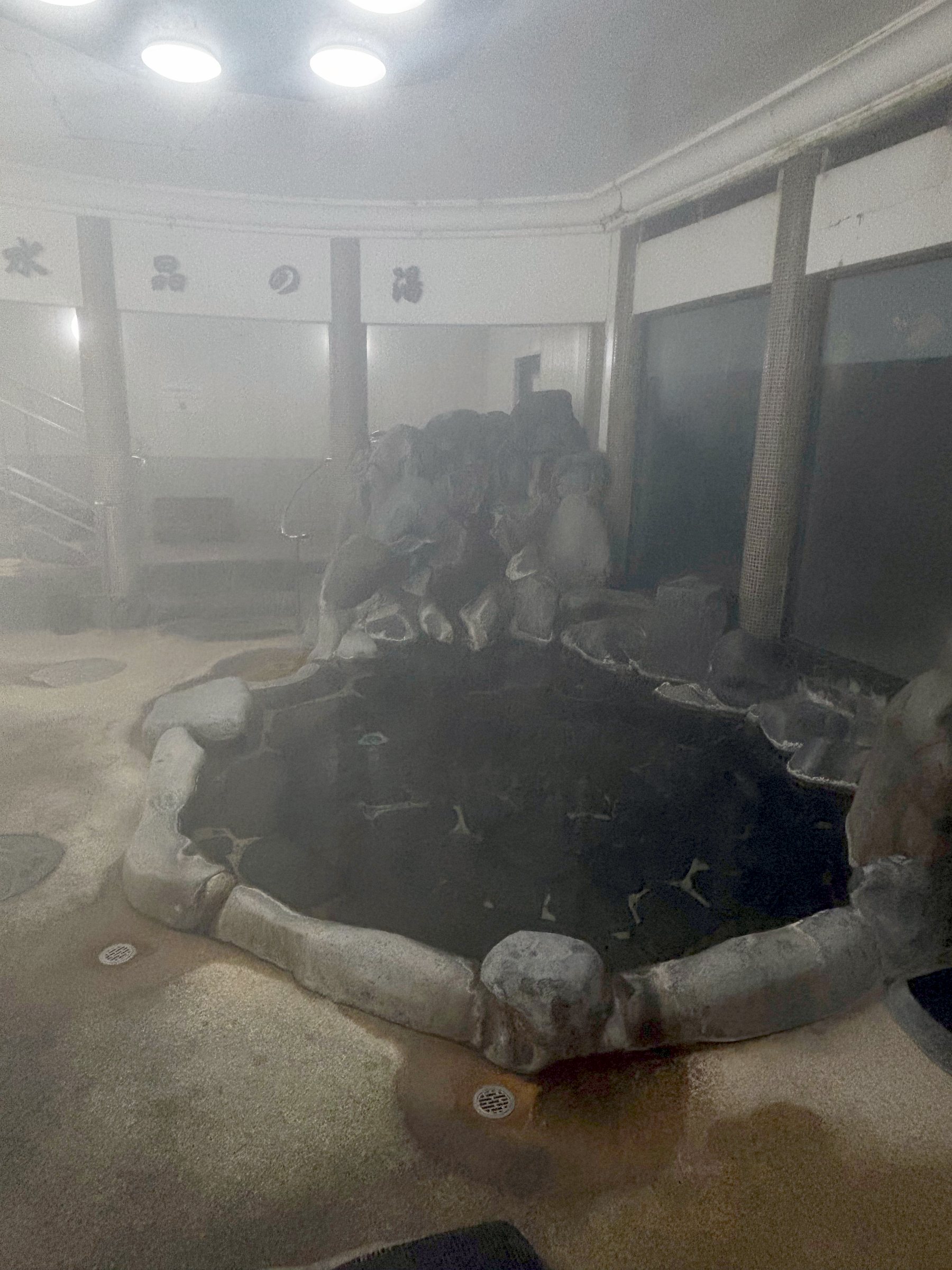
Through the steam appeared Suisho no Yu, the “Crystal Bath”, an indoor bath with a retro, dignified air. The ceiling lights sparkled like crystal, and spring water poured steadily into a tub set with large rocks. It let us feel the character of a long-established hot spring.
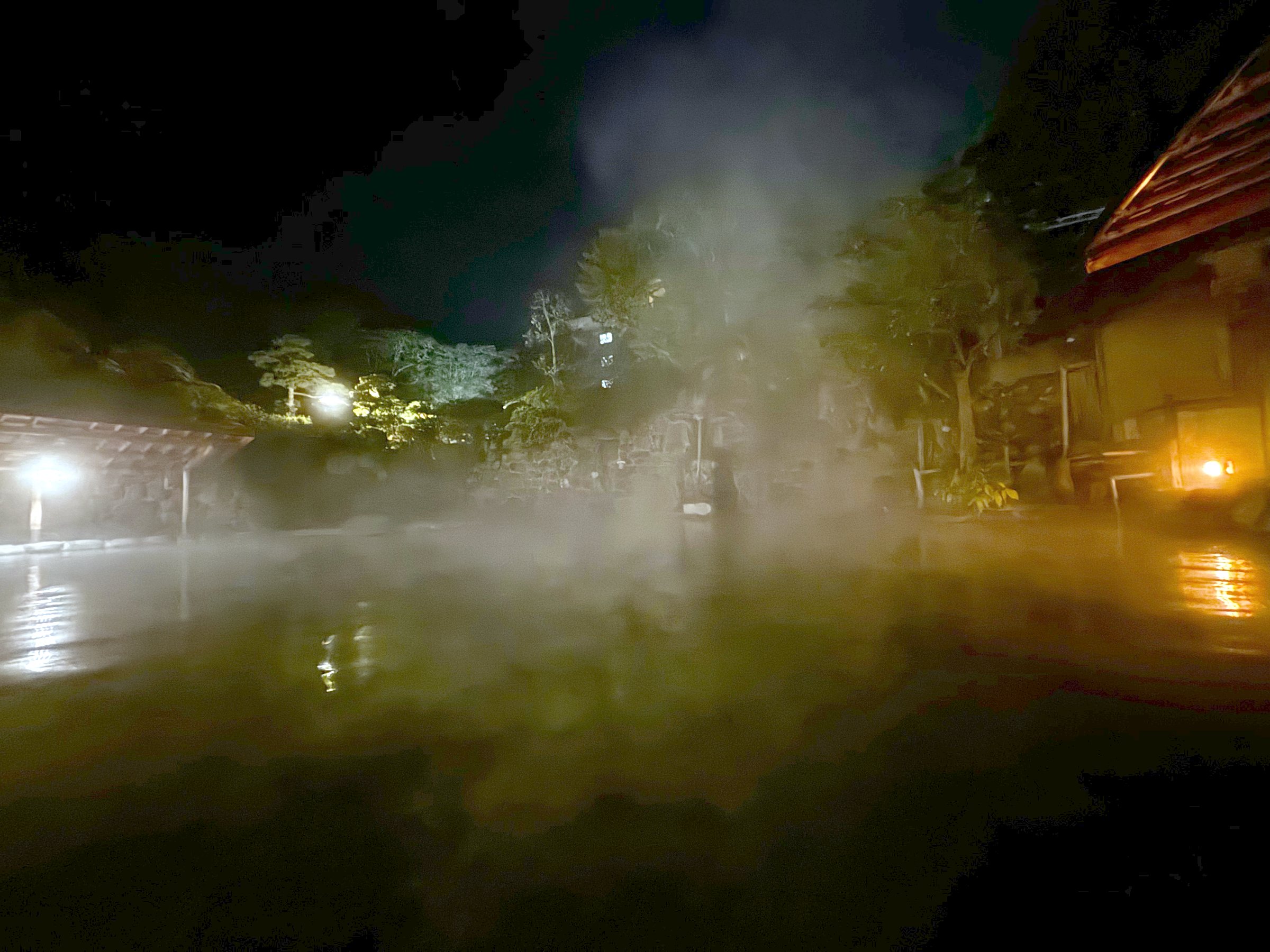
With steam drifting through the darkness, the open-air bath was a mysterious sight, like another world. In a silence where only the faint lights of the ryokan showed in the distance, we sank into the broad pool and felt a sense of release, as if we had stepped into nature itself.
Beyond the rising steam, a massive stone wall and the ryokan’s Japanese architecture showed only dimly. Warm lights reflected on the water and the drifting steam deepened the dreamlike mood; it was so comfortable that we wanted to stay in for as long as we could, losing track of time.
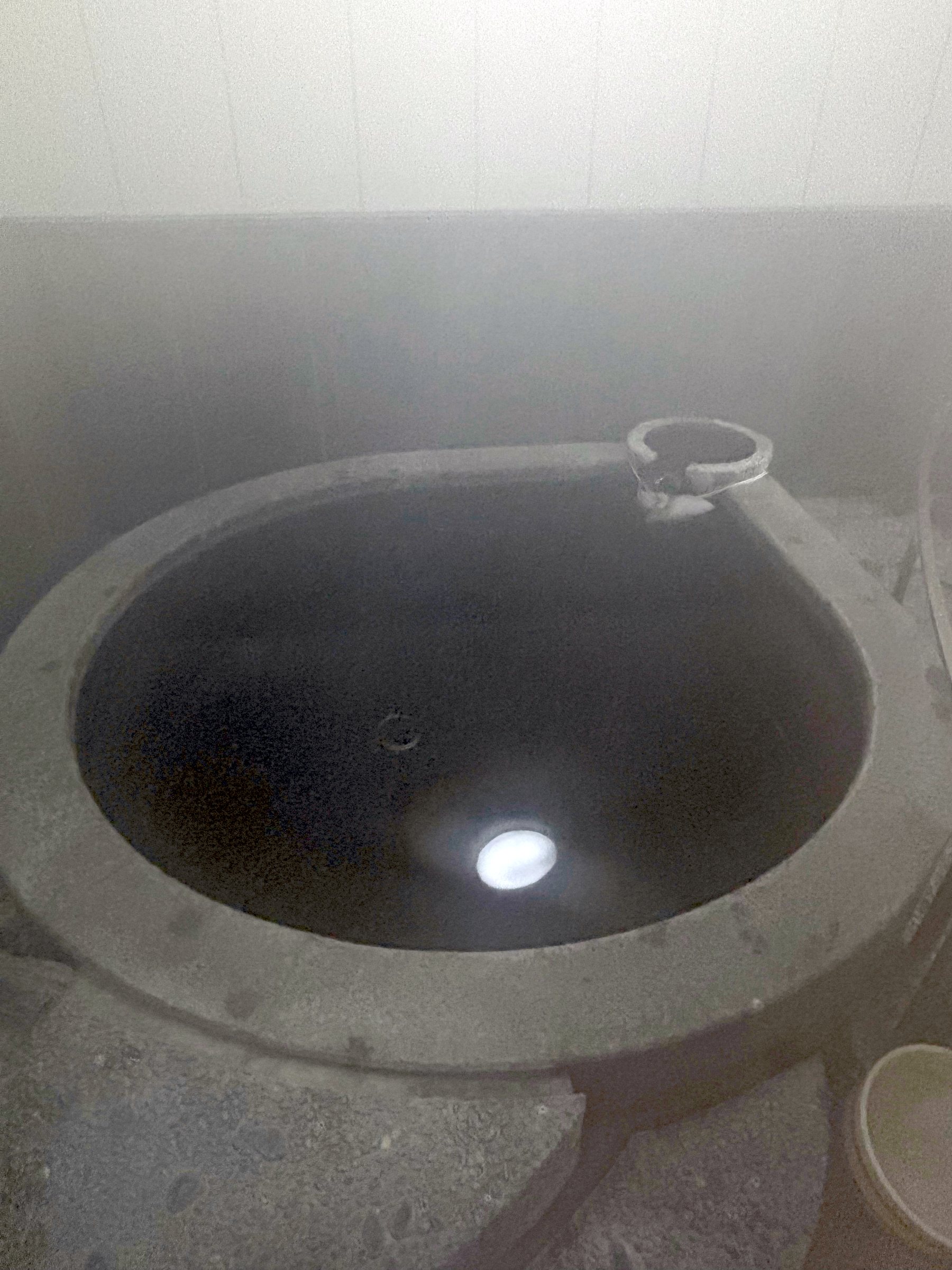
Then there was the bath for one, which brought an indescribable sense of happiness. The oddly shaped stone tub is a space entirely your own. Gazing at the soft light shining up from the bottom, with the flowing spring water all to ourselves, was the greatest luxury of the night.
The indoor rock bath is a dynamic affair, surrounded by rough natural stone. In a broad space hazy with steam, we immersed ourselves in the warmth of the plentiful “water of the gods” and felt the fatigue of the journey ease from the core. The ryokan offers a remarkable variety of unusual baths, and for anyone who travels for the pleasure of bathing, we can vouch for it wholeheartedly.
This review reflects a visit on New Year’s Day 2024. Shrine customs and ryokan facilities may change; please confirm current details directly with Izumo Taisha and Chorakuen before visiting.