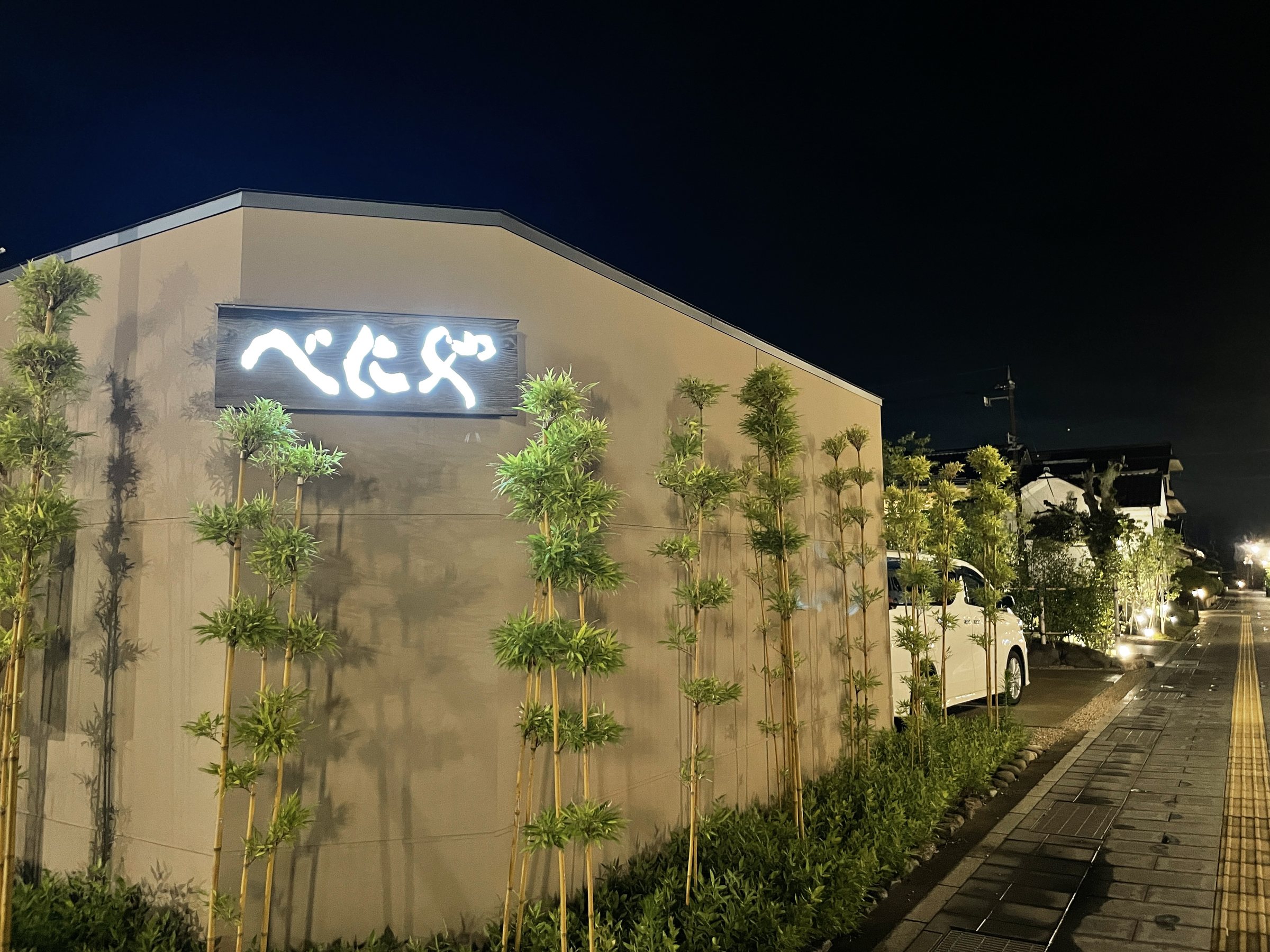
Arriving in Awara in Fukui Prefecture, we found hot spring ryokan lining broad, spacious roads. Among them, we visited one with a particularly deep history: Beniya, which opened in 1884 and has built up its traditions ever since. It escaped collapse in the Fukui earthquake of 1948, and two years later became the first ryokan in the Hokuriku region to be registered by the government as an international tourist ryokan. Then, in 1956, came the great Awara fire, which unexpectedly destroyed Beniya too; it was rebuilt the following year. Members of the Imperial family, writers and poets are all recorded as having stayed. This was a long-established ryokan that has kept that history and culture alive.
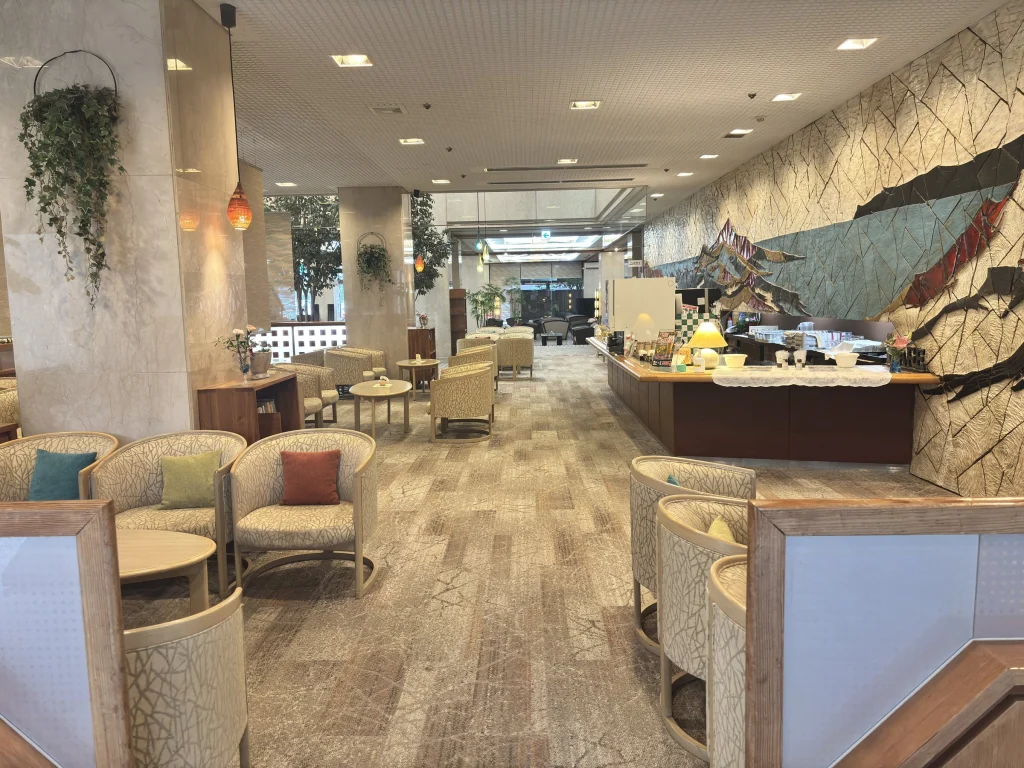
Stepping through the entrance, we were wrapped in a warm atmosphere, surrounded by timber that still carried its fragrance. Classical music played through the spacious hall, and our eyes fell on shelves of novels and a piano.
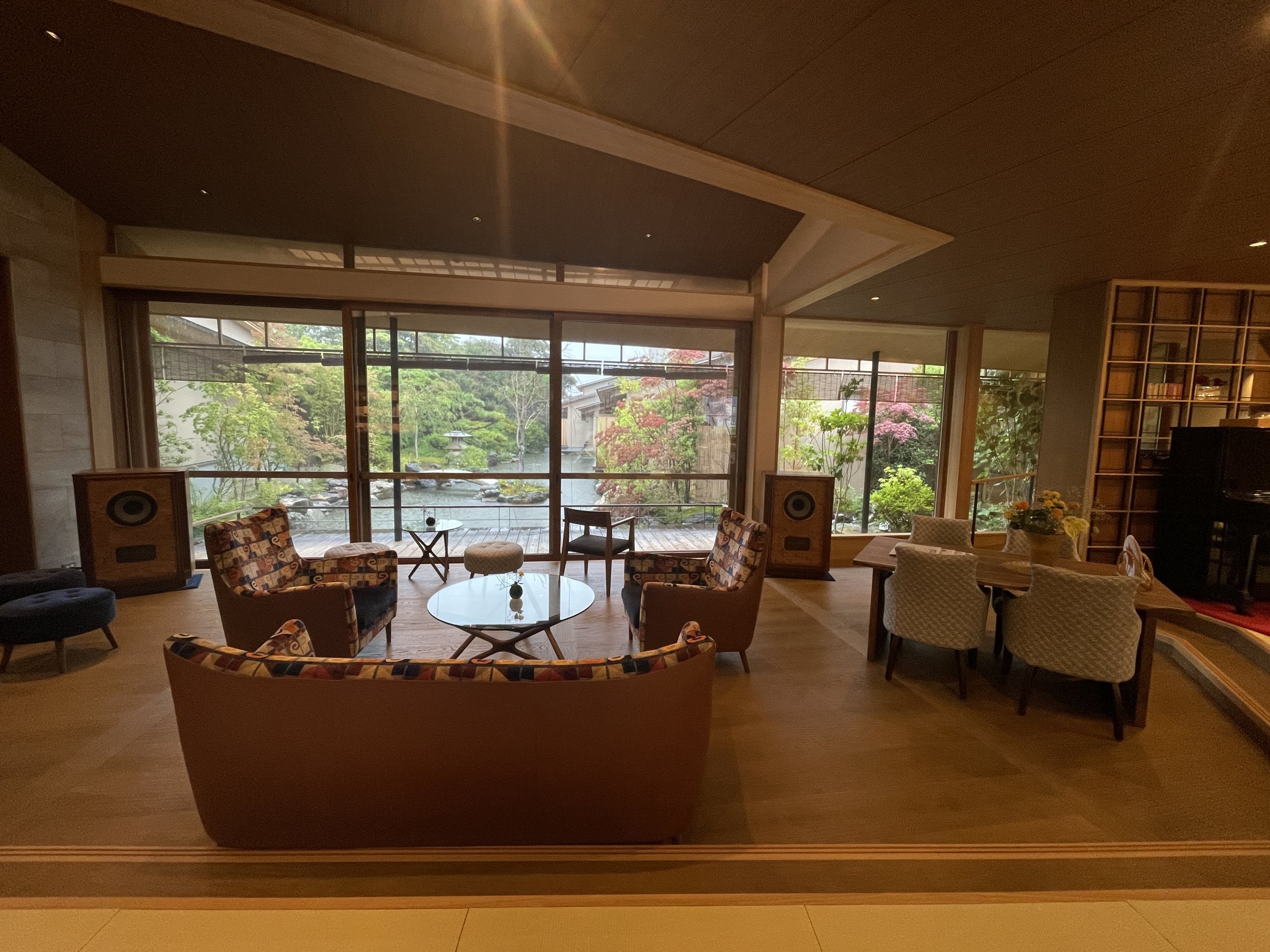
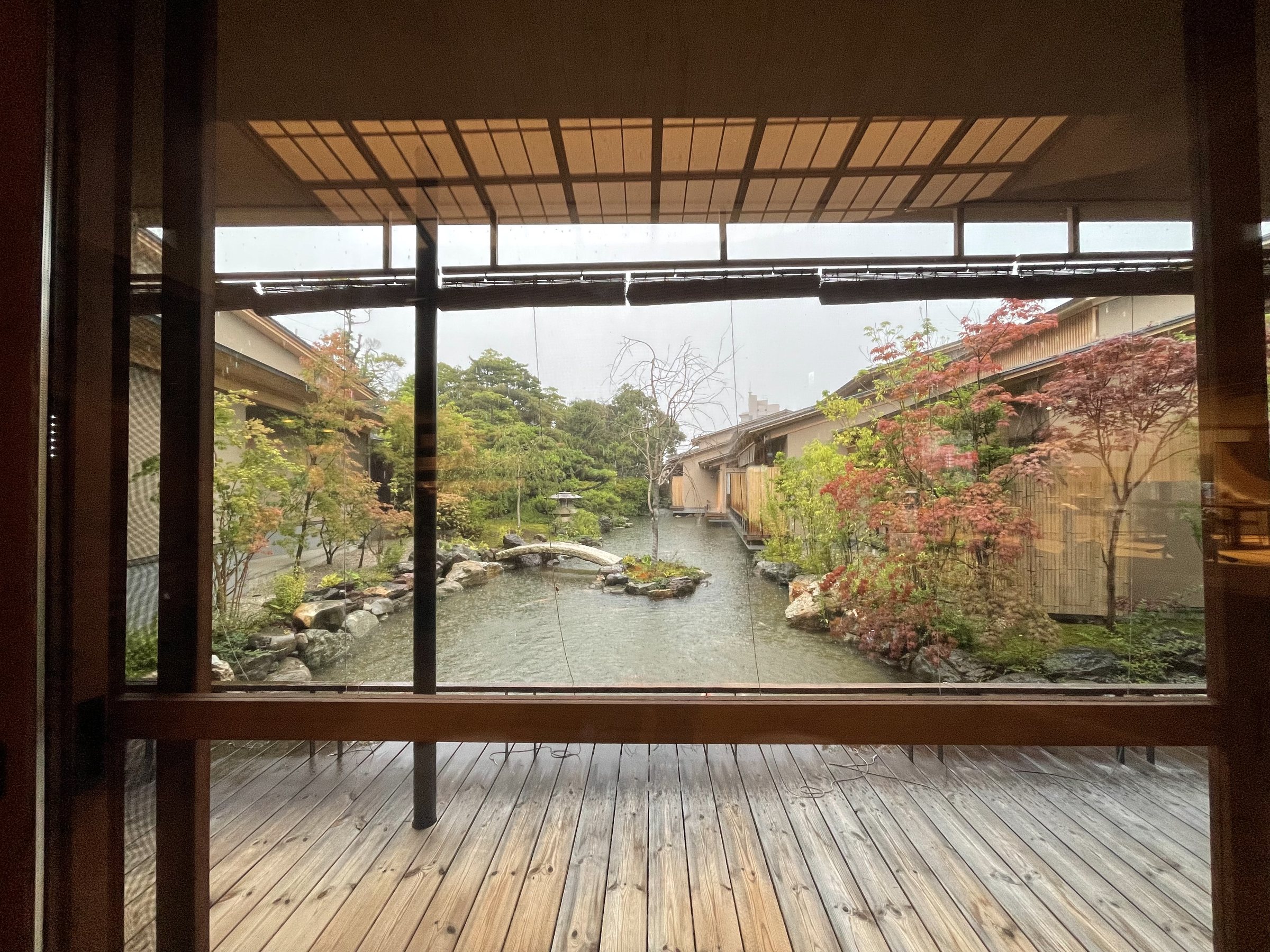
Over a welcome drink, we spoke for a little while with the okami, the proprietress who runs the ryokan. We asked a few questions about how Awara Onsen as a whole is organized and what it is working on, and she answered them readily, with a gentle expression and a soft voice. Then we were shown to our room.
Light through white shoji
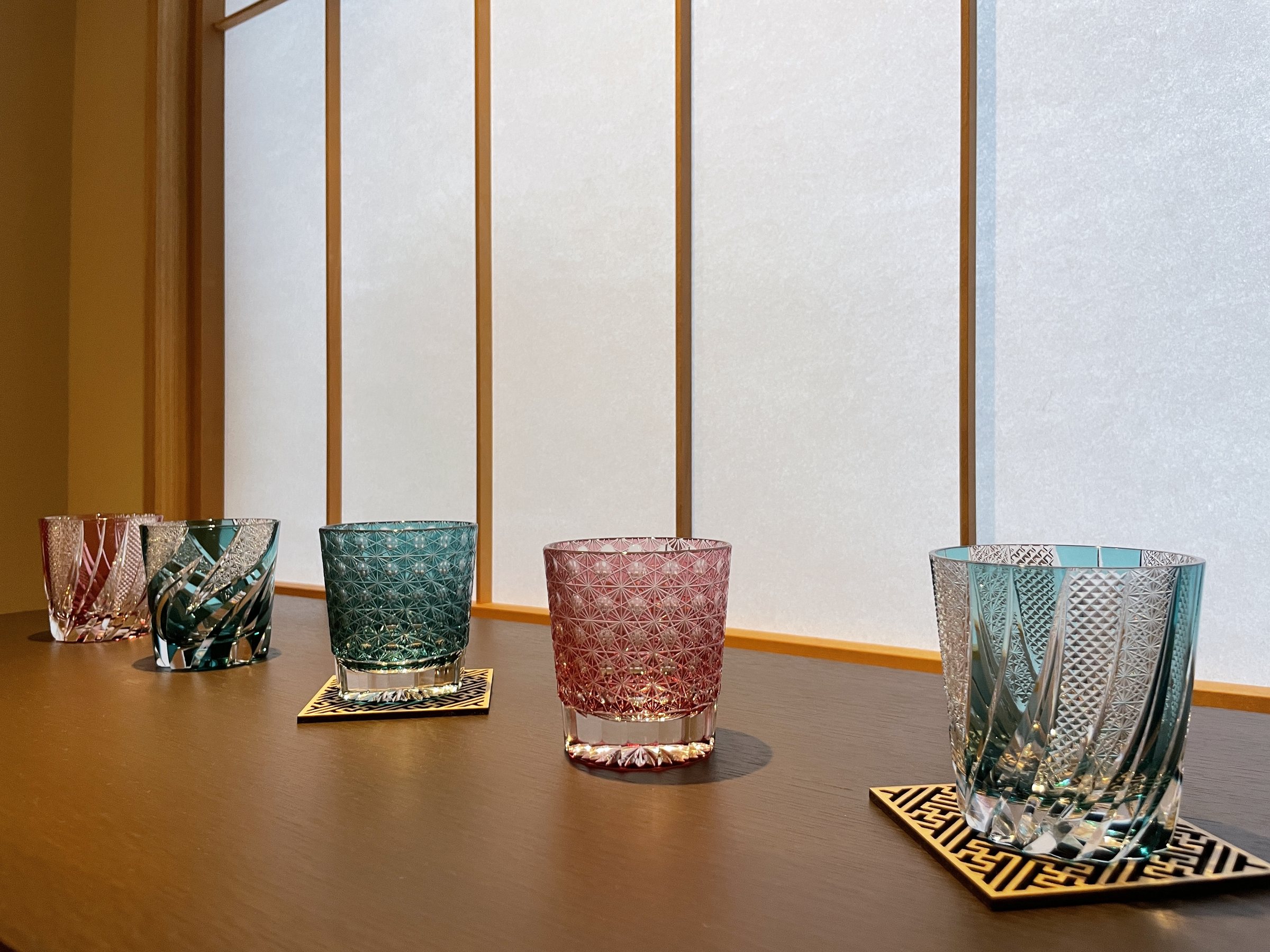
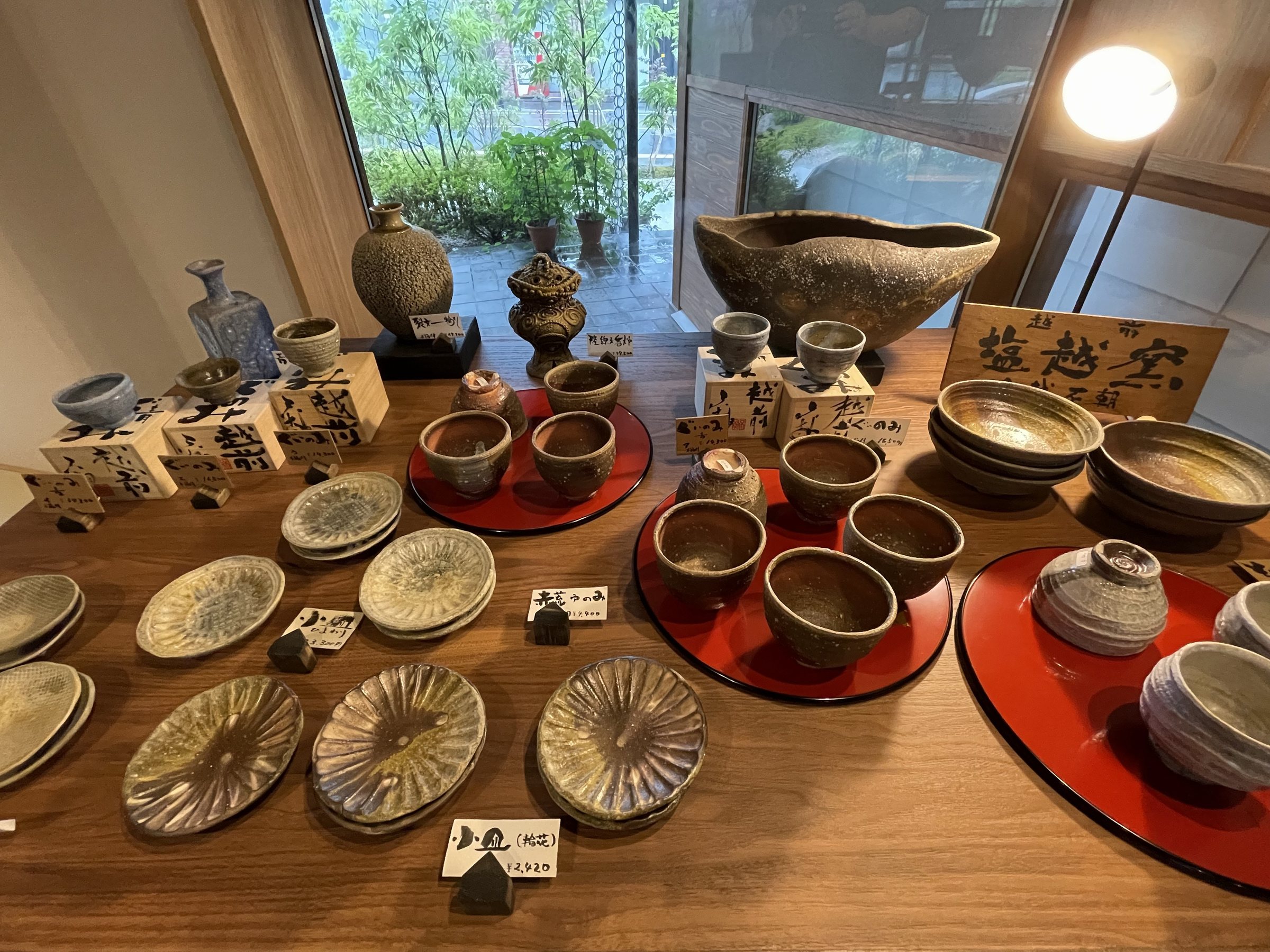
The whole building has an orderly feel. Cut glass, handmade tableware and a shop with a workshop corner caught our eye. Inside, pure white shoji, the paper screens of a Japanese house, stand out against the new timber, and the daylight that filters through them makes the corridors and staircases beautiful to walk through.
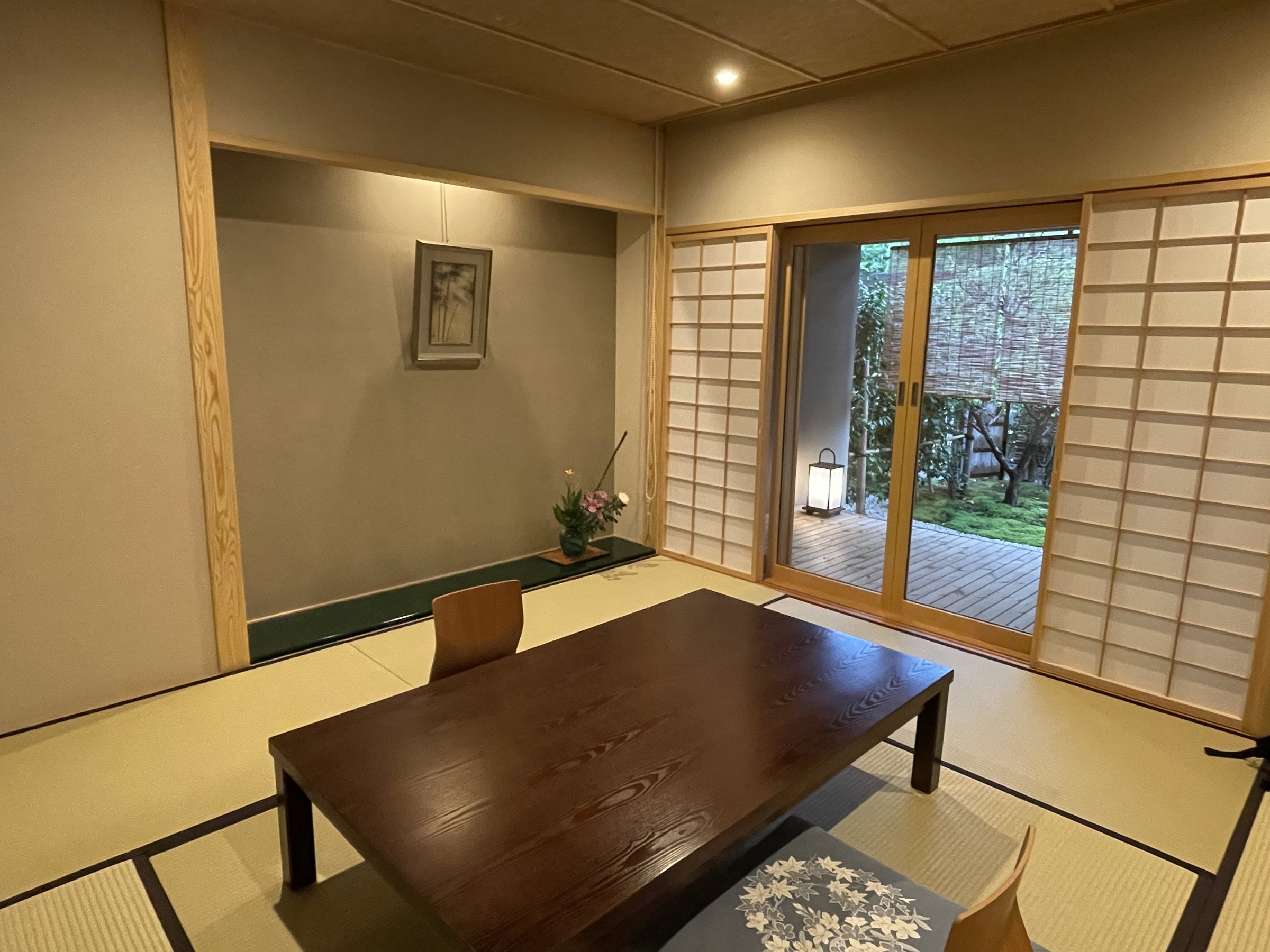
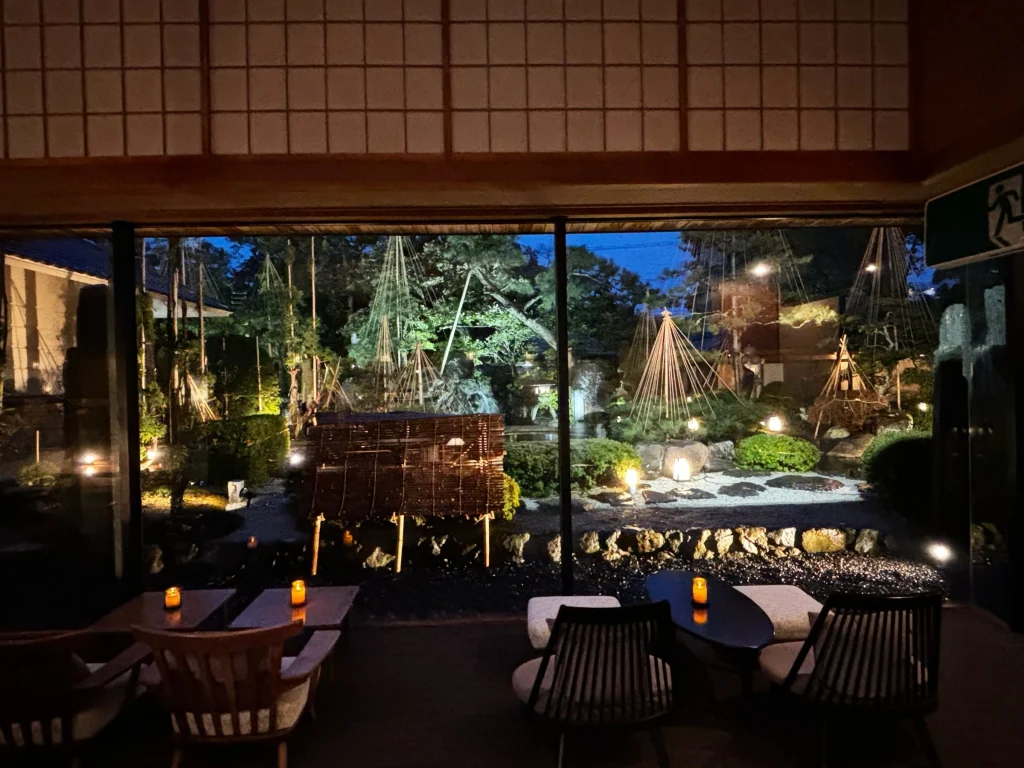
From the purely Japanese tatami room we could look out to the garden and the engawa, the wooden veranda, a design that lets you enjoy the Japanese house all over again. It was raining that day,
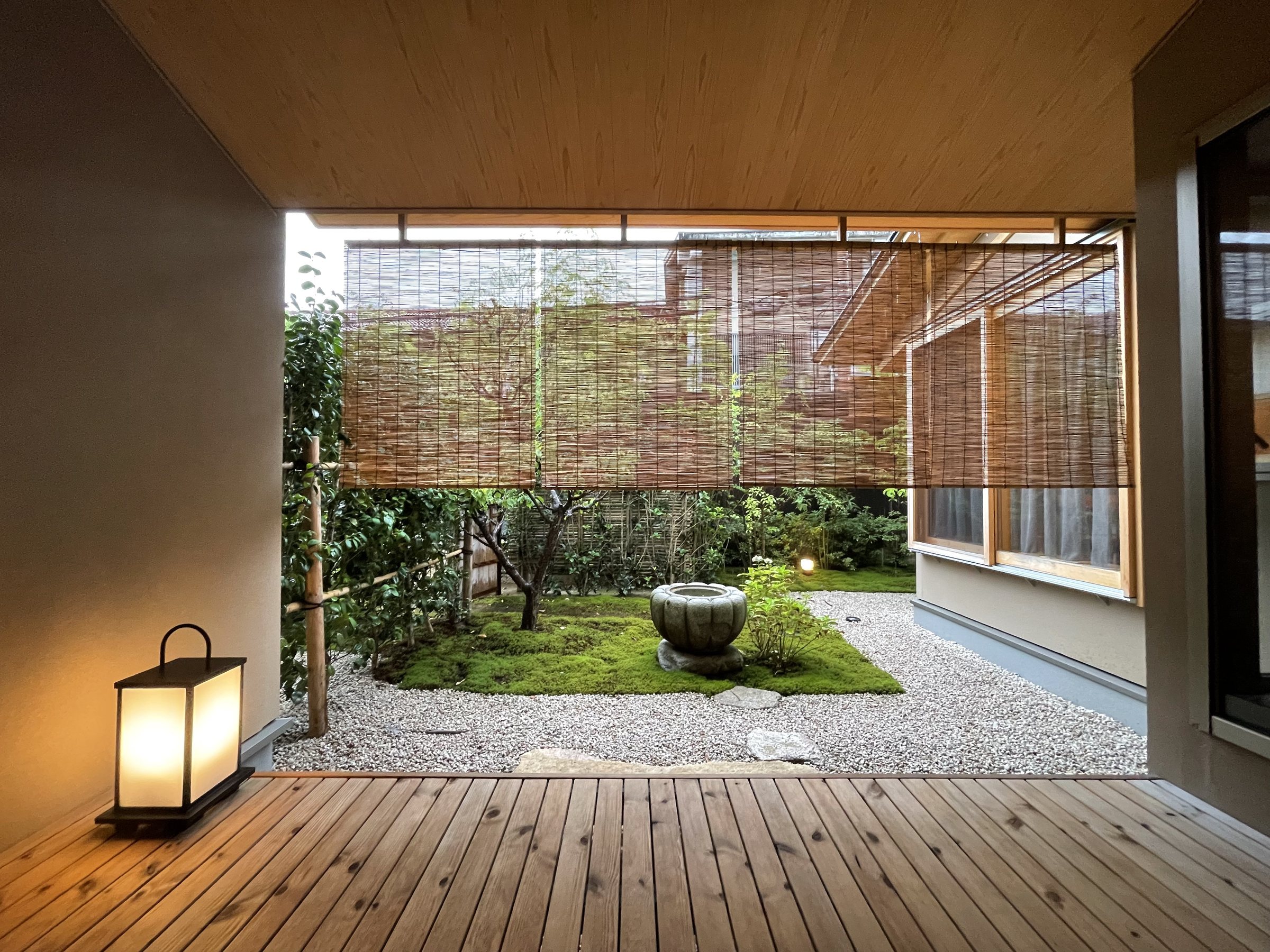
so we could enjoy the charm of drops falling steadily into the suikinkutsu, a buried earthenware jar that turns dripping water into a soft, bell-like sound.
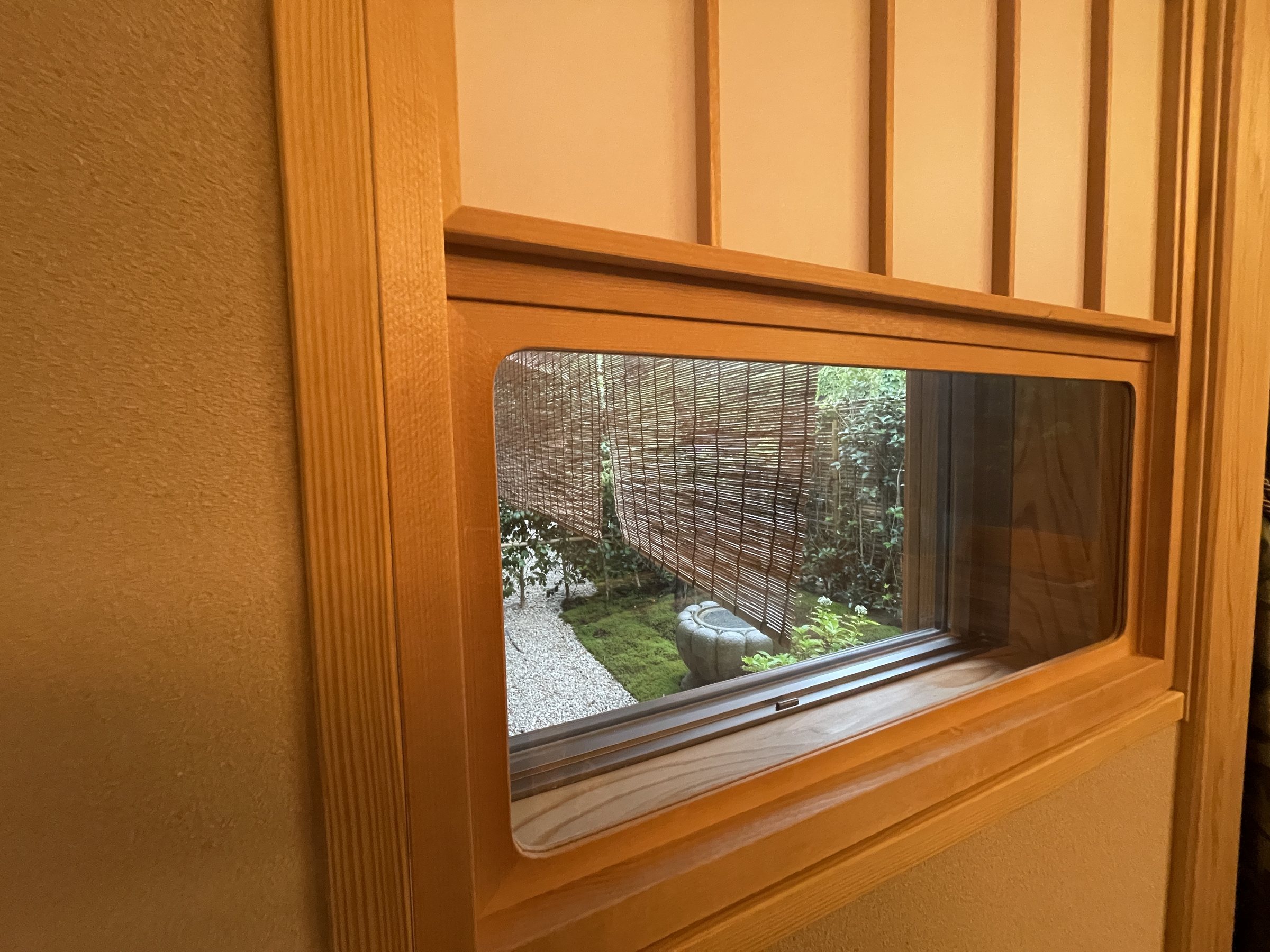
Handmade Japanese sweets had been laid out in the room, and we stopped to catch our breath. Many people, we suspect, love the sweets and tea a ryokan offers on arrival. The room’s private bath, in a separate space, has a yukimi window, a low “snow-viewing” window, which is a stylish piece of design. It must be even more enjoyable when snow is falling.
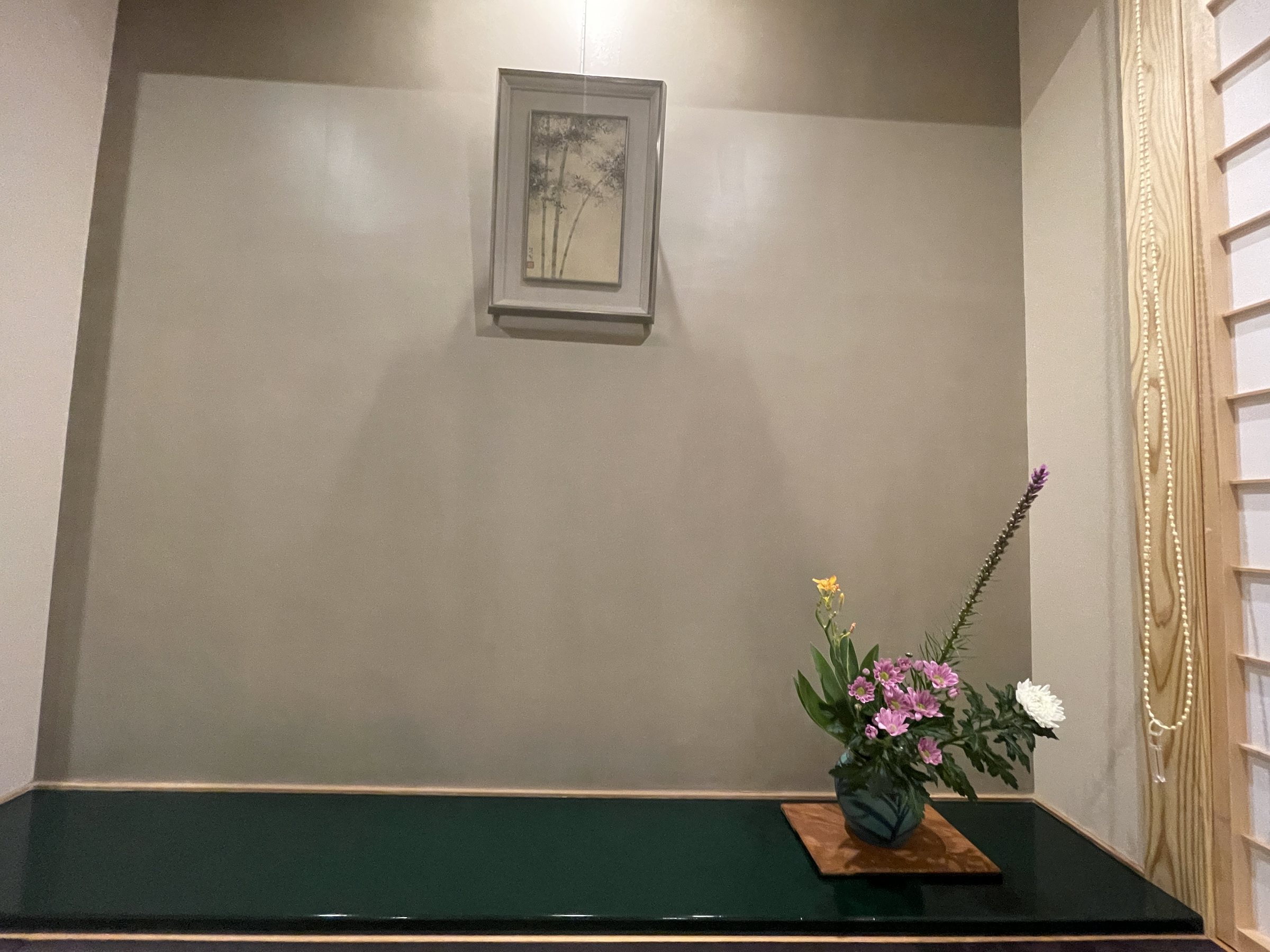
Fresh flowers were arranged in the tokonoma, the decorative alcove, beneath a hanging Japanese painting. For Japanese guests this is a familiar sight, but visitors from abroad, or young people living in the Reiwa era, may well experience in it the understated refinement that is uniquely Japanese.
Personally, we loved the color scheme of the alcove: a deep green base with the vase set upon it.
A bath in every room
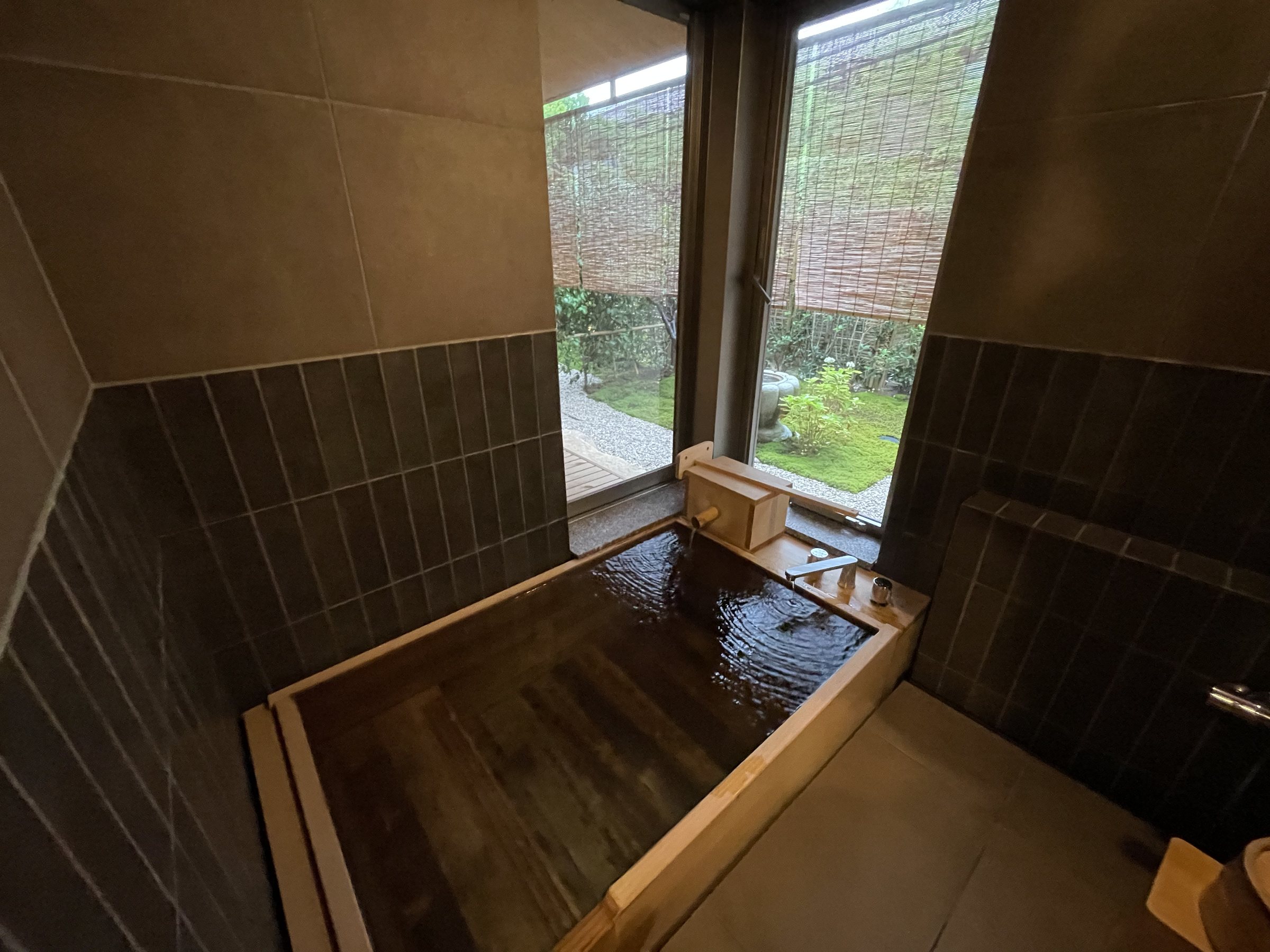
Having a semi-open-air bath fed straight from the spring in the room makes you feel truly indulged. At Beniya, every room has one of these semi-open-air baths, in addition to its own interior and bedroom design.
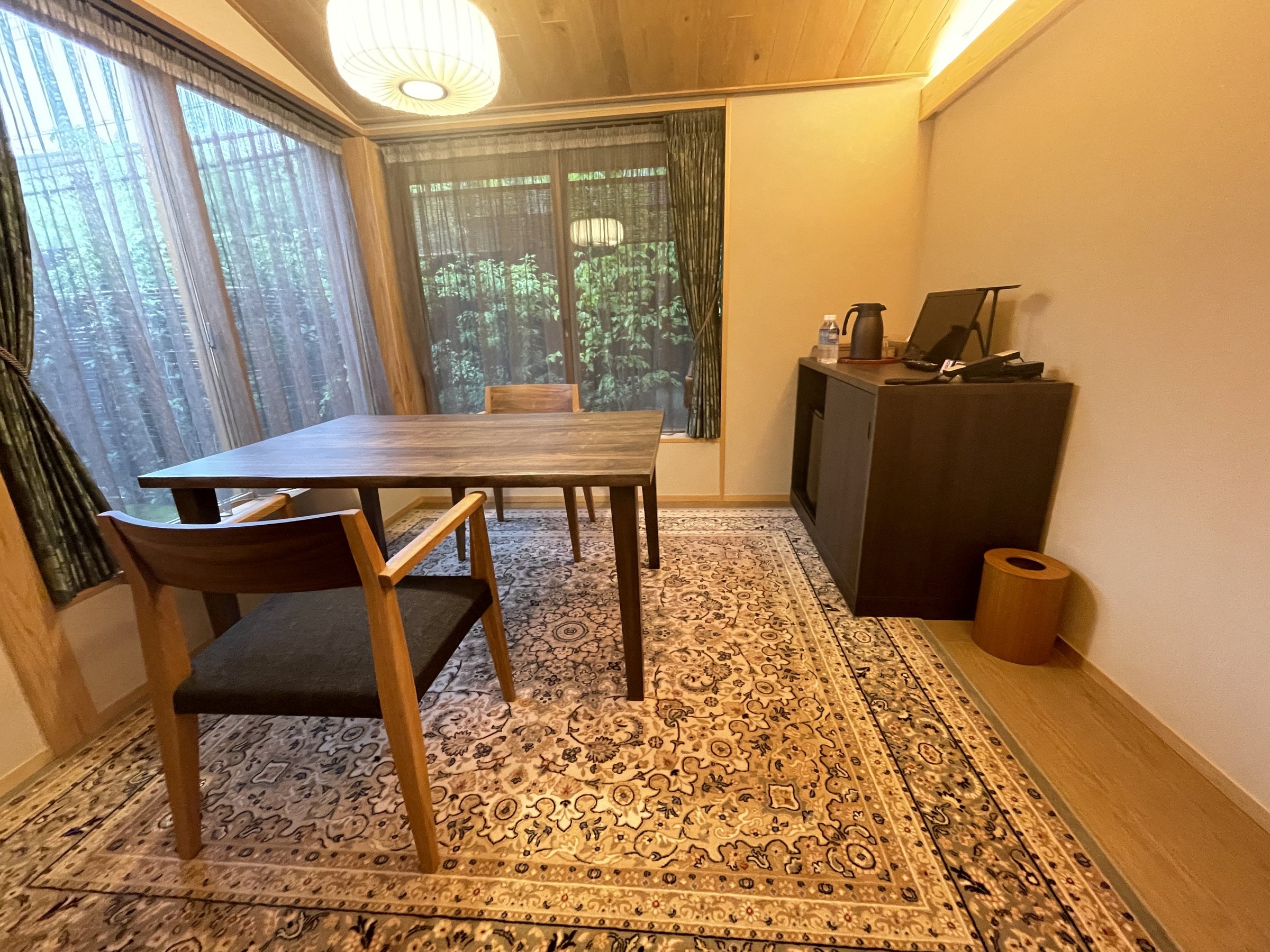
Opening the door that connects to the guest room, we found a separate dining room. The carpet and curtains show their age a little, though at times they also seem to help set the mood of the stay. This room can be entered directly from the entrance without passing through the bedroom, and it changes from the tatami style to chairs and a table. A small television, a kettle and water were provided.
A window onto the kitchen
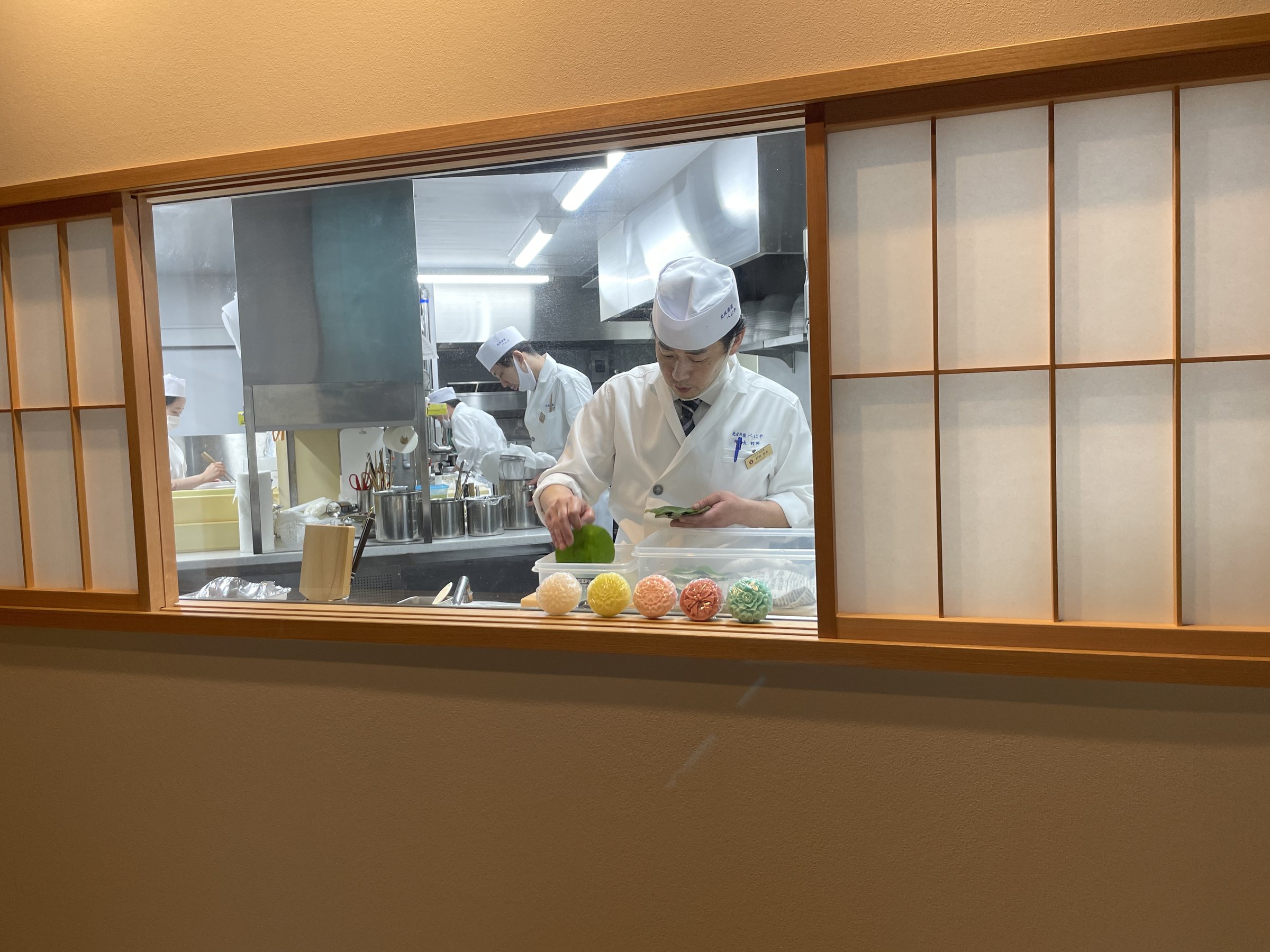
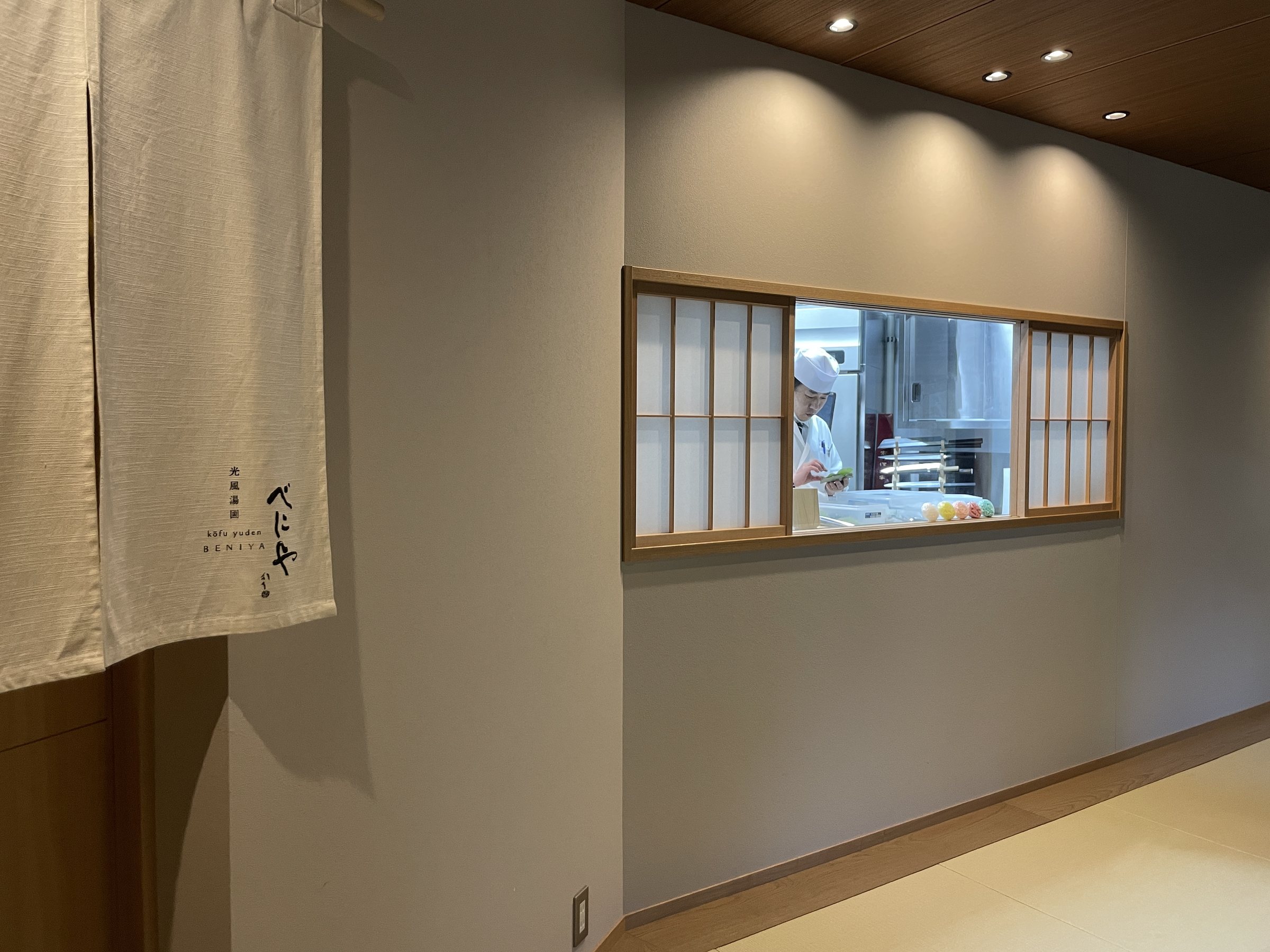
There is a window through which you can watch the kitchen and the cooks at work, live. When we stood and watched for a while, they gave us a slightly shy smile through the glass. Being able to watch their hands and their preparations was fascinating.
The large baths
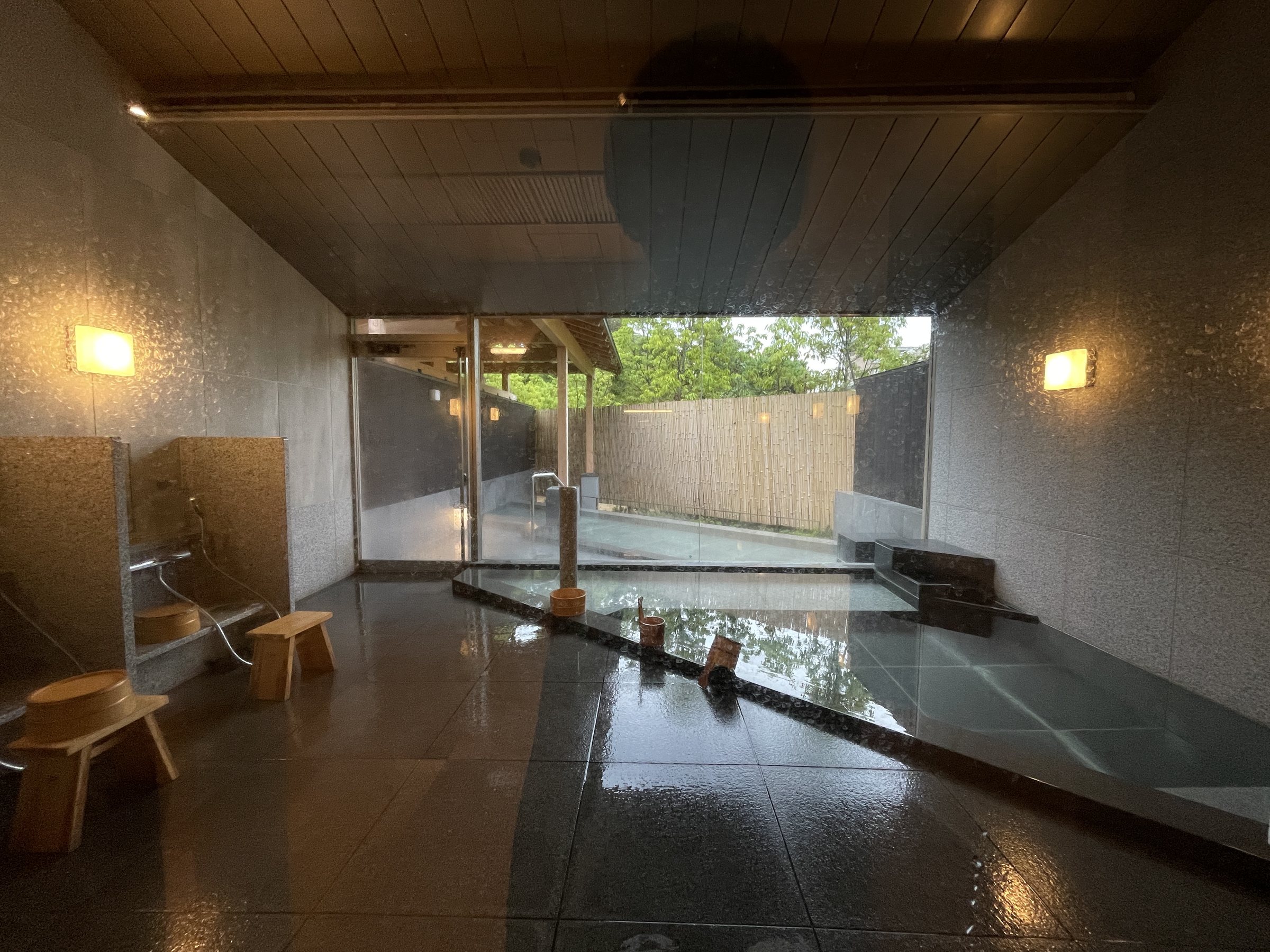
The large baths let you soak to your heart’s content in the ryokan’s own spring, which flows straight into them without recirculation. The bathrooms were clean, with the distinctive scent of hot spring water in the air, and at that hour we had them entirely to ourselves. We finished in the open-air bath, in the fresh greenery and a cool breeze, thoroughly satisfied.
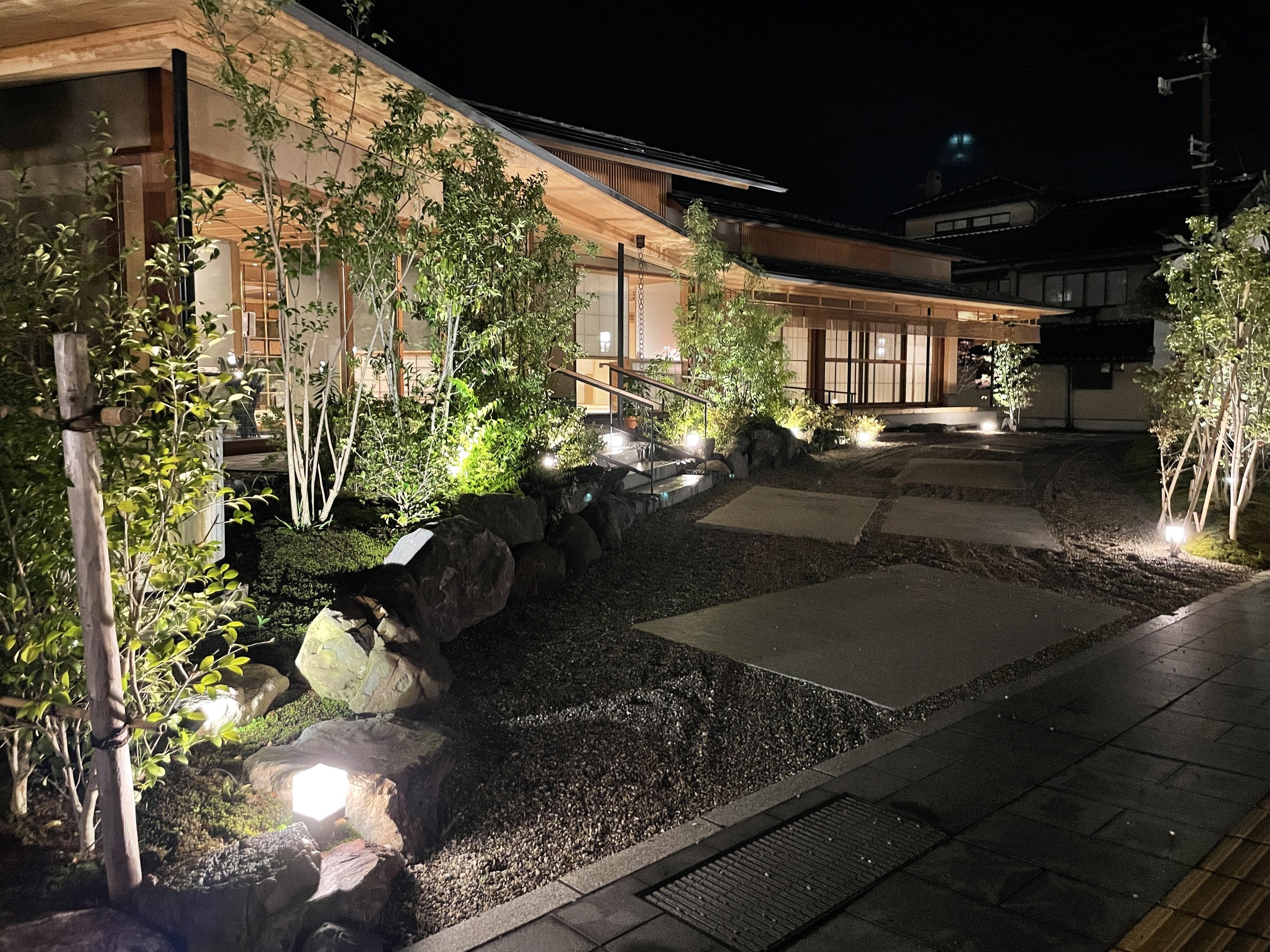
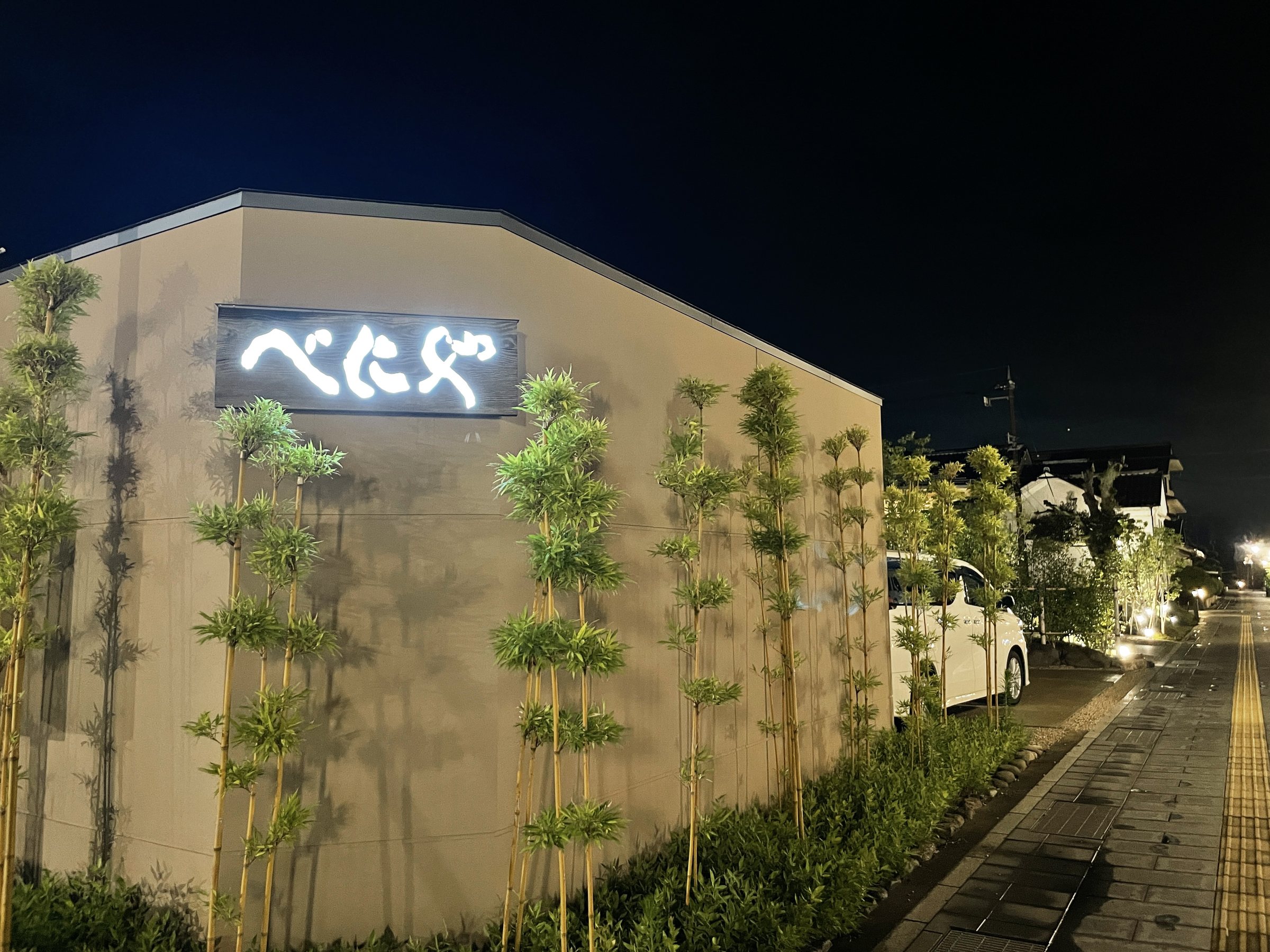
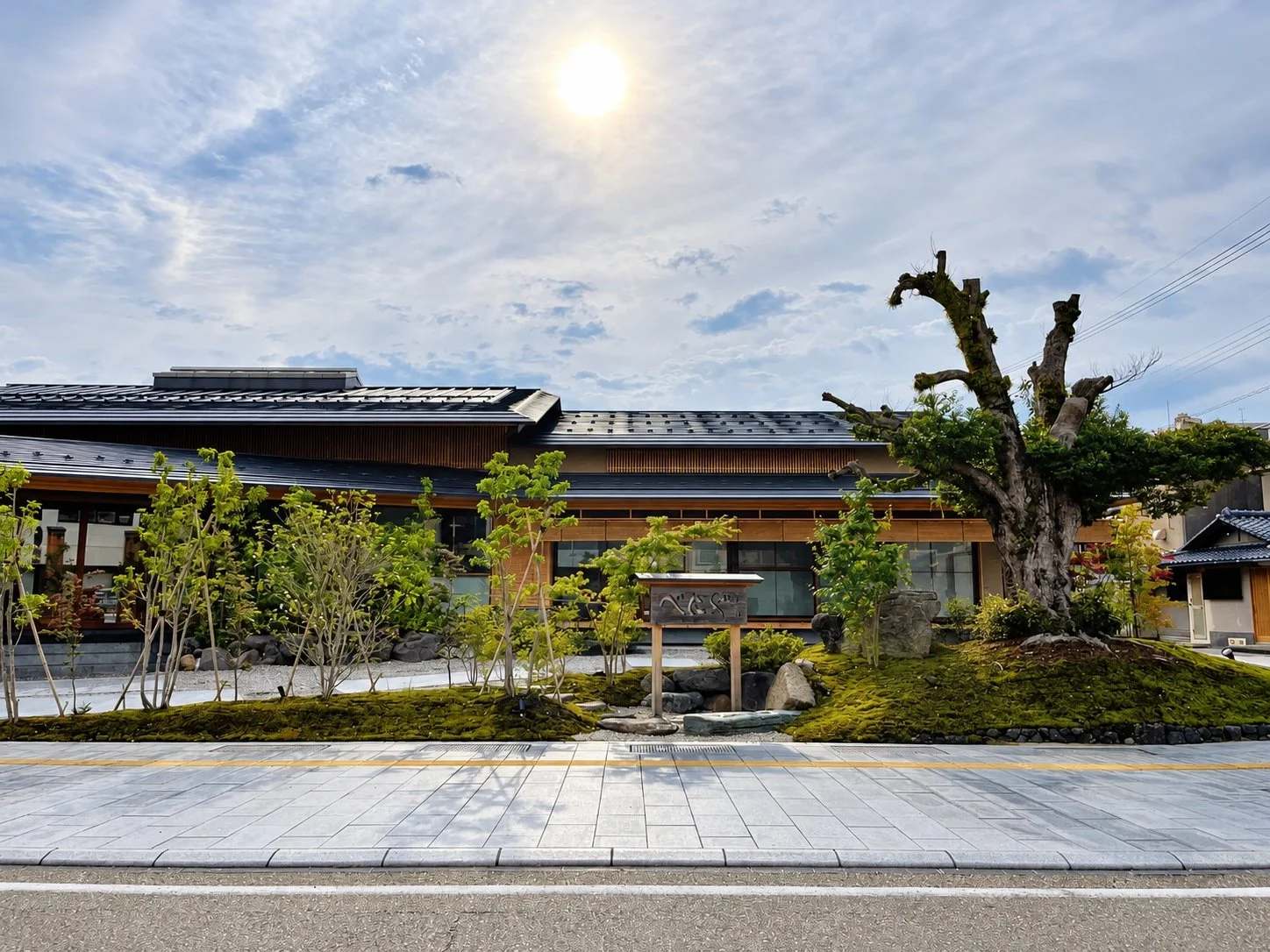
Stepping outside to cool off after the bath, we found that the single-story building in new timber suited the beautiful stone-paved garden and the entrance perfectly. Those who knew the old building may feel a little wistful, but we came away with high hopes for the new Beniya’s next chapter.
Dinner
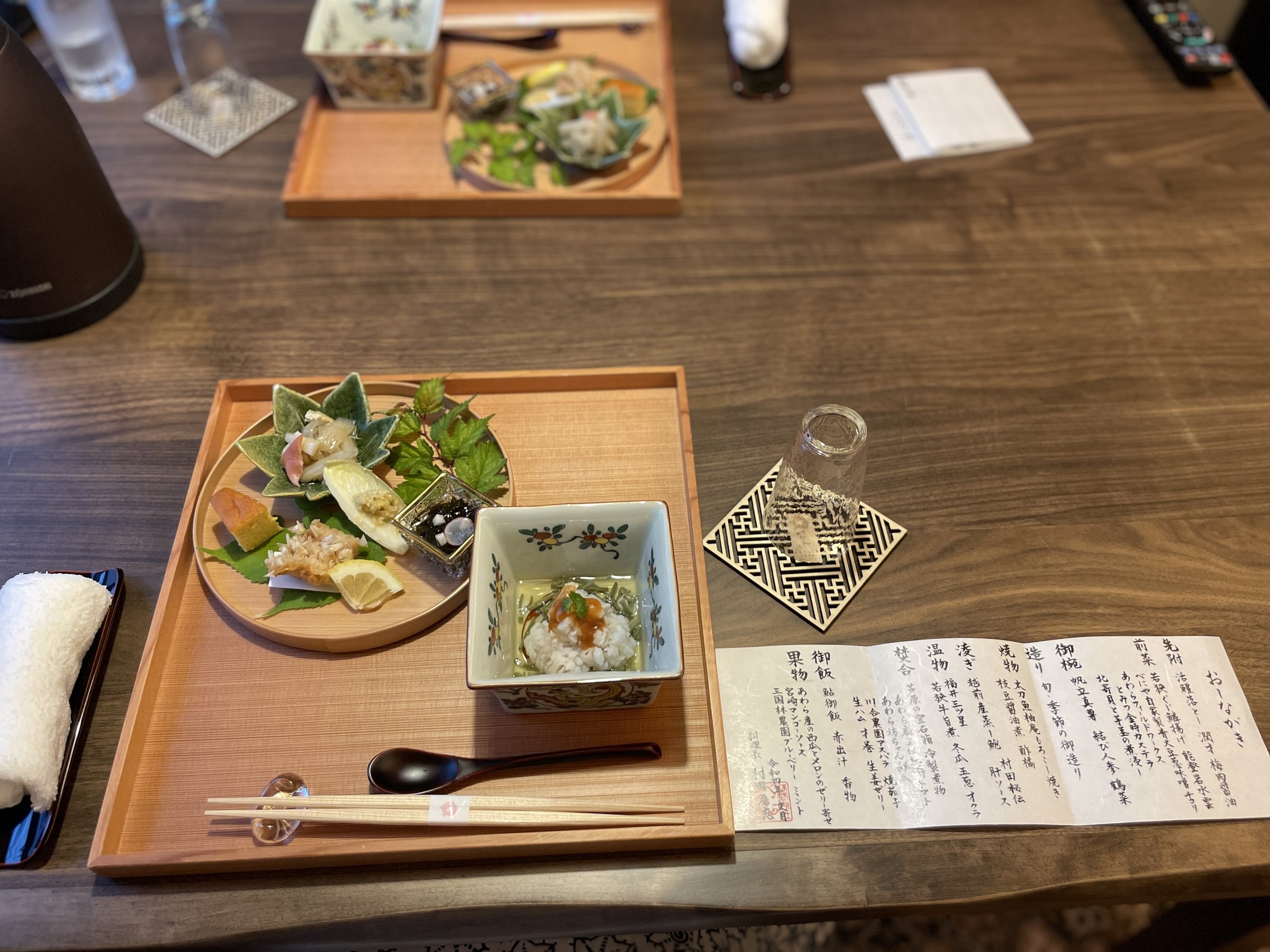
The long-awaited dinner began with a beautiful tray of sakizuke, the opening appetisers. We felt a little affection for the coasters, which resemble the yosegi marquetry of Hakone. Blanched hamo, pike conger, came with pickled plum paste and was scattered with junsai, water shield. On the round plate, amadai tilefish grilled with its scales on and chicory with house-made miso refreshed the palate, followed by a bite of a savory, castella-like cake. The local mozuku seaweed, one of the area’s specialities, had a superb texture.
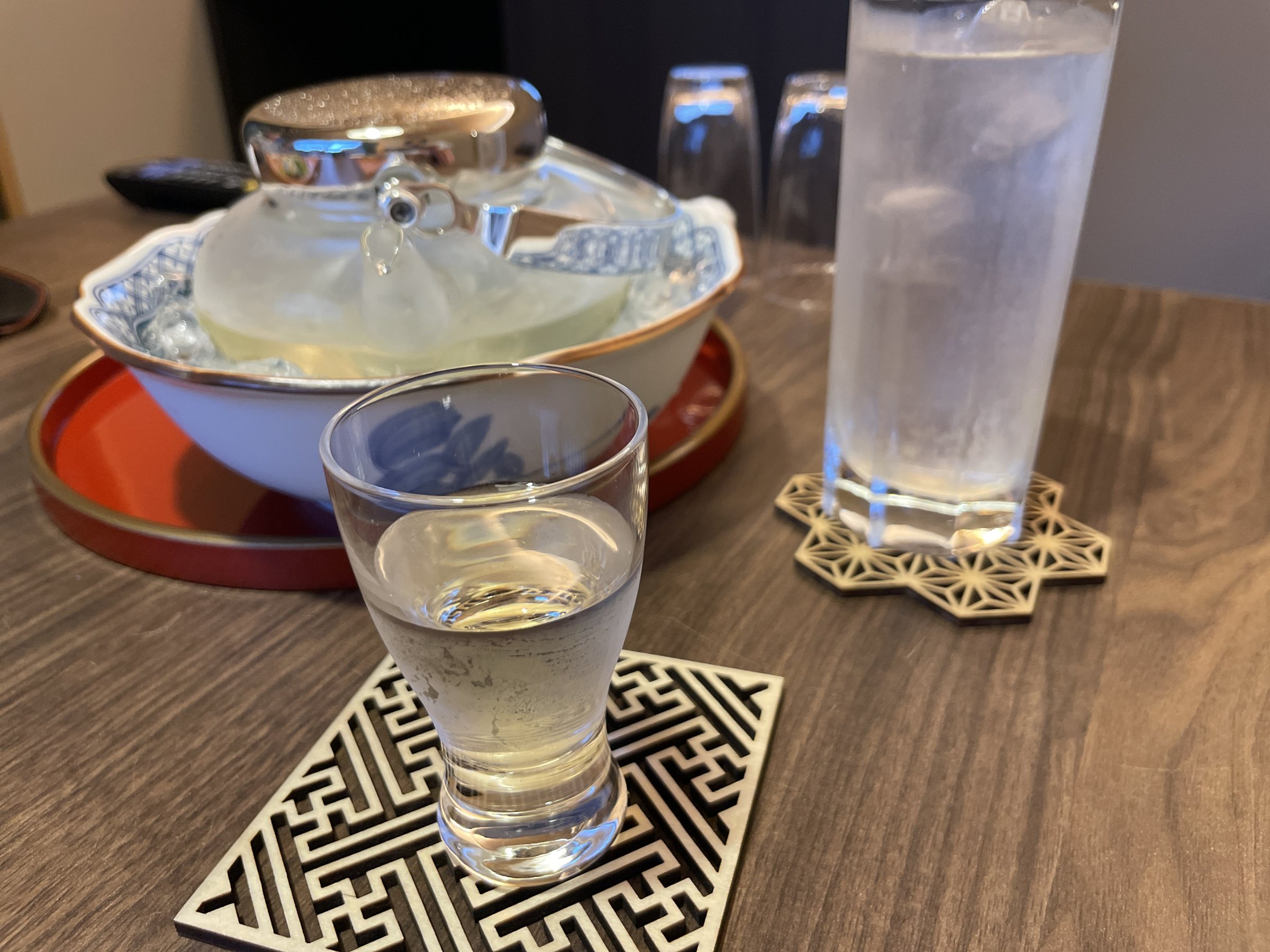
With the meal, of course, came Fukui’s celebrated sake, Kokuryu. Of the many Kokuryu labels, this time we chose a dry junmai, served chilled. Within its rounded, almost syrupy depth, there was a burst of freshness the moment it went down.
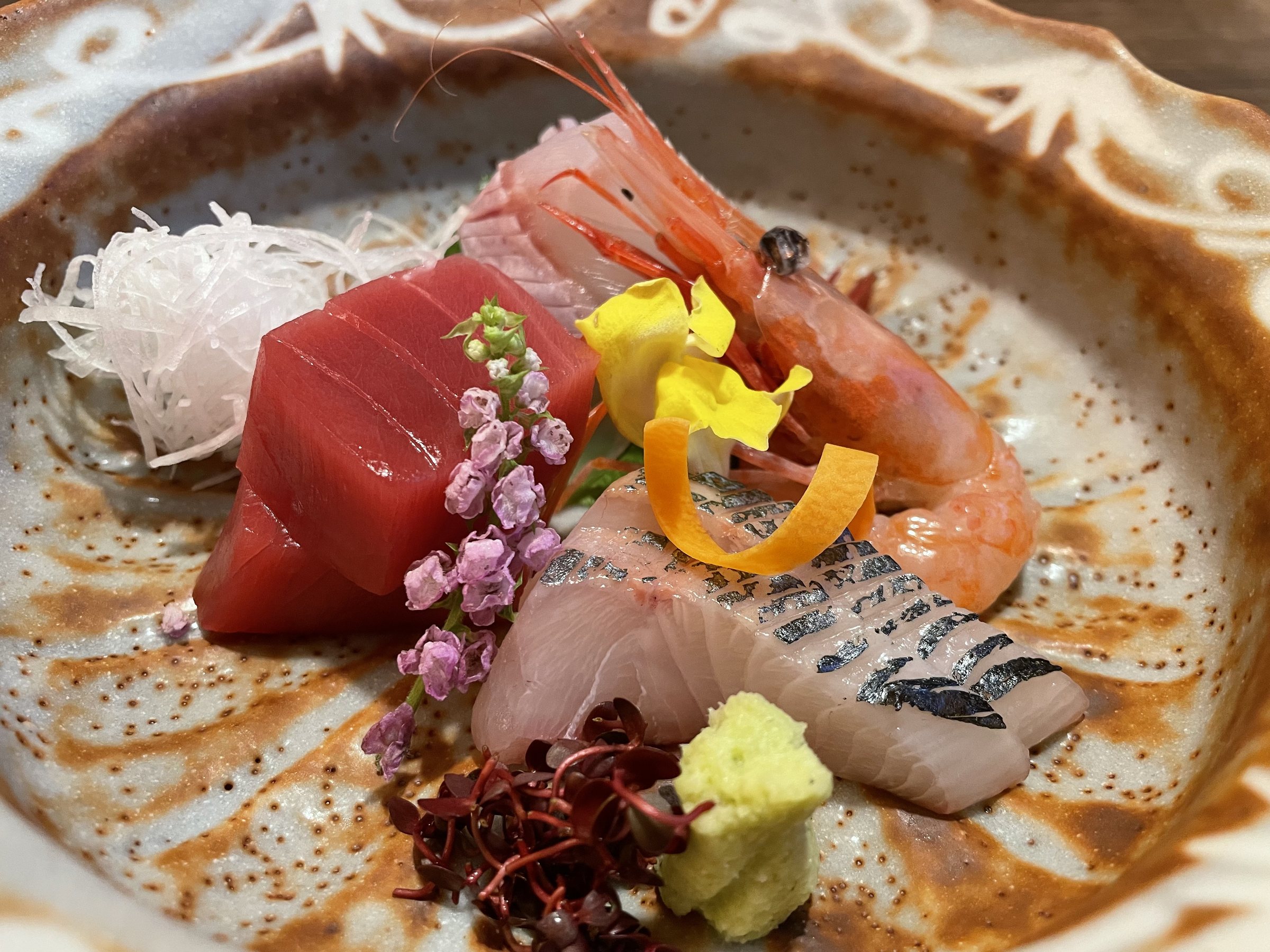
The fresh fish from Wakasa that arrived just then had been carefully prepared: there was no fishy smell, and it had a firm bite and a natural sweetness. The amaebi, sweet shrimp, another Fukui speciality, was rich enough to hold its own against the fatty tuna. The moisture had been handled well too; this was sashimi in which the cook’s handiwork shone.
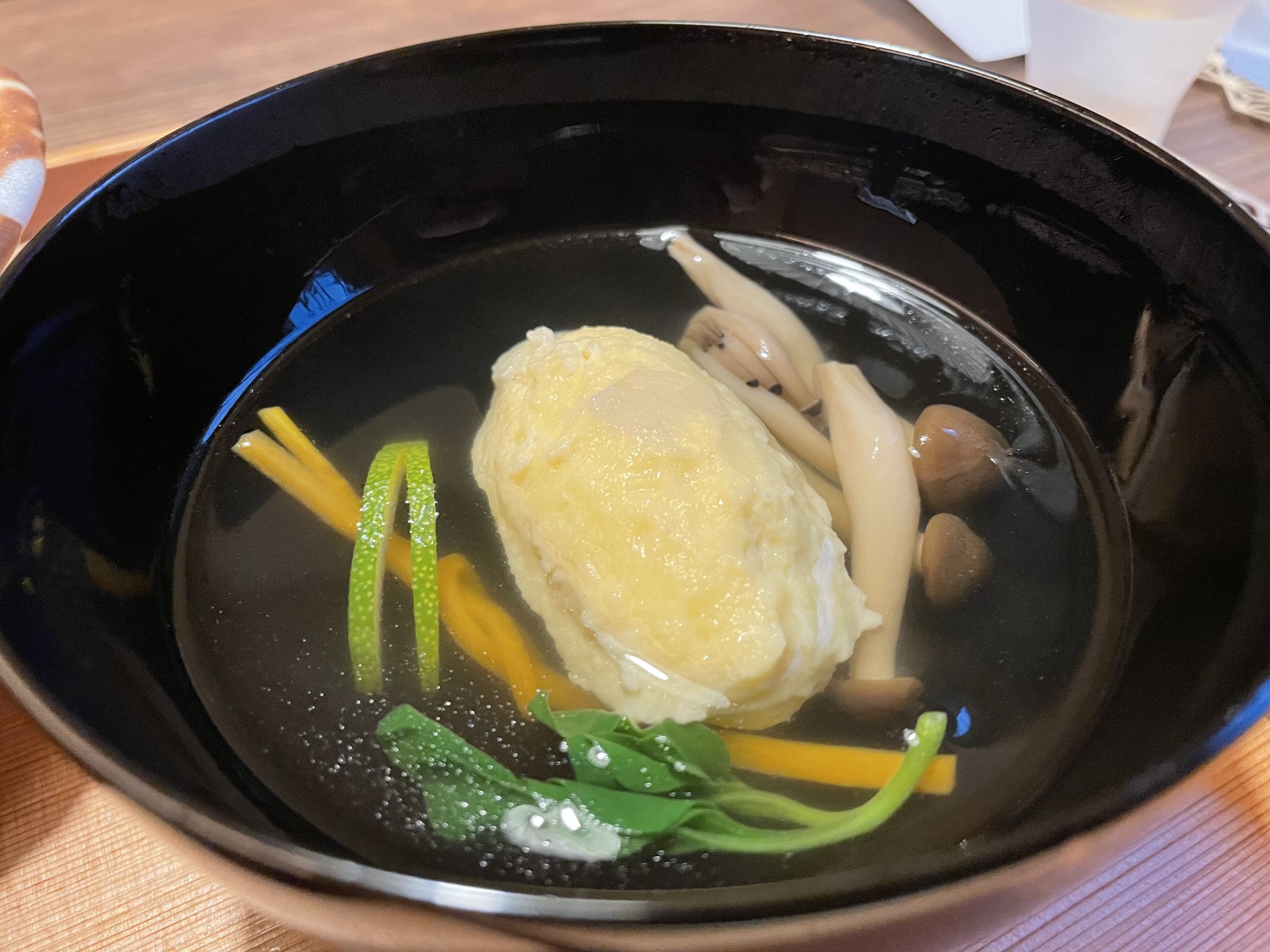
In the lidded bowl, a sweet shinjo dumpling floated in a clear-soup-style broth with a strong flavor of shimeji mushrooms.
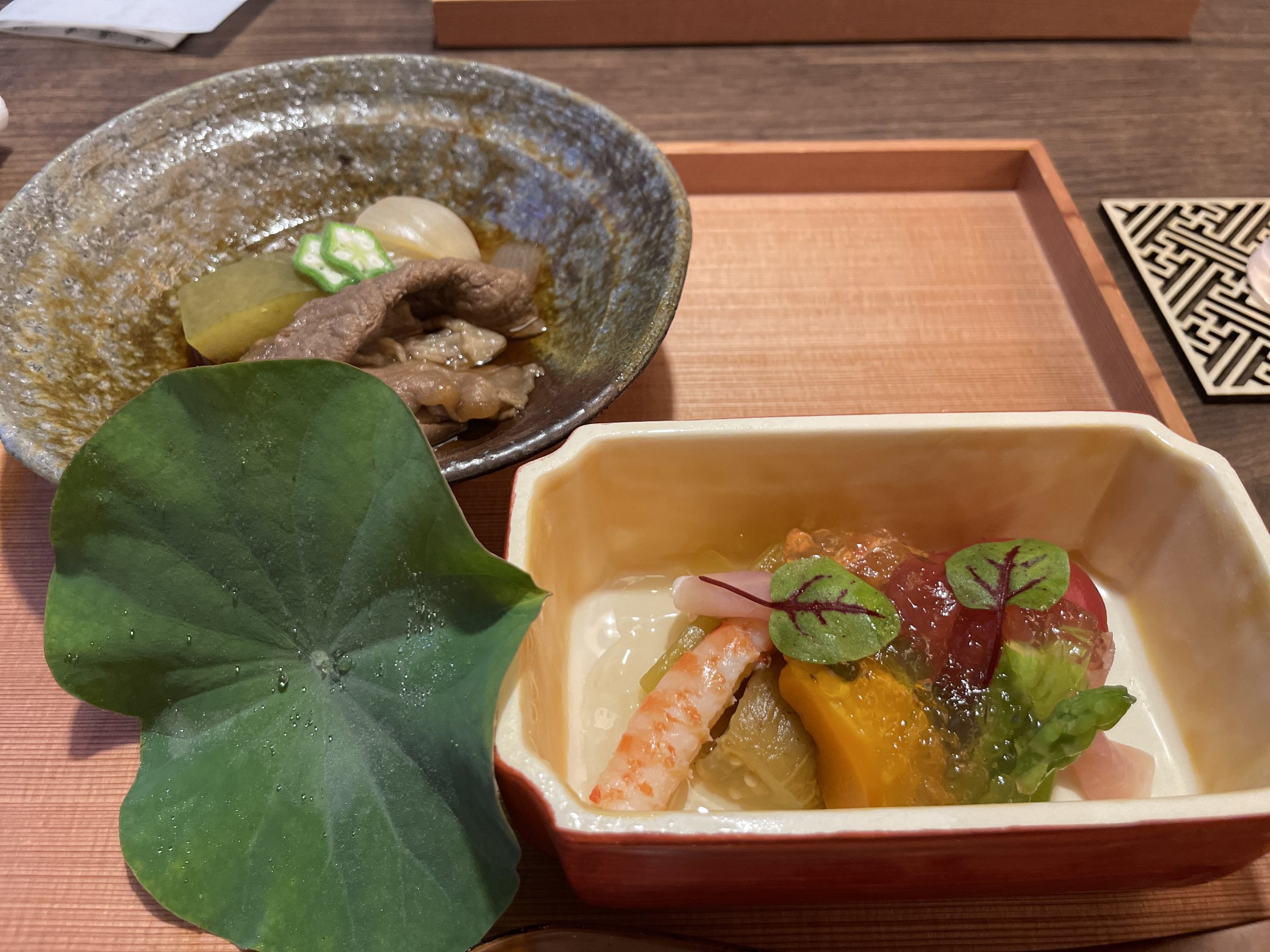
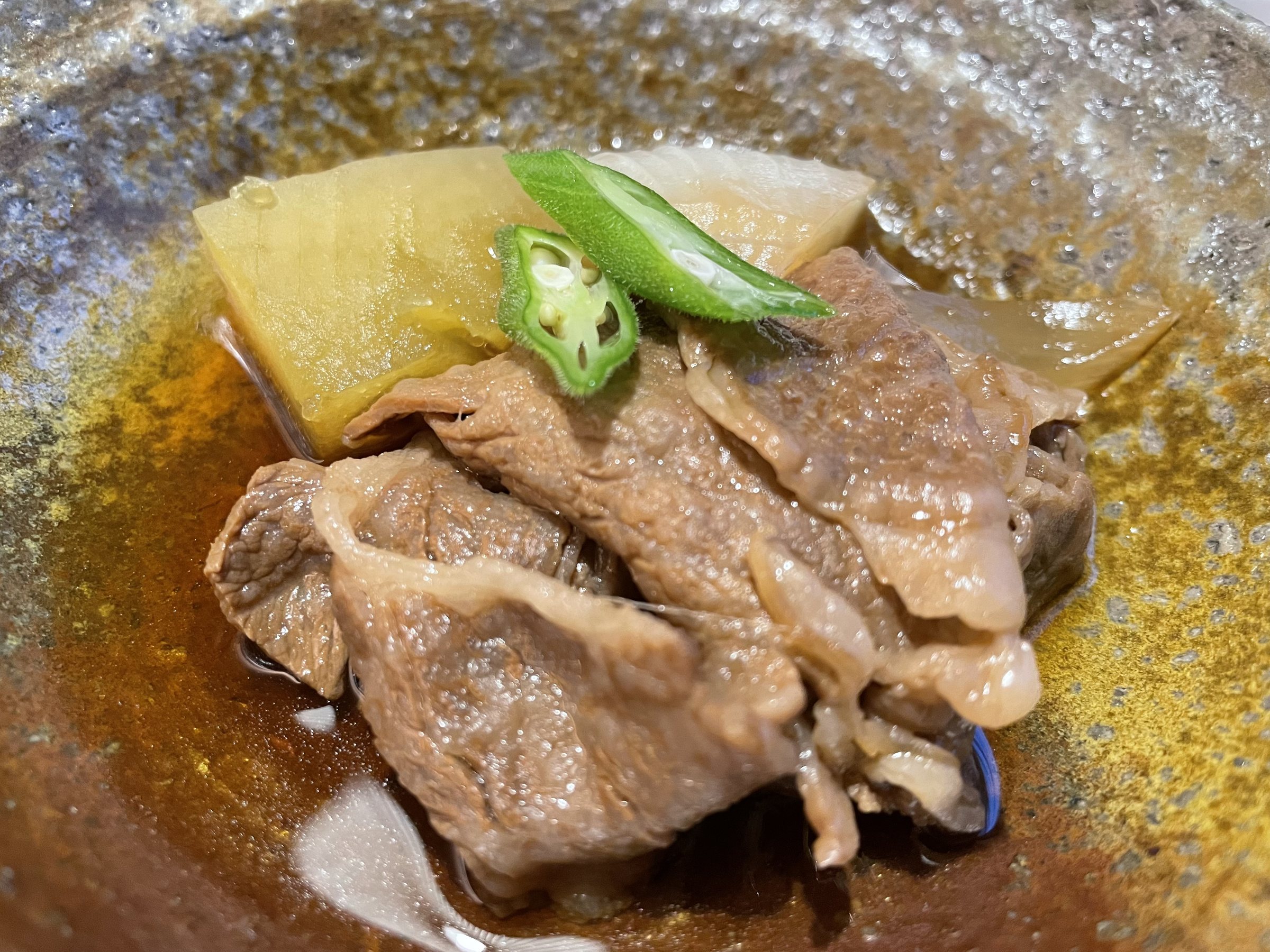
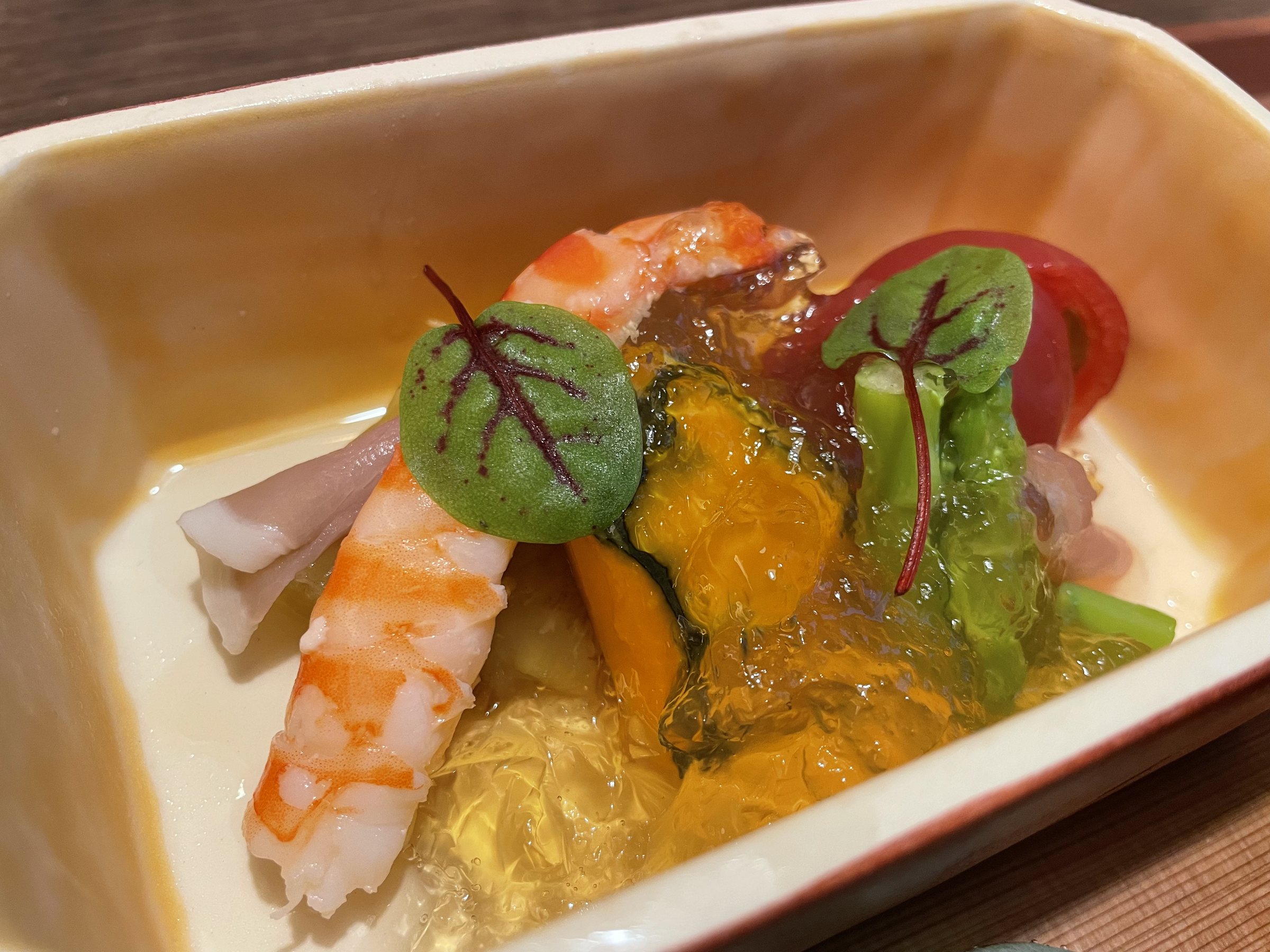
Top left is Wakasa beef, the local brand of wagyu, cooked in the style of sukiyaki. We envy regions that champion local produce and have specialities of their own. The vegetables set in jelly are also local, supplied, we were told, by contract farmers. Carefully peeled after blanching, they burst with juice and flavor the moment they went into the mouth, and they were of excellent quality.
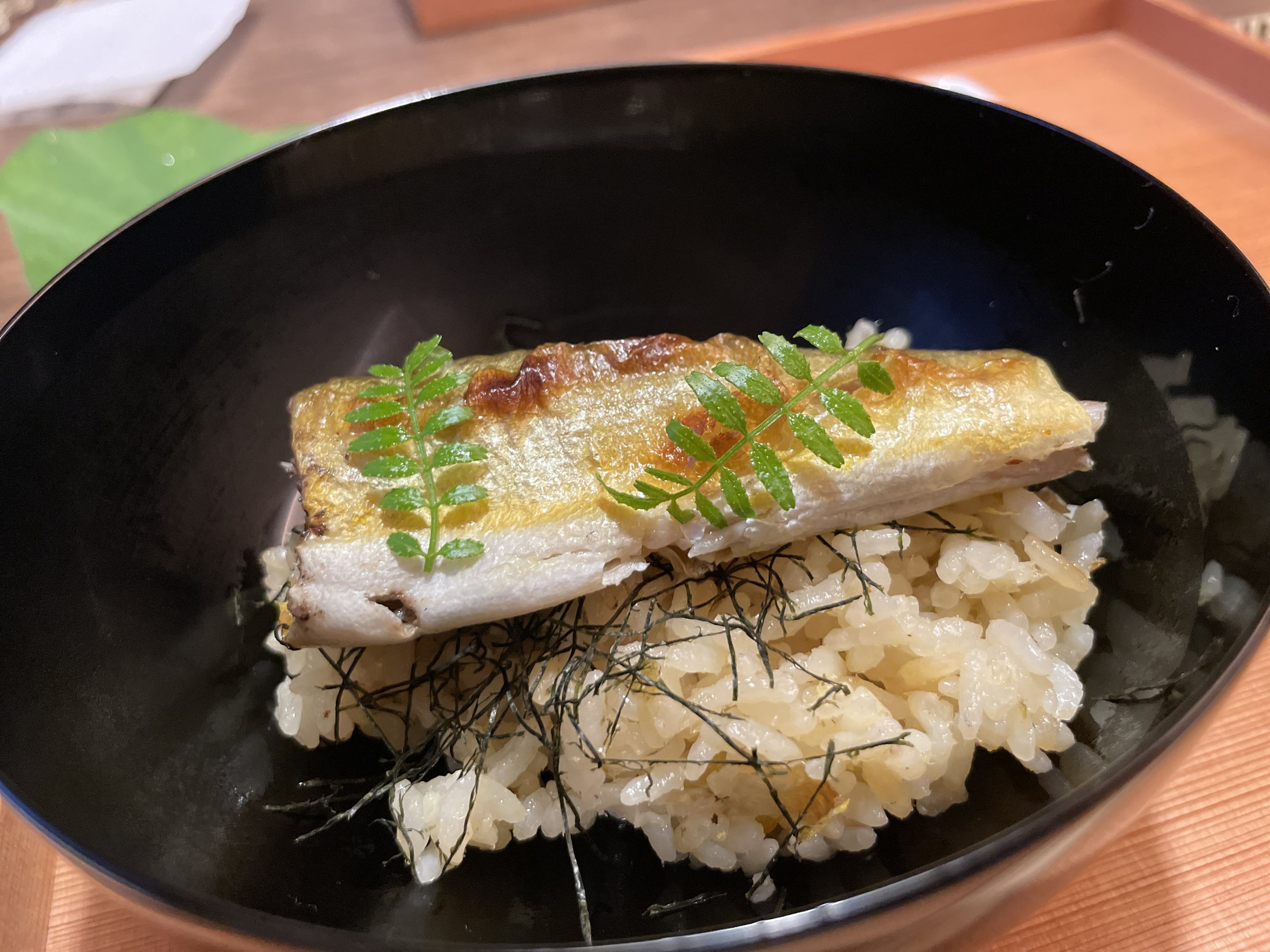
Next came rice steamed with ayu, sweetfish. It was a dish we had never had before: gently seasoned rice, Fukui’s own Ichihomare variety, carrying a soft fragrance of ayu. The fresh flavor of the green garnish refreshed the palate, and it paired perfectly with the ayu, which could be eaten bones and all. A refreshing dish to close the meal.
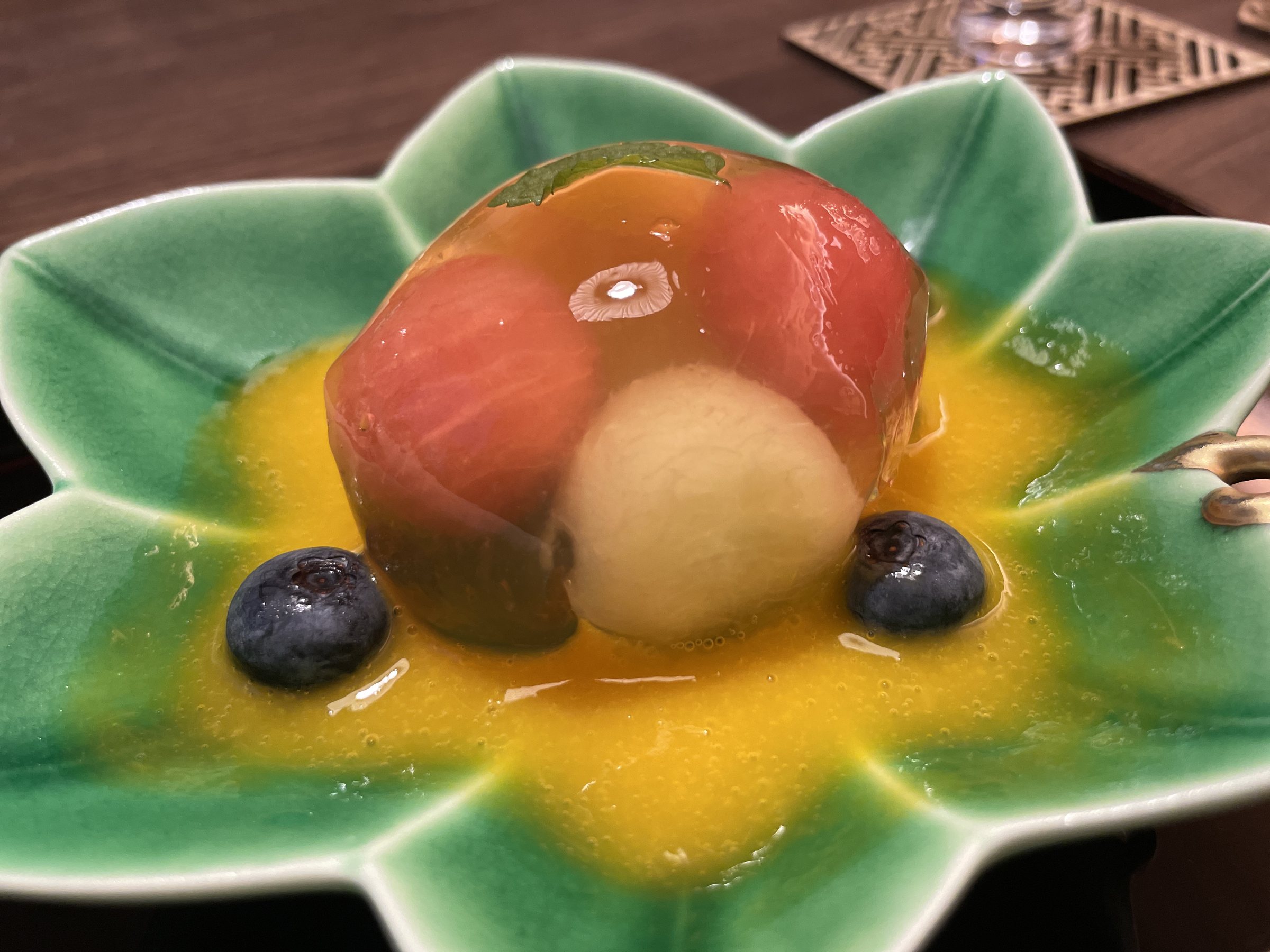
A terrine of fruit set in jelly arrived as the final sweet. The yellow sauce was rich in flavor, with an aroma like peach, and its deliberately slightly grainy texture was intriguing. The blueberries tucked in between were local too, and we enjoyed the way they popped between the teeth. We remember being served something in this style before, at HANA Kitcho in Kyoto. The taste and atmosphere were different, but it may have been inspired by a famous restaurant, or perhaps it is simply a trend in the circles where the head chef studies.
Breakfast in the room
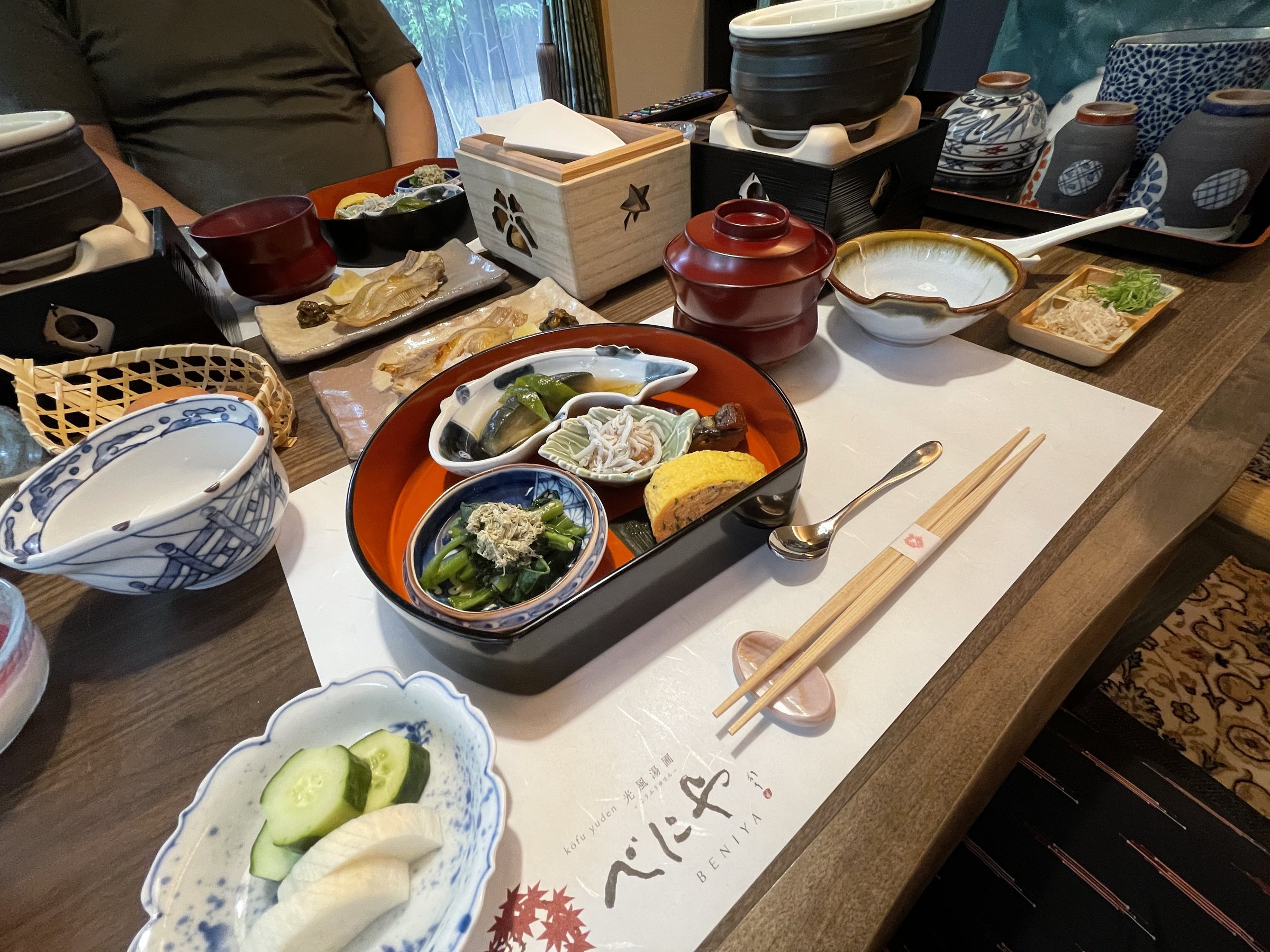
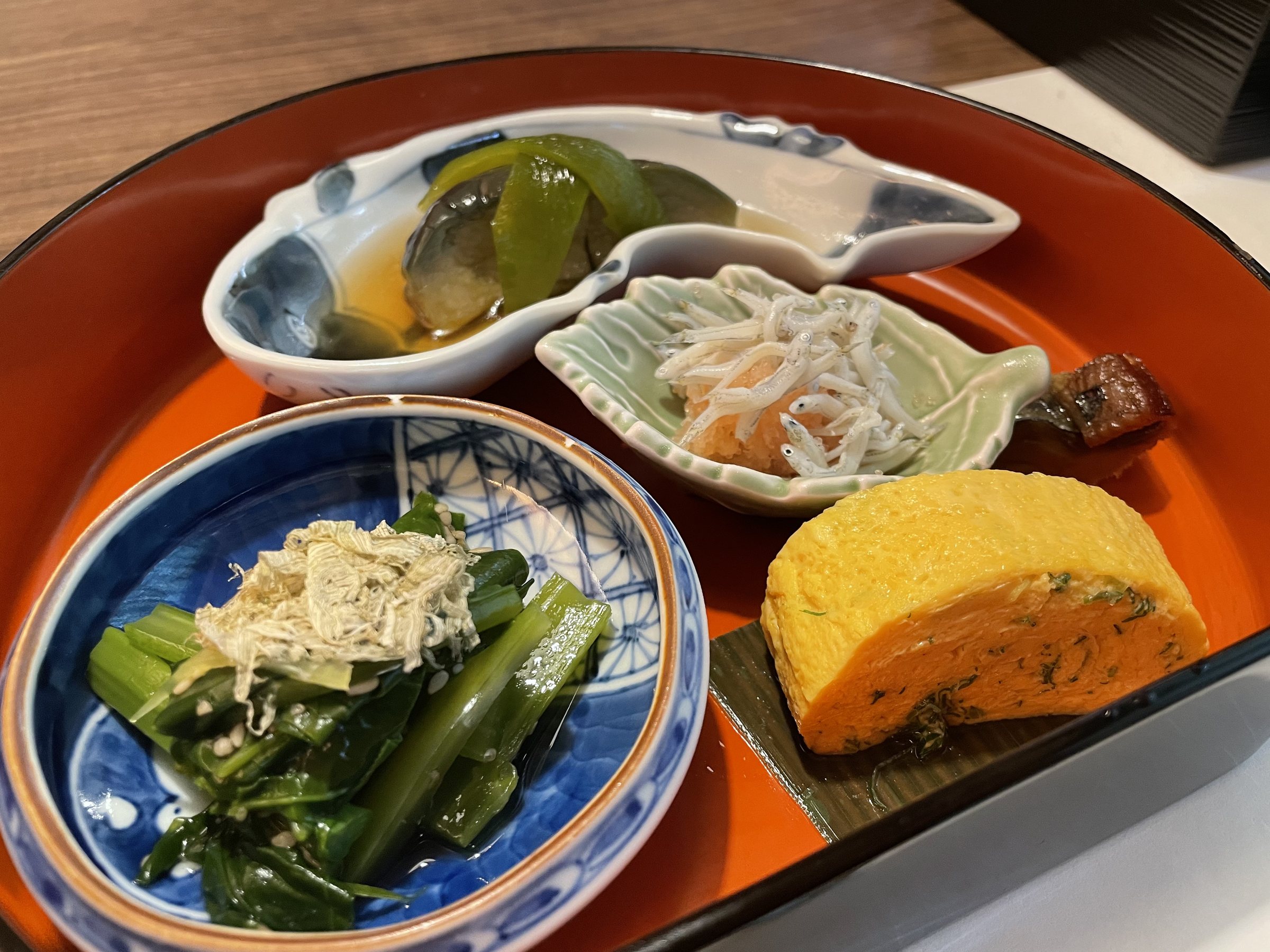
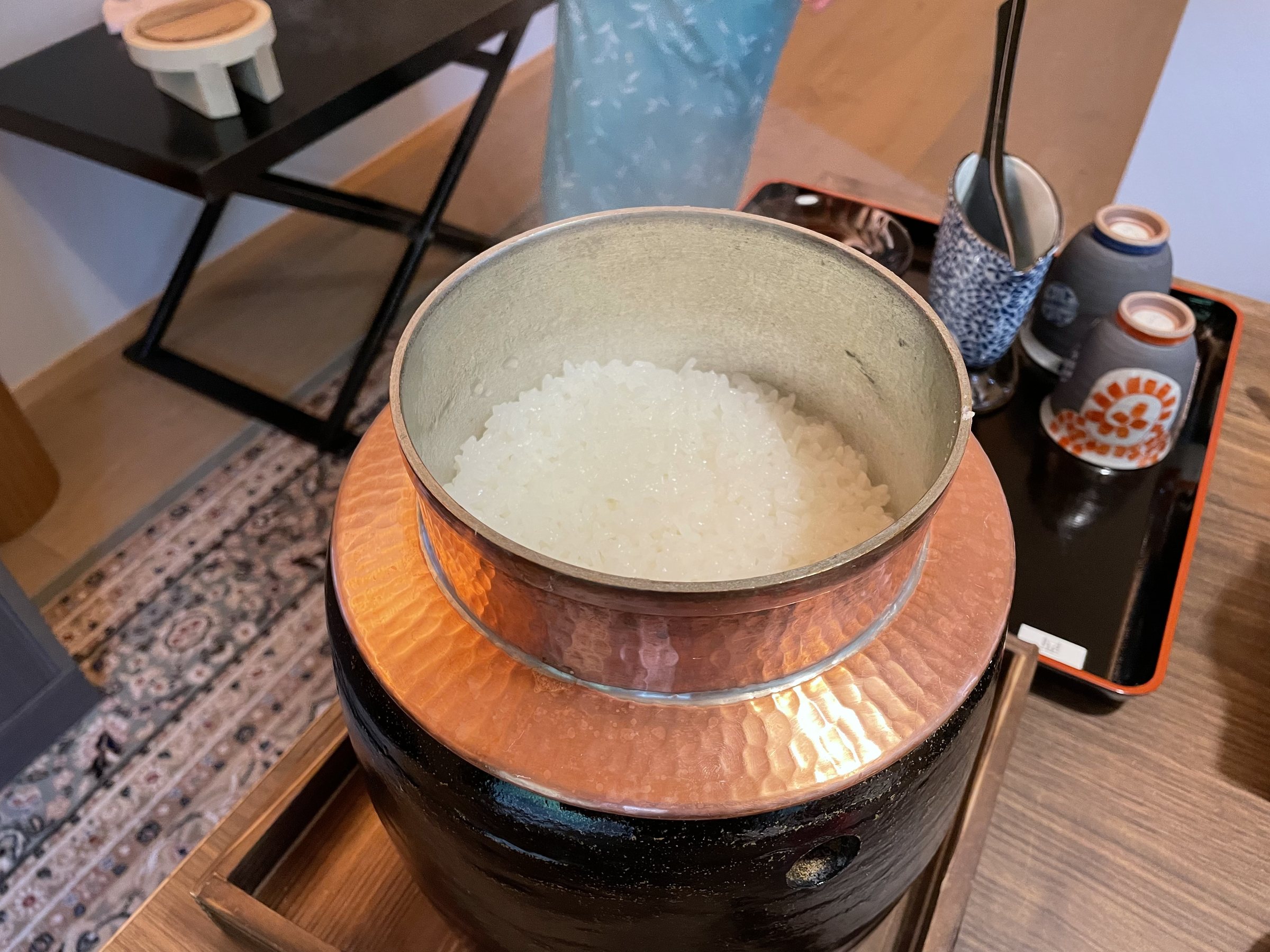
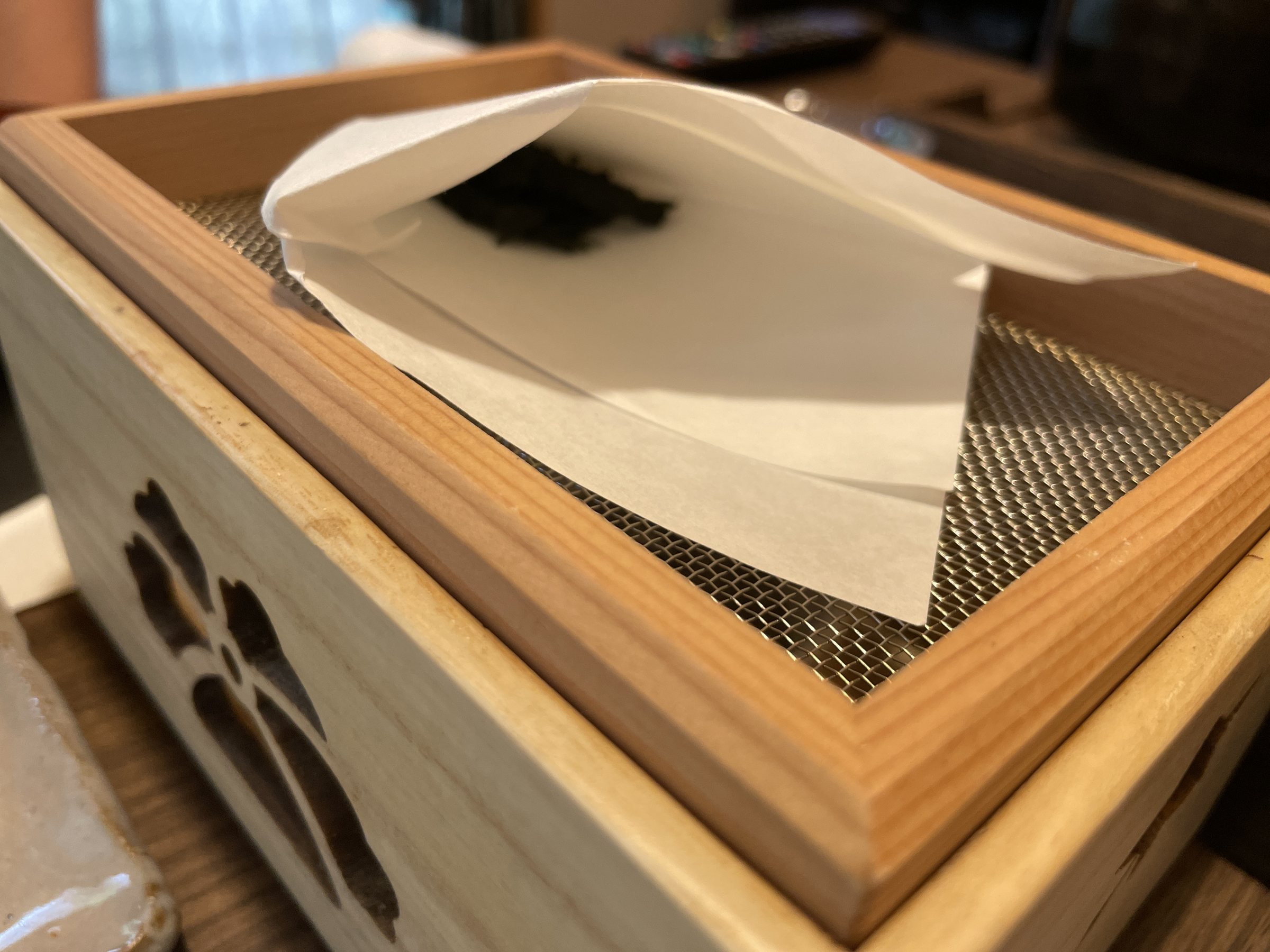
Then it was time for breakfast: a generous Japanese breakfast, carried in with care. We were very grateful to be able to eat in our own room, even earlier than the standard time. Local dried wakame seaweed was carefully toasted to go with the rice.
Looking back
From the night before, every dish had been arranged with care, down to the smallest garnish, making for a table full of fine detail. It made us feel we were visiting a restaurant as much as a hot spring ryokan. This was a ryokan proud of its role as a pillar of Awara Onsen, with a long history and a determination to meet its guests’ expectations.
This review reflects a visit in July 2022; please confirm current details, including the name, room types and menu, directly with Beniya before visiting.