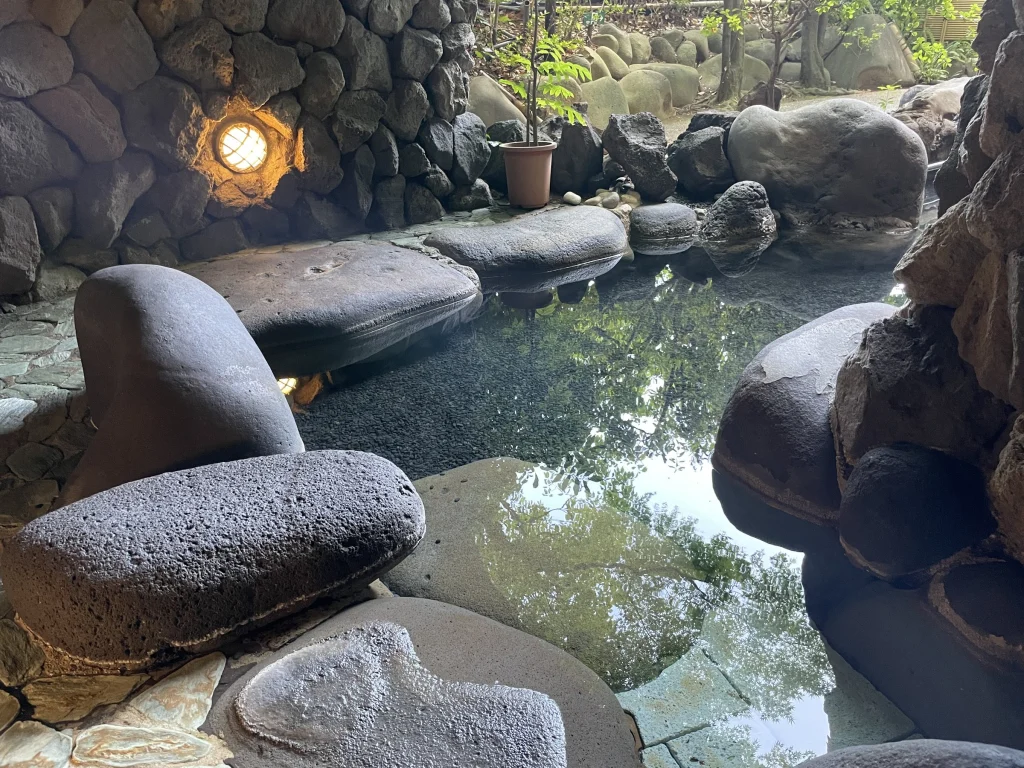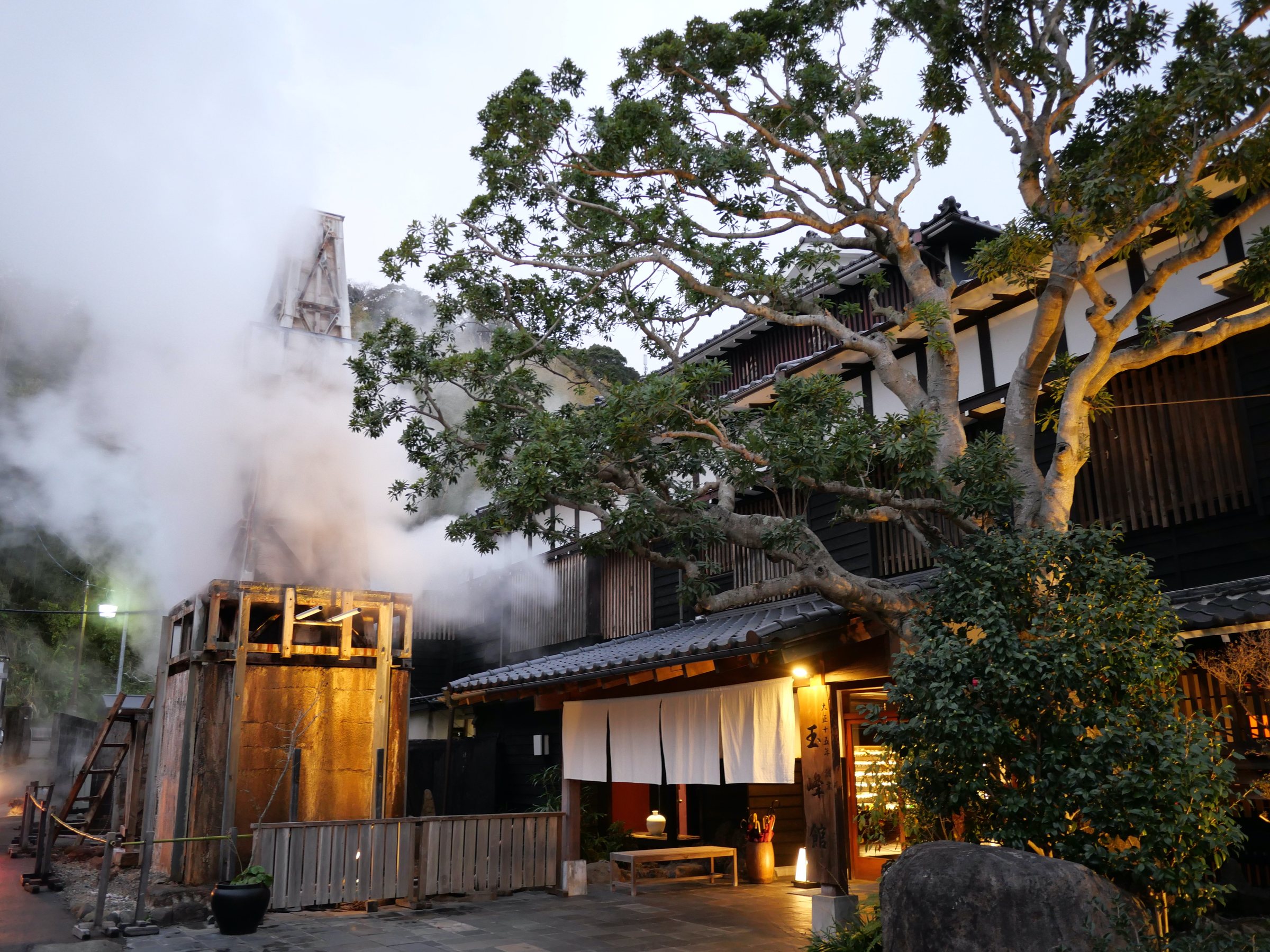
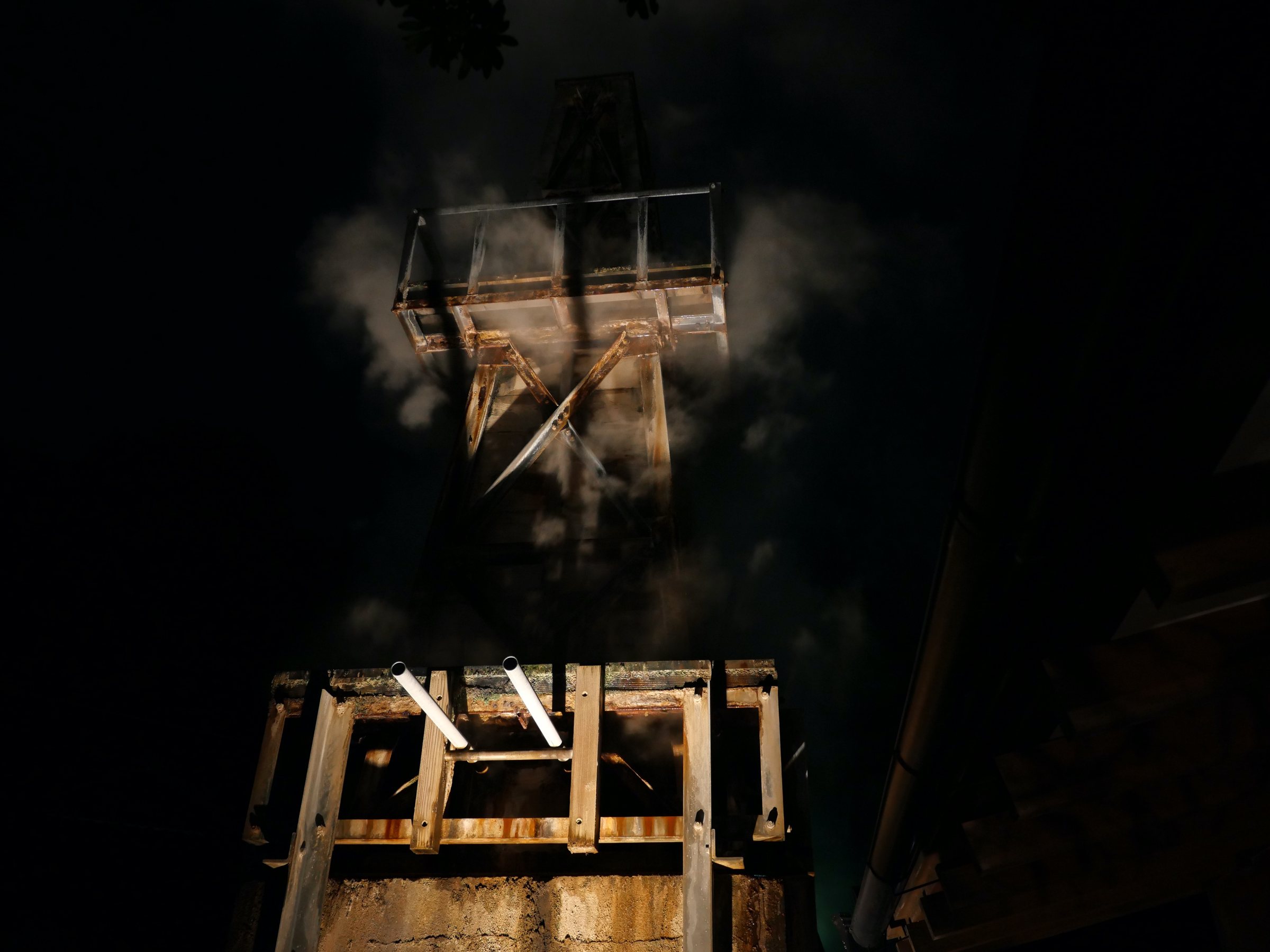
Take in the old, characterful buildings and you notice, at the entrance, a hot-spring source bubbling noisily up from the ground. From the parking lot onwards, the view is a calming one: a Japanese garden laid out with a generous use of space.
The building bears the unmistakable hand of the designer Shigeru Uchida, and the whole ryokan is wrapped in an atmosphere of grown-up calm. Stepping out of the car, we were greeted by the glow of paper lanterns and plants of every color, and we stopped to look up at the steam rising from the source. It is an intriguing kind of ryokan: compact in scale, yet carrying itself with real elegance.
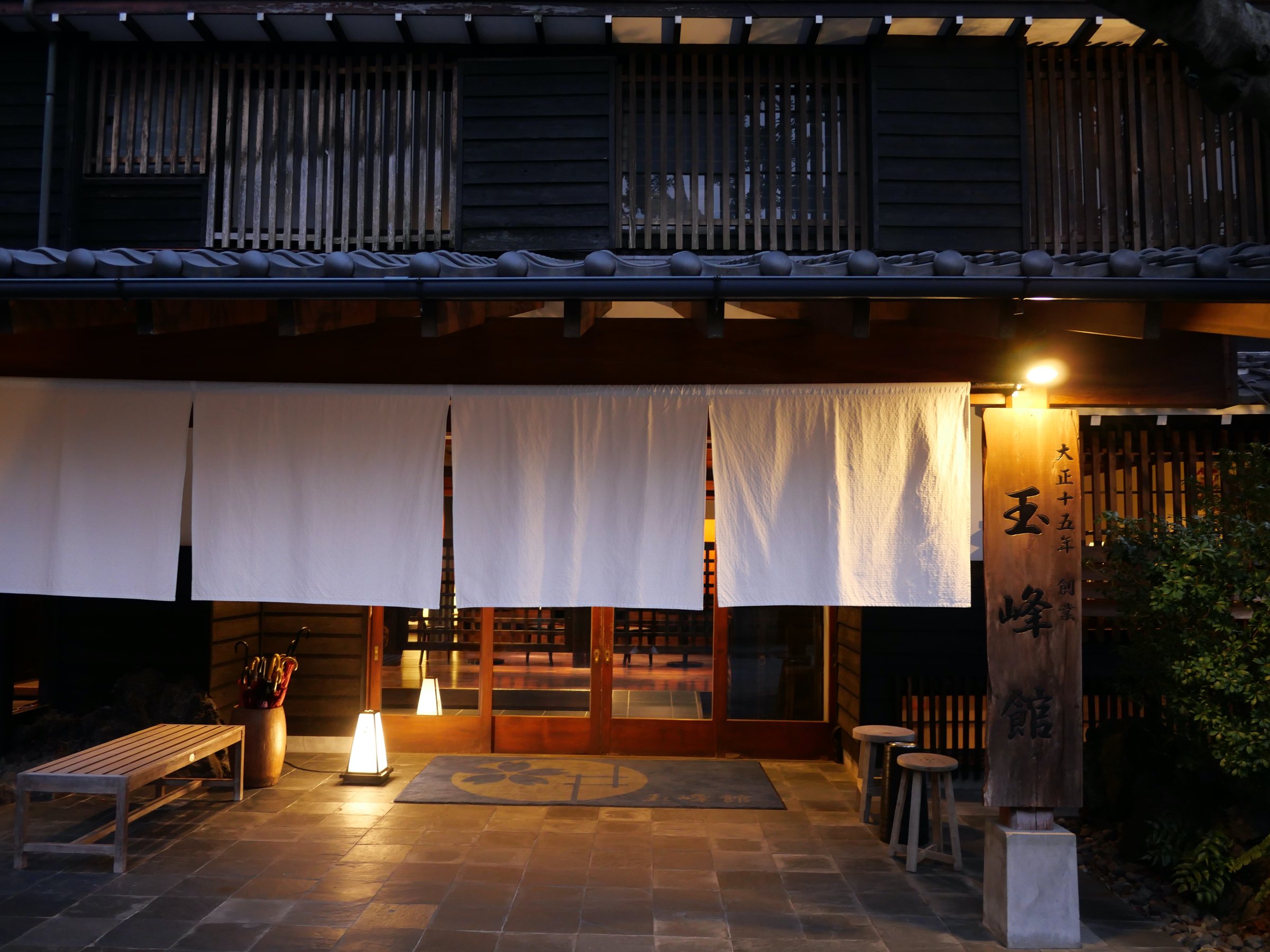
A fourth homecoming
Check-in takes place in the entrance lobby, its lights dimmed low. This was, in fact, our fourth stay. As always, we were welcomed with handmade warabi mochi (soft bracken-starch sweets) and tea from Shizuoka, a region famous for it.
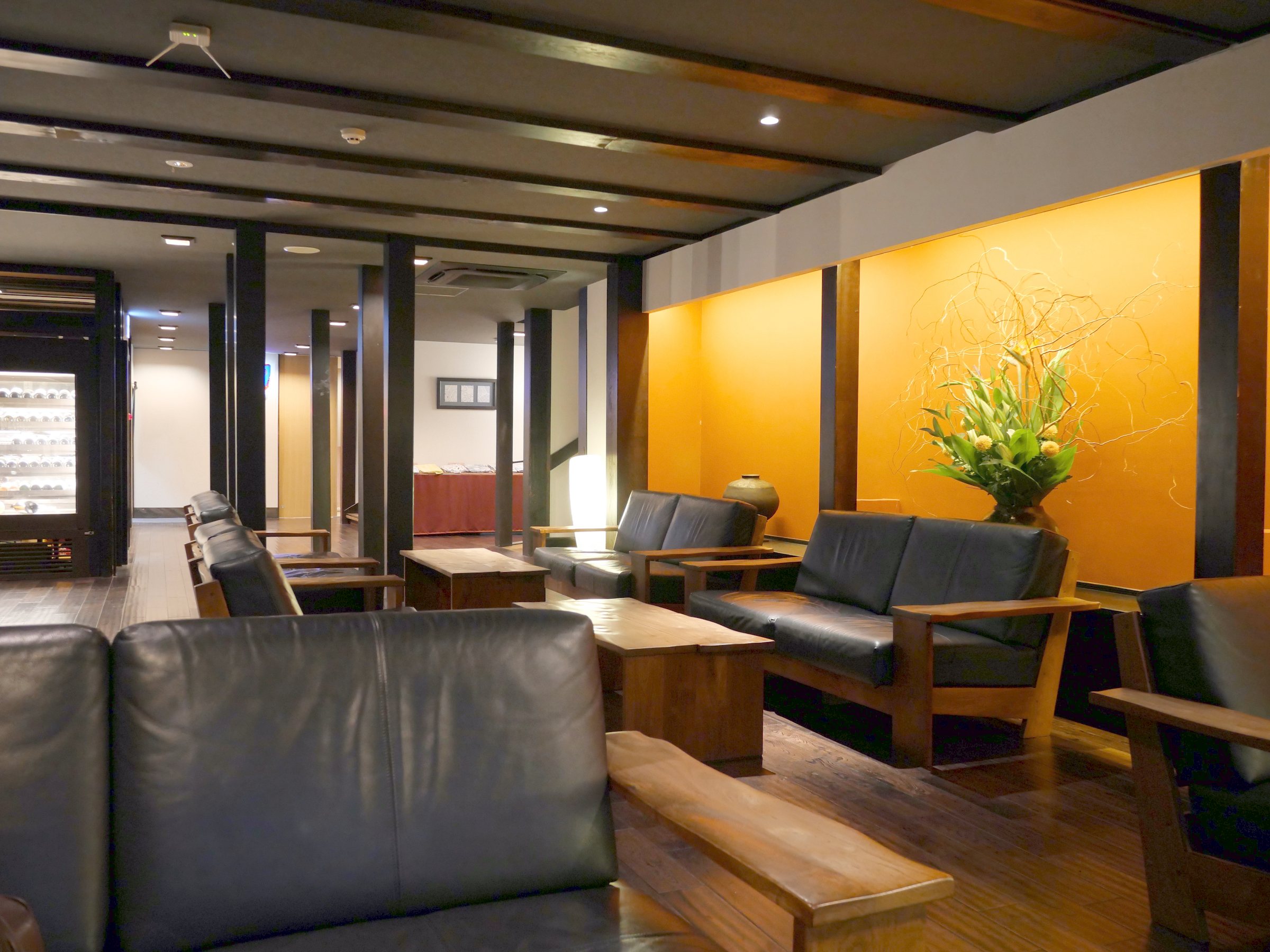
A room with its own spring
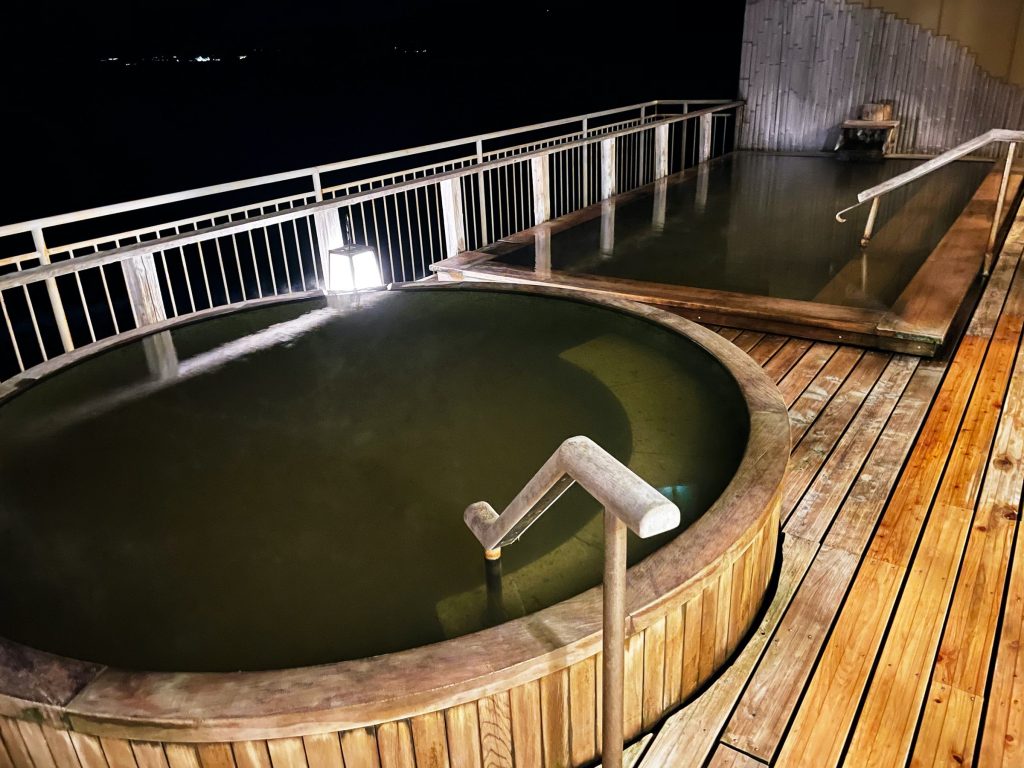
For the first time, we stayed in a room with its own open-air bath, where the source water flows constantly: the height of extravagance.
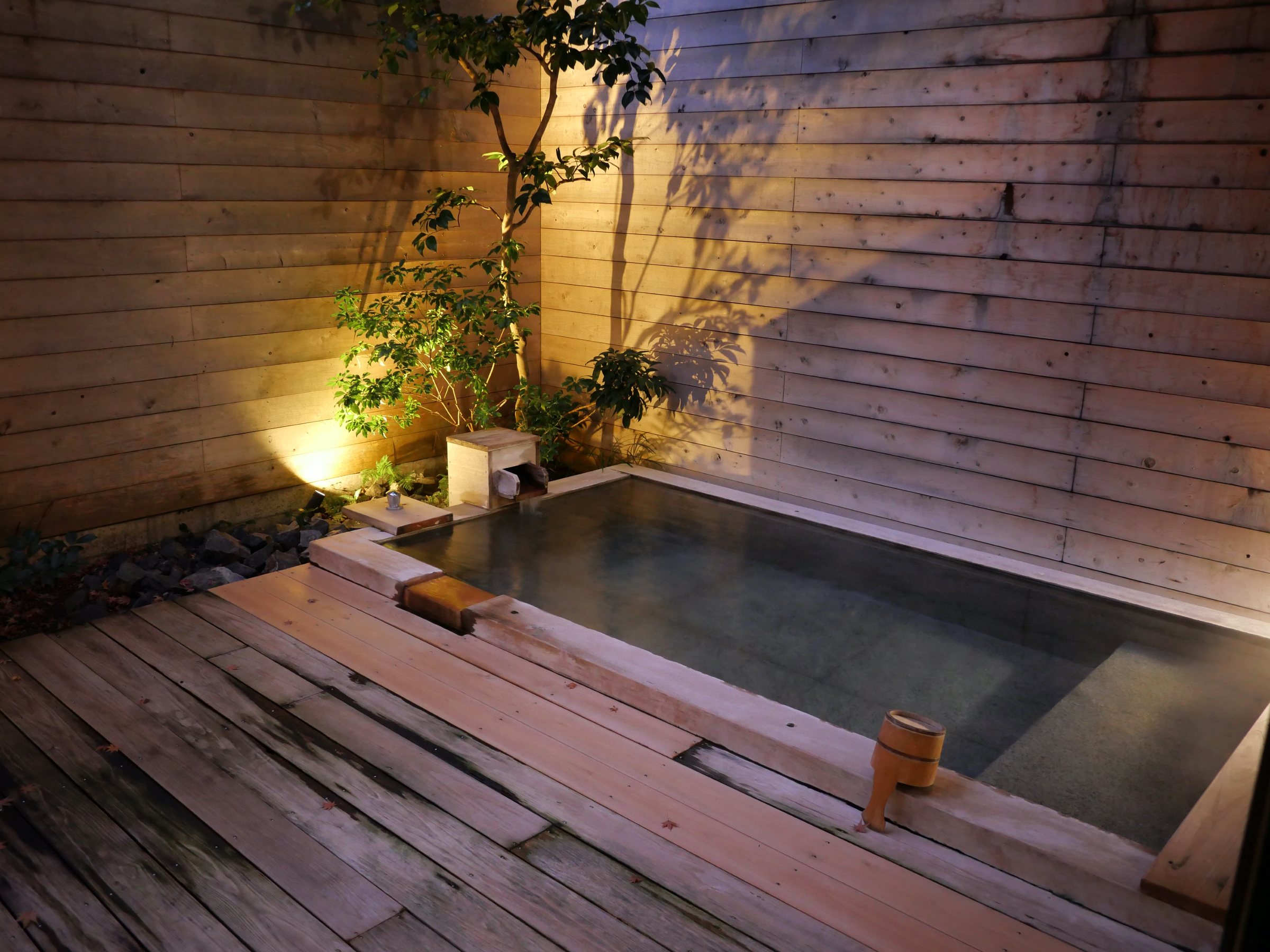
The room is superbly placed, directly opposite the ground-floor main baths, with the dining room only twenty or so steps away; it is, we hear, much in demand.
One reason we keep coming back is that the building is so compact and easy to get around: everything is just a few steps away. And yet we rarely cross paths with other guests or staff, so privacy is well preserved.
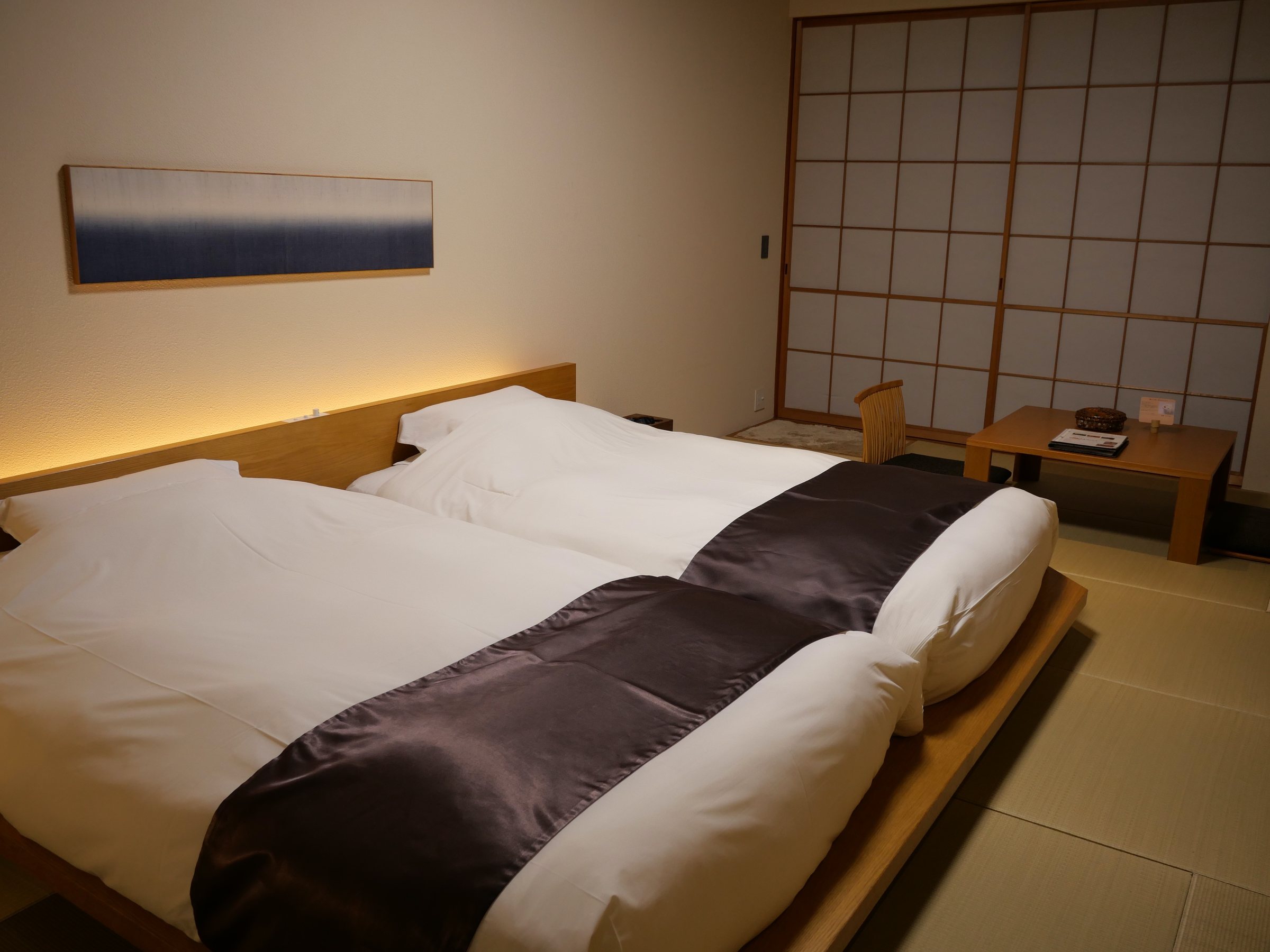
The room is lit with a calm, low light. The amenities will please women in particular: face masks made with the hot-spring water, and Gyokuhokan’s own toner and serum. We tried them and found that our skin stayed calm and moist, with a real sense of the spring’s minerals at work. Sadly, when we returned around July 2020, the skincare set was no longer provided.
The garden
The spacious Japanese garden within the grounds invites a stroll by day or by night. Taking up as much space as the building itself, it offers a different scene in every season. There is also a terrace where you can rest and idle away the time gazing at the pond in front of you.
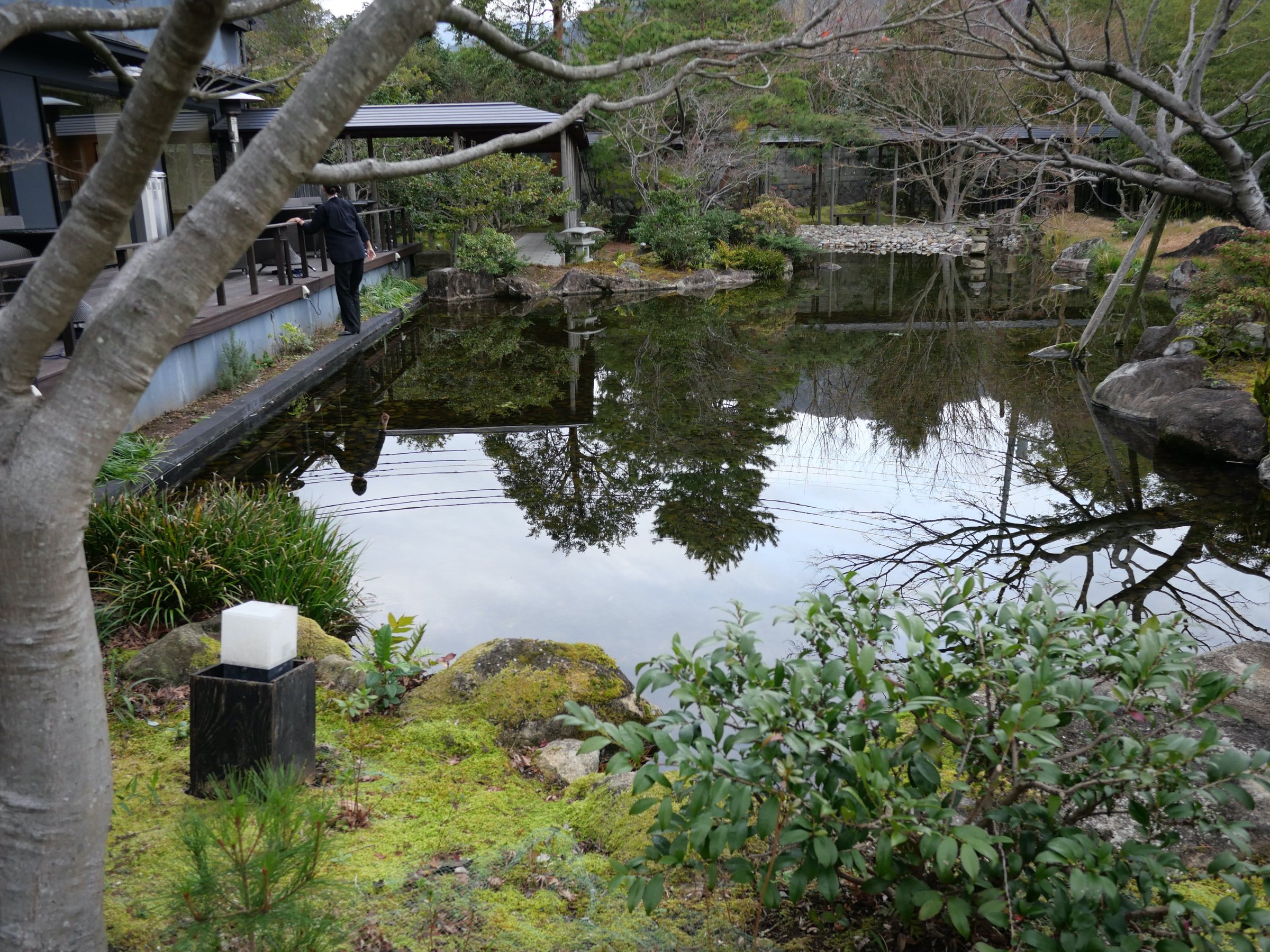
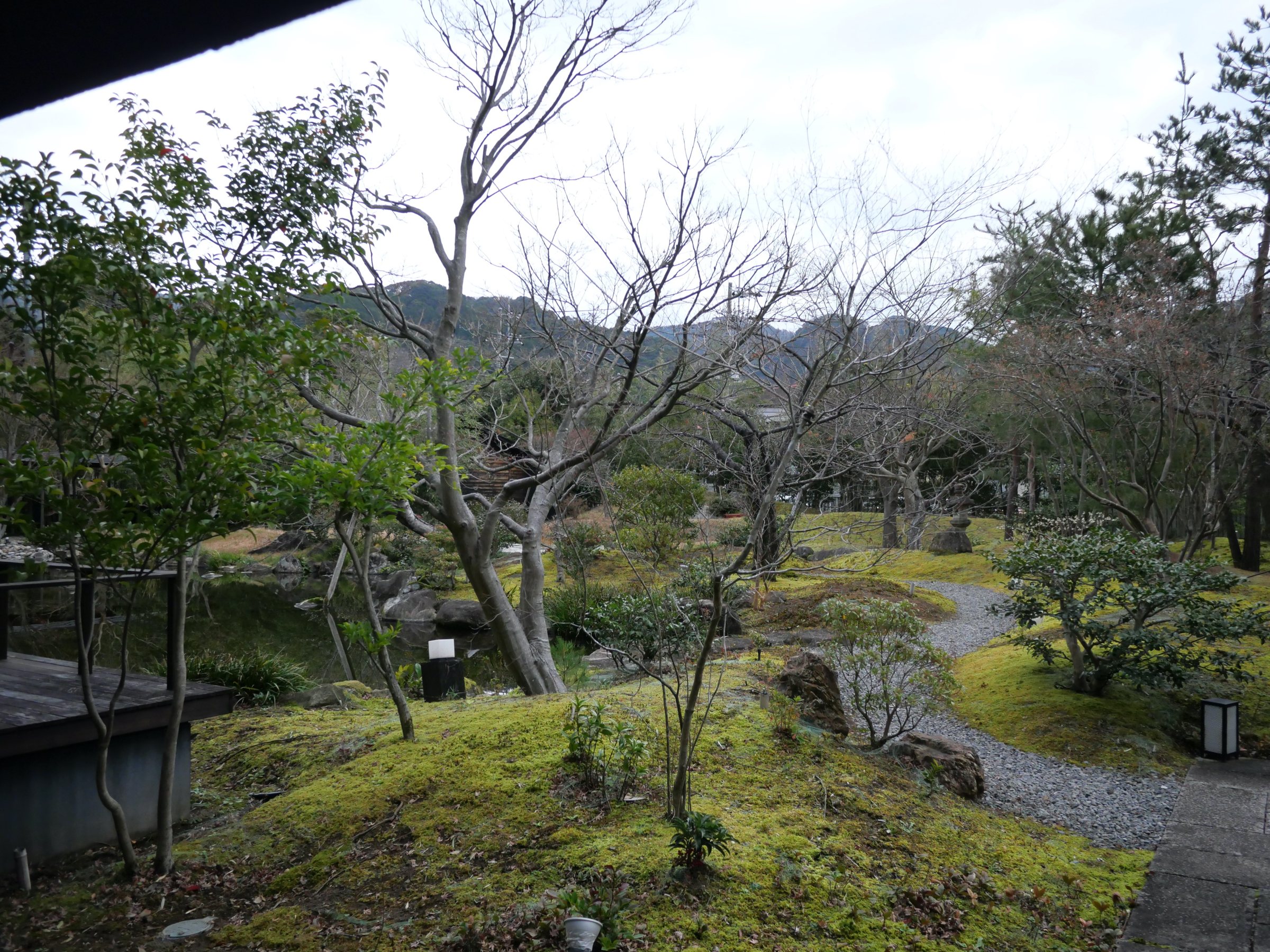
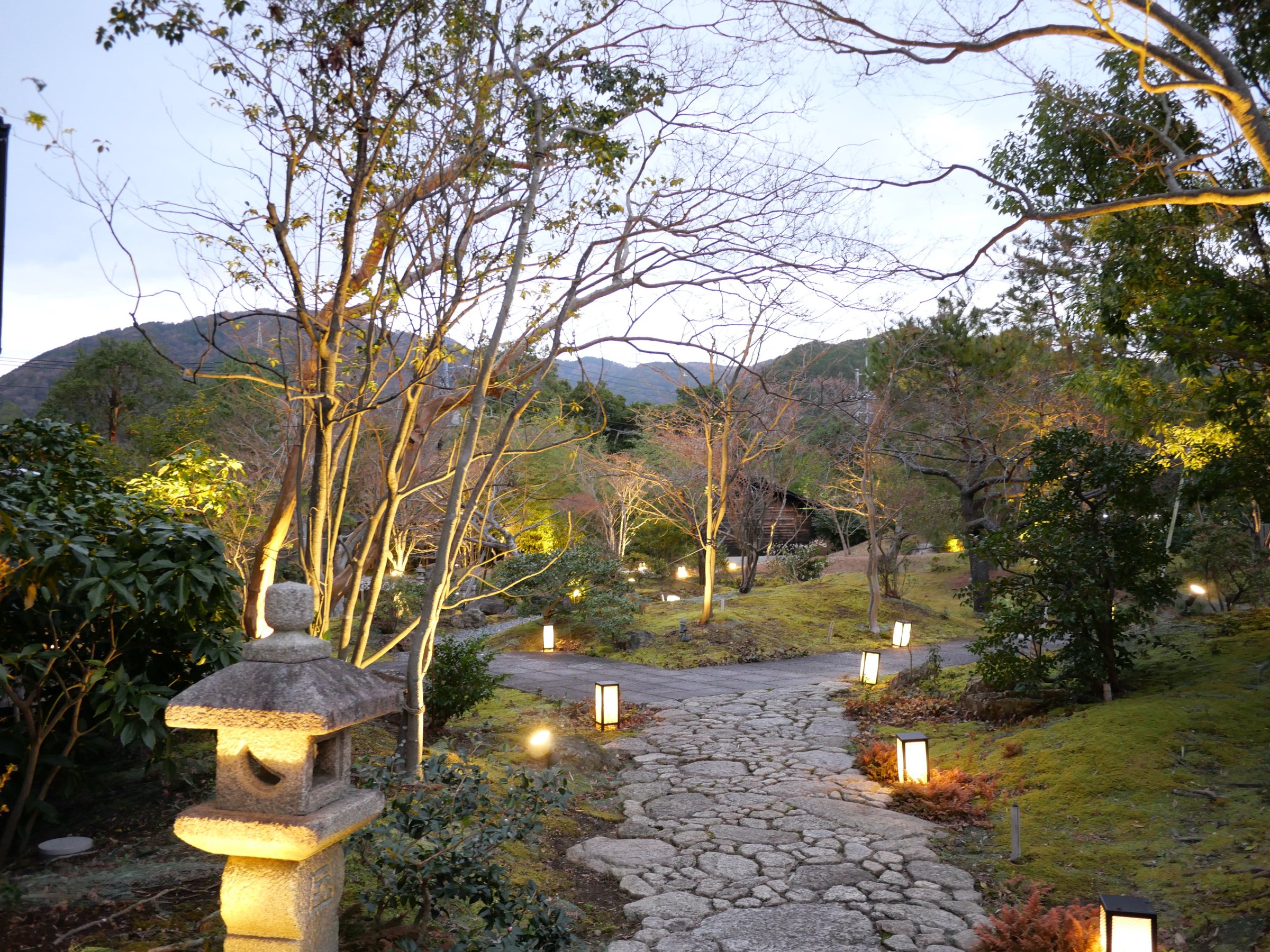
At night, lantern-style lamps dotted around the garden add their own touch of color.
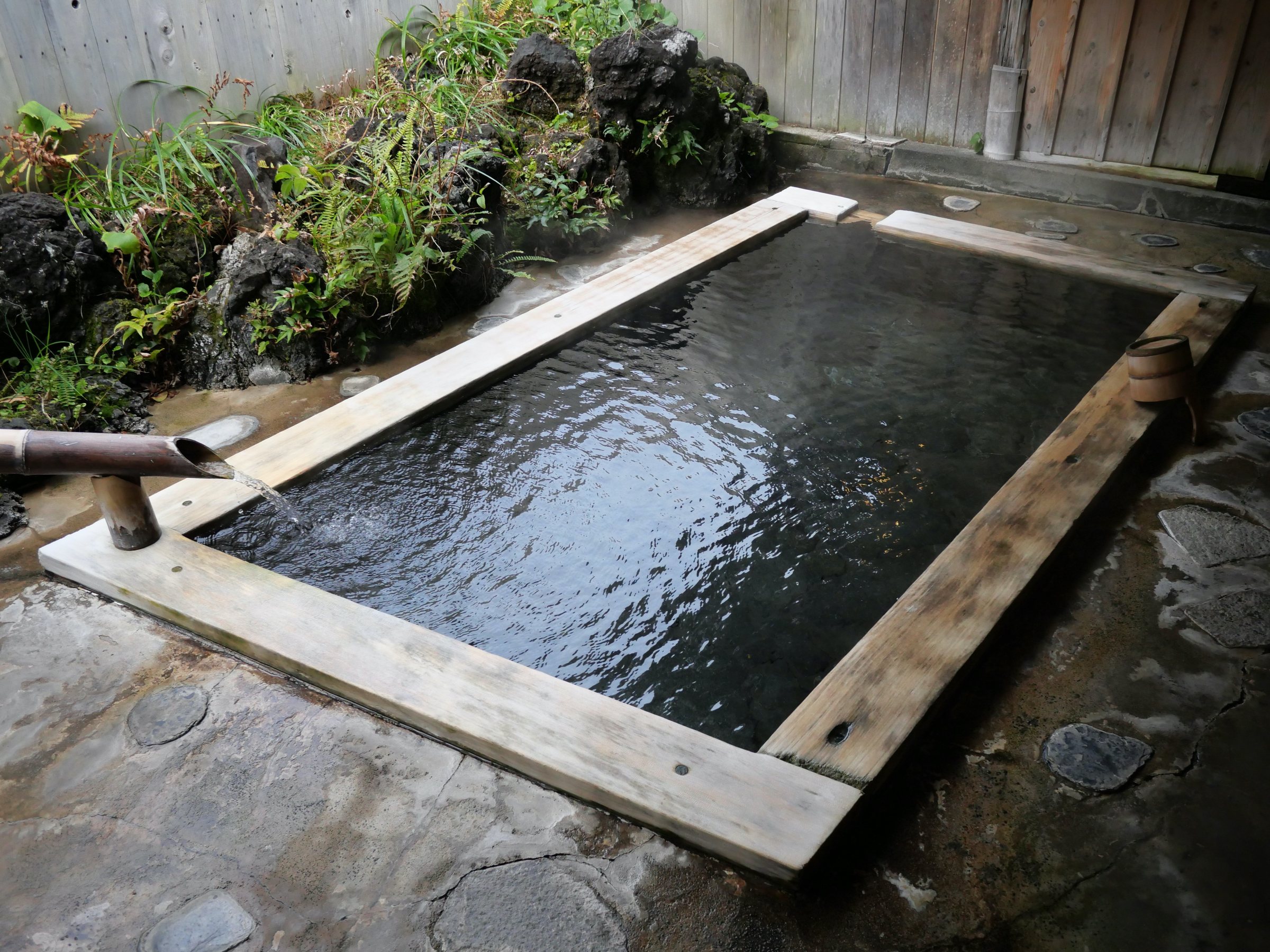
A short walk away, in a separate wing, are private baths for hire, and their atmosphere is superb too. On this trip we enjoyed a morning bath to the sound of birdsong. There are several, and it is a little disappointing that each can be used only once a day, but booking one for the evening and another for the following morning is a must.
At the counter
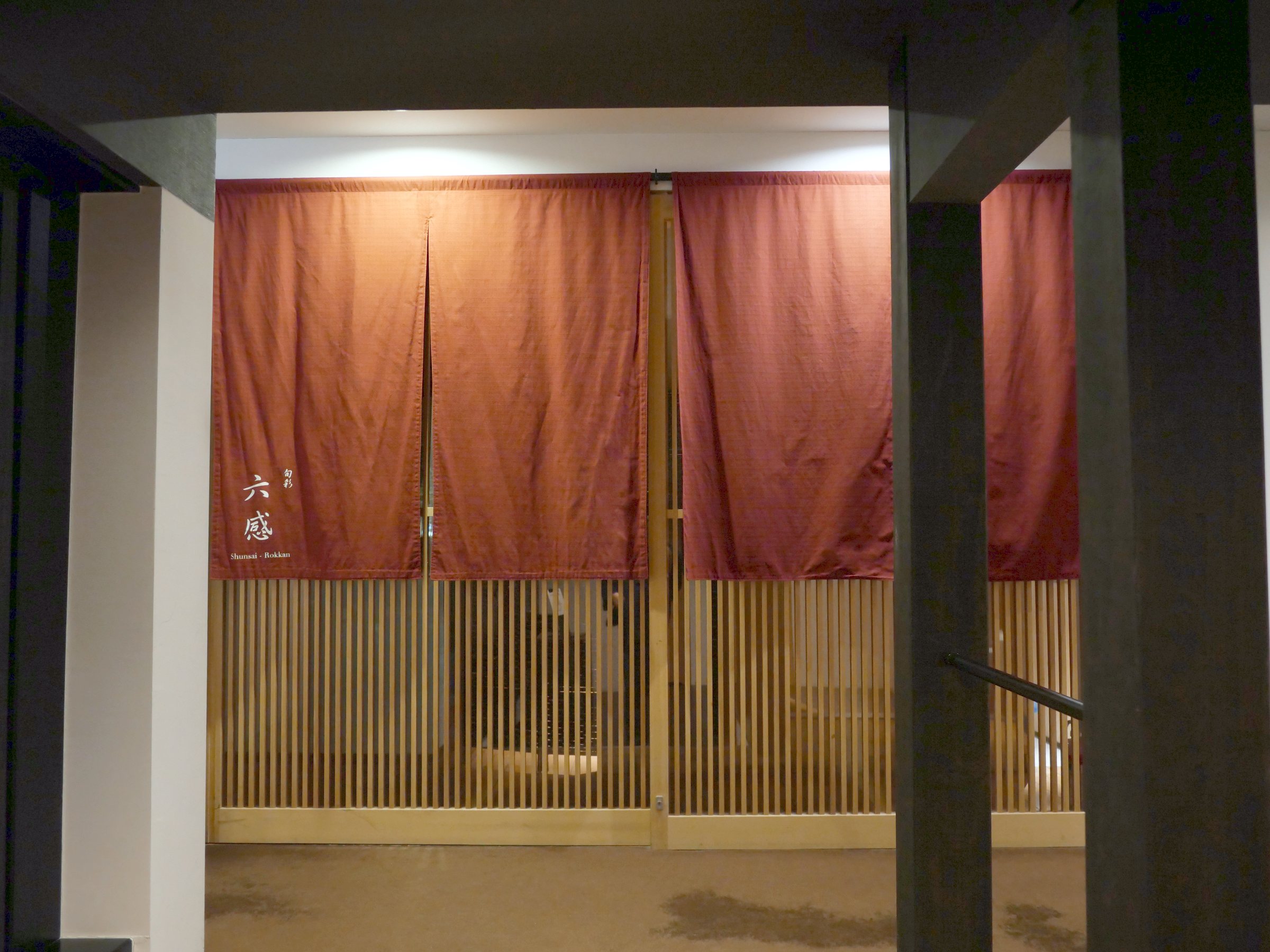
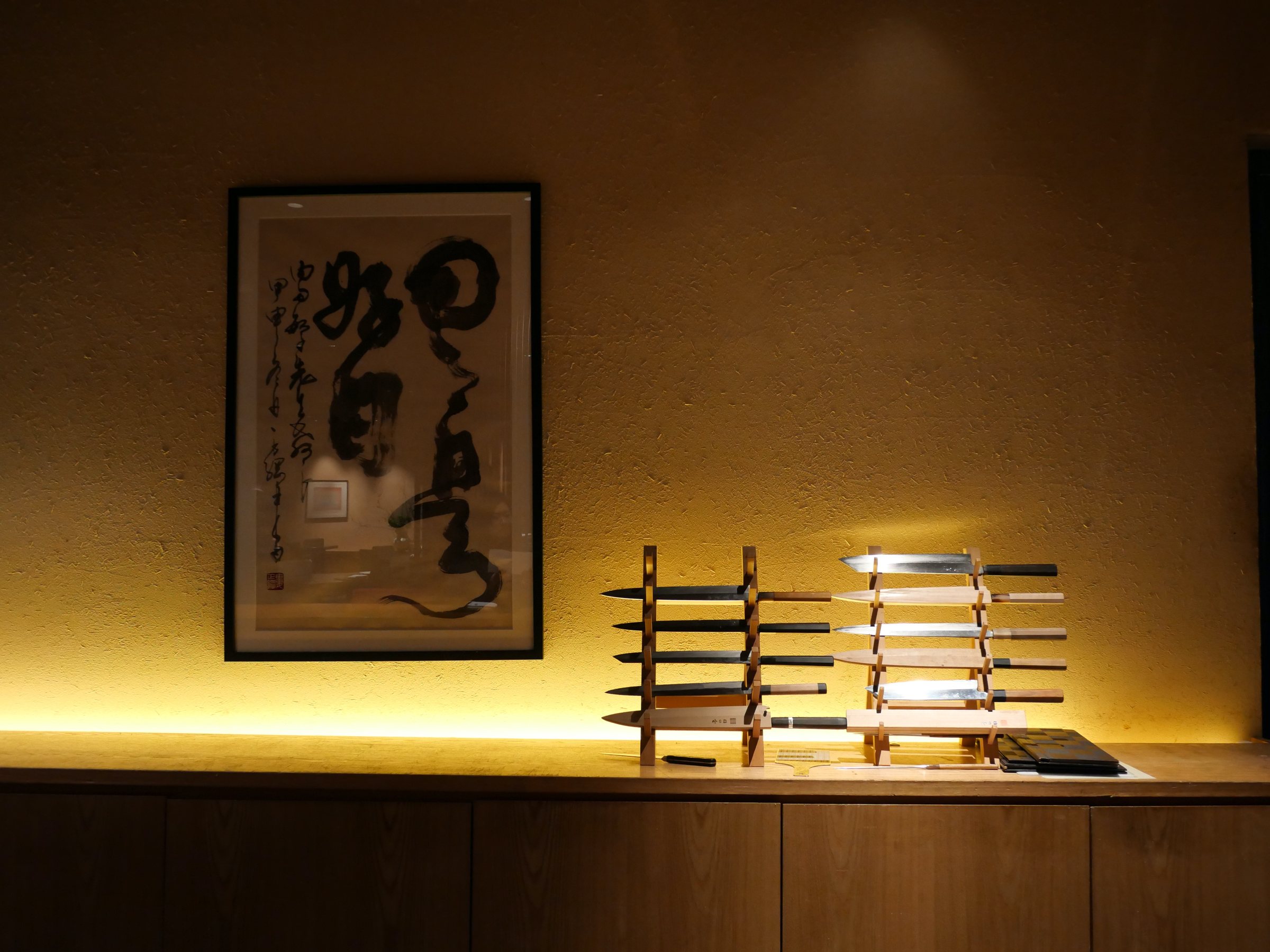
As dinner time approaches, the scent of good dashi drifts from the dining room. The head chef was trying to establish a genre of his own: “new Japanese cuisine”.
The dining room offers a choice of counter or table seating, to be requested when booking. We love the counter, where we can see the cooks’ faces, so that is where we sat. (By July 2020, counter seating had been suspended because of the coronavirus.) That evening, the head chef himself stood in front of us at the counter: a lucky night indeed.
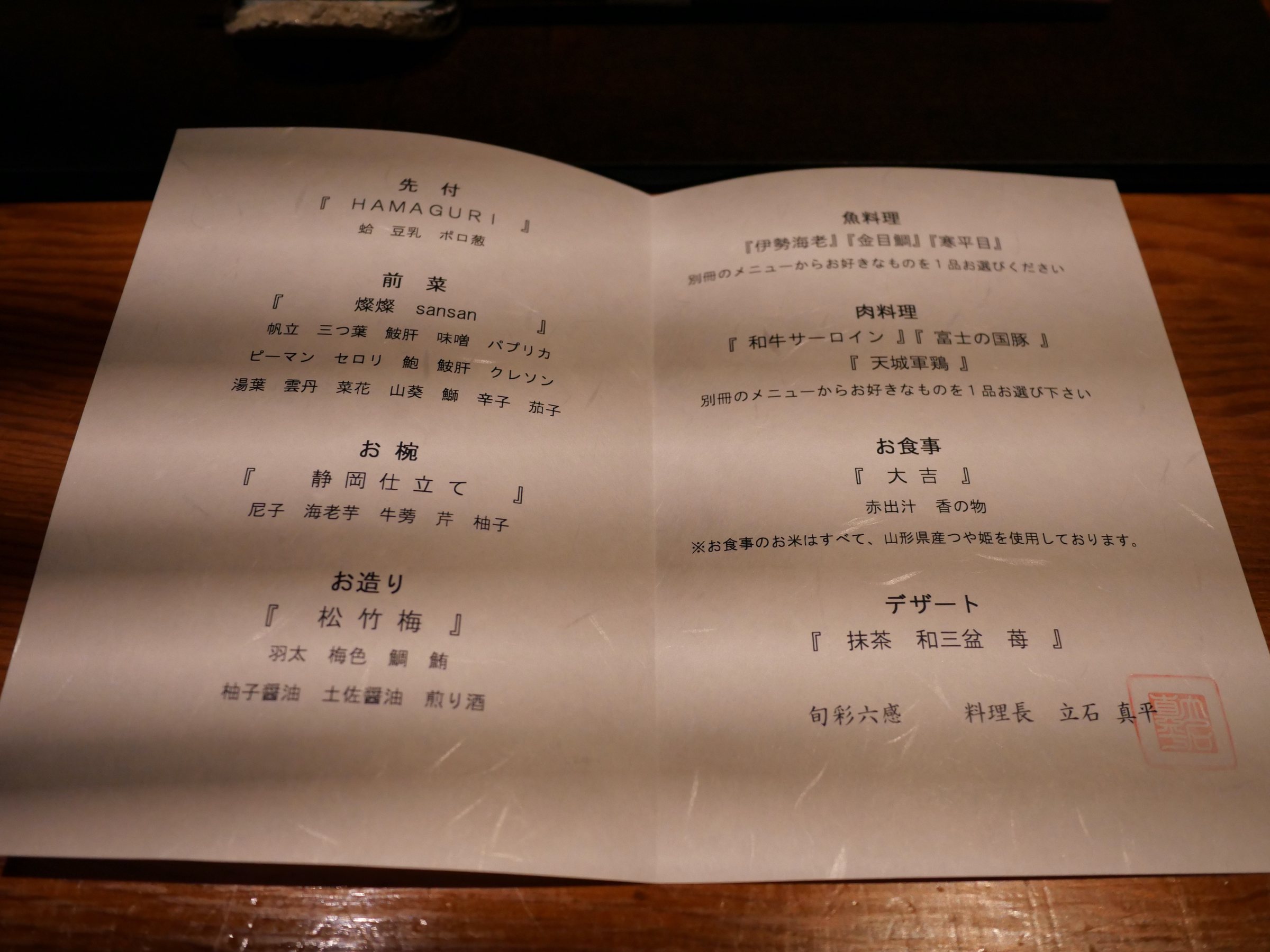
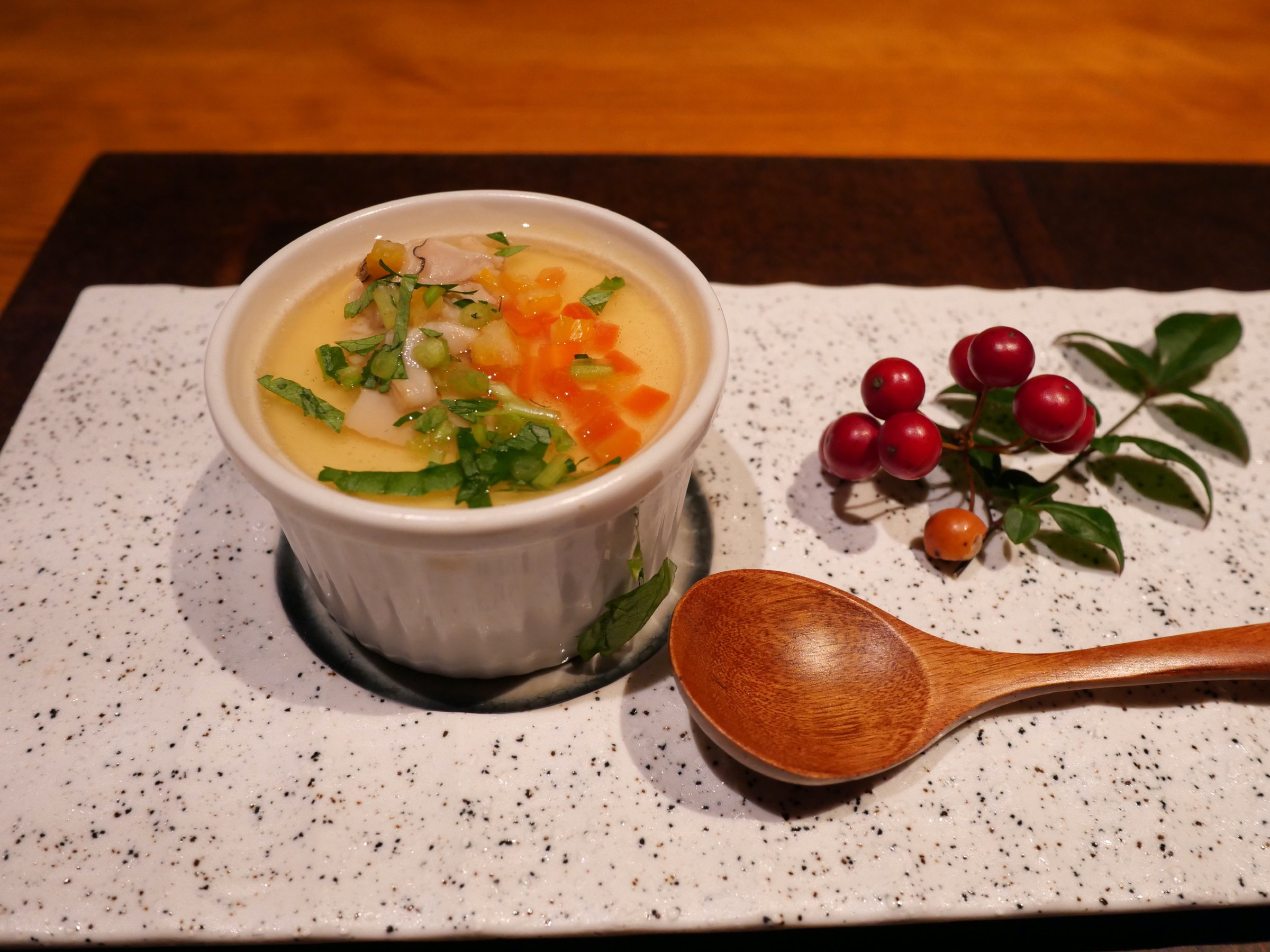
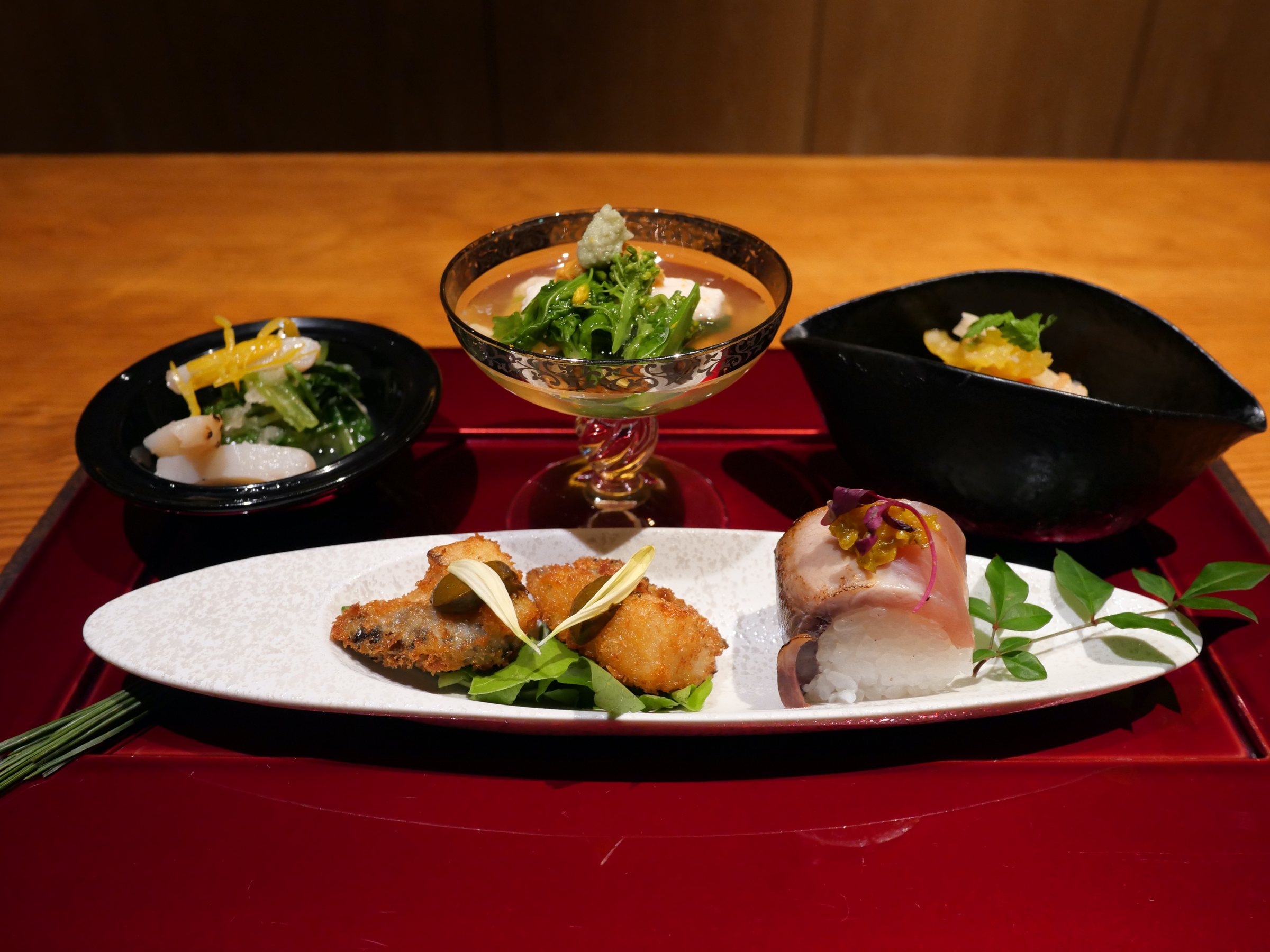
First came clams prepared in the style of chawanmushi, a savory egg custard. The flavor of the hamaguri (clam) broth filled the little vessel, and the custard melted softly on the tongue.
The appetisers are one of the joys of Japanese cuisine: a whole range of ingredients, cooked in many different ways, a luxury that is hard to put into words.
Eating while the head chef explained every dish made the meal all the more satisfying. A dedicated researcher, he kindly talked us through even the preparation stages, and at one point remarked, “It’s rare for anyone to take such an interest in how ingredients are prepared. Are you in the restaurant business?” We all laughed.
Soup, and a sashimi lesson
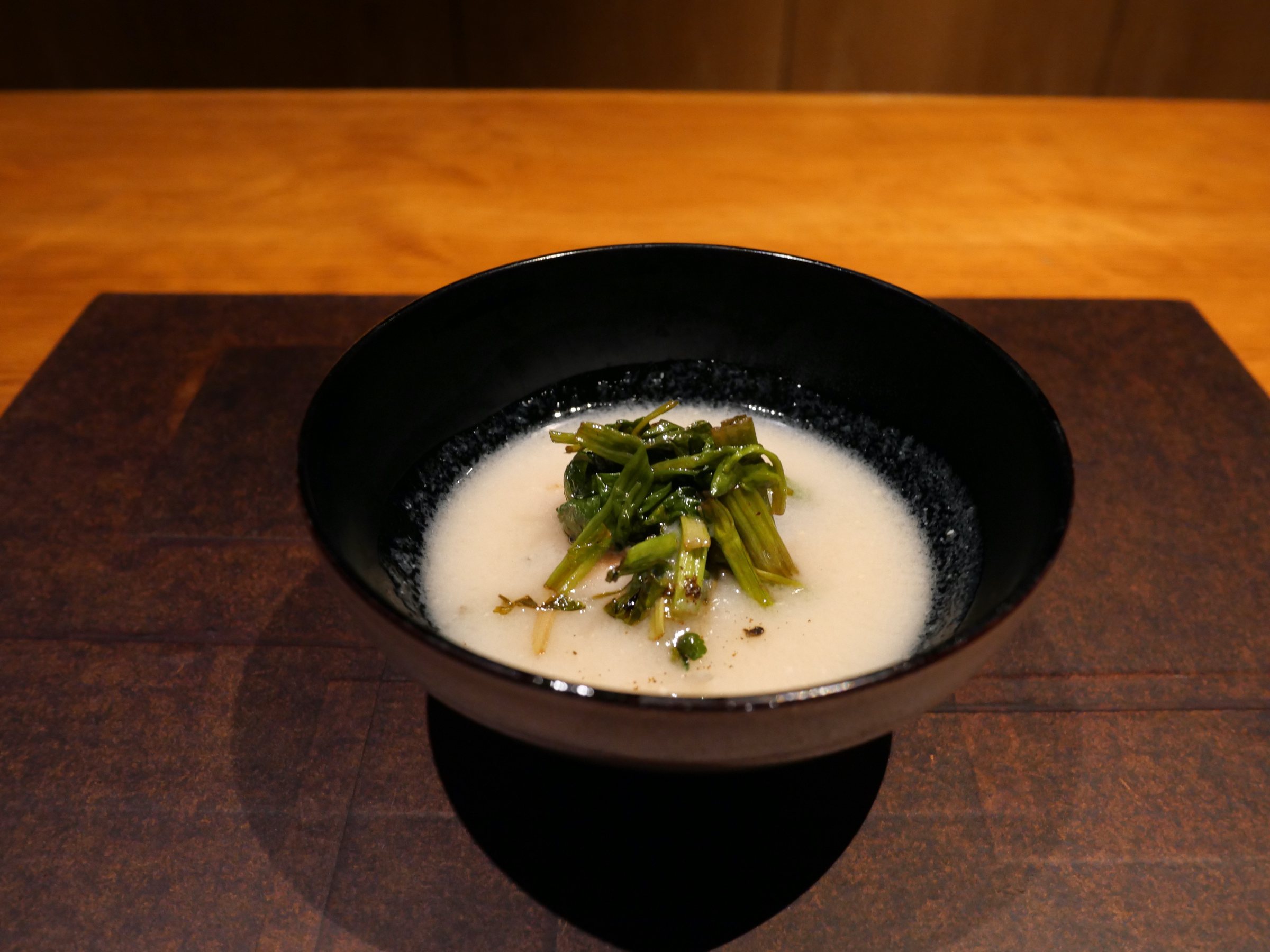
The wanmono, or soup course, was a shinjo dumpling made with sakekasu (sake lees). The chewy ebi-imo taro and the broth finished with sake lees were both excellent. It came with seri (Japanese parsley) stir-fried in oil. “Seri goes very well with oil,” the head chef told us. “It’s good paired with oil, not only in hot pots.”
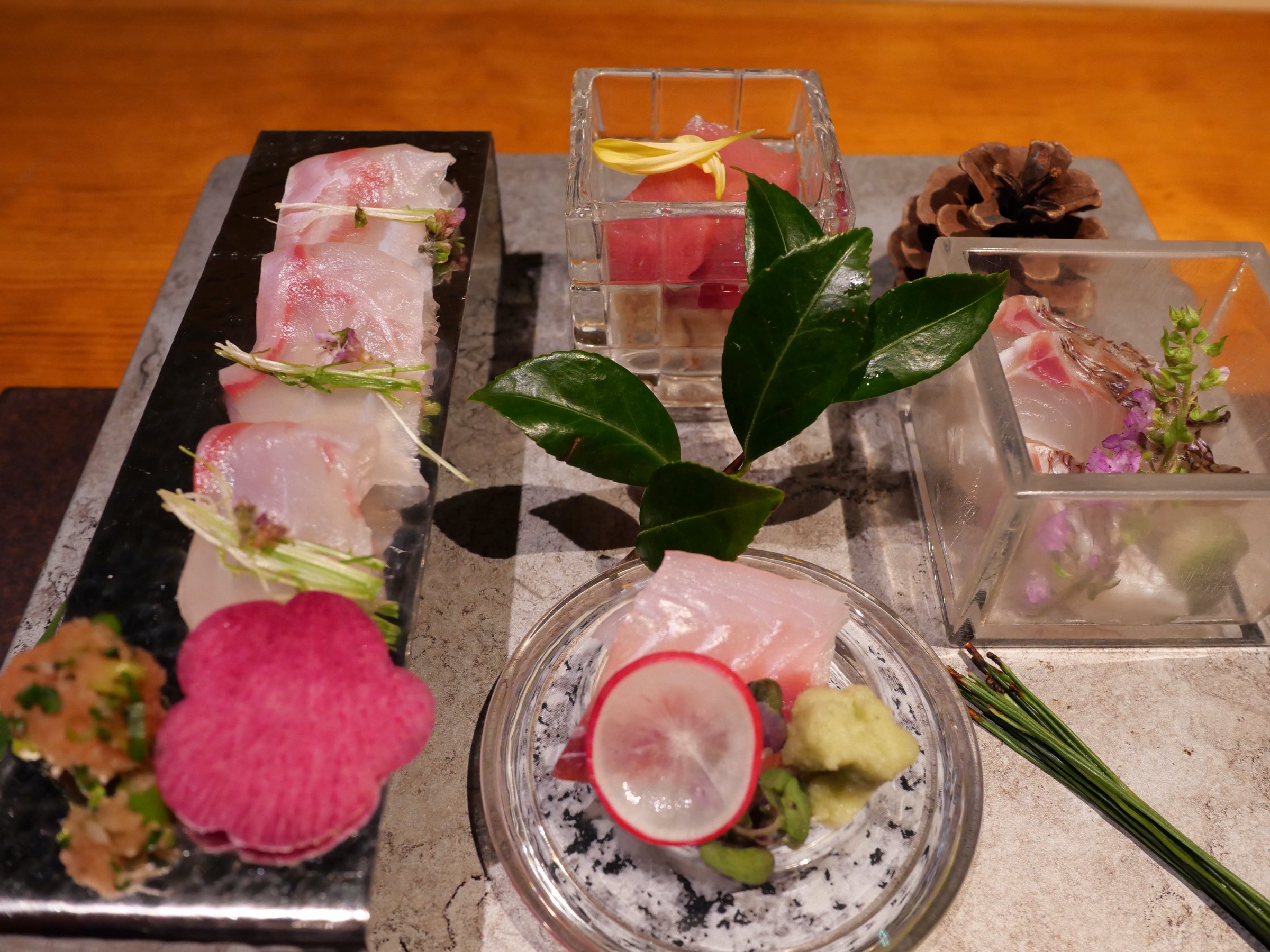
For the sashimi, he taught us his preparation method. Sprinkle the fish with salt at 0.3 per cent of its weight, then rest it for two to three days wrapped in kitchen paper made for the purpose, drawing out moisture and any fishy smell. This “aged sashimi” concentrates the flavor. Since he showed us, it has become a staple in our own home.
White fish such as sea bream is delicate in flavor, so it is eaten with house-made irizake (a traditional sake-based seasoning) or citrus soy sauce. There are four condiments for the sashimi alone, all made in-house, some of them taking a week to prepare.
The mains
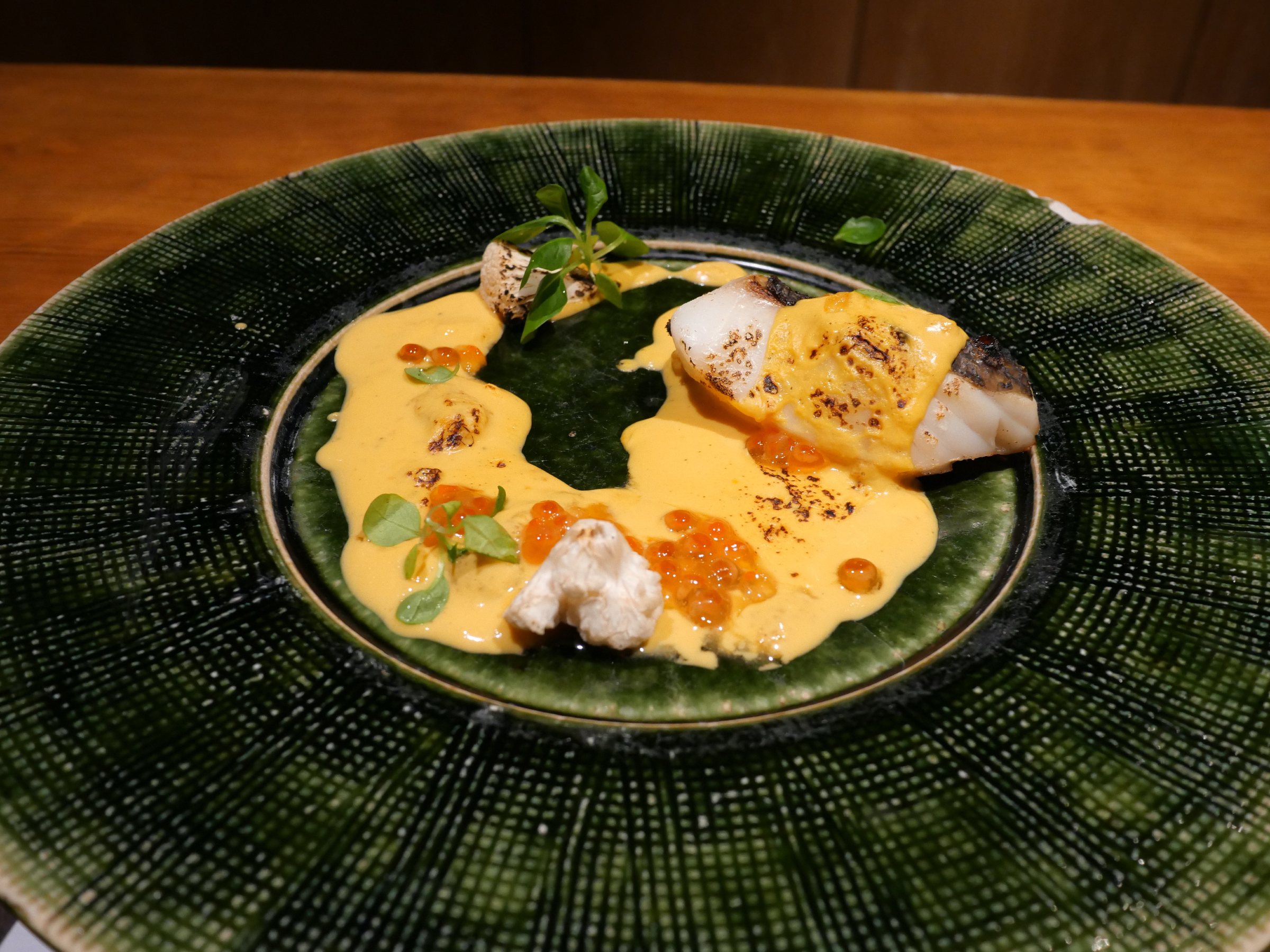
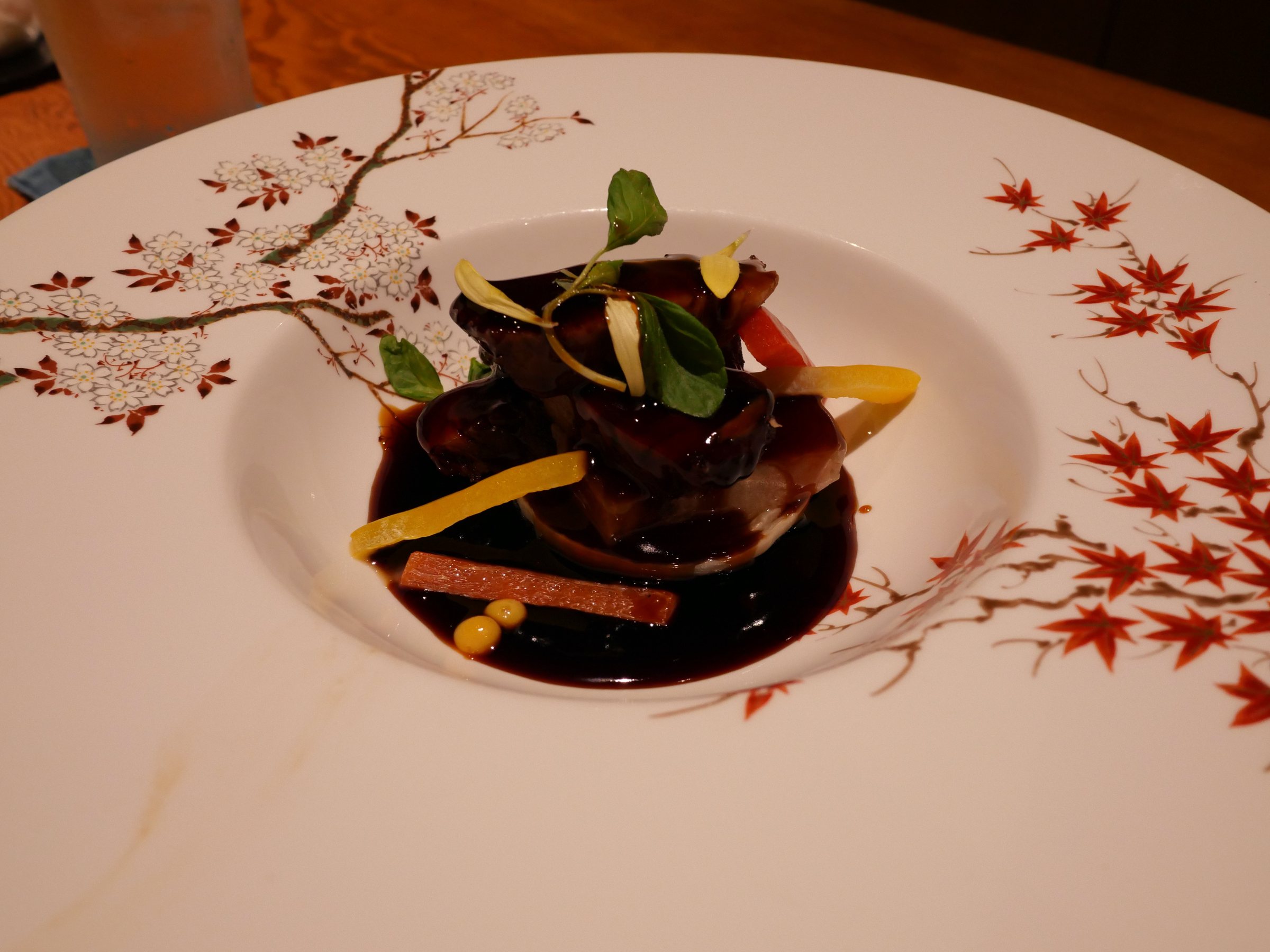
The main fish course was kinmedai (golden-eye snapper) with a Western-style sauce. This one dish, we are sorry to say, failed to shine. The sauce seemed to lack punch, and the portion was gone in a single bite.
On a visit a few months earlier, we had ordered every main course on offer, and found that the side garnishes on each plate were all identical; a little more variation, we felt, would make things more interesting.
The meat main was a roast of Fujinokuni pork, moist in texture and flavored with black vinegar. The sweetness of the pork spread across the palate, balanced by a pronounced acidity. You could tell from the first bite that it had taken days to prepare. It fell apart in the mouth, without the slightest porky odor: superb cooking.
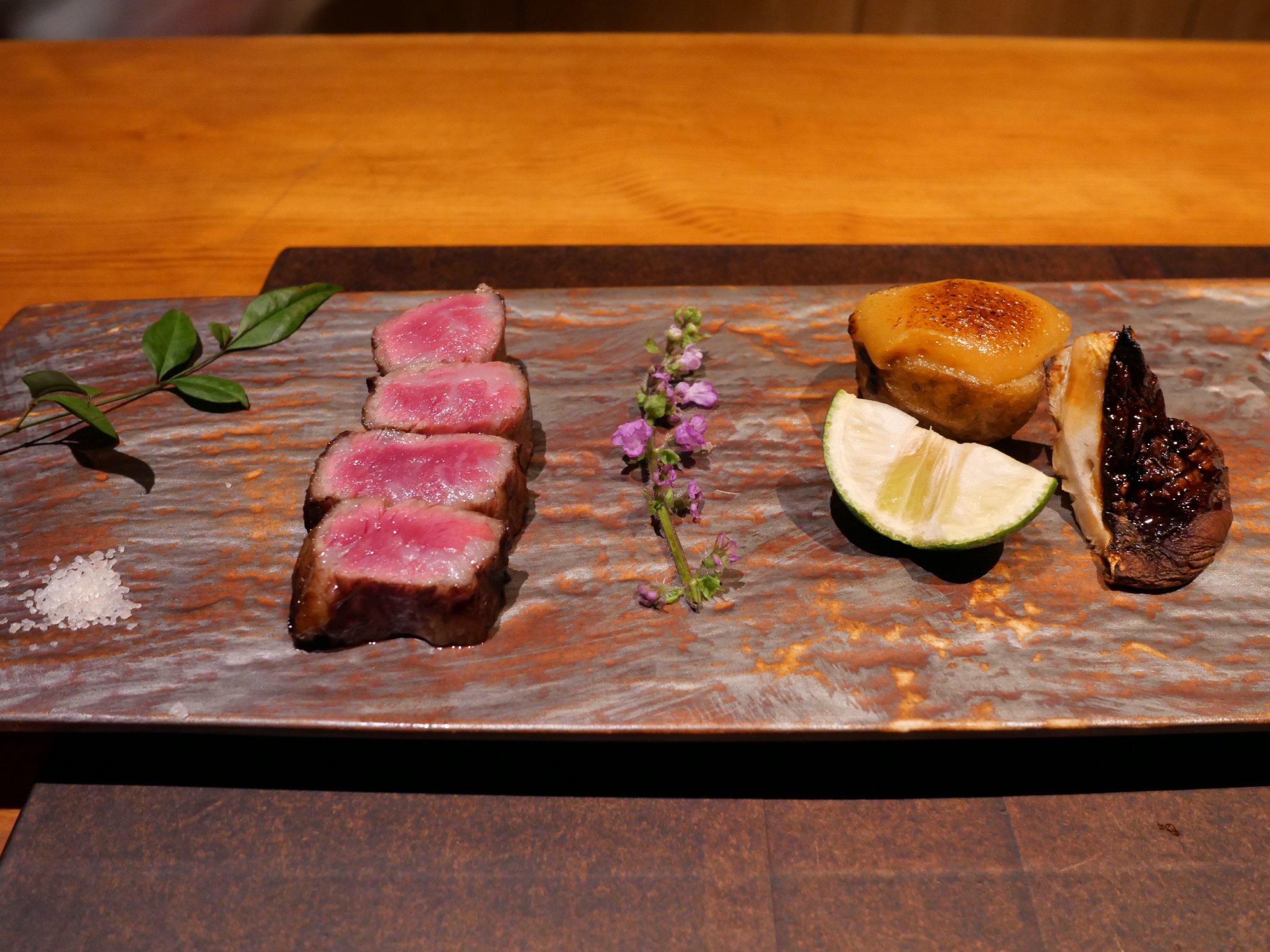
Then Wagyu sirloin. It was nicely cooked, but the portion left us wanting more. Each slice was so small that the pleasure was over in a moment, which was a shame.
The rice
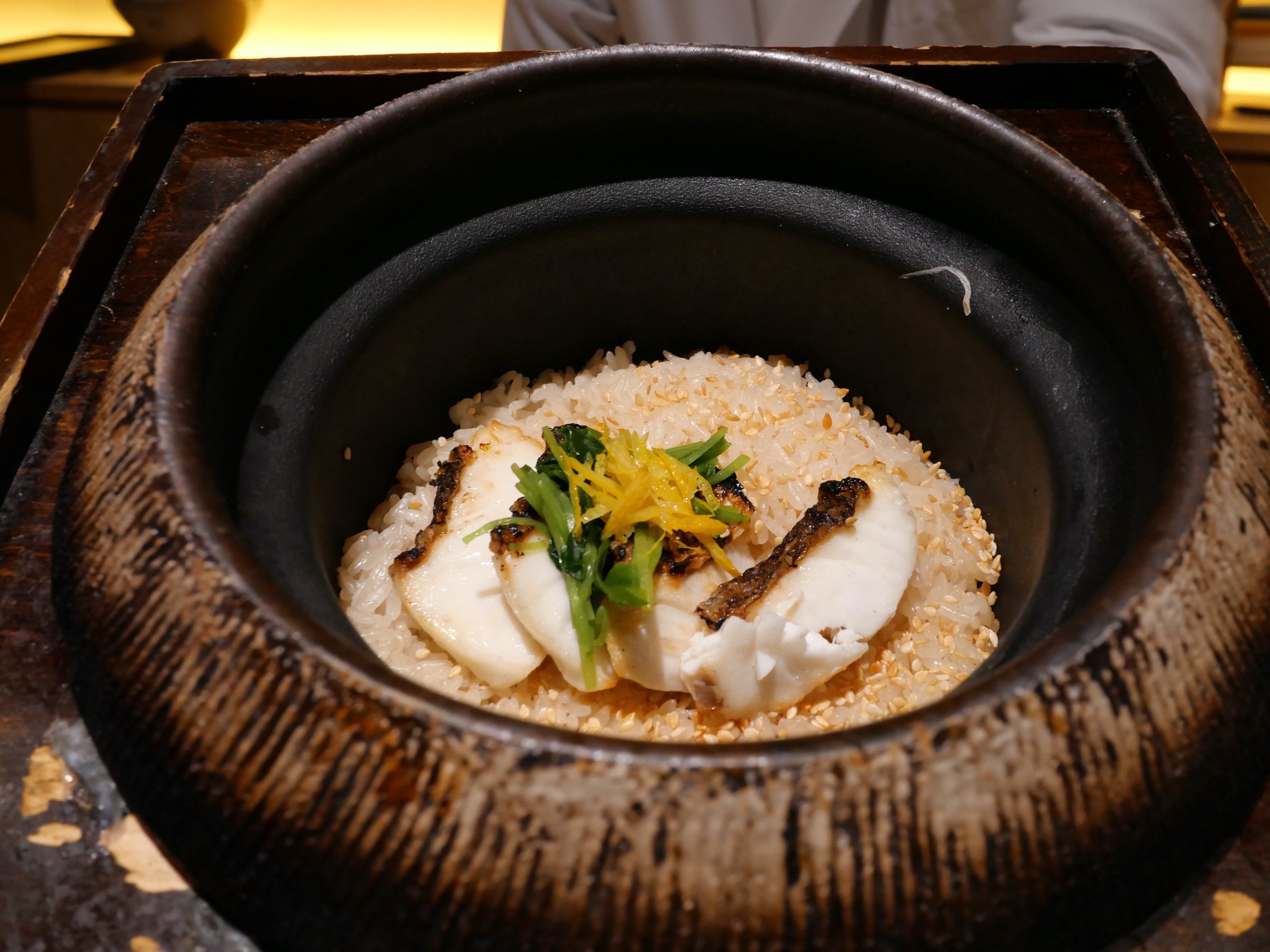
Next, kinmedai cooked with rice, using Tsuyahime rice from Yamagata.
On our first visit, this rice was what astonished us most. In the mouth you can feel every grain, yet it has just the right gentle chewiness, and with each bite dashi seeps out: a mysterious and wonderful rice.
The chef even passed on how to cook it at home, and we have been buying Tsuyahime ourselves ever since. Soaking time depends on the season, but is usually thirty minutes to an hour. The water should be about thirty per cent less than the rice, and at home the quick-cook setting works best. The key, he said, is to bring it up to pressure all at once, then cook it while lowering the heat in three stages. Even so, getting this texture takes a craftsman’s touch.
The chef
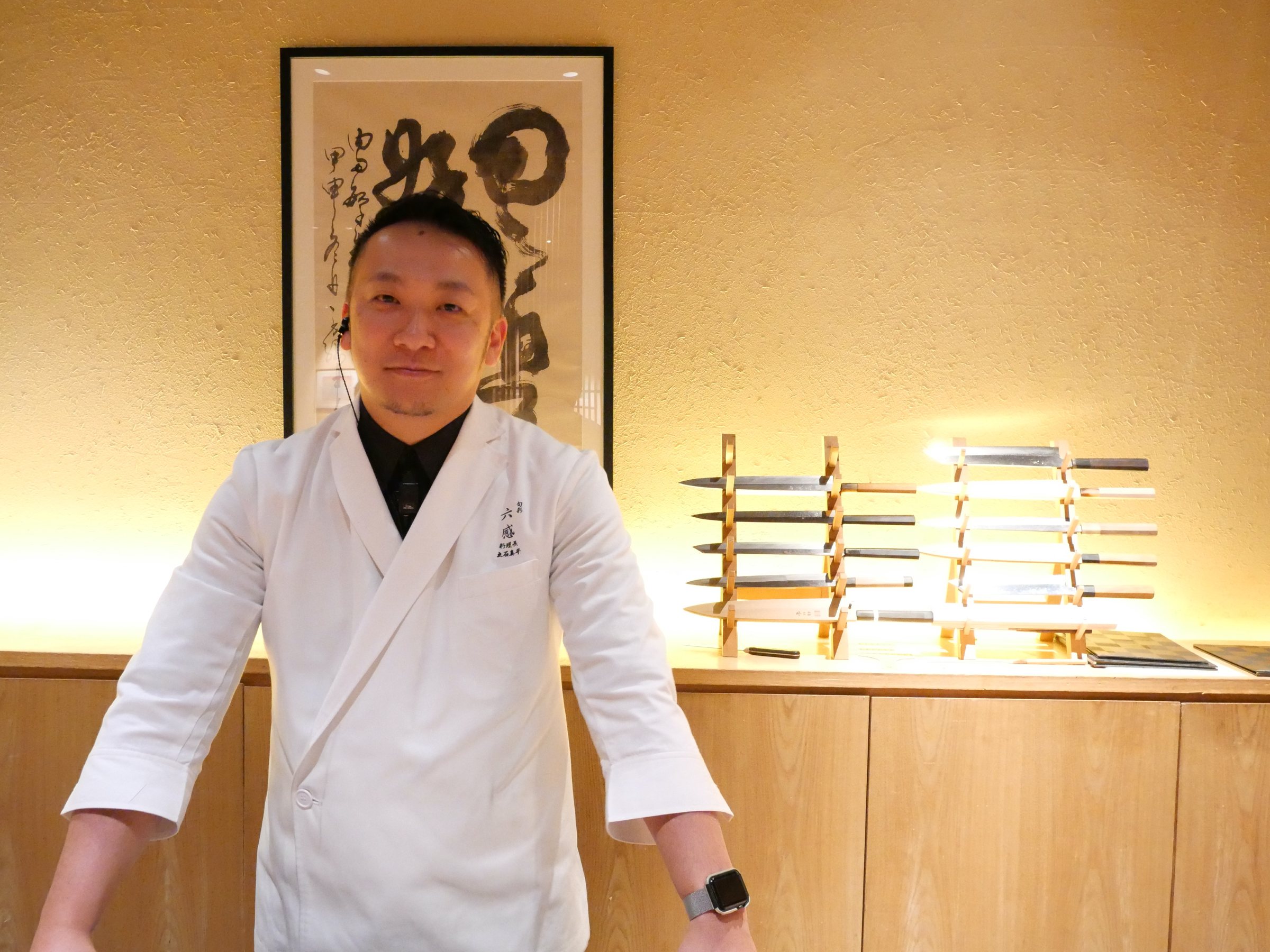
Here is the much-talked-about head chef, who happily agreed to a photograph. Young but devoted to learning, he trained at a well-known kappo restaurant (a refined, counter-style Japanese kitchen) before being brought in to drive Gyokuhokan’s revival project. With every plate he explained the cooking in detail, and his passion for food came through clearly. He shared preparation techniques, even how to draw the flavor from kombu and how to burn off the alcohol in sake and mirin, at a level we would never have expected anyone to share with amateurs.
Sadly, by April 2020 he appears to have been headhunted by another ryokan. You may be able to find him at a new property that has opened in Gora, Hakone. Gyokuhokan now has a different head chef.
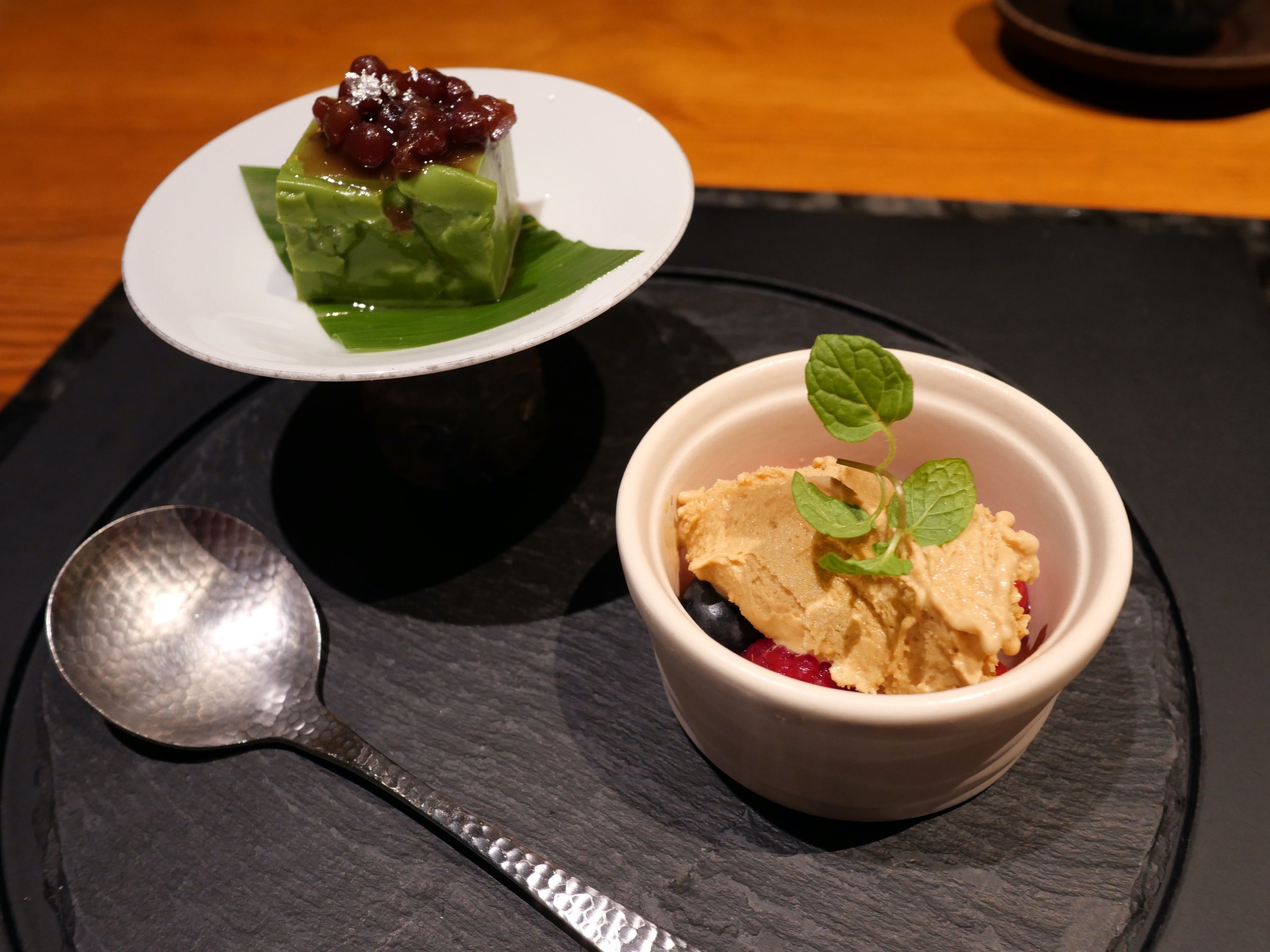
The final sweet was a matcha pudding to which, remarkably, aojiru (a green vegetable juice) is added. The fresh-leaf flavor, he said, brings out the taste of the matcha all the more. Savoring its refined wasanbon sweetness (a fine Japanese sugar), we thanked the head chef, who had stood in front of us and kept us company for hours.
A late-night box
After an open-air bath, we returned to our room to find this waiting: the rice left over from dinner, shaped into rice balls and paired with a dashi for pouring over, in the style of ochazuke.
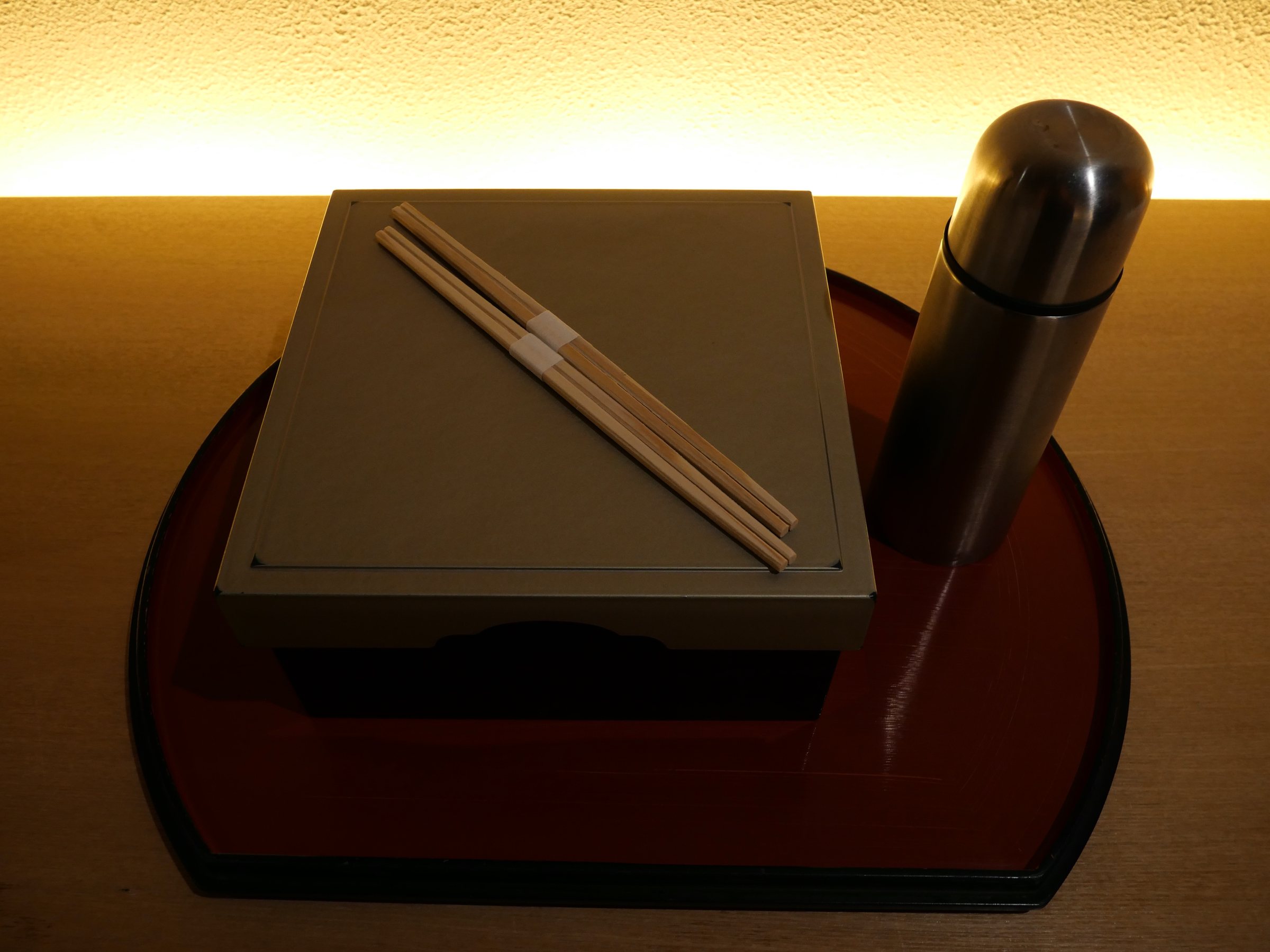
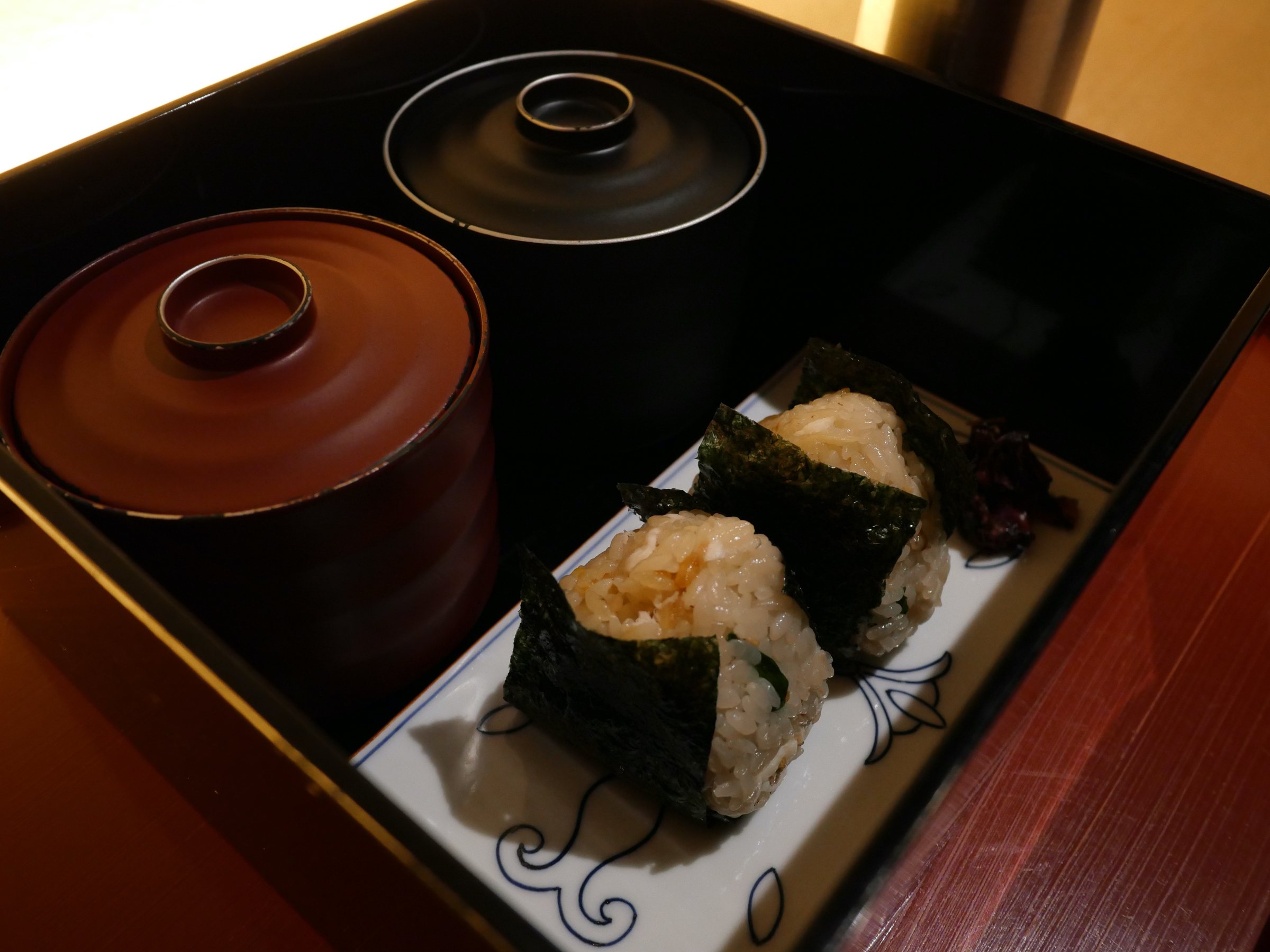
With dinner at around six, hunger can easily strike late at night. A midnight snack on a trip always feels special and a little exciting.
The ryokan at night
At night, a walk through the building is atmospheric and full of interest. The whole place stays hushed, and the mind slows to match.
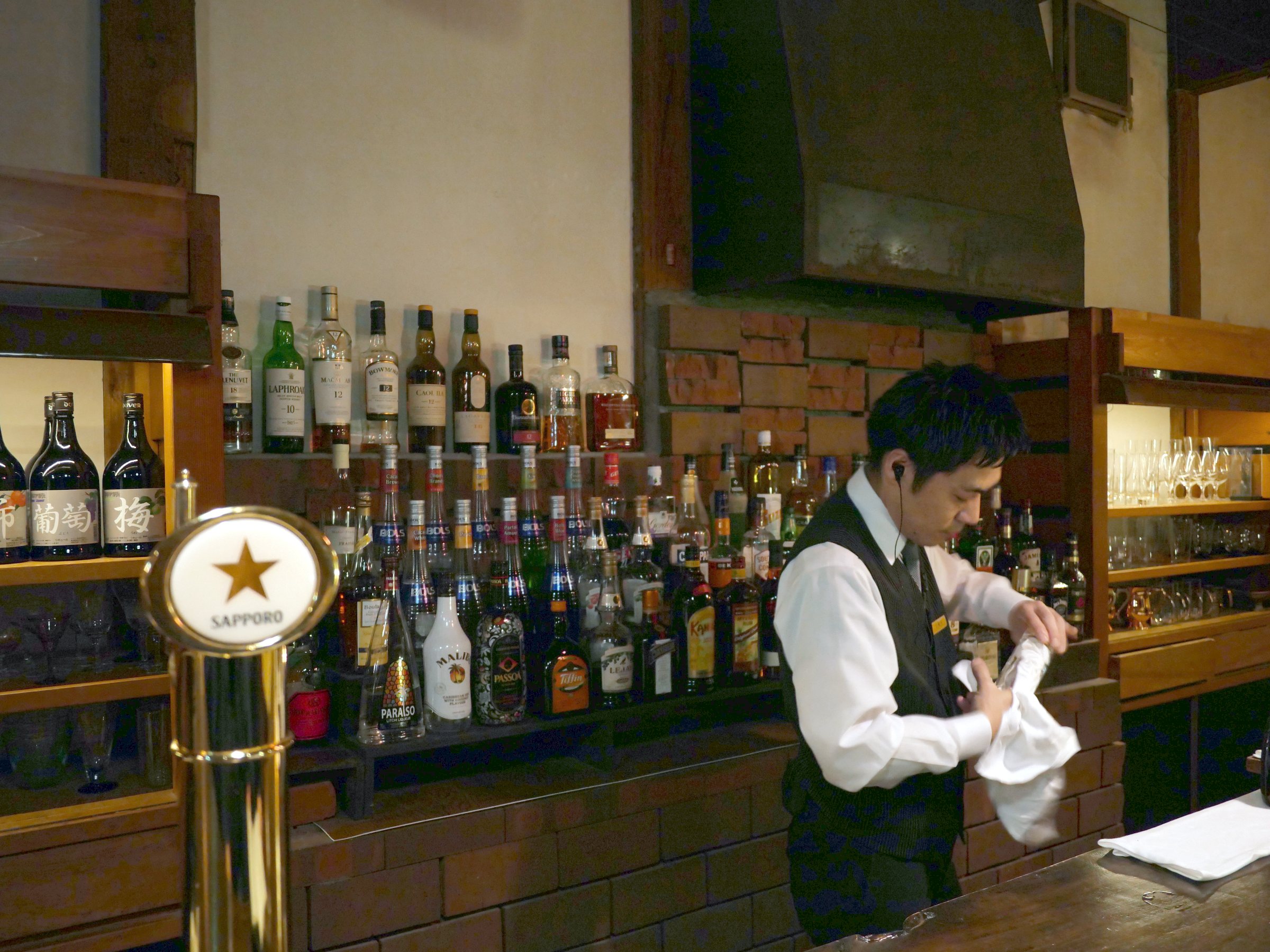
We looked in at the ryokan’s bar. It is a comfortable space, and by chance we had it entirely to ourselves. The man behind the bar, we learned, is the head chef’s younger brother-in-law. The conversation flowed, and we were treated to good drinks and a very happy evening.
We made the most of the room’s open-air bath too, and once we were thoroughly warmed through, we went to sleep.
Breakfast in the morning light
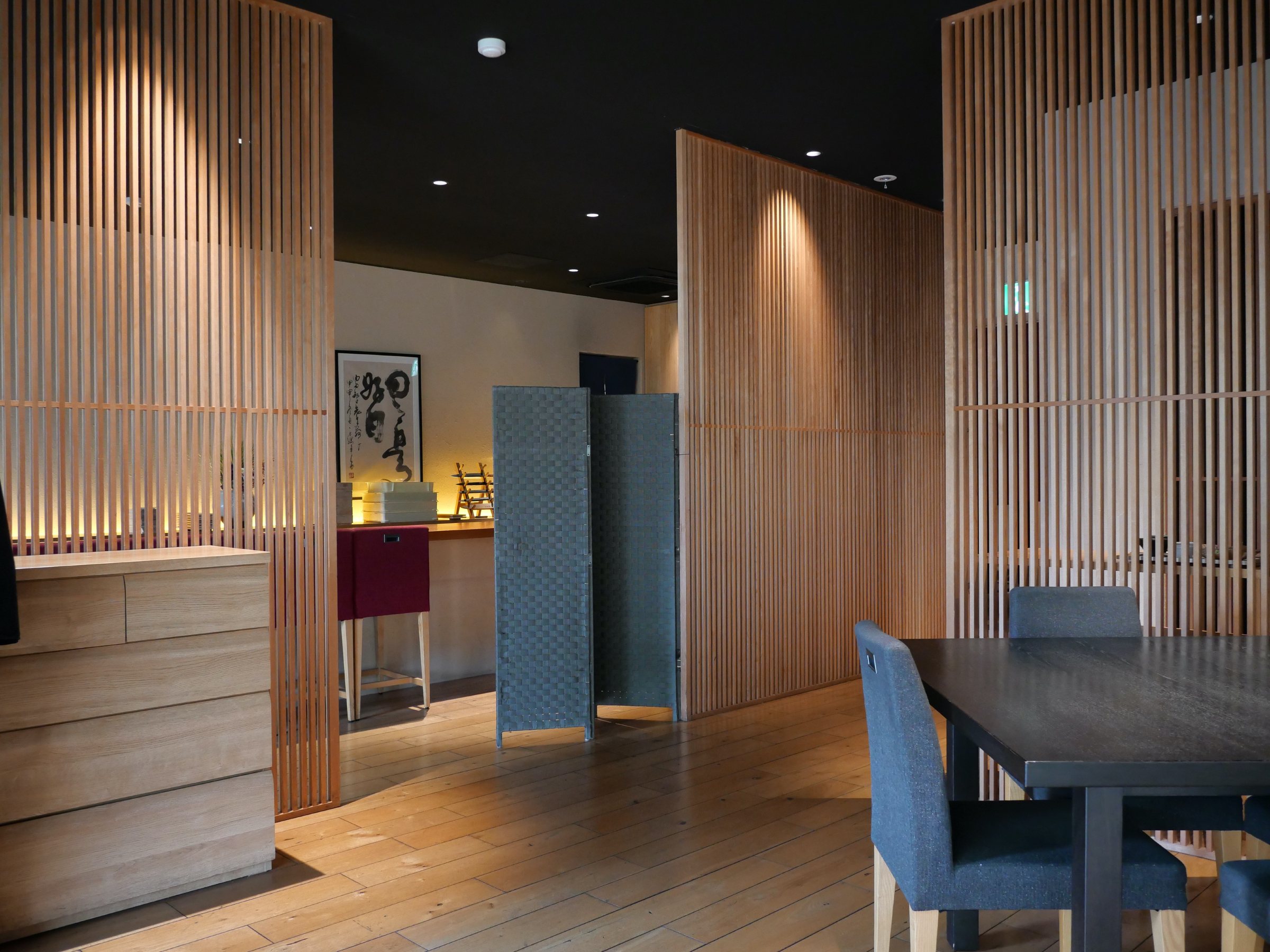
The next morning, the dining room felt so different that it was hard to believe it was the same place as the night before. With morning light pouring in, it was a wonderfully fresh space in which to eat breakfast.
The first plate of the morning was a refreshing start.
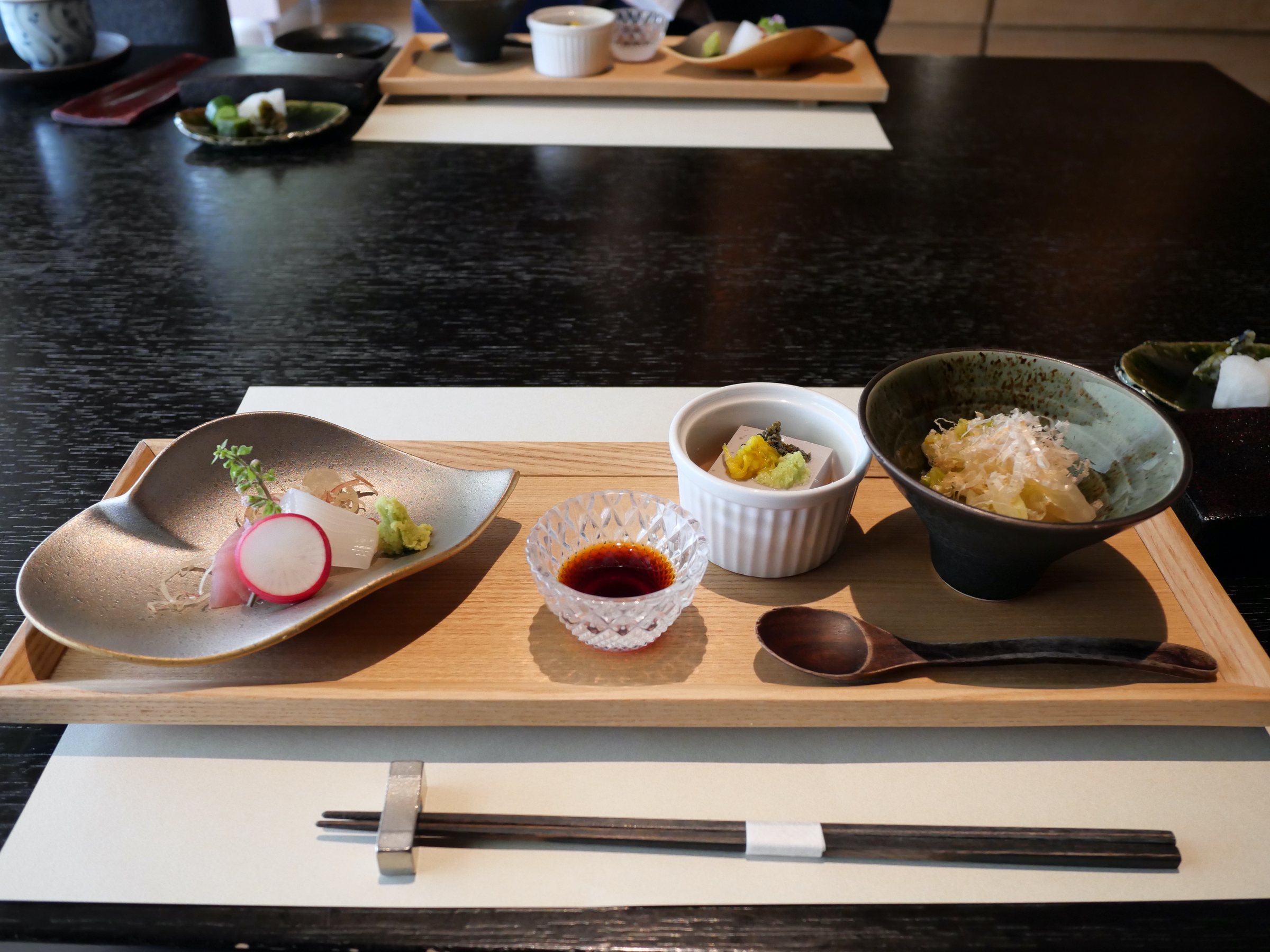
Anything that arrives wrapped in a box raises the anticipation, and the presentation, in the style of a tiered jubako lunch box, was lovely.
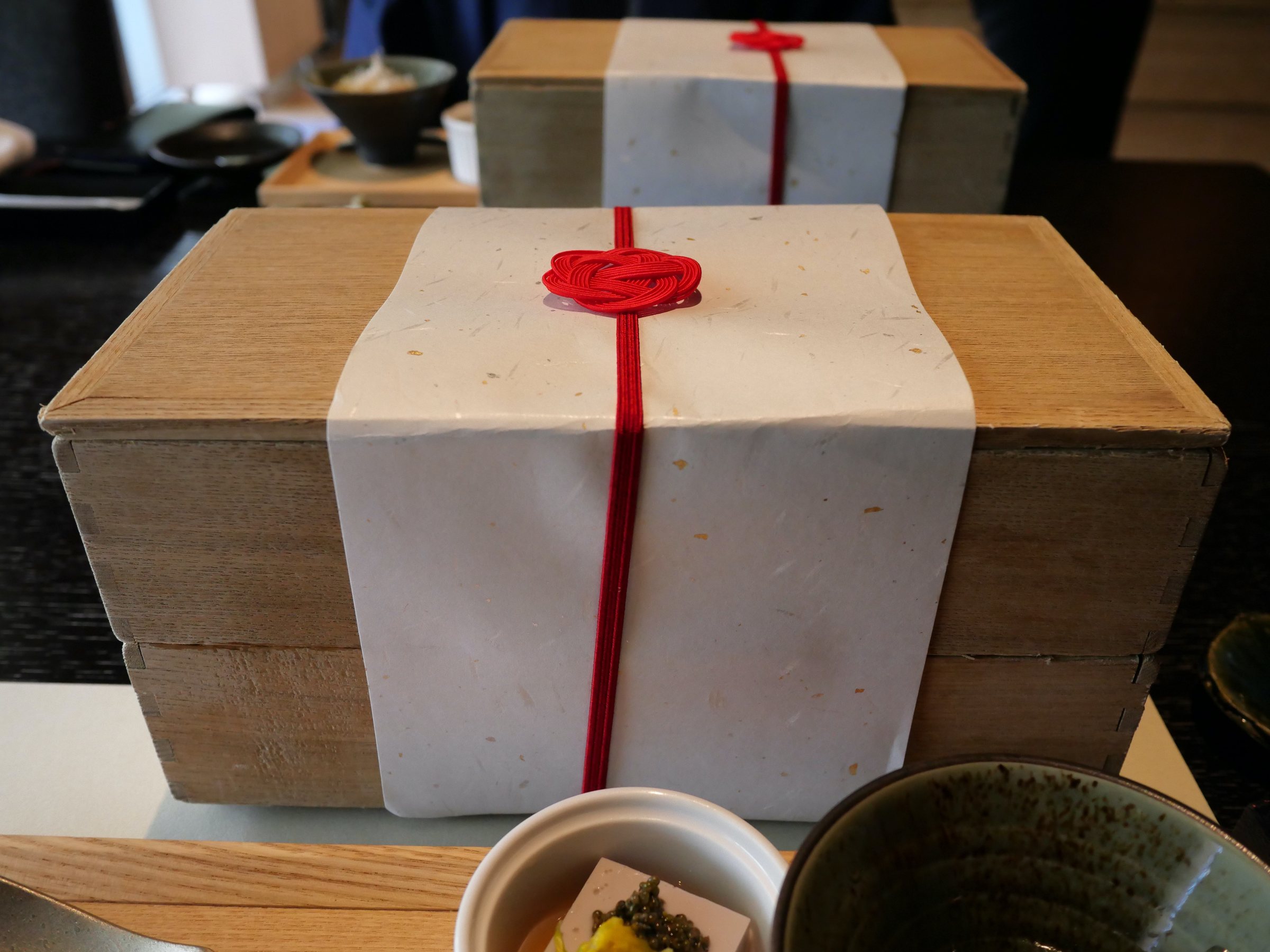
Inside were accompaniments for rice and carefully seasoned side dishes: a many-layered rolled omelet fragrant with dashi, and even something like a lightly seasoned kakuni (braised pork belly).
We became real fans of the dried fish here. The bones had been carefully removed, the skin grilled to a crisp, and the seasoning was just right, with a saltiness unlike any we had come across in the Kanto region.
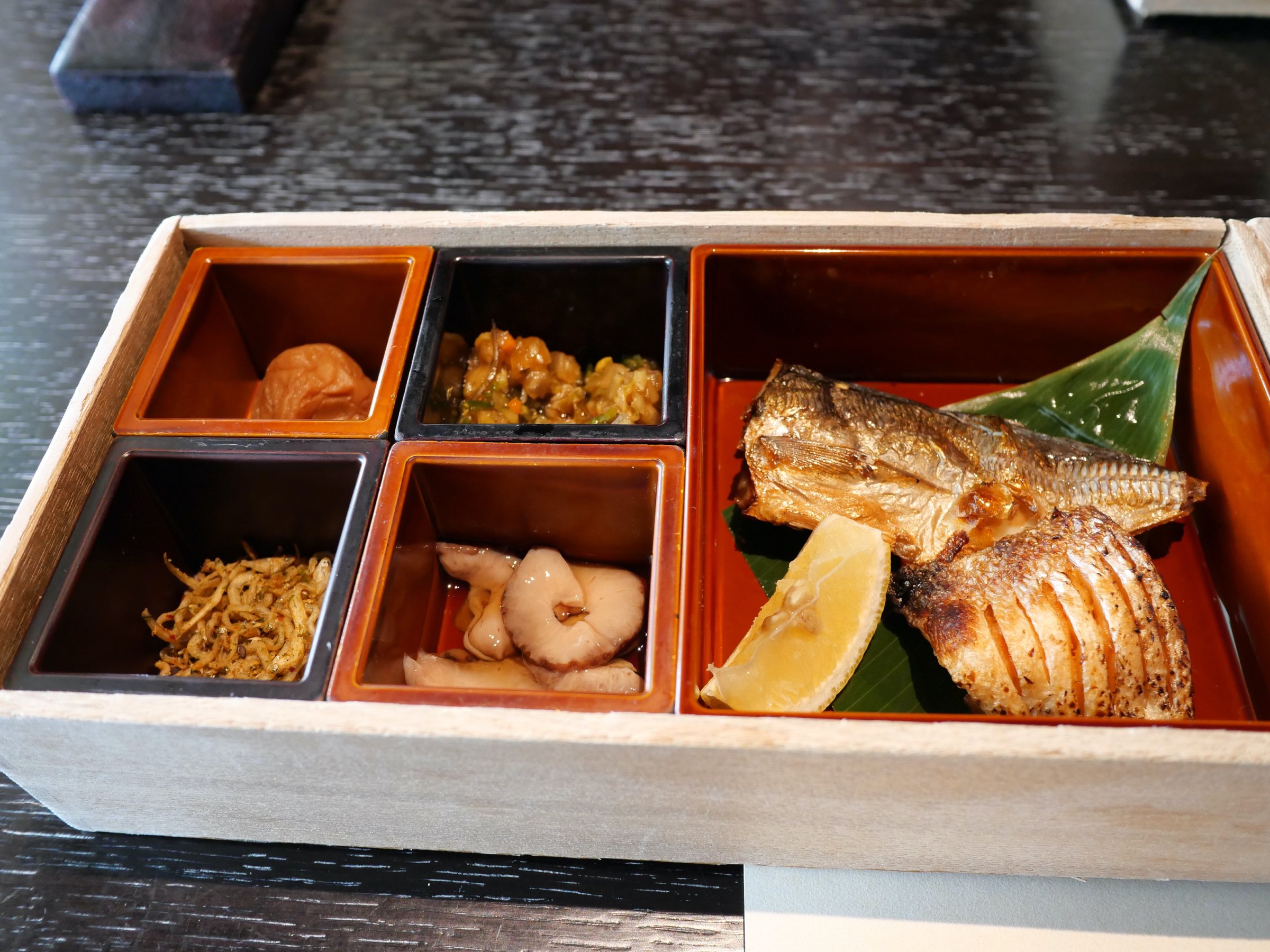
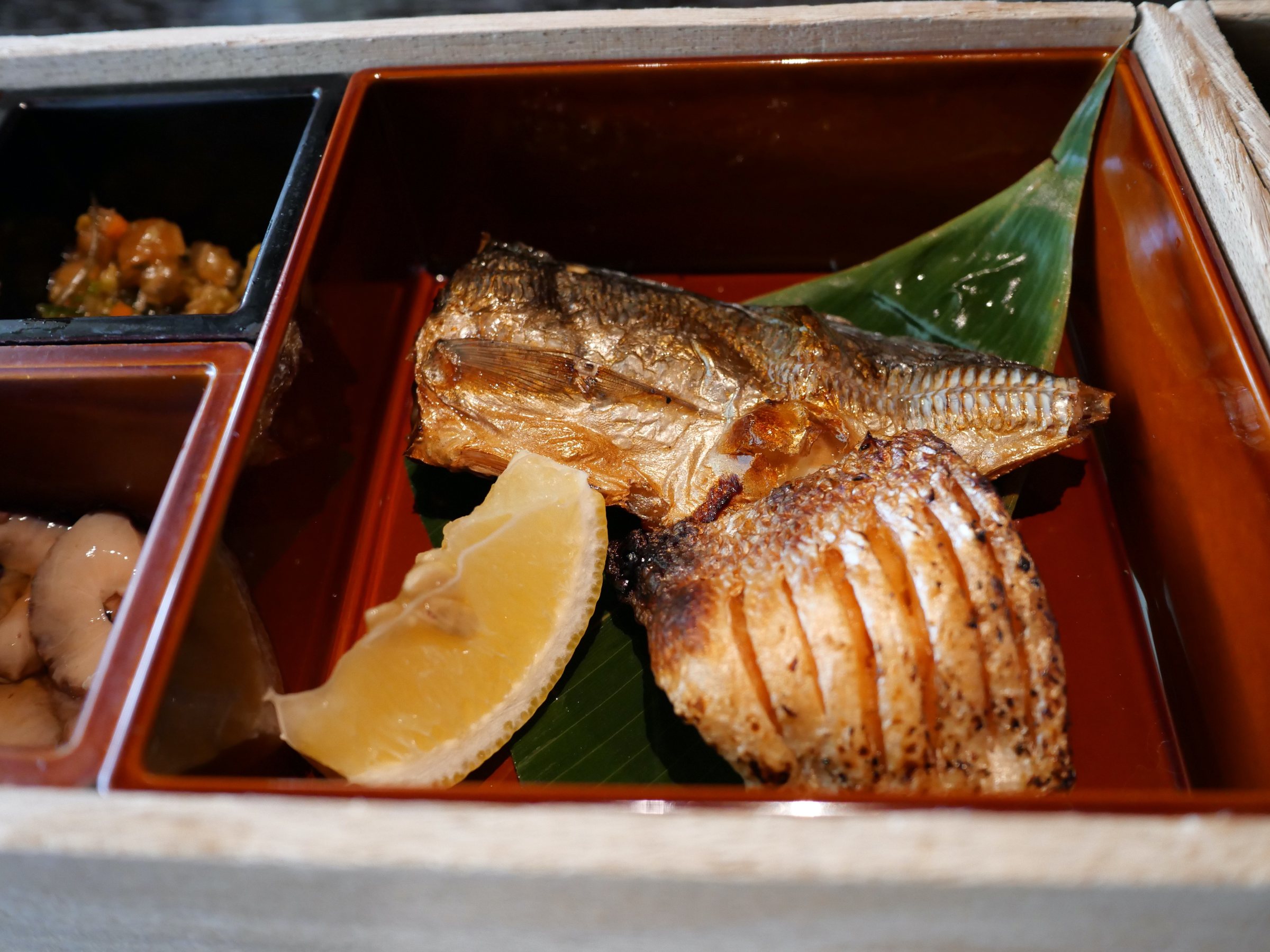
The fish was so good that, on our way home, we called in at the dried-fish shop the head chef had told us about the night before and bought some as a souvenir. The shop also sells online through its official website, if you have time to take a look.
A note on the tableware
One thing we always notice about the food at Gyokuhokan is the limited variety of tableware. However many times we visit, the dishes are the same. With so few rooms and so few covers to serve, a wider range of vessels would make things better still.
When we visited again in July 2020, a plate decorated with autumn leaves was served in midsummer. The cooking had also changed from the previous head chef’s, which we accepted might reflect company policy. As fans, we would be delighted to see the new head chef take things to a higher level.
Final thoughts
Things may not be the same today as at the time of this review, but for conversation with the cooks at the counter, the hot-spring source and the atmosphere of the place, Gyokuhokan is well worth a visit.
This review reflects a visit in early 2020, with notes from a return in July 2020. The head chef described here has since left; please confirm current details directly with Gyokuhokan before visiting.