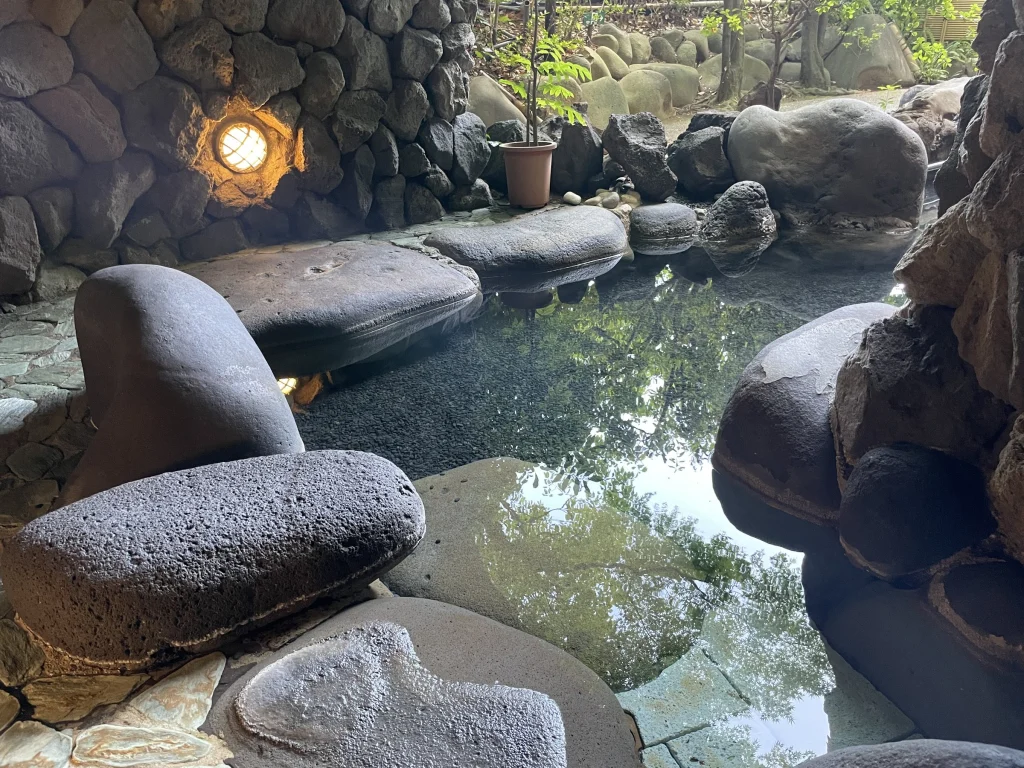
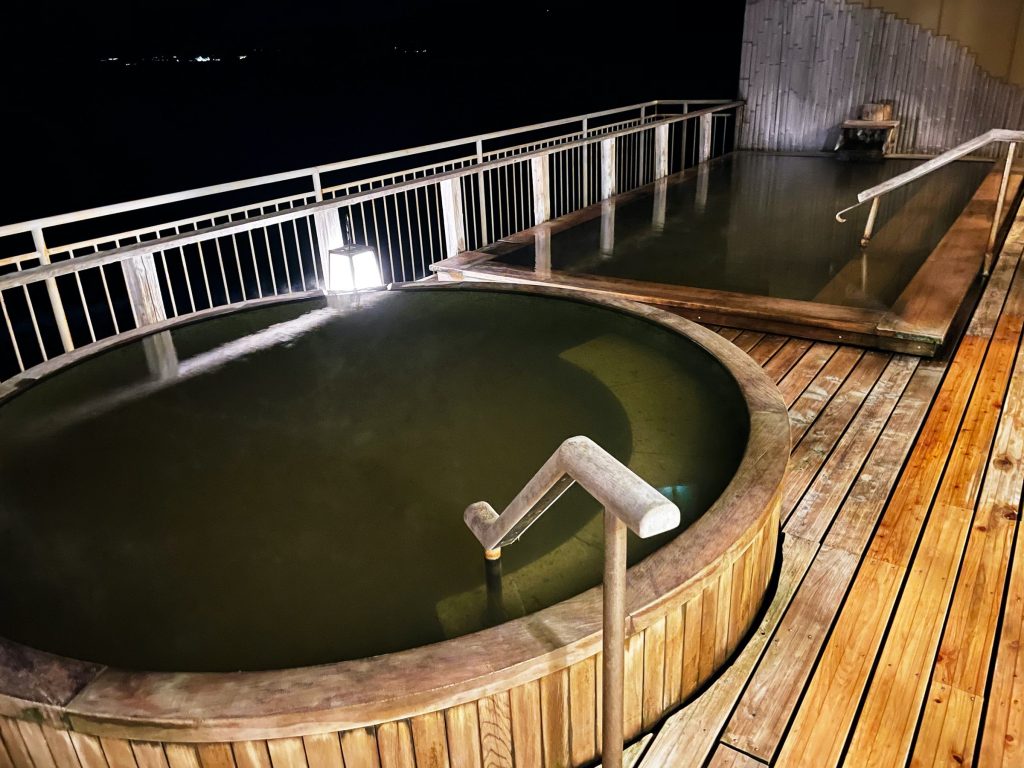
In Shuzenji, a quiet hot-spring town with a long history, stands Asaba, a ryokan whose traditions have been nurtured for some 350 years. Its story begins with an ancestor, Asaba Yakuro Yukitada, who came here in the company of the Zen master Ryukei Hansho, sent from Kegon-in in Enshu to found Shuzenji Temple. Here, with Mount Daruma to the west and the lovely Katsura River alongside, Yakuro left the Asaba family name. Later, Asaba Yasuemon opened a hot-spring ryokan, and ever since, Asaba has cultivated its traditions together with its many guests and the town of Shuzenji. This review reflects my stay on 12 October 2020.


The welcome begins the moment you arrive. Cars are taken by valet at the entrance, and there is no check-in procedure at all: guests are shown straight to their rooms. It is worth comparing the entrance by day, fresh and spotless, with its quieter, more understated character at night. At this time of year every door stood open, letting a refreshing breeze run through the lobby, and the seasonal decorations showed real taste. A small inner courtyard opens directly off the corridor, so that walking to the room feels like passing a framed painting.
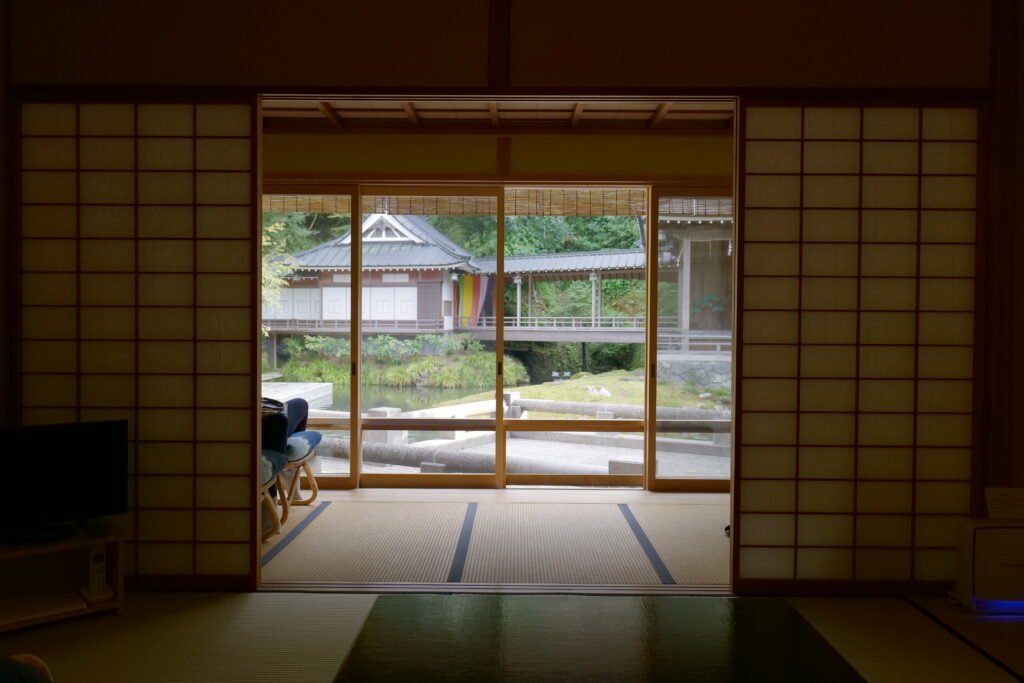
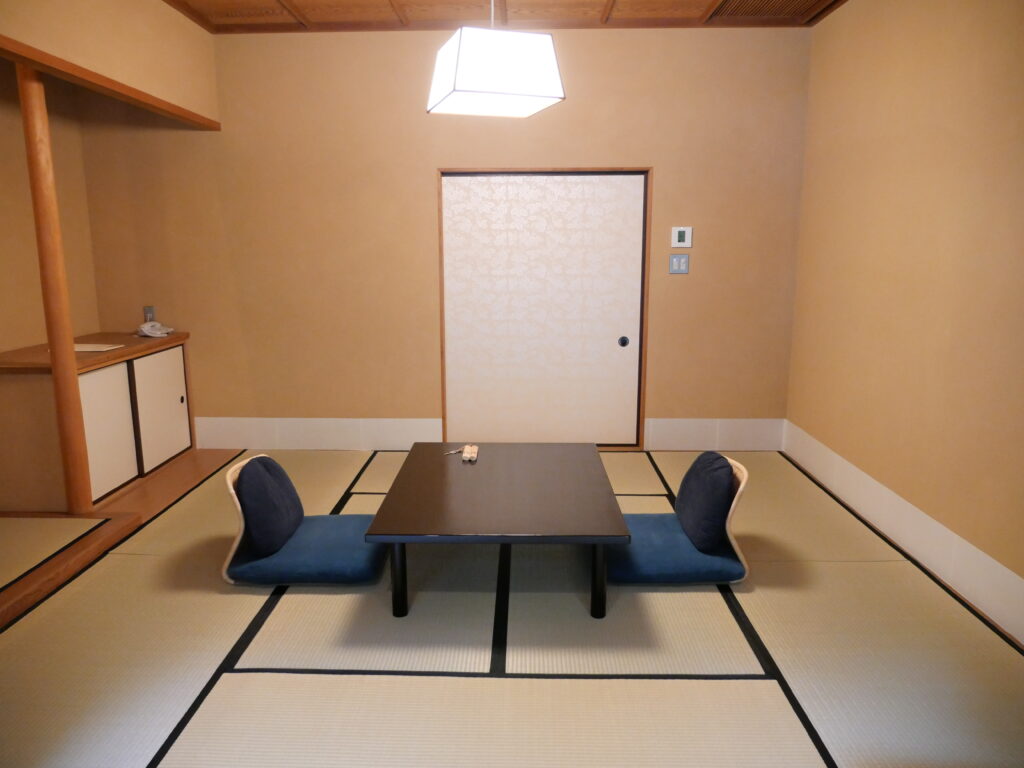
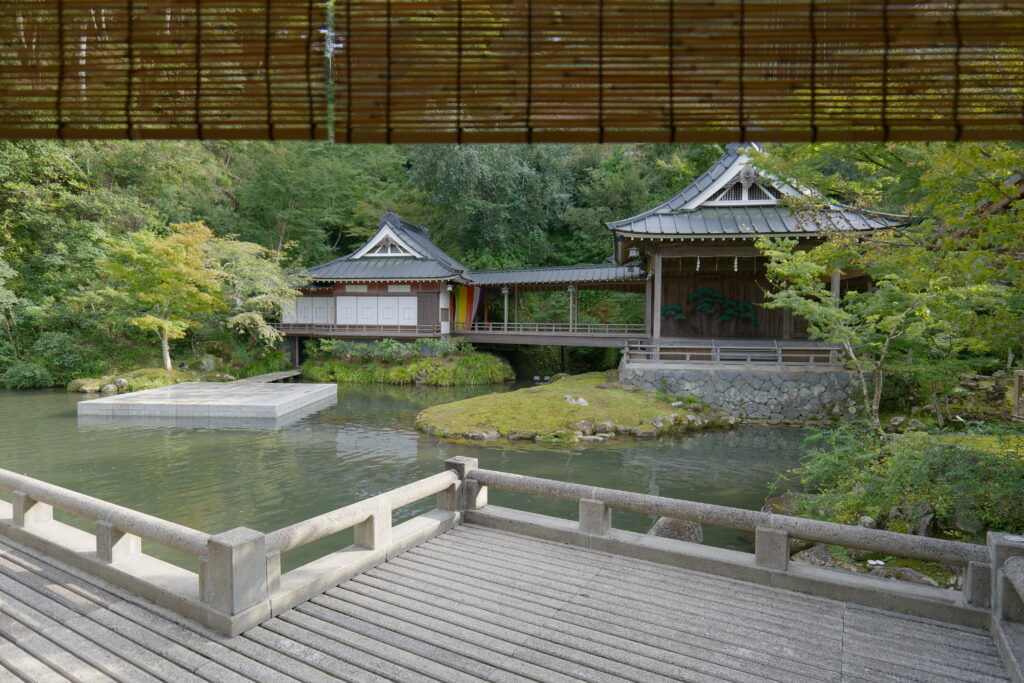
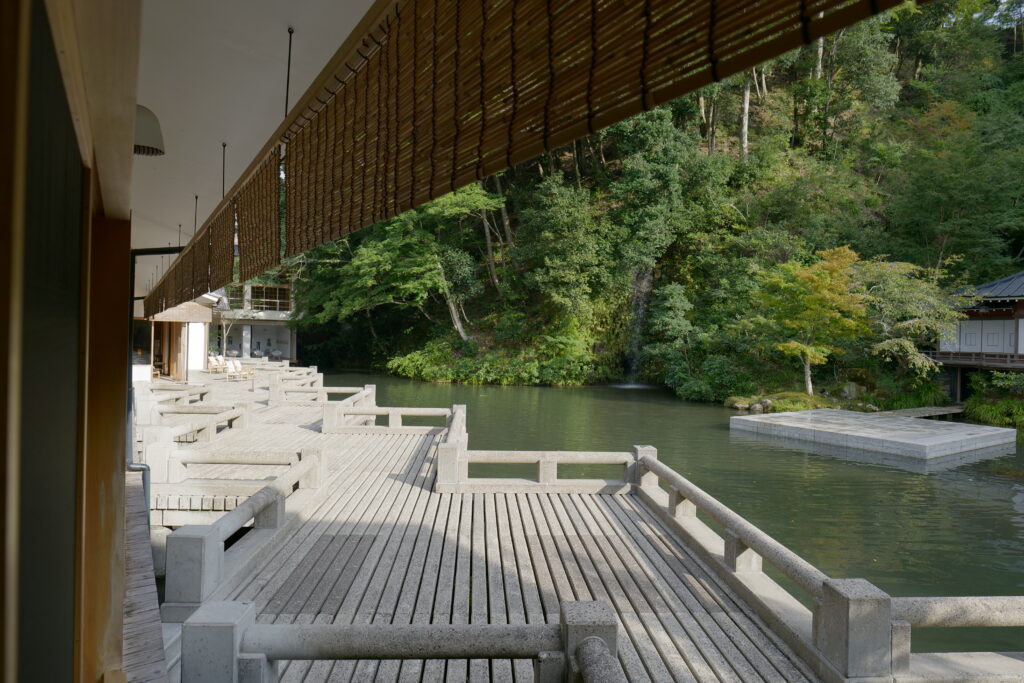
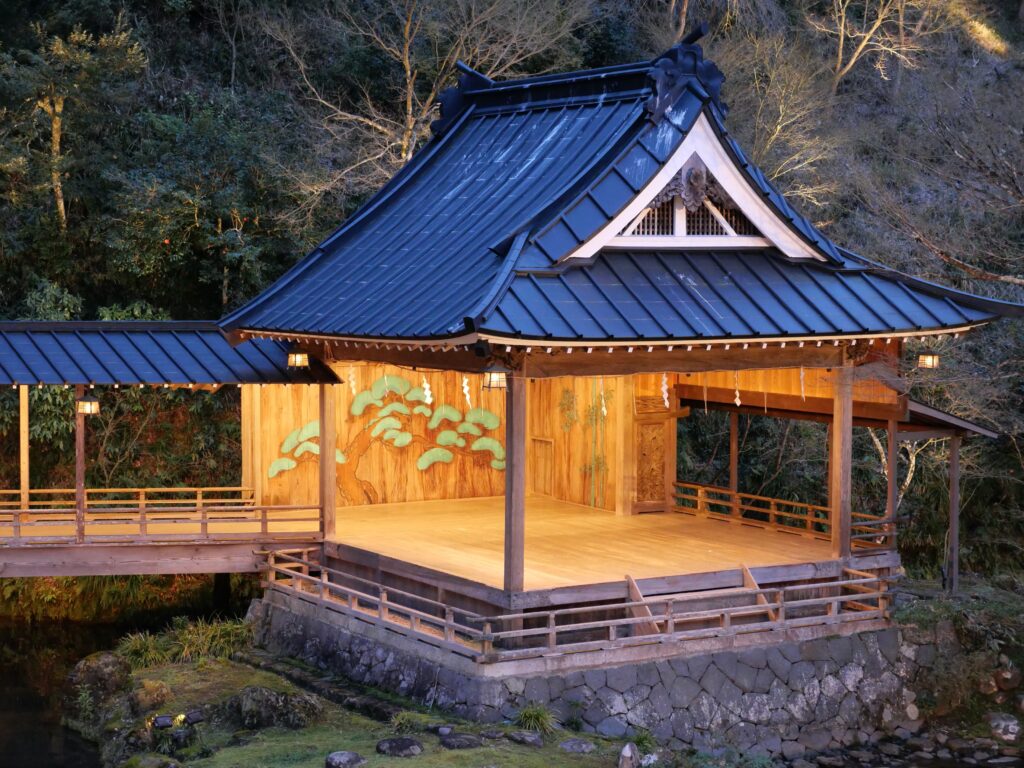
The room was a single twelve-tatami Japanese-style room without a private bath. It is one of the better-value rooms at Asaba, yet the meals are the same as those served in the finest. My room (which has since been refurbished, in 2023) was on the ground floor, looking straight out onto Asaba’s emblem, its Noh stage, and the terrace: Japanese scenery at its most luxurious. The stage hosts performances of Noh and taiko drumming several times a year, and rooms on those dates are much sought after, and priced accordingly.
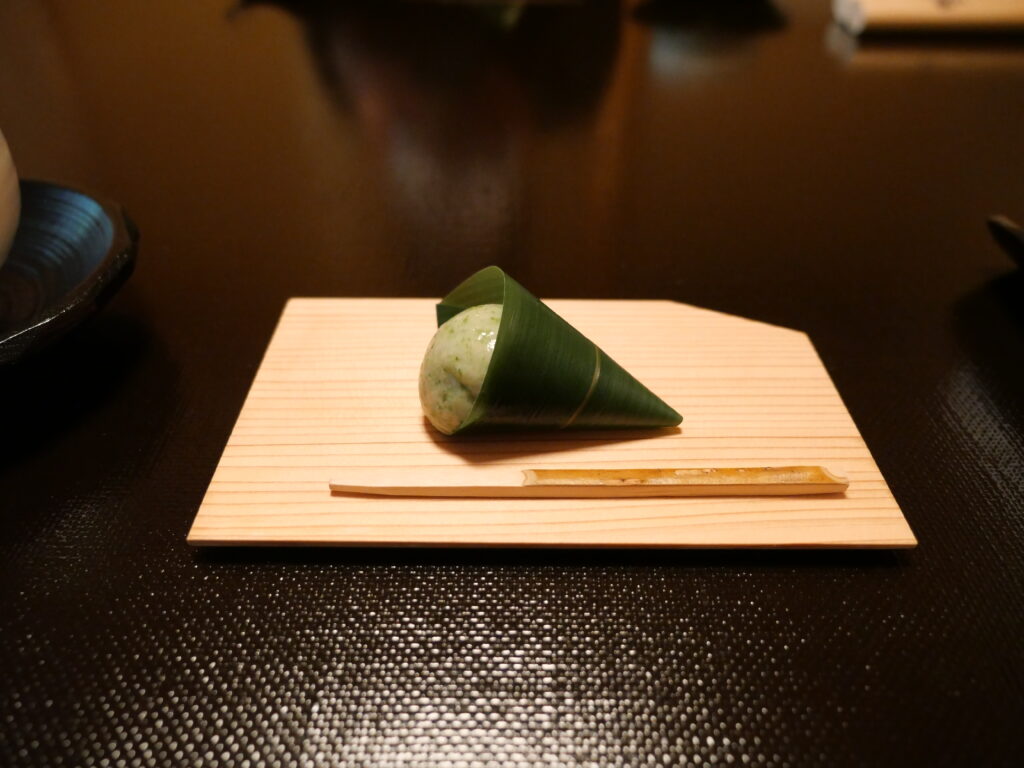
Asaba does not treat guests differently according to the grade of their room, and it is wonderfully comfortable. There is none of the stiff, slightly intimidating formality one sometimes meets at long-established ryokan; the mood is relaxed. Our attendant’s easy conversation and smile put us at ease as we settled in with good tea and a handmade sweet made with nama-fu (fresh wheat gluten).
Guests choose from two kinds of yukata (light cotton robes) and head to the baths empty-handed. From the entrance lobby, the garden, pond and mountains fill the view through a vast single pane of glass, cleaned without a single fingerprint. The whole building can be explored barefoot or in socks, and we were struck that our soles picked up no dust at all. We explored every corner, even halls and an annexe that seemed not to be in use, and found not a speck. The joins of sashes and sliding doors in a traditional Japanese building gather dust daily, yet even the edges of the ceilings were spotless. The staff, too, moved about the spacious building without a sound.
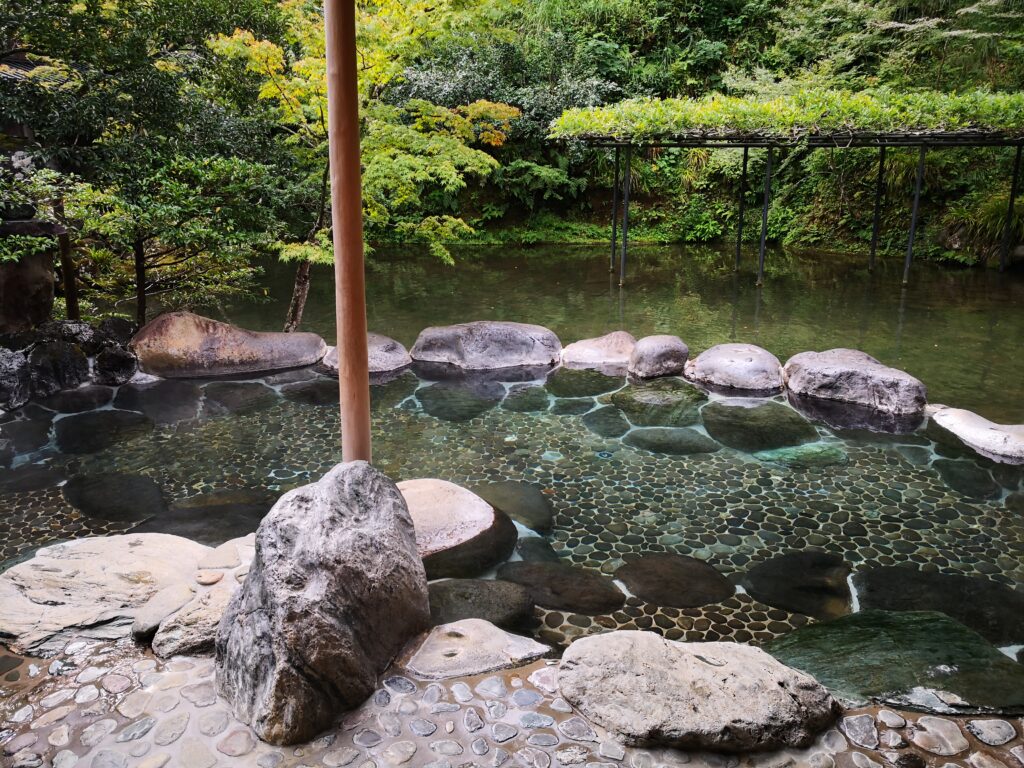
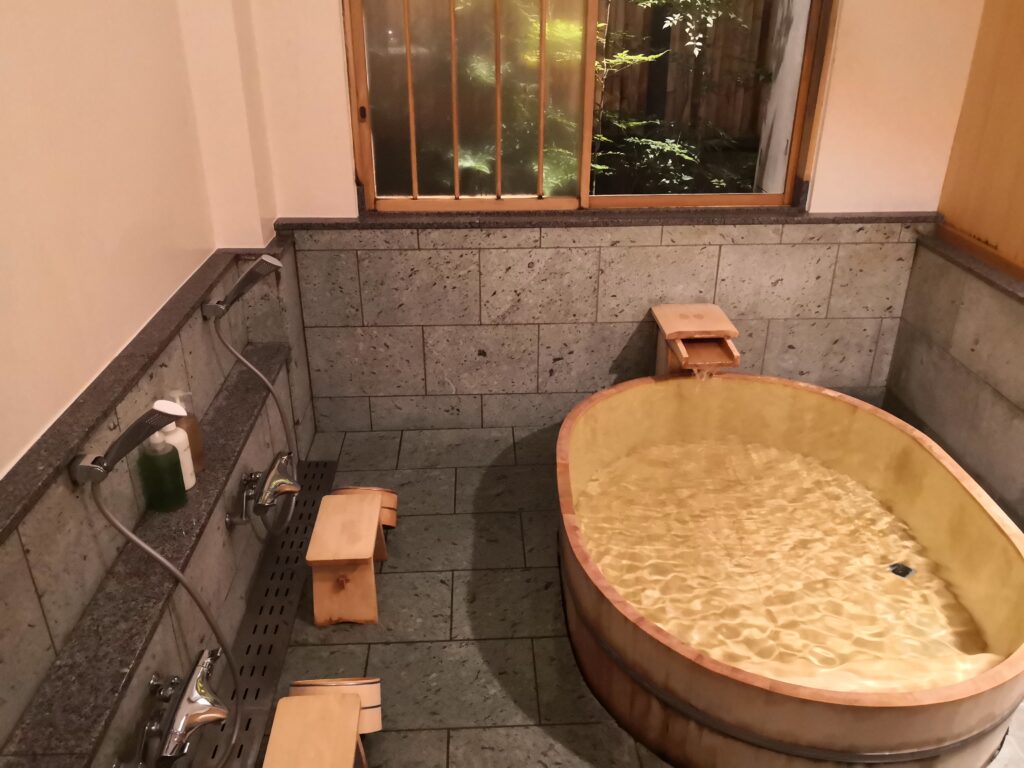
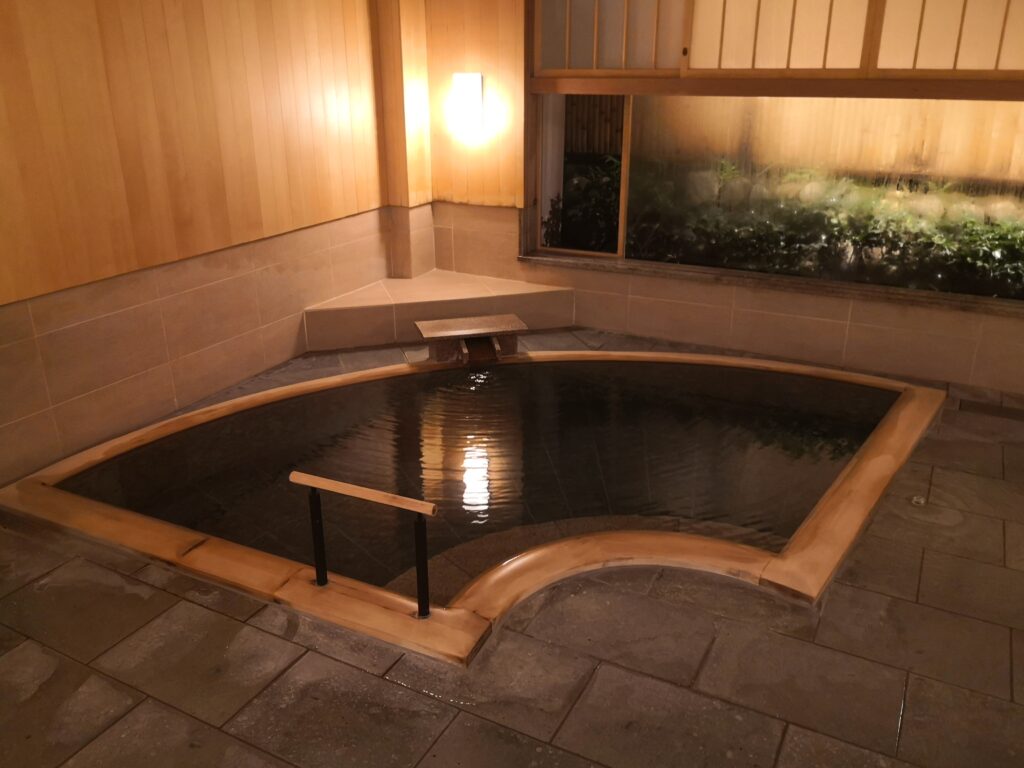
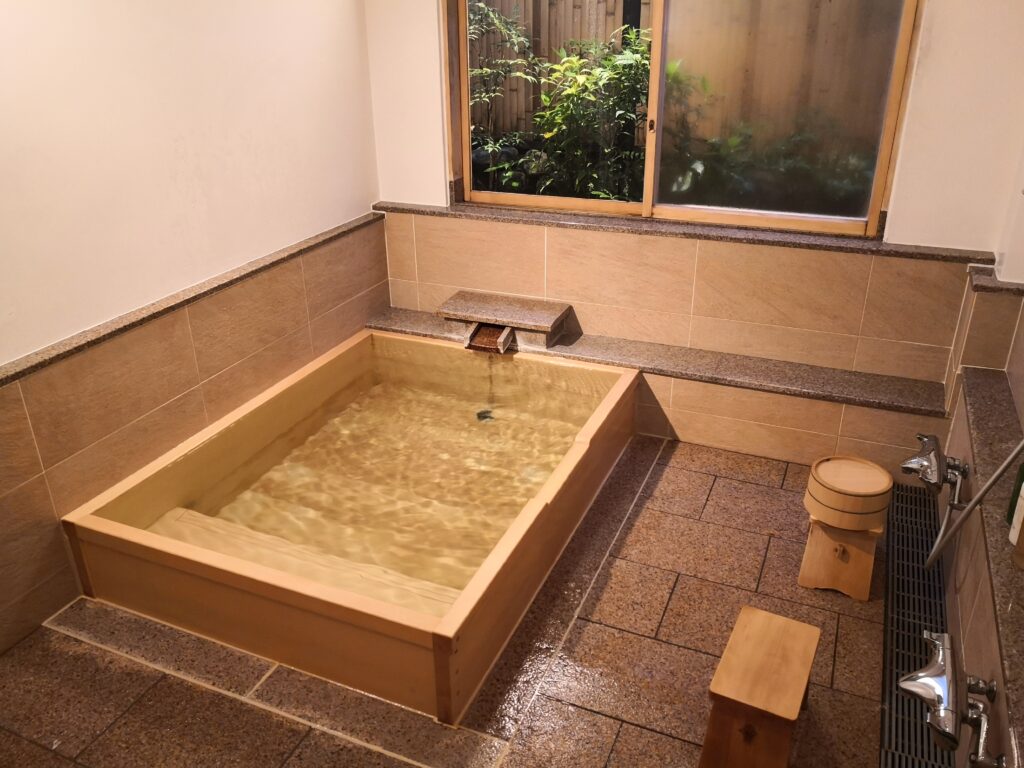
The indoor and open-air baths alternate between men and women at set times. Anyone who visits when the wisteria trellis by the open-air bath is in full bloom is to be envied. Bath towels are kept warm in a heated cabinet, a thoughtful touch that means no chill after bathing, even in midwinter.
The scenery changes completely with the seasons, and this is a place in which we would like to experience all four. The indoor bath is a calm, atmospheric space, and its modestly sized tub makes it feel all the more special. There are also private baths, which can be used as often as you like during your stay whenever they are free.
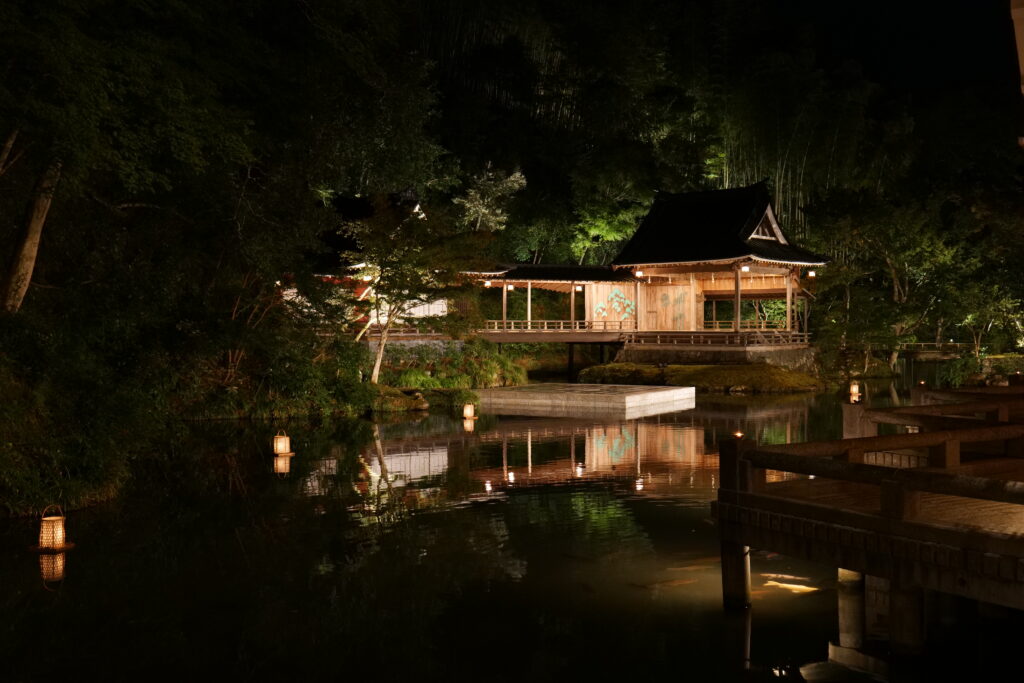
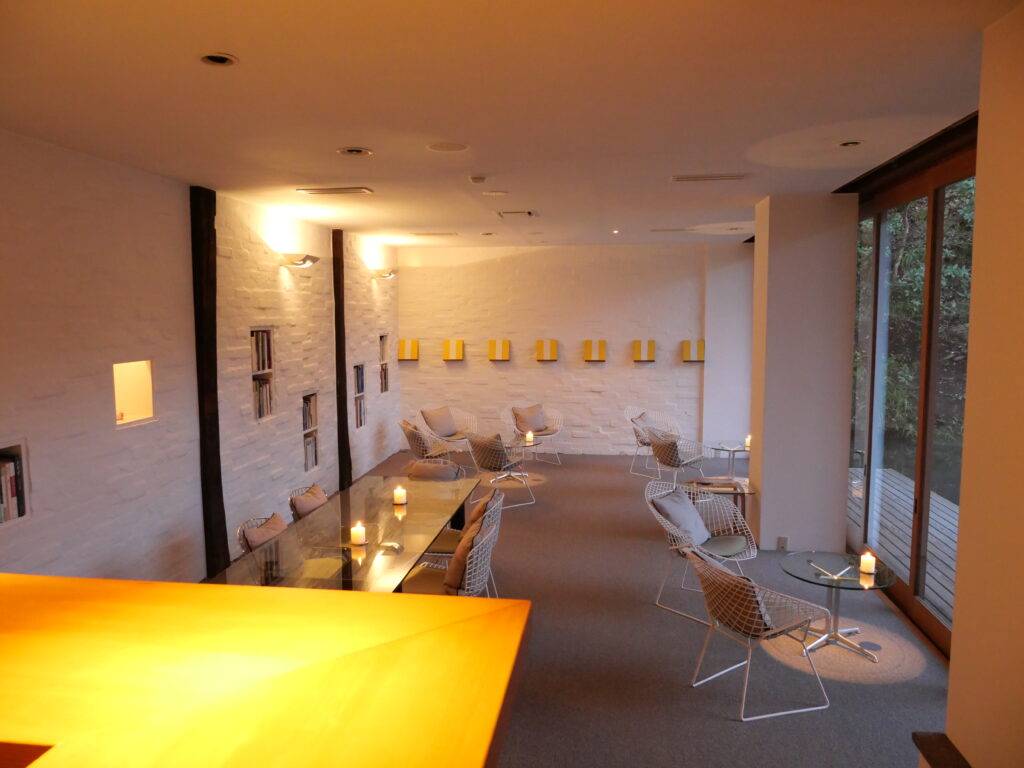
The time between the sun beginning to set and darkness falling seems to pass in an instant, thanks to the Noh stage in the grounds and the hours spent gazing over the garden. Wherever you stand and whichever way you look, Asaba’s grounds make a picture, and they are sure to move visitors from abroad as well.
Cooling down after the bath in the salon with a cup of its coffee, we found the scene quite enchanting: a cool breeze and the song of bell crickets combined into something almost dreamlike. Now and then a carp splashed in the pond, and the flames of the andon lanterns floating on the water flickered gently. The banto, the ryokan’s head clerk, lights them one by one from a boat every evening, a sight that makes a picture in itself.
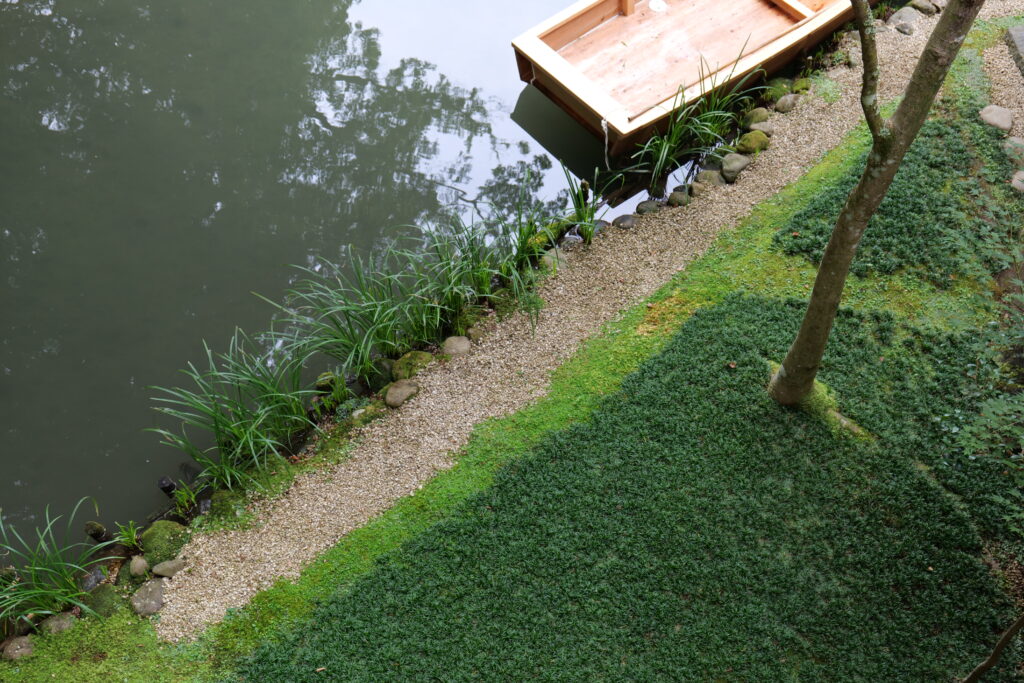
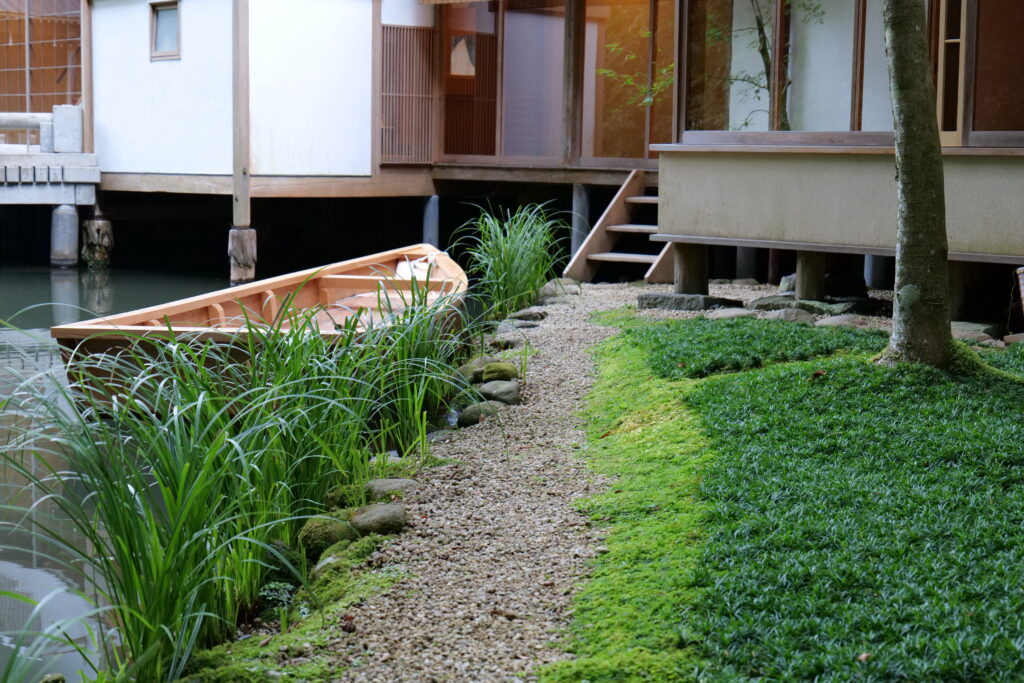
By day, the well-kept grounds are just as refreshing, and sitting in the salon in the morning to the sound of birdsong is a graceful way to begin. In the morning the banto opened the salon’s storm shutters and greeted us politely. He took care to make no noise even while moving tables and chairs, checked on us as he readied the room, then bowed deeply and said with a smile, “Forgive me for disturbing you so early,” before leaving. Attention this fine makes you naturally want to conduct yourself with a little more grace too.
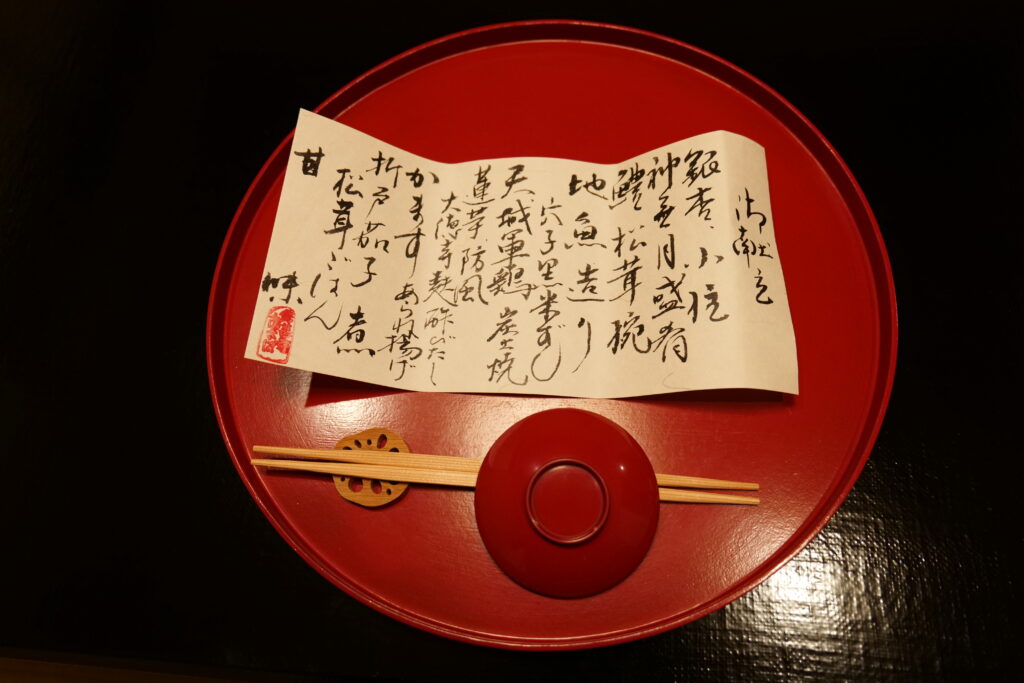
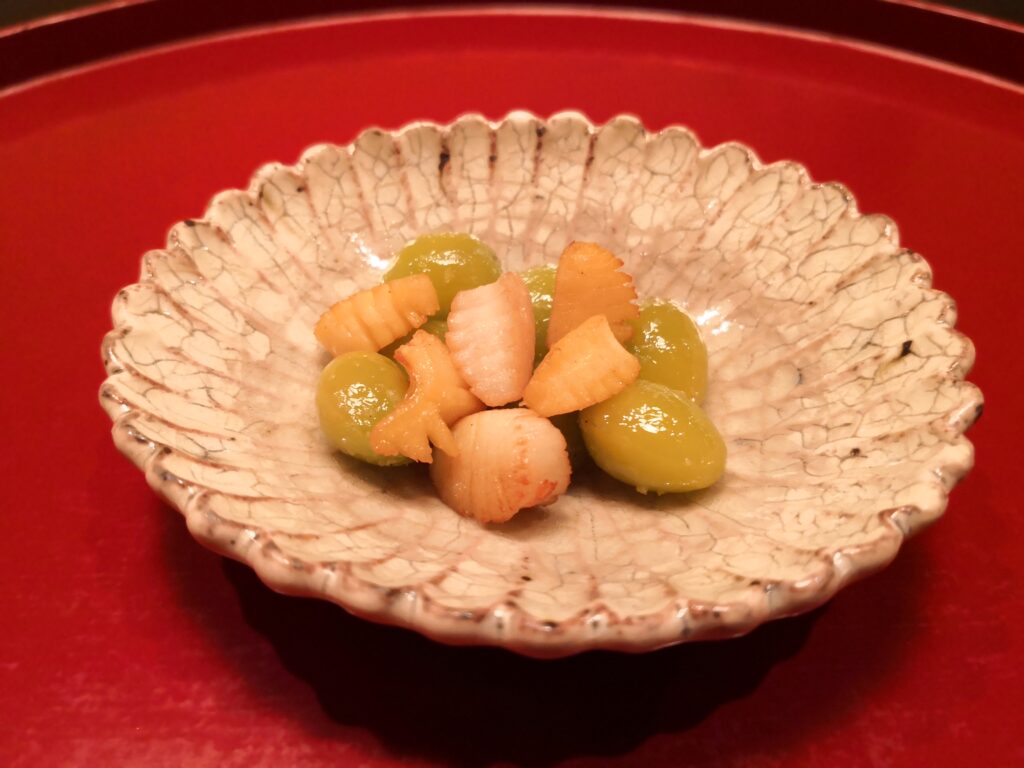
Dinner, eagerly awaited, began with an aperitif of local Shuzenji sake: dry, clean and very easy to drink.
Ginkgo nuts and scallop
The first dish, simply seasoned with salt, made a graceful, understated opening. Dinner is served in the room, and our attendant brought each dish in turn with a detailed explanation. The standard of Asaba’s attendants is very high, and her tone and volume of voice were a pleasure to listen to. One thing in particular caught my attention as we talked. She had the air of a veteran, and while speaking she looked from one of us to the other, then lowered her eyes as she reached the polite close of each sentence. Even her laugh was refined. Perhaps it was simply her own character, but her sense of what it means to work at this ryokan was something to learn from.
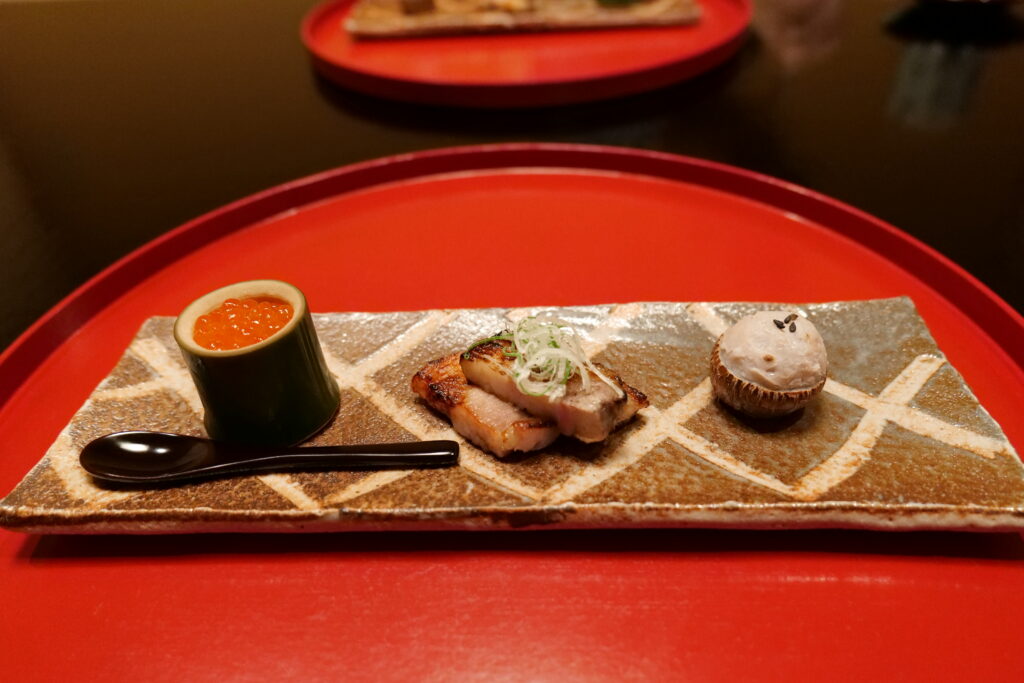
Ikura (salmon roe), apparently homemade (left)
Moist and full of concentrated flavor, with just the right degree of salt.
Mangen pork marinated in Saikyo miso (center)
The fat had a pleasing crunch, and the seasoning and cooking were designed to taste good even once cooled. Having meat as the second dish was, oddly, very satisfying.
Kinukatsugi (right)
Small Ishikawa taro, steamed in their skins, in a dish that carefully brings out the vegetable’s natural flavor. Their sticky texture lets the taste linger on and on.
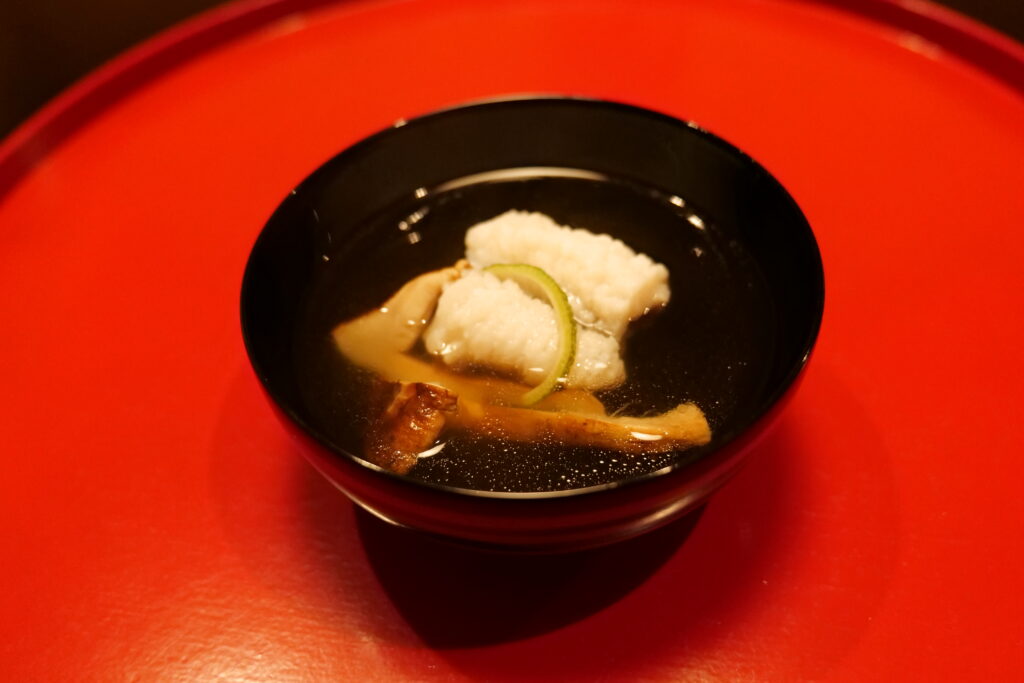
Hamo and matsutake soup
Normally this arrives in a large pot and is served out at the table, but given the circumstances of the time it came in individual bowls. It may well have been the best hamo (pike conger) we have ever eaten. The fish itself was well seasoned with salt, and as you bite, its fat comes through from deep within, exceptionally good. A faint sheen of hamo fat floated on the surface of the refined broth, which was superb: the skill of the dashi and the scent of matsutake reached both palate and nose. The matsutake that day, we were told, came from China.
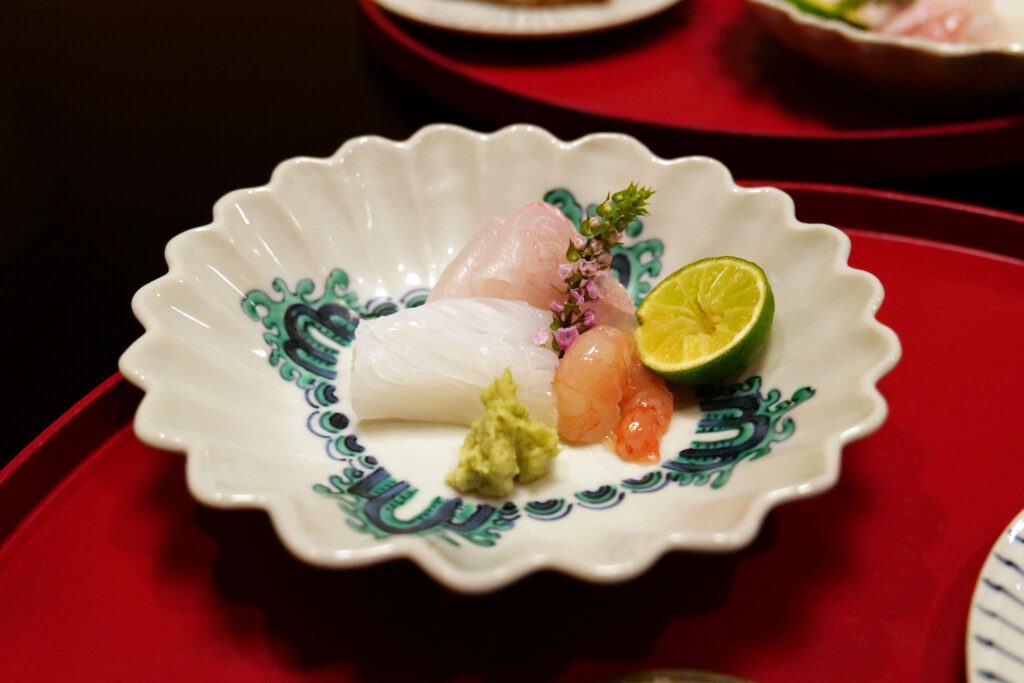
Local fish sashimi: bigfin reef squid, flounder and sweet shrimp
The sashimi, drained of excess moisture and aged, is eaten with local wasabi and salt. The squid was moist and sweet, yet thanks to fine hidden cuts it still had bite. The flounder, its moisture perfectly handled, was a rich, delicious white fish. The sweet shrimp had been cured in kombu (kobujime), an idea we could only admire.
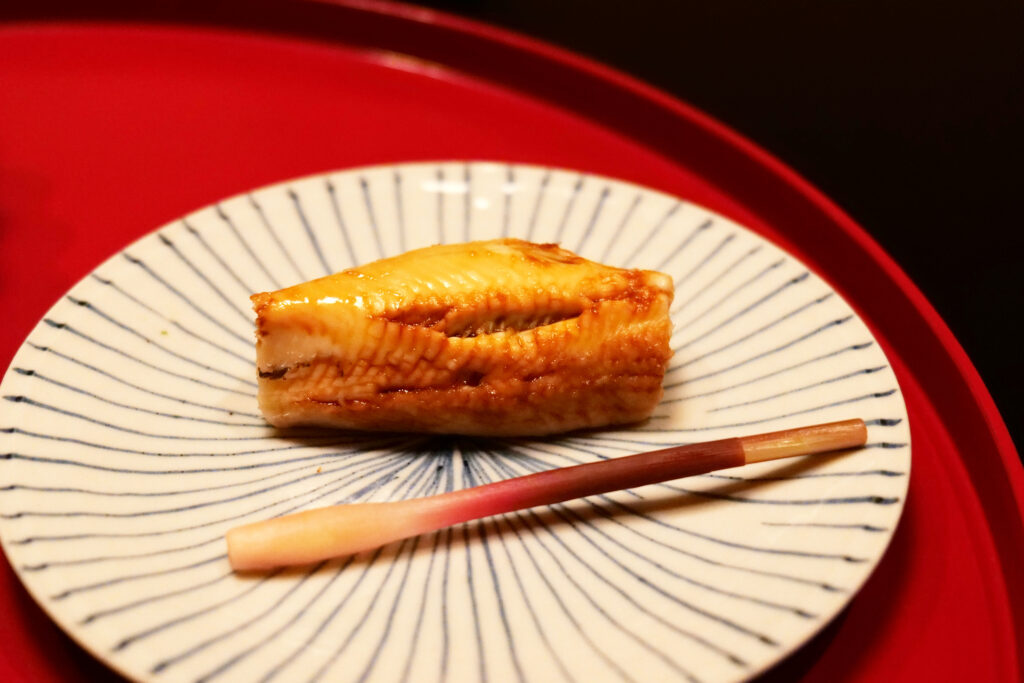
Anago and black rice sushi
This is one of Asaba’s traditional dishes, and thinking of how it has been handed down over centuries made it all the more moving. The black rice (an ancient grain) combines a popping texture with a chewy one, and the anago (conger eel), coated in a restrained, not-too-sweet glaze, melted in the mouth. Fresh sansho (Japanese pepper) leaves were hidden between the eel and the rice: an intriguing choice to tuck the spice away rather than place it on top.
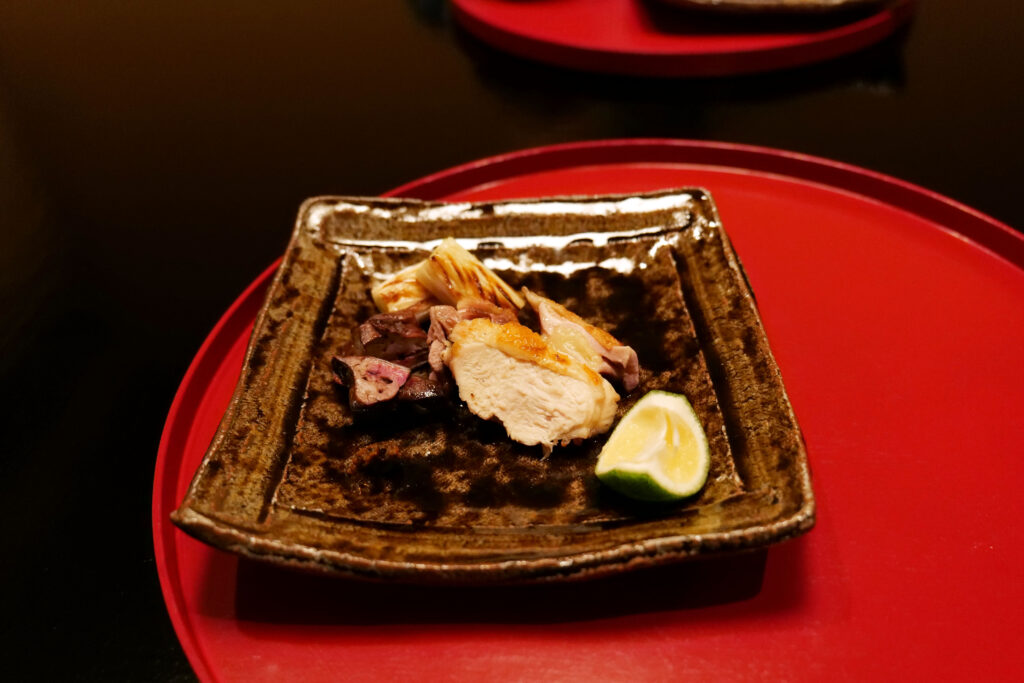
Charcoal-grilled Amagi shamo chicken
The first bite, of leek, was a surprise. Grilling over charcoal usually toughens the surface, but this was cooked evenly from the outside to the core, soft throughout and full of sweetness. Thigh, breast and liver of shamo (a breed of gamecock) were served, with a fragrant, smoky aroma, the bird’s characteristically firm bite and a deep meaty flavor. The liver had been grilled so that no trace of blood remained in its smell, only its savoriness. A touch of the house’s own fresh shichimi (seven-spice blend) made it even better.
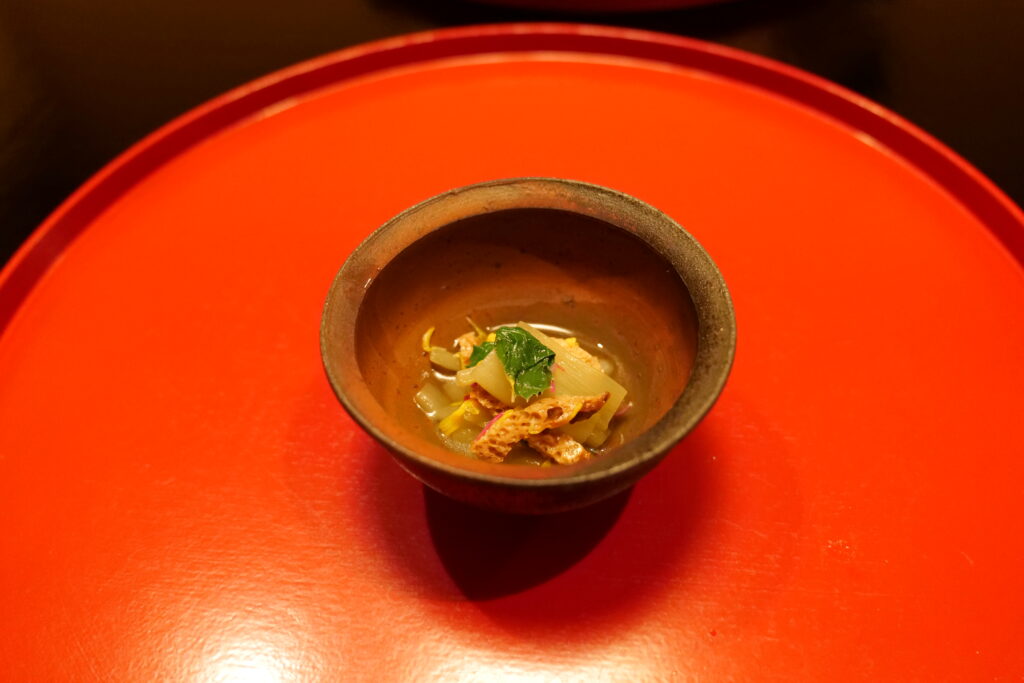
Hasu-imo, bofu and Daitokuji fu in vinegared dashi
This served as the palate cleanser: a broth full of Japanese dashi and fragrant with vinegar, yet curiously without tasting sour. Eaten together, the crisp hasu-imo (a taro stalk) and bofu (a coastal herb) and the soft Daitokuji fu (wheat gluten) were brought together beautifully by the seasoning. We would have loved to learn the balance of acidity, sweetness and dashi.
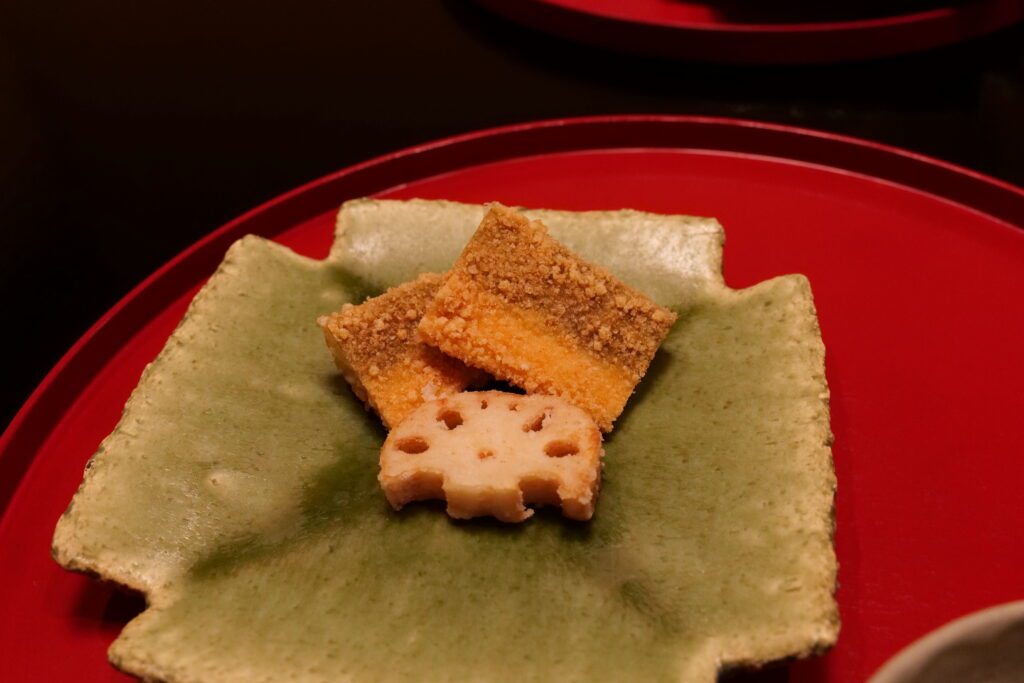
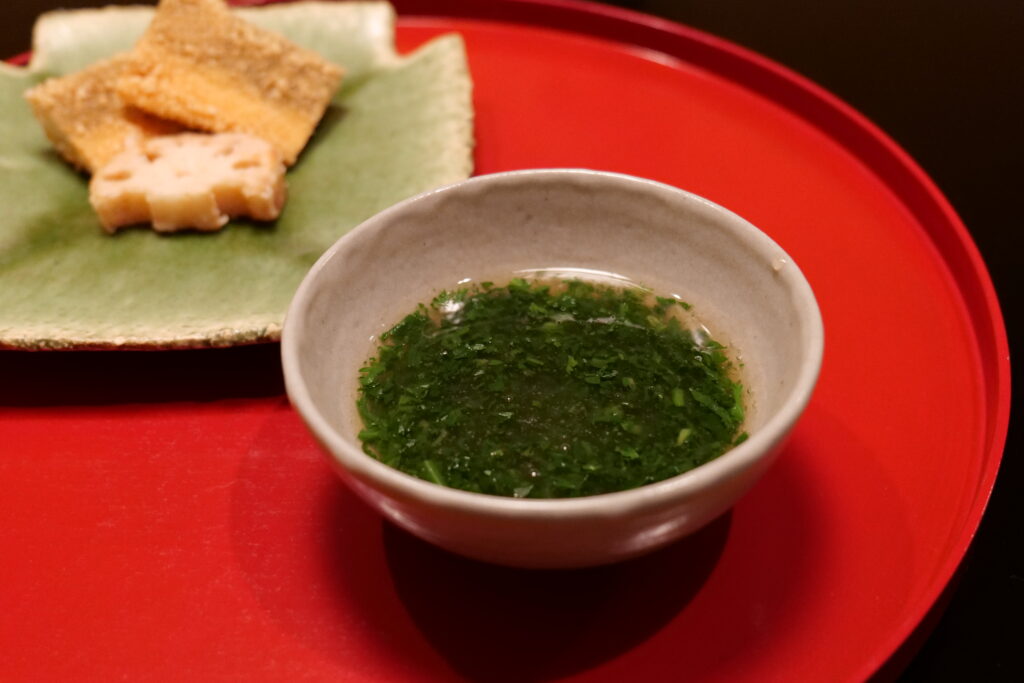
Kamasu (barracuda) arare-age
Anyone who has deep-fried fish would be astonished by its shape: perfectly straight, its surface even right up to the skin. It crunched cleanly, the barracuda inside was plump and tender, and the coating clung to the flesh without coming away: true craftsmanship. Dipped in the accompanying sauce of shungiku (garland chrysanthemum), the fried fish warmed up again and could be enjoyed piping hot once more. We drank the faintly shungiku-scented sauce to the last drop.
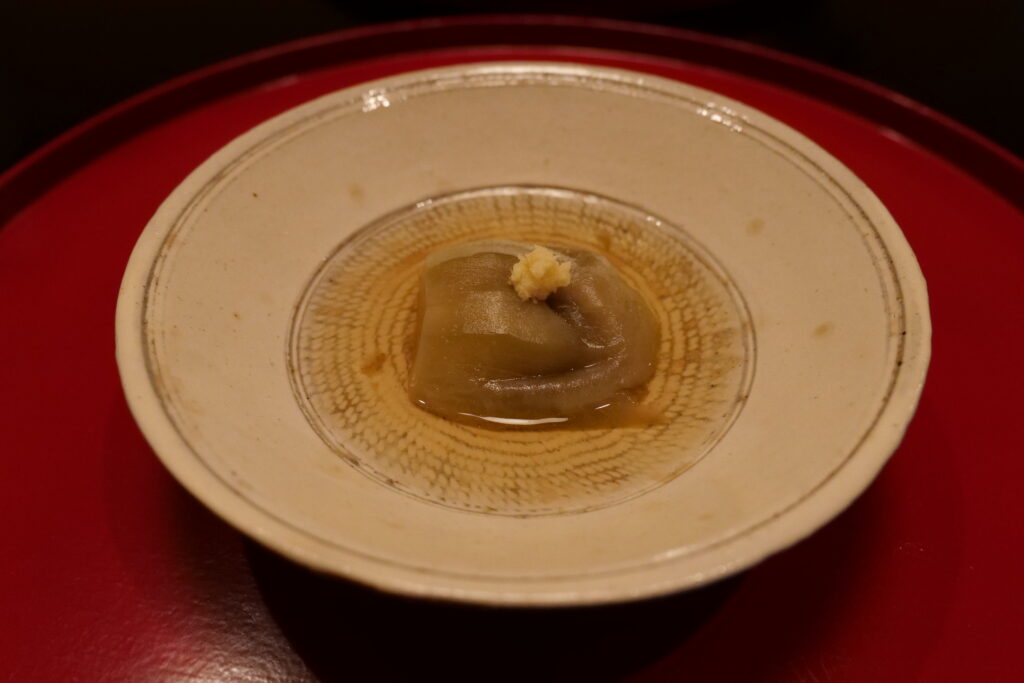
Simmered Orito eggplant
Eggplant from Shimizu in Shizuoka Prefecture, simmered until it melted away in the mouth and steeped in a broth that was Japanese dashi at its finest. That it still held its shape so well spoke of the cook’s dedication. Placing this dish just before the closing rice course was an unusual touch, and it piqued our curiosity.
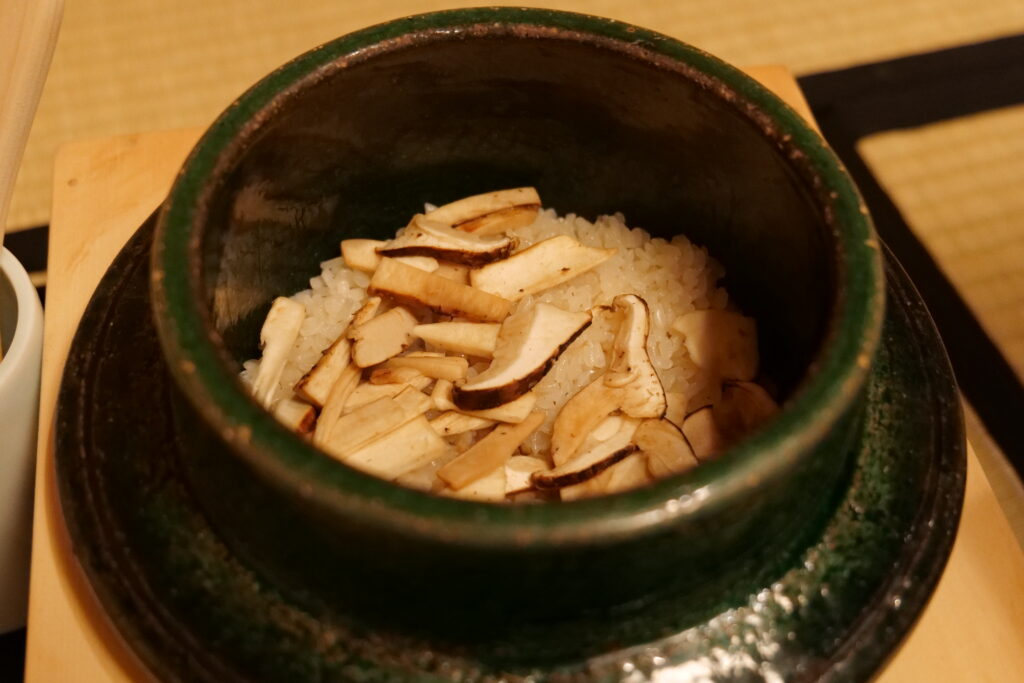
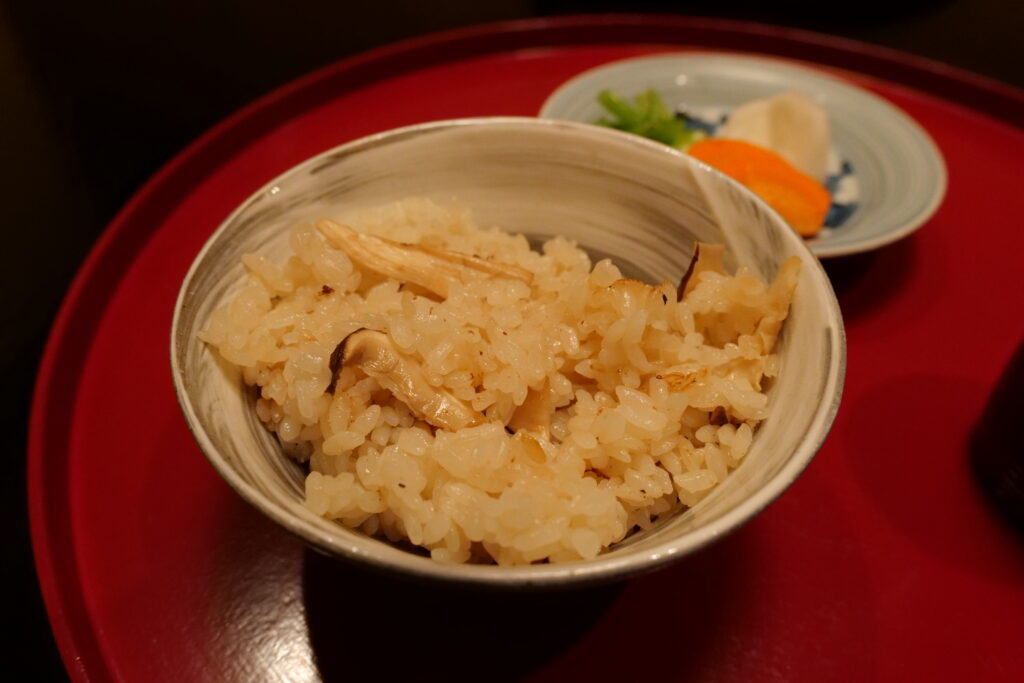
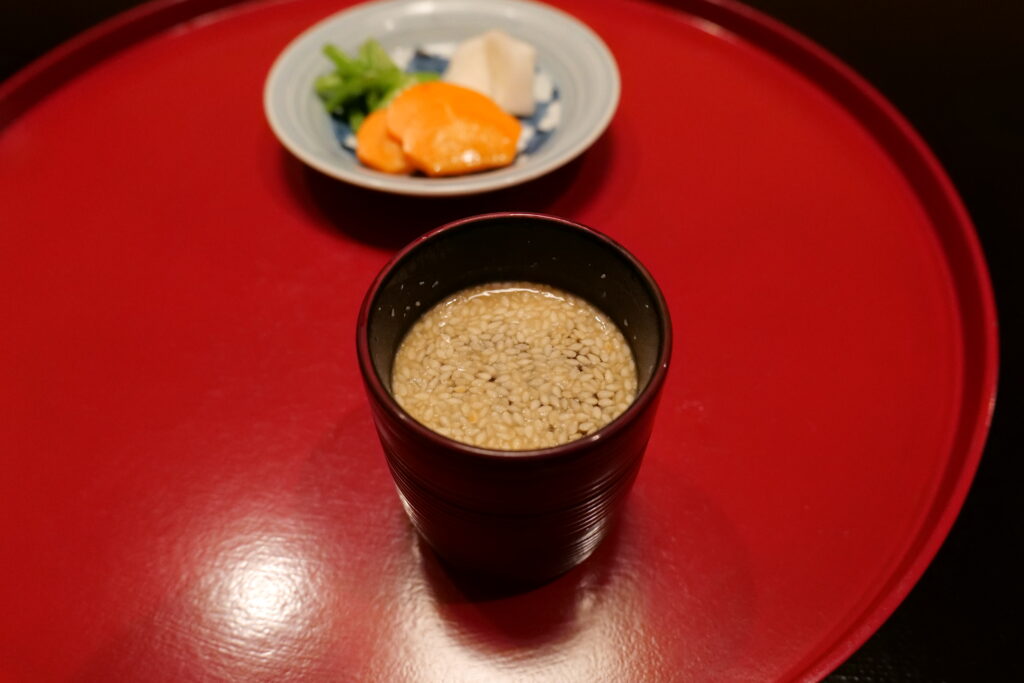
Matsutake rice and white sesame miso soup
The main event of the day arrived in a kamado rice pot: Koshihikari rice infused with the flavor of matsutake. When our attendant lifted the lid, the scent of autumn filled the room. She carefully served this luxurious takikomi-gohan (rice cooked with its seasonings and ingredients), made with matsutake alone, into our bowls. In the hushed room every sound carries, yet even setting bowls on the tray she moved with a grace that amounted to a craft.
Cooked in the earthenware pot, the rice was done on the firm side, so that every grain could be felt in the mouth, and the presence of the matsutake made it a perfect staple. There was only a little okoge (the crisp rice from the bottom of the pot), which I was personally very pleased about. Pausing with pickles and miso soup, we emptied the pot in no time. Once again I felt how glad I was to have come at this time of year.
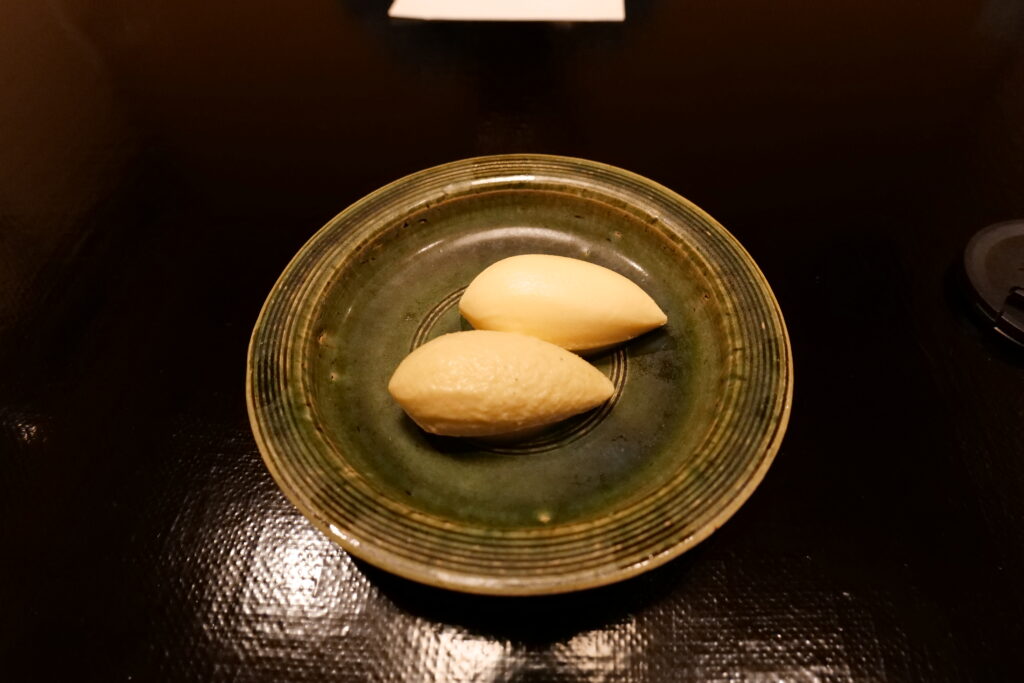
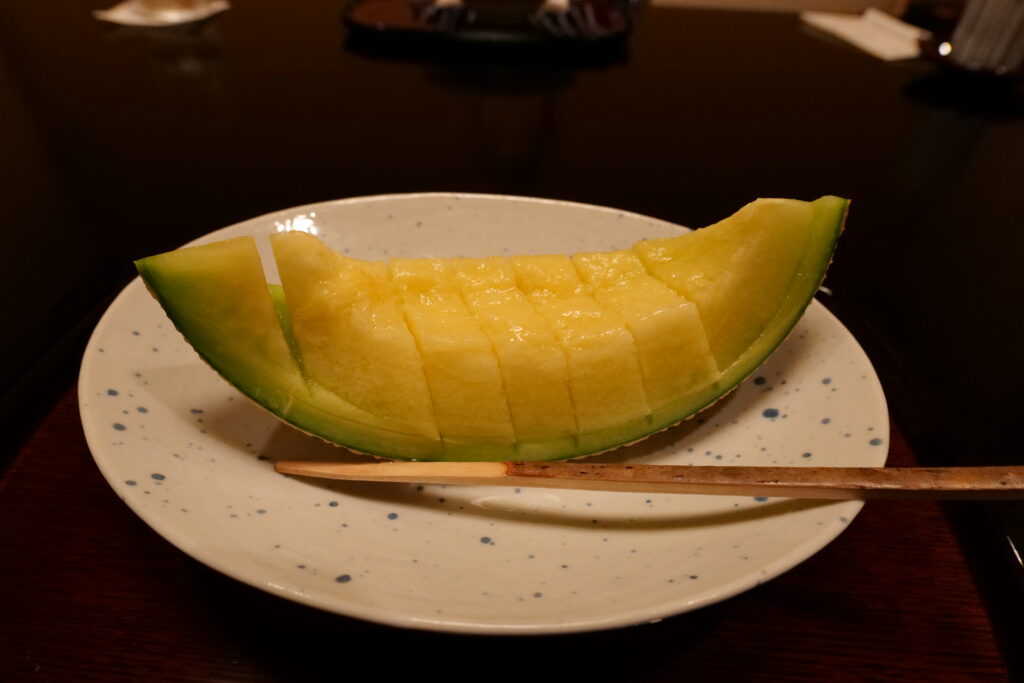
Dessert: melon, and ice creams of grilled eggplant and of ginger
There is a choice of three desserts; that day it was melon, blancmange or kuzukiri (arrowroot noodles), and we chose the melon. Fully ripe and served at just the right temperature, it left us full and sighing with contentment, at which point our attendant urged us to try the head chef’s recommendation, a grilled eggplant ice cream. We felt duty-bound to accept. It really did taste of grilled eggplant: an ice-cold scoop of unmistakably grilled eggplant, and yet sweet. Seeing natural ingredients transformed by such almost scientific technique felt like a glimpse of an unknown world. Beside it, the ginger ice cream was cold yet left a tingling heat on the tongue. We were moved by the skill and ingenuity of a kitchen working to an autumn theme, and this astonishing final course left us thoroughly satisfied, in body and in spirit.
We thanked our attendant, who had answered every question at once, and asked her to pass on our thanks to the head chef as well.
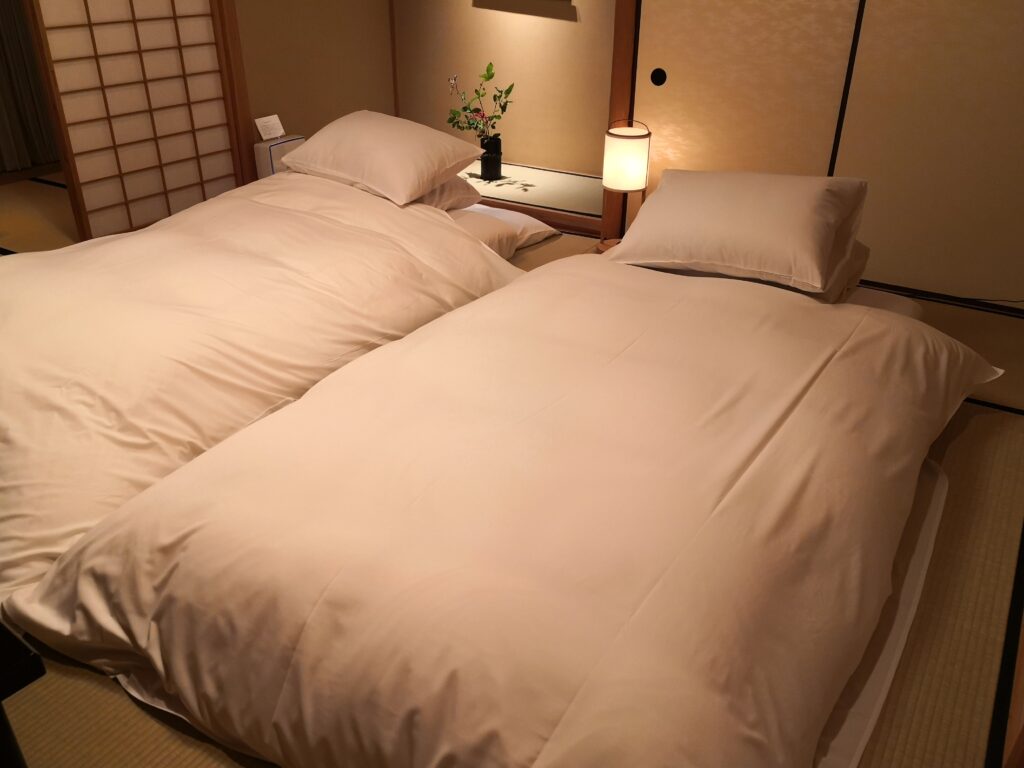
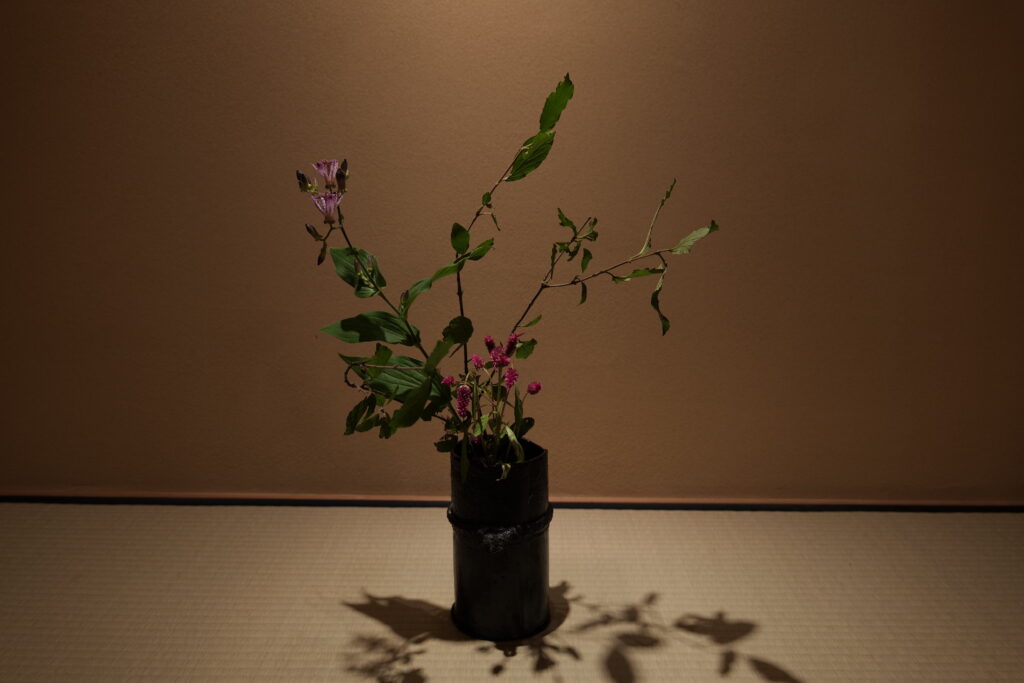
The room was decorated with cockscomb and gentians. When it was time to lay out the futon, a man who looked to be in his seventies came in.
With a speed that belied his age, he spread out pure white sheets and folded the corners of the futon perfectly, without a wrinkle: by now it could almost be called a bed. Pillows can be chosen in buckwheat husk or down, and he smilingly accepted our slightly greedy request for one of each. I was overwhelmed by the thickness of the futon, a match for a certain famous bed brand.
I assumed he had spent many years proudly in charge of the bedding, but to my surprise, the next morning he was serving breakfast and moving cars in the parking lot too. He had the air of a “chief” who could turn his hand to anything, which made us smile.
Before bed, hojicha (roasted green tea), sencha (green tea) and cold water were set out for us, and the day’s service was complete. Throughout, our attendant kept an eye on our drinks, adjusted the room temperature, attended to our bedding preferences and guided us to the salon; I sensed true professionalism.
The same man was stationed at the entrance all day.
He handled a small personal request of ours in the same spirit, setting things up for us on the lane by the annexe, just outside the gate, with an apology that it had to be outside in the cold. Every time we went, everything had been tidied and was spotless. It was entirely our own request, yet he made it so easy and pleasant that we were genuinely moved.
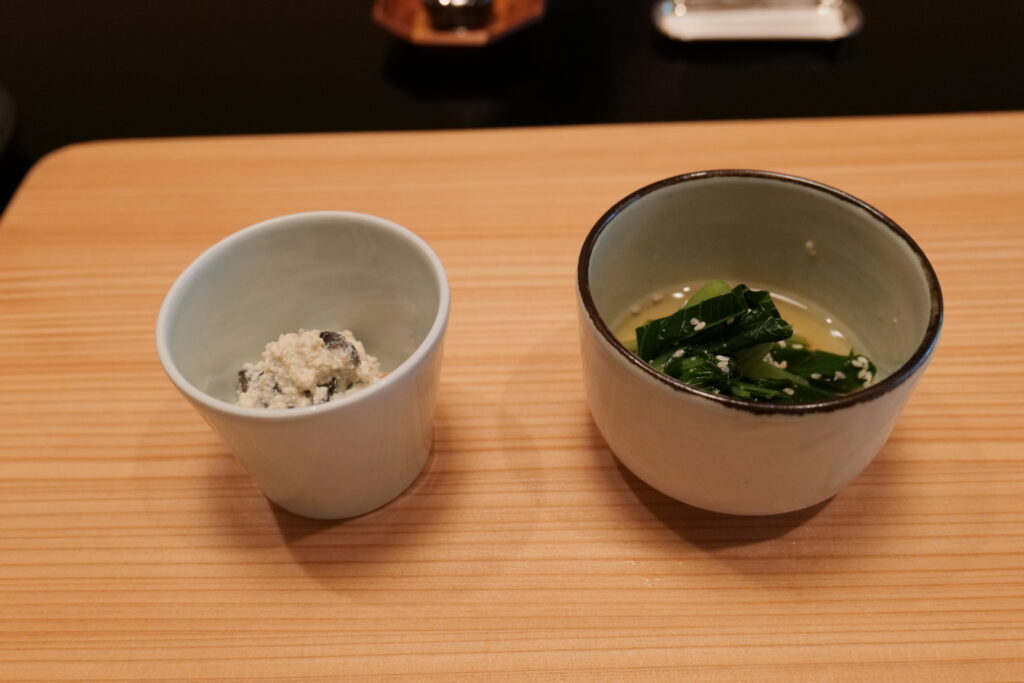
The following morning, breakfast was again served in the room.
Shira-ae and komatsuna ohitashi
The shira-ae (vegetables in a mashed tofu dressing) was delicate: the shiitake in it had been sweetly seasoned, and biting into them spread that flavor through the whole dish. The ohitashi of komatsuna (Japanese mustard spinach, blanched and steeped in dashi) carried a distinct aroma of dashi, a flavor clearly designed to be the first thing you taste early in the morning.
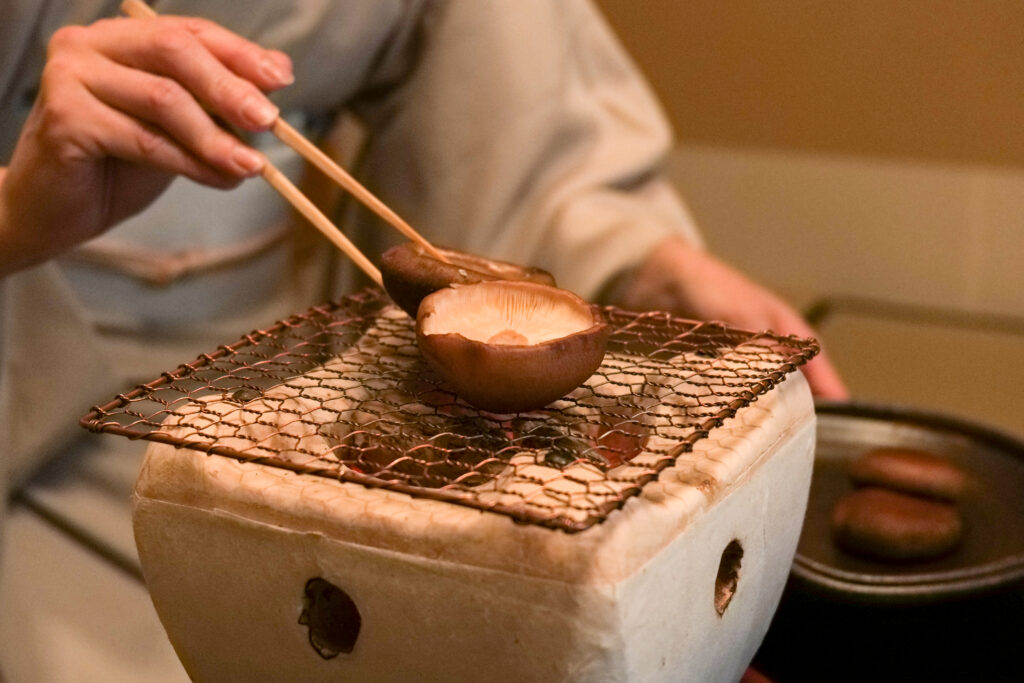
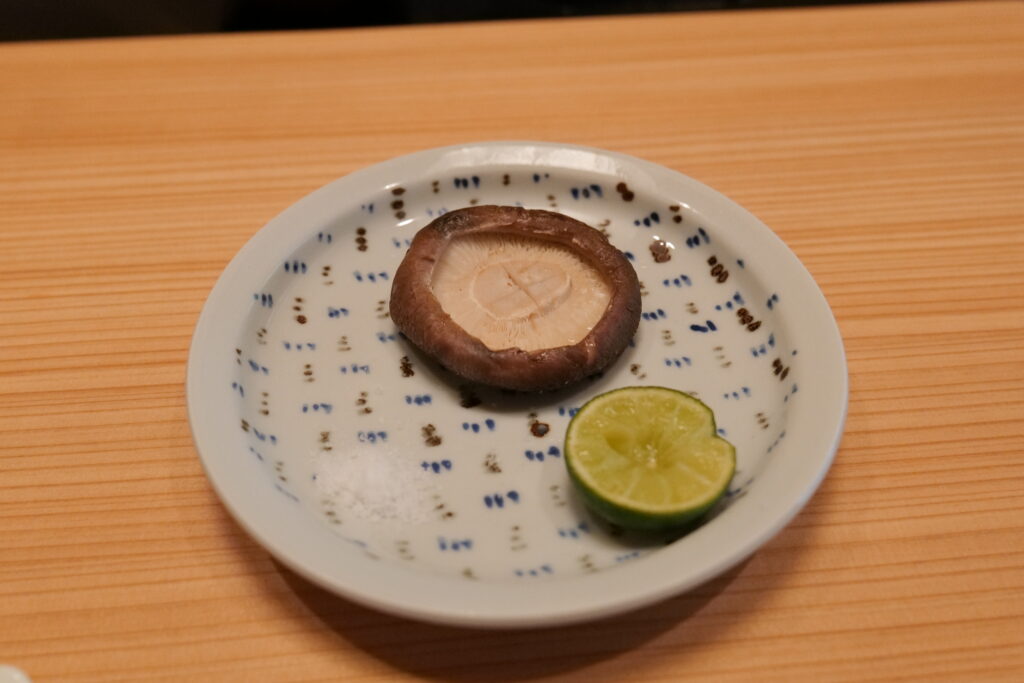
Grilled shiitake
Our honest first reaction: grilling shiitake on a shichirin (a small charcoal brazier) at breakfast? While we waited for them to slowly “sweat”, there was time to listen to the birds. Our attendant grilling them made an elegant sight, and all three of us watched the mushrooms in silence. Eaten with salt and kabosu (a Japanese citrus), the shiitake were practically steaks.
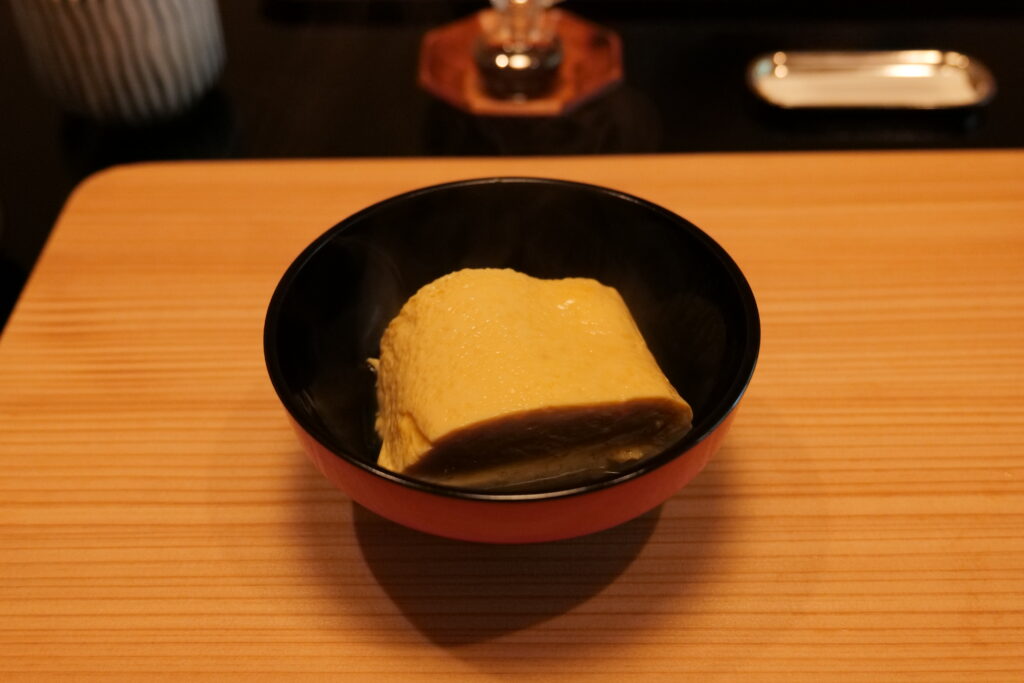
Dashimaki tamago
This was the dish we had been waiting for. The dashimaki tamago (a rolled omelet made with dashi) had a wobbly, pudding-like texture that made us suspect it is steamed after being cooked. It is good with grated daikon, or simply left to melt on the tongue, and its gentle seasoning lingers for a curiously long time. It would be no exaggeration, I think, to call it the finest of its kind.
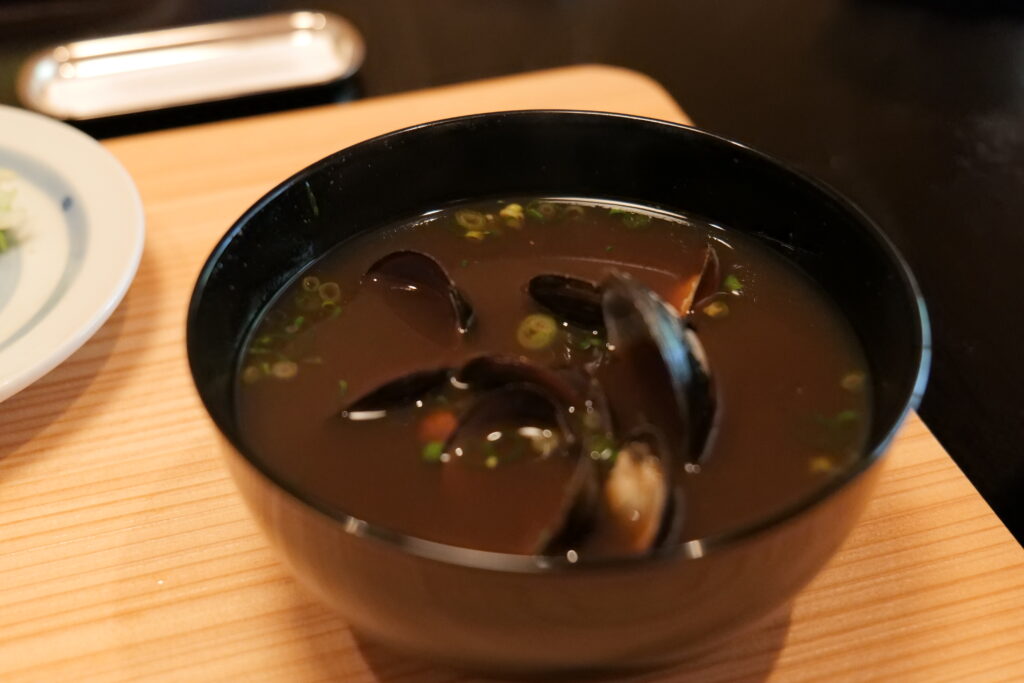
Shijimi clam soup
Plump shijimi clams in akadashi (red miso soup), a change from the previous night’s miso.
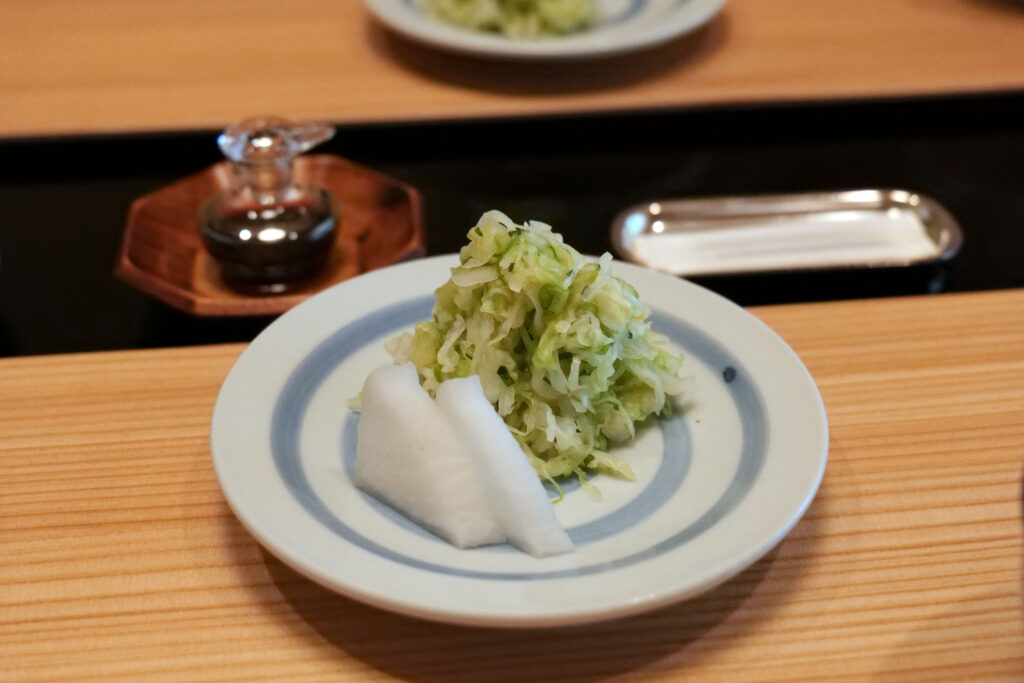
Pickles
Even the seemingly ordinary pickles had been given a little extra thought: the cabbage pickles were mixed with a hint of shiso (perilla), in exactly the proportion that tastes best.
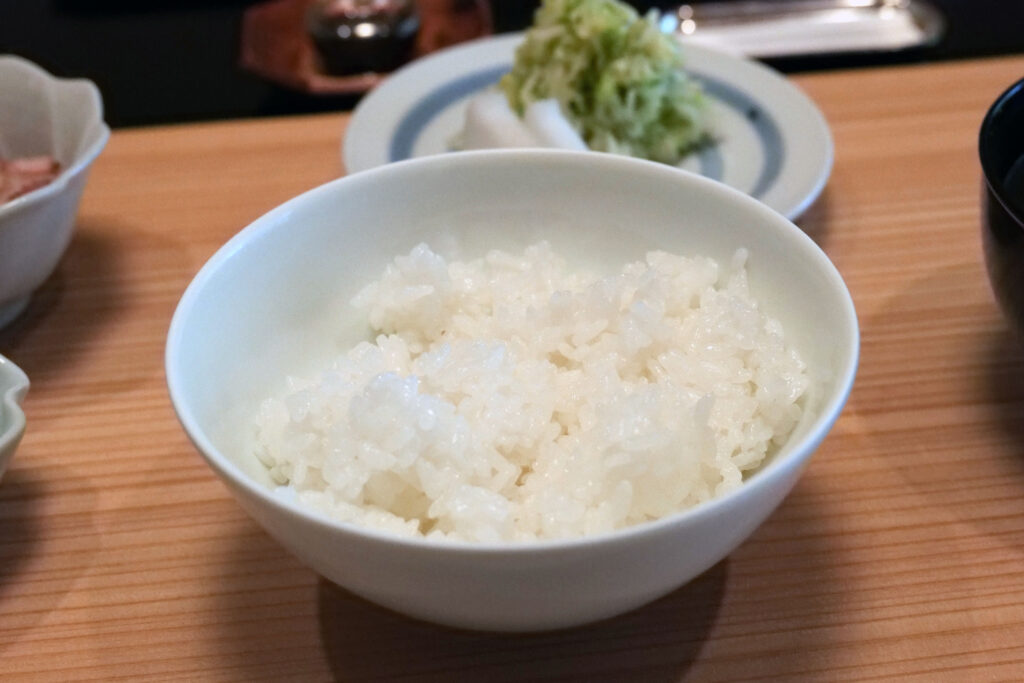
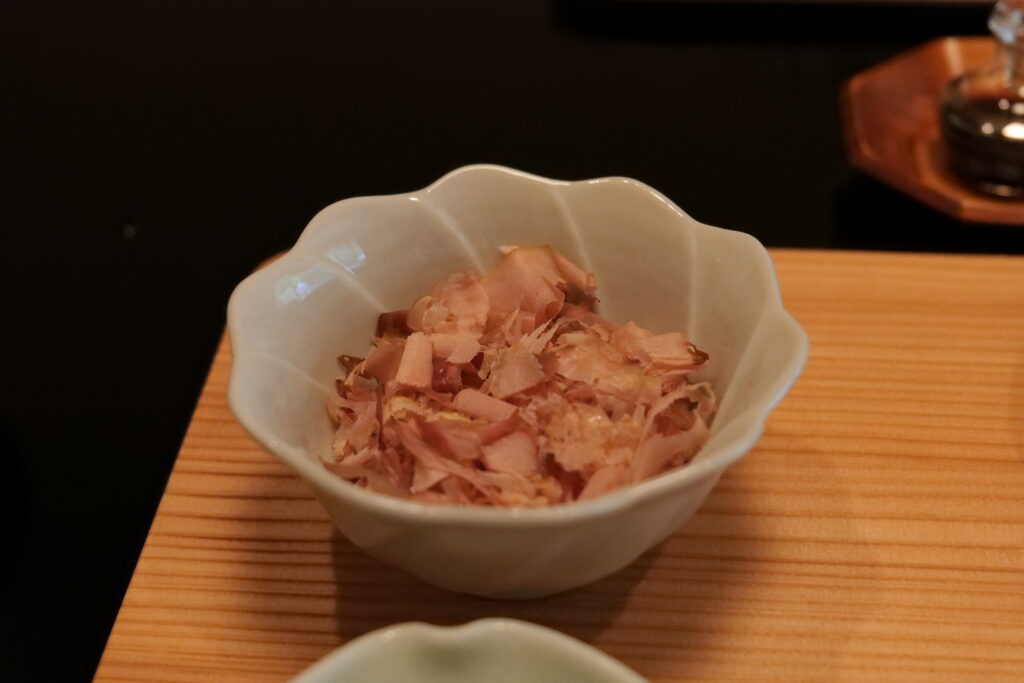
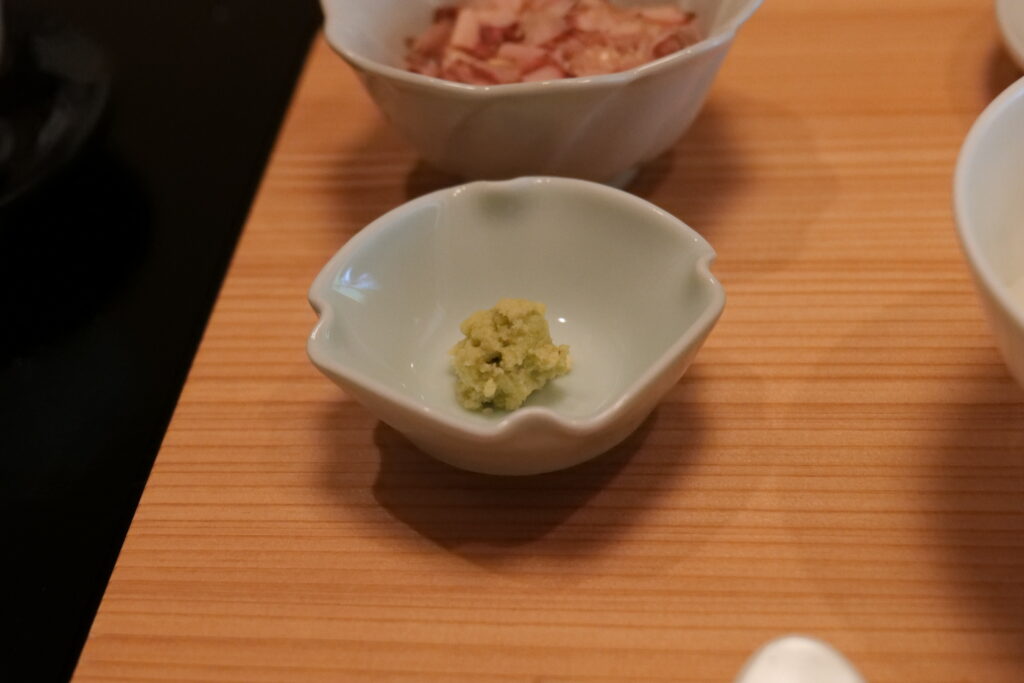
Bonito flakes shaved that morning, and Shizuoka wasabi
When these two arrive with a bowl of white rice, you know what is coming: a wasabi rice bowl, a Shizuoka speciality, first thing in the morning. A few drops of soy sauce on sweet, fresh wasabi, and it is truly delicious. The morning rice was cooked softer than the night before, a subtle and thoughtful touch.
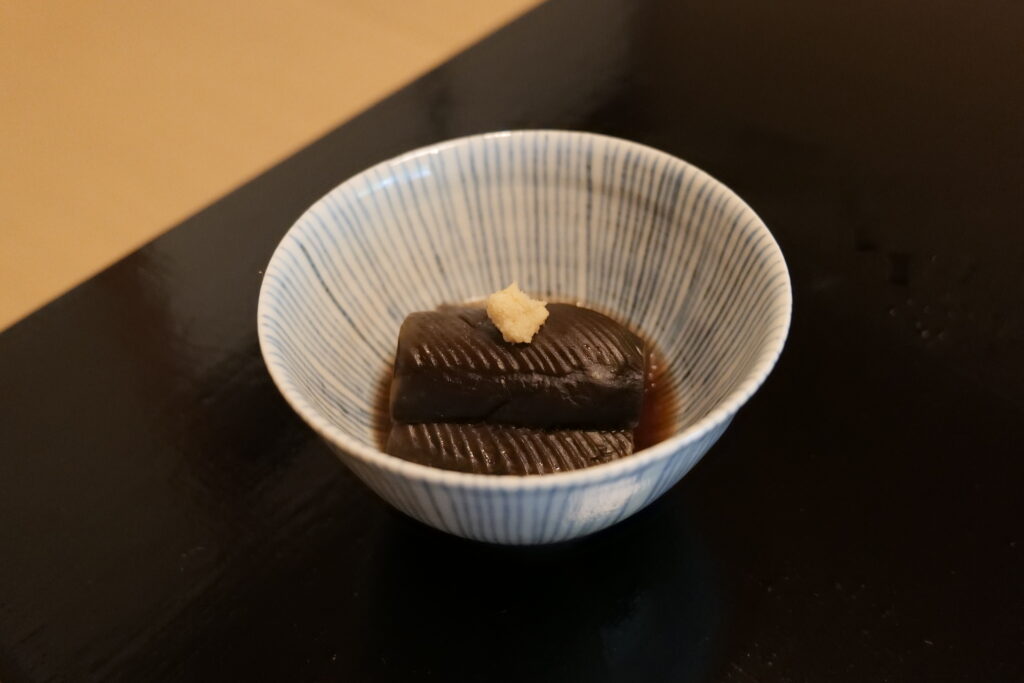
Simmered and steeped eggplant
Though we felt we had already met eggplant several times at this ryokan, here was yet another. Very lightly seasoned yet intensely sweet, it too went perfectly with rice. The broth that had soaked into the eggplant, as though it had been prepared days in advance, matched the oil beautifully.
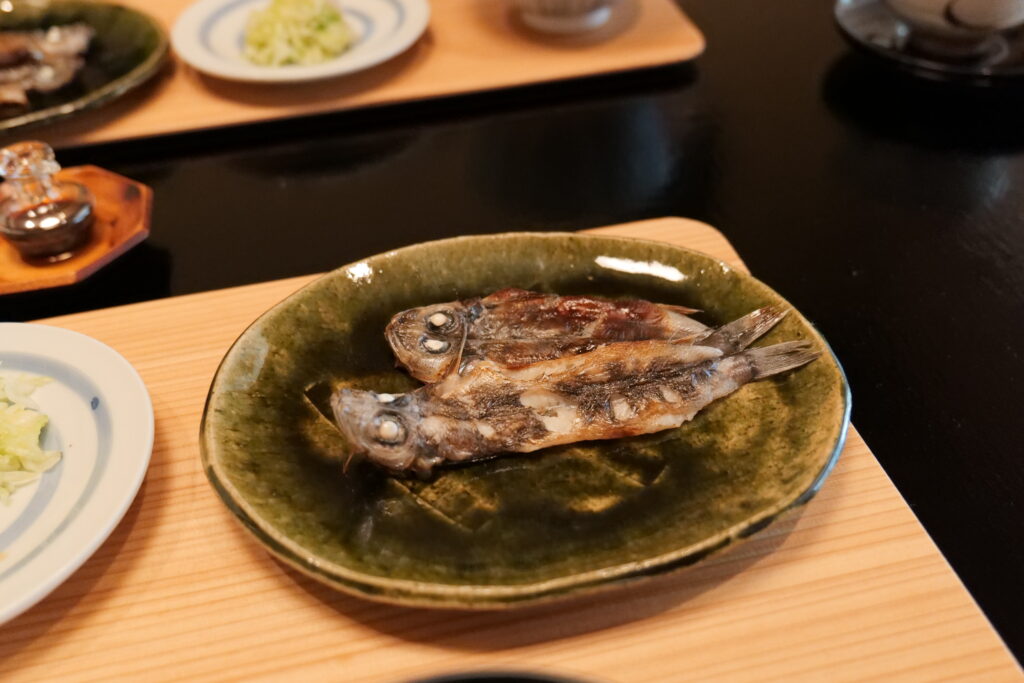
Mehikari
When it was first set on the tray, we thought it looked rather plain. Mehikari (greeneye, a small deep-sea fish) can be eaten whole from the head, so we took a bite: remarkably rich in fine fat, and quite delicious. Its fat had a sweetness unlike that of mackerel or salmon; a dish with far more power than its looks suggested.
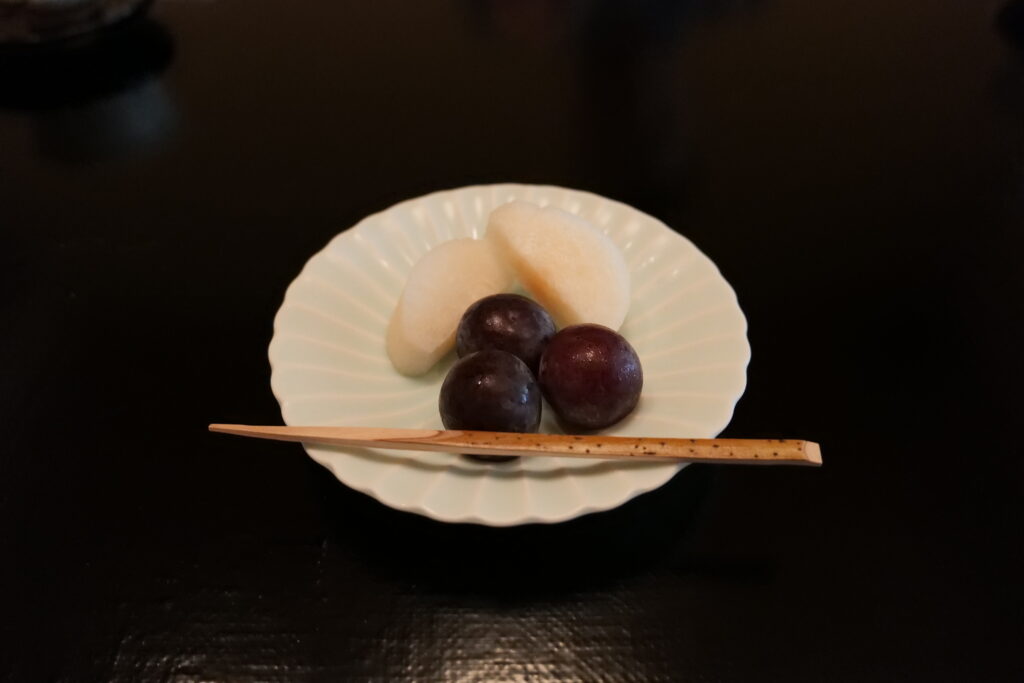
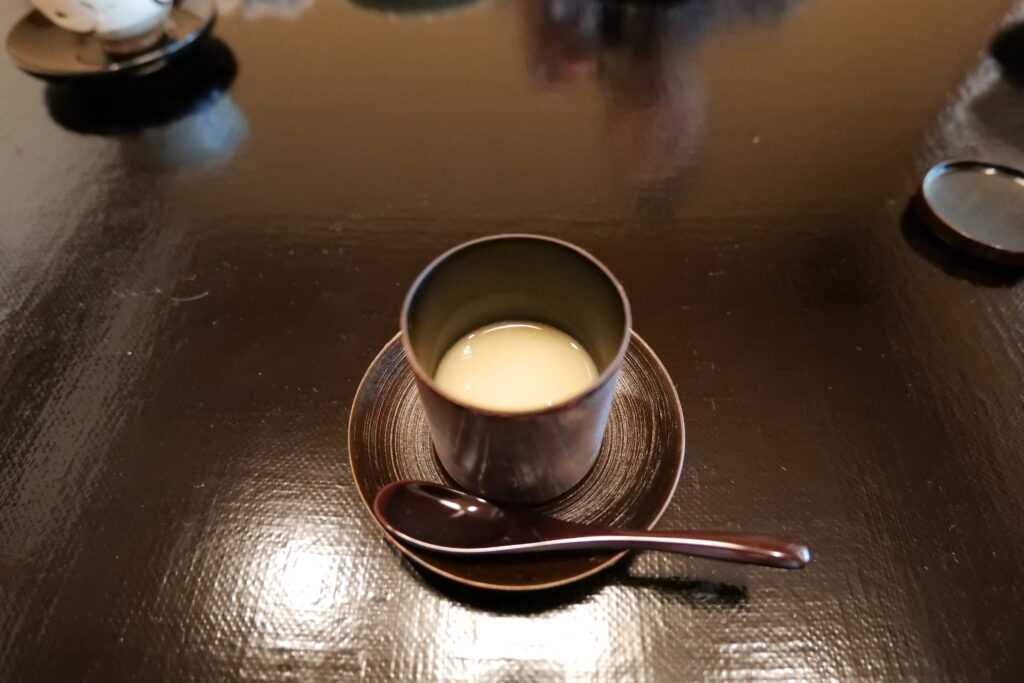
Pear and Pione grapes, and chestnut oshiruko
Even the fruit had been discreetly scored with the knife, and the pear came with a touch of salt. Sweet Pione grapes and chestnut oshiruko (a sweet soup) brought autumn at Asaba to a close. Every meal at Asaba is served in the room, and the menu changes four times a year with the seasons. It is one we would love to taste again.
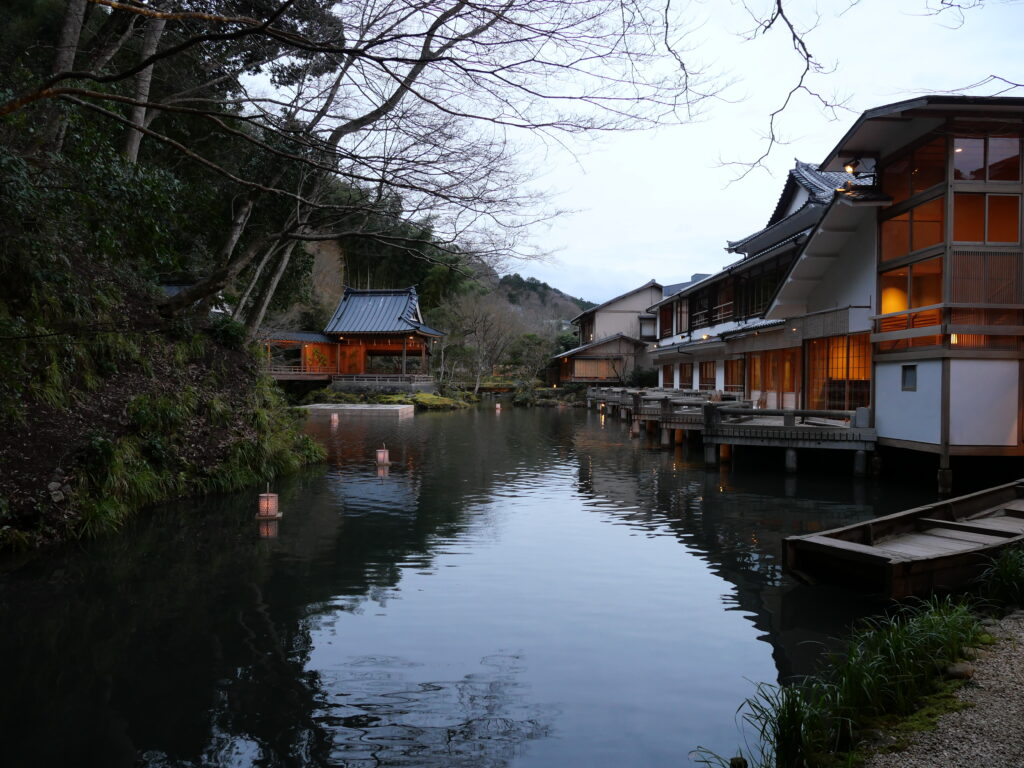
We were told the ryokan was fully booked during our stay, yet the greatest mystery was that we met almost no one, from the corridors to the baths. It was a chance to enjoy the ryokan quietly and to the full.
At check-out we were seen off by a woman who was surely the okami (proprietress), who presented us with a parting gift of sweets: Asaba’s own beans coated in chocolate, with an elegant sweetness. Even the box was printed with the name Asaba, which made them almost too good to eat. Separately, special onsen manju (steamed buns) can be ordered for a fee; ask at check-in and they will be ready to take home the next morning.
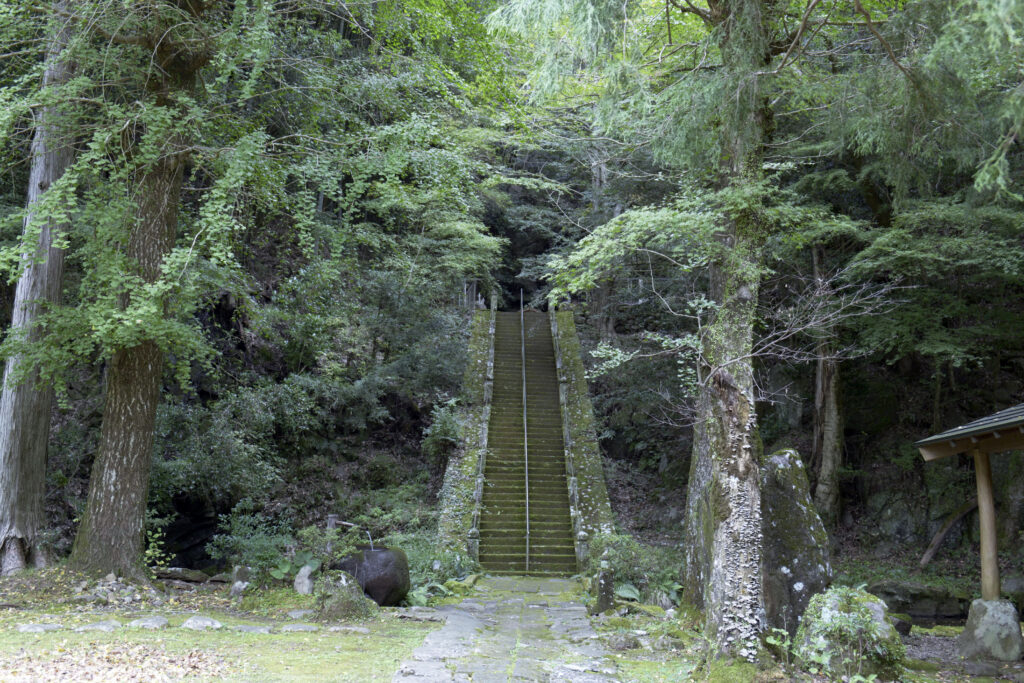
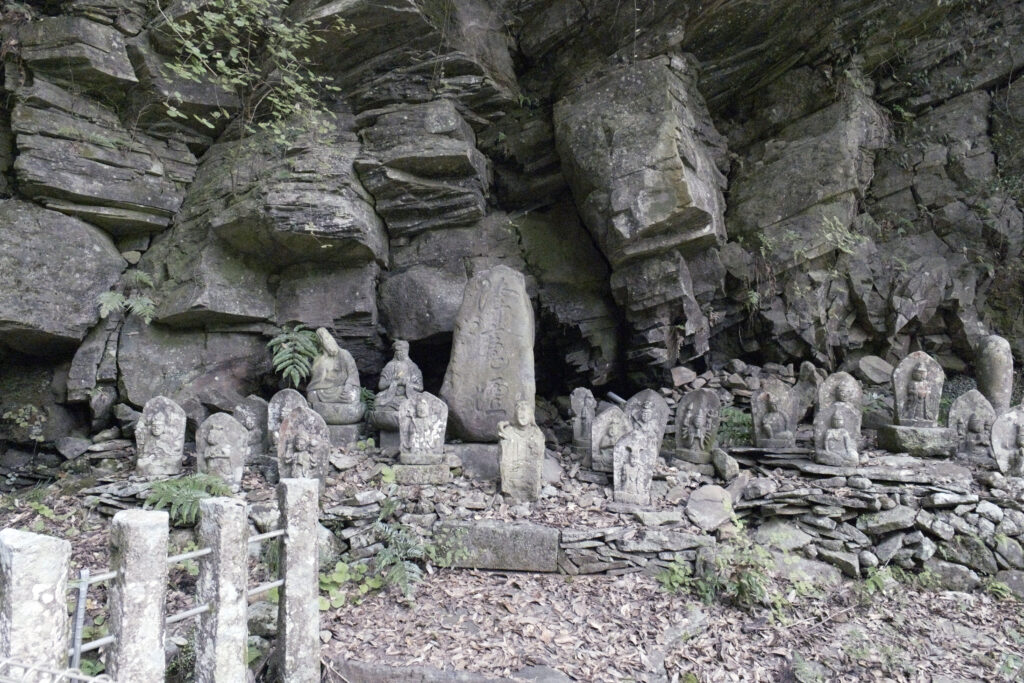
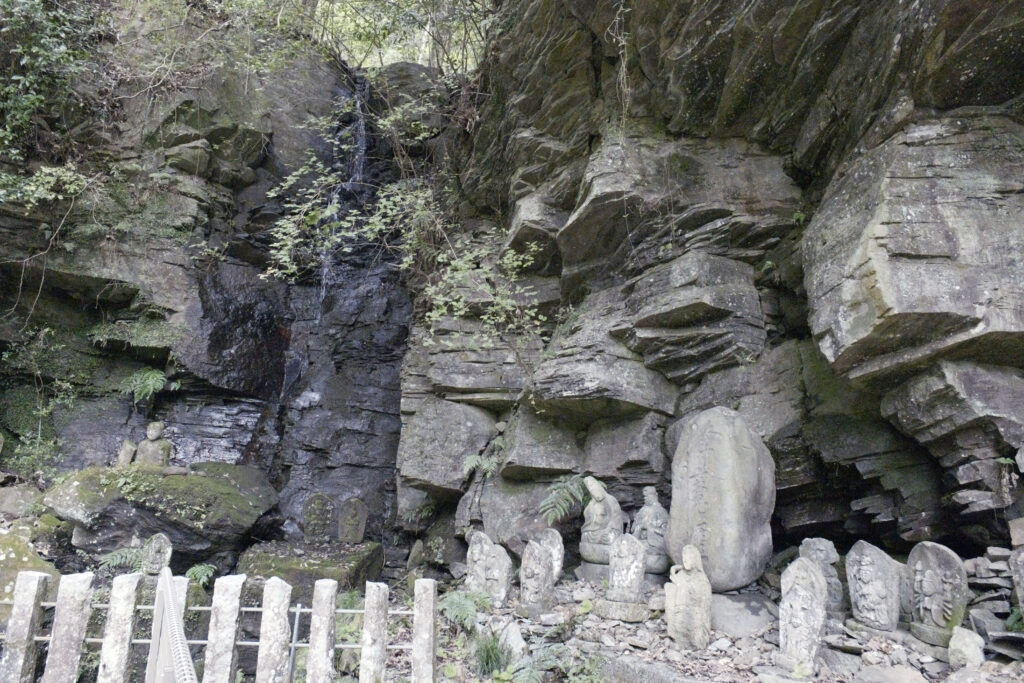
Around Asaba are atmospheric walks through the hot-spring town, such as the Chikurin-no-Komichi bamboo path and the site of the Genji family graves. We also walked to the Okunoin to pay our respects: a spiritual site where Kobo Daishi, who is said to have discovered the Shuzenji hot spring, is said to have sealed away a demon. It is a fascinating town, rich in history.
Asaba remains my favorite ryokan, above all for its hospitality and its atmosphere. It is not a global luxury hotel or a corporate enterprise, but a family-run ryokan with a 400-year lineage of prestige and quality, and it represents traditional Japanese hospitality at its best. For anyone in the Tokyo area looking for an onsen ryokan, its exceptional cuisine and its genuine sense of Japan make it an easy recommendation. Prices have risen with the growth of tourism, but for those whose budget allows, it offers a stay that is both memorable and deeply rewarding.
What makes this ryokan, in my view one of the three finest in Japan, so distinctive? I believe it lies in its atmosphere, and in a passage of time that can be experienced only here. Asaba excels in everything one expects of a great onsen ryokan: the use of space, the architecture, the natural setting, the hospitality and the cooking. Each element is carefully crafted, and it is the balance and interplay between them that create this extraordinary atmosphere and unhurried flow of time. I recommend it highly, both to Japanese travelers seeking respite from city life and daily routine, and to visitors from abroad looking for something truly special.
For more information, reservations and enquiries: